

Efficient Low-rank Multimodal Fusion With Modality-Specific Factors
Open accessThe DOI matches its Crossref record; 33 of the 33 references it cites were found in a registry or an index.
Abstract
Zhun Liu, Ying Shen, Varun Bharadhwaj Lakshminarasimhan, Paul Pu Liang, AmirAli Bagher Zadeh, Louis-Philippe Morency. Proceedings of the 56th Annual Meeting of the Association for Computational Linguistics (Volume 1: Long Papers). 2018.
Overview
The claims and statistics of this paper haven’t been checked yet.
Free: it reads the open-access text and checks the first 5 claims that cite a source we can check. Create a free account to check every claim.
Integrity signals
Registry
Cites
Statistics
Figures
Verification
Claims the paper makes
The claims and statistics of this paper haven’t been checked yet.
Free: it reads the open-access text and checks the first 5 claims that cite a source we can check. Create a free account to check every claim.
Claims other papers make about this one
Each is checked against this paper’s own text: does it say what the citing paper says it does?
The cited source says what the claim attributes to it.
In the citing paper
“The experiment confirmed that the LMF effectively improves the training and testing efficiency compared to TFN.”
From A Survey of Deep Learning-Based Multimodal Emotion Recognition: Speech, Text, and Face (2023) · cites this paper as [100]
The cited source says what the claim attributes to it.
In the citing paper
“Several efficient variants have been proposed to approximate expensive full tensor products with cheaper variants while maintaining performance [71, 101, 106].”
From MultiBench: Multiscale Benchmarks for Multimodal Representation Learning (2021) · cites this paper as [106]
In the citing paper
“we compared vector concatenation and a low-rank implementation of Kronecker Product Fusion, which similarly outperform unimodal approaches (Table S3) (Liu et al., 2018).”
From Pan-cancer integrative histology-genomic analysis via multimodal deep learning (2022) · cites this paper as Liu et al., 2018
Self-check
Percentages, sums and reported differences re-computed from the paper’s own numbers.
The self-check needs the paper’s full text.
Citations
Cites
Hochreiter, S., & Schmidhuber, J. (1997) · Neural Computation · doi:10.1162/neco.1997.9.8.1735 · Cited by 102,318 · cited 4×
“Multi-View LSTM Multi-View LSTM (MV-LSTM) (Rajagopalan et al., 2016) aims to capture both modality-specific and cross-modality interactions from multiple modalities by partitioning the memory cell and the gates corresponding to multiple modalities.”
MethodInfluentialCortes, C., & Vapnik, V. (1995) · Machine Learning · doi:10.1007/bf00994018 · Cited by 59,421
Glove: Global Vectors for Word Representation
Pennington, J., Socher, R., & Manning, C. (2014) · Proceedings of the 2014 Conference on Empirical Methods in Natural Language Processing (EMNLP) · doi:10.3115/v1/d14-1162 · Cited by 34,071 · cited 1×
“Language We use pre-trained 300-dimensional Glove word embeddings (Pennington et al., 2014) to encode a sequence of transcribed words into a sequence of word vectors.”
MethodIEMOCAP: Interactive emotional dyadic motion capture database
Busso, C., Bulut, M., Lee, C.-C., Kazemzadeh, A., Mower, E., Kim, S., Chang, J. N., Lee, S., & Narayanan, S. S. (2008) · Language Resources and Evaluation · doi:10.1007/s10579-008-9076-6 · Cited by 3,869 · cited 4×
“We perform our experiments on the following multi-modal datasets, CMU-MOSI (Zadeh et al., 2016a POM (Park et al., 2014b), and IEMOCAP (Busso et al., 2008) for sentiment analysis, speaker traits recognition, and emotion recognition task, where the goal is to identify speakers emotions based on the speakers’ verbal and…”
BackgroundMethodInfluentialTensor Fusion Network for Multimodal Sentiment Analysis
Zadeh, A., Chen, M., Poria, S., Cambria, E., & Morency, L.-P. (2017) · Proceedings of the 2017 Conference on Empirical Methods in Natural Language Processing · doi:10.18653/v1/d17-1115 · Cited by 2,102 · cited 12×
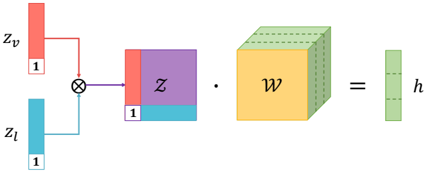
“In addition, in order to be able to model the interactions between any subset of modalities using one tensor, Zadeh et al. (2017) proposed a simple extension to append 1 s to the unimodal representations before taking the outer product.”
BackgroundMethodInfluentialSelf-citationMultimodal Compact Bilinear Pooling for Visual Question Answering and Visual Grounding
Fukui, A., Park, D. H., Yang, D., Rohrbach, A., Darrell, T., & Rohrbach, M. (2016) · Proceedings of the 2016 Conference on Empirical Methods in Natural Language Processing · doi:10.18653/v1/d16-1044 · Cited by 1,582 · cited 6×
“, 2017), (Fukui et al., 2016) performs contextdependent fusion of multimodal data.”
BackgroundMethodResultInfluentialFast Human Detection Using a Cascade of Histograms of Oriented Gradients
Zhu, Q., Yeh, M.-C., Cheng, K.-T., & Avidan, S. (2006) · 2006 IEEE Computer Society Conference on Computer Vision and Pattern Recognition - Volume 2 (CVPR'06) · doi:10.1109/cvpr.2006.119 · Cited by 1,399 · cited 2×
“Visual The library Facet1 is used to extract a set of visual features for each frame (sampled at 30Hz) including 20 facial action units, 68 facial landmarks, head pose, gaze tracking and HOG features (Zhu et al., 2006).”
MethodMemory Fusion Network for Multi-view Sequential Learning
Zadeh, A., Liang, P. P., Mazumder, N., Poria, S., Cambria, E., & Morency, L.-P. (2018) · Proceedings of the AAAI Conference on Artificial Intelligence · doi:10.1609/aaai.v32i1.12021 · Cited by 855
Self-citationMultimodal Sentiment Intensity Analysis in Videos: Facial Gestures and Verbal Messages
Zadeh, A., Zellers, R., Pincus, E., & Morency, L.-P. (2016) · IEEE Intelligent Systems · doi:10.1109/mis.2016.94 · Cited by 852 · cited 6×
“We perform our experiments on the following multi-modal datasets, CMU-MOSI (Zadeh et al., 2016a POM (Park et al., 2014b), and IEMOCAP (Busso et al., 2008) for sentiment analysis, speaker traits recognition, and emotion recognition task, where the goal is to identify speakers emotions based on the…”
MethodInfluentialSelf-citationCOVAREP — A collaborative voice analysis repository for speech technologies
Degottex, G., Kane, J., Drugman, T., Raitio, T., & Scherer, S. (2014) · 2014 IEEE International Conference on Acoustics, Speech and Signal Processing (ICASSP) · doi:10.1109/icassp.2014.6853739 · Cited by 695 · cited 1×
“Acoustic We use COVAREP acoustic analysis framework (Degottex et al., 2014) to extract a set of low-level acoustic features, including 12 Mel frequency cepstral coefficients (MFCCs), pitch, voiced/unvoiced segmentation, glottal source, peak slope, and maxima dispersion quotient features.”
Method
Research works printed but not linked: 5
- [6]6. Gilles Degottex, John Kane, Thomas Drugman, Tuomo Raitio, and Stefan Scherer. 2014. Covarepa collabo- rative voice analysis repository for speech technolo- gies. In Acoustics, Speech and Signal Processing (ICASSP), 2014 IEEE International Conference on. IEEE, pages 960-964.
- [10]10. Othmar Koch and Christian Lubich. 2010. Dynami- cal tensor approximation. SIAM Journal on Matrix Analysis and Applications 31(5):2360-2375.
- [14]14. Sunghyun Park, Han Suk Shim, Moitreya Chatterjee, Kenji Sagae, and Louis-Philippe Morency. 2014a. Computational analysis of persuasiveness in social multimedia: A novel dataset and multimodal predic- tion approach. In Proceedings of the 16th Interna- tional Conference on Multimodal Interaction. ACM, pages 50-57.
- [22]22. Hongcheng Wang and Narendra Ahuja. 2008. A ten- sor approximation approach to dimensionality re- duction. International Journal of Computer Vision 76(3):217-229.
- [24]24. Torsten Wortwein and Stefan Scherer. 2017. What really mattersan information gain analysis of ques- tions and reactions in automated ptsd screenings. In 2017 Seventh International Conference on Affective Computing and Intelligent Interaction (ACII). IEEE, pages 15-20.
Cited by
Items 901–1,000 of 1,001
M2-Mixer: A Multimodal Mixer with Multi-head Loss for Classification from Multimodal Data
Bezirganyan, G., Sellami, S., Berti‐Équille, L., & Fournier, S. (2023) · IEEE International Conference on Big Data (BigData) · doi:10.1109/bigdata59044.2023.10386252 · Cited by 4
“For reproducing our results, including our Multimodal Mixers, you can find the source code and publicly available datasets at https://github.com/bezirganyan/m2-mixer .”
Towards Multimodal Sentiment Analysis Inspired by the Quantum Theoretical Framework
Li, Q., Stefani, A., Toto, G., Buccio, E. D., & Melucci, M. (2020) · IEEE International Conference on Multimedia Information Processing and Retrieval (MIPR) · doi:10.1109/mipr49039.2020.00044 · Cited by 4
“For all models but LMF, we built the same structure for sentiment prediction based on multimodal sentence representation, which was composed of two fully connected layers with a recti-fied linear unit (RELU) as the activation function.”
MethodInfluentialRecognizing Characters and Relationships from Videos via Spatial-Temporal and Multimodal Cues
Cao, C., Yan, C., Li, F., Liu, Z., Wang, Z., & Wu, B. (2021) · IEEE International Conference on Big Knowledge (ICBK) · doi:10.1109/ickg52313.2021.00032 · Cited by 4
Self-citationNeural Dependency Coding inspired Multimodal FusionPreprint
Shankar, S. S. (2021) · arXiv (Cornell University) · doi:10.48550/arxiv.2110.00385 · Cited by 4
Qiu, F., Kong, W., & Ding, Y. (2022) · arXiv (Cornell University) · doi:10.48550/arxiv.2212.10030 · Cited by 4
“The baseline methods include MFN (Zadeh et al. 2018a), MV-LSTM (Rajagopalan et al. 2016), RAVEN (Wang et al. 2019), MARN (Zadeh et al. 2018c), RMFN (Liang et al. 2018), SPT (Cheng et al. 2021), MCTN (Pham et al. 2019a), MulT (Tsai et al. 2019c), TFN (Zadeh et al. 2017), LMF (Liu et al. 2018), MFM (Tsai et al. 2019d),…”
BackgroundInfluentialA Brain-inspired Computational Model for Human-like Concept LearningPreprint
Wang, Y., & Zeng, Y. (2024) · arXiv (Cornell University) · doi:10.48550/arxiv.2401.06471 · Cited by 4
“They mostly employ algorithms: cancatenate[13][14][15][16], canonical correlation analysis[17][18], matrix decomposition[19][20], language model with multisensory conctext[21], autoencoders[22][23], and tensor fusion networks[24][25][26].”
MethodJin, Y. (2024) · arXiv (Cornell University) · doi:10.48550/arxiv.2408.14809 · Cited by 4
“TFN (Zadeh et al., 2017), LMF (Liu et al., 2018), and MFN(Zadeh et al., 2018) proposed by them are among the earliest to enhance the MSA performance by designing complex structures and advanced fusion methods.”
BackgroundMulti-level Conflict-Aware Network for Multi-modal Sentiment AnalysisPreprint
Gao, Y., Wu, H., & Zhang, L. (2025) · Preprints.org · doi:10.20944/preprints202502.1056.v1 · Cited by 4
Fusion or Confusion? Multimodal Complexity Is Not All You NeedPreprint
Rheude, T., Eils, R., & Wild, B. (2025) · arXiv (Cornell University) · doi:10.48550/arxiv.2512.22991 · Cited by 4
“…et al., 2024; Wang et al., 2023a), encoder developments (Ghahremani & Wachinger, 2023; Jiang et al., 2025), fusion mechanisms (Nagrani et al., 2021; Liu et al., 2018; Cao et al., 2024; Li et al., 2024; Wu et al., 2025), head models (Tsai et al., 2019), and gradient regulation methods (Peng et al.,…”
InfluentialComplementarity-Supervised Spectral-Band Routing for Multimodal Emotion RecognitionPreprint
Huang, Z., Zhao, B., Ma, H., Liu, Z., Zhang, J. M., Zhang, R., Ding, S., & Yu, Z. (2026) · arXiv (Cornell University) · doi:10.48550/arxiv.2603.13340 · Cited by 4
“Early methods focus on feature fusion via tensors [6, 7] or crossmodal attention [8, 9].”
Self-citationEEG-Based Multimodal Learning via Hyperbolic Mixture-of-Curvature ExpertsPreprint
Zhou, R., Li, S., Huang, G., Zhou, X., Zhao, Q., Kawanabe, M., Ding, Y., & Guan, C. (2026) · arXiv (Cornell University) · doi:10.48550/arxiv.2604.12579 · Cited by 4
“LMF (Liu et al., 2018) performs efficient cross-modal integration through low-rank tensor decomposition.”
Xu, Y., Liu, T., & Liang, Y. (2026) · arXiv (Cornell University) · doi:10.48550/arxiv.2609.10798 · Cited by 4
Zhang, Y., Zhong, H., Chen, G., Alhusaini, N., Zhao, S., & Wu, C. (2024) · International Conference on Networking and Network Applications (NaNA) · doi:10.1109/nana63151.2024.00088 · Cited by 3
Xia, H., Chen, J., Tan, Y., & Tang, X. (2024) · Lecture notes in computer science · doi:10.1007/978-981-97-8502-5_30 · Cited by 3
Hierarchical Matrix-Contrastive Bilateral Fusion for Multimodal Sentiment Analysis
Tang, C., Tong, A., Wang, F., & Duan, Z. (2025) · International Conference on Multimedia Retrieval · doi:10.1145/3731715.3733356 · Cited by 3
“Subsequent improvements like Low-rank Weighted Fusion [19], use low-rank tensor decomposition and modality factors to reduce complexity and boost fusion efficiency.”
Hierarchical Text-Guided Refinement Network for Multimodal Sentiment Analysis
Su, Y., & Zhao, X. Y. (2025) · Entropy · doi:10.3390/e27080834 · Cited by 3
“LMF [43] : Low-rank Multimodal Fusion (LMF) applies low-rank decomposition to reduce computational overhead while maintaining the effectiveness of multimodal feature fusion.”
Multi-modal sentiment analysis based on multi-level modal information interaction
Wang, H., Tuerhong, G., Wushouer, M., & Guo, X. (2025) · Procedia Computer Science · doi:10.1016/j.procs.2025.08.006 · Cited by 3
Luo, J., Yang, L., Nie, X., Lan, L., Huang, S., Wan, X., & Zhou, X. (2025) · Information Fusion · doi:10.1016/j.inffus.2025.103866 · Cited by 3
Feature fusion based transformer for sentiment analysis in social networks
Li, S., Li, H., Du, J., Yan, S., & Dong, C. (2025) · PLoS ONE · doi:10.1371/journal.pone.0333416 · Cited by 3
“Liu et al. [24] introduced an efficient multimodal fusion approach using modality-specific factors, reducing parameters while maintaining high accuracy in sentiment analysis.”
Multimodal Sentiment Analysis via Progressive Fusion of Audio-Visual Affective Descriptions
Ou, L., & Li, Z. (2025) · ACM International Conference on Information and Knowledge Management (CIKM) · doi:10.1145/3746252.3761386 · Cited by 3
“To address the computational burden of high-dimensional tensors, Liu et al.[15] proposed the Low-Rank Multimodal Fusion network, reducing model complexity while improving accuracy.”
Step-Wise Prompting Meets Uncertainty-Aware Dynamic Fusion for Robust EEG-Visual Emotion Recognition
Hao, D., Meng, M., Gao, Y., Lou, X., & Kong, W. (2025) · IEEE Transactions on Affective Computing · doi:10.1109/taffc.2025.3632304 · Cited by 4
BCFNet: Bi-temporal collaborative fusion network for multi-modal humor detection
Deng, B., Li, J., Gong, M., Tang, Z., Zhang, Y., Feng, K., & Wu, Y. (2025) · Pattern Recognition · doi:10.1016/j.patcog.2025.112744 · Cited by 3
Liu, W., Li, T., & Chen, Y. (2025) · Multimedia Systems · doi:10.1007/s00530-025-02088-7 · Cited by 3
“Based on TFN, Liu et al. [31] used low-rank tensor to capture inter-modal interactions and reduce the computational complexity.”
From Feature Alignment to Multimodal Fusion: A Two-Stage Primary Modality-Guided Approach for MSA
Ma, G., Ren, X., Jiang, Y., Guan, H., & Xu, B. (2025) · ACM International Conference on Multimedia in Asia (MMAsia) · doi:10.1145/3743093.3771041 · Cited by 4
“We compare TSPMG with 12 state-of-the-art MSA methods, including EF-LSTM [37], LF-DNN [36], TFN [39], LMF [21], MFN [40], Graph-MFN [41], MulT [33], PMR [22], MISA [10], MAG-BERT [30], DMD [16], and DLF [34].”
A text guided multimodal scale path fusion network for multimodal sentiment analysis
Liu, S., Zhao, H., Chen, Y., Kong, F., & Li, K. (2025) · Scientific Reports · doi:10.1038/s41598-025-32637-z · Cited by 3
A dual-modality deep learning approach for fine-grained sentiment analysis using speech and text
Agrawal, D., Deshmukh, M., & Singh, S. (2025) · Knowledge-Based Systems · doi:10.1016/j.knosys.2025.115141 · Cited by 3
Hou, T., Zhu, H., Zheng, Z., Chen, K., Wang, Y., & Huang, B. (2025) · Neural Networks · doi:10.1016/j.neunet.2025.108472 · Cited by 3
Du, Z., Wang, Y., Yang, X., Im, S., & Wang, Z. (2025) · Mathematics · doi:10.3390/math14010115 · Cited by 3
A review of multimodal sentiment analysis: Taxonomy, issues, challenges, and future perspectives
Anwar, K., Shreya, Sharma, M., & Saanvi, K. (2026) · Computers & Electrical Engineering · doi:10.1016/j.compeleceng.2026.110959 · Cited by 3
Zhang, P., Chang, C., Zhang, Z., Chen, C., Lv, X., & Chen, C. (2026) · Measurement · doi:10.1016/j.measurement.2026.120440 · Cited by 3
SaliText: A multimodal intent recognition method with saliency and text-guided fusion
Li, H., Yang, Q., Xia, Y., Lu, L., & Wei, Q. (2026) · Signal Processing · doi:10.1016/j.sigpro.2026.110537 · Cited by 3
Zhou, X., Chen, C., Chen, X., Yang, L., Lv, X., & Chen, C. (2026) · Measurement · doi:10.1016/j.measurement.2026.120941 · Cited by 3
Multimodal Deep Generative Model for Semi-Supervised Learning under Class Imbalance
Yoon, H., & Kim, H. (2026) · Technometrics · doi:10.1080/00401706.2026.2637593 · Cited by 3
“…are categorized into early fusion (Poria, Cambria, and Gelbukh 2015; Poria et al. 2016; Wang et al. 2017a), intermediate fusion (Zadeh et al. 2017; Liu et al. 2018; Hou et al. 2019; Han et al. 2022), and late fusion (Nojavanas-ghari et al. 2016; Wörtwein and Scherer 2017; Tian et al. 2020), based…”
Feature Decomposition-Augmentation Network for Multimodal Sentiment Analysis
Yin, D., Hou, B., Gao, M., Zhu, S., & Wang, J. (2025) · International Joint Conference on Natural Language Processing and Conference of the Asia-Pacific Chapter of the Association for Computational Linguistics (IJCNLP-AACL) · doi:10.18653/v1/2025.ijcnlp-long.6 · Cited by 3
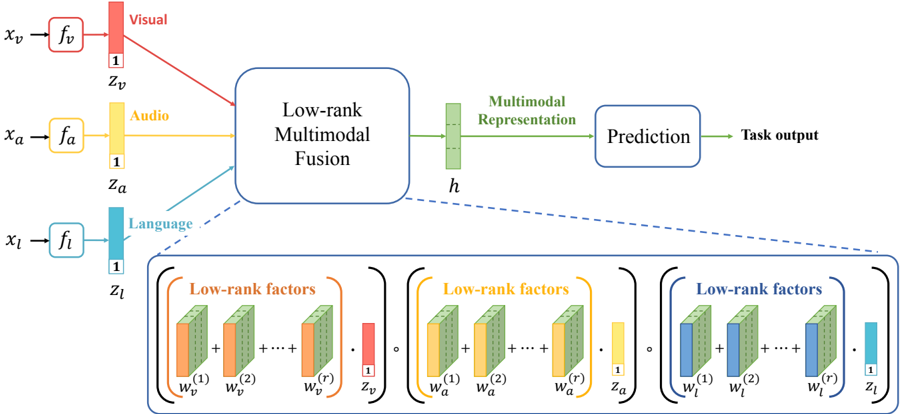
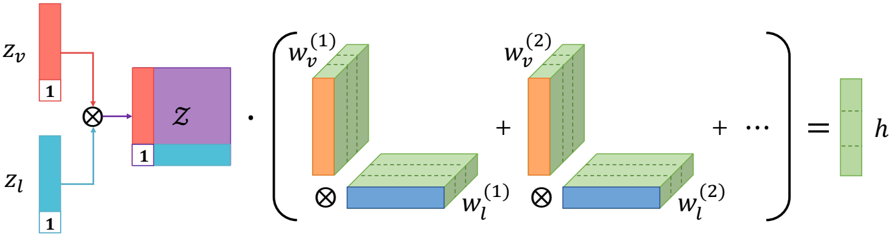
“2)LMF (Liu et al., 2018) Factorizes the high-order weight tensor into modality-specific low-rank factors, eliminating the need to explicitly construct high-dimensional tensors and thus mitigating the exponential growth in computational cost and parameter count that plagues tensor-based multi-modal fusion.”
InfluentialDGFN: Disentanglement-guided dynamic fusion network for multimodal sentiment analysis
Han, C., Gao, H., & Chen, L. (2026) · Expert Systems with Applications · doi:10.1016/j.eswa.2026.132110 · Cited by 3
Meng, C., Luo, J., Feng, P., Yan, Z., Hu, C., Gan, Z., & Ouyang, C. (2026) · ACM International Conference on Multimedia (ACM MM) · doi:10.1145/3767308.3834916 · Cited by 3
Miyoshi, R., Otani, M., & Okafuji, Y. (2026) · IEEE Winter Conference on Applications of Computer Vision · doi:10.1109/wacv61042.2026.00476 · Cited by 3
Bridging the silos in affective AI: a critical perspective from data to society
Inoshita, K. (2026) · AI & Society · doi:10.1007/s00146-026-03324-y · Cited by 5
Zhang, Y., Zhang, X., Zhao, S., Song, Y., Wu, C., Petrović, N., & Knoll, A. C. (2026) · IEEE Intelligent Vehicles Symposium · doi:10.1109/iv66570.2026.11624007 · Cited by 3
“…fusion enhances generalization and robustness in perception [1], [2], it introduces efficiency challenges: continuously activating all modalities incurs unnecessary computational overhead and latency, with diminishing accuracy gains when redundant or low-quality modalities are included [3].”
Information Bottleneck based Representation Learning for Multimodal Sentiment Analysis
Zhang, T., Zhang, H., Xiang, S., & Wu, T. (2022) · International Conference on Control Engineering and Artificial Intelligence (CCEAI) · doi:10.1145/3522749.3523069 · Cited by 3
“Low-rank Multimodal Fusion (LMF) [5] proposed methods to decomposes high-dimensional tensor into multi low-rank factors to perform tensor fusion more efficiently.”
MethodCross-modal Multiple Granularity Interactive Fusion Network for Long Document Classification
Liu, T., Hu, Y., Gao, J., Sun, Y., & Yin, B. (2024) · ACM Transactions on Knowledge Discovery from Data · doi:10.1145/3631711 · Cited by 3
Multimodal Sentiment Analysis Data Sets and Preprocessing
Xu, H. (2023) · Springer eBooks · doi:10.1007/978-981-99-5776-7_2 · Cited by 3
Integrative Sentiment Analysis: Leveraging Audio, Visual, and Textual Data
Chu, J. S., & Ghanta, S. (2024) · International Conference on AI, Machine Learning and Applications (AIMLA) · doi:10.5121/csit.2024.140211 · Cited by 3
Multimodal Sentiment Analysis Based on Information Bottleneck and Attention Mechanisms
Chen, X., Wu, Z., Tang, Y., & Han, R. D. (2023) · International Conference on Cloud Computing, Big Data Application and Software Engineering (CBASE) · doi:10.1109/cbase60015.2023.10439124 · Cited by 3
“The alternative strategy involves changing the spatial orientation of unimodal vectors through geometric manipulation of the feature space, such as matrix decomposition [6].”
MethodSemantic-specific multimodal relation learning for sentiment analysis
Wu, R., Luo, Y., Liu, J., & Tang, X. (2024) · Neural Computing and Applications · doi:10.1007/s00521-024-09644-8 · Cited by 3
MSA-HCL: Multimodal sentiment analysis model with hybrid contrastive learning
Zhao, W., Zhang, Y., Hua, Q., Dong, C.-R., Wang, J., & Zhang, F. (2024) · Mathematical Foundations of Computing · doi:10.3934/mfc.2024017 · Cited by 3
Ma, Y., He, J., Tan, D., Han, X., Feng, R., Xiong, H., Peng, X., Pu, X., Zhang, L., Li, Y., et al. (2024) · Journal of X-Ray Science and Technology · doi:10.3233/xst-240083 · Cited by 3
Aspect Based Sentiment Analysis on Multimodal Data: A Transformer and Low-Rank Fusion Approach
Jin, M., Shao, L., Wang, X., Yan, Q., Chu, Z., Luo, T., Tang, J., & Gao, Q. (2024) · International Conference on Computer Communication and Artificial Intelligence (CCAI) · doi:10.1109/ccai61966.2024.10603022 · Cited by 3
“At the same time, vector splicing may lead to information loss, which is realized in this paper by introducing low-rank fusion [13].”
BackgroundMATF: main-auxiliary transformer fusion for multi-modal sentiment analysis
Zhong, Q., & Shao, X.-H. (2024) · Soft Computing · doi:10.1007/s00500-024-09886-7 · Cited by 3
Huang, J., Chen, W., Wang, F., & Zhang, H. (2024) · Electronics · doi:10.3390/electronics13204137 · Cited by 3
Transferring Personality Knowledge to Multimodal Sentiment Analysis
Zhu, K., Liu, X., Xie, H., Cai, C., Fu, R., Li, G., Wen, Z., Tao, J., Fan, C., Lv, Z., et al. (2024) · International Symposium on Chinese Spoken Language Processing (ISCSLP) · doi:10.1109/iscslp63861.2024.10800671 · Cited by 3
Multimodal Emotion Recognition Based on Hierarchical Feature Fusion
Xie, Y., Zhou, N., & Zhu, S.-Y. (2025) · 電腦學刊 · doi:10.63367/199115992025043602019 · Cited by 3
Feng, C., Yang, H., Wang, S., & Li, X. (2025) · The Journal of Supercomputing · doi:10.1007/s11227-025-07474-6 · Cited by 3
“Liu et al. [29] utilized low-rank multimodal fusion decomposes stacked high-order tensors into many low-rank factors and then performs efficient fusion based on these factors.”
Tian, E., Zhao, S., Huang, M., Pan, Y., Wang, Y., & Li, Z. (2025) · Computers, materials & continua/Computers, materials & continua (Print) · doi:10.32604/cmc.2025.066476 · Cited by 3
Chang, H.-Y., Liu, A.-S., Lin, Y., Liu, C., Lee, L.-E., Chen, F., Hung, S., & Fu, L. (2025) · IEEE Journal of Biomedical and Health Informatics · doi:10.1109/jbhi.2025.3604933 · Cited by 3
Contrastive learning with mirror-task for multimodal sentiment analysis
Shi, H., Zhou, L., Pu, Y., Zhao, Z., Gu, J., & Xu, D. (2025) · Applied Soft Computing · doi:10.1016/j.asoc.2025.113896 · Cited by 3
Hierarchical Multi-Modal Transformer for Cross-Modal Long Document Classification
Liu, T.-F., Hu, Y.-L., Gao, J.-B., Sun, Y.-F., & Yin, B.-C. (2024) · IEEE transactions on multimedia · doi:10.1109/tmm.2025.3608295
“In this section, we evaluate the proposed HMT model on two newly created and two publicly available multi-modal long document datasets and compare it with the state-of-the-art LDC methods, including both single text and multi-modal methods.”
Bimodal Emotion Recognition for the Patients with Depression
Wang, X., Zhao, S., & Wang, Y. (2021) · IEEE International Conference on Signal and Image Processing (ICSIP) · doi:10.1109/icsip52628.2021.9688837 · Cited by 4
“In 2018, Liu [4] put forward a kind of low rank multimodal fusion network, and the purpose is to solve the Zadeh 2017 combination of tensor of network reasoning in training high computational complexity, the dimension in the process of growth and the computational complexity from exponential to linear growth.”
BackgroundSemi-Tensor Product based Multi-modal Fusion Method for Emotion Recognition
Liu, F., Chen, J., Li, K., & Bai, J. (2022) · IEEE International Conference on Signal Processing, Communications and Computing (ICSPCC) · doi:10.1109/icspcc55723.2022.9984246 · Cited by 3
Tensorized Optical Multimodal Fusion Network
Zhao, Y., Xiao, X., Kurczveil, G., Beausoleil, R. G., & Zhang, Z. (2023) · Conference on Lasers and Electro-Optics · doi:10.1364/cleo_si.2023.sf3e.3 · Cited by 3
Exploiting Multi-modal Fusion for Robust Face Representation Learning with Missing Modality
Zhu, Y., Xin, S., & Zhou, X. (2023) · Lecture notes in computer science · doi:10.1007/978-3-031-44210-0_23 · Cited by 3
Progressive Fusion Network with Mixture of Experts for Multimodal Sentiment Analysis
Liu, D., Yang, Z., & Guo, Z. (2024) · International Conference on Advanced Computational Intelligence (ICACI) · doi:10.1109/icaci60820.2024.10537022 · Cited by 3
“…of PFME with the following baseline models for multimodal sentiment analysis: Tensor Fusion Network (TFN) [3], Low-rank Multimodal Fusion (LMF) [24], Multimodal Factorization Model (MFM) [25], Memory Fusion Network (MFN) [26], Multimodal Transformer (MulT) [27], Interaction Canonical…”
MethodShi, L., Xu, F., Wang, R., Wei, Y., Wang, G., Wang, B., & Liu, P. (2024) · IEEE International Conference on Multimedia and Expo (ICME) · doi:10.1109/icme57554.2024.10687981 · Cited by 3
Zhao, X., Qu, L., Feng, T., Cai, J., & Tang, B. (2024) · ACM International Conference on Multimedia (ACM MM) · doi:10.1145/3664647.3681056 · Cited by 3
“The current MSA methods only train and test on a specific domain, and do not consider the generalization ability of the model.”
Hermosillo-Reynoso, F., & Torres-Román, D. (2024) · Sensors · doi:10.3390/s24237463 · Cited by 3
Deep Learning-Based Survival Prediction for Breast Cancer Using Multi-Modal Data
Ning, T., Kui, X., & Ma, B. (2024) · International Conference on Computer Science and Network Technology (ICCSNT) · doi:10.1109/iccsnt62291.2024.10776668 · Cited by 3
Zhang, T., Tan, J., Xiong, Z., Wu, B., & Zheng, C. (2025) · IEEE International Conference on Acoustics Speech and Signal Processing · doi:10.1109/icassp49660.2025.10888426 · Cited by 3
“To demonstrate the effectiveness of CAMAL, we compare it with several widely used DNNs: LMF [34], MISA [35], Self-MM [36], CubeMLP [37], LAD [1], and CLUE [23].”
Adversarial Training and Cross-modal Feature Fusion in Multimodal Sentiment Analysis
Li, J., Lin, C., Wang, H., Zhi, Y., Chen, J., & Huang, T. (2025) · IEEE International Conference on Acoustics Speech and Signal Processing · doi:10.1109/icassp49660.2025.10890023 · Cited by 3
“Early studies used manual word-level alignment to address the misalignment of modalities [3], but this approach relies heavily on expert knowledge, limiting its practical application.”
Parallel Pathway Convolutional Neural Network with Low-rank Fusion for Brain Age Prediction
Shen, X., Huang, J., Sun, Y., Li, M., Pan, B., & Ding, W. (2021) · IEEE International Conference on Digital Twins and Parallel Intelligence (DTPI) · doi:10.1109/dtpi52967.2021.9540107 · Cited by 3
NFCMF: Noise Filtering and CrossModal Fusion for Multimodal Sentiment Analysis
Su, G., He, J., Li, X., Lu, M., & Yang, H. (2021) · International Conference on Asian Language Processing · doi:10.1109/ialp54817.2021.9675197 · Cited by 3
Bi-attention Modal Separation Network for Multimodal Video Fusion
Du, P., Gao, Y., & Li, X. (2022) · Lecture notes in computer science · doi:10.1007/978-3-030-98358-1_46 · Cited by 3
IMCN: Identifying Modal Contribution Network for Multimodal Sentiment Analysis
Zhang, Q., Shi, L., Liu, P., Zhu, Z., & Xu, L. (2022) · Proceedings - International Conference on Pattern Recognition/Proceedings/International Conference on Pattern Recognition · doi:10.1109/icpr56361.2022.9956114 · Cited by 3
“[5] proposed a low-rank multimodal fusion method with reduced computational complexity.”
MethodTransformer-based Multimodal Contextual Co-encoding for Humour Detection
Deng, B., Tian, J., & Li, H. (2022) · International Conference on Culture-oriented Science & Technology (ICCST) · doi:10.1109/cost57098.2022.00067 · Cited by 3
Learning from Fourier: Leveraging Frequency Transformation for Emotion Recognition
Wang, B., Dong, G., Zhao, Y., & Li, R. (2023) · Lecture notes in computer science · doi:10.1007/978-3-031-30108-7_34 · Cited by 3
A Multi-View Co-Learning Method for Multimodal Sentiment Analysis
Geng, W., Bian, Y., & Li, X. (2023) · IEEE International Conference on Multimedia and Expo (ICME) · doi:10.1109/icme55011.2023.00238 · Cited by 4
“The models proposed in this paper are compared with single-task models (EF_LSTM, MFN, LF_DNN, TFN, and LMF) and multi-task models (MLF_DNN, MTFN, and MLMF), and the experimental results are shown in TableⅡ.”
MethodInfluentialPMFNet: A Progressive Multichannel Fusion Network for Multimodal Sentiment Analysis
Li, J., Tao, C., & Guan, D. (2023) · Communications in computer and information science · doi:10.1007/978-981-99-8181-6_21 · Cited by 3
Empowering Language Model with Guided Knowledge Fusion for Biomedical Document Re-ranking
Gupta, D. P., & Demner‐Fushman, D. (2024) · Lecture notes in computer science · doi:10.1007/978-3-031-66538-7_25 · Cited by 3
Poh, J. Q., See, J., Gayar, N. E., & Wong, L.-K. (2024) · International Workshop on Multimodal and Responsible Affective Computing (MRAC) · doi:10.1145/3689092.3689409 · Cited by 3
“D convolutional layer and a Trans-former encoder with 3 heads and 3 layers with an embedding di-mension of 64 units, and Low Rank Tensor Fusion [20] with rank 10.”
RPFNET: Complementary Feature Fusion for Hand Gesture Recognition
Kim, D. Y., Kim, D. H., & Song, B. C. (2022) · Proceedings - International Conference on Image Processing · doi:10.1109/icip46576.2022.9897351 · Cited by 3
“To realize this, we employ the concept of low-rank pooling (LRP) [6, 7].”
MethodA Multimodal Sentiment Dataset for Video RecommendationPreprint
Tang, H., Liu, H., Xiao, X., & Wu, H. R. (2021) · arXiv (Cornell University) · doi:10.48550/arxiv.2109.08333 · Cited by 3
“, 2017), Low-rank Multimodal Fusion (LMF) (Liu et al., 2018), Memory Fusion Network (MFN) (Zadeh et al.”
Tahon, M., Macary, M., Estève, Y., & Luzzati, D. (2021) · doi:10.36227/techrxiv.17104526.v1 · Cited by 3
EffMulti: Efficiently Modeling Complex Multimodal Interactions for Emotion AnalysisPreprint
Qiu, F., Xie, C., Ding, Y., & Kong, W. (2022) · arXiv (Cornell University) · doi:10.48550/arxiv.2212.08661 · Cited by 3
“The baseline methods include MFN [3], MV-LSTM [14], RAVEN [15], MulT [16], TFN [2], LMF [4], MFM [17], ICCN [18], MISA [5] and SSL[19].”
BackgroundMethodUncertainty-Aware Collaborative System of Large and Small Models for Multimodal Sentiment AnalysisPreprint
Han, S., Gao, M., Jiang, M., Jiang, Y., Hu, H., & Mai, S. (2025) · arXiv (Cornell University) · doi:10.48550/arxiv.2509.04459 · Cited by 3
“2) Low-rank Multimodal Fusion (LMF) [62]: Employs low-rank tensors for efficient multimodal fusion, significantly reducing computational complexity compared to traditional tensor-based methods.”
Expressive and Scalable Quantum Fusion for Multimodal LearningPreprint
Nguyen, T., Hoang, T. N., Nguyen, P. L., Vu, H. L., & Thang, T. C. (2025) · arXiv (Cornell University) · doi:10.48550/arxiv.2510.06938 · Cited by 3
“These include low-order fusion methods such as Concatenation and MFB [76], as well as scalable approaches like LMF [39] and GCNs [30].”
InfluentialOmniFuser: Adaptive Multimodal Fusion for Service-Oriented Predictive MaintenancePreprint
Wang, Z., Zhao, H., Yang, Y., Hu, D., Bao, C., Liu, M., Di, K., Dustdar, S., Wang, Z., & Deng, S. (2025) · arXiv (Cornell University) · doi:10.48550/arxiv.2511.01320 · Cited by 3
“Second, we include established multimodal fusion architectures: CDA [27], MBT [28], LMF [29], and TFN [30].”
Uncertainty-Guided Multimodal Consensus for Multimodal Sentiment AnalysisPreprint
Zhong, G., Li, J., Zhu, H., Huan, R., & Pan, Y. (2025) · arXiv (Cornell University) · doi:10.48550/arxiv.2510.20256 · Cited by 3
Qian, W., Zhao, H., Chen, T., Wang, Z., Chen, T., Ling, Z., Zhao, X., Chow, K., Zomaya, A. Y., & Deng, S. (2025) · arXiv (Cornell University) · doi:10.48550/arxiv.2508.01635 · Cited by 3
“To explicitly model this dynamic, we use Low-Rank Tensor Fusion [24], as illustrated in the lower part of Fig.”
MoLAN: A Unified Modality-Aware Noise Dynamic Editing Framework for Multimodal Sentiment AnalysisPreprint
Xu, X., Liu, Y., Cai, D., Feng, S., Yang, X., Wang, D., & Zhang, Y. (2025) · arXiv (Cornell University) · doi:10.48550/arxiv.2508.09145 · Cited by 3
“To achieve dynamic fine-grained denoising, MoLAN employs a blocking strategy that divides each modality into different sub-blocks.”
Expert-Guided Multimodal Fusion for Unified Emotion and Sentiment AnalysisPreprint
Qiao, J., Li, X., Lyu, Y., Xu, X., & Yu, L. (2026) · arXiv (Cornell University) · doi:10.48550/arxiv.2601.07565 · Cited by 3
Learning Shared Sentiment Prototypes for Adaptive Multimodal Sentiment AnalysisPreprint
Su, C., Tian, Y., & Song, Y. (2026) · arXiv (Cornell University) · doi:10.48550/arxiv.2604.05873 · Cited by 3
“TFN [57] uses tensor outer products to capture combinatorial interactions, LMF [29] reduces this cost through low-rank decomposition, and MFN [58] tracks cross-view dynamics with a memory mechanism.”
Wen, B., & Tan, T.-P. (2026) · arXiv (Cornell University) · doi:10.48550/arxiv.2606.05713 · Cited by 3
A multimodal framework for comprehensive driver variant prediction in cancer
Yang, H., Chen, Y., Zhou, T., Wang, Y., Zhou, Q., Xiao, T., Zhang, Q., Zhang, J., Li, D., & Wang, Z. (2025) · Communications Medicine · doi:10.1038/s43856-025-01209-7 · Cited by 2
Emotion Recognition Using Text and Speech Through Machine Learning
Singla, C., & Singh, S. (2023) · Lecture notes in electrical engineering · doi:10.1007/978-981-99-3656-4_33 · Cited by 2
NRAFN: a non-text reinforcement and adaptive fusion network for multimodal sentiment analysis
Wei, J., & Shao, X.-H. (2024) · Multimedia Tools and Applications · doi:10.1007/s11042-024-19433-z · Cited by 2
“As research progresses, an increasing number of multimodal fusion strategies have emerged, including tensor-based fusion [19,20], graph-based fusion [35,36], translation-based fusion [37,38], and attention-based fusion [39–41].”
Zhu, C., Chen, M., Li, H., Zhang, S., Liang, H., Sun, C., Liu, Y., & Chen, J. (2024) · Neural Computing and Applications · doi:10.1007/s00521-024-10678-1 · Cited by 2
Li, G., Liu, Y., Deng, W., Jia, Y., Zhang, A., & Qi, D. (2024) · International Conference on Cloud Computing, Big Data Application and Software Engineering (CBASE) · doi:10.1109/cbase64041.2024.10824600 · Cited by 2
Fine-grained Semantic Disentanglement Network for Multimodal Sarcasm Analysis
Tang, J., Ni, B., Zhou, F., Liu, D., Ding, Y., Peng, Y. K., Cichocki, A. S., Zhao, Q., & Kong, W. (2025) · ACM Transactions on Multimedia Computing Communications and Applications · doi:10.1145/3722558 · Cited by 2
“(3) For CMU-MOSI : TFN (Tensor Fusion Network) [44], LMF (Low-rank Multimodal Fusion) [24], MFM-Multimodal Factorization Model [37], ICCN (Interaction Canonical Correlation Network) [32], MulT [36], MISA (modality-invariant and-specific representations-based model) [14], MAG-Bert [30], Self-MM…”
Improving Multimodal Sentiment Analysis with Unimodal Pseudo-label Generation
Zhao, J., Deng, O., & Jin, Q. (2025) · Lecture notes in computer science · doi:10.1007/978-3-031-86193-2_11 · Cited by 2
Wang, S., Li, M., Hu, Y., & Ding, D. (2025) · IEEE Transactions on Antennas and Propagation · doi:10.1109/tap.2025.3562925 · Cited by 2
Dynamic Tuning and Multi-Task Learning-Based Model for Multimodal Sentiment Analysis
Liang, Y., Tohti, T., Hu, W., Kong, B., Han, D., Yan, T., & Hamdulla, A. (2025) · Applied Sciences · doi:10.3390/app15116342 · Cited by 3
Metadata
- Authors
- Liu, Z., Shen, Y., Lakshminarasimhan, V. B., Liang, P. P., Bagher Zadeh, A., & Morency, L.-P.
- Affiliations
- Carnegie Mellon University (US)
- Venue
- Proceedings of the 56th Annual Meeting of the Association for Computational Linguistics (Volume 1: Long Papers)
- Published
- 2018
- Pages
- 2247-2256
- ISSN
- 0736-587X (ISSN-L)
- OpenAlex
- W2964346351
- Cited by
- 1,170
- References
- 31
- Citations by year
- 2026: 213 · 2025: 262 · 2024: 255 · 2023: 176 · 2022: 126 · 2021: 85 · 2020: 39 · 2019: 12 · 2018: 2
- FWCI
- 10.40
- Type
- conference paper
- Language
- en
- Open access
- hybrid
- doi.org
- Licence
- cc-by
- Locations
- Proceedings of the conference - Association for Computational Linguistics. Meeting (publishedVersion, cc-by)
- Funders
- National Science Foundation
- Topics
- Physical Sciences › Computer Science › Computer Vision and Pattern Recognition › Multimodal Machine Learning Applications
- Physical Sciences › Engineering › Media Technology › Advanced Image Fusion Techniques
- Physical Sciences › Computer Science › Artificial Intelligence › Topic Modeling
- Keywords
- multimodal fusion, cross-modal representation learning
About these checks
Registry, retraction, Cites and statistics results are computed, not judged, with one exception: a printed reference that no index lists is read once by a model before it counts as a citation error. Claims are extracted by a model and kept only when their quote appears verbatim in the text; each cited source is then checked, with a model’s help, for whether it says what the claim relies on. Those verdicts can be wrong — read the claim’s quote and the cited source before relying on one.
Statistics and arithmetic are recomputed, not judged.
Confidence bands are shown only for fields calibrated on our annotated test set. None is calibrated yet, so no band is shown.
What counts as a claim ›How we measure confidence ›How we check this ›
Are you an author, or do you see a problem with this page? Request a review
Data sources
Bibliographic data: Semantic Scholar, OpenAlex, Crossref.
Contains information from the Semantic Scholar Academic Graph Datasets, made available under the ODC Attribution License (ODC-BY 1.0).
Semantic Scholar’s data is described in: Kinney, R., et al. (2023). The Semantic Scholar Open Data Platform. arXiv:2301.10140.
