

Efficient Low-rank Multimodal Fusion With Modality-Specific Factors
Open accessThe DOI matches its Crossref record; 33 of the 33 references it cites were found in a registry or an index.
Abstract
Zhun Liu, Ying Shen, Varun Bharadhwaj Lakshminarasimhan, Paul Pu Liang, AmirAli Bagher Zadeh, Louis-Philippe Morency. Proceedings of the 56th Annual Meeting of the Association for Computational Linguistics (Volume 1: Long Papers). 2018.
Overview
The claims and statistics of this paper haven’t been checked yet.
Free: it reads the open-access text and checks the first 5 claims that cite a source we can check. Create a free account to check every claim.
Integrity signals
Registry
Cites
Statistics
Figures
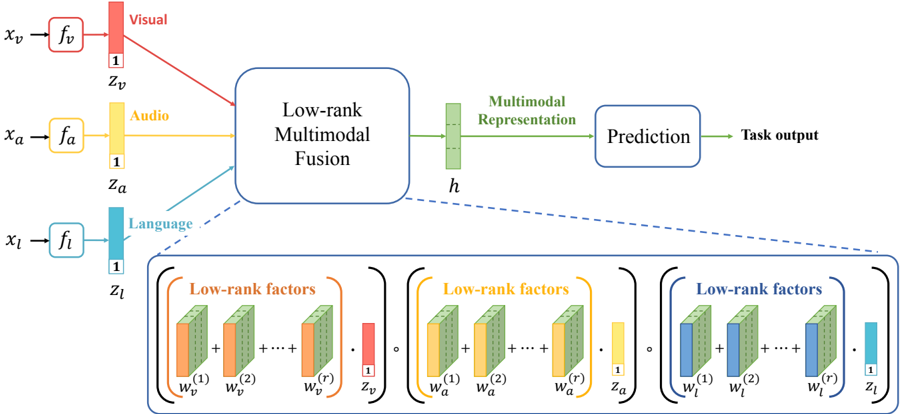
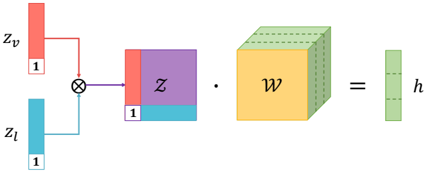
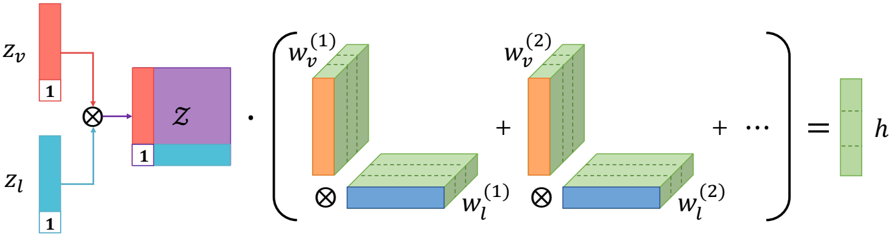
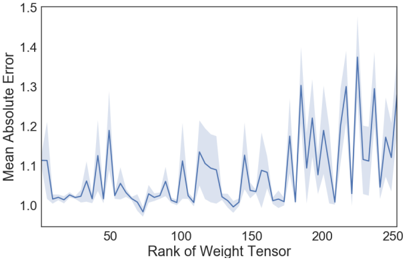
Verification
Claims the paper makes
The claims and statistics of this paper haven’t been checked yet.
Free: it reads the open-access text and checks the first 5 claims that cite a source we can check. Create a free account to check every claim.
Claims other papers make about this one
Each is checked against this paper’s own text: does it say what the citing paper says it does?
The cited source says what the claim attributes to it.
In the citing paper
“The experiment confirmed that the LMF effectively improves the training and testing efficiency compared to TFN.”
From A Survey of Deep Learning-Based Multimodal Emotion Recognition: Speech, Text, and Face (2023) · cites this paper as [100]
The cited source says what the claim attributes to it.
In the citing paper
“Several efficient variants have been proposed to approximate expensive full tensor products with cheaper variants while maintaining performance [71, 101, 106].”
From MultiBench: Multiscale Benchmarks for Multimodal Representation Learning (2021) · cites this paper as [106]
In the citing paper
“we compared vector concatenation and a low-rank implementation of Kronecker Product Fusion, which similarly outperform unimodal approaches (Table S3) (Liu et al., 2018).”
From Pan-cancer integrative histology-genomic analysis via multimodal deep learning (2022) · cites this paper as Liu et al., 2018
Self-check
Percentages, sums and reported differences re-computed from the paper’s own numbers.
The self-check needs the paper’s full text.
Citations
Cites
Hochreiter, S., & Schmidhuber, J. (1997) · Neural Computation · doi:10.1162/neco.1997.9.8.1735 · Cited by 102,318 · cited 4×
“Multi-View LSTM Multi-View LSTM (MV-LSTM) (Rajagopalan et al., 2016) aims to capture both modality-specific and cross-modality interactions from multiple modalities by partitioning the memory cell and the gates corresponding to multiple modalities.”
MethodInfluentialCortes, C., & Vapnik, V. (1995) · Machine Learning · doi:10.1007/bf00994018 · Cited by 59,421
Glove: Global Vectors for Word Representation
Pennington, J., Socher, R., & Manning, C. (2014) · Proceedings of the 2014 Conference on Empirical Methods in Natural Language Processing (EMNLP) · doi:10.3115/v1/d14-1162 · Cited by 34,071 · cited 1×
“Language We use pre-trained 300-dimensional Glove word embeddings (Pennington et al., 2014) to encode a sequence of transcribed words into a sequence of word vectors.”
MethodIEMOCAP: Interactive emotional dyadic motion capture database
Busso, C., Bulut, M., Lee, C.-C., Kazemzadeh, A., Mower, E., Kim, S., Chang, J. N., Lee, S., & Narayanan, S. S. (2008) · Language Resources and Evaluation · doi:10.1007/s10579-008-9076-6 · Cited by 3,869 · cited 4×
“We perform our experiments on the following multi-modal datasets, CMU-MOSI (Zadeh et al., 2016a POM (Park et al., 2014b), and IEMOCAP (Busso et al., 2008) for sentiment analysis, speaker traits recognition, and emotion recognition task, where the goal is to identify speakers emotions based on the speakers’ verbal and…”
BackgroundMethodInfluentialTensor Fusion Network for Multimodal Sentiment Analysis
Zadeh, A., Chen, M., Poria, S., Cambria, E., & Morency, L.-P. (2017) · Proceedings of the 2017 Conference on Empirical Methods in Natural Language Processing · doi:10.18653/v1/d17-1115 · Cited by 2,102 · cited 12×
“In addition, in order to be able to model the interactions between any subset of modalities using one tensor, Zadeh et al. (2017) proposed a simple extension to append 1 s to the unimodal representations before taking the outer product.”
BackgroundMethodInfluentialSelf-citationMultimodal Compact Bilinear Pooling for Visual Question Answering and Visual Grounding
Fukui, A., Park, D. H., Yang, D., Rohrbach, A., Darrell, T., & Rohrbach, M. (2016) · Proceedings of the 2016 Conference on Empirical Methods in Natural Language Processing · doi:10.18653/v1/d16-1044 · Cited by 1,582 · cited 6×
“, 2017), (Fukui et al., 2016) performs contextdependent fusion of multimodal data.”
BackgroundMethodResultInfluentialFast Human Detection Using a Cascade of Histograms of Oriented Gradients
Zhu, Q., Yeh, M.-C., Cheng, K.-T., & Avidan, S. (2006) · 2006 IEEE Computer Society Conference on Computer Vision and Pattern Recognition - Volume 2 (CVPR'06) · doi:10.1109/cvpr.2006.119 · Cited by 1,399 · cited 2×
“Visual The library Facet1 is used to extract a set of visual features for each frame (sampled at 30Hz) including 20 facial action units, 68 facial landmarks, head pose, gaze tracking and HOG features (Zhu et al., 2006).”
MethodMemory Fusion Network for Multi-view Sequential Learning
Zadeh, A., Liang, P. P., Mazumder, N., Poria, S., Cambria, E., & Morency, L.-P. (2018) · Proceedings of the AAAI Conference on Artificial Intelligence · doi:10.1609/aaai.v32i1.12021 · Cited by 855
Self-citationMultimodal Sentiment Intensity Analysis in Videos: Facial Gestures and Verbal Messages
Zadeh, A., Zellers, R., Pincus, E., & Morency, L.-P. (2016) · IEEE Intelligent Systems · doi:10.1109/mis.2016.94 · Cited by 852 · cited 6×
“We perform our experiments on the following multi-modal datasets, CMU-MOSI (Zadeh et al., 2016a POM (Park et al., 2014b), and IEMOCAP (Busso et al., 2008) for sentiment analysis, speaker traits recognition, and emotion recognition task, where the goal is to identify speakers emotions based on the…”
MethodInfluentialSelf-citationCOVAREP — A collaborative voice analysis repository for speech technologies
Degottex, G., Kane, J., Drugman, T., Raitio, T., & Scherer, S. (2014) · 2014 IEEE International Conference on Acoustics, Speech and Signal Processing (ICASSP) · doi:10.1109/icassp.2014.6853739 · Cited by 695 · cited 1×
“Acoustic We use COVAREP acoustic analysis framework (Degottex et al., 2014) to extract a set of low-level acoustic features, including 12 Mel frequency cepstral coefficients (MFCCs), pitch, voiced/unvoiced segmentation, glottal source, peak slope, and maxima dispersion quotient features.”
Method
Research works printed but not linked: 5
- [6]6. Gilles Degottex, John Kane, Thomas Drugman, Tuomo Raitio, and Stefan Scherer. 2014. Covarepa collabo- rative voice analysis repository for speech technolo- gies. In Acoustics, Speech and Signal Processing (ICASSP), 2014 IEEE International Conference on. IEEE, pages 960-964.
- [10]10. Othmar Koch and Christian Lubich. 2010. Dynami- cal tensor approximation. SIAM Journal on Matrix Analysis and Applications 31(5):2360-2375.
- [14]14. Sunghyun Park, Han Suk Shim, Moitreya Chatterjee, Kenji Sagae, and Louis-Philippe Morency. 2014a. Computational analysis of persuasiveness in social multimedia: A novel dataset and multimodal predic- tion approach. In Proceedings of the 16th Interna- tional Conference on Multimodal Interaction. ACM, pages 50-57.
- [22]22. Hongcheng Wang and Narendra Ahuja. 2008. A ten- sor approximation approach to dimensionality re- duction. International Journal of Computer Vision 76(3):217-229.
- [24]24. Torsten Wortwein and Stefan Scherer. 2017. What really mattersan information gain analysis of ques- tions and reactions in automated ptsd screenings. In 2017 Seventh International Conference on Affective Computing and Intelligent Interaction (ACII). IEEE, pages 15-20.
Cited by
Items 601–700 of 1,001
Multimodal intent recognition based on text-guided cross-modal attention
Li, Z., Peng, J., Lin, X., & Cai, Z. (2025) · Applied Intelligence · doi:10.1007/s10489-025-06583-2 · Cited by 11
Chen, M., Liu, J., Li, X., Zhang, Y., Liu, H., Jiao, J., & He, H. (2025) · IEEE Transactions on Affective Computing · doi:10.1109/taffc.2025.3569089 · Cited by 11
Aspect-level multimodal sentiment analysis model based on multi-scale feature extraction
Miao, B., & Xu, C. (2025) · Scientific Reports · doi:10.1038/s41598-025-16051-z · Cited by 11
“The Low-Rank Multimodal Fusion 22 method reduces computational complexity from exponential to linear through tensor decomposition, but its low-rank approximation sacrifices high-order interaction information, weakening the model’s capacity to capture complex affective cues.”
Wang, Y., Yang, M., Guo, X., & Mu, H. (2025) · Expert Systems with Applications · doi:10.1016/j.eswa.2025.130475 · Cited by 11
He, X., Pan, Y., Xu, Z., Li, Z., Guo, X., & Yang, C. (2025) · IEEE Transactions on Affective Computing · doi:10.1109/taffc.2025.3614159 · Cited by 12
Wang, Z., Yu, Z., Zhu, Y., Zhao, B., Liang, H., Wang, T., Xia, W., Zhang, J., Liu, Z., Ma, H., et al. (2026) · ACM International Conference on Multimedia (ACM MM) · doi:10.1145/3767308.3835848 · Cited by 11
Self-citationMulti-source Heterogeneous Data Fusion Algorithm Based on Federated Learning
Zhou, J., & Lei, Y. (2023) · Communications in computer and information science · doi:10.1007/978-981-99-0405-1_4 · Cited by 11
Multimodal Sentiment Analysis Using BiGRU and Attention-Based Hybrid Fusion Strategy
Liu, Z., Zhou, B., Meng, L., & Huang, G. (2023) · Intelligent Automation & Soft Computing · doi:10.32604/iasc.2023.038835 · Cited by 12
Self-citationMulti-modal long document classification based on Hierarchical Prompt and Multi-modal Transformer
Liu, T., Hu, Y., Gao, J., Wang, J., Sun, Y., & Yin, B. (2024) · Neural Networks · doi:10.1016/j.neunet.2024.106322 · Cited by 11
Yang, S., Cai, J., & Liao, L. (2024) · Journal of Intelligent Information Systems · doi:10.1007/s10844-024-00858-9 · Cited by 11
Jin, T., Wang, L., Wang, Y., Li, L., Cheng, X., & Zhao, Z. (2024) · Proceedings of the conference - Association for Computational Linguistics. Meeting · doi:10.18653/v1/2024.acl-long.287 · Cited by 11
Ji, M., Wei, N., Zhou, J., & Wang, X. (2024) · Electronics · doi:10.3390/electronics13214175 · Cited by 11
Deep Collaborative Multi-Modal Learning for Unsupervised Kinship Estimation
Dong, G.-N., Pun, C.-M., & Zhang, Z. (2021) · IEEE Transactions on Information Forensics and Security · doi:10.1109/tifs.2021.3098165 · Cited by 11
Multisensory Concept Learning Framework Based on Spiking Neural Networks
Wang, Y., & Zeng, Y. (2022) · Frontiers in Systems Neuroscience · doi:10.3389/fnsys.2022.845177 · Cited by 11
“, 2018a), and tensor fusion networks (Zadeh et al., 2017; Liu et al., 2018; Verma et al., 2019).”
Second Grand-Challenge and Workshop on Multimodal Language (Challenge-HML)
(2020) · doi:10.18653/v1/2020.challengehml-1 · Cited by 13
“We utilize the method as described in (Liu et al., 2018).”
BackgroundMethodInfluentialBG-HGNN: Toward Efficient Learning for Complex Heterogeneous GraphsPreprint
Su, J., Mao, L., Da, Z., & Wu, C. (2024) · arXiv (Cornell University) · doi:10.48550/arxiv.2403.08207 · Cited by 11
Meta-Learn Unimodal Signals with Weak Supervision for Multimodal Sentiment AnalysisPreprint
Mai, S., Zhao, Y. H., Zeng, Y., Yao, J., & Hu, H. (2024) · arXiv (Cornell University) · doi:10.48550/arxiv.2408.16029 · Cited by 11
“…multimodal tensor, enabling the simultaneous acquisition of unimodal, bimodal, and trimodal interactions; 5) Low-rank Modality Fusion ( LMF ) [75], which utilizes low-rank weight tensors to address the intricate challenges associated with tensor fusion; 6) MultiModal InfoMax ( MMIM ) [61],…”
BackgroundFoundations of Multisensory Artificial Intelligence
Liang, P. P. (2024) · arXiv (Cornell University) · doi:10.1184/r1/26239949 · Cited by 11
Self-citationAf-CAN: Multimodal Emotion Recognition Method Based on Situational Attention Mechanism
Zhang, X., Wang, M., Zeng, X., & Zhuang, X. (2024) · IEEE Access · doi:10.1109/access.2024.3471613 · Cited by 10
“With the development of deep learning technology, the new generation of research is becoming inclined towards more intricate fusion network designs, thereby facilitating fusion at the level of feature representation [24], [25], [26].”
Liu, Z., Yin, Z., Mi, Z., Guo, B., & Zheng, Z. (2025) · Mathematics · doi:10.3390/math13081218 · Cited by 10
Self-citationMamba-assisted modality subspace complementary fusion for multimodal sentiment analysis
Chen, Q., Tang, Y., & Liu, H. (2025) · Pattern Recognition Letters · doi:10.1016/j.patrec.2025.03.021 · Cited by 10
Bi, X., & Zhang, T. (2025) · PeerJ Computer Science · doi:10.7717/peerj-cs.2890 · Cited by 10
Adaptive Graph Learning with Multimodal Fusion for Emotion Recognition in Conversation
Liu, J., Li, J., Dong, J., Mo, Z., Liu, N., Li, Q., & Yuan, Y. (2025) · Biomimetics · doi:10.3390/biomimetics10070414 · Cited by 10
“The baseline models include the Tensor Fusion Network (TFN), COGMEN, Multimodal Factorization Model (MFM) [55], Low-rank Multimodal Fusion (LMF) [56], Interaction Canonical Correlation Network (ICCN) [57], Self-MM [58], and MMIM [59].”
Deng, Q., Zhang, Z., Tu, X., Wang, Z., & Wu, J. (2025) · Engineering Applications of Artificial Intelligence · doi:10.1016/j.engappai.2025.112423 · Cited by 11
Yan, K., Lai, P., Zheng, X., Yang, Y., Ren, Y. C., Badarch, T., & Chen, Y. (2025) · Engineering Applications of Artificial Intelligence · doi:10.1016/j.engappai.2025.112923 · Cited by 10
Quan, Z., Sun, T., Su, M., Wei, J., Zhang, X., & Zhong, S. (2022) · Conference proceedings/Conference proceedings - IEEE International Conference on Systems, Man, and Cybernetics · doi:10.1109/smc53654.2022.9945514 · Cited by 10
“• LMF: Low-order multimodal fusion (LMF) [8] is an improvement of TFN, and LMF uses low-order multimodal tensor fusion techniques to improve efficiency.”
BackgroundHe, P., Qi, H., Wang, S., & Cang, J. (2023) · Applied Sciences · doi:10.3390/app13137489 · Cited by 10
Detection Of Public Speaking Anxiety: A New Dataset And Algorithm
Song, W., Wu, B., Zheng, C., & Zhang, H. (2023) · IEEE International Conference on Multimedia and Expo (ICME) · doi:10.1109/icme55011.2023.00448 · Cited by 10
“The Low-rank Multimodal Fusion (LMF) [11] optimizes the TFN time complexity using modality-specific low-rank factors.”
MethodA multimodal fusion method for soldering quality online inspection
Xie, J., Guo, Y. H., Liu, D., Huang, S., Zheng, K., & Tao, Y. (2024) · Journal of Intelligent Manufacturing · doi:10.1007/s10845-024-02413-3 · Cited by 10
“…& Salakhutdinov, 2012 ), text and audio (Neumayer et al., 2007; Laurier et al., 2008 ), audio and video (Ngiam et al., 2011; Srivastava & Salakhutdinov, 2012 ; Schindler & Rauber, 2015), text, audio and video (Zadeh et al., 2017 ; Liu et al., 2018 ), etc., through which the data is represented.”
Yu, B., & Shi, Z. (2024) · The Journal of Supercomputing · doi:10.1007/s11227-024-06422-0 · Cited by 10
“Previously proposed fusion methods include tensor-based models [6, 7], graph-based models [8, 9], and seq2seq-based models [10, 11].”
Multimodal Emotion Fusion Mechanism and Empathetic Responses in Companion Robots
Liu, X., Lv, Q., Li, J., Song, S., & Cangelosi, A. (2024) · IEEE Transactions on Cognitive and Developmental Systems · doi:10.1109/tcds.2024.3442203 · Cited by 10
Multi-modal Intent Detection with LVAMoE: the Language-Visual-Audio Mixture of Experts
Li, T., Bao, J., Qin, J., Liang, Y., Zhang, R., & Wang, J. (2024) · IEEE International Conference on Multimedia and Expo (ICME) · doi:10.1109/icme57554.2024.10688018 · Cited by 10
“Liu et al [10], on the other hand, proposed a low-rank multimodal fusion strategy, which improves computational efficiency through low-rank Tensor Fusion and demonstrates superior performance on multiple tasks.”
BackgroundWang, Z., Wang, Y., Wang, X., Zhao, B., & Zhao, Y. (2024) · Journal of the Global Power and Propulsion Society · doi:10.33737/jgpps/191169 · Cited by 10
Agnostic-Specific Modality Learning for Cancer Survival Prediction From Multiple Data
Liu, H., Shi, Y., Xu, Y., Li, A., & Wang, M. (2024) · IEEE Journal of Biomedical and Health Informatics · doi:10.1109/jbhi.2024.3481310 · Cited by 10
CMDN: Continuous Human Activity Recognition Based on Multidomain Radar Data Fusion
Feng, X., Chen, P., Weng, Y., & Zheng, H. (2025) · IEEE Sensors Journal · doi:10.1109/jsen.2025.3530921 · Cited by 10
“3) Low-rank multimodal fusion (LMF), which captures various mutual information contained in multimodal data by creating higher-order tensors, applies tensor decomposition to tensor fusion networks, and utilizes low-rank characteristics to optimize tensor fusion networks [36].”
Audio–visual self-supervised representation learning: A survey
Alsuwat, M. S., Al-Shareef, S., & Alghamdi, M. (2025) · Neurocomputing · doi:10.1016/j.neucom.2025.129750 · Cited by 11
Generating Medical Report via Joint Probability Graph Reasoning
Zhang, J., Cheng, M., Li, X., Shen, X., Liu, Y., & Wan, Y. (2025) · Tsinghua Science & Technology · doi:10.26599/tst.2024.9010058 · Cited by 10
Wang, C., Zhang, Q., Dong, J., Fang, H., Schaefer, G., Liu, R., & Yi, P. (2025) · Knowledge-Based Systems · doi:10.1016/j.knosys.2025.113638 · Cited by 10
Wang, Z., Lu, Z., Zeng, C., Dong, S., Zuo, M., & Sun, J. (2025) · IEEE Transactions on Computational Social Systems · doi:10.1109/tcss.2025.3574663 · Cited by 12
Grifoni, P., D’Ulizia, A., & Ferri, F. (2021) · IEEE Access · doi:10.1109/access.2021.3061756 · Cited by 10
“[60] approximated this network by proposing a low-rank model.”
BackgroundMethodMT-TCCT: Multi-task Learning for Multimodal Emotion Recognition
Wang, Y., Chen, Z., Chen, S., & Zhu, Y. (2022) · Lecture notes in computer science · doi:10.1007/978-3-031-15934-3_36 · Cited by 10
LRF-WiVi: A WiFi and Visual Indoor Localization Method Based on Low-Rank Fusion
Liu, W., Qin, C., Deng, Z., & Jiang, H. (2022) · Sensors · doi:10.3390/s22228821 · Cited by 10
“Some studies use low-rank approximation to make tensor training more efficient and easier to handle, which has been successfully applied to face recognition [30] and multimodal emotion analysis [31] tasks.”
MSFNet: modality smoothing fusion network for multimodal aspect-based sentiment analysis
Xiang, Y., Cai, Y., & Guo, J. (2023) · Frontiers in Physics · doi:10.3389/fphy.2023.1187503 · Cited by 10
“[18] proposed an improved low-rank multimodal fusion network based on tensor fusion network, which uses low-rank tensors to reduce the computational complexity of tensor-based methods and achieve better performance.”
BackgroundCMENet: A Cross-Modal Enhancement Network for Tobacco Leaf Grading
He, Q., Zhang, X., Hu, J., Sheng, Z., Li, Q., Cao, S.-Y., & Shen, H. (2023) · IEEE Access · doi:10.1109/access.2023.3321111 · Cited by 11
“The accuracy rate measures the ratio of correct predictions over the total number of instances evaluated.”
BackgroundPowerset Fusion Network for Target Classification in Unattended Ground Sensors
Wang, Y., Cheng, X., Xiang, L., Li, B., & Yuan, X. (2021) · IEEE Sensors Journal · doi:10.1109/jsen.2021.3067648 · Cited by 10
MMTrans-MT: A Framework for Multimodal Emotion Recognition Using Multitask Learning
Shen, J., Zheng, J., & Wang, X. (2021) · International Conference on Advanced Computational Intelligence (ICACI) · doi:10.1109/icaci52617.2021.9435906 · Cited by 10
“In Liu’s work [13], an effecient low-rank method was developed, which achieved competitive results.”
MethodSeq2Tens: An Efficient Representation of Sequences by Low-Rank Tensor Projections
Tóth, C., Bonnier, P., & Oberhauser, H. (2020) · Oxford University Research Archive (ORA) (University of Oxford) · doi:10.48550/arxiv.2006.07027 · Cited by 11
“We also employ techniques such as time-embeddings (Liu et al., 2018a), sequence differencing and batch normalization, see Appendix D.1; Appendix E.1 for further details on the experiment and Figure 2 in thereof for a visualization of the architectures.”
BackgroundMethodSimMMDG: A Simple and Effective Framework for Multi-modal Domain GeneralizationPreprint
Dong, H., Nejjar, I., Sun, H., Chatzi, E., & Fink, O. (2023) · arXiv (Cornell University) · doi:10.48550/arxiv.2310.19795 · Cited by 10
“In our comparisons, we evaluate our method against Late Fusion, Low-rank Tensor Fusion (LMF) [48], and Multimodal Transformer Fusion (MULT) [62].”
MethodCooperative Sentiment Agents for Multimodal Sentiment AnalysisPreprint
Wang, S., Shuai, H., Liu, Q., & Wang, F. (2024) · arXiv (Cornell University) · doi:10.48550/arxiv.2404.12642 · Cited by 10
“It has derived diverse modality-fusion strategies, including tensor-based operations [1], [2], Canonical Correlation Analysis • Shanmin Wang, PhD candidate in College of Computer Science and Technology in Nanjing University of Aeronautics and Astronautics, Nanjing, China.”
BackgroundMethodA Comprehensive Survey on Multi-Modal Conversational Emotion Recognition with Deep LearningPreprint
Shou, Y., Meng, T., Ai, W., Yin, N., & Li, K. (2024) · SSRN Electronic Journal · doi:10.2139/ssrn.5017731 · Cited by 10
Intelligent Agents with Emotional Intelligence: Current Trends, Challenges, and Future ProspectsPreprint
Zall, R., Kheyrkhah, A., Cambria, E., Naseri, Z., & Kangavari, M. R. (2025) · arXiv (Cornell University) · doi:10.48550/arxiv.2511.20657 · Cited by 10
Nie, X., Yi, L., Yang, L. T., Deng, X., Fan, F., & Zhang, H. (2024) · IEEE Transactions on Consumer Electronics · doi:10.1109/tce.2024.3470243 · Cited by 9
Multi-level Conflict-Aware Network for Multi-modal Sentiment Analysis
Gao, Y., Wu, H., & Zhang, L. (2025) · IEEE International Conference on Acoustics Speech and Signal Processing · doi:10.1109/icassp49660.2025.10888597 · Cited by 9
“Some of the earlier works focus on the interaction between different modalities on low-level features, which results in limited fusion performance [1, 6, 7].”
Cui, Z., Li, Y., & Tran, L. (2025) · IEEE Wireless Communications and Networking Conference · doi:10.1109/wcnc61545.2025.10978208 · Cited by 9
“The baselines include WiFi-based methods (FreeCount [24], WiCount [25]) and multimodal fusion meth-ods, including Early Fusion LSTM (EF-LSTM) [26], Late Fusion LSTM (LF-LSTM) [26], Low-rank Multimodal Fusion method (LMF) [27], and Transformer Routing (TRAR) [28].”
Multimodal Fusion Framework Based on Low-Rank Interaction for Tumor Prognostic Prediction
An, Y., Lan, R., Lin, H., Wang, Y., Deng, H., Liu, Z., Wang, L., Liu, Z., Lu, C. Y., Yang, H., et al. (2025) · IEEE Transactions on Computational Biology and Bioinformatics · doi:10.1109/tcbbio.2025.3578334 · Cited by 9
Self-citationMultimodal Transformers are Hierarchical Modal-wise Heterogeneous Graphs
Jin, Y., Peng, J., Lin, X., Yuan, H., Wang, L., & Zheng, C. (2025) · Proceedings of the conference - Association for Computational Linguistics. Meeting · doi:10.18653/v1/2025.acl-long.109 · Cited by 9
A Multimodal Sentiment Analysis Approach Based on Multiview Cross-Modal Fusion
Zhi, Y., Li, J., Wang, H., & Chen, J. (2025) · IEEE Transactions on Computational Social Systems · doi:10.1109/tcss.2025.3583711 · Cited by 10
Partial Information Decomposition via Normalizing Flows in Latent Gaussian Distributions
Zhao, W., Balachandran, A. P., Tian, C., & Liang, P. P. (2025) · neural information processing systems · doi:10.52202/085713-0159 · Cited by 9
Self-citationMOTIF: A text-aware and disentangled Mamba-based architecture for multimodal sentiment analysis
Hu, B., & Li, Y. (2025) · Knowledge-Based Systems · doi:10.1016/j.knosys.2025.114651 · Cited by 9
Fen, L., Chen, J., Li, K., Bai, J., Tan, W., Cai, C., & Ayub, M. S. (2023) · Digital Signal Processing · doi:10.1016/j.dsp.2023.104265 · Cited by 9
Xu, H. (2023) · Springer eBooks · doi:10.1007/978-981-99-5776-7_6 · Cited by 11
Research on cross-modal emotion recognition based on multi-layer semantic fusion
Xu, Z., & Gao, Y. (2024) · Mathematical Biosciences & Engineering · doi:10.3934/mbe.2024110 · Cited by 9
Lu, C., & Fu, X. (2024) · IEEE Access · doi:10.1109/access.2024.3363028 · Cited by 11
“For MSA, the baselines include early fusion methods like Tensor Fusion Network (TFN) [38], Low-rank Multimodal Fusion (LMF) [39], and Multimodal Factorization Model (MFM) [40], along with interaction-focused methods like Multimodal Transformer (MulT) [41].”
MethodWang, P., Liu, S., & Chen, J. (2024) · Applied Sciences · doi:10.3390/app14051934 · Cited by 10
Amel, O., Siebert, X., & Mahmoudi, S. A. (2024) · Electronics · doi:10.3390/electronics13122294 · Cited by 9
“• Low-rank tensor fusion: To mitigate the computation cost without compromising the performance, [20] divides the tensor fusion multiplication into low-factor weights that reduce the number of parameters (see Figure 5).”
TGMoE: A Text Guided Mixture-of-Experts Model for Multimodal Sentiment Analysis
Zhao, X., Wang, M., Tan, Y., & Wang, X. (2024) · International Journal of Advanced Computer Science and Applications · doi:10.14569/ijacsa.2024.01508119 · Cited by 9
“Building on this, Liu et al. [6] decomposed the weights of the fusion tensor into a set of low-rank factors to improve efficiency, making the computational complexity linearly related to the number of modalities.”
BackgroundMethodPan, X., An, Y., Lan, R., Liu, Z., Liu, Z., Lu, C. Y., & Yang, H. (2024) · Lecture notes in computer science · doi:10.1007/978-3-031-72384-1_33 · Cited by 10
Self-citationFu, P., Liang, X., Qian, Y., Guo, Q. J., Wei, Z., & Li, W. (2024) · ACM International Conference on Multimedia (ACM MM) · doi:10.1145/3664647.3681351 · Cited by 9
Global distilling framework with cognitive gravitation for multimodal emotion recognition
Li, H., Zhong, H., Xu, C., Liu, X., Wen, G., & Liu, L. (2025) · Neurocomputing · doi:10.1016/j.neucom.2024.129306 · Cited by 9
Zhang, T., Zhu, Y., Wu, B., Zheng, C., Tan, J., & Xiong, Z. (2025) · Neural Networks · doi:10.1016/j.neunet.2025.107314 · Cited by 9
Li, Z., Huang, Z., He, X., Yu, J., Chen, H., Yang, C., & Pan, Y. (2025) · Knowledge-Based Systems · doi:10.1016/j.knosys.2025.113376 · Cited by 9
Manifold knowledge-guided feature fusion network for multimodal sentiment analysis
Wang, X., Wang, M., Cui, H. N., & Zhang, Y. (2025) · Expert Systems with Applications · doi:10.1016/j.eswa.2025.127537 · Cited by 9
Traffic flow prediction based on depthwise separable convolution fusion network
Yu, Y., Sun, W., Liu, J., & Zhang, C. (2022) · Journal Of Big Data · doi:10.1186/s40537-022-00637-9 · Cited by 9
“[31] proposed a multi-modal low-rank fusion method, which performs low-rank matrix decomposition on the weights and uses the low-rank tensors in the multi-modal fusion so as to improve fusion efficiency.”
BackgroundA multimodal differential privacy framework based on fusion representation learning
Cai, C., Sang, Y., & Tian, H. (2022) · Connection Science · doi:10.1080/09540091.2022.2111406 · Cited by 9
“This avoids the exponential increase of computation cost in direct calculations with sub-representations (Liu et al., 2018).”
MethodInfluentialTowards Temporal Event Detection: A Dataset, Benchmarks and Challenges
Yang, Z., Yang, Z., Guo, Z., Lin, Z., Zhu, H., Li, Q., & Liu, W. (2023) · IEEE Transactions on Multimedia · doi:10.1109/tmm.2023.3276523 · Cited by 9
Shi, W., Zhang, J., & He, S. (2023) · Kybernetes · doi:10.1108/k-04-2023-0723 · Cited by 10
Hypergraph Variational Autoencoder for Multimodal Semi-supervised Representation Learning
Liu, J., Du, X., Li, Y., & Hu, W. (2022) · Lecture notes in computer science · doi:10.1007/978-3-031-15937-4_33 · Cited by 9
Learning modality-fused representation based on transformer for emotion analysis
Shi, P., Hu, M. Q., Ren, F., Shi, X., & Xu, L. (2022) · Journal of Electronic Imaging · doi:10.1117/1.jei.31.6.063032 · Cited by 9
“45 More recently, Xue et al. 46 proposed an extensible coattention fusion method based on MFH for user-generated content analysis and extracted the relationship between texts and images.”
MethodSensor Fusion and Multimodal Learning for Robotic Grasp Verification Using Neural Networks
Gohil, P., Thoduka, S., & Plöger, P. G. (2022) · Proceedings - International Conference on Pattern Recognition/Proceedings/International Conference on Pattern Recognition · doi:10.1109/icpr56361.2022.9955646 · Cited by 9
“There exists numerous approaches for feature level fusion such as concatenation [1], [2], [22], tensor product [14], temporal fusion using Long short-term memory (LSTM) [23] and element-wise summation [24].”
MethodHybrid Representation and Decision Fusion towards Visual-textual Sentiment
Yin, C., Zhang, S., & Zeng, Q. (2023) · ACM Transactions on Intelligent Systems and Technology · doi:10.1145/3583076 · Cited by 9
Jony, R. I. (2023) · Queensland University of Technology · doi:10.5204/thesis.eprints.238058 · Cited by 9
Lai, S., Li, J., Guo, G., Hu, X., Li, Y., Tan, Y., Song, Z., Liu, Y., Ren, Z., Wan, C., et al. (2023) · arXiv (Cornell University) · doi:10.48550/arxiv.2305.08473 · Cited by 10
Self-citationHarmonic-NAS: Hardware-Aware Multimodal Neural Architecture Search on Resource-constrained DevicesPreprint
Ghebriout, M. I. E., Bouzidi, H., Niar, S., & Ouarnoughi, H. (2023) · Asian Conference on Machine Learning · doi:10.48550/arxiv.2309.06612 · Cited by 15
“Simple features can be fused using sum, concatenation, or tensor operations Liu et al. (2018b).”
MethodMacary, M., Tahon, M., Estève, Y., & Luzzati, D. (2023) · arXiv (Cornell University) · doi:10.48550/arxiv.2310.04481 · Cited by 9
“Considering these facts, we investigated the fusion of both acoustic and linguistic modalities in our work as many studies have proven its utility in comprehension related domain [7], [8], [9], [10].”
Towards Robust Multimodal Emotion Recognition under Missing Modalities and Distribution ShiftsPreprint
Zhong, G., Huan, R., Wu, M., Liang, R., & Chen, P. (2025) · arXiv (Cornell University) · doi:10.48550/arxiv.2506.10452 · Cited by 10
Transformer-based short-term memory attention for enhanced multimodal sentiment analysis
Shao, D., Tang, K., Li, J., Yi, S., & Ma, L. (2025) · The Visual Computer · doi:10.1007/s00371-025-03883-z · Cited by 8
A survey of multimodal emotion recognition from facial expressions, audios, and language
Wang, S., Liu, C., Shengyu, C., & Qingshan, L. (2025) · Journal of Image and Graphics · doi:10.11834/jig.250168 · Cited by 8
SAFCN: Self-enhancing attention fusion contrastive network for multimodal sentiment analysis
Chen, Y., Yang, L., Wu, T. X., Tan, Y., Li, X., Li, Z., & Zhu, W.-J. (2025) · Neurocomputing · doi:10.1016/j.neucom.2025.131212 · Cited by 8
MMKT: Multimodal Sentiment Analysis Model Based on Knowledge-Enhanced and Text-Guided Learning
Shi, C., & Zhang, Y. (2025) · Applied Sciences · doi:10.3390/app15179815 · Cited by 8
A novel high-accuracy graph neural network-based rumor detection method
Xiao, X., Wu, Z. 吴., Cai, C., Bian, T., Hu, G., Li, Q., & Huang, C. (2025) · Engineering Applications of Artificial Intelligence · doi:10.1016/j.engappai.2025.112329 · Cited by 8
Multimodal Emotion Recognition in Conversations Using Transformer and Graph Neural Networks
Jin, H., Tian, Y., Yan, L., Wang, C., & Song, X. (2025) · Applied Sciences · doi:10.3390/app152211971 · Cited by 8
SRMER: Synthetic-to-real multimodal emotion recognition
Wang, X., Chen, C., Yang, F., Gong, X., & Zhao, S. (2025) · Information Fusion · doi:10.1016/j.inffus.2025.103869 · Cited by 8
Multilingual multimodal cyberbullying detection through adaptive and hierarchical fusion
Ismail, W. S., Ullah, H., Adnan, M., & Ullah, F. (2026) · Array · doi:10.1016/j.array.2026.100689 · Cited by 8
Zhu, M., Pan, Y., Xiang, N., Li, Z., Wu, D., Zhao, Z., Xu, Y., & Xu, Z. (2026) · Neural Networks · doi:10.1016/j.neunet.2026.108995 · Cited by 8
Zhang, L., Liu, C., & Jia, N. (2023) · Applied Sciences · doi:10.3390/app13179910 · Cited by 8
SGIR: Star Graph-Based Interaction for Efficient and Robust Multimodal Representation
Ding, Z., Lan, G., Song, Y., & Yang, Z. (2023) · IEEE Transactions on Multimedia · doi:10.1109/tmm.2023.3321404 · Cited by 8
Circular Decomposition and Cross-Modal Recombination for Multimodal Sentiment Analysis
Liang, H., Xie, W., He, X., Song, S., & Shen, L. (2024) · IEEE International Conference on Acoustics Speech and Signal Processing · doi:10.1109/icassp48485.2024.10446166 · Cited by 8
“Most prior studies have concentrated on the development of sophisticated fusion networks for effectively harnessing diverse modal information, typically classified as early fusion [4, 5, 2] and late fusion [6, 7, 8].”
BackgroundSemantic-wise guidance for efficient multimodal emotion recognition with missing modalities
Liu, S., Wang, Y., Wang, K., Li, B., Yang, F., & Yang, S. (2024) · Multimedia Systems · doi:10.1007/s00530-024-01310-2 · Cited by 8
“1 Case of two missing modalities, where missing modalities are marked with dotted red lines methods [12, 21, 35] and cross-modality attention-based methods [18, 23, 31].”
MTFR: An universal multimodal fusion method through Modality Transfer and Fusion Refinement
Guo, X., Tian, S., Yu, L., He, X., & Wang, Z. (2024) · Engineering Applications of Artificial Intelligence · doi:10.1016/j.engappai.2024.108844 · Cited by 8
Metadata
- Authors
- Liu, Z., Shen, Y., Lakshminarasimhan, V. B., Liang, P. P., Bagher Zadeh, A., & Morency, L.-P.
- Affiliations
- Carnegie Mellon University (US)
- Venue
- Proceedings of the 56th Annual Meeting of the Association for Computational Linguistics (Volume 1: Long Papers)
- Published
- 2018
- Pages
- 2247-2256
- ISSN
- 0736-587X (ISSN-L)
- OpenAlex
- W2964346351
- Cited by
- 1,170
- References
- 31
- Citations by year
- 2026: 213 · 2025: 262 · 2024: 255 · 2023: 176 · 2022: 126 · 2021: 85 · 2020: 39 · 2019: 12 · 2018: 2
- FWCI
- 10.40
- Type
- conference paper
- Language
- en
- Open access
- hybrid
- doi.org
- Licence
- cc-by
- Locations
- Proceedings of the conference - Association for Computational Linguistics. Meeting (publishedVersion, cc-by)
- Funders
- National Science Foundation
- Topics
- Physical Sciences › Computer Science › Computer Vision and Pattern Recognition › Multimodal Machine Learning Applications
- Physical Sciences › Engineering › Media Technology › Advanced Image Fusion Techniques
- Physical Sciences › Computer Science › Artificial Intelligence › Topic Modeling
- Keywords
- multimodal fusion, cross-modal representation learning
About these checks
Registry, retraction, Cites and statistics results are computed, not judged, with one exception: a printed reference that no index lists is read once by a model before it counts as a citation error. Claims are extracted by a model and kept only when their quote appears verbatim in the text; each cited source is then checked, with a model’s help, for whether it says what the claim relies on. Those verdicts can be wrong — read the claim’s quote and the cited source before relying on one.
Statistics and arithmetic are recomputed, not judged.
Confidence bands are shown only for fields calibrated on our annotated test set. None is calibrated yet, so no band is shown.
What counts as a claim ›How we measure confidence ›How we check this ›
Are you an author, or do you see a problem with this page? Request a review
Data sources
Bibliographic data: Semantic Scholar, OpenAlex, Crossref.
Contains information from the Semantic Scholar Academic Graph Datasets, made available under the ODC Attribution License (ODC-BY 1.0).
Semantic Scholar’s data is described in: Kinney, R., et al. (2023). The Semantic Scholar Open Data Platform. arXiv:2301.10140.
