

Efficient Low-rank Multimodal Fusion With Modality-Specific Factors
Open accessThe DOI matches its Crossref record; 33 of the 33 references it cites were found in a registry or an index.
Abstract
Zhun Liu, Ying Shen, Varun Bharadhwaj Lakshminarasimhan, Paul Pu Liang, AmirAli Bagher Zadeh, Louis-Philippe Morency. Proceedings of the 56th Annual Meeting of the Association for Computational Linguistics (Volume 1: Long Papers). 2018.
Overview
The claims and statistics of this paper haven’t been checked yet.
Free: it reads the open-access text and checks the first 5 claims that cite a source we can check. Create a free account to check every claim.
Integrity signals
Registry
Cites
Statistics
Figures
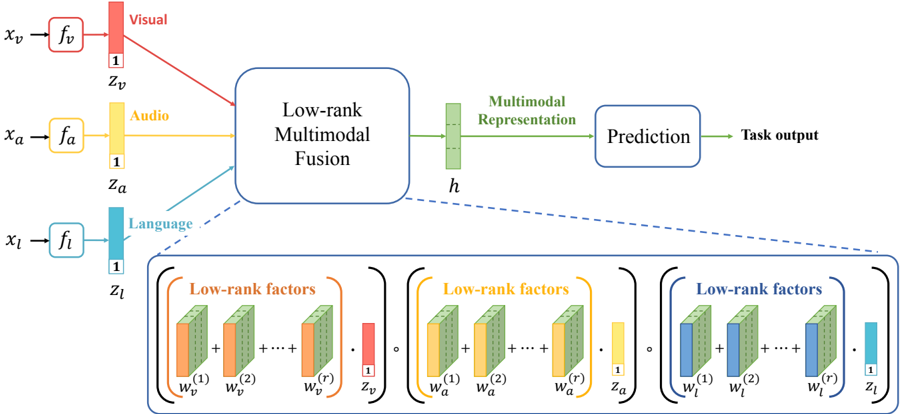
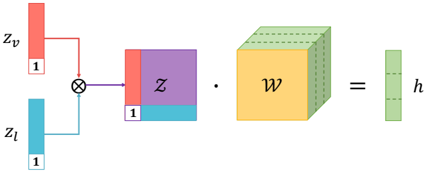
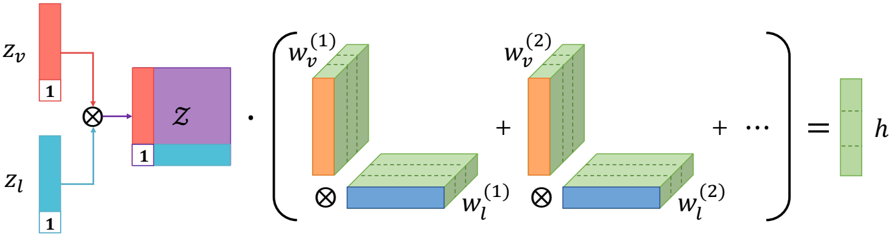
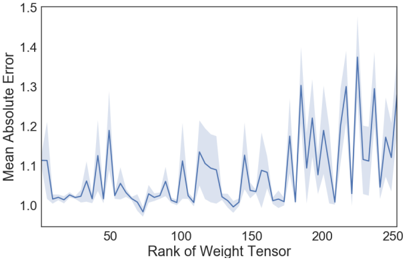
Verification
Claims the paper makes
The claims and statistics of this paper haven’t been checked yet.
Free: it reads the open-access text and checks the first 5 claims that cite a source we can check. Create a free account to check every claim.
Claims other papers make about this one
Each is checked against this paper’s own text: does it say what the citing paper says it does?
The cited source says what the claim attributes to it.
In the citing paper
“The experiment confirmed that the LMF effectively improves the training and testing efficiency compared to TFN.”
From A Survey of Deep Learning-Based Multimodal Emotion Recognition: Speech, Text, and Face (2023) · cites this paper as [100]
The cited source says what the claim attributes to it.
In the citing paper
“Several efficient variants have been proposed to approximate expensive full tensor products with cheaper variants while maintaining performance [71, 101, 106].”
From MultiBench: Multiscale Benchmarks for Multimodal Representation Learning (2021) · cites this paper as [106]
In the citing paper
“we compared vector concatenation and a low-rank implementation of Kronecker Product Fusion, which similarly outperform unimodal approaches (Table S3) (Liu et al., 2018).”
From Pan-cancer integrative histology-genomic analysis via multimodal deep learning (2022) · cites this paper as Liu et al., 2018
Self-check
Percentages, sums and reported differences re-computed from the paper’s own numbers.
The self-check needs the paper’s full text.
Citations
Cites
Hochreiter, S., & Schmidhuber, J. (1997) · Neural Computation · doi:10.1162/neco.1997.9.8.1735 · Cited by 102,318 · cited 4×
“Multi-View LSTM Multi-View LSTM (MV-LSTM) (Rajagopalan et al., 2016) aims to capture both modality-specific and cross-modality interactions from multiple modalities by partitioning the memory cell and the gates corresponding to multiple modalities.”
MethodInfluentialCortes, C., & Vapnik, V. (1995) · Machine Learning · doi:10.1007/bf00994018 · Cited by 59,421
Glove: Global Vectors for Word Representation
Pennington, J., Socher, R., & Manning, C. (2014) · Proceedings of the 2014 Conference on Empirical Methods in Natural Language Processing (EMNLP) · doi:10.3115/v1/d14-1162 · Cited by 34,071 · cited 1×
“Language We use pre-trained 300-dimensional Glove word embeddings (Pennington et al., 2014) to encode a sequence of transcribed words into a sequence of word vectors.”
MethodIEMOCAP: Interactive emotional dyadic motion capture database
Busso, C., Bulut, M., Lee, C.-C., Kazemzadeh, A., Mower, E., Kim, S., Chang, J. N., Lee, S., & Narayanan, S. S. (2008) · Language Resources and Evaluation · doi:10.1007/s10579-008-9076-6 · Cited by 3,869 · cited 4×
“We perform our experiments on the following multi-modal datasets, CMU-MOSI (Zadeh et al., 2016a POM (Park et al., 2014b), and IEMOCAP (Busso et al., 2008) for sentiment analysis, speaker traits recognition, and emotion recognition task, where the goal is to identify speakers emotions based on the speakers’ verbal and…”
BackgroundMethodInfluentialTensor Fusion Network for Multimodal Sentiment Analysis
Zadeh, A., Chen, M., Poria, S., Cambria, E., & Morency, L.-P. (2017) · Proceedings of the 2017 Conference on Empirical Methods in Natural Language Processing · doi:10.18653/v1/d17-1115 · Cited by 2,102 · cited 12×
“In addition, in order to be able to model the interactions between any subset of modalities using one tensor, Zadeh et al. (2017) proposed a simple extension to append 1 s to the unimodal representations before taking the outer product.”
BackgroundMethodInfluentialSelf-citationMultimodal Compact Bilinear Pooling for Visual Question Answering and Visual Grounding
Fukui, A., Park, D. H., Yang, D., Rohrbach, A., Darrell, T., & Rohrbach, M. (2016) · Proceedings of the 2016 Conference on Empirical Methods in Natural Language Processing · doi:10.18653/v1/d16-1044 · Cited by 1,582 · cited 6×
“, 2017), (Fukui et al., 2016) performs contextdependent fusion of multimodal data.”
BackgroundMethodResultInfluentialFast Human Detection Using a Cascade of Histograms of Oriented Gradients
Zhu, Q., Yeh, M.-C., Cheng, K.-T., & Avidan, S. (2006) · 2006 IEEE Computer Society Conference on Computer Vision and Pattern Recognition - Volume 2 (CVPR'06) · doi:10.1109/cvpr.2006.119 · Cited by 1,399 · cited 2×
“Visual The library Facet1 is used to extract a set of visual features for each frame (sampled at 30Hz) including 20 facial action units, 68 facial landmarks, head pose, gaze tracking and HOG features (Zhu et al., 2006).”
MethodMemory Fusion Network for Multi-view Sequential Learning
Zadeh, A., Liang, P. P., Mazumder, N., Poria, S., Cambria, E., & Morency, L.-P. (2018) · Proceedings of the AAAI Conference on Artificial Intelligence · doi:10.1609/aaai.v32i1.12021 · Cited by 855
Self-citationMultimodal Sentiment Intensity Analysis in Videos: Facial Gestures and Verbal Messages
Zadeh, A., Zellers, R., Pincus, E., & Morency, L.-P. (2016) · IEEE Intelligent Systems · doi:10.1109/mis.2016.94 · Cited by 852 · cited 6×
“We perform our experiments on the following multi-modal datasets, CMU-MOSI (Zadeh et al., 2016a POM (Park et al., 2014b), and IEMOCAP (Busso et al., 2008) for sentiment analysis, speaker traits recognition, and emotion recognition task, where the goal is to identify speakers emotions based on the…”
MethodInfluentialSelf-citationCOVAREP — A collaborative voice analysis repository for speech technologies
Degottex, G., Kane, J., Drugman, T., Raitio, T., & Scherer, S. (2014) · 2014 IEEE International Conference on Acoustics, Speech and Signal Processing (ICASSP) · doi:10.1109/icassp.2014.6853739 · Cited by 695 · cited 1×
“Acoustic We use COVAREP acoustic analysis framework (Degottex et al., 2014) to extract a set of low-level acoustic features, including 12 Mel frequency cepstral coefficients (MFCCs), pitch, voiced/unvoiced segmentation, glottal source, peak slope, and maxima dispersion quotient features.”
Method
Research works printed but not linked: 5
- [6]6. Gilles Degottex, John Kane, Thomas Drugman, Tuomo Raitio, and Stefan Scherer. 2014. Covarepa collabo- rative voice analysis repository for speech technolo- gies. In Acoustics, Speech and Signal Processing (ICASSP), 2014 IEEE International Conference on. IEEE, pages 960-964.
- [10]10. Othmar Koch and Christian Lubich. 2010. Dynami- cal tensor approximation. SIAM Journal on Matrix Analysis and Applications 31(5):2360-2375.
- [14]14. Sunghyun Park, Han Suk Shim, Moitreya Chatterjee, Kenji Sagae, and Louis-Philippe Morency. 2014a. Computational analysis of persuasiveness in social multimedia: A novel dataset and multimodal predic- tion approach. In Proceedings of the 16th Interna- tional Conference on Multimodal Interaction. ACM, pages 50-57.
- [22]22. Hongcheng Wang and Narendra Ahuja. 2008. A ten- sor approximation approach to dimensionality re- duction. International Journal of Computer Vision 76(3):217-229.
- [24]24. Torsten Wortwein and Stefan Scherer. 2017. What really mattersan information gain analysis of ques- tions and reactions in automated ptsd screenings. In 2017 Seventh International Conference on Affective Computing and Intelligent Interaction (ACII). IEEE, pages 15-20.
Cited by
Items 801–900 of 1,001
MMoFusion: Multi-modal Co-Speech Motion Generation with Diffusion ModelPreprint
Wang, S., Zhang, J., Tan, X., Xie, Z., Wang, C., & Ma, L. (2024) · arXiv (Cornell University) · doi:10.48550/arxiv.2403.02905 · Cited by 6
Han, X., Chung, H.-H., Ghosh, J., Liang, P. P., & Saria, S. (2025) · International Conference on Learning Representations · doi:10.48550/arxiv.2509.25678 · Cited by 6
“(3) Since high synergy ( S ) benefits from explicit interaction modeling (Liang et al., 2023; Liu et al., 2018), we design dedicated synergy experts to capture cross-modal interactions.”
Self-citationGroup Cognition Learning: Making Everything Better Through Governed Two-Stage Agents CollaborationPreprint
Meng, C., Feng, P., Fu, R., Lee, H. L., Du, X., Kang, Z., Zhang, Z., Zhou, W., Ouyang, C., & Gan, Z. (2026) · arXiv (Cornell University) · doi:10.48550/arxiv.2605.00370 · Cited by 6
“Early designs explicitly model interactions using tensor or low-rank operators (Zadeh et al., 2017; Liu et al., 2018; Meng et al., 2025b), while transformer-based architectures strengthen sequence-level alignment for unaligned signals (Tsai et al., 2019; Rahman et al., 2020).”
Dynamic Interaction-Aware and Causality-Disentangled Framework for Multimodal Sentiment AnalysisPreprint
Dong, G., Hong, Z., Liu, S., Wu, C., Fang, Y., Li, Z., Zhang, X., Liu, B., Zhang, Y., Ding, H., et al. (2026) · arXiv (Cornell University) · doi:10.48550/arxiv.2605.30994 · Cited by 6
“For the language modality, we employ BERT-base to encode textual inputs, obtaining 768-dimensional feature vectors.”
Global information regulation network for multimodal sentiment analysis
Xie, S., Chen, Q., Fang, X., & Sun, Q. (2024) · Image and Vision Computing · doi:10.1016/j.imavis.2024.105297 · Cited by 5
Fine-Grained Emotion Comprehension: Semisupervised Multimodal Emotion and Intensity Recognition
Fang, Z., Liu, Z., Liu, T., & Hung, C. (2024) · IEEE Transactions on Computational Social Systems · doi:10.1109/tcss.2024.3475511 · Cited by 5
Self-citationAn Integrated Segmentation Framework Utilizing Mamba Fusion for Optical and SAR Images
Ma, M., Liu, C., Li, Q., Liu, Y., Zhang, D., & Dun, Y. (2025) · The Photogrammetric Record · doi:10.1111/phor.12534 · Cited by 5
“LMF has difficulty handling regions where multiple objects are in close proximity, often resulting in merging or misclassification.”
Handwritten Signature Verification via Multimodal Consistency Learning
Shi, Z., Li, F., Hao, D., & Sun, Q. (2025) · IEEE Transactions on Information Forensics and Security · doi:10.1109/tifs.2025.3557674 · Cited by 5
Lyu, C., Wang, L., Du, Y., & Zhang, J. (2025) · Measurement · doi:10.1016/j.measurement.2025.118182 · Cited by 5
HMEA: A hierarchical medical knowledge graph entity alignment model fusing multi-aspect information
Wang, W., Ma, L., Cai, W., Zhao, H., & Zhang, X. (2025) · Artificial Intelligence in Medicine · doi:10.1016/j.artmed.2025.103188 · Cited by 5
Chen, S., Zhou, D., Wei, C., Li, X., Yao, H.-Y., & Luo, H. (2025) · Neurocomputing · doi:10.1016/j.neucom.2025.131059 · Cited by 5
He, X., Pan, Y., Chen, Y., Li, Z., Xu, Z., Yang, C., & Wang, K. (2025) · IEEE Transactions on Audio Speech and Language Processing · doi:10.1109/taslpro.2025.3597474 · Cited by 5
Wang, S., Yang, L. T., Liu, D., Zhao, R., Deng, X., Zou, C., & Fan, X. (2025) · IEEE Transactions on Information Forensics and Security · doi:10.1109/tifs.2025.3598474 · Cited by 5
Hou, Z., Zhang, Q., Lei, Z., Zeng, Z., & Jia, R. (2025) · Symmetry · doi:10.3390/sym17091401 · Cited by 5
Xie, W., Liang, H., Niu, Z., Hou, X., Song, S., Yu, Z., & Shen, L. (2025) · ACM Transactions on Multimedia Computing Communications and Applications · doi:10.1145/3767746 · Cited by 5
“We compare HFR-AME with the following SOTA models, i.e., TFN [56], LMF [27], MFM [42], Graph-MFN [59], MFN [57], MCTN [34], MulT [43], MISA [14], MAG-BERT [37], Self-MM [55], MMIM [13], FDMER [50], EMT-DLFR [41], MissModal [24], C-MIB [32], HyDiscGAN [47], and CASP [12] under the same dataset…”
DiffuFuse: Diffusion-Driven Dual-Stream Fusion Framework for Multimodal Sentiment Analysis
Lv, X., Wen, Y., & Yu, H. (2025) · ACM International Conference on Multimedia (ACM MM) · doi:10.1145/3746027.3755508 · Cited by 5
“Building upon TFN, Low-rank Multimodal Fusion (LMF) [20] reduced computational costs of high-dimensional tensors via low-rank factorization.”
Dong, Z., Guo, H., Xu, W., Zhao, H., & Zhang, Z. (2025) · IEEE Journal of Selected Topics in Signal Processing · doi:10.1109/jstsp.2025.3622051 · Cited by 5
“Restrictions apply.”
Li, D., Huang, S., & Wang, Z. (2025) · Pattern Recognition · doi:10.1016/j.patcog.2025.112690 · Cited by 5
Amd'SaEr: Arabic Multimodal Dataset for Sentiment Analysis and Emotion Recognition
Haouhat, A., Bellaouar, S., Nehar, A., & Cherroun, H. (2025) · ACM Transactions on Asian and Low-Resource Language Information Processing · doi:10.1145/3774880 · Cited by 5
Hossain, M. S. B., Choi, H. Y., Guo, Z., Yoo, S., Song, M., Shin, H., & Hadley, D. (2025) · PLoS ONE · doi:10.1371/journal.pone.0335257 · Cited by 5
“Specifically, a Bi-LSTM layer encodes each modality individually, after which the features are concatenated and passed through a low-rank multi-modal fusion module [40].”
DCGRM-Net: Dual-Channel Guided Reconstruction Mamba Network for robust multimodal sentiment analysis
Liu, S., Zhao, H., Chen, Y., Kong, F., & Li, K. (2025) · Information Processing & Management · doi:10.1016/j.ipm.2025.104491 · Cited by 5
CMFF: A cross-modal multi-layer feature fusion network for multimodal sentiment analysis
Zheng, S., Zhang, J., Deng, Y., & Chen, L. (2025) · Applied Soft Computing · doi:10.1016/j.asoc.2025.113868 · Cited by 5
Wang, H., Yu, B., Xi, Z., Zhao, S., & Yang, Y. (2026) · IEEE Transactions on Multimedia · doi:10.1109/tmm.2026.3651100 · Cited by 5
Yu, B., Wang, J., Li, C., Xi, Z., Zhao, X., & Li, Y. (2026) · Knowledge-Based Systems · doi:10.1016/j.knosys.2026.115484 · Cited by 5
TPFN: A Text-Guided Progressive Fusion Network for Multimodal Sentiment Analysis
Ou, L., & Li, Z. (2026) · IEEE Transactions on Affective Computing · doi:10.1109/taffc.2026.3663280 · Cited by 5
PSA-MF: Personality-Sentiment Aligned Multi-Level Fusion for Multimodal Sentiment Analysis
Xie, H., Zhu, K., Wen, Z., Tao, J., Liu, X., Fu, R., & Li, C. (2026) · Proceedings of the AAAI Conference on Artificial Intelligence · doi:10.1609/aaai.v40i3.37202 · Cited by 5
Liu, Z., Liu, S., Yan, W., Song, P., Song, Y., & Gao, R. (2026) · International World Wide Web Conference (WWW) · doi:10.1145/3774904.3792577 · Cited by 5
“…the effectiveness of the proposed ATGFB-MFF framework, we compare its performance with a range of baselines respectively called TFN [48], LMF [25], MISA [12], MAG-BERT [32], MMIM [10], CHFN [9], MulT [36], UniMSE [14], ConFEDE [41], ALMT [51], SPAE [47], UniSA BART , UniSA T5 , UniSA GPT2…”
Self-citationXian, T., Du, P., & Liao, C. (2023) · Applied Sciences · doi:10.3390/app13137761 · Cited by 5
Classification of combustion state of sintering flame based on CNN-Transformer dual-stream network
Xiuman, L., 063210, 华. 电. 唐., Jinming, A., Xiaohua, C., Kai, Z., Fubin, W., & Hefei, L. (2023) · Journal of Applied Optics · doi:10.5768/jao202344.0502003 · Cited by 5
Textual Context guided Vision Transformer with Rotated Multi-Head Attention for Sentiment Analysis
Dhiman, C., & Kumar, G. (2024) · International World Wide Web Conference (WWW) · doi:10.1145/3589335.3651968 · Cited by 5
“Another work [13] presented Quantum Interference (QIMF) guided Multimodal decision Fusion to address semantic gaps and model the correlation between the two modalities using density matrices.”
Improved Esophageal Varices Assessment from Non-contrast CT Scans
Li, C., Zhang, X., Gao, Y., Yin, X., Lu, L., Zhang, L., Yan, K., & Shi, Y. (2024) · Lecture notes in computer science · doi:10.1007/978-3-031-72086-4_33 · Cited by 5
Bimodal Sentiment Analysis Based on a Pre-Trained Model and Masked Attention Fusion
Cai, L., Li, H., Zhang, N., & He, J. (2025) · IEEE Transactions on Audio Speech and Language Processing · doi:10.1109/taslpro.2025.3564826 · Cited by 5
Yan, Z., Zhang, Y., Deng, J., & Ren, F. (2025) · Research · doi:10.34133/research.0729 · Cited by 5
“For instance, TFN [ 19 ] captures unimodal, bimodal, and trimodal interactions through a 3-way Cartesian product, while LMF [ 20 ] processes each modality separately before applying low-rank fusion.”
InfluentialDFNM: Dynamic Fusion Network of Intra- and Inter-modalities for Multimodal Sentiment Analysis
Li, Z., Ma, J., Li, X., & Pan, X. (2021) · International Conference on Asian Language Processing · doi:10.1109/ialp54817.2021.9675255 · Cited by 5
Shan, Q., Wei, X., & Cai, Z. (2022) · Journal of Physics Conference Series · doi:10.1088/1742-6596/2224/1/012024 · Cited by 5
“Models CMU-MOSI CMU-MOSEI MAE Corr Acc-2 F1 Acc-7 MAE Corr Acc-2 F1 Acc-7 LMF[22] 0.”
BackgroundMethodER-MRL: Emotion Recognition based on Multimodal Representation Learning
Guo, X., Wang, Y., Miao, Z., Yang, X., Guo, J., Hou, X., & Zao, F. (2022) · International Conference on Information Science and Technology · doi:10.1109/icist55546.2022.9926848 · Cited by 5
“• Discourse vector fusion methods based on tensor fusion and low-rank variants: TFN [30], LMF [31], LMFN [32], HFFN [33].”
MethodMissing Road Condition Imputation Using a Multi-View Heterogeneous Graph Network From GPS Trajectory
Zhang, Z., Wang, H., Fan, Z., Song, X., & Shibasaki, R. (2023) · IEEE Transactions on Intelligent Transportation Systems · doi:10.1109/tits.2023.3243087 · Cited by 5
“Based on tensor fusion network, low-rank multimodal fusion with modality-specific factors scaled linearly in the number of modalities, which is computationally efficient and has fewer parameters compared to previous tensor-based methods [40].”
BackgroundTraffic Flow Prediction Base on Feature Fusion of Multi-modal Data
Xu, L., Feng, X., Zheng, Q., & Zheng, H. (2022) · IEEE International Conference on Computer and Communications (ICCC) · doi:10.1109/iccc56324.2022.10065841 · Cited by 5
Recent Advancements and Challenges in Multimodal Sentiment Analysis: A Survey
Dong, Z.-X., & Liu, H. (2023) · International Conference on Machine Learning and Cybernetics · doi:10.1109/icmlc58545.2023.10327944 · Cited by 5
“To tackle this issue, Liu et al. [14] introduced Low-rank Multimodal Fusion (LMF), which de-composes weights into low-dimensional elements to minimize computational complexity.”
BackgroundMethodHuang, K., Li, X., Xiong, N. N., & Yang, Y. (2024) · Multimedia Systems · doi:10.1007/s00530-024-01333-9 · Cited by 5
“(5) To extract high-level features from historical price and text data more efficiently while preserving the correlation between modes, this paper uses the LMF module [25] to compute ten-sor-based ensembles by utilizing parallel decomposition of low-rank weighted tensors and input tensors.”
Exploring multimodal learning applications in marketing: A critical perspective
César, I., Pereira, I. F., Rodrigues, F., Miguéis, V. L., Nicola, S., & Madureira, A. M. (2025) · International Journal of Hybrid Intelligent Systems · doi:10.3233/his-240018 · Cited by 5
Multi-task disagreement-reducing multimodal sentiment fusion network
Zijun, W., Naicheng, J., Xinyue, C., & Sun, B. (2024) · Image and Vision Computing · doi:10.1016/j.imavis.2024.105158 · Cited by 5
Enhancing Multimodal Sentiment Recognition Based on Cross-Modal Contrastive Learning
Cui, L., & Yang, S. (2024) · IEEE International Conference on Multimedia and Expo (ICME) · doi:10.1109/icme57554.2024.10688113 · Cited by 5
“…in multimodal sentiment recognition, we compared it with several baselines: Tensor fusion network (TFN) [11], Low-order Multimodal Fusion (LMF) [12], Memory Fusion Network (MFN) [21], Multimodal Factorization Model (MFM) [13], Multimodal Transformer (MULT) [14], MAG-BERT [22], MISA [5], MICS…”
MethodSurvey on machine learning for MRI and PET fusion in alzheimer’s disease
Guelib, B., Bounab, R., Hermessi, H., Zarour, K., & Khlifa, N. (2025) · Multimedia Tools and Applications · doi:10.1007/s11042-025-20631-6 · Cited by 5
Cloud software code generation via knowledge graphs and multi-modal learning
Zhang, F., Chen, H., Chen, Q., & Liu, J. (2025) · Journal of Cloud Computing Advances Systems and Applications · doi:10.1186/s13677-025-00758-5 · Cited by 5
“Thus, Liu et al. [46] propose the low-rank multimodal fusing technique to mitigate computational complexity.”
A deep grouping fusion neural network for multimedia content understanding
Song, L., Yu, M., Shang, X., Lu, Y., Liu, J., Zhang, Y., & Li, Z. (2022) · IET Image Processing · doi:10.1049/ipr2.12496 · Cited by 5
Image-Signal Correlation Network for Textile Fiber Identification
Peng, B., He, L., Qiu, Y., Wu, D., & Chi, M. (2022) · ACM International Conference on Multimedia (ACM MM) · doi:10.1145/3503161.3548310 · Cited by 5
“Some matrix-based methods such as TFN [33] and LMF [18] calculate the correlation between elements of different modalities through tensor outer product.”
MethodYang, Z., Li, Z., Zhu, D., & Zhou, Y. (2024) · Information Technology And Control · doi:10.5755/j01.itc.53.1.35060 · Cited by 5
“Liu et al. [17] developed the LMF to learn cross-modal dynamics using low-rank decomposition.”
MethodFusing Visual Features and Metadata to Detect Flooding in Flickr Images
Jony, R. I., Woodley, A., & Perrin, D. (2020) · International Conference on Digital Image Computing: Techniques and Applications (DICTA) · doi:10.1109/dicta51227.2020.9363418 · Cited by 5
“However, such methods suffer from increased computational complexity [40].”
BackgroundMulti-view Deep One-class Classification: A Systematic ExplorationPreprint
Wang, S., Liu, J., Yu, G. W., Liu, X., Zhou, S., Zhu, E., Yang, Y., & Yin, J. (2021) · arXiv (Cornell University) · doi:10.48550/arxiv.2104.13000 · Cited by 5
“Since Z = ⊗V v=1 h , tensor based fusion can be computed in a highly efficient manner by rearranging the order of inner product and outer product [42], which enables tensor based fusion to be computationally tractable.”
InfluentialGreedy Modality Selection via Approximate Submodular MaximizationPreprint
Cheng, R., Balasubramaniam, G., He, Y., Tsai, Y.-H. H., & Zhao, H. (2022) · arXiv (Cornell University) · doi:10.48550/arxiv.2210.12562 · Cited by 5
“And model complexity can scale linearly or exponentially with the number of input modalities [Zadeh et al., 2017, Liu et al., 2018], resulting in large consumption of computational and energy resources.”
BackgroundNguyen, C.-V. T., Nguyen, N.-H. T., Le, D.-T., & Ha, Q.-T. (2023) · arXiv (Cornell University) · doi:10.48550/arxiv.2311.03785 · Cited by 5
“…be divided into four groups: 1) early multimodal fusion methods like Tensor Fusion Network TFN (Zadeh et al., 2017), Low-rank Multimodal Fusion LMF (Liu et al., 2018), and Multimodal Factorization Model MFM (Tsai et al., 2019b), and 2) the methods that fuse multimodality through modeling modality…”
BackgroundMethodInfluentialZhou, F., Xu, Y., Cui, Y., Zhang, S., Zhu, Y., He, W., Wang, J., Wang, X., Chan, R., Lau, L. H. S., et al. (2024) · arXiv (Cornell University) · doi:10.48550/arxiv.2404.01192 · Cited by 5
“…the impacts of feature fusion, we conduct a series of experiments to investigate the performance of different fusion strategies, including concatenation, multiplicative, tensor fusion [62], and low-rank tensor fusion [63], early fusion with transformer [26], and late fusion with transformer.”
MethodRollingQ: Reviving the Cooperation Dynamics in Multimodal TransformerPreprint
Ni, H., Wei, Y., Liu, H., Chen, G., Peng, C., Lin, H., & Hu, D. (2025) · arXiv (Cornell University) · doi:10.48550/arxiv.2506.11465 · Cited by 5
“Based on the ideology of aggregate information within the feature space, several works explore various fusion schemes to effectively combine features under a late fusion structure (Zadeh et al., 2017; Liu et al., 2018).”
Multimodal Lego: Model Merging and Fine-Tuning Across Topologies and Modalities in Biomedicine
Hemker, K., Simidjievski, N., & Jamnik, M. (2024) · International Conference on Learning Representations · doi:10.17863/cam.117032 · Cited by 5
CLCR: Cross-Level Semantic Collaborative Representation for Multimodal LearningPreprint
Meng, C., Huang, G., Fu, R., Jian, R., Gan, Z., & Ouyang, C. (2026) · arXiv (Cornell University) · doi:10.48550/arxiv.2602.19605 · Cited by 5
“Tensor Fusion Network (TFN) [41] and Low-rank Multimodal Fusion (LMF) [17] model cross-modal interactions by tensor factorization and low-rank parameterization.”
Navigating the Emotion Tree: Hierarchical Hyperbolic RAG for Multimodal Emotion RecognitionPreprint
Wang, Z., Zhao, B., Zhu, Y., Liu, Z., Ma, H., Zhang, R., Ding, S., Xie, Q., & Yu, Z. (2026) · arXiv (Cornell University) · doi:10.48550/arxiv.2605.18884 · Cited by 5
“8B, LLaMA2-7B, and ChatGLM3-6B-base with a broad range of representative multimodal baselines, including TFN [52], LMF [26], MISA [12], MAG-BERT [34], Self-MM [50], MMIM [11], CHFN [10], UniMSE [14], UniSA-BART, UniSA-T5, and UniSA-GPT2 [22], AV-MC [25], MMGCN [15], MM-DFN [13], EmoCaps [23],…”
Self-citationMultiViz: Towards User-Centric Visualizations and Interpretations of Multimodal Models
Liang, P. P., Lyu, Y., Chhablani, G., Jain, N., Deng, Z., Wang, X., Morency, L.-P., & Salakhutdinov, R. (2023) · Extended Abstracts of the 2023 CHI Conference on Human Factors in Computing Systems · doi:10.1145/3544549.3585604 · Cited by 4
Self-citationLi, Z., Guo, X., Wu, H., Yu, J., Chen, H., Gao, Y., Huang, X., & Pan, Y. (2025) · Neurocomputing · doi:10.1016/j.neucom.2025.131380 · Cited by 4
Text-Guided Enhanced Transformer Fusion for Multimodal Sentiment Analysis
Liao, X., Ke, X., Liu, Q., & Li, G. (2025) · Journal of Shanghai Jiaotong University (Science) · doi:10.1007/s12204-025-2848-y · Cited by 5
Tensor Fusion-Based Ethereum Phishing Scams Detection From Fund Transfer Patterns in Social Fintech
Wang, S., Yang, L. T., Deng, X., Zou, C., Gao, H., Liu, S., & Feng, W. (2025) · IEEE Transactions on Computational Social Systems · doi:10.1109/tcss.2025.3610452 · Cited by 4
LDW: Label Divergence Weighting for Multimodal Sentiment Analysis
Du, Q., Langhe, L. D., Lefever, E., & Hoste, V. (2025) · ACM International Conference on Multimedia (ACM MM) · doi:10.1145/3746027.3758160 · Cited by 4
“Low-rank Multimodal Fusion (LMF) [28] improves TFN’s computational efficiency by factorizing the fusion tensor.”
Cognitive-inspired knowledge graph fusion for gradient-aligned multimodal sentiment analysis
Hu, Y., Zhu, M., Li, Z., Zhang, C., Song, S., Xu, Y., Xu, Z., & Pan, Y. (2025) · Applied Soft Computing · doi:10.1016/j.asoc.2025.114544 · Cited by 4
A review of audio-visual fusion technology: Development, applications, and challenges
Zhang, T., Yi, J., Yu, Y., Hou, S., & Lu, Q. (2026) · Neurocomputing · doi:10.1016/j.neucom.2025.132575 · Cited by 5
Causal-Inspired Fourier Representation Learning for Wearable IMUs and Egocentric Action Recognition
He, C., Xu, X., Wang, Z., Song, J., Shen, F., & Shen, H. T. (2026) · IEEE Transactions on Circuits and Systems for Video Technology · doi:10.1109/tcsvt.2026.3653125 · Cited by 4
Jin, Y., Zheng, J., BinSun, Fu, K., Qu, J., Ren, C., Wang, T., Gan, Y., Wu, B., Jin, X., et al. (2026) · Biomedical Signal Processing and Control · doi:10.1016/j.bspc.2026.109688 · Cited by 4
Beneficial Noise Learning for Robust Multimodal Fusion
Zhu, A., Hu, M. Q., Wang, X., & Ren, F. (2026) · IEEE Transactions on Multimedia · doi:10.1109/tmm.2026.3668492 · Cited by 4
Zhang, W., Ding, J., Liu, H., Han, T., Liu, Y., & Yang, L. T. (2026) · Big Data Mining and Analytics · doi:10.26599/bdma.2025.9020110 · Cited by 4
Zhang, J., Pang, Z., Li, M., Wang, Y., Dong, G., Xue, C., Wu, Y., Li, Z., Phan, H., Zhao, S., et al. (2026) · Findings of the Association for Computational Linguistics: EMNLP (Findings of EMNLP) · doi:10.18653/2026.findings-emnlp.2220 · Cited by 4
Multimodal Chinese Event Extraction on Text and Audio
Zhang, X., Wang, Z., & Li, P. (2023) · International Joint Conference on Neural Networks (IJCNN) · doi:10.1109/ijcnn54540.2023.10191258 · Cited by 4
“[23] proposed the LMF (Low-rank Multimodal Fusion) model, which verified the feasibility of splitting the parameter matrix required for dimensionality reduction into multiple low-dimensional matrices, greatly reducing the number of parameters and speeding up the process.”
MethodModality-specific and -shared Contrastive Learning for Sentiment Analysis
Liu, D., You, J., Xie, G., Lee, L., Wang, F. L., & Yang, Z. (2024) · International Conference on Multimedia Retrieval · doi:10.1145/3652583.3658004 · Cited by 4
“• LMF [13].”
Frame-level nonverbal feature enhancement based sentiment analysis
Zheng, C., Peng, J., Wang, L., Zhu, L., Guo, J., & Cai, Z. (2024) · Expert Systems with Applications · doi:10.1016/j.eswa.2024.125148 · Cited by 4
Zhao, X., Miao, X., Xu, X., Liu, Y., & Cao, Y. (2024) · International Joint Conference on Neural Networks (IJCNN) · doi:10.1109/ijcnn60899.2024.10650083 · Cited by 4
“LMF [18].”
BackgroundUncertainty-Aware Gradient Modulation and Feature Masking for Multimodal Sentiment Analysis
Wu, Y., Wang, C., Li, J., Zhang, W., & Jiang, X. (2024) · Lecture notes in computer science · doi:10.1007/978-981-97-8795-1_22 · Cited by 4
Multilevel Representation Disentanglement Framework for Multimodal Sentiment Analysis
Jia, N., Bai, Z., Xiong, T., & Guo, M. (2025) · IEEE Signal Processing Letters · doi:10.1109/lsp.2025.3562827 · Cited by 4
Multimodal Mamba Model for Emotion Recognition in Conversations
Zhang, T., Chen, Z., & Du, J. (2025) · Lecture notes in networks and systems · doi:10.1007/978-3-031-94898-5_20 · Cited by 4
$$A^{2} H^{2}$$ for multimodal emotional data analysis
Wu, J., Liu, J., Zhang, T., Guo, S., Chen, Y., Huang, J., & Deng, F. A. (2025) · Journal of Intelligent Information Systems · doi:10.1007/s10844-025-00974-0 · Cited by 4
Semantic Place Prediction With User Attribute in Social Media
Wang, N., Liu, B., Niu, M., Meng, K., Li, H., Liu, B., & Wang, Z. (2021) · IEEE Multimedia · doi:10.1109/mmul.2021.3089719 · Cited by 4
End-to-end driving model based on deep learning and attention mechanism
Zhu, W., Lu, Y., Zhang, Y., Wei, X., & Wei, Z. (2022) · Journal of Intelligent & Fuzzy Systems · doi:10.3233/jifs-211206 · Cited by 4
GRMI: Graph Representation Learning of Multimodal Data with Incompleteness
Xu, X., Li, X., Li, X., & Xie, G. (2023) · Lecture notes in computer science · doi:10.1007/978-3-031-30675-4_19 · Cited by 4
Efficient low-rank multi-component fusion with component-specific factors in image-recipe retrieval
Zhao, W., Zhou, D. M., Cao, B., Zhang, K., & Chen, J. (2023) · Multimedia Tools and Applications · doi:10.1007/s11042-023-15819-7 · Cited by 5
“Tensor representation performs a transformation of input representations into a high-dimensional tensor, which is then projected into a low-dimensional output vector space [19].”
InfluentialMFISN: Modality Fuzzy Information Separation Network for Disease Classification
Nan, F., Pu, B., Pan, J., Fan, Y., Yang, J., Dong, X., Xu, Z., & Wang, S. (2024) · IEEE Transactions on Fuzzy Systems · doi:10.1109/tfuzz.2024.3371678 · Cited by 4
GM2RC: Graph-based Multitask Modality Refinement and Complement for Multimodal Sentiment Analysis
Shi, J., Chen, Y., Zhou, S., & Li, M. (2024) · International Symposium on Autonomous Systems (ISAS) · doi:10.1109/isas61044.2024.10552555 · Cited by 4
“LMF [21] implements low-rank tensor fusion to enhance computational efficiency.”
Backgroundi-Code V2: An Autoregressive Generation Framework over Vision, Language, and Speech Data
Yang, Z., Khademi, M., Yi‐chong, X., Pryzant, R., Fang, Y., Zhu, C., Chen, D., Qian, Y., Gao, X., Chen, Y., et al. (2024) · Findings of the Association for Computational Linguistics: NAACL · doi:10.18653/v1/2024.findings-naacl.105 · Cited by 4
Alzheimer’s Disease Diagnosis via Specific-Shared Representation Learning in Multimodal Neuroimaging
Wang, M., Yang, Y., Qi, J., Nan, F., Li, S., & Yang, P. (2024) · Lecture notes in computer science · doi:10.1007/978-981-97-5689-6_1 · Cited by 4
SmartRAN: Smart Routing Attention Network for multimodal sentiment analysis
Guo, X., Tian, S., Yu, L., & He, X. (2024) · Applied Intelligence · doi:10.1007/s10489-024-05839-7 · Cited by 4
Meng, J., Zhu, Z., Qi, J., & Zhang, H. (2024) · The Journal of Supercomputing · doi:10.1007/s11227-024-06524-9 · Cited by 4
“Examples include tensor-based methods [5, 6], attention-based methods [7, 8], and meth-ods based on gating mechanisms [9].”
Predict Tactile Grasp Outcomes Based on Attention and Low-Rank Fusion Network
Wu, P., Chu, C., Liu, C., Fang, S., Wang, J., Liu, J., & Yi, Z. (2024) · IEEE Sensors Journal · doi:10.1109/jsen.2024.3487551 · Cited by 4
“Low-rank multimodal fusion (LMF) is a highly successful way of combining many modes of sensory information [29].”
Gated Fusion Network With Progressive Modality Enhancement for Sentiment Analysis
Feng, X., Gong, W., Shi, T., Jing, Z., Li, K., & Gonzàlez, J. (2024) · IEEE Access · doi:10.1109/access.2024.3490772 · Cited by 4
Liu, T., Hu, Y., Li, M., Yi, J., Chang, X., Gao, J., & Yin, B. (2025) · IEEE Transactions on Circuits and Systems for Video Technology · doi:10.1109/tcsvt.2025.3537759 · Cited by 4
“Following the work [4], we also consider three categories of methods: multi-modal classification [4], [22], [40], [41], [42], [45], [47], multi-modal emotion analysis [21], [43], and Authorized licensed use limited to the terms of the applicable license agreement with IEEE.”
Modality-Guided Refinement Learning for Multimodal Emotion Recognition
Cho, S. (2025) · IEEE Access · doi:10.1109/access.2025.3554708 · Cited by 4
“Previous work [10], [11], [13], [14] has successfully combined complementary information across modalities for MER.”
InfluentialGeng, S., Zhang, W., Xie, J., Liang, G., Niu, B., & Ram, S. (2026) · MIS Quarterly · doi:10.25300/misq/2025/19444 · Cited by 4
Multimodal Driver Referencing: A Comparison of Pointing to Objects Inside and Outside the Vehicle
Aftab, A. R., & von der Beeck, M. (2022) · ACM International Conference on Intelligent User Interfaces (IUI) · doi:10.1145/3490099.3511142 · Cited by 4
“As research has shown, the use of multiple input modalities can surpass a single input modality in terms of performance [9, 18, 37], multimodal user interaction offers a significant utility for in-vehicle application.”
BackgroundMao, H., Zhang, B., Xu, H., & Gao, K. (2022) · Proceedings of the AAAI Conference on Artificial Intelligence · doi:10.1609/aaai.v36i11.21727 · Cited by 4
“Other multimodal fusion methods, such as Tensor Fusion Network (Zadeh et al. 2017) and Low-rank Multimodal Fusion (Liu et al. 2018) are also experimented upon.”
MethodLi, K., Tian, S., Yu, L., Zhou, T., Wang, B., & Wang, F. (2023) · Journal of Intelligent & Fuzzy Systems · doi:10.3233/jifs-222189 · Cited by 4
Joint long and short span self-attention network for multi-view classification
Chen, Z., Lou, K., Liu, Z., Li, Y., Luo, Y. T., & Zhao, L. (2023) · Expert Systems with Applications · doi:10.1016/j.eswa.2023.121152 · Cited by 4
Self-citationVisual Scene-Aware Hybrid and Multi-Modal Feature Aggregation for Facial Expression Recognition
Lee, M. K., Kim, D. H., & Song, B. C. (2020) · Sensors · doi:10.3390/s20185184 · Cited by 4
“However, the performance improvement in [52] is still not so large compared to the IC and WS methods.”
BackgroundMethodResultInfluentialLDNN: Linguistic Knowledge Injectable Deep Neural Network for Group Cohesiveness Understanding
Wang, Y., Wu, J., Huang, J., Hattori, G., Takishima, Y., Wada, S., Kimura, R., Chen, J., & Kurihara, S. (2020) · INTERNATIONAL CONFERENCE ON MULTIMODAL INTERACTION · doi:10.1145/3382507.3418830 · Cited by 4
“[20, 32] proposed an emotion recognition method that attempts to achieve human-like emotion recognition by integrating features extracted from visual, audio and linguistic data.”
MethodAutoMARS: Searching to Compress Multi-Modality Recommendation Systems
Hoang, D., Wang, H., Zhao, H., Rossi, R. A., Kim, S., Mahadik, K., & Wang, Z. (2022) · ACM International Conference on Information and Knowledge Management (CIKM) · doi:10.1145/3511808.3557242 · Cited by 4
A multimodal face antispoofing method based on multifeature vision transformer and multirank fusion
Li, Z., Cui, Y., Wang, F., Liu, W., Yang, Y., Yu, Z., Jiang, B., & Chen, H. (2023) · Concurrency and Computation Practice and Experience · doi:10.1002/cpe.7824 · Cited by 4
Metadata
- Authors
- Liu, Z., Shen, Y., Lakshminarasimhan, V. B., Liang, P. P., Bagher Zadeh, A., & Morency, L.-P.
- Affiliations
- Carnegie Mellon University (US)
- Venue
- Proceedings of the 56th Annual Meeting of the Association for Computational Linguistics (Volume 1: Long Papers)
- Published
- 2018
- Pages
- 2247-2256
- ISSN
- 0736-587X (ISSN-L)
- OpenAlex
- W2964346351
- Cited by
- 1,170
- References
- 31
- Citations by year
- 2026: 213 · 2025: 262 · 2024: 255 · 2023: 176 · 2022: 126 · 2021: 85 · 2020: 39 · 2019: 12 · 2018: 2
- FWCI
- 10.40
- Type
- conference paper
- Language
- en
- Open access
- hybrid
- doi.org
- Licence
- cc-by
- Locations
- Proceedings of the conference - Association for Computational Linguistics. Meeting (publishedVersion, cc-by)
- Funders
- National Science Foundation
- Topics
- Physical Sciences › Computer Science › Computer Vision and Pattern Recognition › Multimodal Machine Learning Applications
- Physical Sciences › Engineering › Media Technology › Advanced Image Fusion Techniques
- Physical Sciences › Computer Science › Artificial Intelligence › Topic Modeling
- Keywords
- multimodal fusion, cross-modal representation learning
About these checks
Registry, retraction, Cites and statistics results are computed, not judged, with one exception: a printed reference that no index lists is read once by a model before it counts as a citation error. Claims are extracted by a model and kept only when their quote appears verbatim in the text; each cited source is then checked, with a model’s help, for whether it says what the claim relies on. Those verdicts can be wrong — read the claim’s quote and the cited source before relying on one.
Statistics and arithmetic are recomputed, not judged.
Confidence bands are shown only for fields calibrated on our annotated test set. None is calibrated yet, so no band is shown.
What counts as a claim ›How we measure confidence ›How we check this ›
Are you an author, or do you see a problem with this page? Request a review
Data sources
Bibliographic data: Semantic Scholar, OpenAlex, Crossref.
Contains information from the Semantic Scholar Academic Graph Datasets, made available under the ODC Attribution License (ODC-BY 1.0).
Semantic Scholar’s data is described in: Kinney, R., et al. (2023). The Semantic Scholar Open Data Platform. arXiv:2301.10140.
