

Efficient Low-rank Multimodal Fusion With Modality-Specific Factors
Open accessThe DOI matches its Crossref record; 33 of the 33 references it cites were found in a registry or an index.
Abstract
Zhun Liu, Ying Shen, Varun Bharadhwaj Lakshminarasimhan, Paul Pu Liang, AmirAli Bagher Zadeh, Louis-Philippe Morency. Proceedings of the 56th Annual Meeting of the Association for Computational Linguistics (Volume 1: Long Papers). 2018.
Overview
The claims and statistics of this paper haven’t been checked yet.
Free: it reads the open-access text and checks the first 5 claims that cite a source we can check. Create a free account to check every claim.
Integrity signals
Registry
Cites
Statistics
Figures
Verification
Claims the paper makes
The claims and statistics of this paper haven’t been checked yet.
Free: it reads the open-access text and checks the first 5 claims that cite a source we can check. Create a free account to check every claim.
Claims other papers make about this one
Each is checked against this paper’s own text: does it say what the citing paper says it does?
The cited source says what the claim attributes to it.
In the citing paper
“The experiment confirmed that the LMF effectively improves the training and testing efficiency compared to TFN.”
From A Survey of Deep Learning-Based Multimodal Emotion Recognition: Speech, Text, and Face (2023) · cites this paper as [100]
The cited source says what the claim attributes to it.
In the citing paper
“Several efficient variants have been proposed to approximate expensive full tensor products with cheaper variants while maintaining performance [71, 101, 106].”
From MultiBench: Multiscale Benchmarks for Multimodal Representation Learning (2021) · cites this paper as [106]
In the citing paper
“we compared vector concatenation and a low-rank implementation of Kronecker Product Fusion, which similarly outperform unimodal approaches (Table S3) (Liu et al., 2018).”
From Pan-cancer integrative histology-genomic analysis via multimodal deep learning (2022) · cites this paper as Liu et al., 2018
Self-check
Percentages, sums and reported differences re-computed from the paper’s own numbers.
The self-check needs the paper’s full text.
Citations
Cites
Hochreiter, S., & Schmidhuber, J. (1997) · Neural Computation · doi:10.1162/neco.1997.9.8.1735 · Cited by 102,318 · cited 4×
“Multi-View LSTM Multi-View LSTM (MV-LSTM) (Rajagopalan et al., 2016) aims to capture both modality-specific and cross-modality interactions from multiple modalities by partitioning the memory cell and the gates corresponding to multiple modalities.”
MethodInfluentialCortes, C., & Vapnik, V. (1995) · Machine Learning · doi:10.1007/bf00994018 · Cited by 59,421
Glove: Global Vectors for Word Representation
Pennington, J., Socher, R., & Manning, C. (2014) · Proceedings of the 2014 Conference on Empirical Methods in Natural Language Processing (EMNLP) · doi:10.3115/v1/d14-1162 · Cited by 34,071 · cited 1×
“Language We use pre-trained 300-dimensional Glove word embeddings (Pennington et al., 2014) to encode a sequence of transcribed words into a sequence of word vectors.”
MethodIEMOCAP: Interactive emotional dyadic motion capture database
Busso, C., Bulut, M., Lee, C.-C., Kazemzadeh, A., Mower, E., Kim, S., Chang, J. N., Lee, S., & Narayanan, S. S. (2008) · Language Resources and Evaluation · doi:10.1007/s10579-008-9076-6 · Cited by 3,869 · cited 4×
“We perform our experiments on the following multi-modal datasets, CMU-MOSI (Zadeh et al., 2016a POM (Park et al., 2014b), and IEMOCAP (Busso et al., 2008) for sentiment analysis, speaker traits recognition, and emotion recognition task, where the goal is to identify speakers emotions based on the speakers’ verbal and…”
BackgroundMethodInfluentialTensor Fusion Network for Multimodal Sentiment Analysis
Zadeh, A., Chen, M., Poria, S., Cambria, E., & Morency, L.-P. (2017) · Proceedings of the 2017 Conference on Empirical Methods in Natural Language Processing · doi:10.18653/v1/d17-1115 · Cited by 2,102 · cited 12×
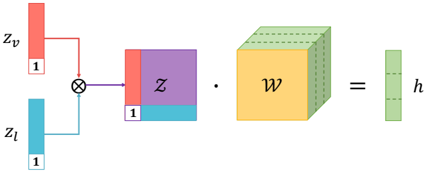
“In addition, in order to be able to model the interactions between any subset of modalities using one tensor, Zadeh et al. (2017) proposed a simple extension to append 1 s to the unimodal representations before taking the outer product.”
BackgroundMethodInfluentialSelf-citationMultimodal Compact Bilinear Pooling for Visual Question Answering and Visual Grounding
Fukui, A., Park, D. H., Yang, D., Rohrbach, A., Darrell, T., & Rohrbach, M. (2016) · Proceedings of the 2016 Conference on Empirical Methods in Natural Language Processing · doi:10.18653/v1/d16-1044 · Cited by 1,582 · cited 6×
“, 2017), (Fukui et al., 2016) performs contextdependent fusion of multimodal data.”
BackgroundMethodResultInfluentialFast Human Detection Using a Cascade of Histograms of Oriented Gradients
Zhu, Q., Yeh, M.-C., Cheng, K.-T., & Avidan, S. (2006) · 2006 IEEE Computer Society Conference on Computer Vision and Pattern Recognition - Volume 2 (CVPR'06) · doi:10.1109/cvpr.2006.119 · Cited by 1,399 · cited 2×
“Visual The library Facet1 is used to extract a set of visual features for each frame (sampled at 30Hz) including 20 facial action units, 68 facial landmarks, head pose, gaze tracking and HOG features (Zhu et al., 2006).”
MethodMemory Fusion Network for Multi-view Sequential Learning
Zadeh, A., Liang, P. P., Mazumder, N., Poria, S., Cambria, E., & Morency, L.-P. (2018) · Proceedings of the AAAI Conference on Artificial Intelligence · doi:10.1609/aaai.v32i1.12021 · Cited by 855
Self-citationMultimodal Sentiment Intensity Analysis in Videos: Facial Gestures and Verbal Messages
Zadeh, A., Zellers, R., Pincus, E., & Morency, L.-P. (2016) · IEEE Intelligent Systems · doi:10.1109/mis.2016.94 · Cited by 852 · cited 6×
“We perform our experiments on the following multi-modal datasets, CMU-MOSI (Zadeh et al., 2016a POM (Park et al., 2014b), and IEMOCAP (Busso et al., 2008) for sentiment analysis, speaker traits recognition, and emotion recognition task, where the goal is to identify speakers emotions based on the…”
MethodInfluentialSelf-citationCOVAREP — A collaborative voice analysis repository for speech technologies
Degottex, G., Kane, J., Drugman, T., Raitio, T., & Scherer, S. (2014) · 2014 IEEE International Conference on Acoustics, Speech and Signal Processing (ICASSP) · doi:10.1109/icassp.2014.6853739 · Cited by 695 · cited 1×
“Acoustic We use COVAREP acoustic analysis framework (Degottex et al., 2014) to extract a set of low-level acoustic features, including 12 Mel frequency cepstral coefficients (MFCCs), pitch, voiced/unvoiced segmentation, glottal source, peak slope, and maxima dispersion quotient features.”
Method
Research works printed but not linked: 5
- [6]6. Gilles Degottex, John Kane, Thomas Drugman, Tuomo Raitio, and Stefan Scherer. 2014. Covarepa collabo- rative voice analysis repository for speech technolo- gies. In Acoustics, Speech and Signal Processing (ICASSP), 2014 IEEE International Conference on. IEEE, pages 960-964.
- [10]10. Othmar Koch and Christian Lubich. 2010. Dynami- cal tensor approximation. SIAM Journal on Matrix Analysis and Applications 31(5):2360-2375.
- [14]14. Sunghyun Park, Han Suk Shim, Moitreya Chatterjee, Kenji Sagae, and Louis-Philippe Morency. 2014a. Computational analysis of persuasiveness in social multimedia: A novel dataset and multimodal predic- tion approach. In Proceedings of the 16th Interna- tional Conference on Multimodal Interaction. ACM, pages 50-57.
- [22]22. Hongcheng Wang and Narendra Ahuja. 2008. A ten- sor approximation approach to dimensionality re- duction. International Journal of Computer Vision 76(3):217-229.
- [24]24. Torsten Wortwein and Stefan Scherer. 2017. What really mattersan information gain analysis of ques- tions and reactions in automated ptsd screenings. In 2017 Seventh International Conference on Affective Computing and Intelligent Interaction (ACII). IEEE, pages 15-20.
Cited by
MISA: Modality-Invariant and -Specific Representations for Multimodal Sentiment Analysis
Hazarika, D., Zimmermann, R., & Poria, S. (2020) · Proceedings of the 28th ACM International Conference on Multimedia · doi:10.1145/3394171.3413678 · Cited by 1,073
Yu, W., Xu, H., Yuan, Z., & Wu, J. (2021) · Proceedings of the AAAI Conference on Artificial Intelligence · doi:10.1609/aaai.v35i12.17289 · Cited by 816
Harnessing multimodal data integration to advance precision oncology
Boehm, K. M., Khosravi, P., Vanguri, R., Gao, J., & Shah, S. P. (2022) · Nature Reviews Cancer · doi:10.1038/s41568-021-00408-3 · Cited by 662
“Advances in multimodal ML methods have been impressive in other fields, such as sentiment analysis 86,149–154 , with large benchmark datasets, but the largest multimodal oncological dataset, the TCGA dataset, contains limited data modalities and only a few hundred patients per cancer type.”
BackgroundPan-cancer integrative histology-genomic analysis via multimodal deep learning
Chen, R. J., Lu, M. Y., Williamson, D. F. K., Chen, T. Y., Lipkova, J., Noor, Z., Shaban, M., Shady, M., Williams, M., Joo, B., et al. (2022) · Cancer Cell · doi:10.1016/j.ccell.2022.07.004 · Cited by 660
What Makes Training Multi-modal Classification Networks Hard?
Wang, W., Tran, D., & Feiszli, M. (2020) · 2020 IEEE/CVF Conference on Computer Vision and Pattern Recognition (CVPR) · doi:10.1109/cvpr42600.2020.01271 · Cited by 588
“On a different fusion architecture with Low-Rank Multi-Modal Fusion (LMF) [35], GradientBlending gives 4.”
MethodHan, W., Chen, H., & Poria, S. (2021) · Proceedings of the 2021 Conference on Empirical Methods in Natural Language Processing · doi:10.18653/v1/2021.emnlp-main.723 · Cited by 570
“The latter additionally rectifies the spatial orientation of unimodal or multimodal representations by matrix decomposition (Liu et al., 2018) or Euclidean measure optimization (Sun et al.”
BackgroundMethodInfluentialPham, H., Liang, P. P., Manzini, T., Morency, L.-P., & Póczos, B. (2019) · Proceedings of the AAAI Conference on Artificial Intelligence · doi:10.1609/aaai.v33i01.33016892 · Cited by 512
Self-citationMultimodal intelligence: Representation learning, information fusion, and applications
Zhang, C., Yang, Z., He, X., & Deng, L. (2020) · IEEE Journal of Selected Topics in Signal Processing · doi:10.1109/jstsp.2020.2987728 · Cited by 511
“video, audio, and language [168], [180].”
CH-SIMS: A Chinese Multimodal Sentiment Analysis Dataset with Fine-grained Annotation of Modality
Yu, W., Xu, H., Meng, F., Zhu, Y., Ma, Y., Wu, J., Zou, J., & Yang, K. (2020) · Proceedings of the 58th Annual Meeting of the Association for Computational Linguistics · doi:10.18653/v1/2020.acl-main.343 · Cited by 482
“Liu et al. (2018) used a low-rank multimodal fusion method to decompose the weight tensor and decrease the computational complexity of tensor-based methods.”
BackgroundMethodInfluentialZhao, F., Zhang, C., & Geng, B. (2024) · ACM Computing Surveys · doi:10.1145/3649447 · Cited by 480
“Furthermore, there are variations of this work, e.g., [108].”
BackgroundWords Can Shift: Dynamically Adjusting Word Representations Using Nonverbal Behaviors
Wang, Y., Shen, Y., Liu, Z., Liang, P. P., Zadeh, A., & Morency, L.-P. (2019) · Proceedings of the AAAI Conference on Artificial Intelligence · doi:10.1609/aaai.v33i01.33017216 · Cited by 466
Self-citationBayoudh, K., Knani, R., Hamdaoui, F., & Mtibaa, A. (2022) · The Visual Computer · doi:10.1007/s00371-021-02166-7 · Cited by 456
“In the case of a late fusion, such techniques as majority vote [38] and low-rank multimodal fusion [39] may be used to aggregate the final prediction scores of several classifiers.”
MethodLiu, W., Qiu, J.-L., Zheng, W.-L., & Lu, B.-L. (2022) · IEEE Transactions on Cognitive and Developmental Systems · doi:10.1109/tcds.2021.3071170 · Cited by 452
“3) We will investigate multimodal fusion strategies by applying tensor-based fusion [58], [59], [60] and generative adversarial networks [61] in the future.”
BackgroundSun, Z., Sarma, P., Sethares, W., & Liang, Y. (2020) · Proceedings of the AAAI Conference on Artificial Intelligence · doi:10.1609/aaai.v34i05.6431 · Cited by 410
Multimodal sentiment analysis based on fusion methods: A survey
Zhu, L., Zhu, Z., Zhang, C., Xu, Y., & Kong, X. (2023) · Information Fusion · doi:10.1016/j.inffus.2023.02.028 · Cited by 347
SMIL: Multimodal Learning with Severely Missing Modality
Ma, M., Ren, J., Zhao, L., Tulyakov, S., Wu, C., & Peng, X. (2021) · Proceedings of the AAAI Conference on Artificial Intelligence · doi:10.1609/aaai.v35i3.16330 · Cited by 332
“We follow Liu et al. (2018) to get features for the image and text modality.”
BackgroundMethodInfluentialTETFN: A text enhanced transformer fusion network for multimodal sentiment analysis
Wang, D., Guo, X., Tian, Y., Liu, J., He, L., & Luo, X. (2023) · Pattern Recognition · doi:10.1016/j.patcog.2022.109259 · Cited by 326
Learning Factorized Multimodal Representations
Tsai, Y.-H. H., Liang, P. P., Zadeh, A., Morency, L.-P., & Salakhutdinov, R. (2018) · arXiv · doi:10.48550/arxiv.1806.06176 · Cited by 323
“For instance, recent works learn visual representations that are maximally dependent with linguistic attributes for improving one-shot image recognition (Tsai & Salakhutdinov, 2017) or introduce tensor product mechanisms to model interactions between the language, visual and acoustic modalities (Liu et al., 2018; Zade…”
BackgroundSelf-citationCTNet: Conversational Transformer Network for Emotion Recognition
Lian, Z., Liu, B., & Tao, J. (2021) · IEEE/ACM Transactions on Audio, Speech, and Language Processing · doi:10.1109/taslp.2021.3049898 · Cited by 296
“that multimodal features are already aligned in the utterance level [12], [17] or the word level [21], [22].”
BackgroundMultimodal Alignment and Fusion: A Survey
Li, S., & Tang, H. (2026) · International Journal of Computer Vision · doi:10.1007/s11263-025-02667-1 · Cited by 297
“Low-rank tensor fusion approaches have also been explored, leveraging compact representations to avoid exponential parameter growth [115].”
Hybrid Contrastive Learning of Tri-Modal Representation for Multimodal Sentiment Analysis
Mai, S., Zeng, Y., Zheng, S., & Hu, H. (2023) · IEEE Transactions on Affective Computing · doi:10.1109/taffc.2022.3172360 · Cited by 277
“7) Tensor Fusion Network (TFN) [37], which applies outer product from unimodal embeddings to jointly learn unimodal, bimodal and trimodal interactions; 8) Low-rank Modality Fusion (LMF) [39], which leverages low-rank weight tensors to reduce the complexity of tensor fusion; 9) Quantuminspired Multimodal Fusion (QMF) […”
BackgroundInfluentialDisentangled Representation Learning for Multimodal Emotion Recognition
Yang, D., Huang, S., Kuang, H., Du, Y., & Zhang, L. (2022) · Proceedings of the 30th ACM International Conference on Multimedia · doi:10.1145/3503161.3547754 · Cited by 266
“Liu et al .”
BackgroundMethodResultInfluentialMulti-modal Knowledge Graphs for Recommender Systems
Sun, R., Cao, X., Zhao, Y., Wan, J., Zhou, K., Zhang, F., Wang, Z., & Zheng, K. (2020) · Proceedings of the 29th ACM International Conference on Information & Knowledge Management · doi:10.1145/3340531.3411947 · Cited by 265
“For example, it is natural to explore more ways of multi-modal fusion under the framework of multi-modal knowledge graph, such as Tensor Fusion Network (TFN) [34] or Low-rank Multimodal Fusion (LMF) [14].”
BackgroundOuhami, M., Hafiane, A., Es-Saady, Y., El Hajji, M., & Canals, R. (2021) · Remote Sensing · doi:10.3390/rs13132486 · Cited by 264
“Thus, the biggest constraint of data fusion is the multimodality with data from distinct types of sensors, different fusion architectures can be adopted [133,136].”
BackgroundSun, L., Lian, Z., Liu, B., & Tao, J. (2024) · IEEE Transactions on Affective Computing · doi:10.1109/taffc.2023.3274829 · Cited by 258
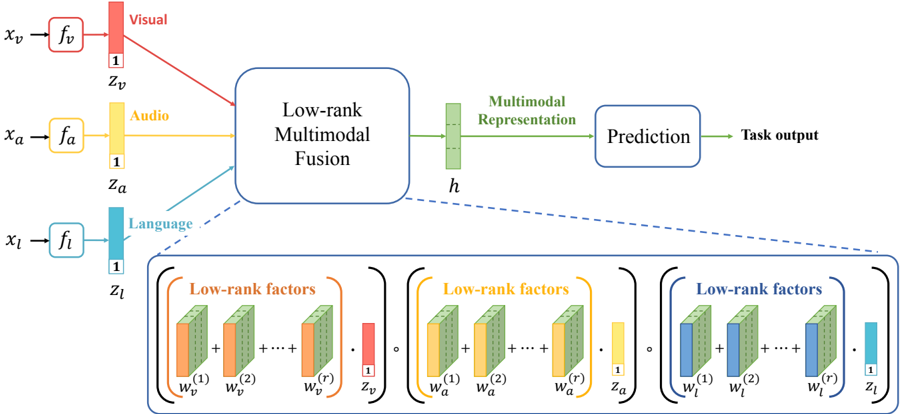
“Low-rank Multimodal Fusion (LMF) [34] leverages modality-specific low-rank factors to compute tensor-based multimodal representations, which makes multimodal fusion more efficient.”
BackgroundMethodXue, Z., & Marculescu, R. (2023) · IEEE/CVF Conference on Computer Vision and Pattern Recognition Workshops (CVPRW) · doi:10.1109/cvprw59228.2023.00256 · Cited by 261
“Existing works either propose hand-crafted fusion designs based on domain knowledge [10, 11, 12, 13, 14, 15, 16, 3], or apply NAS to find good architectures automatically [17, 18, 19].”
BackgroundUniMSE: Towards Unified Multimodal Sentiment Analysis and Emotion Recognition
Hu, G., Lin, T.-E., Zhao, Y., Lu, G., Wu, Y., & Li, Y. (2022) · Proceedings of the 2022 Conference on Empirical Methods in Natural Language Processing · doi:10.18653/v1/2022.emnlp-main.534 · Cited by 255
Decoupled Multimodal Distilling for Emotion Recognition
Li, Y., Wang, Y., & Cui, Z. (2023) · 2023 IEEE/CVF Conference on Computer Vision and Pattern Recognition (CVPR) · doi:10.1109/cvpr52729.2023.00641 · Cited by 249
“We compare DMD with the current state-of-the-art MER methods under the same dataset settings (unaligned or aligned), including EF-LSTM, LF-LSTM, TFN [33], LMF [14], MFM [29], RAVEN [30], Graph-MFN [36], MCTN [26], MulT [28], PMR [17], MICA [13], MISA [7], and FDMER [32].”
BackgroundMethodMultimodal Sentiment Analysis With Image-Text Interaction Network
Zhu, T., Li, L., Yang, J., Zhao, S., Liu, H., & Qian, J. (2023) · IEEE Transactions on Multimedia · doi:10.1109/tmm.2022.3160060 · Cited by 247
“[44] proposed the Low-rank Multimodal Fusion, an approach leveraging low-rank tensors for multimodal fusion, and demonstrated”
BackgroundMM-DFN: Multimodal Dynamic Fusion Network for Emotion Recognition in Conversations
Hu, D., Hou, X., Wei, L., Jiang, L., & Mo, Y. (2022) · ICASSP 2022 - 2022 IEEE International Conference on Acoustics, Speech and Signal Processing (ICASSP) · doi:10.1109/icassp43922.2022.9747397 · Cited by 242
Khoo, L. S., McNaney, R., Lim, M. K., & Chong, C. Y. (2024) · Sensors · doi:10.3390/s24020348 · Cited by 242
Mai, S., Hu, H., & Xing, S. (2020) · Proceedings of the AAAI Conference on Artificial Intelligence · doi:10.1609/aaai.v34i01.5347 · Cited by 237
Bi-Bimodal Modality Fusion for Correlation-Controlled Multimodal Sentiment Analysis
Han, W., Chen, H., Gelbukh, A., Zadeh, A., Morency, L.-P., & Poria, S. (2021) · Proceedings of the 2021 International Conference on Multimodal Interaction · doi:10.1145/3462244.3479919 · Cited by 232
“• Low-rank Matrix Fusion (LMF) [18]: It decomposes highorder tensors into many low-rank factors then performs efficient fusion based on these factors.”
BackgroundSelf-citationSocial-IQ: A Question Answering Benchmark for Artificial Social Intelligence
Zadeh, A., Chan, M., Liang, P. P., Tong, E., & Morency, L.-P. (2019) · 2019 IEEE/CVF Conference on Computer Vision and Pattern Recognition (CVPR) · doi:10.1109/cvpr.2019.00901 · Cited by 91
“creatively used by research communities centered around tasks such as multimodal language analysis [58], sentiment analysis [46, 31], emotion recognition [29], personality traits recognition [56], image captioning [5, 4, 34], multimedia description [50, 51, 62], and video comprehension [14, 32, 19, 60].”
MethodSelf-citationMultimodal Language Analysis with Recurrent Multistage Fusion
Liang, P. P., Liu, Z., Bagher Zadeh, A., & Morency, L.-P. (2018) · Proceedings of the 2018 Conference on Empirical Methods in Natural Language Processing · doi:10.18653/v1/d18-1014 · Cited by 230
“Modeling these interactions lie at the heart of human multimodal language analysis and has recently become a centric research direction in multimodal natural language processing (Liu et al., 2018; Pham et al., 2018; Chen et al., 2017), multimodal speech recognition (Sun et al.”
BackgroundInfluentialSelf-citationA Survey of Deep Learning-Based Multimodal Emotion Recognition: Speech, Text, and Face
Lian, H., Lu, C., Li, S., Zhao, Y., Tang, C., & Zong, Y. (2023) · Entropy · doi:10.3390/e25101440 · Cited by 224
Rahate, A., Walambe, R., Ramanna, S., & Kotecha, K. (2022) · Information Fusion · doi:10.1016/j.inffus.2021.12.003 · Cited by 214
Transformer-based Feature Reconstruction Network for Robust Multimodal Sentiment Analysis
Yuan, Z., Li, W., Xu, H., & Yu, W. (2021) · Proceedings of the 29th ACM International Conference on Multimedia · doi:10.1145/3474085.3475585 · Cited by 211
“TFN [29] and LMF [13] use tensor-based method to get joint representation for utterances.”
MethodSenseMood: Depression Detection on Social Media
Lin, C., Hu, P., Su, H., Li, S., Mei, J., Zhou, J., & Leung, H. (2020) · International Conference on Multimedia Retrieval · doi:10.1145/3372278.3391932 · Cited by 205
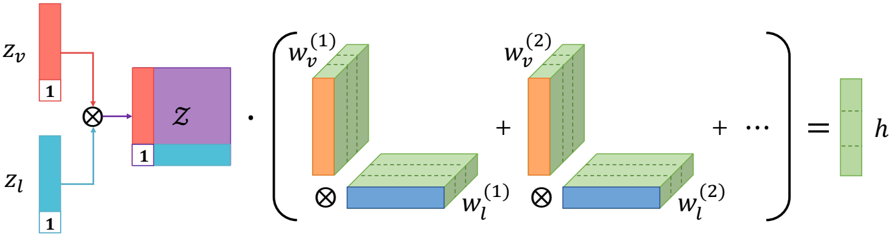
“To achieve low-rank multimodal fusion, we follow [13] to decompose the weightW into different modality-specific factors.”
MethodA Review on Explainability in Multimodal Deep Neural Nets
Joshi, G., Walambe, R., & Kotecha, K. (2021) · IEEE Access · doi:10.1109/access.2021.3070212 · Cited by 204
“The low-rank multimodal fusion technique [115] addresses the shortfall of tensor fusion networks by using low-rank tensors for fusion but results in a complex architecture with a lot of computation and processing.”
BackgroundAre Multimodal Transformers Robust to Missing Modality?
Ma, M., Ren, J., Zhao, L., Testuggine, D., & Peng, X. (2022) · 2022 IEEE/CVF Conference on Computer Vision and Pattern Recognition (CVPR) · doi:10.1109/cvpr52688.2022.01764 · Cited by 198
“Following this effort, efficient low-rank fusion [25] is proposed to address the exponential dimension explosion of tensor fusion.”
BackgroundExpansion-Squeeze-Excitation Fusion Network for Elderly Activity Recognition
Shu, X., Yang, J., Yan, R., & Song, Y. (2022) · IEEE Transactions on Circuits and Systems for Video Technology · doi:10.1109/tcsvt.2022.3142771 · Cited by 198
DLF: Disentangled-Language-Focused Multimodal Sentiment Analysis
Wang, P., Zhou, Q., Wu, Y., Chen, T., & Hu, J. (2025) · Proceedings of the AAAI Conference on Artificial Intelligence · doi:10.1609/aaai.v39i20.35416 · Cited by 203
Foundations & Trends in Multimodal Machine Learning: Principles, Challenges, and Open Questions
Liang, P. P., Zadeh, A., & Morency, L.-P. (2024) · ACM Computing Surveys · doi:10.1145/3656580 · Cited by 195
“However, computing tensor products is expensive since their dimension scales exponentially with the number of modalities, so several efficient approximations based on low-rank decomposition have been proposed [127, 205].”
BackgroundSelf-citationTMBL: Transformer-based multimodal binding learning model for multimodal sentiment analysis
Huang, J., Zhou, J. W., Tang, Z., Lin, J., & Chen, C. Y. (2023) · Knowledge-Based Systems · doi:10.1016/j.knosys.2023.111346 · Cited by 198
CM-BERT: Cross-Modal BERT for Text-Audio Sentiment Analysis
Yang, K., Xu, H., & Gao, K. (2020) · Proceedings of the 28th ACM International Conference on Multimedia · doi:10.1145/3394171.3413690 · Cited by 129
“LMF [17] Low-rank Multimodal Fusion (LMF) is a method that leveraging low-rank weight tensors to make multimodal fusion efficient without compromising on performance.”
MethodLearning Language-guided Adaptive Hyper-modality Representation for Multimodal Sentiment Analysis
Zhang, H., Wang, Y., Yin, G., Liu, K., Liu, Y., & Yu, T. (2023) · Proceedings of the 2023 Conference on Empirical Methods in Natural Language Processing · doi:10.18653/v1/2023.emnlp-main.49 · Cited by 188
“To comprehensively validate the performance of our ALMT, we make a fair comparison with the several advanced and state-of-the-art methods, i.e. , TFN (Zadeh et al., 2017), LMF (Liu et al., 2018), MFM (Tsai et al., 2019b), MuLT (Tsai et al., 2019a), MISA (Hazarika et al., 2020), PMR (Lv et al., 2021), MAG-BERT (Rahman…”
BackgroundMethodMai, S., Zeng, Y., & Hu, H. (2023) · IEEE Transactions on Multimedia · doi:10.1109/tmm.2022.3171679 · Cited by 182
A Transformer-Based Model With Self-Distillation for Multimodal Emotion Recognition in Conversations
Ma, H., Wang, J., Lin, H., Zhang, B., Zhang, Y., & Xu, B. (2024) · IEEE Transactions on Multimedia · doi:10.1109/tmm.2023.3271019 · Cited by 180
State of the art: a review of sentiment analysis based on sequential transfer learning
Chan, J. Y.-L., Bea, K. T., Leow, S. M. H., Phoong, S. W., & Cheng, W. K. (2023) · Artificial Intelligence Review · doi:10.1007/s10462-022-10183-8 · Cited by 179
Natural Language Understanding and Inference with MLLM in Visual Question Answering: A Survey
Kuang, J., Shen, Y., Xie, J., Luo, H., Xu, Z., Li, R., Li, Y., Cheng, X., Lin, X., & Han, Y. (2025) · ACM Computing Surveys · doi:10.1145/3711680 · Cited by 180
Self-citationCross-Modal Enhancement Network for Multimodal Sentiment Analysis
Wang, D., Liu, S., Wang, Q., Tian, Y., He, L., & Gao, X. (2023) · IEEE Transactions on Multimedia · doi:10.1109/tmm.2022.3183830 · Cited by 175
UR-FUNNY: A Multimodal Language Dataset for Understanding Humor
Hasan, M. K., Rahman, W., Bagher Zadeh, A., Zhong, J., Tanveer, M. I., Morency, L.-P., & Hoque, M. (. (2019) · Proceedings of the 2019 Conference on Empirical Methods in Natural Language Processing and the 9th International Joint Conference on Natural Language Processing (EMNLP-IJCNLP) · doi:10.18653/v1/d19-1211 · Cited by 174
“…et al., 2019; Hazarika et al., 2018; Poria et al., 2017; Zadeh et al., 2017), multimodal fusion approaches (Liang et al., 2018; Tsai et al., 2018; Liu et al., 2018; Zadeh et al., 2018a; Barezi et al., 2018) as well as resources (Poria et al., 2018a; Zadeh et al., 2018c, 2016; Park et al., 2014;…”
BackgroundSelf-citationHierarchical Interactive Multimodal Transformer for Aspect-Based Multimodal Sentiment Analysis
Yu, J., Chen, K., & Xia, R. (2022) · IEEE Transactions on Affective Computing · doi:10.1109/taffc.2022.3171091 · Cited by 177
“fusion [30], [39], multimodal gated units [40], [41], and temporal attention mechanism [42], [43].”
BackgroundAi, W., Shou, Y., Meng, T., & Li, K. (2024) · IEEE Transactions on Neural Networks and Learning Systems · doi:10.1109/tnnls.2024.3367940 · Cited by 174
“…DialogueGCN [35], relation-aware graph attention networks (RGAT) [36], and LR-GCN [37]), one feature fusion algorithm (i.e., low-rank multimodal fusion (LFM) [38]), and three pretrained algorithms (context modeling with speaker’s pre-trained memory (CoPMP) [39], EmoBERTa [40], and COGMEN [41]).”
ConFEDE: Contrastive Feature Decomposition for Multimodal Sentiment Analysis
Yang, J., Yu, Y., Niu, D., Guo, W., & Xu, Y. (2023) · Proceedings of the 61st Annual Meeting of the Association for Computational Linguistics (Volume 1: Long Papers) · doi:10.18653/v1/2023.acl-long.421 · Cited by 173
“The Low-rank Multimodal Fusion (LMF) method (Liu et al., 2018) leverages low-rank tensor to perform multimodal fusion efficiently.”
MethodInfluentialFuseMoE: Mixture-of-Experts Transformers for Fleximodal Fusion
Han, X., Nguyen, H., Harris, C., Ho, N., & Saria, S. (2024) · neural information processing systems · doi:10.52202/079017-2167 · Cited by 179
AOBERT: All-modalities-in-One BERT for multimodal sentiment analysis
Kim, K.-H., & Park, S. (2022) · Information Fusion · doi:10.1016/j.inffus.2022.11.022 · Cited by 170
Multimodal Video Sentiment Analysis Using Deep Learning Approaches, a Survey
Abdu, S. A., Yousef, A. H., & Salem, A. (2021) · Information Fusion · doi:10.1016/j.inffus.2021.06.003 · Cited by 166
FedMSplit: Correlation-Adaptive Federated Multi-Task Learning across Multimodal Split Networks
Chen, J., & Zhang, A. (2022) · ACM SIGKDD Conference on Knowledge Discovery and Data Mining (KDD) · doi:10.1145/3534678.3539384 · Cited by 161
“For example, as for multimodal integration tasks [3, 20, 25, 37], which learn predictive models that integrate the information of given modalities to make decisions, we can split any”
BackgroundA Comprehensive Survey on Deep Learning Multi-Modal Fusion: Methods, Technologies and Applications
Jiao, T., Guo, C., Feng, X., Chen, Y., & Song, J. (2024) · Computers, Materials & Continua · doi:10.32604/cmc.2024.053204 · Cited by 158
Quantifying & Modeling Multimodal Interactions: An Information Decomposition Framework
Liang, P. P., Cheng, Y., Fan, X., Ling, C. K., Nie, S., Chen, R., Deng, Z., Allen, N., Auerbach, R., Mahmood, F., et al. (2023) · neural information processing systems · doi:10.52202/075280-1192 · Cited by 163
“LRTF [62] Hidden dim 32 Input dims 16, 16 Rank 20”
BackgroundInfluentialSelf-citationTransModality: An End2End Fusion Method with Transformer for Multimodal Sentiment Analysis
Wang, Z., Wan, Z., & Wan, X. (2020) · Proceedings of The Web Conference 2020 · doi:10.1145/3366423.3380000 · Cited by 156
“[16] proposes an efficient low-rank weight”
Mai, S., Hu, H., & Xing, S. (2019) · Proceedings of the 57th Annual Meeting of the Association for Computational Linguistics · doi:10.18653/v1/p19-1046 · Cited by 153
“For this purpose, a large body of prior work mostly treats the feature vectors of the modalities as the smallest units and fuse them at holistic level (Barezi et al., 2018; Poria et al., 2016a, 2017b; Liu et al., 2018).”
BackgroundMethodInfluentialMultimodal Multi-loss Fusion Network for Sentiment Analysis
Wu, Z., Gong, Z., Koo, J., & Hirschberg, J. (2024) · Conference of the North American Chapter of the Association for Computational Linguistics: Human Language Technologies (NAACL-HLT) · doi:10.18653/v1/2024.naacl-long.197 · Cited by 154
“The first category consisted of early multimodal fusion methods, including Tensor Fusion Network (TFN) (Zadeh et al., 2017), Low-rank Multimodal Fusion (LMF) (Liu et al., 2018), and Multimodal Factorization Model (MFM) (Tsai et al., 2019c).”
MethodM-SENA: An Integrated Platform for Multimodal Sentiment Analysis
Mao, H., Yuan, Z., Xu, H., Yu, W., Liu, Y., & Gao, K. (2022) · Annual Meeting of the Association for Computational Linguistics: System Demonstrations (ACL Demo) · doi:10.18653/v1/2022.acl-demo.20 · Cited by 150
Deep Imbalanced Learning for Multimodal Emotion Recognition in Conversations
Meng, T., Shou, Y., Ai, W., Yin, N., & Li, K. (2024) · IEEE Transactions on Artificial Intelligence · doi:10.1109/tai.2024.3445325 · Cited by 147
“Wang et al. [31] adopted deep generative models (DGM), which differed from traditional data enhancement methods by adding Gaussian noise to the original data.”
Multimodal research in vision and language: A review of current and emerging trends
Uppal, S., Bhagat, S., Hazarika, D., Majumder, N., Poria, S., Zimmermann, R., & Zadeh, A. (2021) · Information Fusion · doi:10.1016/j.inffus.2021.07.009 · Cited by 150
Video sentiment analysis with bimodal information-augmented multi-head attention
Wu, T., Peng, J., Zhang, W., Zhang, H., Tan, S., Yi, F., Ma, C., & Huang, Y. (2022) · Knowledge-Based Systems · doi:10.1016/j.knosys.2021.107676 · Cited by 131
“LMF.”
BackgroundMethodInfluentialHGMF: Heterogeneous Graph-based Fusion for Multimodal Data with Incompleteness
Chen, J., & Zhang, A. (2020) · ACM SIGKDD Conference on Knowledge Discovery and Data Mining (KDD) · doi:10.1145/3394486.3403182 · Cited by 148
“Recent methods that perform intermediate fusion include multimodal sequential learning [32, 33] for sequential data (time series, language, audio and video), and post-dynamic learning for general data [14, 31].”
BackgroundInfluentialQuantum-inspired multimodal fusion for video sentiment analysis
Li, Q., Gkoumas, D., Lioma, C., & Melucci, M. (2021) · Information Fusion · doi:10.1016/j.inffus.2020.08.006 · Cited by 143
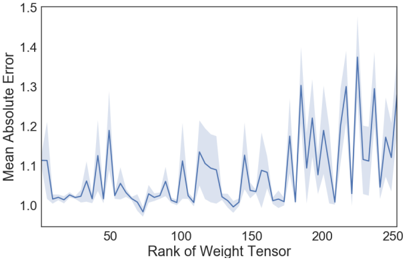
“Unfortunately, an analysis of such a property is missing from the original LMF paper.”
BackgroundMethodInfluentialMIntRec: A New Dataset for Multimodal Intent Recognition
Zhang, H., Xu, H., Wang, X. Y., Zhou, Q., Zhao, S., & Teng, J. (2022) · ACM International Conference on Multimedia (ACM MM) · doi:10.1145/3503161.3547906 · Cited by 137
“LMF [31] designed low-rankmultimodal tensors to solve this problem.”
BackgroundMulti-modal emotion recognition using tensor decomposition fusion and self-supervised multi-tasking
Wang, R., Zhu, J., Wang, S., Wang, T., Huang, J., & Zhu, X. (2024) · International Journal of Multimedia Information Retrieval · doi:10.1007/s13735-024-00347-3 · Cited by 147
Graph-Based Multimodal Sequential Embedding for Sign Language Translation
Tang, S., Guo, D., Hong, R., & Wang, M. (2021) · IEEE Transactions on Multimedia · doi:10.1109/tmm.2021.3117124 · Cited by 138
“Lowrank multimodal fusion (LMF) [48] improved the matrix learning in TFN by using low-rank vector decomposition, thereby reducing the number of parameters.”
BackgroundMethodResultInfluentialWang, J. Z., Zhao, S., Wu, C., Adams, R. B., Newman, M. G., Shafir, T., & Tsachor, R. P. (2023) · Proceedings of the IEEE · doi:10.1109/jproc.2023.3273517 · Cited by 137
MissModal: Increasing Robustness to Missing Modality in Multimodal Sentiment Analysis
Lin, R., & Hu, H. (2023) · Transactions of the Association for Computational Linguistics · doi:10.1162/tacl_a_00628 · Cited by 137
A cross modal hierarchical fusion multimodal sentiment analysis method based on multi-task learning
Wang, L., Peng, J., Zheng, C., Zhao, T., & Zhu, L. (2024) · Information Processing & Management · doi:10.1016/j.ipm.2024.103675 · Cited by 134
A Survey of Multi-modal Knowledge Graphs: Technologies and Trends
Liang, W., Meo, P. D., Tang, Y. Z., & Zhu, J. (2024) · ACM Computing Surveys · doi:10.1145/3656579 · Cited by 137
“To address this issue, DFMKE utilizes a late fusion module called the LMF, which is efficient to leverage knowledge from multiple modalities [52].”
Wu, Y., Lin, Z., Zhao, Y., Qin, B., & Zhu, L.-N. (2021) · Findings of the Association for Computational Linguistics: ACL-IJCNLP 2021 · doi:10.18653/v1/2021.findings-acl.417 · Cited by 129
“To address it, Liu et al. (2018) presented the Efficient Low-rank Multimodal Fusion, which applies multimodal fusion using low-rank tensors to accelerate the fusion process.”
MethodLarge language models meet text-centric multimodal sentiment analysis: a survey
Yang, H., Zhao, Y., Wu, Y., Wang, S., Zheng, T., Zhang, H., Ma, Z., Che, W., Wang, S., Wei, S., et al. (2025) · Science China Information Sciences · doi:10.1007/s11432-024-4593-8 · Cited by 129
“To improve computational efficiency, the authors in [110] proposed the low-rank multimodal fusion (LMF) method.”
Learning Modality Interaction for Temporal Sentence Localization and Event Captioning in Videos
Chen, S., Jiang, W., Liu, W., & Jiang, Y. (2020) · Lecture notes in computer science · doi:10.1007/978-3-030-58548-8_20 · Cited by 127
Wu, S., He, D., Wang, X., Wang, L., & Dang, J. (2025) · Proceedings of the AAAI Conference on Artificial Intelligence · doi:10.1609/aaai.v39i2.32152 · Cited by 126
Sentiment analysis in textual, visual and multimodal inputs using recurrent neural networks
Tembhurne, J. V., & Diwan, T. (2020) · Multimedia Tools and Applications · doi:10.1007/s11042-020-10037-x · Cited by 125
“[90] developed a multimodal fusion method wherein a low-rank tensor is adopted instead of regular tensor due to exponential growth in dimensions and high compute complexity while transforming input into tensor.”
MethodCoupled Mamba: Enhanced Multimodal Fusion with Coupled State Space Model
Li, W., Zhou, H., Yu, J., Song, Z., & Yang, W. (2024) · neural information processing systems · doi:10.52202/079017-1910 · Cited by 125
Le, H.-D., Lee, G.-S., Kim, S.-H., Kim, S., & Yang, H.-J. (2023) · IEEE Access · doi:10.1109/access.2023.3244390 · Cited by 119
Tailor Versatile Multi-Modal Learning for Multi-Label Emotion Recognition
Zhang, Y., Chen, M., Shen, J., & Wang, C. (2022) · Proceedings of the AAAI Conference on Artificial Intelligence · doi:10.1609/aaai.v36i8.20895 · Cited by 119
Gkoumas, D., Li, Q., Lioma, C., Yu, Y., & Song, D. (2020) · Information Fusion · doi:10.1016/j.inffus.2020.09.005 · Cited by 118
“Early advancements of this field utilized tensorbased fusion approaches for entangling [42] and disentangling [43, 44] multimodal representations.”
BackgroundMethodInfluentialAF: An Association-Based Fusion Method for Multi-Modal Classification
Liang, X., Qian, Y., Guo, Q. J., Cheng, H., & Liang, J. (2021) · IEEE Transactions on Pattern Analysis and Machine Intelligence · doi:10.1109/tpami.2021.3125995 · Cited by 119
“We compare the AFSelf−MM with nine state-of-the-art deep learning-based MMC methods: TFN [65], LMF [66], MFN [67], RAVEN [68], MFM [69], MulT [35], MISA [70], MAG [71], and Self-MM [64] on three recently proposed multi-modal datasets: MOSI [72], MOSEI [73] and SIMS [74].”
MethodMultimodal transformer with adaptive modality weighting for multimodal sentiment analysis
Wang, Y., He, J., Wang, D., Wang, Q., Wan, B., & Luo, X. (2023) · Neurocomputing · doi:10.1016/j.neucom.2023.127181 · Cited by 117
Spatial-Temporal Feature Fusion Neural Network for EEG-Based Emotion Recognition
Wang, Z., Wang, Y., Zhang, J., Hu, C., Yin, Z., & Song, Y. (2022) · IEEE Transactions on Instrumentation and Measurement · doi:10.1109/tim.2022.3165280 · Cited by 113
Multimodal Emotion Recognition Fusion Analysis Adapting BERT With Heterogeneous Feature Unification
Lee, S., Han, D. K., & Ko, H. (2021) · IEEE Access · doi:10.1109/access.2021.3092735 · Cited by 89
“[60] reduced the computational complexity of the parameters by applying a low-rank multimodal fusion method that uses a low-rank tensor.”
MethodKnowledge-Guided Dynamic Modality Attention Fusion Framework for Multimodal Sentiment Analysis
Feng, X., Lin, Y., He, L., Li, Y., Chang, L., & Zhou, Y. (2024) · Findings of the Association for Computational Linguistics: EMNLP (Findings of EMNLP) · doi:10.18653/v1/2024.findings-emnlp.865 · Cited by 115
Exploring Deep Multimodal Fusion of Text and Photo for Hate Speech Classification
Yang, F., Peng, X., Ghosh, G., Shilon, R., Ma, H., Moore, E., & Predovic, G. (2019) · Proceedings of the Third Workshop on Abusive Language Online · doi:10.18653/v1/w19-3502 · Cited by 87
“For the task of sentiment analysis, Zadeh et al. (2017); Ghosal et al. (2018); Bagher Zadeh et al. (2018); Liu et al. (2018) propose several models, namely contextual intermodal attention, dynamic fusion graph, and lowrank multimodal fusion, for integrating visual, audio, and text signals on the…”
MethodSMIN: Semi-Supervised Multi-Modal Interaction Network for Conversational Emotion Recognition
Lian, Z., Liu, B., & Tao, J. (2022) · IEEE Transactions on Affective Computing · doi:10.1109/taffc.2022.3141237 · Cited by 110
“To improve the efficiency, LMF [50] and Dual-LMF [51] employ low-rank decomposition to approximate the high-order tensor.”
MethodShou, Y., Liu, H., Cao, X., Meng, D., & Dong, B. (2024) · IEEE Transactions on Affective Computing · doi:10.1109/taffc.2024.3498443 · Cited by 110
“The existing CER approaches usually use feature splicing or feature summation to fuse the cross-modal feature [16, 21, 21, 37].”
InfluentialHumor Knowledge Enriched Transformer for Understanding Multimodal Humor
Hasan, M. K., Lee, S., Rahman, W., Zadeh, A., Mihalcea, R. F., Morency, L., & Hoque, M. E. (2021) · Proceedings of the AAAI Conference on Artificial Intelligence · doi:10.1609/aaai.v35i14.17534 · Cited by 110
Self-citationImproving multimodal fusion with Main Modal Transformer for emotion recognition in conversation
Zou, S., Huang, X., Shen, X., & Liu, H. (2022) · Knowledge-Based Systems · doi:10.1016/j.knosys.2022.109978 · Cited by 109
SKEAFN: Sentiment Knowledge Enhanced Attention Fusion Network for multimodal sentiment analysis
Zhu, C., Chen, M., Zhang, S., Sun, C., Liang, H., Liu, Y., & Chen, J. (2023) · Information Fusion · doi:10.1016/j.inffus.2023.101958 · Cited by 110
Multimodal sentiment analysis based on multi-layer feature fusion and multi-task learning
Cai, Y., Li, X., Zhang, Y., Li, J., Zhu, F., & Rao, L. (2025) · Scientific Reports · doi:10.1038/s41598-025-85859-6 · Cited by 108
Low Rank Fusion based Transformers for Multimodal Sequences
Sahay, S., Okur, E., Kumar, S. H., & Nachman, L. (2020) · doi:10.18653/v1/2020.challengehml-1.4 · Cited by 106
Metadata
- Authors
- Liu, Z., Shen, Y., Lakshminarasimhan, V. B., Liang, P. P., Bagher Zadeh, A., & Morency, L.-P.
- Affiliations
- Carnegie Mellon University (US)
- Venue
- Proceedings of the 56th Annual Meeting of the Association for Computational Linguistics (Volume 1: Long Papers)
- Published
- 2018
- Pages
- 2247-2256
- ISSN
- 0736-587X (ISSN-L)
- OpenAlex
- W2964346351
- Cited by
- 1,170
- References
- 31
- Citations by year
- 2026: 213 · 2025: 262 · 2024: 255 · 2023: 176 · 2022: 126 · 2021: 85 · 2020: 39 · 2019: 12 · 2018: 2
- FWCI
- 10.40
- Type
- conference paper
- Language
- en
- Open access
- hybrid
- doi.org
- Licence
- cc-by
- Locations
- Proceedings of the conference - Association for Computational Linguistics. Meeting (publishedVersion, cc-by)
- Funders
- National Science Foundation
- Topics
- Physical Sciences › Computer Science › Computer Vision and Pattern Recognition › Multimodal Machine Learning Applications
- Physical Sciences › Engineering › Media Technology › Advanced Image Fusion Techniques
- Physical Sciences › Computer Science › Artificial Intelligence › Topic Modeling
- Keywords
- multimodal fusion, cross-modal representation learning
About these checks
Registry, retraction, Cites and statistics results are computed, not judged, with one exception: a printed reference that no index lists is read once by a model before it counts as a citation error. Claims are extracted by a model and kept only when their quote appears verbatim in the text; each cited source is then checked, with a model’s help, for whether it says what the claim relies on. Those verdicts can be wrong — read the claim’s quote and the cited source before relying on one.
Statistics and arithmetic are recomputed, not judged.
Confidence bands are shown only for fields calibrated on our annotated test set. None is calibrated yet, so no band is shown.
What counts as a claim ›How we measure confidence ›How we check this ›
Are you an author, or do you see a problem with this page? Request a review
Data sources
Bibliographic data: Semantic Scholar, OpenAlex, Crossref.
Contains information from the Semantic Scholar Academic Graph Datasets, made available under the ODC Attribution License (ODC-BY 1.0).
Semantic Scholar’s data is described in: Kinney, R., et al. (2023). The Semantic Scholar Open Data Platform. arXiv:2301.10140.
