

Efficient Low-rank Multimodal Fusion With Modality-Specific Factors
Open accessThe DOI matches its Crossref record; 33 of the 33 references it cites were found in a registry or an index.
Abstract
Zhun Liu, Ying Shen, Varun Bharadhwaj Lakshminarasimhan, Paul Pu Liang, AmirAli Bagher Zadeh, Louis-Philippe Morency. Proceedings of the 56th Annual Meeting of the Association for Computational Linguistics (Volume 1: Long Papers). 2018.
Overview
The claims and statistics of this paper haven’t been checked yet.
Free: it reads the open-access text and checks the first 5 claims that cite a source we can check. Create a free account to check every claim.
Integrity signals
Registry
Cites
Statistics
Figures
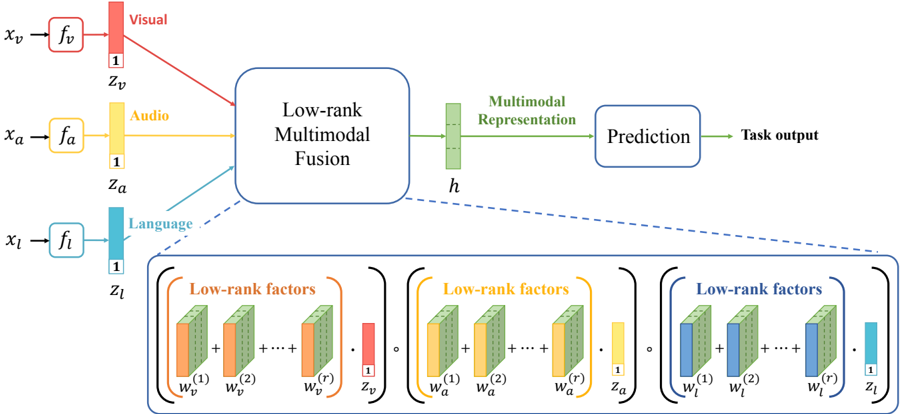
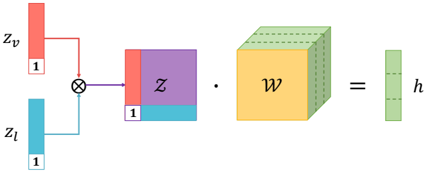
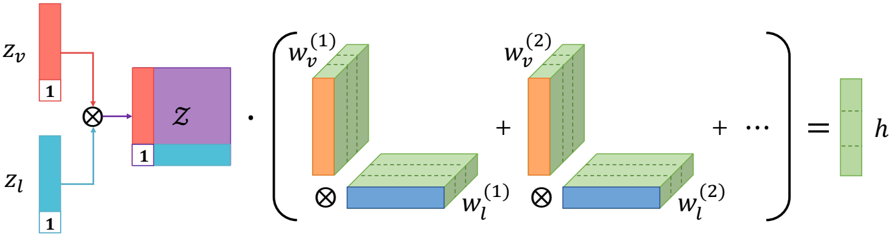
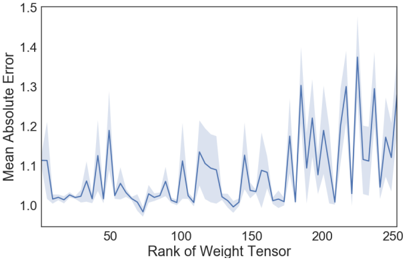
Verification
Claims the paper makes
The claims and statistics of this paper haven’t been checked yet.
Free: it reads the open-access text and checks the first 5 claims that cite a source we can check. Create a free account to check every claim.
Claims other papers make about this one
Each is checked against this paper’s own text: does it say what the citing paper says it does?
The cited source says what the claim attributes to it.
In the citing paper
“The experiment confirmed that the LMF effectively improves the training and testing efficiency compared to TFN.”
From A Survey of Deep Learning-Based Multimodal Emotion Recognition: Speech, Text, and Face (2023) · cites this paper as [100]
The cited source says what the claim attributes to it.
In the citing paper
“Several efficient variants have been proposed to approximate expensive full tensor products with cheaper variants while maintaining performance [71, 101, 106].”
From MultiBench: Multiscale Benchmarks for Multimodal Representation Learning (2021) · cites this paper as [106]
In the citing paper
“we compared vector concatenation and a low-rank implementation of Kronecker Product Fusion, which similarly outperform unimodal approaches (Table S3) (Liu et al., 2018).”
From Pan-cancer integrative histology-genomic analysis via multimodal deep learning (2022) · cites this paper as Liu et al., 2018
Self-check
Percentages, sums and reported differences re-computed from the paper’s own numbers.
The self-check needs the paper’s full text.
Citations
Cites
Hochreiter, S., & Schmidhuber, J. (1997) · Neural Computation · doi:10.1162/neco.1997.9.8.1735 · Cited by 102,318 · cited 4×
“Multi-View LSTM Multi-View LSTM (MV-LSTM) (Rajagopalan et al., 2016) aims to capture both modality-specific and cross-modality interactions from multiple modalities by partitioning the memory cell and the gates corresponding to multiple modalities.”
MethodInfluentialCortes, C., & Vapnik, V. (1995) · Machine Learning · doi:10.1007/bf00994018 · Cited by 59,421
Glove: Global Vectors for Word Representation
Pennington, J., Socher, R., & Manning, C. (2014) · Proceedings of the 2014 Conference on Empirical Methods in Natural Language Processing (EMNLP) · doi:10.3115/v1/d14-1162 · Cited by 34,071 · cited 1×
“Language We use pre-trained 300-dimensional Glove word embeddings (Pennington et al., 2014) to encode a sequence of transcribed words into a sequence of word vectors.”
MethodIEMOCAP: Interactive emotional dyadic motion capture database
Busso, C., Bulut, M., Lee, C.-C., Kazemzadeh, A., Mower, E., Kim, S., Chang, J. N., Lee, S., & Narayanan, S. S. (2008) · Language Resources and Evaluation · doi:10.1007/s10579-008-9076-6 · Cited by 3,869 · cited 4×
“We perform our experiments on the following multi-modal datasets, CMU-MOSI (Zadeh et al., 2016a POM (Park et al., 2014b), and IEMOCAP (Busso et al., 2008) for sentiment analysis, speaker traits recognition, and emotion recognition task, where the goal is to identify speakers emotions based on the speakers’ verbal and…”
BackgroundMethodInfluentialTensor Fusion Network for Multimodal Sentiment Analysis
Zadeh, A., Chen, M., Poria, S., Cambria, E., & Morency, L.-P. (2017) · Proceedings of the 2017 Conference on Empirical Methods in Natural Language Processing · doi:10.18653/v1/d17-1115 · Cited by 2,102 · cited 12×
“In addition, in order to be able to model the interactions between any subset of modalities using one tensor, Zadeh et al. (2017) proposed a simple extension to append 1 s to the unimodal representations before taking the outer product.”
BackgroundMethodInfluentialSelf-citationMultimodal Compact Bilinear Pooling for Visual Question Answering and Visual Grounding
Fukui, A., Park, D. H., Yang, D., Rohrbach, A., Darrell, T., & Rohrbach, M. (2016) · Proceedings of the 2016 Conference on Empirical Methods in Natural Language Processing · doi:10.18653/v1/d16-1044 · Cited by 1,582 · cited 6×
“, 2017), (Fukui et al., 2016) performs contextdependent fusion of multimodal data.”
BackgroundMethodResultInfluentialFast Human Detection Using a Cascade of Histograms of Oriented Gradients
Zhu, Q., Yeh, M.-C., Cheng, K.-T., & Avidan, S. (2006) · 2006 IEEE Computer Society Conference on Computer Vision and Pattern Recognition - Volume 2 (CVPR'06) · doi:10.1109/cvpr.2006.119 · Cited by 1,399 · cited 2×
“Visual The library Facet1 is used to extract a set of visual features for each frame (sampled at 30Hz) including 20 facial action units, 68 facial landmarks, head pose, gaze tracking and HOG features (Zhu et al., 2006).”
MethodMemory Fusion Network for Multi-view Sequential Learning
Zadeh, A., Liang, P. P., Mazumder, N., Poria, S., Cambria, E., & Morency, L.-P. (2018) · Proceedings of the AAAI Conference on Artificial Intelligence · doi:10.1609/aaai.v32i1.12021 · Cited by 855
Self-citationMultimodal Sentiment Intensity Analysis in Videos: Facial Gestures and Verbal Messages
Zadeh, A., Zellers, R., Pincus, E., & Morency, L.-P. (2016) · IEEE Intelligent Systems · doi:10.1109/mis.2016.94 · Cited by 852 · cited 6×
“We perform our experiments on the following multi-modal datasets, CMU-MOSI (Zadeh et al., 2016a POM (Park et al., 2014b), and IEMOCAP (Busso et al., 2008) for sentiment analysis, speaker traits recognition, and emotion recognition task, where the goal is to identify speakers emotions based on the…”
MethodInfluentialSelf-citationCOVAREP — A collaborative voice analysis repository for speech technologies
Degottex, G., Kane, J., Drugman, T., Raitio, T., & Scherer, S. (2014) · 2014 IEEE International Conference on Acoustics, Speech and Signal Processing (ICASSP) · doi:10.1109/icassp.2014.6853739 · Cited by 695 · cited 1×
“Acoustic We use COVAREP acoustic analysis framework (Degottex et al., 2014) to extract a set of low-level acoustic features, including 12 Mel frequency cepstral coefficients (MFCCs), pitch, voiced/unvoiced segmentation, glottal source, peak slope, and maxima dispersion quotient features.”
Method
Research works printed but not linked: 5
- [6]6. Gilles Degottex, John Kane, Thomas Drugman, Tuomo Raitio, and Stefan Scherer. 2014. Covarepa collabo- rative voice analysis repository for speech technolo- gies. In Acoustics, Speech and Signal Processing (ICASSP), 2014 IEEE International Conference on. IEEE, pages 960-964.
- [10]10. Othmar Koch and Christian Lubich. 2010. Dynami- cal tensor approximation. SIAM Journal on Matrix Analysis and Applications 31(5):2360-2375.
- [14]14. Sunghyun Park, Han Suk Shim, Moitreya Chatterjee, Kenji Sagae, and Louis-Philippe Morency. 2014a. Computational analysis of persuasiveness in social multimedia: A novel dataset and multimodal predic- tion approach. In Proceedings of the 16th Interna- tional Conference on Multimodal Interaction. ACM, pages 50-57.
- [22]22. Hongcheng Wang and Narendra Ahuja. 2008. A ten- sor approximation approach to dimensionality re- duction. International Journal of Computer Vision 76(3):217-229.
- [24]24. Torsten Wortwein and Stefan Scherer. 2017. What really mattersan information gain analysis of ques- tions and reactions in automated ptsd screenings. In 2017 Seventh International Conference on Affective Computing and Intelligent Interaction (ACII). IEEE, pages 15-20.
Cited by
Items 501–600 of 1,001
WeaveNet: End-to-End Audiovisual Sentiment Analysis
Yu, Y., Jia, Z., Shi, F., Zhu, M., Wang, W., & Li, X. (2022) · Communications in computer and information science · doi:10.1007/978-981-16-9247-5_1 · Cited by 16
Wang, D., Guo, L., Zhong, J., Yu, H., Tang, Y., Peng, L., Cai, Q., Qi, Y., Zhang, D., & Lin, P. (2024) · Frontiers in Physiology · doi:10.3389/fphys.2024.1304829 · Cited by 16
Lu, N., Tan, Z., & Qian, J. (2024) · Neurocomputing · doi:10.1016/j.neucom.2024.127467 · Cited by 16
Transformer-based adaptive contrastive learning for multimodal sentiment analysis
Hu, Y., Huang, X., Wang, X., Lin, H., & Zhang, R. (2024) · Multimedia Tools and Applications · doi:10.1007/s11042-024-19152-5 · Cited by 16
Multi Fine-Grained Fusion Network for Depression Detection
Zhou, L., Liu, Z., Li, Y., Duan, Y., Yu, H., & Hu, B. (2024) · ACM Transactions on Multimedia Computing Communications and Applications · doi:10.1145/3665247 · Cited by 17
“Sixth, although the TFN [66] and LMF [67] models are able to capture inter-modal interactions, they are simulated using only the Cartesian product, which may not adequately capture the complex inter-modal interactions.”
InfluentialSelf-citationIncorporating texture and silhouette for video-based person re-identification
Bai, S., Chang, H., & Ma, B. (2024) · Pattern Recognition · doi:10.1016/j.patcog.2024.110759 · Cited by 17
A unified multimodal classification framework based on deep metric learning
Peng, L., Jian, S., Li, M., Kan, Z., Qiao, L., & Li, D. (2024) · Neural Networks · doi:10.1016/j.neunet.2024.106747 · Cited by 16
Zhang, H., Yan, Y., Cai, Z., Zhan, P., Chen, B. Y., Jiang, B., & Xie, B. (2024) · Applied Soft Computing · doi:10.1016/j.asoc.2024.112346 · Cited by 16
Multimodal Invariant Sentiment Representation Learning
Zhu, A., Hu, M. Q., Wang, X., Yang, J., Tang, Y., & An, N. (2025) · Findings of the Association for Computational Linguistics: ACL (Findings of ACL) · doi:10.18653/v1/2025.findings-acl.761 · Cited by 16
“LMF (Liu et al., 2018), as a typical work, used a low-rank tensor for multimodal fusion and optimized computational efficiency with modality-specific factors.”
InfluentialRelation-aware Hierarchical Attention Framework for Video Question Answering
Li, F., Bai, T., Cao, C., Liu, Z., Yan, C., & Wu, B. (2021) · International Conference on Multimedia Retrieval · doi:10.1145/3460426.3463635 · Cited by 16
“[25] proposes a low-rank method to build tensor networks to reduce computational complexity caused by tensor outer-product.”
MethodSelf-citationLearning Cross-Modal Audiovisual Representations with Ladder Networks for Emotion Recognition
Goncalves, L., & Busso, C. (2023) · IEEE International Conference on Acoustics Speech and Signal Processing · doi:10.1109/icassp49357.2023.10096138 · Cited by 16
“Multimodal representation learning approaches have been explored more extensively lately with advancements in computational resources and multimodal deep learning methods [4, 5, 10, 12, 19, 20].”
BackgroundCurriculum Learning Meets Weakly Supervised Multimodal Correlation Learning
Mai, S., Ya, S., & Hu, H. (2022) · Conference on Empirical Methods in Natural Language Processing (EMNLP) · doi:10.18653/v1/2022.emnlp-main.209 · Cited by 16
“…applies outer product over unimodal representations to jointly learn unimodal, bimodal, and trimodal dynamics; 5) Low-rank Modality Fusion ( LMF ) (Liu et al., 2018), which leverages low-rank weight tensors to deal with the high complexity problem of tensor fusion; 6) Interaction Canonical…”
Deep Modular Co-Attention Shifting Network for Multimodal Sentiment Analysis
Shi, P., Hu, M. Q., Shi, X., & Ren, F. (2024) · ACM Transactions on Multimedia Computing Communications and Applications · doi:10.1145/3634706 · Cited by 17
“Tensor Fusion Network (TFN) [62], Low-rank Modality Fusion (LMF) [26], Memory Fusion Network (MFN) [63], Recurrent Attended Variation Embedding Network (RAVEN) [53], Interaction Canonical Correlation Network (ICCN) [45], Sentimental Words Aware Fusion Network (SWAFN) [5], Deep Multi-level Attentive…”
Non-Uniform Attention Network for Multi-modal Sentiment Analysis
Wang, B., Dong, G., Zhao, Y., Li, R., Cao, Q., & Chao, Y. (2022) · Lecture notes in computer science · doi:10.1007/978-3-030-98358-1_48 · Cited by 16
LLM-Guided Semantic Relational Reasoning for Multimodal Intent Recognition
Zhou, Q., Xu, H., Wang, Y., Dong, X., & Zhang, H. (2025) · Conference on Empirical Methods in Natural Language Processing (EMNLP) · doi:10.18653/v1/2025.emnlp-main.1130 · Cited by 15
Liu, W., Xu, H., Hua, Y., Chi, Y., & Gao, K. (2024) · Intelligent Systems with Applications · doi:10.1016/j.iswa.2024.200410 · Cited by 15
Querying as Prompt: Parameter-Efficient Learning for Multimodal Language Model
Liang, T., Huang, J., Kong, M. C., Chen, L., & Zhu, Q. (2024) · IEEE Computer Society Conference on Computer Vision and Pattern Recognition/Proceedings - IEEE Computer Society Conference on Computer Vision and Pattern Recognition/Proceedings · doi:10.1109/cvpr52733.2024.02536 · Cited by 15
“LMF [26] 0.623 0.700 -/82.0 -/82.1 TFN [54] 0.593 0.677 -/82.5 -/82.1 MFM [39] 0.568 0.703 -/84.4 ICCN [36] 0.565 0.704 -/84.”
InfluentialKumar, D., Madan, S., Singh, P., Dhall, A., & Raman, B. (2024) · ACM International Conference on Multimedia (ACM MM) · doi:10.1145/3664647.3688986 · Cited by 15
“Such cross-modal fusion techniques have been shown to outperform simpler concatenation methods, as they can better capture the synergistic effects of combining multi-modal information [17, 31].”
Cancer molecular subtyping using limited multi-omics data with missingness
Bu, Y., Liang, J., Li, Z., Wang, J., Wang, J., & Yu, G. (2024) · PLoS Computational Biology · doi:10.1371/journal.pcbi.1012710 · Cited by 16
“To capitalize on the advantages of multi-omics data, we employ LMF [83] (Low-rank Multi-modal Fusion) and formulate our multi-omics fusion network for data integration.”
Wu, Z., & Liu, Z. (2025) · IEEE Transactions on Instrumentation and Measurement · doi:10.1109/tim.2024.3522428 · Cited by 16
Self-citationDeep generative model for the inverse design of Van der Waals heterostructures
Gao, S., Huang, Q., Huang, C., Cheng, L., Liu, K., Sa, B., Yu, Y., Xue, D., Liu, Z., & Dai, M. (2025) · Scientific Reports · doi:10.1038/s41598-025-06432-9 · Cited by 15
Self-citationLow-Rank HOCA: Efficient High-Order Cross-Modal Attention for Video Captioning
Jin, T., Huang, S., Li, Y., & Zhang, Z. M. (2019) · Conference on Empirical Methods in Natural Language Processing (EMNLP) · doi:10.18653/v1/d19-1207 · Cited by 15
“Therefore, we implement the multimodal correlation between the different modalities in a more efficient way with low-rank approximation which has been widely used in the community of vision and language (Lei et al., 2015; Liu et al., 2018; Yu et al., 2017).”
MethodMultimodal sentiment analysis with asymmetric window multi-attentions
Lai, H., & Yan, X. (2021) · Multimedia Tools and Applications · doi:10.1007/s11042-021-11234-y · Cited by 15
“LMF [13] Low-rank Multimodal Fusion (LMF) is to decompose the weights into low-rank factors, which reduces the number of parameters and computational complexity.”
BackgroundResultSrinivas, P. V. V. S., & Mishra, P. (2022) · International Journal of Advanced Computer Science and Applications · doi:10.14569/ijacsa.2022.0130172 · Cited by 15
“[38] lowered the computational complexity of the parameters by using a low-rank multimodal fusion approach that employs a low-rank tensor to relieve the increased computational cost of considering all three modalities.”
BackgroundAdapted Multimodal Bert with Layer-Wise Fusion for Sentiment Analysis
Chlapanis, O. S., Paraskevopoulos, G., & Potamianos, A. (2023) · IEEE International Conference on Acoustics Speech and Signal Processing · doi:10.1109/icassp49357.2023.10094923 · Cited by 15
Attention fusion network for multimodal sentiment analysis
Luo, Y., Wu, R., Liu, J., & Tang, X. (2023) · Multimedia Tools and Applications · doi:10.1007/s11042-023-15762-7 · Cited by 15
MMExit: Enabling Fast and Efficient Multi-modal DNN Inference with Adaptive Network Exits
Hou, X., Liu, J., Tang, X., Li, C., Cheng, K.-T. T., Li, L., & Guo, M. (2023) · Lecture notes in computer science · doi:10.1007/978-3-031-39698-4_29 · Cited by 15
“Low rank tensor fusion network (LRTF) [18] leverages a modality-specific set of low-rank factors to improve the efficiency of tensor fusion.”
BackgroundContext-Aware end-to-end ASR Using Self-Attentive Embedding and Tensor Fusion
Chang, S.-Y., Zhang, C., Sainath, T. N., Li, B., & Strohman, T. (2023) · IEEE International Conference on Acoustics Speech and Signal Processing · doi:10.1109/icassp49357.2023.10095204 · Cited by 14
Balanced sentimental information via multimodal interaction model
Luo, Y., Wu, R., Liu, J., & Tang, X. (2024) · Multimedia Systems · doi:10.1007/s00530-023-01208-5 · Cited by 14
“• Low-rank multimodal fusion (LMF) [6].”
A Fine-Grained Tri-Modal Interaction Model for Multimodal Sentiment Analysis
Zhi, Y., Li, J., Wang, H., Chen, J., & Cao, T. (2024) · IEEE International Conference on Acoustics Speech and Signal Processing · doi:10.1109/icassp48485.2024.10447872 · Cited by 14
“Compared to the fusion methods LMF[7], MulT[4], intra/inter-modal dynamic methods TFN[7], MISA[9], MHG--R[11], AMML[23], and contrastive learning methods HyCon [13], MVCL[12], our method outperforms these baselines on 3 https://huggingface.co/ Ablation study: Table 2 shows the results of ablation…”
BackgroundMethodInfluentialA Two-Stage Stacked Transformer Framework for Multimodal Sentiment Analysis
Yi, G., Fan, C., Tao, J., Lv, Z., Wen, Z., Pei, G., & Li, T. (2024) · Intelligent Computing · doi:10.34133/icomputing.0081 · Cited by 14
Lv, Z., Yan, R., Lin, Y., Gao, L., Zhang, F., & Wang, Y. (2024) · Big Data Mining and Analytics · doi:10.26599/bdma.2024.9020012 · Cited by 17
MECOM: A Meta-Completion Network for Fine-Grained Recognition With Incomplete Multi-Modalities
Wei, X.-S., Yu, H., Xu, A., Zhang, F., & Peng, Y. (2024) · IEEE Transactions on Image Processing · doi:10.1109/tip.2024.3403051 · Cited by 14
“Then, tensor-based fusion strategies [35], [36] were also developed to address efficient multi-modal fusion, e.g. , the exponential dimension explosion of tensor fusion [36].”
MethodSentiment Analysis Methods Based on Multi-Modal Fusion and Deep Learning
Wang, J., Zhao, W., Meng, F., & Qu, G. (2024) · IEEE International Conference on Communication Systems and Network Technologies (CSNT) · doi:10.1109/csnt60213.2024.10545802 · Cited by 14
“In order to solve the problem of exponential increase in computational complexity when converting input into tensors, Liu et al. [13] proposed a low-rank multimodal fusion (LMF) method, which uses low-rank tensors for multimodal fusion and greatly reduces computational complexity.”
MethodMutual Information of Crossmodal Utterance Representation for Multimodal Sentiment Analysis
Xufei, Yue, D., & Wei, X. (2024) · IEEE Transactions on Affective Computing · doi:10.1109/taffc.2024.3466968 · Cited by 14
CMDAF: Cross-Modality Dual-Attention Fusion Network for Multimodal Sentiment Analysis
Guo, W., Su, K., Jiang, B., Xie, K., & Liu, J. (2024) · Applied Sciences · doi:10.3390/app142412025 · Cited by 14
A Social Media Dataset and H-GNN-Based Contrastive Learning Scheme for Multimodal Sentiment Analysis
Peng, J., He, Y., Chang, Y., Lu, Y., Zhang, P., Ou, Z., & Yu, Q. (2025) · Applied Sciences · doi:10.3390/app15020636 · Cited by 16
Nan, S., Li, Z., Jin, S., Du, W., & Shen, W. (2025) · Industrial & Engineering Chemistry Research · doi:10.1021/acs.iecr.4c03293 · Cited by 14
Multimodal sentiment analysis with text-augmented cross-modal feature interaction attention network
Zhang, H., Peng, J., & Cai, Z. (2025) · Applied Soft Computing · doi:10.1016/j.asoc.2025.113078 · Cited by 14
Chakravarthi, B. A., & Shivakanth, G. (2025) · IEEE Access · doi:10.1109/access.2025.3557533 · Cited by 14
“Tensor fusion, another sophisticated method, demonstrated the ability to capture cross-modal interactions but incurred high-dimensional representations that resulted in higher memory needs and slower inference speeds [31], [32].”
A method for multimodal sentiment analysis: adaptive interaction and multi-scale fusion
Wang, H., Cao, J., Liu, J., & Song, J. (2025) · Journal of Intelligent Information Systems · doi:10.1007/s10844-025-00957-1 · Cited by 14
Can Large Language Models Help Multimodal Language Analysis? MMLA: A Comprehensive Benchmark
Zhang, H., Li, Z., Xu, H., Zhu, Y., Wang, P., Zhu, H., Zhou, J., & Zhang, J. (2025) · neural information processing systems · doi:10.52202/085713-3567 · Cited by 14
UrduMASD: A Multimodal Abstractive Summarization Dataset for Urdu
Faheem, A., Ullah, F., Ayub, M. S., & Karim, A. (2024) · Language Resources and Evaluation Conference (LREC) · doi:10.63317/4ococu39vt3h · Cited by 14
“(Liu et al., 2018) presented a corpus of 66000 samples, each comprising a sentence, an image, and a head-line.”
BackgroundCai, L., Liu, D., Liu, L., & Mou, R. (2026) · IEEE Transactions on Neural Networks and Learning Systems · doi:10.1109/tnnls.2026.3678350 · Cited by 15
GAR-Net: A Graph Attention Reasoning Network for conversation understanding
Xu, H., Yuan, Z., Zhao, K., Xu, Y., Zou, J., & Gao, K. (2022) · Knowledge-Based Systems · doi:10.1016/j.knosys.2021.108055 · Cited by 14
Multimodal Sentiment Analysis on Unaligned Sequences Via Holographic Embedding
Ma, Y., & Ma, B. (2022) · IEEE International Conference on Acoustics Speech and Signal Processing · doi:10.1109/icassp43922.2022.9747646 · Cited by 14
Zhao, X., Chen, Y., Chen, Y.-T., Liu, S., & Tang, B. (2022) · IEEE International Conference on Multimedia and Expo (ICME) · doi:10.1109/icme52920.2022.9859747 · Cited by 14
“Liu et al. [2] proposed a low-rank method to address the problem, which is the amount of computation that increases exponentially as the number of modalities increases.”
MethodMMATERIC: Multi-Task Learning and Multi-Fusion for AudioText Emotion Recognition in Conversation
Liang, X., Zou, Y., Zhuang, X., Yang, J., Niu, T., & Xu, R. (2023) · Electronics · doi:10.3390/electronics12071534 · Cited by 14
Brain-Inspired Recognition System Based on Multimodal In-Memory Computing Framework for Edge AI
Xiao, H., Xie, D., Hu, X., Zhou, Y., Zhou, G., & Duan, S. (2023) · IEEE Transactions on Circuits and Systems I Regular Papers · doi:10.1109/tcsi.2023.3337532 · Cited by 14
“To evaluate the effectiveness of our proposed system in MSA and ERC tasks, we compared it with 16 baseline meth-ods [47], [48], [49], [50], [51], [52], [53], [54], [55], [56], [57], [58], [59], [60], [61], [62].”
MethodHierarchical Multi-Modal Prompting Transformer for Multi-Modal Long Document Classification
Liu, T., Hu, Y., Gao, J., Sun, Y., & Yin, B. (2024) · IEEE Transactions on Circuits and Systems for Video Technology · doi:10.1109/tcsvt.2024.3366935 · Cited by 14
“LMF [55]: Leveraging low-rank weight tensors to enhance the effectiveness of multi-modal fusion while maintaining performance.”
BackgroundMethodCore-Structures-Guided Multi-Modal Classification Neural Architecture Search
Fu, P., Liang, X., Luo, T., Guo, Q. J., Zhang, Y., & Qian, Y. (2024) · International Joint Conference on Artificial Intelligence · doi:10.24963/ijcai.2024/440 · Cited by 14
“…whose fusion architectures are designed by human experts, including MBL [Kim et al. , 2017], MFB [Yu et al. , 2018], TFN [Zadeh et al. , 2017], LMF [Liu et al. , 2018], PTP [Hou et al. , 2019], TMC [Han et al. , 2023], TMOA [Liu et al. , 2022], AWDR [Yang et al. , 2019], RAMC [Jiang et al. ,…”
BackgroundMultimodal Activation: Awakening Dialog Robots without Wake Words
Nie, L., Jia, M., Song, X., Wu, G., Cheng, H. H., & Gu, J. H. (2021) · International ACM SIGIR Conference on Research and Development in Information Retrieval (SIGIR) · doi:10.1145/3404835.3462964 · Cited by 14
“• MSA_LMF: We replaced the tensor-fusion network in MSA_TFN with a lowrank multimodal fusion method [21], which learns both modality-specific and cross-modal interactions with modality-specific low-rank factors.”
MethodCtnR: Compress-then-Reconstruct Approach for Multimodal Abstractive Summarization
Zhang, C., Zhang, Z., Li, J., Liu, Q., & Zhu, H. (2021) · International Joint Conference on Neural Networks (IJCNN) · doi:10.1109/ijcnn52387.2021.9534082 · Cited by 14
“Differently from the above, some novel multimodal fusion techniques are Tensor Fusion Networks (TFN) [21], Low-rank Multimodal Fusion (LMF) [18] and DeepCU [19].”
BackgroundTemporal Graph Convolutional Network for Multimodal Sentiment Analysis
Huang, J., Lin, Z., Yang, Z., & Liu, W. (2021) · INTERNATIONAL CONFERENCE ON MULTIMODAL INTERACTION · doi:10.1145/3462244.3479939 · Cited by 14
“Our proposed TGCN is compared to the following baselines and state-of-the-art models for multimodal sentiment analysis: Tensor FusionNetwork (TFN) [35], Low rankMultimodal Fusion (LMF) [11], Memory Fusion Network (MFN) [36], Graph-MFN (GMFN) [39], Multi-attention Recurrent Network (MARN) [37], Recurrent Multistage Fus…”
MethodBeyond Simple Fusion: Adaptive Gated Fusion for Robust Multimodal Sentiment AnalysisPreprint
Wu, H., Sun, Y., Yang, Y., & Wong, D. F. (2025) · arXiv (Cornell University) · doi:10.48550/arxiv.2510.01677 · Cited by 15
A Multi-Modal Fusion Method Based on Higher-Order Orthogonal Iteration Decomposition
Liu, F., Chen, J., Tan, W., & Cai, C. (2021) · Entropy · doi:10.3390/e23101349 · Cited by 13
“To verify the improvement of the method, we compare our method with DF [22], MARN [23], MFN [24], TEN[16], and LMF [17] in sentiment analysis, personality trait recognition, and emotion recognition at three different multi-modal datasets.”
MethodInfluentialTraffic Flow Prediction Based on Two-Channel Multi-Modal Fusion of MCB and Attention
Qin, X. (2023) · IEEE Access · doi:10.1109/access.2023.3280068 · Cited by 13
“LMF, MulT, MCGMF and our proposed model are still superior to the model of single mode in multi-step prediction because long-term influence factors such as weather are taken into account.”
MethodInfluentialCapturing High-Level Semantic Correlations via Graph for Multimodal Sentiment Analysis
Qian, F., Han, J., Guan, Y., Song, W., & He, Y. (2024) · IEEE Signal Processing Letters · doi:10.1109/lsp.2024.3359570 · Cited by 13
Du, Y., Chen, C., Chen, C., Liu, Y., Wu, L., Zuo, E., & Lv, X. (2024) · Applied Soft Computing · doi:10.1016/j.asoc.2024.111911 · Cited by 13
LoginMEA: Local-to-Global Interaction Network for Multi-Modal Entity Alignment
Su, T., Zhang, X., Sheng, J., Zhang, Z., & Liu, T. (2024) · Frontiers in artificial intelligence and applications · doi:10.3233/faia240612 · Cited by 14
A Progressive Skip Reasoning Fusion Method for Multi-Modal Classification
Guo, Q. J., Liang, X., Qian, Y., Cui, Z., & Wen, J. (2024) · ACM International Conference on Multimedia (ACM MM) · doi:10.1145/3664647.3681437 · Cited by 13
“Liu et al. [28] developed an efficient low-rank multi-modal fusion method with modality-specific factors to address the problem of tensor-based methods suffering from exponential increase in dimensions and in computational complexity.”
Tripartite interaction representation learning for multi-modal sentiment analysis
Wang, B., Dong, G., Zhao, Y., Li, R., Yin, W., & Lu, L. (2025) · Expert Systems with Applications · doi:10.1016/j.eswa.2024.126279 · Cited by 13
Zhang, Y., Zhong, H., Alhusaini, N., Chen, G., & Wu, C. (2025) · Knowledge-Based Systems · doi:10.1016/j.knosys.2025.113121 · Cited by 14
Prompt-matching synthesis model for missing modalities in sentiment analysis
Liu, J., Wang, Y., Yang, J., Shang, F., & He, F. (2025) · Knowledge-Based Systems · doi:10.1016/j.knosys.2025.113519 · Cited by 13
Product return prediction in live streaming e-commerce with cross-modal contrastive transformer
Zhang, W., Xie, R., Quan, P., & Ma, Z. (2025) · Decision Support Systems · doi:10.1016/j.dss.2025.114470 · Cited by 13
A multi‐modal heterogeneous data mining algorithm using federated learning
Wei, X. (2021) · The Journal of Engineering · doi:10.1049/tje2.12049 · Cited by 13
“The federated learning model proposed by the Google team treats each Android user as a node of the model, it allows device to independently train data on the local server to update the overall model [15, 16].”
MethodXu, M., Chen, J., Li, J., Zhi, X., Dai, W., Sun, J., & Xiong, H. (2022) · IEEE Journal of Biomedical and Health Informatics · doi:10.1109/jbhi.2022.3152625 · Cited by 13
“, simple concatenation and low-rank tensor based method [37]).”
MethodInfluentialMicro-video Tagging via Jointly Modeling Social Influence and Tag Relation
Wang, X., Gan, T., Wei, Y., Wu, J., Meng, D., & Nie, L. (2022) · ACM International Conference on Multimedia (ACM MM) · doi:10.1145/3503161.3548098 · Cited by 13
“The improvement is not owing to the increased parameters, because w/ LMF has the most parameters.”
MethodInfluentialMMATR: A Lightweight Approach for Multimodal Sentiment Analysis Based on Tensor Methods
Koromilas, P., Nicolaou, M. A., Γιαννακόπουλος, Θ., & Panagakis, Y. (2023) · IEEE International Conference on Acoustics Speech and Signal Processing · doi:10.1109/icassp49357.2023.10097030 · Cited by 13
“…models the parameters of the unimodal feature extraction networks (e.g., BERT) are not included in the final number of parameters, since it is a common practice [12, 10, 13, 14, 15, 16, 17, 4, 8, 2, 3, 1] to use pre-extracted features in order to evaluate the performance on multimodal sentiment.”
MethodInfluentialDynamic Weighted Multitask Learning and Contrastive Learning for Multimodal Sentiment Analysis
Wang, X., Zhang, M., Chen, B., Wei, D., & Shao, Y. (2023) · Electronics · doi:10.3390/electronics12132986 · Cited by 13
Towards A Multi-agent System for Online Hate Speech DetectionPreprint
Sahu, G., Cohen, R. A., & Vechtomova, O. (2021) · arXiv (Cornell University) · doi:10.48550/arxiv.2105.01129 · Cited by 13
“[32] use Cartesian product and low-rank matrix decomposition instead of concatenation.”
MethodUnsupervised Multimodal Language Representations using Convolutional AutoencodersPreprint
Koromilas, P., & Γιαννακόπουλος, Θ. (2021) · arXiv (Cornell University) · doi:10.48550/arxiv.2110.03007 · Cited by 13
“Following the existing literature [8, 2, 5, 15, 3, 16, 10, 17, 9, 13], we report the binary accuracy and weighted averaged f1 metrics on sentiment for MOSEI, and on each of the 4 emotions of IEMOCAP in an one-vsall manner.”
FAF: A novel multimodal emotion recognition approach integrating face, body and textPreprint
Fang, Z., He, A., Yu, Q., Gao, B., Ding, W., Zhang, T., & Ma, L. (2022) · arXiv (Cornell University) · doi:10.48550/arxiv.2211.15425 · Cited by 13
Yang, D., Li, M., Wu, X., Chen, Z., Jiang, K., Liu, K., Zhai, P., & Zhang, L. (2025) · arXiv (Cornell University) · doi:10.48550/arxiv.2511.06328 · Cited by 14
Multi-level language interaction transformer for multimodal sentiment analysis
Li, Y., Liu, A., & Lu, Y. (2025) · Journal of Intelligent Information Systems · doi:10.1007/s10844-025-00923-x · Cited by 12
Image-driven batik product knowledge graph construction
Xingjie, W., Yuan, Q., Qu, P., & Su, M. (2025) · npj Heritage Science · doi:10.1038/s40494-025-01586-1 · Cited by 13
Qin, J., Liu, F., & Zong, L. (2025) · Neural Networks · doi:10.1016/j.neunet.2025.107449 · Cited by 13
Multi-modal sentiment recognition with residual gating network and emotion intensity attention
Wang, Y., Guo, X., Hou, X., Miao, Z., Yang, X., & Guo, J. (2025) · Neural Networks · doi:10.1016/j.neunet.2025.107483 · Cited by 13
Tu, G., Jing, R., Liang, B., Yu, Y., Yang, M., Qin, B., & Xu, R. (2025) · IEEE Transactions on Affective Computing · doi:10.1109/taffc.2025.3566059 · Cited by 12
Reward-Based Gradient Modulation for Multimodal Emotion Recognition With LoRA
Liu, F., Fu, Z., & Wang, Y. (2025) · IEEE Transactions on Computational Social Systems · doi:10.1109/tcss.2025.3566373 · Cited by 12
Chen, G., Liao, Y., Zhang, D., Yang, W., Mai, Z., & Xu, C. F. (2025) · Electronics · doi:10.3390/electronics14183638 · Cited by 12
Jiang, S., Wang, Z., Wu, X., Ji, H., Li, M. X., Li, X., & Gao, C. (2025) · ACM International Conference on Multimedia (ACM MM) · doi:10.1145/3746027.3754817 · Cited by 12
“To demonstrate the effectiveness of our DDSE, we conduct comprehensive comparisons with 16 state-of-the-art baselines: TFN [66], LMF [38], EF-LSTM [56] LF-DNN [55], MFN [67], Graph-MPN [70], MulT [49], PMR [39], MISA [22], MAG-BERT [44], GCNet [35], DMD [30], IMDer [54], Coupled Mamba [29], CMHFM…”
Research on Multi-Modal Fusion Detection Method for Low-Slow-Small UAVs Based on Deep Learning
Liu, Z., Zou, Y., Hu, Z., Han, X., Li, M., & Rao, B. (2025) · Drones · doi:10.3390/drones9120852 · Cited by 12
Self-citationASCRB: Multi-view based attentional feature selection for CircRNA-binding site prediction
Li, L., Xue, Z., & Du, X. (2023) · Computers in Biology and Medicine · doi:10.1016/j.compbiomed.2023.107077 · Cited by 12
Nanduri, V. N. P. S. S., Sagiri, C., Manasa, S. S. S., Sanvithatesh, R., & Ashwin, M. (2023) · International Conference on Inventive Research in Computing Applications (ICIRCA) · doi:10.1109/icirca57980.2023.10220691 · Cited by 12
Huang, Q., Cai, P., Nie, T., & Zeng, J. (2024) · IEEE International Conference on Acoustics Speech and Signal Processing · doi:10.1109/icassp48485.2024.10446825 · Cited by 12
“To examine the performance of CLIP-MSA, we compared our model with numerous prominent methods, including methods based on learning: TFN [4], LMF [17] and MFM [18]; Works based on fusion: MulT [5] and MAG-BERT [19]; The methods based on feature space: MISA [2]; Multi-task-based works: Self-MM [16]…”
MethodFederated Learning Using Multi-Modal Sensors with Heterogeneous Privacy Sensitivity Levels
Hsu, C.-F., Li, Y.-C., Tsai, C.-C., Wang, J.-K., & Hsu, C.-H. (2024) · ACM Transactions on Multimedia Computing Communications and Applications · doi:10.1145/3686801 · Cited by 12
“Recent emotion recognition studies employ sensors other than RGB cameras [3, 26, 37, 49, 57, 64], most likely for privacy preservation.”
TriSAT: Trimodal Representation Learning for Multimodal Sentiment Analysis
Huan, R., Zhong, G., Chen, P., & Liang, R. (2024) · IEEE/ACM Transactions on Audio Speech and Language Processing · doi:10.1109/taslp.2024.3458812 · Cited by 12
Koo, H. (2024) · Findings of the Association for Computational Linguistics: EACL · doi:10.18653/v1/2024.findings-eacl.3 · Cited by 12
MMDAG: Multimodal Directed Acyclic Graph Network for Emotion Recognition in Conversation
Xu, S., Jia, Y., Niu, C., & Zan, H. (2022) · Language Resources and Evaluation Conference (LREC) · doi:10.63317/29mwh2vzbmgh · Cited by 12
“LMF (Liu et al., 2018) uses a low-rank multimodal fusion approach to decompose the weight tensor, reducing the computational complexity of the tensor-based approach.”
MethodDense Fusion Network with Multimodal Residual for Sentiment Classification
Deng, H., Kang, P., Yang, Z., Hao, T., Li, Q., & Liu, W. (2021) · IEEE International Conference on Multimedia and Expo (ICME) · doi:10.1109/icme51207.2021.9428321 · Cited by 12
“The baselines include a number of sentiment analysis ap-poraches: Tensor Fusion Network (TFN) [2], Low rank Multimodal Fusion (LMF) [6], Memory Fusion Network (MFN) [7], Dynamic fusion graph (DFG) [14], Early Fusion LSTM (EF-LSTM) [1], Bi-directional Contextual LSTM (BC-LSTM) [15], Convolutional Multiple Kernel Learni…”
BackgroundMethodInfluentialLi, J., Zhang, Z., Wang, B., Zhao, Q., & Zhang, C. (2022) · Entropy · doi:10.3390/e24060764 · Cited by 12
Low-Rank HOCA: Efficient High-Order Cross-Modal Attention for Video CaptioningPreprint
Jin, T., Huang, S., Li, Y., & Zhang, Z. M. (2019) · arXiv (Cornell University) · doi:10.48550/arxiv.1911.00212 · Cited by 12
“Therefore, we implement the multimodal correlation between the different modalities in a more efficient way with low-rank approximation which has been widely used in the community of vision and language (Lei et al., 2015; Liu et al., 2018; Yu et al., 2017).”
MethodMulti-Modality Collaborative Learning for Sentiment AnalysisPreprint
Wang, S., Liu, C., & Liu, Q. (2025) · arXiv (Cornell University) · doi:10.48550/arxiv.2501.12424 · Cited by 12
“We compare MMCL with some state-of-the-art models, including TFN [32], LMF [57], MulT [14], MAG [49], MISA [15], TFR-Net [58], HyCon [59], MCL [51], MHE [60], CMHFM [36], CRNet [27], TMBL [23], UniMF [62], TLRF [63], DTN [16].”
A Novel Approach to for Multimodal Emotion Recognition : Multimodal semantic information fusionPreprint
Dai, W., Zheng, D., Feng, Y. H., Zhang, Y., & Hou, Y. (2025) · arXiv (Cornell University) · doi:10.48550/arxiv.2502.08573 · Cited by 12
Hierarchical Knowledge Stripping for Multimodal Sentiment Analysis
Xiong, A., Zeng, Y., & Hu, H. (2024) · IEEE Transactions on Affective Computing · doi:10.1109/taffc.2024.3456117 · Cited by 11
Evaluation of Data Inconsistency for Multi-modal Sentiment Analysis
Wang, Y., & Wu, M. (2024) · Communications in computer and information science · doi:10.1007/978-981-96-1045-7_25 · Cited by 11
Milmer: a framework for multiple instance learning based multimodal emotion recognition
Wang, Z., He, J., Liang, Y., Hu, X., Peng, T., Wang, K., Wang, J., Zhang, C., Zhang, W., Niu, S., et al. (2026) · Neurocomputing · doi:10.1016/j.neucom.2026.134368 · Cited by 11
“Low-rank fusion techniques have also been explored, offering a more efficient way to combine modality-specific features [28].”
Dong, Z., Wang, D., Chen, C., Huang, D., & Zhang, Z. (2025) · IEEE International Conference on Acoustics Speech and Signal Processing · doi:10.1109/icassp49660.2025.10887877 · Cited by 11
“For multimodal fusion, we used mainstream strategies like TFN [39], LMF [40], and MISA [41] at the utterance level, and methods like MFN [42] and MulT [43] at the sequence level.”
HGTFM: Hierarchical Gating-Driven Transformer Fusion Model for Robust Multimodal Sentiment Analysis
Yang, C., Liang, Z., Yan, D., Hu, Z., & Wu, T. (2025) · IEEE Access · doi:10.1109/access.2025.3560641 · Cited by 11
“LMF [18].”
Metadata
- Authors
- Liu, Z., Shen, Y., Lakshminarasimhan, V. B., Liang, P. P., Bagher Zadeh, A., & Morency, L.-P.
- Affiliations
- Carnegie Mellon University (US)
- Venue
- Proceedings of the 56th Annual Meeting of the Association for Computational Linguistics (Volume 1: Long Papers)
- Published
- 2018
- Pages
- 2247-2256
- ISSN
- 0736-587X (ISSN-L)
- OpenAlex
- W2964346351
- Cited by
- 1,170
- References
- 31
- Citations by year
- 2026: 213 · 2025: 262 · 2024: 255 · 2023: 176 · 2022: 126 · 2021: 85 · 2020: 39 · 2019: 12 · 2018: 2
- FWCI
- 10.40
- Type
- conference paper
- Language
- en
- Open access
- hybrid
- doi.org
- Licence
- cc-by
- Locations
- Proceedings of the conference - Association for Computational Linguistics. Meeting (publishedVersion, cc-by)
- Funders
- National Science Foundation
- Topics
- Physical Sciences › Computer Science › Computer Vision and Pattern Recognition › Multimodal Machine Learning Applications
- Physical Sciences › Engineering › Media Technology › Advanced Image Fusion Techniques
- Physical Sciences › Computer Science › Artificial Intelligence › Topic Modeling
- Keywords
- multimodal fusion, cross-modal representation learning
About these checks
Registry, retraction, Cites and statistics results are computed, not judged, with one exception: a printed reference that no index lists is read once by a model before it counts as a citation error. Claims are extracted by a model and kept only when their quote appears verbatim in the text; each cited source is then checked, with a model’s help, for whether it says what the claim relies on. Those verdicts can be wrong — read the claim’s quote and the cited source before relying on one.
Statistics and arithmetic are recomputed, not judged.
Confidence bands are shown only for fields calibrated on our annotated test set. None is calibrated yet, so no band is shown.
What counts as a claim ›How we measure confidence ›How we check this ›
Are you an author, or do you see a problem with this page? Request a review
Data sources
Bibliographic data: Semantic Scholar, OpenAlex, Crossref.
Contains information from the Semantic Scholar Academic Graph Datasets, made available under the ODC Attribution License (ODC-BY 1.0).
Semantic Scholar’s data is described in: Kinney, R., et al. (2023). The Semantic Scholar Open Data Platform. arXiv:2301.10140.
