

Efficient Low-rank Multimodal Fusion With Modality-Specific Factors
Open accessThe DOI matches its Crossref record; 33 of the 33 references it cites were found in a registry or an index.
Abstract
Zhun Liu, Ying Shen, Varun Bharadhwaj Lakshminarasimhan, Paul Pu Liang, AmirAli Bagher Zadeh, Louis-Philippe Morency. Proceedings of the 56th Annual Meeting of the Association for Computational Linguistics (Volume 1: Long Papers). 2018.
Overview
The claims and statistics of this paper haven’t been checked yet.
Free: it reads the open-access text and checks the first 5 claims that cite a source we can check. Create a free account to check every claim.
Integrity signals
Registry
Cites
Statistics
Figures
Verification
Claims the paper makes
The claims and statistics of this paper haven’t been checked yet.
Free: it reads the open-access text and checks the first 5 claims that cite a source we can check. Create a free account to check every claim.
Claims other papers make about this one
Each is checked against this paper’s own text: does it say what the citing paper says it does?
The cited source says what the claim attributes to it.
In the citing paper
“The experiment confirmed that the LMF effectively improves the training and testing efficiency compared to TFN.”
From A Survey of Deep Learning-Based Multimodal Emotion Recognition: Speech, Text, and Face (2023) · cites this paper as [100]
The cited source says what the claim attributes to it.
In the citing paper
“Several efficient variants have been proposed to approximate expensive full tensor products with cheaper variants while maintaining performance [71, 101, 106].”
From MultiBench: Multiscale Benchmarks for Multimodal Representation Learning (2021) · cites this paper as [106]
In the citing paper
“we compared vector concatenation and a low-rank implementation of Kronecker Product Fusion, which similarly outperform unimodal approaches (Table S3) (Liu et al., 2018).”
From Pan-cancer integrative histology-genomic analysis via multimodal deep learning (2022) · cites this paper as Liu et al., 2018
Self-check
Percentages, sums and reported differences re-computed from the paper’s own numbers.
The self-check needs the paper’s full text.
Citations
Cites
Hochreiter, S., & Schmidhuber, J. (1997) · Neural Computation · doi:10.1162/neco.1997.9.8.1735 · Cited by 102,318 · cited 4×
“Multi-View LSTM Multi-View LSTM (MV-LSTM) (Rajagopalan et al., 2016) aims to capture both modality-specific and cross-modality interactions from multiple modalities by partitioning the memory cell and the gates corresponding to multiple modalities.”
MethodInfluentialCortes, C., & Vapnik, V. (1995) · Machine Learning · doi:10.1007/bf00994018 · Cited by 59,421
Glove: Global Vectors for Word Representation
Pennington, J., Socher, R., & Manning, C. (2014) · Proceedings of the 2014 Conference on Empirical Methods in Natural Language Processing (EMNLP) · doi:10.3115/v1/d14-1162 · Cited by 34,071 · cited 1×
“Language We use pre-trained 300-dimensional Glove word embeddings (Pennington et al., 2014) to encode a sequence of transcribed words into a sequence of word vectors.”
MethodIEMOCAP: Interactive emotional dyadic motion capture database
Busso, C., Bulut, M., Lee, C.-C., Kazemzadeh, A., Mower, E., Kim, S., Chang, J. N., Lee, S., & Narayanan, S. S. (2008) · Language Resources and Evaluation · doi:10.1007/s10579-008-9076-6 · Cited by 3,869 · cited 4×
“We perform our experiments on the following multi-modal datasets, CMU-MOSI (Zadeh et al., 2016a POM (Park et al., 2014b), and IEMOCAP (Busso et al., 2008) for sentiment analysis, speaker traits recognition, and emotion recognition task, where the goal is to identify speakers emotions based on the speakers’ verbal and…”
BackgroundMethodInfluentialTensor Fusion Network for Multimodal Sentiment Analysis
Zadeh, A., Chen, M., Poria, S., Cambria, E., & Morency, L.-P. (2017) · Proceedings of the 2017 Conference on Empirical Methods in Natural Language Processing · doi:10.18653/v1/d17-1115 · Cited by 2,102 · cited 12×
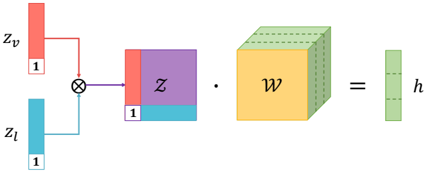
“In addition, in order to be able to model the interactions between any subset of modalities using one tensor, Zadeh et al. (2017) proposed a simple extension to append 1 s to the unimodal representations before taking the outer product.”
BackgroundMethodInfluentialSelf-citationMultimodal Compact Bilinear Pooling for Visual Question Answering and Visual Grounding
Fukui, A., Park, D. H., Yang, D., Rohrbach, A., Darrell, T., & Rohrbach, M. (2016) · Proceedings of the 2016 Conference on Empirical Methods in Natural Language Processing · doi:10.18653/v1/d16-1044 · Cited by 1,582 · cited 6×
“, 2017), (Fukui et al., 2016) performs contextdependent fusion of multimodal data.”
BackgroundMethodResultInfluentialFast Human Detection Using a Cascade of Histograms of Oriented Gradients
Zhu, Q., Yeh, M.-C., Cheng, K.-T., & Avidan, S. (2006) · 2006 IEEE Computer Society Conference on Computer Vision and Pattern Recognition - Volume 2 (CVPR'06) · doi:10.1109/cvpr.2006.119 · Cited by 1,399 · cited 2×
“Visual The library Facet1 is used to extract a set of visual features for each frame (sampled at 30Hz) including 20 facial action units, 68 facial landmarks, head pose, gaze tracking and HOG features (Zhu et al., 2006).”
MethodMemory Fusion Network for Multi-view Sequential Learning
Zadeh, A., Liang, P. P., Mazumder, N., Poria, S., Cambria, E., & Morency, L.-P. (2018) · Proceedings of the AAAI Conference on Artificial Intelligence · doi:10.1609/aaai.v32i1.12021 · Cited by 855
Self-citationMultimodal Sentiment Intensity Analysis in Videos: Facial Gestures and Verbal Messages
Zadeh, A., Zellers, R., Pincus, E., & Morency, L.-P. (2016) · IEEE Intelligent Systems · doi:10.1109/mis.2016.94 · Cited by 852 · cited 6×
“We perform our experiments on the following multi-modal datasets, CMU-MOSI (Zadeh et al., 2016a POM (Park et al., 2014b), and IEMOCAP (Busso et al., 2008) for sentiment analysis, speaker traits recognition, and emotion recognition task, where the goal is to identify speakers emotions based on the…”
MethodInfluentialSelf-citationCOVAREP — A collaborative voice analysis repository for speech technologies
Degottex, G., Kane, J., Drugman, T., Raitio, T., & Scherer, S. (2014) · 2014 IEEE International Conference on Acoustics, Speech and Signal Processing (ICASSP) · doi:10.1109/icassp.2014.6853739 · Cited by 695 · cited 1×
“Acoustic We use COVAREP acoustic analysis framework (Degottex et al., 2014) to extract a set of low-level acoustic features, including 12 Mel frequency cepstral coefficients (MFCCs), pitch, voiced/unvoiced segmentation, glottal source, peak slope, and maxima dispersion quotient features.”
Method
Research works printed but not linked: 5
- [6]6. Gilles Degottex, John Kane, Thomas Drugman, Tuomo Raitio, and Stefan Scherer. 2014. Covarepa collabo- rative voice analysis repository for speech technolo- gies. In Acoustics, Speech and Signal Processing (ICASSP), 2014 IEEE International Conference on. IEEE, pages 960-964.
- [10]10. Othmar Koch and Christian Lubich. 2010. Dynami- cal tensor approximation. SIAM Journal on Matrix Analysis and Applications 31(5):2360-2375.
- [14]14. Sunghyun Park, Han Suk Shim, Moitreya Chatterjee, Kenji Sagae, and Louis-Philippe Morency. 2014a. Computational analysis of persuasiveness in social multimedia: A novel dataset and multimodal predic- tion approach. In Proceedings of the 16th Interna- tional Conference on Multimodal Interaction. ACM, pages 50-57.
- [22]22. Hongcheng Wang and Narendra Ahuja. 2008. A ten- sor approximation approach to dimensionality re- duction. International Journal of Computer Vision 76(3):217-229.
- [24]24. Torsten Wortwein and Stefan Scherer. 2017. What really mattersan information gain analysis of ques- tions and reactions in automated ptsd screenings. In 2017 Seventh International Conference on Affective Computing and Intelligent Interaction (ACII). IEEE, pages 15-20.
Cited by
Items 701–800 of 1,001
CCFN: Depression Detection via Multimodal Fusion with Complex-valued Capsule Network
Lei, J., Yang, Q., Li, B., & Zhang, W. (2024) · International Joint Conference on Neural Networks (IJCNN) · doi:10.1109/ijcnn60899.2024.10650262 · Cited by 8
“LMF [21]: Multimodal fusion network based on low-rank matrix.”
BackgroundEnd-to-end Semantic-centric Video-based Multimodal Affective Computing
Lin, R., Zeng, Y., Mai, S., & Hu, H. (2026) · IEEE Transactions on Pattern Analysis and Machine Intelligence · doi:10.1109/tpami.2026.3752601 · Cited by 9
Chen, Q., Xie, S., Fang, X., & Sun, Q. (2024) · The Visual Computer · doi:10.1007/s00371-024-03668-w · Cited by 9
Fang, J.-F., Wang, W., Lin, G., & Lv, F. (2024) · ACM International Conference on Multimedia (ACM MM) · doi:10.1145/3664647.3680703 · Cited by 8
“For RQ2, we compare our framework PS2RI with existing state-of-the-art video sentiment analysis baselines, including TFN [57], LMF [27], MulT [44], MISA [12], MAG [34], F -MTL [4], GSLM+ [3] and DMD [18].”
MethodTemporal Enhancement for Video Affective Content Analysis
Li, X., Wang, S., & Huang, X. (2024) · ACM International Conference on Multimedia (ACM MM) · doi:10.1145/3664647.3681631 · Cited by 8
“Some studies [11, 27, 31] treat each modal feature as a tensor, transforming modal fusion into tensor fusion.”
BackgroundLuo, Y., Wang, M., & Ye, Q. (2024) · Electronic Commerce Research · doi:10.1007/s10660-024-09937-z · Cited by 8
“The Low-rank Multimodal Fusion (LMF) model leverage low-rank weight tensors of modality-specific for multimodal fusion to learn both modality-specific and cross-modal interactions [72].”
Nie, X., Yang, L. T., Li, Z., Deng, X., Fan, F., & Yang, Z. (2024) · IEEE Transactions on Computational Social Systems · doi:10.1109/tcss.2024.3459929 · Cited by 8
Hu, Z., Yu, Z., & Guo, J. (2025) · Multimedia Systems · doi:10.1007/s00530-025-01697-6 · Cited by 8
“LMF [33] is an improvement on TFN and introduces low-rank multi-modal tensor fusion to enhance processing efficiency.”
Guo, Z., Cheng, X., Wu, Y., & Jin, T. (2025) · Proceedings of the AAAI Conference on Artificial Intelligence · doi:10.1609/aaai.v39i16.33868 · Cited by 9
Fu, Y., Liu, Q., Song, Q., Zhang, P., & Liao, G. (2025) · Applied Sciences · doi:10.3390/app15084509 · Cited by 8
Contrastive learning of cross-modal information enhancement for multimodal fake news detection
Chen, W., Cai, F., Guo, Y., Pan, Z., Chen, W., & Zhang, Y. (2025) · Complex & Intelligent Systems · doi:10.1007/s40747-025-01919-4 · Cited by 8
Sun, N., Zhang, W., Zheng, W., Liu, J., Chai, L., & Wu, C. (2025) · IEEE Transactions on Affective Computing · doi:10.1109/taffc.2025.3612369 · Cited by 8
Liu, K., Liu, Y., Wei, L., Tang, C., Zhan, Y., Chen, Z., & Chen, Z. (2026) · IEEE Transactions on Multimedia · doi:10.1109/tmm.2026.3673532 · Cited by 9
“For the regression tasks , we also chose three widely-used regression validation metrics, like in other papers, namely Mean Absolute Error (MAE), Mean Squared Error (MSE), and Root Mean Squared Error (RMSE).”
MANGO: Multimodal Attention-based Normalizing Flow Approach to Fusion Learning
Truong, T.-D., Bobda, C., Agarwal, N., & Luu, K. (2025) · neural information processing systems · doi:10.52202/085713-4614 · Cited by 8
Frame Aggregation and Multi-modal Fusion Framework for Video-Based Person Recognition
Li, F., Wang, W., Liu, Z., Wang, H., Yan, C., & Wu, B. (2021) · Lecture notes in computer science · doi:10.1007/978-3-030-67832-6_7 · Cited by 8
Self-citationImage Analysis and Diagnosis of Skin Diseases - A Review
Li, X., Zhao, X., Ma, H., & Xie, B. (2022) · Current Medical Imaging Formerly Current Medical Imaging Reviews · doi:10.2174/1573405618666220516114605 · Cited by 9
Multimodal depression detection using a deep feature fusion network
Sun, G., Zhao, S., Zou, B., & An, Y. (2022) · International Conference on Computer Science and Communication Technology (ICCSCT) · doi:10.1117/12.2662620 · Cited by 8
“The relationship between the output of the ith A T cross-modal transformer ZA T [i] and the input vector XT , XA can be represented by XT = PositionalEncoding(XT) (7) XA = PositionalEncoding(XA) (8) IT = LayerNorm(X ∗ T + ZA T ) (9) IA = LayerNorm(X ∗ A) (10) QT = ITWQT (11)”
BackgroundModality-Transferable Emotion Embeddings for Low-Resource Multimodal Emotion RecognitionPreprint
Dai, W., Liu, Z., Yu, T., & Fung, P. (2020) · arXiv (Cornell University) · doi:10.48550/arxiv.2009.09629 · Cited by 8
“Furthermore, Liu et al. (2018) proposed a low-rank architecture to decrease the problem complexity, and Tsai et al. (2019b) introduced a modality re-construction method to generate occasional missing data in a modality.”
MethodSelf-citationDeznabi, I., & Fiterau, M. (2023) · arXiv (Cornell University) · doi:10.48550/arxiv.2306.10164 · Cited by 8
“, 2020b) and Efficient Lowrank Multimodal Fusion with Modality-Specific Factors (Liu et al., 2018; Du et al., 2018).”
BackgroundMethodZoom and Shift are All You NeedPreprint
Qin, J. (2024) · arXiv (Cornell University) · doi:10.48550/arxiv.2406.08866 · Cited by 10
“Finally, we compared ATD to alternative fusion techniques like LMF[19] and Cross-Attention[16] on ETT and MIT-BIH Arrhyth-mia.”
MethodGuan, J., Guo, J., Chen, Q., Chen, J., Cai, Y., He, Y., Huang, Z., Wang, Y., & Xie, Y. (2026) · Scientific Data · doi:10.1038/s41597-026-06736-z · Cited by 8
“Thus, each patient has two tissue sections taken, one from the core of the lesion and the other from the boundary of the lesion.”
Chen, P., & Fu, L. (2024) · International Journal of Information Systems in the Service Sector · doi:10.4018/ijisss.349564 · Cited by 7
Gradient and Structure Consistency in Multimodal Emotion Recognition
Shi, Q., Ye, M., Huang, W., Du, B., & Zong, X. (2025) · IEEE Transactions on Image Processing · doi:10.1109/tip.2025.3608664 · Cited by 7
Multimodal progressive contrastive learning for sentiment analysis
Zhou, L., Pu, Y., Zhao, Z., Feng, J., Xu, D., & Gu, J. (2025) · Neurocomputing · doi:10.1016/j.neucom.2025.132033 · Cited by 7
Progressive intra- and inter-modality relation learning for multimodal sentiment analysis
Li, J., Wu, Z., & Wang, Q. (2025) · Knowledge-Based Systems · doi:10.1016/j.knosys.2025.115088 · Cited by 8
Grading-inspired complementary enhancing for multimodal sentiment analysis
Huang, Z., He, W.-J., Hu, B., & Zhang, Z. (2026) · Information Fusion · doi:10.1016/j.inffus.2026.104174 · Cited by 8
Zhou, H., Liu, J., Li, X., Liu, Y., & He, H. (2026) · IEEE Transactions on Affective Computing · doi:10.1109/taffc.2026.3658336 · Cited by 7
Chien, G., Liu, J., Wang, J., & Chen, L. (2026) · Knowledge-Based Systems · doi:10.1016/j.knosys.2026.115654 · Cited by 8
Rethinking the Effect of Unimodal Labels in Multimodal Sentiment Analysis
Zhang, L., Li, T., Lu, B., Fang, J.-F., Zheng, D., Zhou, W., Liu, W., & Lv, F. (2026) · ACM Transactions on Multimedia Computing Communications and Applications · doi:10.1145/3796718 · Cited by 8
“We hypothesize this is due to potential overfitting or feature redundancy when the model complexity is overly increased, which interferes with the specific goal of distinguishing task conflicts. performance curve clearly indicates that the model peaks sharply at an optimal value of 𝛼 = 0.44 .”
InfluentialFINE: Factorized Multimodal Sentiment Analysis via Mutual INformation Estimation
Liu, Y., & Wang, S. (2026) · Proceedings of the AAAI Conference on Artificial Intelligence · doi:10.1609/aaai.v40i3.37176 · Cited by 7
Mengara, A. G. M., Moorthy, S., Arthanari, S., Kim, H., & Moon, Y.-K. (2026) · IEEE Transactions on Affective Computing · doi:10.1109/taffc.2026.3678321 · Cited by 7
BiMNet: A Multimodal Data Fusion Network for continuous circular capsulorhexis Action Segmentation
Bian, G., Zheng, J.-Y., Li, Z., Wang, J., Fu, P., Chen, X., da Silva, D. S., Wu, W., & de Albuquerque, V. H. C. (2023) · Expert Systems with Applications · doi:10.1016/j.eswa.2023.121885 · Cited by 7
Xu, G., Deng, L., Li, Y., Wei, Y., Zhou, X., & Zhu, H. (2023) · IEEE Transactions on Computational Social Systems · doi:10.1109/tcss.2023.3324462 · Cited by 7
“Although Liu et al. [22] and Zhu et al. [23] have used this model structure, we make use of this model for full fusion and low computational cost.”
MethodMaking the Implicit Explicit: Depression Detection in Web across Posted Texts and Images
Hu, P., Lin, C., Li, J., Tan, F., Han, X., Zhou, X., & Hu, L. (2023) · IEEE International Conference on Bioinformatics and Biomedicine (BIBM) · doi:10.1109/bibm58861.2023.10385590 · Cited by 7
Hwang, Y., & Kim, J.-H. (2024) · IEEE Winter Conference on Applications of Computer Vision · doi:10.1109/wacv57701.2024.00557 · Cited by 7
“The baseline models for the MSA task include the following: LMF [27] performs multimodal fusion using low-rank tensors.”
BackgroundMethodFu, Y., Fu, J., Xue, H., & Xu, Z. (2024) · Electronics · doi:10.3390/electronics13142835 · Cited by 7
A Two-Stage Audio-Visual Fusion Piano Transcription Model Based on the Attention Mechanism
Li, Y., Wang, X., Wu, R., Xu, W., & Cheng, W. (2024) · IEEE/ACM Transactions on Audio Speech and Language Processing · doi:10.1109/taslp.2024.3426303 · Cited by 7
Improving Efficiency in Multi-Modal Autonomous Embedded Systems Through Adaptive Gating
Hou, X., Xu, C., Li, C., Liu, J., Tang, X., Cheng, K.-T. T., & Guo, M. (2024) · IEEE Transactions on Computers · doi:10.1109/tc.2024.3500382 · Cited by 7
MFM: Multimodal Sentiment Analysis Based on Modal Focusing Model
Sun, S., Xu, G., & Lu, S. (2024) · Conference proceedings/Conference proceedings - IEEE International Conference on Systems, Man, and Cybernetics · doi:10.1109/smc54092.2024.10831023 · Cited by 7
TI-JEPA: An Innovative Energy-Based Joint Embedding Strategy for Text-Image Multimodal Systems
Vo, K. H. N., Nguyen, D., Nguyen, T. T., & Quan, T. (2025) · Communications in computer and information science · doi:10.1007/978-981-96-4282-3_12 · Cited by 7
CLIP-driven attention network for multimodal sentiment analysis
Lv, J., Yang, Q., Tian, S., Liu, B., & Yu, L. (2025) · The Journal of Supercomputing · doi:10.1007/s11227-025-07411-7 · Cited by 7
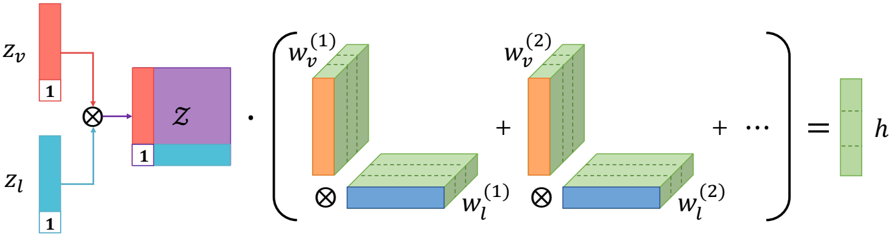
“Low-rank multimodal fusion (LMF) [29] proposed by Liu et al. reduces the computational complexity of high-dimensional multimodal feature fusion through low-rank tensor decomposition while preserving high-order interaction information between modalities.”
Multimodal sentiment analysis based on temporal perception and cross-modal interaction
Ji, C., Tan, T., & Dai, W. (2025) · Multimedia Systems · doi:10.1007/s00530-025-01954-8 · Cited by 7
“LMF (Low-rank Multimodal Fusion) reduces computa - tional complexity by decomposing modality features into multiple low-rank matrices, while preserving inter-modal interactions through the structured fusion of these decomposed representations [30].”
Jiang, M., Lin, Y., Chen, B., Hu, H., Jiang, Y., & Mai, S. (2026) · IEEE Transactions on Multimedia · doi:10.1109/tmm.2026.3746119 · Cited by 7
Lin, G., Wang, F., Zhong, X., An, Z., & Han, S. (2025) · IEEE Transactions on Instrumentation and Measurement · doi:10.1109/tim.2025.3548197 · Cited by 7
“The output dimensions for the first and second multiscale convolutional blocks are set to [32, 16, 16] and [96, 48, 48], respectively.”
Dual-Domain Low-Rank Fusion Deep Metric Learning for Off-the-Person ECG Biometrics
Zhu, G., Ma, M., Huang, Y., Wang, K., & Yang, G. (2022) · IEEE International Conference on Acoustics Speech and Signal Processing · doi:10.1109/icassp43922.2022.9747122 · Cited by 7
Low-rank Fusion Network for Multi-modality Person Re-identification
He, Z., Shi, H., Wu, Y., & Tu, Z. (2023) · International Conference on Intelligent Computing and Signal Processing (ICSP) · doi:10.1109/icsp58490.2023.10248672 · Cited by 7
Fusing Modality-Specific Representations and Decisions for Multimodal Emotion Recognition
Ruan, Y.-P., Han, S., Li, T., & Wu, Y. (2024) · IEEE International Conference on Acoustics Speech and Signal Processing · doi:10.1109/icassp48485.2024.10447035 · Cited by 7
“Following are the details: CHERMA : We compare our proposed BCFN model with tesor fusion network (TFN) [18], low-rank multimodal fusion (LMF) [19], multimodal transformer (MulT) [20], progressively modality reinforcement (PMR) [21], and layer-wise fusion with modality independence modeling (LFMIM)…”
MethodDeng, J., & Su, F. (2024) · Remote Sensing · doi:10.3390/rs16111920 · Cited by 7
Siamese capsule gorilla troops network-based multimodal sentiment analysis for car reviews
Kothuri, S. R., & Rajalakshmi, N. R. (2024) · Soft Computing · doi:10.1007/s00500-024-09754-4 · Cited by 7
Li, Y., Weng, W., Liu, C., & Lin, L. (2024) · Pattern Analysis and Applications · doi:10.1007/s10044-024-01320-w · Cited by 7
“In order to solve these problems of TFN, Liu et al. [17] proposed the LMF fusion method, whose core idea is to fuse multiple modal data by using low-rank tensors.”
InfluentialAudio-Visual Understanding of Passenger Intents for In-Cabin Conversational Agents
Okur, E., Kumar, S. H., Sahay, S., & Nachman, L. (2020) · doi:10.18653/v1/2020.challengehml-1.7 · Cited by 7
Countering Modal Redundancy and Heterogeneity: A Self-Correcting Multimodal Fusion
Wang, P., Wang, X., Wang, B., Zhang, Y., Bai, L., & Wang, Y. (2022) · Proceedings · doi:10.1109/icdm54844.2022.00062 · Cited by 7
“Considering the inherent defects of these two fusions, some recent works, which are so-called the intermediate fusion since they attempt to achieve multimodal feature interactions during the intermediate phase, focus on modeling both intra- and inter-modal dynamics [14].”
BackgroundA Review of Multimodal Sentiment Analysis: Modal Fusion and Representation
Fu, H., & Lu, H. (2024) · International Wireless Communications and Mobile Computing Conference (IWCMC) · doi:10.1109/iwcmc61514.2024.10592484 · Cited by 7
“Liu et al. [31] modified the aforementioned fusion network by using low rank tensors to improve training efficiency and reduce the number of parameters used.”
BackgroundFOAA: Flattened Outer Arithmetic Attention for Multimodal Tumor Classification
Alwazzan, O., Patras, I., & Slabaugh, G. (2024) · IEEE International Symposium on Biomedical Imaging (ISBI) · doi:10.1109/isbi56570.2024.10635901 · Cited by 7
“We acknowledge that the nature of outer products initiates complex computation and acquires more memory in existing methods [11][12][13][14][15].”
BackgroundHuman Activity Recognition Based on Data Fusion of FMCW Radar and Image
Li, W., Feng, X., Zhao, H., & Zheng, H. (2021) · IEEE International Conference on Computer and Communications (ICCC) · doi:10.1109/iccc54389.2021.9674543 · Cited by 7
On the Memory Mechanism of Tensor-Power Recurrent ModelsPreprint
Qiu, H., Li, C., Weng, Y., Sun, Z., He, X., & Zhao, Q. (2021) · arXiv (Cornell University) · doi:10.48550/arxiv.2103.01521 · Cited by 7
“In fact, the similar results have been also reported in several tensor literature (Liu et al., 2018; Li et al., 2020a; Huang et al., 2020b).”
ResultHierarchical Adaptive Expert for Multimodal Sentiment AnalysisPreprint
Qin, J., Liu, F., & Zong, L. (2025) · arXiv (Cornell University) · doi:10.48550/arxiv.2503.22715 · Cited by 7
“• LMF [17]: Employs low-rank tensors for efficient multimodal fusion.”
Zheng, J., Zhang, S., Wang, X., & Zeng, Z. (2022) · arXiv · doi:10.48550/arxiv.2201.03969 · Cited by 6
Hu, C., Liu, J., Li, X., Li, M., & He, H. (2024) · The Journal of Supercomputing · doi:10.1007/s11227-024-06588-7 · Cited by 6
“Sahay et al. [17] had tried to combine MulT with low-rank multimodal fusion (LMF) [4] in order to simplify the complexity of it.”
InfluentialMECG: modality-enhanced convolutional graph for unbalanced multimodal representations
Tang, J., Ni, B., Yang, Y., Ding, Y., & Kong, W. (2024) · The Journal of Supercomputing · doi:10.1007/s11227-024-06729-y · Cited by 6
“We consider pure learning-based models such as TFN [8], LMF [38], MFM [22], and MulT [10].”
Emotion Recognition Empowered Human-Computer Interaction With Domain Adaptation Network
Xu, X., Fu, C., & Chen, J. (2024) · IEEE Transactions on Consumer Electronics · doi:10.1109/tce.2024.3524401 · Cited by 6
TOMFuN: A tensorized optical multimodal fusion network
Xiao, X., Zhao, Y., Yuan, Y., Kurczveil, G., Fiorentino, M., Beausoleil, R. G., & Zhang, Z. (2025) · APL Machine Learning · doi:10.1063/5.0255883 · Cited by 6
Efficient Transfer From Image-Based Large Multimodal Models to Video Tasks
Cao, S., Zhao, Z., Hao, S., Chai, W., Hwang, J., Wang, H., & Wang, G. (2025) · IEEE Transactions on Multimedia · doi:10.1109/tmm.2025.3557692 · Cited by 6
Big data fusion with knowledge graph: a comprehensive overview
Liu, J., Lan, R., Du, Y., Yuan, X., Xu, H., Li, T., Huang, W. X., & Zhang, P. (2025) · Applied Intelligence · doi:10.1007/s10489-025-06549-4 · Cited by 6
Cai, T., Wang, S., Wang, J., Xiong, Y., & Liu, L. (2025) · Frontiers of digital education. · doi:10.1007/s44366-025-0063-x · Cited by 6
“Liu et al. (2018) proposed a low-rank multimodal fusion (LMF) method.”
Hypergraph-based multimodal adaptive fusion for emotion recognition in conversation
Xie, X., Ma, T., Li, J., & Rong, H. (2025) · The Journal of Supercomputing · doi:10.1007/s11227-025-07584-1 · Cited by 6
“To address the exponential growth in dimensions and computational complexity introduced by tensors, Liu et al. [24] proposed the use of modality-specific low-rank factors for multimodal fusion, improving computational efficiency.”
Multimodal large language model enhancement network for multimodal sentiment analysis
Zhu, H., Shen, Z., Dai, C., & Yu, Z. (2025) · Multimedia Systems · doi:10.1007/s00530-025-01914-2 · Cited by 6
“Low-rank multimode fusion (LMF) [36] uses the fusion strategy similar to TFN, but it further reduces the computational cost with the low-rank tensor.”
Yang, X., Zhu, Y., Liu, H., Wen, Z., Tang, N., & Luo, Y. (2025) · International Joint Conference on Artificial Intelligence · doi:10.24963/ijcai.2025/247 · Cited by 6
Cross-modal BERT model for enhanced multimodal sentiment analysis in psychological social networks
Feng, J. (2025) · BMC Psychology · doi:10.1186/s40359-025-03443-z · Cited by 6
“Within this section, this paper undertakes a comparative analysis of the proposed CPEF model, juxtaposed against the multimodal model, across the CMU-MOSI and CMU-MOSEI datasets [26], alongside LMF [21], EF-LSTM [23], and MulT [25] models, respectively.”
Xiong, A., Mai, S., & Hu, H. (2025) · Expert Systems with Applications · doi:10.1016/j.eswa.2025.130213 · Cited by 6
Cross-Space Synergy: A Unified Framework for Multimodal Emotion Recognition in Conversation
Lyu, X. R., Xiong, J., Chen, Y., Wang, W., Dai, X., & Wang, J. (2026) · Proceedings of the AAAI Conference on Artificial Intelligence · doi:10.1609/aaai.v40i29.39602 · Cited by 6
“Methods such as MLB (Fukui et al. 2016), MFB (Yu et al. 2017), and LMF (Liu et al. 2018) employ multiplicative fusion operations (e.g., Hadamard products, low-rank factorization) to model nonlinear cross-modal dependencies, though these remain constrained to pairwise interactions.”
MDCM: A multi-granularity disentanglement and cross-modal synergy-based model for sentiment analysis
Wang, M., Xie, L., Peng, X., & Wang, X. (2025) · Pattern Recognition · doi:10.1016/j.patcog.2025.112898 · Cited by 6
Bridging modal gaps in multimodal sentiment analysis: a self-supervised text-guided fusion approach
Zhong, H., Yi, J., Hu, R., Chen, A., & Han, G. (2025) · Expert Systems with Applications · doi:10.1016/j.eswa.2025.131012 · Cited by 6
Li, S., Chen, X., Li, Z., Miao, D., Zhang, H., Qin, X., & Lu, P. (2026) · Expert Systems with Applications · doi:10.1016/j.eswa.2025.131032 · Cited by 6
Wang, D., Pan, X., Gao, Y., Tsung, F., & Li, F. (2026) · IEEE Transactions on Automation Science and Engineering · doi:10.1109/tase.2026.3658782 · Cited by 7
Decoupled Hierarchical Distillation for Multimodal Emotion Recognition
Li, Y., Wang, Y., Ding, Y., Zhang, S., Lu, K., & Guan, C. (2026) · IEEE Transactions on Pattern Analysis and Machine Intelligence · doi:10.1109/tpami.2026.3660754 · Cited by 6
“The experiments are conducted under the word-aligned and unaligned settings for a more comprehensive comparison.”
Zhai, Y., Yang, Q., Wang, C., Zhou, L., Feng, J., Hu, F., Zhao, Z., & Pu, Y. (2026) · Expert Systems with Applications · doi:10.1016/j.eswa.2026.131746 · Cited by 6
Meng, C., Zhou, Z., He, L., Du, X., Ouyang, C., & Gan, Z. (2026) · IEEE International Conference on Acoustics Speech and Signal Processing · doi:10.1109/icassp55912.2026.11463049 · Cited by 6
A New View of Multi-modal Language Analysis: Audio and Video Features as Text “Styles”
Sun, Z., Sarma, P. K., Liang, Y., & Sethares, W. A. (2021) · Conference of the European Chapter of the Association for Computational Linguistics · doi:10.18653/v1/2021.eacl-main.167 · Cited by 6
“Liu et al. (2018) develop an efficient low-rank tensor fusion mechanism to learn the outer-product representation of multi-modal features, while (Zadeh et al., 2018a) learn a multi-modal memory gate that is applied to an LSTM to capture the flow of information in the different modalities.”
BackgroundMethodInfluentialMultimodal Sentiment Analysis Using Deep Learning: A Review
Patel, S., Shroff, N., & Shah, H. (2024) · Communications in computer and information science · doi:10.1007/978-3-031-59097-9_2 · Cited by 6
Wan, X., Wang, Y., Wang, Z., Tang, Y., & Liu, B. (2024) · Physiological Measurement · doi:10.1088/1361-6579/ad5bbc · Cited by 6
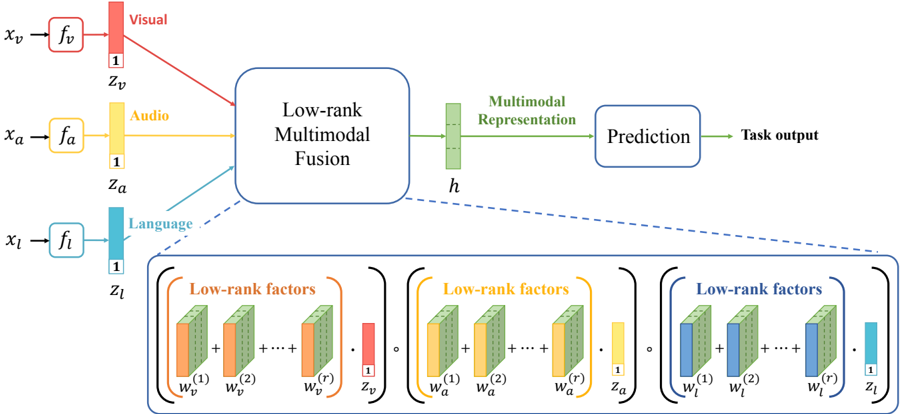
“Inspired by Liu et al (2018), We employ a low-rank multimodal fusion method that leverages low-rank weight tensors for efficient feature fusion, the structure is shown in figure 4.”
Dual-View Multimodal Interaction in Multimodal Sentiment Analysis
Zhu, K., Fan, C., Tao, J., Xue, J., Xie, H., Liu, X., Li, Y., Wen, Z., & Lv, Z. (2024) · IEEE International Conference on Multimedia and Expo (ICME) · doi:10.1109/icme57554.2024.10688078 · Cited by 6
“Most of the methods for multi-modal feature vector interaction primarily focus on temporal interactions, utilizing techniques such as geometric operations [3] and attention mechanisms [4] [5].”
MethodReview of Multimodal Sentiment Analysis Techniques
Tang, Z. (2024) · Applied and Computational Engineering · doi:10.54254/2755-2721/2025.18747 · Cited by 6
Chen, G., Qian, Z., Qiu, S., Zhang, D., & Zhou, R. (2025) · Digital Signal Processing · doi:10.1016/j.dsp.2025.105322 · Cited by 6
A dynamic weighted fusion model for multimodal sentiment analysis
Yang, L. (2025) · Signal Image and Video Processing · doi:10.1007/s11760-025-04201-9 · Cited by 6
“In order to simplify this complex calculation, Liu et al. [13] proposed a low rank tensor fusion network (LMF) to improve the efficiency of data processing by reducing the parameters of the low rank tensor.”
Lightweight Models for Multimodal Sequential Data.
Sourav, S., & Ouyang, J. (2021) · Cited by 6
Multi-distorted Image Restoration with Tensor 1 × 1 Convolutional Layer
Huang, Z., Li, C., Duan, F., & Zhao, Q. (2021) · International Joint Conference on Neural Networks (IJCNN) · doi:10.1109/ijcnn52387.2021.9533737 · Cited by 6
“In the equations, the internal indices rk,∀k is usually called bound dimension in physics literature [27] or rank in computer science [15], which controls the total number of parameters used in the layer.”
BackgroundChen, Y., Hsu, C.-F., Tsai, C.-C., & Hsu, C.-H. (2022) · doi:10.1145/3552487.3556438 · Cited by 6
“• We applied HPFL on a semantic segmentation network [22] and an emotion recognition network [40].”
BackgroundMethodAgrawal, P., Raj, S., Saha, S., & Onoe, N. (2023) · Procedia Computer Science · doi:10.1016/j.procs.2023.08.196 · Cited by 6
Modelling conversational agent with empathy mechanism
Dai, X., Liu, Z., Liu, T., Zuo, G., Xu, J., Shi, C., & Wang, Y. (2023) · Cognitive Systems Research · doi:10.1016/j.cogsys.2023.101206 · Cited by 6
Self-citationMulti-granularity sequence generation for hierarchical image classification
Liu, X., & Wang, L. (2024) · Computational Visual Media · doi:10.1007/s41095-022-0332-2 · Cited by 6
Self-Supervised Multimodal Fusion Network for Knee Osteoarthritis Severity Grading
Wu, W., Hu, K., Yue, W., Li, W., Simić, M., Li, C., Xiang, W., & Wang, Z. (2023) · International Conference on Digital Image Computing: Techniques and Applications (DICTA) · doi:10.1109/dicta60407.2023.00017 · Cited by 6
Multi-modal fusion network guided by prior knowledge for 3D CAD model recognition
Li, Q., Xu, Z., Bai, S., Nie, W., & Liu, A.-A. (2024) · Neurocomputing · doi:10.1016/j.neucom.2024.127731 · Cited by 6
Position-Aware Indoor Human Activity Recognition Using Multisensors Embedded in Smartphones
Wang, X., Wang, Y., & Wu, J. (2024) · Sensors · doi:10.3390/s24113367 · Cited by 6
“Then, we fuse the feature vectors Z a , Z g , Z l from different sensors into a fused 512-dimension feature Z m using the idea of low-rank multimodal fusion (LMF) [34].”
MethodMa, L., Li, J., Shao, D., Yan, J., Wang, J., & Yan, Y. (2024) · IEEE Access · doi:10.1109/access.2024.3405586 · Cited by 6
“…to provide a more comprehensive understanding of sentiment [4], which is important for The associate editor coordinating the review of this manuscript and approving it for publication was Maria Chiara Caschera . market trend analysis, personalized marketing and brand management [5], [6], [7], [8].”
BackgroundMethodFang, C., Liang, F., Li, T., & Guan, F. (2024) · Future Internet · doi:10.3390/fi16060213 · Cited by 6
A Transformative Technology Linking Patient’s mRNA Expression Profile to Anticancer Drug Efficacy
Yeh, C., Lin, S.-T., & Lai, H.-C. (2024) · Onco · doi:10.3390/onco4030012 · Cited by 6
“LMF is a technique for combining multiple modalities in a neural network such that the latent representations of different features are forced to “interact” with each other [27].”
MethodFeatures Fusion Framework for Multimodal Irregular Time-series Events
Tang, P., & Zhang, X. (2022) · Lecture notes in computer science · doi:10.1007/978-3-031-20862-1_27 · Cited by 6
Multimodal Local-Global Ranking Fusion for Emotion RecognitionPreprint
Liang, P. P., Zadeh, A., & Morency, L. (2018) · arXiv (Cornell University) · doi:10.48550/arxiv.1809.04931 · Cited by 6
“More advanced models use memory mechanisms [32], low-rank approximations to tensor products [14], multiple attention stages [13] or assignments [33] or generative-discriminative objectives to learn factorized [27] or joint multimodal representations [19].”
Self-citationMM-DFN: Multimodal Dynamic Fusion Network for Emotion Recognition in ConversationsPreprint
Hu, D., Hou, X., Wei, L., Jiang, L., & Mo, Y. (2022) · arXiv (Cornell University) · doi:10.48550/arxiv.2203.02385 · Cited by 6
“After the modality encoder, we replace GDF with the following six fusion modules: Concat/Gate Fusion, Tensor/Memory Fusion [10, 11], Early/Late Fusion + GCN [13], and Graphbased Fusion (GF) [13].”
BackgroundMethod
Metadata
- Authors
- Liu, Z., Shen, Y., Lakshminarasimhan, V. B., Liang, P. P., Bagher Zadeh, A., & Morency, L.-P.
- Affiliations
- Carnegie Mellon University (US)
- Venue
- Proceedings of the 56th Annual Meeting of the Association for Computational Linguistics (Volume 1: Long Papers)
- Published
- 2018
- Pages
- 2247-2256
- ISSN
- 0736-587X (ISSN-L)
- OpenAlex
- W2964346351
- Cited by
- 1,170
- References
- 31
- Citations by year
- 2026: 213 · 2025: 262 · 2024: 255 · 2023: 176 · 2022: 126 · 2021: 85 · 2020: 39 · 2019: 12 · 2018: 2
- FWCI
- 10.40
- Type
- conference paper
- Language
- en
- Open access
- hybrid
- doi.org
- Licence
- cc-by
- Locations
- Proceedings of the conference - Association for Computational Linguistics. Meeting (publishedVersion, cc-by)
- Funders
- National Science Foundation
- Topics
- Physical Sciences › Computer Science › Computer Vision and Pattern Recognition › Multimodal Machine Learning Applications
- Physical Sciences › Engineering › Media Technology › Advanced Image Fusion Techniques
- Physical Sciences › Computer Science › Artificial Intelligence › Topic Modeling
- Keywords
- multimodal fusion, cross-modal representation learning
About these checks
Registry, retraction, Cites and statistics results are computed, not judged, with one exception: a printed reference that no index lists is read once by a model before it counts as a citation error. Claims are extracted by a model and kept only when their quote appears verbatim in the text; each cited source is then checked, with a model’s help, for whether it says what the claim relies on. Those verdicts can be wrong — read the claim’s quote and the cited source before relying on one.
Statistics and arithmetic are recomputed, not judged.
Confidence bands are shown only for fields calibrated on our annotated test set. None is calibrated yet, so no band is shown.
What counts as a claim ›How we measure confidence ›How we check this ›
Are you an author, or do you see a problem with this page? Request a review
Data sources
Bibliographic data: Semantic Scholar, OpenAlex, Crossref.
Contains information from the Semantic Scholar Academic Graph Datasets, made available under the ODC Attribution License (ODC-BY 1.0).
Semantic Scholar’s data is described in: Kinney, R., et al. (2023). The Semantic Scholar Open Data Platform. arXiv:2301.10140.
