

Efficient Low-rank Multimodal Fusion With Modality-Specific Factors
Open accessThe DOI matches its Crossref record; 33 of the 33 references it cites were found in a registry or an index.
Abstract
Zhun Liu, Ying Shen, Varun Bharadhwaj Lakshminarasimhan, Paul Pu Liang, AmirAli Bagher Zadeh, Louis-Philippe Morency. Proceedings of the 56th Annual Meeting of the Association for Computational Linguistics (Volume 1: Long Papers). 2018.
Overview
The claims and statistics of this paper haven’t been checked yet.
Free: it reads the open-access text and checks the first 5 claims that cite a source we can check. Create a free account to check every claim.
Integrity signals
Registry
Cites
Statistics
Figures
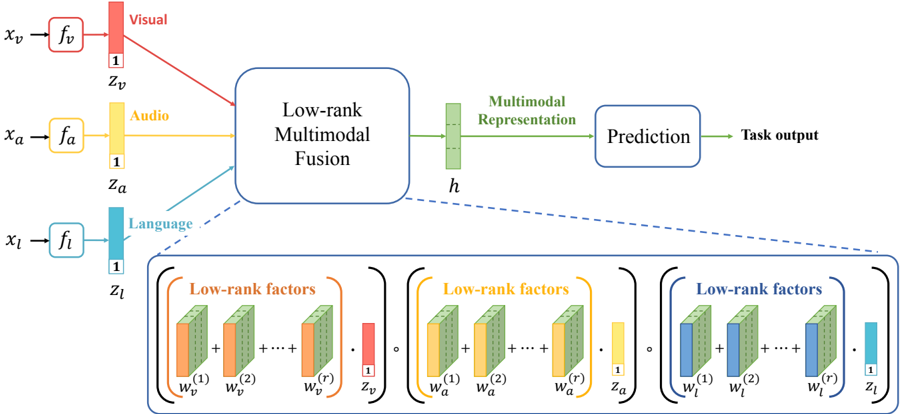
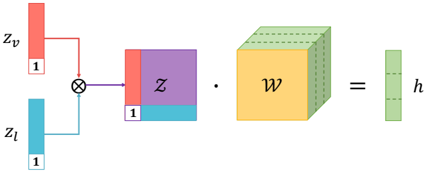
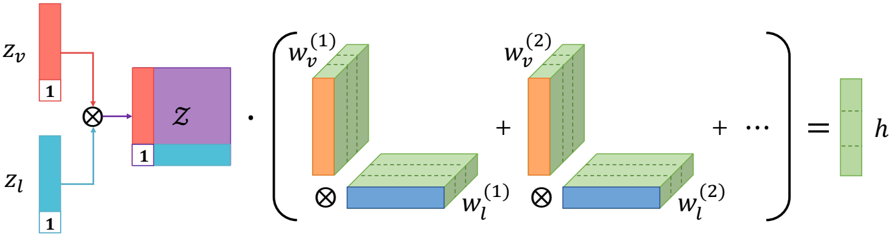
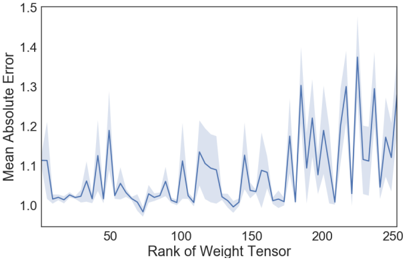
Verification
Claims the paper makes
The claims and statistics of this paper haven’t been checked yet.
Free: it reads the open-access text and checks the first 5 claims that cite a source we can check. Create a free account to check every claim.
Claims other papers make about this one
Each is checked against this paper’s own text: does it say what the citing paper says it does?
The cited source says what the claim attributes to it.
In the citing paper
“The experiment confirmed that the LMF effectively improves the training and testing efficiency compared to TFN.”
From A Survey of Deep Learning-Based Multimodal Emotion Recognition: Speech, Text, and Face (2023) · cites this paper as [100]
The cited source says what the claim attributes to it.
In the citing paper
“Several efficient variants have been proposed to approximate expensive full tensor products with cheaper variants while maintaining performance [71, 101, 106].”
From MultiBench: Multiscale Benchmarks for Multimodal Representation Learning (2021) · cites this paper as [106]
In the citing paper
“we compared vector concatenation and a low-rank implementation of Kronecker Product Fusion, which similarly outperform unimodal approaches (Table S3) (Liu et al., 2018).”
From Pan-cancer integrative histology-genomic analysis via multimodal deep learning (2022) · cites this paper as Liu et al., 2018
Self-check
Percentages, sums and reported differences re-computed from the paper’s own numbers.
The self-check needs the paper’s full text.
Citations
Cites
Hochreiter, S., & Schmidhuber, J. (1997) · Neural Computation · doi:10.1162/neco.1997.9.8.1735 · Cited by 102,318 · cited 4×
“Multi-View LSTM Multi-View LSTM (MV-LSTM) (Rajagopalan et al., 2016) aims to capture both modality-specific and cross-modality interactions from multiple modalities by partitioning the memory cell and the gates corresponding to multiple modalities.”
MethodInfluentialCortes, C., & Vapnik, V. (1995) · Machine Learning · doi:10.1007/bf00994018 · Cited by 59,421
Glove: Global Vectors for Word Representation
Pennington, J., Socher, R., & Manning, C. (2014) · Proceedings of the 2014 Conference on Empirical Methods in Natural Language Processing (EMNLP) · doi:10.3115/v1/d14-1162 · Cited by 34,071 · cited 1×
“Language We use pre-trained 300-dimensional Glove word embeddings (Pennington et al., 2014) to encode a sequence of transcribed words into a sequence of word vectors.”
MethodIEMOCAP: Interactive emotional dyadic motion capture database
Busso, C., Bulut, M., Lee, C.-C., Kazemzadeh, A., Mower, E., Kim, S., Chang, J. N., Lee, S., & Narayanan, S. S. (2008) · Language Resources and Evaluation · doi:10.1007/s10579-008-9076-6 · Cited by 3,869 · cited 4×
“We perform our experiments on the following multi-modal datasets, CMU-MOSI (Zadeh et al., 2016a POM (Park et al., 2014b), and IEMOCAP (Busso et al., 2008) for sentiment analysis, speaker traits recognition, and emotion recognition task, where the goal is to identify speakers emotions based on the speakers’ verbal and…”
BackgroundMethodInfluentialTensor Fusion Network for Multimodal Sentiment Analysis
Zadeh, A., Chen, M., Poria, S., Cambria, E., & Morency, L.-P. (2017) · Proceedings of the 2017 Conference on Empirical Methods in Natural Language Processing · doi:10.18653/v1/d17-1115 · Cited by 2,102 · cited 12×
“In addition, in order to be able to model the interactions between any subset of modalities using one tensor, Zadeh et al. (2017) proposed a simple extension to append 1 s to the unimodal representations before taking the outer product.”
BackgroundMethodInfluentialSelf-citationMultimodal Compact Bilinear Pooling for Visual Question Answering and Visual Grounding
Fukui, A., Park, D. H., Yang, D., Rohrbach, A., Darrell, T., & Rohrbach, M. (2016) · Proceedings of the 2016 Conference on Empirical Methods in Natural Language Processing · doi:10.18653/v1/d16-1044 · Cited by 1,582 · cited 6×
“, 2017), (Fukui et al., 2016) performs contextdependent fusion of multimodal data.”
BackgroundMethodResultInfluentialFast Human Detection Using a Cascade of Histograms of Oriented Gradients
Zhu, Q., Yeh, M.-C., Cheng, K.-T., & Avidan, S. (2006) · 2006 IEEE Computer Society Conference on Computer Vision and Pattern Recognition - Volume 2 (CVPR'06) · doi:10.1109/cvpr.2006.119 · Cited by 1,399 · cited 2×
“Visual The library Facet1 is used to extract a set of visual features for each frame (sampled at 30Hz) including 20 facial action units, 68 facial landmarks, head pose, gaze tracking and HOG features (Zhu et al., 2006).”
MethodMemory Fusion Network for Multi-view Sequential Learning
Zadeh, A., Liang, P. P., Mazumder, N., Poria, S., Cambria, E., & Morency, L.-P. (2018) · Proceedings of the AAAI Conference on Artificial Intelligence · doi:10.1609/aaai.v32i1.12021 · Cited by 855
Self-citationMultimodal Sentiment Intensity Analysis in Videos: Facial Gestures and Verbal Messages
Zadeh, A., Zellers, R., Pincus, E., & Morency, L.-P. (2016) · IEEE Intelligent Systems · doi:10.1109/mis.2016.94 · Cited by 852 · cited 6×
“We perform our experiments on the following multi-modal datasets, CMU-MOSI (Zadeh et al., 2016a POM (Park et al., 2014b), and IEMOCAP (Busso et al., 2008) for sentiment analysis, speaker traits recognition, and emotion recognition task, where the goal is to identify speakers emotions based on the…”
MethodInfluentialSelf-citationCOVAREP — A collaborative voice analysis repository for speech technologies
Degottex, G., Kane, J., Drugman, T., Raitio, T., & Scherer, S. (2014) · 2014 IEEE International Conference on Acoustics, Speech and Signal Processing (ICASSP) · doi:10.1109/icassp.2014.6853739 · Cited by 695 · cited 1×
“Acoustic We use COVAREP acoustic analysis framework (Degottex et al., 2014) to extract a set of low-level acoustic features, including 12 Mel frequency cepstral coefficients (MFCCs), pitch, voiced/unvoiced segmentation, glottal source, peak slope, and maxima dispersion quotient features.”
Method
Research works printed but not linked: 5
- [6]6. Gilles Degottex, John Kane, Thomas Drugman, Tuomo Raitio, and Stefan Scherer. 2014. Covarepa collabo- rative voice analysis repository for speech technolo- gies. In Acoustics, Speech and Signal Processing (ICASSP), 2014 IEEE International Conference on. IEEE, pages 960-964.
- [10]10. Othmar Koch and Christian Lubich. 2010. Dynami- cal tensor approximation. SIAM Journal on Matrix Analysis and Applications 31(5):2360-2375.
- [14]14. Sunghyun Park, Han Suk Shim, Moitreya Chatterjee, Kenji Sagae, and Louis-Philippe Morency. 2014a. Computational analysis of persuasiveness in social multimedia: A novel dataset and multimodal predic- tion approach. In Proceedings of the 16th Interna- tional Conference on Multimodal Interaction. ACM, pages 50-57.
- [22]22. Hongcheng Wang and Narendra Ahuja. 2008. A ten- sor approximation approach to dimensionality re- duction. International Journal of Computer Vision 76(3):217-229.
- [24]24. Torsten Wortwein and Stefan Scherer. 2017. What really mattersan information gain analysis of ques- tions and reactions in automated ptsd screenings. In 2017 Seventh International Conference on Affective Computing and Intelligent Interaction (ACII). IEEE, pages 15-20.
Cited by
Items 401–500 of 1,001
Cross-Modal Sentiment Sensing with Visual-Augmented Representation and Diverse Decision Fusion
Zhang, S., Li, B., & Yin, C. (2021) · Sensors · doi:10.3390/s22010074 · Cited by 24
“[40] proposed Low-rank Multimodal Fusion (LMF) to approximate the result of an outer-product.”
BackgroundRethinking Missing Modality Learning from a Decoding Perspective
Jin, T., Cheng, X., Li, L., Wang, L., Wang, Y., & Zhao, Z. (2023) · ACM International Conference on Multimedia (ACM MM) · doi:10.1145/3581783.3612291 · Cited by 24
“[29] considers the large complexity of [44] and utilizes modality-specific factors to achieve efficient low-rank fusion.”
BackgroundMethodPredict and Use: Harnessing Predicted Gaze to Improve Multimodal Sarcasm Detection
Tiwari, D., Kanojia, D., Ray, A., Nunna, A., & Bhattacharyya, P. (2023) · Conference on Empirical Methods in Natural Language Processing (EMNLP) · doi:10.18653/v1/2023.emnlp-main.988 · Cited by 26
Shi, L. S., Jia, W., Zhang, R., Fan, Z., Bian, W., & Mo, H. (2024) · Food Chemistry · doi:10.1016/j.foodchem.2024.138468 · Cited by 24
Tensorized Hypergraph Neural Networks
Wang, M., Zhen, Y., Pan, Y. R., Zhao, Y., Zhuang, C., Xu, Z., Guo, R., & Zhao, X. (2024) · Society for Industrial and Applied Mathematics eBooks · doi:10.1137/1.9781611978032.15 · Cited by 24
Jointly Modeling Inter- & Intra-Modality Dependencies for Multi-modal Learning
Madaan, D., Makino, T., Chopra, S., & Cho, K. (2024) · neural information processing systems · doi:10.52202/079017-3685 · Cited by 27
“Specifically, we employ late fusion (LF), which concatenates the uni-modal feature representations followed by a classification head, and low-rank multimodal fusion (LRTF) [50] from the recent multi-modal benchmark [41] for this dataset.”
Saha, P., Mishra, D., Wagner, F., Kamnitsas, K., & Noble, J. A. (2024) · arXiv (Cornell University) · doi:10.48550/arxiv.2402.05294 · Cited by 24
“Similarly, (Liu et al., 2018) employed modality-specific factors for efficient low-rank fusion.”
MethodGuo, H., Ou, C., Wang, G., Lu, B., Li, X., Yang, T., & Zhang, J. (2024) · Translational Vision Science & Technology · doi:10.1167/tvst.13.5.17 · Cited by 23
TriagedMSA: Triaging Sentimental Disagreement in Multimodal Sentiment Analysis
Luo, Y., Liu, W., Sun, Q., Li, S., Li, J., Wu, R., & Tang, X. (2025) · IEEE Transactions on Affective Computing · doi:10.1109/taffc.2024.3524789 · Cited by 23
Deep Tensor Evidence Fusion Network for Sentiment Classification
Wang, Z., Xu, G., Zhou, X., Kim, J., Zhu, H., & Deng, L. (2022) · IEEE Transactions on Computational Social Systems · doi:10.1109/tcss.2022.3197994 · Cited by 23
TMMDA: A New Token Mixup Multimodal Data Augmentation for Multimodal Sentiment Analysis
Zhao, X., Chen, Y., Liu, S., Zang, X., Xiang, Y., & Tang, B. (2023) · International World Wide Web Conference (WWW) · doi:10.1145/3543507.3583406 · Cited by 24
DAMUN: A Domain Adaptive Human Activity Recognition Network Based on Multimodal Feature Fusion
Feng, X., Weng, Y., Li, W., Chen, P., & Zheng, H. (2023) · IEEE Sensors Journal · doi:10.1109/jsen.2023.3300357 · Cited by 23
“we adopt an LMF network [29], as shown in Fig.”
MethodHuang, J., Lu, P., Sun, S., & Wang, F. (2023) · Electronics · doi:10.3390/electronics12163504 · Cited by 23
MLGAT: multi-layer graph attention networks for multimodal emotion recognition in conversations
Wu, J., Wu, J., Zheng, Y., Zhan, P., Han, M., Zuo, G., & Yang, L. (2024) · Journal of Intelligent Information Systems · doi:10.1007/s10844-024-00879-4 · Cited by 23
Tri-Subspaces Disentanglement for Multimodal Sentiment AnalysisPreprint
Meng, C., Luo, J., Yan, Z., Yu, Z., Fu, R., Gan, Z., & Ouyang, C. (2026) · arXiv (Cornell University) · doi:10.48550/arxiv.2602.19585 · Cited by 23
“LMF [11] adopts a low-rank matrix factorization technique to fuse multimodal information at an intermediate stage.”
Mixture of Multimodal Adapters for Sentiment Analysis
Chen, K., Wang, S., Ben, H., Tang, S., & Hao, Y. (2025) · Conference of the North American Chapter of the Association for Computational Linguistics: Human Language Technologies (NAACL-HLT) · doi:10.18653/v1/2025.naacl-long.90 · Cited by 22
“Then, to improve the efficiency of TFN, Liu et al. propose low-rank Fusion using low-rank tensors (Liu et al., 2018).”
InfluentialEmotionTalk: An Interactive Chinese Multimodal Emotion Dataset With Rich Annotations
Sun, H., Zhao, J., Wang, X., Zhao, S., Zhou, J., Wang, H., Yang, X., Wang, Y., & Lin, Y. (2026) · Findings of the Association for Computational Linguistics: ACL (Findings of ACL) · doi:10.18653/v1/2026.findings-acl.440 · Cited by 23
Nguyen, H.-A., Peleg, A. Y., Wisniewski, J. A., Wang, X., Wang, Z., Blakeway, L. V., Badoordeen, G. Z., Theegala, R., Doan, N. Q., Parker, M. H., et al. (2026) · Nature Communications · doi:10.1038/s41467-026-69934-8 · Cited by 22
“To integrate information from both graphs, we employed low-rank multimodal fusion to combine their embedding layers into a unified representation used for final AMR prediction [27].”
Multimodal speech emotion recognition based on multi-scale MFCCs and multi-view attention mechanism
Feng, L., Liu, L., Liu, S., Zhou, J., Yang, H., & Yang, J. (2023) · Multimedia Tools and Applications · doi:10.1007/s11042-023-14600-0 · Cited by 22
“For feature-level fusion, a general feature vector is generated by fusing the features of different modalities, and the general feature vector is passed into the subsequent model to obtain the final classification results [6, 11, 18, 21, 27, 41].”
MethodExploring Attention Mechanisms for Multimodal Emotion Recognition in an Emergency Call Center Corpus
Deschamps-Berger, T., Lamel, L. F., & Devillers, L. Y. (2023) · IEEE International Conference on Acoustics Speech and Signal Processing · doi:10.1109/icassp49357.2023.10096112 · Cited by 23
“The flexibility of deep learning systems supports several multi-modal fusion levels: early [18, 19], intermediate [20, 21, 22], and late [23, 24, 25].”
BackgroundA Three-stage multimodal emotion recognition network based on text low-rank fusion
Zhao, L., Yang, Y., & Ning, T. (2024) · Multimedia Systems · doi:10.1007/s00530-024-01345-5 · Cited by 22
Jia, K., Meng, F., & Liang, J. (2024) · Information Sciences · doi:10.1016/j.ins.2024.121543 · Cited by 23
Multimodal fusion via cortical network inspired losses
Shankar, S. (2022) · Proceedings of the conference - Association for Computational Linguistics. Meeting · doi:10.18653/v1/2022.acl-long.83 · Cited by 22
“Current research in deep multimodal fusion primarily deals with architectural improvements to create complex feature-rich, yet efficient representations (Zadeh et al., 2017; Liu et al., 2018; Hazarika et al., 2020).”
BackgroundMethodAFR-BERT: Attention-based mechanism feature relevance fusion multimodal sentiment analysis model
Mingyu, J., Zhou, J., & Ning, W. (2022) · PLoS ONE · doi:10.1371/journal.pone.0273936 · Cited by 22
“In contrast to the above feature fusion methods based on attention mechanisms, Liu et al. [18] proposed a low-rank multimodal fusion method that uses a low-rank tensor to enhance the efficiency of the model and improve the performance of sentiment analysis while reducing the parameters.”
MethodMInD: Improving Multimodal Sentiment Analysis via Multimodal Information DisentanglementPreprint
Dai, W., Li, X., Wang, Z., Hu, P., Qi, J., Peng, J., & Zhou, Y. X. (2024) · arXiv (Cornell University) · doi:10.48550/arxiv.2401.11818 · Cited by 22
“We compare our model with many baselines, including pure learning based models such as TFN [2], LMF [34], MFM [35], and MulT [14].”
MethodExplainable AI the Latest Advancements and New TrendsPreprint
Long, B., Liu, E., Qiu, R., & Duan, Y. (2025) · arXiv (Cornell University) · doi:10.48550/arxiv.2505.07005 · Cited by 23
“The study of Partial Dependence Plot [71], showed the marginal effects of the final predictor features.”
Dynamic Weighted Gating for Enhanced Cross-Modal Interaction in Multimodal Sentiment Analysis
Wang, N., & Wang, Q. (2024) · ACM Transactions on Multimedia Computing Communications and Applications · doi:10.1145/3702996 · Cited by 22
“In our study, we compare the performance of our model with previous models on the MSA task: Low-Rank Multimodal Fusion (LMF) [29]: Using low-rank weight tensors, the LMF technique decreases complexity and enhances effectiveness by striking a balance between computational efficiency and robust…”
Nguyen, C.-V. T., Kieu, H.-D., Ha, Q.-T., Phan, X.-H., & Le, D.-T. (2025) · Neurocomputing · doi:10.1016/j.neucom.2025.129342 · Cited by 21
Li, X., Dong, Z., Cheng, X., Miao, D., Zhang, H., Wang, T., Zhang, X., & Li, Z. (2025) · Expert Systems with Applications · doi:10.1016/j.eswa.2025.129341 · Cited by 21
Tang, K. W., Chen, X., Liu, T., Li, A., Tang, Y., Yang, P., & Chen, J. (2025) · Remote Sensing of Environment · doi:10.1016/j.rse.2025.115120 · Cited by 21
An Entanglement-driven Fusion Neural Network for Video Sentiment Analysis
Gkoumas, D., Li, Q., Yu, Y., & Song, D. (2021) · International Joint Conference on Artificial Intelligence · doi:10.24963/ijcai.2021/239 · Cited by 21
Cho, H. S., Koo, W., & Kim, H. (2023) · IEEE Transactions on Semiconductor Manufacturing · doi:10.1109/tsm.2023.3283101 · Cited by 21
“Intermediate fusion-based models [37], [38], [39], [40], which”
MethodMulti-View Interactive Representations for Multimodal Sentiment Analysis
Tang, Z., Xiao, Q., Qin, Y., Zhou, X., Zhou, J. T., & Li, K. (2024) · IEEE Transactions on Consumer Electronics · doi:10.1109/tce.2024.3357480 · Cited by 21
Graph Reconstruction Attention Fusion Network for Multimodal Sentiment Analysis
Hu, R., Yi, J., Chen, L., & Jin, Z. (2024) · IEEE Transactions on Industrial Informatics · doi:10.1109/tii.2024.3452204 · Cited by 22
Multimodal Emotion Recognition with Vision-language Prompting and Modality Dropout
Qi, A., Liu, Z., Zhou, X., Xiao, J., Zhang, F., Gan, Q., Tao, M., Zhang, G., & Zhang, L. (2024) · International Workshop on Multimodal and Responsible Affective Computing (MRAC) · doi:10.1145/3689092.3689401 · Cited by 21
“In addition, there are many ways to fuse the extracted features after obtaining them[19][23][14].”
BackgroundSelf-citationLi, Z., Liu, P., Pan, Y., Yu, J., Liu, W., Chen, H., Luo, Y., & Wang, H. (2024) · Applied Intelligence · doi:10.1007/s10489-024-06150-1 · Cited by 21
TPFN: Applying Outer Product Along Time to Multimodal Sentiment Analysis Fusion on Incomplete Data
Li, B., Li, C., Duan, F., Zheng, N., & Zhao, Q. (2020) · Lecture notes in computer science · doi:10.1007/978-3-030-58586-0_26 · Cited by 21
“The similar phenomenon has been discussed in the previous study on LMF [26].”
MethodInfluentialMAIN: Multimodal Attention-based Fusion Networks for Diagnosis Prediction
An, Y., Zhang, H., Sheng, Y., Wang, J., & Chen, X. (2021) · IEEE International Conference on Bioinformatics and Biomedicine (BIBM) · doi:10.1109/bibm52615.2021.9669634 · Cited by 21
Utilizing BERT Intermediate Layers for Multimodal Sentiment Analysis
Zou, W., Ding, J., & Wang, C. (2022) · IEEE International Conference on Multimedia and Expo (ICME) · doi:10.1109/icme52920.2022.9860014 · Cited by 21
“LMF (Low-rank Multimodal Fusion) [2] is an upgraded version of TFN, it applies low-rank multimodal tensors fusion technique to reduce the number of parameters.”
BackgroundInfluentialArchitecting Efficient Multi-modal AIoT Systems
Hou, X., Liu, J., Tang, X., Li, C., Chen, J., Liang, L., Cheng, K.-T. T., & Guo, M. (2023) · Proceedings - International Symposium on Computer Architecture/Proceedings · doi:10.1145/3579371.3589066 · Cited by 23
“For all the multi-modal models ( LF , TF , LRTF and MIM ), we use the same settings as described in the MultiBench [47].”
BackgroundMethodInfluentialCross-Modality Gated Attention Fusion for Multimodal Sentiment AnalysisPreprint
Jiang, M., & Ji, S. (2022) · arXiv (Cornell University) · doi:10.48550/arxiv.2208.11893 · Cited by 22
“LMF (Liu et al., 2018) uses a lowrank tensor to generate the representation of multimodal inputs efficiently.”
MethodTCAN: Text-oriented Cross Attention Network for Multimodal Sentiment AnalysisPreprint
Quan, W., Feng, Y., Zhou, M., Zhao, Y., Wang, T., & Yan, D.-M. (2024) · arXiv (Cornell University) · doi:10.48550/arxiv.2404.04545 · Cited by 21
“There are two main categories of approaches in Multimodal Sentiment Analysis: fusion strategy-based methods [18], [19], [20] and cross-modal attention-based methods [21], [10], [1].”
Shi, W., Chen, X., Yao, B., Wen, Y., & Sheng, B. (2025) · IEEE Transactions on Multimedia · doi:10.1109/tmm.2025.3535347 · Cited by 20
Ma, L., Yang, Q., & Peng, K. (2025) · Advanced Engineering Informatics · doi:10.1016/j.aei.2025.103539 · Cited by 20
Adaptive multimodal transformer based on exchanging for multimodal sentiment analysis
Tuerhong, G., Fu, F., & Wushouer, M. (2025) · Scientific Reports · doi:10.1038/s41598-025-11848-4 · Cited by 21
“The specific models compared include: MFN 15 , EF-LSTM 33 , TFN 17 , LMF 18 , Mult 8 , Self-MM 34 , MISA 10 , BBFN 35 , EMT-DLFR 24 , CENet 36 , TETFN 37 , UniMse 38 , HCIL 39 and MTAMW 40 .”
InfluentialMulti-Level Contrastive Learning for Multimodal Sentiment Analysis
Yan, Z., Bai, W., Zhang, Y., Deng, J., Hu, Z., Zhang, X., & Ren, F. (2025) · IEEE Transactions on Multimedia · doi:10.1109/tmm.2025.3613116 · Cited by 20
MAESTRO : Adaptive Sparse Attention and Robust Learning for Multimodal Dynamic Time Series
Mohapatra, P., Sui, Y., Pandey, A., Xia, S., & Zhu, Q. (2025) · neural information processing systems · doi:10.52202/085713-2694 · Cited by 21
Xing, Z., Chen, J., Zhao, Y., Fu, Y., He, Y., & Zhang, W. (2023) · IEEE Transactions on Instrumentation and Measurement · doi:10.1109/tim.2023.3234093 · Cited by 20
“The SVM, LSTM, and CNN achieve the worst result, and the result of “0,” “2,” and “7” status is wrongly classified as the other fault status.”
BackgroundMethodInfluentialMulti-modal adaptive gated mechanism for visual question answering
Xu, Y., Zhang, L., & Shen, X. (2023) · PLoS ONE · doi:10.1371/journal.pone.0287557 · Cited by 22
Robust Audio Anti-Spoofing with Fusion-Reconstruction Learning on Multi-Order Spectrograms
Wen, P., Hu, K., Yue, W., Zhang, S., Zhou, W., & Wang, Z. (2023) · Interspeech (USB) · doi:10.21437/interspeech.2023-563 · Cited by 20
“↓ min t-DCF ↓ Early-Fusion [27] 7 .”
Modality-collaborative Transformer with Hybrid Feature Reconstruction for Robust Emotion Recognition
Chen, C., & Zhang, P. (2024) · ACM Transactions on Multimedia Computing Communications and Applications · doi:10.1145/3640343 · Cited by 21
“Afterwards, the cross-modal interactions are modeled using different fusion mechanisms, such as tensor-based operation [65][36], factorized subspace learning [57][27], or deep canonical correlation analysis [54][73].”
MethodHuang, X., Zhang, X., Xiong, Y., Fan, B., & Dai, F. (2024) · Advanced Engineering Informatics · doi:10.1016/j.aei.2024.102612 · Cited by 20
SIA-Net: Sparse Interactive Attention Network for Multimodal Emotion Recognition
Li, S., Zhang, T., & Chen, C. L. P. (2024) · IEEE Transactions on Computational Social Systems · doi:10.1109/tcss.2024.3409715 · Cited by 20
Hardan, S., Shaaban, M. A., Abdalla, J., & Yaqub, M. K. (2024) · Scientific Reports · doi:10.1038/s41598-024-66812-5 · Cited by 20
“We also adopted three other fusion mechanisms: tensor fusion 17,18 , attention fusion 19 , and Multimodal InfoMax (MMIM) 20 .”
BackgroundMethodChen, R., Zhou, W., Hu, H., Fei, Z., Fei, M., & Zhou, H. (2024) · Knowledge-Based Systems · doi:10.1016/j.knosys.2024.112372 · Cited by 20
Lai, S., Li, J., Guo, G., Hu, X., Li, Y., Tan, Y., Song, Z., Liu, Y., Ren, Z., Wang, C., et al. (2024) · International Joint Conference on Neural Networks (IJCNN) · doi:10.1109/ijcnn60899.2024.10651442 · Cited by 21
Self-citationMMP: Towards Robust Multi-Modal Learning with Masked Modality Projection
Nezakati, N., Reza, M. K., Patil, A. D., Solh, M., & Asif, M. S. (2025) · IEEE International Conference on Big Data (BigData) · doi:10.1109/bigdata66926.2025.11401652 · Cited by 20
Cross-modal context-gated convolution for multi-modal sentiment analysis
Wen, H., You, S., & Fu, Y. (2021) · Pattern Recognition Letters · doi:10.1016/j.patrec.2021.03.025 · Cited by 20
Wang, H., Yang, M., Li, Z., Liu, Z., Hu, J., Fu, Z., & Liu, F. (2022) · Computer Animation and Virtual Worlds · doi:10.1002/cav.2090 · Cited by 21
Self-citationSense-aware BERT and Multi-task Fine-tuning for Multimodal Sentiment Analysis
Fang, L., Liu, G., & Zhang, R. (2022) · International Joint Conference on Neural Networks (IJCNN) · doi:10.1109/ijcnn55064.2022.9892116 · Cited by 20
“• LMF [35]: Low-rank Multimodal Fusion decomposes high-order tensors into many low-rank factors to improve effificiency, then performs multimodal fusion based on these factors.”
BackgroundMultiZoo & MultiBench: A Standardized Toolkit for Multimodal Deep LearningPreprint
Liang, P. P., Lyu, Y., Fan, X., Agarwal, A., Cheng, Y., Morency, L., & Salakhutdinov, R. (2023) · arXiv (Cornell University) · doi:10.48550/arxiv.2306.16413 · Cited by 20
“, 2017), LRTF (Liu et al., 2018) 7 3 7 MI-MATRIX, MI-VECTOR, MI-SCALAR (Jayakumar et al.”
MethodSelf-citationSarcasm in Sight and Sound: Benchmarking and Expansion to Improve Multimodal Sarcasm DetectionPreprint
Bhosale, S., Chaudhuri, A., Williams, A. L. R., Tiwari, D., Dutta, A., Zhu, X., Bhattacharyya, P., & Kanojia, D. (2023) · arXiv (Cornell University) · doi:10.48550/arxiv.2310.01430 · Cited by 20
Lin, Y., Zheng, Y., Zeng, M., & Shi, W. (2025) · Proceedings of the conference - Association for Computational Linguistics. Meeting · doi:10.18653/v1/2025.acl-long.743 · Cited by 20
Pace-Adaptive and Noise-Resistant Contrastive Learning for Multimodal Feature Fusion
Guo, X., Kot, A. C., & Kong, A. W. (2023) · IEEE Transactions on Multimedia · doi:10.1109/tmm.2023.3252270 · Cited by 19
Automatic Fluency Assessment Method for Spontaneous Speech without Reference Text
Liu, J., Wumaier, A., Fan, C., & Guo, S. (2023) · Electronics · doi:10.3390/electronics12081775 · Cited by 19
Multimodal consistency-specificity fusion based on information bottleneck for sentiment analysis
Liu, W., Cao, S., & Zhang, S. (2024) · Journal of King Saud University - Computer and Information Sciences · doi:10.1016/j.jksuci.2024.101943 · Cited by 20
“It aims at encoding the information from all resources into a representation or feature vector, such as Tensor Fusion Network (TFN) (Zadeh et al., 2017) and the variant Low-rank Multimodal Fusion (LMF) (Liu et al., 2018) integrated all the information into a high-dimensional tensor by Cartesian product and Long-Short…”
Joint training strategy of unimodal and multimodal for multimodal sentiment analysis
Meng, L., Zhu, Z., Li, K., Zhou, L., Zhao, Z., & Pei, H. (2024) · Image and Vision Computing · doi:10.1016/j.imavis.2024.105172 · Cited by 19
Domain-Separated Bottleneck Attention Fusion Framework for Multimodal Emotion Recognition
He, P., Yu, J., Ge, C., Yu, Y., Xu, W., Wang, L., Liu, T., & Kan, Z. (2025) · ACM Transactions on Multimedia Computing Communications and Applications · doi:10.1145/3711865 · Cited by 19
“In Tables 2 and 3, we compare our DBA Framework with previous SOTA methods (including TFN [71], LMF [37], RAVEN [61], MFM [58], MulT [57], PMR [39], MISA [19], MICA [33], DMD [28], MCR [66], and Su et al. [53]) on the CMU-MOSI [72] and CMU-MOSEI [73] datasets, and Table 4 presents the emotion…”
Debiased Multimodal Understanding for Human Language Sequences
Xu, Z., Yang, D., Li, M., Wang, Y., Chen, Z., Chen, J., Wei, J., & Zhang, L. (2025) · Proceedings of the AAAI Conference on Artificial Intelligence · doi:10.1609/aaai.v39i13.33583 · Cited by 20
“…language benchmarks (Hasan et al. 2019; Zadeh and Pu 2018; Zadeh et al. 2016), extensive studies (Rahman et al. 2020; Han, Chen, and Poria 2021; Liu et al. 2018; Yu et al. 2021; Tsai et al. 2019; Liang et al. 2021b; Lv et al. 2021; Pham et al. 2019; Sun et al. 2022; Lei et al. 2023) have…”
TEMSA:Text enhanced modal representation learning for multimodal sentiment analysis
Chen, J., Song, S., Tan, Y., & Xia, H. (2025) · Computer Vision and Image Understanding · doi:10.1016/j.cviu.2025.104391 · Cited by 19
Ayesha, S., Hanif, M. K., & Talib, R. (2021) · IEEE Access · doi:10.1109/access.2021.3139123 · Cited by 19
“Similarly, the fusion process is also complex and computationally expensive [3].”
BackgroundInfluentialHasan, M. K., Islam, M. S., Lee, S., Rahman, W., Naim, I., Khan, M. I., & Hoque, M. E. (2023) · arXiv (Cornell University) · doi:10.48550/arxiv.2303.15430 · Cited by 19
“LMF [22] creates multimodal fusion from the modality-”
BackgroundWen, Y., Li, Q., Zhou, Y., Gao, Y., Wen, Z., Tao, J., & Li, Y. (2025) · IEEE Transactions on Neural Networks and Learning Systems · doi:10.1109/tnnls.2025.3578618 · Cited by 18
“The fused unimodal features and multimodal features are concatenated and used to predict the sentiment score.”
InfluentialChen, J., Zhong, Y., Huang, Q., Huang, C., Jiang, F., Huang, X., & Wang, X. (2025) · IEEE Transactions on Affective Computing · doi:10.1109/taffc.2025.3606964 · Cited by 21
Shi, R., Sun, J., Zhou, Z., Su, Q., & Shu, Y. (2025) · npj Digital Medicine · doi:10.1038/s41746-025-02210-z · Cited by 20
Fen, L., Chen, J., Li, K., Tan, W., Cai, C., & Ayub, M. S. (2022) · Entropy · doi:10.3390/e24121836 · Cited by 18
“In order to evaluate the computational complexity of our method, we compared the parameters and the training speed of our method with those of MulT and LMF-MulT.”
BackgroundInfluentialLiu, P., Zheng, X. W., Li, H., Liu, J., Ren, Y., Zhu, H., & Sun, L. (2023) · IEEE International Conference on Acoustics Speech and Signal Processing · doi:10.1109/icassp49357.2023.10096470 · Cited by 19
“LMF [7] designs a low-rank multimodal fusion method to decompose the weight tensor and accelerate fusion process.”
MethodMultimodal Approach for Harmonized System Code Prediction
Amel, O., Stassin, S., Mahmoudi, S. A., & Siebert, X. (2023) · European Symposium on Artificial Neural Networks, Computational Intelligence and Machine Learning (ESANN) · doi:10.14428/esann/2023.es2023-165 · Cited by 19
“Next, we merge the modalities with different early fusion methods such as a simple concatenation [11] (Concat) of each modality representation M i or a multimodal low-rank tensor fusion (LMF) [12].”
MethodMultimodal Consistency-Based Teacher for Semi-Supervised Multimodal Sentiment Analysis
Yuan, Z., Fang, J., Xu, H., & Gao, K. (2024) · IEEE/ACM Transactions on Audio Speech and Language Processing · doi:10.1109/taslp.2024.3430543 · Cited by 18
Prompt Learning for Multimodal Intent Recognition with Modal Alignment Perception
Chen, Y., Zhu, W., Yu, W., Xue, H., Fu, H., Lin, J., & Jiang, D. (2024) · Cognitive Computation · doi:10.1007/s12559-024-10328-7 · Cited by 18
MulDeF: A Model-Agnostic Debiasing Framework for Robust Multimodal Sentiment Analysis
Huan, R., Zhong, G., Chen, P., & Liang, R. (2024) · IEEE Transactions on Multimedia · doi:10.1109/tmm.2024.3521836 · Cited by 18
Zhu, M., He, X., Qiao, B., Luo, Y., Li, Z., & Pan, Y. (2025) · Knowledge-Based Systems · doi:10.1016/j.knosys.2025.113249 · Cited by 18
Multimodal Attentive Learning for Real-time Explainable Emotion Recognition in Conversations
Arumugam, B., Bhattacharjee, S. D., & Yuan, J. (2022) · IEEE International Symposium on Circuits and Systems proceedings · doi:10.1109/iscas48785.2022.9938005 · Cited by 18
BlueMemo: Depression Analysis through Twitter Posts
Hu, P., Lin, C., Su, H., Li, S., Han, X., Zhang, Y., & Mei, J. (2020) · International Joint Conference on Artificial Intelligence · doi:10.24963/ijcai.2020/760 · Cited by 18
Weakly-supervised Multi-task Learning for Multimodal Affect RecognitionPreprint
Dai, W., Cahyawijaya, S., Bang, Y., & Fung, P. (2021) · arXiv (Cornell University) · doi:10.48550/arxiv.2104.11560 · Cited by 18
“2018b; Liu et al., 2018; Rahman et al., 2020), we simplify it to a two-class classification problem (either positive or negative) and generate binary labels.”
BackgroundInfluentialDual-Path Dynamic Fusion with Learnable Query for Multimodal Sentiment Analysis
Zhou, M., Yang, L., Wu, T., Yang, D., & Zhang, X. (2025) · Conference on Empirical Methods in Natural Language Processing (EMNLP) · doi:10.18653/v1/2025.emnlp-main.571 · Cited by 17
“To rigorously evaluate the effectiveness of our DPDF-LQ framework, we conduct extensive experiments under the same settings on a range of state-of-the-art approaches, such as LMF (Liu et al., 2018), MFN (Zadeh et al., 2018), MuIT (Tsai et al., 2019), MISA (Hazarika et al., 2020), Self-MM (Yu et al., 2021), TETFN (Wang…”
Automated Scoring of Asynchronous Interview Videos Based on Multi-Modal Window-Consistency Fusion
Lv, J., Chen, C., & Liang, Z. (2023) · IEEE Transactions on Affective Computing · doi:10.1109/taffc.2023.3294335 · Cited by 18
MMDRP: drug response prediction and biomarker discovery using multi-modal deep learning
Taj, F., & Stein, L. D. (2024) · Bioinformatics Advances · doi:10.1093/bioadv/vbae010 · Cited by 17
“Low-rank multimodal fusion (Liu et al. 2018) (LMF) is a technique for combining multiple modalities in a neural network such that the latent representations of different features are forced to “interact” with each other.”
BackgroundA Novel Multimodal Sentiment Analysis Model Based on Gated Fusion and Multi-Task Learning
Sun, X., Ren, X., & Xie, X. (2024) · IEEE International Conference on Acoustics Speech and Signal Processing · doi:10.1109/icassp48485.2024.10446040 · Cited by 17
“Specifically, we categorize them into: (i)tensor fusion-based methods, such as TFN [1] and LMF [11].”
MethodLi, Q., Huang, P., Xu, Y., Chen, J., Deng, Y., & Yin, S. (2024) · Engineering Applications of Artificial Intelligence · doi:10.1016/j.engappai.2024.108523 · Cited by 17
Dong, S., Fan, X., & Ma, X. (2024) · Neural Processing Letters · doi:10.1007/s11063-024-11641-w · Cited by 17
Adaptive Multimodal Graph Integration Network for Multimodal Sentiment Analysis
Gong, P., Liu, J., Zhang, X., Li, X., Wei, L., & He, H. (2024) · IEEE Transactions on Audio Speech and Language Processing · doi:10.1109/taslp.2024.3507576 · Cited by 17
Fu, J., Fu, Y., Xue, H., & Xu, Z. (2025) · Complex & Intelligent Systems · doi:10.1007/s40747-024-01724-5 · Cited by 17
Wang, H., Du, Q., & Xiang, Y. (2025) · Engineering Applications of Artificial Intelligence · doi:10.1016/j.engappai.2025.110262 · Cited by 18
Conv-Enhanced Transformer and Robust Optimization Network for robust multimodal sentiment analysis
Sun, B., Jia, L., Cui, Y., Wang, N., & Jiang, T. (2025) · Neurocomputing · doi:10.1016/j.neucom.2025.129842 · Cited by 18
An adaptive auto fusion with hierarchical attention for multimodal fake news detection
Luvembe, A. M., Li, W., Li, S., Xu, G., Wu, X., & Liu, F. (2025) · Expert Systems with Applications · doi:10.1016/j.eswa.2025.127930 · Cited by 17
HetMAML: Task-Heterogeneous Model-Agnostic Meta-Learning for Few-Shot Learning Across Modalities
Chen, J., & Zhang, A. (2021) · ACM International Conference on Information and Knowledge Management (CIKM) · doi:10.1145/3459637.3482262 · Cited by 18
“Existing methods include early fusion [11, 19, 25, 31], late fusion that models the dynamics of multimodal interactions [4, 17, 43], and multimodal sequential learning [3, 32, 44].”
MethodInterpretable Multimodal Capsule Fusion
Wu, J., Mai, S., & Hu, H. (2022) · IEEE/ACM Transactions on Audio Speech and Language Processing · doi:10.1109/taslp.2022.3178236 · Cited by 17
Advancing classroom fatigue recognition: A multimodal fusion approach using self-attention mechanism
Cao, L., Wang, W., Dong, Y., & Fan, C. (2023) · Biomedical Signal Processing and Control · doi:10.1016/j.bspc.2023.105756 · Cited by 17
Multi-level fusion with fine-grained alignment for multimodal sentiment analysis
Li, X.-G., Ma, Y.-N., An, X., Xing, J.-S., Liu, R., & Ren, Y.-S. (2025) · Journal of King Saud University: Computer and Information Sciences · doi:10.1007/s44443-025-00094-3 · Cited by 13
Metadata
- Authors
- Liu, Z., Shen, Y., Lakshminarasimhan, V. B., Liang, P. P., Bagher Zadeh, A., & Morency, L.-P.
- Affiliations
- Carnegie Mellon University (US)
- Venue
- Proceedings of the 56th Annual Meeting of the Association for Computational Linguistics (Volume 1: Long Papers)
- Published
- 2018
- Pages
- 2247-2256
- ISSN
- 0736-587X (ISSN-L)
- OpenAlex
- W2964346351
- Cited by
- 1,170
- References
- 31
- Citations by year
- 2026: 213 · 2025: 262 · 2024: 255 · 2023: 176 · 2022: 126 · 2021: 85 · 2020: 39 · 2019: 12 · 2018: 2
- FWCI
- 10.40
- Type
- conference paper
- Language
- en
- Open access
- hybrid
- doi.org
- Licence
- cc-by
- Locations
- Proceedings of the conference - Association for Computational Linguistics. Meeting (publishedVersion, cc-by)
- Funders
- National Science Foundation
- Topics
- Physical Sciences › Computer Science › Computer Vision and Pattern Recognition › Multimodal Machine Learning Applications
- Physical Sciences › Engineering › Media Technology › Advanced Image Fusion Techniques
- Physical Sciences › Computer Science › Artificial Intelligence › Topic Modeling
- Keywords
- multimodal fusion, cross-modal representation learning
About these checks
Registry, retraction, Cites and statistics results are computed, not judged, with one exception: a printed reference that no index lists is read once by a model before it counts as a citation error. Claims are extracted by a model and kept only when their quote appears verbatim in the text; each cited source is then checked, with a model’s help, for whether it says what the claim relies on. Those verdicts can be wrong — read the claim’s quote and the cited source before relying on one.
Statistics and arithmetic are recomputed, not judged.
Confidence bands are shown only for fields calibrated on our annotated test set. None is calibrated yet, so no band is shown.
What counts as a claim ›How we measure confidence ›How we check this ›
Are you an author, or do you see a problem with this page? Request a review
Data sources
Bibliographic data: Semantic Scholar, OpenAlex, Crossref.
Contains information from the Semantic Scholar Academic Graph Datasets, made available under the ODC Attribution License (ODC-BY 1.0).
Semantic Scholar’s data is described in: Kinney, R., et al. (2023). The Semantic Scholar Open Data Platform. arXiv:2301.10140.
