

Efficient Low-rank Multimodal Fusion With Modality-Specific Factors
Open accessThe DOI matches its Crossref record; 33 of the 33 references it cites were found in a registry or an index.
Abstract
Zhun Liu, Ying Shen, Varun Bharadhwaj Lakshminarasimhan, Paul Pu Liang, AmirAli Bagher Zadeh, Louis-Philippe Morency. Proceedings of the 56th Annual Meeting of the Association for Computational Linguistics (Volume 1: Long Papers). 2018.
Overview
The claims and statistics of this paper haven’t been checked yet.
Free: it reads the open-access text and checks the first 5 claims that cite a source we can check. Create a free account to check every claim.
Integrity signals
Registry
Cites
Statistics
Figures
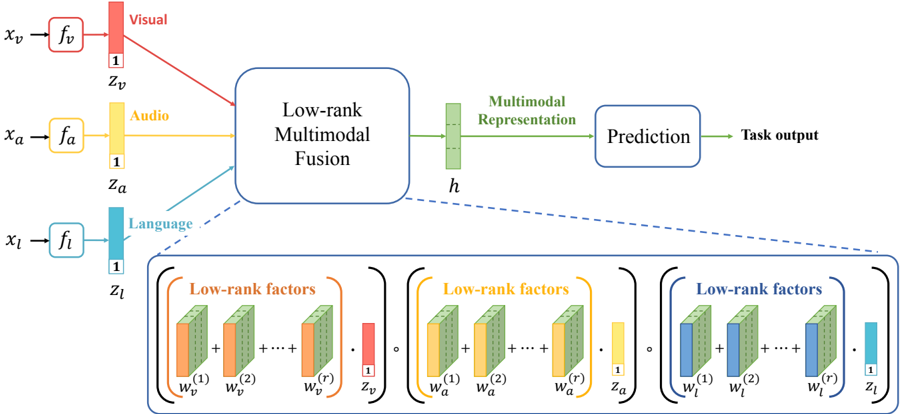
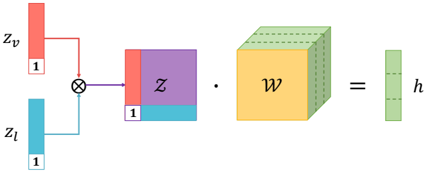
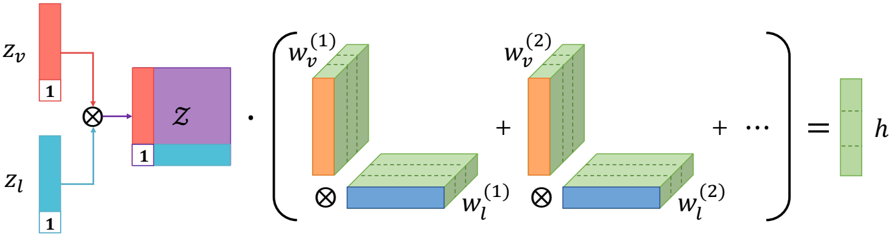
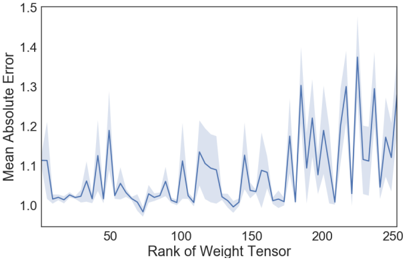
Verification
Claims the paper makes
The claims and statistics of this paper haven’t been checked yet.
Free: it reads the open-access text and checks the first 5 claims that cite a source we can check. Create a free account to check every claim.
Claims other papers make about this one
Each is checked against this paper’s own text: does it say what the citing paper says it does?
The cited source says what the claim attributes to it.
In the citing paper
“The experiment confirmed that the LMF effectively improves the training and testing efficiency compared to TFN.”
From A Survey of Deep Learning-Based Multimodal Emotion Recognition: Speech, Text, and Face (2023) · cites this paper as [100]
The cited source says what the claim attributes to it.
In the citing paper
“Several efficient variants have been proposed to approximate expensive full tensor products with cheaper variants while maintaining performance [71, 101, 106].”
From MultiBench: Multiscale Benchmarks for Multimodal Representation Learning (2021) · cites this paper as [106]
In the citing paper
“we compared vector concatenation and a low-rank implementation of Kronecker Product Fusion, which similarly outperform unimodal approaches (Table S3) (Liu et al., 2018).”
From Pan-cancer integrative histology-genomic analysis via multimodal deep learning (2022) · cites this paper as Liu et al., 2018
Self-check
Percentages, sums and reported differences re-computed from the paper’s own numbers.
The self-check needs the paper’s full text.
Citations
Cites
Hochreiter, S., & Schmidhuber, J. (1997) · Neural Computation · doi:10.1162/neco.1997.9.8.1735 · Cited by 102,318 · cited 4×
“Multi-View LSTM Multi-View LSTM (MV-LSTM) (Rajagopalan et al., 2016) aims to capture both modality-specific and cross-modality interactions from multiple modalities by partitioning the memory cell and the gates corresponding to multiple modalities.”
MethodInfluentialCortes, C., & Vapnik, V. (1995) · Machine Learning · doi:10.1007/bf00994018 · Cited by 59,421
Glove: Global Vectors for Word Representation
Pennington, J., Socher, R., & Manning, C. (2014) · Proceedings of the 2014 Conference on Empirical Methods in Natural Language Processing (EMNLP) · doi:10.3115/v1/d14-1162 · Cited by 34,071 · cited 1×
“Language We use pre-trained 300-dimensional Glove word embeddings (Pennington et al., 2014) to encode a sequence of transcribed words into a sequence of word vectors.”
MethodIEMOCAP: Interactive emotional dyadic motion capture database
Busso, C., Bulut, M., Lee, C.-C., Kazemzadeh, A., Mower, E., Kim, S., Chang, J. N., Lee, S., & Narayanan, S. S. (2008) · Language Resources and Evaluation · doi:10.1007/s10579-008-9076-6 · Cited by 3,869 · cited 4×
“We perform our experiments on the following multi-modal datasets, CMU-MOSI (Zadeh et al., 2016a POM (Park et al., 2014b), and IEMOCAP (Busso et al., 2008) for sentiment analysis, speaker traits recognition, and emotion recognition task, where the goal is to identify speakers emotions based on the speakers’ verbal and…”
BackgroundMethodInfluentialTensor Fusion Network for Multimodal Sentiment Analysis
Zadeh, A., Chen, M., Poria, S., Cambria, E., & Morency, L.-P. (2017) · Proceedings of the 2017 Conference on Empirical Methods in Natural Language Processing · doi:10.18653/v1/d17-1115 · Cited by 2,102 · cited 12×
“In addition, in order to be able to model the interactions between any subset of modalities using one tensor, Zadeh et al. (2017) proposed a simple extension to append 1 s to the unimodal representations before taking the outer product.”
BackgroundMethodInfluentialSelf-citationMultimodal Compact Bilinear Pooling for Visual Question Answering and Visual Grounding
Fukui, A., Park, D. H., Yang, D., Rohrbach, A., Darrell, T., & Rohrbach, M. (2016) · Proceedings of the 2016 Conference on Empirical Methods in Natural Language Processing · doi:10.18653/v1/d16-1044 · Cited by 1,582 · cited 6×
“, 2017), (Fukui et al., 2016) performs contextdependent fusion of multimodal data.”
BackgroundMethodResultInfluentialFast Human Detection Using a Cascade of Histograms of Oriented Gradients
Zhu, Q., Yeh, M.-C., Cheng, K.-T., & Avidan, S. (2006) · 2006 IEEE Computer Society Conference on Computer Vision and Pattern Recognition - Volume 2 (CVPR'06) · doi:10.1109/cvpr.2006.119 · Cited by 1,399 · cited 2×
“Visual The library Facet1 is used to extract a set of visual features for each frame (sampled at 30Hz) including 20 facial action units, 68 facial landmarks, head pose, gaze tracking and HOG features (Zhu et al., 2006).”
MethodMemory Fusion Network for Multi-view Sequential Learning
Zadeh, A., Liang, P. P., Mazumder, N., Poria, S., Cambria, E., & Morency, L.-P. (2018) · Proceedings of the AAAI Conference on Artificial Intelligence · doi:10.1609/aaai.v32i1.12021 · Cited by 855
Self-citationMultimodal Sentiment Intensity Analysis in Videos: Facial Gestures and Verbal Messages
Zadeh, A., Zellers, R., Pincus, E., & Morency, L.-P. (2016) · IEEE Intelligent Systems · doi:10.1109/mis.2016.94 · Cited by 852 · cited 6×
“We perform our experiments on the following multi-modal datasets, CMU-MOSI (Zadeh et al., 2016a POM (Park et al., 2014b), and IEMOCAP (Busso et al., 2008) for sentiment analysis, speaker traits recognition, and emotion recognition task, where the goal is to identify speakers emotions based on the…”
MethodInfluentialSelf-citationCOVAREP — A collaborative voice analysis repository for speech technologies
Degottex, G., Kane, J., Drugman, T., Raitio, T., & Scherer, S. (2014) · 2014 IEEE International Conference on Acoustics, Speech and Signal Processing (ICASSP) · doi:10.1109/icassp.2014.6853739 · Cited by 695 · cited 1×
“Acoustic We use COVAREP acoustic analysis framework (Degottex et al., 2014) to extract a set of low-level acoustic features, including 12 Mel frequency cepstral coefficients (MFCCs), pitch, voiced/unvoiced segmentation, glottal source, peak slope, and maxima dispersion quotient features.”
Method
Research works printed but not linked: 5
- [6]6. Gilles Degottex, John Kane, Thomas Drugman, Tuomo Raitio, and Stefan Scherer. 2014. Covarepa collabo- rative voice analysis repository for speech technolo- gies. In Acoustics, Speech and Signal Processing (ICASSP), 2014 IEEE International Conference on. IEEE, pages 960-964.
- [10]10. Othmar Koch and Christian Lubich. 2010. Dynami- cal tensor approximation. SIAM Journal on Matrix Analysis and Applications 31(5):2360-2375.
- [14]14. Sunghyun Park, Han Suk Shim, Moitreya Chatterjee, Kenji Sagae, and Louis-Philippe Morency. 2014a. Computational analysis of persuasiveness in social multimedia: A novel dataset and multimodal predic- tion approach. In Proceedings of the 16th Interna- tional Conference on Multimodal Interaction. ACM, pages 50-57.
- [22]22. Hongcheng Wang and Narendra Ahuja. 2008. A ten- sor approximation approach to dimensionality re- duction. International Journal of Computer Vision 76(3):217-229.
- [24]24. Torsten Wortwein and Stefan Scherer. 2017. What really mattersan information gain analysis of ques- tions and reactions in automated ptsd screenings. In 2017 Seventh International Conference on Affective Computing and Intelligent Interaction (ACII). IEEE, pages 15-20.
Cited by
Items 301–400 of 1,001
Hwang, Y., & Kim, J.-H. (2023) · Findings of the Association for Computational Linguistics: EACL · doi:10.18653/v1/2023.findings-eacl.2 · Cited by 37
“Later, more sophisticated methods of fusion were proposed using a multi-dimensional tensor (Zadeh et al., 2017), attention mechanism (Zadeh et al., 2018a,b), multi-stage fusion (Liang et al., 2018) and low rank tensors to improve efficiency of fusion (Liu et al., 2018).”
MethodDPNET: Dynamic Poly-attention Network for Trustworthy Multi-modal Classification
Zou, X. G., Tang, C., Zheng, X. X., Li, Z., He, X., An, S., & Liu, X. (2023) · ACM International Conference on Multimedia (ACM MM) · doi:10.1145/3581783.3612652 · Cited by 36
“To reduce the complexity of tensor calculation, we employ a low-rank fusion strategy based on parallel decomposition [25] for approximating the high-order tensor W and T .”
MethodAn Overview of Deep Neural Networks for Few-Shot Learning
Zhao, J., Kong, L., & Lv, J. (2024) · Big Data Mining and Analytics · doi:10.26599/bdma.2024.9020049 · Cited by 36
Diffusion-based Multi-modal Synergy Interest Network for Click-through Rate Prediction
Cui, X., Lu, W., Tong, Y., Li, Y., & Zhao, Z. (2025) · International ACM SIGIR Conference on Research and Development in Information Retrieval (SIGIR) · doi:10.1145/3726302.3729949 · Cited by 37
“Additionally, we introduce the RelaImpr metric, following the methodology described in [47], to quantify the relative improvement achieved by different models.”
Li, Y., Yang, Q., Chen, Q., Hu, B., Wang, X., Ding, Y., & Ma, L. (2022) · IEEE Transactions on Multimedia · doi:10.1109/tmm.2022.3143324 · Cited by 36
“tation such as Early Fusion LSTM [50], Tensor Fusion Network [51], Memory Fusion Network [52] and Low-rank MultiModal Fusion [53], we design a multi-modal fusion sub-layer”
Dynamic Invariant-Specific Representation Fusion Network for Multimodal Sentiment Analysis
He, J., Yanga, H., Zhang, C., Chen, H., & Xua, Y. (2022) · Computational Intelligence and Neuroscience · doi:10.1155/2022/2105593 · Cited by 36
“+is network performs multimodal data fusion employing a low-rank tensor and obtains better results [12].”
BackgroundMethodInfluentialHu, J., Yi, X., Li, W., Sun, M., & Xie, X. (2022) · Conference of the North American Chapter of the Association for Computational Linguistics: Human Language Technologies (NAACL-HLT) · doi:10.18653/v1/2022.naacl-main.51 · Cited by 36
Razzaq, M. A., Hussain, J., Bang, J., Hua, C.-H., Satti, F. A., Rehman, U. U., Bilal, H. S. M., Kim, S. T., & Lee, S. (2023) · Sensors · doi:10.3390/s23094373 · Cited by 36
“Therefore, a mechanism for multimodal fusion is necessary to process features, make decisions, and perform analysis tasks [11].”
BackgroundImproved SE-ResNet Acoustic–Vibration Fusion for Rolling Bearing Composite Fault Diagnosis
Gu, X., Tian, Y., Li, C., Wei, Y., & Li, D. (2024) · Applied Sciences · doi:10.3390/app14052182 · Cited by 36
TEASEL: A Transformer-Based Speech-Prefixed Language ModelPreprint
Arjmand, M., Dousti, M. J., & Moradi, H. (2021) · arXiv (Cornell University) · doi:10.48550/arxiv.2109.05522 · Cited by 36
“First, certain multimodal language approaches freeze a Transformer and aim to fuse all modalities using tensor outer-products [23, 24], Canonical Correlation Analysis based methods [25], Attentive LSTM based methods [26, 27, 8, 28, 19], sequence to sequence based methods [29], cross-modal Transformer-based methods [6,…”
BackgroundMethodResultAssessing learners’ English public speaking anxiety with multimodal deep learning technologies
Zheng, C., Zhang, T., Chen, X., Zhang, H., Wan, J., & Wu, B. (2024) · Computer Assisted Language Learning · doi:10.1080/09588221.2024.2351129 · Cited by 35
“…by Song et al. (2023) and related affective computing models like Modality-Invariant and Modality-Specific Representations for Multimodal Sentiment Analysis (MISA) (Hazarika et al., 2020), Tensor Fusion Network (TFN) (Zadeh et al., 2017) and low-rank multimodal fusion (LMF) (Liu et al., 2018).”
A transformer-encoder-based multimodal multi-attention fusion network for sentiment analysis
Liu, C., Wang, Y., & Yang, J. B. (2024) · Applied Intelligence · doi:10.1007/s10489-024-05623-7 · Cited by 36
Sentiment analysis of social media comments based on multimodal attention fusion network
Liu, Z., Yang, T., Chen, W., Chen, J., Li, Q., & Zhang, J. (2024) · Applied Soft Computing · doi:10.1016/j.asoc.2024.112011 · Cited by 36
Self-citationKEBR: Knowledge Enhanced Self-Supervised Balanced Representation for Multimodal Sentiment Analysis
Zhu, A., Hu, M. Q., Wang, X., Yang, J., Tang, Y., & Ren, F. (2024) · ACM International Conference on Multimedia (ACM MM) · doi:10.1145/3664647.3681163 · Cited by 36
Deng, H., Yang, Z., Hao, T., Li, Q., & Liu, W. (2022) · IEEE Transactions on Multimedia · doi:10.1109/tmm.2022.3211197 · Cited by 36
An attention-based multi-modal MRI fusion model for major depressive disorder diagnosis
Zheng, G., Zheng, W., Zhang, Y., Wang, J., Chen, M., Wang, Y., Cai, T., Yao, Z., & Hu, B. (2023) · Journal of Neural Engineering · doi:10.1088/1741-2552/ad038c · Cited by 36
“To validate the effectiveness of the FSCF module, we replaced it with the ‘Add’ and ‘Concat’ methods based on simple operations, the self-attention based Transformer encoder model [17], and the Low Rank model [29] based on tensor, respectively.”
Multimodal Reaction: Information Modulation for Cross-Modal Representation Learning
Zeng, Y., Mai, S., Yan, W., & Hu, H. (2023) · IEEE Transactions on Multimedia · doi:10.1109/tmm.2023.3293335 · Cited by 35
Multi-modal news event detection with external knowledge
Lin, Z., Xie, J., & Li, Q. (2024) · Information Processing & Management · doi:10.1016/j.ipm.2024.103697 · Cited by 35
A Multimodal Sentiment Analysis Approach Based on a Joint Chained Interactive Attention Mechanism
Qiu, K., Zhang, Y., Zhao, J., Zhang, S., Wang, Q., & Chen, F. (2024) · Electronics · doi:10.3390/electronics13101922 · Cited by 34
Graph-Induced Syntactic-Semantic Spaces in Transformer-Based Variational AutoEncoders
Zhang, Y., Valentino, M., Carvalho, D. S., Pratt-Hartmann, I. E., & Freitas, A. (2024) · Findings of the Association for Computational Linguistics: NAACL · doi:10.18653/v1/2024.findings-naacl.32 · Cited by 34
FC-KAN: Function combinations in Kolmogorov-Arnold networks
Ta, H. T., Quy, T. D., Rahman, A. B. S., Sidorov, G., & Gelbukh, A. F. (2026) · Information Sciences · doi:10.1016/j.ins.2026.123103 · Cited by 34
LRMM: Low rank multi-scale multi-modal fusion for person re-identification based on RGB-NI-TI
Wu, D., Liu, Z., Chen, Z., Gan, S., Tan, K., Wan, Q., & Wang, Y. (2024) · Expert Systems with Applications · doi:10.1016/j.eswa.2024.125716 · Cited by 34
Self-citationToward Robust Multimodal Sentiment Analysis using multimodal foundational models
Zhao, X., Poria, S., Li, X., Chen, Y., & Tang, B. (2025) · Expert Systems with Applications · doi:10.1016/j.eswa.2025.126974 · Cited by 34
Xu, Y., Zhang, M., Li, C., Liao, Z., Xing, H., Deng, H., Hu, J., Zhang, Y., Zeng, X., & Zhang, J. (2026) · ACM International Conference on Web Search and Data Mining (WSDM) · doi:10.1145/3773966.3777923 · Cited by 34
“Properly modeling this synergy alongside modality-unique details enables more precise recommendations [44, 45, 47], such as suggesting fashion pants for the first user and beach sandals for the second.”
Mutual Correlation Attentive Factors in Dyadic Fusion Networks for Speech Emotion Recognition
Gu, Y., Lyu, X., Sun, W., Li, W., Chen, S., Li, X., & Marsic, I. (2019) · ACM International Conference on Multimedia (ACM MM) · doi:10.1145/3343031.3351039 · Cited by 34
“To address the above issue, recent works proposed deep fusion networks to combine modality-specific representations at the feature-level [1, 7, 20], which allows significant performance improvement.”
BackgroundAttention gated tensor neural network architectures for speech emotion recognition
Pandey, S., Shekhawat, H. S., & Prasanna, S. R. M. (2021) · Biomedical Signal Processing and Control · doi:10.1016/j.bspc.2021.103173 · Cited by 34
A Framework to Evaluate Fusion Methods for Multimodal Emotion Recognition
Peña, D., Aguilera, A., Dongo, I., Heredia, J., & Cardinale, Y. (2023) · IEEE Access · doi:10.1109/access.2023.3240420 · Cited by 34
“A more efficient version of this method that relies on low-rank weighted decomposition, designed with high-dimensioned tensors in mind and tested in multiple datasets, is proposed in [46].”
BackgroundMethodJiang, D., Liu, H., Wei, R., & Tu, G. (2023) · Cognitive Computation · doi:10.1007/s12559-023-10119-6 · Cited by 34
“LMFN [50] It uses local modeling to obtain cross-modal interaction and global modeling to obtain the overall view.”
Improving Multimodal Accuracy Through Modality Pre-training and AttentionPreprint
Ismail, A. A., Hasan, M. M., & Ishtiaq, F. (2020) · arXiv (Cornell University) · doi:10.48550/arxiv.2011.06102 · Cited by 34
“Low-rank Multimodal Fusion (LMF) [16] performs multimodal fusion using low-rank tensors to improve efficiency.”
BackgroundMethodInfluentialDominant SIngle-Modal SUpplementary Fusion (SIMSUF) for Multimodal Sentiment Analysis
Huang, J., Ji, Y., Qin, Z., Yang, Y., & Shen, H. T. (2023) · IEEE Transactions on Multimedia · doi:10.1109/tmm.2023.3344358 · Cited by 33
Decoupled cross-attribute correlation network for multimodal sentiment analysis
Zhao, X., Li, X., Jiang, R., & Tang, B. (2025) · Information Fusion · doi:10.1016/j.inffus.2024.102897 · Cited by 33
MEP-3M: A large-scale multi-modal E-commerce product dataset
Liu, F., Chen, D., Du, X., Gao, R., & Xu, F. (2023) · Pattern Recognition · doi:10.1016/j.patcog.2023.109519 · Cited by 33
Li, J., Zhao, X., Xu, H., Zhang, L., Xie, B., Yan, J., Zhang, L., Fan, D., & Li, L. (2023) · Plants · doi:10.3390/plants12183273 · Cited by 35
“Illustration of the multimodality method [20] applied on image data, voice data, and text data.”
MethodMultimodal Decoupled Distillation Graph Neural Network for Emotion Recognition in Conversation
Dai, Y., Li, Y., Chen, D., Li, J., & Lu, G. (2024) · IEEE Transactions on Circuits and Systems for Video Technology · doi:10.1109/tcsvt.2024.3405406 · Cited by 32
“To verify the effectiveness of D 2 GNN, our model is compared with the following state-of-the-art methods : • LMF [61] employs a product-based tensor fusion layer to excavate inter-and intra-modality dynamics with the low-rank factors.”
MethodWang, R., Yang, Q., Tian, S., Yu, L., He, X., & Wang, B. (2024) · Neurocomputing · doi:10.1016/j.neucom.2024.129163 · Cited by 34
PAMoE-MSA: polarity-aware mixture of experts network for multimodal sentiment analysis
Huang, C., Lin, Z., Han, Z., Huang, Q., Jiang, F., & Huang, X. (2025) · International Journal of Multimedia Information Retrieval · doi:10.1007/s13735-025-00362-y · Cited by 33
Towards robust sentiment analysis with multimodal interaction graph and hybrid contrastive learning
Gong, P., Liu, J., Zhang, X., Li, X., Wei, L., & He, H. (2025) · Pattern Recognition · doi:10.1016/j.patcog.2025.111870 · Cited by 32
Dual Low-Rank Multimodal Fusion
Jin, T., Huang, S., Li, Y., & Zhang, Z. M. (2020) · Findings of the Association for Computational Linguistics: EMNLP (Findings of EMNLP) · doi:10.18653/v1/2020.findings-emnlp.35 · Cited by 32
“We use TFN (Zadeh et al., 2017) and LMF (Liu et al., 2018) as our baselines.”
BackgroundMethodInfluentialMissing-modality enabled multi-modal fusion architecture for medical data
Wang, M., Fan, S., Li, Y., Xie, Z., & Chen, H. (2025) · Journal of Biomedical Informatics · doi:10.1016/j.jbi.2025.104796 · Cited by 31
Text-centered cross-sample fusion network for multimodal sentiment analysis
Huang, Q., Chen, J., Huang, C., Huang, X., & Wang, Y. (2024) · Multimedia Systems · doi:10.1007/s00530-024-01421-w · Cited by 31
“Specifically, there is a huge improvement over the traditional tensor-based multimodal fusion approach, such as TFN [7], LMF [46], MFM [8] in all metrics.”
Identification of pediatric respiratory diseases using a fine-grained diagnosis system
Yu, G., Yu, Z., Shi, Y., Wang, Y., Liu, X., Li, Z., Zhao, Y., Sun, F., Yu, Y., & Shu, Q. (2021) · Journal of Biomedical Informatics · doi:10.1016/j.jbi.2021.103754 · Cited by 31
“BERT is a massive model designed for multiple tasks including sequence classification, while LMF is a low-rank multi-modal data fusion model.”
ResultInfluentialMultimodal sentiment and emotion recognition in hyperbolic space
Araño, K. A., Orsenigo, C., Soto, M., & Vercellis, C. (2021) · Expert Systems with Applications · doi:10.1016/j.eswa.2021.115507 · Cited by 32
CMJRT: Cross-Modal Joint Representation Transformer for Multimodal Sentiment Analysis
Xu, M. Y., Liang, F., Su, X., & Fang, C. (2022) · IEEE Access · doi:10.1109/access.2022.3219200 · Cited by 31
“LMF: Low-rankMultimodal Fusion [7] is an improvement over TFN, which adopts low-rank tensors to make fusion more efficient.”
BackgroundMasked Video and Body-Worn IMU Autoencoder for Egocentric Action Recognition
Zhang, M., Huang, Y., Liu, R., & Sato, Y. (2024) · Lecture notes in computer science · doi:10.1007/978-3-031-72649-1_18 · Cited by 31
Aftab, A. R., von der Beeck, M., & Feld, M. (2020) · INTERNATIONAL CONFERENCE ON MULTIMODAL INTERACTION · doi:10.1145/3382507.3418836 · Cited by 31
“Apart from the applications, research has shown that the use of multiple input modalities have a potential to outperform systems with a single input modality [6, 12, 31].”
BackgroundDeep learning on multi-view sequential data: a survey
Xie, Z., Yang, Y. Z., Zhang, Y., Wang, J., & Du, S. (2022) · Artificial Intelligence Review · doi:10.1007/s10462-022-10332-z · Cited by 31
“Some literatures use pretrained 300-dimensional Glove word embeddings to encode a sequence of transcribed words into a sequence of word vectors (Zadeh et al. 2017; Wang et al. 2019c; Liu et al. 2018; Zadeh et al. 2019, 2018b).”
BackgroundInfluentialCorMulT: A Semi-Supervised Modality Correlation-Aware Multimodal Transformer for Sentiment Analysis
Li, Y., Zhu, R., & Li, W. (2025) · IEEE Transactions on Affective Computing · doi:10.1109/taffc.2025.3559866 · Cited by 30
“According to the results, cosine similarity emerges as the optimal distance metric for MCE, and could efficiently capture the inter-modal correlations.”
Wang, Y., Li, Y., Liang, P. P., Morency, L., Bell, P., & Lai, C. (2023) · arXiv (Cornell University) · doi:10.48550/arxiv.2305.13583 · Cited by 30
“In addition, compared to LMF-MulT and MulT, which use the same crossmodal Transformer as ours, HCT-MG still out-performs them, especially on MOSI and MOSEI by a large margin.”
Self-citationDu, J., Jin, J., Zhuang, J., & Zhang, C. (2024) · Scientific Reports · doi:10.1038/s41598-024-54872-6 · Cited by 29
Dai, Y., Li, J., Li, Y., & Lu, G. (2024) · Knowledge-Based Systems · doi:10.1016/j.knosys.2024.111954 · Cited by 30
A Multimodal Sentiment Analysis Method Based on Fuzzy Attention Fusion
Zhi, Y., Li, J., Wang, H., Chen, J., & Wei, W. (2024) · IEEE Transactions on Fuzzy Systems · doi:10.1109/tfuzz.2024.3434614 · Cited by 29
SDRS: Sentiment-Aware Disentangled Representation Shifting for Multimodal Sentiment Analysis
Zhao, S., Yang, Z., Shi, H., Feng, X., Meng, L., Qin, B., Yan, C. C., Tao, J., & Ding, G. (2025) · IEEE Transactions on Affective Computing · doi:10.1109/taffc.2025.3539225 · Cited by 29
Injecting Multimodal Information Into Pre-Trained Language Model for Multimodal Sentiment Analysis
Mai, S., Zeng, Y., Xiong, A., & Hu, H. (2025) · IEEE Transactions on Affective Computing · doi:10.1109/taffc.2025.3553149 · Cited by 29
Uncertain Multimodal Intention and Emotion Understanding in the Wild
Yang, Q., Shi, Q., Wang, T., & Ye, M. (2025) · IEEE Computer Society Conference on Computer Vision and Pattern Recognition/Proceedings - IEEE Computer Society Conference on Computer Vision and Pattern Recognition/Proceedings · doi:10.1109/cvpr52734.2025.02300 · Cited by 33
Towards Explainable Fusion and Balanced Learning in Multimodal Sentiment Analysis
Luo, M., Jiang, Y., & Mai, S. (2025) · ACM International Conference on Multimedia (ACM MM) · doi:10.1145/3746027.3755591 · Cited by 30
Two-Level Multimodal Fusion for Sentiment Analysis in Public Security
Sun, J., Yin, H., Tian, Y., Wu, J., Shen, L., & Chen, L. (2021) · Security and Communication Networks · doi:10.1155/2021/6662337 · Cited by 29
MMT: Multi-way Multi-modal Transformer for Multimodal Learning
Tang, J., Li, K., Hou, M., Jin, X., Kong, W., Ding, Y., & Zhao, Q. (2022) · International Joint Conference on Artificial Intelligence · doi:10.24963/ijcai.2022/480 · Cited by 29
Cross-modality Representation Interactive Learning for Multimodal Sentiment Analysis
Huang, J., Ji, Y., Yang, Y., & Shen, H. T. (2023) · ACM International Conference on Multimedia (ACM MM) · doi:10.1145/3581783.3612295 · Cited by 29
Yang, D., Li, M., Qu, L., Yang, K., Zhai, P., Wang, S., & Zhang, L. (2024) · IEEE Transactions on Circuits and Systems for Video Technology · doi:10.1109/tcsvt.2024.3435561 · Cited by 29
“Then, Sahay et al. [21] improved the computational efficiency and enriched the fusion granularity of MulT by introducing low-rank matrix factorization [46].”
Deep-HOSeq: Deep Higher Order Sequence Fusion for Multimodal Sentiment Analysis
Verma, S., Wang, J., Ge, Z., Shen, R., Jin, F., Wang, Y., Chen, F., & Liu, W. (2020) · Proceedings · doi:10.1109/icdm50108.2020.00065 · Cited by 29
“3) Deep Networks without temporal information: As a requirement for baselines under this such as TFN [14], LMF [15], and DeepCU [4], we collapsed the sequence dimension of acoustic and visual modalities and performed a grid search to optimize to network’s hyperparameters.”
BackgroundMethodInfluential(2023) · doi:10.1109/cvpr52729.2023.00627 · Cited by 28
“Previous methods for multimodal fusion in egocentric activity recognition have ranged from simple concatenation [57, 73] to tensor decomposition [45], with some recent studies adopting transformerbased architectures [1,38,46,49] that have shown promising results.”
MethodApplication of deep learning-based multimodal fusion technology in cancer diagnosis: A survey
Li, Y., Pan, L., Peng, Y., Li, X., Wang, X., Qu, L., Song, Q., Liang, Q., & Peng, S. (2025) · Engineering Applications of Artificial Intelligence · doi:10.1016/j.engappai.2024.109972 · Cited by 30
Huang, C., Lin, Z., Huang, Q., Huang, X., Jiang, F., & Chen, J. (2025) · Complex & Intelligent Systems · doi:10.1007/s40747-025-01806-y · Cited by 29
Actual Cause-Guided Adaptive Gradient Scaling for Balanced Multimodal Sentiment Analysis
Chen, J., Huang, Q., Huang, C., & Huang, X. (2025) · ACM Transactions on Multimedia Computing Communications and Applications · doi:10.1145/3736415 · Cited by 29
“We concatenate these two vectors and then use a multilayer perceptron to produce the final sentiment logits.”
Li, X., & Chen, M. (2020) · Lecture notes in computer science · doi:10.1007/978-3-030-63031-7_26 · Cited by 28
“7 LMF (Liu et al., 2018) 76.”
BackgroundMethodInfluentialMultiview Deep Anomaly Detection: A Systematic Exploration
Wang, S., Liu, J., Yu, G. W., Liu, X., Zhou, S., Zhu, E., Yang, Y., Yin, J., & Yang, W. (2022) · IEEE Transactions on Neural Networks and Learning Systems · doi:10.1109/tnnls.2022.3184723 · Cited by 28
From Abstract to Details: A Generative Multimodal Fusion Framework for Recommendation
Xiao, F., Deng, L., Chen, J., Ji, H., Yang, X., Ding, Z., & Long, B. (2022) · ACM International Conference on Multimedia (ACM MM) · doi:10.1145/3503161.3548366 · Cited by 28
“In this situation, LMF, MTFM and NAML focus on multimodal interactions leading to more serious information redundancy.”
BackgroundInfluentialHu, R., Yi, J., Chen, A., & Chen, L. (2024) · IEEE Transactions on Industrial Informatics · doi:10.1109/tii.2024.3388670 · Cited by 28
Tan, L., Song, Y., & Wen, Z. (2026) · Preprints.org · doi:10.20944/preprints202601.0672.v1 · Cited by 29
Jiang, X., Zhang, M. J., Zhang, Y., Durvasula, A., Inouye, M., Holmes, C. C., Price, A. L., & McVean, G. (2023) · Nature Genetics · doi:10.1038/s41588-023-01522-8 · Cited by 28
“22).”
Tu, G., Xiong, F., Liang, B., & Xu, R. (2024) · International ACM SIGIR Conference on Research and Development in Information Retrieval (SIGIR) · doi:10.1145/3626772.3657944 · Cited by 27
“Second, there is a notable emphasis on multimodal interaction, including aggregation-based meth-ods like concatenation [5, 29], tensor product [16, 17], attention networks [21, 32], and heterogeneous graph methods [30, 35], etc.”
Lin, J., Wang, Y., Xu, Y., & Liu, Q. (2025) · Proceedings of the AAAI Conference on Artificial Intelligence · doi:10.1609/aaai.v39i2.32131 · Cited by 28
Yang, L., Zhong, J., Wen, T., & Liao, Y. J. (2025) · Information Fusion · doi:10.1016/j.inffus.2025.103230 · Cited by 28
Interpretable PROTAC Degradation Prediction With Structure‐Informed Deep Ternary Attention Framework
Chen, Z., Gu, C., Tan, S., Wang, X., Li, Y., He, M., Lu, R., Sun, S., Hsieh, C., Yao, X., et al. (2025) · Advanced Science · doi:10.1002/advs.202508138 · Cited by 29
Multimodal Classification and Out-of-Distribution Detection for Multimodal Intent Understanding
Zhang, H., Zhou, Q., Xu, H., Su, J., Evans, R. H., & Gao, K. (2025) · IEEE Transactions on Multimedia · doi:10.1109/tmm.2025.3618541 · Cited by 27
“Early methods utilized tensor operations for multimodal fusion based on the rich semantics underlying high-dimensional representations [43], [44].”
Deep multimodal learning for municipal solid waste sorting
Lu, G., Wang, Y., Xu, H., Yang, H., & Zou, J. T. (2021) · Science China Technological Sciences · doi:10.1007/s11431-021-1927-9 · Cited by 27
“To this end, Liu et al. [20] proposed the low-rank multimodal fusion method, which leveraged a low-rank weight tensor to make the multimodal fusion efficient.”
MethodCLAP: Contrastive Language-Audio Pre-training Model for Multi-modal Sentiment Analysis
Zhao, T., Kong, M. C., Liang, T., Zhu, Q., Kuang, K., & Wu, F. Q. (2023) · International Conference on Multimedia Retrieval · doi:10.1145/3591106.3592296 · Cited by 27
“To evaluate the effectiveness of our proposed CLAP modal, we compare our sentiment prediction performance with the classic MSA baselines such as TFN [42], LFM [17], MFM [34], ICCN [31], MulT [33] and MISA [8].”
MethodDenoising Bottleneck with Mutual Information Maximization for Video Multimodal Fusion
Wu, S., Dai, D., Qin, Z., Liu, T., Lin, B., Cao, Y., & Sui, Z. (2023) · Proceedings of the conference - Association for Computational Linguistics. Meeting · doi:10.18653/v1/2023.acl-long.124 · Cited by 27
Han, W., Chen, H., Kan, M., & Poria, S. (2022) · Conference on Empirical Methods in Natural Language Processing (EMNLP) · doi:10.18653/v1/2022.emnlp-main.717 · Cited by 27
A text guided multi-task learning network for multimodal sentiment analysis
Luo, Y., Wu, R., Liu, J., & Tang, X. (2023) · Neurocomputing · doi:10.1016/j.neucom.2023.126836 · Cited by 27
TCGM: An Information-Theoretic Framework for Semi-supervised Multi-modality Learning
Sun, X., Xu, Y., Cao, P., Kong, Y., Hu, L., Zhang, S., & Wang, Y. (2020) · Lecture notes in computer science · doi:10.1007/978-3-030-58580-8_11 · Cited by 29
Proceedings of the 4th Workshop on Representation Learning for NLP (RepL4NLP-2019)
Augenstein, I., Gella, S., Ruder, S., Kann, K., Can, B., Conneau, A., Welbl, J., Ren, X., & Rei, M. (2019) · doi:10.18653/v1/w19-43 · Cited by 27
Mai, S., Hu, H., & Xing, S. (2022) · IEEE Transactions on Multimedia · doi:10.1109/tmm.2021.3082398 · Cited by 26
How to leverage the multimodal EHR data for better medical prediction?
Yang, B., & Wu, L. (2021) · Proceedings of the 2021 Conference on Empirical Methods in Natural Language Processing · doi:10.18653/v1/2021.emnlp-main.329 · Cited by 26
“The first one is tensor fusion (Zadeh et al., 2017; Liu et al., 2018), where the fusion is performed by an outer product of the encoded representations of different modalities.”
BackgroundZhang, M.-L., Zhao, B.-W., Su, X., He, Y.-Z., Yang, Y., & Hu, L. (2022) · BMC Bioinformatics · doi:10.1186/s12859-022-05069-z · Cited by 26
“After obtaining the representations of drugs and diseases, the aggregation function LMF [53] is used to fuse these two representations in order to obtain their final representations.”
MethodStyleBERT: Text-audio sentiment analysis with Bi-directional Style Enhancement
Lin, F., Liu, S., Zhang, C., Jin, F., & Wu, Z. (2022) · Information Systems · doi:10.1016/j.is.2022.102147 · Cited by 26
Chen, C., Hong, H., Guo, J., & Song, B. (2023) · IEEE/ACM Transactions on Audio Speech and Language Processing · doi:10.1109/taslp.2023.3263801 · Cited by 26
“In our experiments, first, comparing with unaligned models (TFN and LMF), we achieve a significant improvement in all evaluation metrics.”
MethodInfluentialZheng, Y., Gong, J., Wen, Y., & Zhang, P. (2023) · Expert Systems with Applications · doi:10.1016/j.eswa.2023.122728 · Cited by 26
Exploring Inner Speech Recognition via Cross-Perception Approach in EEG and fMRI
Qin, J., Zong, L., & Liu, F. (2024) · Applied Sciences · doi:10.3390/app14177720 · Cited by 26
Steering Angle-Guided Multimodal Fusion Lane Detection for Autonomous Driving
Gong, Y., Zhang, X., Lu, J., Jiang, X., Wang, Z., Liu, H., Li, Z., Wang, L., Yang, Q., & Wu, X. (2024) · IEEE Transactions on Intelligent Transportation Systems · doi:10.1109/tits.2024.3507536 · Cited by 26
Quan, Z., Sun, T., Su, M., & Wei, J. (2022) · Computational Intelligence and Neuroscience · doi:10.1155/2022/4767437 · Cited by 25
“[20] proposed a low-rank multimodal fusion approach to reduce the computational 2 Computational Intelligence and Neuroscience”
BackgroundMethodZhao, X., Li, X., Jiang, R., & Tang, B. (2024) · Information Fusion · doi:10.1016/j.inffus.2024.102745 · Cited by 25
Robust multimodal sentiment analysis via double information bottleneck
Huang, H., Gong, T., He, K., Wu, J., Cambria, E., & Feng, M. (2025) · Information Fusion · doi:10.1016/j.inffus.2025.103964 · Cited by 25
Hybrid Multimodal Fusion for Humor Detection
Xu, H., Liu, W., Liu, J., Li, M., Feng, Y., Peng, Y., Shi, Y., Sun, X. N., & Wang, M. (2022) · doi:10.1145/3551876.3554802 · Cited by 25
“, multi-view learning methods [32, 41], word-level fusion methods [15, 35, 42], tensor fusion [24, 40], and hybrid fusion[9, 25].”
BackgroundOSAN: A One-Stage Alignment Network to Unify Multimodal Alignment and Unsupervised Domain Adaptation
Liu, Y., Qiao, L., Lu, C., Yin, D., Chen, L., Peng, H., & Ren, B. (2023) · IEEE Computer Society Conference on Computer Vision and Pattern Recognition/Proceedings - IEEE Computer Society Conference on Computer Vision and Pattern Recognition/Proceedings · doi:10.1109/cvpr52729.2023.00346 · Cited by 25
A graph convolution-based heterogeneous fusion network for multimodal sentiment analysis
Zhao, T., Peng, J., Huang, Y., Wang, L., Zhang, H., & Cai, Z. (2023) · Applied Intelligence · doi:10.1007/s10489-023-05151-w · Cited by 25
Meta Noise Adaption Framework for Multimodal Sentiment Analysis With Feature Noise
Yuan, Z., Zhang, B., Xu, H., & Gao, K. (2024) · IEEE Transactions on Multimedia · doi:10.1109/tmm.2024.3362600 · Cited by 25
Deep Biological Pathway Informed Pathology-Genomic Multimodal Survival PredictionPreprint
Qiu, L., Khormali, A., & Liu, K. (2023) · arXiv (Cornell University) · doi:10.48550/arxiv.2301.02383 · Cited by 25
“fusion may introduce a large number of parameters that may lead to high computational cost and risk of overfitting (Kim et al., 2017; Liu et al., 2021), thus limiting its applicability and improvement in performance.”
Deep Equilibrium Multimodal FusionPreprint
Ni, J., Bai, Y., Zhang, W., Yao, T., & Mei, T. (2023) · arXiv (Cornell University) · doi:10.48550/arxiv.2306.16645 · Cited by 25
“Most conventional approaches are dedicated to deliberately designing fusion strategies [33, 40, 36], which have proceeded along three dimensions of early fusion, mid fusion, and late fusion, with respect to the placement of fusion module in the whole framework.”
Learning from low-rank multimodal representations for predicting disease-drug associations
Hu, P., Huang, Y., Mei, J., Leung, H., Chen, Z., Kuang, Z., You, Z., & Hu, L. (2021) · BMC Medical Informatics and Decision Making · doi:10.1186/s12911-021-01648-x · Cited by 24
“In reference [54], the authors proposed a new concept to use low-rank tensor to fuse multimodal data, and it has been applied to multiple data sets and achieved good results.”
BackgroundMethod
Metadata
- Authors
- Liu, Z., Shen, Y., Lakshminarasimhan, V. B., Liang, P. P., Bagher Zadeh, A., & Morency, L.-P.
- Affiliations
- Carnegie Mellon University (US)
- Venue
- Proceedings of the 56th Annual Meeting of the Association for Computational Linguistics (Volume 1: Long Papers)
- Published
- 2018
- Pages
- 2247-2256
- ISSN
- 0736-587X (ISSN-L)
- OpenAlex
- W2964346351
- Cited by
- 1,170
- References
- 31
- Citations by year
- 2026: 213 · 2025: 262 · 2024: 255 · 2023: 176 · 2022: 126 · 2021: 85 · 2020: 39 · 2019: 12 · 2018: 2
- FWCI
- 10.40
- Type
- conference paper
- Language
- en
- Open access
- hybrid
- doi.org
- Licence
- cc-by
- Locations
- Proceedings of the conference - Association for Computational Linguistics. Meeting (publishedVersion, cc-by)
- Funders
- National Science Foundation
- Topics
- Physical Sciences › Computer Science › Computer Vision and Pattern Recognition › Multimodal Machine Learning Applications
- Physical Sciences › Engineering › Media Technology › Advanced Image Fusion Techniques
- Physical Sciences › Computer Science › Artificial Intelligence › Topic Modeling
- Keywords
- multimodal fusion, cross-modal representation learning
About these checks
Registry, retraction, Cites and statistics results are computed, not judged, with one exception: a printed reference that no index lists is read once by a model before it counts as a citation error. Claims are extracted by a model and kept only when their quote appears verbatim in the text; each cited source is then checked, with a model’s help, for whether it says what the claim relies on. Those verdicts can be wrong — read the claim’s quote and the cited source before relying on one.
Statistics and arithmetic are recomputed, not judged.
Confidence bands are shown only for fields calibrated on our annotated test set. None is calibrated yet, so no band is shown.
What counts as a claim ›How we measure confidence ›How we check this ›
Are you an author, or do you see a problem with this page? Request a review
Data sources
Bibliographic data: Semantic Scholar, OpenAlex, Crossref.
Contains information from the Semantic Scholar Academic Graph Datasets, made available under the ODC Attribution License (ODC-BY 1.0).
Semantic Scholar’s data is described in: Kinney, R., et al. (2023). The Semantic Scholar Open Data Platform. arXiv:2301.10140.
