

The DOI matches its Crossref record; 266 of the 266 references it cites were found in a registry or an index.
C-Phycocyanin-derived Phycocyanobilin as a Potential Nutraceutical Approach for Major Neurodegenerative Disorders and COVID-19-induced Damage to the Nervous System
Open accessAbstract
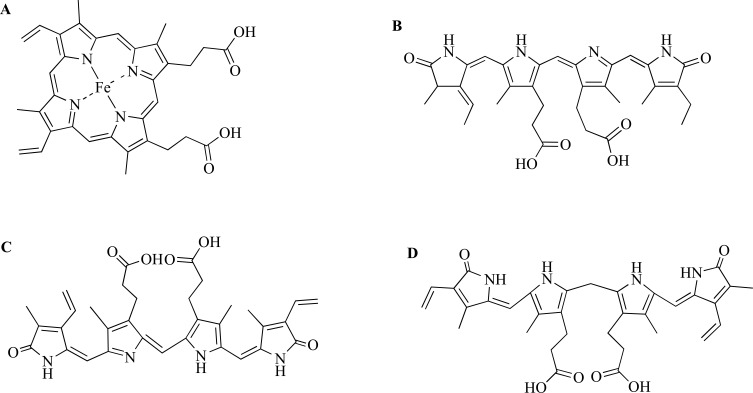
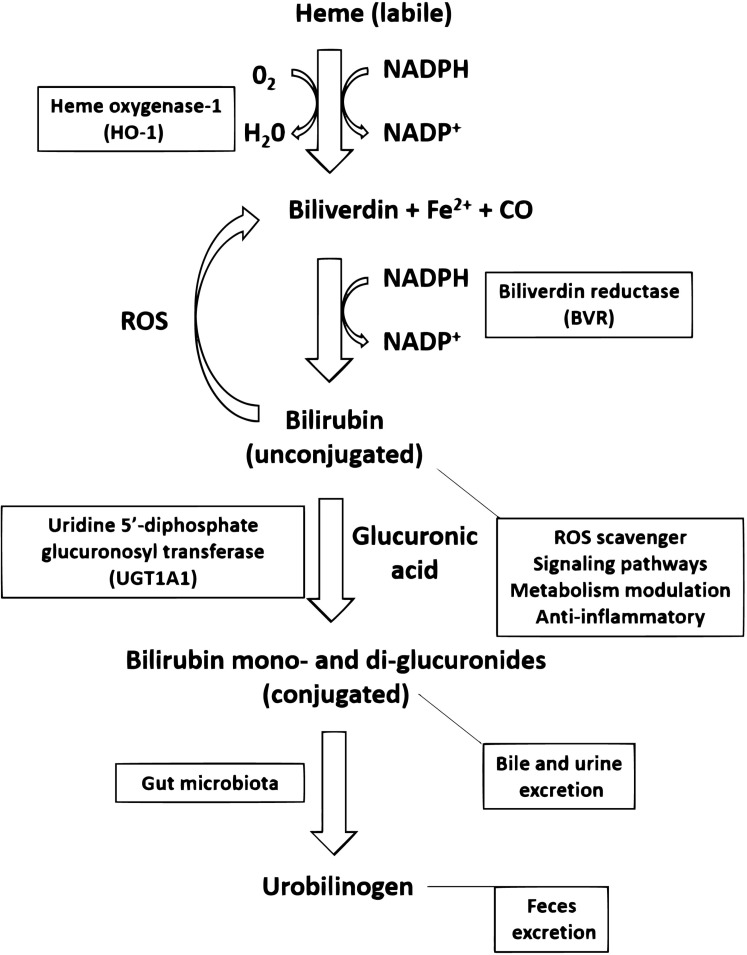
The edible cyanobacterium Spirulina platensis and its chief biliprotein C-Phycocyanin have shown protective activity in animal models of diverse human health diseases, often reflecting antioxidant and anti-inflammatory effects. The beneficial effects of C-Phycocyanin seem likely to be primarily attributable to its covalently attached chromophore Phycocyanobilin (PCB). Within cells, biliverdin is generated from free heme and it is subsequently reduced to bilirubin. Although bilirubin can function as an oxidant scavenger, its potent antioxidant activity reflects its ability to inactivate some isoforms of NADPH oxidase. Free bilirubin can also function as an agonist for the aryl hydrocarbon receptor (AhR); this may explain its ability to promote protective Treg activity in cellular and rodent models of inflammatory disease. AhR agonists also promote transcription of the gene coding for Nrf-2, and hence can up-regulate phase 2 induction of antioxidant enzymes, such as HO-1. Hence, it is proposed that C-Phycocyanin/PCB chiefly exert their protective effects via inhibition of NADPH oxidase activity, as well as by AhR agonism that both induces Treg activity and up-regulates phase 2 induction. This simple model may explain their potent antioxidant/antiinflammatory effects. Additionally, PCB might mimic biliverdin in activating anti-inflammatory signaling mediated by biliverdin reductase. This essay reviews recent research in which CPhycocyanin and/or PCB, administered orally, parenterally, or intranasally, have achieved marked protective effects in rodent and cell culture models of Ischemic Stroke and Multiple Sclerosis, and suggests that these agents may likewise be protective for Alzheimer's disease, Parkinson's disease, and in COVID-19 and its neurological complications.
Overview
The claims and statistics of this paper haven’t been checked yet.
Run the check — free, no account needed. It reads the open-access text and checks the sources it cites.
Integrity signals
Registry
Cites
Statistics
Figures
Verification
Claims the paper makes
The claims and statistics of this paper haven’t been checked yet.
Run the check — free, no account needed. It reads the open-access text and checks the sources it cites.
Claims other papers make about this one
Each is checked against this paper’s own text: does it say what the citing paper says it does?
The source backs part of the claim, not all of it — or backs it for a different population, condition or comparison.
In the citing paper
“In addition to its rich mineral content, vitamin and amino acids composition, antiviral and anti-inflammatory action, Arthrospira platensis has also a regulatory effect on cholesterol level, oxidative stress, mitochondrial dysfunction, and neurodegenerative disorders [86,87].”
From Application of Arthrospira platensis for Medicinal Purposes and the Food Industry: A Review of the Literature (2023) · cites this paper as [86]
Experimental — accuracy not yet measured
Self-check
Percentages, sums and reported differences re-computed from the paper’s own numbers.
The self-check needs the paper’s full text.
Citations
Cites
1 retracted
Items 201–266 of 266
Bilirubin in metabolic syndrome and associated inflammatory diseases: New perspectives
Novák, P., Jackson, A. O., Zhao, G., & Yin, K. (2020) · Life Sciences · doi:10.1016/j.lfs.2020.118032 · Cited by 59
Rimbau, V., Camins, A., Pubill, D., Sureda, F. X., Romay, C., González, R., Jiménez, A., Escubedo, E., Camarasa, J., & Pallàs, M. (2001) · Naunyn-Schmiedeberg s Archives of Pharmacology · doi:10.1007/s002100100437 · Cited by 57
Funakohi-Tago, M., Sakata, T., Fujiwara, S., Sakakura, A., Sugai, T., Tago, K., & Tamura, H. (2018) · European Journal of Pharmacology · doi:10.1016/j.ejphar.2018.07.043 · Cited by 57
Toxicity Assessment Of Phycocyanin - A Blue Colorant From Blue Green Alga Spirulina platensis
Naidu, K. A., Sarada, R., Manoj, G., et al. (1999) · Food Biotechnology · doi:10.1080/08905439609549961 · Cited by 56
Agrawal, M., Perumal, Y., Bansal, S., Arora, S., & Chopra, K. (2020) · Food and Chemical Toxicology · doi:10.1016/j.fct.2020.111684 · Cited by 54
Jensen, G. S., Attridge, V. L., Beaman, J. L., Guthrie, J., Ehmann, A., & Benson, K. F. (2015) · Journal of Medicinal Food · doi:10.1089/jmf.2014.0083 · Cited by 53
Effects of phycocyanin in modulating the intestinal microbiota of mice
Xie, Y., Li, W., Zhu, L., Zhai, S., Qin, S., & Du, Z. (2019) · MicrobiologyOpen · doi:10.1002/mbo3.825 · Cited by 52
Resveratrol improves cognition and decreases amyloid plaque formation in Tg6799 mice
Chen, Y., Shi, G., Liang, Z., Sheng, S., Shi, Y., Peng, L. H., Wang, Y., Wang, F., & Zhang, X. (2019) · Molecular Medicine Reports · doi:10.3892/mmr.2019.10010 · Cited by 51
McCarty, M. F., & Lerner, A. (2020) · International Journal of Molecular Sciences · doi:10.3390/ijms21103624 · Cited by 51
Self-citationIs MS an inflammatory or primary degenerative disease?
Losy, J. (2013) · Journal of Neural Transmission · doi:10.1007/s00702-013-1079-9 · Cited by 50
Pentón-Rol, G., Marín-Prida, J., & Falcón-Cama, V. (2018) · Behavioral Sciences · doi:10.3390/bs8010015 · Cited by 50
Self-citationMarín‐Prida, J., Pentón‐Rol, G., Rodrigues, F. P., Alberici, L. C., Padovani, K. S., Leopoldino, A. M., Naal, Z., Polizello, A. C. M., Llopiz, A., Rosa, M. N., et al. (2012) · Brain Research Bulletin · doi:10.1016/j.brainresbull.2012.08.011 · Cited by 48
Self-citationTobón-Velasco, J. C., Palafox-Sánchez, V., Mendieta, L., García, E., Santamaría, A., Chamorro-Cevallos, G., & Limón, I. D. (2013) · Journal of Neural Transmission · doi:10.1007/s00702-013-0976-2 · Cited by 47
Regenerative effects of heme oxygenase metabolites on neuroinflammatory diseases
Lee, H., & Choi, Y. K. (2018) · International Journal of Molecular Sciences · doi:10.3390/ijms20010078 · Cited by 47
Radibratović, M., Minic, S. L., Stanić-Vučinić, D., Nikolic, M. R., Milčić, M. K., & Veličković, T. Ć. (2016) · PLoS ONE · doi:10.1371/journal.pone.0167973 · Cited by 46
Petit, L., Vernès, L., & Cadoret, J. (2021) · Journal of Applied Phycology · doi:10.1007/s10811-021-02372-9 · Cited by 46
Lipoic acid protects dopaminergic neurons in LPS-induced Parkinson’s disease model
Li, Y., He, Q. W., Yu, J., Liu, C., Feng, L., Chai, Z., Wang, Q., Zhang, H., Zhang, G., Xiao, B., et al. (2015) · Metabolic Brain Disease · doi:10.1007/s11011-015-9698-5 · Cited by 45
Minic, S., Stanic-Vucinic, D., Radomirovic, M., Radibratovic, M., Milcic, M., Nikolic, M., & Cirkovic Velickovic, T. (2018) · Food Chemistry · doi:10.1016/j.foodchem.2017.07.066 · Cited by 45
Kumar, A., Christian, P. K., Panchal, K., Guruprasad, B. R., & Tiwari, A. K. (2017) · Journal of Dietary Supplements · doi:10.1080/19390211.2016.1275917 · Cited by 44
A Subchronic Toxicity Study of Spirulina platensis
Hutadilok‐Towatana, N., Reanmongkol, W., SATITIT, S., Panichayupakaranant, P., & RITTHISUNTHORN, P. (2008) · Food Science and Technology Research · doi:10.3136/fstr.14.351 · Cited by 44
Koh, E.-J., Kim, K.-J., Choi, J., Kang, D.-H., & Lee, B.-Y. (2018) · Neuroscience Letters · doi:10.1016/j.neulet.2018.02.057 · Cited by 43
Ma, L., Zhang, P., Wang, H., Li, Y., Hu, J., Jiang, J., & Li, Y. (2018) · Virology · doi:10.1016/j.virol.2018.11.016 · Cited by 43
Chattopadhyaya, I., Gupta, S., Asad, M., Mushtaq, N., Chauhan, S., & Ghosh, S. (2015) · BMC Complementary and Alternative Medicine · doi:10.1186/s12906-015-0815-0 · Cited by 43
Conde, C., Escribano, B. M., Luque, E., Aguilar-Luque, M., Feijóo, M., Ochoa, J. J., LaTorre, M., Giraldo, A. I., Lillo, R., Agüera, E., et al. (2018) · Nutritional Neuroscience · doi:10.1080/1028415x.2018.1469281 · Cited by 40
Liu, Y., Jovcevski, B., & Pukala, T. L. (2019) · Journal of Natural Products · doi:10.1021/acs.jnatprod.8b00610 · Cited by 39
The Neurological Complexities and Prognosis of COVID-19
Padda, I., Khehra, N., Jaferi, U., & Parmar, M. S. (2020) · SN Comprehensive Clinical Medicine · doi:10.1007/s42399-020-00527-2 · Cited by 39
Singh, N., Hasan, S., Kumar, J., Raj, I., Pathan, A., Parmar, A., Shakil, S., Gourinath, S., & Madamwar, D. (2014) · CNS & Neurological Disorders - Drug Targets · doi:10.2174/1871527313666140228114456 · Cited by 38
The Role of Bilirubin and the Other “Yellow Players” in Neurodegenerative Diseases
Jayanti, S. D., Vı́tek, L., Tiribelli, C., & Gazzin, S. (2020) · Antioxidants · doi:10.3390/antiox9090900 · Cited by 38
Minic, S. L., Milčić, M. K., Stanić-Vučinić, D., Radibratović, M., Sotiroudis, T. G., Nikolic, M. R., & Veličković, T. Ć. (2015) · RSC Advances · doi:10.1039/c5ra05534b · Cited by 37
Pentón-Rol, G., Lagumersindez-Denis, N., Muzio, L., Bergami, A., Furlan, R., Fernández-Massó, J. R., Nazabal-Galvez, M., Llópiz-Arzuaga, A., Herrera-Rolo, T., Veliz-Rodriguez, T., et al. (2016) · Journal of Neuroimmune Pharmacology · doi:10.1007/s11481-015-9642-9 · Cited by 36
Self-citationChapter 2 The ischemic cascade and mediators of ischemic injury
Endres, M., Dirnagl, U., & Moskowitz, M. A. (2008) · Handbook of clinical neurology · doi:10.1016/s0072-9752(08)01902-7 · Cited by 34
Bigagli, E., Cinci, L., Niccolai, A., Tredici, M. R., Biondi, N., Rodolfi, L., Lodovici, M., D’Ambrosio, M., Mori, G., & Luceri, C. (2017) · Food Research International · doi:10.1016/j.foodres.2017.09.011 · Cited by 34
Erratum: Therapeutic strategies for Parkinson disease: beyond dopaminergic drugs
Charvin, D., Medori, R., Hauser, R. A., & Rascol, O. (2018) · Nature Reviews Drug Discovery · doi:10.1038/nrd.2018.184 · Cited by 34
Diastereoselective synthesis of phycocyanobilin-cysteine adducts
Bishop, J. E., Nagy, J. O., O’Connell, J. F., et al. (1991) · Journal of the American Chemical Society · doi:10.1021/ja00021a032 · Cited by 34
Aryl hydrocarbon receptor controls regulatory CD4+T cell function
Pot, C. (2012) · Swiss Medical Weekly · doi:10.4414/smw.2012.13592 · Cited by 33
Xie, Y., Li, W., Lu, C., Zhu, L., Qin, S., & Du, Z. (2019) · Applied Microbiology and Biotechnology · doi:10.1007/s00253-019-10018-7 · Cited by 31
McCarty, M. F., Barroso-Aranda, J., & Contreras, F. (2008) · Medical Hypotheses · doi:10.1016/j.mehy.2008.07.045 · Cited by 30
Self-citationChoi, W. Y., Kang, D. H., & Lee, H.-Y. (2018) · Evidence-based Complementary and Alternative Medicine · doi:10.1155/2018/7218504 · Cited by 30
Potential use of C-phycocyanin in non-alcoholic fatty liver disease
Ma, P., Huang, R., Jiang, J., Ding, Y., Li, T., & Ou, Y. (2020) · Biochemical and Biophysical Research Communications · doi:10.1016/j.bbrc.2020.04.001 · Cited by 30
37. Spirulina – food for the universe
Small, E. (2011) · Biodiversity · doi:10.1080/14888386.2011.642735 · Cited by 30
Phycocyanobilin reduces brain injury after endothelin-1- induced focal cerebral ischaemia
Pavón‐Fuentes, N., Marín‐Prida, J., Llópiz‐Arzuaga, A., Falcón‐Cama, V., Campos‐Mojena, R., Cervantes‐Llanos, M., Piniella‐Matamoros, B., Pentón‐Arias, E., & Pentón‐Rol, G. (2020) · Clinical and Experimental Pharmacology and Physiology · doi:10.1111/1440-1681.13214 · Cited by 29
Self-citationRasheed, M. S. U., Tripathi, M. K., Patel, D. K., & Singh, M. P. (2020) · Protein and Peptide Letters · doi:10.2174/0929866527666200403110036 · Cited by 29
[Teratogenic study of Spirulina in mice].
Chamorro, G., & Salazar, M. (1990) · PubMed · Cited by 26
Chung, G. Y., Shim, K. H., Kim, H. J., et al. (2018) · Current Pharmaceutical Design · doi:10.2174/1381612824666180515123543 · Cited by 26
Neyrinck, A. M., Schüppel, V. L., Lockett, T. J., Haller, D., & Delzenne, N. M. (2016) · Trends in Food Science & Technology · doi:10.1016/j.tifs.2016.08.012 · Cited by 26
Kinetics of c-Phycocyanin Reaction with Hypochlorite
Romay, C., González, R., Pizarro, M., & Lissi, E. A. (2000) · Journal of Protein Chemistry · doi:10.1023/a:1007038801482 · Cited by 25
Chattopadhyaya, I., Gupta, S., Asad, M., Mushtaq, N., Chauhan, S., & Ghosh, S. (2015) · BMC Complementary and Alternative Medicine · doi:10.1186/s12906-015-0855-5 · Cited by 23
Nervous system: subclinical target of SARS-CoV-2 infection
Mariotto, S., Savoldi, A., Donadello, K., Zanzoni, S., Bozzetti, S., Carta, S., Zivelonghi, C., Alberti, D., Piraino, F., Minuz, P., et al. (2020) · Journal of Neurology Neurosurgery & Psychiatry · doi:10.1136/jnnp-2020-323881 · Cited by 21
Liu, J. (2015) · World Journal of Gastroenterology · doi:10.3748/wjg.v21.i18.5465 · Cited by 20
Suppression of human alloreactive T cells by linear tetrapyrroles; relevance for transplantation
Basdeo, S. A., Campbell, N. K., Sullivan, L. M., Flood, B., Creagh, E. M., Mantle, T. J., Fletcher, J. M., & Dunne, A. (2016) · Translational research · doi:10.1016/j.trsl.2016.07.011 · Cited by 20
Ishizuka, K., KIMURA, T., Yoshitake, J., Akaike, T., Shono, M., TAKAMATSU, J., Katsuragi, S., Kitamura, T., & Miyakawa, T. (2002) · Annals of the New York Academy of Sciences · doi:10.1111/j.1749-6632.2002.tb04814.x · Cited by 18
Minic, S. L., Radomirović, M., Savkovic, N., Radibratović, M., Mihailović, J. M., Vasović, T. D., Nikolic, M. R., Milčić, M. K., Stanić-Vučinić, D., & Veličković, T. Ć. (2018) · Food Chemistry · doi:10.1016/j.foodchem.2018.06.138 · Cited by 17
YİPEL, F. A., Tekeli, İ. O., Özsoy, Ş. Y., Güvenç, M., Sayın, S., & Yi̇pel, M. (2019) · Archives of Physiology and Biochemistry · doi:10.1080/13813455.2019.1702062 · Cited by 17
Efficient Construction of A,B-Rings Component for Syntheses of Phycocyanobilin and Its Derivative
Jayasundera, K. P., Kinoshita, H., & Inomata, K. (1998) · Chemistry Letters · doi:10.1246/cl.1998.1227 · Cited by 16
Chamorro, G., Garduño‐Siciliano, L., Martínez-Galero, E., Mojica-Villegas, A., Pagès, N., & Gutiérrez-Salmeán, G. (2014) · Journal of Medicinal Food · doi:10.1089/jmf.2013.0109 · Cited by 15
McCarty, M. F. (2011) · Medical Hypotheses · doi:10.1016/j.mehy.2011.08.041 · Cited by 15
Self-citationNourollahian, M., Rasoulian, B., Gafari, A., et al. (2020) · Acta Otorhinolaryngologica Italica · doi:10.14639/0392-100x-n0139 · Cited by 15
McCarty, M. F., & Lerner, A. (2020) · Expert Review of Neurotherapeutics · doi:10.1080/14737175.2021.1861940 · Cited by 15
Self-citationPhycocyanin protects against Alpha-Synuclein toxicity in yeast
Macedo, D., Bertolin, T. E., Oro, T., Backes, L. T. H., Brás, I. C., dos Santos, C. N., Tenreiro, S., & Outeiro, T. F. (2017) · Journal of Functional Foods · doi:10.1016/j.jff.2017.09.044 · Cited by 15
Scoglio, S., Curcio, V. L., Catalani, S., Palma, F., Battistelli, S., & Benedetti, S. (2016) · Journal of Enzyme Inhibition and Medicinal Chemistry · doi:10.3109/14756366.2016.1149478 · Cited by 13
Jensen, G. S., Attridge, V. L., Carter, S. G., Guthrie, J., Benson, K. F., & Ehmann, A. (2016) · Nutrition and Dietary Supplements · doi:10.2147/nds.s95014 · Cited by 10
Min, S. K., Kwon, Y. S., Cho, M. K., et al. (2017) · Current Pharmaceutical Design · doi:10.2174/1381612823666170825124515 · Cited by 7
El-Boghdady, N. A., Kamel, M. A. E.-N., & El-Shamy, R. M. (2020) · Metabolic Syndrome and Related Disorders · doi:10.1089/met.2019.0129 · Cited by 7
Neuroprotective effects of α-lipoic acid on long-term experimental autoimmune encephalomyelitis.
Bin, L., Gj, T., Hq, L., et al. (2018) · PubMed · doi:10.26355/eurrev_201810_16066 · Cited by 6
The TNF receptor family member CD27 signals to Jun N-terminal kinase via Traf-2
Eugster (1998) · Pure Amsterdam UMC · doi:10.1002/(sici)1521-4141(199807)28:07 · Cited by 2
Yoon, S. J., Choi, J. I., Min, S. K., & Shin, H. S. (2019) · Biotechnology and Bioprocess Engineering · doi:10.1007/s12257-019-0102-x · Cited by 1
Research works printed but not linked: 3
- [11]Mathur M. Bioactive Molecules of Spirulina: A Food Supplement. Bioactive Molecules in Food. Mérillon J-M. Ramawat K.G. Cham Springer International Publishing 2018 1 22
- [229]Mesci P. Macia A. Saleh A. Martin-Sancho L. Yin X. Snethlage C. Avansini S. Chanda S.K. Muotri A. Sofosbuvir protects human brain organoids against SARS-CoV-2. bioRxiv 2020 2020 05.30.125856
- [233]Brahmaiah P. Ankit P. In silico screening of food bioactive compounds to predict potential inhibitors of COVID-19 main protease (Mpro) and RNA-dependent RNA polymerase (RdRp). ChemRxiv 2020
Cited by
Sorted by citations
Gentscheva, G., Nikolova, K., Panayotova, V., Peycheva, K., Makedonski, L., Slavov, P., Radusheva, P., Petrova, P., & Yotkovska, I. (2023) · Life · doi:10.3390/life13030845 · Cited by 106
Antiinflammatory Activities of Curcumin and Spirulina: Focus on Their Role against COVID-19
Perna, A., Hay, E., Sellitto, C., Del Genio, E., De Falco, M., Guerra, G., De Luca, A., De Blasiis, P., & Lucariello, A. (2023) · Journal of Dietary Supplements · doi:10.1080/19390211.2023.2173354 · Cited by 12
Metadata
- Authors
- Pentón-Rol, G., Marín-Prida, J., & McCarty, M. F.
- Affiliations
- Centre for Genetic Engineering and Biotechnology, Ave. 31 e/158 y 190, Playa. PO Box: 6162, Havana,Cuba
- Centre for Research and Biological Evaluations, Institute of Pharmacy and Food, University of Havana, Ave. 23 e/ 214 y 222, La Lisa. PO Box: 430, Havana,Cuba
- Catalytic Longevity (US)
- ORCID
- McCarty, Mark F.
- Venue
- Current Neuropharmacology
- Publisher
- Bentham Science Publishers Ltd.
- Published
- 2021-12
- Volume
- 19
- Issue
- 12
- Pages
- 2250-2275
- ISSN
- 1570-159X (ISSN-L)
- PMC
- PMC9185767
- OpenAlex
- W3140179711
- Cited by
- 73
- References
- 266
- Citations by year
- 2026: 16 · 2025: 13 · 2024: 21 · 2023: 11 · 2022: 10 · 2021: 2
- FWCI
- 3.45
- Type
- journal article
- Language
- en
- Open access
- green
- www.ncbi.nlm.nih.gov
- Licence
- cc-by-nc
- Locations
- Current Neuropharmacology (publishedVersion)
- PubMed Central (publishedVersion, cc-by-nc)
- PubMed (publishedVersion)
- Topics
- Life Sciences › Biochemistry, Genetics and Molecular Biology › Molecular Biology › Heme Oxygenase-1 and Carbon Monoxide
- Health Sciences › Medicine › Pediatrics, Perinatology and Child Health › Neonatal Health and Biochemistry
- Life Sciences › Biochemistry, Genetics and Molecular Biology › Biotechnology › Microbial Metabolism and Applications
- Keywords
- C-phycocyanin, phycocyanobilin, Spirulina platensis, cyanobacteria, neuroprotection, neurodegenerative diseases, Alzheimer's disease, Parkinson's disease, multiple sclerosis, ischemic stroke, neurological complications of COVID-19, bilirubin, NADPH oxidase inhibition, aryl hydrocarbon receptor, Nrf2, heme oxygenase-1, biliverdin reductase, regulatory T cells, antioxidant activity, anti-inflammatory activity, nutraceuticals
- MeSH terms
- COVID-19, SARS-CoV-2, Animals, Humans, Phycocyanin, Dietary Supplements, Neurodegenerative Diseases, Phycobilins
About these checks
Registry, retraction, Cites and statistics results are computed, not judged, with one exception: a printed reference that no index lists is read once by a model before it counts as a citation error. Claims are extracted by a model and kept only when their quote appears verbatim in the text; each cited source is then checked, with a model’s help, for whether it says what the claim relies on. Those verdicts can be wrong — read the claim’s quote and the cited source before relying on one.
Statistics and arithmetic are recomputed, not judged.
Confidence bands are shown only for fields calibrated on our annotated test set. None is calibrated yet, so no band is shown.
What counts as a claim ›How we measure confidence ›How we check this ›
Are you an author, or do you see a problem with this page? Request a review
