

Environmental programming of stress responses through DNA methylation: life at the interface between a dynamic environment and a fixed genome
Open accessThe DOI matches its Crossref record; 133 of the 133 references it cites were found in a registry or an index.
Abstract
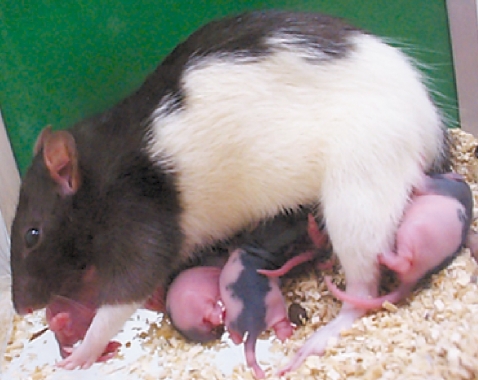
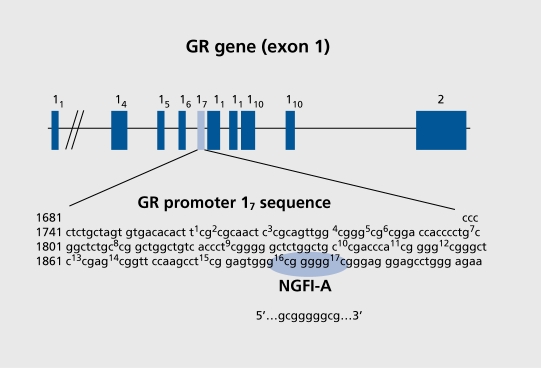
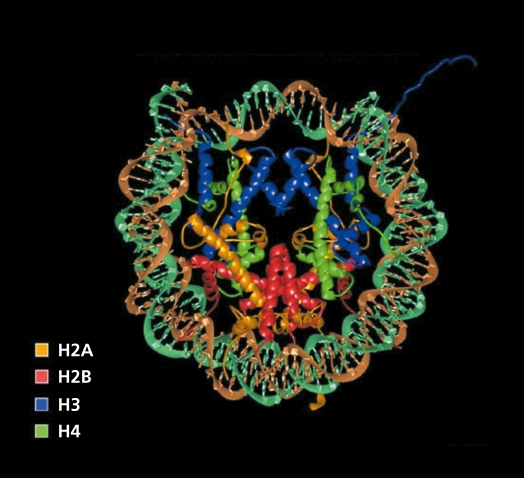
Early experience permanently alters behavior and physiology. These effects are, in part, mediated by sustained alterations in gene expression in selected brain regions. The critical question concerns the mechanism of these environmental "programming" effects. We examine this issue with an animal model that studies the consequences of variations in mother-infant interactions on the development of individual differences in behavioral and endocrine responses to stress in adulthood. Increased levels of pup licking/grooming by rat mothers in the first week of life alter DNA structure at a glucocorticoid receptor gene promoter in the hippocampus of the offspring. Differences in the DNA methylation pattern between the offspring of high- and low-licking/grooming mothers emerge over the first week of life; they are reversed with cross-fostering; they persist into adulthood; and they are associated with altered histone acetylation and transcription factor (nerve growth factor-induced clone A [NGFIA]) binding to the glucocorticoid receptor promoter. DNA methylation alters glucocorticoid receptor expression through modifications of chromatin structure. Pharmacological reversal of the effects on chromatin structure completely eliminates the effects of maternal care on glucocorticoid receptor expression and hypothalamic-pituitary-adrenal (HPA) responses to stress, thus suggesting a causal relation between the maternally induced, epigenetic modification of the glucocorticoid receptor gene and the effects on stress responses in the offspring. These findings demonstrate that the structural modifications of the DNA can be established through environmental programming and that, in spite of the inherent stability of this epigenomic marker, it is dynamic and potentially reversible.
Overview
The claims and statistics of this paper haven’t been checked yet.
Free: it reads the open-access text and checks the first 5 claims that cite a source we can check. Create a free account to check every claim.
Integrity signals
Registry
Cites
Statistics
Figures
Verification
Claims the paper makes
The claims and statistics of this paper haven’t been checked yet.
Free: it reads the open-access text and checks the first 5 claims that cite a source we can check. Create a free account to check every claim.
Claims other papers make about this one
Each is checked against this paper’s own text: does it say what the citing paper says it does?
The source backs part of the claim, not all of it — or backs it for a different population, condition or comparison.
In the citing paper
“Evidence to date also supports the hypothesis that early experiences operate on many neural target sites through epigenetic factors, providing a mechanism by which genes and environments interact to produce variation in individual HPA stress phenotypes through a variety of mechanisms, including changes in glucocorticoid (GC) and mineralocorticoid (MC) receptors in the hippocampus (Meaney and Szyf,”
From Quality of maternal and paternal care predicts later stress reactivity in the cooperatively-breeding marmoset (Callithrix geoffroyi) (2013) · cites this paper as Meaney and Szyf, 2005
Experimental — accuracy not yet measuredThe cited source says what the claim attributes to it.
In the citing paper
“A first important line of research, conducted by Michael Meaney and colleagues, has shown that parental care during early life induces long-term changes in behaviour as well as in gene expression mediated by epigenetic changes in the hippocampus of rats 21.”
From Resilience in mental health: linking psychological and neurobiological perspectives. (2013) · cites this paper as [21]
The cited source says what the claim attributes to it.
In the citing paper
“These associations are consistent with well defined neurobiological models linking early experience with the development of the HPA axis component of the stress response system (Meaney & Szyf, 2005) and linking stress and stress hormones with cognition, particularly executive functions (Arnsten, 2000; Lupien, Maheu, Tu, Fiocco, & Shramek, 2007).”
From Salivary cortisol mediates effects of poverty and parenting on executive functions in early childhood (2011) · cites this paper as Meaney & Szyf, 2005
The cited source says what the claim attributes to it.
In the citing paper
“Research with rodents, non-human primates, and humans, has shown that parental caregiving mediates the regulation of the HPA axis (see, e.g., Francis, Diorio, Plotsky, & Meaney, 2002; Levine, 2005; Meaney & Szyf, 2005; Sanchez, 2006).”
From Normalizing the development of cortisol regulation in maltreated infants through preventive interventions (2011) · cites this paper as Meaney & Szyf, 2005
The cited source says what the claim attributes to it.
In the citing paper
“Remarkably, research has shown that the maternal licking and grooming behavior in the rat that is so central to the development of the HPA stress response system produces its effect through molecular mechanisms that alter the epigenetic state of the gene that codes for GR receptor density in the hippocampus (Meaney & Szyf, 2005; Weaver, 2007; Weaver et al., 2004).”
From Stress and the development of self-regulation in context (2010) · cites this paper as Meaney & Szyf, 2005
5 more claims about this paper
Create a free account to see every claim other papers make about this one.
Self-check
Percentages, sums and reported differences re-computed from the paper’s own numbers.
The self-check needs the paper’s full text.
Citations
Cites
Felitti, V. J., Anda, R. F., Nordenberg, D., Williamson, D. F., Spitz, A. M., Edwards, V., Koss, M. P., & Marks, J. S. (1998) · American Journal of Preventive Medicine · doi:10.1016/s0749-3797(98)00017-8 · Cited by 18,943
Crystal structure of the nucleosome core particle at 2.8 Å resolution
Luger, K., Mäder, A. W., Richmond, R. K., Sargent, D. F., & Richmond, T. J. (1997) · Nature · doi:10.1038/38444 · Cited by 9,466
Child abuse: Adolescent records vs. adult recall
Femina, D. D., Yeager, C. A., & Lewis, D. O. (1990) · Child Abuse & Neglect · doi:10.1016/0145-2134(90)90033-p · Cited by 8,820
Influence of life stress on depression: moderation by a polymorphism in the 5-HTT gene
Caspi, A., Sugden, K., Moffitt, T. E., Taylor, A., Craig, I. W., Harrington, H., McClay, J., Mill, J., Martin, J., Braithwaite, A., et al. (2003) · Science · doi:10.1126/science.1083968 · Cited by 8,120 · cited 1×
“Such models have considerable appeal, and could potentially identify both the origins and the nature of vulnerability derived from either epigenetic influences, such as early family life, or genomic variations.(27,34) For developmentalists the critical questions are (i) how early experience might “program” individual…”
Sapolsky, R. M., Romero, L. M., & Munck, A. U. (2000) · Endocrine Reviews · doi:10.1210/edrv.21.1.0389 · Cited by 7,541 · cited 1×
“CRF synthesis and release are inhibited through a glucocorticoid negative-feedback system mediated by both mineralocorticoid and glucocorticoid receptors (GRs) in a number of brain regions including, and perhaps especially in, the hippocampus.(46,47) CRF neurons in the amygdala project directly to the locus ceruleus a…”
Sapolsky, R. M. (2000) · Endocrine Reviews · doi:10.1210/er.21.1.55 · Cited by 7,533
Protective and Damaging Effects of Stress Mediators
McEwen, B. S. (1998) · New England Journal of Medicine · doi:10.1056/nejm199801153380307 · Cited by 6,733
Epigenetic programming by maternal behavior
Weaver, I. C. G., Cervoni, N., Champagne, F. A., D'Alessio, A. C., Sharma, S., Seckl, J. R., Dymov, S., Szyf, M., & Meaney, M. J. (2004) · Nature Neuroscience · doi:10.1038/nn1276 · Cited by 6,177
Self-citationNan, X., Ng, H.-H., Johnson, C. A., Laherty, C. D., Turner, B. M., Eisenman, R. N., & Bird, A. (1998) · Nature · doi:10.1038/30764 · Cited by 3,440 · cited 1×
“Methylated DNA attracts methylated DNA binding proteins, which recruit a cluster of proteins referred to as repressor complexes, which include histone deacetylases that result in inactive chromatin and the silencing of gene expression.(105,106) The model positioning DNA methylation as driving chromatin inactivation is…”
Frommer, M., McDonald, L. E., Millar, D. S., Collis, C. M., Watt, F., Grigg, G. W., Molloy, P. L., & Paul, C. L. (1992) · Proceedings of the National Academy of Sciences · doi:10.1073/pnas.89.5.1827 · Cited by 3,238 · cited 1×
“NaBis treatment of DNA samples converts nonmethylated cytosines to uracils, which are then detected as thymidine on subsequent sequencing gels.(115) Methylated cytosines are unaffected by NaBis and the differences in methylation status are thus apparent and easily quantifiable on sequencing gels.”
Research works printed but not linked: 6
- Heim C. Newport DJ. Wagner D. Wilcox MM. Miller AH. Nemeroff CB. The role of early adverse experience and adulthood stress in the prediction of neuroendocrine stress reactivity in women: a multiple regression analysis. Depress Anxiety 2002 15 117 125 12001180 · DOI · Paper page
- 10.1126/science.135.3506.795-a · DOI · Paper page
- Caldji CC. Liu D. Meaney MJ. Maternal behavior in infancy regulates the development of GABAA receptor levels and its subunit composition and GAD. Soc Neurosci Abst 2000 179 11
- Hellstrom I. Diorio J. Weaver ICG. Szyf M. Meaney MJ. Ex vivo characterization of maternal programming of stress responses through modulation of the epigenome. Soc Neurosci Abstr 2004 662 11 xx
- Reik W. Dean W. Walter J. Epigenetic reprogramming in mammalian development. Science 2000 293 1089 1093 11498579 · DOI · Paper page
- Cervoni N. Detich N. Seo SB. Chakravarti D. Szyf M. The oncoprotein Set/TAF-1beta, an inhibitor of histone acetyltransferase, inhibits active demethylation of DNA, integrating DNA methylation and transcriptional silencing. J Biol Chem 2002 277 25026 25031 11978794 · DOI · Paper page
Cited by
Items 901–965 of 965
Koh, H. K. (2023) · Oxford University Press eBooks · doi:10.1093/oso/9780190088859.002.0006
Koenig, H. G., VanderWeele, T. J., & Peteet, J. R. (2023) · Oxford University Press eBooks · doi:10.1093/oso/9780190088859.003.0028
Koenig, H. G., VanderWeele, T. J., & Peteet, J. R. (2023) · Oxford University Press eBooks · doi:10.1093/oso/9780190088859.003.0022
Studies on Religion and Health
Koenig, H. G., VanderWeele, T. J., & Peteet, J. R. (2023) · Oxford University Press eBooks · doi:10.1093/oso/9780190088859.005.0001 · Cited by 1
Aspects épigénétiques de l’addiction au tabac et à la nicotine
Maldonado, R. J. (2024) · Bulletin de l Académie Nationale de Médecine · doi:10.1016/j.banm.2024.02.001
Ha, J. C., Brad, T. L., & Ha, J. C. (2024) · CABI eBooks · doi:10.1079/9781800624566.0004
Trauma und Reizdarm: Der Einfluss aversiver Kindheitserfahrungen
Engel, F., Banzhaf, P., & Berens, S. (2024) · Trauma und Gewalt · doi:10.21706/tg-18-4-340
Intermittent Attachment: A New Psychoanalytic Perspective
Romeo, V. M. (2023) · Journal of Contemporary Approaches in Psychology and Psychotherapy. · doi:10.57017/jcapp.v1.i1.06
Counseling Approaches I: Behavior Modification and Behavior Analysis
Field, T. A., & Ghoston, M. R. (2025) · Wiley eBooks · doi:10.1002/9781394347230.ch6
Cellular Function and Epigenetics
Field, T. A., & Ghoston, M. R. (2025) · Wiley eBooks · doi:10.1002/9781394347230.ch3
Stevens, A. J., Kennedy, M. A., Doudney, K., Kidd, A., & Rucklidge, J. J. (2025) · Psychiatry Research Case Reports · doi:10.1016/j.psycr.2025.100254
Rigley, K. P. (2025) · PsyArXiv (OSF Preprints) · doi:10.31234/osf.io/7xt2q_v2
Reddy, C. (2022) · Scholars Archive - University at Albany (University at Albany, State University of New York) · doi:10.54014/0c7f-eqzz
Justino, Â. J. (2025) · PsyArXiv (OSF Preprints) · doi:10.31234/osf.io/hjvtp_v3
KÜLTÜREL HAFIZA, MÜZİK VE EPİGENETİK DUYARLILIĞIN KAVRAMSAL TEMELLERİ
Eraslan, İ. (2025) · Bidge Yayınları eBooks · doi:10.70269/nlnhkro2cemd
Transgenerasyonel Travma: Travmatik Deneyimlerin Epigenetik ve Psikososyal Aktarımı
Şengöz, M. (2025) · Uluslararası Sosyal ve Eğitim Bilimleri Dergisi · doi:10.20860/ijoses.1744140
Editorial: Neglected nuances in gestational diabetes
Mathad, J. S., & Yajnik, C. S. (2025) · Frontiers in Clinical Diabetes and Healthcare · doi:10.3389/fcdhc.2025.1706918
Gelişimle İlgili Temel Kavramlar Gelişim Kavramı ve Kapsamı
Koçak, A. A. (2025) · Akademisyen Kitabevi eBooks · doi:10.37609/akya.3850.c1691
(2025) · Elsevier eBooks · doi:10.1016/b978-0-443-15428-7.16001-5
Bostrom, J., & Sodhi, M. (2013) · Elsevier eBooks · doi:10.1016/b978-0-12-391918-2.00016-0
Additional file 1 of DNA methylation in cord blood in association with prenatal depressive symptoms
Kallak, T. K., Bränn, E., Fransson, E., Johansson, Å., Lager, S., Comasco, E., Lyle, R., & Skalkidou, A. (2021) · Figshare · doi:10.6084/m9.figshare.14404372
Additional file 2 of DNA methylation in cord blood in association with prenatal depressive symptoms
Kallak, T. K., Bränn, E., Fransson, E., Johansson, Å., Lager, S., Comasco, E., Lyle, R., & Skalkidou, A. (2021) · Figshare · doi:10.6084/m9.figshare.14404375
Zuluaga Rouiller, M. J. (2024) · LA Referencia (Red Federada de Repositorios Institucionales de Publicaciones Científicas)
Carley, S. J. (2024) · HARVEST (University of Saskatchewan) · Cited by 1
Koivulehto, L. (2025) · UTUPub (University of Turku)
Bui, A. H. (2025) · Research Square · doi:10.21203/rs.3.rs-8411945/v1
DNA as life’s archive: unraveling the molecular storage of memories and information
Yasseen, A. A., Jumaah, A. S., & Nafakhi, H. (2025) · Medical Hypotheses · doi:10.1016/j.mehy.2025.111856
Factors Influencing Subjective Well-Being: Key Dimensions and Research Evolution
Li, H., & Shen, G. (2026) · Springer eBooks · doi:10.1007/978-981-95-4937-5_4
Gonchar, D. I., Shmigol, T. A., Lyakhmun, D. N., Soloveva, A., Yankovskaya, S. K., Krendeleva, O. V., Vizgalina, V. D., Efimova, E. V., Ezdoglian, A. A., Kiseleva, N. M., et al. (2026) · Biomedicines · doi:10.3390/biomedicines14020356
Masiukovichi, N., Caudle, W. M., Masiukovichi, T., & Nikoleishvili, E. (2026) · European Scientific Journal ESJ · doi:10.19044/esj.2026.v22n38p211 · Cited by 1
Rôle de la Transcortine (CBG) dans la variabilité des réponses de stress
Minni, A. (2011) · theses.fr (ABES) · doi:10.70675/21303e3cza12cz45dezaca5z567cef367a53
Role of the gut-brain axis in early stress-induced emotional vulnerability
Rincel, M. (2017) · theses.fr (ABES) · doi:10.70675/5e8a972cz9ad1z42aezb89cze6474124ef90
Impacts évolutifs de l'urbanisation chez la mésange charbonnière : du phénotype aux (épi)génomes
Caizergues, A. E. (2021) · theses.fr (ABES) · doi:10.70675/c9172cf4zedf8z4b49z8ee5z55d9d1d2e668 · Cited by 1
Signatures épigénétiques de la maladie d'Alzheimer dans l'ADN libre circulant
Guemri, J. (2021) · theses.fr (ABES) · doi:10.70675/aa3cb199zc068z4b72zab7fz6deb0fe1de87
Epigenetic Resilience to Early-Life Maternal Loss in African Savanna ElephantsPreprint
Chusyd, D. E., Austad, S. N., Brown, J. L., Chisaka, L., Kalande, K., Lalancette, C., Milčiūtė, M., Olivier, L., Ngombwa, I., Sinyinza, J., et al. (2026) · bioRxiv (Cold Spring Harbor Laboratory) · doi:10.64898/2026.04.03.716431
Malviya, S. J. (2020) · The Voice of Creative Research · doi:10.53032/tvcr/2020.v2n2.03
Ben‐Soussan, T. D., Lamas, L., & Paoletti, P. (2026) · Frontiers in Human Neuroscience · doi:10.3389/fnhum.2026.1810861
Neuroscience of Emotional Intelligence: An Integrative Narrative Review
Ali, A., Kulo, V., Al-Rumaihi, G., Sethi, A., Elnashar, M. S., Shaikh, N., & Jahangiri, F. R. (2026) · Cureus · doi:10.7759/cureus.108949
Sunzeri, F. (2026) · Springer eBooks · doi:10.1007/978-3-032-14465-2_14
Sunzeri, F. (2026) · Springer eBooks · doi:10.1007/978-3-032-14465-2_1
Vargovič, P., Osacká, J., Horváthová, Ľ., Tillinger, A., Mihalj, D., Bodorova, B. B., Dziewiczová, L., Havránek, T., Bačová, Z., & Bakoš, J. (2026) · Endocrine Regulations · doi:10.2478/enr-2026-0010 · Cited by 1
Epigenetics: The Impact of Trauma on Gene Expression and Transgenerational Transmission
Akbarli, S. A., & Alakbarova, C. M. (2026) · Journal of Molecular Biosciences and Engineering · doi:10.54414/nuee5423
Miltiadous, A., Eyck, H. J. F., Crino, O. L., Rollins, L. A., Callahan, D. L., & Buchanan, K. L. (2026) · Journal of Experimental Zoology Part A Ecological and Integrative Physiology · doi:10.1002/jez.70115
Briones, M. R. S. (2026) · Frontiers in Psychology · doi:10.3389/fpsyg.2026.1857884
Endocrine and epigenetic flexibility in an African starling
Rubenstein, D. R., & Solomon, J. W. (2026) · Philosophical Transactions of the Royal Society B Biological Sciences · doi:10.1098/rstb.2025.0027 · Cited by 1
Mental health and gut-brain crosstalk: implications for depression and Alzheimer's disease
Skourti, K., Katsaitis, F., Pavlidi, P., Anesti, M., Balla, J., Emvalomatis, A., Kokras, N., Dalla, C., & Sotiropoulos, I. (2026) · Neuroscience Applied · doi:10.1016/j.nsa.2026.107023
Gallo, A. (2026) · Frontiers in Physiology · doi:10.3389/fphys.2026.1909109
The Past Lives on with Us: Epigenetics as a Link Between Cultural and Biological Evolution
Švorcová, J., & Kleisner, K. (2026) · Biosemiotics/Biosemiotics. Bookseries · doi:10.1007/978-3-032-16124-6_16
Branchi, I. (2026) · Psychological Medicine · doi:10.1017/s003329172610467x
Hyperestrogenic imprinting and developmental origins of endometriosis and adenomyosis
Guo, S., & Viganò, P. (2026) · Human Reproduction Open · doi:10.1093/hropen/hoag075
Császár-Nagy, N., & Bókkon, I. (2026) · International Journal of Molecular Sciences · doi:10.3390/ijms27167177
Hanson, I., Draicchio, F., Sharafi, M., Grier-Welch, A., Vance, A., Alamdari, N., Futterman, I. D., Chudnoff, S., Malysheva, O., Caudill, M. A., et al. (2026) · Journal of Dietary Supplements · doi:10.1080/19390211.2026.2727024
Hill, E. W., Moss, A. L., Han, H., Feng, M., Hall, T., McGivney, B. A., & Katz, L. M. (2026) · Applied Animal Behaviour Science · doi:10.1016/j.applanim.2026.107202
Gavín, A. B. (2026) · Latino Studies · doi:10.1057/s41276-026-00603-z
Okan, N., & Köse, N. (2026) · Developmental Psychobiology · doi:10.1002/dev.70207 · Cited by 1
Korhonen, S., & Rönkkö, L. (2026) · UEF eRepo (University of Eastern Finland)
Tung, R. (2026) · Deep Blue (University of Michigan) · doi:10.7302/dspace/30679
Segond, H. (2026) · Laterality Asymmetries of Body Brain and Cognition · doi:10.1080/1357650x.2026.2743279
“…during feeding may contribute to the maturation of stress-regulatory systems, particularly the hypothalamic–pituitary–adrenal (HPA) axis, which has been implicated in the brain development and the emergence of hemispheric asymmetries (Feldman, 2007; Hostinar et al., 2014; Meaney & Szyf, 2005).”
Hancock, J., & Becht-Buss, D. (2026) · Frontiers in Systems Neuroscience · doi:10.3389/fnsys.2026.1862960
Paukner, A., Dettmer, A. M., Robinson, L. M., & Simpson, E. A. (2026) · Personality Science · doi:10.1177/27000710261499580
Yll, K. A. D. A. (2025) · AAB College Repository (AAB College)
Effects of Maternal Ligature-Induced Periodontitis on Brain in Offspring
Imai, C., Ohsugi, Y., Lin, P., Toyoshima, K., Hirota, T., Sekiguchi, M., Shiba, T., Iwata, T., Uesaka, N., & Katagiri, S. (2026) · Journal of Dental Research · doi:10.1177/00220345261493495
Acquired Cytogenetic Changes in Adult Twins Discordant for a History of Childhood Sexual Abuse
Brumelle, J. (2011) · VCU Scholars Compass (Virginia Commonwealth University) · doi:10.25772/pqck-z230
Metadata
- Authors
- Meaney, M. J., & Szyf, M.
- Affiliations
- Douglas Mental Health University Institute (CA)
- McGill Program for the Study of Behavior, Genes and Environment, Department of Pharmacology, McGill University; Douglas Hospital Research Centre, Montreal, Canada
- Corresponding author
- Meaney, Michael J.
- ORCID
- Meaney, Michael J.
- Venue
- Dialogues in Clinical Neuroscience
- Publisher
- Informa UK Limited
- Published
- 2005-06-30
- Volume
- 7
- Issue
- 2
- Pages
- 103-123
- ISSN
- 1294-8322 (ISSN-L)
- 1958-5969
- PMC
- PMC3181727
- OpenAlex
- W1527534059
- Cited by
- 958
- References
- 132
- Citations by year
- 2026: 33 · 2025: 35 · 2024: 22 · 2023: 68 · 2022: 48 · 2021: 66 · 2020: 41 · 2019: 40 · 2018: 49 · 2017: 42 · 2016: 58 · 2015: 56 · 2014: 60 · 2013: 48 · 2012: 59
- FWCI
- 11.96
- Type
- journal article
- Language
- en
- Open access
- diamond
- doi.org
- Licence
- Locations
- Dialogues in Clinical Neuroscience (publishedVersion, cc-by-nc-nd)
- Europe PMC (PubMed Central) (publishedVersion, cc-by-nc-nd)
- PubMed Central (publishedVersion, cc-by-nc-nd)
- PubMed (publishedVersion)
- Topics
- Life Sciences › Neuroscience › Behavioral Neuroscience › Stress Responses and Cortisol
- Life Sciences › Biochemistry, Genetics and Molecular Biology › Molecular Biology › Epigenetics and DNA Methylation
- Life Sciences › Neuroscience › Endocrine and Autonomic Systems › Neuroendocrine regulation and behavior
- Keywords
- DNA methylation, environmental programming, maternal care, glucocorticoid receptor, hippocampus, stress response, hypothalamic-pituitary-adrenal axis, histone acetylation, chromatin structure, cross-fostering, epigenetics, rat offspring, early life experience
- MeSH terms
- Animals, Female, Humans, Hypothalamo-Hypophyseal System, Maternal Behavior, Pituitary-Adrenal System, Receptors, Glucocorticoid, Stress, Psychological, DNA Methylation, Epigenesis, Genetic, Rats
About these checks
Registry, retraction, Cites and statistics results are computed, not judged, with one exception: a printed reference that no index lists is read once by a model before it counts as a citation error. Claims are extracted by a model and kept only when their quote appears verbatim in the text; each cited source is then checked, with a model’s help, for whether it says what the claim relies on. Those verdicts can be wrong — read the claim’s quote and the cited source before relying on one.
Statistics and arithmetic are recomputed, not judged.
Confidence bands are shown only for fields calibrated on our annotated test set. None is calibrated yet, so no band is shown.
What counts as a claim ›How we measure confidence ›How we check this ›
Are you an author, or do you see a problem with this page? Request a review
Data sources
Bibliographic data: Semantic Scholar, OpenAlex, Crossref.
Contains information from the Semantic Scholar Academic Graph Datasets, made available under the ODC Attribution License (ODC-BY 1.0).
Semantic Scholar’s data is described in: Kinney, R., et al. (2023). The Semantic Scholar Open Data Platform. arXiv:2301.10140.
