

The DOI matches its Crossref record; 246 of the 248 references it cites were found in a registry or an index.
Neuron-Astrocyte Interactions in Parkinson’s Disease
Open accessAbstract
Parkinson’s disease (PD) is the second most common neurodegenerative disease. PD patients exhibit motor symptoms such as akinesia/bradykinesia, tremor, rigidity, and postural instability due to a loss of nigrostriatal dopaminergic neurons. Although the pathogenesis in sporadic PD remains unknown, there is a consensus on the involvement of non-neuronal cells in the progression of PD pathology. Astrocytes are the most numerous glial cells in the central nervous system. Normally, astrocytes protect neurons by releasing neurotrophic factors, producing antioxidants, and disposing of neuronal waste products. However, in pathological situations, astrocytes are known to produce inflammatory cytokines. In addition, various studies have reported that astrocyte dysfunction also leads to neurodegeneration in PD. In this article, we summarize the interaction of astrocytes and dopaminergic neurons, review the pathogenic role of astrocytes in PD, and discuss therapeutic strategies for the prevention of dopaminergic neurodegeneration. This review highlights neuron-astrocyte interaction as a target for the development of disease-modifying drugs for PD in the future.
Overview
The claims and statistics of this paper haven’t been checked yet.
Run the check — free, no account needed. It reads the open-access text and checks the sources it cites.
Integrity signals
Registry
Cites
Statistics
Figures
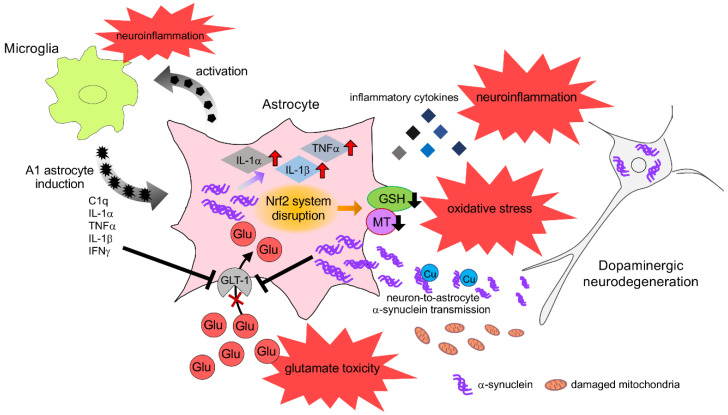
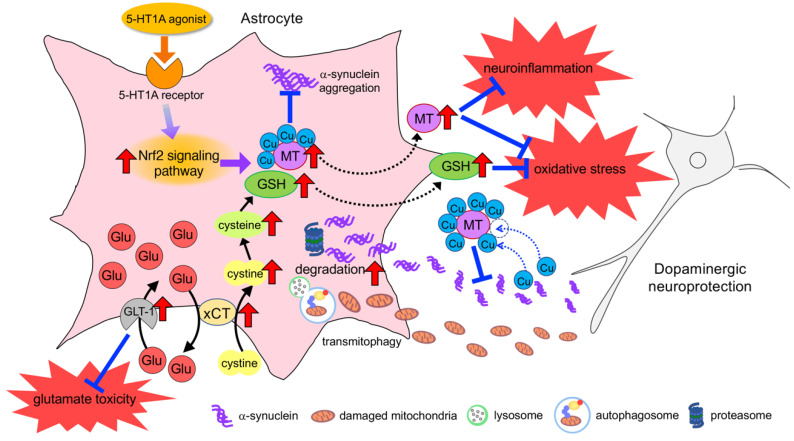
Verification
Claims the paper makes
The claims and statistics of this paper haven’t been checked yet.
Run the check — free, no account needed. It reads the open-access text and checks the sources it cites.
Claims other papers make about this one
Each is checked against this paper’s own text: does it say what the citing paper says it does?
In the citing paper
“The release of pro-inflammatory factors and neurotoxins by activated glial cells leads to neuroinflammation, neuronal damage, and neurodegeneration [73].”
From Neuroprotective Effects of Sodium Butyrate by Restoring Gut Microbiota and Inhibiting TLR4 Signaling in Mice with MPTP-Induced Parkinson’s Disease (2023) · cites this paper as [73]
Self-check
Percentages, sums and reported differences re-computed from the paper’s own numbers.
The self-check needs the paper’s full text.
Citations
Cites
Neurotoxic reactive astrocytes are induced by activated microglia
Liddelow, S. A., Guttenplan, K. A., Clarke, L. E., Bennett, F. C., Bohlen, C. J., Schirmer, L., Bennett, M. L., Münch, A. E., Chung, W.-S., Peterson, T. C., et al. (2017) · Nature · doi:10.1038/nature21029 · Cited by 7,971
Astrocyte-endothelial interactions at the blood-brain barrier
Abbott, N. J., Rönnbäck, L., & Hansson, E. (2006) · Nature Reviews Neuroscience · doi:10.1038/nrn1824 · Cited by 5,595
Itoh, K., Wakabayashi, N., Katoh, Y., Ishii, T., Igarashi, K., Engel, J. D., & Yamamoto, M. (1999) · Genes & Development · doi:10.1101/gad.13.1.76 · Cited by 3,634
Hereditary Early-Onset Parkinson's Disease Caused by Mutations in PINK1
Valente, E. M., Abou-Sleiman, P. M., Caputo, V., Muqit, M. M. K., Harvey, K., Gispert, S., Ali, Z., Del Turco, D., Bentivoglio, A. R., Healy, D. G., et al. (2004) · Science · doi:10.1126/science.1096284 · Cited by 3,481
GDNF: a Glial Cell Line-Derived Neurotrophic Factor for Midbrain Dopaminergic Neurons
Lin, L.-F. H., Doherty, D. H., Lile, J. D., Bektesh, S. L., & Collins, F. (1993) · Science · doi:10.1126/science.8493557 · Cited by 3,206
McGeer, P. L., Itagaki, S., Boyes, B. E., & McGeer, E. G. (1988) · Neurology · doi:10.1212/wnl.38.8.1285 · Cited by 2,990
The ubiquitin kinase PINK1 recruits autophagy receptors to induce mitophagy
Lazarou, M., Sliter, D. A., Kane, L. A., Sarraf, S. A., Wang, C., Burman, J. L., Sideris, D. P., Fogel, A. I., & Youle, R. J. (2015) · Nature · doi:10.1038/nature14893 · Cited by 2,774
Multicenter Analysis of Glucocerebrosidase Mutations in Parkinson's Disease
Sidransky, E., Nalls, M. A., Aasly, J. O., Aharon-Peretz, J., Annesi, G., Barbosa, E. R., Bar-Shira, A., Berg, D., Bras, J., Brice, A., et al. (2009) · New England Journal of Medicine · doi:10.1056/nejmoa0901281 · Cited by 2,135
Non-motor features of Parkinson disease
Schapira, A. H. V., Chaudhuri, K. R., & Jenner, P. (2017) · Nature Reviews Neuroscience · doi:10.1038/nrn.2017.62 · Cited by 2,053
Dinkova-Kostova, A. T., Holtzclaw, W. D., Cole, R. N., Itoh, K., Wakabayashi, N., Katoh, Y., Yamamoto, M., & Talalay, P. (2002) · Proceedings of the National Academy of Sciences · doi:10.1073/pnas.172398899 · Cited by 1,947
Tripartite synapses: astrocytes process and control synaptic information
Perea, G., Navarrete, M., & Araque, A. (2009) · Trends in Neurosciences · doi:10.1016/j.tins.2009.05.001 · Cited by 1,820
(1998) · Europe PMC (PubMed Central) · Cited by 1,594
β-Lactam antibiotics offer neuroprotection by increasing glutamate transporter expression
Rothstein, J. D., Patel, S., Regan, M. R., Haenggeli, C., Huang, Y. H., Bergles, D. E., Jin, L., Dykes Hoberg, M., Vidensky, S., Chung, D. S., et al. (2005) · Nature · doi:10.1038/nature03180 · Cited by 1,518
Braak, H., de Vos, R. A. I., Bohl, J., & Del Tredici, K. (2006) · Neuroscience Letters · doi:10.1016/j.neulet.2005.11.012 · Cited by 1,354
Blum, D. L., Torch, S., Lambeng, N., Nissou, M.-F., Benabid, A., Sadoul, R., & Verna, J. (2001) · Progress in Neurobiology · doi:10.1016/s0301-0082(01)00003-x · Cited by 1,269
Ramirez, A., Heimbach, A., Gründemann, J., Stiller, B., Hampshire, D., Cid, L. P., Goebel, I., Mubaidin, A. F., Wriekat, A.-L., Roeper, J., et al. (2006) · Nature Genetics · doi:10.1038/ng1884 · Cited by 1,208
Oxidative Pathways for Catecholamines in the Genesis of Neuromelanin and Cytotoxic Quinones
GRAHAM, D. G. (1978) · Molecular Pharmacology · doi:10.1016/s0026-895x(25)13535-9 · Cited by 1,126 · cited 1×
“Moreover, reactive quinones, such as DA quinones, are produced by the spontaneous oxidation of free cytosolic DA in dopaminergic neurons [52,53].”
BackgroundBlock of A1 astrocyte conversion by microglia is neuroprotective in models of Parkinson’s disease
Yun, S. P., Kam, T.-I., Panicker, N., Kim, S., Oh, Y., Park, J.-S., Kwon, S.-H., Park, Y. J., Karuppagounder, S. S., Park, H., et al. (2018) · Nature Medicine · doi:10.1038/s41591-018-0051-5 · Cited by 1,123
Gastrointestinal Dysfunction in Parkinson’s Disease
Fasano, A., Visanji, N. P., Liu, L. W. C., Lang, A. E., & Pfeiffer, R. F. (2015) · The Lancet Neurology · doi:10.1016/s1474-4422(15)00007-1 · Cited by 1,016
Wakabayashi, N., Dinkova-Kostova, A. T., Holtzclaw, W. D., Kang, M.-I., Kobayashi, A., Yamamoto, M., Kensler, T. W., & Talalay, P. (2004) · Proceedings of the National Academy of Sciences · doi:10.1073/pnas.0307301101 · Cited by 986 · cited 1×
“When exposed to electrophiles and ROS, the cysteine residues of Keap1 are oxidized, leading to conformational changes, which results in the release of Nrf2, followed by the nuclear translocation and activation of phase II antioxidant enzyme gene expression [72,73].”
BackgroundLee, H.-J., Suk, J.-E., Patrick, C., Bae, E.-J., Cho, J.-H., Rho, S., Hwang, D., Masliah, E., & Lee, S.-J. (2010) · Journal of Biological Chemistry · doi:10.1074/jbc.m109.081125 · Cited by 877
Mechanisms of Disease: astrocytes in neurodegenerative disease
Maragakis, N. J., & Rothstein, J. D. (2006) · Nature Clinical Practice Neurology · doi:10.1038/ncpneuro0355 · Cited by 836
Clements, C. M., McNally, R. S., Conti, B. J., Mak, T. W., & Ting, J. P.-Y. (2006) · Proceedings of the National Academy of Sciences · doi:10.1073/pnas.0607260103 · Cited by 818
Shih, A. Y., Johnson, D. A., Wong, G., Kraft, A. D., Jiang, L., Erb, H., Johnson, J. A., & Murphy, T. H. (2003) · Journal of Neuroscience · doi:10.1523/jneurosci.23-08-03394.2003 · Cited by 792
Glutathione metabolism in brain
Dringen, R., Gutterer, J. M., & Hirrlinger, J. (2000) · European Journal of Biochemistry · doi:10.1046/j.1432-1327.2000.01597.x · Cited by 774
Dopamine covalently modifies and functionally inactivates parkin
LaVoie, M. J., Ostaszewski, B. L., Weihofen, A., Schlossmacher, M. G., & Selkoe, D. J. (2005) · Nature Medicine · doi:10.1038/nm1314 · Cited by 722
Astrocyte Reactivity: Subtypes, States, and Functions in CNS Innate Immunity
Sofroniew, M. V. (2020) · Trends in Immunology · doi:10.1016/j.it.2020.07.004 · Cited by 721
Neuroinflammation as a common feature of neurodegenerative disorders
Guzman-Martinez, L., Maccioni, R. B., Andrade, V., Navarrete, L. P., Pastor, M. G., & Ramos-Escobar, N. (2019) · Frontiers in Pharmacology · doi:10.3389/fphar.2019.01008 · Cited by 702
Glial reactions in Parkinson's disease
McGeer, P. L., & McGeer, E. G. (2008) · Movement Disorders · doi:10.1002/mds.21751 · Cited by 701
Transcellular degradation of axonal mitochondria
Davis, C.-H. O., Kim, K.-Y., Bushong, E. A., Mills, E. A., Boassa, D., Shih, T., Kinebuchi, M., Phan, S., Zhou, Y., Bihlmeyer, N. A., et al. (2014) · Proceedings of the National Academy of Sciences · doi:10.1073/pnas.1404651111 · Cited by 673
Pathogenesis of Parkinson disease—the gut–brain axis and environmental factors
Klingelhoefer, L., & Reichmann, H. (2015) · Nature Reviews Neurology · doi:10.1038/nrneurol.2015.197 · Cited by 598
A timeline for Parkinson's disease
Hawkes, C. H., Del Tredici, K., & Braak, H. (2010) · Parkinsonism & Related Disorders · doi:10.1016/j.parkreldis.2009.08.007 · Cited by 594
Dringen, R., Pfeiffer, B., & Hamprecht, B. (1999) · The Journal of Neuroscience · doi:10.1523/jneurosci.19-02-00562.1999 · Cited by 589
Inflammation, glutamate, and glia: a trio of trouble in mood disorders
Haroon, E., Miller, A. H., & Sanacora, G. (2017) · Neuropsychopharmacology · doi:10.1038/npp.2016.199 · Cited by 584
Chen, P.-C., Vargas, M. R., Pani, A. K., Smeyne, R. J., Johnson, D. A., Kan, Y. W., & Johnson, J. A. (2009) · Proceedings of the National Academy of Sciences · doi:10.1073/pnas.0813361106 · Cited by 579
Joshi, A. U., Minhas, P. S., Liddelow, S. A., Haileselassie, B., Andreasson, K. I., Dorn, G. W., & Mochly-Rosen, D. (2019) · Nature Neuroscience · doi:10.1038/s41593-019-0486-0 · Cited by 571
Microglia clear neuron-released α-synuclein via selective autophagy and prevent neurodegeneration
Choi, I., Zhang, Y., Seegobin, S. P., Pruvost, M., Wang, Q., Purtell, K., Zhang, B., & Yue, Z. (2020) · Nature Communications · doi:10.1038/s41467-020-15119-w · Cited by 549
Kang, M.-I., Kobayashi, A., Wakabayashi, N., Kim, S.-G., & Yamamoto, M. P. (2004) · Proceedings of the National Academy of Sciences · doi:10.1073/pnas.0308347100 · Cited by 545
Zinc Metabolism in the Brain: Relevance to Human Neurodegenerative Disorders
Cuajungco, M. P., & Lees, G. J. (1997) · Neurobiology of Disease · doi:10.1006/nbdi.1997.0163 · Cited by 544
Excitotoxic mechanisms and the role of astrocytic glutamate transporters in traumatic brain injury
Yi, J., & Hazell, A. S. (2006) · Neurochemistry International · doi:10.1016/j.neuint.2005.12.001 · Cited by 477
The expression of DJ-1 (PARK7) in normal human CNS and idiopathic Parkinson's disease
Bandopadhyay, R. (2004) · Brain · doi:10.1093/brain/awh054 · Cited by 475
Orimo, S., Uchihara, T., Nakamura, A., Mori, F., Kakita, A., Wakabayashi, K., & Takahashi, H. (2007) · Brain · doi:10.1093/brain/awm302 · Cited by 469
DJ-1 acts in parallel to the PINK1/parkin pathway to control mitochondrial function and autophagy
Craig, K. J. T., McCoy, M. K., Blackinton, J. G., Beilina, A. G., van der Brug, M., Matton, A., Miller, D. W., Maric, D., Cedazo-Mı́nguez, Á., & Cookson, M. (2010) · Human Molecular Genetics · doi:10.1093/hmg/ddq430 · Cited by 467
NLRP3 inflammasome in neurological diseases, from functions to therapies
Song, L., Pei, L., Yao, S., Wu, Y., & Shang, Y. (2017) · Frontiers in Cellular Neuroscience · doi:10.3389/fncel.2017.00063 · Cited by 467
Glutathione peroxidase, glial cells and Parkinson's disease
Damier, P., Hirsch, É. C., Zhang, P., Agid, Y., & Javoy-Agid, F. (1993) · Neuroscience · doi:10.1016/0306-4522(93)90175-f · Cited by 466
Braak, H., Sastre, M., & Del Tredici, K. (2007) · Acta Neuropathologica · doi:10.1007/s00401-007-0244-3 · Cited by 462
Sulzer, D. L., Bogulavsky, J. J., Larsen, K. E., Behr, G. G., Karatekin, E., Kleinman, M. H., Turro, N. J., Krantz, D. E., Edwards, R. H., Greene, L. A., et al. (2000) · Proceedings of the National Academy of Sciences · doi:10.1073/pnas.97.22.11869 · Cited by 460
Wakabayashi, K., Hayashi, S., Yoshimoto, M., Kudo, H., & Takahashi, H. (2000) · Acta Neuropathologica · doi:10.1007/pl00007400 · Cited by 451
Neuropathology underlying clinical variability in patients with synucleinopathies
Halliday, G. M., Holton, J. L., Révész, T., & Dickson, D. W. (2011) · Acta Neuropathologica · doi:10.1007/s00401-011-0852-9 · Cited by 447
Novel neurotrophic factor CDNF protects and rescues midbrain dopamine neurons in vivo
Lindholm, P., Voutilainen, M. H., Laurén, J., Peränen, J., Leppänen, V., Andressoo, J., Lindahl, M., Janhunen, S. K., Kalkkinen, N., Timmusk, T., et al. (2007) · Nature · doi:10.1038/nature05957 · Cited by 444
DJ-1( PARK7), a novel gene for autosomal recessive, early onset parkinsonism
Bonifati, V., Rizzu, P., Squitieri, F., Krieger, E., Vanacore, N., Swieten, J. C. V., Brice, A., van Duijn, C. M., Oostra, B. A., Meco, G., et al. (2003) · Neurological Sciences · doi:10.1007/s10072-003-0108-0 · Cited by 427
Potential oxidative pathways of brain catecholamines
Tse, D. C. S., McCreery, R. L., & Adams, R. N. (1976) · Journal of Medicinal Chemistry · doi:10.1021/jm00223a008 · Cited by 415 · cited 1×
“Moreover, reactive quinones, such as DA quinones, are produced by the spontaneous oxidation of free cytosolic DA in dopaminergic neurons [52,53].”
BackgroundZou, J., & Crews, F. T. (2005) · Brain Research · doi:10.1016/j.brainres.2004.11.014 · Cited by 410
Striatal Blood–Brain Barrier Permeability in Parkinson'S Disease
Gray, M. T., & Woulfe, J. M. (2015) · Journal of Cerebral Blood Flow & Metabolism · doi:10.1038/jcbfm.2015.32 · Cited by 409
Parkin, PINK1, and DJ-1 form a ubiquitin E3 ligase complex promoting unfolded protein degradation
Xiong, H., Wang, D., Chen, L., Choo, Y. S., Ma, H., Tang, C., Xia, K., Jiang, W. B., Ronai, Z. A., Zhuang, X., et al. (2009) · Journal of Clinical Investigation · doi:10.1172/jci37617 · Cited by 406
NLR members NLRC4 and NLRP3 mediate sterile inflammasome activation in microglia and astrocytes
Freeman, L., Guo, H., David, C. N., Brickey, W. J., Jha, S., & Ting, J. P.-Y. (2017) · Journal of Experimental Medicine · doi:10.1084/jem.20150237 · Cited by 397
Neuron‐to‐neuron transmission of α‐synuclein fibrils through axonal transport
Freundt, E. C., Maynard, N., Clancy, E. K., Roy, S., Bousset, L., Sourigues, Y., Covert, M. W., Melki, R., Kirkegaard, K., & Brahic, M. (2012) · Annals of Neurology · doi:10.1002/ana.23747 · Cited by 394
Castaño, A., Herrera, A. J., Cano, J., & Machado, A. (1998) · Journal of Neurochemistry · doi:10.1046/j.1471-4159.1998.70041584.x · Cited by 393
Neuroinflammation and regulation of glial glutamate uptake in neurological disorders
Tilleux, S., & Hermans, E. (2007) · Journal of Neuroscience Research · doi:10.1002/jnr.21325 · Cited by 381
di Domenico, A., Carola, G., Calatayud, C., Pons-Espinal, M., Muñoz, J. P., Richaud-Patin, Y., Fernandez-Carasa, I., Gut, M., Faella, A., Parameswaran, J., et al. (2019) · Stem Cell Reports · doi:10.1016/j.stemcr.2018.12.011 · Cited by 372
Petrova, P. S., Raibekas, A. A., Pevsner, J., Vigo, N. T., Anafi, M., Moore, M. K., Peaire, A. E., Shridhar, V., Smith, D. I., Kelly, J., et al. (2003) · Journal of Molecular Neuroscience · doi:10.1385/jmn:20:2:173 · Cited by 353
Gu, X., Long, C.-X., Sun, L., Xie, C., Lin, X. Z., & Cai, H. (2010) · Molecular Brain · doi:10.1186/1756-6606-3-12 · Cited by 351
Niranjan, R. (2013) · Molecular Neurobiology · doi:10.1007/s12035-013-8483-x · Cited by 338
Mirza, B., Hadberg, H., Thomsen, P., & Moos, T. (1999) · Neuroscience · doi:10.1016/s0306-4522(99)00455-8 · Cited by 327
DJ-1 and prevention of oxidative stress in Parkinson's disease and other age-related disorders
Kahle, P. J., Waak, J., & Gasser, T. (2009) · Free Radical Biology and Medicine · doi:10.1016/j.freeradbiomed.2009.08.003 · Cited by 324
Shih, A. Y., Erb, H., Sun, X., Toda, S., Kalivas, P. W., & Murphy, T. H. (2006) · Journal of Neuroscience · doi:10.1523/jneurosci.3178-06.2006 · Cited by 315
Contributions of central and systemic inflammation to the pathophysiology of Parkinson's disease
Collins, L. M., Toulouse, A., Connor, T. J., & Nolan, Y. M. (2012) · Neuropharmacology · doi:10.1016/j.neuropharm.2012.01.028 · Cited by 306
Engele, J., & Bohn, M. (1991) · Journal of Neuroscience · doi:10.1523/jneurosci.11-10-03070.1991 · Cited by 303
The Nrf2–ARE cytoprotective pathway in astrocytes
Vargas, M. R., & Johnson, J. A. (2009) · Expert Reviews in Molecular Medicine · doi:10.1017/s1462399409001094 · Cited by 295
Kohutnicka, M., Lewandowska, E., Kurkowska‐Jastrzębska, I., Członkowski, A., & Członkowska, A. (1998) · Immunopharmacology · doi:10.1016/s0162-3109(98)00022-8 · Cited by 283
Astrocytes Provide Cysteine to Neurons by Releasing Glutathione
Wang, X. F., & Cynader, M. S. (2000) · Journal of Neurochemistry · doi:10.1046/j.1471-4159.2000.0741434.x · Cited by 281
DJ-1 is critical for mitochondrial function and rescues PINK1 loss of function
Hao, L.-Y., Giasson, B. I., & Bonini, N. M. (2010) · Proceedings of the National Academy of Sciences · doi:10.1073/pnas.0911175107 · Cited by 270
Voutilainen, M. H., Bäck, S., Pörsti, E., Toppinen, L., Lindgren, L., Lindholm, P., Peränen, J., Saarma, M., & Tuominen, R. K. (2009) · Journal of Neuroscience · doi:10.1523/jneurosci.0833-09.2009 · Cited by 269
Lastres‐Becker, I., Ulusoy, A., Innamorato, N. G., Şahin, G., Rábano, A., Kirik, D., & Cuadrado, A. (2012) · Human Molecular Genetics · doi:10.1093/hmg/dds143 · Cited by 269
Role of DJ-1 in the mechanism of pathogenesis of Parkinson's disease
Dolgacheva, L. P., Berezhnov, A. V., Fedotova, E. I., Zinchenko, V. P., & Abramov, A. Y. (2019) · Journal of Bioenergetics and Biomembranes · doi:10.1007/s10863-019-09798-4 · Cited by 254
Song, Y. J. C., Halliday, G. M., Holton, J. L., Lashley, T., O’Sullivan, S. S., McCann, H., Lees, A. J., Ozawa, T., Williams, D. R., Lockhart, P. J., et al. (2009) · Journal of Neuropathology & Experimental Neurology · doi:10.1097/nen.0b013e3181b66f1b · Cited by 245
Copper pathology in vulnerable brain regions in Parkinson's disease
Davies, K. M., Bohic, S., Carmona, A., Ortega, R., Cottam, V., Hare, D. J., Finberg, J. P. M., Reyes, S., Halliday, G. M., Mercer, J. F. B., et al. (2014) · Neurobiology of Aging · doi:10.1016/j.neurobiolaging.2013.09.034 · Cited by 244
Arima, K., Uéda, K., Sunohara, N., Arakawa, K., Hirai, S., Nakamura, M., Tonozuka-Uehara, H., & Kawai, M. (1998) · Acta Neuropathologica · doi:10.1007/s004010050917 · Cited by 239
Henry, A. G., Aghamohammadzadeh, S., Samaroo, H., Chen, Y., Mou, K., Needle, E., & Hirst, W. D. (2015) · Human Molecular Genetics · doi:10.1093/hmg/ddv314 · Cited by 235
Eggler, A. L., Gay, K. A., & Mesecar, A. D. (2008) · Molecular Nutrition & Food Research · doi:10.1002/mnfr.200700249 · Cited by 234
RAISED CEREBROSPINAL-FLUID COPPER CONCENTRATION IN PARKINSON'S DISEASE
Pall, H., Blake, D. R., Gutteridge, J. M. C., Williams, A. C., Lunec, J., Hall, M., & Taylor, A. (1987) · The Lancet · doi:10.1016/s0140-6736(87)90827-0 · Cited by 230
Environmental Exposures and Parkinson’s Disease
Nandipati, S., & Litvan, I. (2016) · International Journal of Environmental Research and Public Health · doi:10.3390/ijerph13090881 · Cited by 219
Ho, P. W., Leung, C.-T., Liu, H., Pang, S. Y.-Y., Lam, C. S.-C., Xian, J., Li, L., Kung, M. H.-W., Ramsden, D. B., & Ho, S. (2019) · Autophagy · doi:10.1080/15548627.2019.1603545 · Cited by 215
Iida, M., Miyazaki, I., Tanaka, K.-I., Kabuto, H., Iwata‐Ichikawa, E., & Ogawa, N. (1999) · Brain Research · doi:10.1016/s0006-8993(99)01688-1 · Cited by 211
Self-citationShu, X., Sun, Y., Sun, X., Zhou, Y., Bian, Y., Shu, Z., Ding, J., Lu, M., & Hu, G. (2019) · Cell Death & Disease · doi:10.1038/s41419-019-1813-9 · Cited by 203
Yao, W., Lu, M., Mei, M., Wang, H., Han, Z., Chen, M., Yao, H. P., Song, N., Ding, X. L., Ding, J., et al. (2020) · Nature Communications · doi:10.1038/s41467-020-14788-x · Cited by 198
Reaction of oxidized dopamine with endogenous cysteine residues in the human dopamine transporter
Whitehead, R. E., Ferrer, J. V., Javitch, J. A., & Justice, J. B. (2001) · Journal of Neurochemistry · doi:10.1046/j.1471-4159.2001.00125.x · Cited by 194
Metal swap between Zn7-metallothionein-3 and amyloid-β–Cu protects against amyloid-β toxicity
Meloni, G., Sonois, V., Delaine, T., Guilloreau, L., Gillet, A., Teissié, J., Faller, P., & Vašák, M. (2008) · Nature Chemical Biology · doi:10.1038/nchembio.89 · Cited by 190
Regulation of astrocyte inflammatory responses by the Parkinson's disease‐associated gene DJ–1
Waak, J., Weber, S. S., Waldenmaier, A., Görner, K., Alunni‐Fabbroni, M., Schell, H., Weisenhorn, D. M. V., Pham, T., Reumers, V., Baekelandt, V., et al. (2009) · The FASEB Journal · doi:10.1096/fj.08-125153 · Cited by 190
Gan, L., Vargas, M. R., Johnson, D. A., & Johnson, J. A. (2012) · Journal of Neuroscience · doi:10.1523/jneurosci.3049-12.2012 · Cited by 189
Copper at synapse: Release, binding and modulation of neurotransmission
D’Ambrosi, N., & Rossi, L. C. (2015) · Neurochemistry International · doi:10.1016/j.neuint.2015.07.006 · Cited by 187
Neuropathobiology of non-motor symptoms in Parkinson disease
Jellinger, K. A. (2015) · Journal of Neural Transmission · doi:10.1007/s00702-015-1405-5 · Cited by 186
LRRK2 at the interface of autophagosomes, endosomes and lysosomes
Roosen, D. A., & Cookson, M. (2016) · Molecular Neurodegeneration · doi:10.1186/s13024-016-0140-1 · Cited by 186
Kuhn, D. M., Arthur, R. E., Thomas, D. M., & Elferink, L. A. (1999) · Journal of Neurochemistry · doi:10.1046/j.1471-4159.1999.0731309.x · Cited by 184
Regulation of PINK1-Parkin-mediated mitophagy
Springer, W., & Kahle, P. J. (2011) · Autophagy · doi:10.4161/auto.7.3.14348 · Cited by 184
Astrocytic Orosomucoid-2 Modulates Microglial Activation and Neuroinflammation
Jo, M., Kim, J., Song, G. J., Seo, M., Hwang, E. M., & Suk, K. (2017) · Journal of Neuroscience · doi:10.1523/jneurosci.2534-16.2017 · Cited by 184
LRRK2 Expression in Normal and Pathologic Human Brain and in Human Cell Lines
Judith Miklossy, A., Arai, T., Guo, J., Klegeris, A., Yu, S. Y., McGeer, E. G., & McGeer, P. L. (2006) · Journal of Neuropathology & Experimental Neurology · doi:10.1097/01.jnen.0000235121.98052.54 · Cited by 183
How is alpha‐synuclein cleared from the cell?
Stefanis, L., Emmanouilidou, E., Pantazopoulou, M., Kirik, D., Vekrellis, K., & Tofaris, G. K. (2019) · Journal of Neurochemistry · doi:10.1111/jnc.14704 · Cited by 183
Zhu, J., Hu, Z., Han, X., Wang, D., Jiang, Q., Ding, J., Xiao, M., Wang, C., Lu, M., & Hu, G. (2018) · Cell Death and Differentiation · doi:10.1038/s41418-018-0127-2 · Cited by 179
Takaki, J., Fujimori, K., Miura, M., Suzuki, T., Sekino, Y., & Sato, K. (2012) · Journal of Neuroinflammation · doi:10.1186/1742-2094-9-275 · Cited by 173
The mitochondrion: a central architect of copper homeostasis
Baker, Z. N., Cobine, P. A., & Leary, S. C. (2017) · Metallomics · doi:10.1039/c7mt00221a · Cited by 172
Dopaminergic neuron-specific oxidative stress caused by dopamine itself.
Miyazaki, I., & Asanuma, M. (2008) · PubMed · doi:10.18926/amo/30942 · Cited by 168
Self-citationLewerenz, J., Klein, M., & Methner, A. (2006) · Journal of Neurochemistry · doi:10.1111/j.1471-4159.2006.03921.x · Cited by 164
Calvo, J. S., Jung, H., & Meloni, G. (2017) · IUBMB Life · doi:10.1002/iub.1618 · Cited by 164
Hirrlinger, J., König, J., Keppler, D., Lindenau, J., Schulz, J. B., & Dringen, R. (2001) · Journal of Neurochemistry · doi:10.1046/j.1471-4159.2001.00101.x · Cited by 158
Redefining the Role of Metallothionein within the Injured Brain
Chung, R. S., Penkowa, M., Dittmann, J., King, C., Bartlett, C. A., Asmussen, J. W., Hidalgo, J., Carrasco, J., Leung, Y. K., Walker, A. K., et al. (2008) · Journal of Biological Chemistry · doi:10.1074/jbc.m708446200 · Cited by 154
Glial phagocytic clearance in Parkinson’s disease
Tremblay, M.-E., Cookson, M. R., & Civiero, L. (2019) · Molecular Neurodegeneration · doi:10.1186/s13024-019-0314-8 · Cited by 152
GDNF, A Neuron-Derived Factor Upregulated in Glial Cells during Disease
Azevedo, M. D., Sander, S., & Tenenbaum, L. (2020) · Journal of Clinical Medicine · doi:10.3390/jcm9020456 · Cited by 146
Mizuta, I., Ohta, M., Ohta, K., Nishimura, M., Mizuta, E., & Kuno, S. (2001) · Neuroscience Letters · doi:10.1016/s0304-3940(01)02098-5 · Cited by 145
O'Callaghan, J. P., Miller, D. B., & Reinhard, J. F. (1990) · Brain Research · doi:10.1016/0006-8993(90)91526-m · Cited by 145
Chinta, S. J., Kumar, M. J., Hsu, M., Rajagopalan, S., Kaur, D., Rane, A., Nicholls, D. G., Choi, J., & Andersen, J. K. (2007) · The Journal of Neuroscience · doi:10.1523/jneurosci.3885-07.2007 · Cited by 145
Innamorato, N. G., Jaźwa, A., Rojo, A. I., García, C., Fernández‐Ruíz, J., Grochot‐Przeczek, A., Stachurska, A., Józkowicz, A., Dulak, J., & Cuadrado, A. (2010) · PLoS ONE · doi:10.1371/journal.pone.0011838 · Cited by 141
Schapansky, J., Khasnavis, S., DeAndrade, M. P., Nardozzi, J. D., Falkson, S. R., Boyd, J. D., Sanderson, J. B., Bartels, T., Melrose, H. L., & LaVoie, M. J. (2017) · Neurobiology of Disease · doi:10.1016/j.nbd.2017.12.005 · Cited by 137
Polyphenols activate Nrf2 in astrocytes via H2O2, semiquinones, and quinones
Erlank, H., Elmann, A., Kohen, R., & Kanner, J. (2011) · Free Radical Biology and Medicine · doi:10.1016/j.freeradbiomed.2011.09.033 · Cited by 137
Proia, P., Schiera, G., Mineo, M., Ingrassia, A. M. R., Santoro, G., Savettieri, G., & Liegro, I. D. (2008) · International Journal of Molecular Medicine · doi:10.3892/ijmm.21.1.63 · Cited by 136
GDNF and Parkinson’s Disease: Where Next? A Summary from a Recent Workshop
Barker, R. A., Björklund, A., Gash, D. M., Whone, A. L., Laar, A. D. V., Kordower, J. H., Bankiewicz, K. S., Kieburtz, K. D., Saarma, M., Booms, S., et al. (2020) · Journal of Parkinson s Disease · doi:10.3233/jpd-202004 · Cited by 136
CDNF Protects the Nigrostriatal Dopamine System and Promotes Recovery after MPTP Treatment in Mice
Airavaara, M., Harvey, B. K., Voutilainen, M. H., Shen, H., Chou, J., Lindholm, P., Lindahl, M., Tuominen, R. K., Saarma, M., Hoffer, B. J., et al. (2011) · Cell Transplantation · doi:10.3727/096368911x600948 · Cited by 135
Direct evidence for expression of dopamine receptors in astrocytes from basal ganglia
Miyazaki, I., Asanuma, M., Diaz-Corrales, F. J. J., Miyoshi, K., & Ogawa, N. (2004) · Brain Research · doi:10.1016/j.brainres.2004.09.014 · Cited by 134
Self-citationChadi, G., Er, A., Rosén, L., Janson, A. M., Agnati, L. A., Goldstein, M., Ögren, S. O., Pettersson, R. F., & Fuxé, K. (1993) · Experimental Brain Research · doi:10.1007/bf00228825 · Cited by 133
Metallothioneins are multipurpose neuroprotectants during brain pathology
Penkowa, M. (2006) · FEBS Journal · doi:10.1111/j.1742-4658.2006.05207.x · Cited by 131
Kovács, G. G., Breydo, L., Green, R. J., Kis, V., Puska, G., Lőrincz, P., Perju‐Dumbrava, L., Giera, R., Pirker, W., Lutz, M. I., et al. (2014) · Neurobiology of Disease · doi:10.1016/j.nbd.2014.05.020 · Cited by 131
Konno, M., Hasegawa, T., Baba, T., Miura, E., Sugeno, N., Kikuchi, A., Fiesel, F. C., Sasaki, T., Aoki, M., Itoyama, Y., et al. (2012) · Molecular Neurodegeneration · doi:10.1186/1750-1326-7-38 · Cited by 122
N‐Acetyl Cysteine Is Associated With Dopaminergic Improvement in Parkinson's Disease
Monti, D. A., Zabrecky, G., Kremens, D., Liang, T., Wintering, N. A., Bazzan, A. J., Zhong, L., Bowens, B. K., Chervoneva, I., Intenzo, C., et al. (2019) · Clinical Pharmacology & Therapeutics · doi:10.1002/cpt.1548 · Cited by 121
Glial Dysfunction in Parkin Null Mice: Effects of Aging
Solano, R. M., Casarejos, M. J., Menéndez-Cuervo, J., Rodríguez‐Navarro, J. A., de Yébenes, J. G., & Mena, M. A. (2008) · Journal of Neuroscience · doi:10.1523/jneurosci.4609-07.2008 · Cited by 119
Astrocytes Protect Human Dopaminergic Neurons from α-Synuclein Accumulation and Propagation
Tsunemi, T., Ishiguro, Y., Yoroisaka, A., Valdez, C., Miyamoto, K., Ishikawa, K., Saiki, S., Akamatsu, W., Hattori, N., & Krainc, D. (2020) · Journal of Neuroscience · doi:10.1523/jneurosci.0954-20.2020 · Cited by 118
Riluzole elevates GLT-1 activity and levels in striatal astrocytes
Carbone, M., Duty, S., & Rattray, M. (2011) · Neurochemistry International · doi:10.1016/j.neuint.2011.10.017 · Cited by 117
Neuroprotective effects of zonisamide target astrocyte
Asanuma, M., Miyazaki, I., Diaz-Corrales, F. J. J., Kimoto, N., Kikkawa, Y., Takeshima, M., Miyoshi, K., & Murata, M. (2009) · Annals of Neurology · doi:10.1002/ana.21885 · Cited by 117
Self-citationDu, F., Li, R., Huang, Y., Li, X., & Le, W. (2005) · European Journal of Neuroscience · doi:10.1111/j.1460-9568.2005.04438.x · Cited by 117
The Interplay between Alpha-Synuclein Clearance and Spreading
da Fonseca, T. L., Villar‐Piqué, A., & Outeiro, T. F. (2015) · Biomolecules · doi:10.3390/biom5020435 · Cited by 115
Sun, H., Liang, R., Yang, B., Zhou, Y., Liu, M., Fang, F., Ding, J., Fan, Y., & Hu, G. (2016) · Neuroscience · doi:10.1016/j.neuroscience.2016.01.003 · Cited by 114
Low levels of astroglial markers in Parkinson’s disease: relationship to α-synuclein accumulation
Tong, J., Ang, L.-C., Williams, B., Furukawa, Y., Fitzmaurice, P. S., Guttman, M., Boileau, I., Hornykiewicz, O., & Kish, S. J. (2015) · Neurobiology of Disease · doi:10.1016/j.nbd.2015.06.010 · Cited by 112
Khasnavis, S., & Pahan, K. (2014) · Journal of Neuroimmune Pharmacology · doi:10.1007/s11481-014-9552-2 · Cited by 112
Lysosome and Inflammatory Defects in GBA1‐Mutant Astrocytes Are Normalized by LRRK2 Inhibition
Sanyal, A., DeAndrade, M. P., Novis, H. S., Lin, S. C., Chang, J., Lengacher, N. A., Tomlinson, J. J., Tansey, M. G., & LaVoie, M. J. (2020) · Movement Disorders · doi:10.1002/mds.27994 · Cited by 111
Kranich, O., Hamprecht, B., & Dringen, R. (1996) · Neuroscience Letters · doi:10.1016/s0304-3940(96)13217-1 · Cited by 110
Astrocyte-Neuron Interaction at Tripartite Synapses
Pérez‐Alvarez, A., & Araque, A. (2013) · Current Drug Targets · doi:10.2174/13894501113149990203 · Cited by 108
Cheng, X.-Y., Biswas, S., Li, J., Mao, C.-J., Chechneva, O. V., Chen, J., Li, K., Li, J., Zhang, J.-R., Liu, C., et al. (2020) · Translational Neurodegeneration · doi:10.1186/s40035-020-00190-6 · Cited by 108
Bouvier, M., & Mytilineou, C. (1995) · Journal of Neuroscience · doi:10.1523/jneurosci.15-11-07141.1995 · Cited by 104
Aminopeptidase N mediates the utilization of the GSH precursor CysGly by cultured neurons
Dringen, R., Gutterer, J. M., Gros, C., & Hirrlinger, J. (2001) · Journal of Neuroscience Research · doi:10.1002/jnr.10042 · Cited by 104
C dk5‐ D ependent A ctivation of N euronal I nflammasomes in P arkinson's D isease
Zhang, P., Shao, X., Qi, G., Chen, Q., Bu, L.-L., Chen, L., Shi, J., Ming, J., & Tian, B. (2016) · Movement Disorders · doi:10.1002/mds.26488 · Cited by 102
Miyazaki, I., Isooka, N., Imafuku, F., Sun, J. Y., Kikuoka, R., Furukawa, C., & Asanuma, M. (2020) · International Journal of Molecular Sciences · doi:10.3390/ijms21093254 · Cited by 100
Self-citationMiranda, B. R. D., Rocha, E. M., Bai, Q., Ayadi, A. E., Hinkle, D., Burton, E. A., & Greenamyre, J. T. (2018) · Neurobiology of Disease · doi:10.1016/j.nbd.2018.04.008 · Cited by 99
de Tassigny, X. D., Pascual, A., & López‐Barneo, J. (2015) · Frontiers in Neuroanatomy · doi:10.3389/fnana.2015.00010 · Cited by 99
Astrocyte-derived metallothionein protects dopaminergic neurons from dopamine quinone toxicity
Miyazaki, I., Asanuma, M., Kikkawa, Y., Takeshima, M., Murakami, S., Miyoshi, K., Sogawa, N., & Kita, T. (2010) · Glia · doi:10.1002/glia.21112 · Cited by 96
Self-citationL’Episcopo, F., Tirolo, C., Testa, N., Caniglia, S., Morale, M. C., Impagnatiello, F., Pluchino, S., & Marchetti, B. (2013) · Journal of Neuroscience · doi:10.1523/jneurosci.3206-12.2013 · Cited by 96
Hou, J. G., Cohen, G., & Mytilineou, C. (1997) · Journal of Neurochemistry · doi:10.1046/j.1471-4159.1997.69010076.x · Cited by 95
Neuroglial transmitophagy and Parkinson's disease
Moráles, I., Sánchez, A., Puertas‐Avendaño, R., Rodriguez‐Sabate, C., Perez‐Barreto, A., & Rodrı́guez, M. (2020) · Glia · doi:10.1002/glia.23839 · Cited by 95
Genetic mouse models for Parkinson's disease display severe pathology in glial cell mitochondria
Schmidt, S., Linnartz‐Gerlach, B., Mendritzki, S., Sczepan, T., Lübbert, M., Stichel, C. C., & Lübbert, H. (2011) · Human Molecular Genetics · doi:10.1093/hmg/ddq564 · Cited by 93
Yanagida, T., Tsushima, J., Kitamura, Y., Yanagisawa, D., Takata, K., Shibaike, T., Yamamoto, A., Taniguchi, T., Yasui, H., Taira, T., et al. (2009) · Oxidative Medicine and Cellular Longevity · doi:10.4161/oxim.2.1.7985 · Cited by 93
A role for extracellular metallothioneins in CNS injury and repair
Chung, R. S., & West, A. K. (2003) · Neuroscience · doi:10.1016/j.neuroscience.2003.10.019 · Cited by 92
Choi, I., Kim, J., Jeong, H., Kim, B., Jou, I., Park, S. M., Chen, L.-N., Kang, U. J., Zhuang, X., & Joe, E.-H. (2013) · Glia · doi:10.1002/glia.22475 · Cited by 90
Glia in neurodegeneration: Drivers of disease or along for the ride?
Gleichman, A. J., & Carmichael, S. T. (2020) · Neurobiology of Disease · doi:10.1016/j.nbd.2020.104957 · Cited by 90
Key Mechanisms and Potential Targets of the NLRP3 Inflammasome in Neurodegenerative Diseases
Guan, Y., & Han, F. (2020) · Frontiers in Integrative Neuroscience · doi:10.3389/fnint.2020.00037 · Cited by 90
Ledesma, M. D., Galván, C. A., Hellias, B., Dotti, C. G., & Jensen, P. H. (2002) · Journal of Neurochemistry · doi:10.1046/j.1471-4159.2002.01253.x · Cited by 89
Sun, L., Shen, R., Agnihotri, S. K., Chen, Y., Huang, Z., & Büeler, H. (2018) · Scientific Reports · doi:10.1038/s41598-017-18786-w · Cited by 88
Mechanism of copper(II)-induced misfolding of Parkinson's disease protein
Rose, F., Hodak, M., & Bernholc, J. (2011) · Scientific Reports · doi:10.1038/srep00011 · Cited by 88
Kim, J., Cha, S., Choi, Y. R., Jou, I., Joe, E.-H., & Park, S. M. (2016) · Scientific Reports · doi:10.1038/srep28823 · Cited by 88
CDNF Protein Therapy in Parkinson’s Disease
Huttunen, H. J., & Saarma, M. (2019) · Cell Transplantation · doi:10.1177/0963689719840290 · Cited by 88
Ubhi, K. K., Inglis, C. A., Mante, M., Patrick, C., Adame, A., Spencer, B. J., Rockenstein, E. M., May, V. E. L., Winkler, J., & Masliah, E. (2012) · Experimental Neurology · doi:10.1016/j.expneurol.2012.01.008 · Cited by 87
Astrocytes as a primary locus for the conversion MPTP into MPP+
Brooks, W. J., Jarvis, M. F., & Wagner, G. C. (1989) · Journal of Neural Transmission · doi:10.1007/bf01244987 · Cited by 85
Dopamine receptor D3 signalling in astrocytes promotes neuroinflammation
Montoya, A., Elgueta, D., Campos, J., Chovar, O., Falcón, P., Matus, S., Alfaro, I. E., Bono, M. R., & Pacheco, R. (2019) · Journal of Neuroinflammation · doi:10.1186/s12974-019-1652-8 · Cited by 84
Chavarría, C., Rodríguez-Bottero, S., Quijano, C., Cassina, P., & Souza, J. M. (2018) · Biochemical Journal · doi:10.1042/bcj20180297 · Cited by 83
Voutilainen, M. H., Arumäe, U., Airavaara, M., & Saarma, M. (2015) · FEBS Letters · doi:10.1016/j.febslet.2015.09.031 · Cited by 83
Manganese disrupts astrocyte glutamine transporter expression and function
Sidoryk‐Wȩgrzynowicz, M., Lee, E.-S., Albrecht, J., & Aschner, M. (2009) · Journal of Neurochemistry · doi:10.1111/j.1471-4159.2009.06172.x · Cited by 83
DJ-1 knock-down impairs astrocyte mitochondrial function
Larsen, N. J., Ambrosi, G., Mullett, S. J., Berman, S. B., & Hinkle, D. (2011) · Neuroscience · doi:10.1016/j.neuroscience.2011.08.016 · Cited by 82
Up-regulation of metallothionein gene expression in Parkinsonian astrocytes
Michael, G. J., Esmailzadeh, S., Moran, L. B., Christian, L., Pearce, R. K. B., & Graeber, M. B. (2011) · Neurogenetics · doi:10.1007/s10048-011-0294-5 · Cited by 81
Targeting 5-HT1A receptors in astrocytes to protect dopaminergic neurons in parkinsonian models
Miyazaki, I., Asanuma, M., Murakami, S., Takeshima, M., Torigoe, N., Kitamura, Y., & Miyoshi, K. (2013) · Neurobiology of Disease · doi:10.1016/j.nbd.2013.08.003 · Cited by 79
Self-citationBergström, P., Andersson, H. C., Gao, Y., Karlsson, J.-O., Nodin, C., Anderson, M. F., Nilsson, M., & Hammarsten, O. (2010) · Neuropharmacology · doi:10.1016/j.neuropharm.2010.09.023 · Cited by 79
Leung, T. C. H., Lui, C. N. P., Chen, L. W., Yung, W. H., Chan, Y. S., & Yung, K. K. L. (2012) · ACS Chemical Neuroscience · doi:10.1021/cn200072h · Cited by 78
Mullett, S. J., & Hinkle, D. A. (2011) · Journal of Neurochemistry · doi:10.1111/j.1471-4159.2011.07175.x · Cited by 78
Qiao, C., Yin, N., Gu, H., Zhu, J., Ding, J., Lu, M., & Hu, G. (2016) · CNS Neuroscience & Therapeutics · doi:10.1111/cns.12514 · Cited by 77
A characterization of Gaucher iPS-derived astrocytes: Potential implications for Parkinson's disease
Aflaki, E., Stubblefield, B. K., McGlinchey, R. P., McMahon, B., Ory, D. S., & Sidransky, E. (2019) · Neurobiology of Disease · doi:10.1016/j.nbd.2019.104647 · Cited by 77
Cervetto, C., Venturini, A., Passalacqua, M., Guidolin, D., Genedani, S., Fuxé, K., Borroto‐Esquela, D. O., Cortelli, P., Woods, A. S., Maura, G., et al. (2016) · Journal of Neurochemistry · doi:10.1111/jnc.13885 · Cited by 76
PINK1-Mediated Phosphorylation of Parkin Boosts Parkin Activity in Drosophila
Shiba‐Fukushima, K., Inoshita, T., Hattori, N., & Imai, Y. (2014) · PLoS Genetics · doi:10.1371/journal.pgen.1004391 · Cited by 75
Metallothionein, Copper and Alpha-Synuclein in Alpha-Synucleinopathies
Okita, Y., Rcom-H'cheo-Gauthier, A. N., Goulding, M., Chung, R. S., Faller, P., & Pountney, D. L. (2017) · Frontiers in Neuroscience · doi:10.3389/fnins.2017.00114 · Cited by 73
Li, A., Guo, H., Luo, X., Sheng, J., Yang, S., Yin, Y., Zhou, J., & Zhou, J. (2006) · The FASEB Journal · doi:10.1096/fj.05-5510fje · Cited by 73
Yoshioka, M., Tanaka, K.-I., Miyazaki, I., Fujita, N., Higashi, Y., Asanuma, M., & Ogawa, N. (2002) · Neuroscience Research · doi:10.1016/s0168-0102(02)00040-8 · Cited by 71
Self-citationAstrocyte Metallothioneins (MTs) and Their Neuroprotective Rolea
Aschner, M. (1997) · Annals of the New York Academy of Sciences · doi:10.1111/j.1749-6632.1997.tb48445.x · Cited by 70
Regionally encoded functional heterogeneity of astrocytes in health and disease: A perspective
Clarke, B. E., Taha, D. M., Tyzack, G. E., & Patani, R. (2020) · Glia · doi:10.1002/glia.23877 · Cited by 69
DJ-1 Expression Modulates Astrocyte-Mediated Protection Against Neuronal Oxidative Stress
Mullett, S. J., Maio, R. D., Greenamyre, J. T., & Hinkle, D. A. (2012) · Journal of Molecular Neuroscience · doi:10.1007/s12031-012-9904-4 · Cited by 68
Striatal Astrocytes Act as a Reservoir for L-DOPA
Asanuma, M., Miyazaki, I., Murakami, S., Diaz-Corrales, F. J. J., & Ogawa, N. (2014) · PLoS ONE · doi:10.1371/journal.pone.0106362 · Cited by 67
Self-citationAloe, L., & Fiore, M. (1997) · Neuroscience Letters · doi:10.1016/s0304-3940(97)00850-1 · Cited by 66
Dunning, C. J. R., George, S., & Brundin, P. (2013) · Prion · doi:10.4161/pri.23806 · Cited by 66
Beneficial effect of antidepressants against rotenone induced Parkinsonism like symptoms in rats
Sharma, N., Jamwal, S., & Kumar, P. (2016) · Pathophysiology · doi:10.1016/j.pathophys.2016.03.002 · Cited by 66
Trophic activities of endoplasmic reticulum proteins CDNF and MANF
Jäntti, M. H., & Harvey, B. K. (2020) · Cell and Tissue Research · doi:10.1007/s00441-020-03263-0 · Cited by 65
Knocking Out DJ-1 Attenuates Astrocytes Neuroprotection Against 6-Hydroxydopamine Toxicity
Lev, N., Barhum, Y., Ben‐Zur, T., Melamed, E., Steiner, I., & Offen, D. (2013) · Journal of Molecular Neuroscience · doi:10.1007/s12031-013-9984-9 · Cited by 64
Cheng, L., Zhao, H., Zhang, W., Liu, B., Liu, Y., Guo, Y., & Nie, L. (2013) · Biochemical and Biophysical Research Communications · doi:10.1016/j.bbrc.2013.04.029 · Cited by 64
The astrocytic response to the dopaminergic denervation of the striatum
Moráles, I., Sánchez, A., Rodriguez‐Sabate, C., & Rodríguez, M. (2016) · Journal of Neurochemistry · doi:10.1111/jnc.13684 · Cited by 64
Hsu, C.-Y., Hung, C.-S., Chang, H.-M., Liao, W.-C., Ho, S.-C., & Ho, Y.-J. (2015) · Neuropharmacology · doi:10.1016/j.neuropharm.2014.11.023 · Cited by 63
Díaz, E. F., Labra, V. C., Alvear, T. F., Mellado, L. A., Inostroza, C. A., Oyarzún, J. E., Salgado, N., Quintanilla, R. A., & Orellana, J. A. (2019) · Glia · doi:10.1002/glia.23631 · Cited by 63
Ohta, K., Kuno, S., Mizuta, I., Fujinami, A., Matsui, H., & Ohta, M. (2003) · Life Sciences · doi:10.1016/s0024-3205(03)00321-7 · Cited by 61
Wang, J., Zheng, B., Tang, X., Tang, X., Wang, J., & Wei, D. (2020) · Inflammation Research · doi:10.1007/s00011-020-01355-9 · Cited by 60
Choi, I., Choi, D., Yang, H., Woo, J. H., Chang, M., Kim, J. Y., Sun, W., Park, S.-M., Jou, I., Lee, S., et al. (2016) · Molecular Brain · doi:10.1186/s13041-016-0186-6 · Cited by 58
Serotonin 1A Receptors on Astrocytes as a Potential Target for the Treatment of Parkinson’s Disease
Miyazaki, I., & Asanuma, M. (2016) · Current Medicinal Chemistry · doi:10.2174/0929867323666160122115057 · Cited by 58
Self-citationParkin targets NOD2 to regulate astrocyte endoplasmic reticulum stress and inflammation
Singh, K., Han, K., Tilve, S. M., Wu, K., Geller, H. M., & Sack, M. N. (2018) · Glia · doi:10.1002/glia.23482 · Cited by 58
DJ‐1 immunoreactivity in human brain astrocytes is dependent on infarct presence and infarct age
Mullett, S., Hamilton, R. L., & Hinkle, D. (2009) · Neuropathology (Kyoto. 1993) · doi:10.1111/j.1440-1789.2008.00955.x · Cited by 57
Aschner, M. (1998) · PubMed · Cited by 57
Regulation of glutamate in cultures of human monocytic THP-1 and astrocytoma U-373 MG cells
Klegeris, A., Walker, D. G., & McGeer, P. L. (1997) · Journal of Neuroimmunology · doi:10.1016/s0165-5728(97)00094-5 · Cited by 56
Sheng, L., Stewart, T., Yang, D., Thorland, E., Soltys, D., Aro, P., Khrisat, T., Xie, Z., Li, N., Liu, Z., et al. (2020) · Acta Neuropathologica Communications · doi:10.1186/s40478-020-00983-w · Cited by 56
Hammond, S. L., Bantle, C. M., Popichak, K. A., Wright, K. A., Thompson, D., Forero, C., Kirkley, K. S., Damale, P. U., Chong, E. K. P., & Tjalkens, R. B. (2020) · Toxicological Sciences · doi:10.1093/toxsci/kfaa115 · Cited by 56
Neuroprotective effects of levetiracetam target xCT in astrocytes in parkinsonian mice
Miyazaki, I., Murakami, S., Torigoe, N., Kitamura, Y., & Asanuma, M. (2015) · Journal of Neurochemistry · doi:10.1111/jnc.13405 · Cited by 54
Self-citation
Cited by
Sorted by citations
Astrocyte contribution to dysfunction, risk and progression in neurodegenerative disorders
Brandebura, A. N., Paumier, A., Onur, T. S., & Allen, N. J. (2023) · Nature Reviews Neuroscience · doi:10.1038/s41583-022-00641-1 · Cited by 427
Microglia Mediated Neuroinflammation in Parkinson’s Disease
Işık, S., Yeman-Kıyak, B., Akbayır, R., Şeyhali-Abutayeh, R., & Arpaci, T. (2023) · Cells · doi:10.3390/cells12071012 · Cited by 419
Neuroinflammation, memory, and depression: new approaches to hippocampal neurogenesis
Wu, A., & Zhang, J. (2023) · Journal of Neuroinflammation · doi:10.1186/s12974-023-02964-x · Cited by 354
Neuroinflammation in neurological disorders: pharmacotherapeutic targets from bench to bedside
Mishra, A., Bandopadhyay, R., Singh, P. K., Mishra, P. S., Sharma, N., & Khurana, N. (2021) · Metabolic Brain Disease · doi:10.1007/s11011-021-00806-4 · Cited by 134
Immune Response in Neurological Pathology: Emerging Role of Central and Peripheral Immune Crosstalk
Passaro, A. P., Lebos, A. L., Yao, Y., & Stice, S. L. (2021) · Frontiers in Immunology · doi:10.3389/fimmu.2021.676621 · Cited by 124
Metadata
- Authors
- Miyazaki, I., & Asanuma, M.
- Affiliations
- Okayama University (JP)
- Corresponding author
- Miyazaki, Ikuko
- Venue
- Cells
- Publisher
- MDPI AG
- Published
- 2020-12-07
- Volume
- 9
- Issue
- 12
- Pages
- 2623
- ISSN
- 2073-4409 (ISSN-L)
- PMC
- PMC7762285
- OpenAlex
- W3111143057
- Cited by
- 186
- References
- 248
- Citations by year
- 2026: 37 · 2025: 36 · 2024: 34 · 2023: 35 · 2022: 31 · 2021: 13
- FWCI
- 2.23
- Type
- journal article
- Language
- en
- Open access
- gold
- doi.org
- Licence
- Locations
- Cells (publishedVersion, cc-by)
- PubMed Central (publishedVersion, cc-by)
- PubMed (publishedVersion)
- Institutional Repositories DataBase (IRDB) (submittedVersion, cc-by)
- Okayama University Scientific Achievement Repository (Okayama University) (submittedVersion)
- DOAJ (DOAJ: Directory of Open Access Journals) (submittedVersion, cc-by-sa)
- Funders
- Japan Society for the Promotion of Science (JP25461279, JP16K09673, JP19K07993)
- Okayama Medical Foundation (2014)
- All Japan Coffee Association (2016, 2018)
- Japanese Society of Eucommia (2018)
- Topics
- Health Sciences › Medicine › Clinical Neurology › Parkinson's Disease Mechanisms and Treatments
- Life Sciences › Neuroscience › Neurology › Neuroinflammation and Neurodegeneration Mechanisms
- Life Sciences › Biochemistry, Genetics and Molecular Biology › Molecular Biology › Nuclear Receptors and Signaling
- Keywords
- Parkinson's disease, astrocyte-neuron interaction, astrocytes, dopaminergic neurons, neurodegeneration, neuroinflammation, inflammatory cytokines, glial cells, disease-modifying therapy, neuroprotection
- MeSH terms
- Neuroprotection, Animals, Antioxidants, Astrocytes, Dopamine, Humans, Inflammation, Mitochondria, Nerve Degeneration, Neuroglia, Neurons, Parkinson Disease, Signal Transduction, Oxidative Stress, Disease Progression, alpha-Synuclein, Dopaminergic Neurons
About these checks
Registry, retraction, Cites and statistics results are computed, not judged, with one exception: a printed reference that no index lists is read once by a model before it counts as a citation error. Claims are extracted by a model and kept only when their quote appears verbatim in the text; each cited source is then checked, with a model’s help, for whether it says what the claim relies on. Those verdicts can be wrong — read the claim’s quote and the cited source before relying on one.
Statistics and arithmetic are recomputed, not judged.
Confidence bands are shown only for fields calibrated on our annotated test set. None is calibrated yet, so no band is shown.
What counts as a claim ›How we measure confidence ›How we check this ›
Are you an author, or do you see a problem with this page? Request a review
