

The Factorial Structure, Psychometric Properties and Sensitivity to Change of the Distress Tolerance Scale for Children with Emotional Disorders.
Open accessThe DOI matches its Crossref record; 57 of the 63 references it cites were found in a registry or an index; 16 of the 74 sources its claims cite were checked for support.
Abstract
Background. The Distress Tolerance Scale (DTS) was adapted for American and Chinese youth, but never for European youth. Moreover, the factor structures found in these previous studies were not consistent. Methods. The DTS was adapted for Portuguese children and then validated among 153 children aged 6–13 years with emotional disorders. A confirmatory factor analysis (CFA) was conducted; the DTS reliability and validity were analyzed, and sex and age differences were explored. A sub-sample of children who received a transdiagnostic CBT (Unified Protocol for Children) was used to analyze the DTS's sensitivity to therapeutic change. Results. The five tested models (based on previous studies) exhibited adequate fit in the CFA. However, the model previously reported for use in American children with emotional disorders was selected as the most appropriate. The DTS demonstrated adequate psychometric properties, and its validity was established through significant negative associations with measures of anxiety, depression and negative affect, as well as positive associations with positive affect. Age and sex differences were discussed. The DTS scores significantly increased from pre- to post-treatment, demonstrating sensitivity to therapeutic change. Conclusions. The DTS is a suitable and useful measure for assessing children's distress tolerance and to assess the efficacy of CBT.
Overview
CoChat Summary
## TL;DR
This study adapted the 15-item Distress Tolerance Scale (DTS) for Portuguese children with emotional disorders and found that it showed adequate psychometric properties in a clinical sample of 153 children aged 6–13 years. The DTS also increased significantly from pre- to post-treatment in a Unified Protocol for Children subsample, suggesting sensitivity to therapeutic change.
## Key findings
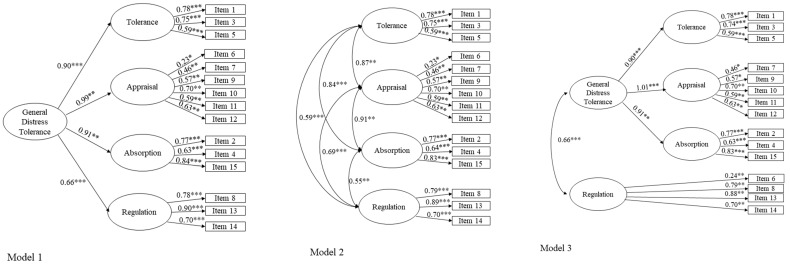
- In confirmatory factor analysis, all five tested DTS models showed adequate fit; the authors retained Model 5 because it matched the most similar clinical sample and had one of the best fits.
- The DTS total score and subscales showed good reliability, with Cronbach’s alpha values ≥ 0.70; however, Item 6 had weak performance, with an item-total correlation of 0.22.
- DTS scores were negatively and significantly correlated with anxiety, depression, and negative affect, and positively and significantly correlated with positive affect; the regulation subscale was the exception for positive affect, where the correlation was nonsignificant.
- DTS total and subscale scores did not correlate significantly with age; boys had higher DTS total scores than girls and higher appraisal scores than girls.
- In the treatment subsample, DTS mean scores increased significantly from pretreatment to post-treatment, with a large effect size; post-treatment internal consistency remained high, including 0.93 for the total scale.
## Methods
- The study translated and adapted the DTS for Portuguese children, then evaluated it in a clinical sample of 153 children from central Portugal, aged 6–13 years with primary emotional disorders (92.2% anxiety/anxiety-related disorders; 7.8% depression).
- Data came from a randomized controlled trial of the Unified Protocol for Children (UP-C); pretreatment data were used for psychometric analyses, and a subsample receiving UP-C provided post-treatment data for sensitivity-to-change analyses.
- Main analyses included confirmatory factor analysis comparing five competing factor models, Cronbach’s alpha and item-total correlations for internal consistency, Pearson correlations for validity, and pre-post comparison for sensitivity to therapeutic change.
## Limitations
- The authors state that the sample may not have been fully representative of the Portuguese population because it was collected only in the central region of the country.
- The paper states that test–retest reliability could not be examined because of the study design and data collection timing.
- The paper states that convergent validity was not assessed using other distress-tolerance measures or observational/behavioral measures.
- Evident from the text: the validation sample was only children with emotional disorders, so the findings may not generalize to nonclinical or broader youth populations.
Model-written summary. Check it against the paper before relying on it.
Integrity signals
Registry
Cites
Statistics
Figures
Verification
Claims the paper makes
7 Valid · 3 Not valid · 29 Not checked · 73 Own results and interpretations
Some cited sources support this claim and some don’t — read each source’s verdict below.
In the paper
“the engagement in such maladaptive emotional regulation strategies can predispose and perpetuate psychopathological symptoms, particularly those related to anxiety and depression [8,9,25]”
§ The Factorial Structure, Psychometric Properties and Sensitivity to Change of the Distress Tolerance Scale for Children with Emotional Disorders > 4. Discussion
What the sources say
- Not checked — no full text of the sourcecites [8] Bernstein A. Marshall E.C. Zvolensky M.J. Multi-Method Evaluation of Distress Tolerance Measures and Construct(s): Concurrent Relations to Mood and Anxiety Psychopathology and Quality of Life J. Exp. Psychopathol. 2011 2 386 399 10.5127/jep.006610 source
- Partly supportedcites [9] Keough M.E. Riccardi C.J. Timpano K.R. Mitchell M.A. Schmidt N.B. Anxiety Symptomatology: The Association with Distress Tolerance and Anxiety Sensitivity Behav. Ther. 2010 41 567 574 10.1016/j.beth.2010.04.002 21035619 PMC4490862 sourceExperimental — accuracy not yet measured
The text indexed under Abstract proposes that avoidance and similar coping strategies can maintain anxiety problems, and the Discussion links low distress tolerance with anxiety symptoms. These passages support the anxiety portion, but frame the mechanism as a possibility rather than establishing that such strategies cause symptoms. They do not establish the claimed effect on depression. (LLM, conf=0.85)
- Disputedcites [25] Cummings J.R. Bornovalova M.A. Ojanen T. Hunt E. MacPherson L. Lejuez C. Time Doesn’t Change Everything: The Longitudinal Course of Distress Tolerance and its Relationship with Externalizing and Internalizing Symptoms during Early Adolescence J. Abnorm. Child Psychol. 2013 41 735 748 10.1007/s10802-012-9704-x 23329354 PMC4158838 sourceExperimental — accuracy not yet measured
The Discussion’s “Cross-Sectional and Prospective Relationships with INT” section reports an association between low distress tolerance and anxiety symptoms, but not depression symptoms. It found no significant longitudinal relationship with change in either condition and describes the associations as correlates rather than causal antecedents. The paper therefore does not support the claim that this factor predisposes people to, or perpetuates, anxiety and depression symptoms. (LLM, conf=0.86)
Checked by a reasoning model — may be wrong.
plainstates a cause- Asserted: passes — The authors put it forward as true.
- Checkable: passes — It can be checked against evidence.
- Load-bearing: passes — The paper’s conclusions depend on it.
- Based: passes — The paper gives a reason why it holds.
The cited sources support only part of this claim — read each source’s verdict below.
In the paper
“Lower distress tolerance levels were found to be associated with more severe internalizing symptoms”
§ The Factorial Structure, Psychometric Properties and Sensitivity to Change of the Distress Tolerance Scale for Children with Emotional Disorders > 1. Introduction > 1.2. The Distress Tolerance Scale for Youths
What the sources say
- Not checked — no full text of the sourcecites [1] Simons J.S. Gaher R.M. The Distress Tolerance Scale: Development and Validation of a Self-Report Measure Motiv. Emot. 2005 29 83 102 10.1007/s11031-005-7955-3 source
- Partly supportedcites [25] Cummings J.R. Bornovalova M.A. Ojanen T. Hunt E. MacPherson L. Lejuez C. Time Doesn’t Change Everything: The Longitudinal Course of Distress Tolerance and its Relationship with Externalizing and Internalizing Symptoms during Early Adolescence J. Abnorm. Child Psychol. 2013 41 735 748 10.1007/s10802-012-9704-x 23329354 PMC4158838 sourceExperimental — accuracy not yet measured
The Discussion section on cross-sectional and prospective relationships with internalizing symptoms reports that lower distress tolerance was significantly associated with anxiety symptoms, but not major depressive disorder symptoms. The Results section adds that the anxiety association was driven by adolescent girls. Thus, the claim is supported for one component of internalizing symptoms, but is broader than this study’s finding. (LLM, conf=0.88)
- Partly supportedcites [29] Daughters S.B. Reynolds E.K. MacPherson L. Kahler C.W. Danielson C.K. Zvolensky M. Lejuez C.W. Distress tolerance and early adolescent externalizing and internalizing symptoms: The moderating role of sex and ethnicity Behav. Res. Ther. 2009 47 198 205 10.1016/j.brat.2008.12.001 19135649 PMC2653593 sourceExperimental — accuracy not yet measured
Results §3.4.3 and the Discussion report that lower distress tolerance was associated with more internalizing symptoms among female youth. The claim omits this gender qualification: the study found no such association among male youth. Page numbers were not supplied in the passages. (LLM, conf=0.90)
- Not checked — no full text of the sourcecites [51] Dennhardt A.A. Murphy J.G. Associations between depression, distress tolerance, delay discounting, and alcohol-related problems in European American and African American college students Psychol. Addict. Behav. 2011 25 595 604 10.1037/a0025807 21988480 source
plainstates an association- Asserted: passes — The authors put it forward as true.
- Checkable: passes — It can be checked against evidence.
- Load-bearing: unclear — It is unclear whether the paper’s conclusions depend on it.
- Based: passes — The paper gives a reason why it holds.
Every source the paper cites for this claim was checked and supports it.
In the paper
“Since distress tolerance is a transdiagnostic mechanism (e.g., [20]), transdiagnostic interventions can be expected to increase levels of distress tolerance.”
§ The Factorial Structure, Psychometric Properties and Sensitivity to Change of the Distress Tolerance Scale for Children with Emotional Disorders > 1. Introduction > 1.3. Transdiagnostic CBT Intervention Aimed at Distress Tolerance
What the sources say
- Supportedcites [20] McHugh R.K. Reynolds E.K. Leyro T.M. Otto M.W. An Examination of the Association of Distress Intolerance and Emotion Regulation with Avoidance Cogn. Ther. Res. 2013 37 363 367 10.1007/s10608-012-9463-6 PMC7410348 32773909 source
The citation is attached to the premise that distress tolerance is transdiagnostic, not to the citing authors’ subsequent prediction about interventions. The source’s Discussion describes distress intolerance as an important transdiagnostic factor and says it is relevant across a range of psychological functioning. (LLM, conf=0.92)
hedgedstates a possible cause- Asserted: passes — The authors put it forward as true.
- Checkable: passes — It can be checked against evidence.
- Load-bearing: passes — The paper’s conclusions depend on it.
- Based: passes — The paper gives a reason why it holds.
- Supported
The cited sources support only part of this claim — read each source’s verdict below.
In the paper
“previous studies have shown that low distress tolerance is a predictor of more severe anxiety and depressive symptoms in nonclinical samples of children and adolescents”
§ The Factorial Structure, Psychometric Properties and Sensitivity to Change of the Distress Tolerance Scale for Children with Emotional Disorders > 1. Introduction
What the sources say
- Partly supportedcites [24] Timpano K.R. Buckner J.D. Richey J.A. Murphy D.L. Schmidt N.B. Exploration of anxiety sensitivity and distress tolerance as vulnerability factors for hoarding behaviors Depress. Anxiety 2009 26 343 353 10.1002/da.20469 19123454 PMC2770430 sourceExperimental — accuracy not yet measured
The Discussion (page unavailable) says depressive symptoms have been found to be related to low distress tolerance. But the paper's Study 2 and 3 Methods describe undergraduate samples, not nonclinical samples of children and adolescents, and its Results examine hoarding symptoms rather than whether low distress tolerance predicts the severity of both anxiety and depressive symptoms. (LLM, conf=0.86)
- Partly supportedcites [25] Cummings J.R. Bornovalova M.A. Ojanen T. Hunt E. MacPherson L. Lejuez C. Time Doesn’t Change Everything: The Longitudinal Course of Distress Tolerance and its Relationship with Externalizing and Internalizing Symptoms during Early Adolescence J. Abnorm. Child Psychol. 2013 41 735 748 10.1007/s10802-012-9704-x 23329354 PMC4158838 sourceExperimental — accuracy not yet measured
In this community sample, the Results (Multivariate Growth Models; page unavailable) found that low distress tolerance was associated with anxiety symptoms at Year 1, particularly among girls. The Discussion (Cross-Sectional and Prospective Relationships with INT; page unavailable) says it was not associated with depressive symptoms and did not predict change in either anxiety or depressive symptoms over time. The claim therefore overstates both the symptoms covered and the evidence for prediction. (LLM, conf=0.90)
- Not checked — no full text of the sourcecites [26] Bardeen J.R. Fergus T.A. Orcutt H.K. Testing a Hierarchical Model of Distress Tolerance J. Psychopathol. Behav. Assess. 2013 35 495 505 10.1007/s10862-013-9359-0 source
- Not checked — no full text of the sourcecites [27] Bardeen J.R. Tull M.T. Dixon-Gordon K.L. Stevens E.N. Gratz K.L. Attentional Control as a Moderator of the Relationship between Difficulties Accessing Effective Emotion Regulation Strategies and Distress Tolerance J. Psychopathol. Behav. Assess. 2015 37 79 84 10.1007/s10862-014-9433-2 source
plainstates a cause- Asserted: passes — The authors put it forward as true.
- Checkable: passes — It can be checked against evidence.
- Load-bearing: unclear — It is unclear whether the paper’s conclusions depend on it.
- Based: passes — The paper gives a reason why it holds.
- Partly supported
The cited sources support only part of this claim — read each source’s verdict below.
In the paper
“Recently, with the emergence of transdiagnostic approaches, distress tolerance is viewed as an important transdiagnostic factor underlying psychopathology; namely, emotional disorders (e.g., [8,69]), including in childhood [25,50].”
§ The Factorial Structure, Psychometric Properties and Sensitivity to Change of the Distress Tolerance Scale for Children with Emotional Disorders > 4. Discussion > 4.1. Study Novelty and Relevance
What the sources say
- Not checked — no full text of the sourcecites [8] Bernstein A. Marshall E.C. Zvolensky M.J. Multi-Method Evaluation of Distress Tolerance Measures and Construct(s): Concurrent Relations to Mood and Anxiety Psychopathology and Quality of Life J. Exp. Psychopathol. 2011 2 386 399 10.5127/jep.006610 source
- Supportedcites [69] Leyro T.M. Zvolensky M.J. Bernstein A. Distress tolerance and psychopathological symptoms and disorders: A review of the empirical literature among adults Psychol. Bull. 2010 136 576 600 10.1037/a0019712 20565169 PMC2891552 source
The Abstract describes distress tolerance as a purported contributor to anxiety, mood, and other disorders. The section “Specific versus common risk marker and factor?” says some facets may have transdiagnostic relevance. The citing sentence attaches separate citations to the childhood qualification; this adult-focused review supports the preceding theoretical characterization, not a childhood finding. (LLM, conf=0.86)
- Partly supportedcites [25] Cummings J.R. Bornovalova M.A. Ojanen T. Hunt E. MacPherson L. Lejuez C. Time Doesn’t Change Everything: The Longitudinal Course of Distress Tolerance and its Relationship with Externalizing and Internalizing Symptoms during Early Adolescence J. Abnorm. Child Psychol. 2013 41 735 748 10.1007/s10802-012-9704-x 23329354 PMC4158838 sourceExperimental — accuracy not yet measured
The paper’s Results (Multivariate Growth Models) link low distress tolerance with anxiety symptoms in early adolescence, particularly among girls, supporting its relevance to youth emotional disorders. But the Discussion (Cross-Sectional and Prospective Relationships with INT) finds no longitudinal relationship with changes in anxiety or depression symptoms and describes the associations as correlates rather than causal antecedents. It therefore does not establish distress tolerance as an underlying factor for emotional disorders generally. (LLM, conf=0.86)
- Not checked — no full text of the sourcecites [50] Tonarely N.A. Ehrenreich-May J. Confirming the Factor Structure and Validity of the Distress Tolerance Scale (DTS) in Youth Child Psychiatry Hum. Dev. 2020 51 514 526 10.1007/s10578-019-00935-z 31637572 source
plainstates an association- Asserted: passes — The authors put it forward as true.
- Checkable: passes — It can be checked against evidence.
- Load-bearing: passes — The paper’s conclusions depend on it.
- Based: passes — The paper gives a reason why it holds.
56 more claims
Create a free account to see all 112 claims and every source verdict.
- Probably not a substantial claim. 30
- It may state two separate claims as one. 28
- The quote only partly states this claim. 1
Statistics recomputed
Every reported test result, recomputed from its test statistic and degrees of freedom. A result shows as not adding up only once an independent check has confirmed it.
- Consistentχ²(13) = 21.6reported p = .06 · recomputed p = .062
“χ2 (13) =21.6, p = .06”
- Consistentχ²(13) = 20.9reported p = .07 · recomputed p = .075
“χ2 (13) = 20.9, p = .07”
- Consistentχ²(13) = 21.9reported p = .06 · recomputed p = .057
“χ2 (13) = 21.9, p = .06”
- Consistentχ²(13) = 21.6reported p = .06 · recomputed p = .062
“χ2 (13) = 21.6, p = .06”
Self-check
Percentages, sums and reported differences re-computed from the paper’s own numbers.
Each contradiction between two passages listed here was confirmed by an independent check.
Rated minor: it would not touch a result — a value no result rests on, a p-value that stays on the same side of the significance level, or a conflict that is clerical, resolved elsewhere in the paper, or outside its own findings.
In the paper
§ The Factorial Structure, Psychometric Properties and Sensitivity to Change of the Distress Tolerance Scale for Children with Emotional Disorders > Abstract
“validated among 153 children aged 6–13 years with emotional disorders.”
§ The Factorial Structure, Psychometric Properties and Sensitivity to Change of the Distress Tolerance Scale for Children with Emotional Disorders > 4. Discussion
“Therefore, these results seem to have theoretical implications for the understanding of distress tolerance in children aged 6 to 12 years old.”
Citations
Cites
Hu, L.-T., & Bentler, P. M. (1998) · Psychological Methods · doi:10.1037/1082-989x.3.4.424 · Cited by 12,298 · cited 1×
“The comparative fit index (CFI), the root mean square error of approximation (RMSEA) and the normalized root mean square residual (SRMR) values were used to determine model fit using the following criteria: CFI ≥ 0.90, Tucker– Lewis index (TLI) ≥ 0.90, RMSEA ≤ 0.08 and SRMR ≤ 0.06 [61,62].”
MethodInfluentialSchermelleh-Engel, K., Moosbrugger, H., & Müller, H. (2003) · Department of Psychology - University of Koblenz-Landau · doi:10.23668/psycharchives.12784 · Cited by 8,975
Akaike, H. (1987) · Psychometrika · doi:10.1007/bf02294359 · Cited by 5,264
Measuring experiential avoidance: A preliminary test of a working model
Hayes, S. C., Strosahl, K., Wilson, K. G., Bissett, R. T., Pistorello, J., Toarmino, D., Polusny, M. A., Dykstra, T. A., Batten, S. V., Bergan, J., et al. (2004) · The Psychological Record · doi:10.1007/bf03395492 · Cited by 2,140
Positive and negative affectivity and their relation to anxiety and depressive disorders.
Watson, D., Clark, L. A., & Carey, G. (1988) · Journal of Abnormal Psychology · doi:10.1037/0021-843x.97.3.346 · Cited by 1,795 · cited 1×
“Concurrently, children with depression and anxiety exhibit higher levels of negative affect and lower levels of positive affect [67]; hence, these children are more likely to have low distress tolerance Thus, the results found in this study support the validity of the DTS. Aim 3.”
ResultThe Distress Tolerance Scale: Development and Validation of a Self-Report Measure
Simons, J. S., & Gaher, R. M. (2005) · Motivation and Emotion · doi:10.1007/s11031-005-7955-3 · Cited by 1,730 · cited 10×
“…(3) absorption, which assesses the extent to which individuals are controlled by their emotional distress and are consequently unable to complete other tasks; and (4) regulation, which assesses the efforts and strategies that individuals use to relieve distress and regulate themselves [1,38,39].”
BackgroundMethodInfluentialFocus on psychometrics. Aspects of item analysis
Ferketich, S. (1991) · Research in Nursing & Health · doi:10.1002/nur.4770140211 · Cited by 898 · cited 1×
“The item-total correlation should be greater than 0.30 [66].”
BackgroundInfluentialLeyro, T. M., Zvolensky, M. J., & Bernstein, A. (2010) · Psychological Bulletin · doi:10.1037/a0019712 · Cited by 868
Distress tolerance and duration of past smoking cessation attempts.
Brown, R. A., Lejuez, C. W., Kahler, C. W., & Strong, D. R. (2002) · Journal of Abnormal Psychology · doi:10.1037//0021-843x.111.1.180 · Cited by 627
Toward a unified treatment for emotional disorders - republished Article
Barlow, D. H., Allen, L. B., & Choate, M. L. (2016) · Behavior Therapy · doi:10.1016/j.beth.2016.11.005 · Cited by 536 · cited 2×
“Transdiagnostic CBT interventions target the common processes or mechanisms underlying psychopathology (e.g., [52]).”
BackgroundEbesutani, C., Reise, S. P., Chorpita, B. F., Ale, C., Regan, J., Young, J., Higa-McMillan, C., & Weisz, J. R. (2012) · Psychological Assessment · doi:10.1037/a0027283 · Cited by 439 · cited 1×
“The Positive and Negative Affect Schedule for Children-Short Form (PANAS-C-SF; [59,60]) is a 10-item self-report scale that examines children’s positive and negative affect.”
BackgroundPain intolerance in opioid-maintained former opiate addicts: effect of long-acting maintenance agent
Compton, P., Charuvastra, V. C., & Ling, W. (2001) · Drug and Alcohol Dependence · doi:10.1016/s0376-8716(00)00200-3 · Cited by 311
Anxiety symptomatology: the association with distress tolerance and anxiety sensitivity
Keough, M. E., Riccardi, C. J., Timpano, K. R., Mitchell, M. A., & Schmidt, N. B. (2010) · Behavior Therapy · doi:10.1016/j.beth.2010.04.002 · Cited by 284
Forsyth, J. P., Parker, J. D., & Finlay, C. G. (2003) · Addictive Behaviors · doi:10.1016/s0306-4603(02)00216-2 · Cited by 206 · cited 1×
“Distress tolerance has been evaluated through broader related constructs, such as experiential avoidance [32,33] It has also been also frequently assessed through behavior analysis, particularly through persistence in the performance of physically or psychologically stressful tasks [2,34–37].”
BackgroundAn Emerging Understanding of the Reflective (Meta-) Experience of Mood
Mayer, J. D., & Stevens, A. A. (1994) · Journal of Research in Personality · doi:10.1006/jrpe.1994.1025 · Cited by 203 · cited 1×
“Distress tolerance has been evaluated through broader related constructs, such as experiential avoidance [32,33] It has also been also frequently assessed through behavior analysis, particularly through persistence in the performance of physically or psychologically stressful tasks [2,34–37].”
BackgroundDaughters, S. B., Reynolds, E. K., MacPherson, L., Kahler, C. W., Danielson, C. K., Zvolensky, M., & Lejuez, C. W. (2009) · Behaviour Research and Therapy · doi:10.1016/j.brat.2008.12.001 · Cited by 203 · cited 3×
“Globally, these results are in line with our hypotheses and with those postulated in previous studies (e.g., [25,28,29]).”
BackgroundResultMarshall‐Berenz, E. C., Vujanovic, A. A., Bonn‐Miller, M. O., Bernstein, A., & Zvolensky, M. J. (2010) · Journal of Traumatic Stress · doi:10.1002/jts.20568 · Cited by 158
Dennhardt, A. A., & Murphy, J. G. (2011) · Psychology of Addictive Behaviors · doi:10.1037/a0025807 · Cited by 157 · cited 1×
“Lower distress tolerance levels were found to be associated with more severe internalizing symptoms, which is consistent with the results of previous studies with both youth and adult samples (e.g., [1,25,29,51]).”
ResultTimpano, K. R., Buckner, J. D., Richey, J. A., Murphy, D. L., & Schmidt, N. B. (2009) · Depression and Anxiety · doi:10.1002/da.20469 · Cited by 151 · cited 1×
“…shown that low distress tolerance is a predictor of more severe anxiety and depressive symptoms in nonclinical samples of children and adolescents [24–27], and that is associated with higher levels of externalizing problems (such as alcohol use and delinquent behaviors) among nonclinical samples…”
BackgroundLongitudinal Relations among Depression, Stress, and Coping in High Risk Youth
Galaif, E. R., Sussman, S., Chou, C.-P., & Wills, T. A. (2003) · Journal of Youth and Adolescence · doi:10.1023/a:1023028809718 · Cited by 144
Kennedy, S. M., Bilek, E. L., & Ehrenreich-May, J. (2019) · Behavior Modification · doi:10.1177/0145445517753940 · Cited by 129 · cited 2×
“The UP-C has already demonstrated its efficacy in treating children’s emotional disorders within American children and their parents [48], and feasibility studies have been conducted in Portugal [55] and Japan [56], confirming that the UP-C was viable and accepted by Portuguese and Japanese…”
BackgroundUnified Protocol for Transdiagnostic Treatment of Emotional Disorders: Therapist Guide
Barlow, D. H., Farchione, T. J., Sauer-Zavala, S., Murray Latin, H., Ellard, K. K., Bullis, J. R., Bentley, K. H., Boettcher, H. T., & Cassiello-Robbins, C. (2017) · doi:10.1093/med-psych/9780190685973.001.0001 · Cited by 124
The role of negative affect in risk for early lapse among low distress tolerance smokers
Abrantes, A. M., Strong, D. R., Lejuez, C. W., Kahler, C. W., Carpenter, L. L., Price, L. H., Niaura, R., & Brown, R. A. (2008) · Addictive Behaviors · doi:10.1016/j.addbeh.2008.06.018 · Cited by 113 · cited 1×
“Additionally, some studies have highlighted the potential that distress tolerance is a moderating variable in the relationship between negative affect and the development of maladaptive symptoms and behaviors [21–23].”
BackgroundCummings, J. R., Bornovalova, M. A., Ojanen, T., Hunt, E., MacPherson, L., & Lejuez, C. (2013) · Journal of Abnormal Child Psychology · doi:10.1007/s10802-012-9704-x · Cited by 111 · cited 6×
“Lower distress tolerance levels were found to be associated with more severe internalizing symptoms, which is consistent with the results of previous studies with both youth and adult samples (e.g., [1,25,29,51]).”
BackgroundResultInfluentialThe Role of Distress Tolerance in the Use of Specific Emotion Regulation Strategies
Jeffries, E. R., McLeish, A. C., Kraemer, K. M., Avallone, K. M., & Fleming, J. B. (2016) · Behavior Modification · doi:10.1177/0145445515619596 · Cited by 105 · cited 2×
“…studies have shown that low distress tolerance significantly predicts the use of maladaptive emotion regulation strategies, including the suppression of emotions, avoidance, rumination and substance abuse [14,16,17], which implies that distress tolerance may influence emotion regulation styles [1].”
BackgroundKo, C.-H., Yen, J.-Y., Yen, C.-F., Chen, C.-S., & Wang, S.-Y. (2008) · CyberPsychology & Behavior · doi:10.1089/cpb.2007.0095 · Cited by 102 · cited 1×
“This result is partially consistent with previous studies, in either youth or adult samples, in which females reported lower levels of distress tolerance than males [1,38,50,68].”
ResultAn Examination of the Association of Distress Intolerance and Emotion Regulation with Avoidance
McHugh, R. K., Reynolds, E. K., Leyro, T. M., & Otto, M. W. (2013) · Cognitive Therapy and Research · doi:10.1007/s10608-012-9463-6 · Cited by 99 · cited 2×
“Since distress tolerance is a transdiagnostic mechanism (e.g., [20]), transdiagnostic interventions can be expected to increase levels of distress tolerance.”
BackgroundZvolensky (2001) · doi:10.1016/s0306-4603(01)00242-8 · Cited by 96 · cited 2×
“On the other hand, distress tolerance refers to individuals’ ability to experience and endure negative and uncomfortable psychological states instead of avoiding them [1], as well as the capacity to persist in goal-directed tasks when faced with distress [2].”
BackgroundBernstein, A., Marshall, E. C., & Zvolensky, M. J. (2011) · Journal of Experimental Psychopathology · doi:10.5127/jep.006610 · Cited by 88 · cited 3×
“In turn, the engagement in such maladaptive emotional regulation strategies can predispose and perpetuate psychopathological symptoms, particularly those related to anxiety and depression [8,9,25] which in turn sustains high levels of negative affect and low levels of positive affect.”
BackgroundVujanovic, A. A., Hart, A. S., Potter, C. M., Berenz, E. C., Niles, B., & Bernstein, A. (2013) · Journal of Psychopathology and Behavioral Assessment · doi:10.1007/s10862-012-9325-2 · Cited by 88 · cited 1×
“Additionally, some studies have highlighted the potential that distress tolerance is a moderating variable in the relationship between negative affect and the development of maladaptive symptoms and behaviors [21–23].”
BackgroundEmotion Regulation Deficits as Mediators between Trauma Exposure and Borderline Symptoms
Gaher, R. M., Hofman, N. L., Simons, J. S., & Hunsaker, R. (2013) · Cognitive Therapy and Research · doi:10.1007/s10608-012-9515-y · Cited by 84
Evaluating Distress Tolerance Measures: Interrelations and Associations with Impulsive Behaviors
Anestis, M. D., Lavender, J. M., Marshall-Berenz, E. C., Gratz, K. L., Tull, M. T., & Joiner, T. E. (2012) · Cognitive Therapy and Research · doi:10.1007/s10608-011-9377-8 · Cited by 78 · cited 2×
“…research has indicated that lower levels of distress tolerance can be considered an individual variable that contributes to the development and/or maintenance of a vast range of psychopathological symptoms and diagnoses (e.g., [4–7]), including anxiety and depressive symptoms and disorders [8,9].”
BackgroundAllan, N. P., Macatee, R. J., Norr, A. M., & Schmidt, N. B. (2014) · Cognitive Therapy and Research · doi:10.1007/s10608-014-9623-y · Cited by 78 · cited 1×
“As a result, several authors have identified distress tolerance as a transdiagnostic marker or risk factor for a wide range of psychopathologies [10–12], including emotional disorders, impacting both the intensity of experience and the use of coping strategies [13–15].”
BackgroundThe impact of psychological distress tolerance in the treatment of depression
Williams, A. D., Thompson, J., & Andrews, G. (2013) · Behaviour Research and Therapy · doi:10.1016/j.brat.2013.05.005 · Cited by 77 · cited 1×
“Williams and colleagues [19], as well as McHugh and colleagues [20], have also proposed that because distress tolerance is a possible transdiagnostic vulnerability factor, it may be associated with changes in symptoms across treatment, which highlights the need to measure this construct throughout…”
BackgroundBardeen, J. R., Tull, M. T., Dixon-Gordon, K. L., Stevens, E. N., & Gratz, K. L. (2015) · Journal of Psychopathology and Behavioral Assessment · doi:10.1007/s10862-014-9433-2 · Cited by 73 · cited 1×
“…that low distress tolerance is a predictor of more severe anxiety and depressive symptoms in nonclinical samples of children and adolescents [24–27], and that is associated with higher levels of externalizing problems (such as alcohol use and delinquent behaviors) among nonclinical samples of…”
BackgroundTesting a Hierarchical Model of Distress Tolerance
Bardeen, J. R., Fergus, T. A., & Orcutt, H. K. (2013) · Journal of Psychopathology and Behavioral Assessment · doi:10.1007/s10862-013-9359-0 · Cited by 72
Sandín, B., Chorot, P., & Valiente, R. M. (2012) · Revista de Psicopatología y Psicología Clínica · doi:10.5944/rppc.vol.17.num.3.2012.11839 · Cited by 69
Emotional distress tolerance across anxiety disorders
Michel, N. M., Rowa, K., Young, L., & McCabe, R. E. (2016) · Journal of Anxiety Disorders · doi:10.1016/j.janxdis.2016.04.009 · Cited by 69 · cited 1×
“As a result, several authors have identified distress tolerance as a transdiagnostic marker or risk factor for a wide range of psychopathologies [10–12], including emotional disorders, impacting both the intensity of experience and the use of coping strategies [13–15].”
BackgroundDistress tolerance and symptoms of depression: A review and integration of literatures
Lass, A. N. S., & Winer, E. S. (2020) · Clinical Psychology: Science and Practice · doi:10.1111/cpsp.12336 · Cited by 62 · cited 2×
“…studies have shown that low distress tolerance significantly predicts the use of maladaptive emotion regulation strategies, including the suppression of emotions, avoidance, rumination and substance abuse [14,16,17], which implies that distress tolerance may influence emotion regulation styles [1].”
BackgroundSandín, B., Simons, J., Valiente, R., Simons, R., & Chorot, P. (2017) · Psicothema · doi:10.7334/psicothema2016.239 · Cited by 53 · cited 1×
“…in Simons and Gaher’s study [1], and when translated into several other languages, such as Persian [40], Turkish [41], French [42], Spanish [43,44], Pakistani [45], Polish [46] and Italian [3], as well as in several clinical samples, such as patients with obsessive compulsive disorders…”
BackgroundSandin, B., Sánchez-Arribas, C., Chorot, P., & Valiente, R. M. (2015) · Behaviour Research and Therapy · doi:10.1016/j.brat.2015.01.005 · Cited by 52 · cited 1×
“As a result, several authors have identified distress tolerance as a transdiagnostic marker or risk factor for a wide range of psychopathologies [10–12], including emotional disorders, impacting both the intensity of experience and the use of coping strategies [13–15].”
BackgroundZegel, M., Tran, J. K., & Vujanovic, A. A. (2019) · Psychiatry Research · doi:10.1016/j.psychres.2019.112633 · Cited by 48 · cited 2×
“…studies have shown that low distress tolerance significantly predicts the use of maladaptive emotion regulation strategies, including the suppression of emotions, avoidance, rumination and substance abuse [14,16,17], which implies that distress tolerance may influence emotion regulation styles [1].”
BackgroundBornovalova, M. A., Matusiewicz, A., & Rojas, E. (2011) · Comprehensive Psychiatry · doi:10.1016/j.comppsych.2010.11.005 · Cited by 39
Brown, R. J., Burton, A. L., & Abbott, M. J. (2022) · Journal of Clinical Psychology · doi:10.1002/jclp.23370 · Cited by 39 · cited 1×
“…(3) absorption, which assesses the extent to which individuals are controlled by their emotional distress and are consequently unable to complete other tasks; and (4) regulation, which assesses the efforts and strategies that individuals use to relieve distress and regulate themselves [1,38,39].”
BackgroundValidation of the distress tolerance scale-short form in obsessive compulsive disorder
Garner, L. E., Van Kirk, N., Tifft, E. D., Krompinger, J. W., Mathes, B. M., Fraire, M., Falkenstein, M. J., Brennan, B. P., Crosby, J. M., & Elias, J. A. (2018) · Journal of Clinical Psychology · doi:10.1002/jclp.22554 · Cited by 37 · cited 1×
“…Gaher’s study [1], and when translated into several other languages, such as Persian [40], Turkish [41], French [42], Spanish [43,44], Pakistani [45], Polish [46] and Italian [3], as well as in several clinical samples, such as patients with obsessive compulsive disorders [47] and depression [48].”
BackgroundDaughters, S. B., Gorka, S. M., Magidson, J. F., MacPherson, L., & Seitz‐Brown, C. J. (2013) · Journal of Adolescence · doi:10.1016/j.adolescence.2013.08.008 · Cited by 35 · cited 1×
“Distress tolerance in children and adolescents has also mostly been assessed through behavioral measures [25,49].”
BackgroundConfirming the Factor Structure and Validity of the Distress Tolerance Scale (DTS) in Youth
Tonarely, N. A., & Ehrenreich-May, J. (2020) · Child Psychiatry & Human Development · doi:10.1007/s10578-019-00935-z · Cited by 33 · cited 10×
“Tonarely and Ehrenreich-May [50] also examined the factor structure of the DTS in clinical ( n = 165) and community ( n = 117) samples of American children and adolescents (10–19 years old).”
BackgroundResultInfluentialYou, J., & Leung, F. (2012) · Journal of Psychopathology and Behavioral Assessment · doi:10.1007/s10862-011-9256-3 · Cited by 26 · cited 8×
“Nonetheless, contrary to previous studies with adult samples, the authors postulated that only three of the four first-order factors comprised the general distress tolerance factor: tolerance, appraisal and absorption [38].”
BackgroundMethodResultInfluentialRaykos, B. C., Byrne, S. M., & Watson, H. (2009) · Eating Behaviors · doi:10.1016/j.eatbeh.2009.07.001 · Cited by 26 · cited 2×
“…conceptualized as a trans-diagnostic vulnerability factor that contributes to the development and/or maintenance of psychopathology (e.g., [4–7]), understanding of how one’s emotions operate and their adaptative function (through psychoeducation techniques) and learning techniques that…”
BackgroundReliability and validity of the persian version of distress tolerance scale.
(2010) · PubMed Central · Cited by 26
Caiado, B., Góis, A., Pereira, B., Canavarro, M. C., & Moreira, H. (2022) · International Journal of Environmental Research and Public Health · doi:10.3390/ijerph19031782 · Cited by 26 · cited 1×
“…has already demonstrated its efficacy in treating children’s emotional disorders within American children and their parents [48], and feasibility studies have been conducted in Portugal [55] and Japan [56], confirming that the UP-C was viable and accepted by Portuguese and Japanese populations.”
BackgroundSelf-citationFujisato, H., Kato, N., Namatame, H., Ito, M., Usami, M., Nomura, T., Ninomiya, S., & Horikoshi, M. (2021) · Frontiers in Psychology · doi:10.3389/fpsyg.2021.731819 · Cited by 17 · cited 1×
“…has already demonstrated its efficacy in treating children’s emotional disorders within American children and their parents [48], and feasibility studies have been conducted in Portugal [55] and Japan [56], confirming that the UP-C was viable and accepted by Portuguese and Japanese populations.”
BackgroundVersion française de la Distress Tolerance Scale et de la Discomfort Intolerance Scale.
Wagener, A., & Blairy, S. (2015) · Canadian Journal of Behavioural Science / Revue canadienne des sciences du comportement · doi:10.1037/cbs0000015 · Cited by 13 · cited 1×
“…properties in Simons and Gaher’s study [1], and when translated into several other languages, such as Persian [40], Turkish [41], French [42], Spanish [43,44], Pakistani [45], Polish [46] and Italian [3], as well as in several clinical samples, such as patients with obsessive compulsive…”
BackgroundDistress Tolerance Scale: A Study of Reliability and Validity
Sargın, A. E., ÖZDEL, K., Çisem, U. T. K. U., Kuru, E., ALKAR5, Ö. Y., & TÜRKÇAPAR, M. H. (2012) · DOAJ (DOAJ: Directory of Open Access Journals) · Cited by 10
Psychometric Properties of the Italian Version of the Distress Tolerance Scale (DTS)
Melli, G., Chiorri, C., Lebruto, A., Drabik, M. J., Puccetti, C., & Caccico, L. (2021) · Journal of Psychopathology and Behavioral Assessment · doi:10.1007/s10862-021-09876-1 · Cited by 9 · cited 2×
“Therefore, distress tolerance is often considered a meta-emotion construct, explaining the differences in predispositions to endure negative emotional states among individuals [3].”
BackgroundA Polish Adaptation and Validation of the Distress Tolerance Scale
Rokosz, M., & Poprawa, R. W. (2021) · Roczniki Psychologiczne · doi:10.18290/rpsych20234-3 · Cited by 8 · cited 1×
“…Gaher’s study [1], and when translated into several other languages, such as Persian [40], Turkish [41], French [42], Spanish [43,44], Pakistani [45], Polish [46] and Italian [3], as well as in several clinical samples, such as patients with obsessive compulsive disorders [47] and depression [48].”
BackgroundRevised Child Anxiety and Depression Scale
Chorpita, B. F., Yim, L. M., Moffitt, C. E., et al. (2000) · PsycTESTS Dataset · doi:10.1037/t03547-000 · Cited by 8
Research works printed but not linked: 9
- Barajas S. Avoidance and psychopathology: A study through an experimental task and its relation with self-report measures Psicopatol. Psicol. Clín. 2015 20 63 73
- Chen P. A Study on the Relationship between Life Stress, Frustration Tolerance and Depressive Tendency in Students at Junior High School Master’s Thesis National Kaohsiung Normal University Kaohsiung, Taiwan 2000
- Huang T. A Study on the Relationship between Parents’ Rearing Practices, Self-Concept, Failure-Tolerance and Deviant Behaviors in Students at Junior High School Master’s Thesis National Kaohsiung Normal University Kaohsiung, Taiwan 1997
- Lejuez C.W. Kahler C.W. Brown R.A. A modified computer version of the paced auditory serial addition task (pasat) as a laboratory-based stressor Behav. Ther. 2003 26 290 293
- Valle M.V. Andrés M.L. Urquijo S. Distress Tolerance Scale: Psychometric properties in argentinian university students Acta Investig. Psicol. 2020 10 66 79 10.22201/fpsi.20074719e.2020.3.359 · DOI
- Azhar M. Saleem S. Mahmood Z. The distress tolerance scale for university students: A validation study Pak. J. Clin. Psychol. 2018 17 31 44
- Payne L. Ellard K. Farchione T. Fairholme C. Barlow D. Clinical Handbook of Psychological Disorders: A Step-by-Step Treatment Manual 5th ed. The Guilford Press New York, NY, USA 2016 Volume 23 7 274
- Tabachnick B.G. Fidell L.S. Using Multivariate Statistics 5th ed. Pearson London, UK 2007
- Nunnally J. Psychometric Theory 2nd ed. McGraw New York, NY, USA 1978
Cited by
Milgram, L., Bigler, M. E., Halliday, E. R., Timpano, K. R., & Ehrenreich, J. T. (2025) · Children · doi:10.3390/children12040529 · Cited by 8
“The DTS full scale and GDT scale have demonstrated good internal consistency and sensitivity to treatment-related changes in youth samples [76,77].”
Cepeda, S. L., Milgram, L., Bigler, M. E., Tonarely, N. A., Lewin, A. B., & Ehrenreich, J. T. (2026) · Journal of Clinical Psychology · doi:10.1002/jclp.70095 · Cited by 2
Kermanipour, M., Joekar, S., Assarian, F., & Zanjani, Z. (2025) · Iranian Journal of Psychiatry and Behavioral Sciences · doi:10.5812/ijpbs-163543 · Cited by 1
“Caiado et al. reported subscale reliabilities of 0.73 - 0.83 with overall reliability of 0.89 (31).”
InfluentialArslan, B. Ş., Balcı, A. S., Çolak, Y., et al. (2026) · BMC Nursing · doi:10.1186/s12912-025-04277-1 · Cited by 1
“The literature also contains findings indicating that the factor structure may change in such adaptations [25, 26].”
Associates of Distress Tolerance among Adolescents: Role of Anger, Worry and Sadness
Unbrin, A., Khanum, S., Shahzadi, M., & Imtiaz, M. (2024) · Pakistan Journal of Humanities and Social Sciences · doi:10.52131/pjhss.2024.v12i1.1946 · Cited by 4
“…emotional states, measured by Distress tolerance is a meta-emotion construct that is thought to be based on four factors: (1) tolerability and aversiveness; (2) evaluation and acceptability; (3) tendency to absorb attention and impair functioning; and (4) control of emotions (Caiado et al., 2024).”
Background
Metadata
- Authors
- Caiado, B., Santos, D., Pereira, B., Góis, A. C., Canavarro, M. C., & Moreira, H.
- Affiliations
- University of Coimbra (PT)
- Center for Research in Neuropsychology and Cognitive-Behavioral Intervention (CINEICC), Faculty of Psychology and Education Sciences, University of Coimbra, 3000-548 Coimbra, Portugal
- Corresponding author
- Moreira, Helena
- Venue
- Children
- Publisher
- MDPI AG
- Published
- 2024-01-17
- Volume
- 11
- Issue
- 1
- Pages
- 115
- ISSN
- 2227-9067 (ISSN-L)
- PMC
- PMC10814728
- OpenAlex
- W4390954852
- Cited by
- 8
- References
- 63
- Citations by year
- 2026: 4 · 2025: 3 · 2024: 1
- FWCI
- 4.00
- Type
- journal article
- Language
- en
- Open access
- gold
- doi.org
- Licence
- Locations
- Children (publishedVersion, cc-by)
- PubMed Central (publishedVersion, cc-by)
- PubMed (publishedVersion)
- DOAJ (DOAJ: Directory of Open Access Journals) (submittedVersion, cc-by-sa)
- Funders
- Portuguese Foundation for Science and Technology (SR&TD Project Grant PTDC/PSI-GER/0689/2020, SFRH/BD/147848/2019, 2020.09015, 2022.13843.BD)
- Topics
- Social Sciences › Psychology › Clinical Psychology › Child and Adolescent Psychosocial and Emotional Development
- Social Sciences › Psychology › Experimental and Cognitive Psychology › Anxiety, Depression, Psychometrics, Treatment, Cognitive Processes
- Social Sciences › Psychology › Clinical Psychology › Personality Disorders and Psychopathology
- Keywords
- Distress Tolerance Scale, distress tolerance, emotionally disturbed children, psychometric validation, factor structure, sensitivity to change, anxiety, depression, positive affect, negative affect, age and sex differences, Portuguese adaptation
About these checks
Registry, retraction, Cites and statistics results are computed, not judged, with one exception: a printed reference that no index lists is read once by a model before it counts as a citation error. Claims are extracted by a model and kept only when their quote appears verbatim in the text; each cited source is then checked, with a model’s help, for whether it says what the claim relies on. Those verdicts can be wrong — read the claim’s quote and the cited source before relying on one.
The claim verdicts this report counts are experimental: their accuracy is not yet measured.
A language model drew the claims from the paper on 2026-10-11, under version 3 of the claim definition (model deepseek-v4.1-flash, prompt extract-v3).
A second model labelled each claim on 2026-10-11 (model jev-1.13-20260917, definition revision gold-guideline-v0.2).
Cited sources are checked with a language model’s help (gpt-6-sol).
Statistics and arithmetic are recomputed, not judged.
Confidence bands are shown only for fields calibrated on our annotated test set. None is calibrated yet, so no band is shown.
What counts as a claim ›How we measure confidence ›How we check this ›
Are you an author, or do you see a problem with this page? Request a review
Data sources
Bibliographic data: Semantic Scholar, OpenAlex, Crossref.
Contains information from the Semantic Scholar Academic Graph Datasets, made available under the ODC Attribution License (ODC-BY 1.0).
Semantic Scholar’s data is described in: Kinney, R., et al. (2023). The Semantic Scholar Open Data Platform. arXiv:2301.10140.
