

A Systematic Review and Meta-Analysis of the Effects of Food Safety and Hygiene Training on Food Handlers
Open accessThe DOI matches its Crossref record; 130 of the 146 references it cites were found in a registry or an index; 23 of the 61 sources its claims cite were checked for support.
Abstract
Systematic review and meta-analysis of food safety and hygiene training interventions among food handlers.
Overview
CoChat Summary
TL;DR
This systematic review and meta-analysis found that food safety and hygiene training improved food handlers’ knowledge, attitudes, and practices, with the largest pooled effect for knowledge. However, the authors caution that high heterogeneity and mostly nonrandomized, observational pre–post studies limit how confidently the improvements can be attributed to training.
Key findings
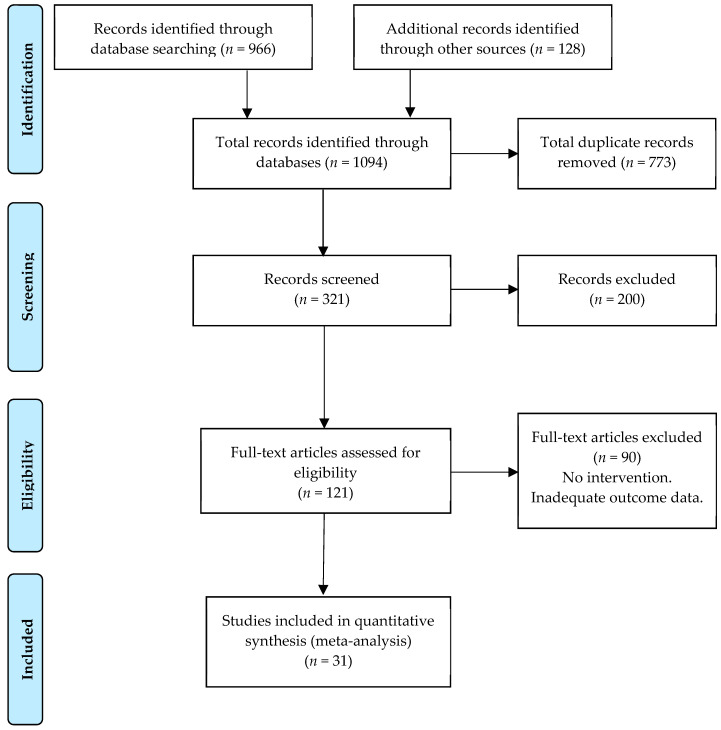
- From 1,094 records, 31 studies were included; 26 reported knowledge outcomes, 12 attitude, and 16 practice. The studies covered food handlers across the food supply chain, including farms, processing facilities, and restaurants.
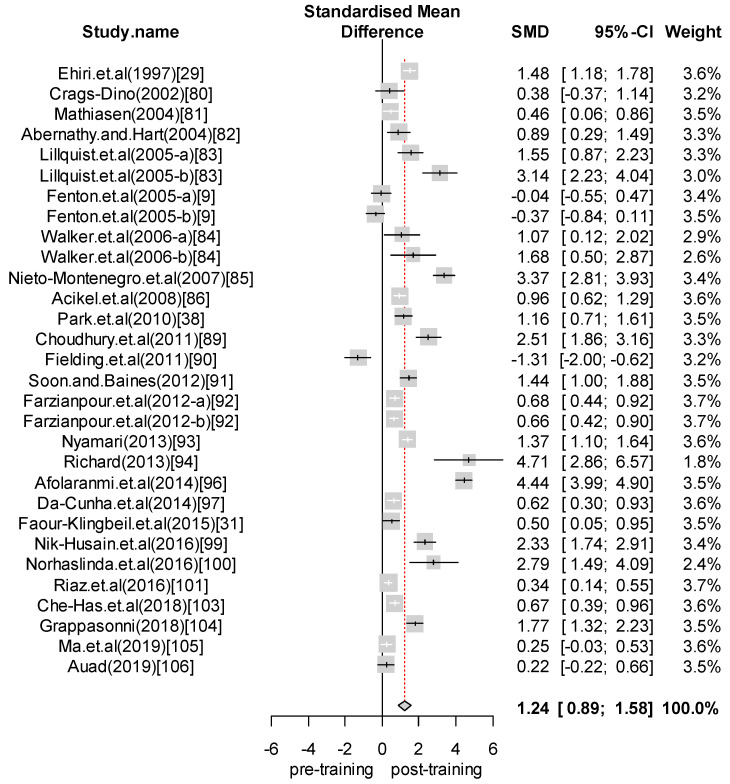
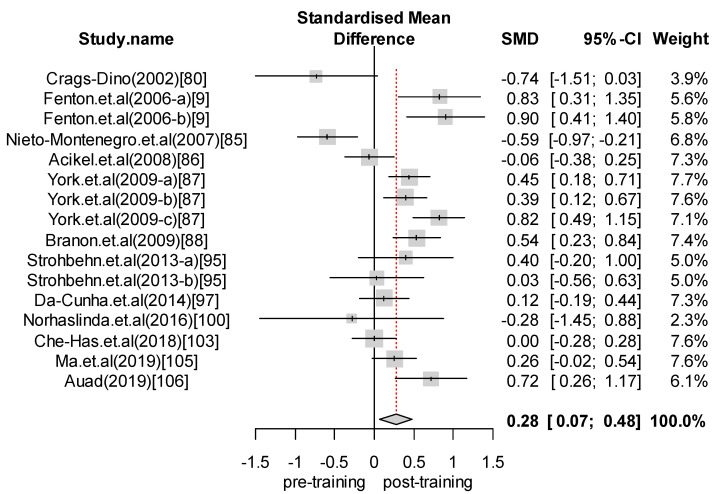
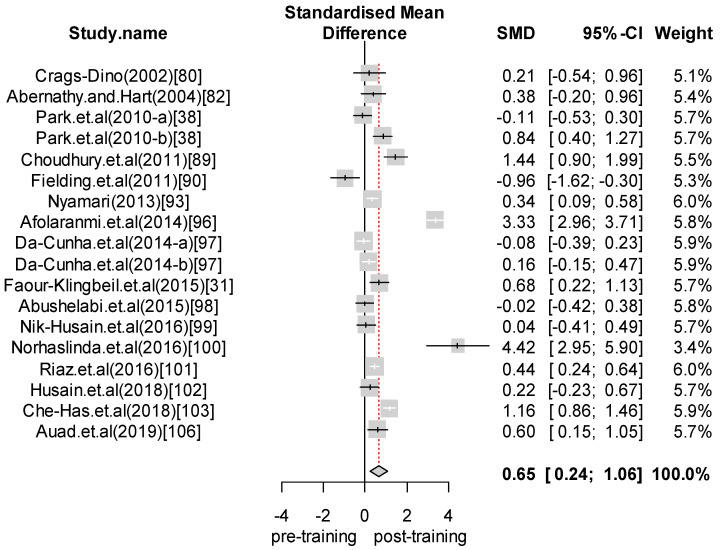
- Pooled effects favored training for all main outcomes: knowledge SMD = 1.24 (95% CI 0.89–1.58), attitude SMD = 0.28 (95% CI 0.07–0.48), and practice SMD = 0.65 (95% CI 0.24–1.06).
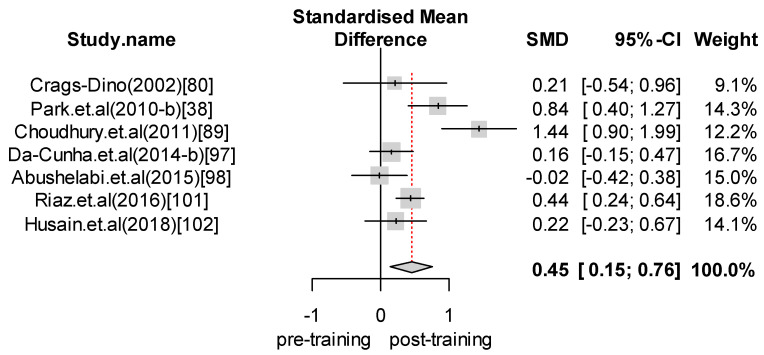
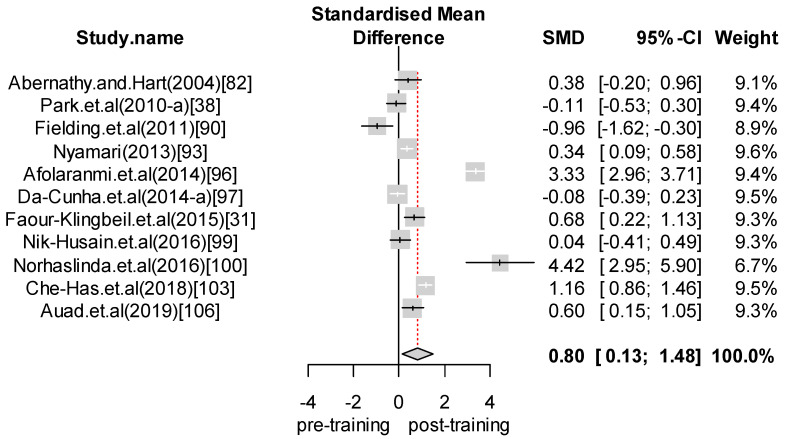
- Practice effects were also positive for both self-reported practices SMD = 0.80 (95% CI 0.13–1.48) and observed practices SMD = 0.45 (95% CI 0.15–0.76).
- Heterogeneity was high for all outcomes: knowledge I² = 95.3%, attitude I² = 77.7%, and practice I² = 94.9%.
Methods
- Systematic review and meta-analysis conducted according to PRISMA and registered in PROSPERO (CRD42019119006).
- Searched PubMed, CENTRAL, Ebsco, Scopus, Web of Science, Google Scholar, and ProQuest for English-language studies published January 1997–December 2019; last search run in April 2020.
- Included RCTs, quasi-RCTs, controlled before-after studies, and nonrandomized pre–post designs; pooled standardized mean differences were calculated with random-effects meta-analysis, with bias assessed using RoB2, ROBINS-I, funnel plots, Egger’s test, and Begg’s test.
Limitations
- Stated by the authors: differences across settings and data-collection/processing approaches, plus the multi-component nature of training, made generalization difficult.
- Stated by the authors: most studies were observational pre–post designs without matched comparison groups, with possible confounding and no randomization, so outcome improvements cannot be causally linked to training.
- Stated by the authors: reliance on KAP limited conclusions about actual behavior, and many studies reported only overall scores/scales, limiting detailed analysis.
- Evident from the text: only 16 of 31 studies measured practice, and some outcomes relied on self-report, which the paper notes can be affected by social desirability bias and possible Hawthorne effects.
Model-written summary. Check it against the paper before relying on it.
Integrity signals
Registry
Cites
Statistics
Figures
Verification
Claims the paper makes
16 Valid · 1 Not valid · 17 Not checked · 51 Own results and interpretations
Some cited sources support this claim and some don’t — read each source’s verdict below.
In the paper
“Considering the summarized effect size, a SMD = 0.28 suggests a moderate effect for the positive attitude of food handlers; this is similar to previous studies [57,58,66].”
§ A Systematic Review and Meta-Analysis of the Effects of Food Safety and Hygiene Training on Food Handlers > 4. Discussion
What the sources say
- Disputedcites [57] Young I. Greig J. Wilhelm B.J. Waddell L.A. Effectiveness of food handler training and education interventions: A systematic review and meta-analysis J. Food Prot. 2019 82 1714 1728 10.4315/0362-028X.JFP-19-108 31536416 sourceExperimental — accuracy not yet measured
Table 4 (FIGURE 5 section) reports the pooled attitude/risk-perception effect sizes as SMD 0.12 (95% CI −0.48, 0.72) for RCTs and SMD 0.38 (95% CI 0.06, 0.70) for nonrandomized trials — no attitude estimate of 0.28 appears anywhere in our copy (searched: '0.28', 'attitudes weighted average SMD', 'standard intervention control group attitudes'). Moreover, the Discussion (FIGURE 5 section) states 'among RCTs, we found no significant effect of training and education interventions on either of these outcomes,' and the Meta-analysis section characterizes the nonrandomized-trial attitude effect only as 'small to moderate,' with a GRADE rating of 'Very low' for both attitude subgroups. Thus the source does not summarize the attitude effect as SMD = 0.28 nor describe it as a moderate positive effect; the attributed number and interpretation conflict with what the paper reports. (LLM, conf=0.75)
Checked by a reasoning model — may be wrong.
- Disputedcites [58] Soon J.M. Baines R. Seaman P. Meta-analysis of food safety training on hand hygiene knowledge and attitudes among food handlers J. Food Prot. 2012 75 793 804 10.4315/0362-028X.JFP-11-502 22488073 sourceExperimental — accuracy not yet measured
The Synthesis of results reports a summary effect size of 0.683 (95% CI 0.523–0.843) for hand hygiene attitudes and self-reported practices, not 0.28. The paper supports an improvement in attitudes, but its reported summary estimate contradicts the number attributed to it. (LLM, conf=0.88)
Checked by a reasoning model — may be wrong.
- Partly supportedcites [66] Young I. Waddell L. Harding S. Greig J. Mascarenhas M. Sivaramalingam B. Pham M.T. Papadopoulos A. A systematic review and meta-analysis of the effectiveness of food safety education interventions for consumers in developed countries BMC Public Health 2015 15 10.1186/s12889-015-2171-x 26307055 PMC4548310 sourceExperimental — accuracy not yet measured
The Results (Meta-analysis results; page unavailable) report a positive adult attitude effect of SMD = 0.26, close to the citing paper’s 0.28. The Discussion identifies the participants in that analysis as university students and staff, not food handlers. Its “moderate” rating describes GRADE certainty, not the size of the effect. (LLM, conf=0.86)
hedged- Asserted: passes — The authors put it forward as true.
- Checkable: passes — It can be checked against evidence.
- Load-bearing: passes — The paper’s conclusions depend on it.
- Based: passes — The paper gives a reason why it holds.
- Disputed
The cited sources support only part of this claim — read each source’s verdict below.
In the paper
“Current evidence suggests that a substantial number of foodborne illnesses occur through poor food handling practices of food workers [5,6].”
§ A Systematic Review and Meta-Analysis of the Effects of Food Safety and Hygiene Training on Food Handlers > 1. Introduction Food safety is a global public health threat with frequent incidents of foodborne diseases. Additionally, the COVID-19 outbreak has put more pressure on global public health; particularly, organizations of producers and providers along the food supply chain are facing an ongoing challenge to improve and to extreme food safety and hygiene due to the pandemic. In this context, foodborne diseases are responsible for major economic costs for a country [1,2]. In terms of global estimates, in 2010, 31 foodborne hazards caused 420,000 deaths and 600 million foodborne illnesses derived from disease agents, such as non-typhoidal Salmonella enterica, Salmonella typhi, Taenia solium, hepatitis A, and aflatoxins, to name but a few [3]. In this regard, the application of the Hazard Analysis and Critical Control Point (HACCP) system can improve food safety; however its strength and success in preventing foodborne illnesses depend on it being applied correctly along with the provision of a sanitary infrastructure and the application of principles of good hygiene practice [4]. Current evidence suggests that a substantial number of foodborne illnesses occur through poor food handling practices of food workers [5,6]. Pathogens may appear in food, for instance, through unsafe farm practices, contamination during manufacturing, packaging, or distributing, or contamination in stores [7,8]. Additionally, food purchases from unsafe sources, inadequate cooking or reheating, holding food at room temperature, cross-contamination, poor personal hygiene, or improper food handling practices frequently contribute to foodborne illnesses [9]. To fight the battle against foodborne diseases, governments have resorted to strategies including food regulations and laws to monitor compliance with food safety standards [10,11,12,13]. Additionally, food companies rely on food safety methodologies, including the food Good Manufacturing Practices (GMP), the Good Agricultural Practices (GAP), the Hazard Analysis and Critical Control Points (HACCP) system, and the ISO 22000 standard to assure the safety of their food products [14,15,16]. In such methodologies, training food handlers in food safety is one of the most effective strategies for preventing foodborne diseases [17]. In an attempt to increase both knowledge and practice on food safety and hygiene, different behavioral theories have been used, including the Health Belief Model, in which an individual will perform a preventive behavior depending on their desire to avoid illness (or if ill, to get well) and the belief that a specific health action will prevent (or ameliorate) illness [18,19]; the KAP model, which assumes that an individual’s behavior or practice is dependent on their knowledge (K) and suggests that the mere provision of information will lead directly to a change in attitude (A) and, consequently, a change in behavior or practice (P) [20]; and the theory of planned behavior (TPB) which focuses on the individual’s intention to perform a given behavior and has been advocated by many researchers for the prediction of determinants of a food handler’s behavior [21,22,23,24,25,26,27].
What the sources say
- Not checked — no full text of the sourcecites [5] McIntyre L. Vallaster L. Wilcott L. Henderson S.B. Kosatsky T. Evaluation of food safety knowledge, attitudes and self-reported hand washing practices in FOODSAFE trained and untrained food handlers in British Columbia, Canada Food Control 2013 30 150 156 10.1016/j.foodcont.2012.06.034 source
- Partly supportedcites [6] Hardstaff J.L. Clough H.E. Lutje V. McIntyre K.M. Harris J.P. Garner P. O’Brien S.J. Foodborne and Food-Handler Norovirus Outbreaks: A Systematic Review Foodborne Pathog. Dis. 2018 15 589 597 10.1089/fpd.2018.2452 30109958 PMC6201779 sourceExperimental — accuracy not yet measured
The Abstract reports 47 definite food-handler norovirus outbreaks and concludes that food handlers contribute to the burden of norovirus infection. The Background explains how unsterile food preparation can contaminate food. This supports the point for norovirus, but the claim extends it to foodborne illnesses generally, which this review does not establish. (LLM, conf=0.85)
hedgedstates a cause- Asserted: passes — The authors put it forward as true.
- Checkable: passes — It can be checked against evidence.
- Load-bearing: passes — The paper’s conclusions depend on it.
- Based: passes — The paper gives a reason why it holds.
The sources with a verdict support this claim; the rest weren’t checked yet, have no full text we could read, or their verdicts aren’t rated yet.
In the paper
“According to our findings, most studies reporting an increase in knowledge also reported an increase in attitude [9,97,105,106].”
§ A Systematic Review and Meta-Analysis of the Effects of Food Safety and Hygiene Training on Food Handlers > 4. Discussion
What the sources say
- Supportedcites [9] Fenton G.D. Laborde L.F. Radhakrishna R.B. Brown J.L. Cutter C.N. Comparison of Knowledge and Attitudes Using Computer-based and Face-to-Face Personal Hygiene Training Methods in Food Processing Facilities J. Food Sci. Educ. 2006 5 45 50 10.1111/j.1541-4329.2006.00001.x source
Our copy of Fenton et al. (2006) is a study that reported knowledge gain together with attitude gain: the Abstract states 'Results for both treatments and the control group indicated increases in knowledge' and 'There was a significant increase in attitude scores for both groups using paired t-tests', and the Attitude assessment section with Table 2 gives paired t-test P < 0.05 attitude improvements for the face-to-face (36.4→40.3) and computer-based (36.5→40.6) groups. The 'most studies' tally itself is the citing authors' framing across their pooled references (the paper makes no such survey claim; its Introduction notes only 'varying levels of effectiveness have been reported' for prior CBI programs), but as one of the cited instances of a study reporting increased knowledge alongside increased attitude, this source fits. (LLM, conf=0.85)
- Not checked — no full text of the sourcecites [97] Da Cunha D.T. Stedefeldt E. de Rosso V.V. The role of theoretical food safety training on Brazilian food handlers’ knowledge, attitude and practice Food Control 2014 43 167 174 10.1016/j.foodcont.2014.03.012 source
- Could not verifycites [105] Ma L. Chen H. Yan H. Wu L. Zhang W. Food safety knowledge, attitudes, and behavior of street food vendors and consumers in Handan, a third tier city in China BMC Public Health 2019 19 1128 10.1186/s12889-019-7475-9 31419983 PMC6697930 sourceExperimental — accuracy not yet measured
The Methods section describes a one-time questionnaire of street vendors and consumers, while the Results report their knowledge and attitude scores. Our copy does not report changes in both measures over time or assess whether most studies finding increased knowledge also found increased attitudes (searched for those increases and their relationship). (LLM, conf=0.76)
plainstates an association- Asserted: passes — The authors put it forward as true.
- Checkable: passes — It can be checked against evidence.
- Load-bearing: unclear — It is unclear whether the paper’s conclusions depend on it.
- Based: passes — The paper gives a reason why it holds.
- Supported
The sources with a verdict support this claim; the rest weren’t checked yet, have no full text we could read, or their verdicts aren’t rated yet.
In the paper
“This was the case for four studies [80,85,86,100].”
§ A Systematic Review and Meta-Analysis of the Effects of Food Safety and Hygiene Training on Food Handlers > 4. Discussion
What the sources say
- Supportedcites [80] Craggs-Dino L. The Effect of Food Safety Education on the Knowledge Attitude and Behavior of Foodservice Workers of Inner City Public Schools Master’s Thesis Florida International University Miami, FL, USA 2002 28 6 source
The Results report that food safety training significantly increased knowledge in the experimental group (passage 7), while attitude scores declined slightly and training did not significantly improve attitude (passage 4). This paper is therefore one study fitting the pattern described; it does not need to establish the citing paper’s count of four studies. (LLM, conf=0.91)
- Not checked — no full text of the sourcecites [85] Nieto-Montenegro S. Brown J.L. LaBorde L.F. Development and assessment of pilot food safety educational materials and training strategies for Hispanic workers in the mushroom industry using the Health Action Model Food Control 2008 19 616 633 10.1016/j.foodcont.2007.07.005 source
- Not checked — no full text of the sourcecites [86] Acikel C.H. Ogur R. Yaren H. Gocgeldi E. Ucar M. Kir T. The hygiene training of food handlers at a teaching hospital Food Control 2008 19 186 190 10.1016/j.foodcont.2007.03.008 source
plain- Asserted: passes — The authors put it forward as true.
- Checkable: passes — It can be checked against evidence.
- Load-bearing: unclear — It is unclear whether the paper’s conclusions depend on it.
- Based: passes — The paper gives a reason why it holds.
- Supported
The sources with a verdict support this claim; the rest weren’t checked yet, have no full text we could read, or their verdicts aren’t rated yet.
In the paper
“despite studies indicating that this is not necessarily true [37,38].”
§ A Systematic Review and Meta-Analysis of the Effects of Food Safety and Hygiene Training on Food Handlers > 1. Introduction Food safety is a global public health threat with frequent incidents of foodborne diseases. Additionally, the COVID-19 outbreak has put more pressure on global public health; particularly, organizations of producers and providers along the food supply chain are facing an ongoing challenge to improve and to extreme food safety and hygiene due to the pandemic. In this context, foodborne diseases are responsible for major economic costs for a country [1,2]. In terms of global estimates, in 2010, 31 foodborne hazards caused 420,000 deaths and 600 million foodborne illnesses derived from disease agents, such as non-typhoidal Salmonella enterica, Salmonella typhi, Taenia solium, hepatitis A, and aflatoxins, to name but a few [3]. In this regard, the application of the Hazard Analysis and Critical Control Point (HACCP) system can improve food safety; however its strength and success in preventing foodborne illnesses depend on it being applied correctly along with the provision of a sanitary infrastructure and the application of principles of good hygiene practice [4]. Current evidence suggests that a substantial number of foodborne illnesses occur through poor food handling practices of food workers [5,6]. Pathogens may appear in food, for instance, through unsafe farm practices, contamination during manufacturing, packaging, or distributing, or contamination in stores [7,8]. Additionally, food purchases from unsafe sources, inadequate cooking or reheating, holding food at room temperature, cross-contamination, poor personal hygiene, or improper food handling practices frequently contribute to foodborne illnesses [9]. To fight the battle against foodborne diseases, governments have resorted to strategies including food regulations and laws to monitor compliance with food safety standards [10,11,12,13]. Additionally, food companies rely on food safety methodologies, including the food Good Manufacturing Practices (GMP), the Good Agricultural Practices (GAP), the Hazard Analysis and Critical Control Points (HACCP) system, and the ISO 22000 standard to assure the safety of their food products [14,15,16]. In such methodologies, training food handlers in food safety is one of the most effective strategies for preventing foodborne diseases [17]. In an attempt to increase both knowledge and practice on food safety and hygiene, different behavioral theories have been used, including the Health Belief Model, in which an individual will perform a preventive behavior depending on their desire to avoid illness (or if ill, to get well) and the belief that a specific health action will prevent (or ameliorate) illness [18,19]; the KAP model, which assumes that an individual’s behavior or practice is dependent on their knowledge (K) and suggests that the mere provision of information will lead directly to a change in attitude (A) and, consequently, a change in behavior or practice (P) [20]; and the theory of planned behavior (TPB) which focuses on the individual’s intention to perform a given behavior and has been advocated by many researchers for the prediction of determinants of a food handler’s behavior [21,22,23,24,25,26,27].
What the sources say
- Not checked — no full text of the sourcecites [37] Baş M. Şafak Ersun A. Kivanç G. Bas M. Safak Ersun A. Kivanc G. The evaluation of food hygiene knowledge, attitudes, and practices of food handlers’ in food businesses in Turkey Food Control 2006 17 317 322 10.1016/j.foodcont.2004.11.006 source
- Supportedcites [38] Park S.-H.H. Kwak T.-K.K. Chang H.-J.J. Evaluation of the food safety training for food handlers in restaurant operations Nutr. Res. Pract. 2010 4 58 68 10.4162/nrp.2010.4.1.58 20198210 PMC2830416 source
The Discussion reports that training improved food safety knowledge but did not improve food safety practices or hygiene management performance. This directly supports the claim that knowledge does not necessarily translate into behavior. (LLM, conf=0.94)
hedged- Asserted: passes — The authors put it forward as true.
- Checkable: passes — It can be checked against evidence.
- Load-bearing: passes — The paper’s conclusions depend on it.
- Based: passes — The paper gives a reason why it holds.
36 more claims · 4 with their cited sources checked
Create a free account to see all 85 claims and to verify the 8 references still open.
- Probably not a substantial claim. 30
- It may state two separate claims as one. 21
Claims other papers make about this one
Each is checked against this paper’s own text: does it say what the citing paper says it does?
The source backs part of the claim, not all of it — or backs it for a different population, condition or comparison.
In the citing paper
“these common outlets for ready-to-eat foods have been labelled as high risk for occurrences of foodborne illness in Sub-Saharan Africa (Morse, Masuku, Rippon, & Kubwalo, 2018) as well as in high-income countries such as the United States (Insfran-Rivarola et al., 2020).”
From Food safety-related perspectives and practices of consumers and vendors in Ethiopia: A scoping review. (2022) · cites this paper as Insfran-Rivarola et al., 2020
Experimental — accuracy not yet measured
Citations
Cites
The theory of planned behavior
Ajzen, I. (1991) · Organizational Behavior and Human Decision Processes · doi:10.1016/0749-5978(91)90020-t · Cited by 134,657
Preferred Reporting Items for Systematic Reviews and Meta-Analyses: the PRISMA statement
Moher, D., Liberati, A., Tetzlaff, J., Altman, D. G., & for the PRISMA Group (2009) · BMJ · doi:10.1136/bmj.b2535 · Cited by 83,823
Preferred Reporting Items for Systematic Reviews and Meta-Analyses: The PRISMA Statement
Moher, D., Liberati, A., Tetzlaff, J., Altman, D. G., & The PRISMA Group (2009) · PLoS Medicine · doi:10.1371/journal.pmed.1000097 · Cited by 64,042 · cited 1×
“This study adhered closely to the Preferred Reporting Items for Systematic Reviews and Meta-Analyses (PRISMA) guidelines [59,60].”
Measuring inconsistency in meta-analyses
Higgins, J. P. T., Thompson, S. G., Deeks, J. J., & Altman, D. G. (2003) · BMJ · doi:10.1136/bmj.327.7414.557 · Cited by 63,139
Bias in meta-analysis detected by a simple, graphical test
Egger, M., Smith, G. D., Schneider, M., & Minder, C. (1997) · BMJ · doi:10.1136/bmj.315.7109.629 · Cited by 56,722 · cited 1×
“We also assessed the evidence of risk of publication bias through a funnel plot and statistical tests, including Egger’s test [71] and the Begg’s test [72] (with a 95% confidence interval).”
MethodRoB 2: a revised tool for assessing risk of bias in randomised trials
Sterne, J. A. C., Savović, J., Page, M. J., Elbers, R. G., Blencowe, N. S., Boutron, I., Cates, C. J., Cheng, H.-Y., Corbett, M. S., Eldridge, S. M., et al. (2019) · BMJ · doi:10.1136/bmj.l4898 · Cited by 34,787 · cited 1×
“Randomized studies were assessed by using Cochrane’s tool RoB2 [75,76].”
MethodLiberati, A., Altman, D. G., Tetzlaff, J., Mulrow, C., Gøtzsche, P. C., Ioannidis, J. P. A., Clarke, M., Devereaux, P. J., Kleijnen, J., & Moher, D. (2009) · PLoS Medicine · doi:10.1371/journal.pmed.1000100 · Cited by 28,164 · cited 1×
“This study adhered closely to the Preferred Reporting Items for Systematic Reviews and Meta-Analyses (PRISMA) guidelines [59,60].”
MethodConducting Meta-Analyses in R with the metafor Package
Viechtbauer, W. (2010) · Journal of Statistical Software · doi:10.18637/jss.v036.i03 · Cited by 20,464 · cited 1×
“We ran the meta-analysis in RStudio using the metafor package [73] and the meta package [74].”
MethodROBINS-I: a tool for assessing risk of bias in non-randomised studies of interventions
Sterne, J. A., Hernán, M. A., Reeves, B. C., Savović, J., Berkman, N. D., Viswanathan, M., Henry, D., Altman, D. G., Ansari, M. T., Boutron, I., et al. (2016) · BMJ · doi:10.1136/bmj.i4919 · Cited by 20,329 · cited 1×
“Nonrandomized studies were assessed by using the ROBINS-I tool [77]; the judgment criteria included 5 levels (low, moderate, serious, critical, and no information) for each of the 7 bias domains [78].”
MethodFrom Intentions to Actions: A Theory of Planned Behavior
Ajzen, I. (1985) · Action Control · doi:10.1007/978-3-642-69746-3_2 · Cited by 19,057
Research works printed but not linked: 4
- Cliver D.O. Riemann H. Foodborne Diseases 2nd ed. Academic Press San Diego, CA, USA 2002 0121765598
- Glanz K. Rimer B. Viswanath K. Health Behaviour and Health Education: Theory Research and Practice 4th ed. John Wiley & Sons San Francisco, CA, USA 2008 Volume 4 978-0-7879-9614-7
- Nyamari J. Evaluation of compliance to food saftey standards amongst food handlers in selected Hospitals in Kenya Ph.D. Thesis Kenyatta University Nairobi, Kenya 15 8 2013
- Che-Has S. Afifah-Jaafar S. Tuan-Chilek T. An assessment on pre-and post-food hygiene training on food safety’s Kap level among food handlers in Kuala Terengganu and Kuala Nerus Malays. Appl. Biol. 2018 47 61 69
Cited by
Items 101–156 of 156
Avaliação de temperatura de gôndolas e câmaras frias em dois supermercados de Manaus - AM
Barros, J. L., & Ale, V. M. M. (2024) · Editora Poisson eBooks · doi:10.36229/978-65-5866-382-9.cap.65
Oliveira, R. A., Neto, L. C., & Siqueira, L. A. (2024) · Editora Poisson eBooks · doi:10.36229/978-65-5866-382-9.cap.71
Nível de percepção de segurança alimentar no Mercado Municipal Adolpho Lisboa
Carvalho, M. C. D., Neto, N. D. F. V., & Brito, S. G. (2024) · Editora Poisson eBooks · doi:10.36229/978-65-5866-382-9.cap.55
Uma revisão de infecção de animais e humanos por Balantidium coli
Nóbrega, J. B. F. D., & Britto, S. G. (2024) · Editora Poisson eBooks · doi:10.36229/978-65-5866-382-9.cap.46
Aspectos epidemiológicos da esporotricose em felino: revisão de literatura
Zeito, P. V. C., Brito, R. D. S., & Galindo, R. C. G. (2024) · Editora Poisson eBooks · doi:10.36229/978-65-5866-382-9.cap.48
Perfil e percepção de tutores de cães e gatos sobre as zoonoses na cidade de Manaus/AM
Araújo, A. R. P., & de Souza, S. S. (2024) · Editora Poisson eBooks · doi:10.36229/978-65-5866-382-9.cap.51
O abate religioso de aves no contexto brasileiro: uma revisão de literatura
Pereira, Y. F., Printes, W. M., & Ale, V. M. M. (2024) · Editora Poisson eBooks · doi:10.36229/978-65-5866-382-9.cap.56
Gomes, F. A. P., & de Souza, S. S. (2024) · Editora Poisson eBooks · doi:10.36229/978-65-5866-382-9.cap.45
da Silva, N. F., & Ale, V. M. M. (2024) · Editora Poisson eBooks · doi:10.36229/978-65-5866-382-9.cap.62
Aspectos epidemiológicos da Mieloencefalite protozoária equina: revisão de literatura
dos Santos, R. F., Rocha, R. S., & Galindo, R. C. G. (2024) · Editora Poisson eBooks · doi:10.36229/978-65-5866-382-9.cap.43
Técnicas dos bloqueios anestésicos oculopalpebrais em equinos: revisão de literatura
Trindade, A., & Souza, S. (2024) · Editora Poisson eBooks · doi:10.36229/978-65-5866-382-9.cap.44
A importância do médico veterinário na segurança alimentar
Lima, V. P., & Ale, V. M. M. (2024) · Editora Poisson eBooks · doi:10.36229/978-65-5866-382-9.cap.59
Mastite em vacas: cuidado e prevenção
Menezes, H. M. D., & Milhomem, T. F. (2024) · Editora Poisson eBooks · doi:10.36229/978-65-5866-382-9.cap.33
Consequências da anemia ferropriva em suínos comerciais: revisão de literatura
Fermin, W. A. C., & Sotero, M. D. P. (2024) · Editora Poisson eBooks · doi:10.36229/978-65-5866-382-9.cap.39
Ectima contagioso em ovinos: revisão bibliográfica
Nogueira, C. A. C., Barbosa, G. R. G., & Galindo, R. C. G. (2024) · Editora Poisson eBooks · doi:10.36229/978-65-5866-382-9.cap.32
Taxa de recuperação oócitaria e índice de prenhez em vacas leiteiras
Castro, J. R. D. A., & Campos, L. B. (2024) · Editora Poisson eBooks · doi:10.36229/978-65-5866-382-9.cap.35
Pitiose equina - revisão de literatura
Magalhães, E., & Martins, T. (2024) · Editora Poisson eBooks · doi:10.36229/978-65-5866-382-9.cap.40
Ocorrência de Trypanossoma vivax em bovinos - revisão de literatura
Alfaia, L., & Alfaia, M. (2024) · Editora Poisson eBooks · doi:10.36229/978-65-5866-382-9.cap.37
Utilização de nitrogênio ureico no leite como parametro de produção - revisão de literatura
Neto, J. F. R., & da Silva, M. D. A. (2024) · Editora Poisson eBooks · doi:10.36229/978-65-5866-382-9.cap.34
Desafios para o diagnóstico da brucelose na região norte
Oliveira, K., & Sampaio, L. (2024) · Editora Poisson eBooks · doi:10.36229/978-65-5866-382-9.cap.36
Ectima contagioso em caprinos e ovinos: revisão de literatura
Freitas, Y., & Sousa, M. (2024) · Editora Poisson eBooks · doi:10.36229/978-65-5866-382-9.cap.31
Tratamento da piodermite e a resistência bacteriana em pequenos animais
Palheta, T., & Paula, A. (2024) · Editora Poisson eBooks · doi:10.36229/978-65-5866-382-9.cap.38
Kamal, A., Huda, T. M. N., Simi, S., et al. (2024) · doi:10.2196/preprints.68633
Saaidin, M. (2024) · International Journal of Academic Research in Business and Social Sciences · doi:10.6007/ijarbss/v14-i12/23609
saad, F., & Rozalli, N. H. M. (2025) · Research Square · doi:10.21203/rs.3.rs-6003332/v1
saad, F., & Rozalli, N. H. M. (2025) · Research Square · doi:10.21203/rs.3.rs-6003332/v2
Lin, K. S., Hlaing, T., & Win, H. H. (2025) · SSRN Electronic Journal · doi:10.2139/ssrn.5173924
Tola, D. E., Bekele, T., Tesfaye, A., & Dida, N. (2025) · Archiv für Lebensmittelhygiene · doi:10.31083/jfsfq38137 · Cited by 3
“This finding is consistent with results from a study conducted in Debra Markos [ 27], Bole, Addis Ababa [18], California [6], and Ethiopia [7].”
Chemical food contaminants: A growing concern for public health
Khushbu, K., Baruah, C., Sheoran, P., et al. (2025) · International Journal of Farm Sciences · doi:10.5958/2250-0499.2025.00002.4
KNOWLEDGE, ATTITUDES AND PRACTICE OF FOOD SAFETY AMONG FOOD VENDORS IN DIFFERENT AREAS OF RAWALPINDI
Gulraiz, I., Awan, J. A., Ali, M. W., et al. (2025) · Kashf Journal of Multidisciplinary Research · doi:10.71146/kjmr438
Desisa, B. A., & Mitiku, B. A. (2025) · International Journal of Food Science · doi:10.1155/ijfo/3064650
Food Quality and Analysis—An Overview
Krishnakumar, P., Abhirami, P., Sunil, C. K., Rawson, A., Chidanand, D. V., & Shanmugasundaram, S. (2025) · Springer eBooks · doi:10.1007/978-3-031-95048-3_1 · Cited by 1
Park, E., Cho, S., Kim, E., Park, J.-I., Lee, J.-H., & Gwack, J. (2025) · Epidemiology and Health · doi:10.4178/epih.e2025057
Aketch, W., Omemo, P., Koech, P. C., Kuboka, M., Ochieng, L., Korir, M., Moodley, A., Mutua, F. K., & Grace, D. (2025) · medRxiv · doi:10.1101/2025.10.10.25337753
Evrendilek, G. A., & Evrendilek, F. (2025) · Journal of Food Safety · doi:10.1111/jfs.70038
Diana, M., Aulia, F., Titik, A., et al. (2025) · SHS Web of Conferences · doi:10.1051/shsconf/202522601021
Almasi, A., Khademikia, S., Mohamadi, M. H., & nayebi, F. (2026) · Journal of Food Protection · doi:10.1016/j.jfp.2025.100693 · Cited by 2
Bou‐Mitri, C., Martinos, A., Mahmoud, D., Issa, A., Doumit, J., & Hassan, H. (2026) · Food Bioscience · doi:10.1016/j.fbio.2026.108233 · Cited by 1
Villamayor, U. S., & Santander, N. S. (2025) · Latin american journal of applied engineering. · doi:10.69681/lajae.v8i1.39
On-job training program for food handlers about food safety standards
Ibrahim, S. M. H., Ahmed, M. A. E.-S., & Hassan, G. S. (2026) · BMC Public Health · doi:10.1186/s12889-026-26228-4
“These improvements are supported by Insfran-Rivarola [23], whose systematic review and meta-analysis [23] highlighted the importance of hospital-directed training and registered a significant pooled effect size of 1.24.”
InfluentialHorasan, B., & Kesin, M. (2026) · GIDA / THE JOURNAL OF FOOD · doi:10.15237/gida.gd25124
Falade, A. A., Ajisafe, D. O., Adewumi, I. P., Babatope, A. E., Adeyemi, Q. O., Fadipe, O. A., Odeyemi, T. O., Akinola, A. P., Jeff-Agboola, L. O., Adeoye, O. O., et al. (2026) · Scientific Reports · doi:10.1038/s41598-026-46889-w
“The lack of a significant correlation between years of experience and hygiene knowledge contrast previous study, which recorded that experience increases knowledge 37 .”
Ageli, M. M., & Zaidan, A. M. (2026) · Sustainability · doi:10.3390/su18125834 · Cited by 2
Barnes, J., Whiley, H., & Ross, K. (2026) · Health Promotion Journal of Australia · doi:10.1002/hpja.70206
“Yet, while improved food safety knowledge is a common product of training, the translation of this knowledge into behavioural change, improvement of food handling practices and reduction of food safety risk often remain unfulfilled [22–24].”
Centonze, G., Pietrantonj, C. D., Allocco, E., Canova, E. K., Papurello, M., Lenta, E., Alessio, M., Beccafico, A., Leone, F., Farulla, N., et al. (2026) · Foods · doi:10.3390/foods15132298 · Cited by 1
“Moreover, evidence from a systematic review and meta-analysis indicates that food safety training is most effective when it is frequent, context-specific, promotes active learning, enhances risk perception, and takes into account the actual working environment of food handlers [9].”
Orogu, J. O., Edo, G. I., Alamiery, A. A., Ainyanbhor, I. E., Afitijagun, I. P., Oghroro, E. E. A., Owheruo, J. O., Yousif, E., Jikah, A. N., Essaghah, A. E. A., et al. (2026) · Ecological Frontiers · doi:10.3724/j.ecofro-20260045
Lovreglio, R., Scorgie, D., Paes, D., Vishnupriya, V., Liu, C., Moshood, T. D., Corballis, P., & Feng, Z. (2026) · Safety Science · doi:10.1016/j.ssci.2026.107332 · Cited by 1
Pal, H., Bettridge, J., Domínguez-Salas, P., & Grace, D. (2026) · Global Health Action · doi:10.1080/16549716.2026.2698281
Turn-Key Protocols for Food Safety Culture Improvement: A Narrative on Theory and Best Practice
Lues, R. J. F., Jonker, J., Visser, M., & Skweyiya, N. (2026) · Foods · doi:10.3390/foods15142540 · Cited by 2
Pal, H., Knight-Jones, T., Alonso, S., Songe, M. M., Mutua, F. K., Roesel, K., Lindahl, J. F., Amenu, K., Dione, M., & Grace, D. (2026) · Frontiers in Sustainable Food Systems · doi:10.3389/fsufs.2026.1851565
Food safety and foodborne disease prevention during mass gatherings
Usman, J., & Elmir, I. (2026) · Mass gathering medicine. · doi:10.1016/j.mgmed.2026.100075
Training and Long-Term Education on Food Safety
Lues, R. J. F., & Joubert, S. (2026) · Methods and protocols in food science · doi:10.1007/978-1-0716-5444-6_12
Islam, M. N., Tasnim, S., Imran, S. M., & Roy, N. (2026) · PLOS Global Public Health · doi:10.1371/journal.pgph.0007173
“Conducting practical exercises in food safety training and the availability of safety tools can still strengthen the learning process, underlining the significance of structured practice opportunities, as demonstrated by previous evaluations [68,69].”
Sharma, N. K., Kumar, N., Kaushik, R., Singh, V. P., & Mishra, S. K. (2026) · Public Health Challenges · doi:10.1002/puh2.70364
Langley, H. K., Human, I. S., & Odendaal, J. (2026) · Health SA Gesondheid · doi:10.4102/hsag.v31i0.3423
Ambikapathi, R., Fox, E., Manohar, S., Muriungi, E., Blizard, J., Mason-D’Croz, D., Kibbee, M. R., Sirwatka, A. Q., Kerr, R. B., Kimenju, S., et al. (2026) · Food Policy · doi:10.1016/j.foodpol.2026.103197
Metadata
- Authors
- Insfran-Rivarola, A., Tlapa, D., Limon-Romero, J., Baez-Lopez, Y., Miranda-Ackerman, M., Arredondo-Soto, K., & Ontiveros, S.
- Affiliations
- Universidad Autónoma de Baja California (MX)
- Facultad de Ingeniería, Arquitectura y Diseño–Universidad Autónoma de Baja California, Ensenada 22870, Mexico
- Corresponding author
- Tlapa, Diego
- ORCID
- Venue
- Foods
- Publisher
- MDPI AG
- Published
- 2020-08-25
- Volume
- 9
- Issue
- 9
- Pages
- 1169
- ISSN
- 2304-8158 (ISSN-L)
- PMC
- PMC7555000
- OpenAlex
- W3081497194
- Semantic Scholar
- 4b685e8c30b61808a77dd811aa71a9985dcc4ed6
- Cited by
- 160
- References
- 146
- Citations by year
- 2026: 31 · 2025: 31 · 2024: 65 · 2023: 12 · 2022: 16 · 2021: 5
- FWCI
- 0.70
- Type
- journal article
- Language
- en
- Open access
- gold
- doi.org
- Licence
- Locations
- Foods (publishedVersion, cc-by)
- PubMed Central (publishedVersion, cc-by)
- PubMed (publishedVersion)
- DOAJ (DOAJ: Directory of Open Access Journals) (submittedVersion, cc-by-sa)
- Breda University of Applied Sciences Portal (submittedVersion, other-oa)
- Funders
- Universidad Autónoma de Baja California
- Topics
- Life Sciences › Agricultural and Biological Sciences › Food Science › Food Safety and Hygiene
- Life Sciences › Agricultural and Biological Sciences › Food Science › Salmonella and Campylobacter epidemiology
- Life Sciences › Agricultural and Biological Sciences › Food Science › Listeria monocytogenes in Food Safety
- Keywords
- food safety training, food hygiene training, food handlers, foodborne illness prevention, knowledge, attitudes and practices, training program, food supply chain, self-reported practices
About these checks
Registry, retraction, Cites and statistics results are computed, not judged, with one exception: a printed reference that no index lists is read once by a model before it counts as a citation error. Claims are extracted by a model and kept only when their quote appears verbatim in the text; each cited source is then checked, with a model’s help, for whether it says what the claim relies on. Those verdicts can be wrong — read the claim’s quote and the cited source before relying on one.
The claim verdicts this report counts are experimental: their accuracy is not yet measured.
A language model drew the claims from the paper on 2026-10-10, under version 3 of the claim definition (model deepseek-v4.1-flash, prompt extract-v3).
A second model labelled each claim on 2026-10-10 (model jev-1.13-20260917, definition revision gold-guideline-v0.2).
Cited sources are checked with a language model’s help (qwen3.8-omni-flash and gpt-6-sol).
Statistics and arithmetic are recomputed, not judged.
Confidence bands are shown only for fields calibrated on our annotated test set. None is calibrated yet, so no band is shown.
What counts as a claim ›How we measure confidence ›How we check this ›
Are you an author, or do you see a problem with this page? Request a review
Data sources
Bibliographic data: Semantic Scholar, OpenAlex, Crossref.
Contains information from the Semantic Scholar Academic Graph Datasets, made available under the ODC Attribution License (ODC-BY 1.0).
Semantic Scholar’s data is described in: Kinney, R., et al. (2023). The Semantic Scholar Open Data Platform. arXiv:2301.10140.
