

A Systematic Review and Meta-Analysis of the Effects of Food Safety and Hygiene Training on Food Handlers
Open accessThe DOI matches its Crossref record; 130 of the 146 references it cites were found in a registry or an index; 23 of the 61 sources its claims cite were checked for support.
Abstract
Systematic review and meta-analysis of food safety and hygiene training interventions among food handlers.
Overview
CoChat Summary
TL;DR
This systematic review and meta-analysis found that food safety and hygiene training improved food handlers’ knowledge, attitudes, and practices, with the largest pooled effect for knowledge. However, the authors caution that high heterogeneity and mostly nonrandomized, observational pre–post studies limit how confidently the improvements can be attributed to training.
Key findings
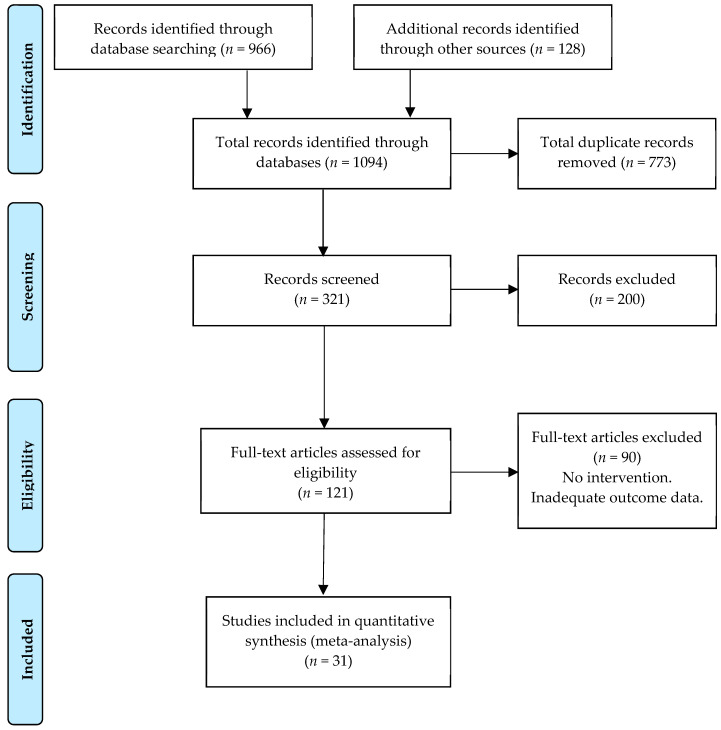
- From 1,094 records, 31 studies were included; 26 reported knowledge outcomes, 12 attitude, and 16 practice. The studies covered food handlers across the food supply chain, including farms, processing facilities, and restaurants.
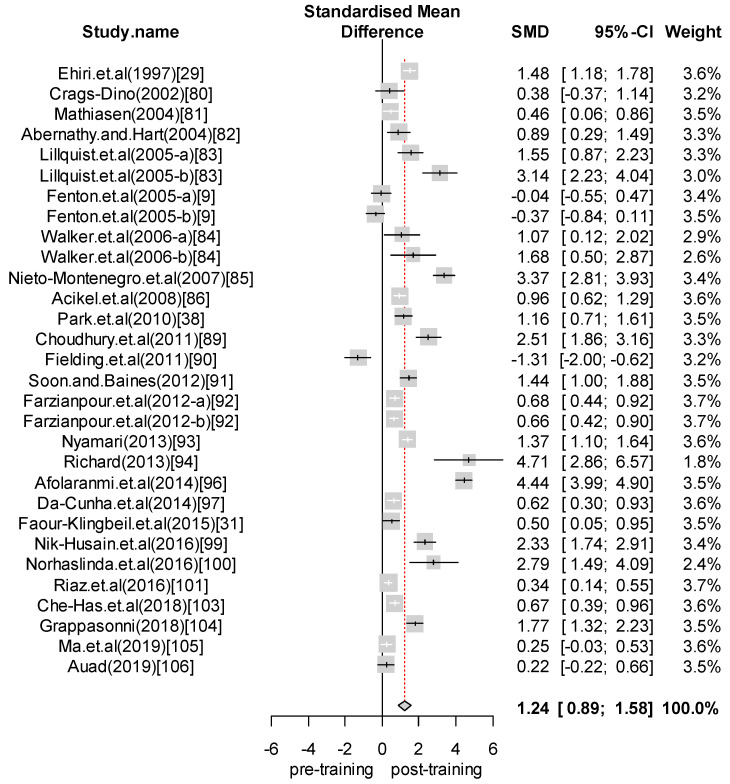
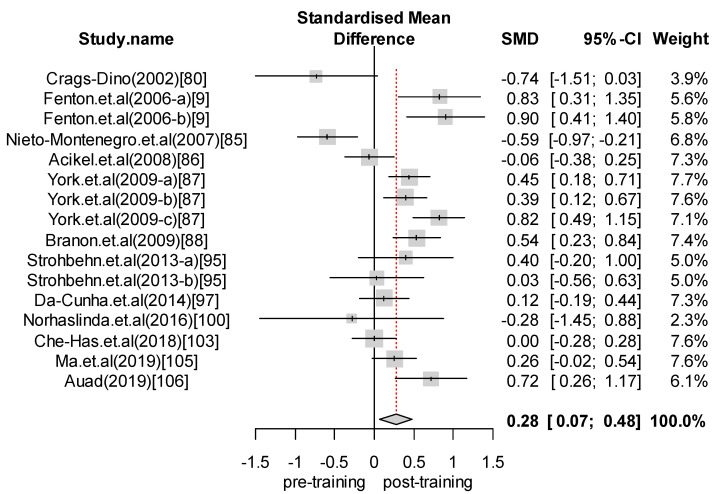
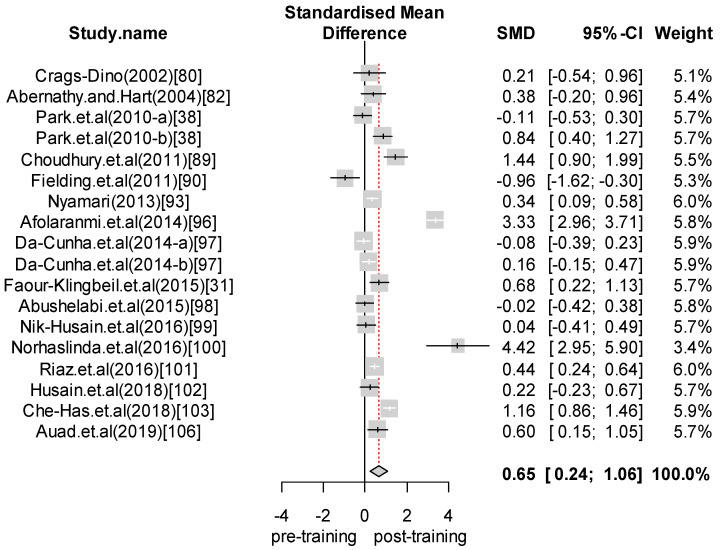
- Pooled effects favored training for all main outcomes: knowledge SMD = 1.24 (95% CI 0.89–1.58), attitude SMD = 0.28 (95% CI 0.07–0.48), and practice SMD = 0.65 (95% CI 0.24–1.06).
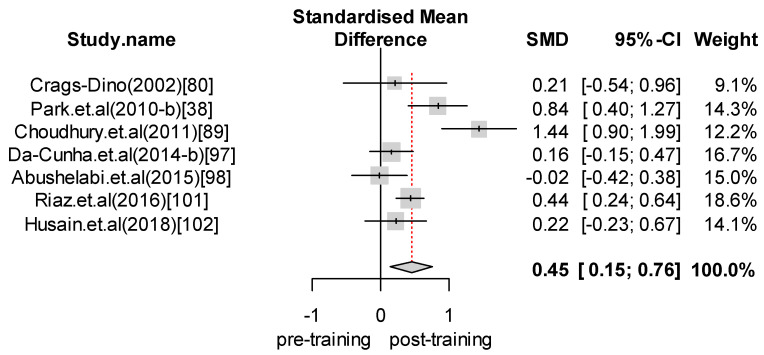
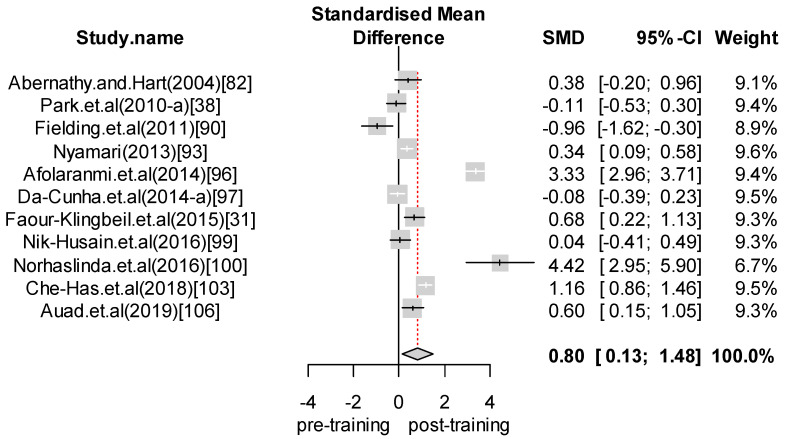
- Practice effects were also positive for both self-reported practices SMD = 0.80 (95% CI 0.13–1.48) and observed practices SMD = 0.45 (95% CI 0.15–0.76).
- Heterogeneity was high for all outcomes: knowledge I² = 95.3%, attitude I² = 77.7%, and practice I² = 94.9%.
Methods
- Systematic review and meta-analysis conducted according to PRISMA and registered in PROSPERO (CRD42019119006).
- Searched PubMed, CENTRAL, Ebsco, Scopus, Web of Science, Google Scholar, and ProQuest for English-language studies published January 1997–December 2019; last search run in April 2020.
- Included RCTs, quasi-RCTs, controlled before-after studies, and nonrandomized pre–post designs; pooled standardized mean differences were calculated with random-effects meta-analysis, with bias assessed using RoB2, ROBINS-I, funnel plots, Egger’s test, and Begg’s test.
Limitations
- Stated by the authors: differences across settings and data-collection/processing approaches, plus the multi-component nature of training, made generalization difficult.
- Stated by the authors: most studies were observational pre–post designs without matched comparison groups, with possible confounding and no randomization, so outcome improvements cannot be causally linked to training.
- Stated by the authors: reliance on KAP limited conclusions about actual behavior, and many studies reported only overall scores/scales, limiting detailed analysis.
- Evident from the text: only 16 of 31 studies measured practice, and some outcomes relied on self-report, which the paper notes can be affected by social desirability bias and possible Hawthorne effects.
Model-written summary. Check it against the paper before relying on it.
Integrity signals
Registry
Cites
Statistics
Figures
Verification
Claims the paper makes
16 Valid · 1 Not valid · 17 Not checked · 51 Own results and interpretations
Some cited sources support this claim and some don’t — read each source’s verdict below.
In the paper
“Considering the summarized effect size, a SMD = 0.28 suggests a moderate effect for the positive attitude of food handlers; this is similar to previous studies [57,58,66].”
§ A Systematic Review and Meta-Analysis of the Effects of Food Safety and Hygiene Training on Food Handlers > 4. Discussion
What the sources say
- Disputedcites [57] Young I. Greig J. Wilhelm B.J. Waddell L.A. Effectiveness of food handler training and education interventions: A systematic review and meta-analysis J. Food Prot. 2019 82 1714 1728 10.4315/0362-028X.JFP-19-108 31536416 sourceExperimental — accuracy not yet measured
Table 4 (FIGURE 5 section) reports the pooled attitude/risk-perception effect sizes as SMD 0.12 (95% CI −0.48, 0.72) for RCTs and SMD 0.38 (95% CI 0.06, 0.70) for nonrandomized trials — no attitude estimate of 0.28 appears anywhere in our copy (searched: '0.28', 'attitudes weighted average SMD', 'standard intervention control group attitudes'). Moreover, the Discussion (FIGURE 5 section) states 'among RCTs, we found no significant effect of training and education interventions on either of these outcomes,' and the Meta-analysis section characterizes the nonrandomized-trial attitude effect only as 'small to moderate,' with a GRADE rating of 'Very low' for both attitude subgroups. Thus the source does not summarize the attitude effect as SMD = 0.28 nor describe it as a moderate positive effect; the attributed number and interpretation conflict with what the paper reports. (LLM, conf=0.75)
Checked by a reasoning model — may be wrong.
- Disputedcites [58] Soon J.M. Baines R. Seaman P. Meta-analysis of food safety training on hand hygiene knowledge and attitudes among food handlers J. Food Prot. 2012 75 793 804 10.4315/0362-028X.JFP-11-502 22488073 sourceExperimental — accuracy not yet measured
The Synthesis of results reports a summary effect size of 0.683 (95% CI 0.523–0.843) for hand hygiene attitudes and self-reported practices, not 0.28. The paper supports an improvement in attitudes, but its reported summary estimate contradicts the number attributed to it. (LLM, conf=0.88)
Checked by a reasoning model — may be wrong.
- Partly supportedcites [66] Young I. Waddell L. Harding S. Greig J. Mascarenhas M. Sivaramalingam B. Pham M.T. Papadopoulos A. A systematic review and meta-analysis of the effectiveness of food safety education interventions for consumers in developed countries BMC Public Health 2015 15 10.1186/s12889-015-2171-x 26307055 PMC4548310 sourceExperimental — accuracy not yet measured
The Results (Meta-analysis results; page unavailable) report a positive adult attitude effect of SMD = 0.26, close to the citing paper’s 0.28. The Discussion identifies the participants in that analysis as university students and staff, not food handlers. Its “moderate” rating describes GRADE certainty, not the size of the effect. (LLM, conf=0.86)
hedged- Asserted: passes — The authors put it forward as true.
- Checkable: passes — It can be checked against evidence.
- Load-bearing: passes — The paper’s conclusions depend on it.
- Based: passes — The paper gives a reason why it holds.
- Disputed
The cited sources support only part of this claim — read each source’s verdict below.
In the paper
“Current evidence suggests that a substantial number of foodborne illnesses occur through poor food handling practices of food workers [5,6].”
§ A Systematic Review and Meta-Analysis of the Effects of Food Safety and Hygiene Training on Food Handlers > 1. Introduction Food safety is a global public health threat with frequent incidents of foodborne diseases. Additionally, the COVID-19 outbreak has put more pressure on global public health; particularly, organizations of producers and providers along the food supply chain are facing an ongoing challenge to improve and to extreme food safety and hygiene due to the pandemic. In this context, foodborne diseases are responsible for major economic costs for a country [1,2]. In terms of global estimates, in 2010, 31 foodborne hazards caused 420,000 deaths and 600 million foodborne illnesses derived from disease agents, such as non-typhoidal Salmonella enterica, Salmonella typhi, Taenia solium, hepatitis A, and aflatoxins, to name but a few [3]. In this regard, the application of the Hazard Analysis and Critical Control Point (HACCP) system can improve food safety; however its strength and success in preventing foodborne illnesses depend on it being applied correctly along with the provision of a sanitary infrastructure and the application of principles of good hygiene practice [4]. Current evidence suggests that a substantial number of foodborne illnesses occur through poor food handling practices of food workers [5,6]. Pathogens may appear in food, for instance, through unsafe farm practices, contamination during manufacturing, packaging, or distributing, or contamination in stores [7,8]. Additionally, food purchases from unsafe sources, inadequate cooking or reheating, holding food at room temperature, cross-contamination, poor personal hygiene, or improper food handling practices frequently contribute to foodborne illnesses [9]. To fight the battle against foodborne diseases, governments have resorted to strategies including food regulations and laws to monitor compliance with food safety standards [10,11,12,13]. Additionally, food companies rely on food safety methodologies, including the food Good Manufacturing Practices (GMP), the Good Agricultural Practices (GAP), the Hazard Analysis and Critical Control Points (HACCP) system, and the ISO 22000 standard to assure the safety of their food products [14,15,16]. In such methodologies, training food handlers in food safety is one of the most effective strategies for preventing foodborne diseases [17]. In an attempt to increase both knowledge and practice on food safety and hygiene, different behavioral theories have been used, including the Health Belief Model, in which an individual will perform a preventive behavior depending on their desire to avoid illness (or if ill, to get well) and the belief that a specific health action will prevent (or ameliorate) illness [18,19]; the KAP model, which assumes that an individual’s behavior or practice is dependent on their knowledge (K) and suggests that the mere provision of information will lead directly to a change in attitude (A) and, consequently, a change in behavior or practice (P) [20]; and the theory of planned behavior (TPB) which focuses on the individual’s intention to perform a given behavior and has been advocated by many researchers for the prediction of determinants of a food handler’s behavior [21,22,23,24,25,26,27].
What the sources say
- Not checked — no full text of the sourcecites [5] McIntyre L. Vallaster L. Wilcott L. Henderson S.B. Kosatsky T. Evaluation of food safety knowledge, attitudes and self-reported hand washing practices in FOODSAFE trained and untrained food handlers in British Columbia, Canada Food Control 2013 30 150 156 10.1016/j.foodcont.2012.06.034 source
- Partly supportedcites [6] Hardstaff J.L. Clough H.E. Lutje V. McIntyre K.M. Harris J.P. Garner P. O’Brien S.J. Foodborne and Food-Handler Norovirus Outbreaks: A Systematic Review Foodborne Pathog. Dis. 2018 15 589 597 10.1089/fpd.2018.2452 30109958 PMC6201779 sourceExperimental — accuracy not yet measured
The Abstract reports 47 definite food-handler norovirus outbreaks and concludes that food handlers contribute to the burden of norovirus infection. The Background explains how unsterile food preparation can contaminate food. This supports the point for norovirus, but the claim extends it to foodborne illnesses generally, which this review does not establish. (LLM, conf=0.85)
hedgedstates a cause- Asserted: passes — The authors put it forward as true.
- Checkable: passes — It can be checked against evidence.
- Load-bearing: passes — The paper’s conclusions depend on it.
- Based: passes — The paper gives a reason why it holds.
The sources with a verdict support this claim; the rest weren’t checked yet, have no full text we could read, or their verdicts aren’t rated yet.
In the paper
“According to our findings, most studies reporting an increase in knowledge also reported an increase in attitude [9,97,105,106].”
§ A Systematic Review and Meta-Analysis of the Effects of Food Safety and Hygiene Training on Food Handlers > 4. Discussion
What the sources say
- Supportedcites [9] Fenton G.D. Laborde L.F. Radhakrishna R.B. Brown J.L. Cutter C.N. Comparison of Knowledge and Attitudes Using Computer-based and Face-to-Face Personal Hygiene Training Methods in Food Processing Facilities J. Food Sci. Educ. 2006 5 45 50 10.1111/j.1541-4329.2006.00001.x source
Our copy of Fenton et al. (2006) is a study that reported knowledge gain together with attitude gain: the Abstract states 'Results for both treatments and the control group indicated increases in knowledge' and 'There was a significant increase in attitude scores for both groups using paired t-tests', and the Attitude assessment section with Table 2 gives paired t-test P < 0.05 attitude improvements for the face-to-face (36.4→40.3) and computer-based (36.5→40.6) groups. The 'most studies' tally itself is the citing authors' framing across their pooled references (the paper makes no such survey claim; its Introduction notes only 'varying levels of effectiveness have been reported' for prior CBI programs), but as one of the cited instances of a study reporting increased knowledge alongside increased attitude, this source fits. (LLM, conf=0.85)
- Not checked — no full text of the sourcecites [97] Da Cunha D.T. Stedefeldt E. de Rosso V.V. The role of theoretical food safety training on Brazilian food handlers’ knowledge, attitude and practice Food Control 2014 43 167 174 10.1016/j.foodcont.2014.03.012 source
- Could not verifycites [105] Ma L. Chen H. Yan H. Wu L. Zhang W. Food safety knowledge, attitudes, and behavior of street food vendors and consumers in Handan, a third tier city in China BMC Public Health 2019 19 1128 10.1186/s12889-019-7475-9 31419983 PMC6697930 sourceExperimental — accuracy not yet measured
The Methods section describes a one-time questionnaire of street vendors and consumers, while the Results report their knowledge and attitude scores. Our copy does not report changes in both measures over time or assess whether most studies finding increased knowledge also found increased attitudes (searched for those increases and their relationship). (LLM, conf=0.76)
plainstates an association- Asserted: passes — The authors put it forward as true.
- Checkable: passes — It can be checked against evidence.
- Load-bearing: unclear — It is unclear whether the paper’s conclusions depend on it.
- Based: passes — The paper gives a reason why it holds.
- Supported
The sources with a verdict support this claim; the rest weren’t checked yet, have no full text we could read, or their verdicts aren’t rated yet.
In the paper
“This was the case for four studies [80,85,86,100].”
§ A Systematic Review and Meta-Analysis of the Effects of Food Safety and Hygiene Training on Food Handlers > 4. Discussion
What the sources say
- Supportedcites [80] Craggs-Dino L. The Effect of Food Safety Education on the Knowledge Attitude and Behavior of Foodservice Workers of Inner City Public Schools Master’s Thesis Florida International University Miami, FL, USA 2002 28 6 source
The Results report that food safety training significantly increased knowledge in the experimental group (passage 7), while attitude scores declined slightly and training did not significantly improve attitude (passage 4). This paper is therefore one study fitting the pattern described; it does not need to establish the citing paper’s count of four studies. (LLM, conf=0.91)
- Not checked — no full text of the sourcecites [85] Nieto-Montenegro S. Brown J.L. LaBorde L.F. Development and assessment of pilot food safety educational materials and training strategies for Hispanic workers in the mushroom industry using the Health Action Model Food Control 2008 19 616 633 10.1016/j.foodcont.2007.07.005 source
- Not checked — no full text of the sourcecites [86] Acikel C.H. Ogur R. Yaren H. Gocgeldi E. Ucar M. Kir T. The hygiene training of food handlers at a teaching hospital Food Control 2008 19 186 190 10.1016/j.foodcont.2007.03.008 source
plain- Asserted: passes — The authors put it forward as true.
- Checkable: passes — It can be checked against evidence.
- Load-bearing: unclear — It is unclear whether the paper’s conclusions depend on it.
- Based: passes — The paper gives a reason why it holds.
- Supported
The sources with a verdict support this claim; the rest weren’t checked yet, have no full text we could read, or their verdicts aren’t rated yet.
In the paper
“despite studies indicating that this is not necessarily true [37,38].”
§ A Systematic Review and Meta-Analysis of the Effects of Food Safety and Hygiene Training on Food Handlers > 1. Introduction Food safety is a global public health threat with frequent incidents of foodborne diseases. Additionally, the COVID-19 outbreak has put more pressure on global public health; particularly, organizations of producers and providers along the food supply chain are facing an ongoing challenge to improve and to extreme food safety and hygiene due to the pandemic. In this context, foodborne diseases are responsible for major economic costs for a country [1,2]. In terms of global estimates, in 2010, 31 foodborne hazards caused 420,000 deaths and 600 million foodborne illnesses derived from disease agents, such as non-typhoidal Salmonella enterica, Salmonella typhi, Taenia solium, hepatitis A, and aflatoxins, to name but a few [3]. In this regard, the application of the Hazard Analysis and Critical Control Point (HACCP) system can improve food safety; however its strength and success in preventing foodborne illnesses depend on it being applied correctly along with the provision of a sanitary infrastructure and the application of principles of good hygiene practice [4]. Current evidence suggests that a substantial number of foodborne illnesses occur through poor food handling practices of food workers [5,6]. Pathogens may appear in food, for instance, through unsafe farm practices, contamination during manufacturing, packaging, or distributing, or contamination in stores [7,8]. Additionally, food purchases from unsafe sources, inadequate cooking or reheating, holding food at room temperature, cross-contamination, poor personal hygiene, or improper food handling practices frequently contribute to foodborne illnesses [9]. To fight the battle against foodborne diseases, governments have resorted to strategies including food regulations and laws to monitor compliance with food safety standards [10,11,12,13]. Additionally, food companies rely on food safety methodologies, including the food Good Manufacturing Practices (GMP), the Good Agricultural Practices (GAP), the Hazard Analysis and Critical Control Points (HACCP) system, and the ISO 22000 standard to assure the safety of their food products [14,15,16]. In such methodologies, training food handlers in food safety is one of the most effective strategies for preventing foodborne diseases [17]. In an attempt to increase both knowledge and practice on food safety and hygiene, different behavioral theories have been used, including the Health Belief Model, in which an individual will perform a preventive behavior depending on their desire to avoid illness (or if ill, to get well) and the belief that a specific health action will prevent (or ameliorate) illness [18,19]; the KAP model, which assumes that an individual’s behavior or practice is dependent on their knowledge (K) and suggests that the mere provision of information will lead directly to a change in attitude (A) and, consequently, a change in behavior or practice (P) [20]; and the theory of planned behavior (TPB) which focuses on the individual’s intention to perform a given behavior and has been advocated by many researchers for the prediction of determinants of a food handler’s behavior [21,22,23,24,25,26,27].
What the sources say
- Not checked — no full text of the sourcecites [37] Baş M. Şafak Ersun A. Kivanç G. Bas M. Safak Ersun A. Kivanc G. The evaluation of food hygiene knowledge, attitudes, and practices of food handlers’ in food businesses in Turkey Food Control 2006 17 317 322 10.1016/j.foodcont.2004.11.006 source
- Supportedcites [38] Park S.-H.H. Kwak T.-K.K. Chang H.-J.J. Evaluation of the food safety training for food handlers in restaurant operations Nutr. Res. Pract. 2010 4 58 68 10.4162/nrp.2010.4.1.58 20198210 PMC2830416 source
The Discussion reports that training improved food safety knowledge but did not improve food safety practices or hygiene management performance. This directly supports the claim that knowledge does not necessarily translate into behavior. (LLM, conf=0.94)
hedged- Asserted: passes — The authors put it forward as true.
- Checkable: passes — It can be checked against evidence.
- Load-bearing: passes — The paper’s conclusions depend on it.
- Based: passes — The paper gives a reason why it holds.
36 more claims · 4 with their cited sources checked
Create a free account to see all 85 claims and to verify the 8 references still open.
- Probably not a substantial claim. 30
- It may state two separate claims as one. 21
Claims other papers make about this one
Each is checked against this paper’s own text: does it say what the citing paper says it does?
The source backs part of the claim, not all of it — or backs it for a different population, condition or comparison.
In the citing paper
“these common outlets for ready-to-eat foods have been labelled as high risk for occurrences of foodborne illness in Sub-Saharan Africa (Morse, Masuku, Rippon, & Kubwalo, 2018) as well as in high-income countries such as the United States (Insfran-Rivarola et al., 2020).”
From Food safety-related perspectives and practices of consumers and vendors in Ethiopia: A scoping review. (2022) · cites this paper as Insfran-Rivarola et al., 2020
Experimental — accuracy not yet measured
Citations
Cites
The theory of planned behavior
Ajzen, I. (1991) · Organizational Behavior and Human Decision Processes · doi:10.1016/0749-5978(91)90020-t · Cited by 134,657
Preferred Reporting Items for Systematic Reviews and Meta-Analyses: the PRISMA statement
Moher, D., Liberati, A., Tetzlaff, J., Altman, D. G., & for the PRISMA Group (2009) · BMJ · doi:10.1136/bmj.b2535 · Cited by 83,823
Preferred Reporting Items for Systematic Reviews and Meta-Analyses: The PRISMA Statement
Moher, D., Liberati, A., Tetzlaff, J., Altman, D. G., & The PRISMA Group (2009) · PLoS Medicine · doi:10.1371/journal.pmed.1000097 · Cited by 64,042 · cited 1×
“This study adhered closely to the Preferred Reporting Items for Systematic Reviews and Meta-Analyses (PRISMA) guidelines [59,60].”
Measuring inconsistency in meta-analyses
Higgins, J. P. T., Thompson, S. G., Deeks, J. J., & Altman, D. G. (2003) · BMJ · doi:10.1136/bmj.327.7414.557 · Cited by 63,139
Bias in meta-analysis detected by a simple, graphical test
Egger, M., Smith, G. D., Schneider, M., & Minder, C. (1997) · BMJ · doi:10.1136/bmj.315.7109.629 · Cited by 56,722 · cited 1×
“We also assessed the evidence of risk of publication bias through a funnel plot and statistical tests, including Egger’s test [71] and the Begg’s test [72] (with a 95% confidence interval).”
MethodRoB 2: a revised tool for assessing risk of bias in randomised trials
Sterne, J. A. C., Savović, J., Page, M. J., Elbers, R. G., Blencowe, N. S., Boutron, I., Cates, C. J., Cheng, H.-Y., Corbett, M. S., Eldridge, S. M., et al. (2019) · BMJ · doi:10.1136/bmj.l4898 · Cited by 34,787 · cited 1×
“Randomized studies were assessed by using Cochrane’s tool RoB2 [75,76].”
MethodLiberati, A., Altman, D. G., Tetzlaff, J., Mulrow, C., Gøtzsche, P. C., Ioannidis, J. P. A., Clarke, M., Devereaux, P. J., Kleijnen, J., & Moher, D. (2009) · PLoS Medicine · doi:10.1371/journal.pmed.1000100 · Cited by 28,164 · cited 1×
“This study adhered closely to the Preferred Reporting Items for Systematic Reviews and Meta-Analyses (PRISMA) guidelines [59,60].”
MethodConducting Meta-Analyses in R with the metafor Package
Viechtbauer, W. (2010) · Journal of Statistical Software · doi:10.18637/jss.v036.i03 · Cited by 20,464 · cited 1×
“We ran the meta-analysis in RStudio using the metafor package [73] and the meta package [74].”
MethodROBINS-I: a tool for assessing risk of bias in non-randomised studies of interventions
Sterne, J. A., Hernán, M. A., Reeves, B. C., Savović, J., Berkman, N. D., Viswanathan, M., Henry, D., Altman, D. G., Ansari, M. T., Boutron, I., et al. (2016) · BMJ · doi:10.1136/bmj.i4919 · Cited by 20,329 · cited 1×
“Nonrandomized studies were assessed by using the ROBINS-I tool [77]; the judgment criteria included 5 levels (low, moderate, serious, critical, and no information) for each of the 7 bias domains [78].”
MethodFrom Intentions to Actions: A Theory of Planned Behavior
Ajzen, I. (1985) · Action Control · doi:10.1007/978-3-642-69746-3_2 · Cited by 19,057
Research works printed but not linked: 4
- Cliver D.O. Riemann H. Foodborne Diseases 2nd ed. Academic Press San Diego, CA, USA 2002 0121765598
- Glanz K. Rimer B. Viswanath K. Health Behaviour and Health Education: Theory Research and Practice 4th ed. John Wiley & Sons San Francisco, CA, USA 2008 Volume 4 978-0-7879-9614-7
- Nyamari J. Evaluation of compliance to food saftey standards amongst food handlers in selected Hospitals in Kenya Ph.D. Thesis Kenyatta University Nairobi, Kenya 15 8 2013
- Che-Has S. Afifah-Jaafar S. Tuan-Chilek T. An assessment on pre-and post-food hygiene training on food safety’s Kap level among food handlers in Kuala Terengganu and Kuala Nerus Malays. Appl. Biol. 2018 47 61 69
Cited by
Zanin, L. M., Luning, P. A., & Stedefeldt, E. (2022) · Food Research International · doi:10.1016/j.foodres.2022.111064 · Cited by 62
Parikh, P., Aparo, N. O., Nordhagen, S., & De Steur, H. (2022) · Food Research International · doi:10.1016/j.foodres.2022.111376 · Cited by 32
Impact of Metabolites from Foodborne Pathogens on Cancer
Mafe, A. N., & Büsselberg, D. (2024) · Foods · doi:10.3390/foods13233886 · Cited by 30
New Approach to Food Safety Training: A Review of a Six-Step Knowledge-Sharing Model
Yeargin, T. A., Gibson, K. E., & Fraser, A. M. (2021) · Journal of Food Protection · doi:10.4315/jfp-21-146 · Cited by 34
“KAP-focused training has been shown to increase knowledge but has largely been ineffective at influencing and/or sustaining attitudes and behavior change (49, 107).”
BackgroundTamene, A., Habte, A., Woldeyohannes, D., Afework, A., Endale, F., Gizachew, A., Sulamo, D., Elilo, L. T., & Sergindo, M. T. (2022) · PLoS ONE · doi:10.1371/journal.pone.0268918 · Cited by 28
“revealed that training enhances food handlers’ safe practice [42].”
BackgroundCastro, M., Soares, K., Ribeiro, C., & Esteves, A. (2024) · Microorganisms · doi:10.3390/microorganisms12040825 · Cited by 35
“Insfran-Rivarola et al.’s [10] study concluded that the establishments that received theoretical and practical training combined, obtained more successful results than the ones that only had theoretical training.”
BackgroundResultYezli, S., Yassin, Y. M., Mushi, A., Aburas, A., Alabdullatif, L., Alburayh, M., & Khan, A. A. (2021) · BMC Public Health · doi:10.1186/s12889-021-11381-9 · Cited by 26
“Such interventions have been shown to have a positive impact on the knowledge and practice of both consumers and food handlers [35, 36].”
BackgroundFermented beverages among indigenous Latin American societies
García, C. L., Bermúdez, F. G., Berghe, W. V., Zurita-Benavides, M. G., & Orellana‐Manzano, A. (2024) · Frontiers in Sustainable Food Systems · doi:10.3389/fsufs.2024.1390162 · Cited by 23
Abegaz, S. B. (2022) · International Journal of Food Science · doi:10.1155/2022/7400089 · Cited by 27
Daeschel, D., Rana, Y. S., Chen, L., Cai, S., Dando, R., & Snyder, A. B. (2023) · Food Control · doi:10.1016/j.foodcont.2023.109691 · Cited by 20
Begum, M., Alam, M. J., Parikh, P., & Steur, H. D. (2024) · Food Control · doi:10.1016/j.foodcont.2024.111094 · Cited by 30
Madjdian, D. S., van Asseldonk, M., Ilboudo, G., Dione, M. M., Ouedraogo, A.-A., Roesel, K., Grace, D., Talsma, E. F., Knight-Jones, T., & de Vet, E. (2024) · Food Control · doi:10.1016/j.foodcont.2024.110510 · Cited by 25
Leahy, E., Mutua, F. K., Grace, D., Lambertini, E., & Thomas, L. F. (2022) · Frontiers in Sustainable Food Systems · doi:10.3389/fsufs.2022.913560 · Cited by 27
Berglund, Z., Şimşek, Ş., & Feng, Y. (2024) · Foods · doi:10.3390/foods13050794 · Cited by 32
Joomun, A. B. Z., Wallace, C. A., Aumjaud, B., & Ramful‐Baboolall, D. (2023) · International Journal of Food Science & Technology · doi:10.1111/ijfs.16851 · Cited by 23
Relationship of knowledge and attitude with food handling practices: A systematic review
Ernawati, K., Nadhifah, Q., Muslikha, A., Hidayat, M., Soesilo, T. E. B., Jannah, F., Widianti, D., & Yusnita, Y. (2021) · International Journal of Public Health Science (IJPHS) · doi:10.11591/ijphs.v10i2.20665 · Cited by 27
“lack of reminders, or lack of clarity in food safety messages [24], [27], [54]-[57].”
BackgroundMethodGemeda, N., Yazew, T., Moroda, M., & Kuyu, C. G. (2025) · Frontiers in Sustainable Food Systems · doi:10.3389/fsufs.2024.1471429 · Cited by 17
Mulat, M., Birri, D. J., Kibret, T., Alemu, W., Geteneh, A., & Mihret, W. (2024) · Environmental Health Insights · doi:10.1177/11786302241288855 · Cited by 19
“4 Despite their pivotal role, a significant proportion of foodborne diseases, estimated at 10% to 20%, are attributed to food contamination by the food handlers, 5-7 and this would be higher in countries with poor resource like Ethiopia.”
BackgroundSeow, W.-L., Ariffin, U. K. M., Lim, S. Y., Mohamed, N. A., Lee, K. W., Devaraj, N. K., & Nordin, S. A. (2022) · Foods · doi:10.3390/foods11010115 · Cited by 12
“Practices are the actions of the consumers in regard to the knowledge and attitude involved in food safety matters [35].”
BackgroundFood Safety Management, GMP & HACCP
Owusu-Apenten, R., & Vieira, E. R. (2022) · Food science text series · doi:10.1007/978-3-030-65433-7_10 · Cited by 9
Assessment of food safety awareness and hygiene practices among food handlers in Almaty, Kazakhstan
Kulpiisova, A., Dikhanbayeva, F., Tegza, A., Tegza, I., Абжанова, Ш. А., Moldakhmetova, Z., Улангазиевна, У. Р., Alikhanov, K., Yerzhigitov, Y., Shambulova, G. D., et al. (2025) · BMC Public Health · doi:10.1186/s12889-025-24124-x · Cited by 21
“%) of the surveyed [25, 29–31].”
Akahane, M., Kanagawa, Y., Takahata, Y., Nakanishi, Y., Akahane, T., & Imamura, T. (2023) · JMIR Formative Research · doi:10.2196/44150 · Cited by 8
Marconi, F., Sartoni, M., Nuvoloni, R., Torracca, B., Gagliardi, M., Zappalà, G., Гуиди, А., & Pedonese, F. (2023) · Italian Journal of Food Safety · doi:10.4081/ijfs.2023.11012 · Cited by 44
“The benefits of food handlers’ training are well known and undisputed, but it should be considered that training by itself does not always lead to a positive change in attitude or to an increase of the risk perception (Rossi et al., 2017; Insfran-Rivarola et al., 2020).”
BackgroundMadjdian, D. S., Badu, V. D., Ilboudo, G., Lallogo, V., Dione, M. M., van Asseldonk, M., Knight-Jones, T., & de Vet, E. (2024) · PLoS ONE · doi:10.1371/journal.pone.0313635 · Cited by 9
Systematic mapping of food safety outbreaks in the hospitality sector in the Dominican Republic
Diaz-De-Oleo, D., McIntyre, L., Randall, N., Nayak, R., & Manning, L. (2022) · British Food Journal · doi:10.1108/bfj-10-2021-1146 · Cited by 8
Obande, D. (2022) · The Atrium (University of Guelph) · doi:10.1016/j.foodcont.2022.109455 · Cited by 6
Training for Food Handlers at Production Level in Italian Regions
Pattono, D., Petey, M., Covarino, A. M., Gea, M., & Schilirò, T. (2023) · International Journal of Environmental Research and Public Health · doi:10.3390/ijerph20032503 · Cited by 6
“Several authors have noted that repeated training sessions or new sessions can reinforce behavioral changes and improve the enforcement of food safety policy [39].”
BackgroundInfluentialFood Safety Knowledge, Attitudes, and Practices among Vegetable Handlers in Bangladesh
Begum, I. A., Alam, M. J., Shankar, B., Mastura, T., Cooper, G. S., Rich, K. M., Parikh, P., Ratna, N. N., & Kadiyala, S. (2024) · Journal of Food Protection · doi:10.1016/j.jfp.2024.100428 · Cited by 15
Ali, A., Tahir, A., Ahmed, N., Trafiałek, J., Alohali, B. M., Ahmed, I. A. M., Manzoor, M. F., & Madilo, F. K. (2026) · Food Science & Nutrition · doi:10.1002/fsn3.71400 · Cited by 16
Li, Z., Jiang, K., Li, S., Wang, T., Zeng, H., Sharma, M., Shi, Z., & Zhao, Y. (2024) · BMC Public Health · doi:10.1186/s12889-023-17608-1 · Cited by 7
“Food safety is closely associated with global public health and socio-economic development [1].”
BackgroundCota, A. D. S., de Freitas, R. S. G., Lefèvre, F., & Stedefeldt, E. (2023) · Food Research International · doi:10.1016/j.foodres.2023.113486 · Cited by 13
Gamiao, S. K. A., Soriano, M. D. R., Salvador, R. Q., Catacutan, I. M. A., Padua, H. J. A., Adviento, S. V. M. G., Sagucio, T. M. A., Malapit, A. K. C., & Limon, M. R. (2025) · Hygiene · doi:10.3390/hygiene5040057 · Cited by 5
“The testimonies provide depth and context to the quantitative data, illustrating how food-handling protocols are embedded into everyday teaching strategies [34,35].”
Masengu, R., Muchenje, C., & Ruzive, B. (2025) · Journal of Infrastructure Policy and Development · doi:10.24294/jipd10114 · Cited by 8
Redesigning Food Handler Training: A Gamified Approach Tested in Italy’s Large-Scale Retail
Sartoni, M., Marconi, F., Torracca, B., Pedonese, F., Nuvoloni, R., & Гуиди, А. (2025) · Foods · doi:10.3390/foods14162803 · Cited by 4
“Traditional classroom-based training remains the most employed strategy for the training process at food company level, while interactive approaches such as videos, simulations, and demonstrations are less frequently used [2,11].”
Rodrigues, N. P. A., de Morais, M. S., Bezerra, N. C. D., Pereira, E. H. M., Júnior, É. A. G., Rodrigues, J. B. D. S., de Oliveira, S. D. P. A., & de Souza, E. L. (2023) · Foods · doi:10.3390/foods12101972 · Cited by 8
Legal framework and procedures of occupational health. A hermeneutic analysis
López, J. M. P., Sierra, C. A. S., & Almanza, K. P. B. (2024) · Región Científica · doi:10.58763/rc2024336 · Cited by 8
Assessment of Food Safety Knowledge and Practices Among Medical Students
Nițescu, M., Nedelescu, M. M., Moroșan, E., SIMIONESCU, A. A., Furtunescu, F., Ștefănescu, B. E., Tuşaliu, M., Panaitescu, E., Stanciu, A.-M., & Stoian, I. M. (2025) · Foods · doi:10.3390/foods14091636 · Cited by 9
“The assessment of food hygiene knowledge and practices is most often carried out among food industry personnel, including those working in restaurants, in order to prevent and control the occurrence of foodborne diseases among consumers [26–29 ,52 , 53].”
Lee, S., Han, J., Woo, S. H., & Lee, S. (2022) · Annals of Occupational and Environmental Medicine · doi:10.35371/aoem.2022.34.e42 · Cited by 5
Zhang, M., Wang, H. H., & Bai, J. (2024) · Food Control · doi:10.1016/j.foodcont.2024.110846 · Cited by 3
John, P., Varga, C., Cooke, M. J., & Majowicz, S. E. (2025) · Zoonoses and Public Health · doi:10.1111/zph.70000 · Cited by 3
“…risks for foodborne diseases, cross-contamination control, proper food storage and cooking techniques, and food hygiene (Diplock et al. 2018; Insfran-Rivarola et al. 2020) would play a significant role in foodborne hazard control at different stages of the food supply chain (i.e., along the…”
Alawode, O. W., & Tabit, F. T. (2025) · Environmental Health Insights · doi:10.1177/11786302251342341 · Cited by 8
“42 Besides the lack of enforcement, other barriers to compliance with food safety regulations by street food vendors include lack of business registration and issuance of permits, limited Resources, lack of awareness, the vast informal nature of street food vending, lack of zoning and the provision…”
Emerging trends in food hygiene: Innovations and applications of food technology
Jang, H. J., Lee, H., & Paik, H. (2025) · Current Opinion in Food Science · doi:10.1016/j.cofs.2025.101366 · Cited by 3
Hasani, M., Camacho-Martinez, S. V., Zai, B., Warriner, L. J., Boesch, C., Kopko, C., Marafiotti, F., & Warriner, K. (2024) · Food Quality and Safety · doi:10.1093/fqsafe/fyae030 · Cited by 8
Nhabe, T., & Malebo, N. J. (2025) · Frontiers in Food Science and Technology · doi:10.3389/frfst.2025.1541499 · Cited by 6
Osaili, T. M. I., Al‐Nabulsi, A. A., Albluwi, B. I. H., Olaimat, A. N., Obaid, R. S., Taha, S., Ayyash, M. M., & Holley, R. A. (2022) · British Food Journal · doi:10.1108/bfj-02-2022-0132 · Cited by 3
Khan, M. J., ., N., Khan, N., Wazir, A. K., Iqbal, A., Ishtiaq, M., Khan, S. A., & Ali, J. (2022) · Pakistan Journal of Medical and Health Sciences · doi:10.53350/pjmhs22167831 · Cited by 5
Sustainable Food Supply Chain Framework in a Circular Economy
Wahab, S. N., & Ramakrishna, Y. (2023) · Advances in finance, accounting, and economics book series · doi:10.4018/978-1-6684-7664-2.ch013 · Cited by 3
Consumer Willingness to Pay for Food Defense and Food Hygiene in Japan: Cross-Sectional Study
Matsumoto, S., Kanagawa, Y., Nagoshi, K., Akahane, T., Imamura, T., & Akahane, M. (2023) · Interactive Journal of Medical Research · doi:10.2196/43936 · Cited by 3
“As all factors at each stage of the food chain, from primary production to consumers, can affect food safety, necessary actions must be taken [18,19].”
BackgroundEvaluation of Food Safety Knowledge and Attitudes Among Adults in the United Arab Emirates
Alkhamis, Z. Z., Musthafa, H., Al-Hamadani, M. A., Sreejith, A., & Ali, S. Z. (2024) · Cureus · doi:10.7759/cureus.54451 · Cited by 6
“…training is not effective in promoting the retention of food safety knowledge, especially if it is lengthy, is not repeated within 2-5 years, lacks a balance of theoretical and practical knowledge, or is not accompanied by continuous support and supervision to encourage positive attitudes [23,24].”
BackgroundOwusu-Apenten, R., & Vieira, E. R. (2022) · Food science text series · doi:10.1007/978-3-030-65433-7_9 · Cited by 9
Soboksa, N. E., Hareru, H. E., Nxusani, Z. N., Nedzingahe, V., & Mbhenyane, X. G. (2025) · BMC Nutrition · doi:10.1186/s40795-025-01190-3 · Cited by 4
“This finding aligns with a systematic review and meta-analysis conducted by [52], which assessed the effects of safety and hygiene training on food handlers [52].”
Frempong, C. S., Addo, P., Otoo, D. M., Okyere, D. K. M., Saka, B. A., & Mensah-Aidams, A. K. (2025) · Advances in Public Health · doi:10.1155/adph/1146260 · Cited by 2
“Appropriate interventions can lead to a 30 % reduction in hospital admissions due to foodborne illnesses [54].”
Leung, W.-Y., Li, S., Yu, P. H., & Chan, S. (2025) · Foods · doi:10.3390/foods14244212 · Cited by 3
“In a study investigating the effectiveness of food safety training on the behaviours of food handlers, it was found that adequate training helped to reduce improper food handling practices and mitigated the effect of food contamination on socioeconomic aspects [38,39].”
Akpan, S. N., Cook, E. A. J., van Langevelde, F., van Hooft, P., Zimmerman, D. M., Buij, R., Hassell, J. M., Masudi, S. P., Happi, C. T., Happi, A. N., et al. (2026) · PLOS Global Public Health · doi:10.1371/journal.pgph.0004321 · Cited by 6
Melo, M. S., Menezes, J. D. S., Vasconcelos, V. V., dos Santos, A. D., Borghesan, T. C., de Oliveira, R. C., Brito, P. D. A., Figueiredo, J. A., de Melo, L. R. S., de Castro, C. O., et al. (2026) · BMC Public Health · doi:10.1186/s12889-026-26223-9 · Cited by 7
Trajectory Patterns of Hygiene Training Effectiveness Across Three Instructional Modes
Limon, M. R., Adviento, S. V. M. G., Basamot, C. M. B., Reyes, J. B., Gumsat, K. L. E., Amano, A. G. D., Ramirez, J. C. B., Pungtilan, C. J. P., Soriano, M. D. R., Baclagan, L. B., et al. (2026) · Hygiene · doi:10.3390/hygiene6010005 · Cited by 2
“Another meta-analysis focused on food handlers conducted by Insfran-Rivarola et al. [9] reported a very large effect size for knowledge improvement (Hedges’ g ≈ 1.24), modest gains in practice (g ≈ 0.65), and low-to-moderate attitude improvements (g ≈ 0.28).”
InfluentialEmon, F. U., Islam, G. M. R., & Shourove, J. H. (2026) · Journal of Food Composition and Analysis · doi:10.1016/j.jfca.2026.109282 · Cited by 5
Harris, K. J., Taylor, S., & Murphy, K. (2023) · Journal of Foodservice Business Research · doi:10.1080/15378020.2023.2257127 · Cited by 3
“…al., 2017); however, how often employee knowledge is tested and how diligent managers are in enforcing the rules with rewards and punishment for noncompliance appears to be the weak link to employee engagement in food safety (Insfran-Rivarola et al., 2020; Lin & Roberts, 2020; Young et al., 2019).”
Factors Related to Personal Hygiene of Traditional Jamu Handler in Bantul District, Indonesia
Suryani, D., Indriani, A. R., & Suyitno, S. (2025) · GHMJ (Global Health Management Journal) · doi:10.35898/ghmj-811154 · Cited by 2
“The results of another study stated a correlation between hygiene training for food handlers (Insfran-Rivarola et al., 2020).”
Standard Food Safety Practices From Receiving to Cleaning in the Restaurant
Ramli, S., & Wong, J. X. (2021) · Advances in hospitality, tourism and the services industry (AHTSI) book series · doi:10.4018/978-1-7998-7415-7.ch006 · Cited by 3
How to Build Food Safety Resilience in Commercial Restaurants?
de Freitas, R. S. G., & Stedefeldt, E. (2021) · Sustainable development · doi:10.5772/intechopen.101481 · Cited by 5
Alonge, O., Homsi, M. R., Rizvi, M. S., Malykh, R., Geffert, K., Kasymova, N., Tilenbaeva, N., Isakova, L., Kushubakova, M., Mavlyanova, D., et al. (2024) · Global Health Science and Practice · doi:10.9745/ghsp-d-23-00442 · Cited by 4
Consumer Perception and Acceptance: Navigating the Challenges
Chauhan, A., Goyal, M. R., & Aswal, J. S. (2025) · Springer eBooks · doi:10.1007/978-3-031-96526-5_5 · Cited by 2
Thystrup, C., Ogunbiyi, T. S., & Hald, T. (2025) · Communications Medicine · doi:10.1038/s43856-025-01115-y · Cited by 2
Kamal, A., Huda, T. M. N., Simi, S. M., Thomas, E., Sultana, F., Sultana, J., Haque, R. S., Rafa, S. I., Gautam, O. P., WINCH, P. J., et al. (2026) · JMIR Research Protocols · doi:10.2196/68633 · Cited by 3
“Systematic reviews assessing the effects of education interventions and training on food safety knowledge, attitudes, and behaviors of food handlers have indicated improvements in these domains among restaurant-based vendors as a means to avoid food safety risks [37-40].”
Domestic Food Safety Risks: A Two-Year Assessment of Refrigerator Hygiene and Egg Contamination
Barata, A. R., Ferreira, B., Oliveira, P., et al. (2026) · Hygiene · doi:10.3390/hygiene6010002 · Cited by 1
“Food safety is a cornerstone of public health, aiming to prevent foodborne illnesses that affect millions of people worldwide each year [1].”
Awuchi, C. G. (2026) · Cogent Food & Agriculture · doi:10.1080/23311932.2026.2703900 · Cited by 1
Thom, J. M., Bowen, S. E., Yang, Y., Devarajan, S., Doran, H., Zampetis, M., Papakonstantinou, T., McDonagh, M., McPhedran, R., Toombs, B., et al. (2024) · Behavioural Public Policy · doi:10.1017/bpp.2023.33 · Cited by 2
A percepção da população do município de Coari-AM em relação ao bem-estar de animais domésticos
Brasil, H. M. M., Silva, M. D. A., & Silva, G. S. (2024) · Editora Poisson eBooks · doi:10.36229/978-65-5866-382-9.cap.68 · Cited by 1
Surono, S. (2024) · Asian Journal of Engineering Social and Health · doi:10.46799/ajesh.v3i5.300 · Cited by 1
“When the GHP is aligned with international food safety guidelines, such as those from the Codex Alimentarius, it is crucial for businesses that operate in or export to different countries (Insfran-Rivarola et al., 2020).”
MethodAssessment of the Microbial Contamination of Delivery Boxes of Food Delivery Personnel in Accra
Adi, D. D. (2024) · International Journal of Nutrition and Food Sciences · doi:10.11648/j.ijnfs.20241305.18 · Cited by 2
Gozzi, F. G. P., Low, M., & Feng, Y. (2025) · British Food Journal · doi:10.1108/bfj-12-2024-1268 · Cited by 2
Akpan, S. N., Cook, E. A. J., van Langevelde, F., et al. (2025) · medRxiv · doi:10.1101/2025.02.08.25321724 · Cited by 1
Adiwinata, F., & Maverick, B. (2022) · Syntax Literate Jurnal Ilmiah Indonesia · doi:10.36418/syntax-literate.v7i2.6349
Qandil, S. A., Nour, S. M., Atwa, M. G., et al. (2022) · Alexandria Science Exchange Journal · doi:10.21608/asejaiqjsae.2022.237758
İnalkaç, T. N., Gümüş, D., Metin, M. M. T., & Kızıl, M. (2022) · Hacettepe Üniversitesi Sağlık Bilimleri Fakültesi Dergisi · doi:10.21020/husbfd.1106448
Cunha, L. M. M., Sousa, C. L., & Silva, N. M. D. J. (2023) · Brazilian Journal of Production Engineering · doi:10.47456/bjpe.v9i1.39277 · Cited by 1
de Oliveira, R. M., Meirelles-Bartoli, R. B., Paiva, J. D. B., Freitas, I. M., Lima, L. D. A., de Souza, C. M., & Stella, A. E. (2023) · Revista Brasileira de Higiene e Sanidade Animal · doi:10.5935/1981-2965.20230013
Behavioural Practice Kantar Public, U. K., & Behavioural Practice Kantar Public, U. K. (2024) · doi:10.46756/sci.fsa.jjl844
Moitinho, L. S., da Costa, W. P., & Ale, V. M. M. (2024) · Editora Poisson eBooks · doi:10.36229/978-65-5866-382-9.cap.64
O viés da utilização dos resíduos de pescados: uma revisão
Bezerra, C., & Sotero, M. (2024) · Editora Poisson eBooks · doi:10.36229/978-65-5866-382-9.cap.66
Perfil consumidor dos produtos de origem animal não inspecionados em Manaus - AM
Duarte, F., & Ale, V. M. M. (2024) · Editora Poisson eBooks · doi:10.36229/978-65-5866-382-9.cap.61
Leishmaniose visceral canina e o problema de saúde pública - revisão de literatura
Rosa, J., & Souza, S. (2024) · Editora Poisson eBooks · doi:10.36229/978-65-5866-382-9.cap.47
Animais de companhia exóticos e não-convencionais: revisão de literatura
Begnini, L., & Pavanelo, V. (2024) · Editora Poisson eBooks · doi:10.36229/978-65-5866-382-9.cap.73
Tráfico de animais silvestres na Amazônia
Benoliel, J. C., & Neto, L. (2024) · Editora Poisson eBooks · doi:10.36229/978-65-5866-382-9.cap.72
Barreto, B., & Machado, V. (2024) · Editora Poisson eBooks · doi:10.36229/978-65-5866-382-9.cap.57
Novos crioprotetores utilizados na conservação de sêmen em animais de produção
Bandeira, B. D. S., & Sousa, M. S. (2024) · Editora Poisson eBooks · doi:10.36229/978-65-5866-382-9.cap.42
Graça, B. A., Barreto, E. M., & Ale, V. M. M. (2024) · Editora Poisson eBooks · doi:10.36229/978-65-5866-382-9.cap.52
O uso de enriquecimento ambiental como estratégia para prevenção de Cistite Idiopática Felina (CIF)
Luniere, N. R., & Nogueira, M. R. (2024) · Editora Poisson eBooks · doi:10.36229/978-65-5866-382-9.cap.70
Encarnação, M. P., & Sotero, M. D. P. (2024) · Editora Poisson eBooks · doi:10.36229/978-65-5866-382-9.cap.54
Fiscalização em produtos de origem animal
Batista, L. V., & Ale, V. M. M. (2024) · Editora Poisson eBooks · doi:10.36229/978-65-5866-382-9.cap.58
Infecções por SARS-CoV-2 em animais de companhia: revisão de literatura
Ardaya, Q. D. S., Assis, S. V., & Rodrigues, M. N. (2024) · Editora Poisson eBooks · doi:10.36229/978-65-5866-382-9.cap.49
Parasitoses e bacterioses em matrinxã Brycon amazonicus: revisão bibliográfica
de Oliveira, F. G. S., & Sotero, M. D. P. (2024) · Editora Poisson eBooks · doi:10.36229/978-65-5866-382-9.cap.67
Taxa de recuperação oócitaria e índice de prenhez em vacas leiteiras
Castro, J. R. D. A., & Campos, L. B. (2024) · Editora Poisson eBooks · doi:10.36229/978-65-5866-382-9.cap.41
Intervenção didática sobre doenças transmitidas por alimentos, em ambiente escolar
Andrade, F., & Ale, V. M. M. (2024) · Editora Poisson eBooks · doi:10.36229/978-65-5866-382-9.cap.53
da Silva, P. L., & Ale, V. M. M. (2024) · Editora Poisson eBooks · doi:10.36229/978-65-5866-382-9.cap.63
Responsabilidade técnica e controle de qualidade do médico veterinário
de Alencar, T. D., & da Silva, M. D. A. (2024) · Editora Poisson eBooks · doi:10.36229/978-65-5866-382-9.cap.60
Influências das arboviroses no Brasil
Pacheco, C., Antunes, M., & Souza, S. (2024) · Editora Poisson eBooks · doi:10.36229/978-65-5866-382-9.cap.50
Inseminação artificial em serpentes: revisão de literatura
Marques, J. D. F., & Campos, L. B. (2024) · Editora Poisson eBooks · doi:10.36229/978-65-5866-382-9.cap.69
Conhecimento da população manauara em relação aos maus-tratos dos animais
Freitas, H., & Pereira, K. (2024) · Editora Poisson eBooks · doi:10.36229/978-65-5866-382-9.cap.74
Metadata
- Authors
- Insfran-Rivarola, A., Tlapa, D., Limon-Romero, J., Baez-Lopez, Y., Miranda-Ackerman, M., Arredondo-Soto, K., & Ontiveros, S.
- Affiliations
- Universidad Autónoma de Baja California (MX)
- Facultad de Ingeniería, Arquitectura y Diseño–Universidad Autónoma de Baja California, Ensenada 22870, Mexico
- Corresponding author
- Tlapa, Diego
- ORCID
- Venue
- Foods
- Publisher
- MDPI AG
- Published
- 2020-08-25
- Volume
- 9
- Issue
- 9
- Pages
- 1169
- ISSN
- 2304-8158 (ISSN-L)
- PMC
- PMC7555000
- OpenAlex
- W3081497194
- Semantic Scholar
- 4b685e8c30b61808a77dd811aa71a9985dcc4ed6
- Cited by
- 160
- References
- 146
- Citations by year
- 2026: 31 · 2025: 31 · 2024: 65 · 2023: 12 · 2022: 16 · 2021: 5
- FWCI
- 0.70
- Type
- journal article
- Language
- en
- Open access
- gold
- doi.org
- Licence
- Locations
- Foods (publishedVersion, cc-by)
- PubMed Central (publishedVersion, cc-by)
- PubMed (publishedVersion)
- DOAJ (DOAJ: Directory of Open Access Journals) (submittedVersion, cc-by-sa)
- Breda University of Applied Sciences Portal (submittedVersion, other-oa)
- Funders
- Universidad Autónoma de Baja California
- Topics
- Life Sciences › Agricultural and Biological Sciences › Food Science › Food Safety and Hygiene
- Life Sciences › Agricultural and Biological Sciences › Food Science › Salmonella and Campylobacter epidemiology
- Life Sciences › Agricultural and Biological Sciences › Food Science › Listeria monocytogenes in Food Safety
- Keywords
- food safety training, food hygiene training, food handlers, foodborne illness prevention, knowledge, attitudes and practices, training program, food supply chain, self-reported practices
About these checks
Registry, retraction, Cites and statistics results are computed, not judged, with one exception: a printed reference that no index lists is read once by a model before it counts as a citation error. Claims are extracted by a model and kept only when their quote appears verbatim in the text; each cited source is then checked, with a model’s help, for whether it says what the claim relies on. Those verdicts can be wrong — read the claim’s quote and the cited source before relying on one.
The claim verdicts this report counts are experimental: their accuracy is not yet measured.
A language model drew the claims from the paper on 2026-10-10, under version 3 of the claim definition (model deepseek-v4.1-flash, prompt extract-v3).
A second model labelled each claim on 2026-10-10 (model jev-1.13-20260917, definition revision gold-guideline-v0.2).
Cited sources are checked with a language model’s help (qwen3.8-omni-flash and gpt-6-sol).
Statistics and arithmetic are recomputed, not judged.
Confidence bands are shown only for fields calibrated on our annotated test set. None is calibrated yet, so no band is shown.
What counts as a claim ›How we measure confidence ›How we check this ›
Are you an author, or do you see a problem with this page? Request a review
Data sources
Bibliographic data: Semantic Scholar, OpenAlex, Crossref.
Contains information from the Semantic Scholar Academic Graph Datasets, made available under the ODC Attribution License (ODC-BY 1.0).
Semantic Scholar’s data is described in: Kinney, R., et al. (2023). The Semantic Scholar Open Data Platform. arXiv:2301.10140.
