

A Systematic Review and Meta-Analysis of the Effects of Food Safety and Hygiene Training on Food Handlers
Open accessThe DOI matches its Crossref record; 130 of the 146 references it cites were found in a registry or an index, and 1 are not checked yet; 23 of the 61 sources its claims cite were checked for support.
Abstract
Systematic review and meta-analysis of food safety and hygiene training interventions among food handlers.
Verified 2026-11-22 · 1 reference not checked yet
Overview
CoChat Summary
TL;DR
This systematic review and meta-analysis found that food safety and hygiene training improved food handlers’ knowledge, attitudes, and practices, with the largest pooled effect for knowledge. However, the authors caution that high heterogeneity and mostly nonrandomized, observational pre–post studies limit how confidently the improvements can be attributed to training.
Key findings
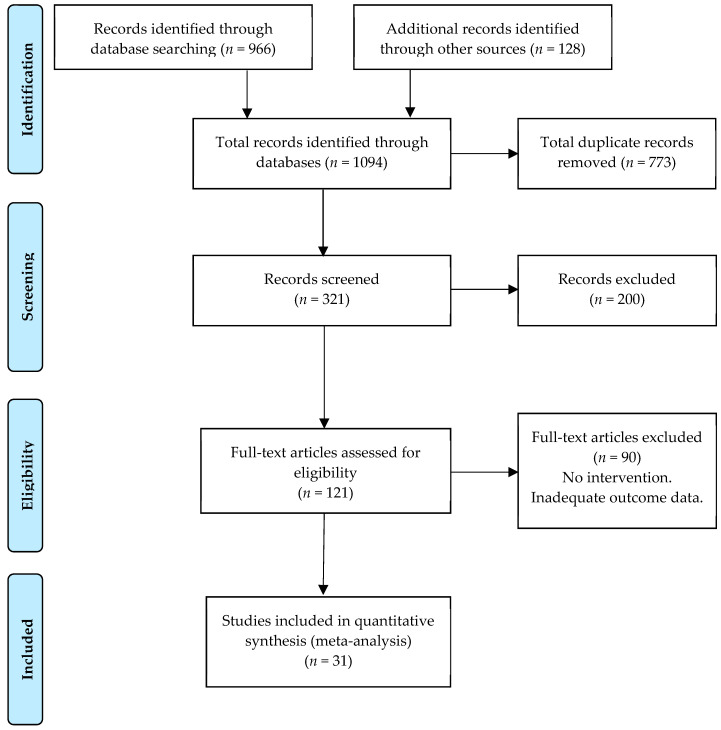
- From 1,094 records, 31 studies were included; 26 reported knowledge outcomes, 12 attitude, and 16 practice. The studies covered food handlers across the food supply chain, including farms, processing facilities, and restaurants.
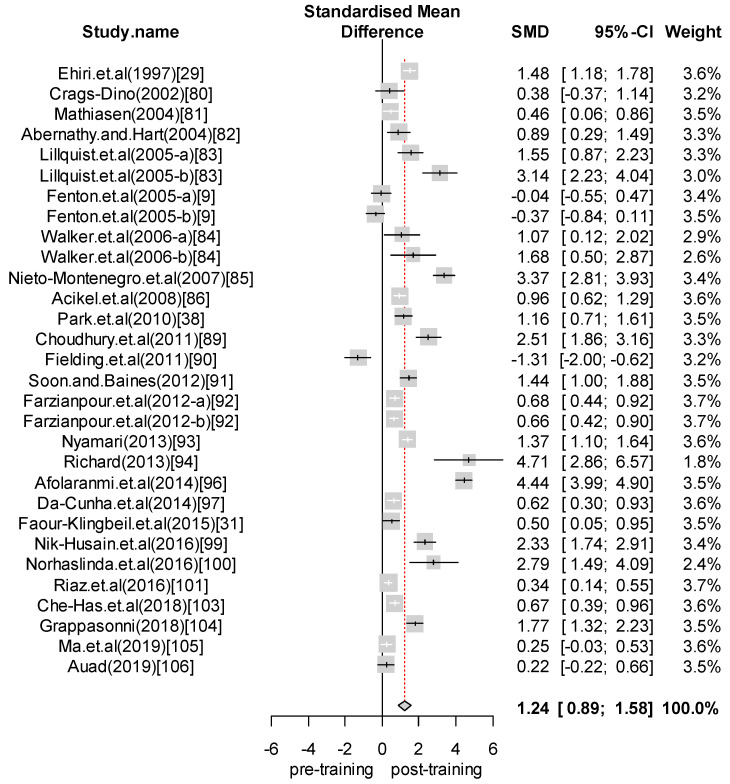
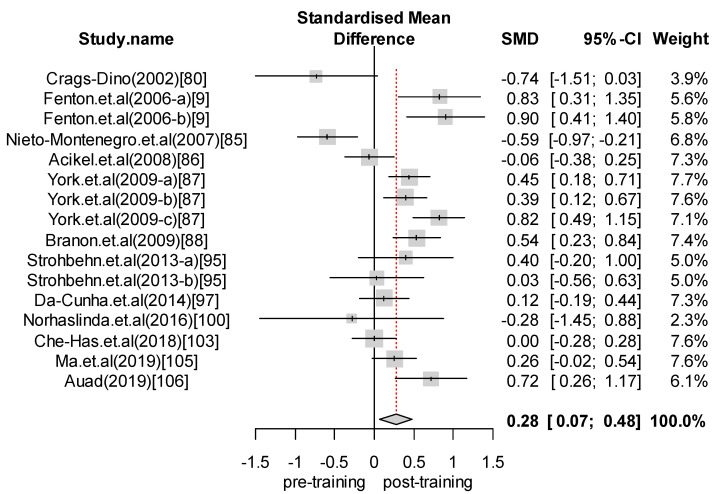
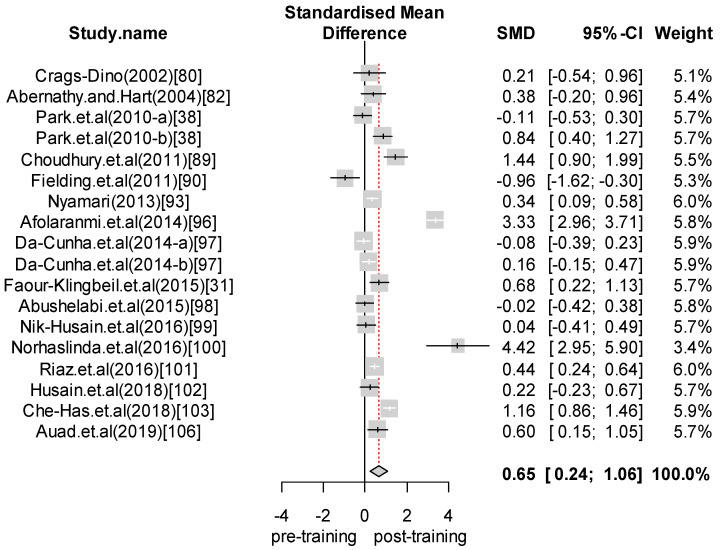
- Pooled effects favored training for all main outcomes: knowledge SMD = 1.24 (95% CI 0.89–1.58), attitude SMD = 0.28 (95% CI 0.07–0.48), and practice SMD = 0.65 (95% CI 0.24–1.06).
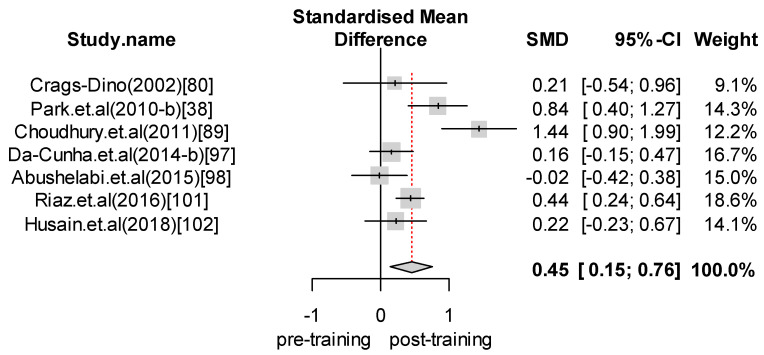
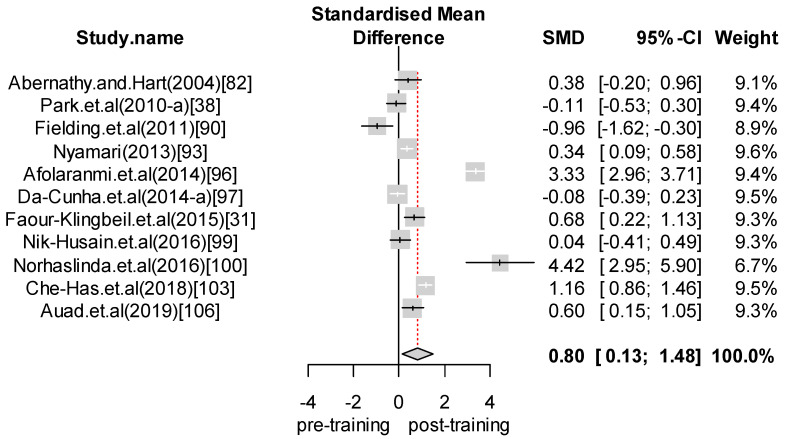
- Practice effects were also positive for both self-reported practices SMD = 0.80 (95% CI 0.13–1.48) and observed practices SMD = 0.45 (95% CI 0.15–0.76).
- Heterogeneity was high for all outcomes: knowledge I² = 95.3%, attitude I² = 77.7%, and practice I² = 94.9%.
Methods
- Systematic review and meta-analysis conducted according to PRISMA and registered in PROSPERO (CRD42019119006).
- Searched PubMed, CENTRAL, Ebsco, Scopus, Web of Science, Google Scholar, and ProQuest for English-language studies published January 1997–December 2019; last search run in April 2020.
- Included RCTs, quasi-RCTs, controlled before-after studies, and nonrandomized pre–post designs; pooled standardized mean differences were calculated with random-effects meta-analysis, with bias assessed using RoB2, ROBINS-I, funnel plots, Egger’s test, and Begg’s test.
Limitations
- Stated by the authors: differences across settings and data-collection/processing approaches, plus the multi-component nature of training, made generalization difficult.
- Stated by the authors: most studies were observational pre–post designs without matched comparison groups, with possible confounding and no randomization, so outcome improvements cannot be causally linked to training.
- Stated by the authors: reliance on KAP limited conclusions about actual behavior, and many studies reported only overall scores/scales, limiting detailed analysis.
- Evident from the text: only 16 of 31 studies measured practice, and some outcomes relied on self-report, which the paper notes can be affected by social desirability bias and possible Hawthorne effects.
Model-written summary. Check it against the paper before relying on it.
Integrity signals
Registry
Cites
Statistics
Figures
Verification
Claims the paper makes
16 Valid · 1 Not valid · 17 Not checked · 51 Own results and interpretations
Some cited sources support this claim and some don’t — read each source’s verdict below.
In the paper
“Considering the summarized effect size, a SMD = 0.28 suggests a moderate effect for the positive attitude of food handlers; this is similar to previous studies [57,58,66].”
§ A Systematic Review and Meta-Analysis of the Effects of Food Safety and Hygiene Training on Food Handlers > 4. Discussion
What the sources say
- Disputedcites [57] Young I. Greig J. Wilhelm B.J. Waddell L.A. Effectiveness of food handler training and education interventions: A systematic review and meta-analysis J. Food Prot. 2019 82 1714 1728 10.4315/0362-028X.JFP-19-108 31536416 sourceExperimental — accuracy not yet measured
Table 4 (FIGURE 5 section) reports the pooled attitude/risk-perception effect sizes as SMD 0.12 (95% CI −0.48, 0.72) for RCTs and SMD 0.38 (95% CI 0.06, 0.70) for nonrandomized trials — no attitude estimate of 0.28 appears anywhere in our copy (searched: '0.28', 'attitudes weighted average SMD', 'standard intervention control group attitudes'). Moreover, the Discussion (FIGURE 5 section) states 'among RCTs, we found no significant effect of training and education interventions on either of these outcomes,' and the Meta-analysis section characterizes the nonrandomized-trial attitude effect only as 'small to moderate,' with a GRADE rating of 'Very low' for both attitude subgroups. Thus the source does not summarize the attitude effect as SMD = 0.28 nor describe it as a moderate positive effect; the attributed number and interpretation conflict with what the paper reports. (LLM, conf=0.75)
Checked by a reasoning model — may be wrong.
- Disputedcites [58] Soon J.M. Baines R. Seaman P. Meta-analysis of food safety training on hand hygiene knowledge and attitudes among food handlers J. Food Prot. 2012 75 793 804 10.4315/0362-028X.JFP-11-502 22488073 sourceExperimental — accuracy not yet measured
The Synthesis of results reports a summary effect size of 0.683 (95% CI 0.523–0.843) for hand hygiene attitudes and self-reported practices, not 0.28. The paper supports an improvement in attitudes, but its reported summary estimate contradicts the number attributed to it. (LLM, conf=0.88)
Checked by a reasoning model — may be wrong.
- Partly supportedcites [66] Young I. Waddell L. Harding S. Greig J. Mascarenhas M. Sivaramalingam B. Pham M.T. Papadopoulos A. A systematic review and meta-analysis of the effectiveness of food safety education interventions for consumers in developed countries BMC Public Health 2015 15 10.1186/s12889-015-2171-x 26307055 PMC4548310 sourceExperimental — accuracy not yet measured
The Results (Meta-analysis results; page unavailable) report a positive adult attitude effect of SMD = 0.26, close to the citing paper’s 0.28. The Discussion identifies the participants in that analysis as university students and staff, not food handlers. Its “moderate” rating describes GRADE certainty, not the size of the effect. (LLM, conf=0.86)
hedged- Asserted: passes — The authors put it forward as true.
- Checkable: passes — It can be checked against evidence.
- Load-bearing: passes — The paper’s conclusions depend on it.
- Based: passes — The paper gives a reason why it holds.
- Disputed
The cited sources support only part of this claim — read each source’s verdict below.
In the paper
“Current evidence suggests that a substantial number of foodborne illnesses occur through poor food handling practices of food workers [5,6].”
§ A Systematic Review and Meta-Analysis of the Effects of Food Safety and Hygiene Training on Food Handlers > 1. Introduction Food safety is a global public health threat with frequent incidents of foodborne diseases. Additionally, the COVID-19 outbreak has put more pressure on global public health; particularly, organizations of producers and providers along the food supply chain are facing an ongoing challenge to improve and to extreme food safety and hygiene due to the pandemic. In this context, foodborne diseases are responsible for major economic costs for a country [1,2]. In terms of global estimates, in 2010, 31 foodborne hazards caused 420,000 deaths and 600 million foodborne illnesses derived from disease agents, such as non-typhoidal Salmonella enterica, Salmonella typhi, Taenia solium, hepatitis A, and aflatoxins, to name but a few [3]. In this regard, the application of the Hazard Analysis and Critical Control Point (HACCP) system can improve food safety; however its strength and success in preventing foodborne illnesses depend on it being applied correctly along with the provision of a sanitary infrastructure and the application of principles of good hygiene practice [4]. Current evidence suggests that a substantial number of foodborne illnesses occur through poor food handling practices of food workers [5,6]. Pathogens may appear in food, for instance, through unsafe farm practices, contamination during manufacturing, packaging, or distributing, or contamination in stores [7,8]. Additionally, food purchases from unsafe sources, inadequate cooking or reheating, holding food at room temperature, cross-contamination, poor personal hygiene, or improper food handling practices frequently contribute to foodborne illnesses [9]. To fight the battle against foodborne diseases, governments have resorted to strategies including food regulations and laws to monitor compliance with food safety standards [10,11,12,13]. Additionally, food companies rely on food safety methodologies, including the food Good Manufacturing Practices (GMP), the Good Agricultural Practices (GAP), the Hazard Analysis and Critical Control Points (HACCP) system, and the ISO 22000 standard to assure the safety of their food products [14,15,16]. In such methodologies, training food handlers in food safety is one of the most effective strategies for preventing foodborne diseases [17]. In an attempt to increase both knowledge and practice on food safety and hygiene, different behavioral theories have been used, including the Health Belief Model, in which an individual will perform a preventive behavior depending on their desire to avoid illness (or if ill, to get well) and the belief that a specific health action will prevent (or ameliorate) illness [18,19]; the KAP model, which assumes that an individual’s behavior or practice is dependent on their knowledge (K) and suggests that the mere provision of information will lead directly to a change in attitude (A) and, consequently, a change in behavior or practice (P) [20]; and the theory of planned behavior (TPB) which focuses on the individual’s intention to perform a given behavior and has been advocated by many researchers for the prediction of determinants of a food handler’s behavior [21,22,23,24,25,26,27].
What the sources say
- Not checked — no full text of the sourcecites [5] McIntyre L. Vallaster L. Wilcott L. Henderson S.B. Kosatsky T. Evaluation of food safety knowledge, attitudes and self-reported hand washing practices in FOODSAFE trained and untrained food handlers in British Columbia, Canada Food Control 2013 30 150 156 10.1016/j.foodcont.2012.06.034 source
- Partly supportedcites [6] Hardstaff J.L. Clough H.E. Lutje V. McIntyre K.M. Harris J.P. Garner P. O’Brien S.J. Foodborne and Food-Handler Norovirus Outbreaks: A Systematic Review Foodborne Pathog. Dis. 2018 15 589 597 10.1089/fpd.2018.2452 30109958 PMC6201779 sourceExperimental — accuracy not yet measured
The Abstract reports 47 definite food-handler norovirus outbreaks and concludes that food handlers contribute to the burden of norovirus infection. The Background explains how unsterile food preparation can contaminate food. This supports the point for norovirus, but the claim extends it to foodborne illnesses generally, which this review does not establish. (LLM, conf=0.85)
hedgedstates a cause- Asserted: passes — The authors put it forward as true.
- Checkable: passes — It can be checked against evidence.
- Load-bearing: passes — The paper’s conclusions depend on it.
- Based: passes — The paper gives a reason why it holds.
The sources with a verdict support this claim; the rest weren’t checked yet, have no full text we could read, or their verdicts aren’t rated yet.
In the paper
“According to our findings, most studies reporting an increase in knowledge also reported an increase in attitude [9,97,105,106].”
§ A Systematic Review and Meta-Analysis of the Effects of Food Safety and Hygiene Training on Food Handlers > 4. Discussion
What the sources say
- Supportedcites [9] Fenton G.D. Laborde L.F. Radhakrishna R.B. Brown J.L. Cutter C.N. Comparison of Knowledge and Attitudes Using Computer-based and Face-to-Face Personal Hygiene Training Methods in Food Processing Facilities J. Food Sci. Educ. 2006 5 45 50 10.1111/j.1541-4329.2006.00001.x source
Our copy of Fenton et al. (2006) is a study that reported knowledge gain together with attitude gain: the Abstract states 'Results for both treatments and the control group indicated increases in knowledge' and 'There was a significant increase in attitude scores for both groups using paired t-tests', and the Attitude assessment section with Table 2 gives paired t-test P < 0.05 attitude improvements for the face-to-face (36.4→40.3) and computer-based (36.5→40.6) groups. The 'most studies' tally itself is the citing authors' framing across their pooled references (the paper makes no such survey claim; its Introduction notes only 'varying levels of effectiveness have been reported' for prior CBI programs), but as one of the cited instances of a study reporting increased knowledge alongside increased attitude, this source fits. (LLM, conf=0.85)
- Not checked — no full text of the sourcecites [97] Da Cunha D.T. Stedefeldt E. de Rosso V.V. The role of theoretical food safety training on Brazilian food handlers’ knowledge, attitude and practice Food Control 2014 43 167 174 10.1016/j.foodcont.2014.03.012 source
- Could not verifycites [105] Ma L. Chen H. Yan H. Wu L. Zhang W. Food safety knowledge, attitudes, and behavior of street food vendors and consumers in Handan, a third tier city in China BMC Public Health 2019 19 1128 10.1186/s12889-019-7475-9 31419983 PMC6697930 sourceExperimental — accuracy not yet measured
The Methods section describes a one-time questionnaire of street vendors and consumers, while the Results report their knowledge and attitude scores. Our copy does not report changes in both measures over time or assess whether most studies finding increased knowledge also found increased attitudes (searched for those increases and their relationship). (LLM, conf=0.76)
plainstates an association- Asserted: passes — The authors put it forward as true.
- Checkable: passes — It can be checked against evidence.
- Load-bearing: unclear — It is unclear whether the paper’s conclusions depend on it.
- Based: passes — The paper gives a reason why it holds.
- Supported
The sources with a verdict support this claim; the rest weren’t checked yet, have no full text we could read, or their verdicts aren’t rated yet.
In the paper
“This was the case for four studies [80,85,86,100].”
§ A Systematic Review and Meta-Analysis of the Effects of Food Safety and Hygiene Training on Food Handlers > 4. Discussion
What the sources say
- Supportedcites [80] Craggs-Dino L. The Effect of Food Safety Education on the Knowledge Attitude and Behavior of Foodservice Workers of Inner City Public Schools Master’s Thesis Florida International University Miami, FL, USA 2002 28 6 source
The Results report that food safety training significantly increased knowledge in the experimental group (passage 7), while attitude scores declined slightly and training did not significantly improve attitude (passage 4). This paper is therefore one study fitting the pattern described; it does not need to establish the citing paper’s count of four studies. (LLM, conf=0.91)
- Not checked — no full text of the sourcecites [85] Nieto-Montenegro S. Brown J.L. LaBorde L.F. Development and assessment of pilot food safety educational materials and training strategies for Hispanic workers in the mushroom industry using the Health Action Model Food Control 2008 19 616 633 10.1016/j.foodcont.2007.07.005 source
- Not checked — no full text of the sourcecites [86] Acikel C.H. Ogur R. Yaren H. Gocgeldi E. Ucar M. Kir T. The hygiene training of food handlers at a teaching hospital Food Control 2008 19 186 190 10.1016/j.foodcont.2007.03.008 source
plain- Asserted: passes — The authors put it forward as true.
- Checkable: passes — It can be checked against evidence.
- Load-bearing: unclear — It is unclear whether the paper’s conclusions depend on it.
- Based: passes — The paper gives a reason why it holds.
- Supported
The sources with a verdict support this claim; the rest weren’t checked yet, have no full text we could read, or their verdicts aren’t rated yet.
In the paper
“despite studies indicating that this is not necessarily true [37,38].”
§ A Systematic Review and Meta-Analysis of the Effects of Food Safety and Hygiene Training on Food Handlers > 1. Introduction Food safety is a global public health threat with frequent incidents of foodborne diseases. Additionally, the COVID-19 outbreak has put more pressure on global public health; particularly, organizations of producers and providers along the food supply chain are facing an ongoing challenge to improve and to extreme food safety and hygiene due to the pandemic. In this context, foodborne diseases are responsible for major economic costs for a country [1,2]. In terms of global estimates, in 2010, 31 foodborne hazards caused 420,000 deaths and 600 million foodborne illnesses derived from disease agents, such as non-typhoidal Salmonella enterica, Salmonella typhi, Taenia solium, hepatitis A, and aflatoxins, to name but a few [3]. In this regard, the application of the Hazard Analysis and Critical Control Point (HACCP) system can improve food safety; however its strength and success in preventing foodborne illnesses depend on it being applied correctly along with the provision of a sanitary infrastructure and the application of principles of good hygiene practice [4]. Current evidence suggests that a substantial number of foodborne illnesses occur through poor food handling practices of food workers [5,6]. Pathogens may appear in food, for instance, through unsafe farm practices, contamination during manufacturing, packaging, or distributing, or contamination in stores [7,8]. Additionally, food purchases from unsafe sources, inadequate cooking or reheating, holding food at room temperature, cross-contamination, poor personal hygiene, or improper food handling practices frequently contribute to foodborne illnesses [9]. To fight the battle against foodborne diseases, governments have resorted to strategies including food regulations and laws to monitor compliance with food safety standards [10,11,12,13]. Additionally, food companies rely on food safety methodologies, including the food Good Manufacturing Practices (GMP), the Good Agricultural Practices (GAP), the Hazard Analysis and Critical Control Points (HACCP) system, and the ISO 22000 standard to assure the safety of their food products [14,15,16]. In such methodologies, training food handlers in food safety is one of the most effective strategies for preventing foodborne diseases [17]. In an attempt to increase both knowledge and practice on food safety and hygiene, different behavioral theories have been used, including the Health Belief Model, in which an individual will perform a preventive behavior depending on their desire to avoid illness (or if ill, to get well) and the belief that a specific health action will prevent (or ameliorate) illness [18,19]; the KAP model, which assumes that an individual’s behavior or practice is dependent on their knowledge (K) and suggests that the mere provision of information will lead directly to a change in attitude (A) and, consequently, a change in behavior or practice (P) [20]; and the theory of planned behavior (TPB) which focuses on the individual’s intention to perform a given behavior and has been advocated by many researchers for the prediction of determinants of a food handler’s behavior [21,22,23,24,25,26,27].
What the sources say
- Not checked — no full text of the sourcecites [37] Baş M. Şafak Ersun A. Kivanç G. Bas M. Safak Ersun A. Kivanc G. The evaluation of food hygiene knowledge, attitudes, and practices of food handlers’ in food businesses in Turkey Food Control 2006 17 317 322 10.1016/j.foodcont.2004.11.006 source
- Supportedcites [38] Park S.-H.H. Kwak T.-K.K. Chang H.-J.J. Evaluation of the food safety training for food handlers in restaurant operations Nutr. Res. Pract. 2010 4 58 68 10.4162/nrp.2010.4.1.58 20198210 PMC2830416 source
The Discussion reports that training improved food safety knowledge but did not improve food safety practices or hygiene management performance. This directly supports the claim that knowledge does not necessarily translate into behavior. (LLM, conf=0.94)
hedged- Asserted: passes — The authors put it forward as true.
- Checkable: passes — It can be checked against evidence.
- Load-bearing: passes — The paper’s conclusions depend on it.
- Based: passes — The paper gives a reason why it holds.
36 more claims · 4 with their cited sources checked
Create a free account to see all 85 claims and to verify the 8 references still open.
- Probably not a substantial claim. 30
- It may state two separate claims as one. 21
Claims other papers make about this one
Each is checked against this paper’s own text: does it say what the citing paper says it does?
The source backs part of the claim, not all of it — or backs it for a different population, condition or comparison.
In the citing paper
“these common outlets for ready-to-eat foods have been labelled as high risk for occurrences of foodborne illness in Sub-Saharan Africa (Morse, Masuku, Rippon, & Kubwalo, 2018) as well as in high-income countries such as the United States (Insfran-Rivarola et al., 2020).”
From Food safety-related perspectives and practices of consumers and vendors in Ethiopia: A scoping review. (2022) · cites this paper as Insfran-Rivarola et al., 2020
Experimental — accuracy not yet measured
Citations
Cites
The theory of planned behavior
Ajzen, I. (1991) · Organizational Behavior and Human Decision Processes · doi:10.1016/0749-5978(91)90020-t · Cited by 90,587
Preferred Reporting Items for Systematic Reviews and Meta-Analyses: the PRISMA statement
Moher, D., Liberati, A., Tetzlaff, J., Altman, D. G., & for the PRISMA Group (2009) · BMJ · doi:10.1136/bmj.b2535 · Cited by 83,823
Preferred Reporting Items for Systematic Reviews and Meta-Analyses: The PRISMA Statement
Moher, D., Liberati, A., Tetzlaff, J., Altman, D. G., & The PRISMA Group (2009) · PLoS Medicine · doi:10.1371/journal.pmed.1000097 · Cited by 64,042 · cited 1×
“This study adhered closely to the Preferred Reporting Items for Systematic Reviews and Meta-Analyses (PRISMA) guidelines [59,60].”
Measuring inconsistency in meta-analyses
Higgins, J. P. T., Thompson, S. G., Deeks, J. J., & Altman, D. G. (2003) · BMJ · doi:10.1136/bmj.327.7414.557 · Cited by 63,139
Bias in meta-analysis detected by a simple, graphical test
Egger, M., Smith, G. D., Schneider, M., & Minder, C. (1997) · BMJ · doi:10.1136/bmj.315.7109.629 · Cited by 56,722 · cited 1×
“We also assessed the evidence of risk of publication bias through a funnel plot and statistical tests, including Egger’s test [71] and the Begg’s test [72] (with a 95% confidence interval).”
MethodRoB 2: a revised tool for assessing risk of bias in randomised trials
Sterne, J. A. C., Savović, J., Page, M. J., Elbers, R. G., Blencowe, N. S., Boutron, I., Cates, C. J., Cheng, H.-Y., Corbett, M. S., Eldridge, S. M., et al. (2019) · BMJ · doi:10.1136/bmj.l4898 · Cited by 34,787 · cited 1×
“Randomized studies were assessed by using Cochrane’s tool RoB2 [75,76].”
MethodLiberati, A., Altman, D. G., Tetzlaff, J., Mulrow, C., Gøtzsche, P. C., Ioannidis, J. P. A., Clarke, M., Devereaux, P. J., Kleijnen, J., & Moher, D. (2009) · PLoS Medicine · doi:10.1371/journal.pmed.1000100 · Cited by 28,164 · cited 1×
“This study adhered closely to the Preferred Reporting Items for Systematic Reviews and Meta-Analyses (PRISMA) guidelines [59,60].”
MethodConducting Meta-Analyses in R with the metafor Package
Viechtbauer, W. (2010) · Journal of Statistical Software · doi:10.18637/jss.v036.i03 · Cited by 20,464 · cited 1×
“We ran the meta-analysis in RStudio using the metafor package [73] and the meta package [74].”
MethodROBINS-I: a tool for assessing risk of bias in non-randomised studies of interventions
Sterne, J. A., Hernán, M. A., Reeves, B. C., Savović, J., Berkman, N. D., Viswanathan, M., Henry, D., Altman, D. G., Ansari, M. T., Boutron, I., et al. (2016) · BMJ · doi:10.1136/bmj.i4919 · Cited by 20,329 · cited 1×
“Nonrandomized studies were assessed by using the ROBINS-I tool [77]; the judgment criteria included 5 levels (low, moderate, serious, critical, and no information) for each of the 7 bias domains [78].”
MethodFrom Intentions to Actions: A Theory of Planned Behavior
Ajzen, I. (1985) · Action Control · doi:10.1007/978-3-642-69746-3_2 · Cited by 19,057
Wang, G., Ma, R., Qiao, G., Wada, K., Aizawa, Y., & Satoh, T. (2015) · Integrative Medicine International · doi:10.1159/000368408 · Cited by 18,657
Operating characteristics of a rank correlation test for publication bias
Begg, C. B., & Mazumdar, M. (1994) · Biometrics · doi:10.2307/2533446 · Cited by 16,955 · cited 1×
“We also assessed the evidence of risk of publication bias through a funnel plot and statistical tests, including Egger’s test [71] and the Begg’s test [72] (with a 95% confidence interval).”
MethodBorenstein, M., Hedges, L. V., Higgins, J. P. T., & Rothstein, H. R. (2009) · doi:10.1002/9780470743386 · Cited by 14,225
The Health Belief Model: a decade later.
Janz, N. K., & Becker, M. H. (1984) · Health Education Quarterly · doi:10.1177/109019818401100101 · Cited by 8,437 · cited 1×
“In an attempt to increase both knowledge and practice on food safety and hygiene, different behavioral theories have been used, including the Health Belief Model, in which an individual will perform a preventive behavior depending on their desire to avoid illness (or if ill, to get well) and the belief that a specific…”
MethodPRESS Peer Review of Electronic Search Strategies: 2015 Guideline Statement
McGowan, J., Sampson, M., Salzwedel, D. M., Cogo, E., Foerster, V., & Lefebvre, C. (2016) · Journal of Clinical Epidemiology · doi:10.1016/j.jclinepi.2016.01.021 · Cited by 5,700
McGuinness, L. A., & Higgins, J. P. T. (2021) · Research Synthesis Methods · doi:10.1002/jrsm.1411 · Cited by 5,579 · cited 1×
“The risk of bias visualization was done using robvis [79].”
MethodAssessing heterogeneity in meta-analysis: Q statistic or I² index?
Huedo-Medina, T. B., Sánchez-Meca, J., Marín-Martínez, F., & Botella, J. (2006) · Psychological Methods · doi:10.1037/1082-989x.11.2.193 · Cited by 4,256 · cited 1×
“This index can be interpreted as the percentage of total variability in a set of effect sizes due to true heterogeneity (between-studies variability) [69].”
BackgroundLiberati, A., Altman, D. G., Tetzlaff, J., Mulrow, C., Gøtzsche, P. C., Ioannidis, J. P. A., Clarke, M., Devereaux, P. J., Kleijnen, J., & Moher, D. (2009) · Italian Journal of Public Health · doi:10.2427/5768 · Cited by 3,374
The Health Belief Model and Sick Role Behavior
Becker, M. H. (1974) · Health Education Monographs · doi:10.1177/109019817400200407 · Cited by 2,327 · cited 1×
“In an attempt to increase both knowledge and practice on food safety and hygiene, different behavioral theories have been used, including the Health Belief Model, in which an individual will perform a preventive behavior depending on their desire to avoid illness (or if ill, to get well) and the belief that a specific…”
MethodStandards of Evidence: Criteria for Efficacy, Effectiveness and Dissemination
Flay, B. R., Biglan, A., Boruch, R. F., Castro, F. G., Gottfredson, D., Kellam, S., Mościcki, E. K., Schinke, S., Valentine, J. C., & Ji, P. (2005) · Prevention Science · doi:10.1007/s11121-005-5553-y · Cited by 1,338
Schwarzer, G., Carpenter, J. R., & Rücker, G. (2015) · Use R! · doi:10.1007/978-3-319-21416-0 · Cited by 1,230
Criteria for evaluating evidence on public health interventions
Rychetnik, L., Frommer, M., Hawe, P., & Shiell, A. (2002) · Journal of Epidemiology and Community Health · doi:10.1136/jech.56.2.119 · Cited by 1,042
The growing burden of foodborne outbreaks due to contaminated fresh produce: risks and opportunities
LYNCH, M. F., TAUXE, R. V., & HEDBERG, C. W. (2009) · Epidemiology and Infection · doi:10.1017/s0950268808001969 · Cited by 803 · cited 1×
“Pathogens may appear in food, for instance, through unsafe farm practices, contamination during manufacturing, packaging, or distributing, or contamination in stores [7,8].”
BackgroundQuality and safety standards in the food industry, developments and challenges
Trienekens, J., & Zuurbier, P. (2008) · International Journal of Production Economics · doi:10.1016/j.ijpe.2007.02.050 · Cited by 726
Callejón, R. M., Rodríguez-Naranjo, M. I., Ubeda, C., Hornedo-Ortega, R., Garcia-Parrilla, M. C., & Troncoso, A. M. (2015) · Foodborne Pathogens and Disease · doi:10.1089/fpd.2014.1821 · Cited by 636 · cited 1×
“In this context, foodborne diseases are responsible for major economic costs for a country [1,2].”
BackgroundBaş, M., Şafak Ersun, A., & Kıvanç, G. (2006) · Food Control · doi:10.1016/j.foodcont.2004.11.006 · Cited by 399 · cited 1×
“Traditionally, it has been assumed that knowledge is automatically translated into behavior [36], despite studies indicating that this is not necessarily true [37,38].”
BackgroundFood handlers' beliefs and self-reported practices
Clayton, D. A., Griffith, C. J., Price, P., & Peters, A. C. (2002) · International Journal of Environmental Health Research · doi:10.1080/09603120120110031 · Cited by 399 · cited 1×
“Unfortunately, in most cases, food hygiene training does not translate into positive food handling behaviors [25,30].”
BackgroundBridging the Gap Between Formal and Informal Science Learning
Hofstein, A., & Rosenfeld, S. (1996) · Studies in Science Education · doi:10.1080/03057269608560085 · Cited by 397
Research Synthesis and Meta-Analysis
Cooper, H., Patall, E., & Lindsay, J. (2009) · The SAGE Handbook of Applied Social Research Methods · doi:10.4135/9781483348858.n11 · Cited by 397
(1985) · Springer eBooks · doi:10.1007/978-3-642-69746-3 · Cited by 392
A review of food safety and food hygiene training studies in the commercial sector
Egan, M. B., Raats, M. M., Grubb, S. M., Eves, A., Lumbers, M. L., Dean, M. S., & Adams, M. R. (2007) · Food Control · doi:10.1016/j.foodcont.2006.08.001 · Cited by 321 · cited 1×
“In this regard, there is an implied assumption that such training leads to changes in behavior based on the KAP model [28].”
MethodKnowledge, attitudes and practices of food handlers in food safety: An integrative review
Zanin, L. M., da Cunha, D. T., de Rosso, V. V., Capriles, V. D., & Stedefeldt, E. (2017) · Food Research International · doi:10.1016/j.foodres.2017.07.042 · Cited by 296
Epidemiology of foodborne diseases: a worldwide review.
Todd, E. C. D. (1997) · PubMed · Cited by 268
FREWER, L. J., SHEPHERD, R., & SPARKS, P. (1994) · Journal of Food Safety · doi:10.1111/j.1745-4565.1994.tb00581.x · Cited by 259
Abdul-Mutalib, N.-A., Abdul-Rashid, M.-F., Mustafa, S., Amin-Nordin, S., Hamat, R. A., & Osman, M. (2012) · Food Control · doi:10.1016/j.foodcont.2012.04.001 · Cited by 248 · cited 2×
“Moreover, because knowledge decreases over time [5], food safety and hygiene training should be provided frequently [51] to prevent the information from being forgotten and also to increase the level of knowledge [86].”
Backgroundda Cunha, D. T., Stedefeldt, E., & de Rosso, V. V. (2014) · Food Control · doi:10.1016/j.foodcont.2014.03.012 · Cited by 233
Lee, H., Abdul Halim, H., Thong, K., & Chai, L. (2017) · International Journal of Environmental Research and Public Health · doi:10.3390/ijerph14010055 · Cited by 211
Food safety knowledge and practices among food handlers in Slovenia
Jevšnik, M., Hlebec, V., & Raspor, P. (2008) · Food Control · doi:10.1016/j.foodcont.2007.11.010 · Cited by 199
McIntyre, L., Vallaster, L., Wilcott, L., Henderson, S. B., & Kosatsky, T. (2013) · Food Control · doi:10.1016/j.foodcont.2012.06.034 · Cited by 198
Factors Impacting Food Workers' and Managers' Safe Food Preparation Practices: A Qualitative Study
Green, L. R., & Selman, C. A. (2005) · Cited by 186
Siow, O. N., & Sani, N. A. (2011) · Sains Malaysiana · Cited by 185
TIRADO, C., & SCHMIDT, K. (2001) · Journal of Infection · doi:10.1016/s0163-4453(01)90861-8 · Cited by 182
Choudhury, M., Mahanta, L. B., Goswami, J. S., Mazumder, M., & Pegoo, B. (2010) · Food Control · doi:10.1016/j.foodcont.2010.06.020 · Cited by 179
Consumer food safety knowledge and practices in the home in Turkey
Unusan, N. (2007) · Food Control · doi:10.1016/j.foodcont.2005.08.006 · Cited by 179
Predictors of young consumer’s green purchase behaviour
Joshi, Y., & Rahman, Z. (2016) · Management of Environmental Quality: An International Journal · doi:10.1108/meq-05-2015-0091 · Cited by 179
Hedberg, C. W., Smith, S. J., Kirkland, E., Radke, V., Jones, T. F., & Selman, C. A. (2006) · Journal of Food Protection · doi:10.4315/0362-028x-69.11.2697 · Cited by 178
The Role of Auditing, Food Safety, and Food Quality Standards in the Food Industry: A Review
Kotsanopoulos, K. V., & Arvanitoyannis, I. S. (2017) · Comprehensive Reviews in Food Science and Food Safety · doi:10.1111/1541-4337.12293 · Cited by 177
Evaluation of the food safety training for food handlers in restaurant operations
Park, S.-H., Kwak, T.-K., & Chang, H.-J. (2010) · Nutrition Research and Practice · doi:10.4162/nrp.2010.4.1.58 · Cited by 168 · cited 4×
“Previous studies reported similar improvements, either self-reported or observed practices, but with a slightly smaller effect for the self-reported practices [38,97]; this consistent agreement between self-reported and observed behaviors was reported previously [23].”
BackgroundResultInfluentialBadran, I. G. (1995) · Eastern Mediterranean Health Journal · doi:10.26719/1995.1.1.8 · Cited by 158 · cited 1×
“Practice refers to how people demonstrate their knowledge and attitude through their actions [41].”
BackgroundEvaluation of Food Safety Education for Consumers
Medeiros, L. C., Hillers, V. N., Kendall, P. A., & Mason, A. C. (2001) · Journal of Nutrition Education · doi:10.1016/s1499-4046(06)60067-5 · Cited by 154
Including non‐randomized studies on intervention effects
Reeves, B. C., Deeks, J. J., Higgins, J. P., Shea, B., Tugwell, P., Wells, G. A., & on behalf of the Cochrane Non‐Randomized Studies of Interventions Methods Group (2019) · Cochrane Handbook for Systematic Reviews of Interventions · doi:10.1002/9781119536604.ch24 · Cited by 153
Motarjemi, Y., & Käferstein, F. K. (1999) · Food Control · doi:10.1016/s0956-7135(99)00008-0 · Cited by 152
Ma, L., Chen, H., Yan, H., Wu, L., & Zhang, W. (2019) · BMC Public Health · doi:10.1186/s12889-019-7475-9 · Cited by 150
Hygienic food handling behaviours. An application of the Theory of Planned Behaviour
Mullan, B. A., & Wong, C. L. (2009) · Appetite · doi:10.1016/j.appet.2009.01.007 · Cited by 147
Restaurant Inspection Scores and Foodborne Disease
Jones, T. F., Pavlin, B. I., LaFleur, B. J., Ingram, L. A., & Schaffner, W. (2004) · Emerging Infectious Diseases · doi:10.3201/eid1004.030343 · Cited by 142
Rossi, M. D. S. C., Stedefeldt, E., da Cunha, D. T., & de Rosso, V. V. (2017) · Food Control · doi:10.1016/j.foodcont.2016.09.016 · Cited by 142 · cited 1×
“In such methodologies, training food handlers in food safety is one of the most effective strategies for preventing foodborne diseases [17].”
BackgroundMortlock, M. P., Peters, A. C., & Griffith, C. J. (1999) · Journal of Food Protection · doi:10.4315/0362-028x-62.7.786 · Cited by 138
Food Hygiene Knowledge, Attitudes and Practices of the Food Handlers in the Military Hospitals
Sharif, L., Obaidat, M. M., & Al-Dalalah, M.-R. (2013) · Food and Nutrition Sciences · doi:10.4236/fns.2013.43033 · Cited by 133
Food hygiene training: Introducing the Food Hygiene Training Model
Seaman, P. (2010) · Food Control · doi:10.1016/j.foodcont.2009.08.005 · Cited by 127 · cited 3×
“, the provision of food safety and hygiene training and the effective enactment of safe food handling practices are important for controlling foodborne illnesses [30,31].”
BackgroundMeta-analysis of food safety training on hand hygiene knowledge and attitudes among food handlers
SOON, J. M., BAINES, R., & SEAMAN, P. (2012) · Journal of Food Protection · doi:10.4315/0362-028x.jfp-11-502 · Cited by 127 · cited 5×
“This is in accordance with a previous study which found that the most frequently reported settings were restaurants and street food establishments [58].”
BackgroundResultInfluentialEvaluation of a food hygiene training course in Scotland
Ehiri, J. E., Morris, G. P., & McEwen, J. (1997) · Food Control · doi:10.1016/s0956-7135(97)00005-4 · Cited by 125 · cited 3×
“Ehiri (1997) [29] Centres and City Council, Scotland Elementary food hygiene training RCT; nc1 = 75, nc2 = 204; ni1 = 94, ni2 = 94; participants = 63% female Knowledge score Control = 61.”
BackgroundFoodborne and Food-Handler Norovirus Outbreaks: A Systematic Review
Hardstaff, J. L., Clough, H. E., Lutje, V., McIntyre, K. M., Harris, J. P., Garner, P., & O'Brien, S. J. (2018) · Foodborne Pathogens and Disease · doi:10.1089/fpd.2018.2452 · Cited by 114 · cited 1×
“Current evidence suggests that a substantial number of foodborne illnesses occur through poor food handling practices of food workers [5,6].”
BackgroundRestaurant Employees' Perceptions of Barriers to Three Food Safety Practices
Howells, A. D., Roberts, K. R., Shanklin, C. W., Pilling, V. K., Brannon, L. A., & Barrett, B. B. (2008) · Journal of the American Dietetic Association · doi:10.1016/j.jada.2008.05.010 · Cited by 111
Firdaus, S., Son, R., Othman, M., See, T. P., & Chai, L. C. (2015) · Universiti Putra Malaysia Institutional Repository (Universiti Putra Malaysia) · Cited by 107
Pilling, V. K., Brannon, L. A., Shanklin, C. W., Howells, A. D., & Roberts, K. R. (2008) · Journal of the American Dietetic Association · doi:10.1016/j.jada.2008.03.014 · Cited by 104
Bou-Mitri, C., Mahmoud, D., El Gerges, N., & Jaoude, M. A. (2018) · Food Control · doi:10.1016/j.foodcont.2018.06.032 · Cited by 104
Food safety training and evaluation of handwashing intention among fresh produce farm workers
Soon, J. M., & Baines, R. N. (2012) · Food Control · doi:10.1016/j.foodcont.2011.08.012 · Cited by 99 · cited 9×
“Similarly, frequent practical and hands-on sessions will create a much more vivid experience for workers [83,89,91].”
BackgroundInfluentialGovernment regulations and voluntary certifications in food safety in China: A review
Guo, Z., Bai, L., & Gong, S. (2019) · Trends in Food Science & Technology · doi:10.1016/j.tifs.2019.04.014 · Cited by 98
The food safety culture in a large South African food service complex: Perspectives on a case study
Griffith, C. J., Jackson, L. M., & Lues, R. J. F. (2017) · British Food Journal · doi:10.1108/bfj-11-2016-0533 · Cited by 97
Mullan, B. A., Allom, V., Sainsbury, K., & Monds, L. A. (2015) · Appetite · doi:10.1016/j.appet.2015.02.033 · Cited by 94
Milton, A. C., & Mullan, B. A. (2012) · Health Psychology · doi:10.1037/a0025852 · Cited by 91 · cited 1×
“Previous studies reported similar improvements, either self-reported or observed practices, but with a slightly smaller effect for the self-reported practices [38,97]; this consistent agreement between self-reported and observed behaviors was reported previously [23].”
ResultThe hygiene training of food handlers at a teaching hospital
Acikel, C. H., Ogur, R., Yaren, H., Gocgeldi, E., Ucar, M., & Kir, T. (2008) · Food Control · doi:10.1016/j.foodcont.2007.03.008 · Cited by 89 · cited 6×
“This was the case for four studies [80,85,86,100].”
BackgroundInfluential(2003) · PubMed · Cited by 88
Liu, S., Liu, Z., Zhang, H., Lu, L., Liang, J., & Huang, Q. (2014) · Food Control · doi:10.1016/j.foodcont.2014.07.048 · Cited by 88
Nieto-Montenegro, S., Brown, J. L., & LaBorde, L. F. (2008) · Food Control · doi:10.1016/j.foodcont.2007.07.005 · Cited by 87 · cited 9×
“(2007) [85] Mushrooms companies, USA Visual aids, discussion topics, demonstrations, and hands-on activities RCT; (Track C packing house); nc = 52, ni = 61; TL = 225 min; participants = 49.”
BackgroundInfluentialKnowledge, Attitudes, and Practices of Food Service Staff Regarding Food Hygiene in Shiraz, Iran
Askarian, M., Kabir, G., Aminbaig, M., Memish, Z. A., & Jafari, P. (2004) · Infection Control & Hospital Epidemiology · doi:10.1086/502285 · Cited by 85
Using the Theory of Planned Behaviour to design a food hygiene intervention
Mullan, B., & Wong, C. (2010) · Food Control · doi:10.1016/j.foodcont.2010.04.026 · Cited by 84 · cited 1×
“In other words, training affects knowledge [29] and increased knowledge of correct food hygiene practices may be an important factor in changing behavior [22], i.”
BackgroundYoung, I., Waddell, L., Harding, S., Greig, J., Mascarenhas, M., Sivaramalingam, B., Pham, M. T., & Papadopoulos, A. (2015) · BMC Public Health · doi:10.1186/s12889-015-2171-x · Cited by 83 · cited 4×
“Behavior outcomes provide a more direct measure of intervention effectiveness compared to knowledge and attitudes [66]; however, food safety practices were measured in only 16 out of the 31 studies.”
BackgroundMethodResultInfluentialDonkor, E. S., Kayang, B. B., Quaye, J., & Akyeh, M. L. (2009) · International Journal of Environmental Research and Public Health · doi:10.3390/ijerph6112833 · Cited by 82
Murphy, K., DiPietro, R. B., Kock, G., & Lee, J. (2010) · International Journal of Hospitality Management · doi:10.1016/j.ijhm.2010.04.007 · Cited by 82
Dudeja, P., Singh, A., Sahni, N., Kaur, S., & Goel, S. (2016) · Medical Journal Armed Forces India · doi:10.1016/j.mjafi.2016.10.002 · Cited by 76
Choudhury, M., Mahanta, L. B., Goswami, J. S., & Mazumder, M. D. (2011) · Food Control · doi:10.1016/j.foodcont.2011.01.023 · Cited by 75 · cited 3×
“Similarly, frequent practical and hands-on sessions will create a much more vivid experience for workers [83,89,91].”
BackgroundEfficacy of the theory of planned behaviour model in predicting safe food handling practices
Seaman, P., & Eves, A. (2010) · Food Control · doi:10.1016/j.foodcont.2009.12.012 · Cited by 73
Evaluation of Food Hygiene Education
Rennie, D. M. (1994) · British Food Journal · doi:10.1108/00070709410074650 · Cited by 72
Shea, S., Kubota, K. A., Maguire, H. F., Gladbach, S., Woron, A. M., Atkinson-Dunn, R., Couturier, M. R., Miller, M. B., Shea, S., Kubota, K. A., et al. (2016) · Journal of Clinical Microbiology · doi:10.1128/jcm.01624-16 · Cited by 71
Nik Husain, N. R., Wan Muda, W. M., Noor Jamil, N. I., Nik Hanafi, N. N., & Abdul Rahman, R. (2016) · British Food Journal · doi:10.1108/bfj-08-2015-0294 · Cited by 70 · cited 4×
“Furthermore, additional key factors are the supervisors’ years of experience [5], clear responsibilities of food managers, and written agreement related to practicing sanitization procedures [99], as well as trained and certified managers helping to reduce critical food safety violations [129].”
BackgroundInfluentialFood Safety Knowledge, Attitudes, and Practices of Brazilian Food Truck Food Handlers
Isoni Auad, L., Cortez Ginani, V., Stedefeldt, E., Yoshio Nakano, E., Costa Santos Nunes, A., & Puppin Zandonadi, R. (2019) · Nutrients · doi:10.3390/nu11081784 · Cited by 69
Young, I., Greig, J., Wilhelm, B. J., & Waddell, L. A. (2019) · Journal of Food Protection · doi:10.4315/0362-028x.jfp-19-108 · Cited by 68 · cited 3×
“Despite the effort made [57,58], further evidence of the effects of training interventions on the knowledge, attitudes and practices toward food safety and hygiene of food handlers from different processes along the food supply chain is needed.”
BackgroundMethodResultFaour-Klingbeil, D., Kuri, V., & Todd, E. (2015) · Food Control · doi:10.1016/j.foodcont.2015.02.045 · Cited by 65
Yang, Z., Sun, F., & Zhan, S. (2017) · PubMed · doi:10.3760/cma.j.issn.0254-6450.2017.09.028 · Cited by 65
Cuprasitrut, T., Srisorrachatr, S., & Malai, D. (2011) · Cited by 63
Comparison between Self-Reported and Observed Food Handling Behaviors among Latinas
Dharod, J. M., Pérez-Escamilla, R., Paciello, S., Bermúdez-Millán, A., Venkitanarayanan, K., & Damio, G. (2007) · Journal of Food Protection · doi:10.4315/0362-028x-70.8.1927 · Cited by 60
Intervention improves restaurant employees' food safety compliance rates
York, V. K., Brannon, L. A., Shanklin, C. W., Roberts, K. R., Barrett, B. B., & Howells, A. D. (2009) · International Journal of Contemporary Hospitality Management · doi:10.1108/09596110910955703 · Cited by 60 · cited 3×
“(2009) [87] Restaurants, USA Servsafe® Training RCT; nc = 140, ni = 94; TL = 4 h Attitude score Control 37.”
BackgroundInfluentialAppreciation of Food Safety Practices Based on Level of Experience
Brannon, L. A., York, V. K., Roberts, K. R., Shanklin, C. W., & Howells, A. D. (2009) · Journal of Foodservice Business Research · doi:10.1080/15378020902910462 · Cited by 58 · cited 4×
“In this regard, food handlers’ attitudes are significantly related to the management environment [31], thus supervisory support enforcement plays a significative role [85] in demonstrating and emphasizing the importance of following proper food safety practices [88], as well as being role models themselves [91].”
BackgroundInfluentialHanson, L. A., Zahn, E. A., Wild, S. R., Döpfer, D., Scott, J., & Stein, C. (2012) · Population Health Metrics · doi:10.1186/1478-7954-10-5 · Cited by 58 · cited 1×
“In this context, foodborne diseases are responsible for major economic costs for a country [1,2].”
BackgroundKassa, H., Silverman, G. S., & Baroudi, K. (2010) · Environmental Health Insights · doi:10.4137/ehi.s4717 · Cited by 54
(2005) · PubMed · Cited by 51
Food Safety Challenges and Barriers in Southern United States Farmers Markets
Mohammad, Z. H., Yu, H. C., Neal, J. A., Gibson, K. E., & Sirsat, S. A. (2019) · Foods · doi:10.3390/foods9010012 · Cited by 47
Estimating the Effects of Length of Exposure to a Training Program: The Case of Job CorpsPreprint
Flores‐Lagunes, A., González, A., & Neumann, T. C. (2007) · SSRN Electronic Journal · doi:10.2139/ssrn.998248 · Cited by 47
DeDonder, S., Jacob, C. J., Surgeoner, B. V., Chapman, B., Phebus, R., & Powell, D. A. (2009) · British Food Journal · doi:10.1108/00070700910992844 · Cited by 43
Development and validation of a scale to capture social desirability in food safety culture
Jespersen, L., MacLaurin, T., & Vlerick, P. (2017) · Food Control · doi:10.1016/j.foodcont.2017.06.010 · Cited by 43
Organizational learning in practice: how do small businesses learn to operate internationally?
Anderson, V. A., & Skinner, D. (1999) · Human Resource Development International · doi:10.1080/13678869900000025 · Cited by 42
Miralles, M. M., Maestre‐Carballa, L., Gómez, M. L., & Martínez‐García, M. (2019) · Foods · doi:10.3390/foods8100480 · Cited by 39
Viator, C., Blitstein, J., Brophy, J. E., & Fraser, A. (2015) · Journal of Food Protection · doi:10.4315/0362-028x.jfp-14-266 · Cited by 37
Booth, R., Hernandez, M., Baker, E., Grajales, T., & Pribis, P. (2013) · Nutrients · doi:10.3390/nu5020328 · Cited by 36
Application of ISO22000 and comparison to HACCP for processing of ready to eat vegetables: Part I
Varzakas, T. H., & Arvanitoyannis, I. S. (2008) · International Journal of Food Science & Technology · doi:10.1111/j.1365-2621.2007.01675.x · Cited by 36
Ridzwan, N., Hadi, N. A., & Rohin, M. A. K. (2016) · International Journal of Pharmacy and Pharmaceutical Sciences · doi:10.22159/ijpps.2016v8i11.13000 · Cited by 36
A survey of environmental health officers' views of food hygiene training
Worsfold, D., Griffith, C., & Worsfold, P. (2004) · British Food Journal · doi:10.1108/00070700410515208 · Cited by 34 · cited 1×
“In an attempt to increase both knowledge and practice on food safety and hygiene, different behavioral theories have been used, including the Health Belief Model, in which an individual will perform a preventive behavior depending on their desire to avoid illness (or if ill, to get well) and the belief that a specific…”
MethodFood Safety Knowledge: The Case of Domestic Food Handlers in Accra
Akonor, P. (2013) · European Journal of Nutrition & Food Safety · doi:10.9734/ejnfs/2013/3227 · Cited by 32
Afolaranmi, T., Hassan, Z., Bello, D., Tagurum, Y. O., Miner, C. A., Zoakah, A., & Ogbonna, C. (2014) · Journal of Medicine in the Tropics · doi:10.4103/2276-7096.139061 · Cited by 32 · cited 1×
“Afolaranmi (2014) [96] Kitchens of Secondary schools, Nigeria Lectures, practical demonstrations, charts, manuals, and posters Pre-post study; n1 = 132, n2 = 130; TL = 1 day; FU = 3 mo.”
Fielding, L., Ellis, L., Clayton, D., & Peters, A. (2011) · Food Control · doi:10.1016/j.foodcont.2011.01.011 · Cited by 31 · cited 4×
“This phenomenon has been demonstrated in previous research [90,109,110].”
BackgroundResultInfluentialKnowledge and Attitudes on Food Hygiene among Food Services Staff on Board Ships.
Grappasonni, I., Petrelli, F., Scuri, S., Mahdi, S. S., Sibilio, F., & Amenta, F. (2018) · PubMed · doi:10.7416/ai.2018.2207 · Cited by 31
Knowledge and Attitudes towards Handling Eggs in the Home: An Unexplored Food Safety Issue?
Whiley, H., Clarke, B., & Ross, K. (2017) · International Journal of Environmental Research and Public Health · doi:10.3390/ijerph14010048 · Cited by 30
Hamid, R. A., Radu, S., Othman, M., See, T. P., & Chai, L. C. (2014) · Food science and quality management · Cited by 27
Fenton, G. D., LaBorde, L. F., Radhakrishna, R. B., Brown, J. L., & Cutter, C. N. (2006) · Journal of Food Science Education · doi:10.1111/j.1541-4329.2006.00001.x · Cited by 20 · cited 8×
“…video, and hand washing training RCT; n = 22; TL = 1.5 h; FU= 2 weeks Knowledge score Control 8.00 (3.2); Intervention 15.80 (1.3); (p < 0.05) Fenton et al. (2006) [9] Food processing facilities, USA Face to face training RCT; nc = 28, ni = 31; TL= 1 day Knowledge score Control Pre 15.1…”
BackgroundMethodResultInfluentialYarrow, L. (2006) · K-State Research Exchange (Kansas State University) · Cited by 20
Walker, B. L., Harrington, S. S., & Cole, C. S. (2006) · Journal for Nurses in Staff Development · doi:10.1097/00124645-200605000-00009 · Cited by 16 · cited 1×
“80 (4.4), Post 14.5 (4.5); (p < 0.05) Attitude score Control 40.3 (2.5) Intervention Pre 36.50 (5.3), Post 40.60(3.5); (p < 0.05) Walker et al. (2006) [84] Care settings for elderly residents, USA Computer based training Pre-post study, n = 10; TL = 40 min Knowledge score Pre 25.9 (2.85), Post 28.6…”
InfluentialRiaz, B. K., Alim, M. A., Islam, A. S., Amin, K. B., Sarker, M. A. B., Hasan, K., Ashad-Uz-Zaman, M. N., Selim, S., Quaiyum, S., Haque, E., et al. (2016) · PubMed Central · doi:10.18999/nagjms.78.4.387 · Cited by 14
Richard, A., Brown, J., Radhakrishna, R., Yoder, E. P., Nieto-Montenegro, S., & Cutter, C. N. (2011) · Food Protection Trends · Cited by 14
Clayton, D. (2004) · Cardiff Metropolitan Research Repository (Cardiff Metropolitan University) · doi:10.25401/cardiffmet.20375625 · Cited by 11
The Effect of Food Safety Education on Handwashing Practices in School Canteens’ Food Handlers
Husain, N. R. N., Wm, W. M., Nj, N. I., Hanafi, N. N. N., & Rahman, R. A. (2018) · Sains Malaysiana · doi:10.17576/jsm-2018-4709-21 · Cited by 11
Foodborne Diseases: Prevalence of Foodborne Diseases in Europe
O’Brien, S. J. (2014) · Elsevier eBooks · doi:10.1016/b978-0-12-378612-8.00077-9 · Cited by 10
Abushelaibi, A. M., Jobe, B., Afifi, H. S., Mostafa, B.-E., Murad, A. A., & Mohammed, A. K. (2015) · Food Control · doi:10.1016/j.foodcont.2014.09.013 · Cited by 9 · cited 2×
“For food establishments, we found that the educational level and professional training have significant effects on knowledge, practice [49,98], and food handlers’ positive attitudes [49,103].”
BackgroundB. (2012) · American Journal of Applied Sciences · doi:10.3844/ajassp.2012.1678.1683 · Cited by 9
Factores que Influyen en el Error Humano de los Trabajadores en Líneas de Montaje Manual
Baez-Lopez, Y. A., Rodríguez, M. A., la Vega, E. J. D., et al. (2013) · Información tecnológica · doi:10.4067/s0718-07642013000600010 · Cited by 9
Self-citationEvaluation of a HACCP Pilot Program for the Food Service Industry
Abernathy, T., & Hart, R. G. (2004) · Canadian Journal of Public Health · doi:10.1007/bf03403996 · Cited by 7
(2013) · Iowa State University Digital Repository (Iowa State University) · Cited by 5
Factores de Éxito de Lean Seis Sigma en la Industria Alimentaria
Insfrán, A., & Redondo, E. (2020) · Latin american journal of applied engineering. · doi:10.69681/lajae.v3i1.15 · Cited by 3
Craggs-Dino, L. (2017) · doi:10.25148/etd.fi14061535 · Cited by 2 · cited 7×
“This was the case for four studies [80,85,86,100].”
BackgroundInfluentialSpeed of Internationalization, the Knowledge Link and Effects of Creativity
전영신 (2020) · Seoul National University Open Repository (Seoul National University) · Cited by 2
Competency-Based Adult Learning in Food Safety Programs
Rhodes, L. B. (2018) · CRC Press eBooks · doi:10.1201/9781351072076-33 · Cited by 1
(2004) · The Atrium (University of Guelph) · Cited by 1
Yarrow, L. K., Remig, V. M., Gordon, J. C., & Boone, K. M. (2006) · Journal of the American Dietetic Association · doi:10.1016/j.jada.2006.05.020
Research works printed but not linked: 4
- Cliver D.O. Riemann H. Foodborne Diseases 2nd ed. Academic Press San Diego, CA, USA 2002 0121765598
- Glanz K. Rimer B. Viswanath K. Health Behaviour and Health Education: Theory Research and Practice 4th ed. John Wiley & Sons San Francisco, CA, USA 2008 Volume 4 978-0-7879-9614-7
- Nyamari J. Evaluation of compliance to food saftey standards amongst food handlers in selected Hospitals in Kenya Ph.D. Thesis Kenyatta University Nairobi, Kenya 15 8 2013
- Che-Has S. Afifah-Jaafar S. Tuan-Chilek T. An assessment on pre-and post-food hygiene training on food safety’s Kap level among food handlers in Kuala Terengganu and Kuala Nerus Malays. Appl. Biol. 2018 47 61 69
Cited by
Zanin, L. M., Luning, P. A., & Stedefeldt, E. (2022) · Food Research International · doi:10.1016/j.foodres.2022.111064 · Cited by 62
Parikh, P., Aparo, N. O., Nordhagen, S., & De Steur, H. (2022) · Food Research International · doi:10.1016/j.foodres.2022.111376 · Cited by 32
Impact of Metabolites from Foodborne Pathogens on Cancer
Mafe, A. N., & Büsselberg, D. (2024) · Foods · doi:10.3390/foods13233886 · Cited by 30
New Approach to Food Safety Training: A Review of a Six-Step Knowledge-Sharing Model
Yeargin, T. A., Gibson, K. E., & Fraser, A. M. (2021) · Journal of Food Protection · doi:10.4315/jfp-21-146 · Cited by 34
“KAP-focused training has been shown to increase knowledge but has largely been ineffective at influencing and/or sustaining attitudes and behavior change (49, 107).”
BackgroundTamene, A., Habte, A., Woldeyohannes, D., Afework, A., Endale, F., Gizachew, A., Sulamo, D., Elilo, L. T., & Sergindo, M. T. (2022) · PLoS ONE · doi:10.1371/journal.pone.0268918 · Cited by 28
“revealed that training enhances food handlers’ safe practice [42].”
Background
Metadata
- Authors
- Insfran-Rivarola, A., Tlapa, D., Limon-Romero, J., Baez-Lopez, Y., Miranda-Ackerman, M., Arredondo-Soto, K., & Ontiveros, S.
- Affiliations
- Universidad Autónoma de Baja California (MX)
- Facultad de Ingeniería, Arquitectura y Diseño–Universidad Autónoma de Baja California, Ensenada 22870, Mexico
- Corresponding author
- Tlapa, Diego
- ORCID
- Venue
- Foods
- Publisher
- MDPI AG
- Published
- 2020-08-25
- Volume
- 9
- Issue
- 9
- Pages
- 1169
- ISSN
- 2304-8158 (ISSN-L)
- PMC
- PMC7555000
- OpenAlex
- W3081497194
- Semantic Scholar
- 4b685e8c30b61808a77dd811aa71a9985dcc4ed6
- Cited by
- 160
- References
- 146
- Citations by year
- 2026: 31 · 2025: 31 · 2024: 65 · 2023: 12 · 2022: 16 · 2021: 5
- FWCI
- 0.70
- Type
- journal article
- Language
- en
- Open access
- gold
- doi.org
- Licence
- Locations
- Foods (publishedVersion, cc-by)
- PubMed Central (publishedVersion, cc-by)
- PubMed (publishedVersion)
- DOAJ (DOAJ: Directory of Open Access Journals) (submittedVersion, cc-by-sa)
- Breda University of Applied Sciences Portal (submittedVersion, other-oa)
- Funders
- Universidad Autónoma de Baja California
- Topics
- Life Sciences › Agricultural and Biological Sciences › Food Science › Food Safety and Hygiene
- Life Sciences › Agricultural and Biological Sciences › Food Science › Salmonella and Campylobacter epidemiology
- Life Sciences › Agricultural and Biological Sciences › Food Science › Listeria monocytogenes in Food Safety
- Keywords
- food safety training, food hygiene training, food handlers, foodborne illness prevention, knowledge, attitudes and practices, training program, food supply chain, self-reported practices
About these checks
Registry, retraction, Cites and statistics results are computed, not judged, with one exception: a printed reference that no index lists is read once by a model before it counts as a citation error. Claims are extracted by a model and kept only when their quote appears verbatim in the text; each cited source is then checked, with a model’s help, for whether it says what the claim relies on. Those verdicts can be wrong — read the claim’s quote and the cited source before relying on one.
The claim verdicts this report counts are experimental: their accuracy is not yet measured.
A language model drew the claims from the paper on 2026-10-10, under version 3 of the claim definition (model deepseek-v4.1-flash, prompt extract-v3).
A second model labelled each claim on 2026-10-10 (model jev-1.13-20260917, definition revision gold-guideline-v0.2).
Cited sources are checked with a language model’s help (qwen3.8-omni-flash and gpt-6-sol).
Statistics and arithmetic are recomputed, not judged.
Confidence bands are shown only for fields calibrated on our annotated test set. None is calibrated yet, so no band is shown.
What counts as a claim ›How we measure confidence ›How we check this ›
Are you an author, or do you see a problem with this page? Request a review
Data sources
Bibliographic data: Semantic Scholar, OpenAlex, Crossref.
Contains information from the Semantic Scholar Academic Graph Datasets, made available under the ODC Attribution License (ODC-BY 1.0).
Semantic Scholar’s data is described in: Kinney, R., et al. (2023). The Semantic Scholar Open Data Platform. arXiv:2301.10140.
