

ChatGPT Utility in Healthcare Education, Research, and Practice: Systematic Review on the Promising Perspectives and Valid Concerns
Open accessPublished version of a preprint
The DOI matches its Crossref record; 116 of the 117 references it cites were found in a registry or an index; 110 of the 179 sources its claims cite were checked for support.
Abstract
ChatGPT is an artificial intelligence-powered chatbot. This systematic review synthesised the evidence regarding its application in healthcare education, research, and practice. ChatGPT shows remarkable utilities in summarizing research, translating materials, serving as a virtual tutor, drafting case scenarios, and automating administrative workflows. However, concerns regarding incorrect outputs (hallucinations), lack of analytical depth, risk of plagiarism, and algorithmic bias remain significant across the literature.
Overview
CoChat Summary
TL;DR
This systematic review of 60 records found that ChatGPT was cited as beneficial in 51/60 (85.0%) records for healthcare education, research, and practice, while concerns were raised in 58/60 (96.7%) records. The author concludes that ChatGPT has promising applications but requires cautious, guideline-driven use, and does not currently qualify for scientific authorship under ICMJE/COPE guidelines.
Key findings
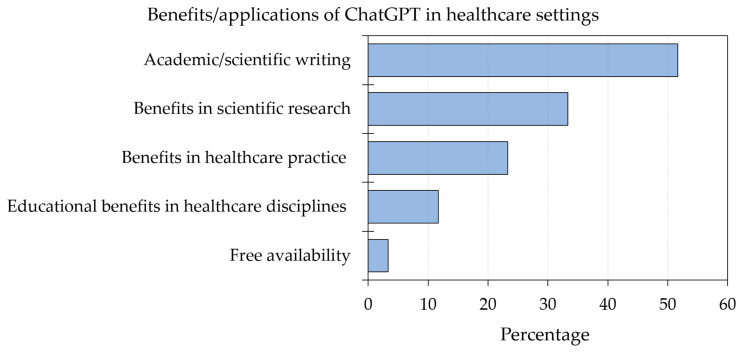
- Benefits were most frequently cited for academic/scientific writing (31 records, 51.7%), followed by scientific research (20, 33.3%), healthcare practice (14, 23.3%), healthcare education (7, 11.7%), and being a free package (2, 3.3%).
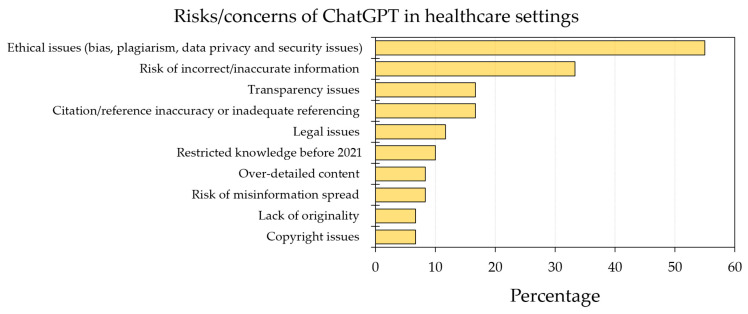
- Ethical concerns were the most common risk category (33 records, 55.0%), including risk of bias (18, 30.0%) and plagiarism (14, 23.3%); incorrect/inaccurate information was cited in 20 records (33.3%), citation/reference inaccuracy in 10 (16.7%), and transparency issues in 10 (16.7%).
- Other reported concerns included legal issues (7, 11.7%), restricted knowledge before 2021 (6, 10.0%), misinformation spread (5, 8.3%), over-detailed content (5, 8.3%), copyright issues (4, 6.7%), and lack of originality (4, 6.7%).
- The review states that ChatGPT does not qualify as an author under current ICMJE/COPE guidelines unless those guidelines are revised, and calls for stakeholder-developed ethics guidance for responsible LLM use in healthcare and academia.
Methods
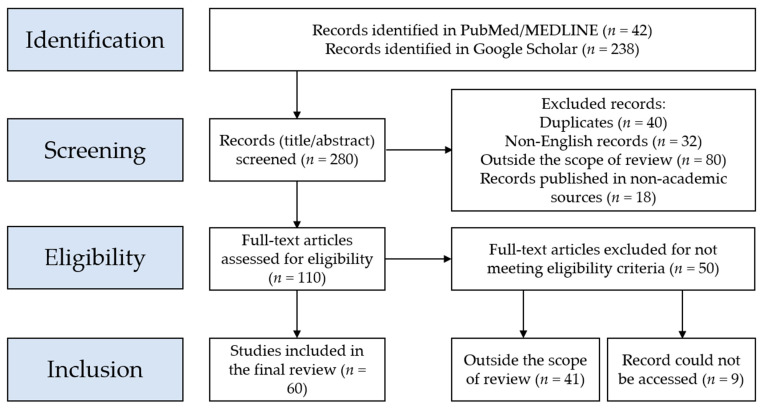
- Systematic review conducted according to PRISMA guidelines, searching PubMed/MEDLINE and Google Scholar for English records on ChatGPT in healthcare practice/research, healthcare education, or academic writing; searches concluded on 16 February 2023.
- PubMed/MEDLINE yielded 42 records and Google Scholar yielded 238 records, totaling 280 records; after duplicate removal (n = 40), non-English exclusion (n = 32), out-of-scope exclusion (n = 80), non-academic source exclusion (n = 18), full-text screening exclusions (n = 41), and inaccessible full texts (n = 9), 60 records were included.
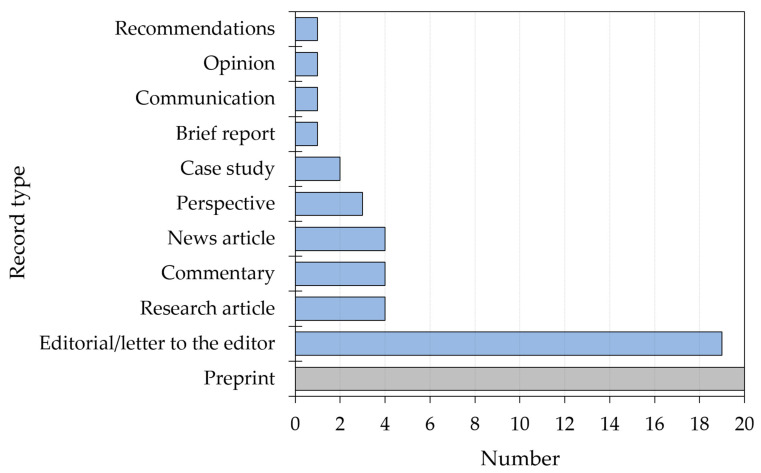
- Each included record was searched for record type, listed benefits/applications, listed risks/concerns, and main conclusions/recommendations regarding ChatGPT in healthcare education, practice, or scientific research/academic writing.
Limitations
- The paper states that included records had variable quality, non-English exclusion may have caused selection bias, inaccessible records may have led to missing relevant data, preprints were not peer reviewed, the literature is growing rapidly with the search ending 16 February 2023, and screening/interpretation was performed by a single author.
- Evident from the text: the review reports descriptive counts of mentions across heterogeneous record types rather than a formal meta-analysis or independent risk-of-bias assessment.
Model-written summary. Check it against the paper before relying on it.
Integrity signals
Registry
Cites
Statistics
Figures
Verification
Claims the paper makes
53 Valid · 1 Not valid · 6 Not checked · 37 Own results and interpretations
Every source the paper cites for this claim was checked and supports it.
In the paper
“This comes in light of the ability of ChatGPT to generate incorrect content that appears plausible from a scientific point of view [81].”
§ ChatGPT Utility in Healthcare Education, Research, and Practice: Systematic Review on the Promising Perspectives and Valid Concerns > 4. Discussion > 4.2. Limitations of ChatGPT Use in Scientific Research
What the sources say
- Supportedcites [81] Cascella M. Montomoli J. Bellini V. Bignami E. Evaluating the Feasibility of ChatGPT in Healthcare: An Analysis of Multiple Clinical and Research Scenarios J. Med. Syst. 2023 47 33 10.1007/s10916-023-01925-4 36869927 PMC9985086 source
In “Reasoning About Public Health Topics,” the paper says ChatGPT can produce believable answers that may be incorrect or nonsensical. In “Possible Misuse of GPT in Medicine and Research,” it describes a scientific abstract that appeared reliable and simulated statistical outputs that could seem plausible to readers. Together, these passages support the claim. (LLM, conf=0.94)
plain- Asserted: passes — The authors put it forward as true.
- Checkable: passes — It can be checked against evidence.
- Load-bearing: passes — The paper’s conclusions depend on it.
- Based: passes — The paper gives a reason why it holds.
- Supported
The sources with a verdict support this claim; the rest weren’t checked yet, have no full text we could read, or their verdicts aren’t rated yet.
In the paper
“This comes in light of the fact that authorship entails legal obligations that are not met by ChatGPT [43,48].”
§ ChatGPT Utility in Healthcare Education, Research, and Practice: Systematic Review on the Promising Perspectives and Valid Concerns > 4. Discussion > 4.2. Limitations of ChatGPT Use in Scientific Research
What the sources say
- Supportedcites [43] Zielinski C. Winker M. Aggarwal R. Ferris L. Heinemann M. Lapeña J. Pai S. Ing E. Citrome L. Chatbots, ChatGPT, and Scholarly Manuscripts WAME Recommendations on ChatGPT and Chatbots in Relation to Scholarly Publications Maced J. Med. Sci. 2023 11 83 86 10.3889/oamjms.2023.11502 37615142 source
The Introduction (p. 2) says chatbots are not legal entities, cannot be held legally liable, and that listing ChatGPT as an author may not be legally defensible. The WAME Recommendations (p. 2) add that chatbots cannot take responsibility for a paper or have the legal standing to sign a statement. (LLM, conf=0.93)
- Not checked — no full text of the sourcecites [48] Liebrenz M. Schleifer R. Buadze A. Bhugra D. Smith A. Generating scholarly content with ChatGPT: Ethical challenges for medical publishing Lancet Digit. Health 2023 5 e105 e106 10.1016/S2589-7500(23)00019-5 36754725 source
plain- Asserted: passes — The authors put it forward as true.
- Checkable: passes — It can be checked against evidence.
- Load-bearing: passes — The paper’s conclusions depend on it.
- Based: passes — The paper gives a reason why it holds.
- Supported
The cited sources support only part of this claim — read each source’s verdict below.
In the paper
“On one hand, ChatGPT, among other LLMs, can be beneficial in conversational and writing tasks, assisting to increase the efficiency and accuracy of the required output [11].”
§ ChatGPT Utility in Healthcare Education, Research, and Practice: Systematic Review on the Promising Perspectives and Valid Concerns > 1. Introduction
What the sources say
- Partly supportedcites [11] Deng J. Lin Y. The Benefits and Challenges of ChatGPT: An Overview Front. Comput. Intell. Syst. 2023 2 81 83 10.54097/fcis.v2i2.4465 sourceExperimental — accuracy not yet measured
Sections 4.1 (Increased Efficiency) and 4.2 (Improved Accuracy) say ChatGPT can make conversations more efficient and generate more accurate responses. The paper does not establish those benefits for writing tasks or for other LLMs, so the broader claim is only partially supported. (LLM, conf=0.88)
plainstates a cause- Asserted: passes — The authors put it forward as true.
- Checkable: passes — It can be checked against evidence.
- Load-bearing: unclear — It is unclear whether the paper’s conclusions depend on it.
- Based: passes — The paper gives a reason why it holds.
- Partly supported
The cited sources support only part of this claim — read each source’s verdict below.
In the paper
“Importantly, the concept of ChatGPT hallucination could be risky if the generated content is not thoroughly evaluated by researchers and health providers with proper expertise [37,56,73,77,79].”
§ ChatGPT Utility in Healthcare Education, Research, and Practice: Systematic Review on the Promising Perspectives and Valid Concerns > 4. Discussion > 4.2. Limitations of ChatGPT Use in Scientific Research
What the sources say
- Not checked — no full text of the sourcecites [37] Shen Y. Heacock L. Elias J. Hentel K.D. Reig B. Shih G. Moy L. ChatGPT and Other Large Language Models Are Double-edged Swords Radiology 2023 230163 10.1148/radiol.230163 36700838 source
- Partly supportedcites [56] Huh S. Are ChatGPT’s knowledge and interpretation ability comparable to those of medical students in Korea for taking a parasitology examination?: A descriptive study J. Educ. Eval. Health Prof. 2023 20 1 10.3352/jeehp.2023.20.1 36627845 PMC9905868 sourceExperimental — accuracy not yet measured
The Background says medical students must evaluate the accuracy of AI-generated medical information before creating reliable information for patients and the public. The Interpretation also reports that some ChatGPT explanations contained incorrect information. These passages support the need for scrutiny, but the paper does not specifically discuss hallucination or evaluation by researchers and health providers. (LLM, conf=0.84)
- Partly supportedcites [73] Duong D. Solomon B.D. Analysis of large-language model versus human performance for genetics questions medRxiv 2023 Preprint 10.1101/2023.01.27.23285115 PMC10999420 37246194 sourceExperimental — accuracy not yet measured
The Discussion (p. 6) says ChatGPT can give plausible explanations for incorrect answers and that its correctness requires additional verification, which is concerning in medical or other high-stakes settings. This supports the risk and need for evaluation, but the paper does not specify that researchers and health providers with proper expertise must perform it. (LLM, conf=0.83)
- Supportedcites [77] Jeblick K. Schachtner B. Dexl J. Mittermeier A. Stüber A.T. Topalis J. Weber T. Wesp P. Sabel B. Ricke J. ChatGPT Makes Medicine Easy to Swallow: An Exploratory Case Study on Simplified Radiology Reports arXiv 2022 10.48550/arxiv.2212.14882 2212.14882 PMC11126432 37794249 source
The Results (Free-text analysis) identify a ChatGPT hallucination that radiologists judged potentially harmful to a patient. The Key Points state that minimizing harm requires supervision by medical experts, supporting the claim’s warning about unevaluated medical content. (LLM, conf=0.90)
- Partly supportedcites [79] Lin Z. Why and how to embrace AI such as ChatGPT in your academic life PsyArXiv 2023 Preprint 10.31234/osf.io/sdx3j PMC10445029 37621662 sourceExperimental — accuracy not yet measured
The “Limitations of generative AI” section says ChatGPT may fabricate facts and false citations (“hallucination”) and urges users to critically evaluate and verify its responses, particularly when reliability is critical. It does not specifically say that researchers and health providers with proper expertise must evaluate the content; that part is more specific than the source. (LLM, conf=0.84)
hedgedstates a possible cause- Asserted: passes — The authors put it forward as true.
- Checkable: passes — It can be checked against evidence.
- Load-bearing: passes — The paper’s conclusions depend on it.
- Based: passes — The paper gives a reason why it holds.
- Rests on an assumption not shown here.
The sources with a verdict support this claim; the rest weren’t checked yet, have no full text we could read, or their verdicts aren’t rated yet.
In the paper
“This is particularly relevant for researchers who are non-native English speakers [23,25,63].”
§ ChatGPT Utility in Healthcare Education, Research, and Practice: Systematic Review on the Promising Perspectives and Valid Concerns > 4. Discussion > 4.1. Benefits of ChatGPT in Scientific Research
What the sources say
- Supportedcites [23] Chen T.J. ChatGPT and Other Artificial Intelligence Applications Speed up Scientific Writing Available online: https://journals.lww.com/jcma/Citation/9900/ChatGPT_and_other_artificial_intelligence.174.aspx (accessed on 16 February 2023) PMC12755446 36791246 source
In the main text (page not provided), Chen says many scientists who are not native English speakers struggle to write in English and describes AI translation and writing tools as ways to overcome that barrier. This supports the claim that language assistance in scientific writing is particularly relevant to those researchers. (LLM, conf=0.91)
- Not checked — no full text of the sourcecites [25] Kitamura F.C. ChatGPT Is Shaping the Future of Medical Writing but Still Requires Human Judgment Radiology 2023 230171 10.1148/radiol.230171 36728749 source
- Supportedcites [63] Gao C.A. Howard F.M. Markov N.S. Dyer E.C. Ramesh S. Luo Y. Pearson A.T. Comparing scientific abstracts generated by ChatGPT to original abstracts using an artificial intelligence output detector, plagiarism detector, and blinded human reviewers bioRxiv 2022 10.1101/2022.12.23.521610 source
The Discussion/Abstract section of our copy states directly that the technology 'could be used by scientists publishing in a language that is not their native language, to improve equity,' alongside the point that generated text 'may help alleviate the burden of writing' and that LLMs are 'a powerful tool to create readable scientific abstracts.' That covers the attributed content — AI-assisted language improvement being especially pertinent for non-native-English researchers — with the source's own hedge ('could be used') slightly weaker than the citing sentence's flat 'is particularly relevant.' No passage in our copy contradicts it. (LLM, conf=0.82)
plainstates an association- Asserted: passes — The authors put it forward as true.
- Checkable: passes — It can be checked against evidence.
- Load-bearing: unclear — It is unclear whether the paper’s conclusions depend on it.
- Based: passes — The paper gives a reason why it holds.
- Supported
42 more claims · 23 with their cited sources checked
Create a free account to see all 97 claims and to verify the 16 references still open.
- Probably not a substantial claim. 31
- It may state two separate claims as one. 27
Claims other papers make about this one
Each is checked against this paper’s own text: does it say what the citing paper says it does?
The source backs part of the claim, not all of it — or backs it for a different population, condition or comparison.
In the citing paper
“The reliance on ChatGPT may result in hindering the development of the skills needed to interpret and respond to social cues, which should be considered in health care education [9,91].”
From Assessing Health Students' Attitudes and Usage of ChatGPT in Jordan: Validation Study (2023) · cites this paper as [9]
Experimental — accuracy not yet measuredThe source backs part of the claim, not all of it — or backs it for a different population, condition or comparison.
In the citing paper
“A recent surge in the use of ChatGPT, in particular for mental health, is emergent for providing crucial personalized advice without clinical explanation, which can hurt user's safety, and thus trust (Sallam, 2023).”
From A review of the explainability and safety of conversational agents for mental health to identify avenues for improvement (2023) · cites this paper as Sallam, 2023
Experimental — accuracy not yet measuredThe source backs part of the claim, not all of it — or backs it for a different population, condition or comparison.
In the citing paper
“ChatGPT plays a crucial role in pandemic management by aiding in the swift and accurate dissemination of critical information.”
From A Systematic Review and Meta-Analysis of Artificial Intelligence Tools in Medicine and Healthcare: Applications, Considerations, Limitations, Motivation and Challenges (2024) · cites this paper as [6]
Experimental — accuracy not yet measuredThe source backs part of the claim, not all of it — or backs it for a different population, condition or comparison.
In the citing paper
“Its natural language processing capabilities enable it to generate coherent responses, making it a valuable tool for healthcare organisations.”
From A Systematic Review and Meta-Analysis of Artificial Intelligence Tools in Medicine and Healthcare: Applications, Considerations, Limitations, Motivation and Challenges (2024) · cites this paper as [6]
Experimental — accuracy not yet measuredThe source backs part of the claim, not all of it — or backs it for a different population, condition or comparison.
In the citing paper
“Specific advantages include its ability to provide rapid updates, preventive measures, and medical guidelines to the public.”
From A Systematic Review and Meta-Analysis of Artificial Intelligence Tools in Medicine and Healthcare: Applications, Considerations, Limitations, Motivation and Challenges (2024) · cites this paper as [6]
Experimental — accuracy not yet measured
31 more claims about this paper
Create a free account to see every claim other papers make about this one.
Citations
Cites
Preferred Reporting Items for Systematic Reviews and Meta-Analyses: the PRISMA statement
Moher, D., Liberati, A., Tetzlaff, J., Altman, D. G., & for the PRISMA Group (2009) · BMJ · doi:10.1136/bmj.b2535 · Cited by 83,823
Preferred Reporting Items for Systematic Reviews and Meta-Analyses: The PRISMA Statement
Moher, D., Liberati, A., Tetzlaff, J., Altman, D. G., & The PRISMA Group (2009) · PLoS Medicine · doi:10.1371/journal.pmed.1000097 · Cited by 64,042 · cited 1×
“The current systematic review was conducted according to the Preferred Reporting Items for Systematic Reviews and Meta-Analyses (PRIMSA) guidelines [21].”
Language Models are Few-Shot Learners
Brown, T. B., Mann, B., Ryder, N., Subbiah, M., Kaplan, J., Dhariwal, P., Neelakantan, A., Shyam, P., Sastry, G., Askell, A., et al. (2020) · arXiv · doi:10.48550/arxiv.2005.14165 · Cited by 23,372 · cited 3×
“The GPT architecture utilizes a neural network to process natural language, thus generating responses based on the context of input text [7].”
BackgroundWang, G., Ma, R., Qiao, G., Wada, K., Aizawa, Y., & Satoh, T. (2015) · Integrative Medicine International · doi:10.1159/000368408 · Cited by 18,657
Kaugeranna, R., Kaugeranna, E., & Aion, (. S. 4. 6. (2023) · DROPS (Schloss Dagstuhl – Leibniz Center for Informatics) · doi:10.4230/lipics.giscience.2023.43 · Cited by 13,690
Machine learning: Trends, perspectives, and prospects
Jordan, M. I., & Mitchell, T. M. (2015) · Science · doi:10.1126/science.aaa8415 · Cited by 9,955
Kung, T. H., Cheatham, M., Medenilla, A., Sillos, C., De Leon, L., Elepaño, C., Madriaga, M., Aggabao, R., Diaz-Candido, G., Maningo, J., et al. (2023) · PLOS Digital Health · doi:10.1371/journal.pdig.0000198 · Cited by 4,115 · cited 2×
“[59] An article showing the ChatGPT raised accuracy which enabled passing the USMLE Accuracy with high concordance and insight; it can facilitate patient communication; improved personalized medicine ChatGPT has a promising potential in medical education; future studies are recommended to consider non-biased approach…”
BackgroundKung, T. H., Cheatham, M., ChatGPT, Medenilla, A., Sillos, C., De Leon, L., Elepaño, C., Madriaga, M., Aggabao, R., Diaz-Candido, G., et al. (2022) · doi:10.1101/2022.12.19.22283643 · Cited by 4,115
Rajpurkar, P., Chen, E., Banerjee, O., & Topol, E. J. (2022) · Nature Medicine · doi:10.1038/s41591-021-01614-0 · Cited by 3,212 · cited 1×
“The promising utility of AI in health care has been outlined previously with possible benefits in personalized medicine, drug discovery, and the analysis of large datasets aside from the potential applications to improve diagnosis and clinical decisions [17,18].”
BackgroundChatting and cheating: Ensuring academic integrity in the era of ChatGPT
Cotton, D. R. E., Cotton, P. A., & Shipway, J. R. (2024) · Innovations in Education and Teaching International · doi:10.1080/14703297.2023.2190148 · Cited by 3,087 · cited 1×
“[62] An EdArXiv 2 preprint on the academic integrity in ChatGPT era Risk of plagiarism; academic dishonesty Careful thinking of educational assessment tools”
Background
Cited by
Items 2,601–2,700 of 3,096
Shalavina, A. A., Shevtsova, Y. V., & Владимировна, П. С. (2025) · CARDIOVASCULAR THERAPY AND PREVENTION · doi:10.15829/1728-8800-2025-4471
Artificial intelligence in medicine: a cross-sectional study of knowledge and attitudes
Gupta, I., Garg, A., Varadarajan, A., Jain, S., & Wig, N. (2026) · BMC Medical Education · doi:10.1186/s12909-026-10052-w · Cited by 1
Balan, R., & Gumpel, T. P. (2025) · doi:10.2196/preprints.81204
Can ChatGPT Recognize Its Own Writing in Scientific Abstracts?
Sebo, P. (2025) · Cureus · doi:10.7759/cureus.88774 · Cited by 2
Does Human Still Have a Place in the Age of AI: Positive Versus Negative Valence of ChatGPT
Jmour, A. (2025) · Advances in computational intelligence and robotics book series · doi:10.4018/979-8-3373-6018-8.ch011
Shishakly, R., Abukhait, R., & Khattak, M. N. (2025) · Lecture notes in networks and systems · doi:10.1007/978-3-032-00450-5_53 · Cited by 1
Lean Six Sigma and Generative AI Large Language Models
Laureani, A. (2025) · IGI Global eBooks · doi:10.4018/979-8-3373-0943-9.ch003
Ghouali, K. (2025) · ONOMAZEIN · doi:10.7764/onomazein.ne16.02 · Cited by 5
Smart healthcare: Setting the new norm moving forward
Wong, B. K. M., Vengusamy, S., & Lim, T. (2025) · Elsevier eBooks · doi:10.1016/b978-0-443-27444-2.00004-6 · Cited by 2
Clementi, L., & López, M. D. J. (2025) · Journal of Spanish Language Teaching · doi:10.1080/23247797.2025.2534203 · Cited by 3
Mutin, J., Hafizin, M.-L., El-Jammal, V., Morel, C., Leca, L., Bergeron, M., & Bussières, J. (2025) · Le Pharmacien Clinicien · doi:10.1016/j.phacli.2025.07.006
A Study on Education 5.0 Towards Sustainable Development Goals
Chowdhury, A., & Shivam, P. (2025) · Teacher Education and Curriculum Studies · doi:10.11648/j.tecs.20251003.11
Uso do ChatGPT como ferramenta complementar de estudo e ensino no curso de medicina1
Carvalho, M. R. D., Greco, M. E., & de Souza, D. M. (2025) · Educação e Pesquisa · doi:10.1590/s1678-4634202551288875por · Cited by 4
Chai, S., & He, Z. (2025) · International Conference on Computer Science and Technologies in Education (CSTE) · doi:10.1109/cste64638.2025.11092270 · Cited by 3
“For example, Reference [9] found that ChatGPT-based intelligent learning systems enhance student performance and engagement, while Reference [10] demonstrated its role in improving medical students' knowledge acquisition and understanding.”
ChatGPT as a Digital Pharmacist: A Systematic Review and Meta-Analysis of Drug-Counselling AccuracyPreprint
Azmakan, H., Nabipour, A., Tehrani, N. G., Najari, N., hafshjani, P. F., Marvast, A. F., Mani, S., Sichani, N. A., Pakdaman, S. F., Shieh, M., et al. (2025) · medRxiv · doi:10.1101/2025.08.10.25333396
Artificial Intelligence in Healthcare: Roles, Challenges, and Disadvantages
Aknouch, A., Soussi, H., El-ouardi, Y., Belcadi, H., Aitouhanni, I., Dahbi, A., & Rachmoune, K. (2025) · IGI Global eBooks · doi:10.4018/979-8-3373-1992-6.ch008
AI and ChatGPT: Will It Build Business Education’s Future?
Sayari, K., Jalagat, R. C., & Belgacem, M. A. B. (2025) · Emerald Group Publishing Limited eBooks · doi:10.1108/978-1-83708-432-620251009
Digital dialogues: Measuring the impact of chatbots on human communication
Kaur, G., Saluja, S., & Bawa, S. S. (2025) · Journal of Dynamics and Games · doi:10.3934/jdg.2025042
Mukisa, R., & Matovu, R. (2025) · Lecture notes in networks and systems · doi:10.1007/978-3-031-92611-2_3
Yao, R., Qu, Y., Zhang, J., Zhou, X., Lian, J., Wu, A., Pan, B., Zhou, Y., & Sun, Q. (2025) · doi:10.2196/preprints.81674
Perioperative Risk Stratification with AI-powered Chatbots: A Systematic Review (Preprint)Preprint
Bellini, V., Panizzi, M., Delrio, S., Berdini, M., Ribeiro, V. D. S. C., Diego, L. A. D. S., & Bignami, E. G. (2025) · doi:10.2196/preprints.82354
Meng, Y., Liu, Z., Zhang, Y., Liu, B., Chen, J., Qu, Z., Li, Z., Lei, Z., & Hu, Z. (2025) · doi:10.2196/preprints.82469
Mushtaq, M., & Ali, P. M. N. (2025) · Journal of Knowledge & Communication Management · doi:10.5958/2277-7946.2025.00004.7
Comparing the performance of ChatGPT and Chatsonic on PLAB-style questions: a cross-sectional study
Prakash, R., Pathak, K., Manjula, P., Moiz, S. A., & Mehmood, K. T. (2025) · International Journal of Advances in Medicine · doi:10.18203/2349-3933.ijam20252532
Bogadi, C. R. (2025) · International Journal of Computer Trends and Technology · doi:10.14445/22312803/ijctt-v73i7p101 · Cited by 1
Understanding Teachers' Experiences in Using Artificial Intelligence
Mazo, J., Castro, L. D., Buhain, V. I., Tabunda, D., Cainglet, R. G., Asuncion, J., & Rosario, L. Z. D. (2025) · Psychology and Education A Multidisciplinary Journal · doi:10.70838/pemj.450904 · Cited by 3
Yaowaluk, T., Tangpanithandee, S., Techapichetvanich, P., & Khemawoot, P. (2025) · Drug Design Development and Therapy · doi:10.2147/dddt.s543827
“23 In this study, the ChatGPT model and Gemini 2.5 Pro model were used, which were chosen because they were the most advanced reasoning models available when the study was performed in May 2025.”
InfluentialMurakami, S., Oumi, K., Hirata, K., & Ogasawara, K. (2025) · doi:10.2196/preprints.83247
Feasibility and risks of using generative artificial intelligence in research
Shimizu, A. (2025) · Journal of Japan Academy of Midwifery · doi:10.3418/jjam.foreword-39-2
Zhang, B., & Campbell, J. (2025) · Journal of Oral and Maxillofacial Surgery · doi:10.1016/j.joms.2025.04.028
Tanas, Y., Gasper, G., Rashidi, K., & Swed, S. (2025) · International Journal of Surgery Protocols · doi:10.1097/sp9.0000000000000052
Ethical Issues in the Use of Generative AI Chatbots for Therapeutic Purposes
Gerdes, A. (2025) · Lecture notes in computer science · doi:10.1007/978-3-032-01429-0_30
The Effect of Employing ChatGPT to Enhance the Searchability among Female Researchers
Owda, M. F. A., & Zaqout, Y. (2025) · Creative Education · doi:10.4236/ce.2025.169080
Dukhanov, A. V., Klímová, A., Chistyakova, T. B., & Arseneva, A. (2025) · International Conference on Artificial Intelligence, Computer, Data Sciences and Applications (ACDSA) · doi:10.1109/acdsa65407.2025.11165923
“For example, ChatGPT is a useful AI-assistant in research in the field of finance [10], healthcare education [11], and programming [12].”
Al‐Zain, A. O., Alghamdi, A. A., Alansari, B., Alamoudi, A., El-Deeb, H. A., & Ismail, E. H. (2025) · European Journal Of Dental Education · doi:10.1111/eje.70051 · Cited by 19
Application of artificial intelligence to overcome clinical information overload in cancer
Stenzl, A., Ghith, J., & Schijvenaars, B. J. A. (2025) · Oxford University Press eBooks · doi:10.1093/med/9780192867636.003.0022
A Thematic Analysis of User Expectation for the Future Version of ChatGPT
Ghosh, A., Bhatia, A., & Lenka, R. M. (2025) · Lecture notes in networks and systems · doi:10.1007/978-981-96-4136-9_3
Reddy, G. V., Pallavi, L., Renuka, P., Swathi, K., & Vishalini, K. (2025) · AIP conference proceedings · doi:10.1063/5.0299097
Jiang, Y., & Fu, Q. (2025) · International Journal of Developmental Disabilities · doi:10.1080/20473869.2025.2563738
Gürsel, B. E., Öngen, G., & Sağlam, D. (2025) · Journal of Contemporary Medicine · doi:10.16899/jcm.1626433
Yolcu, F., Yekedüz, M. K., Köse, E., Samur, F. G., & Eminoğlu, F. T. (2025) · Nutrición Hospitalaria · doi:10.20960/nh.06026
Ahmed, B. S., & Salem, K. N. (2025) · Journal of Tikrit University for Humanities · doi:10.25130/jtuh.32.3.2.2025.25
Assessing the ability of ChatGPT 4.0 in generating check-up reports
Chen, Y., Liu, Y., Huang, Y., Huang, X., Zheng, Z., Yang, F., Lin, H., Lin, H., Li, X., Xie, A., et al. (2025) · Frontiers in Medicine · doi:10.3389/fmed.2025.1658561
Assessment LLM’s Capabilities in Archiving Standards Research: An Evaluation Study
Hani, E. M., & Idrissi, B. E. (2025) · Lecture notes in networks and systems · doi:10.1007/978-3-032-01536-5_37
Akkaya, G. S., & Şahin, H. B. (2025) · Turkish Journal of Osteoporosis · doi:10.4274/tod.galenos.2025.04875
Faraji, N., Zeinali, T., Aali, S., Mellatdoust, P., & Nejad, K. G. (2025) · Journal of Burns and Wound Research · doi:10.61882/ijbwr.1.3.35 · Cited by 1
West, N. K., Edwards, A. J., Sims, J. K., O'Brien, J. E., & Upperman, J. S. (2025) · Cureus · doi:10.7759/cureus.94229
“Despite encouraging results in diagnostic reasoning and triage tasks [5,6], models like ChatGPT are still prone to factual errors, inconsistencies, and misleading outputs, particularly under complex or ambiguous conditions [7,8].”
Levita, B., Eminovic, S., Lüdemann, W. M., Schnapauff, D., Schmidt, R., Haack, A.-M., Dell’Orco, A., Nawabi, J., & Penzkofer, T. (2025) · CVIR Endovascular · doi:10.1186/s42155-025-00609-z · Cited by 1
“Broader ethical concerns include legal accountability and the protection of human rights [41, 42].”
Yue, Z., & Wang, J. (2025) · International Conference on Computer Communication and Artificial Intelligence (CCAI) · doi:10.1109/ccai65422.2025.11189358 · Cited by 1
“In addition, there has been a debate on whether or not to grant creator status to AI [16]; in summary, the copyright issue is one of the issues that need urgently be resolved for the large-scale commercialisation of AI outputs.”
Law, K.-M., Ho, S.-B., & Tan, C.-H. (2025) · AIP conference proceedings · doi:10.1063/5.0299254
Impact of Generative Artificial Intelligence Systems on Higher Education in India – A Delphi Study
Mani, G., Sharma, N., Jain, R., & Pohekar, S. D. (2025) · SN Computer Science · doi:10.1007/s42979-025-04449-5 · Cited by 2
Leveraging Chatbot Technology for Phishing: A Study on ChatGPT, Copilot, and Gemini
Rafael, R., Singh, P., & Mohanty, M. (2025) · Lecture notes in computer science · doi:10.1007/978-981-95-3462-3_14
Exploring Emerging Adults’ Health Information Practices with AI through a Cognitive Authority Lens
Joshi, S., & Zaman, S. M. (2025) · Proceedings of the Association for Information Science and Technology · doi:10.1002/pra2.1449
“There are indications of both decreasing trust and increasing potential in AI technologies (Rainie, 2018; 2023).”
Potentials of ChatGPT in Anatomy Research: A Conversation With ChatGPT
Tigga, S. R., & Saluja, S. S. (2025) · Cureus · doi:10.7759/cureus.94984
“The objective of AI is to evolve a machine that can think like humans and mimic human behaviours, including the capability to comprehend, transform, rationalise, recognise, design, predict, anticipate, and understand theoretical concepts as well [1,3].”
Hbouz, O., Oukhouya, L., Elamrani, M. D., & Sbaï, A. (2025) · Lecture notes in networks and systems · doi:10.1007/978-3-032-01970-7_4
Aşan, H. (2025) · Uluslararası sosyal, siyasal ve mali araştırmalar dergisi. · doi:10.70101/ussmad.1758962
Chhotala, U., Bharadva, N., Dave, P., Kshtriya, P., & Shah, U. M. (2025) · Research Square · doi:10.21203/rs.3.rs-7388040/v1
Gyadu-Asiedu, N. A. A., Aigbavboa, C. O., & David, M. M. (2025) · Lecture notes in networks and systems · doi:10.1007/978-3-032-07992-3_16
ChatGPT frente a un examen teórico de Cirugía Ortopédica y Traumatología: valor clínico y educativo
Pujol, O., Guzmán, M., Álvaro, C., Leal‐Blanquet, J., Minguell, J., & Joshi-Jubert, N. (2025) · Revista Española de Cirugía Ortopédica y Traumatología · doi:10.1016/j.recot.2025.10.001 · Cited by 1
Ceran, O. (2025) · Türk Eğitim Bilimleri Dergisi · doi:10.37217/tebd.1762043
He, J., & Wang, B. (2025) · Digital Health · doi:10.1177/20552076251392292
“17,46 Medical data are highly sensitive, and medical decisions are directly related to patients ’ health and even life safety; therefore, users tend to have higher trust thresholds and safety expectations when evaluating such platforms.”
Metaverso in sanità: prospettive future e la sperimentazione in Toscana Sud Est
Limaj, S., D'Urso, A., D'Amato, M. G., Taddeini, F., Capitani, E., Vencia, F., Catani, V., Pianigiani, L., Salutini, E., Albino, A., et al. (2025) · MECOSAN · doi:10.3280/mesa2024-132oa20680
Interactions – A CyberSystemic Model and an Observation Framework Proposal
Perko, I. (2025) · Emerald Group Publishing Limited eBooks · doi:10.1108/978-1-83662-494-320251002 · Cited by 4
Sökmen, D., Albayrak, A. T., Sertkaya, Z., Başağa, Y., & Şerefoğlu, E. C. (2025) · The Journal of Sexual Medicine · doi:10.1038/s41443-025-01200-9 · Cited by 1
Enabling Canadian Physician Wellness in the Age of Digital Innovation: What Do We Need to Succeed?
Tajirian, T., Lo, B., Tasca, A., Poynter, B., Zai, G. C., Strudwick, G., Chandrasena, C., Jessa, K., Shin, P., Maggi, J., et al. (2025) · Applied Clinical Informatics · doi:10.1055/a-2628-1323
Leung, R. (2025) · Springer eBooks · doi:10.1007/978-3-032-08677-8_1
İnce, M. M., & Özaslan, E. (2025) · BMC Gastroenterology · doi:10.1186/s12876-025-04380-2
“Initially launched in November 2022, the system rapidly gained a significant user base [3].”
Trends of Generative AI in Scientific Writing: A Bibliometric Analysis (2014–2024)
Jaramillo, C. M. Z., Mejía, J., & Muñoz, M. (2025) · Lecture notes in networks and systems · doi:10.1007/978-3-032-01130-5_8 · Cited by 1
Artificial Intelligence in Academic Publishing: A Researcher’s Nightmare
Viswanathan, V., Dharwadkar, A., & Vimal, S. S. (2025) · Journal of the Scientific Society · doi:10.4103/jss.jss_295_25
Saeedi, S., & Rong, P. (2025) · Journal of Voice · doi:10.1016/j.jvoice.2025.10.044 · Cited by 1
Parenti, S. I., Maglioni, A., Evangelisti, E., Gracco, A. L. T., Badiali, G., Bonetti, G. A., & Bartolucci, M. L. (2025) · Applied Sciences · doi:10.3390/app152312441 · Cited by 1
Librarians Are Not Going Anywhere: Academic Health Science Librarian Expertise for AI-EBM Curricula
Bolton, M., Korytkowska, M., & Willson, G. (2025) · Journal of Electronic Resources in Medical Libraries · doi:10.1080/15424065.2025.2582847
“A recent systematic review showed that 58 of the 60 papers that examined ChatGPT in the context of healthcare education and practice had concerns of bias, plagiarism, limited knowledge, cybersecurity issues, and infodemic (Sallam, 2023).”
Tsoka, M., & Kriek, J. (2025) · Journal of Education and Learning Technology · doi:10.38159/jelt.20256117
Stoco, J. B., Araújo, J. V. A., Peres, A. T. D. C., Oliveira, G. P., & Peres, G. B. (2025) · Cureus Journal of Computer Science. · doi:10.7759/s44389-025-10532-y · Cited by 2
Weng, H., Lin, C., Ke, X., & Kuo, Y. P. (2025) · BMC Medical Education · doi:10.1186/s12909-025-08165-9
“While AI has demonstrated significant benefits in medical education—85% of studies high-light its advantages in areas such as scientific writing and research efficiency—its role in fostering EI remains uncertain [13].”
Hrasnica, F., Pitteloud, S., Jacot, J., et al. (2025) · doi:10.2196/preprints.89064
Xia, Y., Zhu, Y.-K., Liu, C., Hong, X., Zhang, R.-X., Zhang, N., Chen, M., Zhang, G., & Sun, C. (2025) · Asian Journal of Andrology · doi:10.4103/aja202559
Jijo, A., Jijo, M., Manoj, S., Aridas, M. S., & Javvaji, C. K. (2025) · Cureus · doi:10.7759/cureus.99286
“Similarly, a study by Sallam et al. (2023) on the use of ChatGPT in healthcare education demonstrated the additional difficulties of risk of bias, inaccurate or superficial content, and the lack of transparency regarding content generation [15].”
Faster, better?: Testing artificial intelligence accuracy for neurosurgical literature analysis
Civlan, S., Berker, B. B., Berker, D. Ş., Erbek, N. D., Doğruel, Y., Güngör, A., & Luzzi, S. (2025) · Medicine · doi:10.1097/md.0000000000046216
“25] For example, Elicit has been recognized for its strengths in literature mapping and structured evidence extraction using large language models to support hypothesis generation and systematic reviews.”
Zakkir, S., Dadhich, K., Bavanthi, K. V., Bukkasamudram, L. N., Santhosh, A. K., Thangaraj, S., & Kulkarni, P. P. (2025) · Cureus · doi:10.7759/cureus.99321 · Cited by 1
AI vs. MD: Benchmarking ChatGPT and Gemini for Complex Wound Management
Corradini, L., Marcaccini, G., Seth, I., Rozen, W. M., Biagiotti, C., Cuomo, R., & Giardino, F. R. (2025) · Journal of Clinical Medicine · doi:10.3390/jcm14248825 · Cited by 2
“Furthermore, LLMs applied in the field of complex wounds could serve as a training tool for junior plastic surgeons or less experienced practitioners, offering a sophisticated platform for diagnostic and therapeutic consultation and comparison [21,22].”
Ethical Hazards of Large Language Models in Primary Care: A Clinician-Focused Update
Lu, M. M., Gillette, J. J., & Heston, T. F. (2025) · IntechOpen eBooks · doi:10.5772/intechopen.1012864
ChatGPT in Health Science Education: Acceptance and Student Perspectives from the Philippines
Punzalan, C. H. (2025) · doi:10.1109/icet67257.2025.11290854
“For example, studies in health-related fields show that students value ChatGPT's capacity to offer immediate feedback and elucidate difficult medical ideas [5,6,7].”
Graziano, E., & Mascherpa, E. (2025) · Italiano LinguaDue · doi:10.54103/2037-3597/30455
Marcotte, L. M., Langevin, R., Hempstead, B. R., Ganguly, A., Lyon, A. R., Weiner, B. J., Akinsoto, N., Houston, P. L., Fang, V., & Hsieh, G. (2024) · Figshare · doi:10.6084/m9.figshare.26699153
Guimarães, N. S., Joviano‐Santos, J. V., Reis, M. G., & Chaves, R. R. M. (2024) · Figshare · doi:10.6084/m9.figshare.26658613
Marcotte, L. M., Langevin, R., Hempstead, B. R., Ganguly, A., Lyon, A. R., Weiner, B. J., Akinsoto, N., Houston, P. L., Fang, V., & Hsieh, G. (2024) · Figshare · doi:10.6084/m9.figshare.26699150
Bridging the Ai Gap: Unveiling Intensive Care Unit Nurses' Attitudes in Chinese Tertiary HospitalsPreprint
Liu, Y., Chang, Y., Yang, S., Sun, X., & Chen, C. (2025) · SSRN Electronic Journal · doi:10.2139/ssrn.5392179
ChatGPT and Generative Artificial Intelligence: A Bibliometric Review of the Research
Wamba, S. F., & Guthrie, C. H. (2025) · Lecture notes in networks and systems · doi:10.1007/978-981-96-4142-0_17 · Cited by 1
Estudantes de medicina versus chatbots na resolução de um teste médico: um estudo comparativo
Maison, D. A. P. L., da Silva, A. C. F., Glir, B. F., & Moré, A. O. O. (2025) · Revista Brasileira de Educação Médica · doi:10.1590/1981-5271v49.4-2025-0026.ing · Cited by 3
Aplicaciones y retos de ChatGPT en la medicina de laboratorio
Niu, Z., Kuang, X., Chen, J., Cai, X., & Zhang, P. (2025) · Advances in Laboratory Medicine / Avances en Medicina de Laboratorio · doi:10.1515/almed-2025-0158
“Los chatbots de IA tienen la capacidad de generar información aparentemente creíble pero imprecisa en realidad, por lo que es necesario que tanto los médicos como el personal del laboratorio sean conscientes de las ventajas y limitaciones de estas herramientas [13, 14].”
Kewan, T. Z., Lee, A., & Doren, L. V. (2025) · doi:10.2196/preprints.89939
Okuda, N., Nakamura, K., Watanabe, M., Kamide, K., Yoshita, K., Torii, S., Miura, K., Higashiyama, A., Tanno, K., Yonekura, Y., et al. (2025) · Journal of Atherosclerosis and Thrombosis · doi:10.5551/jat.65943 · Cited by 1
“…are supported by alternative strategies other than face-to-face interviews, which may include lifestyle monitoring systems using wearable devices 23) , social media or smartphone applications for people trying to lose weight 24) , or support systems based on artificial intelligence 25, 26) .”
Simons, L. P. A., Murukannaiah, P. K., & Neerincx, M. A. (2025) · IGI Global eBooks · doi:10.4018/979-8-3373-2545-3.ch003
Köhler, J., Harl, M. V., Westner, M. K., & Strahringer, S. (2025) · IEEE Conference on Business Informatics · doi:10.1109/cbi68102.2025.00012 · Cited by 2
Friedman, M., Slouk, A., Gonen, N., Guzy, L., Paz, Y. G., Sacks, K. N., Rottenstreich, A., Weiner, E., Gluck, O., & Kleiner, I. (2025) · Journal of Clinical Medicine · doi:10.3390/jcm15010117 · Cited by 1
“…maternal–fetal medicine, entails patient concerns that involve highly technical aspects of treatment and prognosis, including areas that benefit from personalized and source-dependent information responses by specialists, which is not always the case when using AI-provided responses [11–13].”
Ayata, M., & Albayrak, H. (2025) · Akdeniz diş hekimliği dergisi. · doi:10.62268/add.1835285
Çağlar, H. T., Kaçer, E. Ö., Pekcan, S., & Ayman, F. N. (2025) · PLoS ONE · doi:10.1371/journal.pone.0340007
AI-Generated Content for Project Proposal Development in Wenxin Yiyan and 360 Intelligent Brain
Wei, T., Hu, J., Huang, Q., et al. (2026) · Lecture notes in electrical engineering · doi:10.1007/978-981-95-0887-7_34
A Systematic Review of Empirical Studies Fostering Generative AI Literacy in Higher Education
Xu, L., Ng, D. T. K., Deng, H., & Leung, J. K. L. (2025) · Bridging human and machine: future education with intelligence · doi:10.1007/978-981-95-0950-8_8 · Cited by 2
Metadata
- Authors
- Sallam, M.
- Affiliations
- University of Jordan (JO)
- Corresponding author
- Sallam, Malik
- ORCID
- Sallam, Malik
- Venue
- Healthcare
- Publisher
- MDPI AG
- Published
- 2023-03-19
- Volume
- 11
- Issue
- 6
- Pages
- 887
- ISSN
- 2227-9032 (ISSN-L)
- PMC
- PMC10048148
- OpenAlex
- W4327946446
- Semantic Scholar
- dfdf7ff01aa6f691831e663fd29bc71890be39e2
- Cited by
- 3,126
- References
- 114
- Citations by year
- 2026: 561 · 2025: 839 · 2024: 1052 · 2023: 669
- FWCI
- 36.67
- Type
- journal article
- Language
- en
- Open access
- gold
- doi.org
- Licence
- Locations
- Healthcare (publishedVersion, cc-by)
- medRxiv (acceptedVersion, cc-by-nc-nd)
- Preprints.org (acceptedVersion, cc-by)
- PubMed Central (publishedVersion, cc-by)
- PubMed (publishedVersion)
- Topics
- Health Sciences › Medicine › Health Informatics › Artificial Intelligence in Healthcare and Education
- Physical Sciences › Computer Science › Artificial Intelligence › Artificial Intelligence Applications
- Social Sciences › Education › Artificial Intelligence in Education
- Keywords
- ChatGPT, large language models, artificial intelligence in healthcare, healthcare education, health care research, clinical practice, scientific writing, research equity, drug discovery, personalized medicine, health literacy, plagiarism, hallucinations, authorship criteria, AI ethics, infodemic
About these checks
Registry, retraction, Cites and statistics results are computed, not judged, with one exception: a printed reference that no index lists is read once by a model before it counts as a citation error. Claims are extracted by a model and kept only when their quote appears verbatim in the text; each cited source is then checked, with a model’s help, for whether it says what the claim relies on. Those verdicts can be wrong — read the claim’s quote and the cited source before relying on one.
The claim verdicts this report counts are experimental: their accuracy is not yet measured.
A language model drew the claims from the paper on 2026-10-10, under version 3 of the claim definition (model deepseek-v4.1-flash, prompt extract-v3).
A second model labelled each claim on 2026-10-10 (model jev-1.13-20260917, definition revision gold-guideline-v0.2).
Cited sources are checked with a language model’s help (gpt-6-sol and qwen3.8-omni-flash).
Statistics and arithmetic are recomputed, not judged.
Confidence bands are shown only for fields calibrated on our annotated test set. None is calibrated yet, so no band is shown.
What counts as a claim ›How we measure confidence ›How we check this ›
Are you an author, or do you see a problem with this page? Request a review
Data sources
Bibliographic data: Semantic Scholar, OpenAlex, Crossref.
Contains information from the Semantic Scholar Academic Graph Datasets, made available under the ODC Attribution License (ODC-BY 1.0).
Semantic Scholar’s data is described in: Kinney, R., et al. (2023). The Semantic Scholar Open Data Platform. arXiv:2301.10140.
