

ChatGPT Utility in Healthcare Education, Research, and Practice: Systematic Review on the Promising Perspectives and Valid Concerns
Open accessPublished version of a preprint
The DOI matches its Crossref record; 116 of the 117 references it cites were found in a registry or an index; 110 of the 179 sources its claims cite were checked for support.
Abstract
ChatGPT is an artificial intelligence-powered chatbot. This systematic review synthesised the evidence regarding its application in healthcare education, research, and practice. ChatGPT shows remarkable utilities in summarizing research, translating materials, serving as a virtual tutor, drafting case scenarios, and automating administrative workflows. However, concerns regarding incorrect outputs (hallucinations), lack of analytical depth, risk of plagiarism, and algorithmic bias remain significant across the literature.
Overview
CoChat Summary
TL;DR
This systematic review of 60 records found that ChatGPT was cited as beneficial in 51/60 (85.0%) records for healthcare education, research, and practice, while concerns were raised in 58/60 (96.7%) records. The author concludes that ChatGPT has promising applications but requires cautious, guideline-driven use, and does not currently qualify for scientific authorship under ICMJE/COPE guidelines.
Key findings
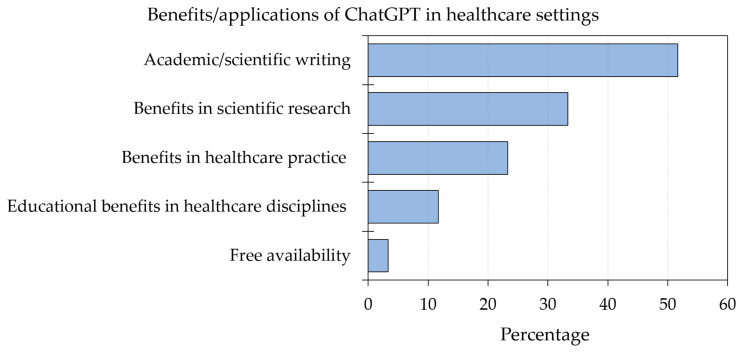
- Benefits were most frequently cited for academic/scientific writing (31 records, 51.7%), followed by scientific research (20, 33.3%), healthcare practice (14, 23.3%), healthcare education (7, 11.7%), and being a free package (2, 3.3%).
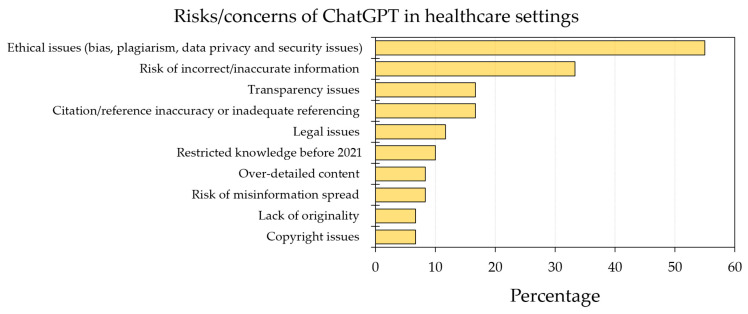
- Ethical concerns were the most common risk category (33 records, 55.0%), including risk of bias (18, 30.0%) and plagiarism (14, 23.3%); incorrect/inaccurate information was cited in 20 records (33.3%), citation/reference inaccuracy in 10 (16.7%), and transparency issues in 10 (16.7%).
- Other reported concerns included legal issues (7, 11.7%), restricted knowledge before 2021 (6, 10.0%), misinformation spread (5, 8.3%), over-detailed content (5, 8.3%), copyright issues (4, 6.7%), and lack of originality (4, 6.7%).
- The review states that ChatGPT does not qualify as an author under current ICMJE/COPE guidelines unless those guidelines are revised, and calls for stakeholder-developed ethics guidance for responsible LLM use in healthcare and academia.
Methods
- Systematic review conducted according to PRISMA guidelines, searching PubMed/MEDLINE and Google Scholar for English records on ChatGPT in healthcare practice/research, healthcare education, or academic writing; searches concluded on 16 February 2023.
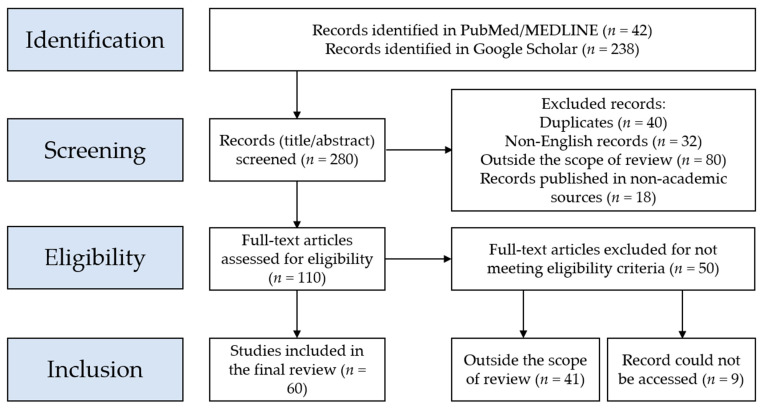
- PubMed/MEDLINE yielded 42 records and Google Scholar yielded 238 records, totaling 280 records; after duplicate removal (n = 40), non-English exclusion (n = 32), out-of-scope exclusion (n = 80), non-academic source exclusion (n = 18), full-text screening exclusions (n = 41), and inaccessible full texts (n = 9), 60 records were included.
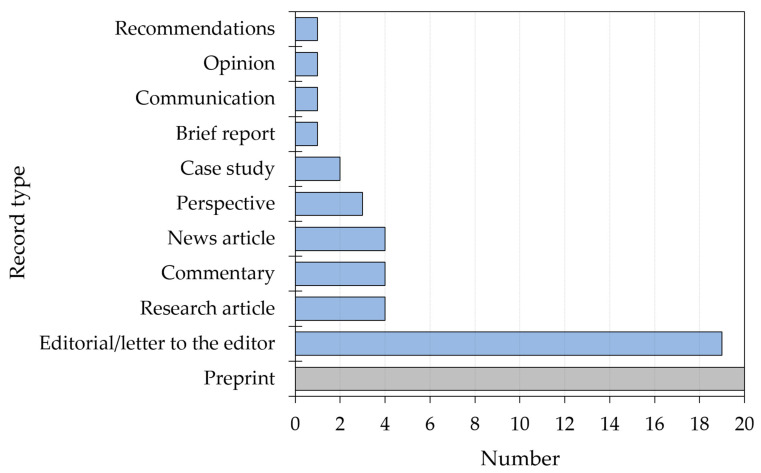
- Each included record was searched for record type, listed benefits/applications, listed risks/concerns, and main conclusions/recommendations regarding ChatGPT in healthcare education, practice, or scientific research/academic writing.
Limitations
- The paper states that included records had variable quality, non-English exclusion may have caused selection bias, inaccessible records may have led to missing relevant data, preprints were not peer reviewed, the literature is growing rapidly with the search ending 16 February 2023, and screening/interpretation was performed by a single author.
- Evident from the text: the review reports descriptive counts of mentions across heterogeneous record types rather than a formal meta-analysis or independent risk-of-bias assessment.
Model-written summary. Check it against the paper before relying on it.
Integrity signals
Registry
Cites
Statistics
Figures
Verification
Claims the paper makes
53 Valid · 1 Not valid · 6 Not checked · 37 Own results and interpretations
Every source the paper cites for this claim was checked and supports it.
In the paper
“This comes in light of the ability of ChatGPT to generate incorrect content that appears plausible from a scientific point of view [81].”
§ ChatGPT Utility in Healthcare Education, Research, and Practice: Systematic Review on the Promising Perspectives and Valid Concerns > 4. Discussion > 4.2. Limitations of ChatGPT Use in Scientific Research
What the sources say
- Supportedcites [81] Cascella M. Montomoli J. Bellini V. Bignami E. Evaluating the Feasibility of ChatGPT in Healthcare: An Analysis of Multiple Clinical and Research Scenarios J. Med. Syst. 2023 47 33 10.1007/s10916-023-01925-4 36869927 PMC9985086 source
In “Reasoning About Public Health Topics,” the paper says ChatGPT can produce believable answers that may be incorrect or nonsensical. In “Possible Misuse of GPT in Medicine and Research,” it describes a scientific abstract that appeared reliable and simulated statistical outputs that could seem plausible to readers. Together, these passages support the claim. (LLM, conf=0.94)
plain- Asserted: passes — The authors put it forward as true.
- Checkable: passes — It can be checked against evidence.
- Load-bearing: passes — The paper’s conclusions depend on it.
- Based: passes — The paper gives a reason why it holds.
- Supported
The sources with a verdict support this claim; the rest weren’t checked yet, have no full text we could read, or their verdicts aren’t rated yet.
In the paper
“This comes in light of the fact that authorship entails legal obligations that are not met by ChatGPT [43,48].”
§ ChatGPT Utility in Healthcare Education, Research, and Practice: Systematic Review on the Promising Perspectives and Valid Concerns > 4. Discussion > 4.2. Limitations of ChatGPT Use in Scientific Research
What the sources say
- Supportedcites [43] Zielinski C. Winker M. Aggarwal R. Ferris L. Heinemann M. Lapeña J. Pai S. Ing E. Citrome L. Chatbots, ChatGPT, and Scholarly Manuscripts WAME Recommendations on ChatGPT and Chatbots in Relation to Scholarly Publications Maced J. Med. Sci. 2023 11 83 86 10.3889/oamjms.2023.11502 37615142 source
The Introduction (p. 2) says chatbots are not legal entities, cannot be held legally liable, and that listing ChatGPT as an author may not be legally defensible. The WAME Recommendations (p. 2) add that chatbots cannot take responsibility for a paper or have the legal standing to sign a statement. (LLM, conf=0.93)
- Not checked — no full text of the sourcecites [48] Liebrenz M. Schleifer R. Buadze A. Bhugra D. Smith A. Generating scholarly content with ChatGPT: Ethical challenges for medical publishing Lancet Digit. Health 2023 5 e105 e106 10.1016/S2589-7500(23)00019-5 36754725 source
plain- Asserted: passes — The authors put it forward as true.
- Checkable: passes — It can be checked against evidence.
- Load-bearing: passes — The paper’s conclusions depend on it.
- Based: passes — The paper gives a reason why it holds.
- Supported
The cited sources support only part of this claim — read each source’s verdict below.
In the paper
“On one hand, ChatGPT, among other LLMs, can be beneficial in conversational and writing tasks, assisting to increase the efficiency and accuracy of the required output [11].”
§ ChatGPT Utility in Healthcare Education, Research, and Practice: Systematic Review on the Promising Perspectives and Valid Concerns > 1. Introduction
What the sources say
- Partly supportedcites [11] Deng J. Lin Y. The Benefits and Challenges of ChatGPT: An Overview Front. Comput. Intell. Syst. 2023 2 81 83 10.54097/fcis.v2i2.4465 sourceExperimental — accuracy not yet measured
Sections 4.1 (Increased Efficiency) and 4.2 (Improved Accuracy) say ChatGPT can make conversations more efficient and generate more accurate responses. The paper does not establish those benefits for writing tasks or for other LLMs, so the broader claim is only partially supported. (LLM, conf=0.88)
plainstates a cause- Asserted: passes — The authors put it forward as true.
- Checkable: passes — It can be checked against evidence.
- Load-bearing: unclear — It is unclear whether the paper’s conclusions depend on it.
- Based: passes — The paper gives a reason why it holds.
- Partly supported
The cited sources support only part of this claim — read each source’s verdict below.
In the paper
“Importantly, the concept of ChatGPT hallucination could be risky if the generated content is not thoroughly evaluated by researchers and health providers with proper expertise [37,56,73,77,79].”
§ ChatGPT Utility in Healthcare Education, Research, and Practice: Systematic Review on the Promising Perspectives and Valid Concerns > 4. Discussion > 4.2. Limitations of ChatGPT Use in Scientific Research
What the sources say
- Not checked — no full text of the sourcecites [37] Shen Y. Heacock L. Elias J. Hentel K.D. Reig B. Shih G. Moy L. ChatGPT and Other Large Language Models Are Double-edged Swords Radiology 2023 230163 10.1148/radiol.230163 36700838 source
- Partly supportedcites [56] Huh S. Are ChatGPT’s knowledge and interpretation ability comparable to those of medical students in Korea for taking a parasitology examination?: A descriptive study J. Educ. Eval. Health Prof. 2023 20 1 10.3352/jeehp.2023.20.1 36627845 PMC9905868 sourceExperimental — accuracy not yet measured
The Background says medical students must evaluate the accuracy of AI-generated medical information before creating reliable information for patients and the public. The Interpretation also reports that some ChatGPT explanations contained incorrect information. These passages support the need for scrutiny, but the paper does not specifically discuss hallucination or evaluation by researchers and health providers. (LLM, conf=0.84)
- Partly supportedcites [73] Duong D. Solomon B.D. Analysis of large-language model versus human performance for genetics questions medRxiv 2023 Preprint 10.1101/2023.01.27.23285115 PMC10999420 37246194 sourceExperimental — accuracy not yet measured
The Discussion (p. 6) says ChatGPT can give plausible explanations for incorrect answers and that its correctness requires additional verification, which is concerning in medical or other high-stakes settings. This supports the risk and need for evaluation, but the paper does not specify that researchers and health providers with proper expertise must perform it. (LLM, conf=0.83)
- Supportedcites [77] Jeblick K. Schachtner B. Dexl J. Mittermeier A. Stüber A.T. Topalis J. Weber T. Wesp P. Sabel B. Ricke J. ChatGPT Makes Medicine Easy to Swallow: An Exploratory Case Study on Simplified Radiology Reports arXiv 2022 10.48550/arxiv.2212.14882 2212.14882 PMC11126432 37794249 source
The Results (Free-text analysis) identify a ChatGPT hallucination that radiologists judged potentially harmful to a patient. The Key Points state that minimizing harm requires supervision by medical experts, supporting the claim’s warning about unevaluated medical content. (LLM, conf=0.90)
- Partly supportedcites [79] Lin Z. Why and how to embrace AI such as ChatGPT in your academic life PsyArXiv 2023 Preprint 10.31234/osf.io/sdx3j PMC10445029 37621662 sourceExperimental — accuracy not yet measured
The “Limitations of generative AI” section says ChatGPT may fabricate facts and false citations (“hallucination”) and urges users to critically evaluate and verify its responses, particularly when reliability is critical. It does not specifically say that researchers and health providers with proper expertise must evaluate the content; that part is more specific than the source. (LLM, conf=0.84)
hedgedstates a possible cause- Asserted: passes — The authors put it forward as true.
- Checkable: passes — It can be checked against evidence.
- Load-bearing: passes — The paper’s conclusions depend on it.
- Based: passes — The paper gives a reason why it holds.
- Rests on an assumption not shown here.
The sources with a verdict support this claim; the rest weren’t checked yet, have no full text we could read, or their verdicts aren’t rated yet.
In the paper
“This is particularly relevant for researchers who are non-native English speakers [23,25,63].”
§ ChatGPT Utility in Healthcare Education, Research, and Practice: Systematic Review on the Promising Perspectives and Valid Concerns > 4. Discussion > 4.1. Benefits of ChatGPT in Scientific Research
What the sources say
- Supportedcites [23] Chen T.J. ChatGPT and Other Artificial Intelligence Applications Speed up Scientific Writing Available online: https://journals.lww.com/jcma/Citation/9900/ChatGPT_and_other_artificial_intelligence.174.aspx (accessed on 16 February 2023) PMC12755446 36791246 source
In the main text (page not provided), Chen says many scientists who are not native English speakers struggle to write in English and describes AI translation and writing tools as ways to overcome that barrier. This supports the claim that language assistance in scientific writing is particularly relevant to those researchers. (LLM, conf=0.91)
- Not checked — no full text of the sourcecites [25] Kitamura F.C. ChatGPT Is Shaping the Future of Medical Writing but Still Requires Human Judgment Radiology 2023 230171 10.1148/radiol.230171 36728749 source
- Supportedcites [63] Gao C.A. Howard F.M. Markov N.S. Dyer E.C. Ramesh S. Luo Y. Pearson A.T. Comparing scientific abstracts generated by ChatGPT to original abstracts using an artificial intelligence output detector, plagiarism detector, and blinded human reviewers bioRxiv 2022 10.1101/2022.12.23.521610 source
The Discussion/Abstract section of our copy states directly that the technology 'could be used by scientists publishing in a language that is not their native language, to improve equity,' alongside the point that generated text 'may help alleviate the burden of writing' and that LLMs are 'a powerful tool to create readable scientific abstracts.' That covers the attributed content — AI-assisted language improvement being especially pertinent for non-native-English researchers — with the source's own hedge ('could be used') slightly weaker than the citing sentence's flat 'is particularly relevant.' No passage in our copy contradicts it. (LLM, conf=0.82)
plainstates an association- Asserted: passes — The authors put it forward as true.
- Checkable: passes — It can be checked against evidence.
- Load-bearing: unclear — It is unclear whether the paper’s conclusions depend on it.
- Based: passes — The paper gives a reason why it holds.
- Supported
42 more claims · 23 with their cited sources checked
Create a free account to see all 97 claims and to verify the 16 references still open.
- Probably not a substantial claim. 31
- It may state two separate claims as one. 27
Claims other papers make about this one
Each is checked against this paper’s own text: does it say what the citing paper says it does?
The source backs part of the claim, not all of it — or backs it for a different population, condition or comparison.
In the citing paper
“The reliance on ChatGPT may result in hindering the development of the skills needed to interpret and respond to social cues, which should be considered in health care education [9,91].”
From Assessing Health Students' Attitudes and Usage of ChatGPT in Jordan: Validation Study (2023) · cites this paper as [9]
Experimental — accuracy not yet measuredThe source backs part of the claim, not all of it — or backs it for a different population, condition or comparison.
In the citing paper
“A recent surge in the use of ChatGPT, in particular for mental health, is emergent for providing crucial personalized advice without clinical explanation, which can hurt user's safety, and thus trust (Sallam, 2023).”
From A review of the explainability and safety of conversational agents for mental health to identify avenues for improvement (2023) · cites this paper as Sallam, 2023
Experimental — accuracy not yet measuredThe source backs part of the claim, not all of it — or backs it for a different population, condition or comparison.
In the citing paper
“ChatGPT plays a crucial role in pandemic management by aiding in the swift and accurate dissemination of critical information.”
From A Systematic Review and Meta-Analysis of Artificial Intelligence Tools in Medicine and Healthcare: Applications, Considerations, Limitations, Motivation and Challenges (2024) · cites this paper as [6]
Experimental — accuracy not yet measuredThe source backs part of the claim, not all of it — or backs it for a different population, condition or comparison.
In the citing paper
“Its natural language processing capabilities enable it to generate coherent responses, making it a valuable tool for healthcare organisations.”
From A Systematic Review and Meta-Analysis of Artificial Intelligence Tools in Medicine and Healthcare: Applications, Considerations, Limitations, Motivation and Challenges (2024) · cites this paper as [6]
Experimental — accuracy not yet measuredThe source backs part of the claim, not all of it — or backs it for a different population, condition or comparison.
In the citing paper
“Specific advantages include its ability to provide rapid updates, preventive measures, and medical guidelines to the public.”
From A Systematic Review and Meta-Analysis of Artificial Intelligence Tools in Medicine and Healthcare: Applications, Considerations, Limitations, Motivation and Challenges (2024) · cites this paper as [6]
Experimental — accuracy not yet measured
31 more claims about this paper
Create a free account to see every claim other papers make about this one.
Citations
Cites
Preferred Reporting Items for Systematic Reviews and Meta-Analyses: the PRISMA statement
Moher, D., Liberati, A., Tetzlaff, J., Altman, D. G., & for the PRISMA Group (2009) · BMJ · doi:10.1136/bmj.b2535 · Cited by 83,823
Preferred Reporting Items for Systematic Reviews and Meta-Analyses: The PRISMA Statement
Moher, D., Liberati, A., Tetzlaff, J., Altman, D. G., & The PRISMA Group (2009) · PLoS Medicine · doi:10.1371/journal.pmed.1000097 · Cited by 64,042 · cited 1×
“The current systematic review was conducted according to the Preferred Reporting Items for Systematic Reviews and Meta-Analyses (PRIMSA) guidelines [21].”
Language Models are Few-Shot Learners
Brown, T. B., Mann, B., Ryder, N., Subbiah, M., Kaplan, J., Dhariwal, P., Neelakantan, A., Shyam, P., Sastry, G., Askell, A., et al. (2020) · arXiv · doi:10.48550/arxiv.2005.14165 · Cited by 23,372 · cited 3×
“The GPT architecture utilizes a neural network to process natural language, thus generating responses based on the context of input text [7].”
BackgroundWang, G., Ma, R., Qiao, G., Wada, K., Aizawa, Y., & Satoh, T. (2015) · Integrative Medicine International · doi:10.1159/000368408 · Cited by 18,657
Kaugeranna, R., Kaugeranna, E., & Aion, (. S. 4. 6. (2023) · DROPS (Schloss Dagstuhl – Leibniz Center for Informatics) · doi:10.4230/lipics.giscience.2023.43 · Cited by 13,690
Machine learning: Trends, perspectives, and prospects
Jordan, M. I., & Mitchell, T. M. (2015) · Science · doi:10.1126/science.aaa8415 · Cited by 9,955
Kung, T. H., Cheatham, M., Medenilla, A., Sillos, C., De Leon, L., Elepaño, C., Madriaga, M., Aggabao, R., Diaz-Candido, G., Maningo, J., et al. (2023) · PLOS Digital Health · doi:10.1371/journal.pdig.0000198 · Cited by 4,115 · cited 2×
“[59] An article showing the ChatGPT raised accuracy which enabled passing the USMLE Accuracy with high concordance and insight; it can facilitate patient communication; improved personalized medicine ChatGPT has a promising potential in medical education; future studies are recommended to consider non-biased approach…”
BackgroundKung, T. H., Cheatham, M., ChatGPT, Medenilla, A., Sillos, C., De Leon, L., Elepaño, C., Madriaga, M., Aggabao, R., Diaz-Candido, G., et al. (2022) · doi:10.1101/2022.12.19.22283643 · Cited by 4,115
Rajpurkar, P., Chen, E., Banerjee, O., & Topol, E. J. (2022) · Nature Medicine · doi:10.1038/s41591-021-01614-0 · Cited by 3,212 · cited 1×
“The promising utility of AI in health care has been outlined previously with possible benefits in personalized medicine, drug discovery, and the analysis of large datasets aside from the potential applications to improve diagnosis and clinical decisions [17,18].”
BackgroundChatting and cheating: Ensuring academic integrity in the era of ChatGPT
Cotton, D. R. E., Cotton, P. A., & Shipway, J. R. (2024) · Innovations in Education and Teaching International · doi:10.1080/14703297.2023.2190148 · Cited by 3,087 · cited 1×
“[62] An EdArXiv 2 preprint on the academic integrity in ChatGPT era Risk of plagiarism; academic dishonesty Careful thinking of educational assessment tools”
Background
Cited by
Items 2,301–2,400 of 3,095
Sharma, M. K., Farough, S., Burkett, A., Prasanth, J., Elshafeey, N. A., Zygadlo, D., Dunn, C., & Korn, R. L. (2024) · SPIE Medical Imaging: Imaging Informatics for Healthcare, Research, and Applications · doi:10.1117/12.3011602 · Cited by 1
“…analysis of datasets, code generation, literature reviews, saving time to focus on experimental design, and drug discovery and development) and advantage in health care practice (streamlining the workflow, cost saving, documentation, personalized medicine, and improved health literacy) (12).”
BackgroundAwareness of ChatGPT Among Medical Students and Trainee/Residents
Lateef, H., Arshad, R., Ayesha, E., Hanif, S., Zainab, A., Naseer, O., Shahzad, F., & Afzal, S. (2024) · Journal of Society of Prevention Advocacy and Research KEMU · doi:10.21649/jspark.v3i1.375 · Cited by 1
Cabañuz, C., & Garcia, M. (2024) · Revista Española de Patología · doi:10.1016/j.patol.2024.01.003 · Cited by 1
Empowering Healthcare Professionals and Patients with ChatGPT: Applications and Challenges
Mosaiyebzadeh, F., Pouriyeh, S., Parizi, R. M., Han, M., Dehbozorgi, N., Dorodchi, M., & Batista, D. M. (2023) · Congress in Computer Science, Computer Engineering, and Applied Computing (CSCE) · doi:10.1109/csce60160.2023.00233 · Cited by 4
“In the healthcare domain, it can assist healthcare professionals and patients in streamlining healthcare operations [8], giving patients helpful information about their health conditions [9], and supporting patients in managing their medications [10].”
BackgroundŻmudka, K. J., Spychał, A., Ochman, B., Popowicz, Ł., Piłat, P., & Jaroszewicz, J. (2024) · Annales Academiae Medicae Silesiensis · doi:10.18794/aams/176450 · Cited by 1
“This phenomenon has also been observed by other researchers [15,16].”
ResultChatGPT : A new horizon at the intersect of human and artificial intelligence in academic psychiatry
D’Souza, R. F., Amanullah, S., Mathew, M., Tandon, R., & Surapaneni, K. M. (2024) · Bipolar Disorders · doi:10.1111/bdi.13441 · Cited by 1
Joseph, J., Jose, A. S., Ettaniyil, G. G., Jasimudeen, S., & Jose, J. (2024) · Cureus · doi:10.7759/cureus.59128 · Cited by 1
“Artificial intelligence (AI) methods have been widely utilized in numerous domains of the healthcare field, encompassing personalized treatment plans, offering evidence-based recommendations derived from analyses of patient data, error identification, and accurate disease diagnosis [7].”
BackgroundUso de herramientas digitales en salud en enfermedad inflamatoria intestinal
Rodríguez–Lago, I., Gros, B., Sánchez, K., et al. (2024) · Gastroenterología y Hepatología · doi:10.1016/j.gastrohep.2024.502200 · Cited by 1
Research on the application of ChatGPT in education—visual analysis based on CiteSpace
An, Z., & Ma, J. (2024) · Education and lifelong development research. · doi:10.46690/elder.2024.01.06 · Cited by 1
Research on the Development and Application of ChatGPT
Gao, Y. (2024) · Lecture Notes in Education Psychology and Public Media · doi:10.54254/2753-7048/52/20241540 · Cited by 1
Commitment to inclusion: The importance of collaboration in gender equity work
Lee, J. K., Levine, R. B., Yousem, D. M., et al. (2024) · Women s Health · doi:10.1177/17455057241252574 · Cited by 1
“32 Such effort might reduce burnout and improve retention.”
BackgroundChatGPT to Decide Buying Behavior
Arnone, G. (2024) · Contributions to finance and accounting · doi:10.1007/978-3-031-55536-7_5 · Cited by 2
Simons, L. P. A., Murukannaiah, P. K., & Neerincx, M. A. (2024) · doi:10.18690/um.fov.4.2024.16 · Cited by 2
Uso do Chat Generative Pre-trained Transformer na escrita acadêmica em saúde: uma revisão do escopo
Costa, I. C. P., do Nascimento, M. C., Treviso, P., Chini, L. T., Roza, B. D. A., Barbosa, S. D. F. F., & Mendes, K. D. S. (2024) · Revista Latino-Americana de Enfermagem · doi:10.1590/1518-8345.7133.4195 · Cited by 3
Costa, I. C. P., do Nascimento, M. C., Treviso, P., Chini, L. T., Roza, B. D. A., Barbosa, S. D. F. F., & Mendes, K. D. S. (2024) · Revista Latino-Americana de Enfermagem · doi:10.1590/1518-8345.7133.4193 · Cited by 1
The role of ChatGPT in medicine
Javed, M. (2024) · The American Journal of the Medical Sciences · doi:10.1016/j.amjms.2024.06.019 · Cited by 1
Análisis bibliométrico de ChatGPT como herramienta emergente en la salud
Ascencio-Medina, A., Solano, C., Prieto-Angarita, G., Jaramillo-Sierra, M., & Melo-Pedroza, V. (2024) · Revista Urología Colombiana / Colombian Urology Journal · doi:10.24875/ruc.23000099 · Cited by 2
“…en interpretación de resultados de laboratorio; análisis de su rendimiento en responder exámenes avanzados de admisión o exáme-nes de pregrado de medicina y su comparación con el En pocas palabras, los objetivos son evaluar su utilidad en la educación, investigación y práctica médica 6-8 .”
The Promise and the Challenge: Large Language Models for Patient Education - Are We There Yet?
Yılmaz, İ. E. (2024) · Gaziantep Islam Science and Technology University · doi:10.46871/eams.1456744 · Cited by 1
Fernández, J. M. B., González-Soltero, R., Fernández, C. J. B., del Pozo, R. B. M., & Rodríguez-Learte, A. I. (2024) · Revista Iberoamericana de Bioética · doi:10.14422/rib.i25.y2024.007 · Cited by 6
Pears, M., & Konstantinidis, S. T. (2024) · Advances in business information systems and analytics book series · doi:10.4018/979-8-3693-3003-6.ch008 · Cited by 2
Augmented reality integrated chatbot to improve learning outcomes in secondary school students.
Nurdiyanto, R., Praherdhiono, H., & Degeng, M. D. K. (2024) · Inovasi Kurikulum · doi:10.17509/jik.v21i2.69108 · Cited by 5
Exploration of the Application of ChatGPT in Information Technology Courses
Du, M., Mao, Y., Wang, Y., & Xie, F. (2024) · International Conference on Informatics Education and Computer Technology Applications (IECA) · doi:10.1109/ieca62822.2024.00025 · Cited by 1
“Moreover, the judicious and ethical application of ChatGPT's functionalities presents an avenue for continuous innovation and development in the field of education [10].”
BackgroundCan Artificial Intelligence Promote Financial Literacy in Higher Education?
Chummun, B. Z. (2024) · Advances in educational technologies and instructional design book series · doi:10.4018/979-8-3693-2418-9.ch001 · Cited by 1
ChatGPT in passive energy-saving technologies: Opportunities and challenges
Lai, Q., Liu, W., & Li, X. (2024) · AIP conference proceedings · doi:10.1063/5.0225681 · Cited by 2
Humans and AI: SWOT Analysis of Teaching Methods and Knowledge Acquisition of Students
Tran, T. A., Nguyen, L. T., & Le, Q. P. (2024) · International STEM Education Conference (iSTEM-Ed) · doi:10.1109/istem-ed62750.2024.10663159 · Cited by 1
“Both sides benefit from ChatGPT's efficiency and time-saving features, which foster an adaptable and dynamic learning environment [8].”
BackgroundNeuroGPT, evaluando ChatGPT: Diagnóstico y tratamiento de 72 pacientes neurológicos
Cabrera, A. F., de Soto, J. G., Montero, P. S., García, H. C., & Reigosa, R. P. (2024) · Neurología Argentina · doi:10.1016/j.neuarg.2024.08.002 · Cited by 1
Patel, M. G., Prajapati, H. N., Patel, N. K., Patel, N. S., Patel, A. K., & Brahmbhatt, H. A. (2024) · ShodhKosh Journal of Visual and Performing Arts · doi:10.29121/shodhkosh.v5.i5.2024.1956 · Cited by 2
Human Evaluation in Large Language Model Testing: Assessing the Quality of AI Model Output
Dharmendra, H., Raghunandan, G. C., Sindhu, A. N., Samanvitha, C., Nethravathi, N., & Elango, D. (2024) · Advances in computational intelligence and robotics book series · doi:10.4018/979-8-3693-5380-6.ch022 · Cited by 1
Development of ethical codes for instructors engaged in distance education: a Delphi study
Karataş, A., & Şimşek, N. (2024) · Interactive Learning Environments · doi:10.1080/10494820.2024.2412079 · Cited by 1
“Ensuring access and equity to these technologies and addressing technical and pedagogical challenges will be critical to ensuring the success of distance education programs (Coghlan et al., 2021; Garlinska et al., 2023; Marty, 2014; Sallam, 2023).”
Mukunya, D., Nantale, R., Kayemba, F., Ajalo, E., Pangholi, K., Babuya, J., Akuu, S. L., Namiiro, A. M., Tweheyo, R., Ekak, S., et al. (2024) · MedEdPublish · doi:10.12688/mep.20554.1 · Cited by 3
“Despite the great potential of AI tools such as ChatGPT, there are various concerns regarding their use in medical education including plagiarism, incorrect or fabricated responses, copy-right and privacy infringements and security concerns 8–11 .”
Garg, V., Alcasid, Z., Mendoza, K., Lee, H., Loo, Y. X., Nong, A., Toh, G. W., & Tan, S. (2024) · Healthcare · doi:10.3390/healthcare12222318 · Cited by 1
A Study of Coding Framework Generation by ChatGPT
Zhu, H. (2024) · Applied and Computational Engineering · doi:10.54254/2755-2721/2025.18277 · Cited by 1
Hemşirelik Eğitiminde Dönüşüm: ChatGPT’nin Potansiyeli, Yararları, Sınırlılıkları ve Zorlukları
Karaçay, P., Yaşar, Ö., Küçükkaya, A., & Göktaş, P. (2024) · Fenerbahçe Üniversitesi Sağlık Bilimleri Dergisi · doi:10.56061/fbujohs.1497062 · Cited by 2
Postigo-Zumarán, J. E., Revilla, L. J. N., Arias-Chávez, D., & Sevillano, L. M. C. (2024) · International Journal of Religion · doi:10.61707/3m2s5y94 · Cited by 1
“…and contexts (Zhai et al., 2024; Orrù et al., 2023; Ignjatović & Stevanović, 2023 and Wang et al., 2024), equity in assessment (Dwivedi et al., 2023), certification and meaning of educational awards, and worsening inequality in education (Sallam, 2023 and Chan & Lee, 2023 and Khlaif et al., 2023).”
Comparing the Quality of Humans and Chatgpt Instruction on Students’ Generative Thinking
(2025) · Journal of Psychology and Neuroscience · doi:10.47485/2693-2490.1101 · Cited by 2
Evaluating Health Education Programs in Addressing Environmental Health Risks
Zaveri, B., Panda, A. K., Hemanth, K. R., Dev, S., Mane, M., Chandra, P. P., & Sriram, S. (2024) · Health Leadership and Quality of Life · doi:10.56294/hl2024.372 · Cited by 1
We, W., Gu, T., Cao, Y., Sun, S., Wei, D., Li, M., Fly, A. D., Gu, W., Yao, L., & Sun, D. (2025) · Ecotoxicology and Environmental Safety · doi:10.1016/j.ecoenv.2025.117805 · Cited by 2
Enhancing the Efficiency of Medicinal Chemistry Through Computational Chemistry
Eakin, T., Ferdaous, J., Hossain, S., Ferdous, J., & Kawsar, S. M. A. (2025) · IGI Global eBooks · doi:10.4018/979-8-3693-5598-5.ch011 · Cited by 1
Beyond Prediction: How Generative AI is Creating New Healthcare Realities
Pramanik, B., Ghosh, D., Ghosh, D., & Paul, K. (2024) · Studies in systems, decision and control · doi:10.1007/978-3-031-75771-6_15 · Cited by 8
Case Study to Role of Large Language Models in Prediction of the Future Illness
Thakar, H. A., Pradhan, V., Sarda, J. S., Brahma, B., & Bhoi, A. K. (2025) · Studies in computational intelligence · doi:10.1007/978-3-031-82516-3_13 · Cited by 2
Digital Innovation in Medical Education: The Process and Challenges of Digital Transformation
Kim, Y. (2025) · Korean Medical Education Review · doi:10.17496/kmer.24.040 · Cited by 1
RETRACTED ARTICLE: GPT-4 as a Board-Certified Surgeon: A Pilot Study
Roshal, J. A., Silvestri, C. J., Sathe, T. S., Townsend, C. M., Klimberg, V. S., & Perez, A. (2025) · Medical Science Educator · doi:10.1007/s40670-025-02352-5 · Cited by 1
RetractedGenerative AI in Otolaryngology Residency Personal Statement Writing: A Mixed‐Methods Analysis
Wihlidal, J. G. J., Wolter, N. E., Propst, E. J., Lin, V., Au, M., Amin, S. N., & Siu, J. (2025) · The Laryngoscope · doi:10.1002/lary.32188 · Cited by 6
“This aligns with numerous previous concerns that while AI-generated content can superficially appear coherent and well-structured, it may include misrepresentations of the topic [3, 21].”
Malaise of Artificial Intelligence in Education: A Reflective Stance
Ansari, A. N., Panjwani, F., Ahmad, S., & Bhutta, S. M. (2025) · Advances in computational intelligence and robotics book series · doi:10.4018/979-8-3693-7873-1.ch013 · Cited by 3
Salida, A., Ahkas, A. W., & Al-‘Anazy, M. D. (2024) · ALSUNA Journal of Arabic and English Language · doi:10.31538/alsuna.v7i1.5175 · Cited by 1
Singh, S. P., Kaur, S., Aggarwal, A. D., Walia, D. S., & Singh, P. (2024) · Journal of Punjab Academy of Forensic Medicine & Toxicology · doi:10.5958/0974-083x.2024.00048.2 · Cited by 1
Singh, N., Neubronner, S., Kanayan, S., Illanes, S. E., Choolani, M. A., & Kemp, M. W. (2025) · Singapore Medical Journal · doi:10.4103/singaporemedj.smj-2024-173 · Cited by 3
DSouza, H., Mohammed, A., Almuntashiri, A. A. A., Kumar, V., Mulla, M., Khader, A. A., Bhowmick, S., & Gupta, P. (2025) · Journal of Education and Health Promotion · doi:10.4103/jehp.jehp_1699_24 · Cited by 1
“Sallam M [19] in their research concluded that the ChatGPT played a significant role in health research by providing a platform for data collection, analysis, and interpretation.”
Lynch, C. J., Jensen, E., Gore, R. J., Zamponi, V., O’Brien, K., Feldhaus, B., Smith, K., Martinez, J. P., Munro, M. H., Ozkose, T. E., et al. (2025) · IEEE Access · doi:10.1109/access.2025.3600146 · Cited by 2
“Despite advances in fluency and style, challenges persist regarding the accountability, safety, reliability, and ethical use of LLMs for narrative generation [4], [5], [6], [7], [8], [9], [10].”
Jijo, A., Jijo, M., Manoj, S., & Veerachamy, A. (2025) · Cureus · doi:10.7759/cureus.92434 · Cited by 1
“Such overlap may be unintentional, reflecting the reuse of common medical phrases [15,16].”
Exploring emerging physician competencies: Analyzing insights from medical care influencers on X
Ouyang, Y., Guo, Q., Alves, C., Gotzmann, A., Roy, M., & McCormick, J. (2025) · Medical Teacher · doi:10.1080/0142159x.2025.2560578 · Cited by 1
Advancing Education through AI: The Role of ChatGPT as Virtual Tutors in the Future of Learning
Graefen, B., & Fazal, N. (2023) · Annals of Pharmacy Education Safety and Public Health Advocacy · doi:10.51847/luftksf1zo · Cited by 2
ChatGPT research hotspots, frontiers, and trends - Analysis of WOS data based on CiteSpace
Zheng, Y., Song, B., & Tang, A. (2023) · International Conference on Computer Engineering and Distance Learning (CEDL) · doi:10.1109/cedl60560.2023.00020 · Cited by 2
Digital Literacy of Students at PTKIN in Aceh
Putri, N. E. (2023) · Al-Hijr Journal of Adulearn World · doi:10.55849/alhijr.v2i2.543 · Cited by 2
“The ability to use digital can certainly have a positive impact (Crawford & Serhal, 2020; Sallam, 2023).”
BackgroundCHANCES AND CHALLENGES OF CHATGPT AND SIMILAR MODELS FOR EDUCATION IN M&SPreprint
Scherer, W. T., Tolk, A., Loper, M. L., Barry, P. J., Rabadi, G., & Yılmaz, L. (2023) · doi:10.36227/techrxiv.22773842 · Cited by 1
CHANCES AND CHALLENGES OF CHATGPT AND SIMILAR MODELS FOR EDUCATION IN M&SPreprint
Scherer, W. T., Tolk, A., Loper, M. L., Barry, P. J., Rabadi, G., & Yılmaz, L. (2023) · doi:10.36227/techrxiv.22773842.v1 · Cited by 1
ChatGPT in Dermatology: A Comprehensive Systematic Review (Preprint)Preprint
Gabashvili, I. S. (2023) · doi:10.2196/preprints.48979 · Cited by 2
Meşe, İ. (2023) · Pediatric Neurology · doi:10.1016/j.pediatrneurol.2023.05.016 · Cited by 1
Biswas, S., Logan, N. S., Davies, L. N., et al. (2023) · Ophthalmic and Physiological Optics · doi:10.1111/opo.13227 · Cited by 1
Morandé, S., & Gul, K. (2023) · Qeios · doi:10.32388/7ovvw2 · Cited by 1
Guillén‐Grima, F., Guillén-Aguinaga, S., Guillén-Aguinaga, L., Alas-Brun, R., Onambele, L., Ortega-Leon, W., Montejo, R., Aguinaga-Ontoso, E., Barach, P. R., & Aguinaga-Ontoso, I. (2023) · Preprints.org · doi:10.20944/preprints202309.1272.v1 · Cited by 1
Kurian, D., Alizadeh, A., & Peebles, C. M. (2023) · Qeios · doi:10.32388/mzqcd3
Mathis, W. S., Zhao, S., Pratt, N., et al. (2024) · SSRN Electronic Journal · doi:10.2139/ssrn.4673015 · Cited by 1
Sallam, M., Al‐Salahat, K., Eid, H., Egger, J., & Puladi, B. (2024) · Research Square · doi:10.21203/rs.3.rs-3880412/v1 · Cited by 2
Self-citationPlagiarism: History, Culture, and Prevention
Egan, L. (2024) · Elsevier eBooks · doi:10.1016/b978-0-323-95689-5.00018-3 · Cited by 1
Utility of ChatGPT-4 in Musculoskeletal Imaging: A Narrative ReviewPreprint
Albahkali, S. M., & Alawad, S. H. (2024) · Preprints.org · doi:10.20944/preprints202403.1342.v1 · Cited by 1
Evaluating Accuracy and Reproducibility of Large Language Model Performance in Pharmacy EducationPreprint
Most, A. K., Hu, M., Yang, H., Liu, T., Chen, X., Li, S., Xu, S. X., Liu, Z., & Sikora, A. N. (2024) · medRxiv · doi:10.1101/2024.03.21.24304667 · Cited by 4
Bibliometric Top Ten Healthcare-Related ChatGPT Publications in the First ChatGPT AnniversaryPreprint
Sallam, M. (2024) · Research Square · doi:10.21203/rs.3.rs-4241528/v1 · Cited by 1
Self-citationPerspective on Harnessing Large Language Models to Uncover Insights in Diabetes Wearable DataPreprint
Alavi, A., Cha, K., Esfarjani, D. P., Patel, B. J., Li‐Pook‐Than, J., Lee, A., Nebeker, C., Snyder, M. P., & Bahmani, A. H. (2024) · medRxiv · doi:10.1101/2024.07.29.24310315 · Cited by 3
“The application of LLMs in healthcare has garnered significant interest from researchers 6-8 .”
BackgroundNumviyumukiza, E., Niyonsenga, J., Niyibizi, J. B., & Jansen, S. (2024) · Research Square · doi:10.21203/rs.3.rs-5150455/v1 · Cited by 4
Embedding Generative AI as a digital capability into a year-long MSc skills programPreprint
Smith, D. P., Sokoya, D., Moore, S., Okonkwo, C., Boyd, C., Lacey, M. M., & Francis, N. (2024) · Research Square · doi:10.21203/rs.3.rs-5204546/v1 · Cited by 1
Two-phase Framework Clinical Question-Answering – Autocorrection for Guideline-concordancePreprint
Tariq, A., Yu, N. Y., Patel, B. N., & Banerjee, I. (2024) · medRxiv · doi:10.1101/2024.11.04.24316718 · Cited by 2
Clusmann, J., Schulz, S., Ferber, D., Wiest, I. C., Fernandez, A., Eckstein, M., Lange, F., Reitsam, N. G., Kellers, F., Schmitt, M. P., et al. (2024) · medRxiv · doi:10.1101/2024.12.11.24318840 · Cited by 1
“However, that scenario requires an active malicious actor with access to the prompt itself, which should be prevented by IT security measures adapting to new technology 28–31 .”
Technology Adoption in Healthcare – a Modified Tam Model & Empirical AnalysisPreprint
Grover, A., & Shalender, K. (2025) · SSRN Electronic Journal · doi:10.2139/ssrn.5066192 · Cited by 1
Performance of o1 pro and GPT-4 in self-assessment questions for nephrology board renewalPreprint
Noda, R., Yuasa, C., Kitano, F., et al. (2025) · medRxiv · doi:10.1101/2025.01.14.25320525 · Cited by 1
Kar, S. K., & Singh, A. K. (2025) · Indian Journal of Psychological Medicine · doi:10.1177/02537176241312261 · Cited by 1
Analysis of Large Language Model Applications in Public Data Development and UtilizationPreprint
Reynolds, M. (2025) · Preprints.org · doi:10.20944/preprints202505.0752.v1
Mo, W., Singh, A., Ayobi, A., & Holloway, C. (2025) · International ACM SIGACCESS Conference on Computers and Accessibility (ASSETS) · doi:10.1145/3663547.3746340
“Studies have found that AI tools could enable healthcare services like remote consultations, data management, and clinical decision-making in LMICs [76].”
Kalejahi, B. K., Khalimova, K., & Rajabi, M. J. (2026) · Research Square · doi:10.21203/rs.3.rs-8859031/v1 · Cited by 1
Şakiroğlu, F., & Çolak, C. (2026) · Research Square · doi:10.21203/rs.3.rs-8920991/v1 · Cited by 1
Exploring the Future of AI in Clinical Collaboration: A Study on Tumor Board Case Preparation
Li, J., Hall, A. K., Zhong, R., Everett, S., Unell, A., Xu, H., Blondeel, M., Carlson, J. M., Claveau, K., Jose, T., et al. (2026) · CHI Conference on Human Factors in Computing Systems · doi:10.1145/3772318.3790448 · Cited by 4
“…research and practice, as the same general-purpose model demonstrated promise across a wide variety of clinical and healthcare tasks [16, 56, 59, 85], such as clinical documentation [12, 30], medical questions Q&A [49, 107], and decision-making [82], lowering the barrier to entry and enabling…”
Seifi, A., & Seyfi, A. (2026) · Critical Care Explorations · doi:10.1097/cce.0000000000001474 · Cited by 1
Нормы времени на противоэпизоотические мероприятия в Республике Чад
Араб, М. М. (2012) · Ученые записки Казанской государственной академии ветеринарной медицины им. Н.Э. Баумана
Cabrera, J. C., Garcia, J. V., & Hidalgo, I. P. (2005) · Puesta al día en urgencias, emergencias y catástrofes
Ashok, J., Hariprasad, V., Mohan, A. K., et al. (2023) · doi:10.2196/preprints.47721
Gardner, J. D., & Triadafilopoulos, G. (2023) · medRxiv · doi:10.1101/2023.04.14.23288596
“In the present study, we examined the potential of ChatGPT (5, 6), an artificial intelligence (AI)-based conversational large language model to describe how one can identify the different GERD phenotypes as defined identified by the Lyon Consensus Conference, and to provide a diagnosis when given important clinical fi…”
BackgroundRest in Peace Dr. Search Engines, and Long Live Dr. Chat GPT (Preprint)Preprint
Şahin, B., Dogan, K. A., Genç, Y. E., Şener, T. E., Şekerci, Ç. A., Tanıdır, Y., Yücel, S., & Tarcan, T. (2023) · doi:10.2196/preprints.49067
Marín-Castañeda, L. A., Chejfec‐Ciociano, J. M., Verhoeven, V., Baumgärtner, C., Fijačko, N., Štiglic, G., Gosak, L., Arnaout, M. M., Manohar, N., Prasad, S. S., et al. (2023) · doi:10.2196/preprints.49419
Verantwoorde zorg in een digitale maatschappij
Scheper, M. C. (2023) · TVZ - Verpleegkunde in praktijk en wetenschap · doi:10.1007/s41184-023-1850-9
ChatGPT: A Comprehensive Review of Applications and Utility in the Field of Medicine (Preprint)Preprint
Krittanawong, C., Isath, A. M., Rao, S. J., Krishnan, P., Virk, H. U. H., Wang, Z., & Glicksberg, B. S. (2023) · doi:10.2196/preprints.50101
Ayers, M., Sabella, D., Ramirez, N., & Arscott, R. A. (2023) · Journal of Clinical Engineering · doi:10.1097/jce.0000000000000603
“It has been proposed for use in various healthcare-related tasks such as analysis of data sets, code generation, drug discovery, and the improvement of health literacy.(6) Despite the potential of tools such as ChatGPT, there is uncertainty as to how well it will perform in specialist fields such as healthcare.”
InfluentialAuto-generated Plans and Decisions as an Instrument of Crisis Management
Labaš, D., Galić, M., & Bach, M. P. (2023) · International Convention on Information and Communication Technology, Electronics and Microelectronics · doi:10.23919/mipro57284.2023.10159645 · Cited by 1
ChatGPT and its use in clinical surgery: A comment on its pro and con
Mungmunpuntipantip, R., & Wiwanitkit, V. (2023) · Formosan Journal of Surgery · doi:10.1097/fs9.0000000000000069
Training and Calibration of ChatGPT for Reliable and Accurate AssessmentPreprint
Lafford, R. (2023) · OSF Preprints (OSF Preprints) · doi:10.31219/osf.io/ry6a4
Unveiling the Potential of ChatGPT: Applications, Challenges, and Future Directions
Mohsin, H., & Masood, S. (2023) · International Journal of Computer Applications · doi:10.5120/ijca2023922945 · Cited by 1
Sahel medical intelligence using ChatGPT. One more tool but not the definitive solutionPreprint
Llorente-Nieto, P., Ramos, J. M., & González‐Alcaide, G. (2023) · Research Square · doi:10.21203/rs.3.rs-3189014/v1
ATIVIDADES DESENVOLVIDAS NA INTERNET: CARACTERIZAÇÃO E DESAFIOS NO SÉCULO XXI
da Costa, J. J. M., Duarte, J., Soares, M., Vitória, F., & Matos, A. P. (2023) · Editora Artemis eBooks · doi:10.37572/edart_3007239039
Khabiri, S. S., Kalantar, S. H., Saberi, S., Bagheri, N., Mortazavi, S. M. J., & Milan, N. (2023) · doi:10.2196/preprints.51534
Allergic to ChatGPT? Introducing a Desensitization Protocol to Embrace Artificial Intelligence
Çerçi, P. (2023) · International Archives of Allergy and Immunology · doi:10.1159/000531785
The ethical and scientific challenges of ChatGPT in health: utopianism, technophobia and pragmatismPreprint
García‐Valiña, L., & Mastroleo, I. (2023) · OSF Preprints (OSF Preprints) · doi:10.31219/osf.io/phtwz
Metadata
- Authors
- Sallam, M.
- Affiliations
- University of Jordan (JO)
- Corresponding author
- Sallam, Malik
- ORCID
- Sallam, Malik
- Venue
- Healthcare
- Publisher
- MDPI AG
- Published
- 2023-03-19
- Volume
- 11
- Issue
- 6
- Pages
- 887
- ISSN
- 2227-9032 (ISSN-L)
- PMC
- PMC10048148
- OpenAlex
- W4327946446
- Semantic Scholar
- dfdf7ff01aa6f691831e663fd29bc71890be39e2
- Cited by
- 3,126
- References
- 114
- Citations by year
- 2026: 561 · 2025: 839 · 2024: 1052 · 2023: 669
- FWCI
- 36.67
- Type
- journal article
- Language
- en
- Open access
- gold
- doi.org
- Licence
- Locations
- Healthcare (publishedVersion, cc-by)
- medRxiv (acceptedVersion, cc-by-nc-nd)
- Preprints.org (acceptedVersion, cc-by)
- PubMed Central (publishedVersion, cc-by)
- PubMed (publishedVersion)
- Topics
- Health Sciences › Medicine › Health Informatics › Artificial Intelligence in Healthcare and Education
- Physical Sciences › Computer Science › Artificial Intelligence › Artificial Intelligence Applications
- Social Sciences › Education › Artificial Intelligence in Education
- Keywords
- ChatGPT, large language models, artificial intelligence in healthcare, healthcare education, health care research, clinical practice, scientific writing, research equity, drug discovery, personalized medicine, health literacy, plagiarism, hallucinations, authorship criteria, AI ethics, infodemic
About these checks
Registry, retraction, Cites and statistics results are computed, not judged, with one exception: a printed reference that no index lists is read once by a model before it counts as a citation error. Claims are extracted by a model and kept only when their quote appears verbatim in the text; each cited source is then checked, with a model’s help, for whether it says what the claim relies on. Those verdicts can be wrong — read the claim’s quote and the cited source before relying on one.
The claim verdicts this report counts are experimental: their accuracy is not yet measured.
A language model drew the claims from the paper on 2026-10-10, under version 3 of the claim definition (model deepseek-v4.1-flash, prompt extract-v3).
A second model labelled each claim on 2026-10-10 (model jev-1.13-20260917, definition revision gold-guideline-v0.2).
Cited sources are checked with a language model’s help (gpt-6-sol and qwen3.8-omni-flash).
Statistics and arithmetic are recomputed, not judged.
Confidence bands are shown only for fields calibrated on our annotated test set. None is calibrated yet, so no band is shown.
What counts as a claim ›How we measure confidence ›How we check this ›
Are you an author, or do you see a problem with this page? Request a review
Data sources
Bibliographic data: Semantic Scholar, OpenAlex, Crossref.
Contains information from the Semantic Scholar Academic Graph Datasets, made available under the ODC Attribution License (ODC-BY 1.0).
Semantic Scholar’s data is described in: Kinney, R., et al. (2023). The Semantic Scholar Open Data Platform. arXiv:2301.10140.
