

ChatGPT Utility in Healthcare Education, Research, and Practice: Systematic Review on the Promising Perspectives and Valid Concerns
Open accessPublished version of a preprint
The DOI matches its Crossref record; 116 of the 117 references it cites were found in a registry or an index; 110 of the 179 sources its claims cite were checked for support.
Abstract
ChatGPT is an artificial intelligence-powered chatbot. This systematic review synthesised the evidence regarding its application in healthcare education, research, and practice. ChatGPT shows remarkable utilities in summarizing research, translating materials, serving as a virtual tutor, drafting case scenarios, and automating administrative workflows. However, concerns regarding incorrect outputs (hallucinations), lack of analytical depth, risk of plagiarism, and algorithmic bias remain significant across the literature.
Overview
CoChat Summary
TL;DR
This systematic review of 60 records found that ChatGPT was cited as beneficial in 51/60 (85.0%) records for healthcare education, research, and practice, while concerns were raised in 58/60 (96.7%) records. The author concludes that ChatGPT has promising applications but requires cautious, guideline-driven use, and does not currently qualify for scientific authorship under ICMJE/COPE guidelines.
Key findings
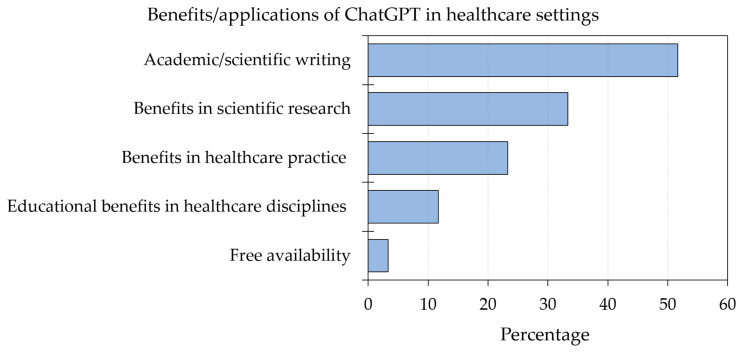
- Benefits were most frequently cited for academic/scientific writing (31 records, 51.7%), followed by scientific research (20, 33.3%), healthcare practice (14, 23.3%), healthcare education (7, 11.7%), and being a free package (2, 3.3%).
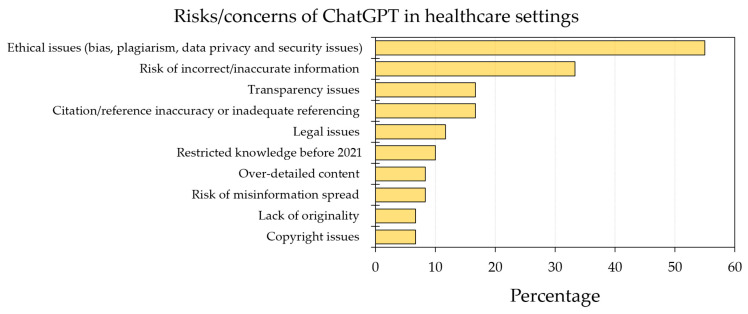
- Ethical concerns were the most common risk category (33 records, 55.0%), including risk of bias (18, 30.0%) and plagiarism (14, 23.3%); incorrect/inaccurate information was cited in 20 records (33.3%), citation/reference inaccuracy in 10 (16.7%), and transparency issues in 10 (16.7%).
- Other reported concerns included legal issues (7, 11.7%), restricted knowledge before 2021 (6, 10.0%), misinformation spread (5, 8.3%), over-detailed content (5, 8.3%), copyright issues (4, 6.7%), and lack of originality (4, 6.7%).
- The review states that ChatGPT does not qualify as an author under current ICMJE/COPE guidelines unless those guidelines are revised, and calls for stakeholder-developed ethics guidance for responsible LLM use in healthcare and academia.
Methods
- Systematic review conducted according to PRISMA guidelines, searching PubMed/MEDLINE and Google Scholar for English records on ChatGPT in healthcare practice/research, healthcare education, or academic writing; searches concluded on 16 February 2023.
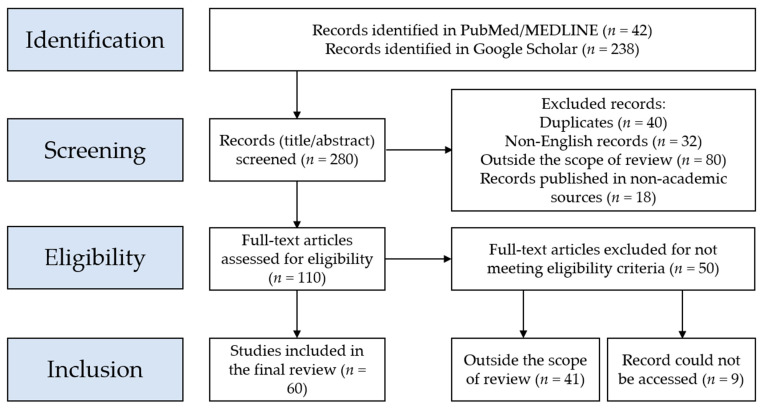
- PubMed/MEDLINE yielded 42 records and Google Scholar yielded 238 records, totaling 280 records; after duplicate removal (n = 40), non-English exclusion (n = 32), out-of-scope exclusion (n = 80), non-academic source exclusion (n = 18), full-text screening exclusions (n = 41), and inaccessible full texts (n = 9), 60 records were included.
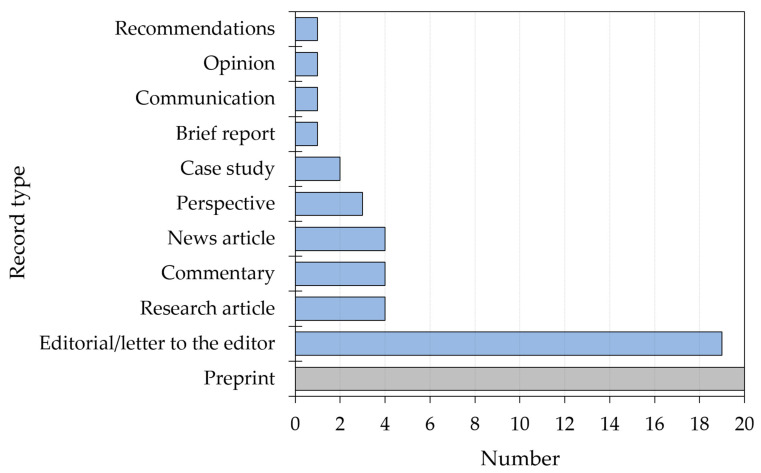
- Each included record was searched for record type, listed benefits/applications, listed risks/concerns, and main conclusions/recommendations regarding ChatGPT in healthcare education, practice, or scientific research/academic writing.
Limitations
- The paper states that included records had variable quality, non-English exclusion may have caused selection bias, inaccessible records may have led to missing relevant data, preprints were not peer reviewed, the literature is growing rapidly with the search ending 16 February 2023, and screening/interpretation was performed by a single author.
- Evident from the text: the review reports descriptive counts of mentions across heterogeneous record types rather than a formal meta-analysis or independent risk-of-bias assessment.
Model-written summary. Check it against the paper before relying on it.
Integrity signals
Registry
Cites
Statistics
Figures
Verification
Claims the paper makes
53 Valid · 1 Not valid · 6 Not checked · 37 Own results and interpretations
Every source the paper cites for this claim was checked and supports it.
In the paper
“This comes in light of the ability of ChatGPT to generate incorrect content that appears plausible from a scientific point of view [81].”
§ ChatGPT Utility in Healthcare Education, Research, and Practice: Systematic Review on the Promising Perspectives and Valid Concerns > 4. Discussion > 4.2. Limitations of ChatGPT Use in Scientific Research
What the sources say
- Supportedcites [81] Cascella M. Montomoli J. Bellini V. Bignami E. Evaluating the Feasibility of ChatGPT in Healthcare: An Analysis of Multiple Clinical and Research Scenarios J. Med. Syst. 2023 47 33 10.1007/s10916-023-01925-4 36869927 PMC9985086 source
In “Reasoning About Public Health Topics,” the paper says ChatGPT can produce believable answers that may be incorrect or nonsensical. In “Possible Misuse of GPT in Medicine and Research,” it describes a scientific abstract that appeared reliable and simulated statistical outputs that could seem plausible to readers. Together, these passages support the claim. (LLM, conf=0.94)
plain- Asserted: passes — The authors put it forward as true.
- Checkable: passes — It can be checked against evidence.
- Load-bearing: passes — The paper’s conclusions depend on it.
- Based: passes — The paper gives a reason why it holds.
- Supported
The sources with a verdict support this claim; the rest weren’t checked yet, have no full text we could read, or their verdicts aren’t rated yet.
In the paper
“This comes in light of the fact that authorship entails legal obligations that are not met by ChatGPT [43,48].”
§ ChatGPT Utility in Healthcare Education, Research, and Practice: Systematic Review on the Promising Perspectives and Valid Concerns > 4. Discussion > 4.2. Limitations of ChatGPT Use in Scientific Research
What the sources say
- Supportedcites [43] Zielinski C. Winker M. Aggarwal R. Ferris L. Heinemann M. Lapeña J. Pai S. Ing E. Citrome L. Chatbots, ChatGPT, and Scholarly Manuscripts WAME Recommendations on ChatGPT and Chatbots in Relation to Scholarly Publications Maced J. Med. Sci. 2023 11 83 86 10.3889/oamjms.2023.11502 37615142 source
The Introduction (p. 2) says chatbots are not legal entities, cannot be held legally liable, and that listing ChatGPT as an author may not be legally defensible. The WAME Recommendations (p. 2) add that chatbots cannot take responsibility for a paper or have the legal standing to sign a statement. (LLM, conf=0.93)
- Not checked — no full text of the sourcecites [48] Liebrenz M. Schleifer R. Buadze A. Bhugra D. Smith A. Generating scholarly content with ChatGPT: Ethical challenges for medical publishing Lancet Digit. Health 2023 5 e105 e106 10.1016/S2589-7500(23)00019-5 36754725 source
plain- Asserted: passes — The authors put it forward as true.
- Checkable: passes — It can be checked against evidence.
- Load-bearing: passes — The paper’s conclusions depend on it.
- Based: passes — The paper gives a reason why it holds.
- Supported
The cited sources support only part of this claim — read each source’s verdict below.
In the paper
“On one hand, ChatGPT, among other LLMs, can be beneficial in conversational and writing tasks, assisting to increase the efficiency and accuracy of the required output [11].”
§ ChatGPT Utility in Healthcare Education, Research, and Practice: Systematic Review on the Promising Perspectives and Valid Concerns > 1. Introduction
What the sources say
- Partly supportedcites [11] Deng J. Lin Y. The Benefits and Challenges of ChatGPT: An Overview Front. Comput. Intell. Syst. 2023 2 81 83 10.54097/fcis.v2i2.4465 sourceExperimental — accuracy not yet measured
Sections 4.1 (Increased Efficiency) and 4.2 (Improved Accuracy) say ChatGPT can make conversations more efficient and generate more accurate responses. The paper does not establish those benefits for writing tasks or for other LLMs, so the broader claim is only partially supported. (LLM, conf=0.88)
plainstates a cause- Asserted: passes — The authors put it forward as true.
- Checkable: passes — It can be checked against evidence.
- Load-bearing: unclear — It is unclear whether the paper’s conclusions depend on it.
- Based: passes — The paper gives a reason why it holds.
- Partly supported
The cited sources support only part of this claim — read each source’s verdict below.
In the paper
“Importantly, the concept of ChatGPT hallucination could be risky if the generated content is not thoroughly evaluated by researchers and health providers with proper expertise [37,56,73,77,79].”
§ ChatGPT Utility in Healthcare Education, Research, and Practice: Systematic Review on the Promising Perspectives and Valid Concerns > 4. Discussion > 4.2. Limitations of ChatGPT Use in Scientific Research
What the sources say
- Not checked — no full text of the sourcecites [37] Shen Y. Heacock L. Elias J. Hentel K.D. Reig B. Shih G. Moy L. ChatGPT and Other Large Language Models Are Double-edged Swords Radiology 2023 230163 10.1148/radiol.230163 36700838 source
- Partly supportedcites [56] Huh S. Are ChatGPT’s knowledge and interpretation ability comparable to those of medical students in Korea for taking a parasitology examination?: A descriptive study J. Educ. Eval. Health Prof. 2023 20 1 10.3352/jeehp.2023.20.1 36627845 PMC9905868 sourceExperimental — accuracy not yet measured
The Background says medical students must evaluate the accuracy of AI-generated medical information before creating reliable information for patients and the public. The Interpretation also reports that some ChatGPT explanations contained incorrect information. These passages support the need for scrutiny, but the paper does not specifically discuss hallucination or evaluation by researchers and health providers. (LLM, conf=0.84)
- Partly supportedcites [73] Duong D. Solomon B.D. Analysis of large-language model versus human performance for genetics questions medRxiv 2023 Preprint 10.1101/2023.01.27.23285115 PMC10999420 37246194 sourceExperimental — accuracy not yet measured
The Discussion (p. 6) says ChatGPT can give plausible explanations for incorrect answers and that its correctness requires additional verification, which is concerning in medical or other high-stakes settings. This supports the risk and need for evaluation, but the paper does not specify that researchers and health providers with proper expertise must perform it. (LLM, conf=0.83)
- Supportedcites [77] Jeblick K. Schachtner B. Dexl J. Mittermeier A. Stüber A.T. Topalis J. Weber T. Wesp P. Sabel B. Ricke J. ChatGPT Makes Medicine Easy to Swallow: An Exploratory Case Study on Simplified Radiology Reports arXiv 2022 10.48550/arxiv.2212.14882 2212.14882 PMC11126432 37794249 source
The Results (Free-text analysis) identify a ChatGPT hallucination that radiologists judged potentially harmful to a patient. The Key Points state that minimizing harm requires supervision by medical experts, supporting the claim’s warning about unevaluated medical content. (LLM, conf=0.90)
- Partly supportedcites [79] Lin Z. Why and how to embrace AI such as ChatGPT in your academic life PsyArXiv 2023 Preprint 10.31234/osf.io/sdx3j PMC10445029 37621662 sourceExperimental — accuracy not yet measured
The “Limitations of generative AI” section says ChatGPT may fabricate facts and false citations (“hallucination”) and urges users to critically evaluate and verify its responses, particularly when reliability is critical. It does not specifically say that researchers and health providers with proper expertise must evaluate the content; that part is more specific than the source. (LLM, conf=0.84)
hedgedstates a possible cause- Asserted: passes — The authors put it forward as true.
- Checkable: passes — It can be checked against evidence.
- Load-bearing: passes — The paper’s conclusions depend on it.
- Based: passes — The paper gives a reason why it holds.
- Rests on an assumption not shown here.
The sources with a verdict support this claim; the rest weren’t checked yet, have no full text we could read, or their verdicts aren’t rated yet.
In the paper
“This is particularly relevant for researchers who are non-native English speakers [23,25,63].”
§ ChatGPT Utility in Healthcare Education, Research, and Practice: Systematic Review on the Promising Perspectives and Valid Concerns > 4. Discussion > 4.1. Benefits of ChatGPT in Scientific Research
What the sources say
- Supportedcites [23] Chen T.J. ChatGPT and Other Artificial Intelligence Applications Speed up Scientific Writing Available online: https://journals.lww.com/jcma/Citation/9900/ChatGPT_and_other_artificial_intelligence.174.aspx (accessed on 16 February 2023) PMC12755446 36791246 source
In the main text (page not provided), Chen says many scientists who are not native English speakers struggle to write in English and describes AI translation and writing tools as ways to overcome that barrier. This supports the claim that language assistance in scientific writing is particularly relevant to those researchers. (LLM, conf=0.91)
- Not checked — no full text of the sourcecites [25] Kitamura F.C. ChatGPT Is Shaping the Future of Medical Writing but Still Requires Human Judgment Radiology 2023 230171 10.1148/radiol.230171 36728749 source
- Supportedcites [63] Gao C.A. Howard F.M. Markov N.S. Dyer E.C. Ramesh S. Luo Y. Pearson A.T. Comparing scientific abstracts generated by ChatGPT to original abstracts using an artificial intelligence output detector, plagiarism detector, and blinded human reviewers bioRxiv 2022 10.1101/2022.12.23.521610 source
The Discussion/Abstract section of our copy states directly that the technology 'could be used by scientists publishing in a language that is not their native language, to improve equity,' alongside the point that generated text 'may help alleviate the burden of writing' and that LLMs are 'a powerful tool to create readable scientific abstracts.' That covers the attributed content — AI-assisted language improvement being especially pertinent for non-native-English researchers — with the source's own hedge ('could be used') slightly weaker than the citing sentence's flat 'is particularly relevant.' No passage in our copy contradicts it. (LLM, conf=0.82)
plainstates an association- Asserted: passes — The authors put it forward as true.
- Checkable: passes — It can be checked against evidence.
- Load-bearing: unclear — It is unclear whether the paper’s conclusions depend on it.
- Based: passes — The paper gives a reason why it holds.
- Supported
42 more claims · 23 with their cited sources checked
Create a free account to see all 97 claims and to verify the 16 references still open.
- Probably not a substantial claim. 31
- It may state two separate claims as one. 27
Claims other papers make about this one
Each is checked against this paper’s own text: does it say what the citing paper says it does?
The source backs part of the claim, not all of it — or backs it for a different population, condition or comparison.
In the citing paper
“The reliance on ChatGPT may result in hindering the development of the skills needed to interpret and respond to social cues, which should be considered in health care education [9,91].”
From Assessing Health Students' Attitudes and Usage of ChatGPT in Jordan: Validation Study (2023) · cites this paper as [9]
Experimental — accuracy not yet measuredThe source backs part of the claim, not all of it — or backs it for a different population, condition or comparison.
In the citing paper
“A recent surge in the use of ChatGPT, in particular for mental health, is emergent for providing crucial personalized advice without clinical explanation, which can hurt user's safety, and thus trust (Sallam, 2023).”
From A review of the explainability and safety of conversational agents for mental health to identify avenues for improvement (2023) · cites this paper as Sallam, 2023
Experimental — accuracy not yet measuredThe source backs part of the claim, not all of it — or backs it for a different population, condition or comparison.
In the citing paper
“ChatGPT plays a crucial role in pandemic management by aiding in the swift and accurate dissemination of critical information.”
From A Systematic Review and Meta-Analysis of Artificial Intelligence Tools in Medicine and Healthcare: Applications, Considerations, Limitations, Motivation and Challenges (2024) · cites this paper as [6]
Experimental — accuracy not yet measuredThe source backs part of the claim, not all of it — or backs it for a different population, condition or comparison.
In the citing paper
“Its natural language processing capabilities enable it to generate coherent responses, making it a valuable tool for healthcare organisations.”
From A Systematic Review and Meta-Analysis of Artificial Intelligence Tools in Medicine and Healthcare: Applications, Considerations, Limitations, Motivation and Challenges (2024) · cites this paper as [6]
Experimental — accuracy not yet measuredThe source backs part of the claim, not all of it — or backs it for a different population, condition or comparison.
In the citing paper
“Specific advantages include its ability to provide rapid updates, preventive measures, and medical guidelines to the public.”
From A Systematic Review and Meta-Analysis of Artificial Intelligence Tools in Medicine and Healthcare: Applications, Considerations, Limitations, Motivation and Challenges (2024) · cites this paper as [6]
Experimental — accuracy not yet measured
31 more claims about this paper
Create a free account to see every claim other papers make about this one.
Citations
Cites
Preferred Reporting Items for Systematic Reviews and Meta-Analyses: the PRISMA statement
Moher, D., Liberati, A., Tetzlaff, J., Altman, D. G., & for the PRISMA Group (2009) · BMJ · doi:10.1136/bmj.b2535 · Cited by 83,823
Preferred Reporting Items for Systematic Reviews and Meta-Analyses: The PRISMA Statement
Moher, D., Liberati, A., Tetzlaff, J., Altman, D. G., & The PRISMA Group (2009) · PLoS Medicine · doi:10.1371/journal.pmed.1000097 · Cited by 64,042 · cited 1×
“The current systematic review was conducted according to the Preferred Reporting Items for Systematic Reviews and Meta-Analyses (PRIMSA) guidelines [21].”
Language Models are Few-Shot Learners
Brown, T. B., Mann, B., Ryder, N., Subbiah, M., Kaplan, J., Dhariwal, P., Neelakantan, A., Shyam, P., Sastry, G., Askell, A., et al. (2020) · arXiv · doi:10.48550/arxiv.2005.14165 · Cited by 23,372 · cited 3×
“The GPT architecture utilizes a neural network to process natural language, thus generating responses based on the context of input text [7].”
BackgroundWang, G., Ma, R., Qiao, G., Wada, K., Aizawa, Y., & Satoh, T. (2015) · Integrative Medicine International · doi:10.1159/000368408 · Cited by 18,657
Kaugeranna, R., Kaugeranna, E., & Aion, (. S. 4. 6. (2023) · DROPS (Schloss Dagstuhl – Leibniz Center for Informatics) · doi:10.4230/lipics.giscience.2023.43 · Cited by 13,690
Machine learning: Trends, perspectives, and prospects
Jordan, M. I., & Mitchell, T. M. (2015) · Science · doi:10.1126/science.aaa8415 · Cited by 9,955
Kung, T. H., Cheatham, M., Medenilla, A., Sillos, C., De Leon, L., Elepaño, C., Madriaga, M., Aggabao, R., Diaz-Candido, G., Maningo, J., et al. (2023) · PLOS Digital Health · doi:10.1371/journal.pdig.0000198 · Cited by 4,115 · cited 2×
“[59] An article showing the ChatGPT raised accuracy which enabled passing the USMLE Accuracy with high concordance and insight; it can facilitate patient communication; improved personalized medicine ChatGPT has a promising potential in medical education; future studies are recommended to consider non-biased approach…”
BackgroundKung, T. H., Cheatham, M., ChatGPT, Medenilla, A., Sillos, C., De Leon, L., Elepaño, C., Madriaga, M., Aggabao, R., Diaz-Candido, G., et al. (2022) · doi:10.1101/2022.12.19.22283643 · Cited by 4,115
Rajpurkar, P., Chen, E., Banerjee, O., & Topol, E. J. (2022) · Nature Medicine · doi:10.1038/s41591-021-01614-0 · Cited by 3,212 · cited 1×
“The promising utility of AI in health care has been outlined previously with possible benefits in personalized medicine, drug discovery, and the analysis of large datasets aside from the potential applications to improve diagnosis and clinical decisions [17,18].”
BackgroundChatting and cheating: Ensuring academic integrity in the era of ChatGPT
Cotton, D. R. E., Cotton, P. A., & Shipway, J. R. (2024) · Innovations in Education and Teaching International · doi:10.1080/14703297.2023.2190148 · Cited by 3,087 · cited 1×
“[62] An EdArXiv 2 preprint on the academic integrity in ChatGPT era Risk of plagiarism; academic dishonesty Careful thinking of educational assessment tools”
Background
Cited by
Items 2,401–2,500 of 3,096
The ethical and scientific challenges of ChatGPT in health: utopianism, technophobia and pragmatismPreprint
García‐Valiña, L., & Mastroleo, I. (2023) · OSF Preprints (OSF Preprints) · doi:10.31219/osf.io/phtwz
A PubMed Scoping Review: Advancing the Role of ChatGPT in Medical Education
(2023) · Advances in educational technologies and instructional design book series · doi:10.4018/978-1-6684-9300-7.ch009
del Giglio, A., & da Costa, M. U. P. (2023) · Brazilian Journal of Oncology · doi:10.5935/2526-8732.20230421 · Cited by 1
Artificial Intelligence approach to verify irrationality of FDCs listed by CDSCO
Thakur, A., Kumari, A., & Rana, S. (2023) · Research in Pharmacy · doi:10.25081/rip.2023.v13.8464 · Cited by 2
“The GPT architecture employs a neural network to process natural language and generate responses that are contextually relevant to the input text (Sallam, 2023).”
Background(2023) · Microbiology Australia · doi:10.1071/mav44n3 · Cited by 1
RESEARCH AND ANALYSIS OF CHATBOT CAPABILITIES WITH ARTIFICIAL INTELLIGENCE CHATGPT
Марчук, Г. В., Levkivskyi, V., Марчук, Д. К., & Mukovoz, V. (2023) · Scientific notes of Taurida National V I Vernadsky University Series Technical Sciences · doi:10.32782/2663-5941/2023.4/12 · Cited by 3
Vitorino, L. M., & Júnior, G. H. Y. (2023) · Revista Brasileira de Enfermagem · doi:10.1590/0034-7167.2023760301es
Jang, C. W., Yoo, M., & Park, Y. G. (2023) · doi:10.2196/preprints.53046
Can GPT-4 Direct a New Horizon for HealthCare Academics, Scientific Writing and Research?
Ray, P. P. (2023) · Surgical Innovation · doi:10.1177/15533506231204827
Fernandes, P. C., & Aguilar-da-Silva, R. H. (2023) · Brazilian Congress of Engineering Education (COBENGE) · doi:10.37702/2175-957x.cobenge.2023.4399
Editorial. Who, or what, to believe
Link, M. J., & Carlson, M. L. (2023) · Journal of neurosurgery · doi:10.3171/2023.8.jns231656
Artificial Intelligence: Development and Applications in Neurosurgery
Shah, R., Reese, V. C., Oselkin, M., & Stawicki, S. P. (2023) · Artificial intelligence · doi:10.5772/intechopen.113034 · Cited by 1
Cleva, M., Zuliani, L., PINTO, A., Bruschi, E., CIRILLO, M., & Valentino, M. (2023) · Journal of Radiological Review · doi:10.23736/s2723-9284.23.00260-2
ChatGPT and AI Hysteria: Why machine learning will change everything, and change nothing
Velli, G. (2023) · Journal of Health Information and Libraries Australasia · doi:10.55999/johila.v4i2.154 · Cited by 1
“At present most journal authorship guidelines allow for some level of use of ChatGPT, but do not allow for it to be listed as an author, in line with ICMJE/COPE guidelines (Sallam, 2023).”
Background21. Yüzyıl’da Sağlık Bilimleri: Yöntem, Kuram ve Vaka
Yıldız, E. K., & Tur, K. (2023) · Özgür Yayınları eBooks · doi:10.58830/ozgur.pub282
Ashok, J., Hariprasad, V., Mohan, A. K., & Surapaneni, K. M. (2023) · Indian Journal of Forensic Medicine & Toxicology · doi:10.37506/ijfmt.v17i4.19940 · Cited by 1
Exploring the role of ChatGPT in rapid intervention text development
Bowers, H. M., Ochieng, C., Bennett, S., Denford, S., Johnston, M., & Yardley, L. (2023) · F1000Research · doi:10.12688/f1000research.140708.1 · Cited by 1
Han, M. B., & Teo, S. P. (2023) · Geriatrics Gerontology and Aging · doi:10.53886/gga.e0230036
ChatGPT in ultrasound medicine: potential applications and challenges (Preprint)Preprint
Zhang, Y., Luo, Y., Ling, W., Zhu, Y., & Lu, X. (2023) · doi:10.2196/preprints.54225
Identifying problems in onboarding design for expertise-centric citizen science games
Miller, J. A. (2023) · Digital Repository Service (Northeastern University) · doi:10.17760/d20560789 · Cited by 1
Sallam, M., Barakat, M. M., & Sallam, M. (2023) · Preprints.org · doi:10.31222/osf.io/qrsph · Cited by 1
Self-citationImplications of ChatGPT on Radiology Workflow
CADTH (2023) · Canadian Journal of Health Technologies · doi:10.51731/cjht.2023.789 · Cited by 1
Ethical Exploration of ChatGPT in the Modern K-14 Economics ClassroomPreprint
Scott, B., & van der Poel, S. (2023) · SSRN Electronic Journal · doi:10.2139/ssrn.4637359
Meeting our destiny on the road we took to avoid it
D’Aoust, R. (2023) · Journal of the American Association of Nurse Practitioners · doi:10.1097/jxx.0000000000000977
Hai-Jew, S. (2023) · Advances in educational technologies and instructional design book series · doi:10.4018/979-8-3693-0074-9.ch005
Váscones-Román, F. F., Zambrano-Sánchez, D. F., Arias, F., & Lopez-Villanueva, A. G. (2023) · Revista Médica Herediana · doi:10.20453/rmh.v34i4.5157 · Cited by 1
TBHEB 2023-4 Vol 80 Full Printed Journal
ERCÖMERT, U. (2023) · Turkish Bulletin of Hygiene and Experimental Biology · doi:10.5505/turkhijyen.2023.97572
Chatbot-driven supportive care in oral oncology: Addressing patient information needs
Pawar, V. V., & Katore, D. (2024) · Oral Oncology Reports · doi:10.1016/j.oor.2024.100169
Human-Centered AI: Large Language Models and the Need for Ethical Medical Chatbots (Preprint)Preprint
Chow, J. C. L., & Li, K. (2024) · doi:10.2196/preprints.56404
The Effects of ChatGPT on Economic Development
Wu, M. (2024) · Highlights in Business Economics and Management · doi:10.54097/tymwwt88 · Cited by 3
“This further showed that ChatGPT is not reliable all the time [11].”
BackgroundMethodInfluentialLearning Arabic with Animaker-Based Learning Videos for Elementary School Students
Rafi, R. M. (2023) · Lingeduca Journal of Language and Education Studies · doi:10.55849/lingeduca.v2i3.586
Patra, S., Singha, T. S., Kanvinde, M., et al. (2024) · doi:10.5194/gc-2023-7-rc1
Artificial Intelligence in Healthcare: A Closer Look at ChatGPT's Usages and ChallengesPreprint
Khonakdar, K., Moradimajd, P., Babajani, A., Maroufi, S. S., & Sajadi, A. S. (2024) · Research Square · doi:10.21203/rs.3.rs-3940728/v1 · Cited by 1
Neural Machine Translation for Chinese Patent Medicine Instructions
Ji, X., Cao, Y., Ni, X.-F., Wang, X., Mao, X., Li, P.-J., & Guo, C. (2023) · JCRAI · doi:10.1145/3632971.3632981
“5 [30], which undergoes training on a combination of text and code sources.”
BackgroundChatGPT usage in oral oncology: Considering the pros and cons!
Das, R., Mohapatra, S. S. G., & Misra, S. R. (2024) · Oral Oncology Reports · doi:10.1016/j.oor.2024.100231
How does AI create and recommend corresponding wallpapers based on the games played by users?
Hou, W., Liu, Z., Deng, J., et al. (2024) · Applied and Computational Engineering · doi:10.54254/2755-2721/42/20230770
ChatGPT-4 versus human assessment in cardiology peer review
Fernández‐Cisnal, A., y, P. A., Rama, D. F., García‐Pavía, P., Sanchís, L., & Sanchís, J. M. (2024) · Revista Española de Cardiología (English Edition) · doi:10.1016/j.rec.2024.02.004
ChatGPT: immutable insertion in health research and researchers’ lives
Vieira, A. G. D. S., Saconato, H., Eid, R. A. C., & Nawa, R. K. (2024) · Einstein (São Paulo) · doi:10.31744/einstein_journal/2024ce0752 · Cited by 4
Pelatihan “The Maturity level of smart research” SMAN 3 Semarang
Gamayanto, I., Haryanto, H., & Wibowo, S. (2024) · ABDIMASKU JURNAL PENGABDIAN MASYARAKAT · doi:10.62411/ja.v7i1.1688
“Jadi itu adalah produk akhir dari kegiatan penelitian yang memberikan penjelasan tentang perjalanan panjang di jalan menemukan pengetahuan baru atau pengetahuan yang dimodifikasi[3]; [4]; [5].”
BackgroundInvitation to join the Healthcare AI Language Group: HeALgroup.AI Initiative
Staubli, S. M., Jobeir, B. A., Spiro, M. D., & Raptis, D. A. (2024) · BMJ Health & Care Informatics · doi:10.1136/bmjhci-2023-100884
ChatGPT and academic publishing: Potential and perils
Mehta, H., Bishnoi, A., Reddy, A., & Vinay, K. (2024) · Indian Journal of Dermatology Venereology and Leprology · doi:10.25259/ijdvl_533_2023 · Cited by 1
The Phenomenon of Risk Under the Application of Artificial Intelligence Algorithms
Михайлович, К. Р., & Sleptsova, Y. (2023) · Вестник Волгоградского государственного университета. Серия 3: Экономика. Экология · doi:10.15688/ek.jvolsu.2023.4.1 · Cited by 2
How Does ChatGPT Perform on the Italian National Residency Program Admission Test?Preprint
Barone, G., Confalonieri, F., Gaeta, A., Ferraro, V., Vinciguerra, P., & Maria, A. D. (2024) · Preprints.org · doi:10.20944/preprints202403.1684.v1
ChatGPT Horizons in Ophthalmology
Davalbhakta, S., Paul, A., & Islam, F. (2024) · TNOA Journal of Ophthalmic Science and Research · doi:10.4103/tjosr.tjosr_144_23
Xu, S., Chen, S., & Chen, M. (2024) · Communications in computer and information science · doi:10.1007/978-981-97-1280-9_9
The Application of ChatGPT in Second Language (L2) Learning Classrooms: Opportunities and Challenges
Chen, X. (2024) · Transactions on Social Science Education and Humanities Research · doi:10.62051/hg1w7578 · Cited by 1
“Many scholars have discussed the issue that as a generative language model, ChatGPT might fabricate references and cite the wrong work in scholiastic writing, especially for more advanced tasks like paper writing [26].”
BackgroundGlobal Healthcare Professionals’ Perceptions of Large Language Model Use In Practice (Preprint)Preprint
Ozkan, E., Tekin, A., Ozkan, M. C., Cabrera, D., Niven, A. S., & Dong, Y. (2024) · doi:10.2196/preprints.58801
Bezerédi, I. (2024) · Rendvédelem · doi:10.53793/rv.2024.1.3 · Cited by 1
Adoption of AI-Powered Chatbots with Large Language Models by PathologistsPreprint
Bychkov, A., Laohawetwanit, T., & Pinto, D. G. (2024) · medRxiv · doi:10.1101/2024.04.05.24305405
Sanpablo, A. I. P., Rodríguez, M. D., Arquer-Ruiz, M. D. C., Ramírez-Morales, A. O., & Peñaloza, A. M. (2024) · Revista Mexicana de Ingeniería Biomédica · doi:10.17488/rmib.44.4.11 · Cited by 1
“Los docentes deben aprender a usar estas herramientas y comprender claramente sus limitacio-nes y los objetivos que quieren lograr al usarlas [3] .”
BackgroundInfluentialPatra, S. (2024) · doi:10.5194/gc-2023-7-ac1
Coninck, D. D., Devillé, C., Bavel, J. V., de Winter, P., Toelen, J., & Leeuwen, K. G. V. (2024) · Families Systems & Health · doi:10.1037/fsh0000883
Artificial Intelligence: Revolutionizing the Medicolegal Field
Brigham, C. R., Buttar, W. A., Bucksbaum, M., & Talmage, J. B. (2023) · AMA guides newsletter · doi:10.1001/amaguidesnewsletters.2023.sepoct01 · Cited by 1
Towards human-level artificial intelligence agents
Leung, J. C. (2024) · DR-NTU (Nanyang Technological University) · doi:10.32657/10356/174532 · Cited by 1
Eriksen, J., Kloppenborg, S. S., Morillas, J. L. B., & Nøhr, C. G. (2024) · doi:10.2196/preprints.60074
Aldwean, A., & Tenney, D. (2024) · doi:10.18260/1-2--45771 · Cited by 1
Patra, S., Singha, T. S., Kanvinde, M., et al. (2024) · doi:10.5194/gc-2023-7-rc2
Bushuven, S., Bodenmüller, J., Trifunovic-Koenig, M., Büttner, R., & Salm, F. (2024) · Krankenhaushygiene up2date · doi:10.1055/a-2069-1429
Overcoming Medical Overuse with AI Assistance: An Experimental InvestigationPreprint
Wang, Z., Wei, L., & Xue, L. (2024) · SSRN Electronic Journal · doi:10.2139/ssrn.4828970 · Cited by 3
BioGPT: The ChatGPT of Life Sciences
Aniket, S. (2024) · International Journal for Research in Applied Science and Engineering Technology · doi:10.22214/ijraset.2024.62586
GPT for Pediatric Stroke Research: A Pilot StudyPreprint
Fiedler, A., Zhang, K., Lal, T., Jiang, X., & Fraser, S. M. (2024) · SSRN Electronic Journal · doi:10.2139/ssrn.4839102
Patra, S. (2024) · doi:10.5194/gc-2023-7-ac2
Tutoring and Education: Identifying the Opportunities and Challenges of ChatGPT Among Students
Atiyah, A. N. (2024) · Communications in Mathematics and Applications · doi:10.26713/cma.v14i5.2687
“Sallam [14] ChatGPT assists researchers in producing high-quality scientific publications such as research papers, journals, and grant proposals, while also improving speed and availability in the writing process.”
WITHDRAWN: ChatGPT-4 as a Board-Certified Surgeon: A Pilot StudyPreprint
Roshal, J. A., Silvestri, C. J., Sathe, T. S., Townsend, C. M., Klimberg, V. S., & Perez, A. (2024) · medRxiv · doi:10.1101/2024.05.31.24307894
Evaluation of ChatGPT's Responses to Google Searches About Dry Eye (Preprint)Preprint
Sönmezoğlu, H. İ., & Sönmezoğlu, B. G. (2024) · doi:10.2196/preprints.60357
Zhang, M., Wu, K., & Kang, M. (2024) · Asian Journal on Addictions · doi:10.58896/aja.v2i1.3
Attitudes of Algorithms: An Exploration of the Ethics of CRISPR Cas9 through the Lens of ChatGPT
D’Souza, R. F., Mathew, M., & Surapaneni, K. M. (2024) · Indian Journal of Clinical Biochemistry · doi:10.1007/s12291-024-01242-8 · Cited by 3
“Although many studies are continuously evaluating its potential in various fields, its exploration into gene editing and ethical decision-making has not come into the spotlight [25–27].”
How can digitalisation enable the transition to a circular economy?
Toth‐Peter, A. (2024) · Queensland University of Technology · doi:10.5204/thesis.eprints.248956
Handling Class Imbalance for Indonesian Twitter Sentiment Analysis A Comparative Study of Algorithms
Zhikri, M., & Istiono, W. (2024) · Journal of System and Management Sciences · doi:10.33168/jsms.2024.1010 · Cited by 4
Pelletier, J., Li, Y., Cloessner, E., Sistenich, V., Maxwell, N., Thomas, M. A., Stoner, D. M., Mwenze, B., & Manguvo, A. (2024) · Cureus · doi:10.7759/cureus.62657 · Cited by 2
“Research suggests that generative AI may help improve research equity and personalized learning [21,22].”
BackgroundRevitalizing Neurology Practice: Integrating Health Humanities, Neurobiology, and Digital Innovation
Gomes, M. D. M. (2024) · Revista brasileira de neurologia · doi:10.46979/rbn.v60i1.64138
Breaching the Curation Bottleneck with Human-Machine Reading SymbiosisPreprint
Yin, T., Wong, C., Rao, R., Statz, C. M., Mockus, S. M., Poon, H., & Patterson, S. E. (2024) · SSRN Electronic Journal · doi:10.2139/ssrn.4869222
Coleman, S., Lynch, C., Worlikar, H., Kelly, E., Loveys, K., Simpkin, A. J., Walsh, J. C., Broadbent, E., Finucane, F. M., & Keeffe, D. O. (2024) · doi:10.2196/preprints.63503
Examining the Necessity of Evaluating Life Skills in Health Education
Darabı, F., & Shaban, S. M. (2024) · Journal of Research and Health · doi:10.32598/jrh.14.4.821.3
“…sources are diverse at the societal level and the audience may have a specific tendency toward the use of a certain database, or they obtain the required health information from different sources as self-care, the focus is on their analysis, assurance of their validity, and sound application [4].”
Zuo, Y., Jin, Y., Hu, X., Yang, K., Bai, Z., He, J., & Zhang, J. S. (2024) · doi:10.2196/preprints.64392 · Cited by 1
Araujo, S. M., & Cruz-Correia, R. J. (2024) · Páginas a&b Arquivos & Bibliotecas · doi:10.21747/21836671/pag21a12
Using ChatGPT as a grief counseling tool in end-stage cancer diagnosis
Patel, H. (2024) · The Journal of Community Health Management · doi:10.18231/j.jchm.2024.018
Chow, J. C., Yeh, Y.-T., & Chou, W. (2024) · doi:10.2196/preprints.64556
Promises and Perils of Generative AI in the Healthcare Sector
Garg, P. (2024) · Advances in medical technologies and clinical practice book series · doi:10.4018/979-8-3693-3731-8.ch015
Debunking Myths and Misconceptions in the Healthcare Sector: A ChatGPT-Powered Evaluation
Rao, C. V. G., Sastri, A., Pillai, R. H., Thangam, M. M. N., Kathwal, J., & Banappagoudar, S. B. (2024) · Smart innovation, systems and technologies · doi:10.1007/978-981-97-2716-2_28
Koschel, W., & Weyland, U. (2024) · Springer eBooks · doi:10.1007/978-3-658-44727-4_48
Igoli, J., Osunronbi, T., Olukoya, O., Daniel, J. O. I., Alemenzohu, H., Kanu, A., Kihunyu, A. M., Okeleke, E., Oyoyo, H., Shekoni, O., et al. (2024) · medRxiv · doi:10.1101/2024.08.11.24311830 · Cited by 1
“The recent upsurge in excitement about artificial intelligence (AI) has increased its impact on every aspect of healthcare [8].”
BackgroundChatgpt and the Future of Education: A Bibliometric Review
Machado, A. D. B., Pesqueira, A. M., & Sousa, M. J. (2024) · Elsevier eBooks · doi:10.1016/b978-0-443-13701-3.00431-x
Tsumoto, S., Kawana, F., Horie, K., Masaki, M., Nishida, K., Miyanishi, K., Seol, J., Tominaga, M., Amemiya, T., Hiei, T., et al. (2024) · IEEE International Conference on Healthcare Informatics (ICHI) · doi:10.1109/ichi61247.2024.00055 · Cited by 1
Tajirian, T., Lo, B., Strudwick, G., Tasca, A., Kendell, E., Poynter, B., Kumar, S., Chang, P.-Y. (., Kung, C., Schachter, D. C., et al. (2024) · doi:10.2196/preprints.65656
The role of blockchain in green finance: opportunities and challenges
Biswas, M. (2026) · Innovations in Business and Strategic Management · doi:10.61577/ibsm.2024.100003 · Cited by 1
Utility of ChatGPT in neuroanesthesia: Still long way to go
Surapaneni, K. M., Balasubramanian, C., & Edison, S. P. K. (2024) · Indian Journal of Clinical Anaesthesia · doi:10.18231/j.ijca.2024.082
Chat Generative Pre-Trained Transformer (ChatGPT): Boon or Bane – A Qualitative Meta-Synthesis
Palomar, E. R. C., & Sobrevega, M. E. B. (2024) · International Journal of Latest Technology in Engineering Management & Applied Science · doi:10.51583/ijltemas.2024.130723
Bushuven, S., Bodenmüller, J., Trifunovic-Koenig, M., Büttner, R., & Salm, F. (2024) · OP-Management up2date · doi:10.1055/a-2357-9651
Curio: Enhancing STEM Online Video Learning Experience Through Integrated, Just-in-Time Help-Seeking
Tseng, Y.-J., Lin, Y.-H., Yadav, G., Bier, N., & Aleven, V. A. W. M. M. (2024) · Lecture notes in computer science · doi:10.1007/978-3-031-72315-5_30 · Cited by 2
OLR-Net: Object Label Retrieval Network for principal diagnosis extraction
Wang, K., Tan, X., Nan, S., Sang, L., Chen, H., & Duan, H. (2024) · Computers in Biology and Medicine · doi:10.1016/j.compbiomed.2024.109130
Scherr, R., Spina, A., Dao, A., Andalib, S., Halaseh, F. F., Blair, S., & Rivera, R. J. (2024) · doi:10.2196/preprints.66478
Stage, M. A., Creamer, M. M., & Ruben, M. A. (2024) · SSRN Electronic Journal · doi:10.2139/ssrn.4952367
Gould, J. A., Stawicki, S. P., Lee, R. Y., & Ng-Pellegrino, A. (2024) · Artificial intelligence · doi:10.5772/intechopen.115397 · Cited by 3
Batugo, A., Hwang, S., Davoudi, A., Luong, T., Lee, N., & Mowery, D. L. (2024) · medRxiv · doi:10.1101/2024.09.23.24314207 · Cited by 3
“ChatGPT, developed by OpenAI (San Francisco, CA, USA), is a large language model (LLM) trained on a large corpus of datasets using the generative pre-trained (GPT) architecture which utilizes neural networks to process natural language 8 .”
BackgroundMotegi, M., Shino, M., Kuwabara, M., Takahashi, H., Matsuyama, T., Tada, H., Hagiwara, H., & Chikamatsu, K. (2024) · doi:10.2196/preprints.66900
Artificial intelligence in healthcare
Canelas‐Pais, M., Coutinho‐Almeida, J., Araujo, S. M., Rafael, F. M., Cruz-Correia, R. J., & Rodrigues, P. P. (2024) · Elsevier eBooks · doi:10.1016/b978-0-323-91819-0.00009-9 · Cited by 1
Use of AI to enhance written information in paediatric settings—stochastic parrot or clinical tool?
OSullivan, C., Gaddum, C., & Lee, A. J. (2024) · Evidence-Based Nursing · doi:10.1136/ebnurs-2024-104164
Izadi, A., Mosavari, H., Hosseininasab, A., Jaliliyan, A., Jafari, A., Akhlaghpasand, M., Rostami, A., Moradi‐Lakeh, M., & Eghbali, F. (2024) · doi:10.2196/preprints.67101
Metadata
- Authors
- Sallam, M.
- Affiliations
- University of Jordan (JO)
- Corresponding author
- Sallam, Malik
- ORCID
- Sallam, Malik
- Venue
- Healthcare
- Publisher
- MDPI AG
- Published
- 2023-03-19
- Volume
- 11
- Issue
- 6
- Pages
- 887
- ISSN
- 2227-9032 (ISSN-L)
- PMC
- PMC10048148
- OpenAlex
- W4327946446
- Semantic Scholar
- dfdf7ff01aa6f691831e663fd29bc71890be39e2
- Cited by
- 3,126
- References
- 114
- Citations by year
- 2026: 561 · 2025: 839 · 2024: 1052 · 2023: 669
- FWCI
- 36.67
- Type
- journal article
- Language
- en
- Open access
- gold
- doi.org
- Licence
- Locations
- Healthcare (publishedVersion, cc-by)
- medRxiv (acceptedVersion, cc-by-nc-nd)
- Preprints.org (acceptedVersion, cc-by)
- PubMed Central (publishedVersion, cc-by)
- PubMed (publishedVersion)
- Topics
- Health Sciences › Medicine › Health Informatics › Artificial Intelligence in Healthcare and Education
- Physical Sciences › Computer Science › Artificial Intelligence › Artificial Intelligence Applications
- Social Sciences › Education › Artificial Intelligence in Education
- Keywords
- ChatGPT, large language models, artificial intelligence in healthcare, healthcare education, health care research, clinical practice, scientific writing, research equity, drug discovery, personalized medicine, health literacy, plagiarism, hallucinations, authorship criteria, AI ethics, infodemic
About these checks
Registry, retraction, Cites and statistics results are computed, not judged, with one exception: a printed reference that no index lists is read once by a model before it counts as a citation error. Claims are extracted by a model and kept only when their quote appears verbatim in the text; each cited source is then checked, with a model’s help, for whether it says what the claim relies on. Those verdicts can be wrong — read the claim’s quote and the cited source before relying on one.
The claim verdicts this report counts are experimental: their accuracy is not yet measured.
A language model drew the claims from the paper on 2026-10-10, under version 3 of the claim definition (model deepseek-v4.1-flash, prompt extract-v3).
A second model labelled each claim on 2026-10-10 (model jev-1.13-20260917, definition revision gold-guideline-v0.2).
Cited sources are checked with a language model’s help (gpt-6-sol and qwen3.8-omni-flash).
Statistics and arithmetic are recomputed, not judged.
Confidence bands are shown only for fields calibrated on our annotated test set. None is calibrated yet, so no band is shown.
What counts as a claim ›How we measure confidence ›How we check this ›
Are you an author, or do you see a problem with this page? Request a review
Data sources
Bibliographic data: Semantic Scholar, OpenAlex, Crossref.
Contains information from the Semantic Scholar Academic Graph Datasets, made available under the ODC Attribution License (ODC-BY 1.0).
Semantic Scholar’s data is described in: Kinney, R., et al. (2023). The Semantic Scholar Open Data Platform. arXiv:2301.10140.
