

ChatGPT Utility in Healthcare Education, Research, and Practice: Systematic Review on the Promising Perspectives and Valid Concerns
Open accessPublished version of a preprint
The DOI matches its Crossref record; 116 of the 117 references it cites were found in a registry or an index; 110 of the 179 sources its claims cite were checked for support.
Abstract
ChatGPT is an artificial intelligence-powered chatbot. This systematic review synthesised the evidence regarding its application in healthcare education, research, and practice. ChatGPT shows remarkable utilities in summarizing research, translating materials, serving as a virtual tutor, drafting case scenarios, and automating administrative workflows. However, concerns regarding incorrect outputs (hallucinations), lack of analytical depth, risk of plagiarism, and algorithmic bias remain significant across the literature.
Overview
CoChat Summary
TL;DR
This systematic review of 60 records found that ChatGPT was cited as beneficial in 51/60 (85.0%) records for healthcare education, research, and practice, while concerns were raised in 58/60 (96.7%) records. The author concludes that ChatGPT has promising applications but requires cautious, guideline-driven use, and does not currently qualify for scientific authorship under ICMJE/COPE guidelines.
Key findings
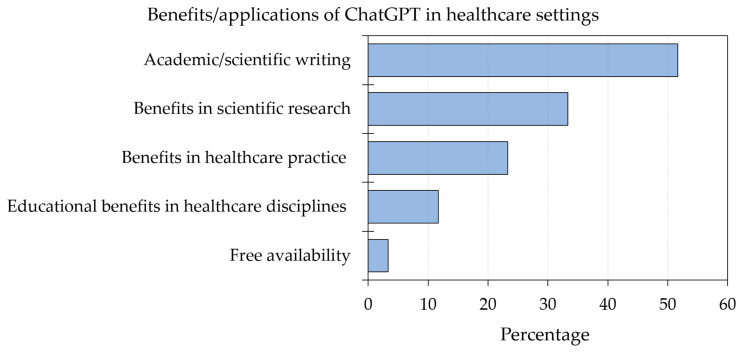
- Benefits were most frequently cited for academic/scientific writing (31 records, 51.7%), followed by scientific research (20, 33.3%), healthcare practice (14, 23.3%), healthcare education (7, 11.7%), and being a free package (2, 3.3%).
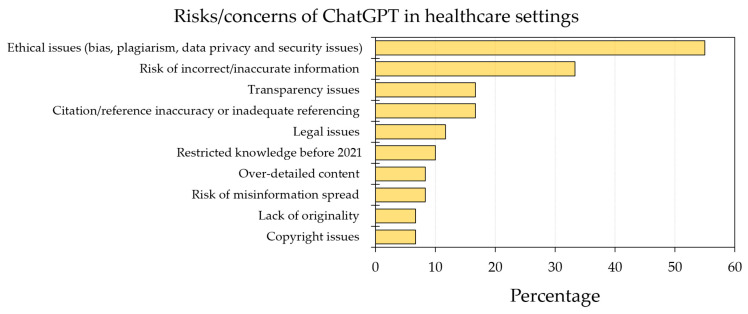
- Ethical concerns were the most common risk category (33 records, 55.0%), including risk of bias (18, 30.0%) and plagiarism (14, 23.3%); incorrect/inaccurate information was cited in 20 records (33.3%), citation/reference inaccuracy in 10 (16.7%), and transparency issues in 10 (16.7%).
- Other reported concerns included legal issues (7, 11.7%), restricted knowledge before 2021 (6, 10.0%), misinformation spread (5, 8.3%), over-detailed content (5, 8.3%), copyright issues (4, 6.7%), and lack of originality (4, 6.7%).
- The review states that ChatGPT does not qualify as an author under current ICMJE/COPE guidelines unless those guidelines are revised, and calls for stakeholder-developed ethics guidance for responsible LLM use in healthcare and academia.
Methods
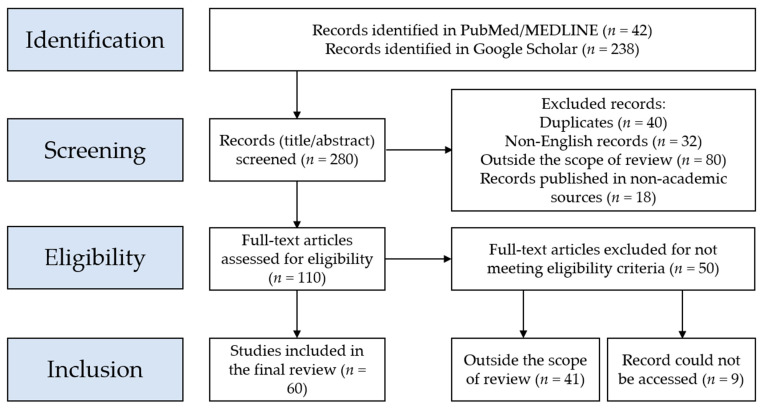
- Systematic review conducted according to PRISMA guidelines, searching PubMed/MEDLINE and Google Scholar for English records on ChatGPT in healthcare practice/research, healthcare education, or academic writing; searches concluded on 16 February 2023.
- PubMed/MEDLINE yielded 42 records and Google Scholar yielded 238 records, totaling 280 records; after duplicate removal (n = 40), non-English exclusion (n = 32), out-of-scope exclusion (n = 80), non-academic source exclusion (n = 18), full-text screening exclusions (n = 41), and inaccessible full texts (n = 9), 60 records were included.
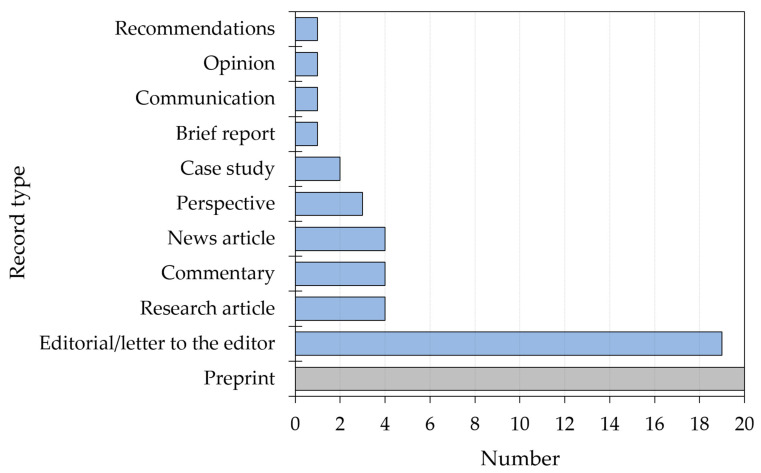
- Each included record was searched for record type, listed benefits/applications, listed risks/concerns, and main conclusions/recommendations regarding ChatGPT in healthcare education, practice, or scientific research/academic writing.
Limitations
- The paper states that included records had variable quality, non-English exclusion may have caused selection bias, inaccessible records may have led to missing relevant data, preprints were not peer reviewed, the literature is growing rapidly with the search ending 16 February 2023, and screening/interpretation was performed by a single author.
- Evident from the text: the review reports descriptive counts of mentions across heterogeneous record types rather than a formal meta-analysis or independent risk-of-bias assessment.
Model-written summary. Check it against the paper before relying on it.
Integrity signals
Registry
Cites
Statistics
Figures
Verification
Claims the paper makes
53 Valid · 1 Not valid · 6 Not checked · 37 Own results and interpretations
Every source the paper cites for this claim was checked and supports it.
In the paper
“This comes in light of the ability of ChatGPT to generate incorrect content that appears plausible from a scientific point of view [81].”
§ ChatGPT Utility in Healthcare Education, Research, and Practice: Systematic Review on the Promising Perspectives and Valid Concerns > 4. Discussion > 4.2. Limitations of ChatGPT Use in Scientific Research
What the sources say
- Supportedcites [81] Cascella M. Montomoli J. Bellini V. Bignami E. Evaluating the Feasibility of ChatGPT in Healthcare: An Analysis of Multiple Clinical and Research Scenarios J. Med. Syst. 2023 47 33 10.1007/s10916-023-01925-4 36869927 PMC9985086 source
In “Reasoning About Public Health Topics,” the paper says ChatGPT can produce believable answers that may be incorrect or nonsensical. In “Possible Misuse of GPT in Medicine and Research,” it describes a scientific abstract that appeared reliable and simulated statistical outputs that could seem plausible to readers. Together, these passages support the claim. (LLM, conf=0.94)
plain- Asserted: passes — The authors put it forward as true.
- Checkable: passes — It can be checked against evidence.
- Load-bearing: passes — The paper’s conclusions depend on it.
- Based: passes — The paper gives a reason why it holds.
- Supported
The sources with a verdict support this claim; the rest weren’t checked yet, have no full text we could read, or their verdicts aren’t rated yet.
In the paper
“This comes in light of the fact that authorship entails legal obligations that are not met by ChatGPT [43,48].”
§ ChatGPT Utility in Healthcare Education, Research, and Practice: Systematic Review on the Promising Perspectives and Valid Concerns > 4. Discussion > 4.2. Limitations of ChatGPT Use in Scientific Research
What the sources say
- Supportedcites [43] Zielinski C. Winker M. Aggarwal R. Ferris L. Heinemann M. Lapeña J. Pai S. Ing E. Citrome L. Chatbots, ChatGPT, and Scholarly Manuscripts WAME Recommendations on ChatGPT and Chatbots in Relation to Scholarly Publications Maced J. Med. Sci. 2023 11 83 86 10.3889/oamjms.2023.11502 37615142 source
The Introduction (p. 2) says chatbots are not legal entities, cannot be held legally liable, and that listing ChatGPT as an author may not be legally defensible. The WAME Recommendations (p. 2) add that chatbots cannot take responsibility for a paper or have the legal standing to sign a statement. (LLM, conf=0.93)
- Not checked — no full text of the sourcecites [48] Liebrenz M. Schleifer R. Buadze A. Bhugra D. Smith A. Generating scholarly content with ChatGPT: Ethical challenges for medical publishing Lancet Digit. Health 2023 5 e105 e106 10.1016/S2589-7500(23)00019-5 36754725 source
plain- Asserted: passes — The authors put it forward as true.
- Checkable: passes — It can be checked against evidence.
- Load-bearing: passes — The paper’s conclusions depend on it.
- Based: passes — The paper gives a reason why it holds.
- Supported
The cited sources support only part of this claim — read each source’s verdict below.
In the paper
“On one hand, ChatGPT, among other LLMs, can be beneficial in conversational and writing tasks, assisting to increase the efficiency and accuracy of the required output [11].”
§ ChatGPT Utility in Healthcare Education, Research, and Practice: Systematic Review on the Promising Perspectives and Valid Concerns > 1. Introduction
What the sources say
- Partly supportedcites [11] Deng J. Lin Y. The Benefits and Challenges of ChatGPT: An Overview Front. Comput. Intell. Syst. 2023 2 81 83 10.54097/fcis.v2i2.4465 sourceExperimental — accuracy not yet measured
Sections 4.1 (Increased Efficiency) and 4.2 (Improved Accuracy) say ChatGPT can make conversations more efficient and generate more accurate responses. The paper does not establish those benefits for writing tasks or for other LLMs, so the broader claim is only partially supported. (LLM, conf=0.88)
plainstates a cause- Asserted: passes — The authors put it forward as true.
- Checkable: passes — It can be checked against evidence.
- Load-bearing: unclear — It is unclear whether the paper’s conclusions depend on it.
- Based: passes — The paper gives a reason why it holds.
- Partly supported
The cited sources support only part of this claim — read each source’s verdict below.
In the paper
“Importantly, the concept of ChatGPT hallucination could be risky if the generated content is not thoroughly evaluated by researchers and health providers with proper expertise [37,56,73,77,79].”
§ ChatGPT Utility in Healthcare Education, Research, and Practice: Systematic Review on the Promising Perspectives and Valid Concerns > 4. Discussion > 4.2. Limitations of ChatGPT Use in Scientific Research
What the sources say
- Not checked — no full text of the sourcecites [37] Shen Y. Heacock L. Elias J. Hentel K.D. Reig B. Shih G. Moy L. ChatGPT and Other Large Language Models Are Double-edged Swords Radiology 2023 230163 10.1148/radiol.230163 36700838 source
- Partly supportedcites [56] Huh S. Are ChatGPT’s knowledge and interpretation ability comparable to those of medical students in Korea for taking a parasitology examination?: A descriptive study J. Educ. Eval. Health Prof. 2023 20 1 10.3352/jeehp.2023.20.1 36627845 PMC9905868 sourceExperimental — accuracy not yet measured
The Background says medical students must evaluate the accuracy of AI-generated medical information before creating reliable information for patients and the public. The Interpretation also reports that some ChatGPT explanations contained incorrect information. These passages support the need for scrutiny, but the paper does not specifically discuss hallucination or evaluation by researchers and health providers. (LLM, conf=0.84)
- Partly supportedcites [73] Duong D. Solomon B.D. Analysis of large-language model versus human performance for genetics questions medRxiv 2023 Preprint 10.1101/2023.01.27.23285115 PMC10999420 37246194 sourceExperimental — accuracy not yet measured
The Discussion (p. 6) says ChatGPT can give plausible explanations for incorrect answers and that its correctness requires additional verification, which is concerning in medical or other high-stakes settings. This supports the risk and need for evaluation, but the paper does not specify that researchers and health providers with proper expertise must perform it. (LLM, conf=0.83)
- Supportedcites [77] Jeblick K. Schachtner B. Dexl J. Mittermeier A. Stüber A.T. Topalis J. Weber T. Wesp P. Sabel B. Ricke J. ChatGPT Makes Medicine Easy to Swallow: An Exploratory Case Study on Simplified Radiology Reports arXiv 2022 10.48550/arxiv.2212.14882 2212.14882 PMC11126432 37794249 source
The Results (Free-text analysis) identify a ChatGPT hallucination that radiologists judged potentially harmful to a patient. The Key Points state that minimizing harm requires supervision by medical experts, supporting the claim’s warning about unevaluated medical content. (LLM, conf=0.90)
- Partly supportedcites [79] Lin Z. Why and how to embrace AI such as ChatGPT in your academic life PsyArXiv 2023 Preprint 10.31234/osf.io/sdx3j PMC10445029 37621662 sourceExperimental — accuracy not yet measured
The “Limitations of generative AI” section says ChatGPT may fabricate facts and false citations (“hallucination”) and urges users to critically evaluate and verify its responses, particularly when reliability is critical. It does not specifically say that researchers and health providers with proper expertise must evaluate the content; that part is more specific than the source. (LLM, conf=0.84)
hedgedstates a possible cause- Asserted: passes — The authors put it forward as true.
- Checkable: passes — It can be checked against evidence.
- Load-bearing: passes — The paper’s conclusions depend on it.
- Based: passes — The paper gives a reason why it holds.
- Rests on an assumption not shown here.
The sources with a verdict support this claim; the rest weren’t checked yet, have no full text we could read, or their verdicts aren’t rated yet.
In the paper
“This is particularly relevant for researchers who are non-native English speakers [23,25,63].”
§ ChatGPT Utility in Healthcare Education, Research, and Practice: Systematic Review on the Promising Perspectives and Valid Concerns > 4. Discussion > 4.1. Benefits of ChatGPT in Scientific Research
What the sources say
- Supportedcites [23] Chen T.J. ChatGPT and Other Artificial Intelligence Applications Speed up Scientific Writing Available online: https://journals.lww.com/jcma/Citation/9900/ChatGPT_and_other_artificial_intelligence.174.aspx (accessed on 16 February 2023) PMC12755446 36791246 source
In the main text (page not provided), Chen says many scientists who are not native English speakers struggle to write in English and describes AI translation and writing tools as ways to overcome that barrier. This supports the claim that language assistance in scientific writing is particularly relevant to those researchers. (LLM, conf=0.91)
- Not checked — no full text of the sourcecites [25] Kitamura F.C. ChatGPT Is Shaping the Future of Medical Writing but Still Requires Human Judgment Radiology 2023 230171 10.1148/radiol.230171 36728749 source
- Supportedcites [63] Gao C.A. Howard F.M. Markov N.S. Dyer E.C. Ramesh S. Luo Y. Pearson A.T. Comparing scientific abstracts generated by ChatGPT to original abstracts using an artificial intelligence output detector, plagiarism detector, and blinded human reviewers bioRxiv 2022 10.1101/2022.12.23.521610 source
The Discussion/Abstract section of our copy states directly that the technology 'could be used by scientists publishing in a language that is not their native language, to improve equity,' alongside the point that generated text 'may help alleviate the burden of writing' and that LLMs are 'a powerful tool to create readable scientific abstracts.' That covers the attributed content — AI-assisted language improvement being especially pertinent for non-native-English researchers — with the source's own hedge ('could be used') slightly weaker than the citing sentence's flat 'is particularly relevant.' No passage in our copy contradicts it. (LLM, conf=0.82)
plainstates an association- Asserted: passes — The authors put it forward as true.
- Checkable: passes — It can be checked against evidence.
- Load-bearing: unclear — It is unclear whether the paper’s conclusions depend on it.
- Based: passes — The paper gives a reason why it holds.
- Supported
42 more claims · 23 with their cited sources checked
Create a free account to see all 97 claims and to verify the 16 references still open.
- Probably not a substantial claim. 31
- It may state two separate claims as one. 27
Claims other papers make about this one
Each is checked against this paper’s own text: does it say what the citing paper says it does?
The source backs part of the claim, not all of it — or backs it for a different population, condition or comparison.
In the citing paper
“The reliance on ChatGPT may result in hindering the development of the skills needed to interpret and respond to social cues, which should be considered in health care education [9,91].”
From Assessing Health Students' Attitudes and Usage of ChatGPT in Jordan: Validation Study (2023) · cites this paper as [9]
Experimental — accuracy not yet measuredThe source backs part of the claim, not all of it — or backs it for a different population, condition or comparison.
In the citing paper
“A recent surge in the use of ChatGPT, in particular for mental health, is emergent for providing crucial personalized advice without clinical explanation, which can hurt user's safety, and thus trust (Sallam, 2023).”
From A review of the explainability and safety of conversational agents for mental health to identify avenues for improvement (2023) · cites this paper as Sallam, 2023
Experimental — accuracy not yet measuredThe source backs part of the claim, not all of it — or backs it for a different population, condition or comparison.
In the citing paper
“ChatGPT plays a crucial role in pandemic management by aiding in the swift and accurate dissemination of critical information.”
From A Systematic Review and Meta-Analysis of Artificial Intelligence Tools in Medicine and Healthcare: Applications, Considerations, Limitations, Motivation and Challenges (2024) · cites this paper as [6]
Experimental — accuracy not yet measuredThe source backs part of the claim, not all of it — or backs it for a different population, condition or comparison.
In the citing paper
“Its natural language processing capabilities enable it to generate coherent responses, making it a valuable tool for healthcare organisations.”
From A Systematic Review and Meta-Analysis of Artificial Intelligence Tools in Medicine and Healthcare: Applications, Considerations, Limitations, Motivation and Challenges (2024) · cites this paper as [6]
Experimental — accuracy not yet measuredThe source backs part of the claim, not all of it — or backs it for a different population, condition or comparison.
In the citing paper
“Specific advantages include its ability to provide rapid updates, preventive measures, and medical guidelines to the public.”
From A Systematic Review and Meta-Analysis of Artificial Intelligence Tools in Medicine and Healthcare: Applications, Considerations, Limitations, Motivation and Challenges (2024) · cites this paper as [6]
Experimental — accuracy not yet measured
31 more claims about this paper
Create a free account to see every claim other papers make about this one.
Citations
Cites
Preferred Reporting Items for Systematic Reviews and Meta-Analyses: the PRISMA statement
Moher, D., Liberati, A., Tetzlaff, J., Altman, D. G., & for the PRISMA Group (2009) · BMJ · doi:10.1136/bmj.b2535 · Cited by 83,823
Preferred Reporting Items for Systematic Reviews and Meta-Analyses: The PRISMA Statement
Moher, D., Liberati, A., Tetzlaff, J., Altman, D. G., & The PRISMA Group (2009) · PLoS Medicine · doi:10.1371/journal.pmed.1000097 · Cited by 64,042 · cited 1×
“The current systematic review was conducted according to the Preferred Reporting Items for Systematic Reviews and Meta-Analyses (PRIMSA) guidelines [21].”
Language Models are Few-Shot Learners
Brown, T. B., Mann, B., Ryder, N., Subbiah, M., Kaplan, J., Dhariwal, P., Neelakantan, A., Shyam, P., Sastry, G., Askell, A., et al. (2020) · arXiv · doi:10.48550/arxiv.2005.14165 · Cited by 23,372 · cited 3×
“The GPT architecture utilizes a neural network to process natural language, thus generating responses based on the context of input text [7].”
BackgroundWang, G., Ma, R., Qiao, G., Wada, K., Aizawa, Y., & Satoh, T. (2015) · Integrative Medicine International · doi:10.1159/000368408 · Cited by 18,657
Kaugeranna, R., Kaugeranna, E., & Aion, (. S. 4. 6. (2023) · DROPS (Schloss Dagstuhl – Leibniz Center for Informatics) · doi:10.4230/lipics.giscience.2023.43 · Cited by 13,690
Machine learning: Trends, perspectives, and prospects
Jordan, M. I., & Mitchell, T. M. (2015) · Science · doi:10.1126/science.aaa8415 · Cited by 9,955
Kung, T. H., Cheatham, M., Medenilla, A., Sillos, C., De Leon, L., Elepaño, C., Madriaga, M., Aggabao, R., Diaz-Candido, G., Maningo, J., et al. (2023) · PLOS Digital Health · doi:10.1371/journal.pdig.0000198 · Cited by 4,115 · cited 2×
“[59] An article showing the ChatGPT raised accuracy which enabled passing the USMLE Accuracy with high concordance and insight; it can facilitate patient communication; improved personalized medicine ChatGPT has a promising potential in medical education; future studies are recommended to consider non-biased approach…”
BackgroundKung, T. H., Cheatham, M., ChatGPT, Medenilla, A., Sillos, C., De Leon, L., Elepaño, C., Madriaga, M., Aggabao, R., Diaz-Candido, G., et al. (2022) · doi:10.1101/2022.12.19.22283643 · Cited by 4,115
Rajpurkar, P., Chen, E., Banerjee, O., & Topol, E. J. (2022) · Nature Medicine · doi:10.1038/s41591-021-01614-0 · Cited by 3,212 · cited 1×
“The promising utility of AI in health care has been outlined previously with possible benefits in personalized medicine, drug discovery, and the analysis of large datasets aside from the potential applications to improve diagnosis and clinical decisions [17,18].”
BackgroundChatting and cheating: Ensuring academic integrity in the era of ChatGPT
Cotton, D. R. E., Cotton, P. A., & Shipway, J. R. (2024) · Innovations in Education and Teaching International · doi:10.1080/14703297.2023.2190148 · Cited by 3,087 · cited 1×
“[62] An EdArXiv 2 preprint on the academic integrity in ChatGPT era Risk of plagiarism; academic dishonesty Careful thinking of educational assessment tools”
Background
Cited by
Ray, P. P. (2023) · Internet of Things and Cyber-Physical Systems · doi:10.1016/j.iotcps.2023.04.003 · Cited by 2,463
What Is the Impact of ChatGPT on Education? A Rapid Review of the Literature
Lo, C. K. (2023) · Education Sciences · doi:10.3390/educsci13040410 · Cited by 2,024
A SWOT analysis of ChatGPT: Implications for educational practice and research
Farrokhnia, M., Banihashem, S. K., Noroozi, O., & Wals, A. (2024) · Innovations in Education and Teaching International · doi:10.1080/14703297.2023.2195846 · Cited by 1,384
Generative AI and ChatGPT: applications, challenges, and AI-human collaboration
Fui-Hoon Nah, F., Zheng, R., Cai, J., Siau, K., & Chen, L. (2023) · Journal of Information Technology Case and Application Research · doi:10.1080/15228053.2023.2233814 · Cited by 1,363
Antimicrobial resistance: Impacts, challenges, and future prospects
Ahmed, S. K., Hussein, S., Qurbani, K., Ibrahim, R. H., Fareeq, A., Mahmood, K. A., & Mohamed, M. G. (2024) · Journal of Medicine, Surgery, and Public Health · doi:10.1016/j.glmedi.2024.100081 · Cited by 1,213
Grassini, S. (2023) · Education Sciences · doi:10.3390/educsci13070692 · Cited by 1,048
“…by introducing multimedia resources (e.g., images and charts) to mitigate the possibility of the assignments being performed entirely by AI, as ChatGPT 3.5 was not able to process visual or video content, thereby forming a challenge to students who attempted to utilize it to cheat [13,90,91].”
BackgroundInfluentialThe imperative for regulatory oversight of large language models (or generative AI) in healthcare
Meskó, B., & Topol, E. J. (2023) · npj Digital Medicine · doi:10.1038/s41746-023-00873-0 · Cited by 1,047
The future landscape of large language models in medicine
Clusmann, J., Kolbinger, F. R., Muti, H. S., Carrero, Z. I., Eckardt, J.-N., Laleh, N. G., Löffler, C. M. L., Schwarzkopf, S.-C., Unger, M., Veldhuizen, G. P., et al. (2023) · Communications Medicine · doi:10.1038/s43856-023-00370-1 · Cited by 1,045
Practical and ethical challenges of large language models in education: A systematic scoping review
Yan, L., Sha, L., Zhao, L., Li, Y., Martinez‐Maldonado, R., Chen, G., Li, X., Jin, Y., & Gašević, D. (2024) · British Journal of Educational Technology · doi:10.1111/bjet.13370 · Cited by 1,435
(2024) · doi:10.1109/access.2024.3365742 · Cited by 934
“Salam et al., [128] and Korngiebel et al., [126] demonstrate the substantial advantages of ChatGPT in the domains of healthcare, clinical research, and practice, although simultaneously underscoring the imperative necessity for proactive inspection and ethical transparency.”
BackgroundA Review of the Role of Artificial Intelligence in Healthcare
Al Kuwaiti, A., Nazer, K., Al-Reedy, A., Al-Shehri, S., Al-Muhanna, A., Subbarayalu, A. V., Al Muhanna, D., & Al-Muhanna, F. A. (2023) · Journal of Personalized Medicine · doi:10.3390/jpm13060951 · Cited by 915
“It functions as a chatbot, a program that can comprehend and create responses using a text-grounded interface [29].”
BackgroundChatGPT and Open-AI Models: A Preliminary Review
Roumeliotis, K. I., & Tselikas, N. D. (2023) · Future Internet · doi:10.3390/fi15060192 · Cited by 706
“In a literature review, Sallam examined the potential and valid concerns of using ChatGPT in healthcare education and research [35].”
BackgroundPrompt Engineering as an Important Emerging Skill for Medical Professionals: Tutorial
Meskó, B. (2023) · Journal of Medical Internet Research · doi:10.2196/50638 · Cited by 709
“Numerous studies have shown what medical tasks and health care processes LLMs can contribute to in order to ease the burden on medical professionals, increase efficiency, and decrease costs [3].”
ChatGPT and large language models in academia: opportunities and challenges
Meyer, J. G., Urbanowicz, R. J., Martin, P. C. N., O’Connor, K., Li, R., Peng, P.-C., Bright, T. J., Tatonetti, N., Won, K. J., Gonzalez-Hernandez, G., et al. (2023) · BioData Mining · doi:10.1186/s13040-023-00339-9 · Cited by 569
“On the other hand, there are also unsettling ethical issues to be considered [3–5].”
BackgroundThe role of ChatGPT in higher education: Benefits, challenges, and future research directions
(2023) · Journal of Applied Learning & Teaching · doi:10.37074/jalt.2023.6.1.29 · Cited by 561
Accuracy and Reliability of Chatbot Responses to Physician Questions
Goodman, R. S., Patrinely, J. R., Stone, C. A., Zimmerman, E., Donald, R. R., Chang, S. S., Berkowitz, S. T., Finn, A. P., Jahangir, E., Scoville, E. A., et al. (2023) · JAMA Network Open · doi:10.1001/jamanetworkopen.2023.36483 · Cited by 484
The Ethics of ChatGPT-Exploring the Ethical Issues of an Emerging Technology
Stahl, B. C., & Eke, D. (2024) · International Journal of Information Management · doi:10.1016/j.ijinfomgt.2023.102700 · Cited by 476
“…example, enable it to engage in voice communication (Ali et al., 2023); • Ability to learn from interaction leading to allow it to further improve the content quality and acceptability (Sallam, 2023); • Based on a large language model trained on large but limited datasets (Radford et al., 2019).”
BackgroundChatGPT in healthcare: A taxonomy and systematic review
Li, J., Dada, A., Puladi, B., Kleesiek, J., & Egger, J. (2024) · Computer Methods and Programs in Biomedicine · doi:10.1016/j.cmpb.2024.108013 · Cited by 452
ChatGPT for healthcare services: An emerging stage for an innovative perspective
Javaid, M., Haleem, A., & Singh, R. P. (2023) · BenchCouncil Transactions on Benchmarks, Standards and Evaluations · doi:10.1016/j.tbench.2023.100105 · Cited by 429
What ChatGPT means for universities: Perceptions of scholars and students
(2023) · Journal of Applied Learning & Teaching · doi:10.37074/jalt.2023.6.1.22 · Cited by 431
“While some consider that this AI’s pioneering application will create a paradigm shift in various fields, including education (Bozkurt, 2023; Sallam, 2023), others emphasize the possible ethical challenges of ChatGPT and consider it a disruptive technology (Haque et al., 2023; Sardana et al., 2023).”
BackgroundDeterminants of Intention to Use ChatGPT for Educational Purposes: Findings from PLS-SEM and fsQCA
Foroughi, B., Senali, M. G., Iranmanesh, M., Khanfar, A., Ghobakhloo, M., Annamalai, N., & Naghmeh-Abbaspour, B. (2024) · International Journal of Human–Computer Interaction · doi:10.1080/10447318.2023.2226495 · Cited by 426
“For example, Sallam (2023) showed that ChatGPT could boost healthcare students ’ scientific writing and offer personalized learning.”
InfluentialImran, M., & Almusharraf, N. (2023) · Contemporary Educational Technology · doi:10.30935/cedtech/13605 · Cited by 421
“Academic and scientific discussions globally show that ChatGPT can play a very significant role in writing assistance in accomplishing writing tasks in a versatile way (Sallam, 2023).”
BackgroundLarge language models in healthcare and medical domain: A review
Nazi, Z. A., & Peng, W. (2024) · Informatics · doi:10.3390/informatics11030057 · Cited by 415
Generative AI in Medicine and Healthcare: Promises, Opportunities and Challenges
Zhang, P., & Kamel Boulos, M. N. (2023) · Future Internet · doi:10.3390/fi15090286 · Cited by 411
Haltaufderheide, J., & Ranisch, R. (2024) · npj Digital Medicine · doi:10.1038/s41746-024-01157-x · Cited by 396
The Influence of ChatGPT on Student Engagement: A Systematic Review and Future Research Agenda
Lo, C. K., Hew, K. F., & Jong, M. S.-Y. (2024) · Computers & Education · doi:10.1016/j.compedu.2024.105100 · Cited by 392
Gursoy, D., Li, Y., & Song, H. (2023) · Journal of Hospitality Marketing & Management · doi:10.1080/19368623.2023.2211993 · Cited by 388
“…will strengthen both the individual traveler’s experiences and the industry as a whole by delivering a high level of language fluency, personalization, accuracy, timeliness, availability, security, and interaction with other service and experience providers (Carvalho & Ivanov, 2023; Sallam, 2023).”
BackgroundGender bias and stereotypes in Large Language Models
Kotek, H., Dockum, R., & Sun, D. (2023) · Proceedings of The ACM Collective Intelligence Conference · doi:10.1145/3582269.3615599 · Cited by 381
Large language models (LLMs): survey, technical frameworks, and future challenges
Kumar, P. (2024) · Artificial Intelligence Review · doi:10.1007/s10462-024-10888-y · Cited by 395
A Survey on Large Language Models: Applications, Challenges, Limitations, and Practical Usage
Hadi, M. U., tashi, Q. A., Qureshi, R., Shah, A., muneer, A., Irfan, M., Zafar, A., Shaikh, M. B., Akhtar, N., Wu, J., et al. (2023) · doi:10.36227/techrxiv.23589741.v1 · Cited by 370
Opportunities and Challenges for ChatGPT and Large Language Models in Biomedicine and Health
Tian, S., Jin, Q., Yeganova, L., Lai, P.-T., Zhu, Q., Chen, X., Yang, Y., Chen, Q., Kim, W., Comeau, D. C., et al. (2023) · Briefings in Bioinformatics · doi:10.1093/bib/bbad493 · Cited by 359
“Another issue is copyright – in many jurisdictions, machine-generated material may not receive a copyright [120, 131, 136], which poses an obvious problem for journals.”
BackgroundArmoundas, A. A., Narayan, S. M., Arnett, D. K., Spector-Bagdady, K., Bennett, D. A., Celi, L. A., Friedman, P. A., Gollob, M. H., Hall, J. L., Kwitek, A. E., et al. (2024) · Circulation · doi:10.1161/cir.0000000000001201 · Cited by 347
“149 However, the accuracy of such systems has not been widely tested, particularly for guiding health care decisions.”
BackgroundShahsavar, Y., & Choudhury, A. (2023) · JMIR Human Factors · doi:10.2196/47564 · Cited by 341
“Numerous recent studies have underscored the potential of ChatGPT in the health care sector [7].”
BackgroundGenerative AI Literacy: Twelve Defining Competencies
Annapureddy, R., Fornaroli, A., & Gatica-Perez, D. (2025) · Digital Government: Research and Practice · doi:10.1145/3685680 · Cited by 333
“Thus, in addition to the knowledge of the ethical issues from the technical side, one has to build an understanding of the origins and mechanisms of AI-generated content to mitigate potential harm on the issues inherent to the dissemination and consumption of generated content.”
Sallam, M., Salim, N., Barakat, M., & Al-Tammemi, A. (2023) · Narra J · doi:10.52225/narra.v3i1.103 · Cited by 331
“Discussion The current study was conducted during a heated debate regarding the applicability of ChatGPT as an AI-based LLM in education including healthcare education [2, 6, 25].”
BackgroundMethodInfluentialSelf-citationAli, O., Murray, P. A., Momin, M., Dwivedi, Y. K., & Malik, T. (2024) · Technological Forecasting and Social Change · doi:10.1016/j.techfore.2023.123076 · Cited by 317
ChatGPT: Empowering lifelong learning in the digital age of higher education
Rawas, S. (2024) · Education and Information Technologies · doi:10.1007/s10639-023-12114-8 · Cited by 310
“Sallam (2023) investigated the use of ChatGPT in medical education, which was proven to be successful in improving students’ knowledge and comprehension.”
Abdaljaleel, M., Barakat, M., Alsanafi, M., Salim, N. A., Abazid, H., Malaeb, D., Mohammed, A. H., Hassan, B. A. R., Wayyes, A. M., Farhan, S. S., et al. (2023) · doi:10.20944/preprints202309.1541.v1 · Cited by 296
Self-citationA multinational study on the factors influencing university students’ attitudes and usage of ChatGPT
Abdaljaleel, M., Barakat, M., Alsanafi, M., Salim, N. A., Abazid, H., Malaeb, D., Mohammed, A. H., Hassan, B. A. R., Wayyes, A. M., Farhan, S. S., et al. (2024) · Scientific Reports · doi:10.1038/s41598-024-52549-8 · Cited by 291
Self-citationThe Perception by University Students of the Use of ChatGPT in Education
Ngo, T. T. A. (2023) · International Journal of Emerging Technologies in Learning (iJET) · doi:10.3991/ijet.v18i17.39019 · Cited by 285
Large language models in patient education: a scoping review of applications in medicine
Aydin, S., Karabacak, M., Vlachos, V., & Margetis, K. (2024) · Frontiers in Medicine · doi:10.3389/fmed.2024.1477898 · Cited by 288
Large Language Models for Chatbot Health Advice Studies: A Systematic Review
Huo, B., Boyle, A., Marfo, N., Tangamornsuksan, W., Steen, J. P., McKechnie, T., Lee, Y., Mayol, J., Antoniou, S. A., Thirunavukarasu, A. J., et al. (2025) · JAMA Network Open · doi:10.1001/jamanetworkopen.2024.57879 · Cited by 283
Analysing the Role of ChatGPT in Improving Student Productivity in Higher Education
Fauzi, F., Tuhuteru, L., Sampe, F., Ausat, A. M. A., & Hatta, H. R. (2023) · Journal on Education · doi:10.31004/joe.v5i4.2563 · Cited by 283
“Improving time efficiency and effectiveness In the context of productivity, ChatGPT can help improve the efficiency and effectiveness of students' time (Sallam, 2023) and (George et al., 2023).”
BackgroundAcademic integrity and artificial intelligence: is ChatGPT hype, hero or heresy?
Currie, G. M. (2023) · Seminars in Nuclear Medicine · doi:10.1053/j.semnuclmed.2023.04.008 · Cited by 283
Use of ChatGPT at University as a Tool for Complex Thinking: Students’ Perceived Usefulness
Romero-Rodríguez, J.-M., Ramírez-Montoya, M.-S., Buenestado-Fernández, M., & Lara-Lara, F. (2023) · Journal of New Approaches in Educational Research · doi:10.7821/naer.2023.7.1458 · Cited by 277
Performance of GPT-3.5 and GPT-4 on the Japanese Medical Licensing Examination: Comparison Study
Takagi, S., Watari, T., Erabi, A., & Sakaguchi, K. (2023) · JMIR Medical Education · doi:10.2196/48002 · Cited by 271
Sai, S., Gaur, A., Sai, R., Chamola, V., Guizani, M., & Rodrigues, J. J. P. C. (2024) · IEEE Access · doi:10.1109/access.2024.3367715 · Cited by 268
“It has opened the windows to innovative healthcare using technology [10].”
BackgroundChatGPT in education: Methods, potentials, and limitations
Memarian, B., & Doleck, T. (2023) · Computers in Human Behavior: Artificial Humans · doi:10.1016/j.chbah.2023.100022 · Cited by 266
Yu, P., Xu, H., Hu, X., & Deng, C. (2023) · Healthcare · doi:10.3390/healthcare11202776 · Cited by 257
“In Sallam’s seminal systematic review of 60 selected papers that assess the utility of ChatGPT in healthcare education, research, and practice, 85% (51/60) of papers cited benefits/applications, while an overwhelming 97% (58/60) raised concerns or possible risks associated with ChatGPT use [8].”
BackgroundChatGPT: these are not hallucinations – they’re fabrications and falsifications
Emsley, R. (2023) · Schizophrenia · doi:10.1038/s41537-023-00379-4 · Cited by 258
Unraveling the Ethical Enigma: Artificial Intelligence in Healthcare
Jeyaraman, M., Balaji, S., Jeyaraman, N., & Yadav, S. (2023) · Cureus · doi:10.7759/cureus.43262 · Cited by 254
A Systematic Review of Generative AI for Teaching and Learning Practice
Ogunleye, B., Zakariyyah, K. I., Ajao, O., Olayinka, O., & Sharma, H. (2024) · Education Sciences · doi:10.3390/educsci14060636 · Cited by 251
“2024 , 14 , 636 2 of 20 However, concerns including hallucinations [10], bias [11], ethical and privacy concerns [12,13], accidental plagiarism [14], and academic integrity [15–20] have been raised regarding GenAI tools; such tools have been praised for their potential benefits in relation to HE.”
BackgroundLeveraging ChatGPT for Enhancing Critical Thinking Skills
Guo, Y., & Lee, D. (2023) · Journal of Chemical Education · doi:10.1021/acs.jchemed.3c00505 · Cited by 250
Bernstein, I. A., Zhang, Y. (., Govil, D., Majid, I., Chang, R. T., Sun, Y., Shue, A., Chou, J. C., Schehlein, E., Christopher, K. L., et al. (2023) · JAMA Network Open · doi:10.1001/jamanetworkopen.2023.30320 · Cited by 247
Large language models in medical and healthcare fields: applications, advances, and challenges
Wang, D., & Zhang, S. (2024) · Artificial Intelligence Review · doi:10.1007/s10462-024-10921-0 · Cited by 246
“The extraordinary capabilities of contemporary LLMs hold great promise for applications in the medical and health-care domain, surpassing the performance of smaller models with limited data (Sallam 2023a).”
A comprehensive survey of ChatGPT: Advancements, applications, prospects, and challenges
Nazir, A., & Wang, Z. (2023) · Meta-Radiology · doi:10.1016/j.metrad.2023.100022 · Cited by 245
ChatGPT in education: global reactions to AI innovations
Fütterer, T., Fischer, C., Alekseeva, A., Chen, X., Tate, T., Warschauer, M., & Gerjets, P. (2023) · Scientific Reports · doi:10.1038/s41598-023-42227-6 · Cited by 242
Younis, H. A., Eisa, T. A. E., Nasser, M., Sahib, T. M., Noor, A. A., Alyasiri, O. M., Salisu, S., Hayder, I. M., & Younis, H. A. (2024) · Diagnostics · doi:10.3390/diagnostics14010109 · Cited by 242
“…cosmetic orthognathic surgery consultation [10], revolutionising dental practices [8,11,12], medical scientific articles and education fields [6,9,13–23], support in disease diagnosis [24], revolutionising radiology, sonar imaging and writing assessment [13,25–33], pharmaceutical research…”
BackgroundLarge Language Models and Empathy: Systematic Review
Sorin, V., Brin, D., Barash, Y., Konen, E., Charney, A., Nadkarni, G., & Klang, E. (2024) · Journal of Medical Internet Research · doi:10.2196/52597 · Cited by 240
“LLMs have shown impressive abilities in semantic understanding and logical reasoning [5].”
A Survey of Large Language Models in Medicine: Progress, Application, and Challenge
Zhou, H., Liu, F., Gu, B., Zou, X., Huang, J., Wu, J., Li, Y., Chen, S. S., Zhou, P., Liu, J., et al. (2023) · arXiv · doi:10.48550/arxiv.2311.05112 · Cited by 240
“Several works have raised concerns regarding using LLMs such as ChatGPT in the medical domain [161].”
BackgroundTheodosiou, A. A., & Read, R. C. (2023) · Journal of Infection · doi:10.1016/j.jinf.2023.07.006 · Cited by 237
“50 Commentators have also warned that over-reliance on AI in clinical practice may lead to physician de-skilling, and that AI models may be less able to navigate uncertainty, nuance and individual patient contexts than a human clinician.”
Exploring the integration of ChatGPT in education: adapting for the future
Elbanna, S., & Armstrong, L. (2024) · Management & Sustainability: An Arab Review · doi:10.1108/msar-03-2023-0016 · Cited by 238
La nueva realidad de la educación ante los avances de la inteligencia artificial generativa
García Peñalvo, F. J., Llorens-Largo, F., & Vidal, J. (2023) · RIED-Revista Iberoamericana de Educación a Distancia · doi:10.5944/ried.27.1.37716 · Cited by 238
An exploratory survey about using ChatGPT in education, healthcare, and research
Hosseini, M., Gao, C. A., Liebovitz, D. M., Carvalho, A. M., Ahmad, F. S., Luo, Y., MacDonald, N., Holmes, K. L., & Kho, A. (2023) · PLOS ONE · doi:10.1371/journal.pone.0292216 · Cited by 238
“The use of ChatGPT and other LLMs has been reviewed by others in more detail [19–21].”
An exploratory survey about using ChatGPT in education, healthcare, and research
Hosseini, M., Gao, C. A., Liebovitz, D. M., Carvalho, A. M., Ahmad, F. S., Luo, Y., MacDonald, N., Holmes, K. L., & Kho, A. (2023) · doi:10.1101/2023.03.31.23287979 · Cited by 238
The Role of Large Language Models in Medical Education: Applications and Implications
Safranek, C. W., Sidamon-Eristoff, A. E., Gilson, A., & Chartash, D. (2023) · JMIR Medical Education · doi:10.2196/50945 · Cited by 233
“Educators have considered ChatGPT’s capacity for studying assistance, medical training, and clinical decision-making [6,7,13].”
BackgroundPrompt Engineering in Medical Education
Heston, T., & Khun, C. (2023) · International Medical Education · doi:10.3390/ime2030019 · Cited by 232
“Utilizing GLMs is a critical component of this trend, offering the potential to enhance personalized learning, foster critical thinking, and improve evidence-based thinking in medicine [7,8].”
BackgroundSamala, A. D., Rawas, S., Wang, T., Reed, J. M., Kim, J., Howard, N.-J., & Ertz, M. (2025) · Education and Information Technologies · doi:10.1007/s10639-024-12936-0 · Cited by 229
“The ChatGPT’s role in healthcare is particularly advantageous for those seeking answers to general health questions or exploring educational content related to health conditions (Cascella et al., 2023; Sallam, 2023; Temsah et al., 2023).”
Sánchez-Ruiz, L. M., Moll-López, S., Nuñez-Pérez, A., Moraño-Fernández, J. A., & Vega-Fleitas, E. (2023) · Applied Sciences · doi:10.3390/app13106039 · Cited by 229
De Paoli, S. (2024) · Social Science Computer Review · doi:10.1177/08944393231220483 · Cited by 229
“There already are literature reviews, for example, in education (Lo, 2023), healthcare (Sallam, 2023), or business (George & George, 2023).”
Assessing Health Students' Attitudes and Usage of ChatGPT in Jordan: Validation Study
Sallam, M., Salim, N. A., Barakat, M., Al-Mahzoum, K., Al-Tammemi, A. B., Malaeb, D., Hallit, R., & Hallit, S. (2023) · JMIR Medical Education · doi:10.2196/48254 · Cited by 234
“Its cited benefits included enhancing personalized learning experiences, potentially enhancing communication skills, and increasing students’ engagement in the learning process [9,18,38,39].”
InfluentialSelf-citationGiannakopoulos, K., Kavadella, A., Aaqel Salim, A., Stamatopoulos, V., & Kaklamanos, E. G. (2023) · Journal of Medical Internet Research · doi:10.2196/51580 · Cited by 227
“…personalized medicine, health literacy, and the streamlining of workflow, whereas in dentistry and oral health care, ChatGPT could be used as a supplementary tool for better diagnosis and decision-making, data recording, image analysis, disease prevention, and patient communication [14,17,20,21].”
InfluentialChatGPT: Vision and challenges
Gill, S. S., & Kaur, R. (2023) · Internet of Things and Cyber-Physical Systems · doi:10.1016/j.iotcps.2023.05.004 · Cited by 224
“ChatGPT's utility in medicine and healthcare [14] lies in its ability to (i) aid in diagnosis by analysing patient records, health status, and indications to produce treatment strategies tailored to each patient's unique desires and requirements, (ii) summarise and synthesise clinical studies to…”
BackgroundGravel, J., D’Amours-Gravel, M., & Osmanlliu, E. (2023) · doi:10.1101/2023.03.16.23286914 · Cited by 220
Cascella, M., Semeraro, F., Montomoli, J., Bellini, V., Piazza, O., & Bignami, E. (2024) · Journal of Medical Systems · doi:10.1007/s10916-024-02045-3 · Cited by 219
“These approaches may offer alternative learning pathways and can be used for designing interactive tools for medical educa - tion, enhancing the learning experience [42].”
Generative AI: A systematic review using topic modelling techniques
Gupta, P., Ding, B., Guan, C., & Ding, D. (2024) · Data and Information Management · doi:10.1016/j.dim.2024.100066 · Cited by 218
The use of ChatGPT in the digital era: Perspectives on chatbot implementation
(2023) · Journal of Applied Learning & Teaching · doi:10.37074/jalt.2023.6.1.32 · Cited by 216
The use of ChatGPT in teaching and learning: a systematic review through SWOT analysis approach
Mai, D. T. T., Da, C. V., & Hanh, N. V. (2024) · Frontiers in Education · doi:10.3389/feduc.2024.1328769 · Cited by 213
Students' perceptions of using ChatGPT in a physics class as a virtual tutor
Ding, L., Li, T., Jiang, S., & Gapud, A. (2023) · International Journal of Educational Technology in Higher Education · doi:10.1186/s41239-023-00434-1 · Cited by 208
“Even worse, due to the linguistic proficiency of GenAI, it can disguise the misinformation as truth or facts and make them appear scientifically reasonable (Sallam, 2023).”
BackgroundThe Potential and Concerns of Using AI in Scientific Research: ChatGPT Performance Evaluation
Khlaif, Z. N., Mousa, A., Hattab, M. K., Itmazi, J., Hassan, A. A., Sanmugam, M., & Ayyoub, A. (2023) · JMIR Medical Education · doi:10.2196/47049 · Cited by 205
“ChatGPT can organize information into tables based on the prompts used by researchers and the flow of the research stages [20].”
BackgroundGarg, R. K., Urs, V. L., Agrawal, A. A., Chaudhary, S. K., Paliwal, V., & Kar, S. K. (2023) · Health Promotion Perspectives · doi:10.34172/hpp.2023.22 · Cited by 202
Alshami, A., Elsayed, M., Ali, E., Eltoukhy, A. E. E., & Zayed, T. (2023) · Systems · doi:10.3390/systems11070351 · Cited by 202
Empowering education development through AIGC: A systematic literature review
Chen, X., Hu, Z., & Wang, C. (2024) · Education and Information Technologies · doi:10.1007/s10639-024-12549-7 · Cited by 203
Suárez, A., Díaz‐Flores García, V., Algar, J., Gómez Sánchez, M., Llorente de Pedro, M., & Freire, Y. (2024) · International Endodontic Journal · doi:10.1111/iej.13985 · Cited by 200
Evaluation of ChatGPT-generated medical responses: A systematic review and meta-analysis
Wei, Q., Yao, Z., Cui, Y., Wei, B., Jin, Z., & Xu, X. (2024) · Journal of Biomedical Informatics · doi:10.1016/j.jbi.2024.104620 · Cited by 201
Gravel, J., D’Amours-Gravel, M., & Osmanlliu, E. (2023) · Mayo Clinic Proceedings: Digital Health · doi:10.1016/j.mcpdig.2023.05.004 · Cited by 222
“11 To promote responsible responses, chatbot developers should adapt the reward models that guide the algorithm ’ s output, so that they learn to optimize the validity of the information and references provided.”
Ansari, A. N., Ahmad, S., & Bhutta, S. M. (2024) · Education and Information Technologies · doi:10.1007/s10639-023-12223-4 · Cited by 198
“For instance, Sallam (2023) looked at ChatGPT in healthcare education and its research.”
Sohail, S. S., Farhat, F., Himeur, Y., Nadeem, M., Madsen, D. Ø., Singh, Y., Atalla, S., & Mansoor, W. (2023) · Journal of King Saud University - Computer and Information Sciences · doi:10.1016/j.jksuci.2023.101675 · Cited by 192
Marketing with ChatGPT: Navigating the Ethical Terrain of GPT-Based Chatbot Technology
Rivas, P., & Zhao, L. (2023) · AI · doi:10.3390/ai4020019 · Cited by 191
Better by You, better than Me? ChatGPT-3 as writing assistance in students’ essays.
Bašić, Ž., Banovac, A., Kružić, I., & Jerković, I. (2023) · doi:10.35542/osf.io/n5m7s · Cited by 189
Assessing the research landscape and clinical utility of large language models: a scoping review
Park, Y.-J., Pillai, A., Deng, J., Guo, E., Gupta, M., Paget, M., & Naugler, C. (2024) · BMC Medical Informatics and Decision Making · doi:10.1186/s12911-024-02459-6 · Cited by 187
“Outside of the immediate clinical setting, LLM interfaces such as ChatGPT can enable patients to ask health-related questions, potentially optimizing health resource utilization [6].”
BackgroundChatGPT in physics education: A pilot study on easy-to-implement activities
Bitzenbauer, P. (2023) · Contemporary Educational Technology · doi:10.30935/cedtech/13176 · Cited by 181
Exploring the dimensions of ChatGPT in English language learning: a global perspective
Bin-Hady, W. R. A., Al-Kadi, A., Hazaea, A., & Ali, J. K. M. (2025) · Library Hi Tech · doi:10.1108/lht-05-2023-0200 · Cited by 179
Al-Mughairi, H., & Bhaskar, P. (2025) · Journal of Research in Innovative Teaching & Learning · doi:10.1108/jrit-09-2023-0129 · Cited by 178
"Kelly is a Warm Person, Joseph is a Role Model": Gender Biases in LLM-Generated Reference Letters
Wan, Y., Pu, G., Sun, J., Garimella, A., Chang, K.-W., & Peng, N. (2023) · arXiv · doi:10.48550/arxiv.2310.09219 · Cited by 175
Xu, X., Chen, Y., & Miao, J. (2024) · Journal of Educational Evaluation for Health Professions · doi:10.3352/jeehp.2024.21.6 · Cited by 169
“ChatGPT not only holds great potential in assisting with literature reviews and summaries [20], but it can also help non-native English speakers improve their writing skills and provide comprehensive translations of foreign-language content [21] (Fig.”
BackgroundDeiana, G., Dettori, M., Arghittu, A., Azara, A., Gabutti, G., & Castiglia, P. (2023) · Vaccines · doi:10.3390/vaccines11071217 · Cited by 168
“The emergence of innovative and advanced LLMs such as ChatGPT has given rise to a range of concerns and debates, and as such, it is crucial to discuss its potential benefits, future perspectives, and limitations [40,41].”
BackgroundWang, L., Wan, Z., Ni, C., Song, Q., Li, Y., Clayton, E., Malin, B., & Yin, Z. (2024) · Journal of Medical Internet Research · doi:10.2196/22769 · Cited by 165
“In addition, Sallam [8] focused on educational and research applications of ChatGPT only.”
Future applications of generative large language models: a data-driven case study on ChatGPT
Chiarello, F., Giordano, V., Spada, I., Barandoni, S., & Fantoni, G. (2024) · Technovation · doi:10.1016/j.technovation.2024.103002 · Cited by 164
Miao, J., Thongprayoon, C., Suppadungsuk, S., Garcia Valencia, O. A., & Cheungpasitporn, W. (2024) · Medicina · doi:10.3390/medicina60030445 · Cited by 164
Metadata
- Authors
- Sallam, M.
- Affiliations
- University of Jordan (JO)
- Corresponding author
- Sallam, Malik
- ORCID
- Sallam, Malik
- Venue
- Healthcare
- Publisher
- MDPI AG
- Published
- 2023-03-19
- Volume
- 11
- Issue
- 6
- Pages
- 887
- ISSN
- 2227-9032 (ISSN-L)
- PMC
- PMC10048148
- OpenAlex
- W4327946446
- Semantic Scholar
- dfdf7ff01aa6f691831e663fd29bc71890be39e2
- Cited by
- 3,126
- References
- 114
- Citations by year
- 2026: 561 · 2025: 839 · 2024: 1052 · 2023: 669
- FWCI
- 36.67
- Type
- journal article
- Language
- en
- Open access
- gold
- doi.org
- Licence
- Locations
- Healthcare (publishedVersion, cc-by)
- medRxiv (acceptedVersion, cc-by-nc-nd)
- Preprints.org (acceptedVersion, cc-by)
- PubMed Central (publishedVersion, cc-by)
- PubMed (publishedVersion)
- Topics
- Health Sciences › Medicine › Health Informatics › Artificial Intelligence in Healthcare and Education
- Physical Sciences › Computer Science › Artificial Intelligence › Artificial Intelligence Applications
- Social Sciences › Education › Artificial Intelligence in Education
- Keywords
- ChatGPT, large language models, artificial intelligence in healthcare, healthcare education, health care research, clinical practice, scientific writing, research equity, drug discovery, personalized medicine, health literacy, plagiarism, hallucinations, authorship criteria, AI ethics, infodemic
About these checks
Registry, retraction, Cites and statistics results are computed, not judged, with one exception: a printed reference that no index lists is read once by a model before it counts as a citation error. Claims are extracted by a model and kept only when their quote appears verbatim in the text; each cited source is then checked, with a model’s help, for whether it says what the claim relies on. Those verdicts can be wrong — read the claim’s quote and the cited source before relying on one.
The claim verdicts this report counts are experimental: their accuracy is not yet measured.
A language model drew the claims from the paper on 2026-10-10, under version 3 of the claim definition (model deepseek-v4.1-flash, prompt extract-v3).
A second model labelled each claim on 2026-10-10 (model jev-1.13-20260917, definition revision gold-guideline-v0.2).
Cited sources are checked with a language model’s help (gpt-6-sol and qwen3.8-omni-flash).
Statistics and arithmetic are recomputed, not judged.
Confidence bands are shown only for fields calibrated on our annotated test set. None is calibrated yet, so no band is shown.
What counts as a claim ›How we measure confidence ›How we check this ›
Are you an author, or do you see a problem with this page? Request a review
Data sources
Bibliographic data: Semantic Scholar, OpenAlex, Crossref.
Contains information from the Semantic Scholar Academic Graph Datasets, made available under the ODC Attribution License (ODC-BY 1.0).
Semantic Scholar’s data is described in: Kinney, R., et al. (2023). The Semantic Scholar Open Data Platform. arXiv:2301.10140.
