

The DOI matches its Crossref record; 181 of the 181 references it cites were found in a registry or an index.
Healthcare 5.0-Driven Clinical Intelligence: The Learn-Predict-Monitor-Detect-Correct Framework for Systematic Artificial Intelligence Integration in Critical Care
Open accessAbstract
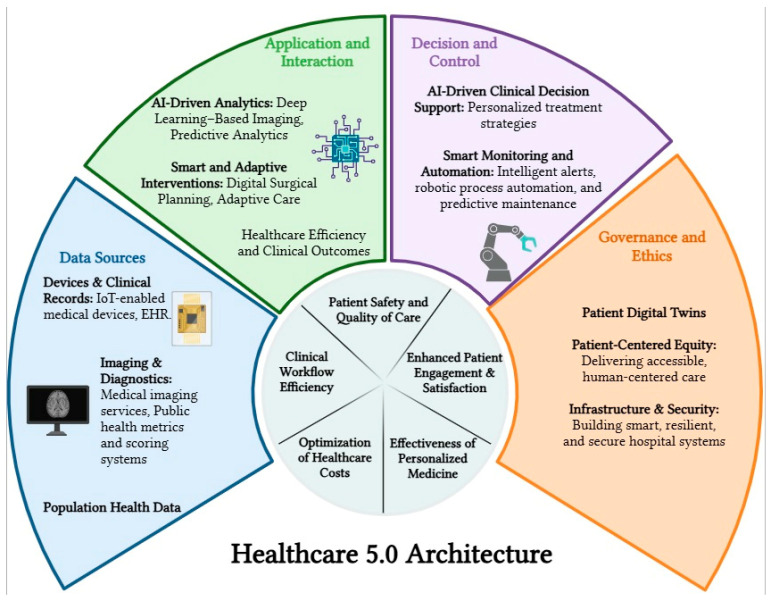
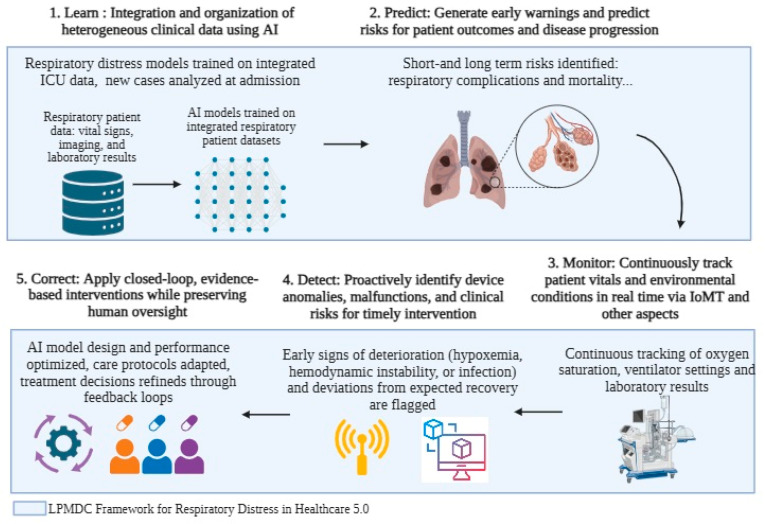
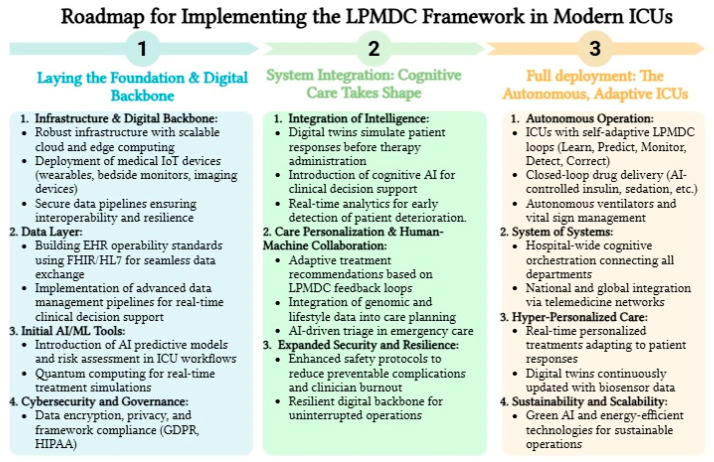
Background: Healthcare 5.0 represents a shift toward intelligent, human-centric care systems. Intensive care units generate vast amounts of data that require real-time decisions, but current decision support systems lack comprehensive frameworks for safe integration of artificial intelligence. Objective: We developed and validated the Learn–Predict–Monitor–Detect–Correct (LPMDC) framework as a methodology for systematic artificial intelligence integration across the critical care workflow. The framework improves predictive analytics, continuous patient monitoring, intelligent alerting, and therapeutic decision support while maintaining essential human clinical oversight. Methods: Framework development employed systematic theoretical modeling integrating Healthcare 5.0 principles, comprehensive literature synthesis covering 2020–2024, clinical workflow analysis across 15 international ICU sites, technology assessment of mature and emerging AI applications, and multi-round expert validation by 24 intensive care physicians and medical informaticists. Each LPMDC phase was designed with specific integration requirements, performance metrics, and safety protocols. Results: LPMDC implementation and aggregated evidence from prior studies demonstrated significant clinical improvements: 30% mortality reduction, 18% ICU length-of-stay decrease (7.5 to 6.1 days), 45% clinician cognitive load reduction, and 85% sepsis bundle compliance improvement. Machine learning algorithms achieved an 80% sensitivity for sepsis prediction three hours before clinical onset, with false-positive rates below 15%. Additional applications demonstrated effectiveness in predicting respiratory failure, preventing cardiovascular crises, and automating ventilator management. Digital twins technology enabled personalized treatment simulations, while the integration of the Internet of Medical Things provided comprehensive patient and environmental surveillance. Implementation challenges were systematically addressed through phased deployment strategies, staff training programs, and regulatory compliance frameworks. Conclusions: The Healthcare 5.0-enabled LPMDC framework provides the first comprehensive theoretical foundation for systematic AI integration in critical care while preserving human oversight and clinical safety. The cyclical five-phase architecture enables processing beyond traditional cognitive limits through continuous feedback loops and system optimization. Clinical validation demonstrates measurable improvements in patient outcomes, operational efficiency, and clinician satisfaction. Future developments incorporating quantum computing, federated learning, and explainable AI technologies offer additional advancement opportunities for next-generation critical care systems.
Overview
The claims and statistics of this paper haven’t been checked yet.
Run the check — free, no account needed. It reads the open-access text and checks the sources it cites.
Integrity signals
Registry
Cites
Statistics
Figures
Verification
Claims the paper makes
The claims and statistics of this paper haven’t been checked yet.
Run the check — free, no account needed. It reads the open-access text and checks the sources it cites.
Claims other papers make about this one
Each is checked against this paper’s own text: does it say what the citing paper says it does?
The cited source says what the claim attributes to it.
In the citing paper
“This architecture extends the Healthcare 5.0 Learn-Predict-Monitor-Detect-Correct framework developed by the research team”
From A generative AI multi-agent framework with integrated XAI governance for cancer diagnostics: from multi-omics interpretation to lifestyle risk stratification (2026) · cites this paper as Boussi Rahmouni et al., 2025
Self-check
Percentages, sums and reported differences re-computed from the paper’s own numbers.
The self-check needs the paper’s full text.
Citations
Cites
MIMIC-III, a freely accessible critical care database
Johnson, A. E. W., Pollard, T. J., Shen, L., Lehman, L.-W. H., Feng, M., Ghassemi, M., Moody, B., Szolovits, P., Anthony Celi, L., & Mark, R. G. (2016) · Scientific Data · doi:10.1038/sdata.2016.35 · Cited by 8,141
Federated Machine Learning: Concept and Applications
Yang, Q., Liu, Y., Chen, T., & Tong, Y. (2019) · ACM Transactions on Intelligent Systems and Technology · doi:10.1145/3298981 · Cited by 6,322
Rajpurkar, P., Chen, E., Banerjee, O., & Topol, E. J. (2022) · Nature Medicine · doi:10.1038/s41591-021-01614-0 · Cited by 3,212
The Internet of Things for Health Care: A Comprehensive Survey
Islam, S. M. R., Kwak, D., Kabir, M. H., Hossain, M., & Kwak, K.-S. (2015) · IEEE Access · doi:10.1109/access.2015.2437951 · Cited by 3,199
Deep learning for healthcare: review, opportunities and challenges
Miotto, R., Wang, F., Wang, S., Jiang, X., & Dudley, J. T. (2018) · Briefings in Bioinformatics · doi:10.1093/bib/bbx044 · Cited by 3,076
Needham, D. M., Davidson, J., Cohen, H., Hopkins, R. O., Weinert, C., Wunsch, H., Zawistowski, C., Bemis-Dougherty, A., Berney, S. C., Bienvenu, O. J., et al. (2012) · Critical Care Medicine · doi:10.1097/ccm.0b013e318232da75 · Cited by 2,639 · cited 1×
“Future research must investigate the long-term effects on patient quality of life and the incidence of post-intensive care syndrome (PICS), a constellation of long-term cognitive, psychological, and physical morbidities affecting survivors of critical illness [188].”
Critical Care Utilization for the COVID-19 Outbreak in Lombardy, Italy
Grasselli, G., Pesenti, A., & Cecconi, M. (2020) · JAMA · doi:10.1001/jama.2020.4031 · Cited by 2,019
Causability and explainability of artificial intelligence in medicine
Holzinger, A., Langs, G., Denk, H., Zatloukal, K., & Müller, H. (2019) · WIREs Data Mining and Knowledge Discovery · doi:10.1002/widm.1312 · Cited by 1,885
The false hope of current approaches to explainable artificial intelligence in health care
Ghassemi, M., Oakden-Rayner, L., & Beam, A. L. (2021) · The Lancet Digital Health · doi:10.1016/s2589-7500(21)00208-9 · Cited by 1,724
Shickel, B., Tighe, P. J., Bihorac, A., & Rashidi, P. (2018) · IEEE Journal of Biomedical and Health Informatics · doi:10.1109/jbhi.2017.2767063 · Cited by 1,688
Sheller, M. J., Edwards, B., Reina, G. A., Martin, J., Pati, S., Kotrotsou, A., Milchenko, M., Xu, W., Marcus, D., Colen, R. R., et al. (2020) · Scientific Reports · doi:10.1038/s41598-020-69250-1 · Cited by 1,646 · cited 1×
“Practical burdens, including standardizing data format, guaranteeing interoperability, and validating models across centers, remain to be entirely addressed [184].”
Derivation, Validation, and Potential Treatment Implications of Novel Clinical Phenotypes for Sepsis
Seymour, C. W., Kennedy, J. N., Wang, S., Chang, C.-C. H., Elliott, C. F., Xu, Z., Berry, S., Clermont, G., Cooper, G., Gomez, H., et al. (2019) · JAMA · doi:10.1001/jama.2019.5791 · Cited by 1,567
Improving Safety with Information Technology
Bates, D. W., & Gawande, A. A. (2003) · New England Journal of Medicine · doi:10.1056/nejmsa020847 · Cited by 1,544
Liu, X., Cruz Rivera, S., Moher, D., Calvert, M. J., Denniston, A. K., The SPIRIT-AI and CONSORT-AI Working Group, SPIRIT-AI and CONSORT-AI Steering Group, Chan, A.-W., Darzi, A., Holmes, C., et al. (2020) · Nature Medicine · doi:10.1038/s41591-020-1034-x · Cited by 1,421
Komorowski, M., Celi, L. A., Badawi, O., Gordon, A. C., & Faisal, A. A. (2018) · Nature Medicine · doi:10.1038/s41591-018-0213-5 · Cited by 1,290
Do no harm: a roadmap for responsible machine learning for health care
Wiens, J., Saria, S., Sendak, M., Ghassemi, M., Liu, V. X., Doshi-Velez, F., Jung, K., Heller, K., Kale, D., Saeed, M., et al. (2019) · Nature Medicine · doi:10.1038/s41591-019-0548-6 · Cited by 1,266
AI Tools in Society: Impacts on Cognitive Offloading and the Future of Critical Thinking
Gerlich, M. (2025) · Societies · doi:10.3390/soc15010006 · Cited by 1,248
Saeed, M., Villarroel, M., Reisner, A. T., Clifford, G., Lehman, L.-W., Moody, G., Heldt, T., Kyaw, T. H., Moody, B., & Mark, R. G. (2011) · Critical Care Medicine · doi:10.1097/ccm.0b013e31820a92c6 · Cited by 1,162
Wong, A., Otles, E., Donnelly, J. P., Krumm, A., McCullough, J., DeTroyer-Cooley, O., Pestrue, J., Phillips, M., Konye, J., Penoza, C., et al. (2021) · JAMA Internal Medicine · doi:10.1001/jamainternmed.2021.2626 · Cited by 995
Lekadir, K., Frangi, A. F., Porras, A. R., Glocker, B., Cintas, C., Langlotz, C. P., Weicken, E., Asselbergs, F. W., Prior, F., Collins, G. S., et al. (2025) · BMJ · doi:10.1136/bmj-2024-081554 · Cited by 957 · cited 1×
“Clinical validation studies demonstrate intelligent alert systems significantly reduce alert fatigue while maintaining sensitivity for important clinical events [107].”
Clinical information extraction applications: A literature review
Wang, Y., Wang, L., Rastegar-Mojarad, M., Moon, S., Shen, F., Afzal, N., Liu, S., Zeng, Y., Mehrabi, S., Sohn, S., et al. (2018) · Journal of Biomedical Informatics · doi:10.1016/j.jbi.2017.11.011 · Cited by 910
Aldoseri, A., Al‐Khalifa, K. N., & Hamouda, A. M. S. (2023) · Applied Sciences · doi:10.3390/app13127082 · Cited by 908
Digital twins for health: a scoping review
Katsoulakis, E., Wang, Q., Wu, H., Shahriyari, L., Fletcher, R., Liu, J., Achenie, L. E. K., Liu, H., Jackson, P., Xiao, Y., et al. (2024) · npj Digital Medicine · doi:10.1038/s41746-024-01073-0 · Cited by 848
A General Natural-language Text Processor for Clinical Radiology
Friedman, C., Alderson, P. O., Austin, J. H. M., Cimino, J. J., & Johnson, S. B. (1994) · Journal of the American Medical Informatics Association · doi:10.1136/jamia.1994.95236146 · Cited by 775
Fleuren, L. M., Klausch, T. L. T., Zwager, C. L., Schoonmade, L. J., Guo, T., Roggeveen, L. F., Swart, E. L., Girbes, A. R. J., Thoral, P., Ercole, A., et al. (2020) · Intensive Care Medicine · doi:10.1007/s00134-019-05872-y · Cited by 755 · cited 1×
“This phase represents the most mature application area for AI in intensive care, with numerous validated algorithms demonstrating superior performance compared to conventional scoring systems [73].”
Churpek, M. M., Yuen, T. C., Winslow, C., Meltzer, D. O., Kattan, M. W., & Edelson, D. P. (2016) · Critical Care Medicine · doi:10.1097/ccm.0000000000001571 · Cited by 638
Emerging Applications of Nanotechnology in Healthcare and Medicine
Malik, S., Muhammad, K., & Waheed, Y. (2023) · Molecules · doi:10.3390/molecules28186624 · Cited by 610
Enabling Technologies for Personalized and Precision Medicine
Ho, D., Quake, S. R., McCabe, E. R. B., Chng, W. J., Chow, E. K., Ding, X., Gelb, B. D., Ginsburg, G. S., Hassenstab, J., Ho, C.-M., et al. (2020) · Trends in Biotechnology · doi:10.1016/j.tibtech.2019.12.021 · Cited by 517
Desautels, T., Calvert, J., Hoffman, J., Jay, M., Kerem, Y., Shieh, L., Shimabukuro, D., Chettipally, U., Feldman, M. D., Barton, C., et al. (2016) · JMIR Medical Informatics · doi:10.2196/medinform.5909 · Cited by 509
Darwish, A. A., Hassanien, A. E., Elhoseny, M., et al. (2017) · Journal of Ambient Intelligence and Humanized Computing · doi:10.1007/s12652-017-0659-1 · Cited by 449
The MIMIC Code Repository: enabling reproducibility in critical care research
Johnson, A. E. W., Stone, D. J., Celi, L. A., & Pollard, T. J. (2018) · Journal of the American Medical Informatics Association · doi:10.1093/jamia/ocx084 · Cited by 442
Drew, B. J., Harris, P., Zègre-Hemsey, J. K., Mammone, T., Schindler, D., Salas-Boni, R., Bai, Y., Tinoco, A., Ding, Q., & Hu, X. (2014) · PLoS ONE · doi:10.1371/journal.pone.0110274 · Cited by 438
Benchmarking deep learning models on large healthcare datasets
Purushotham, S., Meng, C., Che, Z., & Liu, Y. (2018) · Journal of Biomedical Informatics · doi:10.1016/j.jbi.2018.04.007 · Cited by 406
Sleep in the Intensive Care Unit
Pisani, M. A., Friese, R. S., Gehlbach, B. K., Schwab, R. J., Weinhouse, G. L., & Jones, S. F. (2015) · American Journal of Respiratory and Critical Care Medicine · doi:10.1164/rccm.201411-2099ci · Cited by 404
Kruse, C. S., Stein, A., Thomas, H., & Kaur, H. (2018) · Journal of Medical Systems · doi:10.1007/s10916-018-1075-6 · Cited by 403
Recent Advancements in Emerging Technologies for Healthcare Management Systems: A Survey
Junaid, S. B., Imam, A. A., Balogun, A. O., Silva, L. C. D., Surakat, Y. A., Kumar, G., Abdulkarim, M., Shuaibu, A. N., Garba, A., Sahalu, Y., et al. (2022) · Healthcare · doi:10.3390/healthcare10101940 · Cited by 398
Interoperability of heterogeneous health information systems: a systematic literature review
Torab-Miandoab, A., Samad-Soltani, T., Jodati, A., & Rezaei-Hachesu, P. (2023) · BMC Medical Informatics and Decision Making · doi:10.1186/s12911-023-02115-5 · Cited by 393
Digital twin for healthcare systems
Vallée, A. (2023) · Frontiers in Digital Health · doi:10.3389/fdgth.2023.1253050 · Cited by 385
Shimabukuro, D. W., Barton, C. W., Feldman, M. D., Mataraso, S. J., & Das, R. (2017) · BMJ Open Respiratory Research · doi:10.1136/bmjresp-2017-000234 · Cited by 382
Pirracchio, R., Petersen, M. L., Carone, M., Rigon, M. R., Chevret, S., & van der Laan, M. J. (2015) · The Lancet Respiratory Medicine · doi:10.1016/s2213-2600(14)70239-5 · Cited by 374
A Systematic Review of the Barriers to the Implementation of Artificial Intelligence in Healthcare
Ahmed, M. I., Spooner, B., Isherwood, J., Lane, M., Orrock, E., & Dennison, A. (2023) · Cureus · doi:10.7759/cureus.46454 · Cited by 364
Lluch, M. (2011) · International Journal of Medical Informatics · doi:10.1016/j.ijmedinf.2011.09.005 · Cited by 358
A Survey on Zero Trust Architecture: Challenges and Future Trends
He, Y., Huang, D., Chen, L., Ni, Y., & Ma, X. (2022) · Wireless Communications and Mobile Computing · doi:10.1155/2022/6476274 · Cited by 348 · cited 1×
“Core to this approach is the Zero-Trust architecture, which ensures permanent authentication for all users and devices, assuring that access is never presumed, even within internal networks [162].”
Mao, Q., Jay, M., Hoffman, J. L., Calvert, J., Barton, C., Shimabukuro, D., Shieh, L., Chettipally, U., Fletcher, G., Kerem, Y., et al. (2018) · BMJ Open · doi:10.1136/bmjopen-2017-017833 · Cited by 336
Bias recognition and mitigation strategies in artificial intelligence healthcare applications
Hasanzadeh, F., Josephson, C. B., Waters, G., Adedinsewo, D., Azizi, Z., & White, J. A. (2025) · npj Digital Medicine · doi:10.1038/s41746-025-01503-7 · Cited by 320
Weiner, E., Dankwa‐Mullan, I., Nelson, W. A., & Hassanpour, S. (2025) · PLOS Digital Health · doi:10.1371/journal.pdig.0000810 · Cited by 306
Tsai, C. H., Eghdam, A., Davoody, N., Wright, G., Flowerday, S., & Koch, S. (2020) · Life · doi:10.3390/life10120327 · Cited by 305
Recent Advances on IoT-Assisted Wearable Sensor Systems for Healthcare Monitoring
Mamdiwar, S. D., Akshith, R., Shakruwala, Z., Chadha, U., Srinivasan, K., & Chang, C. (2021) · Biosensors · doi:10.3390/bios11100372 · Cited by 288
“Rolling Refreshers”: A novel approach to maintain CPR psychomotor skill competence
Niles, D. E., Sutton, R. M., Donoghue, A. J., Kalsi, M. S., Roberts, K. E., Boyle, L., Nishisaki, A., Arbogast, K. B., Helfaer, M. A., & Nadkarni, V. (2009) · Resuscitation · doi:10.1016/j.resuscitation.2009.04.021 · Cited by 283
How to develop machine learning models for healthcare
Chen, P.-H. C., Liu, Y., & Peng, L. (2019) · Nature Materials · doi:10.1038/s41563-019-0345-0 · Cited by 274 · cited 1×
“The Learn phase establishes intelligent clinical decision support foundations through comprehensive data integration and sophisticated pattern recognition [51].”
Integrated monitoring and analysis for early warning of patient deterioration
Tarassenko, L., Hann, A., & Young, D. (2006) · British Journal of Anaesthesia · doi:10.1093/bja/ael113 · Cited by 252
Early Prediction of Sepsis in the ICU Using Machine Learning: A Systematic Review
Moor, M., Rieck, B., Horn, M., Jutzeler, C. R., & Borgwardt, K. M. (2021) · Frontiers in Medicine · doi:10.3389/fmed.2021.607952 · Cited by 251
Dixon, D., Sattar, H., Moros, N., Kesireddy, S. R., Ahsan, H., Lakkimsetti, M., Fatima, M., Doshi, D., Sadhu, K., & Hassan, M. J. (2024) · Cureus · doi:10.7759/cureus.59954 · Cited by 249
Impact of Telemedicine Intensive Care Unit Coverage on Patient Outcomes
Young, L. B., Chan, P. S., Lu, X., Nallamothu, B. K., Sasson, C., & Cram, P. M. (2011) · Archives of Internal Medicine · doi:10.1001/archinternmed.2011.61 · Cited by 248
Edge Computing in Healthcare: Innovations, Opportunities, and Challenges
Rancea, A., Anghel, I. M., & Cioara, T. (2024) · Future Internet · doi:10.3390/fi16090329 · Cited by 238
Yaqoob, T., Abbas, H., & Atiquzzaman, M. (2019) · IEEE Communications Surveys & Tutorials · doi:10.1109/comst.2019.2914094 · Cited by 236
Artificial Intelligence Crime: An Overview of Malicious Use and Abuse of AI
Blauth, T. F., Gstrein, O. J., & Zwitter, A. (2022) · IEEE Access · doi:10.1109/access.2022.3191790 · Cited by 228
Interventions to Reduce Hospital Length of Stay in High-risk Populations
Siddique, S. M., Tipton, K. N., Leas, B. F., Greysen, S. R., Mull, N. K., Lane-Fall, M. B., McShea, K., & Tsou, A. Y. (2021) · JAMA Network Open · doi:10.1001/jamanetworkopen.2021.25846 · Cited by 227
Mienye, I. D., Obaido, G., Jere, N., Mienye, E., Aruleba, K., Emmanuel, I. D., & Ogbuokiri, B. (2024) · Informatics in Medicine Unlocked · doi:10.1016/j.imu.2024.101587 · Cited by 212
Awad, A., Bader-El-Den, M., McNicholas, J., & Briggs, J. (2017) · International Journal of Medical Informatics · doi:10.1016/j.ijmedinf.2017.10.002 · Cited by 208
Intelligent ICU for Autonomous Patient Monitoring Using Pervasive Sensing and Deep Learning
Davoudi, A., Malhotra, K. R., Shickel, B., Siegel, S., Williams, S., Ruppert, M. M., Bihorac, E., Ozrazgat‐Baslanti, T., Tighe, P. J., Bihorac, A., et al. (2019) · Scientific Reports · doi:10.1038/s41598-019-44004-w · Cited by 195
Saheb, T., & Izadi, L. (2019) · Telematics and Informatics · doi:10.1016/j.tele.2019.03.005 · Cited by 195
Machine Learning–Based Early Warning Systems for Clinical Deterioration: Systematic Scoping Review
Muralitharan, S., Nelson, W., Di, S., McGillion, M. H., Devereaux, P. J., Barr, N. G., & Petch, J. (2020) · Journal of Medical Internet Research · doi:10.2196/25187 · Cited by 189
Impact of a deep learning sepsis prediction model on quality of care and survival
Boussina, A., Shashikumar, S. P., Malhotra, A., Owens, R. L., El-Kareh, R., Longhurst, C. A., Quintero, K., Donahue, A., Chan, T. C., Nemati, S., et al. (2024) · npj Digital Medicine · doi:10.1038/s41746-023-00986-6 · Cited by 170
Shickel, B., Loftus, T. J., Adhikari, L., Ozrazgat-Baslanti, T., Bihorac, A., & Rashidi, P. (2019) · Scientific Reports · doi:10.1038/s41598-019-38491-0 · Cited by 165
Use of artificial intelligence in critical care: opportunities and obstacles
Pinsky, M. R., Bedoya, A., Bihorac, A., Celi, L., Churpek, M., Economou-Zavlanos, N. J., Elbers, P., Saria, S., Liu, V., Lyons, P. G., et al. (2024) · Critical Care · doi:10.1186/s13054-024-04860-z · Cited by 160 · cited 1×
“Modern ICU patients generate extraordinary volumes of physiological data, with monitoring systems alone producing over 1440 data points hourly that exceed human cognitive processing limits [4,5].”
Vital Signs Monitoring with Wearable Sensors in High-risk Surgical Patients
Breteler, M. J. M., KleinJan, E., Dohmen, D., Leenen, L. P. H., van Hillegersberg, R., Ruurda, J. P. H., van Loon, K., Blokhuis, T. J., & Kalkman, C. J. (2019) · Anesthesiology · doi:10.1097/aln.0000000000003029 · Cited by 159
Evaluating artificial intelligence in medicine: phases of clinical research
Park, Y., Jackson, G. P., Foreman, M. A., Gruen, D., Hu, J., & Das, A. K. (2020) · JAMIA Open · doi:10.1093/jamiaopen/ooaa033 · Cited by 150
Kılınçer, İ. F., Ertam, F., Şengür, A., Tan, R., & Acharya, U. R. (2022) · Journal of Applied Biomedicine · doi:10.1016/j.bbe.2022.11.005 · Cited by 150
Systematic review of cost effectiveness and budget impact of artificial intelligence in healthcare
El Arab, R. A., & Al Moosa, O. A. (2025) · npj Digital Medicine · doi:10.1038/s41746-025-01722-y · Cited by 149 · cited 3×
“Operationally, these investments may be considerable, emphasizing that the “predicted financial outcome” might be overstated if such costs are overlooked [189,190].”
Sel, K., Hawkins-Daarud, A. J., Chaudhuri, A., Osman, D., Bahai, A. R. S., Paydarfar, D., Willcox, K. E., Chung, C., & Jafari, R. (2025) · npj Digital Medicine · doi:10.1038/s41746-025-01447-y · Cited by 148
Addressing the challenges of AI-based telemedicine: Best practices and lessons learned
Sharma, S., Rawal, R., & Shah, D. J. (2023) · Journal of Education and Health Promotion · doi:10.4103/jehp.jehp_402_23 · Cited by 133
Pavuluri, S., Sangal, R., Sather, J., & Taylor, R. A. (2024) · BMJ Health & Care Informatics · doi:10.1136/bmjhci-2024-101120 · Cited by 129
Li, F., Xin, H., Zhang, J., Fu, M., Zhou, J., & Lian, Z. (2021) · BMJ Open · doi:10.1136/bmjopen-2020-044779 · Cited by 128 · cited 1×
“LASSO regression models showed comparable performance with additional interpretability benefits [67].”
A Research Ethics Framework for the Clinical Translation of Healthcare Machine Learning
McCradden, M. D., Anderson, J. A., Stephenson, E. A., Drysdale, E., Erdman, L., Goldenberg, A., & Shaul, R. Z. (2022) · The American Journal of Bioethics · doi:10.1080/15265161.2021.2013977 · Cited by 123
Edge Intelligence for Empowering IoT-Based Healthcare Systems
Hayyolalam, V., Aloqaily, M., Özkasap, Ö., & Guizani, M. (2021) · IEEE Wireless Communications · doi:10.1109/mwc.001.2000345 · Cited by 118
Rony, M. K. K., Parvin, M. R., Wahiduzzaman, M., Debnath, M., Bala, S. D., & Kayesh, I. (2024) · SAGE Open Nursing · doi:10.1177/23779608241245220 · Cited by 117
Security and Privacy Management in Internet of Medical Things (IoMT): A Synthesis
Hireche, R., Mansouri, H., & Pathan, A. K. (2022) · Journal of Cybersecurity and Privacy · doi:10.3390/jcp2030033 · Cited by 117
An IoT-Based Healthcare Platform for Patients in ICU Beds During the COVID-19 Outbreak
Filho, I. D. M. B., de Aquino, G. S., Malaquias, R. S., Girão, G., & Melo, S. R. M. (2021) · IEEE Access · doi:10.1109/access.2021.3058448 · Cited by 114
Hilty, D. M., Armstrong, C. M., Edwards‐Stewart, A., Gentry, M. T., Luxton, D. D., & Krupinski, E. A. (2021) · Journal of Technology in Behavioral Science · doi:10.1007/s41347-020-00190-3 · Cited by 111
Quantum computing led innovation for achieving a more sustainable Covid-19 healthcare industry
Gupta, S., Modgil, S., Bhatt, P. C., Jabbour, C. J. C., & Kamble, S. (2022) · Technovation · doi:10.1016/j.technovation.2022.102544 · Cited by 110
Implementation frameworks for end-to-end clinical AI: derivation of the SALIENT framework
van der Vegt, A. H., Scott, I. A., Dermawan, K., Schnetler, R. J., Kalke, V. R., & Lane, P. J. (2023) · Journal of the American Medical Informatics Association · doi:10.1093/jamia/ocad088 · Cited by 109
Cheng, V. C., Tai, J. W., Ho, S. K. Y., Chan, J. F., Hung, K. N., Ho, P., & Yuen, K. (2011) · BMC Infectious Diseases · doi:10.1186/1471-2334-11-151 · Cited by 105
Albrecht, M., Shanks, D., Shah, T., Hudson, T., Thompson, J., Filardi, T., Wright, K., Ator, G. A., & Smith, T. R. (2024) · JAMIA Open · doi:10.1093/jamiaopen/ooaf013 · Cited by 103
Multimodal Artificial Intelligence in Medical Diagnostics
Jandoubi, B., & Akhloufi, M. A. (2025) · Information · doi:10.3390/info16070591 · Cited by 97
Wells, B. J., Nguyen, H. M., McWilliams, A., Pallini, M., Bovi, A., Kuzma, A., Kramer, J., Chou, S.-H., Hetherington, T., Corn, P., et al. (2025) · npj Digital Medicine · doi:10.1038/s41746-025-01900-y · Cited by 90
Solenov, D., Brieler, J. A., & Scherrer, J. F. (2018) · Europe PMC (PubMed Central) · Cited by 89
Predicting sepsis onset in ICU using machine learning models: a systematic review and meta-analysis
Yang, Z., Cui, X., & Song, Z. (2023) · BMC Infectious Diseases · doi:10.1186/s12879-023-08614-0 · Cited by 88
Robust parameter extraction for decision support using multimodal intensive care data
Clifford, G. D., Long, W. J., Moody, G. B., & Peter Szolovits, B. (2008) · Philosophical Transactions of the Royal Society A Mathematical Physical and Engineering Sciences · doi:10.1098/rsta.2008.0157 · Cited by 85
Burdick, H., Pino, E., Gabel-Comeau, D., McCoy, A., Gu, C., Roberts, J., Le, S., Slote, J., Pellegrini, E., Green-Saxena, A., et al. (2020) · BMJ Health & Care Informatics · doi:10.1136/bmjhci-2019-100109 · Cited by 80
The Evolving Regulatory Paradigm of AI in MedTech: A Review of Perspectives and Where We Are Today
Zhou, K., & Gattinger, G. (2024) · Therapeutic Innovation & Regulatory Science · doi:10.1007/s43441-024-00628-3 · Cited by 80
Intensive Care Unit Built Environments: A Comprehensive Literature Review (2005–2020)
Verderber, S., Gray, S., Suresh-Kumar, S., Kercz, D., & Parshuram, C. S. (2021) · HERD Health Environments Research & Design Journal · doi:10.1177/19375867211009273 · Cited by 80
Singh, V., Cheng, S. C., Kwan, A. C., & Ebinger, J. E. (2025) · Mayo Clinic Proceedings Digital Health · doi:10.1016/j.mcpdig.2025.100231 · Cited by 77
To Wean or Not to Wean: A Practical Patient Focused Guide to Ventilator Weaning
Akella, P., Voigt, L. P., & Chawla, S. (2022) · Journal of Intensive Care Medicine · doi:10.1177/08850666221095436 · Cited by 77
Leadership in the context of digital health services: A concept analysis
Laukka, E., Pölkki, T., & Kanste, O. I. (2022) · Journal of Nursing Management · doi:10.1111/jonm.13763 · Cited by 75
Hadweh, P., Niset, A., Salvagno, M., Barajraji, M. A., Hadwe, S. E., Taccone, F. S., & Barrit, S. (2025) · Journal of Clinical Medicine · doi:10.3390/jcm14124026 · Cited by 72
Barrios, M. A. O., Arias-Fonseca, S., Ishizaka, A., Barbati, M., Avendaño-Collante, B., & Navarro-Jiménez, E. (2023) · Journal of Business Research · doi:10.1016/j.jbusres.2023.113806 · Cited by 70
Yuan, S., Yang, Z., Li, J., Wu, C., & Liu, S. (2025) · BMC Medical Informatics and Decision Making · doi:10.1186/s12911-025-03048-x · Cited by 70
Blockchain-enabled EHR access auditing: Enhancing healthcare data security
Ullah, F., He, J., Zhu, N., Wajahat, A., Nazir, A., Qureshi, S., Pathan, M. S., & Dev, S. (2024) · Heliyon · doi:10.1016/j.heliyon.2024.e34407 · Cited by 66
Artificial Intelligence in Sepsis Management: An Overview for Clinicians
Bignami, E. G., Berdini, M., Panizzi, M., Domenichetti, T., Bezzi, F., Allai, S., Damiano, T., & Bellini, V. (2025) · Journal of Clinical Medicine · doi:10.3390/jcm14010286 · Cited by 65
Twelve key challenges in medical machine learning and solutions
Ellis, R. J., Sander, R. M., & Limon, A. (2022) · Intelligence-Based Medicine · doi:10.1016/j.ibmed.2022.100068 · Cited by 61
Khude, H., & Shende, P. K. (2025) · Advances in Integrative Medicine · doi:10.1016/j.aimed.2025.100529 · Cited by 59
Pang, K., Li, L., Ouyang, W., Liu, X., & Tang, Y. (2022) · Diagnostics · doi:10.3390/diagnostics12051068 · Cited by 59
Persson, I., Östling, A., Arlbrandt, M., Söderberg, J., & Becedas, D. (2021) · JMIR Formative Research · doi:10.2196/28000 · Cited by 58
Clinician Cognitive Overload and Its Implications for Nurse Leaders
Collins, R. (2020) · Nurse Leader · doi:10.1016/j.mnl.2019.11.007 · Cited by 57
Power‐Free Contact Lens for Glucose Sensing
Li, Z., Yun, J., Li, X., Kim, M., Li, J., Lee, D., Wu, A., & Lee, S. W. (2023) · Advanced Functional Materials · doi:10.1002/adfm.202304647 · Cited by 57
Wearable Devices for Arrhythmia Detection: Advancements and Clinical Implications
Abdelrazik, A., Eldesouky, M., Antoun, I., Lau, E. Y. M., Koya, A. I., Vali, Z., Suleman, S. A., Donaldson, J., & Ng, G. A. (2025) · Sensors · doi:10.3390/s25092848 · Cited by 57
Choudhury, A. (2022) · JMIR Human Factors · doi:10.2196/35421 · Cited by 56
Effect of noise and light levels on sleep of intensive care unit patients
Younis, M. B., Hayajneh, F. A., & Alshraideh, J. A. (2019) · Nursing in Critical Care · doi:10.1111/nicc.12490 · Cited by 53
Dhinakaran, D., Srinivasan, L., Sankar, S. M. U., & Selvaraj, D. (2024) · Quantum Information and Computation · doi:10.26421/qic24.3-4-3 · Cited by 53
Wani, R. U. Z., Thabit, F., & Can, Ö. (2024) · Security and Privacy · doi:10.1002/spy2.409 · Cited by 50
Contactless Patient Care Using Hospital IoT: CCTV-Camera-Based Physiological Monitoring in ICU
Wang, H., Huang, J., Wang, G., Lu, H., & Wang, W. (2023) · IEEE Internet of Things Journal · doi:10.1109/jiot.2023.3308477 · Cited by 50
icuARM-An ICU Clinical Decision Support System Using Association Rule Mining
Cheng, C., Chanani, N. K., Venugopalan, J., Maher, K., & Wang, M. D. (2013) · IEEE Journal of Translational Engineering in Health and Medicine · doi:10.1109/jtehm.2013.2290113 · Cited by 49
Persson, I., Macura, A., Becedas, D., & Sjövall, F. (2024) · Journal of Critical Care · doi:10.1016/j.jcrc.2023.154400 · Cited by 49
Monitoring Hand Hygiene via Human Observers: How Should We Be Sampling?
Fries, J., Segre, A. M., Thomas, G. W., Herman, T., Ellingson, K., & Polgreen, P. M. (2012) · Infection Control and Hospital Epidemiology · doi:10.1086/666346 · Cited by 49
Removing barriers for digital health through organizing ambidexterity in hospitals
Gleiß, A., & Lewandowski, S. (2021) · Journal of Public Health · doi:10.1007/s10389-021-01532-y · Cited by 49
Young, A., Marik, P. E., Sibole, S., Grooms, D. A., & Levitov, A. (2012) · Journal of Cardiothoracic and Vascular Anesthesia · doi:10.1053/j.jvca.2012.09.025 · Cited by 48
Sepsis Performance Improvement Programs: From Evidence Toward Clinical Implementation
Schinkel, M., Nanayakkara, P. W. B., & Wiersinga, W. J. (2022) · Critical Care · doi:10.1186/s13054-022-03917-1 · Cited by 46
Rovati, L., Gary, P. J., Cubro, E., Dong, Y., Kılıçkaya, O., Schulte, P. J., Zhong, X., Woerster, M., Kelm, D. J., Gajic, O., et al. (2024) · Frontiers in Medicine · doi:10.3389/fmed.2023.1336897 · Cited by 45
Veldhuis, L. I., Woittiez, N. J. C., Nanayakkara, P. W. B., & Ludikhuize, J. (2022) · Critical Care Explorations · doi:10.1097/cce.0000000000000744 · Cited by 43
Using Blockchain Ledgers to Record AI Decisions in IoT
Kulothungan, V. (2025) · IoT · doi:10.3390/iot6030037 · Cited by 43
Interpretable machine learning for predicting sepsis risk in emergency triage patients
Liu, Z., Shu, W., Li, T., Zhang, X., & Chong, W. (2025) · Scientific Reports · doi:10.1038/s41598-025-85121-z · Cited by 43
Hravnak, M., Chen, L., Dubrawski, A. W., Bose, E. L., Clermont, G., & Pinsky, M. R. (2015) · Journal of Clinical Monitoring and Computing · doi:10.1007/s10877-015-9788-2 · Cited by 43
Turchi, T., Prencipe, G., Malizia, A., Filogna, S., Latrofa, F., & Sgandurra, G. (2024) · Artificial Intelligence in Medicine · doi:10.1016/j.artmed.2024.102850 · Cited by 43
Michard, F., Mulder, M. P., Gonzalez, F. A., & Sanfilippo, F. (2025) · Annals of Intensive Care · doi:10.1186/s13613-025-01448-w · Cited by 42
Zhong, X., Sarijaloo, F. B., Prakash, A., Park, J., Huang, C., Barwise, A., Herasevich, V., Gajic, O., Pickering, B., & Dong, Y. (2022) · International Journal of Production Research · doi:10.1080/00207543.2021.2022235 · Cited by 42
Nie, X., Cai, Y., Liu, J., Liu, X., Zhao, J., Yang, Z., Wen, M., & Liu, L. (2021) · Frontiers in Neurology · doi:10.3389/fneur.2020.610531 · Cited by 40
Azadi, A., & García‐Peñalvo, F. J. (2025) · JMIR Human Factors · doi:10.2196/69333 · Cited by 39
Barboi, C., Tzavelis, A., & Muhammad, L. N. (2022) · JMIR Medical Informatics · doi:10.2196/35293 · Cited by 39
Artificial Intelligence in the Intensive Care Unit: Current Evidence on an Inevitable Future Tool
Suresh, V., Singh, K. K., Vaish, E., Gurjar, M., Anubuvanan, A. M., Khulbe, Y., & Muzaffar, S. N. (2024) · Cureus · doi:10.7759/cureus.59797 · Cited by 37
The State of Data in Healthcare: Path Towards Standardization
Feldman, K., Johnson, R. A., & Chawla, N. V. (2018) · Journal of Healthcare Informatics Research · doi:10.1007/s41666-018-0019-8 · Cited by 37
Private Backend Server Software-Based Telehealthcare Tracking and Monitoring System
Ali, F. I., Ali, T. E., & dahan, Z. T. A. (2023) · International Journal of Online and Biomedical Engineering (iJOE) · doi:10.3991/ijoe.v19i01.32433 · Cited by 31
Blockchain-Based Context-Aware Authorization Management as a Service in IoT
Sylla, T., Mendiboure, L., Chalouf, M. A., & Krief, F. (2021) · Sensors · doi:10.3390/s21227656 · Cited by 30
Tasnim, N., Mamun, S. A., Islam, M. S., Kaiser, M. S., & Mahmud, M. (2023) · Applied Sciences · doi:10.3390/app13106138 · Cited by 30
Guarrasi, V., & Soda, P. (2023) · Computers in Biology and Medicine · doi:10.1016/j.compbiomed.2023.106625 · Cited by 29
Fragasso, T., Ricci, Z., Grutter, G., Albanese, S. B., Varano, C., Amodeo, A., & Cogo, P. E. (2011) · Artificial Organs · doi:10.1111/j.1525-1594.2011.01389.x · Cited by 28
Soudan, B., Dandachi, F. F., & Nassif, A. B. (2022) · Smart Health · doi:10.1016/j.smhl.2022.100294 · Cited by 26
Santos, P., & Nazaré, I. (2025) · Frontiers in Digital Health · doi:10.3389/fdgth.2025.1588479 · Cited by 24
Mitigating Alert Fatigue in Cloud Monitoring Systems: A Machine Learning Perspective
Voutsas, F., Violos, J., & Leivadeas, A. (2024) · Computer Networks · doi:10.1016/j.comnet.2024.110543 · Cited by 23
Rapid Response System Improves Sepsis Bundle Compliances and Survival in Hospital Wards for 10 Years
Choi, S., Son, J., Huh, J. W., Lim, C.-M., Oh, D. K., & Hong, S. (2021) · Journal of Clinical Medicine · doi:10.3390/jcm10184244 · Cited by 21
Systematized and efficient: organization of critical care in the future
Esper, A. M., Arabi, Y. M., Cecconi, M., Du, B., Giamarellos‐Bourboulis, E. J., Juffermans, N. P., Machado, F. R., Peake, S., Phua, J., Rowan, K., et al. (2022) · Critical Care · doi:10.1186/s13054-022-04244-1 · Cited by 20
Li, S., Yue, R., Lu, S., Luo, J., Wu, X., Zhang, Z., Liu, M., Fan, Y., Zhang, Y., Pan, C. S., et al. (2025) · Frontiers in Medicine · doi:10.3389/fmed.2025.1597556 · Cited by 20
Transition toward Healthcare 5.0: Impact of COVID-19 in the healthcare industry
Raisa, J. F., Rahman, M. S., Mahmud, I., Kaiser, M. S., & Han, D. S. (2025) · ICT Express · doi:10.1016/j.icte.2025.04.002 · Cited by 19
Napoli, A. D., Tagliente, E., Pasquini, L., Cipriano, E., Pietrantonio, F., Ortis, P., Curti, S., Boellis, A., Stefanini, T., Bernardini, A., et al. (2022) · Journal of Imaging Informatics in Medicine · doi:10.1007/s10278-022-00734-4 · Cited by 19
The Impact of AI on Nursing Workload and Stress Levels in Critical Care Settings
Alnawafleh, K. A. (2024) · Pakistan Journal of Life and Social Sciences (PJLSS) · doi:10.57239/pjlss-2024-22.2.00643 · Cited by 18
Mehta, S. D., Martin, K. C., McGowan, N., Dominick, C. L., Madu, C. R., Kraus, B., & Yehya, N. (2020) · Critical Care Medicine · doi:10.1097/ccm.0000000000004704 · Cited by 17
Barbaria, S., Mahjoubi, H., & Rahmouni, H. B. (2023) · Procedia Computer Science · doi:10.1016/j.procs.2023.01.433 · Cited by 17
Gopalakrishnan, S., Rana, M. M., Curry, M. A., Krishnakumar, A., & Rahimi, R. (2024) · IEEE Transactions on Biomedical Engineering · doi:10.1109/tbme.2024.3361439 · Cited by 16
Xin, Y., Li, H., Zhou, Y., Yang, Q., Mu, W., Han, X., Zhuo, Z., Liu, H., Wang, H., Qu, X., et al. (2023) · BMC Medical Informatics and Decision Making · doi:10.1186/s12911-023-02256-7 · Cited by 16
Zhang, Y., Callaghan‐Koru, J. A., & Koru, G. (2024) · JAMIA Open · doi:10.1093/jamiaopen/ooae058 · Cited by 15
Rais‐Bahrami, K., Rivera, O., Mikesell, G. T., & Short, B. L. (2002) · Journal of Perinatology · doi:10.1038/sj.jp.7210735 · Cited by 15
Balasubramani, M., Srinivasan, M., Jean, W.-H., Fan, S., & Shieh, J.-S. (2025) · Sensors · doi:10.3390/s25051436 · Cited by 14
Rais‐Bahrami, K., Rivera, O., Mikesell, G. T., & Short, B. L. (2002) · Journal of Perinatology · doi:10.1038/sj.jp.7210776 · Cited by 14
Optimal Sepsis Patient Treatment using Human-in-the-loop Artificial Intelligence
Gupta, A., Lash, M. T., & Nachimuthu, S. K. (2021) · Expert Systems with Applications · doi:10.1016/j.eswa.2020.114476 · Cited by 13
Woo, B., Song, J., Middleton, E., Fijačko, N., & Cato, K. (2025) · International Nursing Review · doi:10.1111/inr.70102 · Cited by 13
Point-of-Care Ultrasonography in the Critical Care Unit: An Update
Guevarra, K. P., & Greenstein, Y. Y. (2025) · Current Cardiology Reports · doi:10.1007/s11886-024-02187-3 · Cited by 13
Ashrafi, N., Abdollahi, A., Zhang, J., & Pishgar, M. (2024) · arXiv (Cornell University) · doi:10.48550/arxiv.2409.01685 · Cited by 13
Lin, Y.-H., Chang, T., Liu, C., Lai, C., Chen, C., & Chou, W. (2024) · Medicine · doi:10.1097/md.0000000000037500 · Cited by 12
An AI-powered patient triage platform for future viral outbreaks using COVID-19 as a disease model
Charkoftaki, G., Aalizadeh, R., Santos‐Neto, Á. J., Tan, W. Y., Davidson, E. A., Nikolopoulou, V., Wang, Y., Thompson, B., Furnary, T., Chen, Y., et al. (2023) · Human Genomics · doi:10.1186/s40246-023-00521-4 · Cited by 12
Spijkerboer, F. L., Overdyk, F. J., & Dahan, A. (2024) · Journal of Clinical Monitoring and Computing · doi:10.1007/s10877-024-01155-0 · Cited by 12
Advances in Machine Learning for Mechanically Ventilated Patients
Xu, Y., Xue, J., Deng, Y., Tu, L., Ding, Y., Zhang, Y., Yuan, X., Xu, K., Guo, L., & Gao, N. (2025) · International Journal of General Medicine · doi:10.2147/ijgm.s515170 · Cited by 11
Meza-Fuentes, G., Delgado, I., Barbé, M., Sánchez-Barraza, I., Retamal, M. A., & López, R. (2025) · Intensive Care Medicine Experimental · doi:10.1186/s40635-025-00737-9 · Cited by 11
Artificial Intelligence in the Intensive Care Unit: Present and Future in the COVID-19 Era
Kołodziejczak, M. M., Sierakowska, K., Tkachenko, Y., & Kowalski, P. (2023) · Journal of Personalized Medicine · doi:10.3390/jpm13060891 · Cited by 10
Setting the ventilator with AI support: challenges and perspectives
Fritsch, S. J., & Cecconi, M. (2025) · Intensive Care Medicine · doi:10.1007/s00134-024-07778-w · Cited by 10
How AI can help in error detection and prevention in the ICU?
Flint, A. R., Schaller, S. J., & Balzer, F. (2025) · Intensive Care Medicine · doi:10.1007/s00134-024-07775-z · Cited by 10
Chou, Y.-A., Wang, Z.-Y., Chang, H.-C., Liu, Y.-C., Su, P., Huang, Y., Yang, C., & Lai, C. (2023) · Frontiers in Medicine · doi:10.3389/fmed.2023.1052452 · Cited by 10
Can artificial intelligence predict COVID-19 mortality?
Genç, A. C., Cekic, D., İşsever, K., Genc, F. T., Genc, A. B., Toçoğlu, A., Durmaz, Y., Özkök, H., Nalbant, A., & Yaylacı, S. (2023) · PubMed · doi:10.26355/eurrev_202310_34163 · Cited by 10
COVIDAL: A Machine Learning Classifier for Digital COVID-19 Diagnosis in German Hospitals
Bartenschlager, C. C., Ebel, S. S., Kling, S., Vehreschild, J. J., Zabel, L. T., Spinner, C. D., Schüler, A., Heller, A. R., Borgmann, S., Hoffmann, R. F. G., et al. (2022) · ACM Transactions on Management Information Systems · doi:10.1145/3567431 · Cited by 8
Mariani, S., Schöde, A., Homann, K., Feueriegel, S., Nöth, S., Warnke, K., Bounader, K., Andreeva, A., Li, T., Doğan, G., et al. (2021) · ASAIO Journal · doi:10.1097/mat.0000000000001526 · Cited by 8
Nunes, T., Gaspar, L., Faria, J. N., Portugal, D., Lopes, T., Fernandes, P., & Tavakoli, M. (2024) · Medical & Biological Engineering & Computing · doi:10.1007/s11517-024-03155-3 · Cited by 7
Challenges with reinforcement learning model transportability for sepsis treatment in emergency care
Nauka, P. C., Kennedy, J. N., Brant, E. B., Komorowski, M., Pirracchio, R., Angus, D. C., & Seymour, C. W. (2025) · npj Digital Medicine · doi:10.1038/s41746-025-01485-6 · Cited by 7
Cheng, S.-M., Chan, J. J. I., Tan, C. W., Lu, E., Sultana, R., & Sng, B. L. (2021) · Indian Journal of Anaesthesia · doi:10.4103/ija.ija_1262_20 · Cited by 7
Implementing and Evaluating the Timed Up and Go Test Automation Using Smartphones and Smartwatches
Matey-Sanz, M., González‐Pérez, A., Casteleyn, S., & Granell, C. (2024) · IEEE Journal of Biomedical and Health Informatics · doi:10.1109/jbhi.2024.3456169 · Cited by 6
Charan, G. S., Charan, A. S., Khurana, M. S., & Narang, G. S. (2023) · Galician Medical Journal · doi:10.21802/e-gmj2023-a06 · Cited by 5
Walinjkar, A. (2018) · Applied System Innovation · doi:10.3390/asi1030035 · Cited by 5
COVID-19 therapy optimization by AI-driven biomechanical simulations
Agrimi, E., Diko, A., Carlotti, D. N., Ciardiello, A., Borthakur, M. P., Giagu, S., Melchionna, S., & Voena, C. (2023) · The European Physical Journal Plus · doi:10.1140/epjp/s13360-023-03744-5 · Cited by 4
Early biochemical analysis of COVID-19 patients helps severity prediction
Roncancio-Clavijo, A., Gorostidi-Aicua, M., Alberro, A., Iribarren-López, A., Butler, R., López, R., Iribarren, J. A., Clemente, D., Marimón, J. M., Basterrechea, J., et al. (2023) · PLoS ONE · doi:10.1371/journal.pone.0283469 · Cited by 4
Design and Pilot Study of a High-Fidelity Medical Simulation of a Hospital-Wide Cybersecurity AttackPreprint
Marsh-Armstrong, B. P., Pacheco, F., Dameff, C. J., & Tully, J. L. (2024) · Research Square · doi:10.21203/rs.3.rs-3959502/v1 · Cited by 3
Shehhi, A. A., Almansoori, T. M., Alsuwaidi, A. R., & Alblooshi, H. (2024) · PLoS ONE · doi:10.1371/journal.pone.0291373 · Cited by 3
Enhancing IoT Systems: Cybercrime Prevention through Security Vulnerability ManagementPreprint
Thawait, N. K. (2024) · Preprints.org · doi:10.20944/preprints202411.0654.v1 · Cited by 2
Smith, J. M., Alcock, G., Monk, B., & Jones, R. E. (2022) · Journal of Neonatal Nursing · doi:10.1016/j.jnn.2022.01.003 · Cited by 1
Research works printed but not linked: 14
- Kolasa, K. (2023). The Digital Transformation of the Healthcare System: Healthcare 5.0, Taylor & Francis. · DOI
- Gomathi, L., Mishra, A.K., and Tyagi, A.K. (2023, January 11–13). Industry 5.0 for healthcare 5.0: Opportunities, challenges and future research possibilities. Proceedings of the 2023 7th IEEE International Conference on Trends in Electronics and Informatics (ICOEI), Tamil Nadu, India. · DOI
- Chase, J.G., Zhou, C., Knopp, J.L., Moeller, K., Benyo, B., Desaive, T., Wong, J.H.K., Malinen, S., Naswall, K., and Shaw, G.M. (2023). Digital Twins and Automation of Care in the Intensive Care Unit. Cyber-Physical-Human Systems: Fundamentals and Applications, IEEE.
- Capp, N., Fauveau, V., Au, Y., Glasser, P., Muqeem, T., Hassen, G., and Cardenas, A. (2019, January 7). Strados labs: An efficient process to acquire and characterize clinically validated respiratory system information using a non-invasive bio-sensor. Proceedings of the 2019 IEEE Signal Processing in Medicine and Biology Symposium (SPMB), Philadelphia, PA, USA. · DOI
- Garg, 2025, Chapter 9. Healthcare 5.0 opportunities and challenges: A literature review, Intelligent Biomedical Technologies and Applications for Healthcare 5.0, Volume 16, 133
- Said, A., Yahyaoui, A., and Abdellatif, T. (2023, January 2–4). HIPAA and GDPR compliance in IoT healthcare systems. Proceedings of the International Conference on Model and Data Engineering, Sousse, Tunisia. · DOI
- Neubauer, R., Schröttner, J., and Baumgartner, C. (2022). Safety requirements for medical devices in compliance with European standards. Medical Devices and In Vitro Diagnostics: Requirements in Europe, Springer. · DOI
- Bertl, M., Piho, G., Draheim, D., Ross, P., Pechmann, L., Bucciarelli, N., and Sharma, R. (2023). Future Opportunities for Systematic AI Support in Healthcare. International Conference on Bridging the Gap Between AI and Reality, Springer Nature. · DOI
- Pundkar, 2025, Transforming emergency medicine with artificial intelligence: From triage to clinical decision support, J. Multidiscip. Rev., 8, 2025285, 10.31893/multirev.2025285 · DOI
- Sunday, 2025, Behavioral Impacts of AI Reliance in Diagnostics: Balancing Automation with Skill Retention, Epidemiol. Health Data Insights, 1, ehdi014, 10.63946/ehdi/17088 · DOI
- Hennebelle, A., Dieng, Q., Ismail, L., and Buyya, R. (2024, January 9–11). SmartEdge: Smart Healthcare End-to-End Integrated Edge and Cloud Computing System for Diabetes Prediction Enabled by Ensemble Machine Learning. Proceedings of the 2024 IEEE International Conference on Cloud Computing Technology and Science (CloudCom), Online. · DOI
- Baumbach, J. (2024, January 3–5). To share or not to share? Privacy-preserving AI in medicine. Proceedings of the RExPO24 Conference, Munich, Germany. · DOI
- Dirgová Luptáková, I., Pospíchal, J., and Huraj, L. (2023). Beyond Code and Algorithms: Navigating Ethical Complexities in Artificial Intelligence. Proceedings of the Computational Methods in Systems and Software, Springer Nature. · DOI
- Chinta, S.V., Wang, Z., Palikhe, A., Zhang, X., Kashif, A., Smith, M.A., Liu, J., and Zhang, W. (2025). AI-driven healthcare: Fairness in AI healthcare: A survey. PLOS Digit. Health, 4. · DOI
Cited by
Sorted by citations
Barki, C., Chouchen, M., Sediri, A., Ceylan, H. İ., Rahmouni, H. B., Muntean, R. I., El-Seedi, H. R., Bragazzi, N. L., & Dergaa, I. (2026) · Frontiers in Systems Biology · doi:10.3389/fsysb.2026.1892418 · Cited by 1
Self-citation
Metadata
- Authors
- Boussi Rahmouni, H., Hassine, N. B. E. H., Chouchen, M., Ceylan, H. İ., Muntean, R. I., Bragazzi, N. L., & Dergaa, I.
- Affiliations
- Research Laboratory of Biophysics and Medical Technologies, The Higher Institute of Medical Technologies of Tunis, University of Tunis el Manar, Tunis 1006, Tunisia
- Tunis University (TN)
- Department of Physical Education of Sports Teaching, Faculty of Sports Sciences, Atatürk University, Erzurum 25240, Türkiye
- 1 Decembrie 1918 University (RO)
- York University (CA)
- Manouba University (TN)
- Corresponding author
- Muntean, Raul Ioan
- ORCID
- Venue
- Healthcare
- Publisher
- MDPI AG
- Published
- 2025-10-10
- Volume
- 13
- Issue
- 20
- Pages
- 2553
- ISSN
- 2227-9032 (ISSN-L)
- PMC
- PMC12564085
- OpenAlex
- W4415038671
- Cited by
- 25
- References
- 181
- Citations by year
- 2026: 24 · 2025: 1
- FWCI
- 1.27
- Type
- journal article
- Language
- en
- Open access
- gold
- doi.org
- Licence
- Locations
- Healthcare (publishedVersion, cc-by)
- Europe PMC (PubMed Central) (publishedVersion, cc-by)
- PubMed (publishedVersion)
- Ataturk University - AVESIS (submittedVersion)
- Topics
- Health Sciences › Medicine › Health Informatics › Artificial Intelligence in Healthcare and Education
- Physical Sciences › Computer Science › Artificial Intelligence › Machine Learning in Healthcare
- Health Sciences › Medicine › Surgery › Healthcare Technology and Patient Monitoring
- Keywords
- Healthcare 5.0, artificial intelligence integration, intensive care unit, clinical decision support systems, sepsis prediction, early warning systems, digital twin, Internet of Medical Things, ventilator management, human oversight, AI safety, ICU length of stay, federated learning, explainable AI
About these checks
Registry, retraction, Cites and statistics results are computed, not judged, with one exception: a printed reference that no index lists is read once by a model before it counts as a citation error. Claims are extracted by a model and kept only when their quote appears verbatim in the text; each cited source is then checked, with a model’s help, for whether it says what the claim relies on. Those verdicts can be wrong — read the claim’s quote and the cited source before relying on one.
Statistics and arithmetic are recomputed, not judged.
Confidence bands are shown only for fields calibrated on our annotated test set. None is calibrated yet, so no band is shown.
What counts as a claim ›How we measure confidence ›How we check this ›
Are you an author, or do you see a problem with this page? Request a review
