

Impact of COVID-19 on Mental Health in Adolescents: A Systematic Review
Open accessThe DOI matches its Crossref record; 32 of the 32 references it cites were found in a registry or an index.
Abstract
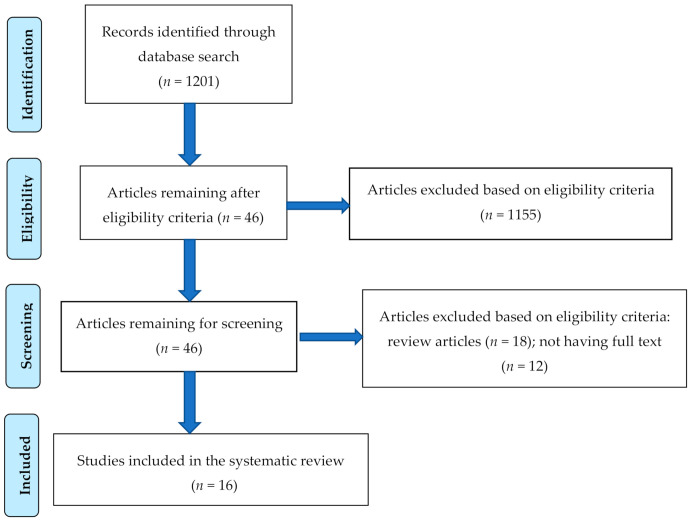
Due to lack of sufficient data on the psychological toll of the COVID-19 pandemic on adolescent mental health, this systematic analysis aims to evaluate the impact of the pandemic on adolescent mental health. This study follows the PRISMA guidelines for systematic reviews of 16 quantitative studies conducted in 2019–2021 with 40,076 participants. Globally, adolescents of varying backgrounds experience higher rates of anxiety, depression, and stress due to the pandemic. Secondly, adolescents also have a higher frequency of using alcohol and cannabis during the COVID-19 pandemic. However, social support, positive coping skills, home quarantining, and parent–child discussions seem to positively impact adolescent mental health during this period of crisis. Whether in the United States or abroad, the COVID-19 pandemic has impacted adolescent mental health. Therefore, it is important to seek and to use all of the available resources and therapies to help adolescents mediate the adjustments caused by the pandemic.
Overview
The claims and statistics of this paper haven’t been checked yet.
Free: it reads the open-access text and checks the first 5 claims that cite a source we can check. Create a free account to check every claim.
Integrity signals
Registry
Cites
Statistics
Figures
Verification
Claims the paper makes
The claims and statistics of this paper haven’t been checked yet.
Free: it reads the open-access text and checks the first 5 claims that cite a source we can check. Create a free account to check every claim.
Claims other papers make about this one
Each is checked against this paper’s own text: does it say what the citing paper says it does?
The source backs part of the claim, not all of it — or backs it for a different population, condition or comparison.
In the citing paper
“Vaccination of adolescents will allow them to reintegrate into society and resume in-person learning safely, which are especially important outcomes given the severe mental health effects of the Covid-19 pandemic on this group.18,22,26”
From Safety, immunogenicity, and efficacy of the BNT162b2 covid-19 vaccine in adolescents (2021) · cites this paper as [26]
Experimental — accuracy not yet measuredThe cited source says what the claim attributes to it.
In the citing paper
“Finally, research has found that higher levels of social support, coupled with positive coping strategies, were protective for youth mental health during the pandemic [35].”
Self-check
Percentages, sums and reported differences re-computed from the paper’s own numbers.
The self-check needs the paper’s full text.
Citations
Cites
Preferred Reporting Items for Systematic Reviews and Meta-Analyses: the PRISMA statement
Moher, D., Liberati, A., Tetzlaff, J., Altman, D. G., & for the PRISMA Group (2009) · BMJ · doi:10.1136/bmj.b2535 · Cited by 83,823
Preferred Reporting Items for Systematic Reviews and Meta-Analyses: The PRISMA Statement
Moher, D., Liberati, A., Tetzlaff, J., Altman, D. G., & The PRISMA Group (2009) · PLoS Medicine · doi:10.1371/journal.pmed.1000097 · Cited by 64,042
Wang, G., Ma, R., Qiao, G., Wada, K., Aizawa, Y., & Satoh, T. (2015) · Integrative Medicine International · doi:10.1159/000368408 · Cited by 18,657
WHO Coronavirus Disease (COVID-19) Dashboard
(2020) · Bangladesh Physiotherapy Journal · doi:10.46945/bpj.10.1.03.01 · Cited by 3,806
Chronic stress, drug use, and vulnerability to addiction
Sinha, R. (2008) · Annals of the New York Academy of Sciences · doi:10.1196/annals.1441.030 · Cited by 1,904 · cited 1×
“An earlier study [32] showed the link between the lack of positive coping skills and the possible neurobiological pathways that may associate stress with the craving for drug use.”
BackgroundMental health effects of school closures during COVID-19
Lee, J. (2020) · The Lancet Child & Adolescent Health · doi:10.1016/s2352-4642(20)30109-7 · Cited by 1,882
“Pandemic fear” and COVID-19: mental health burden and strategies
Ornell, F., Schuch, J. B., Sordi, A. O., & Kessler, F. H. P. (2020) · Brazilian Journal of Psychiatry · doi:10.1590/1516-4446-2020-0008 · Cited by 1,852 · cited 1×
“As a result of social isolation, and the constant concern of infectivity, mental health consequences that are associated with the COVID-19 crisis are monumental [2,3].”
BackgroundLi, S., Wang, Y., Xue, J., Zhao, N., & Zhu, T. (2020) · International Journal of Environmental Research and Public Health · doi:10.3390/ijerph17062032 · Cited by 1,835
Magson, N. R., Freeman, J. Y. A., Rapee, R. M., Richardson, C. E., Oar, E. L., & Fardouly, J. (2021) · Journal of Youth and Adolescence · doi:10.1007/s10964-020-01332-9 · Cited by 1,498 · cited 1×
“There has been very little attention to the psychological toll of COVID-19 on adolescent mental health [5].”
BackgroundDuan, L., Shao, X., Wang, Y., Huang, Y., Miao, J., Yang, X., & Zhu, G. (2020) · Journal of Affective Disorders · doi:10.1016/j.jad.2020.06.029 · Cited by 991 · cited 2×
“Five studies (31%) addressed depression among non-special populations and identified an association between the pandemic and depression [17,25,27,28,30].”
Background
Cited by
Items 901–949 of 949
Nielsen, K. S., Jørgensen, K. F., Juul, O., Hjelms, E., & Bundesen, B. (2026) · Arts & Health · doi:10.1080/17533015.2026.2648005
López, I. D., Méndez, S. M., Merino, G. S., Martinez, I. Z., & González-Pinto, A. (2026) · Global Clinical Engineering Journal · doi:10.31354/globalce.v8i1.285
Oger, M. (2021) · theses.fr (ABES) · doi:10.70675/f1c5a2e1z091cz4a60zbbfcz91327558888a · Cited by 2
“A place to have fellowship”: implementing group counseling in a clinical fellowship program
Sinha, A., Buckelew, S. M., & Raymond‐Flesch, M. (2026) · BMC Medical Education · doi:10.1186/s12909-026-09159-x
Tamošaitytė, A. (2024) · Lithuanian University of Health Sciences
Moura, J. R. A., da Silva, M. F., Fonseca, J. R. D. S., Brito, J. R. D. S., Oliveira, R. M., Machado, A. L. G., & Vieira, N. F. C. (2026) · Revista da Escola de Enfermagem da USP · doi:10.1590/1980-220x-reeusp-2025-0389es
Moura, J. R. A., da Silva, M. F., Fonseca, J. R. D. S., Brito, J. R. D. S., Oliveira, R. M., Machado, A. L. G., & Vieira, N. F. C. (2026) · Revista da Escola de Enfermagem da USP · doi:10.1590/1980-220x-reeusp-2025-0389pt
Moura, J. R. A., da Silva, M. F., Fonseca, J. R. D. S., Brito, J. R. D. S., Oliveira, R. M., Machado, A. L. G., & Vieira, N. F. C. (2026) · Revista da Escola de Enfermagem da USP · doi:10.1590/1980-220x-reeusp-2025-0389en
“…literature which points out that, although adolescents are often described as a group with a lower perception of individual risk, in contexts of health crises this population demonstrates an ability to understand threats to health and to adjust behaviors in the face of collective risks (20,21) .”
Gijzen, M., Rasing, S. P. A., Creemers, D. H. M., Engels, R. C. M. E., & Smit, F. (2026) · medRxiv · doi:10.64898/2026.04.28.26351983
Walsh, J.-L. A., Manhas, K. P., Stephenson, N., McDonald, S., Patten, S. B., & Tough, S. (2026) · PLoS ONE · doi:10.1371/journal.pone.0346971
Pereira, L. J., de Souza, A., Alves, Á. E., Oliveira, F. F. F., Lima, K. R., Alcântara, S. F. M., Rezende, M. D. F., Rodrigues, R. C., Pereira, C. V., & Andrade, E. F. (2026) · Nutrire · doi:10.1186/s41110-026-00476-1
“The COVID-19 pandemic has exacerbated this scenario, contributing to a rise in psychological symptoms among adolescents [2].”
Adolescent perspectives on mental health and an arts-based philosophical inquiry interventionPreprint
Benny, V., Stout, D., Bernier, M., Marchand, A., Fry, Z. D., Yobé, V., Michaud, O., & Malboeuf‐Hurtubise, C. (2026) · Research Square · doi:10.21203/rs.3.rs-9368328/v1
Teaching Across Differences: Using Elvis & Romeo to Foster Inclusive Classroom Communities
Cowan, R. (2026) · Georgia Journal of Literacy · doi:10.56887/galiteracy.213
“Post-pandemic social gaps, social media, and polarized communities make it harder to form relationships across differences (Dvorsky et al., 2021; Jones et al., 2021).”
Tang, M. H.-M., & Atchison, J. (2026) · ASEE Middle Atlantic Section Spring Conference · doi:10.18260/1-2--58487
James, N., Hoque, A. R., Pedersen, J., Doan, H., Hayes, L., & Suggs, L. (2026) · Journal of School Health · doi:10.1111/josh.70172
Oranye, N. O., Dibaba, A., Nwankwo, I. U., Webb, L. A., Lee, T., Alexander, M., Kagulire, J., Landu-Adams, V., Nnedum, O. A. U., Abdalla, E., et al. (2026) · BMJ Open · doi:10.1136/bmjopen-2025-113697
Wolf, G. (2026) · COVID · doi:10.3390/covid6060105
“In addition to being female and younger, individuals with financial difficulties are considered more vulnerable [5].”
Park, J.-Y., Endo, B., & Flores, S. (2026) · Journal of Child and Adolescent Mental Health · doi:10.2989/17280583.2026.2680867
Ethical, Environmental, and Sustainable Management in Corporate Responsibility: A Systematic Review
Joshi, S. P., Prajapati, M., & Adhikari, R. (2026) · Contemporary Research An Interdisciplinary Academic Journal · doi:10.3126/craiaj.v9i1.96146
Navarro, I. O. (2026) · Revista de Estudios Pedagógicos Contemporáneos · doi:10.5281/zenodo.21196213
Cultivating resilience: scaling up a native plant gardening program in a post-pandemic high school
Quesada, A. L. (2026) · Acta Horticulturae · doi:10.17660/actahortic.2026.1459.2
Shum, K. Z., Suldo, S. M., Fefer, S. A., & Williams, C. (2026) · Contemporary School Psychology · doi:10.1007/s40688-026-00610-w
Mental health outcomes in young adolescents born preterm reveal the need for earlier screening
Greif, E., Schröpfer, F., Dudko, J., Göbel, L., Kühl, R., Roese, K., Lipp, M. D. W., Obleser, J., Göpel, W., Borgwardt, S., et al. (2026) · European Psychiatry · doi:10.1192/j.eurpsy.2026.12240
“Though symptoms of DEP and ANX, which have mainly been observed as the pandemic ’ s consequences [72], were not specifically elevated in our sample.”
Zhang, H., Sharma, P., Giannouchos, T. V., Rahim, J., Jimoh, I., Becker, D. J., Blackburn, J. L., Liu, Y., Davis, W., Morrisey, M. A., et al. (2026) · Psychiatric Research and Clinical Practice · doi:10.1176/appi.prcp.8014456
“The COVID-19 pandemic has had a profound impact on mental health globally, with evidence highlighting significant effects on children and adolescents under the age of 18 (1).”
Mundakir, M., Sukadiono, S., Hakim, M. H., Fitriyani, V. R., Syarifurrahman, I., & Choliq, I. (2026) · Journal of Child and Adolescent Psychiatric Nursing · doi:10.1111/jcap.70064
Methodological strengths and weaknesses of nature based intervention: a systematic review
Sharma, H., Singh, N., & Ahuja, S. (2026) · Cognitive Processing · doi:10.1007/s10339-026-01369-x
Yu, W., & Richter, C. G. (2026) · Research Square · doi:10.21203/rs.3.rs-10529830/v1
Klanšček, H. J., Mikolič, P., Blanco-Calvo, C., Roškar, S., Selak, Š., & Vinko, M. (2026) · Frontiers in Public Health · doi:10.3389/fpubh.2026.1834645
Using Arts and Philosophical Inquiry to Explore Mental Health in Youth
Benny, V. (2026) · IRis (Bishop's University) · doi:10.71661/217
Stromájer, G. P., Csima, M., Varga, B., & Stromajer-Rácz, T. (2026) · Children · doi:10.3390/children13091180
“These accounts are consistent with international studies reporting increased rates of anxiety and depressive symptoms among children and adolescents during the pandemic, as well as the adverse effects of loneliness and social isolation on mental health [2,11,12].”
Adolescents’ Self-Engagement in Mental Health Treatment: A Concept Analysis
Kohara, Y., & Tanaka, K. (2026) · Issues in Mental Health Nursing · doi:10.1080/01612840.2026.2719792
Addiction and Its Impact among Adolescents’ Health during Covid-19: A Systematic Review
Ghosh, D. (2021) · Indonesian Journal of Global Health Research · doi:10.37287/ijghr.v3i4.788
Butler, K., Mreiwed, H., & Wright, L. H. V. (2026) · Canadian Journal of Children s Rights / Revue canadienne des droits des enfants
Bosquet, M. B. (2023) · Rovira & Virgili repository
Pitarch, H. G. (2023) · Rovira & Virgili repository
El desafío del inicio de la vida universitaria y la vuelta a la presencialidad. Carta al editor
Pérez, M. A., & Chaparro, M. (2021) · Revista Científica UMAX
Katlan, B., Kul, M., Kızıldağ, İ., Topdemir, M., Çayan, Ö. K., EKİCİ, S., & Ekici, F. H. (2026) · The Turkish Journal of Pediatrics · doi:10.24953/turkjpediatr.2026.7055
Booi, N. (2025) · Nelson Mandela University Research Repository
Eid, G. K. (2026) · Journal of Umm Al-Qura University for Educational and Psychological Sciences · doi:10.54940/ep60776833
LATIHAN KETERAMPILAN KOPING; SEBUAH UPAYA PROMOTIF DALAM KESEHATAN JIWA
Florensa, F., Hidayah, N., Yousriatin, F., Lintangsari, L., & Popy, P. (2025) · MEDIA BINA ILMIAH
Qu, D.-J., Li, F., Mi, C.-S., Liu, Y., Liu, Y.-H., & Zhou, P. (2026) · Journal of the National Medical Association · doi:10.1016/j.jnma.2026.101114
Gonnon, L., Foare, R., Dagonneau, T., Grandvallet, C., Fourneret, P., Willermoz, L., Haesebaert, J., Falissard, B., & Geoffray, M. (2026) · BMJ Mental Health · doi:10.1136/bmjment-2026-302840
Impact of COVID-19 on adolescent mental health in Albania
Zikaj, L., Qirjako, S., Qirjako, G., & Burazeri, G. (2026) · Mental Health and Social Inclusion · doi:10.1108/mhsi-06-2026-0222
Bosco, C., Ghazali, S. R., & Balang, R. V. (2026) · INQUIRY The Journal of Health Care Organization Provision and Financing · doi:10.1177/00469580261500361
Hoang, L. T., & Oh, J. (2026) · Tobacco Use Insights · doi:10.1177/1179173x261504478
Gombert, M., Kiss, O., Oehring, E. M., Tapert, S., Greene, D. J., Shao, L., Xu, B., Chieh, F. C., & Baker, F. C. (2026) · Journal of Adolescent Health · doi:10.1016/j.jadohealth.2026.05.012
Moiseeva, K. E., Алексеева, А. В., Заступова, А. А., Александрович, Г. В., Fedorov, A. V., Березкина, Е. Н., & Uzhokh-Bazhnokov, O. A. (2026) · ЗДОРОВЬЕ НАСЕЛЕНИЯ И СРЕДА ОБИТАНИЯ - ЗНиСО / PUBLIC HEALTH AND LIFE ENVIRONMENT · doi:10.35627/2219-5238/2026-34-9-29-37
Garriga, A. L. (2024) · RIUFLO - Repositorio Institucional UFLO
Metadata
- Authors
- Jones, E. A. K., Mitra, A. K., & Bhuiyan, A. R.
- Affiliations
- Jackson State University (US)
- Corresponding author
- Mitra, Amal K.
- Venue
- International Journal of Environmental Research and Public Health
- Publisher
- MDPI AG
- Published
- 2021-03-03
- Volume
- 18
- Issue
- 5
- Pages
- 2470
- ISSN
- 1660-4601 (ISSN-L)
- PMC
- PMC7967607
- OpenAlex
- W3134683097
- Cited by
- 857
- References
- 32
- Citations by year
- 2026: 49 · 2025: 120 · 2024: 187 · 2023: 259 · 2022: 198 · 2021: 43
- FWCI
- 22.81
- Type
- journal article
- Language
- en
- Open access
- gold
- doi.org
- Licence
- Locations
- International Journal of Environmental Research and Public Health (publishedVersion, cc-by)
- PubMed Central (publishedVersion, cc-by)
- PubMed (publishedVersion)
- RePEc: Research Papers in Economics (submittedVersion)
- DOAJ (DOAJ: Directory of Open Access Journals) (submittedVersion)
- Funders
- National Institute on Minority Health and Health Disparities (P20MD006899)
- Topics
- Social Sciences › Psychology › Clinical Psychology › COVID-19 and Mental Health
- Social Sciences › Psychology › Clinical Psychology › Child and Adolescent Psychosocial and Emotional Development
- Social Sciences › Psychology › Developmental and Educational Psychology › Student Stress and Coping
- Keywords
- COVID-19 pandemic, adolescent mental health, anxiety, depression, stress, alcohol consumption, cannabis use, social support, coping strategies, home quarantine, parent-child communication, psychological adjustment
- MeSH terms
- COVID-19, SARS-CoV-2, Adolescent, Anxiety, Child, Depression, Humans, Mental Health, Quarantine, United States, Pandemics
About these checks
Registry, retraction, Cites and statistics results are computed, not judged, with one exception: a printed reference that no index lists is read once by a model before it counts as a citation error. Claims are extracted by a model and kept only when their quote appears verbatim in the text; each cited source is then checked, with a model’s help, for whether it says what the claim relies on. Those verdicts can be wrong — read the claim’s quote and the cited source before relying on one.
Statistics and arithmetic are recomputed, not judged.
Confidence bands are shown only for fields calibrated on our annotated test set. None is calibrated yet, so no band is shown.
What counts as a claim ›How we measure confidence ›How we check this ›
Are you an author, or do you see a problem with this page? Request a review
Data sources
Bibliographic data: Semantic Scholar, OpenAlex, Crossref.
Contains information from the Semantic Scholar Academic Graph Datasets, made available under the ODC Attribution License (ODC-BY 1.0).
Semantic Scholar’s data is described in: Kinney, R., et al. (2023). The Semantic Scholar Open Data Platform. arXiv:2301.10140.
