

Impact of COVID-19 on Mental Health in Adolescents: A Systematic Review
Open accessThe DOI matches its Crossref record; 32 of the 32 references it cites were found in a registry or an index.
Abstract
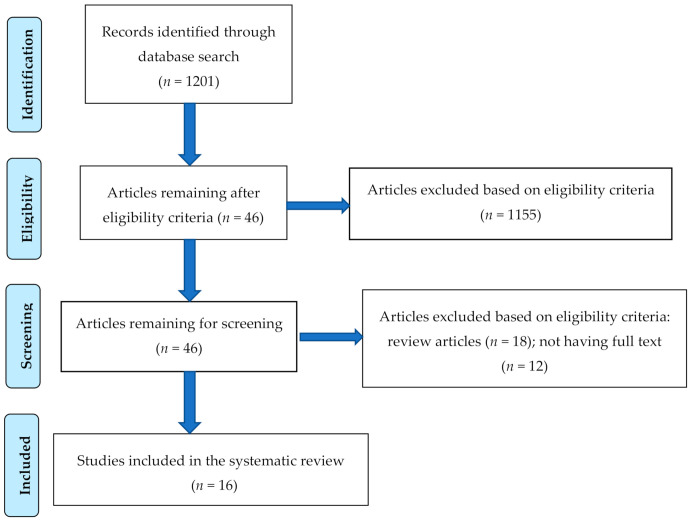
Due to lack of sufficient data on the psychological toll of the COVID-19 pandemic on adolescent mental health, this systematic analysis aims to evaluate the impact of the pandemic on adolescent mental health. This study follows the PRISMA guidelines for systematic reviews of 16 quantitative studies conducted in 2019–2021 with 40,076 participants. Globally, adolescents of varying backgrounds experience higher rates of anxiety, depression, and stress due to the pandemic. Secondly, adolescents also have a higher frequency of using alcohol and cannabis during the COVID-19 pandemic. However, social support, positive coping skills, home quarantining, and parent–child discussions seem to positively impact adolescent mental health during this period of crisis. Whether in the United States or abroad, the COVID-19 pandemic has impacted adolescent mental health. Therefore, it is important to seek and to use all of the available resources and therapies to help adolescents mediate the adjustments caused by the pandemic.
Overview
The claims and statistics of this paper haven’t been checked yet.
Free: it reads the open-access text and checks the first 5 claims that cite a source we can check. Create a free account to check every claim.
Integrity signals
Registry
Cites
Statistics
Figures
Verification
Claims the paper makes
The claims and statistics of this paper haven’t been checked yet.
Free: it reads the open-access text and checks the first 5 claims that cite a source we can check. Create a free account to check every claim.
Claims other papers make about this one
Each is checked against this paper’s own text: does it say what the citing paper says it does?
The source backs part of the claim, not all of it — or backs it for a different population, condition or comparison.
In the citing paper
“Vaccination of adolescents will allow them to reintegrate into society and resume in-person learning safely, which are especially important outcomes given the severe mental health effects of the Covid-19 pandemic on this group.18,22,26”
From Safety, immunogenicity, and efficacy of the BNT162b2 covid-19 vaccine in adolescents (2021) · cites this paper as [26]
Experimental — accuracy not yet measuredThe cited source says what the claim attributes to it.
In the citing paper
“Finally, research has found that higher levels of social support, coupled with positive coping strategies, were protective for youth mental health during the pandemic [35].”
Self-check
Percentages, sums and reported differences re-computed from the paper’s own numbers.
The self-check needs the paper’s full text.
Citations
Cites
Preferred Reporting Items for Systematic Reviews and Meta-Analyses: the PRISMA statement
Moher, D., Liberati, A., Tetzlaff, J., Altman, D. G., & for the PRISMA Group (2009) · BMJ · doi:10.1136/bmj.b2535 · Cited by 83,823
Preferred Reporting Items for Systematic Reviews and Meta-Analyses: The PRISMA Statement
Moher, D., Liberati, A., Tetzlaff, J., Altman, D. G., & The PRISMA Group (2009) · PLoS Medicine · doi:10.1371/journal.pmed.1000097 · Cited by 64,042
Wang, G., Ma, R., Qiao, G., Wada, K., Aizawa, Y., & Satoh, T. (2015) · Integrative Medicine International · doi:10.1159/000368408 · Cited by 18,657
WHO Coronavirus Disease (COVID-19) Dashboard
(2020) · Bangladesh Physiotherapy Journal · doi:10.46945/bpj.10.1.03.01 · Cited by 3,806
Chronic stress, drug use, and vulnerability to addiction
Sinha, R. (2008) · Annals of the New York Academy of Sciences · doi:10.1196/annals.1441.030 · Cited by 1,904 · cited 1×
“An earlier study [32] showed the link between the lack of positive coping skills and the possible neurobiological pathways that may associate stress with the craving for drug use.”
BackgroundMental health effects of school closures during COVID-19
Lee, J. (2020) · The Lancet Child & Adolescent Health · doi:10.1016/s2352-4642(20)30109-7 · Cited by 1,882
“Pandemic fear” and COVID-19: mental health burden and strategies
Ornell, F., Schuch, J. B., Sordi, A. O., & Kessler, F. H. P. (2020) · Brazilian Journal of Psychiatry · doi:10.1590/1516-4446-2020-0008 · Cited by 1,852 · cited 1×
“As a result of social isolation, and the constant concern of infectivity, mental health consequences that are associated with the COVID-19 crisis are monumental [2,3].”
BackgroundLi, S., Wang, Y., Xue, J., Zhao, N., & Zhu, T. (2020) · International Journal of Environmental Research and Public Health · doi:10.3390/ijerph17062032 · Cited by 1,835
Magson, N. R., Freeman, J. Y. A., Rapee, R. M., Richardson, C. E., Oar, E. L., & Fardouly, J. (2021) · Journal of Youth and Adolescence · doi:10.1007/s10964-020-01332-9 · Cited by 1,498 · cited 1×
“There has been very little attention to the psychological toll of COVID-19 on adolescent mental health [5].”
BackgroundDuan, L., Shao, X., Wang, Y., Huang, Y., Miao, J., Yang, X., & Zhu, G. (2020) · Journal of Affective Disorders · doi:10.1016/j.jad.2020.06.029 · Cited by 991 · cited 2×
“Five studies (31%) addressed depression among non-special populations and identified an association between the pandemic and depression [17,25,27,28,30].”
Background
Cited by
Items 801–900 of 949
Mugalavai, E. M., Nabiswa, F. M., Simiyu, R. N., & Omondi, C. O. (2025) · African Journal of Empirical Research · doi:10.51867/ajernet.6.2.34
Exploring Mental Health Symptoms Among Canadian Adolescents and Young Adults
Pang, N., Taiwo-Hanna, T., Nagata, J. M., Testa, A. M., Jackson, D. B., & Ganson, K. T. (2025) · Clinical Social Work Journal · doi:10.1007/s10615-025-01007-7
“Many studies have cited that the COVID-19 pandemic has had a negative impact on the mental health of youth (Jones et al., 2021; Nearchou et al., 2020).”
Barré, A. M., Zhang, D., Holm, V., Lew, D., Speybroeck, A. L. V., Iwinski, H. J., & Poon, S. C. (2025) · Journal of Developmental & Behavioral Pediatrics · doi:10.1097/dbp.0000000000001397 · Cited by 1
Relationship between employment changes and psychosocial discomfort during the COVID-19 pandemic
Solís-Soto, M. T., Burrone, M. S., Basagoitia, A., Rojas, L., Valenzuela, P., Barrientos, C., Molina, F., Valdés, D., Arrossi, S., Ramos, S. G., et al. (2025) · International Journal of Public Health Science (IJPHS) · doi:10.11591/ijphs.v14i3.25746
Çocukluk Çağı Kaygı Bozuklukları ve Bilişsel Davranışçı Terapi Müdahaleleri
Alemdar, H., & Karaca, A. (2025) · Bandırma Onyedi Eylül Üniversitesi Sağlık Bilimleri ve Araştırmaları Dergisi · doi:10.46413/boneyusbad.1521035
Woodward, M. L., Wolsey, M. W., Shalchy-Tabrizi, S., Bone, J. N., Black, T. R., & Doan, Q. H. (2025) · PLoS ONE · doi:10.1371/journal.pone.0329898
“High rates of depression, anxiety and other psychiatric concerns among youth have been observed during the pandemic [1–3].”
University-Based Mental Health Services for Students: Scoping Review ProtocolPreprint
Setyanto, A. T., probandari, Febrinasari, R. P., Hakim, M. A., & Liem, A. (2025) · PsyArXiv (OSF Preprints) · doi:10.31234/osf.io/nxdkr_v1
Mousavi, N., Momeni, F., Pourshahbaz, A., Poursharifi, H., Daneshian, Z., & Andersson, G. (2025) · Frontiers in Psychiatry · doi:10.3389/fpsyt.2025.1500214 · Cited by 1
“As a result of physical distancing measures, social rewards such as attending school and participating in sports were reduced, leading to lasting negative psychological effects that persisted even after restrictions were lifted (80 – 83).”
Adolescent Religiosity and Psychological Functioning During the COVID‐19 Pandemic
Hardy, S. A., Taylor, E. D. S., Lisonbee, D. B., Henderson, T., & Nelson, J. M. (2025) · Journal of Adolescence · doi:10.1002/jad.70043
Sauve, J. A. (2025) · American Educational Research Association Annual Meeting (AERA) · doi:10.3102/2197611
Jia, W., Du, Y., Qin, Q., Lu, W., Lyu, R., Duan, L., Yu, F., Zhang, Y., Ba, Y., Wang, Q., et al. (2025) · Biological Trace Element Research · doi:10.1007/s12011-025-04805-9 · Cited by 1
Kurcaloglu, N. G. (2025) · ODÜ Tıp Dergisi · doi:10.56941/odutip.1745602
Chung, M. C., Liu, F., Wang, N., Zhang, M., & Wang, Y. (2025) · Psychology and Psychotherapy Theory Research and Practice · doi:10.1111/papt.70013
de Souza, C. B., Leal, T. M. D. O., Costa, L. C. R., & Carlos, D. M. (2025) · Physis Revista de Saúde Coletiva · doi:10.1590/s0103-73312025350310en
Um olhar para a (des)articulação da rede de atenção psicossocial infantojuvenil em tempos pandêmicos
de Souza, C. B., Leal, T. M. D. O., Costa, L. C. R., & Carlos, D. M. (2025) · Physis Revista de Saúde Coletiva · doi:10.1590/s0103-73312025350310pt · Cited by 2
Million, E., Kuipjer, M., bautista, C., Pirat, L., Falissard, B., Lognos, B., & Carbonnel, F. (2026) · JMIR mhealth and uhealth · doi:10.2196/83908
“This situation has worsened since the COVID-19 pandemic [48].”
USO DE TELAS E OS IMPACTOS NA SAÚDE DOS ADOLESCENTES: EXPERIÊNCIA DE UMA ATIVIDADE EDUCATIVA
Depianti, J. R. B., Santos, L. B., da Silva, M. M. D. S., Pimentel, T. G. P. P., Bubadué, R. D. M., & Rosa, R. S. (2025) · Revista Enfermagem Atual In Derme · doi:10.31011/reaid-2025-v.99-n.3-art.2487
Zhao, J., Hu, D., & Yang, Q. (2025) · The British Journal of Social Work · doi:10.1093/bjsw/bcaf186
Pérez-Peña, M., & Philippot, P. (2025) · European Review of Applied Psychology · doi:10.1016/j.erap.2025.101119
Tuomarila, M., Poikonen‐Saksela, P., Kondylakis, H., Mattson, J., Auvinen, P., Jukkola‐Vuorinen, A., Kalashnikov, I., Koivunen, J. P., Kääriäinen, O., Sunela, K. L., et al. (2025) · Acta Oncologica · doi:10.2340/1651-226x.2025.43691
Gunnigle, S., Smyth, B. P., & O’Farrell, A. (2025) · Irish Journal of Psychological Medicine · doi:10.1017/ipm.2025.10125
“The COVID-19 pandemic impacted mental health among children and adolescents (G´omez-Ramiro et al. 2021; Loades et al. 2020; Jones et al. 2021).”
Trotzky, Z. A., Trotzky, R. W., LaLiberte, J. D., & Thurber, C. A. (2025) · Child & Youth Care Forum · doi:10.1007/s10566-025-09901-4
“These findings were intensified by the particularly detrimental effects of the COVID-19 pandemic on youth mental health and social functioning, with studies suggesting further increases in anxiety and depression (Jones et al., 2021).”
Accueillir dans la crise : une réponse institutionnelle innovante
Toke, H. M., Paillard, V., Ponti, L., Mayer, C., Coquin, M., Lévy, A., Simon, E., Signoret, P., Rougier, C., & Sabbah-Lim, I. (2025) · Enfances & Psy · doi:10.3917/ep.105.0027
Kushwah, A., Sutar, R. F., Gouroumourty, R., & Patil, R. (2025) · Journal of Neurosciences in Rural Practice · doi:10.25259/jnrp_71_2025
Metiboba, L., Ogele, T., Akpan, D., Tella-Lah, T., Fawaz, A., Akuto, N., Edi, J., & Nwakaogor, G. (2026) · Open Journal of Social Sciences · doi:10.4236/jss.2026.145012
Paredes, A. F., Huacasi, H. H. I., Choquehuanca, S. A. B., & Mamani, S. M. (2025) · Sportis Scientific Journal of School Sport Physical Education and Psychomotricity · doi:10.17979/sportis.2025.11.4.11803
Policy Pressures and Inequality: The Challenges Facing Adolescent Health in Times of Crisis
Fortes-Muñoz, P., Espelt, A., Bosque‐Prous, M., Folch, C., Robles-Muñoz, M., Drou-Roget, G., Teixidó‐Compañó, E., Pons‐Vigués, M., Llosada‐Gistau, J., & Muntaner, C. (2025) · International Journal of Social Determinants of Health and Health Services · doi:10.1177/27551938251390147 · Cited by 1
“23 – 25 Adolescents spent extended hours at home in front of screens, which heightened their exposure to unsupervised content and increased their exposure to harmful marketing practices.”
Lavoie, M., Menon, J., Caine, V., Symonds‐Brown, H., & Jackson, M. (2025) · Journal of Applied Youth Studies · doi:10.1007/s43151-025-00201-1
A Holt-Winter Approach to Forecasting Admission in the Psychiatric Department
Karim, M., & Pazil, N. S. M. (2025) · Information Management and Business Review · doi:10.22610/imbr.v17i4(i).4470
“While these findings underscore the profound impact of COVID-19 on mental health, they also highlight the complexities and inconsistencies in patient admission trends, warranting further investigation (Jones et al., 2021; Nearchou et al., 2020).”
Harmancı, Ş. N., Hesapçıoğlu, S. T., Ayva, D. A., Kaygisiz, E., Kafalı, S., & Ceylan, M. F. (2025) · Türk tıp dergisi. · doi:10.70852/tmj.1762947
Utilization Of Serious Game On Screening Severity Level Of Social Anxiety Disorder
Fung, J., Ariel, J., Soerianata, M. F. A., & Pratama, G. D. (2025) · doi:10.1109/icet67257.2025.11290895
“%) adolescents reported that they felt more depressed, more anxious, felt more isolated, or had more problems concentrating than usual during the COVID-19 pandemic in 2020-2021 [3], [4].”
Duong, C. B., Van Tran, N., Nguyen, A. H., Le, T. N., Ha, B. H., Do, C. N. P., Huynh, K., Le, T. M., Nguyen, T. P., & Nguyen, H. T. T. (2023) · Figshare · doi:10.6084/m9.figshare.22619459
Additional file 2 of Work-family interface and children's mental health: a systematic review
Bilodeau, J., Mikutra-Cencora, M., & Quesnel‐Vallée, A. (2024) · Figshare · doi:10.6084/m9.figshare.26579345
Additional file 4 of Work-family interface and children's mental health: a systematic review
Bilodeau, J., Mikutra-Cencora, M., & Quesnel‐Vallée, A. (2024) · Figshare · doi:10.6084/m9.figshare.26579351
Additional file 3 of Work-family interface and children's mental health: a systematic review
Bilodeau, J., Mikutra-Cencora, M., & Quesnel‐Vallée, A. (2024) · Figshare · doi:10.6084/m9.figshare.26579348
Coutinho, B. M., Anunciação, L., Landeira-Fernandez, J., & Krahe, T. E. (2024) · Figshare · doi:10.6084/m9.figshare.26613305
Drescher, A. (2024) · Carolina Digital Repository (University of North Carolina at Chapel Hill) · doi:10.17615/pz0m-6m64 · Cited by 1
Fujimoto, H., Heywood, A. E., Maston, K., Brown, L., Bartholomew, A., Werner‐Seidler, A., Christensen, H. M., & Batterham, P. J. (2024) · Figshare · doi:10.6084/m9.figshare.26728663
Duong, C. B., Van Tran, N., Nguyen, A. H., Le, T. N., Ha, B. H., Do, C. N. P., Huynh, K., Le, T. M., Nguyen, T. P., & Nguyen, H. T. T. (2023) · Figshare · doi:10.6084/m9.figshare.22619456
Malcolm, M. N. (2023) · University Libraries (University of Maryland) · doi:10.13016/dspace/o38x-fvtf
Psychosocial stress brain reactivity and effects of mindfulness in young adolescents
Knight-Celen, Z. (2024) · Archive ouverte UNIGE (University of Geneva) · doi:10.13097/archive-ouverte/unige:182548
Brindisi, G., Marino, V. P. D., Olivero, F., Canditiis, D. D., Castro, G. D., Maria, Z. A., & Anania, C. (2022) · Figshare · doi:10.6084/m9.figshare.20056012
Koper, N., Creemers, H. E., van Dam, L., Stams, G. J. J. M., & Branje, S. (2024) · Figshare · doi:10.6084/m9.figshare.26555945
Tornivuori, A., Kronström, K., Aromaa, M. E., Salanterä, S., & Karukivi, M. (2024) · Figshare · doi:10.6084/m9.figshare.26569990
Reiß, F., Cosma, A. P., Bersia, M., Erhart, M., Dalmasso, P., Devine, J., Hulbert, S., Catunda, C., Gobiņa, I., Giladi, A., et al. (2024) · Figshare · doi:10.6084/m9.figshare.26751161
Additional file 1 of Work-family interface and children's mental health: a systematic review
Bilodeau, J., Mikutra-Cencora, M., & Quesnel‐Vallée, A. (2024) · Figshare · doi:10.6084/m9.figshare.26579342
Golzarpour, M., Sajjadi, H., Santana, P., Harouni, G. G., da Costa, C. H., Ziapour, A., Azizi, S. A., & Afrashteh, S. (2024) · PubMed Central · doi:10.30476/intjsh.2024.100904.1363
Matsumoto, N., Kadowaki, T., Takanaga, S., Shigeyasu, Y., Okada, A., & Yorifuji, T. (2024) · Figshare · doi:10.6084/m9.figshare.26602915
Fujimoto, H., Heywood, A. E., Maston, K., Brown, L., Bartholomew, A., Werner‐Seidler, A., Christensen, H. M., & Batterham, P. J. (2024) · Figshare · doi:10.6084/m9.figshare.26728666
Aksoy, O., Wu, A. F.-W., Aksoy, S., & Rivas, C. A. (2024) · Figshare · doi:10.6084/m9.figshare.25389523
Bilodeau, J., Quesnel‐Vallée, A., & Poder, T. G. (2023) · Figshare · doi:10.6084/m9.figshare.24522579
Fujimoto, H., Heywood, A. E., Maston, K., Brown, L., Bartholomew, A., Werner‐Seidler, A., Christensen, H. M., & Batterham, P. J. (2024) · Figshare · doi:10.6084/m9.figshare.26728669
Hamdani, S. U., Huma, Z.-E., Nizami, A. T., Baneen, U.-U., Suleman, N., Javed, H., Malik, A., Wang, D., Mazhar, S., Khan, S. A., et al. (2022) · Figshare · doi:10.6084/m9.figshare.20115771
Humbert, A. (2024) · Qucosa (Saxon State and University Library Dresden)
Diaz, H. M. (2023) · DSPACE System - Metalibrary (University of the Coast)
Vo, J. (2023) · Scholarship@Western (Western University) · Cited by 1
Diplock, B. D. (2024) · York University Digital Library (York University)
Hardegree, K. S. (2024) · ThinkTech (Texas Tech University)
Figueroa Casas, N. E. (2022) · renati · Cited by 1
Impacto da COVID-19 no funcionamento familiar e no bem-estar subjectivo, em adultos portugueses
Sá, D. P. D. (2022) · Portuguese National Funding Agency for Science, Research and Technology (RCAAP Project by FCT)
Tuppuri, L. (2025) · Jyväskylä University Digital Archive (University of Jyväskylä)
Adolescent smartphone-based health behavior intervention - Usage and Continuous Attrition
Egilsson, E. (2024) · Opin vísindi (Opin vísindi)
Chattha, H. (2023) · Brock University Digital Repository (Brock University)
Els trastorns del neurodesenvolupament com predictors del baix rendiment acadèmic
Munso, R. B. (2022) · Tesis Doctorals en Xarxa (Consorci de Serveis Universitaris de Catalunya)
Varis, S. (2024) · Jyväskylä University Digital Archive (University of Jyväskylä)
O'Neill, C. (2023) · FedUni ResearchOnline (Federation University Australia)
GIUSTI, E. (2024) · Electronic Theses and Dissertations Repository (University of Pisa)
Quispe Calle, G., & Quispe Alarcon, R. M. (2023) · Repositorio Institucional USIL (Universidad San Ignacio de Loyola)
Kalubi, J. (2023) · Papyrus : Institutional Repository (Université de Montréal) · doi:10.71781/649
Gellwar Madsen, J., & Walderman, E. (2025) · DiVA at Umeå University (Umeå University)
The Perspective of Formerly Incarcerated African American Men During the COVID-19 Pandemic
Franklin, I. S. (2024) · ScholarWorks (Walden University)
Positiivinen pedagogiikka liikunnanopetuksessa ja sen yhteys kouluhyvinvointiin
Kopra, J. (2024) · Jyväskylä University Digital Archive (University of Jyväskylä)
Raisons d’être : raconter la création d’une pièce de théâtre sur la jeunesse et la santé mentale
Prendergast, M., & Pauluth-Penner, T. (2025) · McGill Journal of Education / Revue des sciences de l'éducation de McGill · doi:10.26443/mje/rsem.v59i1.10489
Pandemia de COVID 19 e consumo de substâncias por adolescentes: perceções de profissionais.
Gomes, A. I. C. (2025) · Portuguese National Funding Agency for Science, Research and Technology (RCAAP Project by FCT)
Vankerckhoven, L. (2025) · Lirias (KU Leuven)
Adolescent Vaping: Multiple Substance Use and Implications for School-based Prevention Programs
Liu, J. (2023) · Digital Access to Scholarship at Harvard (DASH) (Harvard University)
Embay, S. S. Y., Elamparo, N. G. T., Ellazar, J. A. L., Encinares, K. F., Escalada, M. B. D., Peñamante, C. A., Maglonzo, E. I. Y., & Monreal, P. M. D. (2025) · Journal of Medicine University of Santo Tomas · doi:10.35460/2546-1621.2025-0126
“[4-8 4-8] The quarantine and isolation measures during the COVID-19 pandemic disrupted multiple aspects of life, including social, academic and community settings.”
Varnousfaderani, M. R., Kumeleh, S. M., & Izadi, N. (2025) · F1000Research · doi:10.12688/f1000research.174865.1
Costa, R., & Dlamini, N. (2025) · doi:10.61838/kman.jayps.4907 · Cited by 1
Cui, Y., Yang, L., Yang, W., Wang, X., Liu, J., Wang, Y., Liu, J., Leng, D., Yang, B., Zhao, N., et al. (2026) · BMC Psychology · doi:10.1186/s40359-025-03944-x
Coziness: app construction and validation for mental health support
Costa, J. B. C. (2023) · LA Referencia (Red Federada de Repositorios Institucionales de Publicaciones Científicas)
Sousa, D. J. R. (2025) · Portuguese National Funding Agency for Science, Research and Technology (RCAAP Project by FCT)
Ramachandran, D., Senthilkumar, B., Bhat, M., & Mathews, A. J. (2026) · American Journal of Theoretical and Applied Statistics · doi:10.11648/j.ajtas.20261501.13
Li, P., Li, F. Y., Liang, B.-Y., Han, Y.-X., Liu, Y., Liu, Y.-H., & Jiang, M.-Y. (2026) · Journal of the National Medical Association · doi:10.1016/j.jnma.2026.01.008
Liu, J., Zhao, Y., Ren, X., Wang, B., Chen, Y., & Tang, C. (2026) · BMC Psychology · doi:10.1186/s40359-026-04156-7
“In parallel, depression and anxiety increase markedly in early adolescence, peaking between ages 10 and 14 [7], and the COVID-19 pandemic further reduced youth activity levels and adversely affected well-being [8–10].”
Impact of COVID-19 on Social Support among Caregivers: A Qualitative Study
Boateng, A., Bahar, O. S., Ibrahim, A., Addo-Lartey, A. A., Kumbelim, K., & Nartey, P. B. (2026) · Global Social Welfare · doi:10.1007/s40609-026-00441-w
Trotzky, Z. A., Lan, R., Jochl, O. M., Friedmann, P., Fontana, M. A., MacLean, C. H., & Sink, E. L. (2026) · JBJS Open Access · doi:10.2106/jbjs.oa.25.00353
Inoue, T., Hamai, S., Konishi, T., Kawahara, S., Motomura, G., Yamaguchi, R., Utsunomiya, T., Kitamura, K., Yoshino, S., Yamate, S., et al. (2026) · Journal of Orthopaedic Science · doi:10.1016/j.jos.2026.01.012
Lang, Q., Wang, M., Hu, S., Wang, D., Li, M., Wang, J., & Yin, M. (2026) · IEEE Transactions on Learning Technologies · doi:10.1109/tlt.2026.3666907
“A DOLESCENCE represents a critical period for psychological and personality development, yet it is often accompanied by significant psychological stress and emotional fluctuations [1].”
Daniel, M., Yatirajula, S. K., & Maulik, P. K. (2026) · Geopsychiatry · doi:10.1016/j.geopsy.2026.100060
Boria, V. V. (2024) · Universidad Peruana Cayetano Heredia Institutional Repository · Cited by 1
Intervenciones psicológicas actuales para el tratamiento de depresión en adolescentes
Hurtado, L. C. S. (2022) · Universidad Peruana Cayetano Heredia Institutional Repository · Cited by 2
Emotional responses of young people during confinement due to the COVID-19 pandemic
Hernández, V. M. (2022) · Repositorio Institucional Universidad El Bosque
Anderson, D. (2024) · TSpace (University of Toronto)
Klim, P. (2022) · TSpace (University of Toronto) · Cited by 2
Exploring the role of social networks in youth mental health
Szoko, N., Riley, A., Rankine, J., & Culyba, A. J. (2026) · Discover Mental Health · doi:10.1007/s44192-026-00402-x
Kiani, P., Hendriksen, P. A., Dijkgraaf, D. M., Zijlstra, M. N., Garssen, J., & Verster, J. C. (2026) · European Journal of Pharmacology · doi:10.1016/j.ejphar.2026.178732
Metadata
- Authors
- Jones, E. A. K., Mitra, A. K., & Bhuiyan, A. R.
- Affiliations
- Jackson State University (US)
- Corresponding author
- Mitra, Amal K.
- Venue
- International Journal of Environmental Research and Public Health
- Publisher
- MDPI AG
- Published
- 2021-03-03
- Volume
- 18
- Issue
- 5
- Pages
- 2470
- ISSN
- 1660-4601 (ISSN-L)
- PMC
- PMC7967607
- OpenAlex
- W3134683097
- Cited by
- 857
- References
- 32
- Citations by year
- 2026: 49 · 2025: 120 · 2024: 187 · 2023: 259 · 2022: 198 · 2021: 43
- FWCI
- 22.81
- Type
- journal article
- Language
- en
- Open access
- gold
- doi.org
- Licence
- Locations
- International Journal of Environmental Research and Public Health (publishedVersion, cc-by)
- PubMed Central (publishedVersion, cc-by)
- PubMed (publishedVersion)
- RePEc: Research Papers in Economics (submittedVersion)
- DOAJ (DOAJ: Directory of Open Access Journals) (submittedVersion)
- Funders
- National Institute on Minority Health and Health Disparities (P20MD006899)
- Topics
- Social Sciences › Psychology › Clinical Psychology › COVID-19 and Mental Health
- Social Sciences › Psychology › Clinical Psychology › Child and Adolescent Psychosocial and Emotional Development
- Social Sciences › Psychology › Developmental and Educational Psychology › Student Stress and Coping
- Keywords
- COVID-19 pandemic, adolescent mental health, anxiety, depression, stress, alcohol consumption, cannabis use, social support, coping strategies, home quarantine, parent-child communication, psychological adjustment
- MeSH terms
- COVID-19, SARS-CoV-2, Adolescent, Anxiety, Child, Depression, Humans, Mental Health, Quarantine, United States, Pandemics
About these checks
Registry, retraction, Cites and statistics results are computed, not judged, with one exception: a printed reference that no index lists is read once by a model before it counts as a citation error. Claims are extracted by a model and kept only when their quote appears verbatim in the text; each cited source is then checked, with a model’s help, for whether it says what the claim relies on. Those verdicts can be wrong — read the claim’s quote and the cited source before relying on one.
Statistics and arithmetic are recomputed, not judged.
Confidence bands are shown only for fields calibrated on our annotated test set. None is calibrated yet, so no band is shown.
What counts as a claim ›How we measure confidence ›How we check this ›
Are you an author, or do you see a problem with this page? Request a review
Data sources
Bibliographic data: Semantic Scholar, OpenAlex, Crossref.
Contains information from the Semantic Scholar Academic Graph Datasets, made available under the ODC Attribution License (ODC-BY 1.0).
Semantic Scholar’s data is described in: Kinney, R., et al. (2023). The Semantic Scholar Open Data Platform. arXiv:2301.10140.
