

Recent Advances in Nanomicelles Delivery Systems.
Open accessThe DOI matches its Crossref record; 224 of the 227 references it cites were found in a registry or an index; 42 of the 207 sources its claims cite were checked for support.
Abstract
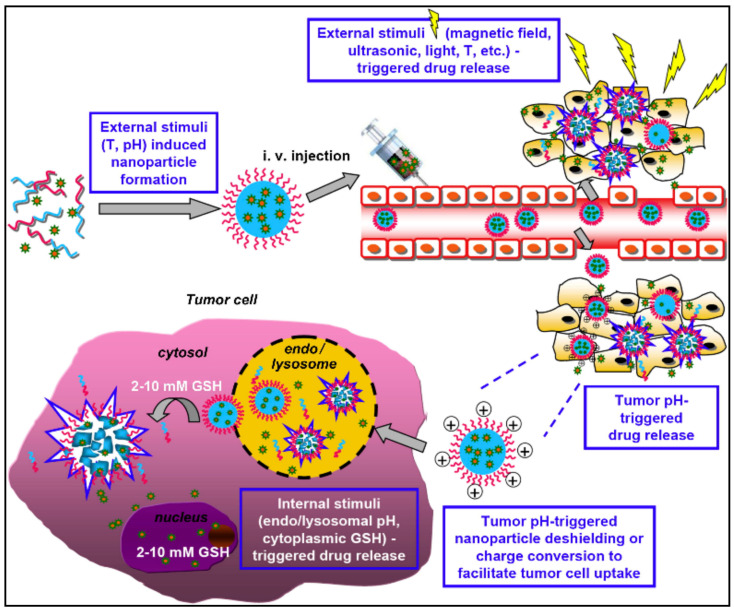
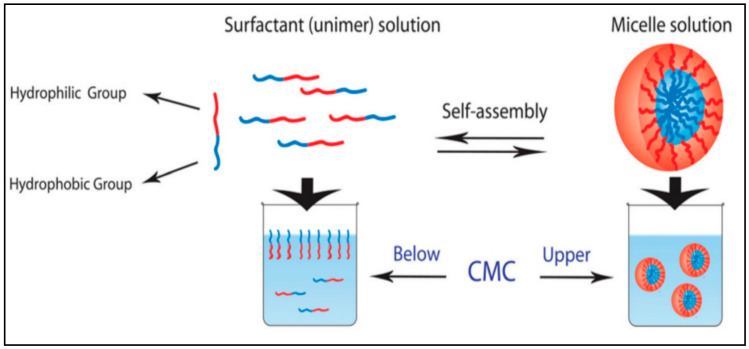
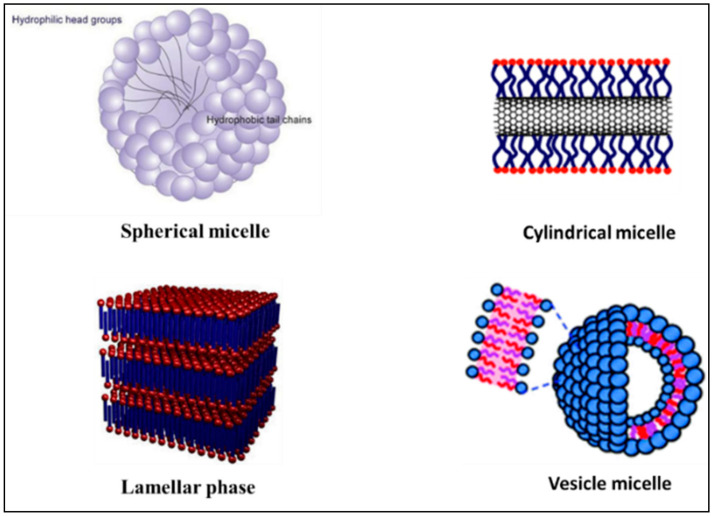
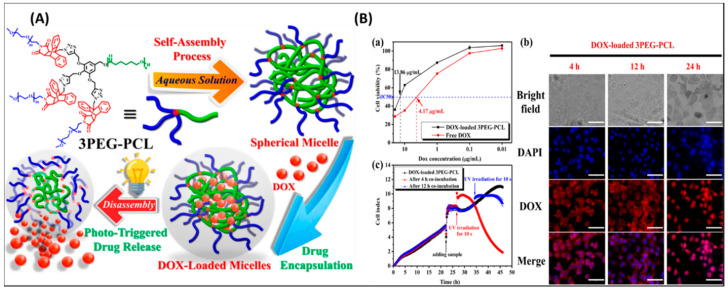
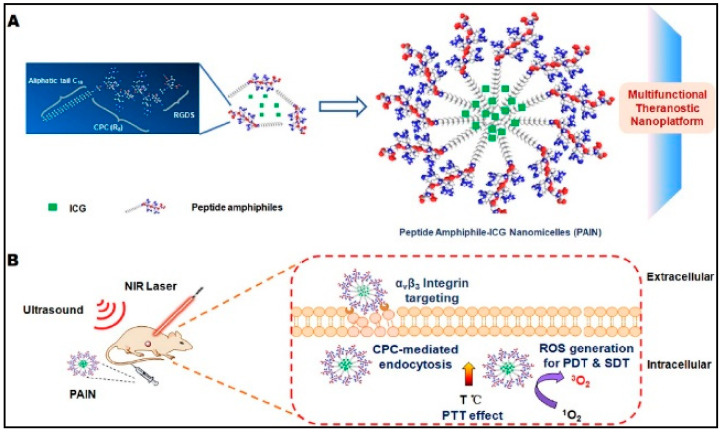
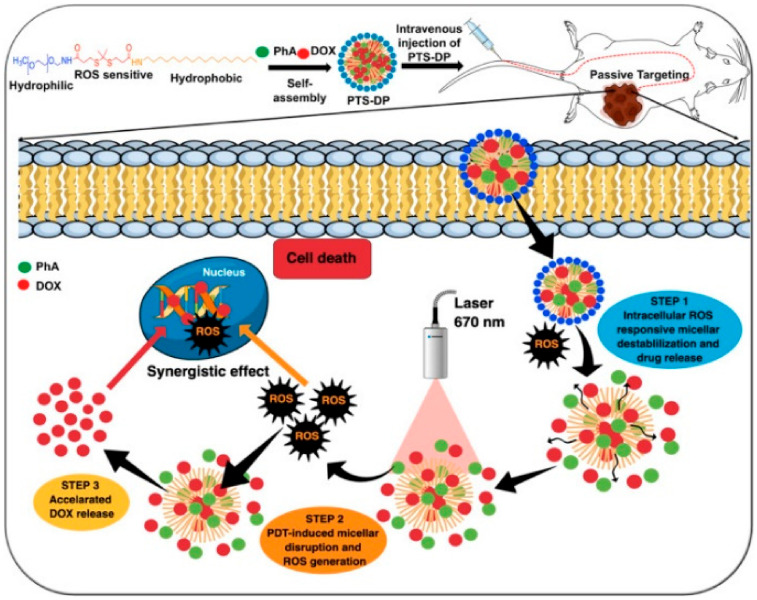
The efficient and selective delivery of therapeutic drugs to the target site remains the main obstacle in the development of new drugs and therapeutic interventions. Up until today, nanomicelles have shown their prospective as nanocarriers for drug delivery owing to their small size, good biocompatibility, and capacity to effectively entrap lipophilic drugs in their core. Nanomicelles are formed via self-assembly in aqueous media of amphiphilic molecules into well-organized supramolecular structures. Molecular weights and structure of the core and corona forming blocks are important properties that will determine the size of nanomicelles and their shape. Selective delivery is achieved via novel design of various stimuli-responsive nanomicelles that release drugs based on endogenous or exogenous stimulations such as pH, temperature, ultrasound, light, redox potential, and others. This review summarizes the emerging micellar nanocarriers developed with various designs, their outstanding properties, and underlying principles that grant targeted and continuous drug delivery. Finally, future perspectives, and challenges for nanomicelles are discussed based on the current achievements and remaining issues.
Overview
CoChat Summary
TL;DR
This paper is a review of nanomicelles as drug delivery systems, with emphasis on how polymer/surfactant design affects size, stability, biodistribution, and drug loading. It also surveys stimuli-responsive and targeted nanomicelles for anticancer delivery, highlighting pH, temperature, light, ultrasound, and redox-triggered release.
Key findings
- Nanomicelles can improve delivery by entrapping drugs in a protective core-shell structure, increasing bioavailability and reducing side effects; the review notes lower dissociation kinetics than conventional surfactant micelles, about 1000-fold slower after dilution.
- Surfactant micelles are reported in the 5–100 nm range, while polymeric nanomicelles are described as 1–200 nm; lower critical micellar concentration is emphasized as a stability advantage for DDSs.
- The review reports several example systems with quantitative performance, including PEG-P(Asp-Hyd-ADR) releasing ADR more slowly as pH decreases from 7.4 to 3.0, PEG-PTMBPEC micelles swelling from 150 nm to ~400 nm in 3 h and to >1000 nm after 12 h at pH 4.0, and one dual-pH system that inhibited tumor development by 88%.
- For anticancer delivery, the paper states that polymeric nanomicelles can increase drug water solubility by 10 to 5000 fold, and gives examples such as paclitaxel-loaded PCL-b-PEG-b-PCL micelles with loading up to 28%, doxorubicin-loaded micelles with 15–20% loading, and a temperature-sensitive system with 15% DOX release after 15 h at 30 °C versus 90% at 37 °C.
Methods
- This is a narrative review of recent literature on nanomicelles delivery systems, organized by micelle type, polymer selection, preparation methods, biodistribution, targeting, and stimuli-responsive release.
- The paper synthesizes findings from previously published studies and reports example data from those studies rather than presenting a new experimental sample of its own.
- Its main analysis is qualitative comparison of design strategies and reported performance metrics across systems such as pH-sensitive, temperature-sensitive, light-sensitive, ultrasound-responsive, and redox-responsive nanomicelles.
Limitations
- The paper itself states that only a few polymeric micelles have reached clinical-stage application, and that there are limitations to current materials, including poor encapsulation of some drugs, toxicity, and unfavorable immunological interactions such as antibody responses to PEG.
- The review also notes that further studies are ongoing and that additional research is needed to develop safer materials with higher drug loading.
- Evident from the text: because this is a review, the conclusions depend on heterogeneous prior studies with different systems and outcomes, and the paper does not provide a single unified experimental dataset.
Model-written summary. Check it against the paper before relying on it.
Integrity signals
Registry
Cites
Statistics
Figures
Verification
Claims the paper makes
35 Valid · 19 Not valid · 137 Not checked · 30 Own results and interpretations
At least one cited source doesn’t support this claim or points to a different paper, and none confirmed it — see the verdicts below.
In the paper
“For example, when PTX-loaded pluronic P105 micelles were compared with mixed micelles composed of a similar copolymer with just the addition of hydrophobic lamella, a strong decrease in clearance was observed [95].”
§ Recent Advances in Nanomicelles Delivery Systems > 6. Biodistribution
What the sources say
- Disputedcites [95] Wang Y. Li Y. Wang Q. Wu J. Fang X.J. Pharmacokinetics and biodistribution of paclitaxel-loaded pluronic P105/L101 mixed polymeric micelles YAKUGAKU ZASSHI 2008 128 941 950 10.1248/yakushi.128.941 18520140 sourceExperimental — accuracy not yet measured
The Discussion (page not available) says that adding hydrophobic L101 to P105 micelles did not significantly change their in vivo behavior. Table 2 reports a strong clearance decrease for the mixed micelles relative to Taxol injection, not relative to P105 micelles as the citing sentence claims. (LLM, conf=0.89)
Checked by a reasoning model — may be wrong.
boostedstates a cause- Asserted: passes — The authors put it forward as true.
- Checkable: passes — It can be checked against evidence.
- Load-bearing: passes — The paper’s conclusions depend on it.
- Based: passes — The paper gives a reason why it holds.
- Disputed
The sources with a verdict support this claim; the rest weren’t checked yet, have no full text we could read, or their verdicts aren’t rated yet.
In the paper
“As reported, polymeric micelles with high stability have shown good biocompatibility in cancer therapy applications.”
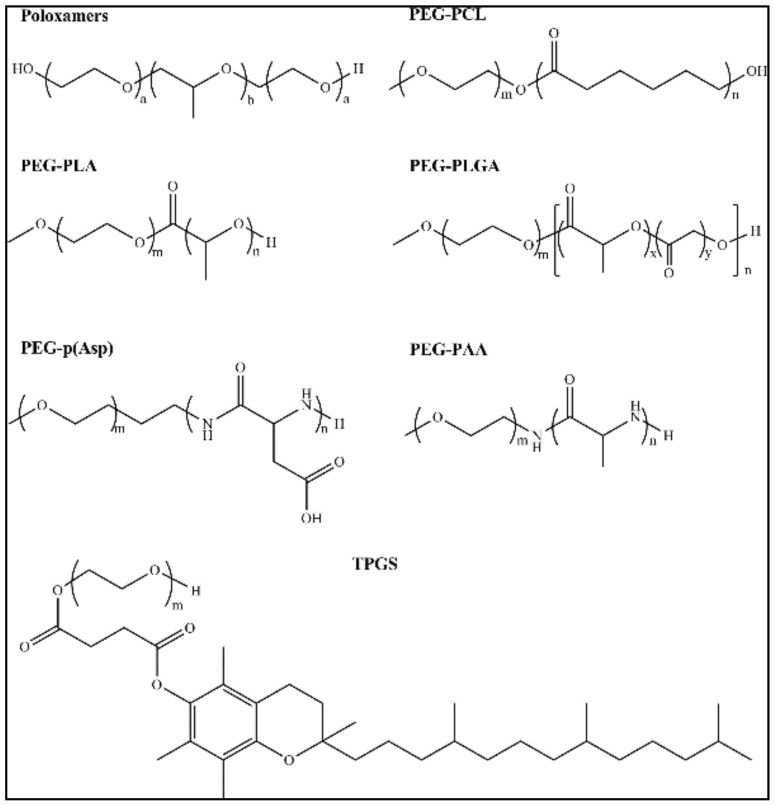
§ Recent Advances in Nanomicelles Delivery Systems > 4. Polymeric Nanomicelles Another category is polymeric nanomicelles (PNMs) prepared from amphiphilic polymers; they have a size that ranges from 1 to 200 nm. This type of nanoparticles contains two functional portions, an “inner core” and an “outer shell”. The outer shell is responsible for controlling the pharmacokinetic properties in vivo, thus, it consists of a hydrophilic block of polyethylene glycol (PEG). Further modification of the outer shell can improve the properties of nanomicelles, for example, enhance the targeting. The inner core consists of a hydrophobic core that is responsible for drug entrapment, the stability of nanomicelles, and drug-release characteristics [42,43]. As reported, polymeric micelles with high stability have shown good biocompatibility in cancer therapy applications. Moreover, PNMs can encapsulate poorly soluble pharmaceuticals and enhance their biological behavior [44,45]. Especially, anticancer drugs encapsulated in polymeric micelles have shown a better accumulation in the targeted site, thus reducing side effects on noncancerous tissues [46,47,48]. Moreover, drugs entrapped in micelles are protected from unexpected interactions and biodegradation in vivo environment, resulting in prolongation of the half-life and improved efficiency [49,50,51]. The surface of nanoparticles has two important functions, protection of drugs from interaction with the in vivo environment and delivering it to the target site. Some commonly used micellar carriers are shown in Figure 3.
What the sources say
- Supportedcites [44] Tan C. Wang Y. Fan W. Exploring Polymeric Micelles for Improved Delivery of Anticancer Agents: Recent Developments in Preclinical Studies Pharmaceutics 2013 5 201 10.3390/pharmaceutics5010201 24300405 PMC3834940 source
The Introduction describes polymeric micelles as assembled from biocompatible polymers and identifies PEG’s excellent biocompatibility. Section 2.6 reports stable anticancer-drug micelles that produced reduced toxicity in tumor-bearing mice, supporting the claim in the preclinical context reviewed by the paper. Page numbers are unavailable in our copy. (LLM, conf=0.86)
- Not checked — no full text of the sourcecites [45] Sukamporn P. Baek S.J. Gritsanapan W. Chirachanchai S. Nualsanit T. Rojanapanthu P. Self-assembled nanomicelles of damnacanthal-loaded amphiphilic modified chitosan: Preparation, characterization and cytotoxicity study Mater. Sci. Eng. C 2017 77 1068 1077 10.1016/j.msec.2017.03.263 28531980 source
plainstates an association- Asserted: passes — The authors put it forward as true.
- Checkable: passes — It can be checked against evidence.
- Load-bearing: unclear — It is unclear whether the paper’s conclusions depend on it.
- Based: passes — The paper gives a reason why it holds.
- Supported
The cited sources support only part of this claim — read each source’s verdict below.
In the paper
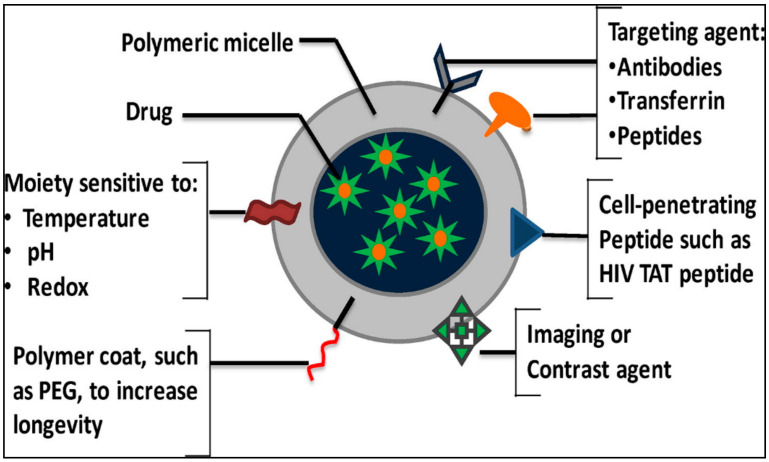
“Selective delivery is achieved via novel design of various stimuli-responsive nanomicelles that release drugs based on endogenous or exogenous stimulations such as pH, temperature, ultrasound, light, redox potential, and others.”
§ Recent Advances in Nanomicelles Delivery Systems > Abstract
What the sources say
- Not checked — no full text of the sourcecites [18] Sawant R.M. Hurley J.P. Salmaso S. Kale A. Tolcheva E. Levchenko T.S. Torchilin V.P. “SMART” Drug Delivery Systems: Double-Targeted pH-Responsive Pharmaceutical Nanocarriers Bioconjugate Chem. 2006 17 943 949 10.1021/bc060080h PMC2538444 16848401 source
- Partly supportedcites [19] Torchilin V. Multifunctional and stimuli-sensitive pharmaceutical nanocarriers Eur. J. Pharm. Biopharm. 2009 71 431 444 10.1016/j.ejpb.2008.09.026 18977297 PMC3197821 sourceExperimental — accuracy not yet measured
Section III describes polymeric micelles that release drugs in response to pH, temperature, and ultrasound, and discusses redox-responsive drug release from nanocarriers. It does not establish light-triggered release or redox-triggered release specifically from micelles. The Introduction also presents selective, stimulus-responsive delivery partly as a design goal rather than an achievement across all the listed stimuli. (LLM, conf=0.86)
- Partly supportedcites [20] Li M. Guo J.-W. Wen W.-Q. Chen J.-K. Biodegradable Redox-Sensitive Star Polymer Nanomicelles for Enhancing Doxorubicin Delivery Nanomaterials 2019 9 547 10.3390/nano9040547 PMC6523129 30987287 sourceExperimental — accuracy not yet measured
The Introduction (page not provided) describes drug-loaded micelles accumulating at tumor sites and releasing drugs in response to pH, redox conditions, or light. The Conclusions (page not provided) report redox-triggered doxorubicin release from the micelles studied. Our copy does not support the claim’s additional examples of temperature- or ultrasound-triggered release. (LLM, conf=0.87)
plainstates a cause- Asserted: passes — The authors put it forward as true.
- Checkable: passes — It can be checked against evidence.
- Load-bearing: passes — The paper’s conclusions depend on it.
- Based: passes — The paper gives a reason why it holds.
- Rests on an assumption not shown here.
The cited sources that could be checked couldn’t confirm or dispute this claim.
In the paper
“For instance, micelle systems prepared using PCL-b-PEG-b-PCL displayed high loading up to 28% of paclitaxel [83].”
§ Recent Advances in Nanomicelles Delivery Systems > 4. Polymeric Nanomicelles Another category is polymeric nanomicelles (PNMs) prepared from amphiphilic polymers; they have a size that ranges from 1 to 200 nm. This type of nanoparticles contains two functional portions, an “inner core” and an “outer shell”. The outer shell is responsible for controlling the pharmacokinetic properties in vivo, thus, it consists of a hydrophilic block of polyethylene glycol (PEG). Further modification of the outer shell can improve the properties of nanomicelles, for example, enhance the targeting. The inner core consists of a hydrophobic core that is responsible for drug entrapment, the stability of nanomicelles, and drug-release characteristics [42,43]. As reported, polymeric micelles with high stability have shown good biocompatibility in cancer therapy applications. Moreover, PNMs can encapsulate poorly soluble pharmaceuticals and enhance their biological behavior [44,45]. Especially, anticancer drugs encapsulated in polymeric micelles have shown a better accumulation in the targeted site, thus reducing side effects on noncancerous tissues [46,47,48]. Moreover, drugs entrapped in micelles are protected from unexpected interactions and biodegradation in vivo environment, resulting in prolongation of the half-life and improved efficiency [49,50,51]. The surface of nanoparticles has two important functions, protection of drugs from interaction with the in vivo environment and delivering it to the target site. Some commonly used micellar carriers are shown in Figure 3. > 4.1. Polymer Selection, Synthesis, and Properties
What the sources say
- Could not verifycites [83] Werner M.E. Cummings N.D. Sethi M. Wang E.C. Sukumar R. Moore D.T. Wang A.Z. Preclinical evaluation of Genexol-PM, a nanoparticle formulation of paclitaxel, as a novel radiosensitizer for the treatment of non-small cell lung cancer Int. J. Radiat. Oncol. Biol. Phys. 2013 86 463 468 10.1016/j.ijrobp.2013.02.009 23708084 PMC3750707 sourceExperimental — accuracy not yet measured
The Introduction describes Genexol-PM as an mPEG-PDLLA paclitaxel micelle, and Methods and Materials > Materials reports 115 mg of paclitaxel per gram of Genexol-PM. Searches for PCL-b-PEG-b-PCL and 28% loading found no passage about that formulation or its loading capacity. The different composition reported for Genexol-PM does not rule out the claim about other micelles. (LLM, conf=0.76)
plain- Asserted: passes — The authors put it forward as true.
- Checkable: passes — It can be checked against evidence.
- Load-bearing: unclear — It is unclear whether the paper’s conclusions depend on it.
- Based: passes — The paper gives a reason why it holds.
- Could not verify
The cited sources support only part of this claim — read each source’s verdict below.
In the paper
“Compared to neutral and negatively charged micelles, positively charged micelles are readily taken up by the RES due to increased interaction with the negatively charged cell membrane [90];”
§ Recent Advances in Nanomicelles Delivery Systems > 6. Biodistribution
What the sources say
- Partly supportedcites [90] Alexis F. Pridgen E. Molnar L.K. Farokhzad O.C. Factors affecting the clearance and biodistribution of polymeric nanoparticles Mol. Pharm. 2008 5 505 515 10.1021/mp800051m 18672949 PMC2663893 sourceExperimental — accuracy not yet measured
The “Effect of Surface Functionality and Charge” section says positively charged nanoparticles have higher cellular uptake than neutral or negatively charged formulations, including uptake by phagocytic cells. Its micelle comparison addresses neutral and negatively charged micelles, not positively charged micelles; it also does not identify interaction with a negatively charged cell membrane as the mechanism. The claim therefore applies the general nanoparticle finding more specifically than the source supports. (LLM, conf=0.86)
plainstates a cause- Asserted: passes — The authors put it forward as true.
- Checkable: passes — It can be checked against evidence.
- Load-bearing: unclear — It is unclear whether the paper’s conclusions depend on it.
- Based: passes — The paper gives a reason why it holds.
- Partly supported
105 more claims · 18 with their cited sources checked
Create a free account to see all 221 claims and to verify the 1 reference still open.
- It may state two separate claims as one. 88
- Probably not a substantial claim. 34
- The quote only partly states this claim. 1
Citations
Cites
Nanocarriers as an emerging platform for cancer therapy
Peer, D., Karp, J. M., Hong, S., Farokhzad, O. C., Margalit, R., & Langer, R. (2007) · Nature Nanotechnology · doi:10.1038/nnano.2007.387 · Cited by 8,710
Stimuli-responsive nanocarriers for drug delivery
Mura, S., Nicolas, J., & Couvreur, P. (2013) · Nature Materials · doi:10.1038/nmat3776 · Cited by 6,289
Emerging applications of stimuli-responsive polymer materials
Stuart, M. A. C., Huck, W. T. S., Genzer, J., Müller, M., Ober, C., Stamm, M., Sukhorukov, G. B., Szleifer, I., Tsukruk, V. V., Urban, M., et al. (2010) · Nature Materials · doi:10.1038/nmat2614 · Cited by 5,707 · cited 1×
“These nanomicelles were practiced in the drug delivery field and benefitted substantially to pharmaceutical investigation [128].”
BackgroundNanoparticle therapeutics: an emerging treatment modality for cancer
Davis, M. E., Chen, Z., & Shin, D. M. (2008) · Nature Reviews Drug Discovery · doi:10.1038/nrd2614 · Cited by 4,233
A clearer vision for in vivo imaging
Weissleder, R. (2001) · Nature Biotechnology · doi:10.1038/86684 · Cited by 3,839 · cited 1×
“Optical windows in near-infrared (NIR) region in which light has its deepest penetration in tissue cause minimum damage to cells [178].”
BackgroundFactors affecting the clearance and biodistribution of polymeric nanoparticles
Alexis, F., Pridgen, E., Molnar, L. K., & Farokhzad, O. C. (2008) · Molecular Pharmaceutics · doi:10.1021/mp800051m · Cited by 3,699 · cited 2×
“Compared to neutral and negatively charged micelles, positively charged micelles are readily taken up by the RES due to increased interaction with the negatively charged cell membrane [90]; however, negatively charged micelles decrease the rate of cellular uptake and improve the blood circulation time.”
BackgroundStrategies in the design of nanoparticles for therapeutic applications
Petros, R. A., & DeSimone, J. M. (2010) · Nature Reviews Drug Discovery · doi:10.1038/nrd2591 · Cited by 3,651 · cited 1×
“Nevertheless, liposomes application and lipid-based drug delivery systems have been narrowed due to attained drug resistance and poor targeting [98,99].”
BackgroundKamaly, N., Yameen, B., Wu, J., & Farokhzad, O. C. (2016) · Chemical Reviews · doi:10.1021/acs.chemrev.5b00346 · Cited by 3,070 · cited 2×
“degradation strategy of the polyester backbone avoids the unrequired accumulation of the polymer in the body, thus decreasing the risk of chronic toxicity [82].”
BackgroundIn Vivo Imaging of Quantum Dots Encapsulated in Phospholipid Micelles
Dubertret, B., Skourides, P., Norris, D. J., Noireaux, V., Brivanlou, A. H., & Libchaber, A. (2002) · Science · doi:10.1126/science.1077194 · Cited by 3,019
Surfactants and Interfacial Phenomena
Rosen, M. J., & Kunjappu, J. T. (2012) · Wiley eBooks · doi:10.1002/9781118228920 · Cited by 2,535
Cited by
Items 101–153 of 153
Rong, L. Y., Zhan, Y., Jing, L., Chao, S., & Gui, T. X. (2026) · Journal of Materials Chemistry B · doi:10.1039/d5tb02175h · Cited by 5
Alkhafaji, E., Dmour, I. M., Al‐Essa, M. K., Alshaer, W., Aljaberi, A., Khalil, E. A., & Taha, M. O. (2024) · Pharmaceutical Development and Technology · doi:10.1080/10837450.2024.2332457 · Cited by 3
“This concept is not new; as it has been used for the preparation of ionotropically stabilized polymeric micelles (Tawfik et al. 2020), however, it has never been used for stabilizing micelles of small molecular weight cationic surfactants.”
BackgroundPerspectives on materials: Reality and potential of epigenetic drug nano-delivery
Zhang, Y., Xu, D., Hou, X., Wang, X., Zhao, S., & Jin, X. (2024) · Chemical Engineering Journal · doi:10.1016/j.cej.2024.157746 · Cited by 7
Peptide Helix-Y12 as Potential Effector for Peroxisome Proliferator-Activated Receptors
Carrillo‐Tripp, M., Reyes, Y., Delgado‐Coello, B., Mas‐Oliva, J., & Gutiérrez‐Vidal, R. (2023) · PPAR Research · doi:10.1155/2023/8047378 · Cited by 5
“In addition, nanomicelles with amphipathic peptides are efficient delivery systems and promoting transport across membranes [59, 60].”
BackgroundNarkhede, M., & Bhamare, S. N. (2025) · Biosciences Biotechnology Research Asia · doi:10.13005/bbra/3337 · Cited by 6
Villamayor, N., Ríos, Á., & Villaseñor, M. J. (2025) · Food Bioscience · doi:10.1016/j.fbio.2025.106599 · Cited by 4
Tang, K., Cai, Z., Lv, Y., Liu, R., Chen, Q., & Gu, J. (2023) · Pharmaceutics · doi:10.3390/pharmaceutics15041168 · Cited by 3
Nanoinsecticide in Agriculture: State of the Art and Future Opportunities
Ainane, A., Abdoul‐Latif, F. M., Cherroud, S., et al. (2024) · Nanotechnology in the life sciences · doi:10.1007/978-3-031-75798-3_15 · Cited by 2
Polymeric Nanomicelles for Cancer Nanomedicine—Review
Kujundziski, A. P., & Chamovska, D. (2025) · doi:10.3390/engproc2025099012 · Cited by 5
Cheema, A. Z., Sripetthong, S., Nalinbenjapun, S., Basit, A., & Ovatlarnporn, C. (2026) · ACS Applied Bio Materials · doi:10.1021/acsabm.5c02290 · Cited by 2
Ramesh, K., Yadav, S., Mishra, A. K., Jo, S., Park, S., Oh, C., & Lim, K. T. (2022) · Polymers for Advanced Technologies · doi:10.1002/pat.5663 · Cited by 2
Zheng, Y., Deng, J., Li, L., Cao, J., Xie, Q., & Fu, Y. (2024) · Journal of Drug Delivery Science and Technology · doi:10.1016/j.jddst.2024.106559 · Cited by 3
Nanoparticle: Pathogenesis, Innovative Diagnosis, and Therapy of Liver Fibrosis
Wen, L., Liu, X., Yang, D., Sun, Z., Liang, C., Wu, J., Xie, L., Xing, R., & Li, X. (2025) · ChemistrySelect · doi:10.1002/slct.202500446 · Cited by 5
Improving epilepsy management by targeting P2 × 7 receptor with ROS/electric responsive nanomicelles
Kong, Z., Jiang, J. W., Deng, M., et al. (2025) · Journal of Nanobiotechnology · doi:10.1186/s12951-025-03386-y · Cited by 2
“Compared to traditional drug delivery systems (DDS), nanomicelles can be chemically modified to achieve disease microenviron-ment-specific responsive release, significantly enhancing therapeutic targeting and safety [14].”
Nanomicelles of taurine inhibit the fibrillation and toxicity of amyloid β1-42 peptide
Gomes-da-Silva, N. C., Soares, M. A. G., Ricci‐Júnior, E., Amorim, M. D. S. D. N., Alencar, L. M. R., Bhattarai, P., Zhu, L., Follmer, C., & Santos‐Oliveira, R. (2023) · Journal of Drug Delivery Science and Technology · doi:10.1016/j.jddst.2023.104721 · Cited by 9
Clinical translation of polymeric micelles into market
Raslan, M., Eslam, M. S., Sara, A. R., & Sabri, N. A. (2022) · Elsevier eBooks · doi:10.1016/b978-0-323-89868-3.00008-2 · Cited by 1
Wang, X., Hong, H., Cao, W., Cheng, X., Li, L., Hu, M., Wang, J., Li, J., Ni, Q., Wang, X., et al. (2025) · Colloids and Surfaces B Biointerfaces · doi:10.1016/j.colsurfb.2025.114941 · Cited by 4
Zohourtalab, A., Zanjanchi, M. A., Sohrabnezhad, S., & Hadavi, M. (2025) · Journal of Drug Delivery Science and Technology · doi:10.1016/j.jddst.2025.107391 · Cited by 1
Wang, Z., Xu, Y., Liu, M., Yang, Y., Shi, W., Zhu, Q., Liu, J., Yi, L., Wu, H., Yin, X., et al. (2025) · Saudi Pharmaceutical Journal · doi:10.1007/s44446-025-00037-z · Cited by 2
“Compared to other nanoparticle formulations, nano-micelles have shown superior performance in enhancing the stability of baicalin (BC) and prolonging its residence time on the ocular surface (Begines et al. 2020; Tawfik et al. 2020).”
Sun, W., Zhao, Y., Su, H., Li, J., Ma, H., Luo, H., Liu, K., Mou, L., Liang, P., Bai, L., et al. (2025) · International Journal of Biological Macromolecules · doi:10.1016/j.ijbiomac.2025.148971 · Cited by 2
Jain, N., & Kaur, N. (2025) · ACS Applied Nano Materials · doi:10.1021/acsanm.5c03518 · Cited by 2
Mahmoud, S. B., Rashad, M. M., Ali, G. E., Ragab, E., Ahmed, O., Youssef, F. S., & Megeed, O. H. A. E. (2026) · Fish Physiology and Biochemistry · doi:10.1007/s10695-026-01656-6 · Cited by 2
“Nanoparticles may improve distribution and efficiency, thereby decreasing the amount and cost of curcumin needed to be added to diets (Tawfik et al. 2020;”
Yang, Z.-X., Li, Z.-H., Xie, L., Zhang, Q.-Z., Ren, S., Wang, D.-M., Pan, Y., Ren, K., & Liu, X.-Q. (2026) · Journal of Drug Delivery Science and Technology · doi:10.1016/j.jddst.2026.108235 · Cited by 1
Cao, R., Zhou, R., Wang, C., Shen, M., Yu, J., Xu, H., & Guo, Z. (2026) · Drug Delivery and Translational Research · doi:10.1007/s13346-026-02100-1 · Cited by 1
Herbal nanotechnology-based topical drug delivery systems for the treatment of atopic dermatitis
Firdaus, Z., & Sharma, D. K. (2026) · 3 Biotech · doi:10.1007/s13205-026-04877-x · Cited by 1
Nanoparticle Drug Delivery Systems: The Future Direction for the Treatment of Tumors
Zhao, Y., Nie, X., Yan, H., Ren, J., Zhao, J., Tong, L., Zhao, L., Zhang, G., & Liu, H. (2026) · International Journal of Nanomedicine · doi:10.2147/ijn.s598126 · Cited by 6
Bioinspired drug delivery therapeutics
Faria, R., Neves, A. R., & Costa, D. R. B. (2024) · Elsevier eBooks · doi:10.1016/b978-0-323-91816-9.00008-4 · Cited by 1
Parida, I. S., Rahmania, H., & Nakagawa, K. (2025) · Food Science and Technology Research · doi:10.3136/fstr.fstr-d-24-00202 · Cited by 1
Zeng, X., Fan, X., Fu, C., Yang, J., Tian, J., Peng, Q., Qin, W., & Wu, Y. (2022) · Journal of Nanomaterials · doi:10.1155/2022/8758356 · Cited by 2
Selbstassemblierte fluoreszierende Blockcopolymer‐Mizellen mit responsiver Emission
Kurz, H., Hils, C., Timm, J., et al. (2022) · Angewandte Chemie · doi:10.1002/ange.202117570
Lipid-Based Nanomaterials in Cancer Treatment and Diagnosis
Obeid, M. A., Qaraghuli, M. M. A., Ruano, M., Sangboonruang, S., Alsaadi, M., Tragoolpua, Y., & Ferro, V. A. (2022) · BENTHAM SCIENCE PUBLISHERS eBooks · doi:10.2174/9789815051278122010005 · Cited by 2
Application of nanocrystals as antimicrobials
Vigneshwaran, N., Arputharaj, A., Ashtaputre, N. M., & Souza, C. D. (2022) · Elsevier eBooks · doi:10.1016/b978-0-12-824024-3.00021-x
Eczacılıkta Güncel Araştırmalar
Yamalı, C., Erdönmez, E., Yuca, H., Kalaycı, B., Gökgöz, S., Paşayeva, L., Arslan, A. K. K., Şerbetçi, T., Aydoğan, Y. M., Yüce, H., et al. (2023) · Akademisyen Kitabevi eBooks · doi:10.37609/akya.2541 · Cited by 3
Rani, D., Sharma, V. K., Chauhan, B., et al. (2024) · INDIAN DRUGS · doi:10.53879/id.61.04.13939
Functionalized Nanoparticles for Cancer Therapy
Ansari, M. M., Nayab, Z., Alam, M., Ali, N., Maqbool, T., & Khan, R. (2024) · Springer eBooks · doi:10.1007/978-981-97-3545-7_6
Maier, S. S., Pinteală, M., Angeli, A., & Supuran, C. T. (2024) · Elsevier eBooks · doi:10.1016/b978-0-443-15635-9.00006-7
Unlocking the Potential of Phyto Nanotherapeutics in Hepatocellular Carcinoma Treatment: A Review
BHANGE, M. A., & Telange, D. R. (2024) · Journal of Hepatocellular Carcinoma · doi:10.2147/jhc.s483619
“40 Moreover, theranostics the application of nanoparticles in imaging and diagnostics—offers a double advantage.”
Moreno, N. V., Ríos, Á., & Villaseñor, M. J. (2024) · SSRN Electronic Journal · doi:10.2139/ssrn.5078292
Ferreira, M. K. A., Mendes, F. R. D. S., Marinho, E. S., de Albuquerque, R. L., Guedes, J. M., Teixeira, I. M. M., de Menezes, R. R. P. P. B., Caldeira, V. P. S., Santos, A. G. D., Frederico, M. J. S., et al. (2025) · Pharmaceutics · doi:10.3390/pharmaceutics17080981
“In this context, nanotechnology applied to controlled drug delivery has gained prominence by offering solutions to problems related to stability, solubility, and toxicity, enabling higher efficacy at lower doses [13–15].”
Xia, S., Qin, X., & Wang, Y. (2025) · Frontiers in Pharmacology · doi:10.3389/fphar.2025.1590624
Redox-sensitive curcumin prodrug mediated by glycyrrhetinic acid for liver cancer therapy
Wu, W., Zhang, M., Lin, Y., Li, X., Liang, Y., & Liang, J. (2025) · Journal of Drug Delivery Science and Technology · doi:10.1016/j.jddst.2025.107406 · Cited by 1
Sharma, V., Reang, J., Yadav, V., Sharma, A. K., Majeed, J., & Sharma, P. C. (2023) · Nanofabrication · doi:10.37819/nanofab.8.1772
Shafqat, S. S., Fatima, S., Khan, M. A., et al. (2025) · ChemistrySelect · doi:10.1002/slct.202504863
Dry Eye Disease: From Mechanisms to Management and Future Directions
Pniakowska, Z., Kurys, N., Pietruszewska, H., Przybylak, A., & Jurowski, P. (2026) · Journal of Clinical Medicine · doi:10.3390/jcm15072535 · Cited by 5
“These nanomicelles stay on the corneal surface longer, can penetrate ocular tissues better and have good biocompatibility in preclinical models [106].”
Biomimetic nanomicelles for drug delivery: Concept, methods, and their biomedical applications
Tiwari, P., Kadiri, S. K., Sathavalli, D., & Gaurav, P. (2026) · Elsevier eBooks · doi:10.1016/b978-0-443-44119-6.00008-2
Advances in Interleukin-2 Engineering and Delivery Systems for Cancer Immunotherapy
Du, X., Chen, Y., Xu, M., Liu, H., Liu, J. T., Ma, F., & Shi, L. (2026) · ACS Applied Bio Materials · doi:10.1021/acsabm.6c00836 · Cited by 1
Hosny, R. A., Al-Atfeehy, N. M., Elmasry, D., Saad, A. S. A., Abdelmagid, M. A., & Fadel, M. A. (2026) · Veterinary Research Communications · doi:10.1007/s11259-026-11379-x
“These colloidal carriers improve the solubility, stability, and targeted delivery of encapsulated drugs (Tawfik et al. 2020).”
Nanomedicine for retinoblastoma: overcoming ocular barriers and advancing precision drug delivery
Grace, S. R., Alexander, A., & Enoch, I. V. M. V. (2026) · Next research. · doi:10.1016/j.nexres.2026.102207
Nano-warfare in the oral cavity: antimicrobial strategies and mechanisms in nanodentistry
Shabiya, M. A., Srinivasan, H., & Soundhararajan, R. (2026) · Odontology · doi:10.1007/s10266-026-01502-4
Nanomicelles-based drug delivery systems as for targeted therapy of colon cancer
Paul, A., Ali, A., Prabhakar, P. K., & Upadhyay, T. K. (2026) · Elsevier eBooks · doi:10.1016/b978-0-443-40443-6.00018-0
Sharma, N., Malik, G., Singh, S., Kumar, P., & Verma, S. (2026) · Letters in Applied NanoBioScience · doi:10.33263/lianbs152.072
Li, L., Yu, Y., Fan, J., Zhang, N., Yang, J., Li, H., & Zheng, J. (2026) · Journal of Ginseng Research · doi:10.1016/j.jgr.2026.101149
Melamane, S., Omoteso, O. A., Khamanga, S. M., & Walker, R. B. (2026) · Pharmaceutical Development and Technology · doi:10.1080/10837450.2026.2726934
“(3) The amount of LTG required to elicit antiepileptic activity in the brain is estimated to range from (Tawfik et al. 2020).”
Metadata
- Authors
- Tawfik, S. M., Azizov, S., Elmasry, M. R., Sharipov, M., & Lee, Y.-I.
- Affiliations
- Changwon National University (KR)
- Academy of Sciences Republic of Uzbekistan (UZ)
- Corresponding author
- Lee, Yong-Ill
- Venue
- Nanomaterials
- Publisher
- MDPI AG
- Published
- 2020-12-30
- Volume
- 11
- Issue
- 1
- Pages
- 70
- ISSN
- 2079-4991 (ISSN-L)
- PMC
- PMC7823398
- OpenAlex
- W3116967457
- Semantic Scholar
- a7e107537e15e984aad20ac13b87208d99b37d50
- Cited by
- 156
- References
- 227
- Citations by year
- 2026: 21 · 2025: 40 · 2024: 41 · 2023: 19 · 2022: 25 · 2021: 9
- FWCI
- 0.88
- Type
- journal article
- Language
- en
- Open access
- gold
- doi.org
- Licence
- Locations
- Nanomaterials (publishedVersion, cc-by)
- Europe PMC (PubMed Central) (publishedVersion, other-oa)
- PubMed Central (publishedVersion, cc-by)
- PubMed (publishedVersion)
- DOAJ (DOAJ: Directory of Open Access Journals) (submittedVersion, cc-by-sa)
- Funders
- National Research Foundation of Korea (2020R1A2C2007028)
- Topics
- Physical Sciences › Materials Science › Biomaterials › Nanoparticle-Based Drug Delivery
- Physical Sciences › Chemistry › Physical and Theoretical Chemistry › Surfactants and Colloidal Systems
- Life Sciences › Pharmacology, Toxicology and Pharmaceutics › Pharmaceutical Science › Advanced Drug Delivery Systems
- Keywords
- nanomicelles, drug delivery, nanocarriers, self-assembly, amphiphilic molecules, stimuli-responsive drug release, targeted drug delivery, pH-responsive, temperature-responsive, redox-responsive, light-responsive
About these checks
Registry, retraction, Cites and statistics results are computed, not judged, with one exception: a printed reference that no index lists is read once by a model before it counts as a citation error. Claims are extracted by a model and kept only when their quote appears verbatim in the text; each cited source is then checked, with a model’s help, for whether it says what the claim relies on. Those verdicts can be wrong — read the claim’s quote and the cited source before relying on one.
The claim verdicts this report counts are experimental: their accuracy is not yet measured.
A language model drew the claims from the paper on 2026-10-11, under version 3 of the claim definition (model deepseek-v4.1-flash, prompt extract-v3).
A second model labelled each claim on 2026-10-11 (model jev-1.13-20260917, definition revision gold-guideline-v0.2).
Cited sources are checked with a language model’s help (gpt-6-sol).
Statistics and arithmetic are recomputed, not judged.
Confidence bands are shown only for fields calibrated on our annotated test set. None is calibrated yet, so no band is shown.
What counts as a claim ›How we measure confidence ›How we check this ›
Are you an author, or do you see a problem with this page? Request a review
Data sources
Bibliographic data: Semantic Scholar, OpenAlex, Crossref.
Contains information from the Semantic Scholar Academic Graph Datasets, made available under the ODC Attribution License (ODC-BY 1.0).
Semantic Scholar’s data is described in: Kinney, R., et al. (2023). The Semantic Scholar Open Data Platform. arXiv:2301.10140.
