

The DOI matches its Crossref record; 191 of the 192 references it cites were found in a registry or an index.
Equol: A Bacterial Metabolite from The Daidzein Isoflavone and Its Presumed Beneficial Health Effects
Open accessAbstract
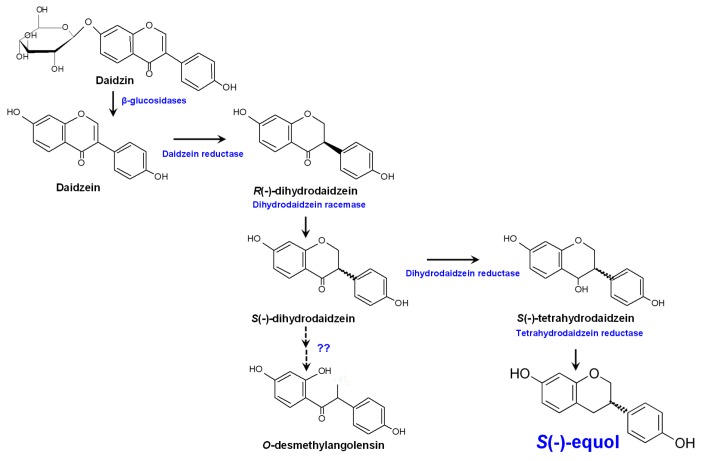
Epidemiological data suggest that regular intake of isoflavones from soy reduces the incidence of estrogen-dependent and aging-associated disorders, such as menopause symptoms in women, osteoporosis, cardiovascular diseases and cancer. Equol, produced from daidzein, is the isoflavone-derived metabolite with the greatest estrogenic and antioxidant activity. Consequently, equol has been endorsed as having many beneficial effects on human health. The conversion of daidzein into equol takes place in the intestine via the action of reductase enzymes belonging to incompletely characterized members of the gut microbiota. While all animal species analyzed so far produce equol, only between one third and one half of human subjects (depending on the community) are able to do so, ostensibly those that harbor equol-producing microbes. Conceivably, these subjects might be the only ones who can fully benefit from soy or isoflavone consumption. This review summarizes current knowledge on the microorganisms involved in, the genetic background to, and the biochemical pathways of, equol biosynthesis. It also outlines the results of recent clinical trials and meta-analyses on the effects of equol on different areas of human health and discusses briefly its presumptive mode of action.
Overview
The claims and statistics of this paper haven’t been checked yet.
Run the check — free, no account needed. It reads the open-access text and checks the sources it cites.
Integrity signals
Registry
Cites
Statistics
Figures
Verification
Claims the paper makes
The claims and statistics of this paper haven’t been checked yet.
Run the check — free, no account needed. It reads the open-access text and checks the sources it cites.
Claims other papers make about this one
Each is checked against this paper’s own text: does it say what the citing paper says it does?
In the citing paper
“A further example is the isoflavone metabolite equol, which has considerable estrogenic properties, but upwards of half of the population lack the microbiota composition to produce it (509).”
From Diet and the Microbiota–Gut–Brain Axis: Sowing the Seeds of Good Mental Health (2021) · cites this paper as [509]
Self-check
Percentages, sums and reported differences re-computed from the paper’s own numbers.
The self-check needs the paper’s full text.
Citations
Cites
Bile salt biotransformations by human intestinal bacteria
Ridlon, J. M., Kang, D.-J., & Hylemon, P. B. (2006) · Journal of Lipid Research · doi:10.1194/jlr.r500013-jlr200 · Cited by 2,829
Del Rio, D., Rodriguez-Mateos, A., Spencer, J. P. E., Tognolini, M., Borges, G., & Crozier, A. (2013) · Antioxidants & Redox Signaling · doi:10.1089/ars.2012.4581 · Cited by 2,601
Setchell, K. D. R., Brown, N. M., Desai, P. B., Zimmer-Nechemias, L., Wolfe, B., Brashear, W. T., Kirschner, A. S., Cassidy, A., & Heubi, J. E. (2001) · Journal of Nutrition · doi:10.1093/jn/131.4.1362s · Cited by 974
Estrogen receptors alpha (ERα) and beta (ERβ): Subtype-selective ligands and clinical potential
Paterni, I., Granchi, C., Katzenellenbogen, J. A., & Minutolo, F. (2014) · Steroids · doi:10.1016/j.steroids.2014.06.012 · Cited by 736
Ramawat, K. G., & Mérillon, J. (2013) · Springer eBooks · doi:10.1007/978-3-642-22144-6 · Cited by 652
Thomas, P., & Dong, J. (2006) · The Journal of Steroid Biochemistry and Molecular Biology · doi:10.1016/j.jsbmb.2006.09.017 · Cited by 604
Glucagon-like peptide 1 in health and disease
Andersen, A., Lund, A., Knop, F. K., & Vilsbøll, T. (2018) · Nature Reviews Endocrinology · doi:10.1038/s41574-018-0016-2 · Cited by 543
Soy and Health Update: Evaluation of the Clinical and Epidemiologic Literature
Messina, M. (2016) · Nutrients · doi:10.3390/nu8120754 · Cited by 537
Equol: History, Chemistry, and Formation
Setchell, K. D. R., & Clerici, C. (2010) · The Journal of Nutrition · doi:10.3945/jn.109.119776 · Cited by 519
Isoflavones: estrogenic activity, biological effect and bioavailability
Vitale, D. C., Piazza, C., Melilli, B., Drago, F., & Salomone, S. (2012) · European Journal of Drug Metabolism and Pharmacokinetics · doi:10.1007/s13318-012-0112-y · Cited by 500
Flavonoid metabolism: the interaction of metabolites and gut microbiota
Murota, K., Nakamura, Y., & Uehara, M. (2018) · Bioscience Biotechnology and Biochemistry · doi:10.1080/09168451.2018.1444467 · Cited by 487
Setchell, K. D., Clerici, C., Lephart, E. D., Cole, S. J., Heenan, C., Castellani, D., Wolfe, B. E., Nechemias-Zimmer, L., Brown, N. M., Lund, T. D., et al. (2005) · The American Journal of Clinical Nutrition · doi:10.1093/ajcn/81.5.1072 · Cited by 471
Estimated Asian adult soy protein and isoflavone intakes
Messina, M., Nagata, C., & Wu, A. H. (2006) · Nutrition and Cancer · doi:10.1207/s15327914nc5501_1 · Cited by 435
Antioxidant Activities of Isoflavones and Their Biological Metabolites in a Liposomal System
Arora, A., Nair, M. G., & Strasburg, G. M. (1998) · Archives of Biochemistry and Biophysics · doi:10.1006/abbi.1998.0783 · Cited by 404
Interactions of gut microbiota with dietary polyphenols and consequences to human health
Tomás-Barberán, F. A., Selma, M. V., & Espı́n, J. C. (2016) · Current Opinion in Clinical Nutrition & Metabolic Care · doi:10.1097/mco.0000000000000314 · Cited by 372
Method of Defining Equol-Producer Status and Its Frequency among Vegetarians
Setchell, K. D. R., & Cole, S. J. (2006) · Journal of Nutrition · doi:10.1093/jn/136.8.2188 · Cited by 351
Setchell, K. D. R., Faughnan, M. S., Avades, T. Y., Zimmer-Nechemias, L., Brown, N. M., Wolfe, B., Brashear, W. T., Desai, P., Oldfield, M. F., Botting, N. P., et al. (2003) · American Journal of Clinical Nutrition · doi:10.1093/ajcn/77.2.411 · Cited by 320
Harmsen, H. J. M., Wildeboer-Veloo, A. C. M., Grijpstra, J., Knol, J., Degener, J. E., & Welling, G. W. (2000) · Applied and Environmental Microbiology · doi:10.1128/aem.66.10.4523-4527.2000 · Cited by 309
Maruo, T., Sakamoto, M., Ito, C., Toda, T., & Benno, Y. (2008) · INTERNATIONAL JOURNAL OF SYSTEMATIC AND EVOLUTIONARY MICROBIOLOGY · doi:10.1099/ijs.0.65404-0 · Cited by 308
Casagrande, F., & Darbon, J.-M. (2001) · Biochemical Pharmacology · doi:10.1016/s0006-2952(01)00583-4 · Cited by 305
Phytoestrogens for menopausal vasomotor symptoms
Lethaby, A. E., Marjoribanks, J., Kronenberg, F., Roberts, H., Eden, J., & Brown, J. (2013) · Cochrane Database of Systematic Reviews · doi:10.1002/14651858.cd001395.pub4 · Cited by 288
Soy isoflavones and prostate cancer: A review of molecular mechanisms
Mahmoud, A. M., Yang, W., & Bosland, M. C. (2013) · The Journal of Steroid Biochemistry and Molecular Biology · doi:10.1016/j.jsbmb.2013.12.010 · Cited by 283
Malonyl Isoflavone Glycosides in Soybean Seeds(Glycine max MERRILL).
Kudou, S., Fleury, Y., Welti, D. H., Magnolato, D., UCHIDA, T., Kitamura, K., & Ōkubo, K. (1991) · Agricultural and Biological Chemistry · doi:10.1271/bbb1961.55.2227 · Cited by 279
Hur, H.-G., Lay, J. O., Beger, R. D., Freeman, J. P., & Rafii, F. (2000) · Archives of Microbiology · doi:10.1007/s002030000222 · Cited by 271
An insight into the health benefits of fermented soy products
Jayachandran, M., & Xu, B. (2018) · Food Chemistry · doi:10.1016/j.foodchem.2018.07.158 · Cited by 268
Grace, P. B., Taylor, J. I., Low, Y.-L., Luben, R. N., Mulligan, A. A., Botting, N. P., Dowsett, M., Welch, A. A., Khaw, K.-T., Wareham, N. J., et al. (2004) · Cancer Epidemiology, Biomarkers & Prevention · doi:10.1158/1055-9965.698.13.5 · Cited by 264
Critical review of health effects of soyabean phyto-oestrogens in post-menopausal women
Cassidy, A., Albertazzi, P., Nielsen, I. L. F., Hall, W. L., Williamson, G., Tetens, I., Atkins, S., Cross, H. S., Μanios, Y., Wolk, A., et al. (2006) · Proceedings of The Nutrition Society · doi:10.1079/pns2005476 · Cited by 258
He, F.-J., & Chen, J. (2013) · Food Science and Human Wellness · doi:10.1016/j.fshw.2013.08.002 · Cited by 253
Equol Is a Novel Anti-Androgen that Inhibits Prostate Growth and Hormone Feedback1
Lund, T. D., Munson, D. J., Haldy, M. E., Setchell, K. D. R., Lephart, E. D., & Handa, R. J. (2004) · Biology of Reproduction · doi:10.1095/biolreprod.103.023713 · Cited by 250
Akaza, H. (2004) · Japanese Journal of Clinical Oncology · doi:10.1093/jjco/hyh015 · Cited by 246
A Meta-Analysis of the Effect of Soy Protein Supplementation on Serum Lipids
Reynolds, K., Chin, A., Lees, K. A., Nguyen, A., Bujnowski, D., & He, J. (2006) · The American Journal of Cardiology · doi:10.1016/j.amjcard.2006.03.042 · Cited by 241
Decroos, K., Vanhemmens, S., Cattoir, S., Boon, N., & Verstraete, W. (2004) · Archives of Microbiology · doi:10.1007/s00203-004-0747-4 · Cited by 234
Duffy, R., Wiseman, H., & File, S. E. (2003) · Pharmacology Biochemistry and Behavior · doi:10.1016/s0091-3057(03)00116-3 · Cited by 197
Wang, X.-L., Hur, H.-G., Lee, J. H., Kim, K. T., & Kim, S.-I. (2005) · Applied and Environmental Microbiology · doi:10.1128/aem.71.1.214-219.2005 · Cited by 196
Emerging evidence of the health benefits of S-equol, an estrogen receptor β agonist
Jackson, R. L., Greiwe, J. S., & Schwen, R. J. (2011) · Nutrition Reviews · doi:10.1111/j.1753-4887.2011.00400.x · Cited by 195
The Role of Colonic Bacteria in the Metabolism of the Natural Isoflavone Daidzin to Equol
Rafii, F. (2015) · Metabolites · doi:10.3390/metabo5010056 · Cited by 194
Thompson, F. L., Stackebrandt, E. S., Lory, S. J., DeLong, E. F., & ROSENBERG, E. B. (2014) · Springer eBooks · doi:10.1007/978-3-642-30138-4 · Cited by 190
Soy, Red Clover, and Isoflavones and Breast Cancer: A Systematic Review
Fritz, H., Seely, D., Flower, G., Skidmore, B., Fernandes, R., Vadeboncoeur, S., Kennedy, D., Cooley, K., Wong, R., Sagar, S., et al. (2013) · PLoS ONE · doi:10.1371/journal.pone.0081968 · Cited by 188
Plasma phytoestrogens and subsequent breast cancer risk
Verheus, M., van Gils, C. H., Keinan-Boker, L., Grace, P. B., Bingham, S. A., & Peeters, P. H. M. (2007) · Journal of Clinical Oncology · doi:10.1200/jco.2006.06.0244 · Cited by 166
Isolation of a human intestinal bacterium capable of daidzein and genistein conversion
Matthies, A., Blaut, M., & Braune, A. (2009) · Applied and Environmental Microbiology · doi:10.1128/aem.01795-08 · Cited by 161
Cao, Y., Calafat, A. M., Doerge, D. R., Umbach, D. M., BERNBAUM, J. C., Twaddle, N. C., Ye, X., & Rogan, W. J. (2008) · Journal of Exposure Science & Environmental Epidemiology · doi:10.1038/jes.2008.44 · Cited by 160
Systematic review of soy isoflavone supplements on osteoporosis in women
Wei, P., Liu, M., Chen, Y., & Chen, D. (2012) · Asian Pacific Journal of Tropical Medicine · doi:10.1016/s1995-7645(12)60033-9 · Cited by 159
Metabolism of the soy isoflavones daidzein, genistein and glycitein in human subjects.
Heinonen, S., Hoikkala, A., Wähälä, K., & Adlercreutz, H. (2003) · The Journal of Steroid Biochemistry and Molecular Biology · doi:10.1016/j.jsbmb.2003.09.003 · Cited by 157
Harland, J. I., & Haffner, T. A. (2008) · Atherosclerosis · doi:10.1016/j.atherosclerosis.2008.04.006 · Cited by 154
Isoflavones and Functional Foods Alter the Dominant Intestinal Microbiota in Postmenopausal Women
Clavel, T., Fallani, M., Lepage, P., Levenez, F., Mathey, J., Rochet, V., SEREZAT, M., Sutren, M., Henderson, G., Bennetau‐Pelissero, C., et al. (2005) · Journal of Nutrition · doi:10.1093/jn/135.12.2786 · Cited by 151
Bolca, S., Possemiers, S., Herregat, A., Huybrechts, I., Heyerick, A., Vriese, S. D., Verbruggen, M. A., Depypere, H. T., Keukeleire, D. D., Bracke, M., et al. (2007) · Journal of Nutrition · doi:10.1093/jn/137.10.2242 · Cited by 146
The Isoflavone Equol Mediates Rapid Vascular Relaxation
Joy, S., Siow, R. C. M., Rowlands, D. J., Becker, M., Wyatt, A. W., Aaronson, P. I., Coen, C. W., Kalló, I., Jacob, R., & Mann, G. E. (2006) · Journal of Biological Chemistry · doi:10.1074/jbc.m602803200 · Cited by 141
Matthies, A., Clavel, T., Gütschow, M., Engst, W., Haller, D., Blaut, M., & Braune, A. (2008) · Applied and Environmental Microbiology · doi:10.1128/aem.00555-08 · Cited by 141
New equol supplement for relieving menopausal symptoms
Ishiwata, N., Melby, M. K., Mizuno, S., & Watanabe, S. (2009) · Menopause The Journal of The North American Menopause Society · doi:10.1097/gme.0b013e31818379fa · Cited by 139
Phytoestrogens and cognitive function: a review
Soni, M., Rahardjo, T. B. W., Soekardi, R., Sulistyowati, Y., Lestariningsih, Yesufu-Udechuku, A., Irsan, A., & Hogervorst, E. (2014) · Maturitas · doi:10.1016/j.maturitas.2013.12.010 · Cited by 139
Usui, T., Tochiya, M., Sasaki, Y., Muranaka, K., Yamakage, H., Himeno, A., Shimatsu, A., Inaguma, A., Ueno, T., Uchiyama, S., et al. (2012) · Clinical Endocrinology · doi:10.1111/j.1365-2265.2012.04400.x · Cited by 139
Wiseman, H., Casey, K., Bowey, E. A., Duffy, R., Davies, M., Rowland, I. R., Lloyd, A. S., Murray, A., Thompson, R., & Clarke, D. B. (2004) · American Journal of Clinical Nutrition · doi:10.1093/ajcn/80.3.692 · Cited by 138
Atkinson, C., Humbert, O., Lampe, J. W., & Berman, S. H. (2004) · Journal of Nutrition · doi:10.1093/jn/134.3.596 · Cited by 137
Rietjens, I. M. C. M., Sotoca, A. M., Vervoort, J. J. M., & Louisse, J. (2012) · Molecular Nutrition & Food Research · doi:10.1002/mnfr.201200439 · Cited by 137
Matthies, A., Loh, G., Blaut, M., & Braune, A. (2011) · Journal of Nutrition · doi:10.3945/jn.111.148247 · Cited by 137
Soy isoflavone intake and breast cancer risk in Japan: From the Takayama study
Wada, K., Nakamura, K., Tamai, Y., Tsuji, M., Kawachi, T., Hori, A., Takeyama, N., Tanabashi, S., Matsushita, S., Tokimitsu, N., et al. (2013) · International Journal of Cancer · doi:10.1002/ijc.28088 · Cited by 136
Zamora‐Ros, R., Knaze, V., Luján‐Barroso, L., Kuhnle, G., Mulligan, A. A., Touillaud, M. S., Slimani, N., Romieu, I., Powell, N., Tumino, R., et al. (2012) · European Journal of Clinical Nutrition · doi:10.1038/ejcn.2012.36 · Cited by 135
Wu, J., Oka, J., Ezaki, J., Ohtomo, T., Ueno, T., Uchiyama, S., Toda, T., Uehara, M., & Ishimi, Y. (2007) · Menopause The Journal of The North American Menopause Society · doi:10.1097/gme.0b013e3180305299 · Cited by 133
Nakatsu, C. H., Armstrong, A. P., Clavijo, A. P., Martin, B. R., Barnes, S., & Weaver, C. M. (2014) · PLoS ONE · doi:10.1371/journal.pone.0108924 · Cited by 132
Equol, a new inactive phenol isolated from the ketohydroxyoestrin fraction of mares' urine
Marrian, G. F., & Haslewood, G. A. D. (1932) · Biochemical Journal · doi:10.1042/bj0261227 · Cited by 131
van Die, M. D., Bone, K. M., Williams, S., & Pirotta, M. V. (2013) · British Journal of Urology · doi:10.1111/bju.12435 · Cited by 130
Hazim, S., Curtis, P. J., Schär, M. Y., Ostertag, L. M., Kay, C. D., Minihane, A. M., & Cassidy, A. (2016) · American Journal of Clinical Nutrition · doi:10.3945/ajcn.115.125690 · Cited by 130
Natural S-equol decreases bone resorption in postmenopausal, non-equol-producing Japanese women
Tousen, Y., Ezaki, J., Fujii, Y., Ueno, T., Nishimuta, M., & Ishimi, Y. (2011) · Menopause The Journal of The North American Menopause Society · doi:10.1097/gme.0b013e3181f85aa7 · Cited by 130
(ANS), E. P. O. F. A. A. N. S. A. T. F. (2015) · EFSA Journal · doi:10.2903/j.efsa.2015.4246 · Cited by 130
Clavel, T., Lepage, P., & Charrier, C. (2014) · Springer eBooks · doi:10.1007/978-3-642-30138-4_343 · Cited by 128
Isolation and Characterization of a Novel Equol-Producing Bacterium from Human Feces
Yokoyama, S., & Suzuki, T. (2008) · Bioscience Biotechnology and Biochemistry · doi:10.1271/bbb.80329 · Cited by 128
Schröder, C., Matthies, A., Engst, W., Blaut, M., & Braune, A. (2013) · Applied and Environmental Microbiology · doi:10.1128/aem.03693-12 · Cited by 124
Asô, T., Uchiyama, S., Matsumura, Y., Taguchi, M., Nozaki, M., Takamatsu, K., Ishizuka, B., Kubota, T., Mizunuma, H., & Ohta, H. (2011) · Journal of Women s Health · doi:10.1089/jwh.2011.2753 · Cited by 121
Soy isoflavones’ osteoprotective role in postmenopausal women: mechanism of action
Arjmandi, B. H., & Smith, B. J. (2002) · The Journal of Nutritional Biochemistry · doi:10.1016/s0955-2863(02)00172-9 · Cited by 120
Oxidative metabolism and genotoxic potential of major isoflavone phytoestrogens
Kulling, S. E., Lehmann, L., & Metzler, M. (2002) · Journal of Chromatography B · doi:10.1016/s1570-0232(02)00215-5 · Cited by 116
Production of equol from daidzein by gram-positive rod-shaped bacterium isolated from rat intestine
Minamida, K., Tanaka, M., Abe, A., Sone, T., Tomita, F., Hara, H., & Asano, K. (2006) · Journal of Bioscience and Bioengineering · doi:10.1263/jbb.102.247 · Cited by 114
Disposition of soy isoflavones in normal human breast tissue
Bolca, S., Urpí-Sardà, M., Blondeel, P. N., Roche, N. A., Vanhaecke, L., Possemiers, S., Al‐Maharik, N., Botting, N. P., Keukeleire, D. D., Bracke, M., et al. (2010) · American Journal of Clinical Nutrition · doi:10.3945/ajcn.2009.28854 · Cited by 113
Absorption, distribution, metabolism, and excretion of isoflavonoids after soy intake
Franke, A. A., Lai, J. F., & Halm, B. M. (2014) · Archives of Biochemistry and Biophysics · doi:10.1016/j.abb.2014.06.007 · Cited by 112
Soy isoflavones versus placebo in the treatment of climacteric vasomotor symptoms
Bolaños, R., Castillo, A. D., & Romero, J. F. (2010) · Menopause The Journal of The North American Menopause Society · doi:10.1097/gme.0b013e3181cb4fb5 · Cited by 104
Slackia equolifaciens sp. nov., a human intestinal bacterium capable of producing equol
Jin, J., Kitahara, M., Sakamoto, M., Hattori, M., & Benno, Y. (2009) · INTERNATIONAL JOURNAL OF SYSTEMATIC AND EVOLUTIONARY MICROBIOLOGY · doi:10.1099/ijs.0.016774-0 · Cited by 104
Phytoestrogens and prevention of breast cancer: The contentious debate
Bilal, I. (2014) · World Journal of Clinical Oncology · doi:10.5306/wjco.v5.i4.705 · Cited by 102
Effect of S-equol and Soy Isoflavones on Heart and Brain
Sekikawa, A. M., Ihara, M., López, O. L., Kakuta, C., Lopresti, B. J., Higashiyama, A., Aizenstein, H. J., Chang, Y., Mathis, C. A., Miyamoto, Y., et al. (2018) · Current Cardiology Reviews · doi:10.2174/1573403x15666181205104717 · Cited by 102
The antioxidant activity of daidzein metabolites, O-desmethylangolensin and equol, in HepG2 cells
Choi, E. J., & Kim, G. (2013) · Molecular Medicine Reports · doi:10.3892/mmr.2013.1752 · Cited by 100
Tai, T. Y., Tsai, K., Tu, S., Wu, J., Chang, C., Chen, C., Shaw, N.-S., Peng, H.-Y., Wang, S. Y., & Wu, C.-H. (2011) · Osteoporosis International · doi:10.1007/s00198-011-1750-7 · Cited by 100
Variations in Plasma Phytoestrogen Concentrations in European Adults
Peeters, P. H. M., Slimani, N., van der Schouw, Y. T., Grace, P. B., Navarro, C., Tjønneland, A. M., Olsen, A., Clavel‐Chapelon, F., Touillaud, M. S., Boutron‐Ruault, M., et al. (2007) · Journal of Nutrition · doi:10.1093/jn/137.5.1294 · Cited by 99
Hüser, S., Guth, S., Joost, H., Soukup, S. T., Köhrle, J., Kreienbrock, L., Diel, P. R., Lachenmeier, D. W., Eisenbrand, G., Vollmer, G., et al. (2018) · Archives of Toxicology · doi:10.1007/s00204-018-2279-8 · Cited by 98
Acharjee, S., Zhou, J., Elajami, T. K., & Welty, F. K. (2014) · Metabolism · doi:10.1016/j.metabol.2014.09.005 · Cited by 96
O-Desmethylangolensin: The Importance of Equol's Lesser Known Cousin to Human Health
Frankenfeld, C. L. (2011) · Advances in Nutrition · doi:10.3945/an.111.000539 · Cited by 95
Taku, K., Melby, M. K., Kurzer, M. S., Mizuno, S., Watanabe, S., & Ishimi, Y. (2010) · Bone · doi:10.1016/j.bone.2010.05.001 · Cited by 94
Charles, C. P., Yuskavage, J., Carlson, O. D., John, M., Tagalicud, A., Maggio, M. G., Muller, D. C., Egan, J. M., & Basaria, S. S. (2009) · Menopause The Journal of The North American Menopause Society · doi:10.1097/gme.0b013e3181857979 · Cited by 93
Soukup, S. T., Helppi, J., Müller, D. R., Zierau, O., Watzl, B., Vollmer, G., Diel, P. R., Bub, A., & Kulling, S. E. (2016) · Archives of Toxicology · doi:10.1007/s00204-016-1663-5 · Cited by 93
Shimada, Y., Yasuda, S., Takahashi, M., Hayashi, T., Miyazawa, N., Sato, I., Abiru, Y., Uchiyama, S., & Hishigaki, H. (2010) · Applied and Environmental Microbiology · doi:10.1128/aem.01101-10 · Cited by 91
Pawlowski, J. W., Martin, B. R., McCabe, G. P., McCabe, L. D., Jackson, G. S., Peacock, M., Barnes, S., & Weaver, C. M. (2015) · American Journal of Clinical Nutrition · doi:10.3945/ajcn.114.093906 · Cited by 91
Jou, H., Wu, S., Chang, F.-W., Ling, P., Chu, K. S., & Wu, W.-H. (2008) · International Journal of Gynecology & Obstetrics · doi:10.1016/j.ijgo.2008.01.028 · Cited by 90
Mizushina, Y., Shiomi, K., Kuriyama, I., Takahashi, Y., & Yoshida, H. (2013) · International Journal of Oncology · doi:10.3892/ijo.2013.2032 · Cited by 89
Production of phytoestrogen S-equol from daidzein in mixed culture of two anaerobic bacteria
Wang, X., Kim, H.-J., Kang, S.-I., Kim, S., & Hur, H. (2006) · Archives of Microbiology · doi:10.1007/s00203-006-0183-8 · Cited by 82
Rowlands, D. J., Chapple, S. J., Siow, R. C. M., & Mann, G. E. (2011) · Hypertension · doi:10.1161/hypertensionaha.110.162198 · Cited by 82
Fournier, L. R., Ryan-Borchers, T., Robison, L. M., Wiediger, M. D., Park, J. S., Chew, B. P., McGuire, S., Sclar, D. A., Skaer, T. L., & Beerman, K. A. (2007) · PubMed · Cited by 81
Frankenfeld, C. L., Atkinson, C., Thomas, W. K., Goode, E., Gonzalez, A. J., Jokela, T., Wähälä, K., Schwartz, S. M., Li, S. S., & Lampe, J. W. (2004) · Experimental Biology and Medicine · doi:10.1177/153537020422900906 · Cited by 81
Shimada, Y., Takahashi, M., Miyazawa, N., Abiru, Y., Uchiyama, S., & Hishigaki, H. (2012) · Applied and Environmental Microbiology · doi:10.1128/aem.00410-12 · Cited by 79
Isolation and characterization of the equol-producing bacterium Slackia sp. strain NATTS
Tsuji, H., Moriyama, K., Nomoto, K., Miyanaga, N., & Akaza, H. (2010) · Archives of Microbiology · doi:10.1007/s00203-010-0546-z · Cited by 78
Isolation of an isoflavone-metabolizing, Clostridium-like bacterium, strain TM-40, from human faeces
Tamura, M., Tsushida, T., & Shinohara, K. (2006) · Anaerobe · doi:10.1016/j.anaerobe.2006.10.001 · Cited by 77
Daily, J. W., Ko, B., Ryuk, J., Liu, M., Zhang, W., & Park, S. (2018) · Journal of Medicinal Food · doi:10.1089/jmf.2018.4265 · Cited by 76
Ward, H. A., Chapelais, G., Kuhnle, G. G., Luben, R., Khaw, K., & Bingham, S. A. (2008) · Breast Cancer Research · doi:10.1186/bcr1995 · Cited by 75
Zhou, J., & Wei‐jie, Y. (2015) · Clinical Nutrition · doi:10.1016/j.clnu.2015.03.012 · Cited by 73
Kim, M., Kim, S., Han, J., Wang, X., Song, D., & Kim, S.-U. (2009) · Applied and Environmental Microbiology · doi:10.1128/aem.02058-08 · Cited by 73
Health impact of childhood and adolescent soy consumption
Messina, M. J., Rogero, M. M., Fisberg, M., & Waitzberg, D. L. (2017) · Nutrition Reviews · doi:10.1093/nutrit/nux016 · Cited by 73
Akhlaghi, M., Zare, M., & Nouripour, F. (2017) · Advances in Nutrition · doi:10.3945/an.117.015370 · Cited by 73
Gopaul, R., Knaggs, H. E., & Lephart, E. D. (2012) · BioFactors · doi:10.1002/biof.191 · Cited by 72
Do soy isoflavones improve cognitive function in postmenopausal women? A meta-analysis
Cheng, P.-F., Chen, J., Zhou, X., Ren, Y., Huang, W. C., Zhou, J.-J., & Xie, P. (2014) · Menopause The Journal of The North American Menopause Society · doi:10.1097/gme.0000000000000290 · Cited by 71
Guadamuro, L., Delgado, S., Redruello, B., Flórez, A. B., Suárez, A., Martínez‐Camblor, P., & Mayo, B. (2015) · Frontiers in Microbiology · doi:10.3389/fmicb.2015.00777 · Cited by 68
Self-citationJenks, B. H., Iwashita, S., Nakagawa, Y., Ragland, K., Lee, J., Carson, W. H., Ueno, T., & Uchiyama, S. (2012) · Journal of Women s Health · doi:10.1089/jwh.2011.3153 · Cited by 67
Isolation and identification of equol-producing bacterial strains from cultures of pig faeces
Yu, Z., Yao, W., & Zhu, W. (2008) · FEMS Microbiology Letters · doi:10.1111/j.1574-6968.2008.01108.x · Cited by 66
Lehmann, L., Esch, H. L., Wagner, J., Rohnstock, L., & Metzler, M. (2005) · Toxicology Letters · doi:10.1016/j.toxlet.2005.02.011 · Cited by 64
Identification of an Enzyme System for Daidzein-to-Equol Conversion in Slackia sp. Strain NATTS
Tsuji, H., Moriyama, K., Nomoto, K., & Akaza, H. (2011) · Applied and Environmental Microbiology · doi:10.1128/aem.06779-11 · Cited by 64
Dietary Phytoestrogen Intake and Cognitive Function in Older Women
Kreijkamp‐Kaspers, S., Kok, L., Grobbee, D. E., de Haan, E. H. F., Aleman, A., & van der Schouw, Y. T. (2007) · The Journals of Gerontology Series A · doi:10.1093/gerona/62.5.556 · Cited by 64
Pugazhendhi, D., Watson, K. A., Mills, S. E. E., Botting, N. P., Pope, G. S., & Darbre, P. D. (2008) · Journal of Endocrinology · doi:10.1677/joe-07-0384 · Cited by 63
Nettleton, J. A., Greany, K. A., Thomas, W., Wangen, K. E., Adlercreutz, H., & Kurzer, M. S. (2005) · The Journal of Nutrition · doi:10.1093/jn/135.3.603 · Cited by 62
Equol production changes over time in postmenopausal women
Franke, A. A., Lai, J. F., Halm, B. M., Pagano, I., Kono, N., Mack, W. J., & Hodis, H. N. (2011) · The Journal of Nutritional Biochemistry · doi:10.1016/j.jnutbio.2011.03.002 · Cited by 62
Decroos, K., Eeckhaut, E., Possemiers, S., & Verstraete, W. (2006) · Journal of Nutrition · doi:10.1093/jn/136.4.946 · Cited by 61
Wu, A. H. (2003) · Carcinogenesis · doi:10.1093/carcin/bgg189 · Cited by 60
Gou, Z., Jiang, S., Zheng, C., Tian, Z., & Lin, X. (2015) · Cellular Physiology and Biochemistry · doi:10.1159/000430124 · Cited by 59
Lu, Z., Zhou, R., Kong, Y., Wang, J., Xia, W., Guo, J., Liu, J., Sun, H., Liu, K., Yang, J., et al. (2016) · Current Cancer Drug Targets · doi:10.2174/1568009616666151207105720 · Cited by 59
Heng, Y., Kim, M. J., Yang, H. J., Kang, S., & Park, S. (2019) · Archives of Microbiology · doi:10.1007/s00203-019-01665-5 · Cited by 58
The effects of natural S-equol supplementation on skin aging in postmenopausal women
Oyama, A., Ueno, T., Uchiyama, S., Aihara, T., Miyake, A., Kondo, S., & Matsunaga, K. (2011) · Menopause The Journal of The North American Menopause Society · doi:10.1097/gme.0b013e318227427b · Cited by 57
Hermenegildo, C., Oviedo, P. J., García‐Pérez, M. Á., Tarín, J. J., & Cano, A. (2005) · Journal of Pharmacology and Experimental Therapeutics · doi:10.1124/jpet.105.090456 · Cited by 57
Kawada, Y., Yokoyama, S., Yanase, E., Niwa, T., & Suzuki, T. (2016) · Bioscience of Microbiota Food and Health · doi:10.12938/bmfh.2015-023 · Cited by 55
Yamori, Y. (2006) · PubMed · Cited by 54
Tousen, Y., Abe, F., Ishida, T., Uehara, M., & Ishimi, Y. (2011) · Metabolism · doi:10.1016/j.metabol.2011.02.009 · Cited by 52
Gonzalez-Granillo, M. A., Steffensen, K. R., Granados, O., Torres, N., Korach-André, M., Ortíz-Ortega, V. M., Aguilar-Salinas, C., Jakobsson, T., Díaz‐Villaseñor, A., Loza‐Valdes, A., et al. (2012) · Diabetologia · doi:10.1007/s00125-012-2599-9 · Cited by 51
Frankenfeld, C. L. (2011) · American Journal of Clinical Nutrition · doi:10.3945/ajcn.111.011825 · Cited by 51
Soy food consumption does not lower LDL cholesterol in either equol or nonequol producers
Thorp, A. A., Howe, P. R. C., Mori, T. A., Coates, A. M., Buckley, J. D., Hodgson, J. M., Mansour, J., & Meyer, B. J. (2008) · American Journal of Clinical Nutrition · doi:10.1093/ajcn/88.2.298 · Cited by 51
Fang, K., Dong, H., Wang, D., Gong, J., Huang, W., & Lu, F. (2016) · Molecular Nutrition & Food Research · doi:10.1002/mnfr.201501024 · Cited by 51
Cho, G., Ritzmann, F., Eckstein, M., Huch, M., Briviba, K., Behsnilian, D., Neve, H., & Franz, C. M. A. P. (2016) · Frontiers in Microbiology · doi:10.3389/fmicb.2016.00658 · Cited by 51
Yoshikata, R., Myint, K. Z. Y., & Ohta, H. (2018) · The Journal of Alternative and Complementary Medicine · doi:10.1089/acm.2018.0050 · Cited by 51
Yoshikata, R., Myint, K. Z. Y., Ohta, H., & Ishigaki, Y. (2018) · Menopause The Journal of The North American Menopause Society · doi:10.1097/gme.0000000000001202 · Cited by 51
Rosell, M., Appleby, P. N., Spencer, E. A., & Key, T. J. (2004) · American Journal of Clinical Nutrition · doi:10.1093/ajcn/80.5.1391 · Cited by 50
Identification of Two Novel Reductases Involved in Equol Biosynthesis in Lactococcus Strain 20–92
Shimada, Y., Takahashi, M., Miyazawa, N., Ohtani, T., Abiru, Y., Uchiyama, S., & Hishigaki, H. (2011) · Microbial Physiology · doi:10.1159/000335049 · Cited by 49
Wong, J. M., Kendall, C. W., Marchie, A., Liu, Z., Vidgen, E., Holmes, C., Jackson, C.-J., Josse, R. G., Pencharz, P. B., Rao, A. V., et al. (2012) · The American Journal of Clinical Nutrition · doi:10.3945/ajcn.111.017418 · Cited by 47
Itsumi, M., Shiota, M., Takeuchi, A., Kashiwagi, E., Inokuchi, J., Tatsugami, K., Kajioka, S., Uchiumi, T., Naito, S., Eto, M., et al. (2016) · Cancer Science · doi:10.1111/cas.12948 · Cited by 47
Yokoyama, S., Oshima, K., Nomura, I., Hattori, M., & Suzuki, T. (2011) · Journal of Bacteriology · doi:10.1128/jb.05626-11 · Cited by 46
van der Velpen, V., Geelen, A., Hollman, P. C. H., Schouten, E. G., Veer, P. V. ’., & Afman, L. A. (2014) · American Journal of Clinical Nutrition · doi:10.3945/ajcn.114.088484 · Cited by 46
Vázquez, L., Guadamuro, L., Giganto, F., Mayo, B., & Flórez, A. B. (2017) · Frontiers in Microbiology · doi:10.3389/fmicb.2017.01155 · Cited by 46
Self-citationLiu, Z., Ho, S. C., Woo, J., Chen, Y., & Wong, C. (2013) · Menopause The Journal of The North American Menopause Society · doi:10.1097/gme.0000000000000102 · Cited by 45
Zhang, T., Hu, Q., Shi, L., Li, Q., Zhang, Q., & Mi, M. (2016) · PLoS ONE · doi:10.1371/journal.pone.0167020 · Cited by 44
Lee, P., Kim, J., Kim, E., Lee, S.-H., Choi, K.-Y., Kazlauskas, R. J., & Kim, B. (2017) · ACS Chemical Biology · doi:10.1021/acschembio.7b00624 · Cited by 44
Bioconversion of daidzein to equol by Bifidobacterium breve 15700 and Bifidobacterium longum BB536
Elghali, S., Mustafa, S., Amid, M., Manap, M. Y. A., Ismail, A., & Abas, F. (2012) · Journal of Functional Foods · doi:10.1016/j.jff.2012.04.013 · Cited by 42
Equol suppresses inflammatory response and bone erosion due to rheumatoid arthritis in mice
Lin, I.-C., Yamashita, S., Murata, M., Kumazoe, M., & Tachibana, H. (2016) · The Journal of Nutritional Biochemistry · doi:10.1016/j.jnutbio.2016.02.012 · Cited by 41
A cross-sectional study of equol producer status and self-reported vasomotor symptoms
Newton, K. M., Reed, S. D., Uchiyama, S., Qu, C., Ueno, T., Iwashita, S., Gunderson, G., Fuller, S., & Lampe, J. W. (2014) · Menopause The Journal of The North American Menopause Society · doi:10.1097/gme.0000000000000363 · Cited by 41
Ahuja, V., Miura, K., Vishnu, A., Fujiyoshi, A., Evans, R., Zaid, M., Miyagawa, N., Hisamatsu, T., Kadota, A., Okamura, T., et al. (2017) · British Journal Of Nutrition · doi:10.1017/s000711451600458x · Cited by 41
Elucidation of the metabolic pathway of S-equol in rat, monkey and man
Schwen, R. J., Nguyen, L., & Jackson, R. L. (2012) · Food and Chemical Toxicology · doi:10.1016/j.fct.2012.03.048 · Cited by 40
Prevalence of Dementia in China
Liu, L., Guo, X.-E., Zhou, Y.-Q., & Xia, J. (2003) · Dementia and Geriatric Cognitive Disorders · doi:10.1159/000068784 · Cited by 40
Sarkaki, A., Amani, R., Badavi, M., Moghadd, A. Z., Aligholi, H., Safahani, M., & Haghigh, M. H. (2008) · Pakistan Journal of Biological Sciences · doi:10.3923/pjbs.2008.1114.1119 · Cited by 40
Alfa, H. H., & Arroo, R. (2019) · Phytochemistry Reviews · doi:10.1007/s11101-019-09632-0 · Cited by 40
Crawford, S. L., Jackson, E. A., Churchill, L., Lampe, J. W., Leung, K., & Ockene, J. K. (2013) · Menopause The Journal of The North American Menopause Society · doi:10.1097/gme.0b013e3182829413 · Cited by 39
Horiuchi, H., Usami, A., Shirai, R., Harada, N., Ikushiro, S., Sakaki, T., Nakano, Y., Inui, H., & Yamaji, R. (2017) · Journal of Nutrition · doi:10.3945/jn.117.250860 · Cited by 38
Lee, P., Kim, J., Kim, E.-J., Jung, E., Pandey, B. P., & Kim, B. (2016) · Applied and Environmental Microbiology · doi:10.1128/aem.03584-15 · Cited by 36
Kwon, J. E., Lim, J., Kim, I., Kim, D., & Kang, S. C. (2018) · PLoS ONE · doi:10.1371/journal.pone.0192490 · Cited by 36
Flórez, A. B., Vázquez, L., Rodríguez, J., Redruello, B., & Mayo, B. (2019) · Nutrients · doi:10.3390/nu11050993 · Cited by 36
Self-citationHertrampf, T., Schmidt, S., Laudenbach-Leschowsky, U., Seibel, J., & Diel, P. R. (2005) · Molecular and Cellular Endocrinology · doi:10.1016/j.mce.2005.08.007 · Cited by 35
Fuhrman, B. J., Teter, B. E., Barba, M., Byrne, C., Cavalleri, A., Grant, B. J. B., Horvath, P. J., Morelli, D., Venturelli, E., & Muti, P. C. (2008) · Cancer Epidemiology Biomarkers & Prevention · doi:10.1158/1055-9965.epi-07-0193 · Cited by 35
S-(−)equol production is developmentally regulated and related to early diet composition
Brown, N. M., Galandi, S. L., Summer, S. S., Zhao, X., Heubi, J. E., King, E. C., & Setchell, K. D. R. (2014) · Nutrition Research · doi:10.1016/j.nutres.2014.03.005 · Cited by 34
Low, Y.-L., Dunning, A. M., Dowsett, M., Luben, R., Khaw, K., Wareham, N. J., & Bingham, S. A. (2006) · Cancer Research · doi:10.1158/0008-5472.can-06-2432 · Cited by 33
Distribution of Soy-Derived Phytoestrogens in Human Breast Tissue and Biological Fluids
Maubach, J., Depypere, H. T., Goeman, J., der Eycken, J. V., Heyerick, A., Bracke, M. E., Blondeel, P., & Keukeleire, D. D. (2004) · Obstetrics and Gynecology · doi:10.1097/01.aog.0000124983.66521.6a · Cited by 33
Ono, M., Ejima, K., Higuchi, T., Takeshima, M., Wakimoto, R., & Nakano, S. (2017) · Nutrition and Cancer · doi:10.1080/01635581.2017.1367945 · Cited by 32
Mulligan, A. A., Kuhnle, G., Lentjes, M. A. H., van Scheltinga, V., Powell, N., McTaggart, A., Bhaniani, A., & Khaw, K. (2012) · Public Health Nutrition · doi:10.1017/s1368980012003904 · Cited by 31
Kolátorová, L., Cihlářová, P., Bičı́ková, M., Kaňová, N., & Lapčı́k, O. (2012) · Food and Chemical Toxicology · doi:10.1016/j.fct.2012.05.037 · Cited by 31
Antioxidant effect of a phytoestrogen equol on cultured muscle cells of embryonic broilers
Wei, X., Wu, J., Ni, Y., Lu, L., & Zhao, R. (2011) · In Vitro Cellular & Developmental Biology - Animal · doi:10.1007/s11626-011-9464-x · Cited by 31
Bioavailability of glycitein relatively to other soy isoflavones in healthy young Caucasian men
Shinkaruk, S., Durand, M., Lamothe, V., Carpaye, A., Martinet, A., Chantre, P., Vergne, S., Noguès, X., Moore, N. D., & Bennetau‐Pelissero, C. (2012) · Food Chemistry · doi:10.1016/j.foodchem.2012.03.135 · Cited by 30
EFSA Panel on Dietetic Products, N. A. A. (. (2012) · EFSA Journal · doi:10.2903/j.efsa.2012.2847 · Cited by 30
Yang, Z., Zhao, Y., Yao, Y., Li, J., Wang, W., & Wu, X. (2016) · Molecules and Cells · doi:10.14348/molcells.2016.0162 · Cited by 30
Effects of Equol on Oxidized Low-Density Lipoprotein-Induced Apoptosis in Endothelial Cells
Kamiyama, M., Kishimoto, Y., Tani, M., Utsunomiya, K., & Kondo, K. N. (2009) · Journal of Atherosclerosis and Thrombosis · doi:10.5551/jat.1057 · Cited by 29
Complete Genome Sequence of the Equol-Producing Bacterium Adlercreutzia equolifaciens DSM 19450 T
Toh, H., Oshima, K., Suzuki, T., Hattori, M., & Morita, H. (2013) · Genome Announcements · doi:10.1128/genomea.00742-13 · Cited by 29
de Aguiar, C. L., Baptista, A. S., de Alencar, S. M., Haddad, R., & Eberlin, M. N. (2007) · International Journal of Food Sciences and Nutrition · doi:10.1080/09637480601149350 · Cited by 28
Abiru, Y., Ueno, T., & Uchiyama, S. (2013) · International Journal of Food Sciences and Nutrition · doi:10.3109/09637486.2013.816936 · Cited by 28
Dietary Soy Isoflavone: A Mechanistic Insight
Chadha, R., Bhalla, Y., Jain, A., Chadha, K., & Karan, M. (2017) · Natural Product Communications · doi:10.1177/1934578x1701200439 · Cited by 28
Hall, M. C., O’Brien, B., & McCormack, T. (2007) · Steroids · doi:10.1016/j.steroids.2006.10.010 · Cited by 27
To Construct an Engineered (S)-Equol Resistant E. coli for in Vitro (S)-Equol Production
HaiLiang, L., Mao, S., Chen, H., Zhu, L., Liu, W., Wang, X., & Yin, Y. (2018) · Frontiers in Microbiology · doi:10.3389/fmicb.2018.01182 · Cited by 26
de la Parra, C., Otero-Franqui, E., Martínez, M., & Dharmawardhane, S. (2012) · Journal of Biological Chemistry · doi:10.1074/jbc.m112.393470 · Cited by 25
Shinkaruk, S., Carreau, C., Flouriot, G., Bennetau‐Pelissero, C., & Potier, M. (2010) · Nutrients · doi:10.3390/nu2030340 · Cited by 24
Topical equol preparation improves structural and molecular skin parameters
Magnet, U., Urbanek, C., Gaisberger, D., Tomeva, E., Dum, E., Pointner, A., & Haslberger, A. G. (2017) · International Journal of Cosmetic Science · doi:10.1111/ics.12408 · Cited by 24
Iwasaki, M., Hamada, G. S., Nishimoto, I. N., Netto, M. M., Mottola, J., Laginha, F. M., Kasuga, Y., Yokoyama, S., Onuma, H., Nishimura, H., et al. (2010) · Nutrition and Cancer · doi:10.1080/01635580903441279 · Cited by 23
Gardana, C., Canzi, E., & Simonetti, P. (2014) · Journal of Chromatography B · doi:10.1016/j.jchromb.2014.01.048 · Cited by 23
Equol inhibits proliferation of human gastric carcinoma cellsviamodulating Akt pathway
Yang, Z. (2015) · World Journal of Gastroenterology · doi:10.3748/wjg.v21.i36.10385 · Cited by 22
Lee, P., Lee, S., Kim, J., Kim, E.-J., Choi, K., & Kim, B. (2018) · Applied Microbiology and Biotechnology · doi:10.1007/s00253-018-9137-8 · Cited by 21
Zheng, W., Hou, Y., Su, Y., & Yao, W. (2013) · Anaerobe · doi:10.1016/j.anaerobe.2013.11.011 · Cited by 20
Sugiyama, Y., Nagata, Y., Fukuta, F., Takayanagi, A., Masumori, N., Tsukamoto, T., Akasaka, H., Ohnishi, H., Saito, S., Miura, T., et al. (2014) · Asian Pacific Journal of Cancer Prevention · doi:10.7314/apjcp.2014.15.6.2693 · Cited by 19
Braune, A., & Blaut, M. (2017) · Journal of Applied Microbiology · doi:10.1111/jam.13616 · Cited by 18
Harada, K., Sada, S., Sakaguchi, H., Takizawa, M., Ishida, R., & Tsuboi, T. (2018) · Biochemical and Biophysical Research Communications · doi:10.1016/j.bbrc.2018.05.100 · Cited by 18
Mustafa, S. A. H., Mustafa, S., Abas, F., Manap, M. Y. A., Ismail, A., Amid, M., & Ibraheem, S. E. (2018) · Food Chemistry · doi:10.1016/j.foodchem.2018.11.107 · Cited by 18
Gardana, C., & Simonetti, P. (2016) · International Journal of Food Sciences and Nutrition · doi:10.1080/09637486.2016.1256380 · Cited by 15
Pusparini, P., Yenny, Y., & Hidayat, A. (2015) · Endocrine Metabolic & Immune Disorders - Drug Targets · doi:10.2174/1871530314666141202123309 · Cited by 14
Relationship of equol production between children aged 5–7 years and their mothers
Wada, K., Ueno, T., Uchiyama, S., Abiru, Y., Tsuji, M., Konishi, K., Mizuta, F., Goto, Y., Tamura, T., Shiraki, M., et al. (2016) · European Journal of Nutrition · doi:10.1007/s00394-016-1233-x · Cited by 13
Positive effect of flavonoids to cardiovascular and central nervous system.
Karvaj, M., Beno, P., & Pg, F.-F. (2007) · PubMed · Cited by 11
Equol induces mitochondria-mediated apoptosis of human cervical cancer cells.
Kim, E. Y., Shin, J. Y., Park, Y. H., & Kim, A. K. (2014) · PubMed · Cited by 10
[Screening and identification of a bacterium capable of converting daidzein to S-equol].
Guo, Y., Huang, Y., Ye, J., Zhang, X., & Xiao, M. (2012) · PubMed · Cited by 5
Research works printed but not linked: 2
- Kudou, 1991, Malonylisoflavone glycosides in soybean seeds (Glycine max Merrill), Agric. Biol. Chem., 51, 5579
- Uchiyama, 2007, Identification of a newly isolated equol-producing lactic acid bacterium from the human feces, J. Intest. Microbiol., 21, 217
Cited by
Sorted by citations
Diet and the Microbiota–Gut–Brain Axis: Sowing the Seeds of Good Mental Health
Berding, K., Vlckova, K., Marx, W., Schellekens, H., Stanton, C., Clarke, G., Jacka, F., Dinan, T. G., & Cryan, J. F. (2021) · Advances in Nutrition · doi:10.1093/advances/nmaa181 · Cited by 451
Dietary Polyphenol, Gut Microbiota, and Health Benefits
Wang, X., Qi, Y., & Zheng, H. (2022) · Antioxidants · doi:10.3390/antiox11061212 · Cited by 430
Kim, I.-S. (2021) · Antioxidants · doi:10.3390/antiox10071064 · Cited by 337
Prebiotic effect of dietary polyphenols: A systematic review
Alves, A. M., Sugizaki, C. S. D. A., Lima, G. C., & Naves, M. M. V. (2020) · Journal of Functional Foods · doi:10.1016/j.jff.2020.104169 · Cited by 316
Cortés‐Martín, A., Selma, M. V., Tomás-Barberán, F. A., González‐Sarrías, A., & Espín, J. C. (2020) · Molecular Nutrition & Food Research · doi:10.1002/mnfr.201900952 · Cited by 317
Metadata
- Authors
- Mayo, B., Vázquez, L., & Flórez, A. B.
- Affiliations
- Consejo Superior de Investigaciones Científicas (ES)
- Corresponding author
- Mayo, Baltasar
- Venue
- Nutrients
- Publisher
- MDPI AG
- Published
- 2019-09-16
- Volume
- 11
- Issue
- 9
- Pages
- 2231
- ISSN
- 2072-6643 (ISSN-L)
- PMC
- PMC6770660
- OpenAlex
- W2972497746
- Cited by
- 416
- References
- 192
- Citations by year
- 2026: 56 · 2025: 55 · 2024: 71 · 2023: 75 · 2022: 74 · 2021: 50 · 2020: 33 · 2019: 1
- FWCI
- 5.88
- Type
- journal article
- Language
- en
- Open access
- gold
- dx.doi.org
- Licence
- Locations
- Nutrients (publishedVersion, cc-by)
- Europe PMC (PubMed Central) (publishedVersion, cc-by)
- PubMed Central (publishedVersion, cc-by)
- PubMed (publishedVersion)
- DIGITAL.CSIC (Spanish National Research Council (CSIC)) (submittedVersion, cc-by)
- DOAJ (DOAJ: Directory of Open Access Journals) (submittedVersion, cc-by-sa)
- Funders
- Ministerio de Economía, Industria y Competitividad, Gobierno de España (AGL2011-24300-ALI and AGL-2014-57820-R)
- Gobierno del Principado de Asturias (GRUPIN14-137 and IDI/2018/000114)
- Topics
- Health Sciences › Nursing › Nutrition and Dietetics › Phytoestrogen effects and research
- Life Sciences › Biochemistry, Genetics and Molecular Biology › Molecular Biology › Gut microbiota and health
- Health Sciences › Medicine › Biochemistry (medical) › Phytochemicals and Antioxidant Activities
- Keywords
- equol, daidzein, isoflavones, soybean, gut microbiota, estrogenic activity, antioxidant activity, menopausal symptoms, osteoporosis, cardiovascular disease, cancer prevention
- MeSH terms
- Gastrointestinal Microbiome, Animals, Bacteria, Diet, Health Status, Humans, Isoflavones, Equol
About these checks
Registry, retraction, Cites and statistics results are computed, not judged, with one exception: a printed reference that no index lists is read once by a model before it counts as a citation error. Claims are extracted by a model and kept only when their quote appears verbatim in the text; each cited source is then checked, with a model’s help, for whether it says what the claim relies on. Those verdicts can be wrong — read the claim’s quote and the cited source before relying on one.
Statistics and arithmetic are recomputed, not judged.
Confidence bands are shown only for fields calibrated on our annotated test set. None is calibrated yet, so no band is shown.
What counts as a claim ›How we measure confidence ›How we check this ›
Are you an author, or do you see a problem with this page? Request a review
