

Brain Computer Interfaces, a Review
Open accessThe DOI matches its Crossref record; 322 of the 325 references it cites were found in a registry or an index.
Abstract
A brain-computer interface (BCI) is a hardware and software communications system that permits cerebral activity alone to control computers or external devices. The immediate goal of BCI research is to provide communications capabilities to severely disabled people who are totally paralyzed or ‘locked in’ by neurological neuromuscular disorders, such as amyotrophic lateral sclerosis, brain stem stroke, or spinal cord injury. Here, we review the state-of-the-art of BCIs, looking at the different steps that form a standard BCI: signal acquisition, preprocessing or signal enhancement, feature extraction, classification and the control interface. We discuss their advantages, drawbacks, and latest advances, and we survey the numerous technologies reported in the scientific literature to design each step of a BCI. First, the review examines the neuroimaging modalities used in the signal acquisition step, each of which monitors a different functional brain activity such as electrical, magnetic or metabolic activity. Second, the review discusses different electrophysiological control signals that determine user intentions, which can be detected in brain activity. Third, the review includes some techniques used in the signal enhancement step to deal with the artifacts in the control signals and improve the performance. Fourth, the review studies some mathematic algorithms used in the feature extraction and classification steps which translate the information in the control signals into commands that operate a computer or other device. Finally, the review provides an overview of various BCI applications that control a range of devices.
Overview
The claims and statistics of this paper haven’t been checked yet.
Free: it reads the open-access text and checks the first 5 claims that cite a source we can check. Create a free account to check every claim.
Integrity signals
Registry
Cites
Statistics
Figures
Verification
Claims the paper makes
The claims and statistics of this paper haven’t been checked yet.
Free: it reads the open-access text and checks the first 5 claims that cite a source we can check. Create a free account to check every claim.
Claims other papers make about this one
Each is checked against this paper’s own text: does it say what the citing paper says it does?
The source backs part of the claim, not all of it — or backs it for a different population, condition or comparison.
In the citing paper
“Noninvasive EEG based BCI could potentially serve the needs of a large population10.”
From Noninvasive Electroencephalogram Based Control of a Robotic Arm for Reach and Grasp Tasks (2016) · cites this paper as [10]
Experimental — accuracy not yet measuredThe cited source says what the claim attributes to it.
In the citing paper
“this response can be used as a neural signal in EEG-based brain-computer interfaces (BCIs), enabling direct communication between the brain and surroundings without the involvement of peripheral nerves or muscles (Nicolas-Alonso and Gomez-Gil, 2012).”
From A Lightweight Multi-Scale Convolutional Neural Network for P300 Decoding: Analysis of Training Strategies and Uncovering of Network Decision (2021) · cites this paper as Nicolas-Alonso and Gomez-Gil, 2012
The check wasn’t confident either way, so it gives no verdict — never disputed.
In the citing paper
“Among others, external influences such as stress, emotion, and work impact these metrics and can be used to infer those [162].”
From A Survey on Measuring Cognitive Workload in Human-Computer Interaction (2023) · cites this paper as [162]
Experimental — accuracy not yet measured
Self-check
Percentages, sums and reported differences re-computed from the paper’s own numbers.
The self-check needs the paper’s full text.
Citations
Cites
A Tutorial on Support Vector Machines for Pattern Recognition
Burges, C. J. C. (1998) · Data Mining and Knowledge Discovery · doi:10.1023/a:1009715923555 · Cited by 16,429 · cited 1×
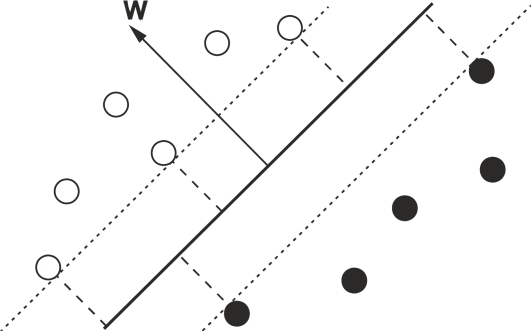
“However, in contrast to LDA, SVM selects the hyperplanes that maximize the margins, that is, the distance between the nearest training samples and the hyperplanes [236].”
MethodAn Information-Maximization Approach to Blind Separation and Blind Deconvolution
Bell, A. J., & Sejnowski, T. J. (1995) · Neural Computation · doi:10.1162/neco.1995.7.6.1129 · Cited by 8,986 · cited 1×
“Finally, s(t) and A are obtained from x(t) by means of certain algorithms, such as Infomax [162] or further modification of the Infomax [163].”
MethodBrain–computer interfaces for communication and control
Wolpaw, J. R., Birbaumer, N., McFarland, D. J., Pfurtscheller, G., & Vaughan, T. M. (2002) · Clinical Neurophysiology · doi:10.1016/s1388-2457(02)00057-3 · Cited by 7,927 · cited 2×
“Furthermore, BCI systems require real-time signal processing, and up until recently the requisite technology either did not exist or was extremely expensive [2].”
BackgroundEvent-related EEG/MEG synchronization and desynchronization: basic principles
Pfurtscheller, G., & Lopes da Silva, F. H. (1999) · Clinical Neurophysiology · doi:10.1016/s1388-2457(99)00141-8 · Cited by 7,328 · cited 1×
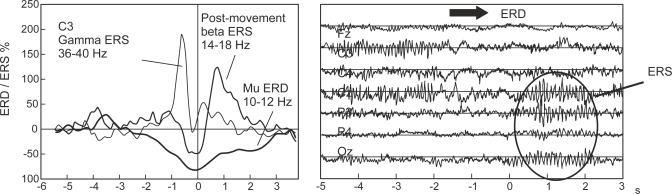
“Both rhythms are associated in such a way that some beta rhythms are harmonic mu rhythms, although some beta rhythms may also be independent [139].”
BackgroundStatistical pattern recognition: a review
Jain, A. K., Duin, P. W., & Mao, J. (2000) · IEEE Transactions on Pattern Analysis and Machine Intelligence · doi:10.1109/34.824819 · Cited by 6,767 · cited 1×
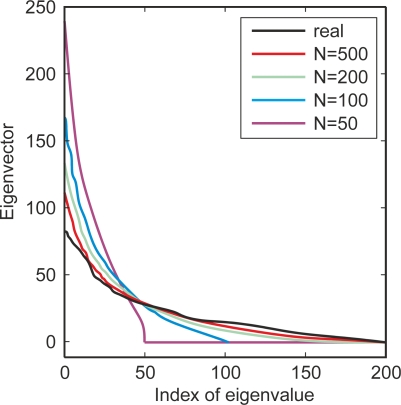
“training data needed to offer good results increases exponentially with the dimensionality of the feature vector [223].”
BackgroundThe ten-twenty electrode system of the international federation
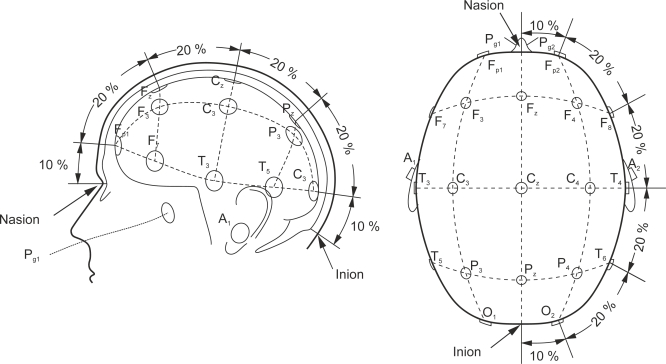
Jasper, H. H. (1958) · Electroencephalography and Clinical Neurophysiology · Cited by 6,567
Neurophysiological investigation of the basis of the fMRI signal
Logothetis, N. K., Pauls, J., Augath, M., Trinath, T., & Oeltermann, A. (2001) · Nature · doi:10.1038/35084005 · Cited by 6,551 · cited 1×
“a correspondence between both does exist [86].”
Frequency Dependence of Signal Power and Spatial Reach of the Local Field Potential
Leski, S., Lindén, H., Tetzlaff, T., Pettersen, K. H., & Einevoll, G. T. (2013) · PubMed · doi:10.18154/rwth-conv-084442 · Cited by 3,639
Neuronal ensemble control of prosthetic devices by a human with tetraplegia
Hochberg, L. R., Serruya, M. D., Friehs, G. M., Mukand, J. A., Saleh, M., Caplan, A. H., Branner, A., Chen, D., Penn, R. D., & Donoghue, J. P. (2006) · Nature · doi:10.1038/nature04970 · Cited by 3,295 · cited 1×
“[287] implanted BrainGate sensors in the primary motor cortex of a tetraplegic patient to control a cursor.”
BackgroundFarwell, L. A., & Donchin, E. (1988) · Electroencephalography and Clinical Neurophysiology · doi:10.1016/0013-4694(88)90149-6 · Cited by 3,228 · cited 5×
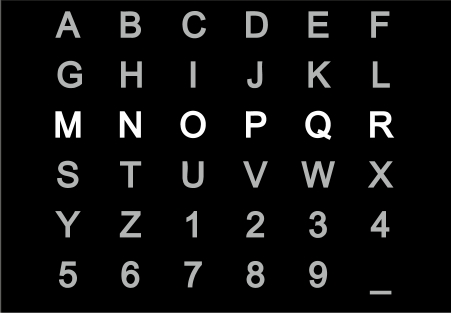
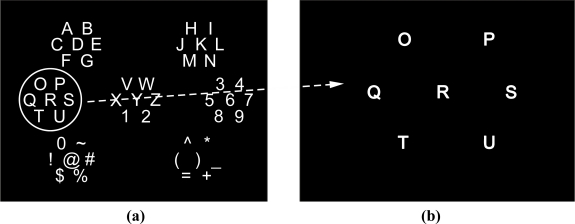
“A typical application of a BCI based on visual P300 evoked potentials comprises a matrix of letters, numbers, or other symbols or commands [123,127,128].”
BackgroundInfluential
Research works printed but not linked: 3
- Steven, L., and Giulio, T. (2009). The Neurology of Consciousness, Academic Press.
- Mellinger, 2007, An MEG-based brain-computer interface (BCI), Neuroimage, 36, 581, 10.1016/j.neuroimage.2007.03.019 · DOI · Paper page
- Tangermann, M., Krauledat, M., Grzeska, K., Sagebaum, M., Blankertz, B., Vidaurre, C., and Müller, K. (2008). Playing Pinball with non-invasive BCI. Proc. NIPS, 1641–1648.
Cited by
Items 901–1,000 of 1,005
Decoding Arm Movement Direction Using Ultra-High-Density EEG
Ma, Z., Yang, X., Meng, J., Wang, K., Xu, M., & Ming, D. (2025) · IEEE Journal of Biomedical and Health Informatics · doi:10.1109/jbhi.2025.3545856 · Cited by 13
Rana, A., Gautam, D., Kumar, P., Kumar, K., Vasilakos, A. V., Das, A. K., & Vivekananda Bhat, K. (2025) · Artificial Intelligence Review · doi:10.1007/s10462-025-11211-z · Cited by 15
Yu, H., Mu, Q., Liu, C., Wang, S., & Sun, J. (2025) · Neural Regeneration Research · doi:10.4103/nrr.nrr-d-25-00217 · Cited by 20
Coutray, K., Barbel, W., Groth, Z., & LaViola, J. J. (2025) · Frontiers in Human Neuroscience · doi:10.3389/fnhum.2025.1695446 · Cited by 11
Orino, Y., Yoshino, K., Oka, N., Yamamoto, K., Takahashi, H., & Kato, T. (2015) · Transportation Research Record Journal of the Transportation Research Board · doi:10.3141/2518-03 · Cited by 10
Improving Detection Accuracy of Memristor-Based Bio-Signal Sensing Platform
Gupta, I., Serb, A., Khiat, A., & Prodromakis, T. (2016) · IEEE Transactions on Biomedical Circuits and Systems · doi:10.1109/tbcas.2016.2580499 · Cited by 10
Dai, S., & Wei, Q. (2017) · Journal of Integrative Neuroscience · doi:10.3233/jin-170017 · Cited by 10
Hossain, I., Khosravi, A., Hettiarachchi, I. T., & Nahavandhi, S. (2017) · Conference proceedings/Conference proceedings - IEEE International Conference on Systems, Man, and Cybernetics · doi:10.1109/smc.2017.8122611 · Cited by 11
Brain Biophysics: Perception, Consciousness, Creativity. Brain Computer Interface (BCI)
Man, D., & Olchawa, R. (2018) · Advances in intelligent systems and computing · doi:10.1007/978-3-319-75025-5_5 · Cited by 12
Sequence-based manipulation of robotic arm control in brain machine interface
Kilmarx, J., Abiri, R., Borhani, S., Jiang, Y., & Zhao, X. (2018) · International Journal of Intelligent Robotics and Applications · doi:10.1007/s41315-018-0049-7 · Cited by 11
Human machine interface: robotizing the instinctive living
Tahir, A. M. (2018) · International Robotics & Automation Journal · doi:10.15406/iratj.2018.04.00142 · Cited by 10
Koroleva, E. S., Alifirova, V. M., Latypova, A. V., Cheban, S. V., Ott, V. A., Бразовский, К. С., Tolmachev, I. V., Brazovskaya, N. G., Semkina, A. A., & Kataeva, N. G. (2019) · Bulletin of Siberian Medicine · doi:10.20538/1682-0363-2019-2-223-233 · Cited by 11
“Система искусственного интеллекта – интерфейс «мозг – компьютер» (BCI) может распознавать определенный набор паттернов биологических потенциалов головного мозга и обеспечивать коммуникацию человека с окружающей средой посредством передачи ЭЭГ-сигналов на внешние исполнительные устройства, такие как компьютеры, синтеза…”
Performance comparison of a non-invasive P300-based BCI mouse to a head-mouse for people with SCI
Dutt-Mazumder, A., & Huggins, J. E. (2020) · Brain-Computer Interfaces · doi:10.1080/2326263x.2020.1716532 · Cited by 10
Generation of diverse insect-like gait patterns using networks of coupled Rössler systems
Kitsunai, S., Cho, W., Sano, C., Saetia, S., Qin, Z., Koike, Y., Frasca, M., Yoshimura, N., & Minati, L. (2020) · Chaos An Interdisciplinary Journal of Nonlinear Science · doi:10.1063/5.0021694 · Cited by 10
Does Inter-Stimulus Distance Influence the Decoding Performance of SSVEP and SSMVEP BCI?
Gao, Y., Ravi, A., & Jiang, N. (2021) · International IEEE/EMBS Conference on Neural Engineering · doi:10.1109/ner49283.2021.9441069 · Cited by 13
Speed Classification of Upper Limb Movements Through EEG Signal for BCI Application
Zolfaghari, S., Rezaii, T. Y., Meshgini, S., Farzamnia, A., & Fan, L. C. (2021) · IEEE Access · doi:10.1109/access.2021.3102183 · Cited by 11
Karlsson, P., Orlandi, S., Zhao, H., & McEwan, A. L. (2021) · Springer eBooks · doi:10.1007/978-981-16-5324-7_2 · Cited by 10
A Tensor-Based Frequency Features Combination Method for Brain–Computer Interfaces
Pei, Y., Sheng, T., Luo, Z., Xie, L., Li, W., Yan, Y., & Yin, E. (2022) · Communications in computer and information science · doi:10.1007/978-981-16-9247-5_40 · Cited by 11
Wireless interfaces for brain neurotechnologies
Kim, H., & Ho, J. S. (2022) · Philosophical Transactions of the Royal Society A Mathematical Physical and Engineering Sciences · doi:10.1098/rsta.2021.0020 · Cited by 18
“This system is implemented by an integrated circuit, which amplifies, filters, and digitizes signals with the goal of consuming the least possible amount of power [83,84].”
BackgroundFloreani, E. D., Orlandi, S., & Chau, T. T. (2022) · Frontiers in Human Neuroscience · doi:10.3389/fnhum.2022.938708 · Cited by 10
“Linear discriminant analysis involves defining a linear decision boundary that separates the data into two classes, maximizing the distance between the class means whileminimizing the variance within each class (Nicolas-Alonso and Gomez-Gil, 2012).”
BackgroundMethodTowards a versatile mental workload modeling using neurometric indices
Gogna, Y., Tiwari, S., & Singla, R. K. (2023) · Biomedizinische Technik/Biomedical Engineering · doi:10.1515/bmt-2022-0479 · Cited by 10
Real-Time Navigation in Google Street View® Using a Motor Imagery-Based BCI
Yang, L., & Hulle, M. M. V. (2023) · Sensors · doi:10.3390/s23031704 · Cited by 13
An N400 identification method based on the combination of Soft-DTW and transformer
Ma, Y., Tang, Y., Zeng, Y., Ding, T., & Liu, Y. (2023) · Frontiers in Computational Neuroscience · doi:10.3389/fncom.2023.1120566 · Cited by 11
“Electroencephalography (EEG) is the sum of postsynaptic potentials of neurons in the human cerebral cortex, which is acquired through the brain-computer interface (BCI) at the surface of the scalp (Nicolas-Alonso and Gomez-Gil, 2012).”
BackgroundMethodA scoping review of BCIs for learning regulation in mainstream educational contexts
Xia, Q., Chiu, T. K. F., & Li, X. (2023) · Behaviour and Information Technology · doi:10.1080/0144929x.2023.2241559 · Cited by 10
“BCIs is a hardware and software communications system that allows cerebral activity alone to control computers or external devices (Nicolas-Alonso and Gomez-Gil 2012; Rathi, Singla, and Tiwari 2021).”
Fan, C., Yang, B., Li, X., & Zan, P. (2023) · Frontiers in Neuroscience · doi:10.3389/fnins.2023.1250991 · Cited by 11
“Electroencephalography (EEG)-based BCIs offer a non-invasive and portable approach with high temporal resolution, making them particularly suitable for MI applications (Nicolas-Alonso and Gomez-Gil, 2012).”
BackgroundBustios, P., & Rosa, J. L. G. (2023) · Applied Intelligence · doi:10.1007/s10489-023-05134-x · Cited by 12
A low-cost, wireless, 4-channel EEG measurement system used in virtual reality environments
Yu, Z., & Guo, S. (2024) · HardwareX · doi:10.1016/j.ohx.2024.e00507 · Cited by 10
“Typically, devices require extremely high input impedance ( > 10 M Ω ), high common-mode rejection ratio ( > 80 dB ), and minimal input-referred noise ( 6 μ Vpp ) [13].”
BackgroundYang, G., & Liu, J. (2024) · Brain Sciences · doi:10.3390/brainsci14050478 · Cited by 12
Electric wheelchair control system using brain-computer interface based on alpha-wave blocking
Ming, D., Fu, L., Chen, L., Tang, J., Qi, H., Zhao, X. W., Zhou, P., Zhang, L., Jiao, X., Wang, C., et al. (2014) · Transactions of Tianjin University · doi:10.1007/s12209-014-2235-5 · Cited by 10
Mind-controlled augmentative and alternative communication for people with severe motor disabilities
Al-Abdullatif, A., Al-Negheimish, H., Al-Mofeez, L., Al-Khalifa, N., Al-Andas, L., & Al‐Wabil, A. (2013) · International Conference on Innovations in Information Technology · doi:10.1109/innovations.2013.6544402 · Cited by 10
“These disabilities include: Locked-in Syndrome, Amyotrophic Lateral Sclerosis (ALS), Brainstem Stroke Syndrome, and Spinal Cord Injury [2].”
BackgroundMarjaninejad, A., Taherian, B., & Valero‐Cuevas, F. J. (2017) · Annual International Conference of the IEEE Engineering in Medicine and Biology Society (EMBC) · doi:10.1109/embc.2017.8036991 · Cited by 12
Multi-way feature selection for ECoG-based Brain-Computer Interface
Motrenko, A., & Strijov, V. (2018) · Expert Systems with Applications · doi:10.1016/j.eswa.2018.06.054 · Cited by 10
Chacon-Murguia, M. I., Olivas-Padilla, B. E., & Ramírez-Quintana, J. A. (2020) · Signal Image and Video Processing · doi:10.1007/s11760-019-01623-0 · Cited by 10
Solarana, K., Ye, M., Gao, Y., Rafi, H., & Hammer, D. X. (2020) · Neurophotonics · doi:10.1117/1.nph.7.1.015004 · Cited by 11
Lee, B.-H., Jeong, J.-H., Shim, K.-H., & Kim, D. (2020) · International Winter Conference on Brain-Computer Interface (BCI) · doi:10.1109/bci48061.2020.9061632 · Cited by 10
A Review of Off-Line Mode Dataset Shifts
Takahashi, C. C., & Braga, A. P. (2020) · IEEE Computational Intelligence Magazine · doi:10.1109/mci.2020.2998231 · Cited by 15
Basic Electroencephalogram and Its Common Clinical Applications in Children
Jadah, R. H. S. (2020) · IntechOpen eBooks · doi:10.5772/intechopen.94247 · Cited by 10
“The design of BCI is complex due to restricted resolution and data reliability detected by the brain [25, 26].”
BackgroundDecoding of semantic categories of imagined concepts of animals and tools in fNIRS
Rybář, M., Poli, R., & Daly, I. P. (2021) · Journal of Neural Engineering · doi:10.1088/1741-2552/abf2e5 · Cited by 16
“EEG and fNIRS are portable, relatively cheap, and provide better ecological validity in comparison with fMRI.”
Roy, G., Bhoi, A. K., Das, S., & Bhaumik, S. (2022) · Signal Image and Video Processing · doi:10.1007/s11760-022-02142-1 · Cited by 10
“; the BCI research community accepts the EEG systemdue to its lower price and user-friendly acquisition techniques [13].”
BackgroundDrowsiness detection using fNIRS in different time windows for a passive BCI
Khan, M. J., Liu, X., Bhutta, M. R., & Hong, K. (2016) · IEEE/RAS-EMBS International Conference on Biomedical Robotics and Biomechatronics (BioRob) · doi:10.1109/biorob.2016.7523628 · Cited by 11
Online Event Detection Requirements in Closed-Loop Neuroscience
Varona, P., Arroyo, D., Rodríguez, F. B., & Nowotny, T. (2016) · Elsevier eBooks · doi:10.1016/b978-0-12-802452-2.00006-8 · Cited by 14
Towards a system to command a robotic wheelchair based on independent SSVEP–BCI
Bastos-Filho, T., Floriano, A. S. D. P., Montenegro-Couto, E. H., & Godinez-Tello, R. J. M. (2018) · Elsevier eBooks · doi:10.1016/b978-0-12-812892-3.00015-7 · Cited by 10
Brain-computer interface using deep neural network and its application to mobile robot control
Huve, G., Takahashi, K., & Hashimoto, M. (2018) · IEEE International Workshop on Advanced Motion Control (AMC) · doi:10.1109/amc.2019.8371082 · Cited by 10
Improved Classification Accuracy of MCI Patients After Acupuncture Treatment: An fNIRS Study
Ghafoor, U., Yaqub, M. A., Khan, M. N. A., & Hong, K. (2019) · International Conference on Robotics and Automation in Industry (ICRAI) · doi:10.1109/icrai47710.2019.8967353 · Cited by 10
Applications over the horizon — Advancements and challenges in brain-computer interfaces
Pang, W., Yuan, C., Zheng, Y., Zhong, T., & Lai, P. (2024) · The Innovation Life · doi:10.59717/j.xinn-life.2024.100058 · Cited by 10
Sustainable development of electroencephalography materials and technology
Xiong, L., Li, N., Luo, Y., & Chen, L. (2024) · SusMat · doi:10.1002/sus2.195 · Cited by 14
“117 BCI systems have been applied in two primary directions.”
MethodSingh, A. K., Dhalayat, K., Dhobale, S. V., Ghosh, B., Datta, A., Borah, A., & Bhattacharya, P. (2025) · Ageing Research Reviews · doi:10.1016/j.arr.2025.102780 · Cited by 10
Deep learning for epileptic seizure prediction from EEG signals: A review
Huang, X., Meng, H., & Li, Z. (2026) · Biomedical Signal Processing and Control · doi:10.1016/j.bspc.2026.109518 · Cited by 12
Analysis of EEG Features for Brain Computer Interface Application
Rashid, M., Sulaiman, N., Mustafa, M., Jadin, M. S., Najib, M. S., Bari, B. S., & Khatun, S. (2020) · Lecture notes in electrical engineering · doi:10.1007/978-981-15-2317-5_45 · Cited by 9
BRAIN SIGNATURES PERSPECTIVE FOR HIGH-SECURITY AUTHENTICATION
Rathi, N., Singla, R. K., & Tiwari, S. (2020) · Biomedical Engineering Applications Basis and Communications · doi:10.4015/s1016237220500258 · Cited by 9
USING BRAIN-COMPUTER INTERFACE TECHNOLOGY AS A CONTROLLER IN VIDEO GAMES
Zając, B., & Paszkiel, S. (2020) · Informatyka Automatyka Pomiary w Gospodarce i Ochronie Środowiska · doi:10.35784/iapgos.1543 · Cited by 9
Speech stream segregation to control an ERP-based auditory BCI
Velasco-Álvarez, F., Fernández-Rodríguez, Á., Medina-Juliá, M. T., & Ron-Angevín, R. (2021) · Journal of Neural Engineering · doi:10.1088/1741-2552/abdd44 · Cited by 9
Effects of Emotional Stimulations on the Online Operation of a P300-Based Brain–Computer Interface
Kim, M., Kim, J., Heo, D., Choi, Y.-J., Lee, T., & Kim, S.-P. (2021) · Frontiers in Human Neuroscience · doi:10.3389/fnhum.2021.612777 · Cited by 10
Değirmenci, M., Sayılgan, E., & İşler, Y. (2021) · Journal of Intelligent Systems with Applications · doi:10.54856/jiswa.202112178 · Cited by 9
Navigation in virtual and real environment using brain computer interface: a progress report
Hu, H., Liu, Y., Yue, K., & Wang, Y. (2022) · Virtual Reality & Intelligent Hardware · doi:10.1016/j.vrih.2021.10.002 · Cited by 12
Zahra, H. N., Zakaria, H., & Hermanto, B. R. (2022) · Journal of Physics Conference Series · doi:10.1088/1742-6596/2312/1/012064 · Cited by 9
Feature Selection Based on Layer-Wise Relevance Propagation for EEG-based MI classification
Nam, H., Kim, J.-M., & Kam, T. (2023) · International Winter Conference on Brain-Computer Interface (BCI) · doi:10.1109/bci57258.2023.10078676 · Cited by 11
“BCI systems recognize brain activities and translate specific signals into desired actions [1], [2].”
BackgroundApplication of artificial hibernation technology in acute brain injury
Wang, X., Chen, S., Wang, X., Song, Z., Wang, Z., Niu, X., Chen, X., & Chen, X. (2023) · Neural Regeneration Research · doi:10.4103/1673-5374.390968 · Cited by 11
A calibration-free c-VEP based BCI employing narrow-band random sequences
Li, Z., Dong, Y., Tian, S., Pei, W., Gao, X., & Wang, Y. (2024) · Journal of Neural Engineering · doi:10.1088/1741-2552/ad3679 · Cited by 9
Stamato, L., Prottoy, H. M., Higgins, E., Scheifele, L. Z., & Hamidi, F. (2024) · CHI Conference on Human Factors in Computing Systems · doi:10.1145/3613904.3642339 · Cited by 10
Habashi, A. G., Azab, A. M., Eldawlatly, S., & Aly, G. M. (2024) · Journal of Neural Engineering · doi:10.1088/1741-2552/ad6598 · Cited by 10
A dynamic submatrix-based P300 online brain–computer interface
Shen, J., Liang, J., Shi, J., & Wang, Y. (2014) · Biomedical Signal Processing and Control · doi:10.1016/j.bspc.2014.09.005 · Cited by 9
A self-organizing maps classifier structure for brain computer interfaces
Bueno, L., & Bastos-Filho, T. (2015) · Research on Biomedical Engineering · doi:10.1590/2446-4740.0753 · Cited by 11
An online three-class Transcranial Doppler ultrasound brain computer interface
Goyal, A., Samadani, A.-A., Guerguerian, A., & Chau, T. T. (2016) · Neuroscience Research · doi:10.1016/j.neures.2015.12.013 · Cited by 9
Early Prediction of Epilepsy Seizures System based on Artificial Immune BCI System
Zaghloul, Z. S., ElSayed, Z., & Bayoumi, M. (2017) · International Journal of Computer Applications · doi:10.5120/ijca2017914881 · Cited by 9
Mondini, V., Mangia, A. L., Luca, T., & Cappello, A. (2018) · Computational Intelligence and Neuroscience · doi:10.1155/2018/4278782 · Cited by 9
Multiclass Motor Imagery Recognition of Single Joint in Upper Limb Based on NSGA- II OVO TWSVM
Guan, S., Zhao, K., & Wang, F. (2018) · Computational Intelligence and Neuroscience · doi:10.1155/2018/6265108 · Cited by 9
“In order to improve the classification accuracy of the BCI system, researchers have studied the feature extraction methods and classification methods of EEG signals [11–15].”
MethodGomes, L. M., & Wu, R. (2018) · Robotics · doi:10.3390/robotics7030046 · Cited by 9
“This interaction is possible by the interpretation, processing, and application of signals generated by electroencephalography activity [21].”
MethodSingla, R. K. (2018) · InTech eBooks · doi:10.5772/intechopen.75693 · Cited by 12
Fractal-based techniques for physiological time series: An updated approach
Roca, J. L., Rodríguez-Bermúdez, G., & Fernández-Martínez, M. (2018) · Open Physics · doi:10.1515/phys-2018-0093 · Cited by 10
EEG Feature Extraction Using Genetic Programming for the Classification of Mental States
Z-Flores, E., Trujillo, L., Legrand, P., & Faïta-Aïnseba, F. (2020) · Algorithms · doi:10.3390/a13090221 · Cited by 9
“Literature states that the most promising EEG-based systems have to contain at least the following components: signal pre-processing, feature extraction/selection, and classification [12].”
BackgroundIslam, M. N., Sulaiman, N., Rashid, M., Bari, B. S., Hasan, M. J., Mustafa, M., & Jadin, M. S. (2020) · IEEE International Conference on System Engineering and Technology (ICSET) · doi:10.1109/icset51301.2020.9265370 · Cited by 11
Effect of Distracting Background Speech in an Auditory Brain–Computer Interface
Fernández-Rodríguez, Á., Ron-Angevín, R., Sanz‐Arigita, E., Parize, A., Esquirol, J., Perrier, A., Laur, S., André, J., Lespinet‐Najib, V., & García, L. (2021) · Brain Sciences · doi:10.3390/brainsci11010039 · Cited by 9
How to build a fast and accurate code-modulated brain-computer interface
Torres, J. A. R., & Daly, I. P. (2021) · Journal of Neural Engineering · doi:10.1088/1741-2552/abfaac · Cited by 9
Sharma, V. (2020) · International Journal of Engineering and Advanced Technology · doi:10.35940/ijeat.f1609.089620 · Cited by 9
Ensemble Voting-Based Multichannel EEG Classification in a Subject-Independent P300 Speller
Mussabayeva, A., Jamwal, P. K., & Akhtar, M. T. (2021) · Applied Sciences · doi:10.3390/app112311252 · Cited by 14
Enhanced Motor Imagery-Based Eeg Classification Using A Discriminative Graph Fourier Subspace
Miri, M., Abootalebi, V., & Behjat, H. (2022) · IEEE International Symposium on Biomedical Imaging (ISBI) · doi:10.1109/isbi52829.2022.9761611 · Cited by 9
Application of dry EEG electrodes on low-cost SSVEP-based BCI for robot navigation
Farmaki, C., Zacharioudakis, N., Pediaditis, M., Krana, M., & Sakkalis, V. (2022) · IEEE International Conference on Imaging Systems and Techniques (IST) · doi:10.1109/ist55454.2022.9827672 · Cited by 9
Choi, H., Park, J., & Yang, Y.-M. (2022) · Sensors · doi:10.3390/s22166042 · Cited by 9
“( a ) ( b ) 𝑢 = 𝑣 Orthonormal (orthogonalized and normalized) vectors u 1 , u 2 , . . . 𝑢 (cid:2870) = 𝑣 (cid:2870) − 𝑝𝑟𝑜𝑗 (cid:3048) (cid:3117) (𝑣 (cid:2870) ) In the BCI system, every researcher uses the feature instead of raw data because the raw data is extremely large [7].”
BackgroundMethodSibilano, E., Suglia, V., Brunetti, A., Buongiorno, D., Caporusso, N., Guger, C., & Bevilacqua, V. (2023) · Neuromethods · doi:10.1007/978-1-0716-3545-2_10 · Cited by 11
Human computer interaction using BCI based on sensorimotor rhythm
Vargic, R., Chlebo, M., & Kačur, J. (2015) · IEEE International Conference on Intelligent Engineering Systems (INES) · doi:10.1109/ines.2015.7329645 · Cited by 9
A compact ECoG system with bidirectional capacitive data telemetry
Mohammadi, R., Sharif, M., Kia, A., Hoveidar-Sefid, M., Sodagar, A. M., & Nadimi, E. (2014) · IEEE Biomedical Circuits and Systems Conference (BioCAS) · doi:10.1109/biocas.2014.6981797 · Cited by 9
Using ELM-based weighted probabilistic model in the classification of synchronous EEG BCI
Tan, P., Tan, G., Cai, Z., Sa, W., & Zou, Y. (2016) · Medical & Biological Engineering & Computing · doi:10.1007/s11517-016-1493-x · Cited by 9
Evolutionary Algorithms with Linkage Information for Feature Selection in Brain Computer Interfaces
Adair, J., Brownlee, A. E. I., & Ochoa, G. (2016) · Advances in intelligent systems and computing · doi:10.1007/978-3-319-46562-3_19 · Cited by 9
Brain Connectivity Variation Topography Associated with Working Memory
Ma, X., Huang, X., Ge, Y., Hu, Y., Chen, W., Liu, A., Liu, H., Chen, Y., Li, B., & Ning, X. (2016) · PLoS ONE · doi:10.1371/journal.pone.0165168 · Cited by 11
As above, so below? Towards understanding inverse models in BCI
Lindgren, J. T. (2017) · Journal of Neural Engineering · doi:10.1088/1741-2552/aa86d0 · Cited by 10
“Although source reconstruction has been often studied and proposed for BCI [7, 12, 16–31], it remains an exotic approach which is covered only cursorily by BCI reviews and textbooks [2, 5].”
InfluentialAccurate Decoding of Short, Phase-Encoded SSVEPs
Amer, A. Y. A., Wittevrongel, B., & Hulle, M. M. V. (2018) · Sensors · doi:10.3390/s18030794 · Cited by 9
Schaeffer, M.-C., & Aksenova, T. (2018) · Frontiers in Neuroscience · doi:10.3389/fnins.2018.00540 · Cited by 10
“For example, Linear Discriminant analysis and Support-VectorMachine classifiers, both of which are widely popular within the BCI community (Nicolas-Alonso and Gomez-Gil, 2012; Bashashati et al., 2015) are a generative and a discriminative classifier, respectively.”
BackgroundHuve, G., Takahashi, K., & Hashimoto, M. (2018) · Lecture notes in computer science · doi:10.1007/978-3-030-01424-7_35 · Cited by 9
He, H., & Wu, D. (2018) · IEEE International Conference on Signal Processing, Communications and Computing (ICSPCC) · doi:10.1109/icspcc.2018.8567789 · Cited by 11
Improving Classification by Feature Discretization and Optimization for fNIRS-based BCI
Xu, B., Fu, Y., Shi, G., Yin, X., Wang, Z., & Li, H. (2014) · doi:10.4172/1662-100x.1000119 · Cited by 9
Zeid, E. A., Sereshkeh, A. R., & Chau, T. T. (2016) · Journal of Neural Engineering · doi:10.1088/1741-2560/13/6/066012 · Cited by 10
An EEG-based Adaptive Training System for ASD Children
Zheng, C. C., Zhang, C., Li, X., Li, B., Zhang, F., Liu, X., Yao, C., Zhao, Y., & Ying, F. (2017) · ACM Symposium on User Interface Software and Technology (UIST) · doi:10.1145/3131785.3131832 · Cited by 10
Letaief, M., Rezzoug, N., & Gorce, P. (2019) · Assistive Technology · doi:10.1080/10400435.2019.1586011 · Cited by 9
CLASSIFICATION OF MOTOR IMAGERY FOR BRAIN-COMPUTER INTERFACES
Szachewicz, P. (2013) · Cited by 15
Simultaneous EEG and fNIRS recordings for semantic decoding of imagined animals and tools
Rybář, M., Poli, R., & Daly, I. P. (2025) · Scientific Data · doi:10.1038/s41597-025-04967-0 · Cited by 17
“Our research aims to investigate the feasibility of applying semantic neural decoding to brain-computer interfaces (BCIs) designed for communication 4,5 .”
P300 Detection Using Ensemble of SVM for Brain-Computer Interface Application
Kundu, S., & Ari, S. (2018) · 2018 9th International Conference on Computing, Communication and Networking Technologies (ICCCNT) · doi:10.1109/icccnt.2018.8493903 · Cited by 8
Wei, Y., Wang, X., Luo, R., Mai, X., Li, S., & Meng, J. (2023) · Journal of Neural Engineering · doi:10.1088/1741-2552/ad01de · Cited by 8
A CSP-based retraining framework for motor imagery based brain-computer interfaces
Jiang, X., Meng, L., Chen, X., & Wu, D. (2024) · Science China Information Sciences · doi:10.1007/s11432-024-4081-x · Cited by 8
AI-Enhanced Virtual and Augmented Reality for Cybersecurity Training
Rana, S., & Chicone, R. (2024) · Springer eBooks · doi:10.1007/978-3-031-81780-9_5 · Cited by 11
Metadata
- Authors
- Nicolas-Alonso, L. F., & Gomez-Gil, J.
- Affiliations
- Universidad de Valladolid (ES)
- Department of Signal Theory, Communications and Telematics Engineering, University of Valladolid, Valladolid 47011, Spain
- Corresponding author
- Nicolas-Alonso, Luis Fernando
- Venue
- Sensors
- Publisher
- MDPI AG
- Published
- 2012-01-31
- Volume
- 12
- Issue
- 2
- Pages
- 1211-1279
- ISSN
- 1424-8220 (ISSN-L)
- PMC
- PMC3304110
- OpenAlex
- W2128909182
- Cited by
- 2,143
- References
- 325
- Citations by year
- 2026: 137 · 2025: 186 · 2024: 178 · 2023: 181 · 2022: 201 · 2021: 220 · 2020: 185 · 2019: 185 · 2018: 177 · 2017: 134 · 2016: 118 · 2015: 91 · 2014: 78 · 2013: 48 · 2012: 20
- FWCI
- 5.81
- Type
- journal article
- Language
- en
- Open access
- gold
- doi.org
- Licence
- Locations
- Sensors (publishedVersion, cc-by)
- PubMed Central (publishedVersion, cc-by)
- PubMed (publishedVersion)
- Hispana (publishedVersion, cc-by)
- DOAJ (DOAJ: Directory of Open Access Journals) (submittedVersion, cc-by-sa)
- University of Valladolid Documentary Repository (University of Valladolid) (submittedVersion, cc-by)
- Topics
- Life Sciences › Neuroscience › Cognitive Neuroscience › EEG and Brain-Computer Interfaces
- Physical Sciences › Computer Science › Human-Computer Interaction › Gaze Tracking and Assistive Technology
- Physical Sciences › Engineering › Biomedical Engineering › Muscle activation and electromyography studies
- Keywords
- brain-computer interface, neuroimaging, electrophysiological signals, signal preprocessing, artifact removal, feature extraction, brain signal classification, paralysis, locked-in syndrome, amyotrophic lateral sclerosis, spinal cord injury, brain-computer interface applications
- MeSH terms
- Algorithms, Brain, Electroencephalography, Humans, Man-Machine Systems, Pattern Recognition, Automated, Signal Processing, Computer-Assisted, Transducers, User-Computer Interface
About these checks
Registry, retraction, Cites and statistics results are computed, not judged, with one exception: a printed reference that no index lists is read once by a model before it counts as a citation error. Claims are extracted by a model and kept only when their quote appears verbatim in the text; each cited source is then checked, with a model’s help, for whether it says what the claim relies on. Those verdicts can be wrong — read the claim’s quote and the cited source before relying on one.
Statistics and arithmetic are recomputed, not judged.
Confidence bands are shown only for fields calibrated on our annotated test set. None is calibrated yet, so no band is shown.
What counts as a claim ›How we measure confidence ›How we check this ›
Are you an author, or do you see a problem with this page? Request a review
Data sources
Bibliographic data: Semantic Scholar, OpenAlex, Crossref.
Contains information from the Semantic Scholar Academic Graph Datasets, made available under the ODC Attribution License (ODC-BY 1.0).
Semantic Scholar’s data is described in: Kinney, R., et al. (2023). The Semantic Scholar Open Data Platform. arXiv:2301.10140.
