

Brain Computer Interfaces, a Review
Open accessThe DOI matches its Crossref record; 322 of the 325 references it cites were found in a registry or an index.
Abstract
A brain-computer interface (BCI) is a hardware and software communications system that permits cerebral activity alone to control computers or external devices. The immediate goal of BCI research is to provide communications capabilities to severely disabled people who are totally paralyzed or ‘locked in’ by neurological neuromuscular disorders, such as amyotrophic lateral sclerosis, brain stem stroke, or spinal cord injury. Here, we review the state-of-the-art of BCIs, looking at the different steps that form a standard BCI: signal acquisition, preprocessing or signal enhancement, feature extraction, classification and the control interface. We discuss their advantages, drawbacks, and latest advances, and we survey the numerous technologies reported in the scientific literature to design each step of a BCI. First, the review examines the neuroimaging modalities used in the signal acquisition step, each of which monitors a different functional brain activity such as electrical, magnetic or metabolic activity. Second, the review discusses different electrophysiological control signals that determine user intentions, which can be detected in brain activity. Third, the review includes some techniques used in the signal enhancement step to deal with the artifacts in the control signals and improve the performance. Fourth, the review studies some mathematic algorithms used in the feature extraction and classification steps which translate the information in the control signals into commands that operate a computer or other device. Finally, the review provides an overview of various BCI applications that control a range of devices.
Overview
The claims and statistics of this paper haven’t been checked yet.
Free: it reads the open-access text and checks the first 5 claims that cite a source we can check. Create a free account to check every claim.
Integrity signals
Registry
Cites
Statistics
Figures
Verification
Claims the paper makes
The claims and statistics of this paper haven’t been checked yet.
Free: it reads the open-access text and checks the first 5 claims that cite a source we can check. Create a free account to check every claim.
Claims other papers make about this one
Each is checked against this paper’s own text: does it say what the citing paper says it does?
The source backs part of the claim, not all of it — or backs it for a different population, condition or comparison.
In the citing paper
“Noninvasive EEG based BCI could potentially serve the needs of a large population10.”
From Noninvasive Electroencephalogram Based Control of a Robotic Arm for Reach and Grasp Tasks (2016) · cites this paper as [10]
Experimental — accuracy not yet measuredThe cited source says what the claim attributes to it.
In the citing paper
“this response can be used as a neural signal in EEG-based brain-computer interfaces (BCIs), enabling direct communication between the brain and surroundings without the involvement of peripheral nerves or muscles (Nicolas-Alonso and Gomez-Gil, 2012).”
From A Lightweight Multi-Scale Convolutional Neural Network for P300 Decoding: Analysis of Training Strategies and Uncovering of Network Decision (2021) · cites this paper as Nicolas-Alonso and Gomez-Gil, 2012
The check wasn’t confident either way, so it gives no verdict — never disputed.
In the citing paper
“Among others, external influences such as stress, emotion, and work impact these metrics and can be used to infer those [162].”
From A Survey on Measuring Cognitive Workload in Human-Computer Interaction (2023) · cites this paper as [162]
Experimental — accuracy not yet measured
Self-check
Percentages, sums and reported differences re-computed from the paper’s own numbers.
The self-check needs the paper’s full text.
Citations
Cites
A Tutorial on Support Vector Machines for Pattern Recognition
Burges, C. J. C. (1998) · Data Mining and Knowledge Discovery · doi:10.1023/a:1009715923555 · Cited by 16,429 · cited 1×
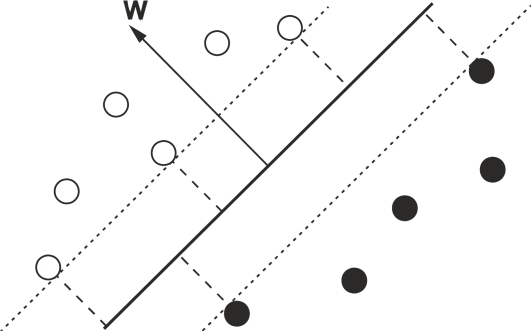
“However, in contrast to LDA, SVM selects the hyperplanes that maximize the margins, that is, the distance between the nearest training samples and the hyperplanes [236].”
MethodAn Information-Maximization Approach to Blind Separation and Blind Deconvolution
Bell, A. J., & Sejnowski, T. J. (1995) · Neural Computation · doi:10.1162/neco.1995.7.6.1129 · Cited by 8,986 · cited 1×
“Finally, s(t) and A are obtained from x(t) by means of certain algorithms, such as Infomax [162] or further modification of the Infomax [163].”
MethodBrain–computer interfaces for communication and control
Wolpaw, J. R., Birbaumer, N., McFarland, D. J., Pfurtscheller, G., & Vaughan, T. M. (2002) · Clinical Neurophysiology · doi:10.1016/s1388-2457(02)00057-3 · Cited by 7,927 · cited 2×
“Furthermore, BCI systems require real-time signal processing, and up until recently the requisite technology either did not exist or was extremely expensive [2].”
BackgroundEvent-related EEG/MEG synchronization and desynchronization: basic principles
Pfurtscheller, G., & Lopes da Silva, F. H. (1999) · Clinical Neurophysiology · doi:10.1016/s1388-2457(99)00141-8 · Cited by 7,328 · cited 1×
“Both rhythms are associated in such a way that some beta rhythms are harmonic mu rhythms, although some beta rhythms may also be independent [139].”
BackgroundStatistical pattern recognition: a review
Jain, A. K., Duin, P. W., & Mao, J. (2000) · IEEE Transactions on Pattern Analysis and Machine Intelligence · doi:10.1109/34.824819 · Cited by 6,767 · cited 1×
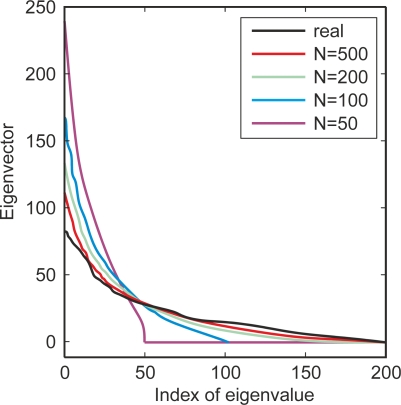
“training data needed to offer good results increases exponentially with the dimensionality of the feature vector [223].”
BackgroundThe ten-twenty electrode system of the international federation
Jasper, H. H. (1958) · Electroencephalography and Clinical Neurophysiology · Cited by 6,567
Neurophysiological investigation of the basis of the fMRI signal
Logothetis, N. K., Pauls, J., Augath, M., Trinath, T., & Oeltermann, A. (2001) · Nature · doi:10.1038/35084005 · Cited by 6,551 · cited 1×
“a correspondence between both does exist [86].”
Frequency Dependence of Signal Power and Spatial Reach of the Local Field Potential
Leski, S., Lindén, H., Tetzlaff, T., Pettersen, K. H., & Einevoll, G. T. (2013) · PubMed · doi:10.18154/rwth-conv-084442 · Cited by 3,639
Neuronal ensemble control of prosthetic devices by a human with tetraplegia
Hochberg, L. R., Serruya, M. D., Friehs, G. M., Mukand, J. A., Saleh, M., Caplan, A. H., Branner, A., Chen, D., Penn, R. D., & Donoghue, J. P. (2006) · Nature · doi:10.1038/nature04970 · Cited by 3,295 · cited 1×
“[287] implanted BrainGate sensors in the primary motor cortex of a tetraplegic patient to control a cursor.”
BackgroundFarwell, L. A., & Donchin, E. (1988) · Electroencephalography and Clinical Neurophysiology · doi:10.1016/0013-4694(88)90149-6 · Cited by 3,228 · cited 5×
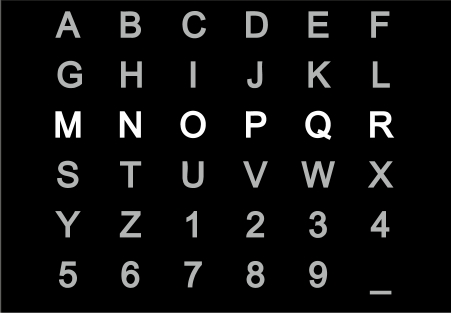
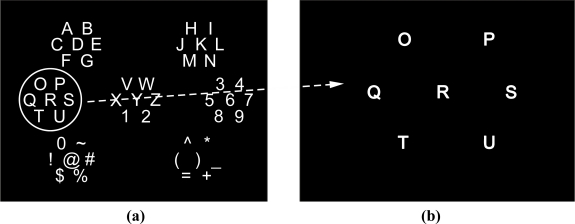
“A typical application of a BCI based on visual P300 evoked potentials comprises a matrix of letters, numbers, or other symbols or commands [123,127,128].”
BackgroundInfluential
Research works printed but not linked: 3
- Steven, L., and Giulio, T. (2009). The Neurology of Consciousness, Academic Press.
- Mellinger, 2007, An MEG-based brain-computer interface (BCI), Neuroimage, 36, 581, 10.1016/j.neuroimage.2007.03.019 · DOI · Paper page
- Tangermann, M., Krauledat, M., Grzeska, K., Sagebaum, M., Blankertz, B., Vidaurre, C., and Müller, K. (2008). Playing Pinball with non-invasive BCI. Proc. NIPS, 1641–1648.
Cited by
Items 601–700 of 1,005
Controllable Mind Visual Diffusion Model
Zeng, B., Li, S., Liu, X., Gao, S., Jiang, X., Tang, X., Hu, Y. B., Liu, J., & Zhang, B. (2024) · Proceedings of the AAAI Conference on Artificial Intelligence · doi:10.1609/aaai.v38i7.28519 · Cited by 53
Blokland, Y., Vlek, R. J., Karaman, B., Ozin, F., Thijssen, D. H. J., Eijsvogels, T. M. H., Colier, W. N. J. M., Floor, M., Bruhn, J., & Farquhar, J. D. R. (2012) · Annual International Conference of the IEEE Engineering in Medicine and Biology Society (EMBC) · doi:10.1109/embc.2012.6346835 · Cited by 20
Brain computing interface for wheel chair control
Naveen, R. S., & Julian, A. (2013) · International Conference on Computing, Communication and Networking Technologies (ICCCNT) · doi:10.1109/icccnt.2013.6726572 · Cited by 20
Protection and Repair After Spinal Cord Injury: Accomplishments and Future Directions
Dietrich, W. D. (2015) · Topics in Spinal Cord Injury Rehabilitation · doi:10.1310/sci2102-174 · Cited by 20
Development of a Brain-Computer Interface Based on Visual Stimuli for the Movement of a Robot Joints
Pérez-Vidal, A. F., Salazar, M. A. O., & Lopez, G. S. (2016) · IEEE Latin America Transactions · doi:10.1109/tla.2016.7437182 · Cited by 20
“para la activación/desactivación de algún dispositivo o aplicación virtual [14] (sillas de ruedas acondicionadas, exoesqueletos, sintetizador de voz, prótesis robóticas, deletreadores, lámparas, etc.”
BackgroundDetecting driver drowsiness based on single electroencephalography channel
Belakhdar, I., Kaaniche, W., Djmel, R., & Ouni, B. (2016) · International Multi-Conference on Systems, Signals & Devices (SSD) · doi:10.1109/ssd.2016.7473671 · Cited by 20
Clements, J. M., Sellers, E. W., Ryan, D. B., Caves, K. M., Collins, L. M., & Throckmorton, C. S. (2016) · Journal of Neural Engineering · doi:10.1088/1741-2560/13/6/066018 · Cited by 25
Characterization of phase space trajectories for Brain-Computer Interface
Sayed, K., Kamel, M. I., Alhaddad, M. J., Malibary, H. M., & Kadah, Y. M. (2017) · Biomedical Signal Processing and Control · doi:10.1016/j.bspc.2017.05.007 · Cited by 21
Is Implicit Motor Imagery a Reliable Strategy for a Brain–Computer Interface?
Osuagwu, B., Zych, M., & Vučković, A. (2017) · IEEE Transactions on Neural Systems and Rehabilitation Engineering · doi:10.1109/tnsre.2017.2712707 · Cited by 22
Zhao, Y., Tang, J., Cao, Y., Jiao, X., Xu, M., Zhou, P., Ming, D., & Qi, H. (2018) · Frontiers in Neuroscience · doi:10.3389/fnins.2018.00079 · Cited by 20
Towards Control of EEG-Based Robotic Arm Using Deep Learning via Stacked Sparse Autoencoder
Idowu, O. P., Fang, P., Li, X., Xia, Z., Xiong, J., & Li, G. (2018) · IEEE International Conference on Robotics and Biomimetics (ROBIO) · doi:10.1109/robio.2018.8665089 · Cited by 21
“Second, it is difficult to interpret the brain intentions by mere monitoring the signals [12].”
BackgroundAlazrai, R., Al-Rawi, S., Alwanni, H., & Daoud, M. I. (2019) · Applied Sciences · doi:10.3390/app9163433 · Cited by 22
“This can be attributed to several properties that are associated with the EEG modality, including the high temporal resolution, low-cost, and noninvasive nature [5,6].”
BackgroundQi, Y., Ding, F., Xu, F., & Yang, J. (2020) · Computational Intelligence and Neuroscience · doi:10.1155/2020/8890477 · Cited by 20
“However, brain signals contain a large amount of physiological and pathological information, and registered electroencephalogram (EEG) signals are mixed with other brain activity signals, which can overlap in both time and space [3].”
BackgroundReducing Response Time in Motor Imagery Using A Headband and Deep Learning
García-Moreno, F. M., Bermúdez-Edo, M., Garrido, J. L. G., & Rodríguez‐Fórtiz, M. J. (2020) · Sensors · doi:10.3390/s20236730 · Cited by 24
“Brain activities have different frequencies and can be measured using EEG for driving a BCI system, because they can provide high temporal resolution, reflecting brain dynamic changes in milliseconds [10,19].”
BackgroundSong, Y., Yang, L., Jia, X., & Xie, L. (2021) · arXiv (Cornell University) · doi:10.48550/arxiv.2102.04456 · Cited by 32
Optimization of Brain Mobile Interface Applications Using IoT
Sadeghi, K., Banerjee, A., Sohankar, J., & Gupta, S. K. S. (2016) · IEEE International Conference on High Performance Computing, Data, and Analytics · doi:10.1109/hipc.2016.014 · Cited by 19
Evaluation of a minimally invasive endovascular neural interface for decoding motor activity
Forsyth, I. A., Dunston, M., Lombardi, G., Rind, G. S., Ronayne, S. M., Wong, Y. T., May, C. N., Grayden, D. B., Oxley, T. J., Opie, N. L., et al. (2019) · International IEEE/EMBS Conference on Neural Engineering · doi:10.1109/ner.2019.8717000 · Cited by 19
Sinc-Based Convolutional Neural Networks for EEG-BCI-Based Motor Imagery Classification
Bria, A., Marrocco, C., & Tortorella, F. (2021) · Lecture notes in computer science · doi:10.1007/978-3-030-68763-2_40 · Cited by 25
Arif, S., Arif, M., Munawar, S., Ayaz, Y., Khan, M. J., & Naseer, N. (2021) · IEEE International Conference on Artificial Intelligence and Mechatronics Systems (AIMS) · doi:10.1109/aims52415.2021.9466007 · Cited by 22
A high-performance brain switch based on code-modulated visual evoked potentials
Li, Z., Pei, W., Gao, X., Zhang, L., & Wang, Y. (2022) · Journal of Neural Engineering · doi:10.1088/1741-2552/ac494f · Cited by 20
Implicit Robot Control Using Error-Related Potential-Based Brain–Computer Interface
Wang, X., Chen, H., Wang, Y., & Lin, C. (2022) · IEEE Transactions on Cognitive and Developmental Systems · doi:10.1109/tcds.2022.3151860 · Cited by 24
A Novel Deep Capsule Neural Network for Vowel Imagery Patterns from EEG Signals
Ramírez-Quintana, J. A., Macías-Macías, J. M., Ramírez-Alonso, G. M. D. J., Chacon-Murguia, M. I., & Corral-Martínez, L. F. (2021) · Biomedical Signal Processing and Control · doi:10.1016/j.bspc.2022.104500 · Cited by 20
Nagwade, P., Parandeh, S., & Lee, S. (2023) · Soft Science · doi:10.20517/ss.2023.12 · Cited by 21
Mo, H., & Zhao, Y. (2015) · Neural Processing Letters · doi:10.1007/s11063-015-9469-7 · Cited by 19
Lancioni, G. E., Simone, I. L., Caro, M. F. D., Singh, N. N., O’Reilly, M. F., Sigafoos, J., Ferlisi, G., Zullo, V., Schirone, S., Denitto, F., et al. (2015) · Neurorehabilitation · doi:10.3233/nre-151224 · Cited by 20
Álvarez-Meza, A. M., Orozco, A. A., & Castellanos-Dominguez, G. (2017) · Frontiers in Neuroscience · doi:10.3389/fnins.2017.00550 · Cited by 22
Hommelsen, M., Schneiders, M., Schuld, C., Keyl, P., & Rupp, R. (2017) · Frontiers in Human Neuroscience · doi:10.3389/fnhum.2017.00523 · Cited by 21
Tensor-driven extraction of developmental features from varying paediatric EEG datasets
Kinney‐Lang, E., Spyrou, L., Ebied, A., Chin, R., & Escudero, J. (2018) · Journal of Neural Engineering · doi:10.1088/1741-2552/aac664 · Cited by 19
“Hardware like electroencephalography (EEG) record the electric potentials over the scalp [14, 15], with user intent then determined through signal analysis, feature identification, extraction and classification.”
BackgroundPérez-Vidal, A. F., García‐Beltrán, C. D., Martínez‐Sibaja, A., & Posada, R. (2018) · Sensors · doi:10.3390/s18051483 · Cited by 19
Decoding Attentional State to Faces and Scenes Using EEG Brainwaves
Abiri, R., Borhani, S., Jiang, Y., & Zhao, X. (2019) · Complexity · doi:10.1155/2019/6862031 · Cited by 22
“Even though there is a significant correlation between neural activity and the underlying BOLD signal, the vascular response of the brain is much slower than the underlying synaptic activity [17].”
BackgroundFernández-Rodríguez, Á., Velasco-Álvarez, F., Medina-Juliá, M. T., & Ron-Angevín, R. (2019) · Journal of Neural Engineering · doi:10.1088/1741-2552/ab386d · Cited by 20
“According to Nicolas-Alonso and Gomez-Gil (2012), the main advantages of the P300-based systems are: (i) they do not require extensive training for management, only a small calibration to adjust the system settings to each user’s brain activity; (ii) they tend to have high success rates and (iii)…”
BackgroundAn optimized facial stimuli paradigm for hybrid SSVEP+P300 brain computer interface
Kapgate, D. D., Kalbande, D. R., & Shrawankar, U. N. (2019) · Cognitive Systems Research · doi:10.1016/j.cogsys.2019.09.014 · Cited by 19
EEG Signal and Feature Interaction Modeling-Based Eye Behavior Prediction Research
Ma, P., & Gao, Q. (2020) · Computational and Mathematical Methods in Medicine · doi:10.1155/2020/2801015 · Cited by 20
“…technology, and then, the eye state is predicted by a classi fi cation algo-rithm, compared with traditional classi fi cation algorithms, k -nearest neighbor algorithm [17 – 19], naive Bayes algorithm [20 – 22], arti fi cial neural network (ANN) [23], and linear discriminant analysis [24 – 27].”
MethodAlazrai, R., Al-Saqqaf, A., Al‐Hawari, F., Alwanni, H., & Daoud, M. I. (2020) · IEEE Access · doi:10.1109/access.2020.3012918 · Cited by 19
“This can be attributed to the following factors [2], [4], [12]: (1) the noninvasive nature of the EEG modality, (2) the high temporal resolution of the”
BackgroundInfluentialRobust asynchronous control of ERP-Based brain-Computer interfaces using deep learning
Santamaría-Vázquez, E., Martínez-Cagigal, V., Pérez-Velasco, S., Marcos-Martínez, D., & Hornero, R. (2022) · Computer Methods and Programs in Biomedicine · doi:10.1016/j.cmpb.2022.106623 · Cited by 22
“Using this strategy, ERP-based spellers have shown advantages in comparison to other BCIs for their high accuracy, large number of possible choices and adaptability to different contexts, allowing to control complex applications such as web browsers or home automation systems [4] .”
Electroencephalography (EEG) Based Control in Assistive Mobile Robots: A Review
Krishnan, N. M. A., Mariappan, M., Muthukaruppan, K., Hijazi, M. H. A., & Kitt, W. W. (2016) · IOP Conference Series Materials Science and Engineering · doi:10.1088/1757-899x/121/1/012017 · Cited by 22
A study of kernel CSP-based motor imagery brain computer interface classification
Albalawi, H., & Song, X. (2012) · IEEE Signal Processing in Medicine and Biology Symposium · doi:10.1109/spmb.2012.6469465 · Cited by 22
The Study of Influence of Sound on Visual ERP-Based Brain Computer Interface
Xu, G., Wu, Y., & Li, M. (2020) · Sensors · doi:10.3390/s20041203 · Cited by 20
Lisi, G., Hamaya, M., Noda, T., & Morimoto, J. (2016) · Proceedings - IEEE International Conference on Robotics and Automation/Proceedings · doi:10.1109/icra.2016.7487227 · Cited by 22
Deep-Learning-Based Automatic Selection of Fewest Channels for Brain–Machine Interfaces
Kim, H.-S., Ahn, M.-H., & Min, B. (2021) · IEEE Transactions on Cybernetics · doi:10.1109/tcyb.2021.3052813 · Cited by 18
Transfer Learning in Motor Imagery Brain Computer Interface: A Review
Li, M., & Xu, D. (2022) · Journal of Shanghai Jiaotong University (Science) · doi:10.1007/s12204-022-2488-4 · Cited by 21
Ma, Y., Meng, Y., Lin, H., Liu, C., Hu, M., & Song, Q. (2024) · Information Fusion · doi:10.1016/j.inffus.2024.102582 · Cited by 19
RETRACTED: Decoding thoughts, encoding ethics: A narrative review of the BCI-AI revolution
Rudroff, T. (2024) · Brain Research · doi:10.1016/j.brainres.2024.149423 · Cited by 21
RetractedRobust Spatial Filters on Three-Class Motor Imagery EEG Data Using Independent Component Analysis
Zhou, B., Wu, X., Zhang, L., Lv, Z., & Guo, X. (2014) · Journal of Biosciences and Medicines · doi:10.4236/jbm.2014.22007 · Cited by 19
The Possibilities of Using BCI Technology in Biomedical Engineering
Man, D., & Olchawa, R. (2018) · Advances in intelligent systems and computing · doi:10.1007/978-3-319-75025-5_4 · Cited by 18
An Efficient Hardware Implementation for a Motor Imagery Brain Computer Interface System
Malekmohammadi, A., Mohammadzade, H., Chamanzar, A., Shabany, M., & Ghojogh, B. (2018) · Scientia Iranica · doi:10.24200/sci.2018.4978.1022 · Cited by 21
Borhani, S., Kilmarx, J., Saffo, D., Ng, L. K. L., Abiri, R., & Zhao, X. (2019) · IEEE Journal of Biomedical and Health Informatics · doi:10.1109/jbhi.2019.2892379 · Cited by 21
A novel pattern with high-level commands for encoding motor imagery-based brain computer interface
Zhang, S., Wang, S., Zheng, D., Zhu, K., & Dai, M. (2019) · Pattern Recognition Letters · doi:10.1016/j.patrec.2019.03.017 · Cited by 18
Bhattacharyya, S., Clerc, M., & Hayashibe, M. (2019) · IEEE Transactions on Medical Robotics and Bionics · doi:10.1109/tmrb.2019.2949854 · Cited by 19
Floriano, A. S. D. P., Delisle-Rodríguez, D., Díez, P., & Bastos-Filho, T. (2019) · Computer Methods and Programs in Biomedicine · doi:10.1016/j.cmpb.2019.105271 · Cited by 18
Shin, J., & Im, C. (2020) · Frontiers in Neuroscience · doi:10.3389/fnins.2020.00168 · Cited by 20
“Among the aforementioned procedures, feature selection and pattern recognition are the most important parts that determine the overall performance of a BCI system (Nicolas-Alonso and Gomez-Gil, 2012).”
BackgroundA Long Short-Term Memory Autoencoder Approach for EEG Motor Imagery Classification
Elessawy, R. H., Eldawlatly, S., & Abbas, H. M. (2020) · International Conference on Computation, Automation and Knowledge Management (ICCAKM) · doi:10.1109/iccakm46823.2020.9051489 · Cited by 20
Separable EEG Features Induced by Timing Prediction for Active Brain-Computer Interfaces
Meng, J., Xu, M., Wang, K., Meng, Q., Han, J. H., Xiao, X., Liu, S., & Ming, D. (2020) · Sensors · doi:10.3390/s20123588 · Cited by 18
“Among all the neural imaging and recording methods, electroencephalography (EEG) has been widely applied to BCIs because of its low cost, easy to set up and high temporal resolution [4].”
MethodTowards Thought Control of Next-Generation Wearable Computing Devices
Powell, C., Munetomo, M., Schlueter, M., & Mizukoshi, M. (2013) · Lecture notes in computer science · doi:10.1007/978-3-319-02753-1_43 · Cited by 20
An Ensemble CNN for Subject-Independent Classification of Motor Imagery-based EEG
Dolzhikova, I., Abibullaev, B., Sameni, R., & Zollanvari, A. (2021) · Annual International Conference of the IEEE Engineering in Medicine and Biology Society (EMBC) · doi:10.1109/embc46164.2021.9630419 · Cited by 21
Gualsaquí, M. G., Delgado, A. S., González, L. L., Vaca, G. F., Almeida-Galárraga, D. A., Salum, G. M., Cadena-Morejón, C., Tirado-Espín, A., & Villalba-Meneses, F. (2022) · Communications in computer and information science · doi:10.1007/978-3-030-99170-8_20 · Cited by 19
Brain Computer Interfaces for Silent Speech
Tabar, Y. R., & Halıcı, U. (2016) · European Review · doi:10.1017/s1062798716000569 · Cited by 21
Embedded Brain Machine Interface based on motor imagery paradigm to control prosthetic hand
Acuna-Condori, K., Carranza, E., & Achanccaray, D. (2016) · IEEE ANDESCON · doi:10.1109/andescon.2016.7836266 · Cited by 25
Online internal speech decoding from single neurons in a human participant
Wandelt, S. K., Bjånes, D. A., Pejsa, K., Lee, B., Liu, C., & Andersen, R. A. (2022) · doi:10.1101/2022.11.02.22281775 · Cited by 17
Brain activity recognition with a wearable fNIRS using neural networks
Huve, G., Takahashi, K., & Hashimoto, M. (2017) · IEEE International Conference on Mechatronics and Automation (ICMA) · doi:10.1109/icma.2017.8016051 · Cited by 18
A correntropy-based classifier for motor imagery brain-computer interfaces
Uribe, L. F. S., Filho, C. A. S., de Oliveira, V. A., Costa, T. B. D. S., Rodrigues, P. G., Soriano, D. C., Boccato, L., Castellano, G., & Attux, R. (2019) · Biomedical Physics & Engineering Express · doi:10.1088/2057-1976/ab5145 · Cited by 19
Han, C., Xu, G., Zheng, X., Tian, P., Zhang, K., Yan, W., Jia, Y., & Chen, X. (2022) · Frontiers in Neuroscience · doi:10.3389/fnins.2021.757679 · Cited by 21
“Brain computer interface (BCI) is a technology that directly converts brain activity into external instructions (Wolpaw et al., 2002; Nicolasalonso and Gomezgil, 2012), and many researchers have noticed the potential of BCI in visual perception and medical diagnosis (Norcia et al.”
BackgroundPawan, P., & Dhiman, R. (2022) · Measurement Sensors · doi:10.1016/j.measen.2022.100553 · Cited by 24
A comprehensive review on motion trajectory reconstruction for EEG-based brain-computer interface
Wang, P., Cao, X., Zhou, Y., Gong, P., Yousefnezhad, M., Shao, W., & Zhang, D. (2023) · Frontiers in Neuroscience · doi:10.3389/fnins.2023.1086472 · Cited by 23
Rezvani, S., Hosseini-Zahraei, S., Tootchi, A., Guger, C., Chaibakhsh, Y., Saberi, A., & Chaibakhsh, A. (2023) · Cognitive Neurodynamics · doi:10.1007/s11571-023-09995-3 · Cited by 24
Borgheai, S. B., Zisk, A. H., McLinden, J., McIntyre, J., Sadjadi, R., & Shahriari, Y. (2023) · Computers in Biology and Medicine · doi:10.1016/j.compbiomed.2023.107658 · Cited by 22
Bao, T., Gao, J., Wang, J., Yang, C., Xu, F., Qiao, G., & Li, F. (2023) · Frontiers in Robotics and AI · doi:10.3389/frobt.2023.1265543 · Cited by 20
Zhang, X., Zhang, T., Jiang, Y., Zhang, W., Lu, Z., Wang, Y., & Tao, Q. (2024) · Heliyon · doi:10.1016/j.heliyon.2024.e26521 · Cited by 18
Al-Quraishi, M. S., Tan, W.-H., Elamvazuthi, I., Ooi, C., Saad, N. M., Al-Hiyali, M. I., Karim, H. B. A., & Ali, S. S. A. (2024) · Heliyon · doi:10.1016/j.heliyon.2024.e30406 · Cited by 19
“Functional magnetic resonance imaging (fMRI) [4,5], magnetoencephalography (MEG) [6,7],electroencephalography (EEG) [8,9],and functional near-infrared spectroscopy (fNIRS) [10] are the primary non-invasive modalities used in brain imaging techniques [11,12].”
BackgroundBlanco-Díaz, C. F., Guerrero-Méndez, C. D., Andrade, R. M., Badue, C. S., Souza, A. F. D., Delisle-Rodríguez, D., & Bastos-Filho, T. (2024) · Medical & Biological Engineering & Computing · doi:10.1007/s11517-024-03147-3 · Cited by 20
“Brain-computer interfaces (BCIs) have been widely used in rehabilitation approaches because this technology allows for interactions between users and the environment using brain information [37, 43, 60].”
Polyphenol‐Mediated Multifunctional Human–Machine Interface Hydrogel Electrodes in Bioelectronics
Jiang, L., Gan, D., Xu, C., Zhang, T., Gao, M., Xie, C., Zhang, D., & Lu, X. (2024) · Small Science · doi:10.1002/smsc.202400362 · Cited by 20
Dimensionality reduction with isomap algorithm for EEG covariance matrices
Krivov, E., & Belyaev, M. (2016) · International Winter Conference on Brain-Computer Interface (BCI) · doi:10.1109/iww-bci.2016.7457448 · Cited by 21
The Potential of Cognitive Neuroimaging: A Way Forward to the Mind-Machine Interface
Pandarinathan, G., Mishra, S., Nedumaran, A. M., Padmanabhan, P., & Gulyás, B. Z. (2018) · Journal of Imaging · doi:10.3390/jimaging4050070 · Cited by 20
Chakladar, D. D., & Chakraborty, S. (2018) · Unsupervised and semi-supervised learning · doi:10.1007/978-3-319-98566-4_5 · Cited by 17
Exploiting error-related potentials in cognitive task based BCI
Yousefi, R., Sereshkeh, A. R., & Chau, T. T. (2018) · Biomedical Physics & Engineering Express · doi:10.1088/2057-1976/aaee99 · Cited by 21
Development of a robust asynchronous brain-switch using ErrP-based error correction
Yousefi, R., Sereshkeh, A. R., & Chau, T. T. (2019) · Journal of Neural Engineering · doi:10.1088/1741-2552/ab4943 · Cited by 18
Physiologically Driven Storytelling: Concept and Software Tool
Frey, J., Ostrin, G., Grabli, M., & Cauchard, J. R. (2020) · CHI Conference on Human Factors in Computing Systems · doi:10.1145/3313831.3376643 · Cited by 25
“Prior work advanced classifications pertaining to physiological computing, such as the distinction between: active, reactive, and passive Brain-Computer Interfaces (BCI) [49].”
BackgroundRon-Angevín, R., Medina-Juliá, M. T., Fernández-Rodríguez, Á., Velasco-Álvarez, F., André, J., Lespinet‐Najib, V., & García, L. (2021) · Frontiers in Computational Neuroscience · doi:10.3389/fncom.2020.587702 · Cited by 22
“That is, BCIs are a type of system that allow users to interact with their environment, using nomuscularmovements but only their brain activity (Nicolas-Alonso and Gomez-Gil, 2012).”
BackgroundInfluentialDevelopment of LSTM&CNN based hybrid deep learning model to classify motor imagery tasks
Uyulan, Ç. (2021) · Communications in Mathematical Biology and Neuroscience · doi:10.28919/cmbn/5265 · Cited by 26
Wang, Y., Luo, J., Guo, Y., Du, Q., Cheng, Q., & Wang, H. (2021) · Frontiers in Human Neuroscience · doi:10.3389/fnhum.2021.627100 · Cited by 21
Hong, K., Khan, M. N. A., & Ghafoor, U. (2022) · Journal of Neural Engineering · doi:10.1088/1741-2552/ac857d · Cited by 18
simBCI—A Framework for Studying BCI Methods by Simulated EEG
Lindgren, J. T., Merlini, A., Lécuyer, A., & Andriulli, F. P. (2018) · IEEE Transactions on Neural Systems and Rehabilitation Engineering · doi:10.1109/tnsre.2018.2873061 · Cited by 18
Brain connectivity evaluation during selective attention using EEG-based brain-computer interface
Borhani, S., Abiri, R., Jiang, Y., Berger, T. A., & Zhao, X. (2019) · Brain-Computer Interfaces · doi:10.1080/2326263x.2019.1651186 · Cited by 16
Wavelet filterbank‐based EEG rhythm‐specific spatial features for covert speech classification
Biswas, S., & Sinha, R. (2021) · IET Signal Processing · doi:10.1049/sil2.12059 · Cited by 20
Alazrai, R., Abuhijleh, M., Ali, M. Z., & Daoud, M. I. (2022) · Expert Systems with Applications · doi:10.1016/j.eswa.2022.117417 · Cited by 17
Subject-Independent Classification of Motor Imagery Tasks in EEG Using Multisubject Ensemble CNN
Dolzhikova, I., Abibullaev, B., Sameni, R., & Zollanvari, A. (2022) · IEEE Access · doi:10.1109/access.2022.3195513 · Cited by 18
Identifying Thematics in a Brain‐Computer Interface Research
Alharbi, H. F. (2023) · Computational Intelligence and Neuroscience · doi:10.1155/2023/2793211 · Cited by 20
Ahmad, S., Khan, F. N., Ramlal, A., Begum, S., Qazi, S., & Raza, K. (2023) · Elsevier eBooks · doi:10.1016/b978-0-323-91182-5.00001-2 · Cited by 21
Spatially-coded SSVEP BCI without pre-training based on FBCCA
Zhao, S., Wang, R., Bao, R., & Liu, Y. (2023) · Biomedical Signal Processing and Control · doi:10.1016/j.bspc.2023.104717 · Cited by 16
Novicic, M. M., & Savić, A. M. (2023) · Brain Sciences · doi:10.3390/brainsci13050766 · Cited by 16
OptEF-BCI: An Optimization-Based Hybrid EEG and fNIRS–Brain Computer Interface
Ali, M. U., Kim, K. S., Kallu, K. D., Zafar, A., & Lee, S. W. (2023) · Bioengineering · doi:10.3390/bioengineering10050608 · Cited by 20
Intracortical brain-computer interfaces in primates: a review and outlook
Rouzitalab, A., Boulay, C., Park, J., & Sachs, A. J. (2023) · Biomedical Engineering Letters · doi:10.1007/s13534-023-00286-8 · Cited by 16
Ensemble Wavelet Decomposition-Based Detection of Mental States Using Electroencephalography Signals
Khare, S., Bajaj, V., Gaikwad, N. B., & Sinha, G. R. (2023) · Italian National Conference on Sensors · doi:10.3390/s23187860 · Cited by 12
Liao, K., Yang, Z., Dong, T., Zhao, L., Pires, N. M. M., Dorao, C. A., Stokke, B. T., Roseng, L. E., Liu, W., & Jiang, Z. (2023) · Advanced Quantum Technologies · doi:10.1002/qute.202300185 · Cited by 21
Decoding Multi-Brain Motor Imagery From EEG Using Coupling Feature Extraction and Few-Shot Learning
Zhu, L., Liu, Y., Liu, R., Peng, Y. K., Cao, J., Li, J., & Kong, W. (2023) · IEEE Transactions on Neural Systems and Rehabilitation Engineering · doi:10.1109/tnsre.2023.3336356 · Cited by 20
Wang, T., Chen, Y., Wang, Y., Lee, S., Lee, Y., & Dong, J. (2024) · Advanced Sensor Research · doi:10.1002/adsr.202400142 · Cited by 19
Lim, M. J. R., Lo, Y. T., Tan, Y. Y., Lin, H.-Y., Wang, Y., Tan, D., Wang, E., Ma, Y. Y. N., Ng, J. J. W., Jefree, R. A., et al. (2025) · Journal of Neural Engineering · doi:10.1088/1741-2552/adb88e · Cited by 20
Using brain-computer-interface for robot arm control
Rosca, S. D., & Leba, M. (2017) · MATEC Web of Conferences · doi:10.1051/matecconf/201712108006 · Cited by 16
Improving Generalization Based on l1-Norm Regularization for EEG-Based Motor Imagery Classification
Zhao, Y., Han, J., Chen, Y., Sun, H., Chen, J., Ke, A., Han, Y. F., Zhang, P., Zhang, Y., Zhou, J., et al. (2018) · Frontiers in Neuroscience · doi:10.3389/fnins.2018.00272 · Cited by 17
Classification of Motor Imagery Task by Using Novel Ensemble Pruning Approach
Ali, M. A., Üçüncü, D., Ataş, P. K., & Akyüz, S. (2019) · IEEE Transactions on Fuzzy Systems · doi:10.1109/tfuzz.2019.2900859 · Cited by 16
Metadata
- Authors
- Nicolas-Alonso, L. F., & Gomez-Gil, J.
- Affiliations
- Universidad de Valladolid (ES)
- Department of Signal Theory, Communications and Telematics Engineering, University of Valladolid, Valladolid 47011, Spain
- Corresponding author
- Nicolas-Alonso, Luis Fernando
- Venue
- Sensors
- Publisher
- MDPI AG
- Published
- 2012-01-31
- Volume
- 12
- Issue
- 2
- Pages
- 1211-1279
- ISSN
- 1424-8220 (ISSN-L)
- PMC
- PMC3304110
- OpenAlex
- W2128909182
- Cited by
- 2,143
- References
- 325
- Citations by year
- 2026: 137 · 2025: 186 · 2024: 178 · 2023: 181 · 2022: 201 · 2021: 220 · 2020: 185 · 2019: 185 · 2018: 177 · 2017: 134 · 2016: 118 · 2015: 91 · 2014: 78 · 2013: 48 · 2012: 20
- FWCI
- 5.81
- Type
- journal article
- Language
- en
- Open access
- gold
- doi.org
- Licence
- Locations
- Sensors (publishedVersion, cc-by)
- PubMed Central (publishedVersion, cc-by)
- PubMed (publishedVersion)
- Hispana (publishedVersion, cc-by)
- DOAJ (DOAJ: Directory of Open Access Journals) (submittedVersion, cc-by-sa)
- University of Valladolid Documentary Repository (University of Valladolid) (submittedVersion, cc-by)
- Topics
- Life Sciences › Neuroscience › Cognitive Neuroscience › EEG and Brain-Computer Interfaces
- Physical Sciences › Computer Science › Human-Computer Interaction › Gaze Tracking and Assistive Technology
- Physical Sciences › Engineering › Biomedical Engineering › Muscle activation and electromyography studies
- Keywords
- brain-computer interface, neuroimaging, electrophysiological signals, signal preprocessing, artifact removal, feature extraction, brain signal classification, paralysis, locked-in syndrome, amyotrophic lateral sclerosis, spinal cord injury, brain-computer interface applications
- MeSH terms
- Algorithms, Brain, Electroencephalography, Humans, Man-Machine Systems, Pattern Recognition, Automated, Signal Processing, Computer-Assisted, Transducers, User-Computer Interface
About these checks
Registry, retraction, Cites and statistics results are computed, not judged, with one exception: a printed reference that no index lists is read once by a model before it counts as a citation error. Claims are extracted by a model and kept only when their quote appears verbatim in the text; each cited source is then checked, with a model’s help, for whether it says what the claim relies on. Those verdicts can be wrong — read the claim’s quote and the cited source before relying on one.
Statistics and arithmetic are recomputed, not judged.
Confidence bands are shown only for fields calibrated on our annotated test set. None is calibrated yet, so no band is shown.
What counts as a claim ›How we measure confidence ›How we check this ›
Are you an author, or do you see a problem with this page? Request a review
Data sources
Bibliographic data: Semantic Scholar, OpenAlex, Crossref.
Contains information from the Semantic Scholar Academic Graph Datasets, made available under the ODC Attribution License (ODC-BY 1.0).
Semantic Scholar’s data is described in: Kinney, R., et al. (2023). The Semantic Scholar Open Data Platform. arXiv:2301.10140.
