

Brain Computer Interfaces, a Review
Open accessThe DOI matches its Crossref record; 322 of the 325 references it cites were found in a registry or an index.
Abstract
A brain-computer interface (BCI) is a hardware and software communications system that permits cerebral activity alone to control computers or external devices. The immediate goal of BCI research is to provide communications capabilities to severely disabled people who are totally paralyzed or ‘locked in’ by neurological neuromuscular disorders, such as amyotrophic lateral sclerosis, brain stem stroke, or spinal cord injury. Here, we review the state-of-the-art of BCIs, looking at the different steps that form a standard BCI: signal acquisition, preprocessing or signal enhancement, feature extraction, classification and the control interface. We discuss their advantages, drawbacks, and latest advances, and we survey the numerous technologies reported in the scientific literature to design each step of a BCI. First, the review examines the neuroimaging modalities used in the signal acquisition step, each of which monitors a different functional brain activity such as electrical, magnetic or metabolic activity. Second, the review discusses different electrophysiological control signals that determine user intentions, which can be detected in brain activity. Third, the review includes some techniques used in the signal enhancement step to deal with the artifacts in the control signals and improve the performance. Fourth, the review studies some mathematic algorithms used in the feature extraction and classification steps which translate the information in the control signals into commands that operate a computer or other device. Finally, the review provides an overview of various BCI applications that control a range of devices.
Overview
The claims and statistics of this paper haven’t been checked yet.
Free: it reads the open-access text and checks the first 5 claims that cite a source we can check. Create a free account to check every claim.
Integrity signals
Registry
Cites
Statistics
Figures
Verification
Claims the paper makes
The claims and statistics of this paper haven’t been checked yet.
Free: it reads the open-access text and checks the first 5 claims that cite a source we can check. Create a free account to check every claim.
Claims other papers make about this one
Each is checked against this paper’s own text: does it say what the citing paper says it does?
The source backs part of the claim, not all of it — or backs it for a different population, condition or comparison.
In the citing paper
“Noninvasive EEG based BCI could potentially serve the needs of a large population10.”
From Noninvasive Electroencephalogram Based Control of a Robotic Arm for Reach and Grasp Tasks (2016) · cites this paper as [10]
Experimental — accuracy not yet measuredThe cited source says what the claim attributes to it.
In the citing paper
“this response can be used as a neural signal in EEG-based brain-computer interfaces (BCIs), enabling direct communication between the brain and surroundings without the involvement of peripheral nerves or muscles (Nicolas-Alonso and Gomez-Gil, 2012).”
From A Lightweight Multi-Scale Convolutional Neural Network for P300 Decoding: Analysis of Training Strategies and Uncovering of Network Decision (2021) · cites this paper as Nicolas-Alonso and Gomez-Gil, 2012
The check wasn’t confident either way, so it gives no verdict — never disputed.
In the citing paper
“Among others, external influences such as stress, emotion, and work impact these metrics and can be used to infer those [162].”
From A Survey on Measuring Cognitive Workload in Human-Computer Interaction (2023) · cites this paper as [162]
Experimental — accuracy not yet measured
Self-check
Percentages, sums and reported differences re-computed from the paper’s own numbers.
The self-check needs the paper’s full text.
Citations
Cites
A Tutorial on Support Vector Machines for Pattern Recognition
Burges, C. J. C. (1998) · Data Mining and Knowledge Discovery · doi:10.1023/a:1009715923555 · Cited by 16,429 · cited 1×
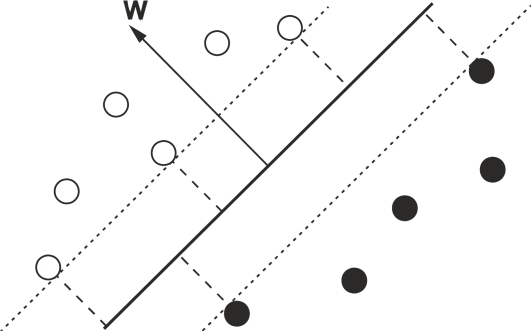
“However, in contrast to LDA, SVM selects the hyperplanes that maximize the margins, that is, the distance between the nearest training samples and the hyperplanes [236].”
MethodAn Information-Maximization Approach to Blind Separation and Blind Deconvolution
Bell, A. J., & Sejnowski, T. J. (1995) · Neural Computation · doi:10.1162/neco.1995.7.6.1129 · Cited by 8,986 · cited 1×
“Finally, s(t) and A are obtained from x(t) by means of certain algorithms, such as Infomax [162] or further modification of the Infomax [163].”
MethodBrain–computer interfaces for communication and control
Wolpaw, J. R., Birbaumer, N., McFarland, D. J., Pfurtscheller, G., & Vaughan, T. M. (2002) · Clinical Neurophysiology · doi:10.1016/s1388-2457(02)00057-3 · Cited by 7,927 · cited 2×
“Furthermore, BCI systems require real-time signal processing, and up until recently the requisite technology either did not exist or was extremely expensive [2].”
BackgroundEvent-related EEG/MEG synchronization and desynchronization: basic principles
Pfurtscheller, G., & Lopes da Silva, F. H. (1999) · Clinical Neurophysiology · doi:10.1016/s1388-2457(99)00141-8 · Cited by 7,328 · cited 1×
“Both rhythms are associated in such a way that some beta rhythms are harmonic mu rhythms, although some beta rhythms may also be independent [139].”
BackgroundStatistical pattern recognition: a review
Jain, A. K., Duin, P. W., & Mao, J. (2000) · IEEE Transactions on Pattern Analysis and Machine Intelligence · doi:10.1109/34.824819 · Cited by 6,767 · cited 1×
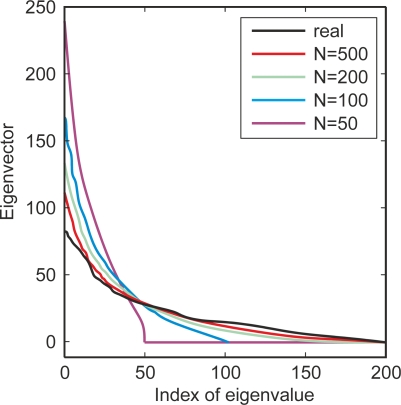
“training data needed to offer good results increases exponentially with the dimensionality of the feature vector [223].”
BackgroundThe ten-twenty electrode system of the international federation
Jasper, H. H. (1958) · Electroencephalography and Clinical Neurophysiology · Cited by 6,567
Neurophysiological investigation of the basis of the fMRI signal
Logothetis, N. K., Pauls, J., Augath, M., Trinath, T., & Oeltermann, A. (2001) · Nature · doi:10.1038/35084005 · Cited by 6,551 · cited 1×
“a correspondence between both does exist [86].”
Frequency Dependence of Signal Power and Spatial Reach of the Local Field Potential
Leski, S., Lindén, H., Tetzlaff, T., Pettersen, K. H., & Einevoll, G. T. (2013) · PubMed · doi:10.18154/rwth-conv-084442 · Cited by 3,639
Neuronal ensemble control of prosthetic devices by a human with tetraplegia
Hochberg, L. R., Serruya, M. D., Friehs, G. M., Mukand, J. A., Saleh, M., Caplan, A. H., Branner, A., Chen, D., Penn, R. D., & Donoghue, J. P. (2006) · Nature · doi:10.1038/nature04970 · Cited by 3,295 · cited 1×
“[287] implanted BrainGate sensors in the primary motor cortex of a tetraplegic patient to control a cursor.”
BackgroundFarwell, L. A., & Donchin, E. (1988) · Electroencephalography and Clinical Neurophysiology · doi:10.1016/0013-4694(88)90149-6 · Cited by 3,228 · cited 5×
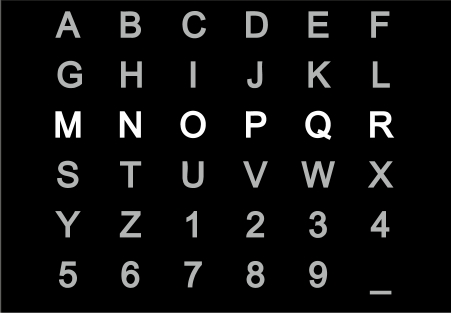
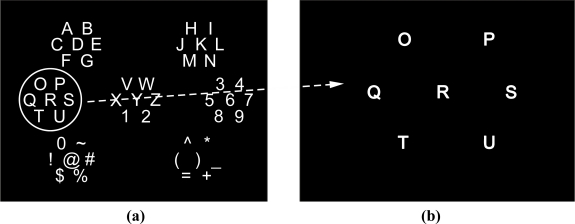
“A typical application of a BCI based on visual P300 evoked potentials comprises a matrix of letters, numbers, or other symbols or commands [123,127,128].”
BackgroundInfluential
Research works printed but not linked: 3
- Steven, L., and Giulio, T. (2009). The Neurology of Consciousness, Academic Press.
- Mellinger, 2007, An MEG-based brain-computer interface (BCI), Neuroimage, 36, 581, 10.1016/j.neuroimage.2007.03.019 · DOI · Paper page
- Tangermann, M., Krauledat, M., Grzeska, K., Sagebaum, M., Blankertz, B., Vidaurre, C., and Müller, K. (2008). Playing Pinball with non-invasive BCI. Proc. NIPS, 1641–1648.
Cited by
Items 701–800 of 1,005
Regularized Partial Least Square Regression for Continuous Decoding in Brain-Computer Interfaces
Foodeh, R., Ebadollahi, S., & Daliri, M. R. (2020) · Neuroinformatics · doi:10.1007/s12021-020-09455-x · Cited by 17
“Brain activities can be captured in a BCI system in different manners: electrophysiological signals like Electroencephalogram (EEG) (Nicolas-Alonso and Gomez-Gil 2012), Electrocorticogram (ECoG) (Shimoda et al. 2012), Local field potential (LFP) (Khorasani et al. 2016), single or multi-unit action…”
BackgroundMethodInfluentialDağdevır, E., & Tokmakçı, M. (2021) · IETE Journal of Research · doi:10.1080/03772063.2021.1914204 · Cited by 18
“…which are Intracortical Neuron Recording (IcNR), electrocorticography (ECoG), electroencephalography (EEG), magnetoencephalography (MEG), functional magnetic resonance imaging (fMRI) are used mainly to detect electrical reflections of electrochemical interactions of electrodes and neurons [6].”
BackgroundDetection of EEG-Based Eye-Blinks Using A Thresholding Algorithm
Tran, D.-K., Nguyen, T.-H., & Nguyen, T.-N. (2021) · European Journal of Engineering and Technology Research · doi:10.24018/ejeng.2021.6.4.2438 · Cited by 16
An Adaptive Task-Related Component Analysis Method for SSVEP Recognition
Oikonomou, V. P. (2022) · Sensors · doi:10.3390/s22207715 · Cited by 18
Neurocontrol: Methods, models and technologies for manipulating dynamics in the brain
Ritt, J. T., & Ching, S. (2015) · Proceedings of the ... American Control Conference/Proceedings of the American Control Conference · doi:10.1109/acc.2015.7171915 · Cited by 17
Astaras, A., Moustakas, N., Athanasiou, A., & Gogoussis, A. (2013) · Advances in Human-Computer Interaction · doi:10.1155/2013/641074 · Cited by 16
A deep learning approach to single-trial classification for P300 spellers
Nashed, N. N., Eldawlatly, S., & Aly, G. M. (2018) · Middle East Conference on Biomedical Engineering · doi:10.1109/mecbme.2018.8402397 · Cited by 17
Assessing Feedback Response With a Wearable Electroencephalography System
Qiu, J. M., Casey, M. A., & Diamond, S. G. (2019) · Frontiers in Human Neuroscience · doi:10.3389/fnhum.2019.00258 · Cited by 20
“The consumer demand for better wearable devices and more interesting metrics subsequently drove the development of low-cost, wearable neural systems that use electroencephalography (EEG), a non-invasive, highly temporal, imaging technique that monitors electrical activity of the brain through electrodes that are place…”
BackgroundAbhang, P. A., Gawali, B. W., & Mehrotra, S. C. (2016) · Elsevier eBooks · doi:10.1016/b978-0-12-804490-2.00005-1 · Cited by 16
Wang, H., Sun, Y., Li, Y., Chen, S., & Zhou, W. (2020) · Frontiers in Neuroscience · doi:10.3389/fnins.2020.00717 · Cited by 17
“Further research is being conducted on developing the EEG-Based Brain-Computer Interfaces due to its non-invasive nature, high temporal resolution, ease of acquisition, and beneficial cost-effectiveness (Nicolas-Alonso and Gomez-Gil, 2012; Al-Hudhud, 2016).”
BackgroundApplying Transfer Learning To Deep Learned Models For EEG AnalysisPreprint
Uran, A., van Gemeren, C., van Diepen, R. M., Chavarriaga, R., & Millán, J. D. R. (2019) · arXiv (Cornell University) · doi:10.48550/arxiv.1907.01332 · Cited by 16
Tapping into tongue motion to substitute or augment upper limbs
Ghovanloo, M., Sahadat, M. N., Zhang, Z., Kong, F., & Sebkhi, N. (2017) · Proceedings of SPIE, the International Society for Optical Engineering/Proceedings of SPIE · doi:10.1117/12.2262109 · Cited by 19
Investigate the Neuro Mechanisms of Stereoscopic Visual Fatigue
Yue, K., Guo, M., Liu, Y., Hu, H., Lu, K., Chen, S., & Wang, D. (2022) · IEEE Journal of Biomedical and Health Informatics · doi:10.1109/jbhi.2022.3161083 · Cited by 18
Giudice, M. L., Mammone, N., Ieracitano, C., Campolo, M., Bruna, A. R., Tomaselli, V., & Morabito, F. C. (2022) · International Joint Conference on Neural Networks (IJCNN) · doi:10.1109/ijcnn55064.2022.9892567 · Cited by 18
Majumdar, S., Al‐Habaibeh, A., Omurtag, A., Shakmak, B., & Asrar, M. (2023) · Neuroscience Informatics · doi:10.1016/j.neuri.2023.100126 · Cited by 17
Evaluation of Optimal Stimuli for SSVEP-Based Augmented Reality Brain-Computer Interfaces
Zehra, S., Mu, J., Syiem, B. V., Burkitt, A. N., & Grayden, D. B. (2023) · IEEE Access · doi:10.1109/access.2023.3297882 · Cited by 16
Mateen, N., Naeem, M., Khan, M. J., Yousaf, T., Ali, A., Altabey, W. A., Noori, M. N., & Kouritem, S. A. (2025) · Results in Engineering · doi:10.1016/j.rineng.2025.105649 · Cited by 19
A study of the effects of advanced driver assistance systems alerts on driver performance
Izquierdo-Reyes, J., Ramírez-Mendoza, R. A., & Bustamante-Bello, R. (2017) · International Journal on Interactive Design and Manufacturing (IJIDeM) · doi:10.1007/s12008-016-0368-6 · Cited by 15
Brain computer interface for gesture control of a social robot: An offline study
Abiri, R., Zhao, X., Heise, G., Jiang, Y., & Abiri, F. (2017) · Iranian Conference on Electrical Engineering · doi:10.1109/iraniancee.2017.7985231 · Cited by 18
Towards optimal visual presentation design for hybrid EEG—fTCD brain–computer interfaces
Khalaf, A. F., Sejdić, E., & Akçakaya, M. (2018) · Journal of Neural Engineering · doi:10.1088/1741-2552/aad46f · Cited by 17
Low-Cost Portable 4-Channel Wireless EEG Data Acquisition System for BCI Applications
Memon, S. A., Waheed, A., Başaklar, T., & Ider, Y. Z. (2018) · Medical Technologies Congress (TIPTEKNO) · doi:10.1109/tiptekno.2018.8597134 · Cited by 15
Initial-dip-based classification for fNIRS-BCI
Zafar, A., Ghafoor, U., Yaqub, M. A., & Hong, K. (2019) · Neural Imaging and Sensing · doi:10.1117/12.2511595 · Cited by 16
Alhakeem, Z. M., Ali, R. S., & Abd‐Alhameed, R. A. (2020) · IEEE Access · doi:10.1109/access.2020.2984538 · Cited by 15
Demazure, T., Karran, A. J., Léger, P., Labonté-LeMoyne, É., Sénécal, S., Frédette, M., & Babin, G. (2021) · Business & Information Systems Engineering · doi:10.1007/s12599-021-00701-3 · Cited by 22
Bamani, E., Kahanowich, N. D., Ben-David, I., & Sintov, A. (2021) · IEEE Robotics and Automation Letters · doi:10.1109/lra.2021.3118087 · Cited by 15
Evaluation of the User Adaptation in a BCI Game Environment
Glavas, K., Prapas, G., Tzimourta, K. D., Γιαννακέας, Ν., & Tsipouras, M. G. (2022) · Applied Sciences · doi:10.3390/app122412722 · Cited by 17
Abdullah, A. K., Zhang, C. Z., Abdullah, A., & Lian, S. (2014) · Mathematical Problems in Engineering · doi:10.1155/2014/324750 · Cited by 15
Goulart, C., Valadão, C., Caldeira, E. M. D. O., & Bastos-Filho, T. (2018) · Biotechnology Research and Innovation · doi:10.1016/j.biori.2018.11.003 · Cited by 17
An SSVEP Recognition Method by Combining Individual Template with CCA
Nwachukwu, S. E., Shi, M., Liu, C., Liu, X., Zhou, C., Chao, F., Jiang, M., Kang, P., & Li, Z. (2019) · International Conference on Innovation in Artificial Intelligence (ICIAI) · doi:10.1145/3319921.3319925 · Cited by 15
Salazar-Varas, R., & Vazquez, R. A. (2019) · Biomedical Signal Processing and Control · doi:10.1016/j.bspc.2019.101592 · Cited by 15
Shim, K.-H., Jeong, J.-H., Kwon, B.-H., Lee, B.-H., & Lee, S. (2019) · Conference proceedings/Conference proceedings - IEEE International Conference on Systems, Man, and Cybernetics · doi:10.1109/smc.2019.8914058 · Cited by 15
Enhancing lower-limb rehabilitation: a scoping review of augmented reality environment
Liu, Y., Zhang, Q., & Li, W. (2025) · Journal of NeuroEngineering and Rehabilitation · doi:10.1186/s12984-025-01643-7 · Cited by 16
“• Brain-Computer Interface (BCI) : BCIs integrate hardware and software to translate neural activity into system commands [69].”
Yadav, H., & Maini, S. (2025) · Computers in Biology and Medicine · doi:10.1016/j.compbiomed.2025.110937 · Cited by 21
Paszkiel, S., Hunek, W., & Shylenko, A. (2016) · Automation · doi:10.1007/978-3-319-29357-8_3 · Cited by 13
Recent Trends and Open Challenges in EEG Based Brain-Computer Interface Systems
Rashid, M., Sulaiman, N., Mustafa, M., Khatun, S., Bari, B. S., & Hasan, M. J. (2020) · Lecture notes in electrical engineering · doi:10.1007/978-981-15-2317-5_31 · Cited by 16
Channel Selection based Similarity Measurement for Motor Imagery Classification
Chen, S., Sun, Y., Wang, H., & Pang, Z. (2020) · IEEE International Conference on Bioinformatics and Biomedicine (BIBM) · doi:10.1109/bibm49941.2020.9313336 · Cited by 14
Data augmentation for Convolutional LSTM based brain computer interface system
Takahashi, K., Sun, Z., Solé‐Casals, J., Cichocki, A. S., Phan, A. H., Zhao, Q., Zhao, H., Deng, S., & Micheletto, R. (2022) · Applied Soft Computing · doi:10.1016/j.asoc.2022.108811 · Cited by 15
Song, M., Jeong, H., Kim, J., Jang, S.-H., & Kim, J. (2022) · Frontiers in Neurorobotics · doi:10.3389/fnbot.2022.971547 · Cited by 19
Kilani, S., Aghili, S. N., & Hulea, M. G. (2023) · Applied Sciences · doi:10.3390/app13106283 · Cited by 17
Exploiting Federated Learning for EEG-based Brain-Computer Interface System
Ghader, M., Farahani, B., Rezvani, Z., Shahsavari, M., & Fazlali, M. (2023) · IEEE International Conference on Omni-layer Intelligent Systems (COINS) · doi:10.1109/coins57856.2023.10189325 · Cited by 17
“BCIs typically use electroencephalography (EEG) signals to detect brain activity and translate it into commands for a computer system [2].”
BackgroundDecoding of imagined speech electroencephalography neural signals using transfer learning method
Mahapatra, N. C., & Bhuyan, P. (2023) · Journal of Physics Communications · doi:10.1088/2399-6528/ad0197 · Cited by 14
Cross-Subject Motor Imagery Decoding by Transfer Learning of Tactile ERD
Zhong, Y., Yao, L., Pan, G., & Wang, Y. (2024) · IEEE Transactions on Neural Systems and Rehabilitation Engineering · doi:10.1109/tnsre.2024.3358491 · Cited by 18
Multiview Contrastive Learning for Unsupervised Domain Adaptation in Brain–Computer Interfaces
Asgarian, S., Wang, Z., Wan, F., Wong, C. M., Liu, F., Mohsenzadeh, Y., Wang, B., & Ling, C. X. (2024) · IEEE Transactions on Instrumentation and Measurement · doi:10.1109/tim.2024.3366285 · Cited by 18
Brain‐to‐brain interface technology: A brief history, current state, and future goals
Vakilipour, P., & Fekrvand, S. (2024) · International Journal of Developmental Neuroscience · doi:10.1002/jdn.10334 · Cited by 15
“…and software communication strategies that translate brain signals associated with human intention and action into commands or digitalize them (Nicolas-Alonso & Gomez-Gil, 2012), and the computer – brain interface (CBI), which translates them to a physiological output (LaRocco & Paeng,…”
A Novel CNN With Sliding Window Technique for Enhanced Classification of MI-EEG Sensor Data
Singh, K. J., Singha, N., Jaswal, G., & Bhalaik, S. (2024) · IEEE Sensors Journal · doi:10.1109/jsen.2024.3515252 · Cited by 14
Zhuang, J., & Yin, G. (2017) · Chinese Control Conference (CCC) · doi:10.23919/chicc.2017.8028220 · Cited by 14
Zhao, X., Zhao, J., Cai, W., & Wu, S. (2019) · IEEE Access · doi:10.1109/access.2019.2913154 · Cited by 14
Single-Channel SSVEP-Based BCI for Robotic Car Navigation in Real World Conditions
Farmaki, C., Krana, M., Pediaditis, M., Spanakis, E. G., & Sakkalis, V. (2019) · IEEE International Conference on Bioinformatics and Bioengineering (BIBE) · doi:10.1109/bibe.2019.00120 · Cited by 14
Mehdizavareh, M. H., Hemati, S., & Hamid Soltanian-zadeh, A. (2020) · PLoS ONE · doi:10.1371/journal.pone.0226048 · Cited by 14
“ecifictraining; independent training. 2 1. Introduction Brain-computer interface (BCI) systems have been recognized as a new Communication channel for humans, especially severely disabled individuals [1, 2, 3]. One of the most important applications of BCI is character speller system which allows disabled individuals…”
BackgroundChabuda, A., Dovgialo, M., Duszyk-Bogorodzka, A., Stróż, A., Pawlisz, M., & Durka, P. J. (2020) · Acta Neurobiologiae Experimentalis · doi:10.21307/ane-2019-039 · Cited by 18
Generalizability of EEG-based Mental Attention Modeling with Multiple Cognitive Tasks
Wai, A. A. P., Dou, M., & Guan, C. (2020) · Annual International Conference of the IEEE Engineering in Medicine and Biology Society (EMBC) · doi:10.1109/embc44109.2020.9176346 · Cited by 16
Jiao, J., Hu, X., Huang, Y., Hu, J., Hsing, C., Lai, Z., Wong, C., & Xin, J. H. (2020) · PLoS ONE · doi:10.1371/journal.pone.0241378 · Cited by 15
Investigate the 3D Visual Fatigue Using Modified Depth-Related Visual Evoked Potential Paradigm
Yue, K., Wang, D., Chiu, S. C., & Liu, Y. (2020) · IEEE Transactions on Neural Systems and Rehabilitation Engineering · doi:10.1109/tnsre.2021.3049566 · Cited by 14
Mohammadi, L., Einalou, Z., Hosseinzadeh, H., & Dadgostar, M. (2021) · Journal Of Big Data · doi:10.1186/s40537-021-00456-4 · Cited by 15
Electroencephalogram (EEG) Based Imagined Speech Decoding and Recognition
Saminu, S., Xu, G., Zhang, S., Kader, I. A. E., Jabire, A. H., Karaye, I. A., Ahmad, I. S., & Abdulkarim, A. (2021) · Journal of Applied Materials and Technology · doi:10.31258/jamt.2.2.74-84 · Cited by 15
Masud, U., Saeed, T., Akram, F., Malaikah, H. M., & Akbar, A. (2022) · Sensors · doi:10.3390/s22093413 · Cited by 15
“The fundamental aim of BCI is to assist patients (particularly, in locked-in state) to interact with the living environment using only brain signals [17,18].”
BackgroundNon-Contact and Non-Intrusive Add-on IoT Device for Wireless Remote Elevator Control
Rubies, E., Bitriá, R., Clotet, E., & Palacín, J. (2023) · Applied Sciences · doi:10.3390/app13063971 · Cited by 14
Singh, A., Velagala, V. R., Kumar, T., Dutta, R. R., & Sontakke, T. R. (2023) · Cureus · doi:10.7759/cureus.42460 · Cited by 19
“The main limitations to applying DL to wearable or implantable devices include massive data computation, high power consumption, and real-time application [60].”
BackgroundActive poisoning: efficient backdoor attacks on transfer learning-based brain-computer interfaces
Jiang, X., Meng, L., Li, S., & Wu, D. (2023) · Science China Information Sciences · doi:10.1007/s11432-022-3548-2 · Cited by 17
Deep Source Semi-Supervised Transfer Learning (DS3TL) for Cross-Subject EEG Classification
Jiang, X., Meng, L., Wang, Z., & Wu, D. (2023) · IEEE Transactions on Biomedical Engineering · doi:10.1109/tbme.2023.3333327 · Cited by 20
Kee, C.-Y., Chetty, R. M. K., Khoo, B. H., & Ponnambalam, S. G. (2012) · Communications in computer and information science · doi:10.1007/978-3-642-35197-6_25 · Cited by 15
Modular multipin electrodes for comfortable dry EEG
Fiedler, P., Strohmeier, D., Hunold, A., Griebel, S., Mühle, R., Schreiber, M., Pedrosa, P., Vasconcelos, B., Fonseca, C., Vaz, F., et al. (2016) · Annual International Conference of the IEEE Engineering in Medicine and Biology Society (EMBC) · doi:10.1109/embc.2016.7592022 · Cited by 18
Bundle Gel Fibers with a Tunable Microenvironment for in Vitro Neuron Cell Guiding
Tachizawa, S., Takahashi, H., Kim, Y., Odawara, A., Pauty, J., Ikeuchi, Y., Suzuki, I., Kikuchi, A., & Matsunaga, Y. T. (2017) · ACS Applied Materials & Interfaces · doi:10.1021/acsami.7b14585 · Cited by 14
A New PC-Based Text Entry System Based on EOG Coding
Yıldız, M., & Ülkütaş, H. Ö. (2018) · Advances in Human-Computer Interaction · doi:10.1155/2018/8528176 · Cited by 15
“However, only a few words can be written per minute through the conventional EEG based systems [8].”
BackgroundDong, S., & Jeong, J. (2018) · IEEE Journal of Selected Topics in Quantum Electronics · doi:10.1109/jstqe.2018.2883890 · Cited by 16
Botrel, L., & Kübler, A. (2019) · Behavioural Brain Research · doi:10.1016/j.bbr.2019.111993 · Cited by 17
Frequency Superposition – A Multi-Frequency Stimulation Method in SSVEP-based BCIs
Mu, J., Grayden, D. B., Tan, Y., & Oetomo, D. (2021) · Annual International Conference of the IEEE Engineering in Medicine and Biology Society (EMBC) · doi:10.1109/embc46164.2021.9630511 · Cited by 14
EEG signal processing in brain–computer interface
Garcés, M. A., & Orosco, L. L. (2008) · Elsevier eBooks · doi:10.1016/b978-0-12-812892-3.00005-4 · Cited by 15
Making brain-computer interfaces better : improving usability through post-processing
Bos, D. P.-O. (2014) · doi:10.3990/1.9789036537797 · Cited by 48
MXene-Based Microneedle Electrode for Brain–Computer Interface in Diverse Scenarios
Chen, Y., Fan, Z., Shi, N., Cheng, B., Huang, C., Liu, X., Gao, X., & Liu, R. (2025) · ACS Applied Materials & Interfaces · doi:10.1021/acsami.5c03798 · Cited by 16
Organic Bioelectronics: Diversity of Electronics Along with Biosciences
Moiz, S. A., Alshaikh, M. S., & Alahmadi, A. N. M. (2025) · Biosensors · doi:10.3390/bios15090587 · Cited by 17
Modern Technologies Supporting Motor Rehabilitation After Stroke: A Narrative Review
Moskiewicz, D., & Sarzyńska-Długosz, I. M. (2025) · Journal of Clinical Medicine · doi:10.3390/jcm14228035 · Cited by 18
Toward Parametric Security Analysis of Machine Learning Based Cyber Forensic Biometric Systems
Sadeghi, K., Banerjee, A., Sohankar, J., & Gupta, S. K. S. (2016) · International Conference on Machine Learning and Applications · doi:10.1109/icmla.2016.0110 · Cited by 13
Sayılgan, E., Yüce, Y. K., & İşler, Y. (2021) · Journal of Intelligent Systems with Applications · doi:10.54856/jiswa.202105160 · Cited by 13
Boustani, G. A., Weiß, L. J. K., Li, H., Meyer, S. M., Hiendlmeier, L., Rinklin, P., Menze, B. H., Hemmert, W., & Wolfrum, B. L. (2022) · Frontiers in Human Neuroscience · doi:10.3389/fnhum.2022.809293 · Cited by 14
“, in diagnostics, rehabilitation, machine control, entertainment, and safety (Allison et al., 2010; Blankertz et al., 2010; Brumberg et al., 2010; Nicolas-Alonso and Gomez-Gil, 2012; Hong and Khan, 2017).”
BackgroundVirk, T., Letendre, T., & Pathman, T. (2023) · Neuropsychologia · doi:10.1016/j.neuropsychologia.2023.108779 · Cited by 16
Guo, M., Feng, L., Chen, X., Li, M., & Xu, G. (2024) · Biomedical Signal Processing and Control · doi:10.1016/j.bspc.2024.106448 · Cited by 16
Weh, L. (2024) · NanoEthics · doi:10.1007/s11569-024-00457-6 · Cited by 16
“As “artificial intelligence system[s] that can recognize [and interact with] a certain set of patterns in brain signals” ([85], p. 1212), widely applied BCIs would bear an especially disruptive potential for the social realities of their users and surrounding environments, for example in automated…”
Review of Multimodal Data Acquisition Approaches for Brain–Computer Interfaces
Ghosh, S., Máthé, D., Bhuvana, H. P., Sankarapillai, P., Mohan, A., Bhuvanakantham, R., Gulyás, B. Z., & Padmanabhan, P. (2024) · BioMed · doi:10.3390/biomed4040041 · Cited by 17
An incremental framework for classification of EEG signals using quantum particle swarm optimization
Hassani, K., & Lee, W. (2014) · IEEE International Conference on Computational Intelligence and Virtual Environments for Measurement Systems and Applications (CIVEMSA) · doi:10.1109/civemsa.2014.6841436 · Cited by 14
Feature extraction of SSVEP-based brain-computer interface with ICA and HHT method
Ruan, X., Xue, K., & Li, M. (2014) · World Congress on Intelligent Control and Automation · doi:10.1109/wcica.2014.7053100 · Cited by 13
Botrel, L., Acqualagna, L., Blankertz, B., & Kübler, A. (2017) · International Journal of Psychophysiology · doi:10.1016/j.ijpsycho.2017.08.007 · Cited by 14
Investigating the effect of user profile during training for BCI-based games
Vourvopoulos, A., Niforatos, E., Hlinka, M., Škola, F., & Liarokapis, F. (2017) · International Conference on Virtual Worlds and Games for Serious Applications (VS-Games) · doi:10.1109/vs-games.2017.8056579 · Cited by 13
Single-Trial Decoding of Scalp EEG under Natural Conditions
Tuckute, G., Hansen, S. T., Pedersen, N., Steenstrup, D., & Hansen, L. K. (2019) · Computational Intelligence and Neuroscience · doi:10.1155/2019/9210785 · Cited by 14
“EEGbased decoding of human brain activity has significant potential due to excellent time resolution and the possibility of real-life acquisition; however, the signal is extremely diverse, subject-specific, sensitive to disturbances, and has a low signal-to-noise ratio; hence, posing amajor challenge for both signal p…”
Tao, J., Yin, Z., Liu, L., Tian, Y., Sun, Z., & Zhang, J. (2019) · Symmetry · doi:10.3390/sym11070944 · Cited by 14
“In medium size classification applications [25], the training speed of the ELM classifier was significantly higher than the SVM using a radial basis kernel function [26] and the back-propagation (BP) neural networks.”
MethodSpeech Imagery Classification using Length-Wise Training based on Deep Learning
Lee, B.-H., Kwon, B.-H., Lee, D.-Y., & Jeong, J.-H. (2021) · International Winter Conference on Brain-Computer Interface (BCI) · doi:10.1109/bci51272.2021.9385347 · Cited by 13
Zhang, X., Hui, L., Wei, L., Song, F., & Hu, F. (2021) · International Journal of Environmental Research and Public Health · doi:10.3390/ijerph18147567 · Cited by 14
Towards a role-based authentication system based on SSVEP-P300 hybrid brain–computer interfacing
Rathi, N., Singla, R. K., & Tiwari, S. (2021) · Behaviour and Information Technology · doi:10.1080/0144929x.2021.1979655 · Cited by 14
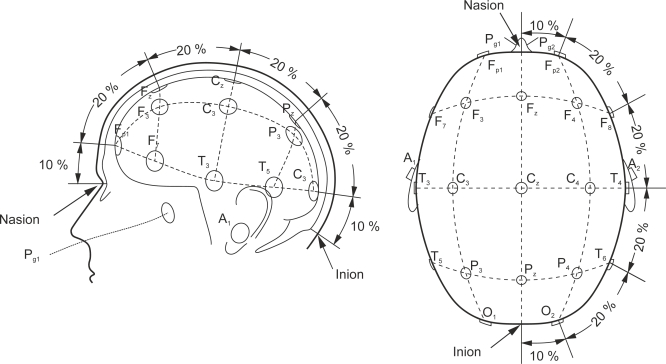
“EEG data were recorded at a sampling rate of 512 Hz based on the international 10 – 20 electrode placement system (Figure 3) standardised by the American Encephalographic Society (Nicolas-Alonso and Gomez-Gil 2012).”
MethodA Transfer Learning Method based on VGG-16 Convolutional Neural Network for MI Classification
Li, M., & Xu, D. (2021) · Chinese Control and Decision Conference (CCDC) · doi:10.1109/ccdc52312.2021.9602818 · Cited by 13
On the meaning of Hurst entropy applied to EEG data series
Díaz, H., & Córdova, F. M. (2022) · Procedia Computer Science · doi:10.1016/j.procs.2022.01.175 · Cited by 13
The CoDIS Taxonomy for Brain-Computer Interface Games Controlled by Electroencephalography
Vasiljevic, G. A. M., & de Miranda, L. C. (2023) · International Journal of Human-Computer Interaction · doi:10.1080/10447318.2023.2203006 · Cited by 15
“It is usually related to the Alpha and Theta bands, as they are more prevalent when the user is in a resting state (Ferreira, de Miranda, de Miranda, & Sakamoto, 2013; Nicolas-Alonso & Gomez-Gil, 2012).”
InfluentialA Naïve Bayesian approach to lower limb classification from EEG signals
Rakshit, A., Khasnobish, A., & Tibarewala, D. N. (2016) · International Conference on Control, Instrumentation, Energy & Communication · doi:10.1109/ciec.2016.7513812 · Cited by 13
Sullivan, L. S., & Illes, J. (2016) · Brain-Computer Interfaces · doi:10.1080/2326263x.2016.1213603 · Cited by 15
EEG-Based Emotion Recognition Using a Wrapper-Based Feature Selection Method
AbdelAal, M. A., Alsawy, A. A., & Hefny, H. A. (2017) · Advances in intelligent systems and computing · doi:10.1007/978-3-319-64861-3_23 · Cited by 13
Prediction of individual finger movements for motor execution and imagery: An EEG study
Hayashi, T., Yokoyama, H., Nambu, I., & Wada, Y. (2017) · Conference proceedings/Conference proceedings - IEEE International Conference on Systems, Man, and Cybernetics · doi:10.1109/smc.2017.8123088 · Cited by 13
An EEG Brain-Computer Interface to Classify Motor Imagery Signals
Andrade, M. K. D. S., de Santana, M. A., Moreno, G. M. M., Oliveira, I., Santos, J. V. P., Rodrigues, M. C. A., & dos Santos, W. P. (2019) · Series in bioengineering · doi:10.1007/978-981-13-9097-5_5 · Cited by 16
Khademi, S., Neghabi, M., Farahi, M., Shirzadi, M., & Marateb, H. R. (2022) · Elsevier eBooks · doi:10.1016/b978-0-323-91197-9.00004-7 · Cited by 16
Optical imaging spectroscopy for rapid, primary screening of SARS-CoV-2: a proof of concept
Gómez-González, E., Barriga‐Rivera, A., Fernández‐Muñoz, B., Navas-Garcia, J. M., Fernández-Lizaranzu, I., Munoz-Gonzalez, F. J., Giráldez, R. P., Requena-Lancharro, D., Gil-Gamboa, P., Rosell‐Valle, C., et al. (2022) · Scientific Reports · doi:10.1038/s41598-022-06393-3 · Cited by 14
A Review on Visual Brain Computer Interface
Kapgate, D. D., & Kalbande, D. R. (2015) · Lecture notes in bioengineering · doi:10.1007/978-81-322-2256-9_18 · Cited by 16
Characterizing Computer Access Using a One-Channel EEG Wireless Sensor
Molina-Cantero, A. J., Guerrero-Cubero, J., Gómez, I., Merino-Monge, M., & Silva-Silva, J. (2017) · Sensors · doi:10.3390/s17071525 · Cited by 14
Metadata
- Authors
- Nicolas-Alonso, L. F., & Gomez-Gil, J.
- Affiliations
- Universidad de Valladolid (ES)
- Department of Signal Theory, Communications and Telematics Engineering, University of Valladolid, Valladolid 47011, Spain
- Corresponding author
- Nicolas-Alonso, Luis Fernando
- Venue
- Sensors
- Publisher
- MDPI AG
- Published
- 2012-01-31
- Volume
- 12
- Issue
- 2
- Pages
- 1211-1279
- ISSN
- 1424-8220 (ISSN-L)
- PMC
- PMC3304110
- OpenAlex
- W2128909182
- Cited by
- 2,143
- References
- 325
- Citations by year
- 2026: 137 · 2025: 186 · 2024: 178 · 2023: 181 · 2022: 201 · 2021: 220 · 2020: 185 · 2019: 185 · 2018: 177 · 2017: 134 · 2016: 118 · 2015: 91 · 2014: 78 · 2013: 48 · 2012: 20
- FWCI
- 5.81
- Type
- journal article
- Language
- en
- Open access
- gold
- doi.org
- Licence
- Locations
- Sensors (publishedVersion, cc-by)
- PubMed Central (publishedVersion, cc-by)
- PubMed (publishedVersion)
- Hispana (publishedVersion, cc-by)
- DOAJ (DOAJ: Directory of Open Access Journals) (submittedVersion, cc-by-sa)
- University of Valladolid Documentary Repository (University of Valladolid) (submittedVersion, cc-by)
- Topics
- Life Sciences › Neuroscience › Cognitive Neuroscience › EEG and Brain-Computer Interfaces
- Physical Sciences › Computer Science › Human-Computer Interaction › Gaze Tracking and Assistive Technology
- Physical Sciences › Engineering › Biomedical Engineering › Muscle activation and electromyography studies
- Keywords
- brain-computer interface, neuroimaging, electrophysiological signals, signal preprocessing, artifact removal, feature extraction, brain signal classification, paralysis, locked-in syndrome, amyotrophic lateral sclerosis, spinal cord injury, brain-computer interface applications
- MeSH terms
- Algorithms, Brain, Electroencephalography, Humans, Man-Machine Systems, Pattern Recognition, Automated, Signal Processing, Computer-Assisted, Transducers, User-Computer Interface
About these checks
Registry, retraction, Cites and statistics results are computed, not judged, with one exception: a printed reference that no index lists is read once by a model before it counts as a citation error. Claims are extracted by a model and kept only when their quote appears verbatim in the text; each cited source is then checked, with a model’s help, for whether it says what the claim relies on. Those verdicts can be wrong — read the claim’s quote and the cited source before relying on one.
Statistics and arithmetic are recomputed, not judged.
Confidence bands are shown only for fields calibrated on our annotated test set. None is calibrated yet, so no band is shown.
What counts as a claim ›How we measure confidence ›How we check this ›
Are you an author, or do you see a problem with this page? Request a review
Data sources
Bibliographic data: Semantic Scholar, OpenAlex, Crossref.
Contains information from the Semantic Scholar Academic Graph Datasets, made available under the ODC Attribution License (ODC-BY 1.0).
Semantic Scholar’s data is described in: Kinney, R., et al. (2023). The Semantic Scholar Open Data Platform. arXiv:2301.10140.
