

Brain Computer Interfaces, a Review
Open accessThe DOI matches its Crossref record; 322 of the 325 references it cites were found in a registry or an index.
Abstract
A brain-computer interface (BCI) is a hardware and software communications system that permits cerebral activity alone to control computers or external devices. The immediate goal of BCI research is to provide communications capabilities to severely disabled people who are totally paralyzed or ‘locked in’ by neurological neuromuscular disorders, such as amyotrophic lateral sclerosis, brain stem stroke, or spinal cord injury. Here, we review the state-of-the-art of BCIs, looking at the different steps that form a standard BCI: signal acquisition, preprocessing or signal enhancement, feature extraction, classification and the control interface. We discuss their advantages, drawbacks, and latest advances, and we survey the numerous technologies reported in the scientific literature to design each step of a BCI. First, the review examines the neuroimaging modalities used in the signal acquisition step, each of which monitors a different functional brain activity such as electrical, magnetic or metabolic activity. Second, the review discusses different electrophysiological control signals that determine user intentions, which can be detected in brain activity. Third, the review includes some techniques used in the signal enhancement step to deal with the artifacts in the control signals and improve the performance. Fourth, the review studies some mathematic algorithms used in the feature extraction and classification steps which translate the information in the control signals into commands that operate a computer or other device. Finally, the review provides an overview of various BCI applications that control a range of devices.
Overview
The claims and statistics of this paper haven’t been checked yet.
Free: it reads the open-access text and checks the first 5 claims that cite a source we can check. Create a free account to check every claim.
Integrity signals
Registry
Cites
Statistics
Figures
Verification
Claims the paper makes
The claims and statistics of this paper haven’t been checked yet.
Free: it reads the open-access text and checks the first 5 claims that cite a source we can check. Create a free account to check every claim.
Claims other papers make about this one
Each is checked against this paper’s own text: does it say what the citing paper says it does?
The source backs part of the claim, not all of it — or backs it for a different population, condition or comparison.
In the citing paper
“Noninvasive EEG based BCI could potentially serve the needs of a large population10.”
From Noninvasive Electroencephalogram Based Control of a Robotic Arm for Reach and Grasp Tasks (2016) · cites this paper as [10]
Experimental — accuracy not yet measuredThe cited source says what the claim attributes to it.
In the citing paper
“this response can be used as a neural signal in EEG-based brain-computer interfaces (BCIs), enabling direct communication between the brain and surroundings without the involvement of peripheral nerves or muscles (Nicolas-Alonso and Gomez-Gil, 2012).”
From A Lightweight Multi-Scale Convolutional Neural Network for P300 Decoding: Analysis of Training Strategies and Uncovering of Network Decision (2021) · cites this paper as Nicolas-Alonso and Gomez-Gil, 2012
The check wasn’t confident either way, so it gives no verdict — never disputed.
In the citing paper
“Among others, external influences such as stress, emotion, and work impact these metrics and can be used to infer those [162].”
From A Survey on Measuring Cognitive Workload in Human-Computer Interaction (2023) · cites this paper as [162]
Experimental — accuracy not yet measured
Self-check
Percentages, sums and reported differences re-computed from the paper’s own numbers.
The self-check needs the paper’s full text.
Citations
Cites
A Tutorial on Support Vector Machines for Pattern Recognition
Burges, C. J. C. (1998) · Data Mining and Knowledge Discovery · doi:10.1023/a:1009715923555 · Cited by 16,429 · cited 1×
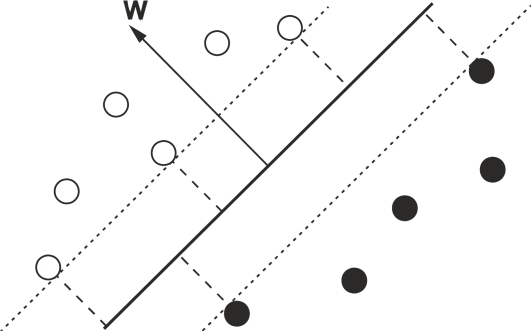
“However, in contrast to LDA, SVM selects the hyperplanes that maximize the margins, that is, the distance between the nearest training samples and the hyperplanes [236].”
MethodAn Information-Maximization Approach to Blind Separation and Blind Deconvolution
Bell, A. J., & Sejnowski, T. J. (1995) · Neural Computation · doi:10.1162/neco.1995.7.6.1129 · Cited by 8,986 · cited 1×
“Finally, s(t) and A are obtained from x(t) by means of certain algorithms, such as Infomax [162] or further modification of the Infomax [163].”
MethodBrain–computer interfaces for communication and control
Wolpaw, J. R., Birbaumer, N., McFarland, D. J., Pfurtscheller, G., & Vaughan, T. M. (2002) · Clinical Neurophysiology · doi:10.1016/s1388-2457(02)00057-3 · Cited by 7,927 · cited 2×
“Furthermore, BCI systems require real-time signal processing, and up until recently the requisite technology either did not exist or was extremely expensive [2].”
BackgroundEvent-related EEG/MEG synchronization and desynchronization: basic principles
Pfurtscheller, G., & Lopes da Silva, F. H. (1999) · Clinical Neurophysiology · doi:10.1016/s1388-2457(99)00141-8 · Cited by 7,328 · cited 1×
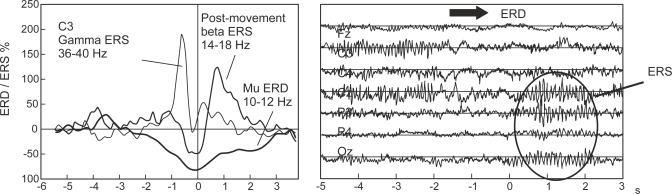
“Both rhythms are associated in such a way that some beta rhythms are harmonic mu rhythms, although some beta rhythms may also be independent [139].”
BackgroundStatistical pattern recognition: a review
Jain, A. K., Duin, P. W., & Mao, J. (2000) · IEEE Transactions on Pattern Analysis and Machine Intelligence · doi:10.1109/34.824819 · Cited by 6,767 · cited 1×
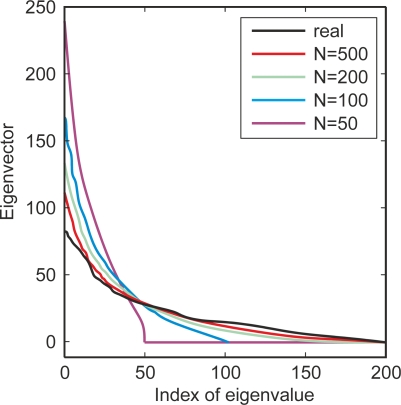
“training data needed to offer good results increases exponentially with the dimensionality of the feature vector [223].”
BackgroundThe ten-twenty electrode system of the international federation
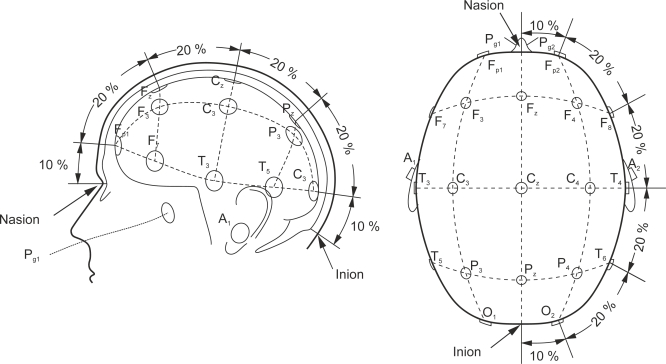
Jasper, H. H. (1958) · Electroencephalography and Clinical Neurophysiology · Cited by 6,567
Neurophysiological investigation of the basis of the fMRI signal
Logothetis, N. K., Pauls, J., Augath, M., Trinath, T., & Oeltermann, A. (2001) · Nature · doi:10.1038/35084005 · Cited by 6,551 · cited 1×
“a correspondence between both does exist [86].”
Frequency Dependence of Signal Power and Spatial Reach of the Local Field Potential
Leski, S., Lindén, H., Tetzlaff, T., Pettersen, K. H., & Einevoll, G. T. (2013) · PubMed · doi:10.18154/rwth-conv-084442 · Cited by 3,639
Neuronal ensemble control of prosthetic devices by a human with tetraplegia
Hochberg, L. R., Serruya, M. D., Friehs, G. M., Mukand, J. A., Saleh, M., Caplan, A. H., Branner, A., Chen, D., Penn, R. D., & Donoghue, J. P. (2006) · Nature · doi:10.1038/nature04970 · Cited by 3,295 · cited 1×
“[287] implanted BrainGate sensors in the primary motor cortex of a tetraplegic patient to control a cursor.”
BackgroundFarwell, L. A., & Donchin, E. (1988) · Electroencephalography and Clinical Neurophysiology · doi:10.1016/0013-4694(88)90149-6 · Cited by 3,228 · cited 5×
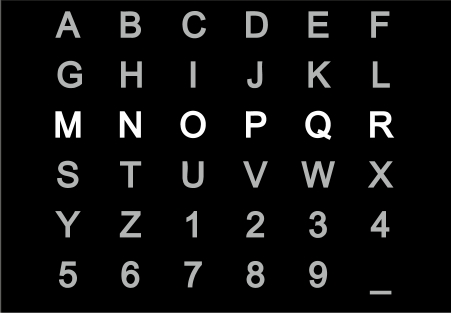
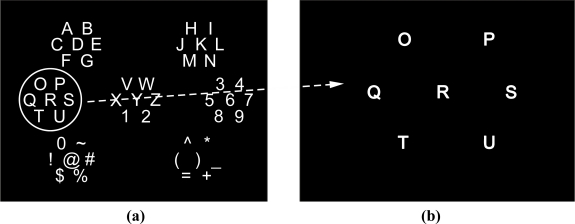
“A typical application of a BCI based on visual P300 evoked potentials comprises a matrix of letters, numbers, or other symbols or commands [123,127,128].”
BackgroundInfluential
Research works printed but not linked: 3
- Steven, L., and Giulio, T. (2009). The Neurology of Consciousness, Academic Press.
- Mellinger, 2007, An MEG-based brain-computer interface (BCI), Neuroimage, 36, 581, 10.1016/j.neuroimage.2007.03.019 · DOI · Paper page
- Tangermann, M., Krauledat, M., Grzeska, K., Sagebaum, M., Blankertz, B., Vidaurre, C., and Müller, K. (2008). Playing Pinball with non-invasive BCI. Proc. NIPS, 1641–1648.
Cited by
Items 301–400 of 1,005
Assisted closed-loop optimization of SSVEP-BCI efficiency
Fernández-Vargas, J., Pfaff, H. U., Rodríguez, F. B., & Varona, P. (2013) · Frontiers in Neural Circuits · doi:10.3389/fncir.2013.00027 · Cited by 65
Real movement vs. motor imagery in healthy subjects
Höller, Y., Bergmann, J., Kronbichler, M., Crone, J. S., Schmid, E. V., Thomschewski, A. C., Butz, K. H. G., Schütze, V., Höller, P., & Trinka, E. (2012) · International Journal of Psychophysiology · doi:10.1016/j.ijpsycho.2012.10.015 · Cited by 58
Wittevrongel, B., Wolputte, E. V., & Hulle, M. M. V. (2017) · Scientific Reports · doi:10.1038/s41598-017-15373-x · Cited by 46
A Parallel Feature Fusion Network Combining GRU and CNN for Motor Imagery EEG Decoding
Gao, S., Yang, J. L., Shen, T., & Jiang, W. (2022) · Brain Sciences · doi:10.3390/brainsci12091233 · Cited by 48
“In general, a typical non-invasive BCI consists of five main processing stages [11]: EEG data acquisition, data preprocessing, feature extraction, pattern recognition, and control of external devices.”
BackgroundSaid, R. R., Heyat, M. B. B., Song, K., Tian, C., & Wu, Z. (2022) · Biosensors · doi:10.3390/bios12121134 · Cited by 55
Adaptive Laplacian filtering for sensorimotor rhythm-based brain–computer interfaces
Lu, J., McFarland, D. J., & Wolpaw, J. R. (2012) · Journal of Neural Engineering · doi:10.1088/1741-2560/10/1/016002 · Cited by 50
“On the other hand, endogenous BCIs take much longer time for training, but they are independent of any stimulation and can be operated at will (Pfurtscheller and Scherer 2010, Nicolas-Alonso and Gomez-Gil 2012).”
BackgroundClassification of EEG signals for brain-computer interface applications: Performance comparison
Ilyas, M. Z., Saad, P., Ahmad, M. I., & Ghani, A. R. I. (2016) · International Conference on Robotics, Automation and Sciences (ICORAS) · doi:10.1109/icoras.2016.7872610 · Cited by 47
Tahernezhad-Javazm, F., Azimirad, V., & Shoaran, M. (2017) · Journal of Neural Engineering · doi:10.1088/1741-2552/aa8063 · Cited by 49
Alazrai, R., Alwanni, H., Baslan, Y., Alnuman, N., & Daoud, M. I. (2017) · Sensors · doi:10.3390/s17091937 · Cited by 46
Jeong, J.-H., Lee, B.-H., Lee, D.-H., Yun, Y., & Lee, S. (2020) · IEEE Access · doi:10.1109/access.2020.2983182 · Cited by 48
An end-to-end CNN with attentional mechanism applied to raw EEG in a BCI classification task
Lashgari, E., Ott, J., Connelly, A., Baldi, P., & Maoz, U. (2021) · Journal of Neural Engineering · doi:10.1088/1741-2552/ac1ade · Cited by 49
Regulating AI and Robotics: Ethical and Legal Challenges
Ebers, M. (2020) · Algorithms and Law · doi:10.1017/9781108347846.003 · Cited by 44
Decoding the direction of imagined visual motion using 7 T ultra-high field fMRI
Emmerling, T. C., Zimmermann, J., Sorger, B., Frost, M. A., & Goebel, R. (2015) · NeuroImage · doi:10.1016/j.neuroimage.2015.10.022 · Cited by 46
User-customized brain computer interfaces using Bayesian optimization
Bashashati, H., Ward, R. K., & Bashashati, A. (2016) · Journal of Neural Engineering · doi:10.1088/1741-2560/13/2/026001 · Cited by 49
Zafar, R., Dass, S. C., & Malik, A. S. (2017) · PLoS ONE · doi:10.1371/journal.pone.0178410 · Cited by 47
Towards Rehabilitation Robotics: Off-the-Shelf BCI Control of Anthropomorphic Robotic Arms
Athanasiou, A., Xygonakis, I., Pandria, N., Kartsidis, P. E., Arfaras, G., Kavazidi, K. R., Foroglou, N., Astaras, A., & Bamidis, P. D. (2017) · BioMed Research International · doi:10.1155/2017/5708937 · Cited by 50
Brain-Computer Interface with Corrupted EEG Data: a Tensor Completion Approach
Solé‐Casals, J., Caiafa, C. F., Zhao, Q., & Cichocki, A. S. (2018) · Cognitive Computation · doi:10.1007/s12559-018-9574-9 · Cited by 46
Salgado, D. P., Martins, F. R., Rodrigues, T. B., Keighrey, C., Flynn, R., Naves, E. L. M., & Murray, N. (2018) · ACM Multimedia Systems Conference (MMSys) · doi:10.1145/3204949.3208118 · Cited by 48
“Beta waves (13 – 40 Hz) represent alertness, agitation and emotional influence, and gamma waves (40 – 100 Hz) are related to motor functions and higher mental activity [21].”
BackgroundBrain–Machine Interfaces: Basis and Advances
Becedas, J. (2012) · IEEE Transactions on Systems Man and Cybernetics Part C (Applications and Reviews) · doi:10.1109/tsmcc.2012.2203301 · Cited by 53
A Generic Transferable EEG Decoder for Online Detection of Error Potential in Target Selection
Bhattacharyya, S., Konar, A., Tibarewala, D. N., & Hayashibe, M. (2017) · Frontiers in Neuroscience · doi:10.3389/fnins.2017.00226 · Cited by 43
Adam, A., Ibrahim, Z., Mokhtar, N. B., Shapiai, M. I., Mubin, M. B., & Saad, I. (2016) · SpringerPlus · doi:10.1186/s40064-016-3277-z · Cited by 50
Oosugi, N., Kitajo, K., Hasegawa, N., Nagasaka, Y., Okanoya, K., & Fujii, N. (2017) · Neural Networks · doi:10.1016/j.neunet.2017.01.005 · Cited by 44
Decoding hand kinematics from population responses in sensorimotor cortex during grasping
Okorokova, E. V., Goodman, J. M., Hatsopoulos, N. G., & Bensmaïa, S. J. (2020) · Journal of Neural Engineering · doi:10.1088/1741-2552/ab95ea · Cited by 45
Nazeer, H., Naseer, N., Mehboob, A., Khan, M. J., Khan, R. A., Khan, U. S., & Ayaz, Y. (2020) · Sensors · doi:10.3390/s20236995 · Cited by 45
Rivera-Flor, H., Gurve, D., Floriano, A. S. D. P., Delisle-Rodríguez, D., de Mello, R. C., & Bastos-Filho, T. (2022) · IEEE Transactions on Instrumentation and Measurement · doi:10.1109/tim.2022.3218102 · Cited by 45
A Generalizable Brain-Computer Interface (BCI) Using Machine Learning for Feature Discovery
Nurse, E. S., Karoly, P. J., Grayden, D. B., & Freestone, D. R. (2015) · PLOS ONE · doi:10.1371/journal.pone.0131328 · Cited by 42
Brain network analysis of EEG functional connectivity during imagery hand movements
Demuru, M., Fara, F., & Fraschini, M. (2013) · Journal of Integrative Neuroscience · doi:10.1142/s021963521350026x · Cited by 44
A visual parallel-BCI speller based on the time–frequency coding strategy
Xu, M., Chen, L., Zhang, L., Qi, H., Ma, L., Tang, J., Wan, B., & Ming, D. (2014) · Journal of Neural Engineering · doi:10.1088/1741-2560/11/2/026014 · Cited by 46
Morillo, L. M. S., Álvarez-García, J. A., Abril, L. G., & Ramírez, J. A. O. (2016) · BioMedical Engineering OnLine · doi:10.1186/s12938-016-0181-2 · Cited by 47
Decoding Imagined Speech using Wavelet Features and Deep Neural Networks
Panachakel, J. T., Ramakrishnan, A. G., & Ananthapadmanabha, T. V. (2019) · 2019 IEEE 16th India Council International Conference (INDICON) · doi:10.1109/indicon47234.2019.9028925 · Cited by 41
Motor-Imagery Classification Using Riemannian Geometry with Median Absolute Deviation
Miah, A. S. M., Rahim, M. A., & Shin, J. (2020) · Electronics · doi:10.3390/electronics9101584 · Cited by 49
“, visually-evoked potential, P300 response, slow cortical potentials, and sensorimotor rhythm [13].”
BackgroundRashid, M., Bari, B. S., Hasan, M. J., Razman, M. A. M., Musa, R. M., Nasir, A. F. A., & Majeed, A. P. P. A. (2021) · PeerJ Computer Science · doi:10.7717/peerj-cs.374 · Cited by 50
Brain-Computer Interface Speller System for Alternative Communication: A Review
Kundu, S., & Ari, S. (2021) · IRBM · doi:10.1016/j.irbm.2021.07.001 · Cited by 48
Ali, O., Saif-ur-Rehman, M., Dyck, S., Glasmachers, T., Iossifidis, I., & Klaes, C. (2022) · Scientific Reports · doi:10.1038/s41598-022-07992-w · Cited by 55
“In this study, we focus on non-invasive BCI systems using EEG signals to decode movement related information 14 .”
MethodBenchmarking Brain-Computer Interfaces Outside the Laboratory: The Cybathlon 2016
Novak, D., Sigrist, R., Gerig, N. J., Wyss, D., Bauer, R., Götz, U., & Riener, R. (2018) · Frontiers in Neuroscience · doi:10.3389/fnins.2017.00756 · Cited by 41
Superhuman Enhancements via Implants: Beyond the Human Mind
Warwick, K. (2020) · Philosophies · doi:10.3390/philosophies5030014 · Cited by 45
Hwang, J., Park, S., & Chi, J. (2023) · Electronics · doi:10.3390/electronics12051186 · Cited by 47
CSP-Net: Common spatial pattern empowered neural networks for EEG-based motor imagery classification
Jiang, X., Meng, L., Chen, X., Xu, Y., & Wu, D. (2024) · Knowledge-Based Systems · doi:10.1016/j.knosys.2024.112668 · Cited by 56
“Electroencephalogram (EEG), which records the electrical activities on the scalp of the brain, is the most widely used input signal in non-invasive BCIs due to its affordability and convenience [2].”
The brain-computer interface researcher’s questionnaire: from research to application
Vansteensel, M. J., Kristo, G., Aarnoutse, E. J., & Ramsey, N. F. (2017) · Brain-Computer Interfaces · doi:10.1080/2326263x.2017.1366237 · Cited by 46
Rapp, A. (2019) · Computers & Education · doi:10.1016/j.compedu.2019.103725 · Cited by 45
Automatic and Direct Identification of Blink Components from Scalp EEG
Kong, W., Zhou, Z., Hu, S., Zhang, J., Babiloni, F., & Dai, G. (2013) · Sensors · doi:10.3390/s130810783 · Cited by 44
Ubiquitous computer aided design: A broken promise or a Sleeping Beauty?
Horváth, I., & Vroom, R. W. (2014) · Computer-Aided Design · doi:10.1016/j.cad.2014.10.006 · Cited by 46
Davoudi, A., Ghidary, S. S., & Sadatnejad, K. (2017) · Journal of Neural Engineering · doi:10.1088/1741-2552/aa61bb · Cited by 45
An emergency call system for patients in locked‐in state using an SSVEP‐based brain switch
Lim, J., Kim, Y., Lee, J., An, K.-O., Hwang, H., Cha, H., Han, C. H., & Im, C. (2017) · Psychophysiology · doi:10.1111/psyp.12916 · Cited by 41
Ensemble Learning Based Brain–Computer Interface System for Ground Vehicle Control
Zhuang, J., Geng, K., & Yin, G. (2019) · IEEE Transactions on Systems Man and Cybernetics Systems · doi:10.1109/tsmc.2019.2955478 · Cited by 47
CNN With Large Data Achieves True Zero-Training in Online P300 Brain-Computer Interface
Lee, J., Won, K., Kwon, M., Jun, S. C., & Ahn, M. (2020) · IEEE Access · doi:10.1109/access.2020.2988057 · Cited by 40
Genetic algorithm for feature selection of EEG heterogeneous data
Saibene, A., & Gasparini, F. (2023) · Expert Systems with Applications · doi:10.1016/j.eswa.2022.119488 · Cited by 42
Huang, W., Yan, G., Chang, W., Zhang, Y., & Yuan, Y. (2023) · Pattern Recognition · doi:10.1016/j.patcog.2023.109838 · Cited by 43
Yoo, P. E., John, S. E., Farquharson, S., Cleary, J. O., Wong, Y. T., Ng, A., Mulcahy, C. B., Grayden, D. B., Ordidge, R. J., Opie, N. L., et al. (2017) · NeuroImage · doi:10.1016/j.neuroimage.2017.03.002 · Cited by 45
Hossain, I., Khosravi, A., Hettiarachchi, I. T., & Nahavandi, S. (2018) · Computational Intelligence and Neuroscience · doi:10.1155/2018/6323414 · Cited by 42
A Robust Low-Cost EEG Motor Imagery-Based Brain-Computer Interface
Yohanandan, S. A. C., Kiral-Kornek, I., Tang, J., Mshford, B. S., Asif, U., & Harrer, S. (2018) · Annual International Conference of the IEEE Engineering in Medicine and Biology Society (EMBC) · doi:10.1109/embc.2018.8513429 · Cited by 40
“This configuration covers the sensorimotor region, which is recommended for high-quality μ-rhythm detection [7].”
BackgroundInfluentialGhaffar, M. S. B. A., Khan, U. S., Iqbal, J., Rashid, N., Hamza, A., Qureshi, W. S., Tiwana, M. I., & Izhar, U. (2020) · Infrared Physics & Technology · doi:10.1016/j.infrared.2020.103589 · Cited by 45
Filter Bank-Driven Multivariate Synchronization Index for Training-Free SSVEP BCI
Qin, K., Wang, R., & Zhang, Y. (2021) · IEEE Transactions on Neural Systems and Rehabilitation Engineering · doi:10.1109/tnsre.2021.3073165 · Cited by 42
A novel multi-scale convolutional neural network for motor imagery classification
Riyad, M., Khalil, M., & Adib, A. (2021) · Biomedical Signal Processing and Control · doi:10.1016/j.bspc.2021.102747 · Cited by 39
Brain-controlled muscle stimulation for the restoration of motor function
Éthier, C., & Miller, L. E. (2014) · Neurobiology of Disease · doi:10.1016/j.nbd.2014.10.014 · Cited by 46
Development of an Autonomous BCI Wheelchair
Ng, D. W.-K., Soh, Y. W., & Goh, S.-Y. (2014) · doi:10.1109/cibci.2014.7007784 · Cited by 39
Wavlet phase-locking based binary classification of hand movement directions from EEG
Chouhan, T. S., Robinson, N., Vinod, A. P., Ang, K. K., & Guan, C. (2018) · Journal of Neural Engineering · doi:10.1088/1741-2552/aadeed · Cited by 42
Multi optimized SVM classifiers for motor imagery left and right hand movement identification
Mebarkia, K., & Reffad, A. (2019) · Australasian Physical & Engineering Sciences in Medicine · doi:10.1007/s13246-019-00793-y · Cited by 41
Cortical Tasks-Based Optimal Filter Selection: An fNIRS Study
Khan, R. A., Naseer, N., Saleem, S., Qureshi, N. K., Noori, F. M., & Khan, M. J. (2020) · Journal of Healthcare Engineering · doi:10.1155/2020/9152369 · Cited by 44
Wang, H., Yan, F., Xu, T., Yin, H., Chen, P., Yue, H., Chen, C., Zhang, H., Xu, L., He, Y., et al. (2021) · IEEE Access · doi:10.1109/access.2021.3071599 · Cited by 47
Efficient Quadcopter Flight Control Using Hybrid SSVEP + P300 Visual Brain Computer Interface
Kapgate, D. D. (2021) · International Journal of Human-Computer Interaction · doi:10.1080/10447318.2021.1921482 · Cited by 40
Deep learning EEG response representation for brain computer interface
Jingwei, L., Yin, C., & Weidong, Z. (2015) · 2015 34th Chinese Control Conference (CCC) · doi:10.1109/chicc.2015.7260182 · Cited by 37
Lee, D.-H., Jeong, J.-H., Yu, B.-W., Kam, T., & Lee, S. (2023) · IEEE Transactions on Systems Man and Cybernetics Systems · doi:10.1109/tsmc.2023.3282635 · Cited by 41
Pan, H., Ding, P., Wang, F., Li, T., Zhao, L., Nan, W., Fu, Y., & Gong, A. (2024) · Frontiers in Human Neuroscience · doi:10.3389/fnhum.2024.1429130 · Cited by 56
Xu, F., Zhou, W., Zhen, Y., Yuan, Q., & Wu, Q. (2016) · International Journal of Neural Systems · doi:10.1142/s0129065716500222 · Cited by 38
EEG-based tonic cold pain recognition system using wavelet transform
Alazrai, R., Momani, M., Khudair, H. A., & Daoud, M. I. (2017) · Neural Computing and Applications · doi:10.1007/s00521-017-3263-6 · Cited by 38
A High-Rate BCI Speller Based on Eye-Closed EEG Signal
Nguyen, T.-H., Yang, D., & Chung, W.-Y. (2018) · IEEE Access · doi:10.1109/access.2018.2849358 · Cited by 39
UMA-BCI Speller: An easily configurable P300 speller tool for end users
Velasco-Álvarez, F., Sancha-Ros, S., García-Garaluz, E., Fernández-Rodríguez, Á., Medina-Juliá, M. T., & Ron-Angevín, R. (2019) · Computer Methods and Programs in Biomedicine · doi:10.1016/j.cmpb.2019.02.015 · Cited by 44
He, G., Dong, X., & Qi, M. (2020) · Materials Research Express · doi:10.1088/2053-1591/abb857 · Cited by 41
Inner Speech Classification using EEG Signals: A Deep Learning Approach
van den Berg, B., van Donkelaar, S., & Alimardani, M. (2021) · IEEE International Conference on Human-Machine Systems (ICHMS) · doi:10.1109/ichms53169.2021.9582457 · Cited by 58
EEG decoding method based on multi-feature information fusion for spinal cord injury
Xu, F., Li, J., Dong, G., Li, J., Chen, X., Zhu, J., Hu, J., Zhang, Y., Yue, S., Dong, W., et al. (2022) · Neural Networks · doi:10.1016/j.neunet.2022.09.016 · Cited by 37
Borra, D., Fantozzi, S., & Magosso, E. (2021) · Frontiers in Human Neuroscience · doi:10.3389/fnhum.2021.655840 · Cited by 36
Applications of brain-computer interfaces in neurodegenerative diseases
Tayebi, H., Azadnajafabad, S., Maroufi, S. F., Pour‐Rashidi, A., Khorasanizadeh, M., Faramarzi, S., & Slavin, K. V. (2023) · Neurosurgical Review · doi:10.1007/s10143-023-02038-9 · Cited by 40
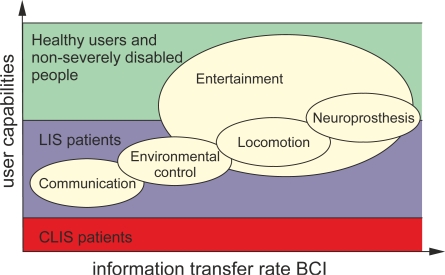
“In recent years, BCIs have found many applications in different areas including entertainment, environmental control, marketing, and loco-motion [2].”
BackgroundA scoping review of gaze and eye tracking-based control methods for assistive robotic arms
Fischer-Janzen, A., Wendt, T. M., & Laerhoven, K. V. (2024) · Frontiers in Robotics and AI · doi:10.3389/frobt.2024.1326670 · Cited by 43
Support matrix machine: A review
Kumari, A. R., Akhtar, M., Shah, R., & Tanveer, M. (2024) · Neural Networks · doi:10.1016/j.neunet.2024.106767 · Cited by 44
Robot Navigation Using a Brain Computer Interface Based on Motor Imagery
Aljalal, M., Djemal, R., & Ibrahim, S. (2018) · Journal of Medical and Biological Engineering · doi:10.1007/s40846-018-0431-9 · Cited by 39
Li, T., Xue, T., Wang, B., & Zhang, J. (2018) · Frontiers in Human Neuroscience · doi:10.3389/fnhum.2018.00381 · Cited by 36
“For noninvasive approaches, EEG offers good temporal resolution but poor spatial resolution, while NIRS provides only moderate temporal resolution and also moderately better spatial resolution (Nicolas-Alonso and Gomez-Gil, 2012).”
BackgroundCommunication Technologies Based on Voluntary Blinks: Assessment and Design
Molina-Cantero, A. J., Lebrato-Vázquez, C., Merino-Monge, M., Quesada-Tabares, R., Castro-García, J. A., & Gómez, I. (2019) · IEEE Access · doi:10.1109/access.2019.2919324 · Cited by 40
Li, F., Chao, W., Li, Y., Fu, B., Ji, Y., Wu, H., & Shi, G. (2021) · Journal of Neural Engineering · doi:10.1088/1741-2552/ac13c0 · Cited by 45
An Efficient Frequency Recognition Method Based on Likelihood Ratio Test for SSVEP-Based BCI
Zhang, Y., Dong, L., Zhang, R., Yao, D., Zhang, Y., & Xu, P. (2014) · Computational and Mathematical Methods in Medicine · doi:10.1155/2014/908719 · Cited by 36
Han, J.-W., Bak, S., Kim, J.-M., Choi, W., Shin, D.-H., Son, Y.-H., & Kam, T. (2023) · Expert Systems with Applications · doi:10.1016/j.eswa.2023.121986 · Cited by 46
Liarokapis, F., Debattista, K., Vourvopoulos, A., Petridis, P., & Ene, A. (2014) · Entertainment Computing · doi:10.1016/j.entcom.2014.10.004 · Cited by 35
Domain Transfer Multiple Kernel Boosting for Classification of EEG Motor Imagery Signals
Dai, M., Wang, S., Zheng, D., Na, R., & Zhang, S. (2019) · IEEE Access · doi:10.1109/access.2019.2908851 · Cited by 35
Jiang, Y., Jessee, W., Hoyng, S. C., Borhani, S., Liu, Z., Zhao, X., Price, L. K., High, W. M., Suhl, J., & Cerel‐Suhl, S. (2022) · Frontiers in Aging Neuroscience · doi:10.3389/fnagi.2022.780817 · Cited by 45
“Each study used a slightly different method in controlling for their BCI group, so it was important to investigate the different controls used (Nicolas-Alonso and Gomez-Gil, 2012; Sorger et al., 2019).”
MethodBeaton, L. E., Azma, S., & Marinković, K. (2018) · PLoS ONE · doi:10.1371/journal.pone.0191200 · Cited by 39
A Novel Deep Learning Architecture for Decoding Imagined Speech from EEGPreprint
Panachakel, J. T., Ramakrishnan, A. G., & Ananthapadmanabha, T. V. (2020) · arXiv (Cornell University) · doi:10.48550/arxiv.2003.09374 · Cited by 35
An open dataset for human SSVEPs in the frequency range of 1-60 Hz
Gu, M., Pei, W., Gao, X., & Wang, Y. (2024) · Scientific Data · doi:10.1038/s41597-024-03023-7 · Cited by 44
“Brain-computer interfaces (BCIs) provide a new medium for communication between humans and computers, which can convert signals of brain activities into commands to control external devices without the participation of peripheral nerves and muscles 1–3 .”
BackgroundBinary and multi-class motor imagery using Renyi entropy for feature extraction
Kee, C.-Y., Ponnambalam, S. G., & Loo, C. K. (2016) · Neural Computing and Applications · doi:10.1007/s00521-016-2178-y · Cited by 37
Singh, S., Lo, M.-C., Damodaran, V. B., Kaplan, H. M., Kohn, J., Zahn, J. D., & Shreiber, D. I. (2016) · Sensors · doi:10.3390/s16030330 · Cited by 34
An embedded system remotely driving mechanical devices by P300 brain activity
Venuto, D. D., Annese, V. F., & Mezzina, G. (2017) · Design, Automation, and Test in Europe · doi:10.23919/date.2017.7927139 · Cited by 37
Single-Trial NIRS Data Classification for Brain–Computer Interfaces Using Graph Signal Processing
Petrantonakis, P. C., & Kompatsiaris, I. Y. (2018) · IEEE Transactions on Neural Systems and Rehabilitation Engineering · doi:10.1109/tnsre.2018.2860629 · Cited by 36
Angrisani, L., Arpaïa, P., Casinelli, D., & Moccaldi, N. (2018) · IEEE Transactions on Instrumentation and Measurement · doi:10.1109/tim.2018.2882115 · Cited by 34
“for BCI miniaturization and wearability, as well as less data to be processed [26], [27], in order to improve real-time performance [28], and remove redundant data especially in multichannel sensing units.”
BackgroundRimbert, S., Riff, P., Gayraud, N., Schmartz, D., & Bougrain, L. (2019) · Frontiers in Neuroscience · doi:10.3389/fnins.2019.00622 · Cited by 40
“While there exist some BCIs that do not use time markers or triggers (known as asynchronous BCIs), the literature clearly shows that their classification rate is lower than that of a synchronous BCI with triggers (Nicolas-Alonso and Gomez-Gil, 2012).”
Embedded Brain Computer Interface: State-of-the-Art in Research
Belwafi, K., Gannouni, S., & Aboalsamh, H. (2021) · Sensors · doi:10.3390/s21134293 · Cited by 38
Deep learning multimodal fNIRS and EEG signals for bimanual grip force decoding
Ortega, P., & Faisal, A. A. (2021) · Journal of Neural Engineering · doi:10.1088/1741-2552/ac1ab3 · Cited by 38
Lower Limb Exoskeleton Sensors: State-of-the-Art
Neťuková, S., Bejtic, M., Malá, C., Horáková, L., Kutílek, P., Kauler, J., & Krupička, R. (2022) · Sensors · doi:10.3390/s22239091 · Cited by 44
Compact convolutional transformer for subject-independent motor imagery EEG-based BCIs
Keutayeva, A., Fakhrutdinov, N., & Abibullaev, B. (2024) · Scientific Reports · doi:10.1038/s41598-024-73755-4 · Cited by 47
Kinney‐Lang, E., Auyeung, B., & Escudero, J. (2016) · Journal of Neural Engineering · doi:10.1088/1741-2560/13/6/061002 · Cited by 39
Free-View, 3D Gaze-Guided, Assistive Robotic System for Activities of Daily Living
Wang, M., Kogkas, A., Darzi, A. W., & Mylonas, G. P. (2018) · IEEE/RSJ International Conference on Intelligent Robots and Systems (IROS) · doi:10.1109/iros.2018.8594045 · Cited by 35
Guttmann-Flury, E., Sheng, X., & Zhu, X. (2022) · Behavior Research Methods · doi:10.3758/s13428-022-01897-2 · Cited by 40
Metadata
- Authors
- Nicolas-Alonso, L. F., & Gomez-Gil, J.
- Affiliations
- Universidad de Valladolid (ES)
- Department of Signal Theory, Communications and Telematics Engineering, University of Valladolid, Valladolid 47011, Spain
- Corresponding author
- Nicolas-Alonso, Luis Fernando
- Venue
- Sensors
- Publisher
- MDPI AG
- Published
- 2012-01-31
- Volume
- 12
- Issue
- 2
- Pages
- 1211-1279
- ISSN
- 1424-8220 (ISSN-L)
- PMC
- PMC3304110
- OpenAlex
- W2128909182
- Cited by
- 2,143
- References
- 325
- Citations by year
- 2026: 137 · 2025: 186 · 2024: 178 · 2023: 181 · 2022: 201 · 2021: 220 · 2020: 185 · 2019: 185 · 2018: 177 · 2017: 134 · 2016: 118 · 2015: 91 · 2014: 78 · 2013: 48 · 2012: 20
- FWCI
- 5.81
- Type
- journal article
- Language
- en
- Open access
- gold
- doi.org
- Licence
- Locations
- Sensors (publishedVersion, cc-by)
- PubMed Central (publishedVersion, cc-by)
- PubMed (publishedVersion)
- Hispana (publishedVersion, cc-by)
- DOAJ (DOAJ: Directory of Open Access Journals) (submittedVersion, cc-by-sa)
- University of Valladolid Documentary Repository (University of Valladolid) (submittedVersion, cc-by)
- Topics
- Life Sciences › Neuroscience › Cognitive Neuroscience › EEG and Brain-Computer Interfaces
- Physical Sciences › Computer Science › Human-Computer Interaction › Gaze Tracking and Assistive Technology
- Physical Sciences › Engineering › Biomedical Engineering › Muscle activation and electromyography studies
- Keywords
- brain-computer interface, neuroimaging, electrophysiological signals, signal preprocessing, artifact removal, feature extraction, brain signal classification, paralysis, locked-in syndrome, amyotrophic lateral sclerosis, spinal cord injury, brain-computer interface applications
- MeSH terms
- Algorithms, Brain, Electroencephalography, Humans, Man-Machine Systems, Pattern Recognition, Automated, Signal Processing, Computer-Assisted, Transducers, User-Computer Interface
About these checks
Registry, retraction, Cites and statistics results are computed, not judged, with one exception: a printed reference that no index lists is read once by a model before it counts as a citation error. Claims are extracted by a model and kept only when their quote appears verbatim in the text; each cited source is then checked, with a model’s help, for whether it says what the claim relies on. Those verdicts can be wrong — read the claim’s quote and the cited source before relying on one.
Statistics and arithmetic are recomputed, not judged.
Confidence bands are shown only for fields calibrated on our annotated test set. None is calibrated yet, so no band is shown.
What counts as a claim ›How we measure confidence ›How we check this ›
Are you an author, or do you see a problem with this page? Request a review
Data sources
Bibliographic data: Semantic Scholar, OpenAlex, Crossref.
Contains information from the Semantic Scholar Academic Graph Datasets, made available under the ODC Attribution License (ODC-BY 1.0).
Semantic Scholar’s data is described in: Kinney, R., et al. (2023). The Semantic Scholar Open Data Platform. arXiv:2301.10140.
