

Brain Computer Interfaces, a Review
Open accessThe DOI matches its Crossref record; 322 of the 325 references it cites were found in a registry or an index.
Abstract
A brain-computer interface (BCI) is a hardware and software communications system that permits cerebral activity alone to control computers or external devices. The immediate goal of BCI research is to provide communications capabilities to severely disabled people who are totally paralyzed or ‘locked in’ by neurological neuromuscular disorders, such as amyotrophic lateral sclerosis, brain stem stroke, or spinal cord injury. Here, we review the state-of-the-art of BCIs, looking at the different steps that form a standard BCI: signal acquisition, preprocessing or signal enhancement, feature extraction, classification and the control interface. We discuss their advantages, drawbacks, and latest advances, and we survey the numerous technologies reported in the scientific literature to design each step of a BCI. First, the review examines the neuroimaging modalities used in the signal acquisition step, each of which monitors a different functional brain activity such as electrical, magnetic or metabolic activity. Second, the review discusses different electrophysiological control signals that determine user intentions, which can be detected in brain activity. Third, the review includes some techniques used in the signal enhancement step to deal with the artifacts in the control signals and improve the performance. Fourth, the review studies some mathematic algorithms used in the feature extraction and classification steps which translate the information in the control signals into commands that operate a computer or other device. Finally, the review provides an overview of various BCI applications that control a range of devices.
Overview
The claims and statistics of this paper haven’t been checked yet.
Free: it reads the open-access text and checks the first 5 claims that cite a source we can check. Create a free account to check every claim.
Integrity signals
Registry
Cites
Statistics
Figures
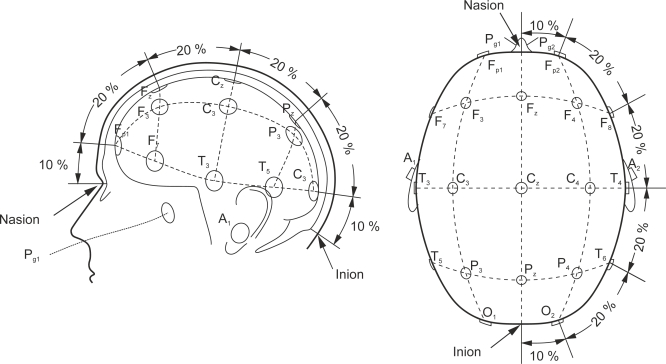
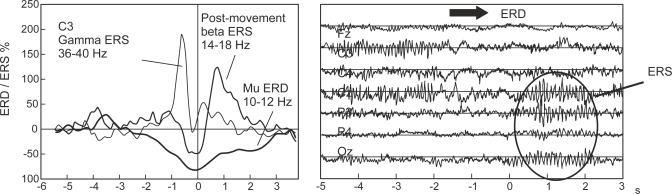
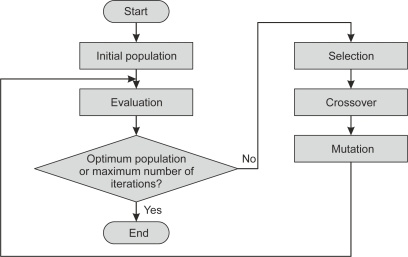
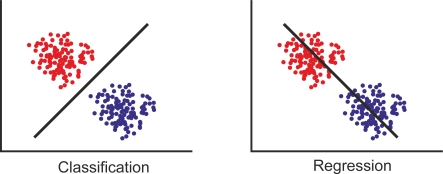
Verification
Claims the paper makes
The claims and statistics of this paper haven’t been checked yet.
Free: it reads the open-access text and checks the first 5 claims that cite a source we can check. Create a free account to check every claim.
Claims other papers make about this one
Each is checked against this paper’s own text: does it say what the citing paper says it does?
The source backs part of the claim, not all of it — or backs it for a different population, condition or comparison.
In the citing paper
“Noninvasive EEG based BCI could potentially serve the needs of a large population10.”
From Noninvasive Electroencephalogram Based Control of a Robotic Arm for Reach and Grasp Tasks (2016) · cites this paper as [10]
Experimental — accuracy not yet measuredThe cited source says what the claim attributes to it.
In the citing paper
“this response can be used as a neural signal in EEG-based brain-computer interfaces (BCIs), enabling direct communication between the brain and surroundings without the involvement of peripheral nerves or muscles (Nicolas-Alonso and Gomez-Gil, 2012).”
From A Lightweight Multi-Scale Convolutional Neural Network for P300 Decoding: Analysis of Training Strategies and Uncovering of Network Decision (2021) · cites this paper as Nicolas-Alonso and Gomez-Gil, 2012
The check wasn’t confident either way, so it gives no verdict — never disputed.
In the citing paper
“Among others, external influences such as stress, emotion, and work impact these metrics and can be used to infer those [162].”
From A Survey on Measuring Cognitive Workload in Human-Computer Interaction (2023) · cites this paper as [162]
Experimental — accuracy not yet measured
Self-check
Percentages, sums and reported differences re-computed from the paper’s own numbers.
The self-check needs the paper’s full text.
Citations
Cites
A Tutorial on Support Vector Machines for Pattern Recognition
Burges, C. J. C. (1998) · Data Mining and Knowledge Discovery · doi:10.1023/a:1009715923555 · Cited by 16,429 · cited 1×
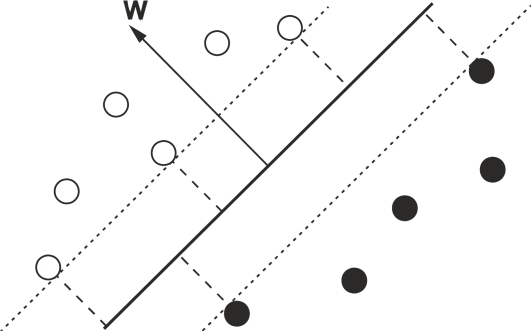
“However, in contrast to LDA, SVM selects the hyperplanes that maximize the margins, that is, the distance between the nearest training samples and the hyperplanes [236].”
MethodAn Information-Maximization Approach to Blind Separation and Blind Deconvolution
Bell, A. J., & Sejnowski, T. J. (1995) · Neural Computation · doi:10.1162/neco.1995.7.6.1129 · Cited by 8,986 · cited 1×
“Finally, s(t) and A are obtained from x(t) by means of certain algorithms, such as Infomax [162] or further modification of the Infomax [163].”
MethodBrain–computer interfaces for communication and control
Wolpaw, J. R., Birbaumer, N., McFarland, D. J., Pfurtscheller, G., & Vaughan, T. M. (2002) · Clinical Neurophysiology · doi:10.1016/s1388-2457(02)00057-3 · Cited by 7,927 · cited 2×
“Furthermore, BCI systems require real-time signal processing, and up until recently the requisite technology either did not exist or was extremely expensive [2].”
BackgroundEvent-related EEG/MEG synchronization and desynchronization: basic principles
Pfurtscheller, G., & Lopes da Silva, F. H. (1999) · Clinical Neurophysiology · doi:10.1016/s1388-2457(99)00141-8 · Cited by 7,328 · cited 1×
“Both rhythms are associated in such a way that some beta rhythms are harmonic mu rhythms, although some beta rhythms may also be independent [139].”
BackgroundStatistical pattern recognition: a review
Jain, A. K., Duin, P. W., & Mao, J. (2000) · IEEE Transactions on Pattern Analysis and Machine Intelligence · doi:10.1109/34.824819 · Cited by 6,767 · cited 1×
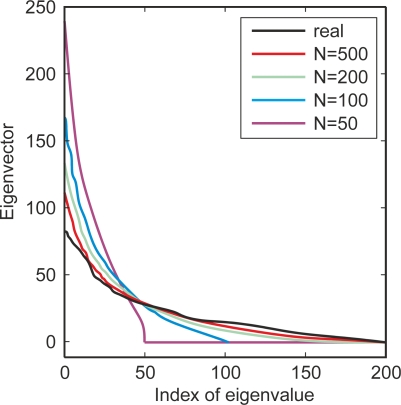
“training data needed to offer good results increases exponentially with the dimensionality of the feature vector [223].”
BackgroundThe ten-twenty electrode system of the international federation
Jasper, H. H. (1958) · Electroencephalography and Clinical Neurophysiology · Cited by 6,567
Neurophysiological investigation of the basis of the fMRI signal
Logothetis, N. K., Pauls, J., Augath, M., Trinath, T., & Oeltermann, A. (2001) · Nature · doi:10.1038/35084005 · Cited by 6,551 · cited 1×
“a correspondence between both does exist [86].”
Frequency Dependence of Signal Power and Spatial Reach of the Local Field Potential
Leski, S., Lindén, H., Tetzlaff, T., Pettersen, K. H., & Einevoll, G. T. (2013) · PubMed · doi:10.18154/rwth-conv-084442 · Cited by 3,639
Neuronal ensemble control of prosthetic devices by a human with tetraplegia
Hochberg, L. R., Serruya, M. D., Friehs, G. M., Mukand, J. A., Saleh, M., Caplan, A. H., Branner, A., Chen, D., Penn, R. D., & Donoghue, J. P. (2006) · Nature · doi:10.1038/nature04970 · Cited by 3,295 · cited 1×
“[287] implanted BrainGate sensors in the primary motor cortex of a tetraplegic patient to control a cursor.”
BackgroundFarwell, L. A., & Donchin, E. (1988) · Electroencephalography and Clinical Neurophysiology · doi:10.1016/0013-4694(88)90149-6 · Cited by 3,228 · cited 5×
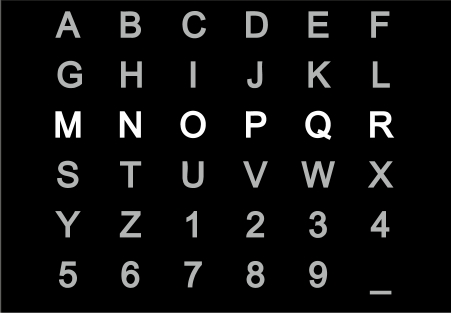
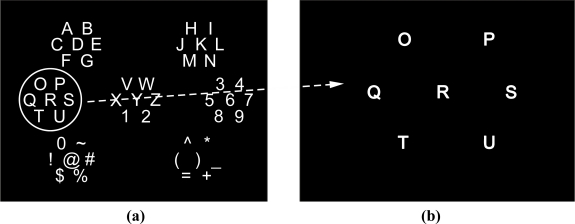
“A typical application of a BCI based on visual P300 evoked potentials comprises a matrix of letters, numbers, or other symbols or commands [123,127,128].”
BackgroundInfluential
Research works printed but not linked: 3
- Steven, L., and Giulio, T. (2009). The Neurology of Consciousness, Academic Press.
- Mellinger, 2007, An MEG-based brain-computer interface (BCI), Neuroimage, 36, 581, 10.1016/j.neuroimage.2007.03.019 · DOI · Paper page
- Tangermann, M., Krauledat, M., Grzeska, K., Sagebaum, M., Blankertz, B., Vidaurre, C., and Müller, K. (2008). Playing Pinball with non-invasive BCI. Proc. NIPS, 1641–1648.
Cited by
Items 801–900 of 1,005
Multi-frequency steady-state visual evoked potential dataset
Mu, J., Liu, S., Burkitt, A. N., & Grayden, D. B. (2024) · Scientific Data · doi:10.1038/s41597-023-02841-5 · Cited by 17
“…the modalities that can be captured and decoded from the brain, the Steady-State Visual Evoked Potential (SSVEP) is one of the most widely used as it can be captured non-invasively using electroencephalography (EEG) with relatively high signal-to-noise ratio and requires minimal user training 3 .”
MethodWink based facial expression classification using machine learning approach
Rashid, M., Sulaiman, N., Mustafa, M., Bari, B. S., Sadeque, M. G., & Hasan, M. J. (2020) · SN Applied Sciences · doi:10.1007/s42452-020-1963-5 · Cited by 14
“In K-NN architecture, the number of neighbor and the types of distance metrics are key factor [24].”
BackgroundGouret, A., Bars, S. L., Porssut, T., Waszak, F., & Sylvie Chokron, A. (2024) · Frontiers in Neuroscience · doi:10.3389/fnins.2024.1373377 · Cited by 13
A Scoping Review of the Effect of EEG Neurofeedback on Pain Complaints in Adults with Chronic Pain
Schuurman, B. B., Lousberg, R. L., Schreiber, J., van Amelsvoort, T., & Vossen, C. J. (2024) · Journal of Clinical Medicine · doi:10.3390/jcm13102813 · Cited by 15
A novel feature extraction method PSS-CSP for binary motor imagery – based brain-computer interfaces
Chen, A., Sun, D., Gao, X., & Zhang, D. (2024) · Computers in Biology and Medicine · doi:10.1016/j.compbiomed.2024.108619 · Cited by 14
Ploesser, M., Abraham, M. E., Broekman, M. L. D., Zincke, M. T., Beach, C. A., Urban, N. B., & Ben‐Haim, S. (2024) · Stereotactic and Functional Neurosurgery · doi:10.1159/000539757 · Cited by 13
Kapgate, D. D. (2024) · Behavioural Brain Research · doi:10.1016/j.bbr.2024.115154 · Cited by 12
Human-Machine Interaction in the Metaverse: A Comprehensive Review and Proposed Framework
Sayyed, M. A., Jadhav, B. R., Barnabas, V., & Gupta, S. K. (2024) · Advances in computer and electrical engineering book series · doi:10.4018/979-8-3693-5762-0.ch001 · Cited by 16
Xiong, S., Wang, L., Xia, G., & Deng, J. (2024) · Robotics and Autonomous Systems · doi:10.1016/j.robot.2024.104899 · Cited by 12
Behera, B. K., Al-Kuwari, S. M., & Farouk, A. (2025) · IEEE Transactions on Artificial Intelligence · doi:10.1109/tai.2025.3572852 · Cited by 23
Algorithmic clustering based on string compression to extract P300 structure in EEG signals
Sarasa, G., Granados, A., & Rodríguez, F. B. (2019) · Computer Methods and Programs in Biomedicine · doi:10.1016/j.cmpb.2019.03.009 · Cited by 14
“This signal is composed of measurements of brain activity which may contain useful information about the brain state but their non-linear and non-stationary nature makes them very difficult to analyze [4, 5, 6].”
Silent speech classification based upon various feature extraction methods
Agarwal, P., Kale, R. K., Kumar, M., & Kumar, S. (2020) · International Conference on Signal Processing and Integrated Networks (SPIN) · doi:10.1109/spin48934.2020.9070969 · Cited by 12
“This imagined speech can be decoded and interpreted by capturing brain wave signal potential by Electroencephalogram (EEG) using Brain Computer Interfacing (BCI) [1].”
MethodSoft Robotic Glove Controlling Using Brainwave Detection for Continuous Rehabilitation at Home
Jumphoo, T., Uthansakul, M., Duangmanee, P., Khan, N., & Uthansakul, P. (2020) · Computers, materials & continua/Computers, materials & continua (Print) · doi:10.32604/cmc.2020.012433 · Cited by 13
Enhancing SSVEP-Based Brain-Computer Interface with Two-Step Task-Related Component Analysis
Lee, H. K., & Choi, Y.-S. (2021) · Sensors · doi:10.3390/s21041315 · Cited by 14
Improving Movement-Related Cortical Potential Detection at the EEG Source Domain
Li, C., Guan, H., Huang, Z., Chen, W., Li, J., & Zhang, S. (2021) · International IEEE/EMBS Conference on Neural Engineering · doi:10.1109/ner49283.2021.9441169 · Cited by 12
Kang, J.-H., Youn, J., Kim, S.-H., & Kim, J. (2021) · Frontiers in Neuroscience · doi:10.3389/fnins.2021.663101 · Cited by 14
Ye, H., Li, G., Sheng, X., & Zhu, X. (2022) · Journal of Neural Engineering · doi:10.1088/1741-2552/ac63e9 · Cited by 13
Esfandiari, H., Troxler, P., Hodel, S., Suter, D., Farshad, M., Cavalcanti, N., Wetzel, O., Mania, S., Cornaz, F., Selman, F., et al. (2022) · BMC Musculoskeletal Disorders · doi:10.1186/s12891-022-05384-9 · Cited by 12
“Recent advances in signal processing and artificial intelligence have resulted in adoption of BCI systems in a variety of applications [24–28].”
BackgroundJang, S. J., Yang, Y. J., Ryun, S., Kim, J. S., Chung, C. K., & Jeong, J. (2022) · Journal of Neural Engineering · doi:10.1088/1741-2552/ac8b37 · Cited by 17
Exploiting Asymmetric EEG Signals with EFD in Deep Learning Domain for Robust BCI
Huang, B., Xu, H., Miao, Y., Aziz, M. Z., & Yu, X. (2022) · Symmetry · doi:10.3390/sym14122677 · Cited by 12
Mitsea, E., Drigas, A. S., & Skianis, C. A. (2023) · Research Society and Development · doi:10.33448/rsd-v12i3.40247 · Cited by 15
Generative Adversarial Networks for Electroencephalogram Signal Analysis: A Mini Review
Wang, J., Mu, W., Wang, A., Wang, L., Han, J., Wang, P., Niu, L., Bin, J., Zhang, L., & Kang, X. (2023) · International Winter Conference on Brain-Computer Interface (BCI) · doi:10.1109/bci57258.2023.10078666 · Cited by 12
“Electroencephalography (EEG) is widely used among all brain signals, due to its non-invasive access and its safety, and portability to record electrical activities at the cortical level [2].”
BackgroundChu, C., Zhu, L., Huang, A., Xu, P., Ying, N., & Zhang, J. (2024) · Journal of Neural Engineering · doi:10.1088/1741-2552/ad1f7a · Cited by 12
Ensemble learning for classification of motor imagery tasks in multiclass brain computer interfaces
Nicolas-Alonso, L. F., Corralejo, R., Gómez‐Pilar, J., Álvarez, D., & Hornero, R. (2014) · Computer Science and Electronic Engineering Conference · doi:10.1109/ceec.2014.6958559 · Cited by 12
Self-citationEEG-Response Consistency across Subjects in an Active Oddball Task
Höller, Y., Thomschewski, A. C., Bergmann, J., Kronbichler, M., Crone, J. S., Schmid, E. V., Butz, K. H. G., Höller, P., & Trinka, E. (2013) · PLoS ONE · doi:10.1371/journal.pone.0074572 · Cited by 14
Aydemir, Ö., & Kayıkçıoğlu, T. (2015) · TURKISH JOURNAL OF ELECTRICAL ENGINEERING & COMPUTER SCIENCES · doi:10.3906/elk-1307-17 · Cited by 14
Multimodal 2D Brain Computer Interface
Almajidy, R. K., Boudria, Y., Hofmann, U., Besio, W. G., & Mankodiya, K. (2015) · Annual International Conference of the IEEE Engineering in Medicine and Biology Society (EMBC) · doi:10.1109/embc.2015.7318549 · Cited by 12
An integrated-mental brainwave system for analyses and judgments of consumer preference
Hsu, W. (2016) · Telematics and Informatics · doi:10.1016/j.tele.2016.11.002 · Cited by 15
Modeling Electrode Place Discrimination in Cochlear Implant Stimulation
Gao, X., Grayden, D. B., & McDonnell, M. D. (2016) · IEEE Transactions on Biomedical Engineering · doi:10.1109/tbme.2016.2634461 · Cited by 13
Hybrid EEG-NIRS based active command generation for quadcopter movement control
Khan, M. J., Zafar, A., & Hong, K. (2016) · International Automatic Control Conference · doi:10.1109/cacs.2016.7973909 · Cited by 15
An eighty-target high-speed Chinese BCI speller
Han, C., Xu, G., Xie, J., Li, M., Zhang, S., & Luo, A. (2017) · Annual International Conference of the IEEE Engineering in Medicine and Biology Society (EMBC) · doi:10.1109/embc.2017.8037157 · Cited by 13
Zhang, X., Yong, X., & Menon, C. (2017) · PLoS ONE · doi:10.1371/journal.pone.0188293 · Cited by 13
Zen Cat: A Meditation-Based Brain-Computer Interface Game
Vasiljevic, G. A. M., de Miranda, L. C., & de Menezes, B. C. (2018) · Lecture notes in computer science · doi:10.1007/978-3-319-95162-1_20 · Cited by 12
Singh, B., & Wagatsuma, H. (2018) · Biomedical Signal Processing and Control · doi:10.1016/j.bspc.2018.08.014 · Cited by 15
Study on Classification of Left-Right Hands Motor Imagery EEG Signals Based on CNN
Tian, G., & Liu, Y. (2018) · IEEE International Conference on Cognitive Informatics & Cognitive Computing (ICCI*CC) · doi:10.1109/icci-cc.2018.8482042 · Cited by 16
Dong, S., & Jeong, J. (2018) · IEEE Transactions on Biomedical Engineering · doi:10.1109/tbme.2018.2884169 · Cited by 13
“By virtue of these advantages, fNIRS has recently attracted much attention as a functional monitoring tool for the brain-computer interfaces (BCI) [1]–[4].”
BackgroundUse of Topological Data Analysis in Motor Intention Based Brain-Computer Interfaces
Altindış, F., Yılmaz, B., Borisenok, S., & İçöz, K. (2018) · European Signal Processing Conference (EUSIPCO) · doi:10.23919/eusipco.2018.8553382 · Cited by 12
Biomechatronic Applications of Brain-Computer Interfaces
Novak, D. (2018) · Elsevier eBooks · doi:10.1016/b978-0-12-812539-7.00008-8 · Cited by 16
Online detection of error-related potentials in multi-class cognitive task-based BCIs
Yousefi, R., Sereshkeh, A. R., & Chau, T. T. (2019) · Brain-Computer Interfaces · doi:10.1080/2326263x.2019.1614770 · Cited by 15
Cross-Subject EEG Signal Classification with Deep Neural Networks Applied to Motor Imagery
Riyad, M., Khalil, M., & Adib, A. (2019) · Lecture Notes in Computer Science · doi:10.1007/978-3-030-22885-9_12 · Cited by 12
Five-Class SSVEP Response Detection using Common-Spatial Pattern (CSP)-SVM Approach
Rashid, M., Sulaiman, N., Mustafa, M., Bari, B. S., & Hasan, M. J. (2020) · International Journal of Integrated Engineering · doi:10.30880/ijie.2020.12.06.019 · Cited by 12
Optical Axons for Electro-Optical Neural Networks
Hulea, M. G., Ghassemlooy, Z. F., Rajbhandari, S., Younus, O. I., & Barleanu, A. (2020) · Sensors · doi:10.3390/s20216119 · Cited by 12
Breaching Subjects’ Thoughts Privacy: A Study with Visual Stimuli and Brain-Computer Interfaces
Pérez, M. Q., Beltrán, E. T. M., Bernal, S. L., Celdrán, A. H., & Pérez, G. M. (2021) · Journal of Healthcare Engineering · doi:10.1155/2021/5517637 · Cited by 12
“BCIs provide a bidirectional channel between the brain and external devices, enabling two modes of use [2].”
BackgroundElectroencephalogram-based Brain–Computer Interface: An Introduction
Palaniappan, R. (2014) · Springer eBooks · doi:10.1007/978-1-4471-6584-2_2 · Cited by 12
Feature selection algorithm for evoked EEG signal due to RGB colors
Alharbi, E., Rasheed, S., & Buhari, S. M. (2016) · International Congress on Image and Signal Processing (CISP) · doi:10.1109/cisp-bmei.2016.7852955 · Cited by 13
“Feature selection process is important for improving generalization, minimizing training time, meeting system specifications (such as running time and storage) and enhancing system interpretability [8].”
BackgroundMethodInfluentialElectroencephalogram-based brain-computer interface for the Chinese spelling system: a survey
Shi, M., Zhou, C., Xie, J., Li, S., Hong, Q., Jiang, M., Chao, F., Ren, W., Liu, X., Zhou, D., et al. (2018) · Frontiers of Information Technology & Electronic Engineering · doi:10.1631/fitee.1601509 · Cited by 13
Simple Convolutional Neural Network for Left-Right Hands Motor Imagery EEG Signals Classification
Tian, G., & Liu, Y. (2019) · International Journal of Cognitive Informatics and Natural Intelligence · doi:10.4018/ijcini.2019070103 · Cited by 16
Choi, Y.-J., Kwon, O., & Kim, S.-P. (2022) · Cognitive Neurodynamics · doi:10.1007/s11571-022-09901-3 · Cited by 11
“Electroencephalography (EEG) has been widely employed as a non-invasive method of sensing brain activities for BCIs, primarily due to its cost-effectiveness and high temporal resolution (Nicolas-Alonso and Gomez-Gil 2012; De Vos 2014).”
MethodMetaverse for Brain Computer Interface: Towards New and Improved Applications
Abdelghafar, S., Ezzat, D., Darwish, A., & Hassanien, A. E. (2023) · Studies in big data · doi:10.1007/978-3-031-29132-6_3 · Cited by 15
Habashi, A. G., Azab, A. M., Eldawlatly, S., & Aly, G. M. (2023) · Proceedings - IEEE Symposium on Computer-Based Medical Systems · doi:10.1109/cbms58004.2023.00243 · Cited by 15
Generalized Optimal EEG Channels Selection for Motor Imagery Brain–Computer Interface
Lee, H.-C., & Lee, C. (2023) · IEEE Sensors Journal · doi:10.1109/jsen.2023.3313236 · Cited by 14
In-sensor neuromorphic computing using perovskites and transition metal dichalcogenides
Li, S.-Y., Li, J.-T., Zhou, K., Yan, Y., Ding, G., Han, S., & Zhou, Y. (2024) · Journal of Physics Materials · doi:10.1088/2515-7639/ad5251 · Cited by 15
Empowering Individuals With Disabilities: A 4-DoF BCI Wheelchair Using MI and EOG Signals
Glavas, K., Tzimourta, K. D., Tzallas, A. T., Γιαννακέας, Ν., & Tsipouras, M. G. (2024) · IEEE Access · doi:10.1109/access.2024.3424953 · Cited by 13
Media Representation of the Ethical Issues Pertaining to Brain–Computer Interface (BCI) Technology
Beck, S., Liberman, Y., & Dubljević, V. (2024) · Brain Sciences · doi:10.3390/brainsci14121255 · Cited by 14
Дмитриевич, Б. П., Isaev, M. R., Korshakov, A., Oganesyan, V. V., Kerechanin, J., Popodko, A. I., & Frolov, A. (2016) · Human Physiology · doi:10.1134/s036211971603004x · Cited by 11
Applicability of SSVEP-based brain-computer interfaces for robot navigation in real environments
Farmaki, C., Christodoulakis, G., & Sakkalis, V. (2016) · Annual International Conference of the IEEE Engineering in Medicine and Biology Society (EMBC) · doi:10.1109/embc.2016.7591304 · Cited by 11
“A BCI [3] constitutes a direct communication pathway between the human brain and the external world, since it records the brain activity, analyzes the user’s intention and translates it to machine commands.”
BackgroundLópez, S., Cervantes, J.-A., Cervantes, S., Molina, J., & Cervantes, F. (2019) · Cognitive Systems Research · doi:10.1016/j.cogsys.2019.09.013 · Cited by 14
Automatic Micro-sleep Detection under Car-driving Simulation Environment using Night-sleep EEG
Kweon, Y.-S., Kwak, H.-G., Shin, G.-H., & Lee, M. (2021) · International Winter Conference on Brain-Computer Interface (BCI) · doi:10.1109/bci51272.2021.9385325 · Cited by 11
Electromyography for Teleoperated Tasks in Weightlessness
Hagengruber, A., Leipscher, U., Eskofier, B. M., & Vogel, J. (2021) · IEEE Transactions on Human-Machine Systems · doi:10.1109/thms.2020.3047975 · Cited by 11
Event-Related Potential Classification Based on EEG Data Using xDWAN with MDM and KNN
Miah, A. S. M., Mouly, M. A., Debnath, C., Shin, J., & Bari, S. M. S. (2021) · Communications in computer and information science · doi:10.1007/978-3-030-76776-1_8 · Cited by 18
Detection of fixation points using a small visual landmark for brain–computer interfaces
Zhou, X., Xu, M., Xiao, X., Wang, Y., Jung, T., & Ming, D. (2021) · Journal of Neural Engineering · doi:10.1088/1741-2552/ac0b51 · Cited by 11
Controlling a Mouse Pointer with a Single-Channel EEG Sensor
Molina-Cantero, A. J., Castro-García, J. A., Gómez-Bravo, F., López-Ahumada, R., Jiménez, R., & Berrazueta-Alvarado, S. (2021) · Sensors · doi:10.3390/s21165481 · Cited by 15
Intelligent Machine Learning Based EEG Signal Classification Model
Ali, M., El-Moghith, I. A. A., El-Derini, M. N., & Darwish, S. M. (2021) · Computers, materials & continua/Computers, materials & continua (Print) · doi:10.32604/cmc.2022.021119 · Cited by 11
fNIRS Signals Classification with Ensemble Learning and Adaptive Neuro-Fuzzy Inference System
Esfahani, M. M., & Sadati, S. H. (2021) · International Conference on Signal Processing and Intelligent Systems (ICSPIS) · doi:10.1109/icspis54653.2021.9729388 · Cited by 13
SSVEP-based brain–computer interface for music using a low-density EEG system
Venkatesh, S., Miranda, E. R., & Braund, E. (2022) · Assistive Technology · doi:10.1080/10400435.2022.2084182 · Cited by 11
Mental Flow Estimation Through Wearable EEG
Cherep, M., Kegler, M., Thiran, J., & Mainar, P. (2022) · Annual International Conference of the IEEE Engineering in Medicine and Biology Society (EMBC) · doi:10.1109/embc48229.2022.9871594 · Cited by 16
“Traditionally, EEG-based brain-computer interfaces (BCIs) consist of five steps [26]: EEG data acquisition; pre-processing and data cleaning; feature extraction; classification/estimation; and feedback to the user.”
BackgroundDigital Accessibility in Intelligent Environments
Ntoa, S., Margetis, G., Antona, M., & Stephanidis, C. (2022) · Automation, collaboration, and e-services · doi:10.1007/978-3-031-10780-1_25 · Cited by 13
Meng, M., Dong, Z., Gao, Y., & She, Q. (2022) · International Journal of Imaging Systems and Technology · doi:10.1002/ima.22823 · Cited by 11
“It does not rely on the normal output channel composed of nerves and muscles to decode the brain's intention.(1,2) Electroencephalogram (EEG) has become the most commonly used signal in BCI because of its low cost, high time resolution and low risk to subjects.”
BackgroundApplication of Robotic Recovery Techniques to Stroke Survivors—Bibliometric Analysis
Uivaroșan, D., BUNGAU, S. G., Nistor-Cseppento, C. D., Negru, P. A., Bungău, A. F., SABĂU, A. M., Ţiţ, D. M., Uivaraseanu, B., & Radu, A.-F. (2022) · Journal of Personalized Medicine · doi:10.3390/jpm12122066 · Cited by 11
Guo, Z., & Chen, F. (2022) · IEEE Transactions on Neural Systems and Rehabilitation Engineering · doi:10.1109/tnsre.2022.3227595 · Cited by 11
Kotov, S. V., Slyunkova, E. V. S., Borisova, V. A., & Валентиновна, И. Е. (2022) · S S Korsakov Journal of Neurology and Psychiatry · doi:10.17116/jnevro202212212267 · Cited by 11
Wang, S., Ji, B., Shao, D., Chen, W., & Gao, K. (2023) · Micromachines · doi:10.3390/mi14050976 · Cited by 11
Training Impulse and Its Impact on Load Management in Collegiate and Professional Soccer Players
Gardner, C., Navalta, J. W., Carrier, B., Aguilar, C. D., & Rodriguez, J. P. (2023) · Technologies · doi:10.3390/technologies11030079 · Cited by 11
Gogna, Y., Tiwari, S., & Singla, R. K. (2024) · Medical & Biological Engineering & Computing · doi:10.1007/s11517-024-03049-4 · Cited by 11
“1 [24–26].”
Exploring Federated Learning Tendencies Using a Semantic Keyword Clustering Approach
Enguix, F., Carrascosa, C., & Rincon, J. A. (2024) · Information · doi:10.3390/info15070379 · Cited by 12
Chang, H., Sun, Y., Lu, S., & Lin, D. (2024) · Scientific Reports · doi:10.1038/s41598-024-69222-9 · Cited by 15
“In 2012, Nicolas-Alonso et al. 12 discussed the different electrophysiological control signals that determine user intent and can be detected in brain activity.”
BackgroundUsing Brain Signals in Adaptive Smart Spaces for Disabled Children
Garzotto, F., Gelsomini, M., Pappalardo, A., Sanna, C., Stella, E., & Zanella, M. (2016) · CHI Conference Extended Abstracts on Human Factors in Computing Systems (CHI EA) · doi:10.1145/2851581.2892533 · Cited by 11
Score normalization of ensemble SVMs for brain-computer interface P300 speller
Kundu, S., & Ari, S. (2017) · International Conference on Computing, Communication and Networking Technologies (ICCCNT) · doi:10.1109/icccnt.2017.8204119 · Cited by 15
“Several types of EEG signals are used for BCI system like P300, steady-state visually evoked potential (SSVEP), event-related desynchronization/synchronization (ERD/ERS) produced by motor imageries [2], etc.”
MethodMakary, M. M., Bu-Omer, H. M., Soliman, R. S., Park, K., & Kadah, Y. M. (2017) · Journal of Medical and Biological Engineering · doi:10.1007/s40846-017-0308-3 · Cited by 11
Optimal pseudorandom sequence selection for online c-VEP based BCI control applications
Isaksen, J. L., Mohebbi, A., & Puthusserypady, S. K. (2017) · PLoS ONE · doi:10.1371/journal.pone.0184785 · Cited by 11
Coker, R., Zellmer, E. R., & Moran, D. W. (2018) · Journal of Neural Engineering · doi:10.1088/1741-2552/aaefcf · Cited by 12
Fast channel selection method using crow search algorithm
Alhakeem, Z. M., & Ali, R. S. (2019) · doi:10.1145/3321289.3321309 · Cited by 11
Rezaei, M., Seifzadeh, S., Karim Faez, A., & Amiri, M. (2017) · Journal of Medical Signals & Sensors · doi:10.4103/2228-7477.205593 · Cited by 11
Enhancement in classification accuracy of motor imagery signals with visual aid: An fNIRS-BCI Study
Ghafoor, U., Zafar, A., Yaqub, M. A., & Hong, K. (2019) · International Conference on Control, Automation and Systems (ICCAS) · doi:10.23919/iccas47443.2019.8971763 · Cited by 12
Classification of EEG-based Brain Waves for Motor Imagery using Support Vector Machine
Riyadi, M. A., Prakoso, T. B., Whaillan, F. O., Wahono, M. D., & Hidayatno, A. (2019) · doi:10.1109/icecos47637.2019.8984565 · Cited by 11
Lateralization of Brain During EEG Based Covert Speech Classification
Biswas, S., & Sinha, R. (2018) · IEEE India Conference · doi:10.1109/indicon45594.2018.8986984 · Cited by 11
Kinney‐Lang, E., Murji, S., Kelly, D., Paffrath, B., Zewdie, E., & Kirton, A. (2020) · Annual International Conference of the IEEE Engineering in Medicine and Biology Society (EMBC) · doi:10.1109/embc44109.2020.9175801 · Cited by 13
Kwon, J., & Im, C. (2020) · IEEE Transactions on Neural Systems and Rehabilitation Engineering · doi:10.1109/tnsre.2020.3030639 · Cited by 12
Alzahrani, S. I., & Anderson, C. W. (2021) · International Journal of Neural Systems · doi:10.1142/s0129065721500362 · Cited by 11
Low-cost brain computer interface for everyday use
Rakhmatulin, I., Parfenov, A., Traylor, Z., Nam, C. S., & Lebedev, M. (2021) · Experimental Brain Research · doi:10.1007/s00221-021-06231-4 · Cited by 11
Toward realistic implementation of Brain-Computer Interface for TV channel control
Kim, M., Hwang, T., Oh, E., & Hwangbo, M. (2013) · IEEE Global Conference on Consumer Electronics (GCCE) · doi:10.1109/gcce.2013.6664868 · Cited by 11
Naseer, N., Hong, K., Khan, M. J., & Bhutta, M. R. (2015) · International Conference on Control, Automation and Systems (ICCAS) · doi:10.1109/iccas.2015.7364654 · Cited by 13
Adaptive Time Window for EEG-based Motor Imagery Classification
Yahya-Zoubir, B., Bentlemsan, M., Zemouri, E.-T., & Ferroudji, K. (2015) · International Conference on Intelligent Information Processing, Security and Advanced Communication (IPAC) · doi:10.1145/2816839.2816845 · Cited by 14
Wei, Z., & Wei, Q. (2016) · Journal of Integrative Neuroscience · doi:10.1142/s0219635216500229 · Cited by 13
Decoding of motor imagery movements from EEG signals using SpiNNaker neuromorphic hardware
Tayeb, Z., Erçelik, E., & Conradt, J. (2017) · International IEEE/EMBS Conference on Neural Engineering · doi:10.1109/ner.2017.8008341 · Cited by 11
Huve, G., Takahashi, K., & Hashimoto, M. (2019) · IEEE International Conference on Mechatronics (ICM) · doi:10.1109/icmech.2019.8722936 · Cited by 11
EEG artifact correction strategies for online trial-by-trial analysis
de Freitas, A. M., Sanchez, G., Lecaignard, F., Maby, E., Soares, A. B., & Mattout, J. (2019) · Journal of Neural Engineering · doi:10.1088/1741-2552/ab581d · Cited by 13
Brain–Computer Interfaces: Recent Advances, Challenges, and Future Directions
Falk, T. H., Guger, C., & Volosyak, I. (2023) · Wiley eBooks · doi:10.1002/9781119863663.ch2 · Cited by 11
An Impending Paradigm Shift in Motor Imagery Based Brain-Computer Interfaces
Papadopoulos, S., Bonaiuto, J. J., & Mattout, J. (2022) · Frontiers in Neuroscience · doi:10.3389/fnins.2021.824759 · Cited by 14
A temporal–spectral fusion transformer with subject-specific adapter for enhancing RSVP-BCI decoding
Li, X., Wei, W., Qiu, S., & He, H. (2024) · Neural Networks · doi:10.1016/j.neunet.2024.106844 · Cited by 13
Metadata
- Authors
- Nicolas-Alonso, L. F., & Gomez-Gil, J.
- Affiliations
- Universidad de Valladolid (ES)
- Department of Signal Theory, Communications and Telematics Engineering, University of Valladolid, Valladolid 47011, Spain
- Corresponding author
- Nicolas-Alonso, Luis Fernando
- Venue
- Sensors
- Publisher
- MDPI AG
- Published
- 2012-01-31
- Volume
- 12
- Issue
- 2
- Pages
- 1211-1279
- ISSN
- 1424-8220 (ISSN-L)
- PMC
- PMC3304110
- OpenAlex
- W2128909182
- Cited by
- 2,143
- References
- 325
- Citations by year
- 2026: 137 · 2025: 186 · 2024: 178 · 2023: 181 · 2022: 201 · 2021: 220 · 2020: 185 · 2019: 185 · 2018: 177 · 2017: 134 · 2016: 118 · 2015: 91 · 2014: 78 · 2013: 48 · 2012: 20
- FWCI
- 5.81
- Type
- journal article
- Language
- en
- Open access
- gold
- doi.org
- Licence
- Locations
- Sensors (publishedVersion, cc-by)
- PubMed Central (publishedVersion, cc-by)
- PubMed (publishedVersion)
- Hispana (publishedVersion, cc-by)
- DOAJ (DOAJ: Directory of Open Access Journals) (submittedVersion, cc-by-sa)
- University of Valladolid Documentary Repository (University of Valladolid) (submittedVersion, cc-by)
- Topics
- Life Sciences › Neuroscience › Cognitive Neuroscience › EEG and Brain-Computer Interfaces
- Physical Sciences › Computer Science › Human-Computer Interaction › Gaze Tracking and Assistive Technology
- Physical Sciences › Engineering › Biomedical Engineering › Muscle activation and electromyography studies
- Keywords
- brain-computer interface, neuroimaging, electrophysiological signals, signal preprocessing, artifact removal, feature extraction, brain signal classification, paralysis, locked-in syndrome, amyotrophic lateral sclerosis, spinal cord injury, brain-computer interface applications
- MeSH terms
- Algorithms, Brain, Electroencephalography, Humans, Man-Machine Systems, Pattern Recognition, Automated, Signal Processing, Computer-Assisted, Transducers, User-Computer Interface
About these checks
Registry, retraction, Cites and statistics results are computed, not judged, with one exception: a printed reference that no index lists is read once by a model before it counts as a citation error. Claims are extracted by a model and kept only when their quote appears verbatim in the text; each cited source is then checked, with a model’s help, for whether it says what the claim relies on. Those verdicts can be wrong — read the claim’s quote and the cited source before relying on one.
Statistics and arithmetic are recomputed, not judged.
Confidence bands are shown only for fields calibrated on our annotated test set. None is calibrated yet, so no band is shown.
What counts as a claim ›How we measure confidence ›How we check this ›
Are you an author, or do you see a problem with this page? Request a review
Data sources
Bibliographic data: Semantic Scholar, OpenAlex, Crossref.
Contains information from the Semantic Scholar Academic Graph Datasets, made available under the ODC Attribution License (ODC-BY 1.0).
Semantic Scholar’s data is described in: Kinney, R., et al. (2023). The Semantic Scholar Open Data Platform. arXiv:2301.10140.
