

Brain Computer Interfaces, a Review
Open accessThe DOI matches its Crossref record; 322 of the 325 references it cites were found in a registry or an index.
Abstract
A brain-computer interface (BCI) is a hardware and software communications system that permits cerebral activity alone to control computers or external devices. The immediate goal of BCI research is to provide communications capabilities to severely disabled people who are totally paralyzed or ‘locked in’ by neurological neuromuscular disorders, such as amyotrophic lateral sclerosis, brain stem stroke, or spinal cord injury. Here, we review the state-of-the-art of BCIs, looking at the different steps that form a standard BCI: signal acquisition, preprocessing or signal enhancement, feature extraction, classification and the control interface. We discuss their advantages, drawbacks, and latest advances, and we survey the numerous technologies reported in the scientific literature to design each step of a BCI. First, the review examines the neuroimaging modalities used in the signal acquisition step, each of which monitors a different functional brain activity such as electrical, magnetic or metabolic activity. Second, the review discusses different electrophysiological control signals that determine user intentions, which can be detected in brain activity. Third, the review includes some techniques used in the signal enhancement step to deal with the artifacts in the control signals and improve the performance. Fourth, the review studies some mathematic algorithms used in the feature extraction and classification steps which translate the information in the control signals into commands that operate a computer or other device. Finally, the review provides an overview of various BCI applications that control a range of devices.
Overview
The claims and statistics of this paper haven’t been checked yet.
Free: it reads the open-access text and checks the first 5 claims that cite a source we can check. Create a free account to check every claim.
Integrity signals
Registry
Cites
Statistics
Figures
Verification
Claims the paper makes
The claims and statistics of this paper haven’t been checked yet.
Free: it reads the open-access text and checks the first 5 claims that cite a source we can check. Create a free account to check every claim.
Claims other papers make about this one
Each is checked against this paper’s own text: does it say what the citing paper says it does?
The source backs part of the claim, not all of it — or backs it for a different population, condition or comparison.
In the citing paper
“Noninvasive EEG based BCI could potentially serve the needs of a large population10.”
From Noninvasive Electroencephalogram Based Control of a Robotic Arm for Reach and Grasp Tasks (2016) · cites this paper as [10]
Experimental — accuracy not yet measuredThe cited source says what the claim attributes to it.
In the citing paper
“this response can be used as a neural signal in EEG-based brain-computer interfaces (BCIs), enabling direct communication between the brain and surroundings without the involvement of peripheral nerves or muscles (Nicolas-Alonso and Gomez-Gil, 2012).”
From A Lightweight Multi-Scale Convolutional Neural Network for P300 Decoding: Analysis of Training Strategies and Uncovering of Network Decision (2021) · cites this paper as Nicolas-Alonso and Gomez-Gil, 2012
The check wasn’t confident either way, so it gives no verdict — never disputed.
In the citing paper
“Among others, external influences such as stress, emotion, and work impact these metrics and can be used to infer those [162].”
From A Survey on Measuring Cognitive Workload in Human-Computer Interaction (2023) · cites this paper as [162]
Experimental — accuracy not yet measured
Self-check
Percentages, sums and reported differences re-computed from the paper’s own numbers.
The self-check needs the paper’s full text.
Citations
Cites
A Tutorial on Support Vector Machines for Pattern Recognition
Burges, C. J. C. (1998) · Data Mining and Knowledge Discovery · doi:10.1023/a:1009715923555 · Cited by 16,429 · cited 1×
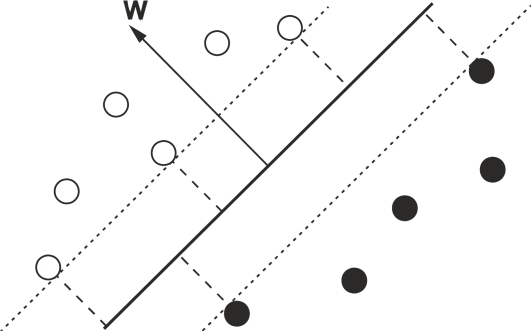
“However, in contrast to LDA, SVM selects the hyperplanes that maximize the margins, that is, the distance between the nearest training samples and the hyperplanes [236].”
MethodAn Information-Maximization Approach to Blind Separation and Blind Deconvolution
Bell, A. J., & Sejnowski, T. J. (1995) · Neural Computation · doi:10.1162/neco.1995.7.6.1129 · Cited by 8,986 · cited 1×
“Finally, s(t) and A are obtained from x(t) by means of certain algorithms, such as Infomax [162] or further modification of the Infomax [163].”
MethodBrain–computer interfaces for communication and control
Wolpaw, J. R., Birbaumer, N., McFarland, D. J., Pfurtscheller, G., & Vaughan, T. M. (2002) · Clinical Neurophysiology · doi:10.1016/s1388-2457(02)00057-3 · Cited by 7,927 · cited 2×
“Furthermore, BCI systems require real-time signal processing, and up until recently the requisite technology either did not exist or was extremely expensive [2].”
BackgroundEvent-related EEG/MEG synchronization and desynchronization: basic principles
Pfurtscheller, G., & Lopes da Silva, F. H. (1999) · Clinical Neurophysiology · doi:10.1016/s1388-2457(99)00141-8 · Cited by 7,328 · cited 1×
“Both rhythms are associated in such a way that some beta rhythms are harmonic mu rhythms, although some beta rhythms may also be independent [139].”
BackgroundStatistical pattern recognition: a review
Jain, A. K., Duin, P. W., & Mao, J. (2000) · IEEE Transactions on Pattern Analysis and Machine Intelligence · doi:10.1109/34.824819 · Cited by 6,767 · cited 1×
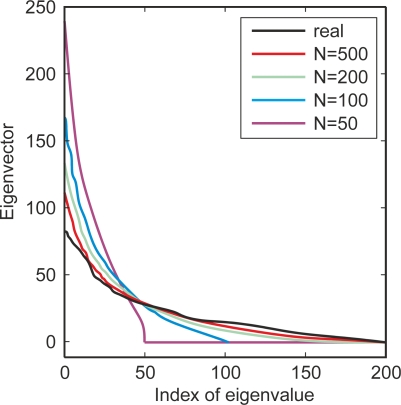
“training data needed to offer good results increases exponentially with the dimensionality of the feature vector [223].”
BackgroundThe ten-twenty electrode system of the international federation
Jasper, H. H. (1958) · Electroencephalography and Clinical Neurophysiology · Cited by 6,567
Neurophysiological investigation of the basis of the fMRI signal
Logothetis, N. K., Pauls, J., Augath, M., Trinath, T., & Oeltermann, A. (2001) · Nature · doi:10.1038/35084005 · Cited by 6,551 · cited 1×
“a correspondence between both does exist [86].”
Frequency Dependence of Signal Power and Spatial Reach of the Local Field Potential
Leski, S., Lindén, H., Tetzlaff, T., Pettersen, K. H., & Einevoll, G. T. (2013) · PubMed · doi:10.18154/rwth-conv-084442 · Cited by 3,639
Neuronal ensemble control of prosthetic devices by a human with tetraplegia
Hochberg, L. R., Serruya, M. D., Friehs, G. M., Mukand, J. A., Saleh, M., Caplan, A. H., Branner, A., Chen, D., Penn, R. D., & Donoghue, J. P. (2006) · Nature · doi:10.1038/nature04970 · Cited by 3,295 · cited 1×
“[287] implanted BrainGate sensors in the primary motor cortex of a tetraplegic patient to control a cursor.”
BackgroundFarwell, L. A., & Donchin, E. (1988) · Electroencephalography and Clinical Neurophysiology · doi:10.1016/0013-4694(88)90149-6 · Cited by 3,228 · cited 5×
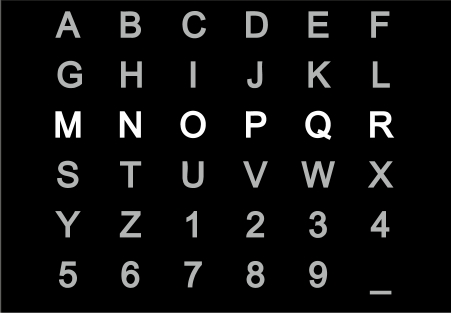
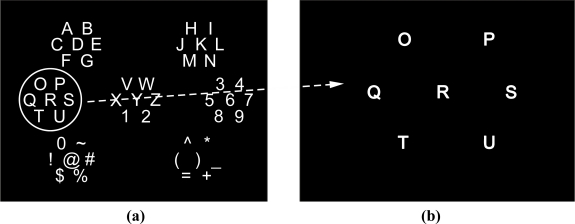
“A typical application of a BCI based on visual P300 evoked potentials comprises a matrix of letters, numbers, or other symbols or commands [123,127,128].”
BackgroundInfluential
Research works printed but not linked: 3
- Steven, L., and Giulio, T. (2009). The Neurology of Consciousness, Academic Press.
- Mellinger, 2007, An MEG-based brain-computer interface (BCI), Neuroimage, 36, 581, 10.1016/j.neuroimage.2007.03.019 · DOI · Paper page
- Tangermann, M., Krauledat, M., Grzeska, K., Sagebaum, M., Blankertz, B., Vidaurre, C., and Müller, K. (2008). Playing Pinball with non-invasive BCI. Proc. NIPS, 1641–1648.
Cited by
Items 501–600 of 1,005
Lin, X., Zhang, X., Chen, J., & Liu, J. (2025) · Advanced Materials · doi:10.1002/adma.202413938 · Cited by 27
Kaplan, A., Kochetova, A. G., Shishkin, S. L., Basyul, I. A., Ганин, И. П., Vasilev, A. N., & Либуркина, С. П. (2013) · Bulletin of Siberian Medicine · doi:10.20538/1682-0363-2013-2-21-29 · Cited by 35
Kirar, J. S., & Agrawal, R. K. (2016) · Biomedical Signal Processing and Control · doi:10.1016/j.bspc.2016.09.014 · Cited by 29
Comparison of EEG signal features and ensemble learning methods for motor imagery classification
Mohammadpour, M., Ghorbanian, M., & Mozaffari, S. (2016) · International Conference on Information and Knowledge Technology (IKT) · doi:10.1109/ikt.2016.7777767 · Cited by 25
Schmoigl-Tonis, M., Schranz, C., & Müller-Putz, G. (2023) · Frontiers in Human Neuroscience · doi:10.3389/fnhum.2023.1251690 · Cited by 29
Rogel, J. M. H., Beltrán, E. T. M., Pérez, M. Q., Bernal, S. L., Pérez, G. M., & Celdrán, A. H. (2024) · Cognitive Computation · doi:10.1007/s12559-023-10233-5 · Cited by 30
“Nevertheless, non-invasive BCIs data must be processed afterwards to remove artifacts caused by the subjects’ activity, such as eye blinkingorbodymovements[10,11].”
Faria, B. M., Reis, L. P., & Lau, N. (2012) · IEEE ... International Conference on Data Mining workshops · doi:10.1109/icdmw.2012.89 · Cited by 25
Rosas-Cholula, G., Ramírez-Cortés, J. M., Alarcon‐Aquino, V., Gómez‐Gil, P., Rangel‐Magdaleno, J., & Reyes-Garcia, C. A. (2013) · Sensors · doi:10.3390/s130810561 · Cited by 26
Zátonyi, A., Borhegyi, Z., Srivastava, M., Cserpán, D., Somogyvári, Z., Kisvárday, Z. F., & Fekete, Z. (2018) · Sensors and Actuators B Chemical · doi:10.1016/j.snb.2018.06.092 · Cited by 26
Khalaf, A. F., Sejdić, E., & Akçakaya, M. (2019) · Journal of Neuroscience Methods · doi:10.1016/j.jneumeth.2019.03.018 · Cited by 28
Brain-Computer Interfaces in Contemporary Art: A State of the Art and Taxonomy
Prpa, M., & Pasquier, P. (2019) · Springer eBooks · doi:10.1007/978-3-030-14323-7_3 · Cited by 28
Yao, D., Zhang, Y., Liu, T., Xu, P., Gong, D., Lu, J., Xia, Y., Luo, C., Guo, D., Dong, L., et al. (2020) · Cognitive Neurodynamics · doi:10.1007/s11571-020-09577-7 · Cited by 27
Kwon, M., Cho, H., Won, K., Ahn, M., & Jun, S. C. (2020) · Electronics · doi:10.3390/electronics9040690 · Cited by 25
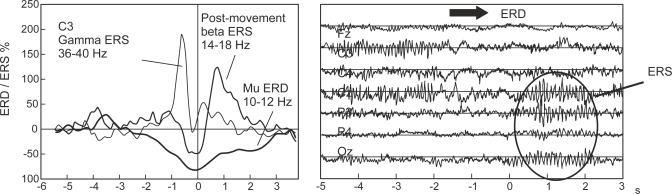
“The sensorimotor μ-rhythm and beta rhythm are related closely to MI because the alpha and beta powers are attenuated to a greater extent during motor imagination than during the resting state, and are representative features of the MI paradigm [11,12,29,30].”
BackgroundGamification of motor imagery brain-computer interface training protocols: A systematic review
Atilla, F., Postma, M., & Alimardani, M. (2024) · Computers in Human Behavior Reports · doi:10.1016/j.chbr.2024.100508 · Cited by 33
Raza, A., & Yusoff, M. Z. (2025) · IEEE Access · doi:10.1109/access.2025.3604528 · Cited by 37
Two-Wired Active Spring-Loaded Dry Electrodes for EEG Measurements
Lee, S., Shin, Y., Kumar, A., Kim, K., & Lee, H.-N. (2019) · Sensors · doi:10.3390/s19204572 · Cited by 24
Hybrid brain-computer interface with motor imagery and error-related brain activity
Mousavi, M., Krol, L. R., & de Sa, V. R. (2020) · Journal of Neural Engineering · doi:10.1088/1741-2552/abaa9d · Cited by 29
Kahanowich, N. D., & Sintov, A. (2021) · IEEE Robotics and Automation Letters · doi:10.1109/lra.2021.3057794 · Cited by 29
Liu, J., Ye, F., & Xiong, H. (2021) · Journal of Neural Engineering · doi:10.1088/1741-2552/ac1ed0 · Cited by 25
RetractedLeveraging Deep Learning Techniques to Improve P300-Based Brain Computer Interfaces
Da, I., Dui, L. G., Ferrante, S., Pedrocchi, A., & Antonietti, A. (2022) · IEEE Journal of Biomedical and Health Informatics · doi:10.1109/jbhi.2022.3174771 · Cited by 26
Siribunyaphat, N., & Punsawad, Y. (2023) · Sensors · doi:10.3390/s23042069 · Cited by 24
Zhao, R., Wang, Y., Cheng, X., Zhu, W., Meng, X., Niu, H., Cheng, J., & Liu, T. (2023) · Medicine in Novel Technology and Devices · doi:10.1016/j.medntd.2023.100215 · Cited by 30
Shuqfa, Z., Belkacem, A. N., & Lakas, A. (2023) · Sensors · doi:10.3390/s23115051 · Cited by 24
Combining EEG Microstates with fMRI Structural Features for Modeling Brain Activity
Michalopoulos, K., & Bourbakis, N. (2015) · International Journal of Neural Systems · doi:10.1142/s0129065715500410 · Cited by 28
Quadcopter control using a BCI
Rosca, S. D., Leba, M., Ionica, A. C., & Gămulescu, O. M. (2018) · IOP Conference Series Materials Science and Engineering · doi:10.1088/1757-899x/294/1/012048 · Cited by 24
On the Feasibility of Using an Ear-EEG to Develop an Endogenous Brain-Computer Interface
Choi, S.-I., Han, C. H., Choi, G.-Y., Shin, J., Song, K. S., Im, C., & Hwang, H.-J. (2018) · Sensors · doi:10.3390/s18092856 · Cited by 28
“There are two approaches to develop EEG-based BCI systems according to whether external stimuli are used or not [21].”
Asynchronous Control of P300-Based Brain–Computer Interfaces Using Sample Entropy
Martínez-Cagigal, V., Santamaría-Vázquez, E., & Hornero, R. (2019) · Entropy · doi:10.3390/e21030230 · Cited by 27
“This procedure can be addressed as a feature-extraction stage that is common in P300-based BCI studies [3,5,6,8,9,16–20].”
BackgroundMethodResultInfluentialKinney‐Lang, E., Yoong, M. M., Hunter, M. B., Tallur, K. K., Shetty, J., McLellan, A. E., Chin, R., & Escudero, J. (2018) · Epilepsy & Behavior · doi:10.1016/j.yebeh.2018.11.011 · Cited by 31
Quiles, E., Suay, F., Candela, G., Chio, N., Jiménez, M., & Álvarez-Kurogi, L. (2020) · International Journal of Environmental Research and Public Health · doi:10.3390/ijerph17030699 · Cited by 25
A Brute-Force CNN Model Selection for Accurate Classification of Sensorimotor Rhythms in BCIs
Abibullaev, B., Dolzhikova, I., & Zollanvari, A. (2020) · IEEE Access · doi:10.1109/access.2020.2997681 · Cited by 25
SessionNet: Feature Similarity-Based Weighted Ensemble Learning for Motor Imagery Classification
Lee, B.-H., Jeong, J.-H., & Lee, S. (2020) · IEEE Access · doi:10.1109/access.2020.3011140 · Cited by 29
Choi, I., Kwon, G. H., Lee, S., & Nam, C. S. (2020) · Brain Sciences · doi:10.3390/brainsci10080512 · Cited by 29
“the nature of brain signals that have non-stationarity and inter- and intra-variability [84].”
BackgroundLightweight Building of an Electroencephalogram-Based Emotion Detection System
Al-Nafjan, A., Alharthi, K., & Kurdi, H. A. (2020) · Brain Sciences · doi:10.3390/brainsci10110781 · Cited by 25
“BCIs have been identified as an emerging technology in many trend reports [1,2], and the number of BCI devices is expected to grow rapidly [3].”
BackgroundInfluentialPatent landscape of brain–machine interface technology
Greenberg, A., Cohen, A., & Grewal, M. (2021) · Nature Biotechnology · doi:10.1038/s41587-021-01071-7 · Cited by 26
P300 event-related potential detection using one-dimensional convolutional capsule networks
Liu, X., Xie, Q., Lv, J., Huang, H., & Wang, W. (2021) · Expert Systems with Applications · doi:10.1016/j.eswa.2021.114701 · Cited by 23
Meta-Review on Brain-Computer Interface (BCI) in the Metaverse
HamlAbadi, K. G., Laamarti, F., & Saddik, A. E. (2024) · ACM Transactions on Multimedia Computing Communications and Applications · doi:10.1145/3696109 · Cited by 24
EEG channel and feature investigation in binary and multiple motor imagery task predictions
Değirmenci, M., Yüce, Y. K., Perc, M., & İşler, Y. (2024) · Frontiers in Human Neuroscience · doi:10.3389/fnhum.2024.1525139 · Cited by 28
Agounad, S., Tarahi, O., Moufassih, M., Hamou, S., & Mazid, A. (2024) · Circuits Systems and Signal Processing · doi:10.1007/s00034-024-02936-3 · Cited by 34
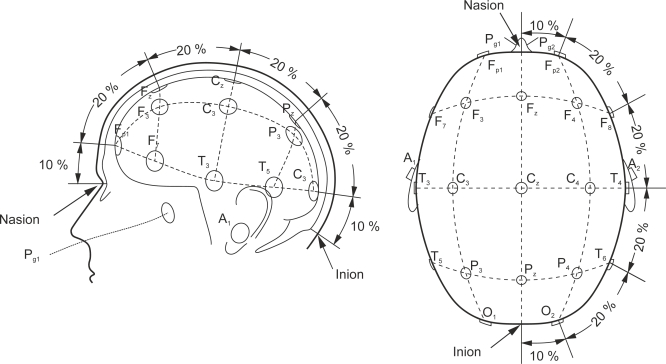
“Each electrode site has a letter referring to the concerned lobe and a given number: F stands Frontal, T: Temporal, P: Parietal, O: Occipital, C: Central, the "z" (zero) refers to an electrode placed on the midline of the head [90, 99].”
Towards Brain Computer Interfaces for Recreational Activities: Piloting a Drone
Kosmyna, N., Tarpin-Bernard, F., & Rivet, B. (2015) · Lecture notes in computer science · doi:10.1007/978-3-319-22701-6_37 · Cited by 25
Brain–computer interfaces and dualism: a problem of brain, mind, and body
Lee, J. (2014) · AI & Society · doi:10.1007/s00146-014-0545-8 · Cited by 26
Bidirectional feedback in motor imagery BCIs
Kosmyna, N., Tarpin-Bernard, F., & Rivet, B. (2014) · CHI Conference Extended Abstracts on Human Factors in Computing Systems (CHI EA) · doi:10.1145/2559206.2574820 · Cited by 23
Active Learning for Black-Box Adversarial Attacks in EEG-Based Brain-Computer Interfaces
Jiang, X., Zhang, X., & Wu, D. (2019) · IEEE Symposium Series on Computational Intelligence (SSCI) · doi:10.1109/ssci44817.2019.9002719 · Cited by 28
Multiclass MI-Task Classification Using Logistic Regression and Filter Bank Common Spatial Patterns
Joy, M. M. H., Hasan, M. K., Miah, A. S. M., Ahmed, A., Tohfa, S. A., Bhuaiyan, M. F. I., Zannat, A., & Rashid, M. M. (2020) · Communications in computer and information science · doi:10.1007/978-981-15-6648-6_13 · Cited by 27
Petrosyan, A., Voskoboinikov, A., Sukhinin, D., Makarova, A. V., Skalnaya, A. A., Arkhipova, N., Sinkin, M. V., & Ossadtchi, A. E. (2022) · Journal of Neural Engineering · doi:10.1088/1741-2552/aca1e1 · Cited by 28
Bibliometric analysis on Brain-computer interfaces in a 30-year period
Yin, Z., Wan, Y., Fang, H., Li, L., Wang, T., Wang, Z., & Tan, D. (2022) · Applied Intelligence · doi:10.1007/s10489-022-04226-4 · Cited by 26
“A brain-computer interface (BCI) is a communication system that allows brain activity to control a computer or external device alone [1].”
BackgroundWang, W., Li, B., Wang, H., Wang, X., Qin, Y., Shi, X., & Liu, S. (2023) · Medical & Biological Engineering & Computing · doi:10.1007/s11517-023-02931-x · Cited by 27
“The BCI system is primarily based on two types of brain activities: electrophysiology and hemodynamics [4].”
Mondini, V., Sburlea, A. I., & Müller-Putz, G. (2024) · Scientific Reports · doi:10.1038/s41598-024-55413-x · Cited by 28
Chen, X., Wang, Z., & Wu, D. (2024) · IEEE Transactions on Neural Systems and Rehabilitation Engineering · doi:10.1109/tnsre.2024.3391936 · Cited by 32
Highly precise nanofiber web-based dry electrodes for vital signal monitoring
Jin, L. S., Kim, K. J., Song, E. H., Ahn, Y. J., Jeong, Y. J., Oh, T. I., & Woo, E. J. (2016) · RSC Advances · doi:10.1039/c6ra00079g · Cited by 23
EEG-Based BCI System Using Adaptive Features Extraction and Classification Procedures
Mondini, V., Mangia, A. L., & Cappello, A. (2016) · Computational Intelligence and Neuroscience · doi:10.1155/2016/4562601 · Cited by 26
Fast detection of covert visuospatial attention using hybrid N2pc and SSVEP features
Xu, M., Wang, Y., Nakanishi, M., Wang, Y.-T., Qi, H., Jung, T., & Ming, D. (2016) · Journal of Neural Engineering · doi:10.1088/1741-2560/13/6/066003 · Cited by 24
Fedotchev, A. I., Parin, S. B., Polevaya, S. A., & Velikova, S. (2017) · Современные технологии в медицине · doi:10.17691/stm2017.9.1.22 · Cited by 35
Nanostructured interfaces for probing and facilitating extracellular electron transfer
Hsu, L. H. H., Deng, P. J., Zhang, Y., Nguyen, H. N., & Jiang, X. (2018) · Journal of Materials Chemistry B · doi:10.1039/c8tb01598h · Cited by 24
A multi-target brain-computer interface based on code modulated visual evoked potentials
Liu, Y., Wei, Q., & Lu, Z. (2018) · PLoS ONE · doi:10.1371/journal.pone.0202478 · Cited by 31
Başaklar, T., Tuncel, Y., & Ider, Y. Z. (2019) · Biomedical Physics & Engineering Express · doi:10.1088/2057-1976/ab0cee · Cited by 23
Four-Class Motor Imagery EEG Signal Classification using PCA, Wavelet and Two-Stage Neural Network
Rahman, M. A., Khanam, F., Kazem, M., Khurshed, M., & Ahmad, M. (2019) · International Journal of Advanced Computer Science and Applications · doi:10.14569/ijacsa.2019.0100562 · Cited by 23
Cognitive Imagery Classification of EEG Signals using CSP-based Feature Selection Method
Hooda, N., & Kumar, N. (2019) · IETE Technical Review · doi:10.1080/02564602.2019.1620138 · Cited by 23
“These changes do not impact the academic content of the article. potentials), SCP (slow cortical potential), SMR (sensorimotor rhythm) and ERP (event-related potentials), to translate the brain activities to external commands offline as well as for real-time control [1,19].”
BackgroundConvolutional neural networks and genetic algorithm for visual imagery classification
Llorella, F. R., Patow, G., & Azorín, J. M. (2020) · Physical and Engineering Sciences in Medicine · doi:10.1007/s13246-020-00894-z · Cited by 28
EEGG: An Analytic Brain-Computer Interface Algorithm
Liu, G., & Wang, J. (2022) · IEEE Transactions on Neural Systems and Rehabilitation Engineering · doi:10.1109/tnsre.2022.3149654 · Cited by 23
Artificial synaptic devices based on biomimetic electrochemistry: A review
Baek, J. H., Im, I. H., Hur, E., Park, J., Lim, J., Kim, S., Kang, K., Kim, S. Y., Song, J. Y., & Jang, H. W. (2024) · Materials Research Bulletin · doi:10.1016/j.materresbull.2024.112803 · Cited by 23
“Demand for advanced neuromorphic systems capable of emulating the intricate functionality of biological neural networks has risen in recent years, driven by the expanding horizons of artificial intelligence, robotics, and brain-computer interfaces [1 – 5].”
BackgroundXu, M., Liu, J., Chen, L., Qi, H., He, F., Zhou, P., Wan, B., & Ming, D. (2016) · International Journal of Neural Systems · doi:10.1142/s0129065716500106 · Cited by 25
Decoding Steady-State Visual Evoked Potentials From Electrocorticography
Wittevrongel, B., Khachatryan, E., Hnazaee, M. F., Camarrone, F., Carrette, E., Taeye, L. D., Meurs, A., Boon, P., Roost, D. V., & Hulle, M. M. V. (2018) · Frontiers in Neuroinformatics · doi:10.3389/fninf.2018.00065 · Cited by 27
“In the discrete setting, visual paradigms vastly outperform sensorimotor paradigms in terms of accuracy, number of selectable targets and information transfer rate (ITR) (Nicolas-Alonso and Gomez-Gil, 2012).”
BackgroundSpatial filtering based on Riemannian distance to improve the generalization of ErrP classification
Cruz, A., Pires, G., & Nunes, U. (2021) · Neurocomputing · doi:10.1016/j.neucom.2021.10.078 · Cited by 22
SSVEP-based brain-computer interfaces are vulnerable to square wave attacks
Bian, R., Meng, L., & Wu, D. (2022) · Science China Information Sciences · doi:10.1007/s11432-022-3440-5 · Cited by 23
Motor Imagery EEG Classification Based on Transfer Learning and Multi-Scale Convolution Network
Chang, Z., Zhang, C., & Li, C. (2022) · Micromachines · doi:10.3390/mi13060927 · Cited by 24
Brain-computer interface (BCI)-generated speech to control domotic devices
Velasco-Álvarez, F., Fernández-Rodríguez, Á., & Ron-Angevín, R. (2022) · Neurocomputing · doi:10.1016/j.neucom.2022.08.068 · Cited by 23
Lee, D., Park, S.-H., & Lee, S.-G. (2017) · Sensors · doi:10.3390/s17102282 · Cited by 25
He, H., & Wu, D. (2017) · Lecture Notes in Computer Science · doi:10.1007/978-3-319-70096-0_83 · Cited by 22
Dunbar, J., Gilbert, J. E., & Lewis, B. (2020) · Journal of Safety Research · doi:10.1016/j.jsr.2020.04.006 · Cited by 24
Proposals and Comparisons from One-Sensor EEG and EOG Human-Machine Interfaces
Laport, F., Iglesia, D. I., Dapena, A., Castro, P. M., & Vázquez‐Araújo, F. J. (2021) · Sensors · doi:10.3390/s21062220 · Cited by 22
fNIRS Signal Classification Based on Deep Learning in Rock-Paper-Scissors Imagery Task
Ma, T., Chen, W., Li, X. Y., Xia, Y., Zhu, X., & He, S. (2021) · Applied Sciences · doi:10.3390/app11114922 · Cited by 23
A hybrid ICA-wavelet transform for automated artefact removal in EEG-based emotion recognition
Bigirimana, A. D., Siddique, N. H., & Coyle, D. (2016) · Conference proceedings/Conference proceedings - IEEE International Conference on Systems, Man, and Cybernetics · doi:10.1109/smc.2016.7844928 · Cited by 24
Keutayeva, A., Nwachukwu, C. J., Alaran, M., Otarbay, Z., & Abibullaev, B. (2025) · IEEE Access · doi:10.1109/access.2025.3564328 · Cited by 22
Driver drowsiness detection using heart rate and behavior methods: A study
Wadhwa, A., & Roy, S. S. (2020) · Elsevier eBooks · doi:10.1016/b978-0-12-819314-3.00011-2 · Cited by 25
Annaby, M. H., Said, M. H., Eldeib, A. M., & Rushdi, M. A. (2021) · Biomedical Signal Processing and Control · doi:10.1016/j.bspc.2021.102831 · Cited by 23
Floreani, E. D., Rowley, D., Kelly, D., Kinney‐Lang, E., & Kirton, A. (2022) · Frontiers in Human Neuroscience · doi:10.3389/fnhum.2022.1007199 · Cited by 21
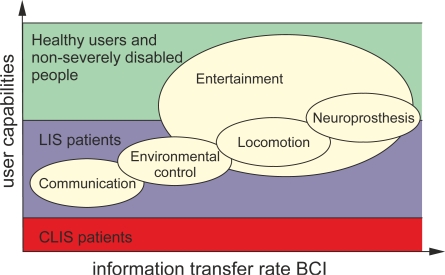
“BCIs are being explored across a spectrum of use including for the restoration, augmentation and enhancement of communication, rehabilitation, environmental control, entertainment and locomotion for individuals with disabilities (Nicolas-Alonso and Gomez-Gil, 2012).”
BackgroundVisual and haptic feedback in detecting motor imagery within a wearable brain–computer interface
Arpaïa, P., Coyle, D., Donnarumma, F., Espósito, A., Natalizio, A., & Parvis, M. (2022) · Measurement · doi:10.1016/j.measurement.2022.112304 · Cited by 24
“In addition, the Unity application also dictates the timing for the motor imagery tasks (synchronous cue-based paradigm [35]).”
Multimodal motor imagery decoding method based on temporal spatial feature alignment and fusion
Zhang, Y., Qiu, S., & He, H. (2023) · Journal of Neural Engineering · doi:10.1088/1741-2552/acbfdf · Cited by 24
Speech2EEG: Leveraging Pretrained Speech Model for EEG Signal Recognition
Zhou, J., Duan, Y., Zou, Y., Chang, Y., Wang, Y., & Lin, C. (2023) · IEEE Transactions on Neural Systems and Rehabilitation Engineering · doi:10.1109/tnsre.2023.3268751 · Cited by 27
Adding Human Learning in Brain--Computer Interfaces (BCIs): Towards a Practical Control Modality
Kosmyna, N., Tarpin-Bernard, F., & Rivet, B. (2015) · ACM Transactions on Computer-Human Interaction · doi:10.1145/2723162 · Cited by 25
Classification of motor imagery tasks for electrocorticogram based brain-computer interface
Xu, F., Zhou, W., Zhen, Y., & Yuan, Q. (2014) · Biomedical Engineering Letters · doi:10.1007/s13534-014-0128-0 · Cited by 24
Neural Control using EEG as a BCI Technique for Low Cost Prosthetic Arms
Diwakar, S., Bodda, S., Nutakki, C. S., Vijayan, A., Achuthan, K., & Nair, B. G. (2014) · International Conference on Neural Computation Theory and Applications · doi:10.5220/0005134802700275 · Cited by 23
“The quality of EEG signals are usually affected by noise from scalp, skull and a significant contribution from background noise (Nicolas-Alonso and Gomez-Gil, 2012).”
BackgroundZhao, Y., Tang, L. J., Rennaker, R. L., Hutchens, C., & Ibrahim, T. S. (2013) · PLoS ONE · doi:10.1371/journal.pone.0077759 · Cited by 28
Diana, O., & Mihaela, A. (2015) · INTERNATIONAL JOURNAL OF ADVANCED RESEARCH IN ARTIFICIAL INTELLIGENCE · doi:10.14569/ijarai.2015.040102 · Cited by 21
Khalaf, A. F., Sybeldon, M., Sejdić, E., & Akçakaya, M. (2017) · Journal of Neuroscience Methods · doi:10.1016/j.jneumeth.2017.10.003 · Cited by 24
Sinusoidal Signal Assisted Multivariate Empirical Mode Decomposition for Brain–Computer Interfaces
Ge, S., Wang, H., Zheng, W., Shi, Y., Wang, R., Lin, P., Gao, J., Sun, G., Iramina, K., Yang, Y., et al. (2017) · IEEE Journal of Biomedical and Health Informatics · doi:10.1109/jbhi.2017.2775657 · Cited by 21
“ABRAIN-COMPUTER brain-computer interface (BCI) establishes direct communication between the human brain and computers or communication devices without involving neuromuscular pathways [1].”
BackgroundMethodToward Adaptive Deep Brain Stimulation in Parkinson’s Disease: A Review
Mohammed, A., Bayford, R. H., & Demosthenous, A. (2018) · Neurodegenerative Disease Management · doi:10.2217/nmt-2017-0050 · Cited by 30
Pérez-Zapata, A. F., Cardona-Escobar, A. F., Jaramillo-Garzon, J. A., & Díaz, G. M. (2018) · Lecture notes in computer science · doi:10.1007/978-3-319-91470-1_14 · Cited by 25
Song, Y.-J., & Sepulveda, F. (2018) · IEEE Transactions on Neural Systems and Rehabilitation Engineering · doi:10.1109/tnsre.2018.2847316 · Cited by 21
“artefacts [1].”
Advanced Electrical and Optical Microsystems for Biointerfacing
Obaid, S. N., Chen, Z., & Lu, L. (2020) · Advanced Intelligent Systems · doi:10.1002/aisy.202000091 · Cited by 22
SSVEP-assisted RSVP brain–computer interface paradigm for multi-target classification
Ko, L., Sankar, D. S. V., Huang, Y., Lu, Y.-C., Shaw, S., & Jung, T. (2020) · Journal of Neural Engineering · doi:10.1088/1741-2552/abd1c0 · Cited by 25
Investigating the Emotiv EPOC for cognitive control in limited training time
Lang, M. (2012) · UC Research Repository (University of Canterbury) · doi:10.26021/2850 · Cited by 32
Arif, S., Khan, M. J., Naseer, N., Hong, K., Sajid, H., & Ayaz, Y. (2021) · Frontiers in Human Neuroscience · doi:10.3389/fnhum.2021.658444 · Cited by 20
Chen, L., Zhang, J., Wang, Z., Zhang, X., Zhang, L., Xu, M., Liu, S., & Ming, D. (2021) · IEEE Transactions on Neural Systems and Rehabilitation Engineering · doi:10.1109/tnsre.2021.3131497 · Cited by 25
Wang, P., Wang, M., Zhou, Y., Xu, Z., & Zhang, D. (2022) · Frontiers of Computer Science · doi:10.1007/s11704-021-0587-2 · Cited by 24
Kiani, M., Andreu-Pérez, J., Hagras, H., Rigato, S., & Filippetti, M. L. (2022) · IEEE Computational Intelligence Magazine · doi:10.1109/mci.2021.3129956 · Cited by 28
Kosal, M. E., & Putney, J. (2022) · Politics and the Life Sciences · doi:10.1017/pls.2022.2 · Cited by 32
Optimizing Motor Imagery Parameters for Robotic Arm Control by Brain-Computer Interface
Hayta, Ü., Irimia, D.-C., Guger, C., Erkutlu, İ., & Guzelbey, I. H. (2022) · Brain Sciences · doi:10.3390/brainsci12070833 · Cited by 22
“In SMR-based BCI applications, alpha oscillations (7–13 Hz) also referred to as mu rhythms, and beta oscillations (13–30 Hz) are mostly used [10].”
MethodExecution and perception of upper limb exoskeleton for stroke patients: a systematic review
Xu, P., Xia, D., Li, J., Zhou, J., & Xie, L. (2022) · Intelligent Service Robotics · doi:10.1007/s11370-022-00435-5 · Cited by 22
“However, there are relatively few identifiable signals with the limitations of current technology and most non-invasive EEG caps [167].”
BackgroundMagnetoencephalogram-based brain–computer interface for hand-gesture decoding using deep learning
Bu, Y., Harrington, D. L., Lee, R. R., Shen, Q., Angeles‐Quinto, A., Ji, Z., Hansen, H., Hernandez-Lucas, J., Baumgartner, J., Song, T., et al. (2023) · Cerebral Cortex · doi:10.1093/cercor/bhad173 · Cited by 25
Metadata
- Authors
- Nicolas-Alonso, L. F., & Gomez-Gil, J.
- Affiliations
- Universidad de Valladolid (ES)
- Department of Signal Theory, Communications and Telematics Engineering, University of Valladolid, Valladolid 47011, Spain
- Corresponding author
- Nicolas-Alonso, Luis Fernando
- Venue
- Sensors
- Publisher
- MDPI AG
- Published
- 2012-01-31
- Volume
- 12
- Issue
- 2
- Pages
- 1211-1279
- ISSN
- 1424-8220 (ISSN-L)
- PMC
- PMC3304110
- OpenAlex
- W2128909182
- Cited by
- 2,143
- References
- 325
- Citations by year
- 2026: 137 · 2025: 186 · 2024: 178 · 2023: 181 · 2022: 201 · 2021: 220 · 2020: 185 · 2019: 185 · 2018: 177 · 2017: 134 · 2016: 118 · 2015: 91 · 2014: 78 · 2013: 48 · 2012: 20
- FWCI
- 5.81
- Type
- journal article
- Language
- en
- Open access
- gold
- doi.org
- Licence
- Locations
- Sensors (publishedVersion, cc-by)
- PubMed Central (publishedVersion, cc-by)
- PubMed (publishedVersion)
- Hispana (publishedVersion, cc-by)
- DOAJ (DOAJ: Directory of Open Access Journals) (submittedVersion, cc-by-sa)
- University of Valladolid Documentary Repository (University of Valladolid) (submittedVersion, cc-by)
- Topics
- Life Sciences › Neuroscience › Cognitive Neuroscience › EEG and Brain-Computer Interfaces
- Physical Sciences › Computer Science › Human-Computer Interaction › Gaze Tracking and Assistive Technology
- Physical Sciences › Engineering › Biomedical Engineering › Muscle activation and electromyography studies
- Keywords
- brain-computer interface, neuroimaging, electrophysiological signals, signal preprocessing, artifact removal, feature extraction, brain signal classification, paralysis, locked-in syndrome, amyotrophic lateral sclerosis, spinal cord injury, brain-computer interface applications
- MeSH terms
- Algorithms, Brain, Electroencephalography, Humans, Man-Machine Systems, Pattern Recognition, Automated, Signal Processing, Computer-Assisted, Transducers, User-Computer Interface
About these checks
Registry, retraction, Cites and statistics results are computed, not judged, with one exception: a printed reference that no index lists is read once by a model before it counts as a citation error. Claims are extracted by a model and kept only when their quote appears verbatim in the text; each cited source is then checked, with a model’s help, for whether it says what the claim relies on. Those verdicts can be wrong — read the claim’s quote and the cited source before relying on one.
Statistics and arithmetic are recomputed, not judged.
Confidence bands are shown only for fields calibrated on our annotated test set. None is calibrated yet, so no band is shown.
What counts as a claim ›How we measure confidence ›How we check this ›
Are you an author, or do you see a problem with this page? Request a review
Data sources
Bibliographic data: Semantic Scholar, OpenAlex, Crossref.
Contains information from the Semantic Scholar Academic Graph Datasets, made available under the ODC Attribution License (ODC-BY 1.0).
Semantic Scholar’s data is described in: Kinney, R., et al. (2023). The Semantic Scholar Open Data Platform. arXiv:2301.10140.
