

Brain Computer Interfaces, a Review
Open accessThe DOI matches its Crossref record; 322 of the 325 references it cites were found in a registry or an index.
Abstract
A brain-computer interface (BCI) is a hardware and software communications system that permits cerebral activity alone to control computers or external devices. The immediate goal of BCI research is to provide communications capabilities to severely disabled people who are totally paralyzed or ‘locked in’ by neurological neuromuscular disorders, such as amyotrophic lateral sclerosis, brain stem stroke, or spinal cord injury. Here, we review the state-of-the-art of BCIs, looking at the different steps that form a standard BCI: signal acquisition, preprocessing or signal enhancement, feature extraction, classification and the control interface. We discuss their advantages, drawbacks, and latest advances, and we survey the numerous technologies reported in the scientific literature to design each step of a BCI. First, the review examines the neuroimaging modalities used in the signal acquisition step, each of which monitors a different functional brain activity such as electrical, magnetic or metabolic activity. Second, the review discusses different electrophysiological control signals that determine user intentions, which can be detected in brain activity. Third, the review includes some techniques used in the signal enhancement step to deal with the artifacts in the control signals and improve the performance. Fourth, the review studies some mathematic algorithms used in the feature extraction and classification steps which translate the information in the control signals into commands that operate a computer or other device. Finally, the review provides an overview of various BCI applications that control a range of devices.
Overview
The claims and statistics of this paper haven’t been checked yet.
Free: it reads the open-access text and checks the first 5 claims that cite a source we can check. Create a free account to check every claim.
Integrity signals
Registry
Cites
Statistics
Figures
Verification
Claims the paper makes
The claims and statistics of this paper haven’t been checked yet.
Free: it reads the open-access text and checks the first 5 claims that cite a source we can check. Create a free account to check every claim.
Claims other papers make about this one
Each is checked against this paper’s own text: does it say what the citing paper says it does?
The source backs part of the claim, not all of it — or backs it for a different population, condition or comparison.
In the citing paper
“Noninvasive EEG based BCI could potentially serve the needs of a large population10.”
From Noninvasive Electroencephalogram Based Control of a Robotic Arm for Reach and Grasp Tasks (2016) · cites this paper as [10]
Experimental — accuracy not yet measuredThe cited source says what the claim attributes to it.
In the citing paper
“this response can be used as a neural signal in EEG-based brain-computer interfaces (BCIs), enabling direct communication between the brain and surroundings without the involvement of peripheral nerves or muscles (Nicolas-Alonso and Gomez-Gil, 2012).”
From A Lightweight Multi-Scale Convolutional Neural Network for P300 Decoding: Analysis of Training Strategies and Uncovering of Network Decision (2021) · cites this paper as Nicolas-Alonso and Gomez-Gil, 2012
The check wasn’t confident either way, so it gives no verdict — never disputed.
In the citing paper
“Among others, external influences such as stress, emotion, and work impact these metrics and can be used to infer those [162].”
From A Survey on Measuring Cognitive Workload in Human-Computer Interaction (2023) · cites this paper as [162]
Experimental — accuracy not yet measured
Self-check
Percentages, sums and reported differences re-computed from the paper’s own numbers.
The self-check needs the paper’s full text.
Citations
Cites
A Tutorial on Support Vector Machines for Pattern Recognition
Burges, C. J. C. (1998) · Data Mining and Knowledge Discovery · doi:10.1023/a:1009715923555 · Cited by 16,429 · cited 1×
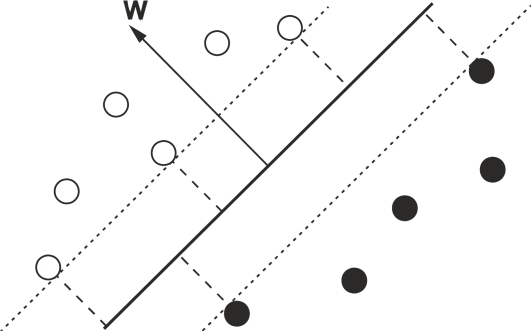
“However, in contrast to LDA, SVM selects the hyperplanes that maximize the margins, that is, the distance between the nearest training samples and the hyperplanes [236].”
MethodAn Information-Maximization Approach to Blind Separation and Blind Deconvolution
Bell, A. J., & Sejnowski, T. J. (1995) · Neural Computation · doi:10.1162/neco.1995.7.6.1129 · Cited by 8,986 · cited 1×
“Finally, s(t) and A are obtained from x(t) by means of certain algorithms, such as Infomax [162] or further modification of the Infomax [163].”
MethodBrain–computer interfaces for communication and control
Wolpaw, J. R., Birbaumer, N., McFarland, D. J., Pfurtscheller, G., & Vaughan, T. M. (2002) · Clinical Neurophysiology · doi:10.1016/s1388-2457(02)00057-3 · Cited by 7,927 · cited 2×
“Furthermore, BCI systems require real-time signal processing, and up until recently the requisite technology either did not exist or was extremely expensive [2].”
BackgroundEvent-related EEG/MEG synchronization and desynchronization: basic principles
Pfurtscheller, G., & Lopes da Silva, F. H. (1999) · Clinical Neurophysiology · doi:10.1016/s1388-2457(99)00141-8 · Cited by 7,328 · cited 1×
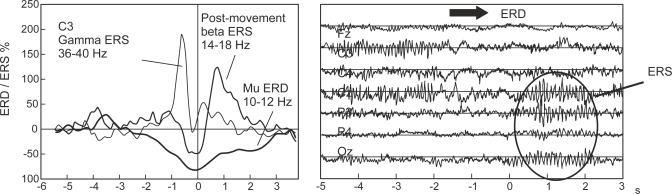
“Both rhythms are associated in such a way that some beta rhythms are harmonic mu rhythms, although some beta rhythms may also be independent [139].”
BackgroundStatistical pattern recognition: a review
Jain, A. K., Duin, P. W., & Mao, J. (2000) · IEEE Transactions on Pattern Analysis and Machine Intelligence · doi:10.1109/34.824819 · Cited by 6,767 · cited 1×
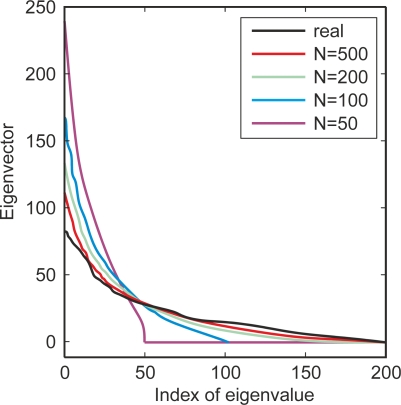
“training data needed to offer good results increases exponentially with the dimensionality of the feature vector [223].”
BackgroundThe ten-twenty electrode system of the international federation
Jasper, H. H. (1958) · Electroencephalography and Clinical Neurophysiology · Cited by 6,567
Neurophysiological investigation of the basis of the fMRI signal
Logothetis, N. K., Pauls, J., Augath, M., Trinath, T., & Oeltermann, A. (2001) · Nature · doi:10.1038/35084005 · Cited by 6,551 · cited 1×
“a correspondence between both does exist [86].”
Frequency Dependence of Signal Power and Spatial Reach of the Local Field Potential
Leski, S., Lindén, H., Tetzlaff, T., Pettersen, K. H., & Einevoll, G. T. (2013) · PubMed · doi:10.18154/rwth-conv-084442 · Cited by 3,639
Neuronal ensemble control of prosthetic devices by a human with tetraplegia
Hochberg, L. R., Serruya, M. D., Friehs, G. M., Mukand, J. A., Saleh, M., Caplan, A. H., Branner, A., Chen, D., Penn, R. D., & Donoghue, J. P. (2006) · Nature · doi:10.1038/nature04970 · Cited by 3,295 · cited 1×
“[287] implanted BrainGate sensors in the primary motor cortex of a tetraplegic patient to control a cursor.”
BackgroundFarwell, L. A., & Donchin, E. (1988) · Electroencephalography and Clinical Neurophysiology · doi:10.1016/0013-4694(88)90149-6 · Cited by 3,228 · cited 5×
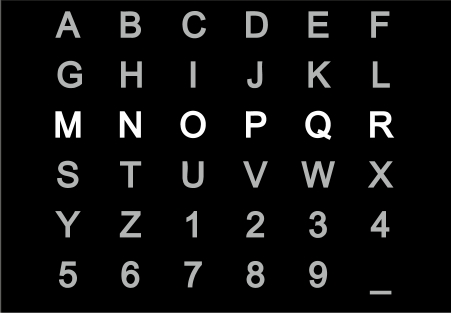
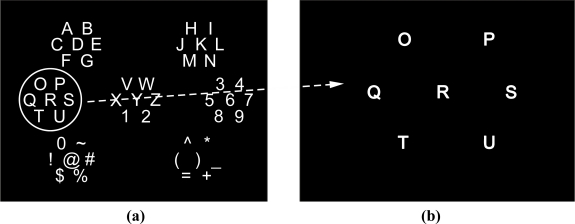
“A typical application of a BCI based on visual P300 evoked potentials comprises a matrix of letters, numbers, or other symbols or commands [123,127,128].”
BackgroundInfluential
Research works printed but not linked: 3
- Steven, L., and Giulio, T. (2009). The Neurology of Consciousness, Academic Press.
- Mellinger, 2007, An MEG-based brain-computer interface (BCI), Neuroimage, 36, 581, 10.1016/j.neuroimage.2007.03.019 · DOI · Paper page
- Tangermann, M., Krauledat, M., Grzeska, K., Sagebaum, M., Blankertz, B., Vidaurre, C., and Müller, K. (2008). Playing Pinball with non-invasive BCI. Proc. NIPS, 1641–1648.
Cited by
Items 201–300 of 1,005
Brain Computer Interface: A Review
Fouad, M. M., Amin, K. M., El-Bendary, N., & Hassanien, A. E. (2014) · Intelligent systems reference library · doi:10.1007/978-3-319-10978-7_1 · Cited by 83
Bashar, S. K., & Bhuiyan, M. I. H. (2016) · Engineering Science and Technology an International Journal · doi:10.1016/j.jestch.2016.04.009 · Cited by 84
Ali, O., Saif-ur-Rehman, M., Glasmachers, T., Iossifidis, I., & Klaes, C. (2023) · Computers in Biology and Medicine · doi:10.1016/j.compbiomed.2023.107649 · Cited by 79
Alam, M., Rodrigues, W., Pham, B., & Thakor, N. V. (2016) · Brain Research · doi:10.1016/j.brainres.2016.05.039 · Cited by 78
A new parameter tuning approach for enhanced motor imagery EEG signal classification
Kumar, S., & Sharma, A. K. (2018) · Medical & Biological Engineering & Computing · doi:10.1007/s11517-018-1821-4 · Cited by 70
Prediction of SSVEP-based BCI performance by the resting-state EEG network
Zhang, Y., Xu, P., Guo, D., & Yao, D. (2013) · Journal of Neural Engineering · doi:10.1088/1741-2560/10/6/066017 · Cited by 68
Intracranial EEG fluctuates over months after implanting electrodes in human brain
Ung, H., Baldassano, S. N., Bink, H., Krieger, A. Μ., Roberson, S. W., Vitale, F., Wu, C., Freestone, D. R., Nurse, E. S., Leyde, K. W., et al. (2017) · Journal of Neural Engineering · doi:10.1088/1741-2552/aa7f40 · Cited by 72
“For example, line length trends shows patients that appear stable (3), quickly enter a reference range (1, 5, 7, 10, 14, 15), show a more gradual trend towards a defined reference range (4, 6, 8, 9, 11, 13), or appear to be relatively unstable (2, 12) (Figure 6).”
Evaluating If Children Can Use Simple Brain Computer Interfaces
Zhang, J., Jadavji, Z., Zewdie, E., & Kirton, A. (2019) · Frontiers in Human Neuroscience · doi:10.3389/fnhum.2019.00024 · Cited by 83
“Imagined motor movements of the body generate reproducible alterations in sensorimotor rhythms such as EEG oscillations in the mu (7–13 Hz) and beta (13–30 Hz) bands (Nicolas-Alonso and Gomez-Gil, 2012).”
BackgroundA review on transfer learning for brain-computer interface classification
Wang, P., Lu, J., Zhang, B., & Tang, Z. (2015) · 2015 5th International Conference on Information Science and Technology (ICIST) · doi:10.1109/icist.2015.7288989 · Cited by 65
Zhang, X., Wu, D., Ding, L., Luo, H., Lin, C.-T., Jung, T., & Chavarriaga, R. (2020) · National Science Review · doi:10.1093/nsr/nwaa233 · Cited by 85
“Electroencephalogram (EEG), usually measured from the scalp, may be the most popular one due to its simplicity and low cost [5].”
BackgroundNoninvasive Brain–Machine Interfaces for Robotic Devices
Tonin, L., & Millán, J. D. R. (2020) · Annual Review of Control Robotics and Autonomous Systems · doi:10.1146/annurev-control-012720-093904 · Cited by 75
Analyzing Classification Performance of fNIRS-BCI for Gait Rehabilitation Using Deep Neural Networks
Hamid, H., Naseer, N., Nazeer, H., Khan, M. J., Khan, R. A., & Khan, U. S. (2022) · Sensors · doi:10.3390/s22051932 · Cited by 77
“A brain-computer interface (BCI) is a communication system that provides its users with control channels independent of the brain’s output channel to control external devices using brain activity [1,2].”
BackgroundAn Online Brain-Computer Interface Based on SSVEPs Measured From Non-Hair-Bearing Areas
Wang, Y.-T., Nakanishi, M., Wang, Y., Wei, C.-S., Cheng, C.-K., & Jung, T. (2016) · IEEE Transactions on Neural Systems and Rehabilitation Engineering · doi:10.1109/tnsre.2016.2573819 · Cited by 66
Neurofeedback Therapy for Enhancing Visual Attention: State-of-the-Art and Challenges
Ordikhani-Seyedlar, M., Lebedev, M., Sørensen, H. B. D., & Puthusserypady, S. K. (2016) · Frontiers in Neuroscience · doi:10.3389/fnins.2016.00352 · Cited by 79
Jang, K., Jung, H. N., Lee, J. W., Xu, S., Liu, Y. H., Ma, Y., Jeong, J., Song, Y. M., Kim, J., Kim, B. H., et al. (2016) · Advanced Functional Materials · doi:10.1002/adfm.201603146 · Cited by 65
Nuamah, J. K., & Seong, Y. (2017) · Brain-Computer Interfaces · doi:10.1080/2326263x.2017.1338012 · Cited by 76
Classification of motor imagery eeg using wavelet envelope analysis and LSTM networks
Zhou, J., Meng, M., Gao, Y., Ma, Y., & Zhang, Q. (2018) · Chinese Control and Decision Conference (CCDC) · doi:10.1109/ccdc.2018.8408108 · Cited by 70
Long-term intracortical microelectrode array performance in a human: a 5 year retrospective analysis
Colachis, S. C., Dunlap, C. F., Annetta, N. V., Tamrakar, S. M., Bockbrader, M. A., & Friedenberg, D. A. (2021) · Journal of Neural Engineering · doi:10.1088/1741-2552/ac1add · Cited by 59
A Review of the Role of Machine Learning Techniques towards Brain–Computer Interface Applications
Rasheed, S. (2021) · Machine Learning and Knowledge Extraction · doi:10.3390/make3040042 · Cited by 73
A Step towards EEG-based brain computer interface for autism intervention
Fan, J., Wade, J. W., Bian, D., Key, A. P. F., Warren, Z. E., Mion, L. C., & Sarkar, N. (2015) · Annual International Conference of the IEEE Engineering in Medicine and Biology Society (EMBC) · doi:10.1109/embc.2015.7319213 · Cited by 63
Decoding Motor Imagery through Common Spatial Pattern Filters at the EEG Source Space
Xygonakis, I., Athanasiou, A., Pandria, N., Kugiumtzis, D., & Bamidis, P. D. (2018) · Computational Intelligence and Neuroscience · doi:10.1155/2018/7957408 · Cited by 72
“A variety of brain signal types and features have been used to decode user intent in noninvasive EEG-based BCIs, such as visual evoked potential (VEP), P300 response, slow cortical potentials (SCP), and sensorimotor rhythm (SMR), to name but a few [3].”
BackgroundTowards EEG Generation Using GANs for BCI Applications
Fahimi, F., Zhang, Z., Goh, W. B., Ang, K. K., & Guan, C. (2019) · IEEE-EMBS International Conference on Biomedical and Health Informatics (BHI ...) · doi:10.1109/bhi.2019.8834503 · Cited by 82
Korovesis, N., Kandris, D., Koulouras, G., & Alexandridis, A. (2019) · Electronics · doi:10.3390/electronics8121387 · Cited by 63
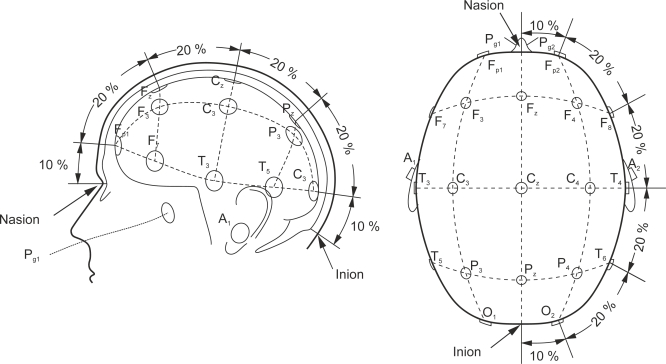
“According to this system, electrodes are located on the scalp at 10% and 20% of a measured distance from reference spots including nasion, inion, left, and right preauricular [10].”
BackgroundMethodInfluentialEvaluating the Effect of Stimuli Color and Frequency on SSVEP
Duart, X. D. G., Quiles, E., Suay, F., Chio, N., García, E., & Morant, F. (2020) · Sensors · doi:10.3390/s21010117 · Cited by 64
Vourvopoulos, A., & Liarokapis, F. (2013) · Computers & Electrical Engineering · doi:10.1016/j.compeleceng.2013.10.009 · Cited by 62
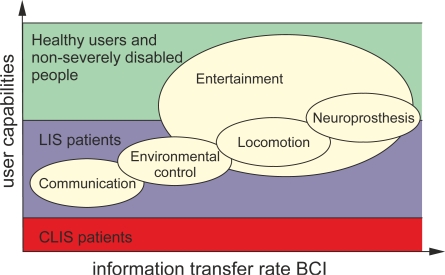
“Recent reviews [7,8] categorised different BCI systems in: communication, motor restoration, environmental control, locomotion and entertainment.”
BackgroundOnline classification of imagined speech using functional near-infrared spectroscopy signals
Sereshkeh, A. R., Yousefi, R., Wong, A. T., & Chau, T. (2018) · Journal of Neural Engineering · doi:10.1088/1741-2552/aae4b9 · Cited by 75
“A subset of these protocols are known as reactive BCIs [2], which require the user to attend to external stimuli.”
BackgroundBrain-Computer Interfaces for Communication: Preferences of Individuals With Locked-in Syndrome
Branco, M. P., Pels, E. G. M., Sars, R. H., Aarnoutse, E. J., Ramsey, N. F., Vansteensel, M. J., & Nijboer, F. (2021) · Neurorehabilitation and Neural Repair · doi:10.1177/1545968321989331 · Cited by 61
Ectopic eyes outside the head in Xenopus tadpoles provide sensory data for light-mediated learning
Blackiston, D. J., & Levin, M. (2013) · Journal of Experimental Biology · doi:10.1242/jeb.074963 · Cited by 62
A Removal of Eye Movement and Blink Artifacts from EEG Data Using Morphological Component Analysis
Singh, B., & Wagatsuma, H. (2017) · Computational and Mathematical Methods in Medicine · doi:10.1155/2017/1861645 · Cited by 65
Direct-Sense Brain–Computer Interfaces and Wearable Computers
Lin, C., & Do, T. (2020) · IEEE Transactions on Systems Man and Cybernetics Systems · doi:10.1109/tsmc.2020.3041382 · Cited by 70
A Review of Processing Methods and Classification Algorithm for EEG Signal
Xie, Y., & Oniga, S. (2020) · Carpathian Journal of Electronic and Computer Engineering · doi:10.2478/cjece-2020-0004 · Cited by 64
Barnova, K., Mikolasova, M. P., Kahankova, R. V., Jaroš, R., Kawala‐Sterniuk, A., Snåšel, V., Mirjalili, S., Pelc, M., & Martínek, R. (2023) · Computers in Biology and Medicine · doi:10.1016/j.compbiomed.2023.107135 · Cited by 78
An Adaptive Spatial Filter for User-Independent Single Trial Detection of Event-Related Potentials
Woehrle, H., Krell, M. M., Straube, S., Kim, S. K., Kirchner, E. A., & Kirchner, F. (2015) · IEEE Transactions on Biomedical Engineering · doi:10.1109/tbme.2015.2402252 · Cited by 59
Hybrid gaze/EEG brain computer interface for robot arm control on a pick and place task
Wang, H., Dong, X., Chen, Z., & Shi, B. E. (2015) · Annual International Conference of the IEEE Engineering in Medicine and Biology Society (EMBC) · doi:10.1109/embc.2015.7318649 · Cited by 60
A review on functional near-infrared spectroscopy and application in stroke rehabilitation
Huo, C., Xu, G., Li, W., Xie, H., Zhang, T., Liu, Y., & Li, Z. (2021) · Medicine in Novel Technology and Devices · doi:10.1016/j.medntd.2021.100064 · Cited by 69
Is neuroimaging ready for the classroom? A systematic review of hyperscanning studies in learning
Tan, S., Wong, J. N., & Teo, W. (2023) · NeuroImage · doi:10.1016/j.neuroimage.2023.120367 · Cited by 71
A survey of analysis and classification of EEG signals for brain-computer interfaces
Ilyas, M. Z., Saad, P., & Ahmad, M. I. (2015) · doi:10.1109/icobe.2015.7235129 · Cited by 59
Development of a ternary hybrid fNIRS-EEG brain–computer interface based on imagined speech
Sereshkeh, A. R., Yousefi, R., Wong, A. T., Rudzicz, F., & Chau, T. T. (2019) · Brain-Computer Interfaces · doi:10.1080/2326263x.2019.1698928 · Cited by 64
“The primary goal of most brain – computer interface (BCI) research is to provide a communication pathway for individuals with severe motor impairments who have very limited or no voluntary movement [1].”
BackgroundBrain–machine interfaces using functional near-infrared spectroscopy: a review
Hong, K., Ghafoor, U., & Khan, M. J. (2020) · Artificial Life and Robotics · doi:10.1007/s10015-020-00592-9 · Cited by 62
Höller, Y., Bergmann, J., Thomschewski, A. C., Kronbichler, M., Höller, P., Crone, J. S., Schmid, E. V., Butz, K. H. G., Nardone, R., & Trinka, E. (2013) · PLoS ONE · doi:10.1371/journal.pone.0080479 · Cited by 68
Grahn, P. J., Mallory, G. W., Berry, B. M., Hachmann, J. T., Lobel, D. A., & Luján, J. L. (2014) · Frontiers in Neuroscience · doi:10.3389/fnins.2014.00296 · Cited by 69
Banville, H. J., & Falk, T. H. (2016) · Brain-Computer Interfaces · doi:10.1080/2326263x.2015.1134958 · Cited by 66
P300 Detection with Brain–Computer Interface Application Using PCA and Ensemble of Weighted SVMs
Kundu, S., & Ari, S. (2017) · IETE Journal of Research · doi:10.1080/03772063.2017.1355271 · Cited by 66
Casson, A. J., Abdulaal, M. J., Dulabh, M., Kohli, S., Krachunov, S., & Trimble, E. (2017) · Springer eBooks · doi:10.1007/978-3-319-69362-0_2 · Cited by 73
Classification of EEG-based single-trial motor imagery tasks using a B-CSP method for BCI
Tang, Z., Li, C., Wu, J., Liu, P., & Cheng, S. (2019) · Frontiers of Information Technology & Electronic Engineering · doi:10.1631/fitee.1800083 · Cited by 61
Tan, P., Wang, X., & Wang, Y. (2019) · Swarm and Evolutionary Computation · doi:10.1016/j.swevo.2019.100597 · Cited by 64
“Brain-computer interface (BCI) is a communication system that allows its users to interact with external devices using the brain signal directly, and it does not depend on the peripheral nerves and muscles [1, 2].”
BackgroundZhang, X. L., Wu, D., Ding, L., Luo, H., Lin, C.-T., Jung, T., & Chavarriaga, R. (2020) · Zürcher Hochschule für Angewandte Wissenschaften digital collection (Zurich University of Applied Sciences) · doi:10.21256/zhaw-20507 · Cited by 57
EEG signal analysis using deep learning: A systematic literature review
Amrani, G., Adadi, A., Berrada, M., Souirti, Z., & Boujraf, S. (2021) · International Conference on Intelligent Computing in Data Sciences (ICDS) · doi:10.1109/icds53782.2021.9626707 · Cited by 73
EEG based Focus Estimation Model for Wearable Devices
(2024) · International Research Journal of Modernization in Engineering Technology and Science · doi:10.56726/irjmets16996 · Cited by 57
Rodríguez-Bermúdez, G., García-Laencina, P. J., & Roca‐Dorda, J. (2013) · International Journal of Neural Systems · doi:10.1142/s0129065713500159 · Cited by 63
Motor Imagery and Its Practical Application
Mokienko, O. A., Chernikova, L. A., Frolov, A., & Дмитриевич, Б. П. (2014) · Neuroscience and Behavioral Physiology · doi:10.1007/s11055-014-9937-y · Cited by 62
Nazeer, H., Naseer, N., Khan, R. A., Noori, F. M., Qureshi, N. K., Khan, U. S., & Khan, M. J. (2020) · Journal of Neural Engineering · doi:10.1088/1741-2552/abb417 · Cited by 62
“Brain–computer interface (BCI) is a technique to develop communication between brain and peripheral devices like prosthetics, robotic arms and other aiding devices for patient suffering from temporary or permanent disabilities (Nicolas-Alonso and Gomez-Gil 2012, Chaudhary et al 2015).”
BackgroundSerrano-Barroso, A., Šiugždaitė, R., Guerrero-Cubero, J., Molina-Cantero, A. J., Gómez, I., López, J. C., & Vargas, J. P. (2021) · Sensors · doi:10.3390/s21093221 · Cited by 58
“The main drawback of these techniques is that complex EEG–BCI systems require several electrodes placed on the scalp [13] and are not portable, which might be a problem if measures need to be done outside the lab.”
BackgroundMannan, M. M. N., Kamran, M. A., Kang, S., & Jeong, M. Y. (2018) · Complexity · doi:10.1155/2018/4853741 · Cited by 59
An Analysis of Deep Learning Models in SSVEP-Based BCI: A Survey
Xu, D., Tang, F., Li, Y., Zhang, Q., & Feng, X. (2023) · Brain Sciences · doi:10.3390/brainsci13030483 · Cited by 68
Xie, Y., Wang, K., Meng, J., Jin, Y., Meng, L., Yi, W., Jung, T., Xu, M., & Ming, D. (2023) · Journal of Neural Engineering · doi:10.1088/1741-2552/acfe9c · Cited by 64
An Introductory Tutorial on Brain–Computer Interfaces and Their Applications
Bonci, A., Fiori, S., Higashi, H., Tanaka, T., & Verdini, F. (2021) · Electronics · doi:10.3390/electronics10050560 · Cited by 62
“A BCI system typically requires the acquisition of brain signals, the processing of such signals through specifically designed algorithms, and their translation into commands to external devices [36].”
MethodThe Control System Based on Extended BCI for a Robotic Wheelchair
Voznenko, T. I., Chepin, E. V., & Urvanov, G. A. (2018) · Procedia Computer Science · doi:10.1016/j.procs.2018.01.079 · Cited by 54
Classification of Hand Motions within EEG Signals for Non-Invasive BCI-Based Robot Hand Control
Cho, J.-H., Jeong, J.-H., Shim, K.-H., Kim, D., & Lee, S. (2018) · Conference proceedings/Conference proceedings - IEEE International Conference on Systems, Man, and Cybernetics · doi:10.1109/smc.2018.00097 · Cited by 61
Kwon, J., Shin, J., & Im, C.-H. (2020) · PLOS ONE · doi:10.1371/journal.pone.0230491 · Cited by 53
Cognitive Behavior Classification From Scalp EEG Signals
Dvořák, D., Shang, A., Abdel-Baki, S. G., SUZUKI, W. A., & Fenton, A. A. (2018) · IEEE Transactions on Neural Systems and Rehabilitation Engineering · doi:10.1109/tnsre.2018.2797547 · Cited by 55
Towards Effective Non-Invasive Brain-Computer Interfaces Dedicated to Gait Rehabilitation Systems
Castermans, T., Duvinage, M., Cheron, G. A., & Dutoit, T. (2013) · Brain Sciences · doi:10.3390/brainsci4010001 · Cited by 64
Kirar, J. S., & Agrawal, R. K. (2018) · Journal of Medical Systems · doi:10.1007/s10916-018-0931-8 · Cited by 54
Quadcopter Flight Control Using a Non-invasive Multi-Modal Brain Computer Interface
Duan, X., Xie, S., Xie, X., Meng, Y., & Xu, Z. (2019) · Frontiers in Neurorobotics · doi:10.3389/fnbot.2019.00023 · Cited by 58
“Such a BCI system is achieved through sensing, processing, and actuation (Nicolas-Alonso and Gomez-Gil, 2012).”
MethodHow Can Physiological Computing Benefit Human-Robot Interaction?
Roy, R. N., Drougard, N., Gateau, T., Dehais, F., & Chanel, C. P. C. (2020) · Robotics · doi:10.3390/robotics9040100 · Cited by 62
“The presented machine learning techniques are rather classical algorithms, and their use in BCI are presented in more detail in the review of Reference [109].”
BackgroundInfluentialBrain Computer Interface: A Review
Pal, D., Palit, S., & Dey, A. (2021) · Lecture notes in electrical engineering · doi:10.1007/978-981-16-4035-3_3 · Cited by 55
Rosa, M. J., & Seymour, B. (2014) · Pain · doi:10.1016/j.pain.2014.02.013 · Cited by 53
A comparison between ANN and SVM classifier for drowsiness detection based on single EEG channel
Belakhdar, I., Kaaniche, W., Djmel, R., & Ouni, B. (2016) · International Conference on Advanced Technologies for Signal and Image Processing · doi:10.1109/atsip.2016.7523132 · Cited by 52
Dry Electrode-Based Fully Isolated EEG/fNIRS Hybrid Brain-Monitoring System
Lee, S., Shin, Y., Kumar, A., Kim, M., & Lee, H.-N. (2018) · IEEE Transactions on Biomedical Engineering · doi:10.1109/tbme.2018.2866550 · Cited by 54
“time resolution is relatively high in the millisecond range, it is widely used as an electrophysiological recording modality [2].”
MethodSingh, A. S. G., Lal, S. P., & Guesgen, H. W. (2019) · Sensors · doi:10.3390/s19020379 · Cited by 56
“These performance variations are due to change in the external (user’s muscle movements, recording condition and machine related causes) and internal (user’s cognitive state of mind) state of the user [7].”
BackgroundHramov, A. E., Grubov, V., Badarin, A., Александрович, М. В., & Pisarchik, A. N. (2020) · Sensors · doi:10.3390/s20082362 · Cited by 54
Subject-Specific feature selection for near infrared spectroscopy based brain-computer interfaces
Aydın, E. A. (2020) · Computer Methods and Programs in Biomedicine · doi:10.1016/j.cmpb.2020.105535 · Cited by 58
State of the Art of Non-Invasive Electrode Materials for Brain–Computer Interface
Yuan, H., Li, Y., Yang, J., Li, H., Yang, Q.-Y., Guo, C., Zhu, S., & Shu, X. (2021) · Micromachines · doi:10.3390/mi12121521 · Cited by 65
“According to the recommendations of the American Electroencephalography Society, active electrodes are not randomly placed on the brain but are based on the international 10–20 system (as shown in Figure 4) [46].”
MethodRethinking CNN Architecture for Enhancing Decoding Performance of Motor Imagery-Based EEG Signals
Kim, S., Lee, D.-H., & Lee, S. (2022) · IEEE Access · doi:10.1109/access.2022.3204758 · Cited by 56
Jangwan, N. S., Ashraf, G. M., Ram, V., Singh, V., Alghamdi, B. S. A., Abuzenadah, A. M., & Singh, M. F. (2022) · Frontiers in Systems Neuroscience · doi:10.3389/fnsys.2022.1000495 · Cited by 74
“The emerging field of BCI technology may allow individuals unable to speak and/or use their limbs to once again communicate or operate assistive devices for walking and manipulating objects (McFarland and Wolpaw, 2011; Nicolas-Alonso and Gomez-Gil, 2012).”
BackgroundTowards BCI-Based Implicit Control in Human–Computer Interaction
Zander, T. O., Brönstrup, J., Lorenz, R., & Krol, L. R. (2014) · Human-computer interaction series · doi:10.1007/978-1-4471-6392-3_4 · Cited by 61
Floriano, A. S. D. P., Díez, P., & Bastos-Filho, T. (2018) · Sensors · doi:10.3390/s18020615 · Cited by 52
Machine learning in biosignals processing for mental health: A narrative review
Sajno, E., Bartolotta, S., Tuena, C., Cipresso, P., Pedroli, E., & Riva, G. (2023) · Frontiers in Psychology · doi:10.3389/fpsyg.2022.1066317 · Cited by 70
“The BCI systems based on EEG are divided depending on the logic applied and the resulting type of waves that are detected to work (Wolpaw et al., 2002; Schalk et al., 2004; Graimann et al., 2010; Nicolas-Alonso and Gomez-Gil, 2012):”
BackgroundMethodInfluentialTMSA-Net:A novel attention mechanism for improved motor imagery EEG signal processing
Zhao, Q., & Zhu, W. (2024) · Biomedical Signal Processing and Control · doi:10.1016/j.bspc.2024.107189 · Cited by 64
Language Model Applications to Spelling with Brain-Computer Interfaces
Mora-Cortes, A., Manyakov, N. V., Chumerin, N., & Hulle, M. M. V. (2014) · Sensors · doi:10.3390/s140405967 · Cited by 59
A Synergetic Brain-Machine Interfacing Paradigm for Multi-DOF Robot Control
Bhattacharyya, S., Shimoda, S., & Hayashibe, M. (2016) · IEEE Transactions on Systems Man and Cybernetics Systems · doi:10.1109/tsmc.2016.2560532 · Cited by 54
A conceptual space for EEG-based brain-computer interfaces
Kosmyna, N., & Lécuyer, A. (2019) · PLoS ONE · doi:10.1371/journal.pone.0210145 · Cited by 56
“For instance, in a standard synchronous setting, SSVEP systems can achieve performances of around 83% in classification accuracy [28, 29].”
BackgroundAssessing the Risks Posed by the Convergence of Artificial Intelligence and Biotechnology
O'Brien, J. T., & Nelson, C. (2020) · Health Security · doi:10.1089/hs.2019.0122 · Cited by 53
“Such a strategy allows for a more comprehensive and, subsequently, more accurate depiction of the potential risks.”
BackgroundA binary harmony search algorithm as channel selection method for motor imagery-based BCI
Shi, B., Wang, Q., Yin, S., Yue, Z., Huai, Y., & Wang, J. (2021) · Neurocomputing · doi:10.1016/j.neucom.2021.02.051 · Cited by 49
Signal Generation, Acquisition, and Processing in Brain Machine Interfaces: A Unified Review
Salahuddin, U., & Gao, P. (2021) · Frontiers in Neuroscience · doi:10.3389/fnins.2021.728178 · Cited by 61
Gantenbein, J., Dittli, J., Meyer, J. T., Gassert, R., & Lambercy, O. (2022) · Frontiers in Neurorobotics · doi:10.3389/fnbot.2022.815693 · Cited by 57
Vavoulis, A., Figueiredo, P., & Vourvopoulos, A. (2023) · Signals · doi:10.3390/signals4010004 · Cited by 67
Uyanık, H., Şengür, A., Salvi, M., Tan, R., Tan, J. H., & Acharya, U. R. (2025) · Wiley Interdisciplinary Reviews Data Mining and Knowledge Discovery · doi:10.1002/widm.70002 · Cited by 71
“…based measurements, which is another method used to measure brain activities, the cost of this method and the difficulties in creating the measurement environment (the need for a magnetic field-isolated room) leave this method behind EEG (Nicolas-Alonso and Gomez-Gil 2012; Barnova et al. 2023).”
Surface EEG-Transcranial Direct Current Stimulation (tDCS) Closed-Loop System
Leite, J., Morales-Quezada, L., Carvalho, S., Thibaut, A., Doruk, D., Chen, C.-F., Schachter, S. C., Rotenberg, A., & Fregni, F. (2017) · International Journal of Neural Systems · doi:10.1142/s0129065717500265 · Cited by 55
EEG based direct speech BCI system using a fusion of SMRT and MFCC/LPCC features with ANN classifier
Mini, P. P., Thomas, T., & Gopikakumari, R. (2021) · Biomedical Signal Processing and Control · doi:10.1016/j.bspc.2021.102625 · Cited by 54
Early-stage fusion of EEG and fNIRS improves classification of motor imagery
Li, Y., Zhang, X., & Ming, D. (2023) · Frontiers in Neuroscience · doi:10.3389/fnins.2022.1062889 · Cited by 65
Thought-based row-column scanning communication board for individuals with cerebral palsy
Scherer, R., Billinger, M., Wagner, J., Schwarz, A., Hettich, D. T., Bolinger, E., García, M. L., Navarro, J. J., & Müller-Putz, G. (2015) · Annals of Physical and Rehabilitation Medicine · doi:10.1016/j.rehab.2014.11.005 · Cited by 52
Brain computer interface: A review
Prashant, P., Joshi, A. Y., & Gandhi, V. (2015) · Nirma University International Conference on Engineering · doi:10.1109/nuicone.2015.7449615 · Cited by 52
Pattern recognition for electroencephalographic signals based on continuous neural networks
Alfaro-Ponce, M., Argüelles-Cruz, A.-J., & Chaírez, I. (2016) · Neural Networks · doi:10.1016/j.neunet.2016.03.004 · Cited by 48
Brain-Computer Interface for Persons with Motor Disabilities - A Review
Anitha, T., Shanthi, N., Sathiyasheelan, R., Emayavaramban, G., & Rajendran, T. (2019) · The Open Biomedical Engineering Journal · doi:10.2174/1874120701913010127 · Cited by 58
Flanagan, K., & Saikia, M. J. (2023) · Sensors · doi:10.3390/s23208482 · Cited by 55
Gurel, N. Z., Jung, H., Hersek, S., & Inan, O. T. (2018) · IEEE Sensors Journal · doi:10.1109/jsen.2018.2872651 · Cited by 50
“Current approaches to mental stress assessment are mainly based on brain computer interfaces (BCIs), and primarily focused on electroencephalogram (EEG) signals [2], [3].”
BackgroundEEG Representations of Spatial and Temporal Features in Imagined Speech and Overt Speech
Lee, S.-H., Lee, S., & Lee, S. (2020) · Lecture notes in computer science · doi:10.1007/978-3-030-41299-9_30 · Cited by 53
Kosch, T., Funk, M., Schmidt, A., & Chuang, L. L. (2018) · Proceedings of the ACM on Human-Computer Interaction · doi:10.1145/3229093 · Cited by 46
“EEG is commonly leveraged in clinical application and yields a non-invasive method to estimate brain activity [56, 63, 83].”
MethodDecoding grasp and speech signals from the cortical grasp circuit in a tetraplegic human
Wandelt, S. K., Kellis, S., Bjånes, D. A., Pejsa, K., Lee, B., Liu, C., & Andersen, R. A. (2022) · Neuron · doi:10.1016/j.neuron.2022.03.009 · Cited by 51
Metadata
- Authors
- Nicolas-Alonso, L. F., & Gomez-Gil, J.
- Affiliations
- Universidad de Valladolid (ES)
- Department of Signal Theory, Communications and Telematics Engineering, University of Valladolid, Valladolid 47011, Spain
- Corresponding author
- Nicolas-Alonso, Luis Fernando
- Venue
- Sensors
- Publisher
- MDPI AG
- Published
- 2012-01-31
- Volume
- 12
- Issue
- 2
- Pages
- 1211-1279
- ISSN
- 1424-8220 (ISSN-L)
- PMC
- PMC3304110
- OpenAlex
- W2128909182
- Cited by
- 2,143
- References
- 325
- Citations by year
- 2026: 137 · 2025: 186 · 2024: 178 · 2023: 181 · 2022: 201 · 2021: 220 · 2020: 185 · 2019: 185 · 2018: 177 · 2017: 134 · 2016: 118 · 2015: 91 · 2014: 78 · 2013: 48 · 2012: 20
- FWCI
- 5.81
- Type
- journal article
- Language
- en
- Open access
- gold
- doi.org
- Licence
- Locations
- Sensors (publishedVersion, cc-by)
- PubMed Central (publishedVersion, cc-by)
- PubMed (publishedVersion)
- Hispana (publishedVersion, cc-by)
- DOAJ (DOAJ: Directory of Open Access Journals) (submittedVersion, cc-by-sa)
- University of Valladolid Documentary Repository (University of Valladolid) (submittedVersion, cc-by)
- Topics
- Life Sciences › Neuroscience › Cognitive Neuroscience › EEG and Brain-Computer Interfaces
- Physical Sciences › Computer Science › Human-Computer Interaction › Gaze Tracking and Assistive Technology
- Physical Sciences › Engineering › Biomedical Engineering › Muscle activation and electromyography studies
- Keywords
- brain-computer interface, neuroimaging, electrophysiological signals, signal preprocessing, artifact removal, feature extraction, brain signal classification, paralysis, locked-in syndrome, amyotrophic lateral sclerosis, spinal cord injury, brain-computer interface applications
- MeSH terms
- Algorithms, Brain, Electroencephalography, Humans, Man-Machine Systems, Pattern Recognition, Automated, Signal Processing, Computer-Assisted, Transducers, User-Computer Interface
About these checks
Registry, retraction, Cites and statistics results are computed, not judged, with one exception: a printed reference that no index lists is read once by a model before it counts as a citation error. Claims are extracted by a model and kept only when their quote appears verbatim in the text; each cited source is then checked, with a model’s help, for whether it says what the claim relies on. Those verdicts can be wrong — read the claim’s quote and the cited source before relying on one.
Statistics and arithmetic are recomputed, not judged.
Confidence bands are shown only for fields calibrated on our annotated test set. None is calibrated yet, so no band is shown.
What counts as a claim ›How we measure confidence ›How we check this ›
Are you an author, or do you see a problem with this page? Request a review
Data sources
Bibliographic data: Semantic Scholar, OpenAlex, Crossref.
Contains information from the Semantic Scholar Academic Graph Datasets, made available under the ODC Attribution License (ODC-BY 1.0).
Semantic Scholar’s data is described in: Kinney, R., et al. (2023). The Semantic Scholar Open Data Platform. arXiv:2301.10140.
