

The reliability paradox: Why robust cognitive tasks do not produce reliable individual differences
Open accessThe DOI matches its Crossref record; 146 of the 150 references it cites were found in a registry or an index.
Abstract
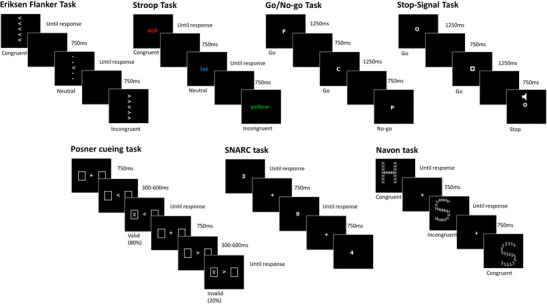
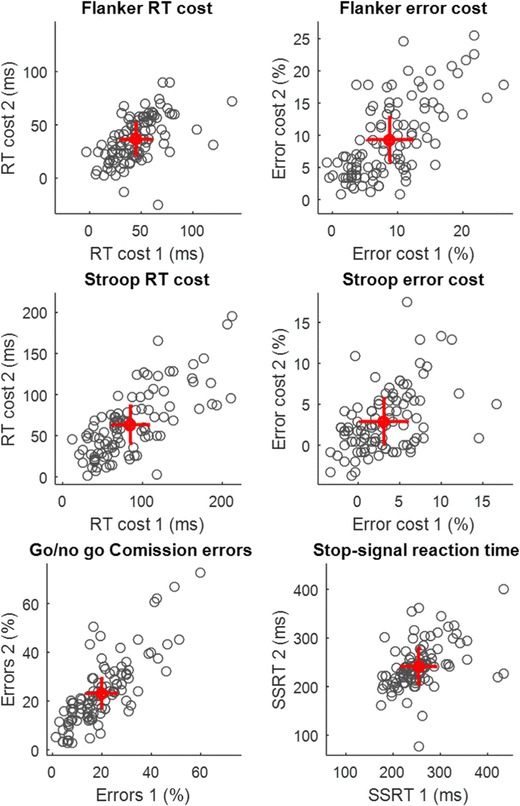
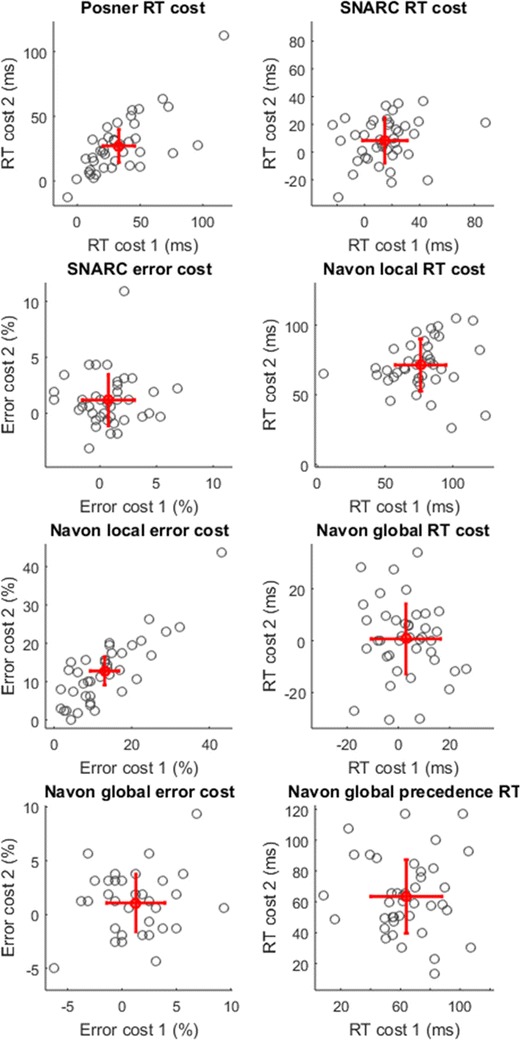
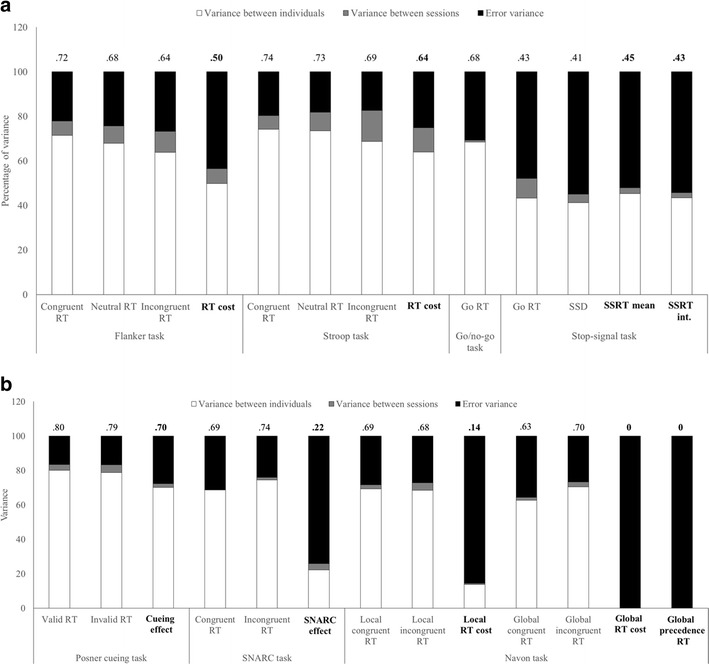
Individual differences in cognitive paradigms are increasingly employed to relate cognition to brain structure, chemistry, and function. However, such efforts are often unfruitful, even with the most well established tasks. Here we offer an explanation for failures in the application of robust cognitive paradigms to the study of individual differences. Experimental effects become well established - and thus those tasks become popular - when between-subject variability is low. However, low between-subject variability causes low reliability for individual differences, destroying replicable correlations with other factors and potentially undermining published conclusions drawn from correlational relationships. Though these statistical issues have a long history in psychology, they are widely overlooked in cognitive psychology and neuroscience today. In three studies, we assessed test-retest reliability of seven classic tasks: Eriksen Flanker, Stroop, stop-signal, go/no-go, Posner cueing, Navon, and Spatial-Numerical Association of Response Code (SNARC). Reliabilities ranged from 0 to .82, being surprisingly low for most tasks given their common use. As we predicted, this emerged from low variance between individuals rather than high measurement variance. In other words, the very reason such tasks produce robust and easily replicable experimental effects - low between-participant variability - makes their use as correlational tools problematic. We demonstrate that taking such reliability estimates into account has the potential to qualitatively change theoretical conclusions. The implications of our findings are that well-established approaches in experimental psychology and neuropsychology may not directly translate to the study of individual differences in brain structure, chemistry, and function, and alternative metrics may be required.
Overview
The claims and statistics of this paper haven’t been checked yet.
Free: it reads the open-access text and checks the first 5 claims that cite a source we can check. Create a free account to check every claim.
Integrity signals
Registry
Cites
Statistics
Figures
Verification
Claims the paper makes
The claims and statistics of this paper haven’t been checked yet.
Free: it reads the open-access text and checks the first 5 claims that cite a source we can check. Create a free account to check every claim.
Claims other papers make about this one
Each is checked against this paper’s own text: does it say what the citing paper says it does?
The source backs part of the claim, not all of it — or backs it for a different population, condition or comparison.
In the citing paper
“This contrast was used (cf. anticipation of social reward minus neutral outcomes) because reliability of difference scores is always lower than reliability of their individual parts,(53) which has been shown to diminish reliability of task-based fMRI(54) (see also(55)) and hinder mechanistic research.(56)”
From Amplification of Positivity Treatment for Anxiety and Depression: A Randomized Experimental Therapeutics Trial Targeting Social Reward Sensitivity to Enhance Social Connectedness (2024) · cites this paper as [53]
Experimental — accuracy not yet measuredThe source backs part of the claim, not all of it — or backs it for a different population, condition or comparison.
In the citing paper
“For the Stroop task, reliability was ρ congruent = .86, ρ incongruent = .82, and ρ interference = .78.”
From Problematic social media use and cognitive performance in young adults: Associations with selective attention and inhibitory control (2026) · cites this paper as Hedge, Powell, & Sumner, 2018
Experimental — accuracy not yet measuredThe cited source says what the claim attributes to it.
In the citing paper
“Further, it is often the case that cognitive tasks that produce robust effects in experimental settings are poorly suited for individual differences studies due to low between-participant reliability (Hedge et al. 2018).”
From Practicing Retrieval Facilitates Learning (2021) · cites this paper as Hedge et al. 2018
The check wasn’t confident either way, so it gives no verdict — never disputed.
In the citing paper
“For the Simon task, reliability was ρ_congruent = .84, ρ_incongruent = .81, and ρ_interference = .76.”
From Problematic social media use and cognitive performance in young adults: Associations with selective attention and inhibitory control (2026) · cites this paper as Hedge et al., 2018
Experimental — accuracy not yet measured
Self-check
Percentages, sums and reported differences re-computed from the paper’s own numbers.
The self-check needs the paper’s full text.
Citations
Cites
The Measurement of Observer Agreement for Categorical Data
Landis, J. R., & Koch, G. G. (1977) · Biometrics · doi:10.2307/2529310 · Cited by 81,148 · cited 4×
“Studies 1 and 2 None of the behavioral measures in Studies 1 and 2 (see Table 1) exceeded reliabilities of .8, typically considered excellent or of a clinically required standard (Cicchetti & Sparrow, 1981; Fleiss, 1981; Landis & Koch, 1977).”
BackgroundMethodResultInfluentialFaul, F., Erdfelder, E., Lang, A.-G., & Buchner, A. (2007) · Behavior Research Methods · doi:10.3758/bf03193146 · Cited by 65,971
Structural equation modeling in practice: A review and recommended two-step approach
Anderson, J. C., & Gerbing, D. W. (1988) · Psychological Bulletin · doi:10.1037/0033-2909.103.3.411 · Cited by 41,941
Statistical power analyses using G∗Power 3.1: tests for correlation and regression analyses
Faul, F., Erdfelder, E., Buchner, A., & Lang, A.-G. (2009) · Behavior Research Methods · doi:10.3758/brm.41.4.1149 · Cited by 37,615
Intraclass correlations: Uses in assessing rater reliability.
Shrout, P. E., & Fleiss, J. L. (1979) · Psychological Bulletin · doi:10.1037/0033-2909.86.2.420 · Cited by 24,532
Statistical Methods for Rates and Proportions
Fleiss, J. L., Levin, B., & Paik, M. C. (2003) · Wiley Series in Probability and Statistics · doi:10.1002/0471445428 · Cited by 18,646
Miyake, A., Friedman, N. P., Emerson, M. J., Witzki, A. H., Howerter, A., & Wager, T. D. (2000) · Cognitive Psychology · doi:10.1006/cogp.1999.0734 · Cited by 15,798
Review of Psychometric theory (2nd ed.).
SITGREAVES, R. (1979) · Contemporary Psychology: A Journal of Reviews · doi:10.1037/018882 · Cited by 11,425
Why Most Published Research Findings Are False
Ioannidis, J. P. A. (2005) · PLoS Medicine · doi:10.1371/journal.pmed.0020124 · Cited by 10,505
Posner, M. I. (1980) · Quarterly Journal of Experimental Psychology · doi:10.1080/00335558008248231 · Cited by 9,670 · cited 2×
“Study 3 Again, performance was comparable to previous reports in the literature (Navon, 1977; Posner, 1980; Rusconi et al., 2013).”
Research works printed but not linked: 7
- Crocker LM Algina J Introduction to Classicial and Modern Test Theory 1986 New York CBS College Publishing
- Hambleton RK Swaminathan H Rogers HJ Fundementals of Item Response Theory 1991 Newbury Park Sage
- Lynam DR Smith GT Whiteside SP Cyders MA The UPPS-P: Assessing give personality pathways to impulsive behavior (Technical Report) 2006 West Lafayette Purdue University
- Nunnally JC Psychometric theory 1978 2 New York. McGraw-Hill
- Peirce JW Introduction to Python and PsychoPy Perception 2013 42 2 3
- Rogosa D Gottman JM Myths and methods: "Myths about longitudinal research" plus supplemental questions The analysis of change 1995 Hillsdale Lawrence Ealbaum Associates pp. 3 65
- Zumbo BD Thompson B The simple difference score as an inherently poor measure of change: Some reality, much mythology Advances in Social Science Methodoloy 1999 Greenwich JAI Press pp. 269 304
Cited by
Items 201–300 of 1,004
A novel biomarker of interleukin 6 activity and clinical and cognitive outcomes in depression
Foley, É. M., Slaney, C., Donnelly, N. A., Kaşer, M., Ziegler, L., & Khandaker, G. M. (2024) · Psychoneuroendocrinology · doi:10.1016/j.psyneuen.2024.107008 · Cited by 49
“…while many cognitive tasks (including those presented here) have been well validated in case-control studies (e.g., comparing MDD and healthy individuals) where there may be large group differences, arguably these tests may be less sensitive at detecting individual differences (Hedge et al., 2018).”
Waltmann, M., Herzog, N., Horstmann, A., & Deserno, L. (2021) · Neuroscience & Biobehavioral Reviews · doi:10.1016/j.neubiorev.2021.07.016 · Cited by 42
Slaney, C., Sallis, H., Jones, H. J., Dardani, C., CHARGE Inflammation Working Group, Tilling, K. M., Munafo, M. R., Smith, G. D., Mahedy, L., & Khandaker, G. M. (2023) · Brain Behavior and Immunity · doi:10.1016/j.bbi.2023.02.010 · Cited by 43
“Second, many cognitive tasks (including those used here) have 634 poor-to-moderate test-retest reliability therefore measurement error may mask potential 635 associations by increasing confidence intervals (Hedge et al., 2018).”
BackgroundCan We Infer Inter-Individual Differences in Risk-Taking From Behavioral Tasks?
Palminteri, S., & Chevallier, C. (2018) · Frontiers in Psychology · doi:10.3389/fpsyg.2018.02307 · Cited by 47
“Low test-retest reliability should also be expected given that behavioral and cognitive tasks are traditionally designed to reduce between-subjects variance and to maximize between-conditions variance, such that the very features that make a behavioral task “successful” (high reproducibility of the “average” results)…”
BackgroundImpaired Evidence Accumulation as a Transdiagnostic Vulnerability Factor in Psychopathology
Sripada, C., & Weigard, A. S. (2021) · Frontiers in Psychiatry · doi:10.3389/fpsyt.2021.627179 · Cited by 47
Dean, C. E., Akhtar, S., Gale, T. M., Irvine, K., Grohmann, D., & Laws, K. R. (2022) · PLoS ONE · doi:10.1371/journal.pone.0267360 · Cited by 57
How measurement noise limits the accuracy of brain-behaviour predictions
Gell, M., Eickhoff, S. B., Omidvarnia, A., Küppers, V., Patil, K. R., Satterthwaite, T. D., Müller, V. I., & Langner, R. (2024) · Nature Communications · doi:10.1038/s41467-024-54022-6 · Cited by 100
“6 − 0.8, moderate for 0.4 − 0.6 and poor for 0.4 18,19 .”
InfluentialCognitive Reflection Effects on Time Discounting
Białek, M., & Sawicki, P. (2018) · Journal of Individual Differences · doi:10.1027/1614-0001/a000254 · Cited by 38
On the Reliability of Switching Costs Across Time and Domains
Timmer, K., Calabria, M., Branzi, F. M., Baus, C., & Costa, A. (2018) · Frontiers in Psychology · doi:10.3389/fpsyg.2018.01032 · Cited by 43
Occipitotemporal representations reflect individual differences in conceptual knowledge.
Braunlich, K., & Love, B. C. (2019) · Journal of Experimental Psychology General · doi:10.1037/xge0000501 · Cited by 34
“These effects can be substantial, particularly for ill-defined categorization-problems (such as the 5/4 categorization task) that are common in every-day life (Hedge et al., 2017; Johansen & Palmeri, 2002).”
BackgroundA comparison of tests for quantifying sensory eye dominance
Bossi, M., Hamm, L. M., Dahlmann-Noor, A. H., & Dakin, S. C. (2018) · Vision Research · doi:10.1016/j.visres.2018.09.006 · Cited by 37
Zheng, Y., & Samuel, A. G. (2020) · Journal of Experimental Psychology Learning Memory and Cognition · doi:10.1037/xlm0000788 · Cited by 45
Meyerhoff, H. S., Grinschgl, S., Papenmeier, F., & Gilbert, S. J. (2021) · Cognitive Research: Principles and Implications · doi:10.1186/s41235-021-00298-x · Cited by 37
Individual Differences in Attention and Intelligence: A United Cognitive/Psychometric Approach
Conway, A. R. A., Kovacs, K., Hao, H., Rosales, K. P., & Snijder, J.-P. (2021) · Journal of Intelligence · doi:10.3390/jintelligence9030034 · Cited by 41
Clarke, P. J. F., & Todd, J. (2021) · Cognition and Emotion · doi:10.1080/02699931.2021.1987861 · Cited by 37
Schuch, S., Philipp, A. M., Maulitz, L., & Koch, I. (2021) · Psychological Research · doi:10.1007/s00426-021-01627-x · Cited by 48
Ehring, T. W., Limburg, K., Kunze, A. E., Wittekind, C. E., Werner, G. G., Wolkenstein, L., Guzey, M., & Cludius, B. (2022) · Clinical Psychology Review · doi:10.1016/j.cpr.2022.102163 · Cited by 49
Silva, L. D. C., Belrose, C., Trousselard, M., Rea, B., Seery, E., Verdonk, C. G., Duffaud, A. M., & Verdonk, C. (2022) · Frontiers in Psychology · doi:10.3389/fpsyg.2022.946271 · Cited by 44
“Behavioral tests enable objective measure of body awareness (e.g., heartbeat perception task for cardiac interoception; Brener and Ring, 2016), but their features that make them robust in an experimental sense make behavioral tests unreliable in a psychometric sense (Hedge et al., 2018).”
Reliability of Decision-Making and Reinforcement Learning Computational Parameters
Mkrtchian, A., Valton, V., & Roiser, J. P. (2023) · Computational Psychiatry · doi:10.5334/cpsy.86 · Cited by 36
“It has been observed that this is rarely the case, 6 since tasks that are designed to produce reliable average effects do so by minimizing between7 subject variance, whereas what makes tasks reliable and suitable for inter-individual 8 assessments are large between-subject but small within-subject variances(79).”
BackgroundBlott, L. M. (2022) · PsyArXiv (OSF Preprints) · doi:10.31234/osf.io/u7s58 · Cited by 36
Optimal filters for ERP research I: A general approach for selecting filter settings
Zhang, G., Garrett, D. R., & Luck, S. J. (2024) · Psychophysiology · doi:10.1111/psyp.14531 · Cited by 47
Grünbaum, T., & Christensen, M. S. (2020) · Neuroscience of Consciousness · doi:10.1093/nc/niaa019 · Cited by 48
“As it has been pointed out by several researchers (Hedge et al. 2018), whereas psychometric measures Measures of agency | 9”
BackgroundVerdejo‐García, A., Tiego, J., Kakoschke, N., Moskovsky, N., Voigt, K., Anderson, A. C., Koutoulogenis, J., Lubman, D. I., & Bellgrove, M. A. (2021) · Nature Human Behaviour · doi:10.1038/s41562-021-01127-3 · Cited by 37
Vocabulary Size Is a Key Factor in Predicting Second Language Lexical Encoding Accuracy
Daidone, D., & Darcy, I. (2021) · Frontiers in Psychology · doi:10.3389/fpsyg.2021.688356 · Cited by 47
Negative emotion reduces visual working memory recall variability: A meta-analytical review.
Xie, W., Ye, C., & Zhang, W. (2023) · Emotion · doi:10.1037/emo0001139 · Cited by 43
Parsons, S. D. (2022) · Meta-Psychology · doi:10.15626/mp.2020.2577 · Cited by 37
Enhancing the psychometric properties of the Iowa gambling task using full generative modeling
Sullivan-Toole, H., Haines, N., Dale, K., & Olino, T. M. (2022) · Computational Psychiatry · doi:10.5334/cpsy.89 · Cited by 35
“…behavioral tasks produce robust group-level effects through low between-person variance in task scores; however, low between-person variance results in low reliability for individual scores, which reduces task utility for individual difference inference (Cooper et al., 2017; Hedge et al., 2018).”
Validating the use of a smartphone app for remote administration of a fear conditioning paradigm
Purves, K. L., Constantinou, E., McGregor, T., Lester, K. J., Barry, T. J., Treanor, M., Sun, M., Margraf, J., Craske, M. G., Breen, G., et al. (2019) · Behaviour Research and Therapy · doi:10.1016/j.brat.2019.103475 · Cited by 31
Kampa, M., Schick, A., Sebastian, A., Wessa, M., Tüscher, O., Kalisch, R., & Yuen, K. S. L. (2019) · NeuroImage · doi:10.1016/j.neuroimage.2019.116223 · Cited by 35
Enkavi, A. Z., & Poldrack, R. A. (2020) · Biological Psychiatry Cognitive Neuroscience and Neuroimaging · doi:10.1016/j.bpsc.2020.06.010 · Cited by 44
Toward dynamic phenotypes and the scalable measurement of human behavior
Germine, L. T., Strong, R. W., Singh, S. M., & Sliwinski, M. J. (2020) · Neuropsychopharmacology · doi:10.1038/s41386-020-0757-1 · Cited by 37
“A brief and reliable measure of Stroop interference (if one exists [41]) should still have longer reaction times for incongruent trials than congruent trials.”
BackgroundResultInfluentialTusche, A., & Bas, L. M. (2021) · Wiley Interdisciplinary Reviews Cognitive Science · doi:10.1002/wcs.1571 · Cited by 41
“This includes questions regarding the (ecological) validity of social cognition tasks (e.g., EmpaToM task, see Hildebrandt et al., 2021; Kanske et al., 2015) or the reliability of neuroimaging data (Elliott et al., 2020; Fröhner et al., 2019; Noble et al., 2021).”
BackgroundMusculus, L., Lautenbach, F., Knöbel, S., Reinhard, M. L., Weigel, P., Gatzmaga, N., Borchert, A., & Pelka, M. (2022) · Frontiers in Psychology · doi:10.3389/fpsyg.2022.867849 · Cited by 40
McMurray, B. (2022) · Psychonomic Bulletin & Review · doi:10.3758/s13423-022-02143-8 · Cited by 49
“This is particularly a problem for measures adapted from experimental psychology, which are often optimized to minimize within-subject variability (Hedge et al., 2018).”
BackgroundDudarev, V., Barral, O., Zhang, C., Davis, G., & Enns, J. T. (2023) · Sensors · doi:10.3390/s23135863 · Cited by 65
“Conversely, in studies comparing situational differences, individual differences in personality or physiological traits are a source of noise [29].”
BackgroundInhibition and Mathematical Performance: Poorly Correlated, Poorly Measured, or Poorly Matched?
Lee, K. L., & Lee, H. W. (2019) · Child Development Perspectives · doi:10.1111/cdep.12304 · Cited by 42
Fu, X., Nelson, E. E., Borge, M., Buss, K. A., & Pérez‐Edgar, K. E. (2019) · Development and Psychopathology · doi:10.1017/s0954579419000427 · Cited by 39
Task Reliability Considerations in Computational Psychiatry
Hedge, C., Bompas, A., & Sumner, P. (2020) · Biological Psychiatry Cognitive Neuroscience and Neuroimaging · doi:10.1016/j.bpsc.2020.05.004 · Cited by 41
“We recently described what we referred to as the ‘reliability paradox’, where tasks that produce robust and replicable effects can simultaneously have poor reliability for individual differences (2).”
Self-citationThe Error-Related Negativity Predicts Self-Control Failures in Daily Life
Overmeyer, R., Berghäuser, J., Dieterich, R., Wolff, M., Goschke, T., & Endraß, T. (2021) · Frontiers in Human Neuroscience · doi:10.3389/fnhum.2020.614979 · Cited by 37
A systematic review of event‐related potentials as outcome measures of attention bias modification
Carlson, J. M. (2021) · Psychophysiology · doi:10.1111/psyp.13801 · Cited by 37
Neuro-cognitive processes as mediators of psychological treatment effects
Reiter, A. M. F., Atiya, N. A. A., Berwian, I. M., & Huys, Q. J. M. (2021) · Current Opinion in Behavioral Sciences · doi:10.1016/j.cobeha.2021.02.007 · Cited by 38
Xu, G., Sarkar, A., Lu, Q., Shuxia, Z., Rahman, M. A., & Tan, Y. (2022) · Preventive Veterinary Medicine · doi:10.1016/j.prevetmed.2022.105568 · Cited by 33
Tamul, D., Elson, M., Ivory, J., Hotter, J., Lanier, M., Wolf, J., & Martínez‐Carrillo, N. I. (2020) · PsyArXiv (OSF Preprints) · doi:10.31234/osf.io/shcgv · Cited by 42
Ober, T. M., Brooks, P. J., Plass, J. L., & Homer, B. D. (2019) · Reading Psychology · doi:10.1080/02702711.2019.1635239 · Cited by 44
Porter, T., Molina, D. C., Blackwell, L. S., Roberts, S., Quirk, A., Duckworth, A. L., & Trzesniewski, K. H. (2020) · Journal of Learning Analytics · doi:10.18608/jla.2020.71.2 · Cited by 47
The Breadth of Visual Attention
Goodhew, S. C. (2020) · Cambridge University Press eBooks · doi:10.1017/9781108854702 · Cited by 35
Domain-Specific and Domain-General Individual Differences in Visual Object Recognition
Gauthier, L. (2018) · Current Directions in Psychological Science · doi:10.1177/0963721417737151 · Cited by 34
“Although many standard high-level visual tasks are highly sensitive to group-averaged effects (and to some extent for this reason, see Hedge et al., 2017), they have low reliability to measure individual differences (for example, contrast Richler et al, 2014 and Ross et al., 2015, see also Herzmann…”
Parsons, S. D., Kruijt, A., & Fox, E. (2018) · PsyArXiv (OSF Preprints) · doi:10.31234/osf.io/6ka9z · Cited by 37
Replication and extension of the toolbox approach to measuring attention control
Draheim, C., Tsukahara, J. S., & Engle, R. W. (2023) · Behavior Research Methods · doi:10.3758/s13428-023-02140-2 · Cited by 51
Mapping neurodevelopmental diversity in executive function
Mareva, S., Lead Investigators, Astle, D. E., Baker, K., Gathercole, S. E., Holmes, J., Kievit, R., Manly, T., Team of Researchers and PhD Students, Akarca, D., et al. (2024) · Cortex · doi:10.1016/j.cortex.2023.11.021 · Cited by 45
Non-decision time: The Higgs Boson of decision.
Bompas, A., Sumner, P., & Hedge, C. (2025) · Psychological Review · doi:10.1037/rev0000487 · Cited by 48
Self-citationRevisiting the role of computational neuroimaging in the era of integrative neuroscience
Loosen, A. M., Kato, A., & Gu, X. (2024) · Neuropsychopharmacology · doi:10.1038/s41386-024-01946-8 · Cited by 43
DeYoung, C. G., Hilger, K., Hanson, J. L., Abend, R., Allen, T. A., Beaty, R. E., Blain, S. D., Chavez, R. S., Engel, S. A., Feilong, M., et al. (2025) · Journal of Cognitive Neuroscience · doi:10.1162/jocn_a_02297 · Cited by 56
“Because the reliability of measures of individual differences depends on variability, focusing on robust within-persons effects works against reliability at the between-person level, a phenomenon described as the “ reliability paradox ” (Hedge, Powell, & Sumner, 2017).”
der Haegen, L. V., & Brysbaert, M. (2018) · PLoS ONE · doi:10.1371/journal.pone.0208696 · Cited by 35
Inhibitory control and emotion dysregulation: A framework for research on anxiety
Cardinale, E. M., Subar, A. R., Brotman, M. A., Leibenluft, E., Kircanski, K., & Pine, D. S. (2019) · Development and Psychopathology · doi:10.1017/s0954579419000300 · Cited by 37
“Second, task validity is evaluated by examining correlations among multiple measures of inhibitory control (Hedge et al., 2018; Miyake & Friedman, 2012), testing our hypothesis that measures of inhibitory-control performance on the antisaccade task will be correlated with performance on other established tasks of inhi…”
BackgroundSun, M., & Zhang, J. (2019) · Nucleic Acids Research · doi:10.1093/nar/gkz1134 · Cited by 35
“Random errors are not expected to create spurious results in large samples (70).”
BackgroundRELEX: An Excel-based software tool for sampling split-half reliability coefficients
Steinke, A., & Kopp, B. (2020) · Methods in Psychology · doi:10.1016/j.metip.2020.100023 · Cited by 34
Mattes, A., & Roheger, M. (2020) · BMC Medical Research Methodology · doi:10.1186/s12874-020-01176-8 · Cited by 39
Quantifying individual differences in native and nonnative sentence processing
Cunnings, I., & Fujita, H. (2020) · Applied Psycholinguistics · doi:10.1017/s0142716420000648 · Cited by 40
“Although we would contend that based on our results, James et al. (2018) and the logic of the reliability paradox as described by Hedge et al. (2018), it is entirely possible that the problem of low measurement reliability is an issue beyond the garden-path effects we studied, future research will…”
BackgroundResultInfluentialLin, Y., Tang, R., & Braver, T. S. (2021) · Psychonomic Bulletin & Review · doi:10.3758/s13423-021-02008-6 · Cited by 36
Blair, J., Mathur, A., Haines, N., & Bajaj, S. (2022) · Current Opinion in Behavioral Sciences · doi:10.1016/j.cobeha.2022.101102 · Cited by 36
Gebel, A., Busch, A., Stelzel, C., Hortobágyi, T., & Granacher, U. (2022) · Frontiers in Human Neuroscience · doi:10.3389/fnhum.2022.871930 · Cited by 38
Haines, N., Sullivan‐Toole, H., & Olino, T. M. (2023) · Biological Psychiatry Cognitive Neuroscience and Neuroimaging · doi:10.1016/j.bpsc.2023.01.001 · Cited by 65
Hitchcock, P. F., Britton, W. B., Mehta, K. P., & Frank, M. J. (2022) · Cognitive Affective & Behavioral Neuroscience · doi:10.3758/s13415-022-01033-9 · Cited by 36
“ICCs used a two-way random effects model for absolute agreement (Hedge et al., 2018; Shrout & Fleiss, 1979).”
The State of Cognitive Control in Language Processing
Ness, T., Langlois, V. J., Kim, A. E., & Novick, J. M. (2023) · Perspectives on Psychological Science · doi:10.1177/17456916231197122 · Cited by 46
“This is because canonical tasks like Stroop and flanker have shown low reliability for the measurement of stable individual differences (“the reliability paradox”; see Hedge et al., 2018).”
Horvath, S., McDermott, E., Reilly, K. F., & Arunachalam, S. (2018) · Language Speech and Hearing Services in Schools · doi:10.1044/2018_lshss-stlt1-17-0126 · Cited by 38
Meyerhoff, H. S., & Papenmeier, F. (2020) · Behavior Research Methods · doi:10.3758/s13428-020-01413-4 · Cited by 32
Cognitive control over emotional information in current and remitted depression
Quigley, L., Wen, A., & Dobson, K. S. (2020) · Behaviour Research and Therapy · doi:10.1016/j.brat.2020.103658 · Cited by 31
Kraft, D., Rademacher, L., Eckart, C., & Fiebach, C. J. (2020) · Journal of Cognition · doi:10.5334/joc.120 · Cited by 39
Williams, D. R., Martin, S. R., & Rast, P. (2021) · Behavior Research Methods · doi:10.3758/s13428-021-01646-x · Cited by 38
“(2018) and Hedge et al. (2018), it was argued that reliability was not high enough to adequately study individual differences.”
BackgroundMethodInfluentialTwo faces of temporal binding: Action- and effect-binding are not correlated
Tonn, S., Pfister, R., Klaffehn, A. L., Weller, L., & Schwarz, K. A. (2021) · Consciousness and Cognition · doi:10.1016/j.concog.2021.103219 · Cited by 35
“Cognitiveexperimental tasks often create a strong effect on the group level by diminishing inter-individual variation, effectively working against meaningful inter-individual differences (Hedge et al., 2018).”
BackgroundLoosen, A. M., Seow, T. X. F., & Hauser, T. U. (2024) · Behavior Research Methods · doi:10.3758/s13428-024-02427-y · Cited by 35
“Measures with low between-participant relative to between-time-point (within-participant) variability may be considered suitable for experimental designs, but unsuitable for correlational or individual-difference approaches (Hedge et al., 2018).”
BackgroundMethodInfluentialYangüez, M., Bediou, B., Chanal, J. P., & Bavelier, D. (2024) · Psychological Review · doi:10.1037/rev0000434 · Cited by 38
Toward a functional future for the cognitive neuroscience of human aging
Mooraj, Z., Salami, A., Campbell, K. L., Dahl, M. J., Kosciessa, J. Q., Nassar, M. R., Werkle‐Bergner, M., Craik, F. I. M., Lindenberger, U., Mayr, U., et al. (2025) · Neuron · doi:10.1016/j.neuron.2024.12.008 · Cited by 44
Salinas, E., Steinberg, B. R., Sussman, L. A., Fry, S. M., Hauser, C. K., Anderson, D. D., & Stanford, T. R. (2019) · eLife · doi:10.7554/elife.46359 · Cited by 32
“In general, identifying those mechanisms is complicated because their variations across (random) participants and across (controllable) experimental conditions are not necessarily correlated (Borsboom et al., 2009; Hedge et al., 2018).”
BackgroundIn the self-control and self-regulation maze: Integration and importance
Groß, D. (2021) · Personality and Individual Differences · doi:10.1016/j.paid.2021.110728 · Cited by 37
Edwards, M., Goodhew, S. C., & Badcock, D. R. (2021) · Psychonomic Bulletin & Review · doi:10.3758/s13423-020-01874-w · Cited by 43
Fiori, M., Udayar, S., & Maillefer, A. V. (2021) · European Journal of Personality · doi:10.1177/08902070211007672 · Cited by 42
Overlapping and dissociable brain activations for fluid intelligence and executive functions
Santarnecchi, E., Momi, D., Mencarelli, L., Plessow, F., Saxena, S., Rossi, S., Rossi, A., Mathan, S. A., & Pascual‐Leone, Á. (2021) · Cognitive Affective & Behavioral Neuroscience · doi:10.3758/s13415-021-00870-4 · Cited by 30
“The debate about the correlation between EF and gf is still ongoing, and recent studies point out the idea that the lack in understanding this correlation could be related in a difference in EFs measurement (while shifting is derived from difference scores, updating and inhibition are calculated as performance in a sp…”
BackgroundBehavioral, Anatomical and Heritable Convergence of Affect and Cognition in Superior Frontal Cortex
Kraljević, N., Schaare, H. L., Eickhoff, S. B., Kochunov, P., Yeo, B. T. T., Masouleh, S. K., & Valk, S. L. (2021) · NeuroImage · doi:10.1016/j.neuroimage.2021.118561 · Cited by 32
Pronk, T., Hirst, R. J., Wiers, R. W. H. J., & Murre, J. M. J. (2022) · Behavior Research Methods · doi:10.3758/s13428-022-01885-6 · Cited by 29
“A landmark paper in this controversy presented a replication of seven classical cognitive tasks across three studies (Hedge et al., 2018).”
BackgroundMethodResultInfluentialKlingelhöfer-Jens, M., Ehlers, M. R., Kuhn, M., Keyaniyan, V., & Lonsdorf, T. B. (2022) · eLife · doi:10.7554/elife.78717 · Cited by 37
McMurray, B., Apfelbaum, K. S., Colby, S., & Tomblin, J. B. (2023) · Applied Psycholinguistics · doi:10.1017/s0142716423000255 · Cited by 34
Thunberg, C., Wiker, T., Bundt, C., & Huster, R. J. (2024) · Cortex · doi:10.1016/j.cortex.2024.02.008 · Cited by 36
Halse, M., Steinsbekk, S., Bjørklund, O., Hammar, Å., & Wichstrøm, L. (2024) · Child Development · doi:10.1111/cdev.14096 · Cited by 28
Reifegerste, J., Jarvis, R., & Felser, C. (2020) · Journal of Memory and Language · doi:10.1016/j.jml.2019.104083 · Cited by 32
Unpacking the overlap between Autism and ADHD in adults: A multi-method approach
Waldren, L. H., Leung, F. Y. N., Hargitai, L. D., Burgoyne, A. P., Liceralde, V. R. T., Livingston, L. A., & Shah, P. (2024) · Cortex · doi:10.1016/j.cortex.2023.12.016 · Cited by 44
“This is thought to stem from the widespread use of response time difference scores, which minimise between-subject variability to facilitate between-condition comparisons (Draheim et al., 2019; Hedge et al., 2018; Rouder & Haaf, 2019).”
Müller, K., Fröhlich, S. M., Germano, A. M. C., Kondragunta, J., Hurtado, M. F. D. C. A., Rudisch, J., Schmidt, D., Hirtz, G., Stollmann, P., & Voelcker‐Rehage, C. (2020) · BMC Neurology · doi:10.1186/s12883-020-01666-8 · Cited by 32
Malejka, S., Vadillo, M. A., Dienes, Z. P., & Shanks, D. R. (2021) · Cognition · doi:10.1016/j.cognition.2021.104667 · Cited by 35
“The challenges of dealing with unreliable data have recently been highlighted by Hedge, Powell, and Sumner (2018).”
BackgroundChen, G., Taylor, P. A., Stoddard, J., Cox, R. W., Bandettini, P. A., & Pessoa, L. (2022) · Aperture Neuro · doi:10.52294/apertureneuro.2022.2.zrji8542 · Cited by 32
Adapting open science and pre‐registration to longitudinal research
Petersen, I. T., Apfelbaum, K. S., & McMurray, B. (2022) · Infant and Child Development · doi:10.1002/icd.2315 · Cited by 30
“Many standard cognitive measures have poor test – retest reliability (Enkavi et al., 2019; Hedge et al., 2018).”
BackgroundHolcombe, A. O. (2023) · Cambridge University Press eBooks · doi:10.1017/9781009003414 · Cited by 36
Beyond single paradigms, pipelines, and outcomes: Embracing multiverse analyses in psychophysiology
Clayson, P. E. (2024) · International Journal of Psychophysiology · doi:10.1016/j.ijpsycho.2024.112311 · Cited by 37
Social threat attentional bias in childhood: Relations to aggression and hostile intent attributions
Miller, N. V., & Johnston, C. (2019) · Aggressive Behavior · doi:10.1002/ab.21813 · Cited by 28
Schubert, A., Hagemann, D., Löffler, C., Rummel, J., & Arnau, S. (2021) · Journal of Experimental Psychology General · doi:10.1037/xge0000865 · Cited by 28
“However, experimentally validated difference score measures of cognitive control are often task-specific, show low reliabilities, and show little variation between individuals (Gärtner & Strobel, 2019; Hedge et al., 2018; Rey-Mermet et al., 2018; Rouder & Haaf, 2019).”
BackgroundMethodBerthet, V., & de Gardelle, V. (2023) · Frontiers in Psychology · doi:10.3389/fpsyg.2023.1145246 · Cited by 46
“Indeed, tasks optimized for large average effects might turn out to be less reliable at the individual level, producing a tradeoff between effect size and reliability (Hedge et al., 2018).”
BackgroundA meta-analysis of the worst performance rule
Schubert, A. (2019) · Intelligence · doi:10.1016/j.intell.2019.02.003 · Cited by 29
Use of Stroop Test for Sports Psychology Study: Cross-Over Design Research
Takahashi, S., & Grove, P. M. (2020) · Frontiers in Psychology · doi:10.3389/fpsyg.2020.614038 · Cited by 35
Snijder, J.-P., Tang, R., Bugg, J. M., Conway, A. R. A., & Braver, T. S. (2023) · Behavior Research Methods · doi:10.3758/s13428-023-02111-7 · Cited by 35
“Recently, several research groups reported low task reliabilities and/or weak between-task correlations, especially with respect to tasks thought to index aspects of inhibitory con-trol (Hedge, Powell, & Sumner, 2018b; Rey-Mermet et al., 2018 and Stahl et al., 2014).”
BackgroundResultInfluentialBernoster, I., Groot, K. D., Wieser, M. J., Thurik, R., & Franken, I. H. A. (2019) · Biological Psychology · doi:10.1016/j.biopsycho.2019.04.008 · Cited by 32
Metadata
- Authors
- Hedge, C., Powell, G., & Sumner, P.
- Affiliations
- Cardiff University (GB)
- Corresponding author
- Hedge, Craig
- Venue
- Behavior Research Methods
- Published
- 2017-07-19
- Volume
- 50
- Issue
- 3
- Pages
- 1166-1186
- ISSN
- 1554-351X (ISSN-L)
- 1554-3528
- PMC
- PMC5990556
- OpenAlex
- W2724821146
- Cited by
- 1,457
- References
- 150
- Citations by year
- 2026: 165 · 2025: 168 · 2024: 178 · 2023: 207 · 2022: 188 · 2021: 192 · 2020: 175 · 2019: 111 · 2018: 61 · 2017: 9
- FWCI
- 125.87
- Type
- journal article
- Language
- en
- Open access
- hybrid
- doi.org
- Locations
- Behavior Research Methods (publishedVersion, cc-by)
- Europe PMC (PubMed Central) (publishedVersion, other-oa)
- PubMed Central (publishedVersion, cc-by)
- PubMed (publishedVersion)
- ORCA Online Research @Cardiff (Cardiff University) (acceptedVersion)
- Aston Publications Explorer (Aston University) (submittedVersion, cc-by)
- OSF Preprints (OSF Preprints) (submittedVersion)
- Funders
- Wellcome Trust (104943/Z/14/Z)
- Economic and Social Research Council (ES/K002325/1)
- Topics
- Social Sciences › Psychology › Experimental and Cognitive Psychology › Cognitive Abilities and Testing
- Social Sciences › Decision Sciences › Management Science and Operations Research › Psychometric Methodologies and Testing
- Life Sciences › Neuroscience › Cognitive Neuroscience › Neural and Behavioral Psychology Studies
- Keywords
- individual differences, test-retest reliability, between-subject variability, measurement reliability, cognitive paradigm, flanker task, Stroop task, stop-signal task, go/no-go task, Navon task, SNARC effect, neuropsychology, brain structure and cognition
- MeSH terms
- Brain, Cognition, Cues, Female, Humans, Individuality, Male, Neuropsychology, Reaction Time, Task Performance and Analysis, Reproducibility of Results
About these checks
Registry, retraction, Cites and statistics results are computed, not judged, with one exception: a printed reference that no index lists is read once by a model before it counts as a citation error. Claims are extracted by a model and kept only when their quote appears verbatim in the text; each cited source is then checked, with a model’s help, for whether it says what the claim relies on. Those verdicts can be wrong — read the claim’s quote and the cited source before relying on one.
Statistics and arithmetic are recomputed, not judged.
Confidence bands are shown only for fields calibrated on our annotated test set. None is calibrated yet, so no band is shown.
What counts as a claim ›How we measure confidence ›How we check this ›
Are you an author, or do you see a problem with this page? Request a review
Data sources
Bibliographic data: Semantic Scholar, OpenAlex, Crossref.
Contains information from the Semantic Scholar Academic Graph Datasets, made available under the ODC Attribution License (ODC-BY 1.0).
Semantic Scholar’s data is described in: Kinney, R., et al. (2023). The Semantic Scholar Open Data Platform. arXiv:2301.10140.
