

The reliability paradox: Why robust cognitive tasks do not produce reliable individual differences
Open accessThe DOI matches its Crossref record; 146 of the 150 references it cites were found in a registry or an index.
Abstract
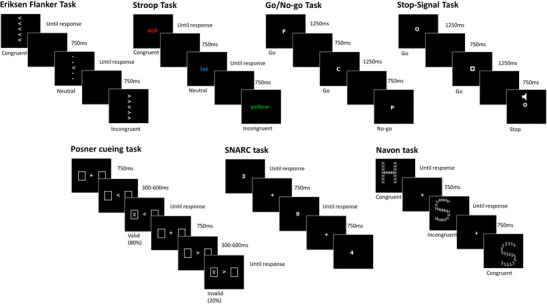
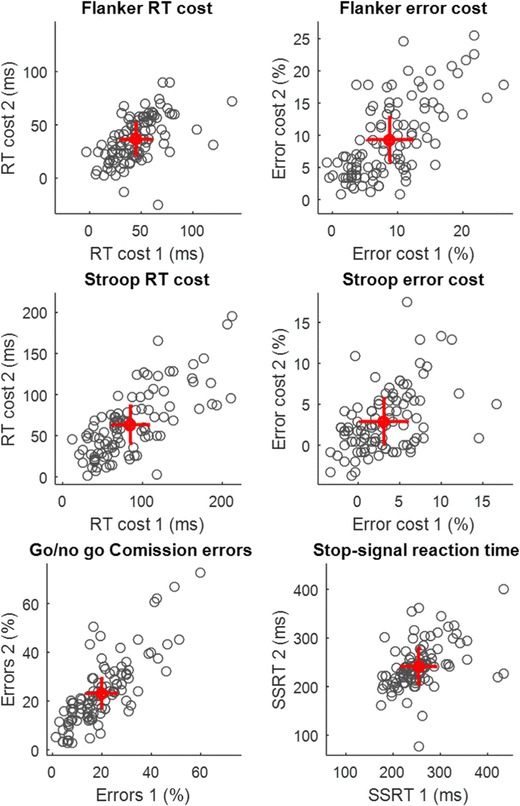
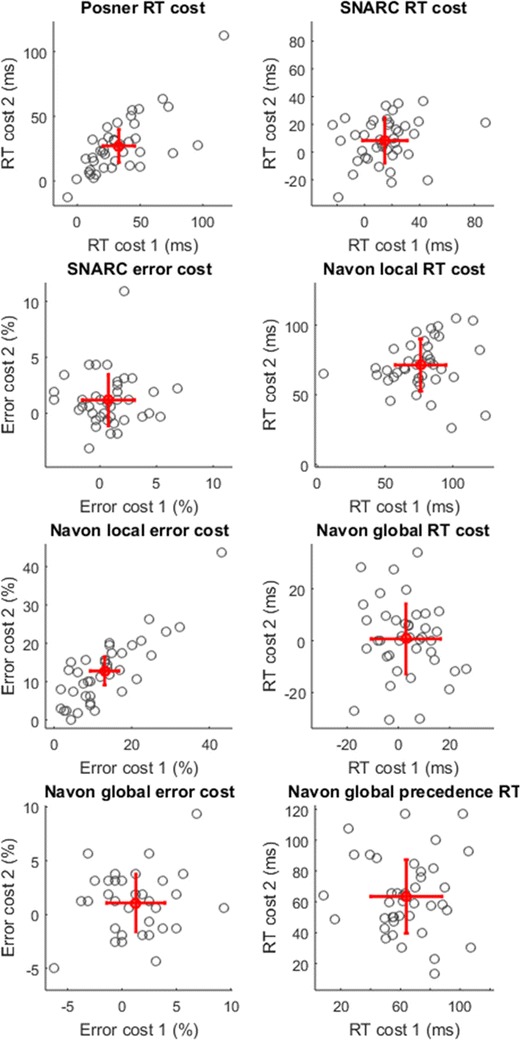
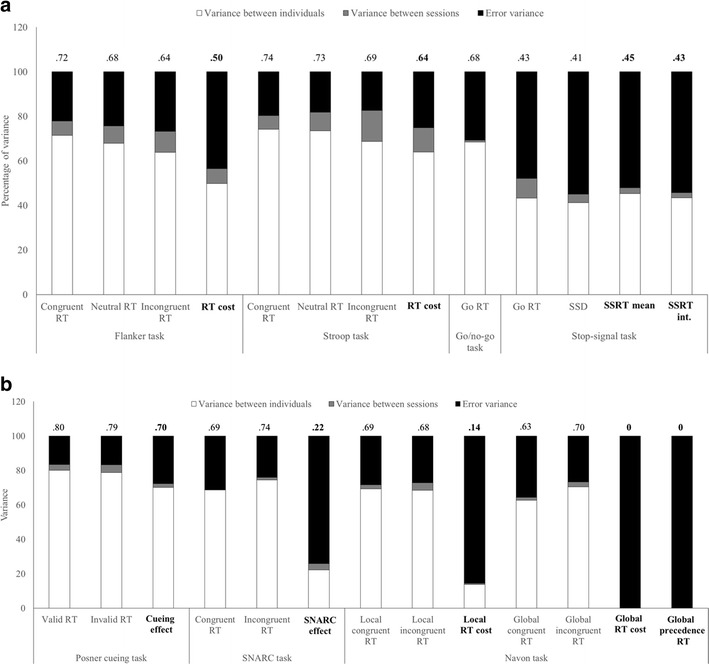
Individual differences in cognitive paradigms are increasingly employed to relate cognition to brain structure, chemistry, and function. However, such efforts are often unfruitful, even with the most well established tasks. Here we offer an explanation for failures in the application of robust cognitive paradigms to the study of individual differences. Experimental effects become well established - and thus those tasks become popular - when between-subject variability is low. However, low between-subject variability causes low reliability for individual differences, destroying replicable correlations with other factors and potentially undermining published conclusions drawn from correlational relationships. Though these statistical issues have a long history in psychology, they are widely overlooked in cognitive psychology and neuroscience today. In three studies, we assessed test-retest reliability of seven classic tasks: Eriksen Flanker, Stroop, stop-signal, go/no-go, Posner cueing, Navon, and Spatial-Numerical Association of Response Code (SNARC). Reliabilities ranged from 0 to .82, being surprisingly low for most tasks given their common use. As we predicted, this emerged from low variance between individuals rather than high measurement variance. In other words, the very reason such tasks produce robust and easily replicable experimental effects - low between-participant variability - makes their use as correlational tools problematic. We demonstrate that taking such reliability estimates into account has the potential to qualitatively change theoretical conclusions. The implications of our findings are that well-established approaches in experimental psychology and neuropsychology may not directly translate to the study of individual differences in brain structure, chemistry, and function, and alternative metrics may be required.
Overview
The claims and statistics of this paper haven’t been checked yet.
Free: it reads the open-access text and checks the first 5 claims that cite a source we can check. Create a free account to check every claim.
Integrity signals
Registry
Cites
Statistics
Figures
Verification
Claims the paper makes
The claims and statistics of this paper haven’t been checked yet.
Free: it reads the open-access text and checks the first 5 claims that cite a source we can check. Create a free account to check every claim.
Claims other papers make about this one
Each is checked against this paper’s own text: does it say what the citing paper says it does?
The source backs part of the claim, not all of it — or backs it for a different population, condition or comparison.
In the citing paper
“This contrast was used (cf. anticipation of social reward minus neutral outcomes) because reliability of difference scores is always lower than reliability of their individual parts,(53) which has been shown to diminish reliability of task-based fMRI(54) (see also(55)) and hinder mechanistic research.(56)”
From Amplification of Positivity Treatment for Anxiety and Depression: A Randomized Experimental Therapeutics Trial Targeting Social Reward Sensitivity to Enhance Social Connectedness (2024) · cites this paper as [53]
Experimental — accuracy not yet measuredThe source backs part of the claim, not all of it — or backs it for a different population, condition or comparison.
In the citing paper
“For the Stroop task, reliability was ρ congruent = .86, ρ incongruent = .82, and ρ interference = .78.”
From Problematic social media use and cognitive performance in young adults: Associations with selective attention and inhibitory control (2026) · cites this paper as Hedge, Powell, & Sumner, 2018
Experimental — accuracy not yet measuredThe cited source says what the claim attributes to it.
In the citing paper
“Further, it is often the case that cognitive tasks that produce robust effects in experimental settings are poorly suited for individual differences studies due to low between-participant reliability (Hedge et al. 2018).”
From Practicing Retrieval Facilitates Learning (2021) · cites this paper as Hedge et al. 2018
The check wasn’t confident either way, so it gives no verdict — never disputed.
In the citing paper
“For the Simon task, reliability was ρ_congruent = .84, ρ_incongruent = .81, and ρ_interference = .76.”
From Problematic social media use and cognitive performance in young adults: Associations with selective attention and inhibitory control (2026) · cites this paper as Hedge et al., 2018
Experimental — accuracy not yet measured
Self-check
Percentages, sums and reported differences re-computed from the paper’s own numbers.
The self-check needs the paper’s full text.
Citations
Cites
The Measurement of Observer Agreement for Categorical Data
Landis, J. R., & Koch, G. G. (1977) · Biometrics · doi:10.2307/2529310 · Cited by 81,148 · cited 4×
“Studies 1 and 2 None of the behavioral measures in Studies 1 and 2 (see Table 1) exceeded reliabilities of .8, typically considered excellent or of a clinically required standard (Cicchetti & Sparrow, 1981; Fleiss, 1981; Landis & Koch, 1977).”
BackgroundMethodResultInfluentialFaul, F., Erdfelder, E., Lang, A.-G., & Buchner, A. (2007) · Behavior Research Methods · doi:10.3758/bf03193146 · Cited by 65,971
Structural equation modeling in practice: A review and recommended two-step approach
Anderson, J. C., & Gerbing, D. W. (1988) · Psychological Bulletin · doi:10.1037/0033-2909.103.3.411 · Cited by 41,941
Statistical power analyses using G∗Power 3.1: tests for correlation and regression analyses
Faul, F., Erdfelder, E., Buchner, A., & Lang, A.-G. (2009) · Behavior Research Methods · doi:10.3758/brm.41.4.1149 · Cited by 37,615
Intraclass correlations: Uses in assessing rater reliability.
Shrout, P. E., & Fleiss, J. L. (1979) · Psychological Bulletin · doi:10.1037/0033-2909.86.2.420 · Cited by 24,532
Statistical Methods for Rates and Proportions
Fleiss, J. L., Levin, B., & Paik, M. C. (2003) · Wiley Series in Probability and Statistics · doi:10.1002/0471445428 · Cited by 18,646
Miyake, A., Friedman, N. P., Emerson, M. J., Witzki, A. H., Howerter, A., & Wager, T. D. (2000) · Cognitive Psychology · doi:10.1006/cogp.1999.0734 · Cited by 15,798
Review of Psychometric theory (2nd ed.).
SITGREAVES, R. (1979) · Contemporary Psychology: A Journal of Reviews · doi:10.1037/018882 · Cited by 11,425
Why Most Published Research Findings Are False
Ioannidis, J. P. A. (2005) · PLoS Medicine · doi:10.1371/journal.pmed.0020124 · Cited by 10,505
Posner, M. I. (1980) · Quarterly Journal of Experimental Psychology · doi:10.1080/00335558008248231 · Cited by 9,670 · cited 2×
“Study 3 Again, performance was comparable to previous reports in the literature (Navon, 1977; Posner, 1980; Rusconi et al., 2013).”
Research works printed but not linked: 7
- Crocker LM Algina J Introduction to Classicial and Modern Test Theory 1986 New York CBS College Publishing
- Hambleton RK Swaminathan H Rogers HJ Fundementals of Item Response Theory 1991 Newbury Park Sage
- Lynam DR Smith GT Whiteside SP Cyders MA The UPPS-P: Assessing give personality pathways to impulsive behavior (Technical Report) 2006 West Lafayette Purdue University
- Nunnally JC Psychometric theory 1978 2 New York. McGraw-Hill
- Peirce JW Introduction to Python and PsychoPy Perception 2013 42 2 3
- Rogosa D Gottman JM Myths and methods: "Myths about longitudinal research" plus supplemental questions The analysis of change 1995 Hillsdale Lawrence Ealbaum Associates pp. 3 65
- Zumbo BD Thompson B The simple difference score as an inherently poor measure of change: Some reality, much mythology Advances in Social Science Methodoloy 1999 Greenwich JAI Press pp. 269 304
Cited by
Items 401–500 of 1,003
Tomlinson, R. C., Hyde, L. W., Weigard, A. S., Klump, K. L., & Burt, S. A. (2022) · Development and Psychopathology · doi:10.1017/s0954579422000645 · Cited by 26
“…issues, do not consistently relate to real-world outcomes such as mental health, physical health, or income, and do not load into a consistent factor structure (Eisenberg et al., 2019; Enkavi et al., 2019; Hedge et al., 2018; Karr et al., 2018; Rouder & Haaf, 2019; Weigard et al., 2021).”
Language athletes: Dual-language code-switchers exhibit inhibitory control advantages
Gosselin, L., & Sabourin, L. (2023) · Frontiers in Psychology · doi:10.3389/fpsyg.2023.1150159 · Cited by 26
Measuring the acuity of the approximate number system in young children
Krajcsi, A., Chesney, D. L., Cipora, K., Coolen, I. E. J. I., Gilmore, C. K., Inglis, M., Libertus, M. E., Nuerk, H., Simms, V., & Reynvoet, B. (2024) · Developmental Review · doi:10.1016/j.dr.2024.101131 · Cited by 24
Inhibition Tasks are not Associated with a Variety of Behaviours in College Students
Gunten, C. D. V., Bartholow, B. D., & Martins, J. S. (2020) · European Journal of Personality · doi:10.1002/per.2250 · Cited by 23
“Enkavi et al. (2019) and Hedge et al. (2018) provide some insight into this question by reporting internal reliabilities in their supplemental materials.”
InfluentialWhat We Could Learn About Holistic Face Processing Only From Nonface Objects
Gauthier, L. (2020) · Current Directions in Psychological Science · doi:10.1177/0963721420920620 · Cited by 22
Rey-Mermet, A., Singh, K. A., Gignac, G. E., Brydges, C. R., & Ecker, U. K. H. (2020) · PLoS ONE · doi:10.1371/journal.pone.0243053 · Cited by 31
How attention controls naming: Lessons from Wundt 2.0.
Roelofs, A. (2021) · Journal of Experimental Psychology General · doi:10.1037/xge0001030 · Cited by 21
“It should be noted, however, that the reliability of difference-score metrics is particularly poor, which may impede the observation of this particular correlation based on difference scores (Hedge et al., 2018).”
BackgroundCharacterizing reward system neural trajectories from adolescence to young adulthood
Cao, Z., Ottino‐González, J., Cupertino, R. B., Juliano, A., Chaarani, B., Banaschewski, T., Bokde, A. L. W., Quinlan, E. B., Desrivières, S., Flor, H., et al. (2021) · Developmental Cognitive Neuroscience · doi:10.1016/j.dcn.2021.101042 · Cited by 21
“It has been argued that fMRI tasks are optimal for eliciting robust group-level, task-specific response, to the detriment of investigating between-subject variance in activation (Hedge et al., 2018), leading to reduced sensitivity in detecting subtle effects.”
BackgroundSeeing Beyond Salience and Guidance: The Role of Bias and Decision in Visual Search
Clarke, A. D. F., Nowakowska, A., & Hunt, A. R. (2019) · Vision · doi:10.3390/vision3030046 · Cited by 19
“A recent paper by Hedge and colleagues [77] made the important point that “reliability” has two very distinct meanings in experimental psychology: on the one hand, it can mean how consistent a given effect size is across different samples, and on the other, it can mean how reliably the same sample produces the same re…”
BackgroundIbáñez, A. M., Kühne, K., Miklashevsky, A. A., Monaco, E. L., Muraki, E. J., Ranzini, M., Speed, L. J., & Tuena, C. (2022) · doi:10.31219/osf.io/ej5y3 · Cited by 19
Stuldreher, I. V., van Erp, J. B. F., & Brouwer, A.-M. (2023) · Sensors · doi:10.3390/s23063006 · Cited by 18
Functional connectivity during smooth pursuit eye movements
Schröder, R., Kasparbauer, A., Meyhöfer, I., Steffens, M., Trautner, P., & Ettinger, U. (2020) · Journal of Neurophysiology · doi:10.1152/jn.00317.2020 · Cited by 21
Neuroimaging brain growth charts: A road to mental health
Chen, L.-Z., Holmes, A. J., Zuo, X., & Dong, Q. (2021) · Psychoradiology · doi:10.1093/psyrad/kkab022 · Cited by 20
“In addition, experimental psychology and neuropsychology approaches may not suitable for the direct study of individual differences in brain function (Hedge et al., 2018).”
Vestner, T., Balsys, E., Over, H., & Cook, R. (2022) · Cognition · doi:10.1016/j.cognition.2022.105056 · Cited by 24
Spatialization in working memory and its relation to math anxiety
van Dijck, J., Fias, W., & Cipora, K. (2022) · Annals of the New York Academy of Sciences · doi:10.1111/nyas.14765 · Cited by 24
Test-retest reliability for common tasks in vision science
Clark, K., Birch-Hurst, K., Pennington, C. R., Petrie, A. C. P., Lee, J. T., & Hedge, C. (2022) · Journal of Vision · doi:10.1167/jov.22.8.18 · Cited by 23
“These different goals present a tension similar to one recently described as “the reliability paradox” (Hedge et al., 2018b).”
BackgroundResultInfluentialSelf-citationLinking computational models of two core tasks of cognitive control.
Robinson, M. M., & Steyvers, M. (2023) · Psychological Review · doi:10.1037/rev0000395 · Cited by 21
He, C., Boone, A. P., & Hegarty, M. (2023) · Psychonomic Bulletin & Review · doi:10.3758/s13423-023-02266-6 · Cited by 24
“…researchers to conclude a dissociation between the abilities measured by two tasks based on a low correlation, when, in fact, that low correlation is due to the low reliability of the individual measures (Ackerman & Hambrick, 2020; Hedge et al., 2018; Parsons et al., 2019; Newcombe et al., 2023).”
BackgroundToyama, A., Katahira, K., & Kunisato, Y. (2023) · Computational Brain & Behavior · doi:10.1007/s42113-023-00175-4 · Cited by 22
“Some studies have examined test–retest reliability and suggested that indices of behavioral tasks are not optimal for detecting individual differences compared with questionnaires (Enkavi et al., 2019; Hedge et al., 2018; Moutoussis et al., 2018).”
MethodZHENG, R., Zhang, M., Guo, T., Guasch, M., & Ferré, P. (2023) · Journal of Psycholinguistic Research · doi:10.1007/s10936-023-10018-9 · Cited by 19
“The norms show high indices of reliability for prototypicality, valence, and arousal, thus indicating a high level of internal consistency (Hedge et al., 2018; Parsons et al., 2019).”
BackgroundTesting the social motivation theory of autism: the role of co‐occurring anxiety
Bagg, E., Pickard, H., Tan, M., Smith, T. J., Simonoff, E. A., Pickles, A. R., Leno, V. C., & Bedford, R. (2023) · Journal of Child Psychology and Psychiatry · doi:10.1111/jcpp.13925 · Cited by 25
“First, as described by Hedge, Powell, and Sumner (2018), condition-based differences in experimental tasks may not be the best way to measure individual differences, although this must be weighed against the advantage of objective measures.”
Rouder, J. N., & Mehrvarz, M. (2024) · Current Directions in Psychological Science · doi:10.1177/09637214231220923 · Cited by 29
#foodie: Implications of interacting with social media for memory
Zimmerman, J., & Brown‐Schmidt, S. (2020) · Cognitive Research Principles and Implications · doi:10.1186/s41235-020-00216-7 · Cited by 18
Coll‐Martín, T., Carretero‐Dios, H., & Lupiáñez, J. (2021) · British Journal of Psychology · doi:10.1111/bjop.12513 · Cited by 17
“This limitation, which is also inherent to most cognitive tasks (Dang, King, & Inzlicht, 2020; Hedge, Powell, & Sumner, 2018), could dramatically attenuate the observed correlations coefficients.”
BackgroundThe Forward Testing Effect is Reliable and Independent of Learners’ Working Memory Capacity
Pastötter, B., & Frings, C. (2019) · Journal of Cognition · doi:10.5334/joc.82 · Cited by 25
The stability of visual perspective and vividness during mental time travel
Berg, J. J., Gilmore, A. W., Shaffer, R. A., & McDermott, K. B. (2021) · Consciousness and Cognition · doi:10.1016/j.concog.2021.103116 · Cited by 17
Sample size matters when estimating test–retest reliability of behaviour
Williams, B., FitzGibbon, L., Brady, D., & Christakou, A. (2025) · Behavior Research Methods · doi:10.3758/s13428-025-02599-1 · Cited by 25
“…that greater sample sizes than are often used are required for reliable (individual differences) research (Button et al., 2013; de Winter et al., 2016; Hedge et al., 2018; Hirschfeld et al., 2014; Kretzsch-mar & Gignac, 2019; Marek et al., 2022; Paccagnella, 2011; Schönbrodt & Perugini, 2013).”
Motsan, S., Yirmiya, K., & Feldman, R. (2021) · Development and Psychopathology · doi:10.1017/s0954579421000067 · Cited by 28
Mobile Data Collection of Cognitive-Behavioral Tasks in Substance Use Disorders: Where Are We Now?
Zech, H., Reichert, M., Ebner‐Priemer, U., Tost, H., Rapp, M. A., Heinz, A., Dolan, R. J., Smolka, M. N., & Deserno, L. (2022) · Neuropsychobiology · doi:10.1159/000523697 · Cited by 21
Individual Differences in Dealing With Classroom Noise Disturbances
Massonnié, J., Mareschal, D., & Kirkham, N. Z. (2022) · Mind Brain and Education · doi:10.1111/mbe.12322 · Cited by 20
Gallagher, R. A., Kessler, K., Bramham, J., Dechant, M., & Friehs, M. A. (2023) · Frontiers in Psychology · doi:10.3389/fpsyg.2023.1068229 · Cited by 20
“While SST scores alone are not sufficient to provide an ADHD diagnosis due to high interindividual and intraindividual variability, the task has been used alongside self-report measures of impulsivity/ADHD to reduce the effect of social desirability (Aichert et al., 2012; Hedge et al., 2018; Jauregi et al., 2018).”
MethodLatent state–trait and latent growth curve modeling of inhibitory control.
Faßbender, K., Meyhöfer, I., & Ettinger, U. (2023) · Journal of Experimental Psychology General · doi:10.1037/xge0001344 · Cited by 19
Kidd, E., Arciuli, J., Christiansen, M. H., & Smithson, M. J. (2023) · Cognitive Development · doi:10.1016/j.cogdev.2023.101335 · Cited by 27
“Indeed, many of the tasks used in these studies were originally developed to investigate group-level effects and are thus designed to minimise between-parti-cipant variability (Hedge et al., 2018).”
Lengersdorff, L., Wagner, I. C., Mittmann, G., Sastre-Yagüe, D., Lüttig, A., Olsson, A., Petrović, P., & Lamm, C. (2023) · eLife · doi:10.7554/elife.84951 · Cited by 22
“…it has recently been discussed that highly robust cognitive tasks are bound to exhibit low test-retest reliability, as robust tasks are often characterized by low interindividual variation, and thus leave only little variance that can be explained by participant traits ( Hedge et al., 2018 ).”
BackgroundThe link between cognitive abilities and risk preference depends on measurement
Olschewski, S., Rieskamp, J., & Hertwig, R. (2023) · Scientific Reports · doi:10.1038/s41598-023-47844-9 · Cited by 21
“Moreover, behavioral measures, which are popular for a particular experimental effect, often have low between-subjects heterogeneity and hence low reliability 68 .”
BackgroundUsing precision approaches to improve brain-behavior prediction
Lee, H. J., Dworetsky, A., Labora, N., & Gratton, C. (2024) · Trends in Cognitive Sciences · doi:10.1016/j.tics.2024.09.007 · Cited by 30
Knight, S., & Heinrich, A. (2019) · Frontiers in Psychology · doi:10.3389/fpsyg.2018.02779 · Cited by 21
“tasks is too low to allow for correlational studies of individual differences (Hedge et al., 2018).”
BackgroundHuang, Y. T., & Hollister, E. (2019) · Journal of Experimental Child Psychology · doi:10.1016/j.jecp.2019.04.005 · Cited by 21
Automatic imitation does not predict levels of prosocial behaviour in a modified dictator game
Galang, C. M., & Obhi, S. S. (2020) · Acta Psychologica · doi:10.1016/j.actpsy.2020.103022 · Cited by 17
Development of a cognitive bias modification intervention for anxiety disorders in primary care
Weisberg, R. B., Gonsalves, M. A., Ramadurai, R., Braham, H., Fuchs, C. H., & Beard, C. (2021) · British Journal of Clinical Psychology · doi:10.1111/bjc.12281 · Cited by 19
O’Connor, C., Everaert, J., & Fitzgerald, A. (2021) · Journal of Clinical Psychology · doi:10.1002/jclp.23186 · Cited by 19
Depression, Rumination, and Impulsive Action: A Latent Variable Approach to Behavioral Impulsivity
Hasegawa, A., Somatori, K., Nishimura, H., Hattori, Y., & Kunisato, Y. (2021) · The Journal of Psychology · doi:10.1080/00223980.2021.1956871 · Cited by 20
Brief Report: Learning Language Through Overhearing in Children with ASD
Luyster, R., & Arunachalam, S. (2018) · Journal of Autism and Developmental Disorders · doi:10.1007/s10803-018-3672-0 · Cited by 19
Conditioned Inhibition and its Relationship to Impulsivity: Empirical and Theoretical Considerations
Sosa, R., & dos Santos, C. V. (2018) · The Psychological Record · doi:10.1007/s40732-018-0325-9 · Cited by 19
Goodhew, S. C., & Plummer, A. S. (2019) · Quarterly Journal of Experimental Psychology · doi:10.1177/1747021819846831 · Cited by 23
Religious belief and cognitive conflict sensitivity: A preregistered fMRI study
Hoogeveen, S., Snoek, L., & van Elk, M. (2020) · Cortex · doi:10.1016/j.cortex.2020.04.011 · Cited by 23
Pupillary and behavioral markers of alerting and orienting: An individual difference approach
Aminihajibashi, S., Hagen, T., Laeng, B., & Espeseth, T. (2020) · Brain and Cognition · doi:10.1016/j.bandc.2020.105597 · Cited by 17
Computational models of retrieval processes in sentence processingPreprint
Vasishth, S., Nicenboim, B., Engelmann, F., & Burchert, F. (2019) · PsyArXiv (OSF Preprints) · doi:10.31234/osf.io/e4jds · Cited by 23
Rosales, K. P., Snijder, J.-P., Conway, A. R. A., & Gonthier, C. (2022) · Quarterly Journal of Experimental Psychology · doi:10.1177/17470218211066410 · Cited by 19
“For instance, Hedge et al. (2018) found that traditional cognitive control tasks like the Stroop task, Flanker task, Simon task, and Go/No-go task are successful at producing classic group level effects (e.g., the Stroop effect), but when used as individual difference measures in correlational…”
BackgroundJohnsen, B. H., Nilsen, A. A., Hystad, S. W., Grytting, E., Ronge, J. L. H., Rostad, S., Öhman, P. H., & Overland, A. J. (2023) · Police Practice and Research · doi:10.1080/15614263.2023.2179052 · Cited by 19
Mental imagery and visual attentional templates: A dissociation
Cabbai, G., Brown, C. R. H., Dance, C., Simner, J., & Forster, S. (2023) · Cortex · doi:10.1016/j.cortex.2023.09.014 · Cited by 16
“The (Spearman e Brown corrected) split-half internal consistency was rSB ¼ .49, 95% CI [.38, .59], which is common in other RT-based experiments (Hedge et al., 2018).”
Garre-Frutos, F., Vadillo, M. A., González, F., & Lupiáñez, J. (2024) · Behavior Research Methods · doi:10.3758/s13428-023-02329-5 · Cited by 28
“Given that the number of trials is usually positively related to reliability in behavioral–cognitive measures (Hedge et al., 2018; von Bastian et al., 2020), this practice might compromise the reliability of VMAC scores.”
BackgroundResultMeasuring the Reliability of a Gamified Stroop Task: Quantitative Experiment
Wiley, K., Berger, P., Friehs, M. A., & Mandryk, R. L. (2024) · JMIR Serious Games · doi:10.2196/50315 · Cited by 26
“The control task was designed using the basic computerized Stroop task described by Macleod [34] and Hedge et al [41] as models.”
MethodThe feasibility of working memory tablet tasks in predicting scholastic skills in classroom settings
Kanerva, K., Kiistala, I., Kalakoski, V., Hirvonen, R., Ahonen, T. P. S., & Kiuru, N. H. (2019) · Applied Cognitive Psychology · doi:10.1002/acp.3569 · Cited by 20
Germine, L. T., Joormann, J., Passell, E. J., Rutter, L. A., Scheuer, L., Martini, P., Hwang, I. H., Lee, S., Sampson, N. A., Barch, D. M., et al. (2021) · Journal of Affective Disorders · doi:10.1016/j.jad.2021.10.104 · Cited by 19
“Currently, measures of threat-related biases in aspects of attention and executive functioning often have low (or no) psychometric reliability, leading to results that are not reproducible (Hedge et al., 2018; Parsons et al., 2019).”
BackgroundEvaluating validity properties of 25 race-related scales
Hester, N., Axt, J. R., Siemers, N., & Hehman, E. (2022) · Behavior Research Methods · doi:10.3758/s13428-022-01873-w · Cited by 19
“Like many cognitive tasks, they have high measurement error (Cunningham et al., 2001; Gawronski et al., 2017; Hedge et al., 2018) and only weak relationships with behavior (Greenwald et al.”
BackgroundThe neural correlates of domain-general visual ability
McGugin, R. W., Sunday, M. A., & Gauthier, L. (2022) · Cerebral Cortex · doi:10.1093/cercor/bhac342 · Cited by 16
The face inversion effect does not provide a pure measure of holistic face processing
Gerlach, C., & Mogensen, E. (2023) · Behavior Research Methods · doi:10.3758/s13428-022-02054-5 · Cited by 18
“It is important to note that the adjusted cor-relation—which we will henceforth refer to as r Adjusted —is itself an estimate that is affected by sampling error, which will also affect the estimates of the reliabilities that it rests upon (Hedge et al., 2018).”
Uncovering mental structure through data-driven ontology discoveryPreprint
Eisenberg, I. W., Bissett, P. G., Enkavi, A. Z., Li, J. K., MacKinnon, D. P., Marsch, L. A., & Poldrack, R. A. (2018) · PsyArXiv (OSF Preprints) · doi:10.31234/osf.io/fvqej · Cited by 20
Whitehead, P. S., Brewer, G. A., & Blais, C. (2020) · Experimental Psychology (formerly Zeitschrift für Experimentelle Psychologie) · doi:10.1027/1618-3169/a000497 · Cited by 18
Jiang, X., Burleigh, L. M., & Greening, S. G. (2021) · Psychophysiology · doi:10.1111/psyp.13831 · Cited by 18
Reineberg, A. E., Banich, M. T., Wager, T. D., & Friedman, N. P. (2021) · NeuroImage · doi:10.1016/j.neuroimage.2021.118845 · Cited by 17
On the reliability of individual economic rationality measurements
Nitsch, F. J., Lüpken, L. M., Lüschow, N., & Kalenscher, T. (2022) · Proceedings of the National Academy of Sciences · doi:10.1073/pnas.2202070119 · Cited by 21
An individual differences perspective on pragmatic abilities in the preschool years
Bohn, M., Tessler, M. H., Kordt, C., Hausmann, T., & Frank, M. C. (2023) · Developmental Science · doi:10.1111/desc.13401 · Cited by 23
“Reliable tasks are a necessary pre-condition for meaningful individual differences research (Enkavi et al., 2019; Fried & Flake, 2018; Hedge et al., 2018).”
Zech, H., van Dijk, W. V., & van Dillen, L. V. (2023) · Journal of experimental psychology. General · doi:10.1037/xge0001386 · Cited by 15
“…tasks (AATs) test – retest reliability is generally reported to be low, whereas its split-half reliability is generally reported to be high (Kahveci et al., 2021; Machulska et al., 2022; Zech et al., 2022) — a pattern that indicates that a measure likely detects state changes (Hedge et al., 2018).”
Lacko, D., Prošek, ., Čeněk, J., Helísková, M., Ugwitz, P., Svoboda, V., Počaji, P., Vais, M., Halířová, H., Juřík, V., et al. (2023) · PLoS ONE · doi:10.1371/journal.pone.0287057 · Cited by 27
“Some studies suggested that these methods have satisfactory test-retest reliability [66, 67] and split-half reliability [68, 69], while others directly questioned their validity and reliability [70, 71].”
BackgroundUsing smartphones to optimise and scale-up the assessment of model-based planning
Donegan, K. R., Brown, V. M., Price, R. B., Gallagher, E., Pringle, A. J., Hanlon, A. K., & Gillan, C. M. (2023) · Communications Psychology · doi:10.1038/s44271-023-00031-y · Cited by 22
“This fi nding is common to many tasks used for individual difference research 18 and is thought to in part be the result of the reliability paradox, where tasks designed to examine within-subject effects (such as Flanker, Stroop) have low between-subject variability 19 .”
InfluentialWagner, J., Zurlo, A., & Rusconi, E. (2024) · Cortex · doi:10.1016/j.cortex.2024.05.020 · Cited by 21
“However, because many of these behavioural measures were originally developed for nomothetic research rather than for capturing individual differences (Hedge, Powell, & Sumner, 2018), their psychometric properties, including reliability, are often unknown.”
Schreiner, M. S., Zettersten, M., Bergmann, C., Frank, M. C., Fritzsche, T., Gonzalez‐Gomez, N., Hamlin, J. K., Kartushina, N., Kellier, D. J., Mani, N., et al. (2024) · Developmental Science · doi:10.1111/desc.13551 · Cited by 18
“While most infants prefer IDS over ADS (Dunst et al., 2012 composite score, increasing the ratio of error relative to the variance between participants (Hedge et al., 2018; Lord, 1956).”
Impulsive dispositions and alcohol: what we know, how we know it, and where to go from here
Stevens, A. K., Blanchard, B. E., & Littlefield, A. K. (2018) · Borderline Personality Disorder and Emotion Dysregulation · doi:10.1186/s40479-018-0081-0 · Cited by 21
“Hedge C, Powell G, Sumner P.”
MethodTechnology-rich activities: One type does not motivate all
Chen, J., Star, J. R., Dede, C., & Tutwiler, M. S. (2018) · Contemporary Educational Psychology · doi:10.1016/j.cedpsych.2018.06.011 · Cited by 20
Inhibitory‐control event‐related potentials correlate with individual differences in alcohol use
O’Halloran, L., Rueda‐Delgado, L. M., Jollans, L., Cao, Z., Boyle, R. T., Vaughan, C., Coey, P., & Whelan, R. (2019) · Addiction Biology · doi:10.1111/adb.12729 · Cited by 15
“One potential reason for the lack of a relationship between overt behavior and AUDIT scores is that the behavioral measure of inhibitory control, the SSRT, has moderate reliability.(53) In contrast, the N2 and P3 ERPs have good internal consistency, as measured in a Go/NoGo task, particularly as the number of averaged…”
BackgroundSchubert, A., & Rey-Mermet, A. (2019) · Journal of Applied Research in Memory and Cognition · doi:10.1016/j.jarmac.2019.06.004 · Cited by 21
Smartphones within Psychological Science
Ellis, D. A. (2020) · Cambridge University Press eBooks · doi:10.1017/9781108671408 · Cited by 15
Ghasemi, O., Handley, S. J., & Howarth, S. (2021) · Quarterly Journal of Experimental Psychology · doi:10.1177/17470218211044691 · Cited by 16
“This attenuation in correlation estimate is more obvious in studies, like our study, with an experimental task as a measure of individual differences (Hedge et al., 2018).”
ResultVervoort, L., Braun, M., Schryver, M. D., Naets, T., Koster, E. H. W., & Braet, C. (2021) · Frontiers in Psychology · doi:10.3389/fpsyg.2021.644512 · Cited by 16
“This observation is related to the so-called Reliability Paradox (De Schryver et al., 2016; Hedge et al., 2018; Goodhew and Edwards, 2019).”
BackgroundBarzykowski, K., Wereszczyński, M., Hajdas, S., & Radel, R. (2021) · MethodsX · doi:10.1016/j.mex.2021.101530 · Cited by 16
“However, the present protocol uses two well-known tasks which, basing on previous studies (e.g., [26–27] ,28), relate to different aspects of inhibitory control; namely, the inhibition of the prepotent response (i.e., the Stroop task) and the resistance to distractor interference (i.e., the Flanker…”
MethodCleland, A. A., & Bull, R. (2019) · Journal of Experimental Psychology Learning Memory and Cognition · doi:10.1037/xlm0000590 · Cited by 21
Hassel, S., Sharma, G. B., Alders, G. L., Davis, A. D., Arnott, S. R., Frey, B. N., Hall, G. B., Harris, J. K., Lam, R. W. M., Milev, R. V., et al. (2019) · Human Brain Mapping · doi:10.1002/hbm.24883 · Cited by 14
“marker discovery is lost, but that the reasons for this lack of consistency would need to be evaluated appropriately (Hedge et al., 2018).”
BackgroundHeinrich, A., & Knight, S. (2020) · Frontiers in Psychology · doi:10.3389/fpsyg.2020.01590 · Cited by 15
“We are not aware of any studies that have provided these data for auditory Stroop tasks, and not having this information limits our understanding of the extent to which correlations between different Stroop tasks are limited by retest reliability (Hedge et al., 2018).”
BackgroundTowards formal models of psychopathological traits that explain symptom trajectories
Sharp, P. B., Miller, G. A., Dolan, R. J., & Eldar, E. (2020) · BMC Medicine · doi:10.1186/s12916-020-01725-4 · Cited by 16
Euler, M. J., & Schubert, A. (2021) · Intelligence · doi:10.1016/j.intell.2021.101569 · Cited by 14
School Choice and Student Well-Being: Opportunity and Capability in Education
Kelly, A. (2007) · ePrints Soton (University of Southampton) · Cited by 22
Masouleh, S. K., Eickhoff, S. B., Balajoo, S. M., Nicolaisen‐Sobesky, E., Thirion, B., & Genon, S. (2022) · Scientific Reports · doi:10.1038/s41598-022-17556-7 · Cited by 20
The common factor of executive functions measures nothing but speed of information uptakePreprint
Löffler, C., Frischkorn, G. T., Hagemann, D., Sadus, K., & Schubert, A. (2022) · doi:10.31234/osf.io/xvdyz · Cited by 15
Continuous psychophysics: past, present, future
Burge, J., & Bonnen, K. (2025) · Trends in Cognitive Sciences · doi:10.1016/j.tics.2025.01.005 · Cited by 14
“However, reaction-time measurements in many contexts are notoriously noisy, and often do not enable reliable characterization of individual differences, even though they may enable reliable measurements of group differences [46].”
Fisch, C. O., Franken, I. H. A., & Thurik, R. (2021) · Journal of Business Venturing Insights · doi:10.1016/j.jbvi.2021.e00253 · Cited by 14
Me as good and me as bad: Priming the self triggers positive and negative implicit evaluations.
Zayas, V., Wang, A. M., & McCalla, J. D. (2022) · Journal of Personality and Social Psychology · doi:10.1037/pspp0000332 · Cited by 18
Gullifer, J. W., Pivneva, I., Whitford, V., Sheikh, N. A., & Titone, D. A. (2022) · Psychological Science · doi:10.1177/09567976221113764 · Cited by 18
Tango of control: The interplay between proactive and reactive control.
Viviani, G., Visalli, A., Montefinese, M., Vallesi, A., & Ambrosini, E. (2024) · Journal of Experimental Psychology General · doi:10.1037/xge0001585 · Cited by 21
Tobar-Henríquez, A., Rabagliati, H., & Branigan, H. P. (2020) · Journal of Experimental Psychology Learning Memory and Cognition · doi:10.1037/xlm0000774 · Cited by 21
Predictive modeling of neurobehavioral state and trait variation across development
Sanchez–Alonso, S., & Aslin, R. Ν. (2020) · Developmental Cognitive Neuroscience · doi:10.1016/j.dcn.2020.100855 · Cited by 13
“Funda-mentally, failures to obtain reproducibility of the effect may reflect lack of statistical power and consequently the need for larger samples, which may be addressed via large-scale consortium-level datasets (Button et al., 2013; Hedge et al., 2018; Marek et al., 2020; Streiner et al., 2015).”
BackgroundO'Shea, B. A., & Wiers, R. W. H. J. (2020) · Social Cognition · doi:10.1521/soco.2020.38.supp.s187 · Cited by 18
“Due to the clear limitation the IAT has when measuring individual-level differences (Draheim et al., 2019; Hedge et al., 2018; Hehman et al., 2019; Schimmack, 2019), testing which assessment techniques (i.e., relative, absolute, or modeling scores) are better To sum up, measuring absolute implicit…”
BackgroundDo All Switches Cost the Same? Reliability of Language Switching and Mixing Costs
Segal, D., Prior, A., & Gollan, T. H. (2021) · Journal of Cognition · doi:10.5334/joc.140 · Cited by 20
“Note that the variability between individuals (needed for achieving high reliability) is crucial for detecting correlations, but it compromises the ability to detect group differences in experimental manipulations (Draheim et al., 2020; Hedge et al., 2018).”
BackgroundResultInfluentialBarzykowski, K., Hajdas, S., Radel, R., Niedźwieńska, A., & Kvavilashvili, L. (2021) · Consciousness and Cognition · doi:10.1016/j.concog.2021.103208 · Cited by 16
Different types of semantic interference, same lapses of attention: Evidence from Stroop tasks
Scaltritti, M., Job, R., & Sulpizio, S. (2022) · Memory & Cognition · doi:10.3758/s13421-021-01256-0 · Cited by 15
Holmboe, K. (2022) · Infant and Child Development · doi:10.1002/icd.2352 · Cited by 29
“There is a growing literature in adults confirming this picture (Enkavi et al., 2019; Hedge et al., 2018; Schuch et al., 2021).”
BackgroundSchumann, F., Steinborn, M. B., Flehmig, H. C., Kürten, J., Langner, R., & Huestegge, L. (2022) · Frontiers in Psychology · doi:10.3389/fpsyg.2022.946626 · Cited by 17
“Therefore, the correlations of measures of central tendency and variability may be interpreted without being concerned about insufficient reliability (Miller and Ulrich, 2013), as sometimes argued by a “reliability paradox” (Hedge et al., 2018).”
BackgroundWorking memory capacity preferentially enhances implementation of proactive control.
Lin, Y., Brough, R. E., Tay, A., Jackson, J. J., & Braver, T. S. (2022) · Journal of Experimental Psychology Learning Memory and Cognition · doi:10.1037/xlm0001195 · Cited by 21
Challenges and Solutions to the Measurement of Neurocognitive Mechanisms in Developmental Settings
Pezzoli, P., Parsons, S. D., Kievit, R., Astle, D. E., Huys, Q. J. M., Steinbeis, N., & Viding, E. M. (2023) · Biological Psychiatry Cognitive Neuroscience and Neuroimaging · doi:10.1016/j.bpsc.2023.03.011 · Cited by 19
Metadata
- Authors
- Hedge, C., Powell, G., & Sumner, P.
- Affiliations
- Cardiff University (GB)
- Corresponding author
- Hedge, Craig
- Venue
- Behavior Research Methods
- Published
- 2017-07-19
- Volume
- 50
- Issue
- 3
- Pages
- 1166-1186
- ISSN
- 1554-351X (ISSN-L)
- 1554-3528
- PMC
- PMC5990556
- OpenAlex
- W2724821146
- Cited by
- 1,457
- References
- 150
- Citations by year
- 2026: 165 · 2025: 168 · 2024: 178 · 2023: 207 · 2022: 188 · 2021: 192 · 2020: 175 · 2019: 111 · 2018: 61 · 2017: 9
- FWCI
- 125.87
- Type
- journal article
- Language
- en
- Open access
- hybrid
- doi.org
- Locations
- Behavior Research Methods (publishedVersion, cc-by)
- Europe PMC (PubMed Central) (publishedVersion, other-oa)
- PubMed Central (publishedVersion, cc-by)
- PubMed (publishedVersion)
- ORCA Online Research @Cardiff (Cardiff University) (acceptedVersion)
- Aston Publications Explorer (Aston University) (submittedVersion, cc-by)
- OSF Preprints (OSF Preprints) (submittedVersion)
- Funders
- Wellcome Trust (104943/Z/14/Z)
- Economic and Social Research Council (ES/K002325/1)
- Topics
- Social Sciences › Psychology › Experimental and Cognitive Psychology › Cognitive Abilities and Testing
- Social Sciences › Decision Sciences › Management Science and Operations Research › Psychometric Methodologies and Testing
- Life Sciences › Neuroscience › Cognitive Neuroscience › Neural and Behavioral Psychology Studies
- Keywords
- individual differences, test-retest reliability, between-subject variability, measurement reliability, cognitive paradigm, flanker task, Stroop task, stop-signal task, go/no-go task, Navon task, SNARC effect, neuropsychology, brain structure and cognition
- MeSH terms
- Brain, Cognition, Cues, Female, Humans, Individuality, Male, Neuropsychology, Reaction Time, Task Performance and Analysis, Reproducibility of Results
About these checks
Registry, retraction, Cites and statistics results are computed, not judged, with one exception: a printed reference that no index lists is read once by a model before it counts as a citation error. Claims are extracted by a model and kept only when their quote appears verbatim in the text; each cited source is then checked, with a model’s help, for whether it says what the claim relies on. Those verdicts can be wrong — read the claim’s quote and the cited source before relying on one.
Statistics and arithmetic are recomputed, not judged.
Confidence bands are shown only for fields calibrated on our annotated test set. None is calibrated yet, so no band is shown.
What counts as a claim ›How we measure confidence ›How we check this ›
Are you an author, or do you see a problem with this page? Request a review
Data sources
Bibliographic data: Semantic Scholar, OpenAlex, Crossref.
Contains information from the Semantic Scholar Academic Graph Datasets, made available under the ODC Attribution License (ODC-BY 1.0).
Semantic Scholar’s data is described in: Kinney, R., et al. (2023). The Semantic Scholar Open Data Platform. arXiv:2301.10140.
