

The reliability paradox: Why robust cognitive tasks do not produce reliable individual differences
Open accessThe DOI matches its Crossref record; 146 of the 150 references it cites were found in a registry or an index.
Abstract
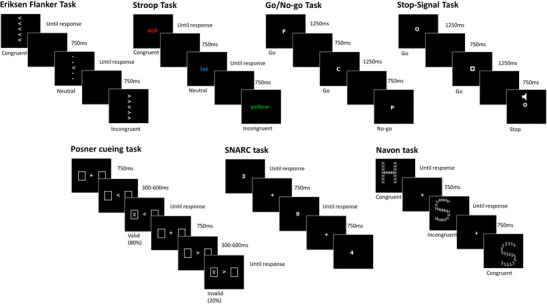
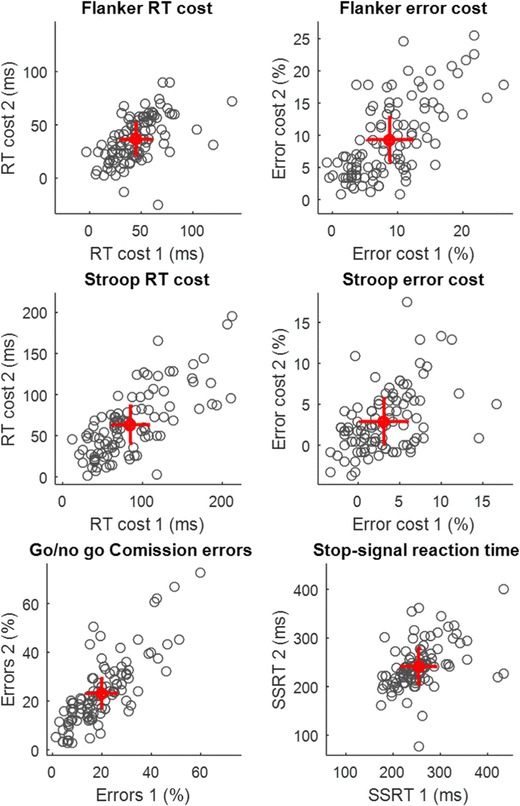
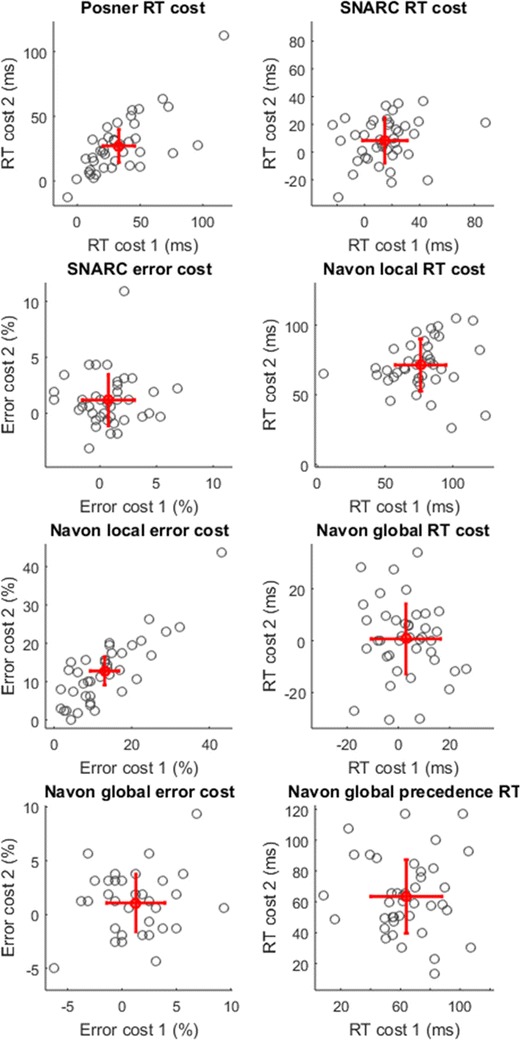
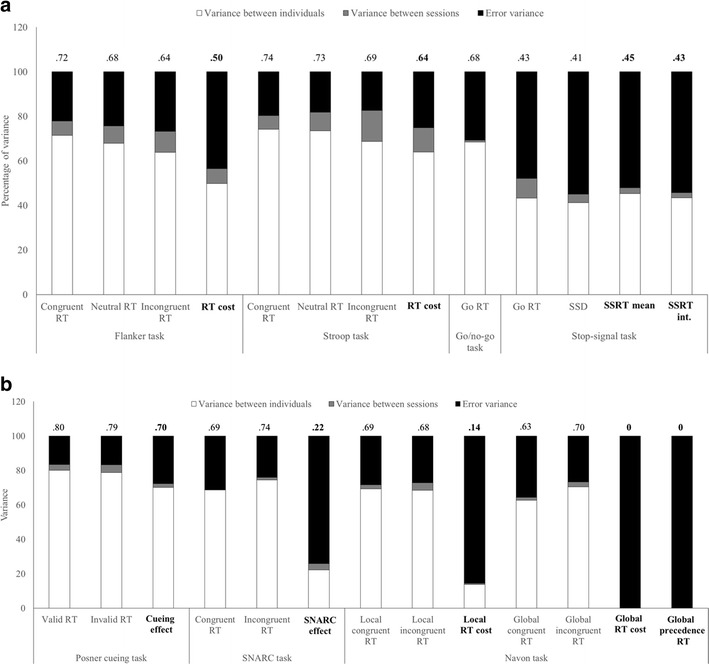
Individual differences in cognitive paradigms are increasingly employed to relate cognition to brain structure, chemistry, and function. However, such efforts are often unfruitful, even with the most well established tasks. Here we offer an explanation for failures in the application of robust cognitive paradigms to the study of individual differences. Experimental effects become well established - and thus those tasks become popular - when between-subject variability is low. However, low between-subject variability causes low reliability for individual differences, destroying replicable correlations with other factors and potentially undermining published conclusions drawn from correlational relationships. Though these statistical issues have a long history in psychology, they are widely overlooked in cognitive psychology and neuroscience today. In three studies, we assessed test-retest reliability of seven classic tasks: Eriksen Flanker, Stroop, stop-signal, go/no-go, Posner cueing, Navon, and Spatial-Numerical Association of Response Code (SNARC). Reliabilities ranged from 0 to .82, being surprisingly low for most tasks given their common use. As we predicted, this emerged from low variance between individuals rather than high measurement variance. In other words, the very reason such tasks produce robust and easily replicable experimental effects - low between-participant variability - makes their use as correlational tools problematic. We demonstrate that taking such reliability estimates into account has the potential to qualitatively change theoretical conclusions. The implications of our findings are that well-established approaches in experimental psychology and neuropsychology may not directly translate to the study of individual differences in brain structure, chemistry, and function, and alternative metrics may be required.
Overview
The claims and statistics of this paper haven’t been checked yet.
Free: it reads the open-access text and checks the first 5 claims that cite a source we can check. Create a free account to check every claim.
Integrity signals
Registry
Cites
Statistics
Figures
Verification
Claims the paper makes
The claims and statistics of this paper haven’t been checked yet.
Free: it reads the open-access text and checks the first 5 claims that cite a source we can check. Create a free account to check every claim.
Claims other papers make about this one
Each is checked against this paper’s own text: does it say what the citing paper says it does?
The source backs part of the claim, not all of it — or backs it for a different population, condition or comparison.
In the citing paper
“This contrast was used (cf. anticipation of social reward minus neutral outcomes) because reliability of difference scores is always lower than reliability of their individual parts,(53) which has been shown to diminish reliability of task-based fMRI(54) (see also(55)) and hinder mechanistic research.(56)”
From Amplification of Positivity Treatment for Anxiety and Depression: A Randomized Experimental Therapeutics Trial Targeting Social Reward Sensitivity to Enhance Social Connectedness (2024) · cites this paper as [53]
Experimental — accuracy not yet measuredThe source backs part of the claim, not all of it — or backs it for a different population, condition or comparison.
In the citing paper
“For the Stroop task, reliability was ρ congruent = .86, ρ incongruent = .82, and ρ interference = .78.”
From Problematic social media use and cognitive performance in young adults: Associations with selective attention and inhibitory control (2026) · cites this paper as Hedge, Powell, & Sumner, 2018
Experimental — accuracy not yet measuredThe cited source says what the claim attributes to it.
In the citing paper
“Further, it is often the case that cognitive tasks that produce robust effects in experimental settings are poorly suited for individual differences studies due to low between-participant reliability (Hedge et al. 2018).”
From Practicing Retrieval Facilitates Learning (2021) · cites this paper as Hedge et al. 2018
The check wasn’t confident either way, so it gives no verdict — never disputed.
In the citing paper
“For the Simon task, reliability was ρ_congruent = .84, ρ_incongruent = .81, and ρ_interference = .76.”
From Problematic social media use and cognitive performance in young adults: Associations with selective attention and inhibitory control (2026) · cites this paper as Hedge et al., 2018
Experimental — accuracy not yet measured
Self-check
Percentages, sums and reported differences re-computed from the paper’s own numbers.
The self-check needs the paper’s full text.
Citations
Cites
The Measurement of Observer Agreement for Categorical Data
Landis, J. R., & Koch, G. G. (1977) · Biometrics · doi:10.2307/2529310 · Cited by 81,148 · cited 4×
“Studies 1 and 2 None of the behavioral measures in Studies 1 and 2 (see Table 1) exceeded reliabilities of .8, typically considered excellent or of a clinically required standard (Cicchetti & Sparrow, 1981; Fleiss, 1981; Landis & Koch, 1977).”
BackgroundMethodResultInfluentialFaul, F., Erdfelder, E., Lang, A.-G., & Buchner, A. (2007) · Behavior Research Methods · doi:10.3758/bf03193146 · Cited by 65,971
Structural equation modeling in practice: A review and recommended two-step approach
Anderson, J. C., & Gerbing, D. W. (1988) · Psychological Bulletin · doi:10.1037/0033-2909.103.3.411 · Cited by 41,941
Statistical power analyses using G∗Power 3.1: tests for correlation and regression analyses
Faul, F., Erdfelder, E., Buchner, A., & Lang, A.-G. (2009) · Behavior Research Methods · doi:10.3758/brm.41.4.1149 · Cited by 37,615
Intraclass correlations: Uses in assessing rater reliability.
Shrout, P. E., & Fleiss, J. L. (1979) · Psychological Bulletin · doi:10.1037/0033-2909.86.2.420 · Cited by 24,532
Statistical Methods for Rates and Proportions
Fleiss, J. L., Levin, B., & Paik, M. C. (2003) · Wiley Series in Probability and Statistics · doi:10.1002/0471445428 · Cited by 18,646
Miyake, A., Friedman, N. P., Emerson, M. J., Witzki, A. H., Howerter, A., & Wager, T. D. (2000) · Cognitive Psychology · doi:10.1006/cogp.1999.0734 · Cited by 15,798
Review of Psychometric theory (2nd ed.).
SITGREAVES, R. (1979) · Contemporary Psychology: A Journal of Reviews · doi:10.1037/018882 · Cited by 11,425
Why Most Published Research Findings Are False
Ioannidis, J. P. A. (2005) · PLoS Medicine · doi:10.1371/journal.pmed.0020124 · Cited by 10,505
Posner, M. I. (1980) · Quarterly Journal of Experimental Psychology · doi:10.1080/00335558008248231 · Cited by 9,670 · cited 2×
“Study 3 Again, performance was comparable to previous reports in the literature (Navon, 1977; Posner, 1980; Rusconi et al., 2013).”
Research works printed but not linked: 7
- Crocker LM Algina J Introduction to Classicial and Modern Test Theory 1986 New York CBS College Publishing
- Hambleton RK Swaminathan H Rogers HJ Fundementals of Item Response Theory 1991 Newbury Park Sage
- Lynam DR Smith GT Whiteside SP Cyders MA The UPPS-P: Assessing give personality pathways to impulsive behavior (Technical Report) 2006 West Lafayette Purdue University
- Nunnally JC Psychometric theory 1978 2 New York. McGraw-Hill
- Peirce JW Introduction to Python and PsychoPy Perception 2013 42 2 3
- Rogosa D Gottman JM Myths and methods: "Myths about longitudinal research" plus supplemental questions The analysis of change 1995 Hillsdale Lawrence Ealbaum Associates pp. 3 65
- Zumbo BD Thompson B The simple difference score as an inherently poor measure of change: Some reality, much mythology Advances in Social Science Methodoloy 1999 Greenwich JAI Press pp. 269 304
Cited by
Elliott, M. L., Knodt, A. R., Ireland, D., Morris, M. L., Poulton, R., Ramrakha, S., Sison, M. L., Moffitt, T. E., Caspi, A., & Hariri, A. R. (2020) · Psychological Science · doi:10.1177/0956797620916786 · Cited by 714
Why Are Self-Report and Behavioral Measures Weakly Correlated?
Dang, J., King, K. M., & Inzlicht, M. (2020) · Trends in Cognitive Sciences · doi:10.1016/j.tics.2020.01.007 · Cited by 634
“Executive functions are measured by various behavioral tasks with low between-person variance [7].”
BackgroundIndividual Differences in Language Acquisition and Processing
Kidd, E., Donnelly, S., & Christiansen, M. H. (2018) · Trends in Cognitive Sciences · doi:10.1016/j.tics.2017.11.006 · Cited by 507
“An experimental task that is reliable at the group level is, often by design, an unreliable ID task, because experimental tasks aim to minimize between-participant variability, whereas ID tasks should aim to maximize it [139].”
BackgroundLarge-scale analysis of test–retest reliabilities of self-regulation measures
Enkavi, A. Z., Eisenberg, I. W., Bissett, P. G., Mazza, G. L., MacKinnon, D. P., Marsch, L. A., & Poldrack, R. A. (2019) · Proceedings of the National Academy of Sciences · doi:10.1073/pnas.1818430116 · Cited by 489
“(33) argue, behavioral tasks designed with the subtraction logic to isolate specific cognitive processes become well-established in the literature precisely for their low between-subject variability.”
BackgroundUncovering the structure of self-regulation through data-driven ontology discovery
Eisenberg, I. W., Bissett, P. G., Zeynep Enkavi, A., Li, J., MacKinnon, D. P., Marsch, L. A., & Poldrack, R. A. (2019) · Nature Communications · doi:10.1038/s41467-019-10301-1 · Cited by 474
Parsons, S., Kruijt, A.-W., & Fox, E. (2019) · Advances in Methods and Practices in Psychological Science · doi:10.1177/2515245919879695 · Cited by 425
“Many of authors have made this same point (for a few examples, see Appelbaum et al., 2018; Cooper et al., 2017; Hedge et al., 2018; LeBel & Paunonen, 2011; and Wilkinson, 1999).”
BackgroundMethodInfluentialMeasuring Adaptive Control in Conflict Tasks
Braem, S., Bugg, J. M., Schmidt, J. R., Crump, M. J. C., Weissman, D. H., Notebaert, W., & Egner, T. (2019) · Trends in Cognitive Sciences · doi:10.1016/j.tics.2019.07.002 · Cited by 358
“It is also worth noting that indices of adaptive control often show a low correlation across, and even within, different conflict tasks (with or without confounds; [83– 85]), similar to other measures of cognitive control [86,87].”
BackgroundResultDraheim, C., Mashburn, C. A., Martin, J. D., & Engle, R. W. (2019) · Psychological Bulletin · doi:10.1037/bul0000192 · Cited by 322
Harnessing reliability for neuroscience research
Zuo, X.-N., Xu, T., & Milham, M. P. (2019) · Nature Human Behaviour · doi:10.1038/s41562-019-0655-x · Cited by 310
The Human Connectome Project: A retrospective
Elam, J. S., Glasser, M. F., Harms, M. P., Sotiropoulos, S. N., Andersson, J. L. R., Burgess, G. C., Curtiss, S. W., Oostenveld, R., Larson-Prior, L. J., Schoffelen, J.-M., et al. (2021) · NeuroImage · doi:10.1016/j.neuroimage.2021.118543 · Cited by 307
A psychometrics of individual differences in experimental tasks
Rouder, J. N., & Haaf, J. M. (2019) · Psychonomic Bulletin & Review · doi:10.3758/s13423-018-1558-y · Cited by 303
Interpreting and Utilising Intersubject Variability in Brain Function
Seghier, M. L., & Price, C. J. (2018) · Trends in Cognitive Sciences · doi:10.1016/j.tics.2018.03.003 · Cited by 291
Matthews, D., Biney, H., & Abbot-Smith, K. (2018) · Language Learning and Development · doi:10.1080/15475441.2018.1455584 · Cited by 284
“Fourth, once we have specific hypotheses about mechanisms, we need to develop tests of pragmatic and related skills that lend themselves to individual differences research (Cronbach, 1957; Hedge et al., 2017).”
BackgroundIdiosynchrony: From shared responses to individual differences during naturalistic neuroimaging
Finn, E. S., Glerean, E., Khojandi, A. Y., Nielson, D., Molfese, P. J., Handwerker, D. A., & Bandettini, P. A. (2020) · NeuroImage · doi:10.1016/j.neuroimage.2020.116828 · Cited by 269
“In the theoretical limit, a stimulus that evoked perfect synchrony across subjects would be useless for studying individual differences—since there would be no neural variability to relate to behavioral variability (Hedge et al., 2018).”
Bronstein, M. V., Pennycook, G., Bear, A., Rand, D. G., & Cannon, T. D. (2019) · Journal of Applied Research in Memory and Cognition · doi:10.1016/j.jarmac.2018.09.005 · Cited by 324
Matheson, G. J. (2019) · PeerJ · doi:10.7717/peerj.6918 · Cited by 244
Meaningful associations in the adolescent brain cognitive development study
Dick, A. S., Lopez, D. A., Watts, A. L., Heeringa, S., Reuter, C., Bartsch, H., Fan, C. C., Kennedy, D. N., Palmer, C., Marshall, A., et al. (2021) · NeuroImage · doi:10.1016/j.neuroimage.2021.118262 · Cited by 241
Strickland, J. C., & Johnson, M. W. (2021) · Psychological Review · doi:10.1037/rev0000263 · Cited by 222
Research Domain Criteria (RDoC): Progress and Potential
Cuthbert, B. N. (2022) · Current Directions in Psychological Science · doi:10.1177/09637214211051363 · Cited by 194
“However, the import of such findings for theoretical or clinical use is weakened by the fact that these systems often demonstrate rather modest test-retest reliability at the individual level (Hedge et al., 2018).”
BackgroundAttention Control: A Cornerstone of Higher-Order Cognition
Burgoyne, A. P., & Engle, R. W. (2020) · Current Directions in Psychological Science · doi:10.1177/0963721420969371 · Cited by 186
Advances in the computational understanding of mental illness
Huys, Q. J. M., Browning, M., Paulus, M. P., & Frank, M. J. (2021) · Neuropsychopharmacology · doi:10.1038/s41386-020-0746-4 · Cited by 179
Fleeting reliability in the dot-probe task
Chapman, A., Devue, C., & Grimshaw, G. M. (2019) · Psychological Research · doi:10.1007/s00426-017-0947-6 · Cited by 172
How to establish robust brain–behavior relationships without thousands of individuals
Rosenberg, M. D., & Finn, E. S. (2022) · Nature Neuroscience · doi:10.1038/s41593-022-01110-9 · Cited by 170
Assessing inter individual differences with task related functional neuroimaging
Lebreton, M., Bavard, S., Daunizeau, J., & Palminteri, S. (2019) · Nature Human Behaviour · doi:10.1038/s41562-019-0681-8 · Cited by 160
Comparative psychometrics: establishing what differs is central to understanding what evolves
Völter, C. J., Tinklenberg, B., Call, J., & Seed, A. M. (2018) · Philosophical Transactions of the Royal Society B Biological Sciences · doi:10.1098/rstb.2017.0283 · Cited by 160
“In the human literature the evidence for such a common cognitive ability is mixed [38-42].”
BackgroundThe effect of cycling on cognitive function and well-being in older adults
Leyland, L., Spencer, B., Beale, N., Jones, T. J., & van Reekum, C. M. (2019) · PLoS ONE · doi:10.1371/journal.pone.0211779 · Cited by 182
Executive functions predict verbal fluency scores in healthy participants
Amunts, J., Camilleri, J. A., Eickhoff, S. B., Heim, S., & Weis, S. (2020) · Scientific Reports · doi:10.1038/s41598-020-65525-9 · Cited by 167
splithalf: robust estimates of split half reliability
Parsons, S. (2021) · Journal of Open Source Software · doi:10.21105/joss.03041 · Cited by 142
“While many cognitive tasks yield highly robust effects, the same task may not yield reliable individual differences (Hedge et al., 2018).”
BackgroundIs executive control related to working memory capacity and fluid intelligence?
Rey-Mermet, A., Gade, M., Souza, A. S., von Bastian, C. C., & Oberauer, K. (2019) · Journal of Experimental Psychology: General · doi:10.1037/xge0000593 · Cited by 142
Advancing the Understanding of Suicide: The Need for Formal Theory and Rigorous Descriptive Research
Millner, A. J., Robinaugh, D. J., & Nock, M. K. (2020) · Trends in Cognitive Sciences · doi:10.1016/j.tics.2020.06.007 · Cited by 139
“, [40], but see [44,45] for work demonstrating measurement difficulties with behavioral paradigms).”
BackgroundThe role of attention control in complex real-world tasks
Draheim, C., Pak, R., Draheim, A. A., & Engle, R. W. (2022) · Psychonomic Bulletin & Review · doi:10.3758/s13423-021-02052-2 · Cited by 188
Goodhew, S. C., & Edwards, M. (2019) · Consciousness and Cognition · doi:10.1016/j.concog.2019.01.008 · Cited by 154
“For example, the Stroop effect is highly reliable in the sense that the difference in performance between the congruent and incongruent conditions is robustly repeatable at the group level (Hedge et al., 2018; MacLeod, 1991; Stroop, 1935).”
InfluentialCognitive and Affective Empathy Relate Differentially to Emotion Regulation
Thompson, N. M., van Reekum, C. M., & Chakrabarti, B. (2022) · Affective Science · doi:10.1007/s42761-021-00062-w · Cited by 136
“While it does not preclude us from drawing inferences about individual differences, it points to the possibility that the condition-related variability in this version of the task may be significantly smaller than the between-subject variability (Hedge et al., 2018).”
BackgroundSaunders, B., Milyavskaya, M., Etz, A., Randles, D., & Inzlicht, M. (2018) · Collabra: Psychology · doi:10.1525/collabra.134 · Cited by 132
“Another limitation is the previously mentioned reliability paradox (Hedge et al., 2017): Robust cognitive tasks do not produce reliable individual differences, making their use as trait-level correlational tools problematic.”
BackgroundEstablishing construct validity evidence for regional measures of explicit and implicit racial bias.
Hehman, E., Calanchini, J., Flake, J. K., & Leitner, J. B. (2019) · Journal of Experimental Psychology: General · doi:10.1037/xge0000623 · Cited by 135
Multivariate BWAS can be replicable with moderate sample sizes
Spisák, T., Bingel, U., & Wager, T. D. (2023) · Nature · doi:10.1038/s41586-023-05745-x · Cited by 158
The cognitive and perceptual correlates of ideological attitudes: a data-driven approach
Zmigrod, L., Eisenberg, I. W., Bissett, P. G., Robbins, T. W., & Poldrack, R. A. (2021) · Philosophical Transactions of the Royal Society B Biological Sciences · doi:10.1098/rstb.2020.0424 · Cited by 156
Practicing Retrieval Facilitates Learning
McDermott, K. B. (2021) · Annual review of psychology · doi:10.1146/annurev-psych-010419-051019 · Cited by 113
“Further, it is often the case that cognitive tasks that produce robust effects in experimental settings are poorly suited for individual differences studies due to low between-participant reliability (Hedge et al. 2018).”
BackgroundThe Reliability of the Wisconsin Card Sorting Test in Clinical Practice
Kopp, B., Lange, F., & Steinke, A. (2019) · Assessment · doi:10.1177/1073191119866257 · Cited by 157
Individual Differences in First Language Acquisition
Kidd, E., & Donnelly, S. (2020) · Annual Review of Linguistics · doi:10.1146/annurev-linguistics-011619-030326 · Cited by 124
“As Hedge et al. (2018) pointed out, reliability in an experimental context means that an experimental effect is repeatedly detected, which requires reducing the influence of extraneous interindividual variation.”
BackgroundPronk, T., Molenaar, D., Wiers, R. W., & Murre, J. (2022) · Psychonomic Bulletin & Review · doi:10.3758/s13423-021-01948-3 · Cited by 123
Nature and measurement of attention control.
Burgoyne, A. P., Tsukahara, J. S., Mashburn, C. A., Pak, R., & Engle, R. W. (2023) · Journal of Experimental Psychology General · doi:10.1037/xge0001408 · Cited by 154
“Simply put, most tasks used to measure individual differences in attention control suffer from poor reliability (Hedge et al., 2018; Rouder & Haaf, 2019), with only a few notable exceptions, such as the antisaccade task (Hallett, 1978).”
InfluentialThe Structure of Executive Dysfunction in Depression and Anxiety
Warren, S. L., Heller, W., & Miller, G. A. (2021) · Journal of Affective Disorders · doi:10.1016/j.jad.2020.09.132 · Cited by 117
Kragel, P. A., Han, X., Kraynak, T. E., Gianaros, P. J., & Wager, T. D. (2021) · Psychological Science · doi:10.1177/0956797621989730 · Cited by 126
At what sample size do latent variable correlations stabilize?
Kretzschmar, A., & Gignac, G. E. (2019) · Journal of Research in Personality · doi:10.1016/j.jrp.2019.03.007 · Cited by 110
Haines, N., Kvam, P. D., Irving, L. H., Smith, C. T., Beauchaine, T. P., Pitt, M. A., Ahn, W., & Turner, B. M. (2020) · doi:10.31234/osf.io/xr7y3 · Cited by 112
King, K. M., Littlefield, A. K., McCabe, C. J., Mills, K. L., Flournoy, J., & Chassin, L. (2018) · Developmental Cognitive Neuroscience · doi:10.1016/j.dcn.2017.11.009 · Cited by 111
“ences in the magnitude of that response (Hedge et al., 2017).”
BackgroundInfantolino, Z. P., Luking, K. R., Sauder, C. L., Curtin, J. J., & Hajcak, G. (2018) · NeuroImage · doi:10.1016/j.neuroimage.2018.02.024 · Cited by 108
The impact of bilingualism on executive functions and working memory in young adults
Antón, E., Carreiras, M., & Duñabeitia, J. A. (2019) · PLoS ONE · doi:10.1371/journal.pone.0206770 · Cited by 146
Individual differences in computational psychiatry: A review of current challenges
Karvelis, P., Paulus, M. P., & Diaconescu, A. O. (2023) · Neuroscience & Biobehavioral Reviews · doi:10.1016/j.neubiorev.2023.105137 · Cited by 105
“This underscores the importance of being aware of the reliability of one’s instruments and the consequences it has on statistical power (Williams and Zimmerman, 1989; Baugh, 2002; Hedge et al., 2018), and subsequently on construct validation and clinical translation (Fig.”
Influentialvon Bastian, C. C., Blais, C., Brewer, G. A., Gyurkovics, M., Hedge, C., Kałamała, P., Meier, M. E., Oberauer, K., Rey-Mermet, A., Rouder, J. N., et al. (2020) · doi:10.31234/osf.io/x3b9k · Cited by 104
Self-citationAcute stress alters the ‘default’ brain processing
Zhang, W., Hashemi, M. M., Kaldewaij, R., Koch, S. B. J., Beckmann, C. F., Klumpers, F., & Roelofs, K. (2019) · NeuroImage · doi:10.1016/j.neuroimage.2019.01.063 · Cited by 120
“Recent meta-analyses however show that traditional guidelines for interpreting correlation coefficients may have been too stringent (Gignac and Szodorai, 2016; Hemphill, 2003) because observed correlations are practically dampened by the imperfect measurement reliability of two variables in the correlation almost in a…”
BackgroundIndividual differences in long-term memory.
Unsworth, N. (2019) · Psychological Bulletin · doi:10.1037/bul0000176 · Cited by 99
Fröhner, J. H., Teckentrup, V., Smolka, M. N., & Kroemer, N. B. (2019) · NeuroImage · doi:10.1016/j.neuroimage.2019.03.053 · Cited by 107
“In turn, this makes it improbable to detect associations with other more distant outcomes (Hedge et al., 2017).”
InfluentialBoness, C. L., Watts, A. L., Moeller, K. N., & Sher, K. J. (2021) · Psychological Bulletin · doi:10.1037/bul0000333 · Cited by 112
Striving toward translation: strategies for reliable fMRI measurement
Elliott, M. L., Knodt, A. R., & Hariri, A. R. (2021) · Trends in Cognitive Sciences · doi:10.1016/j.tics.2021.05.008 · Cited by 111
Villalobos, D., Pacios, J., & Vázquez, C. (2021) · Frontiers in Psychology · doi:10.3389/fpsyg.2021.628416 · Cited by 116
“In addition, the reliability of measures is an issue hardly addressed in most studies on cognitive control in depression even though there is some evidence suggesting that the reliability of most measures is limited (Hedge et al., 2018; Zetsche et al., 2018).”
BackgroundComputational Models of Retrieval Processes in Sentence Processing
Vasishth, S., Nicenboim, B., Engelmann, F., & Burchert, F. (2019) · Trends in Cognitive Sciences · doi:10.1016/j.tics.2019.09.003 · Cited by 106
Tang, R., & Braver, T. S. (2020) · Frontiers in Psychology · doi:10.3389/fpsyg.2020.00818 · Cited by 91
Replications in Comparative Cognition: What Should We Expect and How Can We Improve?
Farrar, B., Boeckle, M., & Clayton, N. (2020) · Animal Behavior and Cognition · doi:10.26451/abc.07.01.02.2020 · Cited by 89
“…difference is present in a relatively simple and robust cognitive task, in which inter-individual differences might be expected to be low (Hedge et al., 2018), this suggests that even larger between site differences could manifest for more noisy behaviors in comparative cognition…”
Opportunities for increased reproducibility and replicability of developmental neuroimaging
Klapwijk, E. T., van den Bos, W., Tamnes, C. K., Raschle, N. M., & Mills, K. L. (2020) · Developmental Cognitive Neuroscience · doi:10.1016/j.dcn.2020.100902 · Cited by 92
“3) With lower reliability, statistical power to detect meaningful relationships decreases (Hedge et al., 2018; Parsons et al., 2019).”
BackgroundSmartphones and the Neuroscience of Mental Health
Gillan, C. M., & Rutledge, R. B. (2021) · Annual Review of Neuroscience · doi:10.1146/annurev-neuro-101220-014053 · Cited by 90
“A/B testing also allows researchers to refine the experimental design (Daniel-Watanabe et al.2020) and improve upon critical reliability metrics essential for between-subject designs (Hedge et al. 2018).”
MethodClayson, P. E., Baldwin, S. A., Rocha, H. A., & Larson, M. J. (2021) · NeuroImage · doi:10.1016/j.neuroimage.2021.118712 · Cited by 106
Why Most Studies of Individual Differences With Inhibition Tasks Are Bound To FailPreprint
Rouder, J. N., Kumar, A., & Haaf, J. M. (2019) · PsyArXiv (OSF Preprints) · doi:10.31234/osf.io/3cjr5 · Cited by 101
“Data Set 6, Hedge et al. (2018): The task was a color Stroop task. Participants identified the color of a centrally presented word (red, blue, green, or yellow). In the congruent condition, presentation color and word meaning matched. In the incongruent condition, they did not match. Following Hedge et al. (2018), we…”
BackgroundMethodResultInfluentialFunctional neuroimaging in psychiatry and the case for failing better
Nour, M. M., Liu, Y., & Dolan, R. J. (2022) · Neuron · doi:10.1016/j.neuron.2022.07.005 · Cited by 105
The Dual Mechanisms of Cognitive Control Project
Braver, T. S., Kizhner, A., Tang, R., Freund, M. C., & Etzel, J. A. (2021) · Journal of Cognitive Neuroscience · doi:10.1162/jocn_a_01768 · Cited by 119
Haaker, J., Maren, S., Andreatta, M., Merz, C. J., Richter, J., Richter, S. H., Drexler, S. M., Lange, M. D., Jüngling, K., Nees, F., et al. (2019) · Neuroscience & Biobehavioral Reviews · doi:10.1016/j.neubiorev.2019.09.020 · Cited by 101
“, 2002) and may bias the field through wrong conclusions because the (artificial) sample mean may not describe any individual very well (Hedge et al., 2018; Kosslyn et al., 2002; Lonsdorf and Merz, 2017).”
Brown, V. M., Chen, J., Gillan, C. M., & Price, R. B. (2020) · Biological Psychiatry: Cognitive Neuroscience and Neuroimaging · doi:10.1016/j.bpsc.2019.12.019 · Cited by 86
“Model-based planning is stable within individuals while showing meaningful inter-individual variability – a rare accomplishment for a task-derived measure(8,40).”
BackgroundBeyond fingerprinting: Choosing predictive connectomes over reliable connectomes
Finn, E. S., & Rosenberg, M. D. (2021) · NeuroImage · doi:10.1016/j.neuroimage.2021.118254 · Cited by 93
Unconscious or underpowered? Probabilistic cuing of visual attention.
Vadillo, M. A., Linssen, D., Orgaz, C., Parsons, S., & Shanks, D. R. (2020) · Journal of Experimental Psychology: General · doi:10.1037/xge0000632 · Cited by 87
Assem, M., Blank, I. A., Mineroff, Z., Ademoğlu, A., & Fedorenko, E. (2020) · Cortex · doi:10.1016/j.cortex.2020.06.013 · Cited by 86
“stroop, Go/No-Go) produce replicable experimental effects yet studies on individual differences in performance on these tasks commonly fail to group them in a single construct (Hedge et al., 2018; Rey-Mermet, Gade, Souza, von Bastian, & Oberauer, 2019) or relate them reliably to common brain mechanisms (Rosenberg et a…”
BackgroundClayson, P. E., Brush, C. J., & Hajcak, G. (2021) · International Journal of Psychophysiology · doi:10.1016/j.ijpsycho.2021.04.004 · Cited by 85
Brausch, A. M., Clapham, R. B., & Littlefield, A. K. (2021) · Journal of Youth and Adolescence · doi:10.1007/s10964-021-01525-w · Cited by 109
Clayson, P. E., Baldwin, S. A., & Larson, M. J. (2021) · Psychophysiology · doi:10.1111/psyp.13762 · Cited by 84
Cipora, K., Soltanlou, M., Reips, U., & Nuerk, H. (2019) · Behavior Research Methods · doi:10.3758/s13428-019-01213-5 · Cited by 87
Self-reported cognitive biases in depression: A meta-analysis
Nieto, I., Robles, E., & Vázquez, C. (2020) · Clinical Psychology Review · doi:10.1016/j.cpr.2020.101934 · Cited by 99
Improving the Reliability of Cognitive Task Measures: A Narrative ReviewPreprint
Zorowitz, S., & Niv, Y. (2022) · PsyArXiv (OSF Preprints) · doi:10.1016/j.bpsc.2023.02.004 · Cited by 118
Individual differences and their implications for color perception
Emery, K. J., & Webster, M. A. (2019) · Current Opinion in Behavioral Sciences · doi:10.1016/j.cobeha.2019.05.002 · Cited by 85
Sjouwerman, R., Scharfenort, R., & Lonsdorf, T. B. (2020) · Scientific Reports · doi:10.1038/s41598-020-72007-5 · Cited by 78
Bayesian inference of population prevalence
Ince, R. A. A., Paton, A., Kay, J., & Schyns, P. G. (2021) · eLife · doi:10.7554/elife.62461 · Cited by 84
Why many studies of individual differences with inhibition tasks may not localize correlations
Rouder, J. N., Kumar, A., & Haaf, J. M. (2023) · Psychonomic Bulletin & Review · doi:10.3758/s13423-023-02293-3 · Cited by 127
“The question of why these correlations are low has been the subject of recent work by Draheim et al. (2019); Enkavi et al. (2019); Hedge et al. (2018) and Rey-Mermet et al. (2018) among others.”
BackgroundMethodInfluentialMindfulness enhances cognitive functioning: a meta-analysis of 111 randomized controlled trials
Zainal, N. H., & Newman, M. G. (2023) · Health Psychology Review · doi:10.1080/17437199.2023.2248222 · Cited by 124
“As the pre-and post-correlation were not obtainable, we used a conservative estimate ( r = .50) representative of the retest reliability of cognitive functioning tasks reported in the literature to date (Dai et al., 2019; Hedge et al., 2018).”
MethodAdrian, M., Jenness, J. L., Kuehn, K. S., Smith, M. R., & McLaughlin, K. A. (2019) · Development and Psychopathology · doi:10.1017/s0954579419000543 · Cited by 77
Why Self-Report Measures of Self-Control and Inhibition Tasks Do Not Substantially Correlate
Wennerhold, L., & Friese, M. (2020) · Collabra: Psychology · doi:10.1525/collabra.276 · Cited by 75
Individual Differences in Inhibitory Control: A latent Variable Analysis
Gärtner, A., & Strobel, A. (2021) · Journal of Cognition · doi:10.5334/joc.150 · Cited by 75
“17), partly because experimental designs have been developed for providing robust effects, which means low between-participant variance (Hedge et al., 2018; see also Draheim, Mashburn, Martin, & Engle, 2019; and Liesefeld & Janczyk, 2019).”
BackgroundMethodEnhancing precision in human neuroscience
Nebe, S., Reutter, M., Baker, D. H., Bölte, J., Domes, G., Gamer, M., Gärtner, A., Gießing, C., Gurr, C., Hilger, K., et al. (2023) · eLife · doi:10.7554/elife.85980 · Cited by 81
Persistent postural perceptual dizziness is on a spectrum in the general population
Powell, G., Derry-Sumner, H., Rajenderkumar, D., Rushton, S. K., & Sumner, P. (2020) · Neurology · doi:10.1212/wnl.0000000000009373 · Cited by 73
Self-citationClayson, P. E. (2020) · Psychophysiology · doi:10.1111/psyp.13583 · Cited by 73
Kurdi, B., Ratliff, K. A., & Cunningham, W. A. (2020) · Perspectives on Psychological Science · doi:10.1177/1745691620904080 · Cited by 88
Nayak, S., Coleman, P. L., Ladányi, E., Nitin, R., Gustavson, D. E., Fisher, S. E., Magne, C., & Gordon, R. L. (2022) · Neurobiology of Language · doi:10.1162/nol_a_00079 · Cited by 89
“…syntactic violation conditions), instead target the state-level, and are often notwell suited for capturing stable individual differences in traits (see Hedge et al., 2018, for an extended discussion about trade-offs between stable individual differences metrics and reliable experimental effects).”
BackgroundIs Statistical Learning Ability Related to Reading Ability, and If So, Why?
Schmalz, X., Moll, K., Mulatti, C., & Schulte‐Körne, G. (2018) · Scientific Studies of Reading · doi:10.1080/10888438.2018.1482304 · Cited by 86
“It is possible that the tasks show insufficient variability to allow us to study individual differences (Hedge, Powell, & Sumner, 2017; Siegelman & Frost, 2015): In the AGL task, average performance was significantly above chance-level.”
BackgroundStatistically Induced Chunking Recall: A Memory‐Based Approach to Statistical Learning
Isbilen, E. S., McCauley, S. M., Kidd, E., & Christiansen, M. H. (2020) · Cognitive Science · doi:10.1111/cogs.12848 · Cited by 96
“As in the previous experiment, however, the difference scores were generally less reliable than the raw scores, suggesting that difference scores, on the whole, may be a less reliable measure of learning (Hedge et al., 2018).”
ResultEffective Gamification of the Stop-Signal Task: Two Controlled Laboratory Experiments
Friehs, M. A., Dechant, M., Vedress, S., Frings, C., & Mandryk, R. L. (2020) · JMIR Serious Games · doi:10.2196/17810 · Cited by 79
Dynamic computational phenotyping of human cognition
Schurr, R., Reznik, D., Hillman, H., Bhui, R., & Gershman, S. J. (2024) · Nature Human Behaviour · doi:10.1038/s41562-024-01814-x · Cited by 100
“This highlights a limitation in the interpretation of between-session variance in the ICC calculation: This source of variance only accounts for systematic changes between sessions across participants [20, 21].”
BackgroundJoyal, M., Wensing, T., Levasseur‐Moreau, J., Leblond, J., Sack, A. T., & Fecteau, S. (2019) · PLoS ONE · doi:10.1371/journal.pone.0214998 · Cited by 90
Non-linguistic effects of language switching training
Timmer, K., Calabria, M., & Costa, A. (2018) · Cognition · doi:10.1016/j.cognition.2018.09.001 · Cited by 81
Frischkorn, G. T., Schubert, A., & Hagemann, D. (2019) · Intelligence · doi:10.1016/j.intell.2019.05.003 · Cited by 80
The effort-doors task: Examining the temporal dynamics of effort-based reward processing using ERPs
Bowyer, C. B., Brush, C. J., Threadgill, A. H., Harmon‐Jones, E., Treadway, M. T., Patrick, C. J., & Hajcak, G. (2021) · NeuroImage · doi:10.1016/j.neuroimage.2020.117656 · Cited by 77
Waltmann, M., Schlagenhauf, F., & Deserno, L. (2022) · Behavior Research Methods · doi:10.3758/s13428-021-01739-7 · Cited by 69
“This substantially stymies progress towards clinical applicability because the reliability of a metric imposes an upper bound to potential correlations with other data, such as symptoms or neural data (Elliott et al., 2020; Hedge et al., 2018).”
BackgroundInfluentialMeasurement models for studying child executive functioning: Questioning the status quo.
Camerota, M., Willoughby, M. T., & Blair, C. (2020) · Developmental Psychology · doi:10.1037/dev0001127 · Cited by 79
“These low correlations suggest that EF tasks (and the latent constructs derived from them) may do a poor job of indexing individual differences, a phenomenon which has been reported elsewhere (Dang et al., 2020; Hedge et al., 2018).”
Background
Metadata
- Authors
- Hedge, C., Powell, G., & Sumner, P.
- Affiliations
- Cardiff University (GB)
- Corresponding author
- Hedge, Craig
- Venue
- Behavior Research Methods
- Published
- 2017-07-19
- Volume
- 50
- Issue
- 3
- Pages
- 1166-1186
- ISSN
- 1554-351X (ISSN-L)
- 1554-3528
- PMC
- PMC5990556
- OpenAlex
- W2724821146
- Cited by
- 1,457
- References
- 150
- Citations by year
- 2026: 165 · 2025: 168 · 2024: 178 · 2023: 207 · 2022: 188 · 2021: 192 · 2020: 175 · 2019: 111 · 2018: 61 · 2017: 9
- FWCI
- 125.87
- Type
- journal article
- Language
- en
- Open access
- hybrid
- doi.org
- Locations
- Behavior Research Methods (publishedVersion, cc-by)
- Europe PMC (PubMed Central) (publishedVersion, other-oa)
- PubMed Central (publishedVersion, cc-by)
- PubMed (publishedVersion)
- ORCA Online Research @Cardiff (Cardiff University) (acceptedVersion)
- Aston Publications Explorer (Aston University) (submittedVersion, cc-by)
- OSF Preprints (OSF Preprints) (submittedVersion)
- Funders
- Wellcome Trust (104943/Z/14/Z)
- Economic and Social Research Council (ES/K002325/1)
- Topics
- Social Sciences › Psychology › Experimental and Cognitive Psychology › Cognitive Abilities and Testing
- Social Sciences › Decision Sciences › Management Science and Operations Research › Psychometric Methodologies and Testing
- Life Sciences › Neuroscience › Cognitive Neuroscience › Neural and Behavioral Psychology Studies
- Keywords
- individual differences, test-retest reliability, between-subject variability, measurement reliability, cognitive paradigm, flanker task, Stroop task, stop-signal task, go/no-go task, Navon task, SNARC effect, neuropsychology, brain structure and cognition
- MeSH terms
- Brain, Cognition, Cues, Female, Humans, Individuality, Male, Neuropsychology, Reaction Time, Task Performance and Analysis, Reproducibility of Results
About these checks
Registry, retraction, Cites and statistics results are computed, not judged, with one exception: a printed reference that no index lists is read once by a model before it counts as a citation error. Claims are extracted by a model and kept only when their quote appears verbatim in the text; each cited source is then checked, with a model’s help, for whether it says what the claim relies on. Those verdicts can be wrong — read the claim’s quote and the cited source before relying on one.
Statistics and arithmetic are recomputed, not judged.
Confidence bands are shown only for fields calibrated on our annotated test set. None is calibrated yet, so no band is shown.
What counts as a claim ›How we measure confidence ›How we check this ›
Are you an author, or do you see a problem with this page? Request a review
Data sources
Bibliographic data: Semantic Scholar, OpenAlex, Crossref.
Contains information from the Semantic Scholar Academic Graph Datasets, made available under the ODC Attribution License (ODC-BY 1.0).
Semantic Scholar’s data is described in: Kinney, R., et al. (2023). The Semantic Scholar Open Data Platform. arXiv:2301.10140.
