

The reliability paradox: Why robust cognitive tasks do not produce reliable individual differences
Open accessThe DOI matches its Crossref record; 146 of the 150 references it cites were found in a registry or an index.
Abstract
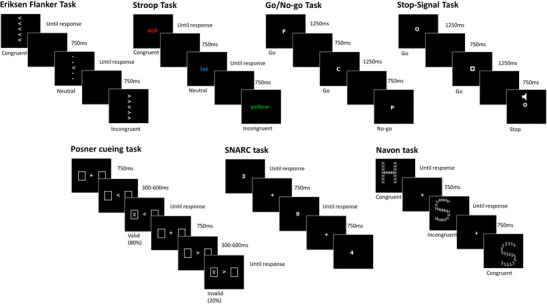
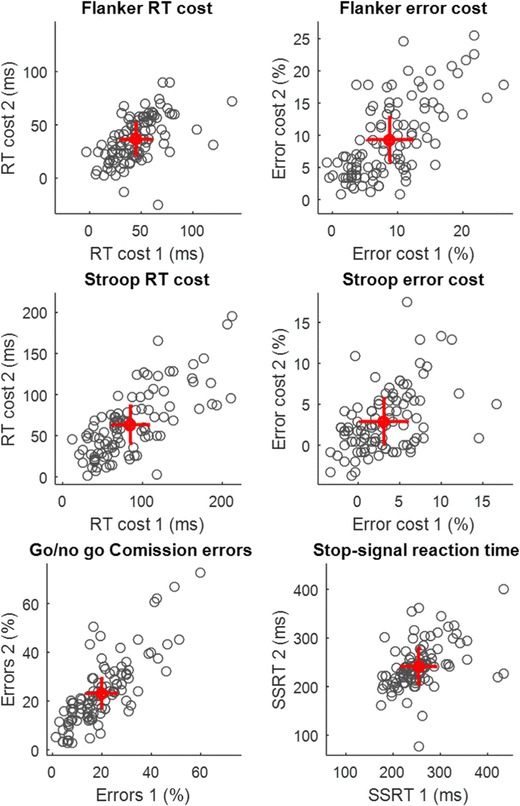
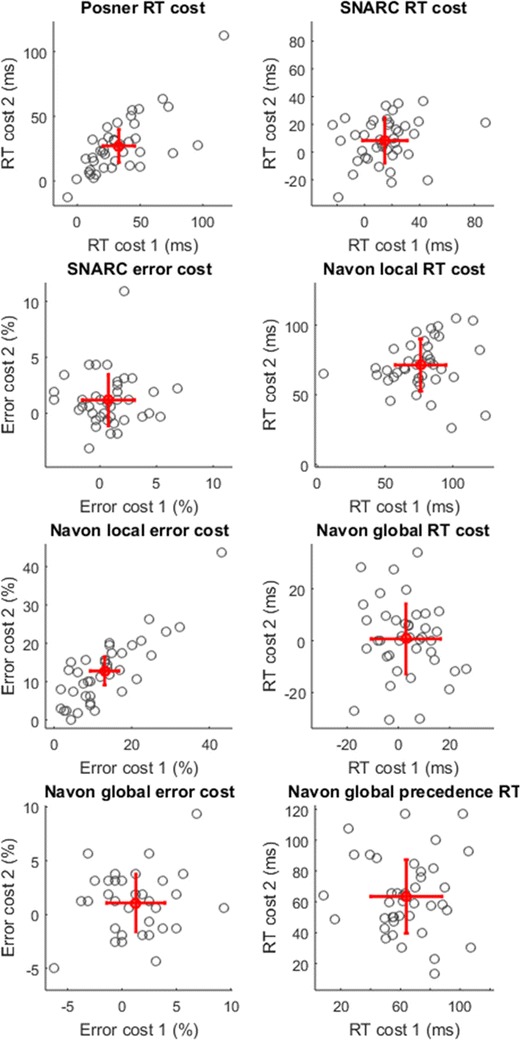
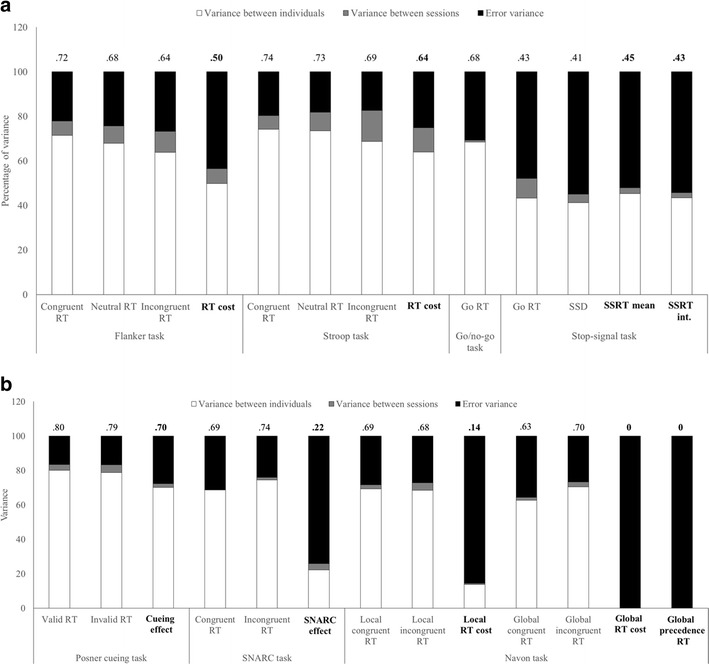
Individual differences in cognitive paradigms are increasingly employed to relate cognition to brain structure, chemistry, and function. However, such efforts are often unfruitful, even with the most well established tasks. Here we offer an explanation for failures in the application of robust cognitive paradigms to the study of individual differences. Experimental effects become well established - and thus those tasks become popular - when between-subject variability is low. However, low between-subject variability causes low reliability for individual differences, destroying replicable correlations with other factors and potentially undermining published conclusions drawn from correlational relationships. Though these statistical issues have a long history in psychology, they are widely overlooked in cognitive psychology and neuroscience today. In three studies, we assessed test-retest reliability of seven classic tasks: Eriksen Flanker, Stroop, stop-signal, go/no-go, Posner cueing, Navon, and Spatial-Numerical Association of Response Code (SNARC). Reliabilities ranged from 0 to .82, being surprisingly low for most tasks given their common use. As we predicted, this emerged from low variance between individuals rather than high measurement variance. In other words, the very reason such tasks produce robust and easily replicable experimental effects - low between-participant variability - makes their use as correlational tools problematic. We demonstrate that taking such reliability estimates into account has the potential to qualitatively change theoretical conclusions. The implications of our findings are that well-established approaches in experimental psychology and neuropsychology may not directly translate to the study of individual differences in brain structure, chemistry, and function, and alternative metrics may be required.
Overview
The claims and statistics of this paper haven’t been checked yet.
Free: it reads the open-access text and checks the first 5 claims that cite a source we can check. Create a free account to check every claim.
Integrity signals
Registry
Cites
Statistics
Figures
Verification
Claims the paper makes
The claims and statistics of this paper haven’t been checked yet.
Free: it reads the open-access text and checks the first 5 claims that cite a source we can check. Create a free account to check every claim.
Claims other papers make about this one
Each is checked against this paper’s own text: does it say what the citing paper says it does?
The source backs part of the claim, not all of it — or backs it for a different population, condition or comparison.
In the citing paper
“This contrast was used (cf. anticipation of social reward minus neutral outcomes) because reliability of difference scores is always lower than reliability of their individual parts,(53) which has been shown to diminish reliability of task-based fMRI(54) (see also(55)) and hinder mechanistic research.(56)”
From Amplification of Positivity Treatment for Anxiety and Depression: A Randomized Experimental Therapeutics Trial Targeting Social Reward Sensitivity to Enhance Social Connectedness (2024) · cites this paper as [53]
Experimental — accuracy not yet measuredThe source backs part of the claim, not all of it — or backs it for a different population, condition or comparison.
In the citing paper
“For the Stroop task, reliability was ρ congruent = .86, ρ incongruent = .82, and ρ interference = .78.”
From Problematic social media use and cognitive performance in young adults: Associations with selective attention and inhibitory control (2026) · cites this paper as Hedge, Powell, & Sumner, 2018
Experimental — accuracy not yet measuredThe cited source says what the claim attributes to it.
In the citing paper
“Further, it is often the case that cognitive tasks that produce robust effects in experimental settings are poorly suited for individual differences studies due to low between-participant reliability (Hedge et al. 2018).”
From Practicing Retrieval Facilitates Learning (2021) · cites this paper as Hedge et al. 2018
The check wasn’t confident either way, so it gives no verdict — never disputed.
In the citing paper
“For the Simon task, reliability was ρ_congruent = .84, ρ_incongruent = .81, and ρ_interference = .76.”
From Problematic social media use and cognitive performance in young adults: Associations with selective attention and inhibitory control (2026) · cites this paper as Hedge et al., 2018
Experimental — accuracy not yet measured
Self-check
Percentages, sums and reported differences re-computed from the paper’s own numbers.
The self-check needs the paper’s full text.
Citations
Cites
The Measurement of Observer Agreement for Categorical Data
Landis, J. R., & Koch, G. G. (1977) · Biometrics · doi:10.2307/2529310 · Cited by 81,148 · cited 4×
“Studies 1 and 2 None of the behavioral measures in Studies 1 and 2 (see Table 1) exceeded reliabilities of .8, typically considered excellent or of a clinically required standard (Cicchetti & Sparrow, 1981; Fleiss, 1981; Landis & Koch, 1977).”
BackgroundMethodResultInfluentialFaul, F., Erdfelder, E., Lang, A.-G., & Buchner, A. (2007) · Behavior Research Methods · doi:10.3758/bf03193146 · Cited by 65,971
Structural equation modeling in practice: A review and recommended two-step approach
Anderson, J. C., & Gerbing, D. W. (1988) · Psychological Bulletin · doi:10.1037/0033-2909.103.3.411 · Cited by 41,941
Statistical power analyses using G∗Power 3.1: tests for correlation and regression analyses
Faul, F., Erdfelder, E., Buchner, A., & Lang, A.-G. (2009) · Behavior Research Methods · doi:10.3758/brm.41.4.1149 · Cited by 37,615
Intraclass correlations: Uses in assessing rater reliability.
Shrout, P. E., & Fleiss, J. L. (1979) · Psychological Bulletin · doi:10.1037/0033-2909.86.2.420 · Cited by 24,532
Statistical Methods for Rates and Proportions
Fleiss, J. L., Levin, B., & Paik, M. C. (2003) · Wiley Series in Probability and Statistics · doi:10.1002/0471445428 · Cited by 18,646
Miyake, A., Friedman, N. P., Emerson, M. J., Witzki, A. H., Howerter, A., & Wager, T. D. (2000) · Cognitive Psychology · doi:10.1006/cogp.1999.0734 · Cited by 15,798
Review of Psychometric theory (2nd ed.).
SITGREAVES, R. (1979) · Contemporary Psychology: A Journal of Reviews · doi:10.1037/018882 · Cited by 11,425
Why Most Published Research Findings Are False
Ioannidis, J. P. A. (2005) · PLoS Medicine · doi:10.1371/journal.pmed.0020124 · Cited by 10,505
Posner, M. I. (1980) · Quarterly Journal of Experimental Psychology · doi:10.1080/00335558008248231 · Cited by 9,670 · cited 2×
“Study 3 Again, performance was comparable to previous reports in the literature (Navon, 1977; Posner, 1980; Rusconi et al., 2013).”
Research works printed but not linked: 7
- Crocker LM Algina J Introduction to Classicial and Modern Test Theory 1986 New York CBS College Publishing
- Hambleton RK Swaminathan H Rogers HJ Fundementals of Item Response Theory 1991 Newbury Park Sage
- Lynam DR Smith GT Whiteside SP Cyders MA The UPPS-P: Assessing give personality pathways to impulsive behavior (Technical Report) 2006 West Lafayette Purdue University
- Nunnally JC Psychometric theory 1978 2 New York. McGraw-Hill
- Peirce JW Introduction to Python and PsychoPy Perception 2013 42 2 3
- Rogosa D Gottman JM Myths and methods: "Myths about longitudinal research" plus supplemental questions The analysis of change 1995 Hillsdale Lawrence Ealbaum Associates pp. 3 65
- Zumbo BD Thompson B The simple difference score as an inherently poor measure of change: Some reality, much mythology Advances in Social Science Methodoloy 1999 Greenwich JAI Press pp. 269 304
Cited by
Items 301–400 of 1,003
Individual differences in social and non-social cognitive control
Darda, K. M., Butler, E. E., & Ramsey, R. (2020) · Cognition · doi:10.1016/j.cognition.2020.104317 · Cited by 28
Individual differences in updating are not related to reasoning ability and working memory capacity.
Frischkorn, G. T., von Bastian, C. C., Souza, A. S., & Oberauer, K. (2022) · Journal of Experimental Psychology: General · doi:10.1037/xge0001141 · Cited by 25
No relation of need for cognition to basic executive functions.
Gärtner, A., Grass, J., Wolff, M., Goschke, T., Strobel, A., & Strobel, A. (2021) · Journal of Personality · doi:10.1111/jopy.12639 · Cited by 26
Executive functioning skills and (low) math achievement in primary and secondary school
Iglesias-Sarmiento, V., Carriedo, N., Rodríguez‐Villagra, O. A., & Pérez, L. (2023) · Journal of Experimental Child Psychology · doi:10.1016/j.jecp.2023.105715 · Cited by 38
Mutual interplay between cognitive offloading and secondary task performance
Grinschgl, S., Papenmeier, F., & Meyerhoff, H. S. (2023) · Psychonomic Bulletin & Review · doi:10.3758/s13423-023-02312-3 · Cited by 38
“This is not unexpected as we optimized our tasks for experimental rather than correlational research (i.e., rather low variance between participants; see Hedge et al., 2018) and power for such correlational analyses was small.”
MethodFactors that amplify and attenuate egocentric mentalizing
Todd, A. R., & Tamir, D. (2024) · Nature Reviews Psychology · doi:10.1038/s44159-024-00277-1 · Cited by 42
Pluck, G. C., Córdova, M. A., Bock, C., Chalen, I., & Trueba, A. F. (2020) · British Journal of Developmental Psychology · doi:10.1111/bjdp.12354 · Cited by 37
“This is important in view of recent warnings from psychometricians on the use of unreliable cognitive measures as individual difference scores (Dang et al., 2020; Hedge et al., 2018).”
BackgroundIntegrating and distinguishing personality and psychopathology
Wright, A. G. C., & Hopwood, C. J. (2021) · Journal of Personality · doi:10.1111/jopy.12671 · Cited by 38
Human defensive freezing: Associations with hair cortisol and trait anxiety
Hashemi, M. M., Zhang, W., Kaldewaij, R., Koch, S. B. J., Smit, A. S., Figner, B., Jonker, R., Klumpers, F., & Roelofs, K. (2021) · Psychoneuroendocrinology · doi:10.1016/j.psyneuen.2021.105417 · Cited by 45
The biological basis of intelligence: Benchmark findings
Hilger, K., Spinath, F. M., Troche, S. J., & Schubert, A. (2022) · Intelligence · doi:10.1016/j.intell.2022.101665 · Cited by 29
Zech, H., Gable, P. A., DIJK, W. W. V., & van Dillen, L. F. (2022) · Behavior Research Methods · doi:10.3758/s13428-022-01920-6 · Cited by 32
“This nding matches those of earlier studies and ndings from other implicit tasks (see Enkavi et al., 2019; Hedge et al., 2018) and implies that researchers who are interested in using the AAT as a measure of individual differences should use the task with care.”
BackgroundResultInfluentialKlein, S. D., Collins, P. F., & Luciana, M. M. (2022) · Cognitive Psychology · doi:10.1016/j.cogpsych.2022.101518 · Cited by 32
Reliable, rapid, and remote measurement of metacognitive bias
Fox, C. A., McDonogh, A., Donegan, K. R., Teckentrup, V., Crossen, R. J., Hanlon, A. K., Gallagher, E., Rouault, M., & Gillan, C. M. (2024) · Scientific Reports · doi:10.1038/s41598-024-64900-0 · Cited by 37
“One barrier to this, however, is growing concerns that many of the most commonly used cognitive tests in psychiatry suffer from poor reliability 28,29 .”
BackgroundBaranger, D. A. A., Lindenmuth, M., Nance, M., Guyer, A. E., Keenan, K. E., Hipwell, A. E., Shaw, D. S., & Forbes, E. E. (2021) · NeuroImage · doi:10.1016/j.neuroimage.2021.117872 · Cited by 31
“, the reverse, that effects with less between-subject variation are less reliable is sometimes referred to as the ‘reliability paradox’ (Hedge et al., 2018)).”
Rijkeboer, M. M., Daemen, J. J., Flipse, A., Bouwman, V., & Hagenaars, M. A. (2019) · Journal of Behavior Therapy and Experimental Psychiatry · doi:10.1016/j.jbtep.2019.04.004 · Cited by 31
A primer on assessing intelligence in laboratory studies
Ackerman, P. L., & Hambrick, D. Z. (2020) · Intelligence · doi:10.1016/j.intell.2020.101440 · Cited by 27
Macdonald, R. G., Brandt, S., Theakston, A., Lieven, E., & Serratrice, L. (2020) · Cognitive Science · doi:10.1111/cogs.12874 · Cited by 35
Haines, N., Beauchaine, T. P., Galdo, M., Rogers, A. H., Hahn, H. A., Pitt, M. A., Myung, J. I., Turner, B. M., & Ahn, W. (2020) · Clinical Psychological Science · doi:10.1177/2167702620929636 · Cited by 30
Ivanov, I., Bjork, J. M., Blair, J., & Newcorn, J. H. (2022) · Neuroscience & Biobehavioral Reviews · doi:10.1016/j.neubiorev.2022.104575 · Cited by 29
Saunders, B., Milyavskaya, M., & Inzlicht, M. (2022) · Nature Communications · doi:10.1038/s41467-022-30786-7 · Cited by 31
The role of parent-led and child-led home numeracy activities in early mathematical skills
Trickett, J., Batchelor, S., Brittle, B., Foulkes, M., Pickering, J., Slocombe, F., & Gilmore, C. K. (2022) · Cognitive Development · doi:10.1016/j.cogdev.2022.101189 · Cited by 25
McArthur, G. E., Lee, E., & Laycock, R. (2022) · Journal of Autism and Developmental Disorders · doi:10.1007/s10803-022-05742-5 · Cited by 30
“For statistical analysis, three final outcome variables were computed: (1) local interference (reaction time for global incongruent stimuli—reaction time for congruent stimuli) (Hedge et al., 2018).”
MethodChallenges in the conceptualization of trait self‐control as a psychological construct
Wennerhold, L., & Friese, M. (2022) · Social and Personality Psychology Compass · doi:10.1111/spc3.12726 · Cited by 40
Think green: Investing cognitive effort for a pro-environmental cause
Krebs, R. M., Prével, A., Hall, J. M., & Hoofs, V. (2022) · Journal of Environmental Psychology · doi:10.1016/j.jenvp.2022.101946 · Cited by 30
Bohn, M., Eckert, J., Hanus, D., Lugauer, B., Holtmann, J., & Haun, D. B. M. (2023) · Nature Ecology & Evolution · doi:10.1038/s41559-023-02050-8 · Cited by 31
Yaron, I., Zeevi, Y., Korisky, U., Marshall, W., & Mudrik, L. (2023) · Psychonomic Bulletin & Review · doi:10.3758/s13423-023-02326-x · Cited by 33
“This factor was chosen because the number of observations is known to affect reliability (see Supplementary Materials D in Hedge et al., 2018, for an analysis across different cognitive tasks), and this claim has specifically been raised in the field of unconscious processing (Meyen et al., 2022;…”
BackgroundInfluentialDispositional cognitive effort investment and behavioral demand avoidance: Are they related?
Strobel, A., Wieder, G., Paulus, P. C., Ott, F., Pannasch, S., Kiebel, S. J., & Kührt, C. (2020) · PLoS ONE · doi:10.1371/journal.pone.0239817 · Cited by 28
“[54] had their participants perform typical executive functioning tasks at two points in time and also assessed self-reported impulsivity measures.”
BackgroundBignardi, G., Dalmaijer, E. S., Anwyl-Irvine, A. L., & Astle, D. E. (2020) · Behavior Research Methods · doi:10.3758/s13428-020-01503-3 · Cited by 28
Saunders, B., Milyavskaya, M., Etz, A. J., Randles, D., & Inzlicht, M. (2017) · PsyArXiv (OSF Preprints) · doi:10.31234/osf.io/bxfsu · Cited by 32
Cameron, C. D., Scheffer, J. A., Hadjiandreou, E., & Anderson, S. (2022) · Advances in experimental social psychology · doi:10.1016/bs.aesp.2022.04.005 · Cited by 36
Sambol, S., Suleyman, E., Scarfo, J., & Ball, M. (2023) · Acta Psychologica · doi:10.1016/j.actpsy.2023.103934 · Cited by 34
Brysbaert, M. (2024) · Cognitive Research Principles and Implications · doi:10.1186/s41235-024-00540-2 · Cited by 56
“Recently, awareness has dawned that many measures of individual differences in experimental psychology are far from reliable (Dang et al., 2020; Elliott et al., 2020; Hedge et al., 2018; Heyman et al., 2018; Noble et al., 2021; Rouder & Haaf, 2019; Siegelman et al., 2017; Staub, 2021).”
BackgroundReliability of structural brain change in cognitively healthy adult samples
Dídac Vidal-piñeiro, A., Sørensen, Ø., Strømstad, M., Amlien, I. K., Anderson, M., Baaré, W. F. C., Bartrés‐Faz, D., Brandmaier, A. M., Bråthen, A. C. S., Garrido, P., et al. (2025) · Imaging Neuroscience · doi:10.1162/imag_a_00547 · Cited by 24
“Yet, this index is key in individual differences research ( Brandmaier, Wenger, et al., 2018; Hedge et al., 2018; Zimmerman & Zumbo, 2015), and consequently in any attempt to understand how interindividual variations in brain change are related to genetic, cognitive, or environmental factors.”
the Eurosibs Team, Hendry, A. J., Jones, E. J. H., Bedford, R., Konke, L. A., Ali, J. B., Bölte, S., Brocki, K. C., Demurie, E., Johnson, M. H., et al. (2020) · Journal of Autism and Developmental Disorders · doi:10.1007/s10803-020-04465-9 · Cited by 32
“Parent report provides a cost- and time-effective insight into infant behaviour that is both broad and deep (Hedge et al. 2017; Putnam et al. 2006; Rothbart and Mauro 1990).”
BackgroundMcDermott, T. J., Kirlić, N., Akeman, E., Touthang, J., Clausen, A. N., Kuplicki, R., & Aupperle, R. L. (2021) · Human Brain Mapping · doi:10.1002/hbm.25371 · Cited by 29
“This was due to the expected lack of variability in approach behavior on NONCONF trials, which would have confounded the ICC estimates (Hedge et al., 2018).”
BackgroundMethodYip, S. W., Barch, D. M., Chase, H. W., Flagel, S. B., Huys, Q. J. M., Konova, A. B., Montague, P. R., & Paulus, M. P. (2022) · Biological Psychiatry Global Open Science · doi:10.1016/j.bpsgos.2022.03.011 · Cited by 31
“Longitudinal designs raise a series of critical measurement issues, requiring not just stability of effects observable at the group level (and potentially indicative of generalizable mechanisms) but also reliability at the individual level to allow the quantification of meaningful variations in the mechanisms (33,55,5…”
BackgroundViviani, G., Visalli, A., Finos, L., Vallesi, A., & Ambrosini, E. (2023) · Behavior Research Methods · doi:10.3758/s13428-023-02091-8 · Cited by 38
“…represents a frequently overlooked statistical issue that, if not taken into account properly, might jeopardize the effectiveness of correlational research in cognitive neuroscience and psychology (e.g., Dang et al., 2020; Elliott et al., 2020; Rouder et al., 2019; Wennerhold & Friese, 2020).”
BackgroundRobison, M. K., Ralph, K. J., Gondoli, D. M., Torres, A. S., Campbell, S., Brewer, G. A., & Gibson, B. S. (2023) · Cognitive Affective & Behavioral Neuroscience · doi:10.3758/s13415-023-01096-2 · Cited by 30
“The Stroop and flanker effects had low reliability estimates, which is now a well-documented issue with these tasks (Draheim et al., 2019; Enkavi et al., 2019; Feldman and Freitas, 2016; Hedge et al., 2018; Rey-Mermet et al., 2019; Rouder and Haaf, 2019; Whitehead et al., 2019, 2020).”
BackgroundIndividual Differences in Phonetic Plasticity Across Native and Nonnative Contexts
Heffner, C. C., & Myers, E. B. (2021) · Journal of Speech Language and Hearing Research · doi:10.1044/2021_jslhr-21-00004 · Cited by 30
Daucourt, M. C., Haughbrook, R., van Bergen, E., & Hart, S. A. (2020) · Developmental Psychology · doi:10.1037/dev0001126 · Cited by 25
Roth, L., Jordan, V., Schwarz, S., Willmes, K., Nuerk, H., van Dijck, J., & Cipora, K. (2024) · Cognition · doi:10.1016/j.cognition.2024.105781 · Cited by 35
“However, designing measures and tasks with this goal and mindset makes the measures and tasks unsuitable for correlational studies (Hedge, Powell, & Sumner, 2018).”
BackgroundMethodResultInfluentialVoorhies, W. I., Dajani, D. R., Vij, S. G., Shankar, S., Turan, T. O., & Uddin, L. Q. (2018) · Autism Research · doi:10.1002/aur.2014 · Cited by 27
“This is a common challenge of cognitive neuroscience studies, sometimes referred to as the reliability paradox [Hedge et al., 2017].”
BackgroundSimulating thoughts to measure and study internal attention in mental health
Amir, I., Ruimi, L., & Bernstein, A. (2021) · Scientific Reports · doi:10.1038/s41598-021-81756-w · Cited by 27
Reliability assessment of temporal discounting measures in virtual reality environments
Bruder, L. R., Scharer, L., & Peters, J. (2021) · Scientific Reports · doi:10.1038/s41598-021-86388-8 · Cited by 28
Greve, W., Koch, M. J., Rasche, V., & Kersten, K. (2021) · Journal of Multilingual and Multicultural Development · doi:10.1080/01434632.2021.1922420 · Cited by 33
“…application of Stroop and fl anker tasks (Zhou and Krott 2016), there are numerous indications that allegedly EF-assessing measures such as these are reliably replicable as a phenomenon at the group level, but are not su ffi ciently reliable as individual diagnostics (Hedge, Powell, and Sumner 2018).”
BackgroundZhou, Y., Yu, N. X., Dong, P., & Zhang, Q. (2021) · Journal of Experimental Child Psychology · doi:10.1016/j.jecp.2021.105345 · Cited by 24
Process-oriented intelligence research: A review from the cognitive perspective
Frischkorn, G. T., Wilhelm, O., & Oberauer, K. (2022) · Intelligence · doi:10.1016/j.intell.2022.101681 · Cited by 35
Negative interpretation bias connects to real-world daily affect: A multistudy approach.
Puccetti, N. A., Villano, W. J., Stamatis, C. A., Hall, K. A. A., Torrez, V. F., Neta, M., Timpano, K. R., & Heller, A. S. (2023) · Journal of Experimental Psychology General · doi:10.1037/xge0001351 · Cited by 28
“Another possibility isthat the RT bias score itself is not an ideal measure, as aggregate response times, particularly “ scores ” taken from the difference between means of two conditions, have been criticized as unreliable (Hedge et al., 2018; O ’ Connor et al., 2021; Rouder & Haaf, 2019).”
BackgroundHow to Enhance the Power to Detect Brain–Behavior Correlations With Limited Resources
de Haas, B. (2018) · Frontiers in Human Neuroscience · doi:10.3389/fnhum.2018.00421 · Cited by 26
Booth, C., Songco, A., Parsons, S. D., Heathcote, L. C., & Fox, E. (2019) · BMC Psychology · doi:10.1186/s40359-019-0342-8 · Cited by 27
“This is in line with classical test theory, which posits that psychological characteristics are stable across time, assuming high levels of measurement reliability [31].”
BackgroundResultAttentional biases in depression: Relation to disorder severity, rumination, and anhedonia
Krings, A., Heeren, A., Fontaine, P., & Blairy, S. (2020) · Comprehensive Psychiatry · doi:10.1016/j.comppsych.2020.152173 · Cited by 33
Haptic object recognition based on shape relates to visual object recognition ability
Chow, J. K., Palmeri, T. J., & Gauthier, L. (2021) · Psychological Research · doi:10.1007/s00426-021-01560-z · Cited by 23
Replicable multivariate BWAS with moderate sample sizesPreprint
Spisák, T., Bingel, U., & Wager, T. D. (2022) · bioRxiv (Cold Spring Harbor Laboratory) · doi:10.1101/2022.06.22.497072 · Cited by 29
Editorial: an emerging field with bright prospects
Corr, P. J., & Mobbs, D. (2023) · Personality Neuroscience · doi:10.1017/pen.2022.6 · Cited by 23
Tamm, S., Harmer, C. J., Schiel, J., Holub, F., Rutter, M. K., Spiegelhalder, K., & Kyle, S. D. (2022) · American Journal of Psychiatry · doi:10.1176/appi.ajp.21050466 · Cited by 22
Remote Assessment of Depression Using Digital Biomarkers From Cognitive Tasks
Mandryk, R. L., Birk, M. V., Vedress, S., Wiley, K., Reid, E., Berger, P., & Frommel, J. (2021) · Frontiers in Psychology · doi:10.3389/fpsyg.2021.767507 · Cited by 23
“In particular, cognitive tasks that have traditionally produced robust experimental effects may not reliably correlate with individual differences, an effect that Craig, Hedge, and Sumner call ‘the reliability paradox’ (Hedge et al., 2018b).”
Abudoush, A. N., Noureen, A., Panagioti, M., Poliakoff, E., Ryckeghem, D. M. L. V., Hodkinson, A., & Husain, N. (2023) · Pain · doi:10.1097/j.pain.0000000000002885 · Cited by 28
“Furthermore, there is no gold standard task to assess attentional processing in this population or to produce reliable individual differences.(42) Available meta-analyses have shown the existence of attention bias in CP individuals while processing painrelated information.”
BackgroundGustavson, D. E., Morrison, C. L., Mallard, T. T., Jennings, M. V., Fontanillas, P., Elson, S. L., Palmer, A. A., Friedman, N. P., & Sanchez‐Roige, S. (2023) · Clinical Psychological Science · doi:10.1177/21677026231207845 · Cited by 25
“Such low correlations may reflect reliability and/or measurement issues in one or both sets of measures (Enkavi et al., 2019; Hedge et al., 2018).”
Face processing in autism spectrum disorder re-evaluated through diffusion models.
Powell, G., Jones, C. R. G., Hedge, C., Charman, T., Happe, F. G. E., Simonoff, E. A., & Sumner, P. (2019) · Neuropsychology · doi:10.1037/neu0000524 · Cited by 26
Self-citationSelf-reported impulsivity does not predict response caution
Hedge, C., Powell, G., Bompas, A., & Sumner, P. (2020) · Personality and Individual Differences · doi:10.1016/j.paid.2020.110257 · Cited by 28
Self-citationKrishnamurthy, K., Yeung, M. K.-C., Chan, A. S.-Y., & Han, Y. M. Y. (2020) · Brain Sciences · doi:10.3390/brainsci10110880 · Cited by 25
“That is, questionnaires include items on real-life behavior that requires individuals to respond using subjective perception or judgement in an open-ended environment and under noncompetitive circumstances, whereas the behavioral measures require individuals to respond on the basis of task performance in a structured…”
BackgroundSalig, L. K., Kroff, J. R. V., Slevc, L. R., & Novick, J. M. (2021) · Neurobiology of Language · doi:10.1162/nol_a_00046 · Cited by 32
“(Friedman & Miyake, 2004; Gärtner & Strobel, 2021; Hedge et al., 2018; Unsworth, 2010), which could generate possibly unwarranted conclusions about domain-specificity, e.”
BackgroundInfluentialCasagrande, M., Marotta, A., Martella, D., Volpari, E., Agostini, F., Favieri, F., Forte, G., Rea, M., Ferri, R., Giordano, V., et al. (2021) · Behavior Research Methods · doi:10.3758/s13428-021-01668-5 · Cited by 25
Chaku, N., Barry, K. R., Fowle, J., & Hoyt, L. T. (2022) · Developmental Science · doi:10.1111/desc.13256 · Cited by 30
Cognitive Variation: The Philosophical Landscape
Ward, Z. B. (2022) · Philosophy Compass · doi:10.1111/phc3.12882 · Cited by 23
Zech, H., Waltmann, M., Lee, Y., Reichert, M., Bedder, R. L., Rutledge, R. B., Deeken, F., Wenzel, J. G., Wedemeyer, F., Aguilera, A., et al. (2022) · Behavior Research Methods · doi:10.3758/s13428-022-02019-8 · Cited by 29
“Recent reports revealed low test–retest reliability for many tasks (Enkavi et al., 2019; Hedge et al., 2018).”
BackgroundMethodInfluentialZhang, W., & Kappenman, E. S. (2023) · Psychophysiology · doi:10.1111/psyp.14440 · Cited by 32
Hayes, T. R., & Henderson, J. M. (2018) · PLoS ONE · doi:10.1371/journal.pone.0196654 · Cited by 26
Stasenko, A., Kleinman, D., & Gollan, T. H. (2021) · Psychology and Aging · doi:10.1037/pag0000618 · Cited by 27
The cultural equivalence of measurement in substance use research.
Lopez-Vergara, H. I., Yang, M., Weiss, N. H., Stamates, A. L., Spillane, N. S., & Ewing, S. W. F. (2021) · Experimental and Clinical Psychopharmacology · doi:10.1037/pha0000512 · Cited by 22
Neurobehavioral maturation of motor response inhibition in adolescence – A narrative review
Weiss, H., & Luciana, M. M. (2022) · Neuroscience & Biobehavioral Reviews · doi:10.1016/j.neubiorev.2022.104646 · Cited by 28
Don’t look now! Emotion-induced blindness: The interplay between emotion and attention
Goodhew, S. C., & Edwards, M. (2022) · Attention Perception & Psychophysics · doi:10.3758/s13414-022-02525-z · Cited by 26
Alrwaita, N., Houston‐Price, C., & Pliatsikas, C. (2022) · Linguistic Approaches to Bilingualism · doi:10.1075/lab.21044.alr · Cited by 33
Same, Same but Different? A Multi-Method Review of the Processes Underlying Executive Control
Toba, M. N., Malkinson, T. S., Howells, H., Mackie, M., & Spagna, A. (2023) · Neuropsychology Review · doi:10.1007/s11065-023-09577-4 · Cited by 30
“…ideally representing orthogonal constructs, which are able to avoid the measurement errors recently emphasized in different tasks (see for instance Hedge et al., 2018; Draheim et al., 2019; Rey-Mermet et al., 2019; Rouder & Haaf, 2019, for the stimulus response compatibility tasks) and possible…”
Measuring imagery strength in schizophrenia: no evidence of enhanced mental imagery priming
Wagner, S., & Monzel, M. (2023) · Brain and Behavior · doi:10.1002/brb3.3146 · Cited by 21
“While all self-report measures and the mini-q exhibited appropriate reliability for both groups, the reliability of the BRT was relatively low due to low between-subject variance (see Hedge et al., 2018).”
Exploring the extent to which shared mechanisms contribute to motion-position illusions
Cottier, T., Turner, W., Holcombe, A. O., & Hogendoorn, H. (2023) · Journal of Vision · doi:10.1167/jov.23.10.8 · Cited by 28
“However, note that while disattenuated correlations are estimates of the true correlation, they are not suitable for inference (Hedge et al., 2018).”
BackgroundThe uphill battle for action-specific perception
Laitin, E. L., Tymoski, M. J., Tenhundfeld, N. L., & Witt, J. K. (2019) · Attention Perception & Psychophysics · doi:10.3758/s13414-018-01652-w · Cited by 23
Aranda‐Martín, B., Ballesteros, M. Á., & Lupiáñez, J. (2022) · British Journal of Psychology · doi:10.1111/bjop.12552 · Cited by 27
Psychiatric neuroimaging designs for individualised, cohort, and population studies
Gell, M., Noble, S., Laumann, T. O., Nelson, S. M., & Tervo‐Clemmens, B. (2024) · Neuropsychopharmacology · doi:10.1038/s41386-024-01918-y · Cited by 28
“Additionally, many cognitive and behavioural measures have been optimised for minimal individual differences and maximal group or context (e.g., task contrast) differences, which compromise reliability (e.g., [88]).”
BackgroundBlain, S. D., Sassenberg, T. A., Xi, M., Zhao, D., & DeYoung, C. G. (2021) · Journal of Personality and Social Psychology · doi:10.1037/pspp0000371 · Cited by 23
Retest Reliability of Integrated Speed–Accuracy Measures
Emesh, T. B., Garbi, D., Kaplan, A., Zelicha, H., Meir, A. Y., Tsaban, G., Rinott, E., & Meiran, N. (2021) · Assessment · doi:10.1177/1073191120985609 · Cited by 25
“Hedge et al. (2018) argued that the poor reliability of performance-based measures occurs due to the fact that most cognitive tasks were developed with experimental considerations in mind.”
BackgroundRidderbusch, I. C., Wroblewski, A., Yang, Y., Richter, J., Hollandt, M., Hamm, A. O., Wïttchen, H., Ströhle, A., Arolt, V., Margraf, J., et al. (2021) · NeuroImage · doi:10.1016/j.neuroimage.2021.118157 · Cited by 22
Udochi, A. L., Blain, S. D., Sassenberg, T. A., Burton, P. C., Medrano, L., & DeYoung, C. G. (2021) · Cognitive Affective & Behavioral Neuroscience · doi:10.3758/s13415-021-00955-0 · Cited by 26
Beevers, C. G., Hsu, K. J., Schnyer, D. M., Smits, J. A. J., & Shumake, J. (2021) · Journal of Consulting and Clinical Psychology · doi:10.1037/ccp0000683 · Cited by 23
Grant, A., & Cassidy, S. (2021) · Journal of Contextual Behavioral Science · doi:10.1016/j.jcbs.2021.12.006 · Cited by 30
Social Movements as Parsimonious Explanations for Implicit and Explicit Attitude Change
Sawyer, J., & Gampa, A. (2022) · Personality and Social Psychology Review · doi:10.1177/10888683221095697 · Cited by 23
“, 2005), is the most widely used and well-validated implicit measure, and a relatively strong cognitive-behavioral measure (Bar-Anan & Nosek, 2014; Hedge et al., 2018).”
MethodSchultheis, C., Rosenbrock, H., Mack, S. R., Vinisko, R., Schuelert, N., Plano, A., & Süßmuth, S. D. (2022) · Translational Psychiatry · doi:10.1038/s41398-022-02096-5 · Cited by 21
“This effect, described in the literature as the “reliability paradox”, limits the correlation that can be observed between two factors when low between-subject variability causes low reliability for individual differences for each cognitive paradigm [38].”
BackgroundA new psychometric task measuring spatial perspective taking in ambulatory virtual reality
He, C., Chrastil, E. R., & Hegarty, M. (2022) · Frontiers in Virtual Reality · doi:10.3389/frvir.2022.971502 · Cited by 25
Goodhew, S. C., Dawel, A., & Edwards, M. (2020) · Behavior Research Methods · doi:10.3758/s13428-020-01383-7 · Cited by 24
“This is because, while there are conflicting criteria for selecting the most suitable tasks for experimental versus correlational studies (Goodhew & Edwards, 2019; Hedge et al., 2018), what they share in common is a need to quantify the spread of scores in a standardized way.”
BackgroundInfluentialLorenzo, R. D., van den Boomen, C., Kemner, C., & Junge, C. (2020) · Developmental Cognitive Neuroscience · doi:10.1016/j.dcn.2020.100840 · Cited by 23
“Nevertheless, studies aiming to grasp individual differences usually require outcomes with a maximum of between-participant variability (Hedge et al., 2018).”
BackgroundBoutet, I., Nelson, E. A., Watier, N. N., Cousineau, D., Béland, S., & Collin, C. A. (2021) · Attention Perception & Psychophysics · doi:10.3758/s13414-021-02337-7 · Cited by 25
Improving the reliability and validity of the IAT with a dynamic model driven by similarity
Kvam, P. D., Irving, L. H., Sokratous, K., & Smith, C. T. (2023) · Behavior Research Methods · doi:10.3758/s13428-023-02141-1 · Cited by 32
“This issue is not unique to IATs, and has been termed the “reliability paradox” (Hedge et al., 2018).”
Leib, E. R., Starr, A., Younger, J. W., Project iLead Consortium, Bunge, S. A., Uncapher, M. R., & Rosenberg‐Lee, M. (2023) · Developmental Psychology · doi:10.1037/dev0001557 · Cited by 31
Unsworth, N., Miller, A. L., & Strayer, D. L. (2024) · Psychonomic Bulletin & Review · doi:10.3758/s13423-024-02516-1 · Cited by 35
“Within individual differences research, reliability refers to the extent that the rank ordering of individuals remains consistent across repeated tests (e.g., Ackerman & Hambrick, 2020; Draheim et al., 2019; Hedge et al., 2018; Parsons et al., 2019).”
InfluentialGoodhew, S. C., & Edwards, M. (2024) · Psychonomic Bulletin & Review · doi:10.3758/s13423-024-02573-6 · Cited by 30
“Indeed, tasks such as the flanker task and Stroop task, both of which were eligible for the inhibition category, have been critiqued for having poor measurement reliability (Hedge et al., 2018).”
Different measurements of bilingualism and their effect on performance on a Simon task
Champoux‐Larsson, M., & Dylman, A. S. (2020) · Applied Psycholinguistics · doi:10.1017/s0142716420000661 · Cited by 21
“…taken when interpreting results to highlight differences between monolinguals and bilinguals (or between different types of bilinguals) and that methodological changes are necessary when designing tasks and analyzing results if such paradigms are used (see Hedge et al., 2018, for recommendations).”
Allen, T. A., Schreiber, A., Hall, N. T., & Hallquist, M. N. (2020) · Journal of Personality Disorders · doi:10.1521/pedi.2020.34.5.650 · Cited by 22
Jha, A. P., Zanesco, A. P., Denkova, E., MacNulty, W. K., & Rogers, S. L. (2021) · Journal of Cognitive Enhancement · doi:10.1007/s41465-021-00228-1 · Cited by 27
The subjective evaluation of task switch cues is related to voluntary task switching
Vermeylen, L., Braem, S., Notebaert, W., & Ruitenberg, M. F. L. (2022) · Cognition · doi:10.1016/j.cognition.2022.105063 · Cited by 23
Spontaneous mind-wandering tendencies linked to cognitive flexibility in young adults
Wong, Y.-S., Willoughby, A. R., & Machado, L. (2022) · Consciousness and Cognition · doi:10.1016/j.concog.2022.103335 · Cited by 27
Metadata
- Authors
- Hedge, C., Powell, G., & Sumner, P.
- Affiliations
- Cardiff University (GB)
- Corresponding author
- Hedge, Craig
- Venue
- Behavior Research Methods
- Published
- 2017-07-19
- Volume
- 50
- Issue
- 3
- Pages
- 1166-1186
- ISSN
- 1554-351X (ISSN-L)
- 1554-3528
- PMC
- PMC5990556
- OpenAlex
- W2724821146
- Cited by
- 1,457
- References
- 150
- Citations by year
- 2026: 165 · 2025: 168 · 2024: 178 · 2023: 207 · 2022: 188 · 2021: 192 · 2020: 175 · 2019: 111 · 2018: 61 · 2017: 9
- FWCI
- 125.87
- Type
- journal article
- Language
- en
- Open access
- hybrid
- doi.org
- Locations
- Behavior Research Methods (publishedVersion, cc-by)
- Europe PMC (PubMed Central) (publishedVersion, other-oa)
- PubMed Central (publishedVersion, cc-by)
- PubMed (publishedVersion)
- ORCA Online Research @Cardiff (Cardiff University) (acceptedVersion)
- Aston Publications Explorer (Aston University) (submittedVersion, cc-by)
- OSF Preprints (OSF Preprints) (submittedVersion)
- Funders
- Wellcome Trust (104943/Z/14/Z)
- Economic and Social Research Council (ES/K002325/1)
- Topics
- Social Sciences › Psychology › Experimental and Cognitive Psychology › Cognitive Abilities and Testing
- Social Sciences › Decision Sciences › Management Science and Operations Research › Psychometric Methodologies and Testing
- Life Sciences › Neuroscience › Cognitive Neuroscience › Neural and Behavioral Psychology Studies
- Keywords
- individual differences, test-retest reliability, between-subject variability, measurement reliability, cognitive paradigm, flanker task, Stroop task, stop-signal task, go/no-go task, Navon task, SNARC effect, neuropsychology, brain structure and cognition
- MeSH terms
- Brain, Cognition, Cues, Female, Humans, Individuality, Male, Neuropsychology, Reaction Time, Task Performance and Analysis, Reproducibility of Results
About these checks
Registry, retraction, Cites and statistics results are computed, not judged, with one exception: a printed reference that no index lists is read once by a model before it counts as a citation error. Claims are extracted by a model and kept only when their quote appears verbatim in the text; each cited source is then checked, with a model’s help, for whether it says what the claim relies on. Those verdicts can be wrong — read the claim’s quote and the cited source before relying on one.
Statistics and arithmetic are recomputed, not judged.
Confidence bands are shown only for fields calibrated on our annotated test set. None is calibrated yet, so no band is shown.
What counts as a claim ›How we measure confidence ›How we check this ›
Are you an author, or do you see a problem with this page? Request a review
Data sources
Bibliographic data: Semantic Scholar, OpenAlex, Crossref.
Contains information from the Semantic Scholar Academic Graph Datasets, made available under the ODC Attribution License (ODC-BY 1.0).
Semantic Scholar’s data is described in: Kinney, R., et al. (2023). The Semantic Scholar Open Data Platform. arXiv:2301.10140.
