

The reliability paradox: Why robust cognitive tasks do not produce reliable individual differences
Open accessThe DOI matches its Crossref record; 146 of the 150 references it cites were found in a registry or an index.
Abstract
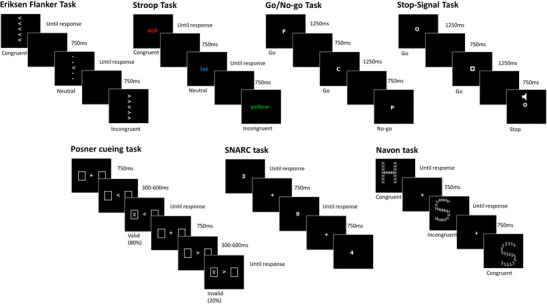
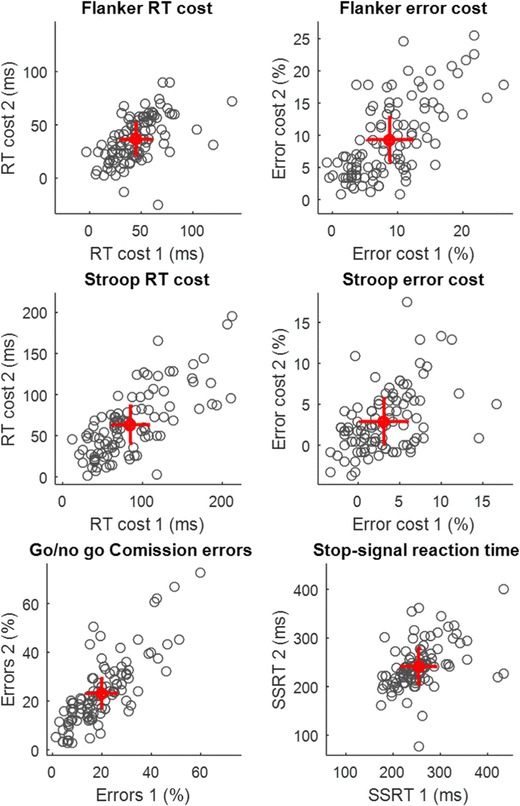
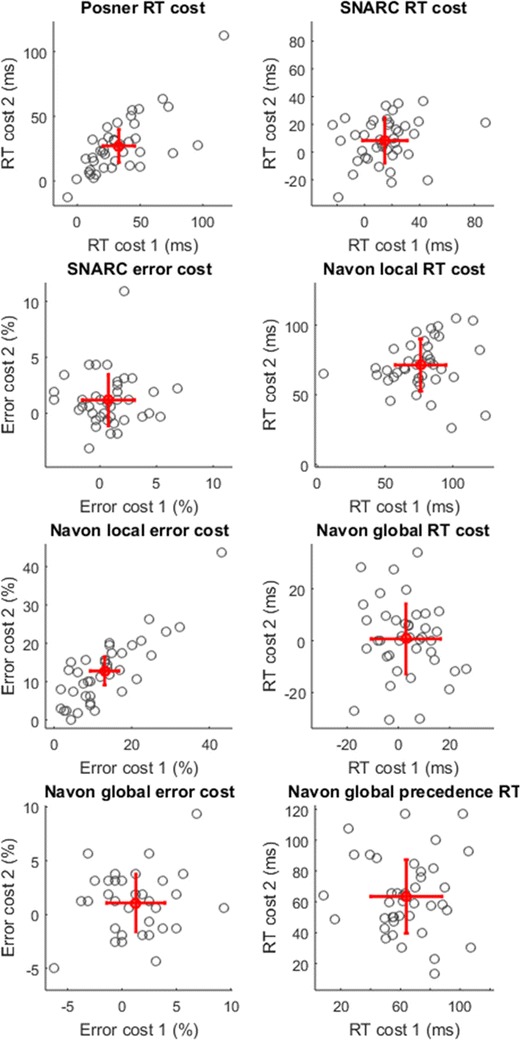
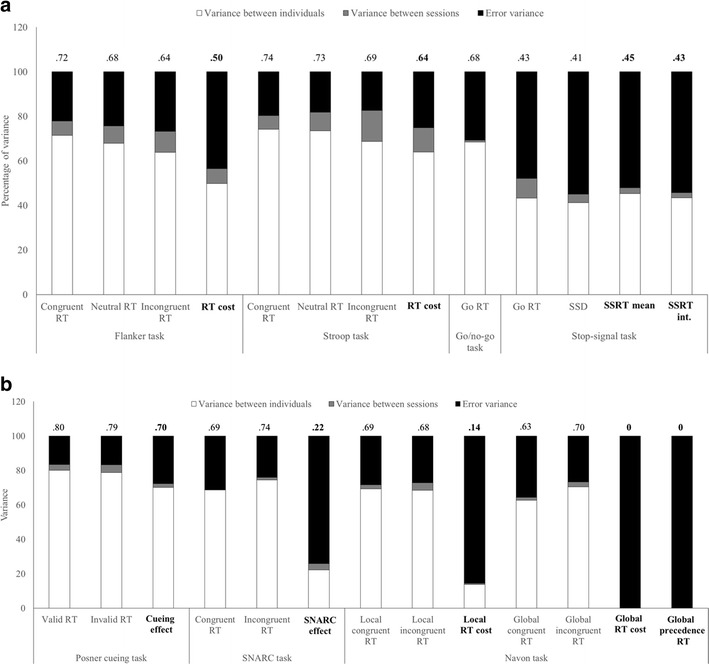
Individual differences in cognitive paradigms are increasingly employed to relate cognition to brain structure, chemistry, and function. However, such efforts are often unfruitful, even with the most well established tasks. Here we offer an explanation for failures in the application of robust cognitive paradigms to the study of individual differences. Experimental effects become well established - and thus those tasks become popular - when between-subject variability is low. However, low between-subject variability causes low reliability for individual differences, destroying replicable correlations with other factors and potentially undermining published conclusions drawn from correlational relationships. Though these statistical issues have a long history in psychology, they are widely overlooked in cognitive psychology and neuroscience today. In three studies, we assessed test-retest reliability of seven classic tasks: Eriksen Flanker, Stroop, stop-signal, go/no-go, Posner cueing, Navon, and Spatial-Numerical Association of Response Code (SNARC). Reliabilities ranged from 0 to .82, being surprisingly low for most tasks given their common use. As we predicted, this emerged from low variance between individuals rather than high measurement variance. In other words, the very reason such tasks produce robust and easily replicable experimental effects - low between-participant variability - makes their use as correlational tools problematic. We demonstrate that taking such reliability estimates into account has the potential to qualitatively change theoretical conclusions. The implications of our findings are that well-established approaches in experimental psychology and neuropsychology may not directly translate to the study of individual differences in brain structure, chemistry, and function, and alternative metrics may be required.
Overview
The claims and statistics of this paper haven’t been checked yet.
Free: it reads the open-access text and checks the first 5 claims that cite a source we can check. Create a free account to check every claim.
Integrity signals
Registry
Cites
Statistics
Figures
Verification
Claims the paper makes
The claims and statistics of this paper haven’t been checked yet.
Free: it reads the open-access text and checks the first 5 claims that cite a source we can check. Create a free account to check every claim.
Claims other papers make about this one
Each is checked against this paper’s own text: does it say what the citing paper says it does?
The source backs part of the claim, not all of it — or backs it for a different population, condition or comparison.
In the citing paper
“This contrast was used (cf. anticipation of social reward minus neutral outcomes) because reliability of difference scores is always lower than reliability of their individual parts,(53) which has been shown to diminish reliability of task-based fMRI(54) (see also(55)) and hinder mechanistic research.(56)”
From Amplification of Positivity Treatment for Anxiety and Depression: A Randomized Experimental Therapeutics Trial Targeting Social Reward Sensitivity to Enhance Social Connectedness (2024) · cites this paper as [53]
Experimental — accuracy not yet measuredThe source backs part of the claim, not all of it — or backs it for a different population, condition or comparison.
In the citing paper
“For the Stroop task, reliability was ρ congruent = .86, ρ incongruent = .82, and ρ interference = .78.”
From Problematic social media use and cognitive performance in young adults: Associations with selective attention and inhibitory control (2026) · cites this paper as Hedge, Powell, & Sumner, 2018
Experimental — accuracy not yet measuredThe cited source says what the claim attributes to it.
In the citing paper
“Further, it is often the case that cognitive tasks that produce robust effects in experimental settings are poorly suited for individual differences studies due to low between-participant reliability (Hedge et al. 2018).”
From Practicing Retrieval Facilitates Learning (2021) · cites this paper as Hedge et al. 2018
The check wasn’t confident either way, so it gives no verdict — never disputed.
In the citing paper
“For the Simon task, reliability was ρ_congruent = .84, ρ_incongruent = .81, and ρ_interference = .76.”
From Problematic social media use and cognitive performance in young adults: Associations with selective attention and inhibitory control (2026) · cites this paper as Hedge et al., 2018
Experimental — accuracy not yet measured
Self-check
Percentages, sums and reported differences re-computed from the paper’s own numbers.
The self-check needs the paper’s full text.
Citations
Cites
The Measurement of Observer Agreement for Categorical Data
Landis, J. R., & Koch, G. G. (1977) · Biometrics · doi:10.2307/2529310 · Cited by 81,148 · cited 4×
“Studies 1 and 2 None of the behavioral measures in Studies 1 and 2 (see Table 1) exceeded reliabilities of .8, typically considered excellent or of a clinically required standard (Cicchetti & Sparrow, 1981; Fleiss, 1981; Landis & Koch, 1977).”
BackgroundMethodResultInfluentialFaul, F., Erdfelder, E., Lang, A.-G., & Buchner, A. (2007) · Behavior Research Methods · doi:10.3758/bf03193146 · Cited by 65,971
Structural equation modeling in practice: A review and recommended two-step approach
Anderson, J. C., & Gerbing, D. W. (1988) · Psychological Bulletin · doi:10.1037/0033-2909.103.3.411 · Cited by 41,941
Statistical power analyses using G∗Power 3.1: tests for correlation and regression analyses
Faul, F., Erdfelder, E., Buchner, A., & Lang, A.-G. (2009) · Behavior Research Methods · doi:10.3758/brm.41.4.1149 · Cited by 37,615
Intraclass correlations: Uses in assessing rater reliability.
Shrout, P. E., & Fleiss, J. L. (1979) · Psychological Bulletin · doi:10.1037/0033-2909.86.2.420 · Cited by 24,532
Statistical Methods for Rates and Proportions
Fleiss, J. L., Levin, B., & Paik, M. C. (2003) · Wiley Series in Probability and Statistics · doi:10.1002/0471445428 · Cited by 18,646
Miyake, A., Friedman, N. P., Emerson, M. J., Witzki, A. H., Howerter, A., & Wager, T. D. (2000) · Cognitive Psychology · doi:10.1006/cogp.1999.0734 · Cited by 15,798
Review of Psychometric theory (2nd ed.).
SITGREAVES, R. (1979) · Contemporary Psychology: A Journal of Reviews · doi:10.1037/018882 · Cited by 11,425
Why Most Published Research Findings Are False
Ioannidis, J. P. A. (2005) · PLoS Medicine · doi:10.1371/journal.pmed.0020124 · Cited by 10,505
Posner, M. I. (1980) · Quarterly Journal of Experimental Psychology · doi:10.1080/00335558008248231 · Cited by 9,670 · cited 2×
“Study 3 Again, performance was comparable to previous reports in the literature (Navon, 1977; Posner, 1980; Rusconi et al., 2013).”
Research works printed but not linked: 7
- Crocker LM Algina J Introduction to Classicial and Modern Test Theory 1986 New York CBS College Publishing
- Hambleton RK Swaminathan H Rogers HJ Fundementals of Item Response Theory 1991 Newbury Park Sage
- Lynam DR Smith GT Whiteside SP Cyders MA The UPPS-P: Assessing give personality pathways to impulsive behavior (Technical Report) 2006 West Lafayette Purdue University
- Nunnally JC Psychometric theory 1978 2 New York. McGraw-Hill
- Peirce JW Introduction to Python and PsychoPy Perception 2013 42 2 3
- Rogosa D Gottman JM Myths and methods: "Myths about longitudinal research" plus supplemental questions The analysis of change 1995 Hillsdale Lawrence Ealbaum Associates pp. 3 65
- Zumbo BD Thompson B The simple difference score as an inherently poor measure of change: Some reality, much mythology Advances in Social Science Methodoloy 1999 Greenwich JAI Press pp. 269 304
Cited by
Items 701–800 of 1,003
Bejjani, C., & Egner, T. (2021) · Journal of Experimental Psychology Learning Memory and Cognition · doi:10.1037/xlm0001058 · Cited by 7
Reichl, D., Enewoldsen, N., Müller, A., & Steins‐Loeber, S. (2022) · Psychological Research · doi:10.1007/s00426-022-01725-4 · Cited by 8
“Furthermore, studies showed that the GNG paradigm may be more reliable than the Stop-Signal paradigm (Czapla et al., 2016b; Hedge et al., 2018).”
MethodMeasurements of Susceptibility to Anchoring are Unreliable
Röseler, L., Weber, L., Helgerth, K. A. C., Stich, E., Günther, M., Tegethoff, P., Wagner, F. S., & Schütz, A. (2024) · Meta-Psychology · doi:10.15626/mp.2022.3236 · Cited by 7
Grave, J., Madeira, N. G. G. F., Martins, M. J., Silva, S., Korb, S., & Soares, S. C. (2021) · Consciousness and Cognition · doi:10.1016/j.concog.2021.103165 · Cited by 9
Measurement practices exacerbate the generalizability crisis: Novel digital measures can help
Davidson, B. I., Ellis, D. A., Stachl, C., Taylor, P. J., & Joinson, A. (2022) · Behavioral and Brain Sciences · doi:10.1017/s0140525x21000534 · Cited by 8
Haines, N., Rass, O., Shin, Y., Brown, J. W., & Ahn, W. (2019) · bioRxiv (Cold Spring Harbor Laboratory) · doi:10.1101/560011 · Cited by 7
Rapid, precise, and reliable measurement of delay discounting using a Bayesian learning algorithmPreprint
Ahn, W., Gu, H., Shen, Y. I., Haines, N., Hahn, H. A., Teater, J. E., Myung, J. I., & Pitt, M. A. (2019) · bioRxiv (Cold Spring Harbor Laboratory) · doi:10.1101/567412 · Cited by 9
Individual differences in updating are not related to reasoning ability and working memory capacity.Preprint
Frischkorn, G. T., von Bastian, C. V., Souza, A., & Oberauer, K. (2020) · Journal of experimental psychology. General · doi:10.31234/osf.io/92uhb · Cited by 27
“Isolating cognitive processes: To subtract or not to subtract? 393 One issue with isolating cognitive processes that has gained considerable traction is that 394 differences between experimental conditions tend to be unreliable (Hedge et al., 2018).”
BackgroundBignardi, G., Dalmaijer, E. S., Anwyl-Irvine, A. L., & Astle, D. E. (2020) · OSF Preprints (OSF Preprints) · doi:10.31219/osf.io/aw6c5 · Cited by 8
An individual differences perspective on pragmatic abilities in the preschool yearsPreprint
Bohn, M., Tessler, M. H., Kordt, C., Hausmann, T., & Frank, M. C. (2022) · doi:10.31234/osf.io/s2e3p · Cited by 7
Respiratory and cardiac interoceptive sensitivity in the first two years of lifePreprint
Tünte, M. R., Hoehl, S., Wunderwald, M., Bullinger, J., Boyadziheva, A., Maister, L., Elsner, B., Tsakiris, M., & Kayhan, E. (2025) · eLife · doi:10.7554/elife.91579 · Cited by 13
“Despite these limitations fixed-order designs also hold advantages, as they are more suitable to investigate individual differences ( Dang et al., 2020 ; Hedge et al., 2018 ).”
DeYoung, C. G., Hilger, K., Hanson, J. L., Abend, R., Allen, T. A., Beaty, R. E., Blain, S. D., Chavez, R. S., Engel, S. A., Feilong, M., et al. (2024) · doi:10.31219/osf.io/bjn62 · Cited by 7
Basanovic, J. (2024) · Behavior Research Methods · doi:10.3758/s13428-024-02403-6 · Cited by 11
Goodhew, S. C., & Edwards, M. (2024) · Personality and Individual Differences · doi:10.1016/j.paid.2024.112706 · Cited by 8
Tisdall, L., Frey, R., Wulff, D. U., Kellen, D., & Mata, R. (2024) · The Journals of Gerontology Series B · doi:10.1093/geronb/gbae092 · Cited by 9
“In addition, behavioral measures have often suffered from low between-subject variability (Hedge et al., 2017); although this characteristic makes them suitable for eliciting robust group effects, this also leads to lower test–retest reliability, thus complicating their use in individual…”
BackgroundNon-native language comprehenders encode implied shapes of objects in memory
Zeelenberg, R., Pecher, D., van der Meijden, M. E. M., Trott, S., & Bergen, B. K. (2024) · Cortex · doi:10.1016/j.cortex.2024.09.008 · Cited by 8
“Second, Hedge et al. (2017) argued that experimental tasks are often not well suited to detect individual differences.”
Rappaport, B. I., Shankman, S. A., Glazer, J. E., Buchanan, S. N., Weinberg, A., & Letkiewicz, A. M. (2024) · Cognitive Affective & Behavioral Neuroscience · doi:10.3758/s13415-024-01222-8 · Cited by 8
“There are also concerns that tasks with strong condition-level effects (in this case, differences between congruent and incongruent) have reduced between-person variability and thus unstable individual differences (Hedge et al., 2018).”
Negative affectivity drivers of impulsivity in opioid use disorder
Vassileva, J., Psederska, E., & Bjork, J. M. (2025) · Nature Reviews Psychology · doi:10.1038/s44159-025-00404-6 · Cited by 7
“assessments 80,81 .”
Holbrook, A., Park, B., Baldwin, S. A., Riesel, A., Larson, M. J., & Clayson, P. (2025) · Psychophysiology · doi:10.1111/psyp.70042 · Cited by 6
Attentional control data collection: A resource for efficient data reuse
Haaf, J. M., Hoffstadt, M., & Lesche, S. (2025) · Behavior Research Methods · doi:10.3758/s13428-025-02717-z · Cited by 14
“This debate spans both the observation that the reliability of individual differences in these tasks is generally low (e.g., Hedge et al., 2018; Rouder et al., 2023), and whether the methods for estimating reliability are appropriate (e.g., Rey-Mermet, Singmann, & Oberauer, n.d.; Rouder & Haaf,…”
Schröder, R., Baumert, P. M., & Ettinger, U. (2021) · Acta Psychologica · doi:10.1016/j.actpsy.2021.103364 · Cited by 7
The Specificity and Reliability of Conflict Adaptation: A Mouse-Tracking Study
Grundy, J. G. (2022) · Frontiers in Psychology · doi:10.3389/fpsyg.2021.770509 · Cited by 6
Amir, I., Aizik-Reebs, A., Yuval, K., Hadash, Y., & Bernstein, A. (2023) · Clinical Psychological Science · doi:10.1177/21677026231164958 · Cited by 7
“Finally, these and related findings should be evaluated in light of the capacity of cognitive-experimental tasks (e.g., modified Sternberg task) to measure changes in individual differences in a cognitive function such as CI (Hedge et al., 2018).”
BackgroundHow executive functioning, sentence processing, and vocabulary are related at 3 years of age
Lee, C. Y., Jessop, A., Bidgood, A., Peter, M., Pine, J. M., Rowland, C. F., & Durrant, S. (2023) · Journal of Experimental Child Psychology · doi:10.1016/j.jecp.2023.105693 · Cited by 13
Jagtap, S., & Best, M. W. (2023) · Journal of Behavior Therapy and Experimental Psychiatry · doi:10.1016/j.jbtep.2023.101935 · Cited by 6
Fuhrmeister, P., Elbuy, S., & Bürki, A. (2024) · Journal of Cognition · doi:10.5334/joc.337 · Cited by 8
“For example, in studies comparing performance on a task between groups or experimental conditions, the term reliability is sometimes used to describe an experimental effect that is replicable across different samples of participants (Hedge, Powell, & Sumner, 2018).”
BackgroundInfluentialFrinsel, F. F., & Christiansen, M. H. (2024) · Behavior Research Methods · doi:10.3758/s13428-024-02355-x · Cited by 13
“Rather than using traditional methods to calculate the correlation between individuals’ difference scores (e.g., Hedge et al., 2018), we fitted mixed-effects models estimating participant effects for each region, which were then correlated between halves (Rouder & Haaf, 2019; Staub 2021).”
InfluentialRothe, J., Darcourt, A., Moll, K., Schulte‐Körne, G., & Schmalz, X. (2024) · Scientific Studies of Reading · doi:10.1080/10888438.2024.2352402 · Cited by 10
“Thus, we have excluded one potential explanation for this finding: that the general orthographic knowledge task is more prone to noise and therefore shows lower correlations with literacy tasks (Hedge et al., 2018).”
Individual differences in emotion-induced blindness: Are they reliable and what do they measure?
Edwards, M., Denniston, D., Bariesheff, C., Wyche, N. J., & Goodhew, S. C. (2024) · Attention Perception & Psychophysics · doi:10.3758/s13414-024-02900-y · Cited by 8
“This work draws on the pioneering work of Hedge and colleagues (Hedge et al., 2018) that highlights the intrinsic tension between experimental and individual-differences (correlational) research with respect to the effects of between-participant variance.”
InfluentialDali, G., Poulton, A., Chen, L. P. E., & Hester, R. (2024) · Journal of Clinical and Experimental Neuropsychology · doi:10.1080/13803395.2024.2364396 · Cited by 7
“On the SST, in-laboratory go RT ICC values ranged .35–.60, while SSRT values ranged .03–.47 (Hedge et al., 2018; Wöstmann et al., 2013).”
Kong, Z., Chen, J., Liu, J., Zhou, Y., Duan, Y., Li, H., & Yang, L. (2024) · European Journal of Neuroscience · doi:10.1111/ejn.16448 · Cited by 9
“The reliability of the difference score can be poor even when the experimental effect is robust at the group level (Hedge et al., 2018).”
Zheng, B. L. Q., Ismail, A. M. H., Wong, H. K., & Estudillo, A. J. (2024) · Cognitive Neuropsychology · doi:10.1080/02643294.2024.2371384 · Cited by 8
Attentional capture by abrupt onsets: Foundations and emerging issues.
Zhang, H., York, A. K., & Jonides, J. (2025) · Journal of Experimental Psychology Human Perception & Performance · doi:10.1037/xhp0001275 · Cited by 10
McMurray, B., Oleson, J., & Kutlu, E. (2025) · Brain Research · doi:10.1016/j.brainres.2025.149786 · Cited by 9
Does the understanding of complex dynamic events at 10 months predict vocabulary development?
Durrant, S., Jessop, A., Chang, F., Bidgood, A., Peter, M., Pine, J. M., & Rowland, C. F. (2020) · Language and Cognition · doi:10.1017/langcog.2020.26 · Cited by 6
“This conclusion raises broader questions about how to use looking times as a measure of individual variation (see Hedge, Powell, & Sumner, 2017).”
Huskey, R., Turner, B. O., & Weber, R. (2020) · Frontiers in Human Neuroscience · doi:10.3389/fnhum.2020.565973 · Cited by 6
Xu, Y., & Stocco, A. (2021) · Computational Brain & Behavior · doi:10.1007/s42113-021-00102-5 · Cited by 10
The hunt for structure-dependent interpretation: The case of Principle C
Lidz, J. L., Lukyanenko, C., & Sutton, M. (2021) · Cognition · doi:10.1016/j.cognition.2021.104676 · Cited by 6
Wise, S., Huang‐Pollock, C. L., & Pérez‐Edgar, K. E. (2021) · Psychological Research · doi:10.1007/s00426-021-01532-3 · Cited by 7
“However, the low between subjects variability that is often the goal when developing and designing experimental measures of cognition may also make them unsuitable for individual differences research (Enkavi et al., 2019; Hedge et al., 2018).”
BackgroundSripada, C. (2022) · Wiley Interdisciplinary Reviews Cognitive Science · doi:10.1002/wcs.1613 · Cited by 5
“Across time, the effect is temporally stable (Hedge et al., 2018).”
BackgroundVetter, N. C., Fröhner, J. H., Hoffmann, K., Backhausen, L. L., & Smolka, M. N. (2022) · Developmental Cognitive Neuroscience · doi:10.1016/j.dcn.2022.101131 · Cited by 6
“contrasts both in behavioral (Hedge et al., 2018) as well as in fMRI data (Elliott et al.”
An Information Principle Based on Partitions for Cognitive Data
Kak, S. C. (2023) · Journal of Artificial Intelligence and Consciousness · doi:10.1142/s2705078522500138 · Cited by 7
Language Experience Predicts Eye Movements During Online Auditory Comprehension
James, A. N., Minnihan, C. J., & Watson, D. G. (2023) · Journal of Cognition · doi:10.5334/joc.285 · Cited by 13
Tiego, J., Verdejo‐García, A., Anderson, A. C., Koutoulogenis, J., & Bellgrove, M. A. (2023) · Cortex · doi:10.1016/j.cortex.2023.06.013 · Cited by 5
“It has recently been argued that task-based measures are unsuitable for individual differences research in self-cortex regulation due to low between-subject and high within-subject variance (Enkavi et al., 2019a, 2019b; Hedge et al., 2017).”
Mąka, S., Chrustowicz, M., & Okruszek, Ł. (2023) · Psychophysiology · doi:10.1111/psyp.14406 · Cited by 11
House, T., Wong, H. K., Samuel, N. W.-Y., Stephen, I. D., Brooks, K. R., Bould, H., Attwood, A. S., & Penton‐Voak, I. S. (2023) · Royal Society Open Science · doi:10.1098/rsos.230674 · Cited by 9
“Further, all aforementioned reaction time tasks have traditionally measured attentional bias using reaction time difference scores, which may be unreliable for measuring individual differences in attentional bias because they have low between-participant variability [71], do not capture the dynamic nature of attention…”
BackgroundPsychometrics in experimental psychology: A case for calibration
Bach, D. R. (2023) · Psychonomic Bulletin & Review · doi:10.3758/s13423-023-02421-z · Cited by 7
“This is a realistic . scenario in experimental psychology, which often strives to minimise between-person variance relative to treatment variance (Hedge et al., 2018).”
InfluentialAssociations between inhibition and precursors of literacy and mathematics in kindergarten children
Michel, E., Lang, J., & Boesche, F. (2024) · Applied Cognitive Psychology · doi:10.1002/acp.4165 · Cited by 7
Executive Functioning in Different Types of Reading Disabilities
Cadime, I., Rodrigues, B., Ribeiro, I., & Martín-Aragoneses, M. T. (2024) · Journal of Intelligence · doi:10.3390/jintelligence12100101 · Cited by 10
“These measures often produce low between-subject variability, which not only leads to low reliability but also undermines correlations with other variables (Hedge et al. 2018).”
BackgroundKardan, O., Sereeyothin, C., Schertz, K. E., Angstadt, M., Weigard, A. S., Berman, M. G., Heitzeg, M. M., & Rosenberg, M. D. (2026) · Developmental Cognitive Neuroscience · doi:10.1016/j.dcn.2026.101719 · Cited by 7
Learning Mechanisms in Fear and Anxiety: It Is Still Not What You Thought It Was
Scheveneels, S., Boddez, Y., & Hermans, D. (2018) · Cambridge University Press eBooks · doi:10.1017/9781108140416.002 · Cited by 11
Onie, S., Notebaert, L., Clarke, P., & Most, S. B. (2019) · Frontiers in Psychology · doi:10.3389/fpsyg.2018.02782 · Cited by 7
“Reliability indices can be heavily affected by between participant-variability, and many cognitive tasks with reliable effects may yield low reliability (Hedge et al., 2018).”
BackgroundStroop-like effects of derived stimulus–stimulus relations.
Liefooghe, B., Hughes, S., Schmidt, J. R., & Houwer, J. D. (2020) · Journal of Experimental Psychology Learning Memory and Cognition · doi:10.1037/xlm0000724 · Cited by 8
“Although one should be careful in interpreting correlations between difference scores as they tend to be unreliable (e.g., see Hedge, Powell, & Sumner, 2018 for a discussion of this issue in the context of cognitive-control research), the absence of such correlations may indicate that the processes…”
Steinkamp, S. R., Vossel, S., Fink, G. R., & Weidner, R. (2020) · Human Brain Mapping · doi:10.1002/hbm.25086 · Cited by 5
Kask, A., Põldver, N., Ausmees, L., & Kreegipuu, K. (2021) · Consciousness and Cognition · doi:10.1016/j.concog.2021.103150 · Cited by 6
Probabilistic Decision-Making in Children With Dyslexia
Watson, C., Zhou, R., Pitt, M. A., Myung, J. I., Rossi, P. J., Caverzasi, E., Rah, E., Allen, I. E., Mandelli, M. L., Meyer, M., et al. (2022) · Frontiers in Neuroscience · doi:10.3389/fnins.2022.782306 · Cited by 6
“Additionally, our sample is small and unequal in group sizes, therefore it would be helpful to replicate these findings in larger studies and with reliability metrics for the cognitive task (Frey et al., 2017; Hedge et al., 2018; Palminteri and Chevallier, 2018).”
ResultHilger, K., & Euler, M. J. (2023) · Journal of Cognitive Neuroscience · doi:10.1162/jocn_a_01946 · Cited by 8
“Several recent papers have re-focused attention on psychometric problems associated with using difference scores in individual differences research (e.g., Hedge et al., 2018), including in ERP studies per se (Meyer et al., 2020).”
The effects of hydrocortisone and yohimbine on human behavior in approach-avoidance conflicts
Fricke, K., Alexander, N., Jacobsen, T., Krug, H., Wehkamp, K., & Vogel, S. (2023) · Psychopharmacology · doi:10.1007/s00213-023-06396-6 · Cited by 7
“One other reason for our null findings may be that the AACT has been initially constructed to differentiate between groups, which may make it more difficult to draw correlational results by design (Hedge et al. 2018).”
Beyond Face Value: Assessing the Factor Structure of an Eye-Tracking Based Attention Bias Task
McNamara, M. E., Hsu, K. J., McSpadden, B., Risom, S., Shumake, J., & Beevers, C. G. (2023) · Cognitive Therapy and Research · doi:10.1007/s10608-023-10395-4 · Cited by 6
“Earlier work concluded that the dot-probe task, arguably the most common measurement approach for measuring attentional bias, was completely unreliable in terms of internal consistency and test–retest reliability in nonclinical samples (Schmukle, 2005), making it unsuitable for measuring between-person differences (He…”
BackgroundAnterior hippocampal dysfunction in early psychosis: a 2-year follow-up study
McHugo, M., Avery, S. N., Armstrong, K., Rogers, B. P., Vandekar, S., Woodward, N. D., Blackford, J. U., & Heckers, S. (2021) · Psychological Medicine · doi:10.1017/s0033291721001318 · Cited by 6
Need for Psychometric Theory in Neuroscience Research and Training: Reply to Kragel et al. (2021)
Elliott, M. L., Knodt, A. R., Caspi, A., Moffitt, T. E., & Hariri, A. R. (2021) · Psychological Science · doi:10.1177/0956797621996665 · Cited by 7
A Data-Driven Analysis of the Cognitive and Perceptual Attributes of Ideological AttitudesPreprint
Zmigrod, L., Eisenberg, I. W., Bissett, P. G., Robbins, T. W., & Poldrack, R. A. (2020) · PsyArXiv (OSF Preprints) · doi:10.31234/osf.io/dgaxr · Cited by 7
Test-retest reliability of four cognitive tasks in a not so WEIRD samplePreprint
Rodas, J. A., & Greene, C. M. (2020) · PsyArXiv (OSF Preprints) · doi:10.31234/osf.io/e2kr7 · Cited by 6
Viviani, G., Visalli, A., Finos, L., Vallesi, A., & Ambrosini, E. (2022) · doi:10.31234/osf.io/auvfq · Cited by 6
Replication and extension of the toolbox approach to measuring attention controlPreprint
Draheim, C., Tsukahara, J. S., & Engle, R. W. (2022) · doi:10.31234/osf.io/gbnzh · Cited by 6
Different components of cognitive-behavioural therapy affect specific cognitive mechanismsPreprint
Norbury, A., Hauser, T. U., Fleming, S. M., Dolan, R. J., & Huys, Q. J. M. (2023) · doi:10.31234/osf.io/ydct5 · Cited by 6
Parrotta, E., McDonough, K. L., & Bach, P. (2023) · bioRxiv (Cold Spring Harbor Laboratory) · doi:10.1101/2023.06.07.544005 · Cited by 7
“Note though that even with the combined data of both experiments, our sample sizes are still not large enough to robustly reveal associations of robust behaviour tasks and individual difference measures (Hedge et al., 2018), and should therefore be interpreted with caution.”
BackgroundMethodInfluentialHaller, P., Ding, C., Stegenwallner-Schütz, M., Reich, D. L., Koncic, I., Makowski, S., & Jäger, L. A. (2023) · PsyArXiv (OSF Preprints) · doi:10.31234/osf.io/muv4q · Cited by 6
Individual Differences in Spatial Orientation Modulate Perspective Taking in Listeners
Loy, J., & Demberg, V. (2023) · Journal of Cognition · doi:10.5334/joc.321 · Cited by 6
How general is ensemble perception?
Chang, T.-Y., Cha, O., McGugin, R. W., Tomarken, A. J., & Gauthier, L. (2023) · Psychological Research · doi:10.1007/s00426-023-01883-z · Cited by 6
“In these efforts, it remains important for tests of experimental influences and measurement of individual differences to apply the best methods available in each case, because conventions in one tradition can be counterproductive in the other (Hedge et al., 2018).”
Khodayari, N., Egeth, H. E., & Courtney, S. M. (2026) · Attention Perception & Psychophysics · doi:10.3758/s13414-025-03196-2 · Cited by 5
“As a result of maximizing the magnitude of our individ-ual-difference measures, the magnitude of our group difference measures were consequently statistically minimized (Hedge et al., 2018).”
Functional brain connectivity changes associated with day-to-day fluctuations in affective states
Racicot, J., Smine, S., Afzali, K., & Orban, P. (2024) · Cognitive Affective & Behavioral Neuroscience · doi:10.3758/s13415-024-01216-6 · Cited by 8
“Reliability, indicating the consistency of measures in identical situations, is susceptible to fluctuations from random variability and measurement noise (Gell et al., 2023; Hedge et al., 2018).”
BackgroundHeindorf, G., Holbrook, A., Park, B., Light, G. A., Rast, P., Foti, D., Kotov, R., & Clayson, P. E. (2025) · Psychophysiology · doi:10.1111/psyp.14758 · Cited by 9
Duranté, E. K., Ribeiro, A., Gaspard-Boulinc, L., Boutron, I., Henry, C., Petit, A., Houenou, J., Lemogne, C., & Chevance, A. (2025) · The British Journal of Psychiatry · doi:10.1192/bjp.2024.292 · Cited by 8
“75 Put simply, this paradox might have thrived because seeking for replicable task effects results in selecting tasks with low inter-individual variability, which entails poor ability to capture inter-individual differences.”
A systematic review of haptic texture reproduction technology
Chen, S., Yuan, T., Xu, L., Ru, W., & Wang, D. (2025) · Intelligence & Robotics · doi:10.20517/ir.2025.31 · Cited by 5
How to Improve the Reliability of Aperiodic Parameter Estimates in M/ EEG : A Method Comparison
Kałamała, P., Clements, G. M., Gyurkovics, M., Chen, T., Low, K. A., Fabiani, M., & Gratton, G. (2026) · Psychophysiology · doi:10.1111/psyp.70272 · Cited by 7
A diffusion model analysis of age and individual differences in the retro-cue benefit
Souza, A. S., & Frischkorn, G. T. (2023) · Scientific Reports · doi:10.1038/s41598-023-44080-z · Cited by 6
Burgoyne, A. P., Seeburger, D. T., & Engle, R. W. (2024) · Behavior Research Methods · doi:10.3758/s13428-023-02328-6 · Cited by 10
“As is now well known, conflict tasks such as the Stroop paradigm suffer from psychometric problems when used as-is for the study of individual differences in attention con-trol (Hedge et al., 2018).”
Balit, N., Sun, S., Zhang, Y., & Sharp, M. E. (2024) · Parkinsonism & Related Disorders · doi:10.1016/j.parkreldis.2024.107183 · Cited by 7
Leveraging Large Language Models for Personalized Public Messaging
Das, A. K., Xiong, C., & Mueller, K. D. (2025) · CHI Conference Extended Abstracts on Human Factors in Computing Systems (CHI EA) · doi:10.1145/3706599.3720018 · Cited by 6
“They address individual differences by simulating diverse traits, over-coming traditional challenges like limited participant numbers and non-diverse samples [19, 27], fostering personalized and inclusive solutions.”
Training-dependent transfer within a set of nested tasks
Rennie, J. P., Jones, J. S., & Astle, D. E. (2021) · Quarterly Journal of Experimental Psychology · doi:10.1177/1747021821993772 · Cited by 7
Perruchet, P. (2021) · Studies in Second Language Acquisition · doi:10.1017/s027226312100019x · Cited by 5
McIlhiney, P., Gignac, G. E., Weinborn, M., & Ecker, U. K. H. (2021) · Quarterly Journal of Experimental Psychology · doi:10.1177/17470218211048986 · Cited by 10
“However, Hedge et al. (2018) argued that this should not eliminate difference scores as a viable method of measurement, as it is important in some contexts to subtract a baseline measure to control for confounding effects; this is true in the context of a CIE task.”
BackgroundMethodResultInfluentialTesting prosodic development with the Headturn Preference Procedure: A test‐retest reliability study
Marimon, M., & Höhle, B. (2022) · Infant and Child Development · doi:10.1002/icd.2362 · Cited by 5
Gladwin, T. E. (2022) · Addiction Research & Theory · doi:10.1080/16066359.2022.2123474 · Cited by 5
“sensitive methods able to detect effects of interest; or word sets with less strong overall similarities that could be more suitable to evoke individual differences (Hedge et al. 2018).”
BackgroundThome, J., Pinger, M., Durstewitz, D., Sommer, W. H., Kirsch, P., & Koppe, G. (2023) · Frontiers in Neuroscience · doi:10.3389/fnins.2022.1077735 · Cited by 6
“At the same time, the proposed procedure relocates betweensubject variability into the adaptive experimental variables and model parameters, such that this information is preserved and can be systematically studied (Kanai and Rees, 2011; Hedge et al., 2018).”
BackgroundVassileva, J., Lee, J.-H., Psederska, E., & Ahn, W. (2023) · Neuromethods · doi:10.1007/978-1-0716-3230-7_14 · Cited by 6
The role of impulse and interference control in aversive personality: A comprehensive assessment
Moshagen, M., Bader, M., Zettler, I., & Hilbig, B. E. (2023) · Acta Psychologica · doi:10.1016/j.actpsy.2023.104018 · Cited by 6
Experiment-based calibration in psychology: Optimal design considerations
Bach, D. R. (2023) · Journal of Mathematical Psychology · doi:10.1016/j.jmp.2023.102818 · Cited by 7
“In contrast, much of experimental psychology is concerned with general or average treatment effects, where the goal of experimental design is often to minimise variability of the treatment effect between persons (Hedge, Powell, & Sumner, 2018).”
BackgroundCampelo, G., & de Castilho, G. M. (2023) · Trends in Psychology · doi:10.1007/s43076-023-00352-1 · Cited by 6
“…showed poor reliability (0.21, 95% CI [0.01, 0.38]), echoing concerns about the use of difference-based composites in cognitive tasks—they are less reliable than their individual components, when such components show a high correlation or similar variance (Hedge et al., 2018; Zorowitz & Niv, 2023).”
InfluentialYamashita, J., Takimoto, Y., Oishi, H., & Kumada, T. (2024) · Frontiers in Psychology · doi:10.3389/fpsyg.2023.1144048 · Cited by 6
Pre-acquired functional connectivity predicts choice inconsistency
Madar, A., Kurtz-David, V., Hakim, A., Levy, D. J., & Tavor, I. (2024) · Journal of Neuroscience · doi:10.1523/jneurosci.0453-23.2024 · Cited by 6
The Role of Stimulus Uncertainty and Curiosity in Attention Control
Prasad, S. G., & Hommel, B. (2024) · Experimental Psychology (formerly Zeitschrift für Experimentelle Psychologie) · doi:10.1027/1618-3169/a000608 · Cited by 8
“Furthermore, robust and reliable cognitive tasks, such as the cueing paradigm, are not necessarily well-suited to tap into individual differences (Hedge et al., 2018).”
Retrieval practice effect and individual differences: current status and future directions
de Lima, M. F. R., & Buratto, L. G. (2024) · Journal of Cognitive Psychology · doi:10.1080/20445911.2024.2354963 · Cited by 8
Christensen, E., Albertella, L., Chamberlain, S. R., Suo, C., Brydevall, M., Grant, J. E., Yücel, M., & Lee, R. S. C. (2024) · Journal of Behavioral Addictions · doi:10.1556/2006.2024.00041 · Cited by 6
“…acknowledge that our inability to identify neurocognitive predictors may have been a result of single task-based measurement error, which is inherent in investigations that opt for individual paradigms to measure what are considered to be latent mechanisms (Enkavi et al., 2019; Hedge et al., 2018).”
Attention Control Measures Improve the Prediction of Performance in Navy Trainees
Burgoyne, A. P., Mashburn, C. A., Tsukahara, J. S., Pak, R., Coyne, J. T., Foroughi, C. K., Sibley, C. M., Drollinger, S. M., & Engle, R. W. (2024) · International Journal of Selection and Assessment · doi:10.1111/ijsa.12510 · Cited by 8
Estimating correlations in low-reliability settings with constrained hierarchical models
Mehrvarz, M., & Rouder, J. N. (2025) · Behavior Research Methods · doi:10.3758/s13428-024-02568-0 · Cited by 9
“However, finding consistent patterns of individual differences has proven difficult (Enkavi et al., 2019; Hedge et al., 2018; Draheim et al., 2019).”
Zhao, Q., Zhang, X., Ye, M., Wu, S., Wang, X., Nedelská, Z., Hort, J., Zhu, B., & Zhang, B. (2019) · Frontiers in Neuroscience · doi:10.3389/fnins.2019.01249 · Cited by 6
“Less reliability may lead to less statistical power, low reproducibility, and demand of big data size (Button et al., 2013; Poldrack et al., 2017; Hedge et al., 2018) and has been recently highlighted as a challenge in fMRI field (Bennett and Miller, 2010; Xing and Zuo, 2018; Zuo et al., 2019a,b).”
Schlaghecken, F., & Maylor, E. A. (2020) · Journal of Experimental Psychology General · doi:10.1037/xge0000755 · Cited by 6
An Investigation on How Inhibition in Cognitive Processing Contributes to Fluid Reasoning
Wang, T., Li, C., Wei, W., & SCHWEIZER, K. W. (2020) · Advances in Cognitive Psychology · doi:10.5709/acp-0295-7 · Cited by 6
“It worth pointing out that low reliability of the tasks measuring inhibition is a widespread threat to the validity of studies on this topic (e.g., Draheim et al., 2019; Hedge et al., 2018).”
Background
Metadata
- Authors
- Hedge, C., Powell, G., & Sumner, P.
- Affiliations
- Cardiff University (GB)
- Corresponding author
- Hedge, Craig
- Venue
- Behavior Research Methods
- Published
- 2017-07-19
- Volume
- 50
- Issue
- 3
- Pages
- 1166-1186
- ISSN
- 1554-351X (ISSN-L)
- 1554-3528
- PMC
- PMC5990556
- OpenAlex
- W2724821146
- Cited by
- 1,457
- References
- 150
- Citations by year
- 2026: 165 · 2025: 168 · 2024: 178 · 2023: 207 · 2022: 188 · 2021: 192 · 2020: 175 · 2019: 111 · 2018: 61 · 2017: 9
- FWCI
- 125.87
- Type
- journal article
- Language
- en
- Open access
- hybrid
- doi.org
- Locations
- Behavior Research Methods (publishedVersion, cc-by)
- Europe PMC (PubMed Central) (publishedVersion, other-oa)
- PubMed Central (publishedVersion, cc-by)
- PubMed (publishedVersion)
- ORCA Online Research @Cardiff (Cardiff University) (acceptedVersion)
- Aston Publications Explorer (Aston University) (submittedVersion, cc-by)
- OSF Preprints (OSF Preprints) (submittedVersion)
- Funders
- Wellcome Trust (104943/Z/14/Z)
- Economic and Social Research Council (ES/K002325/1)
- Topics
- Social Sciences › Psychology › Experimental and Cognitive Psychology › Cognitive Abilities and Testing
- Social Sciences › Decision Sciences › Management Science and Operations Research › Psychometric Methodologies and Testing
- Life Sciences › Neuroscience › Cognitive Neuroscience › Neural and Behavioral Psychology Studies
- Keywords
- individual differences, test-retest reliability, between-subject variability, measurement reliability, cognitive paradigm, flanker task, Stroop task, stop-signal task, go/no-go task, Navon task, SNARC effect, neuropsychology, brain structure and cognition
- MeSH terms
- Brain, Cognition, Cues, Female, Humans, Individuality, Male, Neuropsychology, Reaction Time, Task Performance and Analysis, Reproducibility of Results
About these checks
Registry, retraction, Cites and statistics results are computed, not judged, with one exception: a printed reference that no index lists is read once by a model before it counts as a citation error. Claims are extracted by a model and kept only when their quote appears verbatim in the text; each cited source is then checked, with a model’s help, for whether it says what the claim relies on. Those verdicts can be wrong — read the claim’s quote and the cited source before relying on one.
Statistics and arithmetic are recomputed, not judged.
Confidence bands are shown only for fields calibrated on our annotated test set. None is calibrated yet, so no band is shown.
What counts as a claim ›How we measure confidence ›How we check this ›
Are you an author, or do you see a problem with this page? Request a review
Data sources
Bibliographic data: Semantic Scholar, OpenAlex, Crossref.
Contains information from the Semantic Scholar Academic Graph Datasets, made available under the ODC Attribution License (ODC-BY 1.0).
Semantic Scholar’s data is described in: Kinney, R., et al. (2023). The Semantic Scholar Open Data Platform. arXiv:2301.10140.
