

The reliability paradox: Why robust cognitive tasks do not produce reliable individual differences
Open accessThe DOI matches its Crossref record; 146 of the 150 references it cites were found in a registry or an index.
Abstract
Individual differences in cognitive paradigms are increasingly employed to relate cognition to brain structure, chemistry, and function. However, such efforts are often unfruitful, even with the most well established tasks. Here we offer an explanation for failures in the application of robust cognitive paradigms to the study of individual differences. Experimental effects become well established - and thus those tasks become popular - when between-subject variability is low. However, low between-subject variability causes low reliability for individual differences, destroying replicable correlations with other factors and potentially undermining published conclusions drawn from correlational relationships. Though these statistical issues have a long history in psychology, they are widely overlooked in cognitive psychology and neuroscience today. In three studies, we assessed test-retest reliability of seven classic tasks: Eriksen Flanker, Stroop, stop-signal, go/no-go, Posner cueing, Navon, and Spatial-Numerical Association of Response Code (SNARC). Reliabilities ranged from 0 to .82, being surprisingly low for most tasks given their common use. As we predicted, this emerged from low variance between individuals rather than high measurement variance. In other words, the very reason such tasks produce robust and easily replicable experimental effects - low between-participant variability - makes their use as correlational tools problematic. We demonstrate that taking such reliability estimates into account has the potential to qualitatively change theoretical conclusions. The implications of our findings are that well-established approaches in experimental psychology and neuropsychology may not directly translate to the study of individual differences in brain structure, chemistry, and function, and alternative metrics may be required.
Overview
The claims and statistics of this paper haven’t been checked yet.
Free: it reads the open-access text and checks the first 5 claims that cite a source we can check. Create a free account to check every claim.
Integrity signals
Registry
Cites
Statistics
Figures
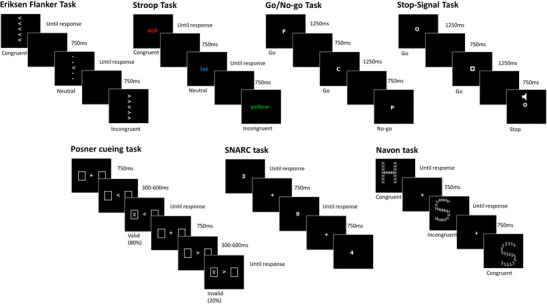
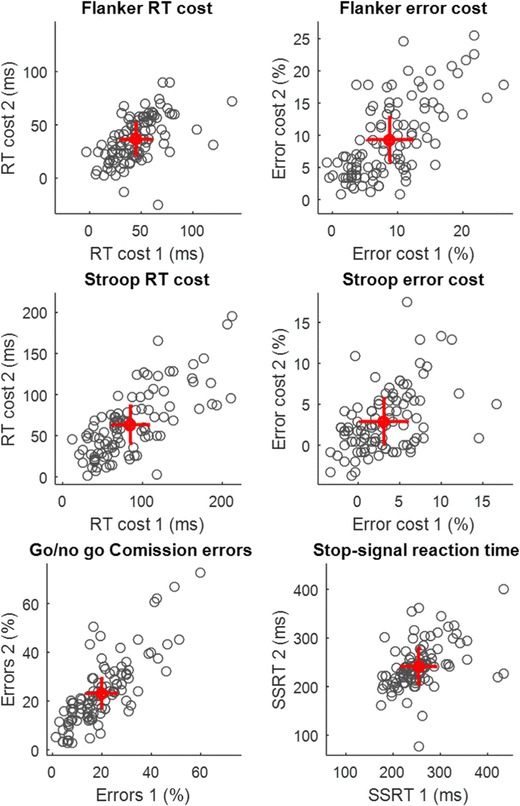
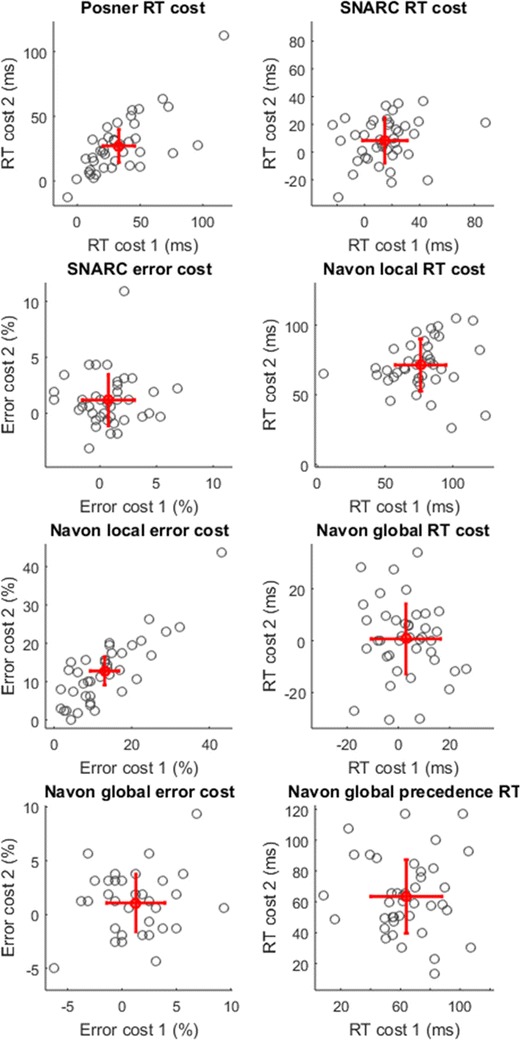
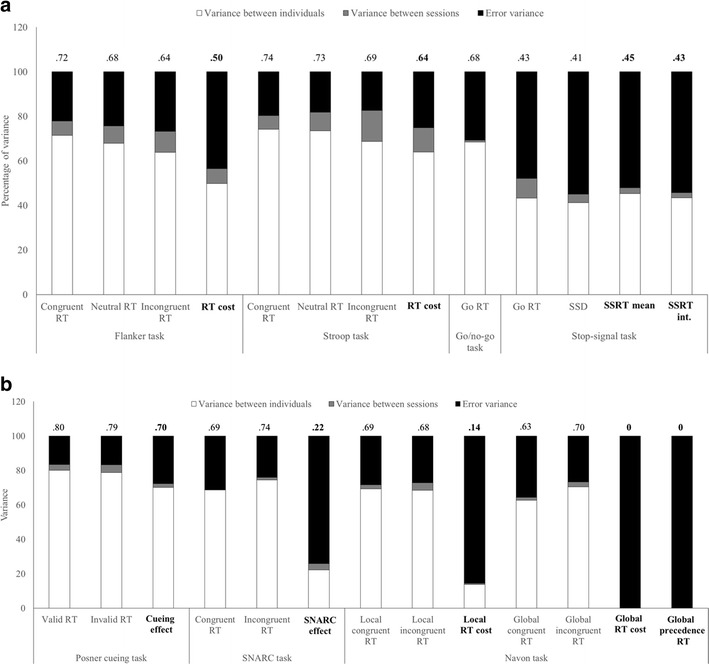
Verification
Claims the paper makes
The claims and statistics of this paper haven’t been checked yet.
Free: it reads the open-access text and checks the first 5 claims that cite a source we can check. Create a free account to check every claim.
Claims other papers make about this one
Each is checked against this paper’s own text: does it say what the citing paper says it does?
The source backs part of the claim, not all of it — or backs it for a different population, condition or comparison.
In the citing paper
“This contrast was used (cf. anticipation of social reward minus neutral outcomes) because reliability of difference scores is always lower than reliability of their individual parts,(53) which has been shown to diminish reliability of task-based fMRI(54) (see also(55)) and hinder mechanistic research.(56)”
From Amplification of Positivity Treatment for Anxiety and Depression: A Randomized Experimental Therapeutics Trial Targeting Social Reward Sensitivity to Enhance Social Connectedness (2024) · cites this paper as [53]
Experimental — accuracy not yet measuredThe source backs part of the claim, not all of it — or backs it for a different population, condition or comparison.
In the citing paper
“For the Stroop task, reliability was ρ congruent = .86, ρ incongruent = .82, and ρ interference = .78.”
From Problematic social media use and cognitive performance in young adults: Associations with selective attention and inhibitory control (2026) · cites this paper as Hedge, Powell, & Sumner, 2018
Experimental — accuracy not yet measuredThe cited source says what the claim attributes to it.
In the citing paper
“Further, it is often the case that cognitive tasks that produce robust effects in experimental settings are poorly suited for individual differences studies due to low between-participant reliability (Hedge et al. 2018).”
From Practicing Retrieval Facilitates Learning (2021) · cites this paper as Hedge et al. 2018
The check wasn’t confident either way, so it gives no verdict — never disputed.
In the citing paper
“For the Simon task, reliability was ρ_congruent = .84, ρ_incongruent = .81, and ρ_interference = .76.”
From Problematic social media use and cognitive performance in young adults: Associations with selective attention and inhibitory control (2026) · cites this paper as Hedge et al., 2018
Experimental — accuracy not yet measured
Self-check
Percentages, sums and reported differences re-computed from the paper’s own numbers.
The self-check needs the paper’s full text.
Citations
Cites
The Measurement of Observer Agreement for Categorical Data
Landis, J. R., & Koch, G. G. (1977) · Biometrics · doi:10.2307/2529310 · Cited by 81,148 · cited 4×
“Studies 1 and 2 None of the behavioral measures in Studies 1 and 2 (see Table 1) exceeded reliabilities of .8, typically considered excellent or of a clinically required standard (Cicchetti & Sparrow, 1981; Fleiss, 1981; Landis & Koch, 1977).”
BackgroundMethodResultInfluentialFaul, F., Erdfelder, E., Lang, A.-G., & Buchner, A. (2007) · Behavior Research Methods · doi:10.3758/bf03193146 · Cited by 65,971
Structural equation modeling in practice: A review and recommended two-step approach
Anderson, J. C., & Gerbing, D. W. (1988) · Psychological Bulletin · doi:10.1037/0033-2909.103.3.411 · Cited by 41,941
Statistical power analyses using G∗Power 3.1: tests for correlation and regression analyses
Faul, F., Erdfelder, E., Buchner, A., & Lang, A.-G. (2009) · Behavior Research Methods · doi:10.3758/brm.41.4.1149 · Cited by 37,615
Intraclass correlations: Uses in assessing rater reliability.
Shrout, P. E., & Fleiss, J. L. (1979) · Psychological Bulletin · doi:10.1037/0033-2909.86.2.420 · Cited by 24,532
Statistical Methods for Rates and Proportions
Fleiss, J. L., Levin, B., & Paik, M. C. (2003) · Wiley Series in Probability and Statistics · doi:10.1002/0471445428 · Cited by 18,646
Miyake, A., Friedman, N. P., Emerson, M. J., Witzki, A. H., Howerter, A., & Wager, T. D. (2000) · Cognitive Psychology · doi:10.1006/cogp.1999.0734 · Cited by 15,798
Review of Psychometric theory (2nd ed.).
SITGREAVES, R. (1979) · Contemporary Psychology: A Journal of Reviews · doi:10.1037/018882 · Cited by 11,425
Why Most Published Research Findings Are False
Ioannidis, J. P. A. (2005) · PLoS Medicine · doi:10.1371/journal.pmed.0020124 · Cited by 10,505
Posner, M. I. (1980) · Quarterly Journal of Experimental Psychology · doi:10.1080/00335558008248231 · Cited by 9,670 · cited 2×
“Study 3 Again, performance was comparable to previous reports in the literature (Navon, 1977; Posner, 1980; Rusconi et al., 2013).”
Research works printed but not linked: 7
- Crocker LM Algina J Introduction to Classicial and Modern Test Theory 1986 New York CBS College Publishing
- Hambleton RK Swaminathan H Rogers HJ Fundementals of Item Response Theory 1991 Newbury Park Sage
- Lynam DR Smith GT Whiteside SP Cyders MA The UPPS-P: Assessing give personality pathways to impulsive behavior (Technical Report) 2006 West Lafayette Purdue University
- Nunnally JC Psychometric theory 1978 2 New York. McGraw-Hill
- Peirce JW Introduction to Python and PsychoPy Perception 2013 42 2 3
- Rogosa D Gottman JM Myths and methods: "Myths about longitudinal research" plus supplemental questions The analysis of change 1995 Hillsdale Lawrence Ealbaum Associates pp. 3 65
- Zumbo BD Thompson B The simple difference score as an inherently poor measure of change: Some reality, much mythology Advances in Social Science Methodoloy 1999 Greenwich JAI Press pp. 269 304
Cited by
Items 101–200 of 1,004
Measurement models for studying child executive functioning: Questioning the status quo.
Camerota, M., Willoughby, M. T., & Blair, C. (2020) · Developmental Psychology · doi:10.1037/dev0001127 · Cited by 79
“These low correlations suggest that EF tasks (and the latent constructs derived from them) may do a poor job of indexing individual differences, a phenomenon which has been reported elsewhere (Dang et al., 2020; Hedge et al., 2018).”
BackgroundA unified cognitive/differential approach to human intelligence: Implications for IQ Testing.
Kovacs, K., & Conway, A. R. A. (2019) · Journal of Applied Research in Memory and Cognition · doi:10.1016/j.jarmac.2019.05.003 · Cited by 86
Effect sizes and test-retest reliability of the fMRI-based neurologic pain signature
Han, X., Ashar, Y. K., Kragel, P. A., Petre, B., Schelkun, V., Atlas, L. Y., Chang, L. J., Jepma, M., Koban, L., Losin, E. A. R., et al. (2021) · NeuroImage · doi:10.1016/j.neuroimage.2021.118844 · Cited by 67
Lopez, K. L., Monachino, A. D., Vincent, K. M., Peck, F. C., & Gabard-Durnam, L. J. (2023) · NeuroImage · doi:10.1016/j.neuroimage.2023.120116 · Cited by 84
Assessing reliability in neuroimaging research through intra-class effect decomposition (ICED)
Brandmaier, A. M., Wenger, E., Bodammer, N., Kühn, S., Raz, N., & Lindenberger, U. (2018) · eLife · doi:10.7554/elife.35718 · Cited by 69
“The two notions of reliability are associated with competing goals; hence, it is not surprising that robust experimental effects often do not translate into reliable individual differences (Hedge et al., 2018).”
Schubert, A.-L., & Frischkorn, G. T. (2020) · Current Directions in Psychological Science · doi:10.1177/0963721419896365 · Cited by 67
Elliott, M. L., Knodt, A. R., Ireland, D. R., Morris, M. L., Poulton, R., Ramrakha, S., Sison, M. L., Moffitt, T. E., Caspi, A., & Hariri, A. R. (2019) · bioRxiv (Cold Spring Harbor Laboratory) · doi:10.1101/681700 · Cited by 73
Do Rating and Task Measures of Control Abilities Assess the Same Thing?
Friedman, N. P., & Gustavson, D. E. (2022) · Current Directions in Psychological Science · doi:10.1177/09637214221091824 · Cited by 77
Jouravlev, O., Kell, A. J. E., Mineroff, Z., Haskins, A. J., Ayyash, D., Kanwisher, N., & Fedorenko, E. G. (2020) · Autism Research · doi:10.1002/aur.2393 · Cited by 76
Grahek, I., Schaller, M., & Tackett, J. L. (2021) · Perspectives on Psychological Science · doi:10.1177/1745691620966794 · Cited by 78
“This can be particularly useful in those domains of experimental psychology in which researchers have historically paid relatively little attention to measurement issues, especially when applied to individual-differences research with behavioral tasks (Hedge et al., 2018; Rouder & Haaf, 2019).”
BackgroundCognitive Models in Intelligence Research: Advantages and Recommendations for Their Application
Frischkorn, G. T., & Schubert, A. (2018) · Journal of Intelligence · doi:10.3390/jintelligence6030034 · Cited by 71
“Moreover, the low between-subject variability and low reliability of difference scores in typical cognitive tasks renders the isolation of individual differences in experimental effects by means of difference scores virtually impossible [27,28].”
BackgroundMore than number sense: The additional role of executive functions and metacognition in arithmetic
Bellon, E., Fias, W., & Smedt, B. D. (2019) · Journal of Experimental Child Psychology · doi:10.1016/j.jecp.2019.01.012 · Cited by 81
Kałamała, P., Szewczyk, J., Chuderski, A., Senderecka, M., & Wodniecka, Z. (2020) · Cognition · doi:10.1016/j.cognition.2020.104373 · Cited by 80
Cognitive performance of breast cancer survivors in daily life: Role of fatigue and depressed mood
Small, B. J., Jim, H., Eisel, S. L., Jacobsen, P. B., & Scott, S. (2019) · Psycho-Oncology · doi:10.1002/pon.5203 · Cited by 75
“Poor reliability of existing tools greatly impacts attempts to identify individual difference predictors of cognitive functioning.(39) Finally, the results indicated that cognitive performance generally improved across days of assessment.”
BackgroundQureshi, A., Monk, R. L., Samson, D., & Apperly, I. A. (2019) · Psychonomic Bulletin & Review · doi:10.3758/s13423-019-01656-z · Cited by 74
Individual differences in syntactic processing: Is there evidence for reader-text interactions?
James, A. N., Fraundorf, S. H., Lee, E.-K., & Watson, D. G. (2018) · Journal of Memory and Language · doi:10.1016/j.jml.2018.05.006 · Cited by 84
“These points were recently articulated and labeled by Hedge, Powell, and Sumner (2017) as the reliability paradox.”
BackgroundSuboptimal phenotypic reliability impedes reproducible human neurosciencePreprint
Nikolaidis, A., Chen, A. A., He, X., Shinohara, R. T., Vogelstein, J. T., Milham, M. P., & Shou, H. (2022) · Research Square · doi:10.1101/2022.07.22.501193 · Cited by 68
den Uyl, T. E., Gladwin, T. E., Lindenmeyer, J., & Wiers, R. W. H. J. (2018) · Alcoholism Clinical and Experimental Research · doi:10.1111/acer.13841 · Cited by 76
Hedge, C., Powell, G., Bompas, A., Vivian-Griffiths, S., & Sumner, P. (2018) · Psychological Bulletin · doi:10.1037/bul0000164 · Cited by 78
“66 for Stroop and flanker effects (Hedge et al., 2017).”
BackgroundSelf-citationTiego, J., Bellgrove, M. A., Whittle, S., Pantelis, C., & Testa, R. (2019) · Developmental Science · doi:10.1111/desc.12918 · Cited by 72
“Performance on cognitive tasks related to self-regulation are generally associated with low internal consistency reliability, poor stability, and may be illsuited for measuring individual differences, particularly those purported to reflect stable traits (Enkavi et al., 2019; Hedge et al., 2017).”
BackgroundResultEstablishing norms for error-related brain activity during the arrow Flanker task among young adults
Imburgio, M. J., Banica, I., Hill, K. E., Weinberg, A., Foti, D., & MacNamara, A. (2020) · NeuroImage · doi:10.1016/j.neuroimage.2020.116694 · Cited by 59
Editorial: Reliability and Reproducibility in Functional Connectomics
Zuo, X., Biswal, B. B., & Poldrack, R. A. (2019) · Frontiers in Neuroscience · doi:10.3389/fnins.2019.00117 · Cited by 66
“, 2009), and overwhelming need of big data or large sample sizes (Streiner et al., 2015; Hedge et al., 2018).”
BackgroundHow reliable are individual differences in eye movements in reading?
Staub, A. (2020) · Journal of Memory and Language · doi:10.1016/j.jml.2020.104190 · Cited by 61
Individual Differences in Intertemporal Choice
Keidel, K., Rramani, Q., Weber, B., Murawski, C., & Ettinger, U. (2021) · Frontiers in Psychology · doi:10.3389/fpsyg.2021.643670 · Cited by 72
Statistical Learning in Word Reading and Spelling across Languages and Writing Systems
Treiman, R., & Kessler, B. (2021) · Scientific Studies of Reading · doi:10.1080/10888438.2021.1920951 · Cited by 77
Person-specific and precision neuroimaging: Current methods and future directions
Michon, K. J., Khammash, D., Simmonite, M., Hamlin, A. M., & Polk, T. A. (2022) · NeuroImage · doi:10.1016/j.neuroimage.2022.119589 · Cited by 71
Linking inhibitory control to math achievement via comparison of conflicting decimal numbers
Coulanges, L., Abreu‐Mendoza, R. A., Varma, S., Uncapher, M. R., Gazzaley, A. H., Anguera, J. A., & Rosenberg‐Lee, M. (2021) · Cognition · doi:10.1016/j.cognition.2021.104767 · Cited by 77
Anokhin, A. P., Luciana, M. M., Banich, M. T., Barch, D. M., Bjork, J. M., Gonzalez, M. R., González, R., Haist, F., Jacobus, J., Lisdahl, K. M., et al. (2022) · Developmental Cognitive Neuroscience · doi:10.1016/j.dcn.2022.101078 · Cited by 65
“This shift could also explain the unusually low longitudinal test-retest correlation (r = 0.18) for the average reaction time in this task, given that average reaction time measures (unlike RT difference measures) tend to show good stability (Brown et al., 2014; Hedge et al., 2018).”
BackgroundMethodInfluentialCarlson, J. M., & Fang, L. (2020) · Motivation and Emotion · doi:10.1007/s11031-020-09834-6 · Cited by 60
“Additionally, it should be noted that poor reliability for individual differences does not necessarily mean that the experimental effects associated with differences between conditions are unreliable (Draheim et al. 2019; Goodhew and Edwards 2019; Hedge et al. 2018).”
BackgroundStrategy and processing speed eclipse individual differences in control ability in conflict tasks.
Hedge, C., Powell, G., Bompas, A., & Sumner, P. (2022) · Journal of Experimental Psychology Learning Memory and Cognition · doi:10.1037/xlm0001028 · Cited by 77
“The relative contribution of these processes to behavior will differ between tasks, or between different implementations of a given task (Hedge et al., 2018; Unsworth et al., 2004).”
InfluentialSelf-citationHedge, C., Vivian-Griffiths, S., Powell, G., Bompas, A., & Sumner, P. (2019) · Consciousness and Cognition · doi:10.1016/j.concog.2019.102797 · Cited by 67
Self-citationJones, A., Christiansen, P., & Field, M. (2018) · Psychology of Addictive Behaviors · doi:10.1037/adb0000414 · Cited by 60
Is baseline pupil size related to cognitive ability? Yes (under proper lighting conditions)
Tsukahara, J. S., & Engle, R. W. (2020) · Cognition · doi:10.1016/j.cognition.2021.104643 · Cited by 58
Age-of-acquisition effects: A literature review.
Elsherif, M. M., Preece, E., & Catling, J. C. (2023) · Journal of Experimental Psychology Learning Memory and Cognition · doi:10.1037/xlm0001215 · Cited by 73
Optimizing assessments of post‐error slowing: A neurobehavioral investigation of a flanker task
Schroder, H. S., Nickels, S., Cardenas, E., Breiger, M., Perlo, S., & Pizzagalli, D. A. (2020) · Psychophysiology · doi:10.1111/psyp.13473 · Cited by 55
Identification of transdiagnostic psychiatric disorder subtypes using unsupervised learning
Pelin, H., Ising, M., Stein, F., Meinert, S., Meller, T., Brosch, K., Winter, N. R., Krug, A., Leenings, R., Lemke, H., et al. (2021) · Neuropsychopharmacology · doi:10.1038/s41386-021-01051-0 · Cited by 71
Taylor, C. T., Stein, M. B., Simmons, A. N., He, F., Oveis, C., Shakya, H. B., Sieber, W. J., Fowler, J. H., & Jain, S. (2024) · Biological Psychiatry · doi:10.1016/j.biopsych.2023.07.024 · Cited by 53
“of social reward minus neutral outcomes) because reliability of difference scores is always lower than reliability of their individual parts,(53) which has been shown to diminish reliability of taskbased fMRI(54) (see also(55)) and hinder mechanistic research.”
Tozzi, L., Fleming, S. L., Taylor, Z. D., Raterink, C., & Williams, L. M. (2020) · Network Neuroscience · doi:10.1162/netn_a_00148 · Cited by 50
Impulsivity is a stable, measurable, and predictive psychological trait
Huang, Y., Luan, S., Wu, B., Li, Y., Wu, J., Chen, W., & Hertwig, R. (2024) · Proceedings of the National Academy of Sciences · doi:10.1073/pnas.2321758121 · Cited by 88
“In addition, some cognitive tasks, such as go/no - go and stop signal, were explicitly designed to maximize between - condition variation at the cost of reduced levels of between - person variation (42, 43); this property can also attenuate measurement reliability.”
Individual differences in mathematical cognition: a Bert's eye view
Smedt, B. D. (2022) · Current Opinion in Behavioral Sciences · doi:10.1016/j.cobeha.2022.101175 · Cited by 70
How Can We Best Assess Spatial Skills? Practical and Conceptual Challenges
Uttal, D. H., McKee, K., Simms, N. K., Hegarty, M., & Newcombe, N. S. (2024) · Journal of Intelligence · doi:10.3390/jintelligence12010008 · Cited by 81
“For example, researchers may conclude that there is a dissociation between the skills measured by two tasks based on a low correlation, when in fact that low correlation is due to a lack of reliability of the individual measures (Ackerman and Hambrick 2020; Hedge et al. 2018; Parsons et al. 2019).”
BackgroundStable individual differences in strategies within, but not between, visual search tasks
Clarke, A. D. F., Irons, J. L., James, W., Leber, A. B., & Hunt, A. R. (2020) · Quarterly Journal of Experimental Psychology · doi:10.1177/1747021820929190 · Cited by 56
“Indeed, the test–retest reliability of each of the three measures of visual search strategy we used in this study compares favourably with other cognitive psychology paradigms, such as the Eriksen Flanker and Posner Cueing tasks, making them well suited for detecting relationships with other variables (Hedge et al., 2…”
MethodThe development of inhibitory control in adolescence and prospective relations with delinquency
Fosco, W. D., Hawk, L. W., Colder, C. R., Meisel, S. N., & Lengua, L. J. (2019) · Journal of Adolescence · doi:10.1016/j.adolescence.2019.08.008 · Cited by 71
Raising awareness about measurement error in research on unconscious mental processes
Vadillo, M. A., Malejka, S., Lee, D. Y. H., Dienes, Z. P., & Shanks, D. R. (2021) · Psychonomic Bulletin & Review · doi:10.3758/s13423-021-01923-y · Cited by 67
Machulska, A., Eiler, T. J., Kleinke, K., Grünewald, A., Brück, R., Jahn, K., Niehaves, B., & Klucken, T. (2021) · Behaviour Research and Therapy · doi:10.1016/j.brat.2021.103858 · Cited by 46
Charting Competence: A Holistic Scale for Measuring Proficiency in Artificial Intelligence Literacy
Yuan, C. W., Tsai, H.-Y. S., & Chen, Y.-T. (2024) · Journal of Educational Computing Research · doi:10.1177/07356331241261206 · Cited by 73
“Last, we computed split-half reliability to compare group differences of scale internal consistency (Hedge et al., 2018).”
Attention in Bilingual Children With Developmental Language Disorder
Ebert, K. D., Rak, D., Slawny, C., & Fogg, L. (2019) · Journal of Speech Language and Hearing Research · doi:10.1044/2018_jslhr-l-18-0221 · Cited by 64
Ibáñez, A. M., Kühne, K., Miklashevsky, A. A., Monaco, E. L., Muraki, E. J., Ranzini, M., Speed, L. J., & Tuena, C. (2023) · Journal of Cognition · doi:10.5334/joc.228 · Cited by 71
Measures of individual differences in adult theory of mind: A systematic review
Yeung, E. K. L., Apperly, I. A., & Devine, R. T. (2023) · Neuroscience & Biobehavioral Reviews · doi:10.1016/j.neubiorev.2023.105481 · Cited by 68
“A well-designed task for comparing between different experimental conditions aims to minimise between-participant variation to maximise sensitivity to detect between-condition differences (Hedge, Powell, and Sumner, 2018).”
BackgroundStatistical learning abilities and their relation to language
Siegelman, N. (2020) · Language and Linguistics Compass · doi:10.1111/lnc3.12365 · Cited by 43
Paying attention to climate change: Positive images of climate change solutions capture attention
Carlson, J. M., Kaull, H., Steinhauer, M., Zigarac, A., & Cammarata, J. (2020) · Journal of Environmental Psychology · doi:10.1016/j.jenvp.2020.101477 · Cited by 59
Reliance on model-based and model-free control in obesity
Janssen, L. K., Mahner, F. P., Schlagenhauf, F., Deserno, L., & Horstmann, A. (2020) · Scientific Reports · doi:10.1038/s41598-020-79929-0 · Cited by 55
Different components of cognitive-behavioral therapy affect specific cognitive mechanisms
Norbury, A., Hauser, T. U., Fleming, S. M., Dolan, R. J., & Huys, Q. J. M. (2024) · Science Advances · doi:10.1126/sciadv.adk3222 · Cited by 88
“Recent discussions highlight adequate test-retest reliability as a prerequisite for detection of true individual differences in a measure ( 21 , 22 , 26 , 74 ).”
Tiego, J., Oostermeijer, S., Prochazkova, L., Parkes, L., Dawson, A., Youssef, G. J., Oldenhof, E., Carter, A., Segrave, R. A., Fontenelle, L. F., et al. (2018) · CNS Spectrums · doi:10.1017/s1092852918001244 · Cited by 62
“However, task-based measures have been criticized for poor ecological validity, lack of sensitivity to behavioral addictions, and low interindividual variability, thus reducing their utility in non-experimental, correlational research.(1,12,20,21) An alternative approach is to measure impulsivity and compulsivity usin…”
BackgroundIn-Ear EEG Based Attention State Classification Using Echo State Network
Jeong, D., & Jeong, J. (2020) · Brain Sciences · doi:10.3390/brainsci10060321 · Cited by 55
“The Eriksen flanker task is also a widely used task to measure selective attention and executive functions [40,41].”
MethodAttention control: The missing link between sensory discrimination and intelligence
Tsukahara, J. S., Harrison, T. L., Draheim, C., Martin, J. D., & Engle, R. W. (2020) · Attention Perception & Psychophysics · doi:10.3758/s13414-020-02044-9 · Cited by 58
What are reaction time indices of automatic imitation measuring?
Ramsey, R. (2018) · Consciousness and Cognition · doi:10.1016/j.concog.2018.08.006 · Cited by 56
Holmboe, K., Larkman, C., de Klerk, C. C. J. M., Simpson, A., Bell, M. A., Patton, L. A., Christodoulou, C., & Dvergsdal, H. (2021) · PLoS ONE · doi:10.1371/journal.pone.0260695 · Cited by 65
“However, as demonstrated in recent research on inhibitory control in adults [14, 15], as well as more generally in the field of infancy research [70], robust experimental effects do not necessarily translate into reliable individual differences.”
BackgroundThe common factor of executive functions measures nothing but speed of information uptake
Löffler, C., Frischkorn, G. T., Hagemann, D., Sadus, K., & Schubert, A. (2024) · Psychological Research · doi:10.1007/s00426-023-01924-7 · Cited by 83
The Promise—and Challenge—of Statistical Learning for Elucidating Atypical Language Development
Arciuli, J., & Conway, C. M. (2018) · Current Directions in Psychological Science · doi:10.1177/0963721418779977 · Cited by 61
“In discussing assessment of cognition, rather than statistical learning per se, Hedge, Powell, and Sumner (2018) pointed out that reliability is conceptualized differently depending on the research objective (e.g., experimental vs. correlational research).”
Browning, M. D., Carter, C. S., Chatham, C. H., den Ouden, H. E. M., Gillan, C. M., Baker, J. T., Chekroud, A. M., Cools, R., Dayan, P., Gold, J. M., et al. (2020) · Biological Psychiatry · doi:10.1016/j.biopsych.2019.12.026 · Cited by 56
DeBolt, M. C., Rhemtulla, M., & Oakes, L. M. (2020) · Infancy · doi:10.1111/infa.12337 · Cited by 58
Attentional bias in opioid users: A systematic review and meta-analysis
MacLean, R. R., Sofuoglu, M., Brede, E., Robinson, C. D., & Waters, A. J. (2018) · Drug and Alcohol Dependence · doi:10.1016/j.drugalcdep.2018.07.012 · Cited by 48
Using multiple short epochs optimises the stability of infant EEG connectivity parameters
Haartsen, R., van der Velde, B., Jones, E. J. H., Johnson, M. H., & Kemner, C. (2020) · Scientific Reports · doi:10.1038/s41598-020-68981-5 · Cited by 56
Weigard, A. S., Clark, D. A., & Sripada, C. (2020) · Cognition · doi:10.1016/j.cognition.2021.104818 · Cited by 55
Trial and error: A hierarchical modeling approach to test-retest reliability
Chen, G., Pine, D. S., Brotman, M. A., Smith, A. R., Cox, R. W., & Haller, S. P. (2021) · NeuroImage · doi:10.1016/j.neuroimage.2021.118647 · Cited by 52
“That ICC underestimation can be illustrated using the experimental data from the Stroop task (Hedge et al., 2018).”
MethodBurgoyne, A. P., Mashburn, C. A., Tsukahara, J. S., & Engle, R. W. (2021) · PsyArXiv (OSF Preprints) · doi:10.1016/j.intell.2022.101629 · Cited by 49
The EEG multiverse of schizophrenia
Gordillo, D., da Cruz, J. N., Chkonia, E. D., Lin, W.-H., Favrod, O., Brand, A., Figueiredo, P., Roinishvili, M., & Herzog, M. H. (2022) · Cerebral Cortex · doi:10.1093/cercor/bhac309 · Cited by 51
“Second, EEG features show clear-cut group differences, but variance in the patients and controls is low, leading to low correlations, the well-known reliability paradox (Hedge et al. 2018).”
BackgroundRevisiting the rigidity-of-the-right hypothesis: A meta-analytic review.
Costello, T. H., Bowes, S. M., Baldwin, M. W., Malka, A., & Tasimi, A. (2023) · Journal of Personality and Social Psychology · doi:10.1037/pspp0000446 · Cited by 66
Hartanto, A., Chua, Y. J., Quek, F. Y. X., Wong, J., Ooi, W. M., & Majeed, N. M. (2023) · Attention Perception & Psychophysics · doi:10.3758/s13414-023-02707-3 · Cited by 64
“…inhibitory control tasks, has been criticized as they may not be robust individual difference measures due to their low intraclass correlation coefficients (Hedge et al., 2018), exploratory power (Rey-Mermet et al., 2019), and correlation across tasks (Draheim et al., 2021; Rouder & Haaf, 2019).”
BackgroundMäki-Marttunen, V., Hagen, T., & Espeseth, T. (2019) · Cognitive Affective & Behavioral Neuroscience · doi:10.3758/s13415-019-00691-6 · Cited by 60
Pronk, T., Wiers, R. W. H. J., Molenkamp, B. E., & Murre, J. M. J. (2019) · Behavior Research Methods · doi:10.3758/s13428-019-01321-2 · Cited by 56
Lazarov, A., Basel, D., Dolan, S. C., Dillon, D. G., Pizzagalli, D. A., & Schneier, F. R. (2021) · Journal of Affective Disorders · doi:10.1016/j.jad.2021.04.063 · Cited by 54
“population being examined, the obtained test-retest measure of the HC group cannot be generalized with certainty to the SAD group (Hedge et al., 2018; Lebel and Paunonen, 2011; Parsons et al., 2018).”
ResultReaction time indices of automatic imitation measure imitative response tendencies
Cracco, E., & Brass, M. (2019) · Consciousness and Cognition · doi:10.1016/j.concog.2019.01.001 · Cited by 45
Farber, M. J., Gee, D. G., & Hariri, A. R. (2020) · European Journal of Neuroscience · doi:10.1111/ejn.15003 · Cited by 46
“Successfully translating research into the development of clinically meaningful biomarkers of risk or resilience is further dependent on establishing and employing measures with good test-retest reliability (Enkavi et al., 2019; Hedge et al., 2018; Nord et al., 2017; Plichta et al., 2012).”
What accounts for individual differences in susceptibility to the McGurk effect?
Brown, V. A., Hedayati, M., Zanger, A., Mayn, S., Ray, L., Dillman-Hasso, N. H., & Strand, J. F. (2018) · PLoS ONE · doi:10.1371/journal.pone.0207160 · Cited by 49
Cipora, K., van Dijck, J., Georges, C., Masson, N., Goebel, S. M., Willmes, K., Pesenti, M., Schiltz, C., & Nuerk, H. (2019) · PsyArXiv (OSF Preprints) · doi:10.31234/osf.io/bwyr3 · Cited by 51
The Burden of Reliability: How Measurement Noise Limits Brain-Behaviour PredictionsPreprint
Gell, M., Eickhoff, S. B., Omidvarnia, A., Küppers, V., Patil, K. R., Satterthwaite, T. D., Müller, V. I., & Langner, R. (2023) · bioRxiv (Cold Spring Harbor Laboratory) · doi:10.1101/2023.02.09.527898 · Cited by 44
“Supporting previous literature (Hedge et al., 2018; Scott, Sorrell, & Benitez, 2019; Enkavi et al., 2019; Taylor et al., 2020; Fawns-Ritchie & Deary, 2020; Anokhin et al., 2022), most behavioural assessments in the datasets used here (HCP-YA, UKB and ABCD) showed reliabilities within the good to…”
BackgroundMethodWeigard, A., & Sripada, C. (2021) · Biological Psychiatry Global Open Science · doi:10.1016/j.bpsgos.2021.02.001 · Cited by 43
Xu, I., Passell, E. J., Strong, R. W., Grinspoon, E. A., Wu, C. Y., Jung, L., Wilmer, J. B., & Germine, L. T. (2024) · Clinical Psychological Science · doi:10.1177/21677026241253826 · Cited by 51
“As a field, it is important to evaluate and address the psychometric translation gap that exists between basic cognitive or experimental psychology and the study of cognition in clinical-psychological science (Germine et al., 2021; Hedge et al., 2018; Parsons et al., 2019).”
Evaluating the Effectiveness of Commercial Brain Game Training with Working-Memory Tasks
Strobach, T., & Huestegge, L. (2017) · Journal of Cognitive Enhancement · doi:10.1007/s41465-017-0053-0 · Cited by 48
Gerholm, T. N., Kallioinen, P., Tonér, S., Frankenberg, S. J., Kjällander, S., Palmér, A., & Taguchi, H. L. (2019) · BMC Psychology · doi:10.1186/s40359-019-0325-9 · Cited by 55
Chronic stress, executive functioning, and real‐life self‐control: An experience sampling study
Wolff, M., Enge, S., Kräplin, A., Krönke, K., Bühringer, G., Smolka, M. N., & Goschke, T. (2020) · Journal of Personality · doi:10.1111/jopy.12587 · Cited by 54
Is risk propensity unique from the big five factors of personality? A meta-analytic investigation
Highhouse, S., Wang, Y., & Zhang, D. C. (2022) · Journal of Research in Personality · doi:10.1016/j.jrp.2022.104206 · Cited by 60
The structure of executive functions in preschool children and chimpanzees
Völter, C. J., Reindl, E., Felsche, E., Civelek, Z., Whalen, A., Lugosi, Z., Duncan, L., Herrmann, E., Call, J., & Seed, A. M. (2022) · Scientific Reports · doi:10.1038/s41598-022-08406-7 · Cited by 52
Meyer, A., & Hajcak, G. (2019) · International Journal of Psychophysiology · doi:10.1016/j.ijpsycho.2019.07.005 · Cited by 42
“, RT and accuracy differences on a range of tasks) are characterized statistically by low between-subject variability, thus limiting their ability to relate to other individual difference measures (Hedge et al., 2018).”
BackgroundA network psychometric approach to neurocognition in early Alzheimer's disease
Ferguson, C. E. (2021) · Cortex · doi:10.1016/j.cortex.2021.01.002 · Cited by 48
“MMSE: Mini-Mental State Exam (Folstein et al., 1975). cortex 137 (2021) 61 e 73 between subjects approach of the study, which required adequate variance to produce reliable results (Hedge, Powell, & Sumner, 2018).”
A systematic review of the word sentence association paradigm (WSAP)
Gonsalves, M. A., Whittles, R. L., Weisberg, R. B., & Beard, C. (2019) · Journal of Behavior Therapy and Experimental Psychiatry · doi:10.1016/j.jbtep.2019.04.003 · Cited by 48
Investigating the psychometric properties of the Suicide Stroop Task.
Wilson, K. M., Millner, A. J., Auerbach, R. P., Glenn, C. R., Kearns, J. C., Kirtley, O. J., Najmi, S., O’Connor, R. C., Stewart, J. G., & Christine, B. W. (2019) · Psychological Assessment · doi:10.1037/pas0000723 · Cited by 43
Rapid, precise, and reliable measurement of delay discounting using a Bayesian learning algorithm
Ahn, W., Gu, H., Shen, Y. I., Haines, N., Hahn, H. A., Teater, J. E., Myung, J. I., & Pitt, M. A. (2020) · Scientific Reports · doi:10.1038/s41598-020-68587-x · Cited by 51
Attentional control both helps and harms empathy
Goodhew, S. C., & Edwards, M. (2020) · Cognition · doi:10.1016/j.cognition.2020.104505 · Cited by 47
Donati, G., Meaburn, E., & Dumontheil, I. (2021) · Cognition and Emotion · doi:10.1080/02699931.2021.1918644 · Cited by 40
“low level of test re-test reliability of EF measures (Hedge et al., 2018).”
Farkas, B. C., Krajcsi, A., Janacsek, K., & Németh, D. (2023) · Behavior Research Methods · doi:10.3758/s13428-022-02038-5 · Cited by 60
“This issue is especially pertinent in correlational designs, which exploit natural variability in the measured constructs between different individuals (Dang et al., 2020; Enkavi et al., 2019; Hedge, Powell, & Sumner, 2018b; Miller & Ulrich, 2013).”
BackgroundTest-retest reliability of emotion regulation networks using fMRI at ultra-high magnetic field
Berboth, S., Windischberger, C., Kohn, N., & Morawetz, C. (2021) · NeuroImage · doi:10.1016/j.neuroimage.2021.117917 · Cited by 42
Computational Language Modeling and the Promise of In Silico Experimentation
Jain, S., Vo, V. A., Wehbe, L., & Huth, A. G. (2024) · Neurobiology of Language · doi:10.1162/nol_a_00101 · Cited by 75
“…participant analysis does not preclude the estimation of how prevalent an effect is at the population level (Ince et al., 2021); however, it does enable experimenters to account for individual differences, which can be critical to establish links between brain and behavior (Hedge et al., 2018).”
BackgroundCalibration of cognitive tests to address the reliability paradox for decision-conflict tasks
Kucina, T., Wells, L., Lewis, I., de Salas, K., Kohl, A. T., Palmer, M. A., Sauer, J. D., Matzke, D., Aidman, E., & Heathcote, A. (2023) · Nature Communications · doi:10.1038/s41467-023-37777-2 · Cited by 55
“For example, in Flanker2, the standard Flanker task (with then without prompts) was introduced, then Flanker with double shots (with then without prompts) was presented.”
InfluentialTest–retest reliability of reinforcement learning parameters
Schaaf, J. V., Weidinger, L., Molleman, L., & van den Bos, W. (2023) · Behavior Research Methods · doi:10.3758/s13428-023-02203-4 · Cited by 63
“…and computational parameters fit to the empirical data, we also report the between-session variance and the error variance between brackets (ICC [between-session variance/residual variance]), to take into account potential session differences (e.g., practice effects, see Hedge et al., 2018).”
BackgroundVoits, T., Pliatsikas, C., Robson, H., & Rothman, J. (2020) · Neuropsychologia · doi:10.1016/j.neuropsychologia.2020.107593 · Cited by 50
“Given concerns regarding the granularity of such tasks and general replication issues within them regardless of what they are used for (Hedge et al., 2018), it is not clear that replication failures reliably indicate the absence of cognitive adaptations (any more than one could argue these tasks index adaptations if a…”
BackgroundThe Stroop legacy: A cautionary tale on methodological issues and a proposed spatial solution
Viviani, G., Visalli, A., Montefinese, M., Vallesi, A., & Ambrosini, E. (2023) · Behavior Research Methods · doi:10.3758/s13428-023-02215-0 · Cited by 57
“…it is emblematic that the Stroop task, along with other well-known experimental paradigms, exhibits the so-called reliability paradox, according to which the Stroop effect, despite being large, lacks reliability (Hedge et al., 2018; see also Viviani et al., 2023, for a more detailed discussion).”
BackgroundThe psychometric upgrade psychophysiology needs
Clayson, P. E. (2024) · Psychophysiology · doi:10.1111/psyp.14522 · Cited by 39
Metadata
- Authors
- Hedge, C., Powell, G., & Sumner, P.
- Affiliations
- Cardiff University (GB)
- Corresponding author
- Hedge, Craig
- Venue
- Behavior Research Methods
- Published
- 2017-07-19
- Volume
- 50
- Issue
- 3
- Pages
- 1166-1186
- ISSN
- 1554-351X (ISSN-L)
- 1554-3528
- PMC
- PMC5990556
- OpenAlex
- W2724821146
- Cited by
- 1,457
- References
- 150
- Citations by year
- 2026: 165 · 2025: 168 · 2024: 178 · 2023: 207 · 2022: 188 · 2021: 192 · 2020: 175 · 2019: 111 · 2018: 61 · 2017: 9
- FWCI
- 125.87
- Type
- journal article
- Language
- en
- Open access
- hybrid
- doi.org
- Locations
- Behavior Research Methods (publishedVersion, cc-by)
- Europe PMC (PubMed Central) (publishedVersion, other-oa)
- PubMed Central (publishedVersion, cc-by)
- PubMed (publishedVersion)
- ORCA Online Research @Cardiff (Cardiff University) (acceptedVersion)
- Aston Publications Explorer (Aston University) (submittedVersion, cc-by)
- OSF Preprints (OSF Preprints) (submittedVersion)
- Funders
- Wellcome Trust (104943/Z/14/Z)
- Economic and Social Research Council (ES/K002325/1)
- Topics
- Social Sciences › Psychology › Experimental and Cognitive Psychology › Cognitive Abilities and Testing
- Social Sciences › Decision Sciences › Management Science and Operations Research › Psychometric Methodologies and Testing
- Life Sciences › Neuroscience › Cognitive Neuroscience › Neural and Behavioral Psychology Studies
- Keywords
- individual differences, test-retest reliability, between-subject variability, measurement reliability, cognitive paradigm, flanker task, Stroop task, stop-signal task, go/no-go task, Navon task, SNARC effect, neuropsychology, brain structure and cognition
- MeSH terms
- Brain, Cognition, Cues, Female, Humans, Individuality, Male, Neuropsychology, Reaction Time, Task Performance and Analysis, Reproducibility of Results
About these checks
Registry, retraction, Cites and statistics results are computed, not judged, with one exception: a printed reference that no index lists is read once by a model before it counts as a citation error. Claims are extracted by a model and kept only when their quote appears verbatim in the text; each cited source is then checked, with a model’s help, for whether it says what the claim relies on. Those verdicts can be wrong — read the claim’s quote and the cited source before relying on one.
Statistics and arithmetic are recomputed, not judged.
Confidence bands are shown only for fields calibrated on our annotated test set. None is calibrated yet, so no band is shown.
What counts as a claim ›How we measure confidence ›How we check this ›
Are you an author, or do you see a problem with this page? Request a review
Data sources
Bibliographic data: Semantic Scholar, OpenAlex, Crossref.
Contains information from the Semantic Scholar Academic Graph Datasets, made available under the ODC Attribution License (ODC-BY 1.0).
Semantic Scholar’s data is described in: Kinney, R., et al. (2023). The Semantic Scholar Open Data Platform. arXiv:2301.10140.
