

The reliability paradox: Why robust cognitive tasks do not produce reliable individual differences
Open accessThe DOI matches its Crossref record; 146 of the 150 references it cites were found in a registry or an index.
Abstract
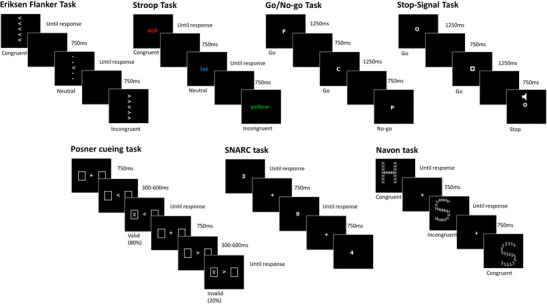
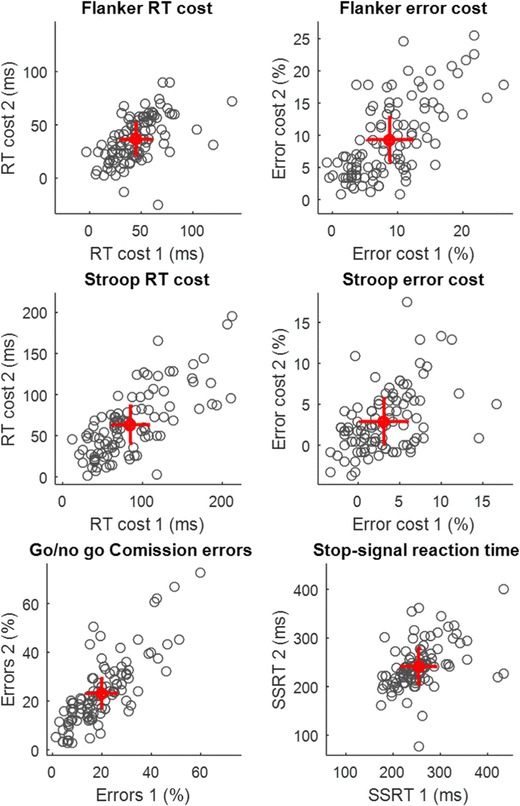
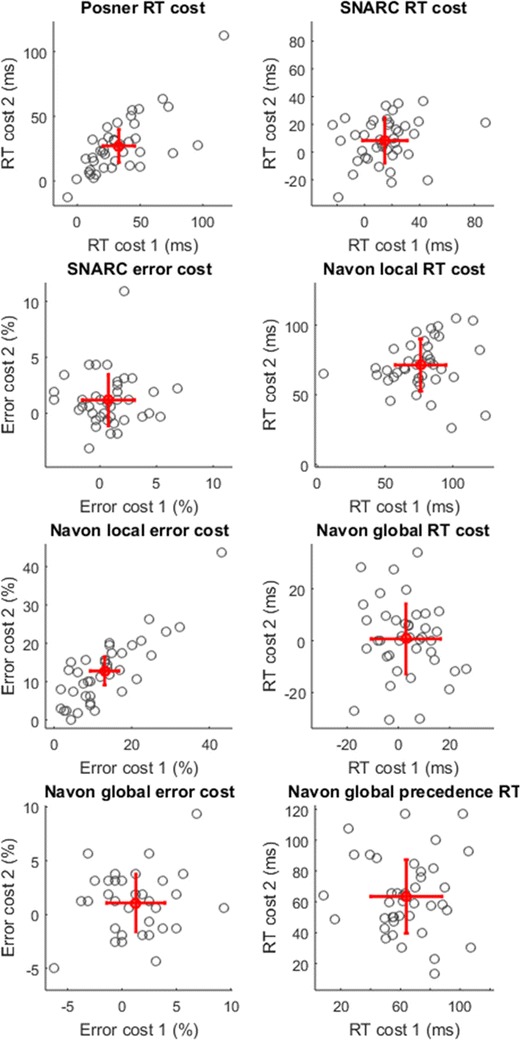
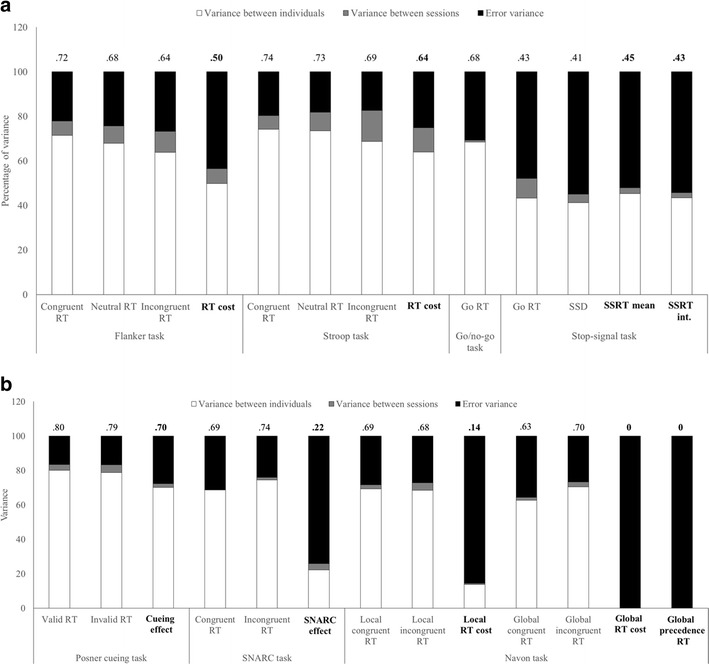
Individual differences in cognitive paradigms are increasingly employed to relate cognition to brain structure, chemistry, and function. However, such efforts are often unfruitful, even with the most well established tasks. Here we offer an explanation for failures in the application of robust cognitive paradigms to the study of individual differences. Experimental effects become well established - and thus those tasks become popular - when between-subject variability is low. However, low between-subject variability causes low reliability for individual differences, destroying replicable correlations with other factors and potentially undermining published conclusions drawn from correlational relationships. Though these statistical issues have a long history in psychology, they are widely overlooked in cognitive psychology and neuroscience today. In three studies, we assessed test-retest reliability of seven classic tasks: Eriksen Flanker, Stroop, stop-signal, go/no-go, Posner cueing, Navon, and Spatial-Numerical Association of Response Code (SNARC). Reliabilities ranged from 0 to .82, being surprisingly low for most tasks given their common use. As we predicted, this emerged from low variance between individuals rather than high measurement variance. In other words, the very reason such tasks produce robust and easily replicable experimental effects - low between-participant variability - makes their use as correlational tools problematic. We demonstrate that taking such reliability estimates into account has the potential to qualitatively change theoretical conclusions. The implications of our findings are that well-established approaches in experimental psychology and neuropsychology may not directly translate to the study of individual differences in brain structure, chemistry, and function, and alternative metrics may be required.
Overview
The claims and statistics of this paper haven’t been checked yet.
Free: it reads the open-access text and checks the first 5 claims that cite a source we can check. Create a free account to check every claim.
Integrity signals
Registry
Cites
Statistics
Figures
Verification
Claims the paper makes
The claims and statistics of this paper haven’t been checked yet.
Free: it reads the open-access text and checks the first 5 claims that cite a source we can check. Create a free account to check every claim.
Claims other papers make about this one
Each is checked against this paper’s own text: does it say what the citing paper says it does?
The source backs part of the claim, not all of it — or backs it for a different population, condition or comparison.
In the citing paper
“This contrast was used (cf. anticipation of social reward minus neutral outcomes) because reliability of difference scores is always lower than reliability of their individual parts,(53) which has been shown to diminish reliability of task-based fMRI(54) (see also(55)) and hinder mechanistic research.(56)”
From Amplification of Positivity Treatment for Anxiety and Depression: A Randomized Experimental Therapeutics Trial Targeting Social Reward Sensitivity to Enhance Social Connectedness (2024) · cites this paper as [53]
Experimental — accuracy not yet measuredThe source backs part of the claim, not all of it — or backs it for a different population, condition or comparison.
In the citing paper
“For the Stroop task, reliability was ρ congruent = .86, ρ incongruent = .82, and ρ interference = .78.”
From Problematic social media use and cognitive performance in young adults: Associations with selective attention and inhibitory control (2026) · cites this paper as Hedge, Powell, & Sumner, 2018
Experimental — accuracy not yet measuredThe cited source says what the claim attributes to it.
In the citing paper
“Further, it is often the case that cognitive tasks that produce robust effects in experimental settings are poorly suited for individual differences studies due to low between-participant reliability (Hedge et al. 2018).”
From Practicing Retrieval Facilitates Learning (2021) · cites this paper as Hedge et al. 2018
The check wasn’t confident either way, so it gives no verdict — never disputed.
In the citing paper
“For the Simon task, reliability was ρ_congruent = .84, ρ_incongruent = .81, and ρ_interference = .76.”
From Problematic social media use and cognitive performance in young adults: Associations with selective attention and inhibitory control (2026) · cites this paper as Hedge et al., 2018
Experimental — accuracy not yet measured
Self-check
Percentages, sums and reported differences re-computed from the paper’s own numbers.
The self-check needs the paper’s full text.
Citations
Cites
The Measurement of Observer Agreement for Categorical Data
Landis, J. R., & Koch, G. G. (1977) · Biometrics · doi:10.2307/2529310 · Cited by 81,148 · cited 4×
“Studies 1 and 2 None of the behavioral measures in Studies 1 and 2 (see Table 1) exceeded reliabilities of .8, typically considered excellent or of a clinically required standard (Cicchetti & Sparrow, 1981; Fleiss, 1981; Landis & Koch, 1977).”
BackgroundMethodResultInfluentialFaul, F., Erdfelder, E., Lang, A.-G., & Buchner, A. (2007) · Behavior Research Methods · doi:10.3758/bf03193146 · Cited by 65,971
Structural equation modeling in practice: A review and recommended two-step approach
Anderson, J. C., & Gerbing, D. W. (1988) · Psychological Bulletin · doi:10.1037/0033-2909.103.3.411 · Cited by 41,941
Statistical power analyses using G∗Power 3.1: tests for correlation and regression analyses
Faul, F., Erdfelder, E., Buchner, A., & Lang, A.-G. (2009) · Behavior Research Methods · doi:10.3758/brm.41.4.1149 · Cited by 37,615
Intraclass correlations: Uses in assessing rater reliability.
Shrout, P. E., & Fleiss, J. L. (1979) · Psychological Bulletin · doi:10.1037/0033-2909.86.2.420 · Cited by 24,532
Statistical Methods for Rates and Proportions
Fleiss, J. L., Levin, B., & Paik, M. C. (2003) · Wiley Series in Probability and Statistics · doi:10.1002/0471445428 · Cited by 18,646
Miyake, A., Friedman, N. P., Emerson, M. J., Witzki, A. H., Howerter, A., & Wager, T. D. (2000) · Cognitive Psychology · doi:10.1006/cogp.1999.0734 · Cited by 15,798
Review of Psychometric theory (2nd ed.).
SITGREAVES, R. (1979) · Contemporary Psychology: A Journal of Reviews · doi:10.1037/018882 · Cited by 11,425
Why Most Published Research Findings Are False
Ioannidis, J. P. A. (2005) · PLoS Medicine · doi:10.1371/journal.pmed.0020124 · Cited by 10,505
Posner, M. I. (1980) · Quarterly Journal of Experimental Psychology · doi:10.1080/00335558008248231 · Cited by 9,670 · cited 2×
“Study 3 Again, performance was comparable to previous reports in the literature (Navon, 1977; Posner, 1980; Rusconi et al., 2013).”
Research works printed but not linked: 7
- Crocker LM Algina J Introduction to Classicial and Modern Test Theory 1986 New York CBS College Publishing
- Hambleton RK Swaminathan H Rogers HJ Fundementals of Item Response Theory 1991 Newbury Park Sage
- Lynam DR Smith GT Whiteside SP Cyders MA The UPPS-P: Assessing give personality pathways to impulsive behavior (Technical Report) 2006 West Lafayette Purdue University
- Nunnally JC Psychometric theory 1978 2 New York. McGraw-Hill
- Peirce JW Introduction to Python and PsychoPy Perception 2013 42 2 3
- Rogosa D Gottman JM Myths and methods: "Myths about longitudinal research" plus supplemental questions The analysis of change 1995 Hillsdale Lawrence Ealbaum Associates pp. 3 65
- Zumbo BD Thompson B The simple difference score as an inherently poor measure of change: Some reality, much mythology Advances in Social Science Methodoloy 1999 Greenwich JAI Press pp. 269 304
Cited by
Items 501–600 of 1,003
Mash, L. E., Klein, R. M., & Townsend, J. (2018) · Journal of Autism and Developmental Disorders · doi:10.1007/s10803-018-3635-5 · Cited by 15
“Low between-subjects variability has been shown to dramatically reduce reliability coefficients in otherwise robust tasks (Hedge et al. 2017); this likely explains the very low reliabilities reported for the AttentionTrip executive control network in the current experiment.”
Giustolisi, B., & Emmorey, K. D. (2018) · Cognitive Science · doi:10.1111/cogs.12691 · Cited by 18
Do behavioral measures of self-control assess construct-level variance?
Dreves, P. A., Blackhart, G. C., & McBee, M. T. (2020) · Journal of Research in Personality · doi:10.1016/j.jrp.2020.104000 · Cited by 17
Haller, S. P., Chen, G., Kitt, E. R., Smith, A. R., Stoddard, J., Abend, R., Cárdenas, S. I., Revzina, O., Coppersmith, D. D. L., Leibenluft, E., et al. (2022) · Human Brain Mapping · doi:10.1002/hbm.25723 · Cited by 12
“Hence, sub-optimal levels of reliability may, for some tasks, derive from design features that aim to maximize group-level activation (thereby implicitly minimizing individual differences; Hedge et al., 2018; Lissek, Pine, & Grillon, 2006).”
BackgroundPu, L., Kiselev, S. Y., & Xiao, N. (2025) · Frontiers in Psychology · doi:10.3389/fpsyg.2025.1666719 · Cited by 22
The reliability of the serial reaction time task: meta-analysis of test–retest correlations
Oliveira, C. M., Hayiou‐Thomas, M. E., & Henderson, L. M. (2023) · Royal Society Open Science · doi:10.1098/rsos.221542 · Cited by 20
Lee, S. H., & Pitt, M. A. (2024) · Behavior Research Methods · doi:10.3758/s13428-023-02327-7 · Cited by 20
“Low variability is a major obstacle to reliability because the reliability of a measure becomes zero if there is no variation across participants (Hedge et al., 2018).”
BackgroundMethodResultInfluentialMind over mood: exploring the executive function’s role in downregulation
Rodas, J. A., León-Rojas, J. E., & Rooney, B. (2024) · Frontiers in Psychology · doi:10.3389/fpsyg.2024.1322055 · Cited by 24
Reliability of task-based fMRI in the dorsal horn of the human spinal cord
Dabbagh, A., Horn, U., Kaptan, M., Mildner, T., Müller, R., Lepsien, J., Weiskopf, N., Brooks, J. C. W., Finsterbusch, J., & Eippert, F. (2024) · Imaging Neuroscience · doi:10.1162/imag_a_00273 · Cited by 21
“However, traditional univariate analyses of BOLD responses via the GLM— as also employed here— are designed to minimize between-participant variability in order to gain a robust group-level response ( Fr ö hner et al., 2019; Hedge et al., 2018).”
BackgroundMethodAn integrative framework of conflict and control
Becker, D., Bijleveld, E., Braem, S., Fröber, K., Götz, F. J., Kleiman, T., Körner, A., Pfister, R., Reiter, A. M. F., Saunders, B., et al. (2024) · Trends in Cognitive Sciences · doi:10.1016/j.tics.2024.07.002 · Cited by 28
Blair, J. (2024) · Aggression and Violent Behavior · doi:10.1016/j.avb.2024.102007 · Cited by 14
Vrizzi, S., Najar, A., Lemogne, C., Palminteri, S., & Lebreton, M. P. (2025) · Nature Mental Health · doi:10.1038/s44220-025-00427-1 · Cited by 25
“These first results seem to suggest that RL tasks are no exception to the reliability paradox 16 (see Supplementary Information for similar analyses performed at the sessions level).”
InfluentialPsychometric properties of a color-shape version of the switch task
Sicard, V., Moore, R. D., Simard, A., Lavoie, G., & Ellemberg, D. (2020) · Applied Neuropsychology Adult · doi:10.1080/23279095.2020.1842410 · Cited by 18
Hall, N. T., Schreiber, A., Allen, T. A., & Hallquist, M. N. (2021) · Journal of Personality · doi:10.1111/jopy.12628 · Cited by 16
“Importantly, experimental paradigms used to interrogate cognitive processing have been criticized for poor reliability and inconsistent alignment with traditional self-report measures and external criteria (Hedge et al., 2018; Sharma et al., 2014).”
BackgroundGignac, G. E., & Wong, K. K. (2018) · Assessment · doi:10.1177/1073191118789260 · Cited by 17
Visual search for complex objects: Set-size effects for faces, words and cars
Hemström, J., Albonico, A., Djouab, S., & Barton, J. J. S. (2019) · Vision Research · doi:10.1016/j.visres.2019.06.007 · Cited by 13
Internal consistency and test–retest reliability of an affective task-switching paradigm.
Eckart, C., Kraft, D., & Fiebach, C. J. (2021) · Emotion · doi:10.1037/emo0000972 · Cited by 17
Demidenko, M. I., Weigard, A. S., Ganesan, K., Jang, H., Jahn, A., Huntley, E. D., & Keating, D. P. (2021) · Brain and Behavior · doi:10.1002/brb3.2093 · Cited by 19
“These findings are generally consistent with previously reported MID task- specific conceptual findings (Bjork et al., 2010; Oldham et al., 2018) and also have implications for task- general theoretical problems (Hedge et al., 2018; Price & Friston, 1997).”
ResultMachulska, A., Kleinke, K., & Klucken, T. (2022) · Behavior Research Methods · doi:10.3758/s13428-022-01804-9 · Cited by 18
“Even though some researchers have addressed this question systematically (Ataya et al., 2012; Brown et al., 2014; Hedge et al., 2018), most studies fail to report reliability estimates of cognitive bias tasks on a standard basis.”
BackgroundBrysbaert, M., Bakk, Z., Buchanan, E. M., Drieghe, D., Frey, A., Kim, E., Kuperman, V., Madan, C. R., Marelli, M., Mathôt, S., et al. (2020) · Behavior Research Methods · doi:10.3758/s13428-020-01497-y · Cited by 15
Stable individual differences in strategies within, but not between, visual search tasksPreprint
Clarke, A. D. F., Irons, J. L., James, W., Leber, A. B., & Hunt, A. R. (2018) · PsyArXiv (OSF Preprints) · doi:10.31234/osf.io/bqa5v · Cited by 20
Luck, S. J., Stewart, A. X., Simmons, A. M., & Rhemtulla, M. (2020) · PsyArXiv (OSF Preprints) · doi:10.31234/osf.io/dwm64 · Cited by 16
Stein, T., van Gaal, S., & Fahrenfort, J. J. (2024) · Consciousness and Cognition · doi:10.1016/j.concog.2024.103669 · Cited by 13
“Such low reliabilities for individual differences are common in tasks in cognitive psychology and neuroscience that produce robust within-subject effects but exhibit low between-subject variability (Hedge et al., 2018; Vadillo et al., 2022).”
BackgroundContagion of Temporal Discounting Value Preferences in Neurotypical and Autistic Adults
Thomas, L., Lockwood, P. L., Garvert, M. M., & Balsters, J. H. (2021) · Journal of Autism and Developmental Disorders · doi:10.1007/s10803-021-04962-5 · Cited by 17
“First, studies exploring a range of behavioural measures have shown that it is difficult to link individual differences in questionnaires with task data due to differences in variability (Frey et al., 2017; Hedge et al., 2017; Palminteri & Chevallier, 2018; Pedroni et al., 2017).”
BackgroundInconsistent flanker congruency effects across stimulus types and age groups: A cautionary tale
Simmering, V. R., Andrews, C. M., Leuenberger, R. E., & Kovack‐Lesh, K. A. (2022) · Behavior Research Methods · doi:10.3758/s13428-022-01889-2 · Cited by 13
“Most studies using the flanker task analyze congruency effects, in which responses are slower and more error-prone for incongruent flankers than congruent or no/neutral flankers, as indexes of selective attention (e.g., B. A. Eriksen & Eriksen, 1974; Hedge et al., 2018; Mullane et al., 2009).”
BackgroundAxt, J. R., Buttrick, N. R., & Feng, R. Y. (2023) · Personality and Social Psychology Bulletin · doi:10.1177/01461672221150229 · Cited by 17
“For example, past work on the “reliability paradox” (Hedge et al., 2018) finds that measures that maximize an overall, mean-level effect across an entire sample can flatten between-subject variability, thereby suppressing associations with outcome measures.”
BackgroundZhang, H., Miyake, A., Osborne, J. B., Shah, P., & Jonides, J. (2023) · PLoS ONE · doi:10.1371/journal.pone.0292215 · Cited by 18
Demidenko, M. I., Mumford, J. A., & Poldrack, R. A. (2024) · Imaging Neuroscience · doi:10.1162/imag_a_00262 · Cited by 18
“Some have argued that the low between-subject variability may be a reason for low reliability of behavioral responses in experimental tasks that are commonly used in fMRI ( Hedge et al., 2018).”
BackgroundInfluentialCooper, S. E., Perkins, E. R., Webler, R. D., Dunsmoor, J. E., & Krueger, R. F. (2024) · Journal of Psychopathology and Clinical Science · doi:10.1037/abn0000945 · Cited by 17
Precise individual measures of inhibitory control
Lee, H. J., Smith, D. M., Hauenstein, C. E., Dworetsky, A., Kraus, B. T., Dorn, M., Nee, D. E., & Gratton, C. (2025) · Nature Human Behaviour · doi:10.1038/s41562-025-02198-2 · Cited by 29
“…and Steyvers 49 , collected online through Lumosity, consisting of 495 participants in a flanker task with 491–5,939 trials per participant, and (2) a dataset by Hedge et al. 32 , collected in-person, consisting of 112 participants in the flanker and Stroop tasks with 1,440 trials per participant.”
InfluentialSleep disturbance and physiological regulation among young adults with prior depression
Hamilton, J. L., Stange, J. P., Burke, T. A., Franzen, P. L., & Alloy, L. B. (2019) · Journal of Psychiatric Research · doi:10.1016/j.jpsychires.2019.05.016 · Cited by 14
“However, it is possible that our stress task did not map onto RSA fluctuations during more naturalistic events or stressors (Hedge et al., 2018).”
BackgroundMeasurement practices in hallucinations research
Smailes, D., Alderson‐Day, B., Hazell, C. M., Wright, A. C., & Moseley, P. (2021) · Cognitive Neuropsychiatry · doi:10.1080/13546805.2021.1999224 · Cited by 14
“For example, analyses of the reliability of measurements obtained by tasks employed in anxiety research (e.g. Kappenman et al., 2014) and in inhibition research (e.g. Hedge et al., 2018) suggest that they may have unacceptably low levels of reliability.”
MethodChaku, N., Hoyt, L. T., & Barry, K. R. (2021) · Cognitive Development · doi:10.1016/j.cogdev.2021.101119 · Cited by 16
Reliability of subsequent memory effects in children and adults: The good, the bad, and the hopeful
Tang, L., Yu, Q., Homayouni, R., Canada, K. L., Yin, Q., Damoiseaux, J. S., & Ofen, N. (2021) · Developmental Cognitive Neuroscience · doi:10.1016/j.dcn.2021.101037 · Cited by 10
“reliability in the behavioral data of our developmental samples is in line with other studies on young adults and adolescence investigating the reliability for behavior measures in and out of the scanner (Hedge et al., 2018; Van Den Bulk et al., 2013), and provides the foundation to assess the reliability of fMRI meas…”
ResultReliability and validity for perceptual flexibility in speech
Heffner, C. C., Fuhrmeister, P., Luthra, S., Mechtenberg, H., Saltzman, D., & Myers, E. B. (2022) · Brain and Language · doi:10.1016/j.bandl.2021.105070 · Cited by 15
Littman, R., Hochman, S., & Kalanthroff, E. (2023) · Behavior Research Methods · doi:10.3758/s13428-023-02131-3 · Cited by 16
“The “reliability paradox” (Hedge et al., 2018) refers to the phenomenon according to which behavioral tasks that produce highly replicable group-level effects often fail to capture individual differences between participants in the same task, for example, by yielding low test–retest reliability…”
InfluentialImpairment of manual but not saccadic response inhibition following acute alcohol intoxication
Campbell, A. E., Chambers, C., Allen, C. P. G., Hedge, C., & Sumner, P. (2017) · Drug and Alcohol Dependence · doi:10.1016/j.drugalcdep.2017.08.022 · Cited by 16
“This is particularly important for the stop-signal task given its relatively low test-retest reliability in healthy individuals (Kuntsi et al., 2001; Weafer et al., 2013; Wöstmann et al., 2013; Hedge et al., 2017) i.”
BackgroundSelf-citationSaccadic scanpath length: an index for human threat conditioning
Xia, Y., Melinščak, F., & Bach, D. R. (2020) · Behavior Research Methods · doi:10.3758/s13428-020-01490-5 · Cited by 17
Data-driven experimental design and model development using Gaussian process with active learning
Chang, J., Kim, J., Zhang, B., Pitt, M. A., & Myung, J. I. (2021) · Cognitive Psychology · doi:10.1016/j.cogpsych.2020.101360 · Cited by 16
“1), however, can fail to achieve this as they may not adequately and optimally sample the design space (e.g., Hedge, Powell, & Sumner, 2018).”
BackgroundMay I have your attention, please? Methodological and analytical flexibility in the addiction stroop
Jones, A., Worrall, S., Rudin, L., Duckworth, J. J., & Christiansen, P. (2021) · Addiction Research & Theory · doi:10.1080/16066359.2021.1876847 · Cited by 13
“In a comprehensive analysis Hedge et al. (2018) demonstrated that many cognitive tasks including the standard Stroop offer poor reliability, below what is acceptable for research into individual differences.”
BackgroundBlair, J., Bashford‐Largo, J., Zhang, R., Mathur, A., Schwartz, A., Elowsky, J., Tyler, P. M., Hammond, C. J., Filbey, F. M., Dobbertin, M. D., et al. (2021) · Frontiers in Psychiatry · doi:10.3389/fpsyt.2021.714189 · Cited by 14
Kwon, M., Lee, S. H., & Ahn, W. (2022) · Biological Psychiatry Cognitive Neuroscience and Neuroimaging · doi:10.1016/j.bpsc.2022.12.003 · Cited by 16
Lee, D., Kwak, S., & Chey, J. (2019) · Frontiers in Human Neuroscience · doi:10.3389/fnhum.2019.00246 · Cited by 18
Reliability of Decision-Making and Reinforcement Learning Computational ParametersPreprint
Mkrtchian, A., Valton, V., & Roiser, J. P. (2021) · bioRxiv (Cold Spring Harbor Laboratory) · doi:10.1101/2021.06.30.450026 · Cited by 12
Poulton, A., Chen, L. P. E., Dali, G., Fox, M., & Hester, R. (2022) · Journal of Medical Internet Research · doi:10.2196/32922 · Cited by 11
“Nonetheless, exclusion rates were consistent with those cited in other (laboratory-based) SST studies (4%-17%) [17,43,58].”
ResultThe impact of different time limits and test versions on reliability in South Africa
Arendse, D. E. (2020) · African Journal of Psychological Assessment · doi:10.4102/ajopa.v2i0.14 · Cited by 11
Bignardi, G., Mareva, S., & Astle, D. E. (2023) · Developmental Science · doi:10.1111/desc.13451 · Cited by 17
Huensch, A. (2024) · Studies in Second Language Acquisition · doi:10.1017/s0272263124000238 · Cited by 12
“This reduced reliability also results in reduced power for analysis, meaning that the sample sizes needed to detect relationships should likely be two to three times larger than those calculated without taking task reliability into account (Hedge et al., 2018).”
National Security Surveillance in Southern Africa: An Anti-Capitalist Perspective
Jordaan, E. (2024) · Scientia Militaria South African Journal of Military Studies · doi:10.5787/52-1-1452 · Cited by 11
A common factor underlying individual differences in confirmation bias
Berthet, V., Teovanović, P., & de Gardelle, V. (2024) · Scientific Reports · doi:10.1038/s41598-024-78053-7 · Cited by 21
“This finding is noteworthy knowing that the original tasks were designed to produce robust experimental effects, which do not necessarily translate to reliable measures of individual differences, a phenomenon described by Hedge et al 56 . as the “reliability paradox”.”
Reliability and validity of a temporal distancing emotion regulation task in adolescence.
Suksasilp, C., The SCALES Team, Griffiths, S., Sebastian, C. L., & Norbury, C. (2021) · Emotion · doi:10.1037/emo0000744 · Cited by 13
“Note that although poor reliability leads to inconsistency in ranking individuals within a group, which is problematic for correlation, it does not mean that between-group differences, such as the age group difference identified in this study, cannot be detected (Hedge et al., 2018).”
BackgroundTesting the attention-distractibility trait
Meier, M. E. (2021) · Memory & Cognition · doi:10.3758/s13421-021-01162-5 · Cited by 16
Sinagra, C., & Wiener, S. (2022) · Cognitive Research Principles and Implications · doi:10.1186/s41235-022-00439-w · Cited by 17
Is cortical inhibition in primary motor cortex related to executive control?
Loomes, M., Tran, D. M. D., Chowdhury, N. S., Birney, D. P., Harris, J. A., & Livesey, E. J. (2023) · Cortex · doi:10.1016/j.cortex.2022.12.013 · Cited by 13
Warning signals only support the first action in a sequence
Dietze, N., Recker, L., & Poth, C. H. (2023) · Cognitive Research Principles and Implications · doi:10.1186/s41235-023-00484-z · Cited by 13
“However, well-established experimental effects often suffer from a variance restriction between individuals when put into settings investigating individual differences (Hedge et al., 2018).”
BackgroundOliveira, C. M., Henderson, L. M., & Hayiou‐Thomas, M. E. (2023) · Cognitive Science · doi:10.1111/cogs.13310 · Cited by 15
Prein, J. C., Kalinke, S., Haun, D. B. M., & Bohn, M. (2023) · Behavior Research Methods · doi:10.3758/s13428-023-02159-5 · Cited by 9
“Dedicated measures of individual differences will help us to design meaningful interventions and progress in psychological theory building (Hedge et al., 2018).”
BackgroundAbado, E., Aue, T., & Okon‐Singer, H. (2023) · Frontiers in Psychology · doi:10.3389/fpsyg.2023.1232985 · Cited by 14
“Recent studies suggest inconsistent reliability and within-subject differences in popular cognitive tasks (Hedge et al., 2018; Parsons et al., 2019).”
BackgroundResultChanges in the Networks of Attention across the Lifespan: A Graphical Meta-Analysis
Klein, R. M., Good, S. R., & Christie, J. J. (2024) · Journal of Intelligence · doi:10.3390/jintelligence12020019 · Cited by 16
“The Attention-Trip has been shown to be engaging for children (Arora et al. 2021) and was recently made operational on a portable device, the iPad (Klein et al. 2018).”
BackgroundComparing self–other distinction across motor, cognitive and affective domains
Pronizius, E., Bukowski, H., & Lamm, C. (2024) · Royal Society Open Science · doi:10.1098/rsos.240662 · Cited by 14
“An alternative explanation of our results might be that the failure to find associations across tasks might still be of a methodological and not conceptual nature, relating to, first, how reliably these tasks can capture individual differences [102].”
BackgroundMethodResultCognitive Genomics: Recent Advances and Current Challenges
Fitzgerald, J. C., Morris, D. W., & Donohoe, G. J. (2020) · Current Psychiatry Reports · doi:10.1007/s11920-019-1125-x · Cited by 13
Wilbiks, J. M. P., & Beatteay, A. (2020) · Attention Perception & Psychophysics · doi:10.3758/s13414-020-02062-7 · Cited by 11
A reduction in the implicit sense of agency during adolescence compared to childhood and adulthood
Aytemür, A., & Levita, L. (2020) · Consciousness and Cognition · doi:10.1016/j.concog.2020.103060 · Cited by 16
Beyond vernacular: Measurement solutions to the lexical fallacy in disgust research
Armstrong, T., Dillion, D., Leong, D., & Hsu, K. J. (2021) · Journal of Anxiety Disorders · doi:10.1016/j.janxdis.2021.102408 · Cited by 14
The forced-response method: A new chronometric approach to measure conflict processing
Lee, T. G., Sellers, J., Jonides, J., & Zhang, H. (2024) · Behavior Research Methods · doi:10.3758/s13428-024-02516-y · Cited by 11
“However, there have been long-standing concerns about using free RT to index cognitive processes (Cronbach & Furby, 1970; Draheim et al., 2019; Edwards, 2001; Friedman & Miyake, 2004; Hedge et al., 2018, 2020; Miller & Ulrich, 2013).”
Executive function and the continued influence of misinformation: A latent-variable analysis
McIlhiney, P., Gignac, G. E., Ecker, U. K. H., Kennedy, B. L., & Weinborn, M. (2023) · PLoS ONE · doi:10.1371/journal.pone.0283951 · Cited by 17
Guitart‐Masip, M., Walsh, A. T., Dayan, P., & Olsson, A. (2023) · Scientific Reports · doi:10.1038/s41598-023-45179-z · Cited by 17
“Low test–retest reliability does not indicate that a task is not a replicable, valid, or a robust measure of a construct, but it does make it more difficult to detect relationships between task performance and individual differences 64 .”
Katahira, K., Oba, T., & Toyama, A. (2024) · Psychonomic Bulletin & Review · doi:10.3758/s13423-024-02490-8 · Cited by 16
Kadlec, J., Walsh, C. R., Sadé, U., Amir, A., Rissman, J., & Ramot, M. (2024) · Communications Psychology · doi:10.1038/s44271-024-00114-4 · Cited by 17
Fascists, Fabricators and Fantasists: Antisemitism in South Africa from 1948 to the Present
Plint, G. W. (2024) · Scientia Militaria South African Journal of Military Studies · doi:10.5787/52-1-1455 · Cited by 10
Robison, M. K., Miller, A. L., Wiemers, E. A., Ellis, D. M., Unsworth, N., Redick, T. S., & Brewer, G. A. (2024) · Journal of Experimental Psychology General · doi:10.1037/xge0001629 · Cited by 15
Reporting checklists in neuroimaging: promoting transparency, replicability, and reproducibility
Ekhtiari, H., Zare-Bidoky, M., Sangchooli, A., Valyan, A., Abi‐Dargham, A., Cannon, D. M., Carter, C. S., Garavan, H., George, T. P., Ghobadi‐Azbari, P., et al. (2024) · Neuropsychopharmacology · doi:10.1038/s41386-024-01973-5 · Cited by 15
States, traits, and the resting state EEG task aftereffect
Martin, T., Holliday, E., Okhio, C., Newman, A., LaTella, L., Mcginnis, M., Požar, R., Giordani, B., & Kavcic, V. (2025) · International Journal of Psychophysiology · doi:10.1016/j.ijpsycho.2025.112523 · Cited by 15
In Search of the Executive Cognitive Processes Proposed by Process-Overlap Theory
Frischkorn, G. T., & von Bastian, C. C. (2021) · Journal of Intelligence · doi:10.3390/jintelligence9030043 · Cited by 12
“Taken together, our results are in line with numerous previous studies demonstrating difficulties in isolating variance specific to executive processing, particularly in inhibition (Frischkorn et al. 2019; Hedge et al. 2018; Rey-Mermet et al. 2018, 2019; Stahl et al. 2014; von Bastian et al. 2016).”
Carlson, J. M., Fang, L., Coughtry-Carpenter, C., & Foley, J. (2023) · Frontiers in Psychology · doi:10.3389/fpsyg.2022.1021858 · Cited by 11
“91), but data quality quickly diminishes when calculating differences scores (Hedge et al., 2018).”
BackgroundDo we really measure what we think we are measuring?
Gordillo, D., da Cruz, J. N., Moreno, D., Garobbio, S., & Herzog, M. H. (2023) · iScience · doi:10.1016/j.isci.2023.106017 · Cited by 15
“In this case, one would not expect high correlations, the so-called reliability paradox.(36) However, variance, for example, was rather high in the older participants in our study.”
Zhang, Z., Yang, L., Vékony, T., Wang, C., & Li, H. (2023) · Behavior Research Methods · doi:10.3758/s13428-023-02104-6 · Cited by 14
“Second, low-reliability measurements reduce the statistical power to detect potential associations in individual difference studies (Hedge et al., 2018).”
Schubert, A., Löffler, C., Sadus, K., Göttmann, J., Hein, J., Schröer, P., Teuber, A., & Hagemann, D. (2023) · Cognition · doi:10.1016/j.cognition.2023.105438 · Cited by 13
Test–retest reliability of eye tracking measures in a computerized Trail Making Test
Recker, L., & Poth, C. H. (2023) · Journal of Vision · doi:10.1167/jov.23.8.15 · Cited by 14
“Because the range of the measure is restricted, the results cannot reliably differentiate between persons (Dietze, Recker, & Poth, 2023; Hedge et al., 2018).”
BackgroundZhang, X., Cheng, B., Zou, Y. F., Li, X., & Zhang, Y. (2023) · Journal of Phonetics · doi:10.1016/j.wocn.2023.101266 · Cited by 11
Blott, L. M., Gowenlock, A., Kievit, R., Nation, K., & Rodd, J. M. (2023) · Journal of Cognition · doi:10.5334/joc.317 · Cited by 10
The joy of being frightened: Fear experience in psychopathy
Hofmann, M. J., Mokros, A., & Schneider, S. (2023) · Journal of Personality · doi:10.1111/jopy.12890 · Cited by 9
Pupillary correlates of individual differences in n-back task performance
Robison, M. K., & Garner, L. D. (2024) · Attention Perception & Psychophysics · doi:10.3758/s13414-024-02853-2 · Cited by 10
“Difference scores tend to have low reliability when the two variables being subtracted from each other are highly correlated and each highly reliable (see Hedge et al., 2018).”
Age-related differential item functioning in tests of face and car recognition ability
Sunday, M. A., Lee, W., & Gauthier, L. (2018) · Journal of Vision · doi:10.1167/18.1.2 · Cited by 10
Braem, S., Deltomme, B., & Liefooghe, B. (2019) · Memory & Cognition · doi:10.3758/s13421-019-00951-3 · Cited by 14
Hasegawa, A., Somatori, K., Nishimura, H., Hattori, Y., & Kunisato, Y. (2019) · Journal of Experimental Psychopathology · doi:10.1177/2043808719861894 · Cited by 14
“This is a 59-item selfreport measure developed by Lynam et al. (2006) for Hasegawa et al.”
MethodKersting, N. B., Smith, J. E., & Vezino, B. (2021) · ZDM · doi:10.1007/s11858-020-01201-6 · Cited by 14
Patients with Ventromedial Prefrontal Lesions Show an Implicit Approach Bias to Angry Faces
Buades‐Rotger, M., Solbakk, A., Liebrand, M., Endestad, T., Funderud, I., Siegwardt, P., Enter, D., Roelofs, K., & Krämer, U. M. (2021) · Journal of Cognitive Neuroscience · doi:10.1162/jocn_a_01706 · Cited by 14
“Special caution should be exercised regarding the correlations: even though we 449 used bootstrapping to assess their robustness, the ability of the implicit AAT to track interindividual 450 differences is uncertain due to the lack of data on this instrument’s reliability (Hedge et al., 2018).”
MethodLooking at remembering: Eye movements, pupil size, and autobiographical memory
Janssen, S. M. J., Foo, A., Johnson, S. N., Lim, A., & Satel, J. (2021) · Consciousness and Cognition · doi:10.1016/j.concog.2021.103089 · Cited by 13
Reply to Friedman and Banich: Right measures for the research question
Enkavi, A. Z., Eisenberg, I. W., Bissett, P. G., Mazza, G. L., MacKinnon, D. P., Marsch, L. A., & Poldrack, R. A. (2019) · Proceedings of the National Academy of Sciences · doi:10.1073/pnas.1917123116 · Cited by 11
Rey-Mermet, A., Singmann, H., & Oberauer, K. (2021) · PsyArXiv (OSF Preprints) · doi:10.31234/osf.io/3h26y · Cited by 16
Precise Individual Measures of Inhibitory ControlPreprint
Lee, H. J., Smith, D. M., Hauenstein, C. E., Dworetsky, A., Kraus, B. T., Dorn, M., Nee, D. E., & Gratton, C. (2023) · doi:10.31234/osf.io/rj2bu · Cited by 10
Reliability of the empathy selection task, a novel behavioral measure of empathy avoidance
Ferguson, A. M., & Inzlicht, M. (2022) · Behavior Research Methods · doi:10.3758/s13428-022-01919-z · Cited by 17
“…individual difference studies examining correlations among tasks of inhibitory control (e.g., Stroop task and flanker task), which have demonstrated that most do not exceed .2 in value and some have no demonstrated correlation at all (Hall, 2012; Hedge et al., 2018; Rey-Mer-met et al., 2018).”
BackgroundMethodInfluentialSzücs, A., Edershile, E. A., Wright, A. G. C., & Dombrovski, A. Y. (2023) · Personality Disorders Theory Research and Treatment · doi:10.1037/per0000610 · Cited by 18
Willoughby, M. T., Camerota, M., King, K. M., Nduku, T., & Piper, B. (2023) · Frontiers in Psychology · doi:10.3389/fpsyg.2023.861441 · Cited by 40
“Although some have criticized a reliance on changes in RT within a task to index IC (Hedge et al., 2018; Draheim et al., 2019), this approach to scoring tasks is common.”
Reliability of gamified reinforcement learning in densely sampled longitudinal assessments
Neuser, M. P., Kühnel, A., Kräutlein, F., Teckentrup, V., Svaldi, J., & Kroemer, N. B. (2023) · PLOS Digital Health · doi:10.1371/journal.pdig.0000330 · Cited by 12
Liu, D., Tan, X., Yan, H., & Wei, L. (2024) · PLoS ONE · doi:10.1371/journal.pone.0297013 · Cited by 23
A systematic review of visual processing in body dysmorphic disorder (BDD)
Virgili, G., Neill, E., Enticott, P. G., Castle, D. J., & Rossell, S. L. (2024) · Psychiatry Research · doi:10.1016/j.psychres.2024.116013 · Cited by 14
Anvari, F., Billinger, S., Analytis, P. P., Franco, V. R., & Marchiori, D. (2024) · Nature Communications · doi:10.1038/s41467-024-51685-z · Cited by 15
“Dang et al. 98 and Hedge et al. 99 have argued that many tasks are designed to maximize within-person variance in behaviour at the cost of reducing between-personvariance — whichwouldreducethemeasures ’ abilityto capture individual differences and thus have convergent validity with other measures.”
A scoping review of research on individual differences in the testing effect paradigm
Smith-Peirce, R. N., & Butler, A. C. (2024) · Learning and Individual Differences · doi:10.1016/j.lindif.2024.102602 · Cited by 11
Metadata
- Authors
- Hedge, C., Powell, G., & Sumner, P.
- Affiliations
- Cardiff University (GB)
- Corresponding author
- Hedge, Craig
- Venue
- Behavior Research Methods
- Published
- 2017-07-19
- Volume
- 50
- Issue
- 3
- Pages
- 1166-1186
- ISSN
- 1554-351X (ISSN-L)
- 1554-3528
- PMC
- PMC5990556
- OpenAlex
- W2724821146
- Cited by
- 1,457
- References
- 150
- Citations by year
- 2026: 165 · 2025: 168 · 2024: 178 · 2023: 207 · 2022: 188 · 2021: 192 · 2020: 175 · 2019: 111 · 2018: 61 · 2017: 9
- FWCI
- 125.87
- Type
- journal article
- Language
- en
- Open access
- hybrid
- doi.org
- Locations
- Behavior Research Methods (publishedVersion, cc-by)
- Europe PMC (PubMed Central) (publishedVersion, other-oa)
- PubMed Central (publishedVersion, cc-by)
- PubMed (publishedVersion)
- ORCA Online Research @Cardiff (Cardiff University) (acceptedVersion)
- Aston Publications Explorer (Aston University) (submittedVersion, cc-by)
- OSF Preprints (OSF Preprints) (submittedVersion)
- Funders
- Wellcome Trust (104943/Z/14/Z)
- Economic and Social Research Council (ES/K002325/1)
- Topics
- Social Sciences › Psychology › Experimental and Cognitive Psychology › Cognitive Abilities and Testing
- Social Sciences › Decision Sciences › Management Science and Operations Research › Psychometric Methodologies and Testing
- Life Sciences › Neuroscience › Cognitive Neuroscience › Neural and Behavioral Psychology Studies
- Keywords
- individual differences, test-retest reliability, between-subject variability, measurement reliability, cognitive paradigm, flanker task, Stroop task, stop-signal task, go/no-go task, Navon task, SNARC effect, neuropsychology, brain structure and cognition
- MeSH terms
- Brain, Cognition, Cues, Female, Humans, Individuality, Male, Neuropsychology, Reaction Time, Task Performance and Analysis, Reproducibility of Results
About these checks
Registry, retraction, Cites and statistics results are computed, not judged, with one exception: a printed reference that no index lists is read once by a model before it counts as a citation error. Claims are extracted by a model and kept only when their quote appears verbatim in the text; each cited source is then checked, with a model’s help, for whether it says what the claim relies on. Those verdicts can be wrong — read the claim’s quote and the cited source before relying on one.
Statistics and arithmetic are recomputed, not judged.
Confidence bands are shown only for fields calibrated on our annotated test set. None is calibrated yet, so no band is shown.
What counts as a claim ›How we measure confidence ›How we check this ›
Are you an author, or do you see a problem with this page? Request a review
Data sources
Bibliographic data: Semantic Scholar, OpenAlex, Crossref.
Contains information from the Semantic Scholar Academic Graph Datasets, made available under the ODC Attribution License (ODC-BY 1.0).
Semantic Scholar’s data is described in: Kinney, R., et al. (2023). The Semantic Scholar Open Data Platform. arXiv:2301.10140.
