

The reliability paradox: Why robust cognitive tasks do not produce reliable individual differences
Open accessThe DOI matches its Crossref record; 146 of the 150 references it cites were found in a registry or an index.
Abstract
Individual differences in cognitive paradigms are increasingly employed to relate cognition to brain structure, chemistry, and function. However, such efforts are often unfruitful, even with the most well established tasks. Here we offer an explanation for failures in the application of robust cognitive paradigms to the study of individual differences. Experimental effects become well established - and thus those tasks become popular - when between-subject variability is low. However, low between-subject variability causes low reliability for individual differences, destroying replicable correlations with other factors and potentially undermining published conclusions drawn from correlational relationships. Though these statistical issues have a long history in psychology, they are widely overlooked in cognitive psychology and neuroscience today. In three studies, we assessed test-retest reliability of seven classic tasks: Eriksen Flanker, Stroop, stop-signal, go/no-go, Posner cueing, Navon, and Spatial-Numerical Association of Response Code (SNARC). Reliabilities ranged from 0 to .82, being surprisingly low for most tasks given their common use. As we predicted, this emerged from low variance between individuals rather than high measurement variance. In other words, the very reason such tasks produce robust and easily replicable experimental effects - low between-participant variability - makes their use as correlational tools problematic. We demonstrate that taking such reliability estimates into account has the potential to qualitatively change theoretical conclusions. The implications of our findings are that well-established approaches in experimental psychology and neuropsychology may not directly translate to the study of individual differences in brain structure, chemistry, and function, and alternative metrics may be required.
Overview
The claims and statistics of this paper haven’t been checked yet.
Free: it reads the open-access text and checks the first 5 claims that cite a source we can check. Create a free account to check every claim.
Integrity signals
Registry
Cites
Statistics
Figures
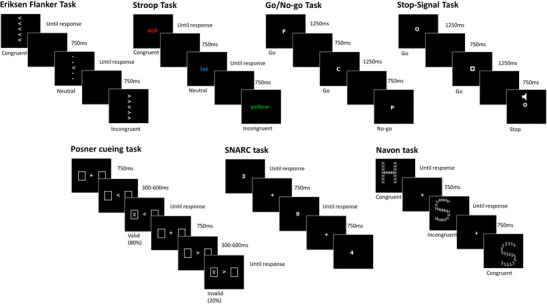
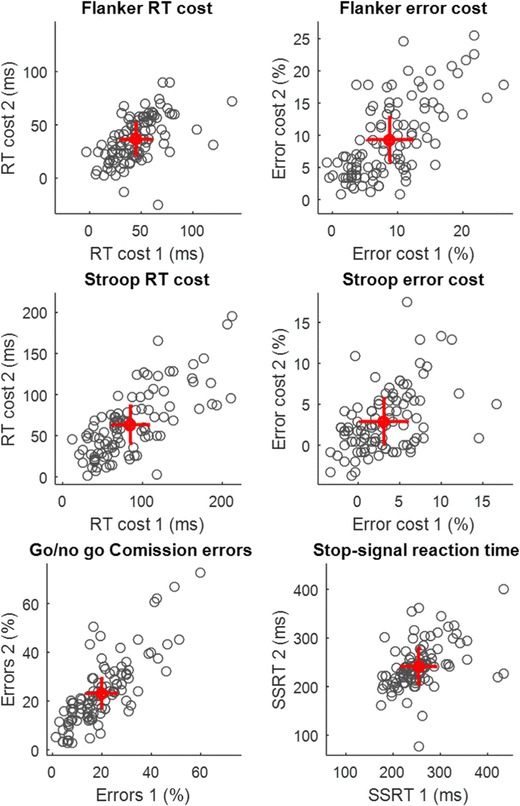
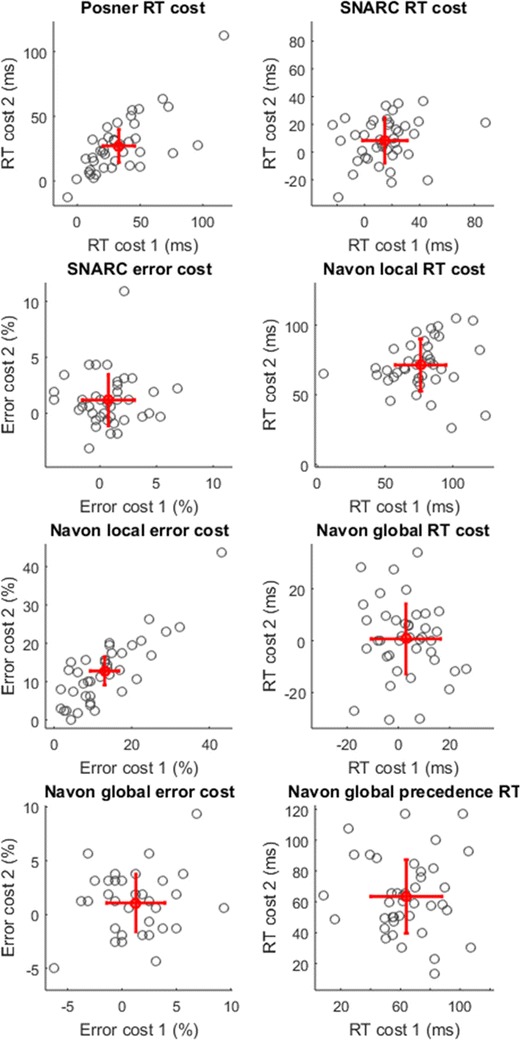
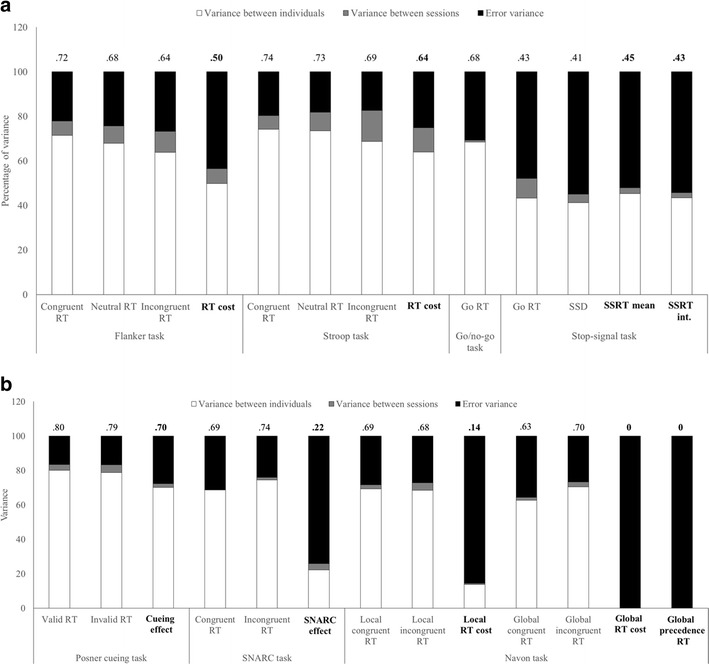
Verification
Claims the paper makes
The claims and statistics of this paper haven’t been checked yet.
Free: it reads the open-access text and checks the first 5 claims that cite a source we can check. Create a free account to check every claim.
Claims other papers make about this one
Each is checked against this paper’s own text: does it say what the citing paper says it does?
The source backs part of the claim, not all of it — or backs it for a different population, condition or comparison.
In the citing paper
“This contrast was used (cf. anticipation of social reward minus neutral outcomes) because reliability of difference scores is always lower than reliability of their individual parts,(53) which has been shown to diminish reliability of task-based fMRI(54) (see also(55)) and hinder mechanistic research.(56)”
From Amplification of Positivity Treatment for Anxiety and Depression: A Randomized Experimental Therapeutics Trial Targeting Social Reward Sensitivity to Enhance Social Connectedness (2024) · cites this paper as [53]
Experimental — accuracy not yet measuredThe source backs part of the claim, not all of it — or backs it for a different population, condition or comparison.
In the citing paper
“For the Stroop task, reliability was ρ congruent = .86, ρ incongruent = .82, and ρ interference = .78.”
From Problematic social media use and cognitive performance in young adults: Associations with selective attention and inhibitory control (2026) · cites this paper as Hedge, Powell, & Sumner, 2018
Experimental — accuracy not yet measuredThe cited source says what the claim attributes to it.
In the citing paper
“Further, it is often the case that cognitive tasks that produce robust effects in experimental settings are poorly suited for individual differences studies due to low between-participant reliability (Hedge et al. 2018).”
From Practicing Retrieval Facilitates Learning (2021) · cites this paper as Hedge et al. 2018
The check wasn’t confident either way, so it gives no verdict — never disputed.
In the citing paper
“For the Simon task, reliability was ρ_congruent = .84, ρ_incongruent = .81, and ρ_interference = .76.”
From Problematic social media use and cognitive performance in young adults: Associations with selective attention and inhibitory control (2026) · cites this paper as Hedge et al., 2018
Experimental — accuracy not yet measured
Self-check
Percentages, sums and reported differences re-computed from the paper’s own numbers.
The self-check needs the paper’s full text.
Citations
Cites
The Measurement of Observer Agreement for Categorical Data
Landis, J. R., & Koch, G. G. (1977) · Biometrics · doi:10.2307/2529310 · Cited by 81,148 · cited 4×
“Studies 1 and 2 None of the behavioral measures in Studies 1 and 2 (see Table 1) exceeded reliabilities of .8, typically considered excellent or of a clinically required standard (Cicchetti & Sparrow, 1981; Fleiss, 1981; Landis & Koch, 1977).”
BackgroundMethodResultInfluentialFaul, F., Erdfelder, E., Lang, A.-G., & Buchner, A. (2007) · Behavior Research Methods · doi:10.3758/bf03193146 · Cited by 65,971
Structural equation modeling in practice: A review and recommended two-step approach
Anderson, J. C., & Gerbing, D. W. (1988) · Psychological Bulletin · doi:10.1037/0033-2909.103.3.411 · Cited by 41,941
Statistical power analyses using G∗Power 3.1: tests for correlation and regression analyses
Faul, F., Erdfelder, E., Buchner, A., & Lang, A.-G. (2009) · Behavior Research Methods · doi:10.3758/brm.41.4.1149 · Cited by 37,615
Intraclass correlations: Uses in assessing rater reliability.
Shrout, P. E., & Fleiss, J. L. (1979) · Psychological Bulletin · doi:10.1037/0033-2909.86.2.420 · Cited by 24,532
Statistical Methods for Rates and Proportions
Fleiss, J. L., Levin, B., & Paik, M. C. (2003) · Wiley Series in Probability and Statistics · doi:10.1002/0471445428 · Cited by 18,646
Miyake, A., Friedman, N. P., Emerson, M. J., Witzki, A. H., Howerter, A., & Wager, T. D. (2000) · Cognitive Psychology · doi:10.1006/cogp.1999.0734 · Cited by 15,798
Review of Psychometric theory (2nd ed.).
SITGREAVES, R. (1979) · Contemporary Psychology: A Journal of Reviews · doi:10.1037/018882 · Cited by 11,425
Why Most Published Research Findings Are False
Ioannidis, J. P. A. (2005) · PLoS Medicine · doi:10.1371/journal.pmed.0020124 · Cited by 10,505
Posner, M. I. (1980) · Quarterly Journal of Experimental Psychology · doi:10.1080/00335558008248231 · Cited by 9,670 · cited 2×
“Study 3 Again, performance was comparable to previous reports in the literature (Navon, 1977; Posner, 1980; Rusconi et al., 2013).”
Research works printed but not linked: 7
- Crocker LM Algina J Introduction to Classicial and Modern Test Theory 1986 New York CBS College Publishing
- Hambleton RK Swaminathan H Rogers HJ Fundementals of Item Response Theory 1991 Newbury Park Sage
- Lynam DR Smith GT Whiteside SP Cyders MA The UPPS-P: Assessing give personality pathways to impulsive behavior (Technical Report) 2006 West Lafayette Purdue University
- Nunnally JC Psychometric theory 1978 2 New York. McGraw-Hill
- Peirce JW Introduction to Python and PsychoPy Perception 2013 42 2 3
- Rogosa D Gottman JM Myths and methods: "Myths about longitudinal research" plus supplemental questions The analysis of change 1995 Hillsdale Lawrence Ealbaum Associates pp. 3 65
- Zumbo BD Thompson B The simple difference score as an inherently poor measure of change: Some reality, much mythology Advances in Social Science Methodoloy 1999 Greenwich JAI Press pp. 269 304
Cited by
Items 801–900 of 1,003
Low-sound-level auditory processing in noise-exposed adults
Perugia, E., Plack, C. J., & Stone, M. A. (2021) · Hearing Research · doi:10.1016/j.heares.2021.108309 · Cited by 5
Influence of memory processes on choice-consistency
Nitsch, F. J., & Kalenscher, T. (2021) · Royal Society Open Science · doi:10.1098/rsos.200308 · Cited by 5
How to enhance military research using mathematical psychology
Biggs, A. T. (2021) · Journal of Mathematical Psychology · doi:10.1016/j.jmp.2021.102619 · Cited by 6
Are there associations between daily multitasking experience and multitasking performance?
Lui, K. F. H., Fan, P., Yip, K. H., Wong, Y. K., & Wong, A. C. ‐. (2022) · Quarterly Journal of Experimental Psychology · doi:10.1177/17470218221087959 · Cited by 7
“…to minimise the variations (e.g., practice effects, fatigue effects, and carryover effects) caused by different task sequences across participants and hence minimise the noises from the between-subject variance (Hedge et al., 2018; Hildebrandt et al., 2012; Lui & Wong, 2020; Wilhelm et al., 2010).”
BackgroundSegura, I. A., Panjeh, S., Cogo‐Moreira, H., Nouri, A., Miranda, M. C., esmaeili, F., Seyedi, H., & Pompéia, S. (2022) · Current Psychology · doi:10.1007/s12144-022-03974-3 · Cited by 5
“However, EF tasks have low test-retest reliability, which would be an advantage (Hedge et al., 2018) of conducting cross-sectional studies such as ours.”
BackgroundRapid, reliable mobile assessment of affect-related motor processing
Howlett, J. R., Larkin, F., Touthang, J., Kuplicki, R., Lim, K. O., & Paulus, M. P. (2022) · Behavior Research Methods · doi:10.3758/s13428-022-02015-y · Cited by 5
“Traditional cognitive tasks are often designed to maximize the robustness of task effects at the group level, which may detract from the reliability of individual measurements (Hedge et al., 2018).”
BackgroundA dual-task approach to inform the taxonomy of inhibition-related processes.
Bissett, P. G., Jones, H. M., Hagen, M. P., Bui, T. T., Li, J. K., Rios, J. A. H., Mumford, J. A., Shine, J. M., & Poldrack, R. A. (2023) · Journal of Experimental Psychology Human Perception & Performance · doi:10.1037/xhp0001073 · Cited by 13
Behavioural Factors for Users of Bicycles as a Transport Alternative: A Case Study
Bermúdez-Hernández, J., Cardona-Acevedo, S., Valencia-Arías, A., Palacios-Moya, L., & Lescano, N. D. (2022) · Sustainability · doi:10.3390/su142416815 · Cited by 6
Inhibitory mechanisms are affected by stimulus-response congruency
Currò, T., Candidi, M., & Calvo‐Merino, B. (2023) · Current Research in Behavioral Sciences · doi:10.1016/j.crbeha.2023.100108 · Cited by 5
Drown, L., Giovannone, N., Pisoni, D. B., & Theodore, R. M. (2023) · Linguistics Vanguard · doi:10.1515/lingvan-2022-0116 · Cited by 5
The reliability of language-switch costs in bilingual one- and two-digit number naming
Contreras-Saavedra, C. E., Koch, I., Schuch, S., & Philipp, A. M. (2020) · International Journal of Bilingualism · doi:10.1177/1367006920951873 · Cited by 7
Investigating the effects of pain observation on approach and withdrawal actions
Galang, C. M., Pichtikova, M., Sanders, T., & Obhi, S. S. (2021) · Experimental Brain Research · doi:10.1007/s00221-020-05990-w · Cited by 5
Hashemi, M. M., Zhang, W., Kaldewaij, R., Koch, S. B. J., Jonker, R., Figner, B., Klumpers, F., & Karin Roelofs, A. (2019) · bioRxiv (Cold Spring Harbor Laboratory) · doi:10.1101/554840 · Cited by 5
Bronstein, M. V., Pennycook, G., Bear, A., Rand, D. G., & Cannon, T. D. (2018) · SSRN Electronic Journal · doi:10.2139/ssrn.3172140 · Cited by 4
Williams, D. R., Martin, S. R., DeBolt, M. C., Oakes, L. M., & Rast, P. (2020) · PsyArXiv (OSF Preprints) · doi:10.31234/osf.io/2ux7t · Cited by 6
Hsu, S., Poldrack, R. A., Ram, N., & Wagner, A. D. (2022) · PsyArXiv (OSF Preprints) · doi:10.31234/osf.io/zq37h · Cited by 6
Röseler, L., Bögler, H. L., Koßmann, L., Krueger, S., Bickenbach, S., Bühler, R., della Guardia, J., Köppel, L.-M., Ponader, S., Roßmaier, K., et al. (2022) · PsyArXiv (OSF Preprints) · doi:10.31234/osf.io/bgp3m · Cited by 10
Kopčanová, M., Ince, R. A. A., & Benwell, C. (2023) · bioRxiv (Cold Spring Harbor Laboratory) · doi:10.1101/2023.04.21.537831 · Cited by 6
“6 increasing concerns have been raised about their reliability and potential to capture trait-like characteristics (Brown et al., 2020; Hedge et al., 2018; Shahar et al., 2019).”
BackgroundLöffler, C., Sadus, K., Frischkorn, G. T., Hagemann, D., & Schubert, A. (2024) · PsyArXiv (OSF Preprints) · doi:10.31234/osf.io/kfqt4 · Cited by 7
Group level and individual differences in second language sentence processing
Cunnings, I. (2025) · Linguistic Approaches to Bilingualism · doi:10.1075/lab.24093.cun · Cited by 4
Beyond classical metrics: Generalizability theory across psychophysiological modalities
Rocha, H. A., Holbrook, A., Hajcak, G., Keil, A., Rast, P., Thayer, J. F., Verona, E., Vispoel, W. P., & Clayson, P. E. (2026) · International Journal of Psychophysiology · doi:10.1016/j.ijpsycho.2026.113321 · Cited by 4
“…paradigms were designed to yield robust within-person experimental effects (Clayson, 2025); as a result, tasks can produce robust experimental effects while yielding low between-person variance and ultimately poor reliability, a pattern termed the “reliability paradox” (Hedge et al., 2018).”
Robison, M. K., Campbell, S., Garner, L. D., Sibley, C. M., & Coyne, J. T. (2026) · Behavior Research Methods · doi:10.3758/s13428-025-02897-8 · Cited by 9
“…psychometric coherence and theoretical utility of attention control as a cognitive construct (Draheim et al., 2019, 2021, 2024; Enkavi et al., 2019; Hedge et al., 2018; Löffler et al., 2024; Mashburn et al., 2024; Rey-Mermet et al., 2018, 2019; Rey-Mermet, 2024; Robison et al., 2024a, 2024b;…”
Chmiel, J., & Kurpas, D. (2026) · Journal of Clinical Medicine · doi:10.3390/jcm15031306 · Cited by 4
Campo, C., Cellucci, F., Treggiari, G., Spedicato, G. A., Lasaponara, S., & Conversi, D. (2026) · Frontiers in Psychology · doi:10.3389/fpsyg.2026.1755043 · Cited by 5
“One participant did not perform the task due to color blindness, while three participants were excluded from the analyses because their accuracy was below 60% in at least one condition (Hedge et al., 2018).”
Probing the association between resting-state brain network dynamics and psychological resilience
Kraft, D., & Fiebach, C. J. (2022) · Network Neuroscience · doi:10.1162/netn_a_00216 · Cited by 4
Explanatory personality science in the neuroimaging era: the map is not the territory
Allen, T. A., Hall, N. T., Schreiber, A., & Hallquist, M. N. (2021) · Current Opinion in Behavioral Sciences · doi:10.1016/j.cobeha.2021.11.009 · Cited by 5
“Consequently, many common fMRI paradigms show poor test-retest reliability (a phenomenon known as “the reliability paradox”), which limits their utility for capturing stable individual differences [35,36].”
BackgroundWorking Memory and L2 Sentence Processing
Cunnings, I. (2022) · Cambridge University Press eBooks · doi:10.1017/9781108955638.033 · Cited by 12
Associations between attentional biases for emotional images and rumination in depression
Quigley, L., Russell, K., Yung, C., Dobson, K. S., & Sears, C. R. (2024) · Cognition & Emotion · doi:10.1080/02699931.2024.2434158 · Cited by 5
“Existing paradigms may be further modified to yield indices of disengagement based on accuracy, to overcome the reliability problems of response time-based indices (Hedge et al., 2018; McNally, 2019; Rodebaugh et al., 2016; Waechter & Stolz, 2015; Waechter et al., 2014).”
Age- and sex-related differences in social competence and emotion labeling in pre-adolescence
Buimer, E. E. L., Pas, P., van den Boomen, C., Raemaekers, M. A. H., Brouwer, R. M., & Pol, H. E. H. (2024) · Developmental Cognitive Neuroscience · doi:10.1016/j.dcn.2024.101503 · Cited by 8
Eaves, J., Gilmore, C. K., Hochman, S., & Cragg, L. (2025) · Cognition · doi:10.1016/j.cognition.2024.106054 · Cited by 6
Bellaert, N., Castagna, P. J., Deveney, C. M., Crowley, M. J., & Tseng, W. (2025) · Depression and Anxiety · doi:10.1155/da/1618163 · Cited by 6
Moorkens, J., van Dijck, J., & Fias, W. (2025) · Journal of Numerical Cognition · doi:10.5964/jnc.15051 · Cited by 7
The role of executive function in the processing and acquisition of syntax
Thothathiri, M., Kidd, E., & Rowland, C. F. (2025) · Royal Society Open Science · doi:10.1098/rsos.201497 · Cited by 7
“One is the tension between experimental paradigms, which seek to reduce between-participant variance and consign it to measurement error, and the goal of individual differences research, which aims to maximize between-participant variability in order to rank individuals [48].”
Brezóczki, B., Farkas, B. C., Hann, F., Pesthy, O., Tóth-Fáber, E., Farkas, K., Csigó, K., Németh, D., & Vékony, T. (2025) · BMC Psychiatry · doi:10.1186/s12888-025-06786-4 · Cited by 3
“Moreover, to more effectively identify individual differences and address reliability concerns associated with cross-sectional designs, the implementation of longitudinal designs is necessary [73, 74].”
Markovitch, B., Kamps, J. C. C., Markopoulos, P., & Birk, M. V. (2025) · Computers in Human Behavior · doi:10.1016/j.chb.2025.108720 · Cited by 8
Bogdanov, M., Scott, J. N., Esfand, S. M., Boyle, B. W., Lees, T., Li, M., Woronko, S. E., Linton, S. R., Miller, C., Li, S., et al. (2025) · Cognitive Affective & Behavioral Neuroscience · doi:10.3758/s13415-025-01336-7 · Cited by 6
“…raised concerns about both the low frequency with which reliability estimates are reported and the actual degree of reliability displayed by commonly employed tasks (Enkavi et al., 2019; Hedge et al., 2018; Parsons et al., 2019; Thunberg et al., 2024; Vasey et al., 2003; Whitehead et al., 2019).”
Kwak, S. (2025) · Frontiers in Human Neuroscience · doi:10.3389/fnhum.2025.1578648 · Cited by 9
“Measurement error, rather than targeted cognitive attributes, often accounts for most of the observed variance (Hedge et al., 2017).”
The Effects of Mindfulness on Working Memory: A Systematic Review and Meta-Analysis
Moradi, A., Ghorbani, M., Pouladi, F., Caldwell, B., & Bailey, N. W. (2025) · Mindfulness · doi:10.1007/s12671-025-02689-3 · Cited by 7
“…correlations were not available in the “F for difference in change” method, we adopted a conservative estimate ( r = 0.50) that reflects common test-to-retest correlations of cognitive function tasks reported in the literature to date (Dai et al., 2019; Hedge et al., 2018; Zainal & Newman, 2024).”
InfluentialHerrmann, W. M., & Wacker, J. (2021) · Cognitive Affective & Behavioral Neuroscience · doi:10.3758/s13415-021-00887-9 · Cited by 7
Internal reliability of blame-related functional MRI measures in major depressive disorder
Fennema, D., O’Daly, O., Barker, G. J., Moll, J., & Zahn, R. (2021) · NeuroImage Clinical · doi:10.1016/j.nicl.2021.102901 · Cited by 4
“Our findings corroborate previous reports that reliability appears to diminish with increasing model complexity, especially when using contrasts or difference scores [13, 16, 34, 52].”
InfluentialThe Effect of Situational Experiment Conditions on Hasty Decision Making in the ‘Beads Task’
Klevjer, K., & Pfuhl, G. (2023) · Brain Sciences · doi:10.3390/brainsci13020359 · Cited by 5
“This is an interesting observation, as low between-participant variation is important for tasks designed to test group differences (as is often the goal in much of the mentioned clinical research), whereas the opposite, namely high between-participant variation is important for tasks designed to test individual differ…”
BackgroundPapadopoulou, A.-K., Samsouris, C., Vlachos, F. M., Badcock, N. A., Phylactou, P., & Παπαδάτου-Παστού, Μ. (2023) · Laterality Asymmetries of Body Brain and Cognition · doi:10.1080/1357650x.2023.2284407 · Cited by 5
Joshi, S. A., Clark, D. A., Abelson, J. L., & Duval, E. R. (2024) · Journal of Mood and Anxiety Disorders · doi:10.1016/j.xjmad.2024.100067 · Cited by 6
“These limitations have complicated research examining the nuanced relationship between anxiety and impulsivity [14 – 16].”
Jónsdóttir, L. K., Forslund, T., Frick, M. A., Frick, A., Heeman, E. J., & Brocki, K. C. (2024) · Developmental Science · doi:10.1111/desc.13526 · Cited by 4
“This may be due to either the psychometric unreliability of the behavioral measures or different response pro-cessesonthesedifferenttypesofmeasures(orboth; Dangetal., 2020; Hedge et al., 2018).”
BackgroundImpaired Reactive Control But Preserved Proactive Control in Hyperactive Children
Huang, Y., Liu, Y., Hu, Q., & Zhang, Q. (2024) · Journal of Attention Disorders · doi:10.1177/10870547241261536 · Cited by 5
“Participants’ data were also excluded if they responded on over 90% of stop-signal trials, as SSRT estimates would become less reliable (Hedge et al., 2018).”
Hernández‐Gutiérrez, D., Sorrel, M. Á., Shanks, D. R., & Vadillo, M. A. (2025) · Journal of Cognition · doi:10.5334/joc.419 · Cited by 9
Carriedo, N., Rodríguez‐Villagra, O. A., Moriano, J. A., Montoro, P. R., & Iglesias-Sarmiento, V. (2025) · PLoS ONE · doi:10.1371/journal.pone.0316347 · Cited by 9
Hartmann, H., Gürsoy, Ç. N., Lischke, A., Mueckstein, M., Sperl, M. F. J., Vogel, S., Yang, Y., Feld, G. B., Kastrinogiannis, A., & Koppold, A. (2025) · Advances in Methods and Practices in Psychological Science · doi:10.1177/25152459241297674 · Cited by 7
“However, researchers should consider that task reliability can mean different things in experimental and correlational research (Hedge et al., 2018; Nebe et al., 2023).”
Watson, P., Pearson, D., & Pelley, M. E. L. (2025) · Cognition & Emotion · doi:10.1080/02699931.2025.2459847 · Cited by 8
“This is argued to arise from the fact that these measures have low variance between individuals, making them powerful at the group level for easily replicable experimental effects, but potentially limited in their utility in individual difference analyses (Hedge et al., 2018).”
Liu, W., Pluta, A., Charpentier, C. J., & Rosenblau, G. (2025) · Personality Neuroscience · doi:10.1017/pen.2025.2 · Cited by 6
“As noted by Wundt much earlier, experimental manipulations typically explain only a small amount of variance in the data and, relatedly, often lack reproducibility, contributing to a replication crisis across the field (Hedge et al., 2018; Kravitz & Mitroff, 2023; Siritzky et al., 2023).”
Busch, N., Zinchenko, A., Halle, M., & Geyer, T. (2025) · Scientific Reports · doi:10.1038/s41598-025-11692-6 · Cited by 6
“Based on recently reported measurement issues with difference scores in tasks for executive functions and inhibition measures specifically 14,53 we did not aggregate over trials within participants to calculate the traditional congruency effect.”
Palumbo, I. M., Patrick, C. J., & Latzman, R. D. (2022) · Development and Psychopathology · doi:10.1017/s0954579422000347 · Cited by 5
“Currently, concerns regarding the utility of neurocognitive task-based indicators in capturing individual differences in IC (e.g., low between-subjects reliability, inconsistency due to a large number of derived component and difference scores, low intercorrelations; Draheim et al., 2019; Hedge et al., 2018; Engle et…”
BackgroundStress and alcohol use: An experimental investigation of cognitive mechanisms
Buckheit, K. A., & Maisto, S. A. (2023) · Addiction Neuroscience · doi:10.1016/j.addicn.2023.100078 · Cited by 5
“Alternatively, recent research has considered a different conceptualization of attention bias as a construct that is highly state-dependent and is easily influenced by a number of internal and external factors, even within a single administration of the task that may account for inconsistency in assessments of the rel…”
BackgroundThe malleability of attentional capture
Zhang, H., Abagis, T. R., & Jonides, J. (2021) · Visual Cognition · doi:10.1080/13506285.2021.1915903 · Cited by 5
Gajsar, H., Meyer, M., Hasenbring, M. I., & Vægter, H. B. (2021) · Scandinavian Journal of Pain · doi:10.1515/sjpain-2021-0071 · Cited by 4
Children’s Scientific Reasoning Skills in Light of General Cognitive Development
Edelsbrunner, P. A., Schumacher, R., & Stern, E. (2022) · Cambridge University Press eBooks · doi:10.1017/9781108399838.033 · Cited by 5
Pitchford, B., & Arnell, K. M. (2022) · Psychological Research · doi:10.1007/s00426-022-01689-5 · Cited by 6
A Model Guided Approach to Evoke Homogeneous Behavior During Temporal Reward and Loss Discounting
Thome, J., Pinger, M., Halli, P., Durstewitz, D., Sommer, W. H., Kirsch, P., & Koppe, G. (2022) · Frontiers in Psychiatry · doi:10.3389/fpsyt.2022.846119 · Cited by 5
Mindreading in Adults: Cognitive Basis, Motivation, and Individual Differences
Apperly, I. A., & Wang, J. J. (2021) · Oxford University Press eBooks · doi:10.1093/oso/9780198843290.003.0005 · Cited by 10
Pelegrina, S., Mirandola, C., Linares, R., & Carretti, B. (2022) · Journal of Experimental Child Psychology · doi:10.1016/j.jecp.2022.105550 · Cited by 4
Brown, C. R. H., Feng, Y.-C., Costin, V., Hirsch, C. R., Wang, Y., Wang, Y.-L., Chew, J., Kenny, J., & Allen, P. (2022) · Cognitive Therapy and Research · doi:10.1007/s10608-022-10336-7 · Cited by 8
The Open Anchoring Quest Dataset: Anchored Estimates from 96 Studies on Anchoring Effects
Röseler, L., Weber, L., Helgerth, K. A. C., Stich, E., Günther, M., Tegethoff, P., Wagner, F., Antunovic, M., Barrera-Lemarchand, F., Halali, E., et al. (2022) · Journal of Open Psychology Data · doi:10.5334/jopd.67 · Cited by 4
Mechanism-based groups of children with ADHD are associated with distinct domains of impairment
Shapiro, Z. R., Bray, B. C., & Huang‐Pollock, C. L. (2022) · Psychiatry Research · doi:10.1016/j.psychres.2022.115018 · Cited by 5
Eben, C., Fournier, L., Verbruggen, F., & Billieux, J. (2023) · Acta Psychologica · doi:10.1016/j.actpsy.2023.103849 · Cited by 5
Smith, L. L., Snyder, H. R., Hankin, B. L., & Banich, M. T. (2023) · Journal of Cognitive Neuroscience · doi:10.1162/jocn_a_01977 · Cited by 5
Snowden, R. J., Gray, N. S., Rollings, J., & Uzzell, K. S. (2023) · Journal of Bisexuality · doi:10.1080/15299716.2023.2183923 · Cited by 4
Fjaellingsdal, T. G., Makowka, N., & Krämer, U. M. (2023) · Cognition & Emotion · doi:10.1080/02699931.2023.2211253 · Cited by 5
“Lastly, as mentioned above, if emotional biases are not reliable within participant, a correlational approach to empathy scales is questionable (Hedge et al., 2018).”
BackgroundInfluentialMcGuire, R., Halligan, S. L., Schweizer, S., Leung, J. T., & Hiller, R. M. (2023) · Child and Adolescent Psychiatry and Mental Health · doi:10.1186/s13034-023-00668-x · Cited by 6
“However, it should be noted that these tasks produced low between-par-ticipant variability, which may explain why they are problematic when used in correlational analyses to predict individual differences [26].”
BackgroundHaile, T. M., Prat, C. S., & Stocco, A. (2024) · Topics in Cognitive Science · doi:10.1111/tops.12730 · Cited by 8
Ruuskanen, V., Hagen, T., Espeseth, T., & Mathôt, S. (2024) · Journal of Cognition · doi:10.5334/joc.365 · Cited by 4
Markovitch, B., Markopoulos, P., & Birk, M. V. (2024) · CHI Conference on Human Factors in Computing Systems · doi:10.1145/3613904.3642418 · Cited by 10
“As is common with behavioral tasks [36, 43, 50, 108], we performed filtering at both the trial and individual levels.”
BackgroundMethodInfluentialCommon or distinct attention mechanisms for contrast and assimilation?
Snyder, H. K., Rafferty, S. M., Haaf, J. M., & Rouder, J. N. (2019) · Attention Perception & Psychophysics · doi:10.3758/s13414-019-01713-8 · Cited by 4
Adams, S. H., & Wijk, E. P. A. V. (2020) · Alcohol and Alcoholism · doi:10.1093/alcalc/agaa063 · Cited by 4
Semantic context effects in monolingual and bilingual speakers
Patra, A., Bose, A., & Marinis, T. (2020) · Journal of Neurolinguistics · doi:10.1016/j.jneuroling.2020.100942 · Cited by 5
Leveraging economic games to integrate and differentiate personality and psychopathology
Edershile, E. A. (2021) · Journal of Personality · doi:10.1111/jopy.12653 · Cited by 9
Reliable developmental research: Not only for infancy
Brosseau-Liard, P. É. (2022) · Infant and Child Development · doi:10.1002/icd.2320 · Cited by 6
Kruijt, A., & Carlbring, P. (2018) · PsyArXiv (OSF Preprints) · doi:10.31234/osf.io/scqf3 · Cited by 4
Bohn, M., Eckert, J., Hanus, D., & Haun, D. B. M. (2021) · doi:10.31234/osf.io/pdt5w · Cited by 4
“This phenomenon is quite common in the human adult cognitive literature (Hedge et al., 2018).”
BackgroundIntegrating and Distinguishing Personality and PsychopathologyPreprint
Wright, A. G. C., & Hopwood, C. J. (2021) · PsyArXiv (OSF Preprints) · doi:10.31234/osf.io/7nk9t · Cited by 4
Blain, S. D., Sassenberg, T. A., Xi, M., Zhao, D., & DeYoung, C. G. (2019) · PsyArXiv (OSF Preprints) · doi:10.31234/osf.io/vzt6d · Cited by 4
Is the Antisaccade Task a Unicorn Task For Measuring Cognitive Control?Preprint
Rouder, J. N., la Peña, A. F. C. D., Pratte, M. S., Richards, V. M., Hernan, M. C., Pascoe, M., & Thapar, A. (2022) · OSF Preprints (OSF Preprints) · doi:10.31219/osf.io/fhg3n · Cited by 5
The Reliability of the Serial Reaction Time task: Meta-Analysis of Test–Retest CorrelationsPreprint
Oliveira, C. M., Hayiou‐Thomas, M. E., & Henderson, L. M. (2023) · PsyArXiv (OSF Preprints) · doi:10.31234/osf.io/bjwqk · Cited by 4
Raturi, A. K., Narayanan, S. S., & Jena, S. P. K. (2024) · Applied Neuropsychology Child · doi:10.1080/21622965.2024.2333809 · Cited by 3
“…about the doubt that whether performance measures derived from tasks used to measure the ERN (e.g., reaction time or accuracy differences on a flanker task) are valid measurement of cognitive control (Danielmeier & Ullsperger, 2011; Gehring et al., 2018; Hedge et al., 2018; Notebaert et al., 2009).”
Castro, S., Kałamała, P., Bukowski, M., & Wodniecka, Z. (2025) · Bilingualism Language and Cognition · doi:10.1017/s1366728924000543 · Cited by 3
Relevance of Probabilistic Reversal Learning for Adolescent Drinking Trajectories
Fröhner, J. H., Waltmann, M., Reiter, A. M. F., Kräplin, A., & Smolka, M. N. (2025) · Addiction Biology · doi:10.1111/adb.70026 · Cited by 3
“However, caution is warranted because the reliability of accuracy is very low which limits its potential to identify associations with other variables (see Table S3; [41]).”
Individual differences in affect in response to physical activity
Takahashi, S., Sakairi, Y., & Grove, P. M. (2025) · Frontiers in Psychology · doi:10.3389/fpsyg.2025.1575189 · Cited by 4
Janczyk, M., Mackenzie, I. G., Ulrich, R., & Koob, V. (2026) · Psychonomic Bulletin & Review · doi:10.3758/s13423-026-02878-8 · Cited by 5
“There, the focus of DMC applications is on model-based analyses of the congru-ency effect’s reliability (Hedge et al., 2022; Hedge, Powell, & Sumner, 2018b).”
Hlutkowsky, C. O., All, K., Roule, A. L., Warner, T. A., & Huang‐Pollock, C. L. (2025) · Journal of Attention Disorders · doi:10.1177/10870547251365393 · Cited by 4
“And finally, correlational size can be influenced by many factors that obscure the true relationship between constructs (e.g., range restriction or limitations in a measure’s capacity to index the entire range of ability: Dang et al., 2020; Enkavi et al., 2019; Hedge et al., 2018).”
Relationships between GABA + and Glx concentrations with age and inhibition in healthy older adults
Treacy, C., Andrews, S. C., & Levenstein, J. M. (2025) · Brain Structure and Function · doi:10.1007/s00429-025-03017-0 · Cited by 5
Akbarian, F., Gyurkovics, M., D'hooghe, M. B., D’haeseleer, M., Nagels, G., & Schependom, J. V. (2025) · Imaging Neuroscience · doi:10.1162/imag.a.973 · Cited by 4
“…performance and slope modulation, particularly given that slope modulation was calculated as a difference score (post-minus pre-exponent), and such difference measures are known to have weaker psychometric properties compared to absolute measures ( Hedge et al., 2018; Von Bastian et al., 2020).”
Understanding Navon: A detailed structural and conceptual analysis of a basic local–global task
Schweigkofler, F., Stuit, S., Wagemans, J. P., Nijboer, T. C. W., van Maanen, L., & der Stigchel, S. V. (2025) · Psychonomic Bulletin & Review · doi:10.3758/s13423-025-02741-2 · Cited by 5
“As examined in more detail before (Hedge et al., 2018), reliability in the Navon task increases somewhat with larger trial numbers before reaching a plateau in the low triple-digits (reliability vs. trial number in Fig.”
de Zwart, B., van Moorselaar, D., Hessels, R. S., Rommelse, N. N. J., & der Stigchel, S. V. (2025) · Experimental Brain Research · doi:10.1007/s00221-025-07177-7 · Cited by 4
Approach–Avoidance Conflict Paradigms in Animal and Human Studies of Anxiety—A Narrative Review
Liu, S., Xin, Z., & Xiao, H. (2025) · Behavioral Sciences · doi:10.3390/bs15111528 · Cited by 7
“It was considered high when participant completion exceeded 90% and data exclusion remained below 10%, ensuring feasibility and standardization (Hedge et al., 2018).”
Koppold, A., Lonsdorf, T. B., Kuhn, M., Weymar, M., & Ventura‐Bort, C. (2026) · Psychophysiology · doi:10.1111/psyp.70224 · Cited by 8
“The reliability paradox (Hedge et al. 2018) highlights that greater within-subject variability is associated with increased measurement precision but reduced statistical power (Nebe et al. 2023), pointing out the importance of intraindividual variability for assessing task replicability and…”
Unifying temporal preparation: The temporal preparation task (TEP-Task)
Capizzi, M., Attout, L., Mioni, G., & Charras, P. (2026) · Behavior Research Methods · doi:10.3758/s13428-025-02908-8 · Cited by 3
The role of reliability in experiments.
Rouder, J., Mehrvarz, M., & Schnuerch, M. (2026) · British Journal of Mathematical & Statistical Psychology · doi:10.1111/bmsp.70042 · Cited by 5
How to set up a psychedelic study: Unique considerations for research involving human participants
Glennon, M. J., Bird, C., Yadav, P., Kleine, P., Suseelan, S., Boman-Markaki, C., Kotoula, V., Butler, M., Leech, R., Roseman, L., et al. (2026) · Neuroscience & Biobehavioral Reviews · doi:10.1016/j.neubiorev.2026.106657 · Cited by 5
Politanskaia, P., Bywater, J., Finley, A. J., Keage, H. A. D., Kelley, N. J., McKeown, D. J., Schinazi, V. R., & Angus, D. J. (2026) · Cerebral Cortex · doi:10.1093/cercor/bhag113 · Cited by 2
“Second, our data provide a benchmark for power analysis for both cross-sectional and longitudinal studies examining paramatiersed activity ( Hedge et al. 2018).”
Frischkorn, G. T., Hilger, K., Kretzschmar, A., & Schubert, A. (2022) · Psychologische Rundschau · doi:10.1026/0033-3042/a000598 · Cited by 6
Jarrold, C., Li, K., & Wang, T. (2023) · Cognitive Development · doi:10.1016/j.cogdev.2023.101362 · Cited by 6
Metadata
- Authors
- Hedge, C., Powell, G., & Sumner, P.
- Affiliations
- Cardiff University (GB)
- Corresponding author
- Hedge, Craig
- Venue
- Behavior Research Methods
- Published
- 2017-07-19
- Volume
- 50
- Issue
- 3
- Pages
- 1166-1186
- ISSN
- 1554-351X (ISSN-L)
- 1554-3528
- PMC
- PMC5990556
- OpenAlex
- W2724821146
- Cited by
- 1,457
- References
- 150
- Citations by year
- 2026: 165 · 2025: 168 · 2024: 178 · 2023: 207 · 2022: 188 · 2021: 192 · 2020: 175 · 2019: 111 · 2018: 61 · 2017: 9
- FWCI
- 125.87
- Type
- journal article
- Language
- en
- Open access
- hybrid
- doi.org
- Locations
- Behavior Research Methods (publishedVersion, cc-by)
- Europe PMC (PubMed Central) (publishedVersion, other-oa)
- PubMed Central (publishedVersion, cc-by)
- PubMed (publishedVersion)
- ORCA Online Research @Cardiff (Cardiff University) (acceptedVersion)
- Aston Publications Explorer (Aston University) (submittedVersion, cc-by)
- OSF Preprints (OSF Preprints) (submittedVersion)
- Funders
- Wellcome Trust (104943/Z/14/Z)
- Economic and Social Research Council (ES/K002325/1)
- Topics
- Social Sciences › Psychology › Experimental and Cognitive Psychology › Cognitive Abilities and Testing
- Social Sciences › Decision Sciences › Management Science and Operations Research › Psychometric Methodologies and Testing
- Life Sciences › Neuroscience › Cognitive Neuroscience › Neural and Behavioral Psychology Studies
- Keywords
- individual differences, test-retest reliability, between-subject variability, measurement reliability, cognitive paradigm, flanker task, Stroop task, stop-signal task, go/no-go task, Navon task, SNARC effect, neuropsychology, brain structure and cognition
- MeSH terms
- Brain, Cognition, Cues, Female, Humans, Individuality, Male, Neuropsychology, Reaction Time, Task Performance and Analysis, Reproducibility of Results
About these checks
Registry, retraction, Cites and statistics results are computed, not judged, with one exception: a printed reference that no index lists is read once by a model before it counts as a citation error. Claims are extracted by a model and kept only when their quote appears verbatim in the text; each cited source is then checked, with a model’s help, for whether it says what the claim relies on. Those verdicts can be wrong — read the claim’s quote and the cited source before relying on one.
Statistics and arithmetic are recomputed, not judged.
Confidence bands are shown only for fields calibrated on our annotated test set. None is calibrated yet, so no band is shown.
What counts as a claim ›How we measure confidence ›How we check this ›
Are you an author, or do you see a problem with this page? Request a review
Data sources
Bibliographic data: Semantic Scholar, OpenAlex, Crossref.
Contains information from the Semantic Scholar Academic Graph Datasets, made available under the ODC Attribution License (ODC-BY 1.0).
Semantic Scholar’s data is described in: Kinney, R., et al. (2023). The Semantic Scholar Open Data Platform. arXiv:2301.10140.
