

The reliability paradox: Why robust cognitive tasks do not produce reliable individual differences
Open accessThe DOI matches its Crossref record; 146 of the 150 references it cites were found in a registry or an index.
Abstract
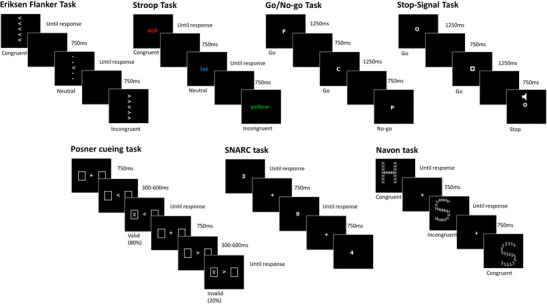
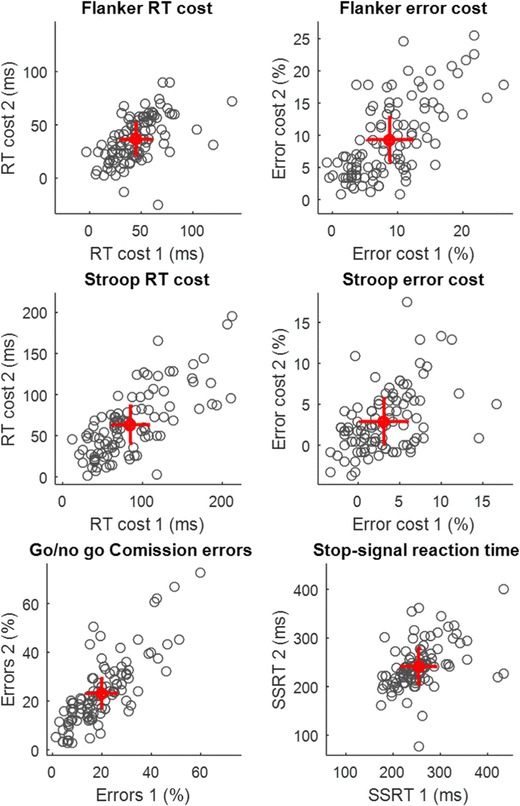
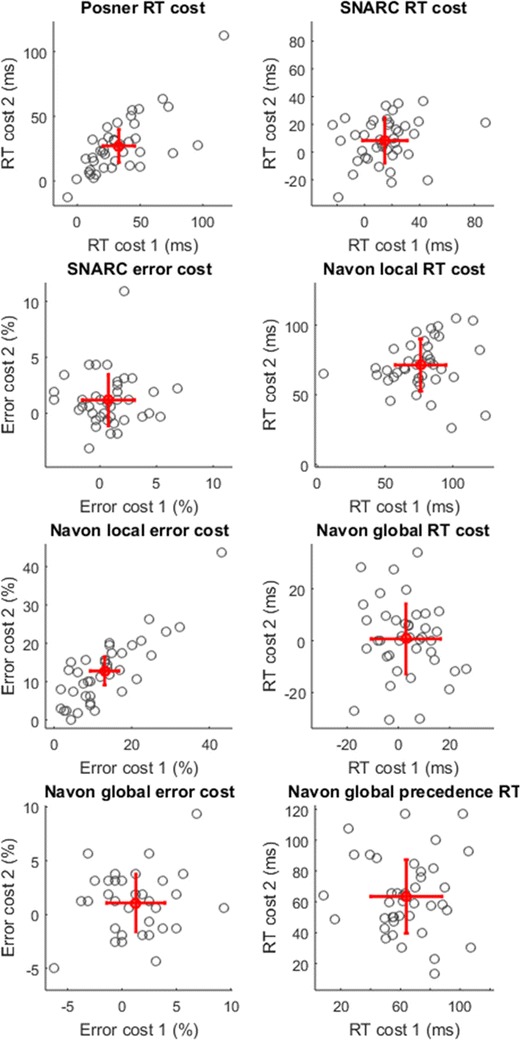
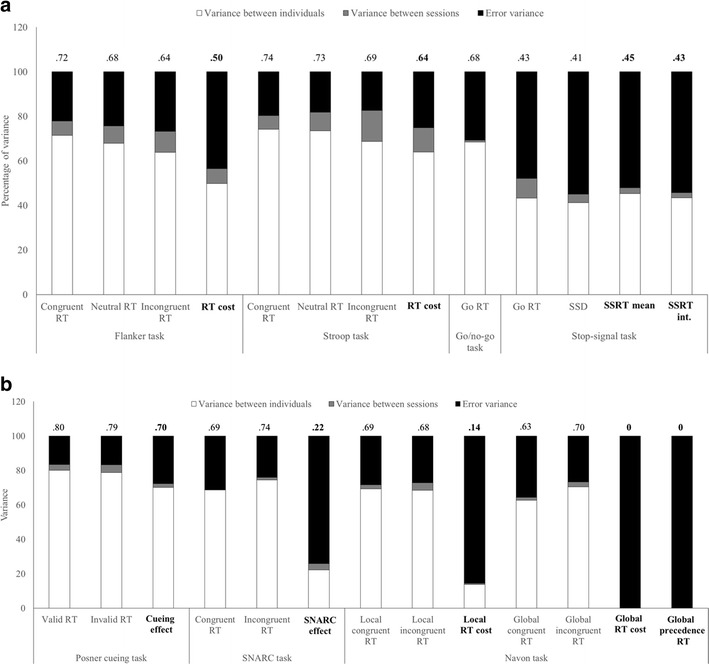
Individual differences in cognitive paradigms are increasingly employed to relate cognition to brain structure, chemistry, and function. However, such efforts are often unfruitful, even with the most well established tasks. Here we offer an explanation for failures in the application of robust cognitive paradigms to the study of individual differences. Experimental effects become well established - and thus those tasks become popular - when between-subject variability is low. However, low between-subject variability causes low reliability for individual differences, destroying replicable correlations with other factors and potentially undermining published conclusions drawn from correlational relationships. Though these statistical issues have a long history in psychology, they are widely overlooked in cognitive psychology and neuroscience today. In three studies, we assessed test-retest reliability of seven classic tasks: Eriksen Flanker, Stroop, stop-signal, go/no-go, Posner cueing, Navon, and Spatial-Numerical Association of Response Code (SNARC). Reliabilities ranged from 0 to .82, being surprisingly low for most tasks given their common use. As we predicted, this emerged from low variance between individuals rather than high measurement variance. In other words, the very reason such tasks produce robust and easily replicable experimental effects - low between-participant variability - makes their use as correlational tools problematic. We demonstrate that taking such reliability estimates into account has the potential to qualitatively change theoretical conclusions. The implications of our findings are that well-established approaches in experimental psychology and neuropsychology may not directly translate to the study of individual differences in brain structure, chemistry, and function, and alternative metrics may be required.
Overview
The claims and statistics of this paper haven’t been checked yet.
Free: it reads the open-access text and checks the first 5 claims that cite a source we can check. Create a free account to check every claim.
Integrity signals
Registry
Cites
Statistics
Figures
Verification
Claims the paper makes
The claims and statistics of this paper haven’t been checked yet.
Free: it reads the open-access text and checks the first 5 claims that cite a source we can check. Create a free account to check every claim.
Claims other papers make about this one
Each is checked against this paper’s own text: does it say what the citing paper says it does?
The source backs part of the claim, not all of it — or backs it for a different population, condition or comparison.
In the citing paper
“This contrast was used (cf. anticipation of social reward minus neutral outcomes) because reliability of difference scores is always lower than reliability of their individual parts,(53) which has been shown to diminish reliability of task-based fMRI(54) (see also(55)) and hinder mechanistic research.(56)”
From Amplification of Positivity Treatment for Anxiety and Depression: A Randomized Experimental Therapeutics Trial Targeting Social Reward Sensitivity to Enhance Social Connectedness (2024) · cites this paper as [53]
Experimental — accuracy not yet measuredThe source backs part of the claim, not all of it — or backs it for a different population, condition or comparison.
In the citing paper
“For the Stroop task, reliability was ρ congruent = .86, ρ incongruent = .82, and ρ interference = .78.”
From Problematic social media use and cognitive performance in young adults: Associations with selective attention and inhibitory control (2026) · cites this paper as Hedge, Powell, & Sumner, 2018
Experimental — accuracy not yet measuredThe cited source says what the claim attributes to it.
In the citing paper
“Further, it is often the case that cognitive tasks that produce robust effects in experimental settings are poorly suited for individual differences studies due to low between-participant reliability (Hedge et al. 2018).”
From Practicing Retrieval Facilitates Learning (2021) · cites this paper as Hedge et al. 2018
The check wasn’t confident either way, so it gives no verdict — never disputed.
In the citing paper
“For the Simon task, reliability was ρ_congruent = .84, ρ_incongruent = .81, and ρ_interference = .76.”
From Problematic social media use and cognitive performance in young adults: Associations with selective attention and inhibitory control (2026) · cites this paper as Hedge et al., 2018
Experimental — accuracy not yet measured
Self-check
Percentages, sums and reported differences re-computed from the paper’s own numbers.
The self-check needs the paper’s full text.
Citations
Cites
The Measurement of Observer Agreement for Categorical Data
Landis, J. R., & Koch, G. G. (1977) · Biometrics · doi:10.2307/2529310 · Cited by 81,148 · cited 4×
“Studies 1 and 2 None of the behavioral measures in Studies 1 and 2 (see Table 1) exceeded reliabilities of .8, typically considered excellent or of a clinically required standard (Cicchetti & Sparrow, 1981; Fleiss, 1981; Landis & Koch, 1977).”
BackgroundMethodResultInfluentialFaul, F., Erdfelder, E., Lang, A.-G., & Buchner, A. (2007) · Behavior Research Methods · doi:10.3758/bf03193146 · Cited by 65,971
Structural equation modeling in practice: A review and recommended two-step approach
Anderson, J. C., & Gerbing, D. W. (1988) · Psychological Bulletin · doi:10.1037/0033-2909.103.3.411 · Cited by 41,941
Statistical power analyses using G∗Power 3.1: tests for correlation and regression analyses
Faul, F., Erdfelder, E., Buchner, A., & Lang, A.-G. (2009) · Behavior Research Methods · doi:10.3758/brm.41.4.1149 · Cited by 37,615
Intraclass correlations: Uses in assessing rater reliability.
Shrout, P. E., & Fleiss, J. L. (1979) · Psychological Bulletin · doi:10.1037/0033-2909.86.2.420 · Cited by 24,532
Statistical Methods for Rates and Proportions
Fleiss, J. L., Levin, B., & Paik, M. C. (2003) · Wiley Series in Probability and Statistics · doi:10.1002/0471445428 · Cited by 18,646
Miyake, A., Friedman, N. P., Emerson, M. J., Witzki, A. H., Howerter, A., & Wager, T. D. (2000) · Cognitive Psychology · doi:10.1006/cogp.1999.0734 · Cited by 15,798
Review of Psychometric theory (2nd ed.).
SITGREAVES, R. (1979) · Contemporary Psychology: A Journal of Reviews · doi:10.1037/018882 · Cited by 11,425
Why Most Published Research Findings Are False
Ioannidis, J. P. A. (2005) · PLoS Medicine · doi:10.1371/journal.pmed.0020124 · Cited by 10,505
Posner, M. I. (1980) · Quarterly Journal of Experimental Psychology · doi:10.1080/00335558008248231 · Cited by 9,670 · cited 2×
“Study 3 Again, performance was comparable to previous reports in the literature (Navon, 1977; Posner, 1980; Rusconi et al., 2013).”
Research works printed but not linked: 7
- Crocker LM Algina J Introduction to Classicial and Modern Test Theory 1986 New York CBS College Publishing
- Hambleton RK Swaminathan H Rogers HJ Fundementals of Item Response Theory 1991 Newbury Park Sage
- Lynam DR Smith GT Whiteside SP Cyders MA The UPPS-P: Assessing give personality pathways to impulsive behavior (Technical Report) 2006 West Lafayette Purdue University
- Nunnally JC Psychometric theory 1978 2 New York. McGraw-Hill
- Peirce JW Introduction to Python and PsychoPy Perception 2013 42 2 3
- Rogosa D Gottman JM Myths and methods: "Myths about longitudinal research" plus supplemental questions The analysis of change 1995 Hillsdale Lawrence Ealbaum Associates pp. 3 65
- Zumbo BD Thompson B The simple difference score as an inherently poor measure of change: Some reality, much mythology Advances in Social Science Methodoloy 1999 Greenwich JAI Press pp. 269 304
Cited by
Items 601–700 of 1,003
McConnell, K., Hintz, F., & Meyer, A. S. (2024) · Behavior Research Methods · doi:10.3758/s13428-024-02533-x · Cited by 16
“Importantly, however, individual differences paradigms rely on stable estimation of participant ability and thus must detect what group-level designs can safely level out, and it is unclear if research collected online can meet this standard (Hedge et al., 2018).”
Clarifying the reliability paradox: poor measurement reliability attenuates group differences
Karvelis, P., & Diaconescu, A. O. (2025) · Frontiers in Psychology · doi:10.3389/fpsyg.2025.1592658 · Cited by 16
Talipski, L. A., Bell, E., Goodhew, S. C., Dawel, A., & Edwards, M. (2020) · Quarterly Journal of Experimental Psychology · doi:10.1177/1747021820973954 · Cited by 9
“Split-half reliability of gaze- and arrow-cueing scores If a task has poor reliability, this can compromise the ability of a study to observe individual differences in performance on that task (e.g., Goodhew & Edwards, 2019; Hedge et al., 2018).”
BackgroundReduced neural responsiveness to looming stimuli is associated with increased aggression
Blair, J., Zhang, R., Bashford‐Largo, J., Bajaj, S., Mathur, A., Ringle, J. L., Schwartz, A., Elowsky, J., Dobbertin, M. D., Blair, K. S., et al. (2021) · Social Cognitive and Affective Neuroscience · doi:10.1093/scan/nsab058 · Cited by 9
Pálffy, Z., Farkas, K., Csukly, G., Kéri, S., & Polner, B. (2021) · Scientific Reports · doi:10.1038/s41598-021-96198-7 · Cited by 9
Inhibitory abilities in girls and boys: More similarities or differences?
Usai, M. C. (2022) · Journal of Neuroscience Research · doi:10.1002/jnr.25034 · Cited by 13
Hui, B., & Wu, Z. (2023) · Studies in Second Language Acquisition · doi:10.1017/s027226312300027x · Cited by 11
“This may be due to homogeneous sampling and the nature of the attribute being measured in which individuals do not differ much (Hedge et al., 2018).”
BackgroundMethodInfluentialTarget–distractor correlation does not imply causation of the Stroop effect
Spinelli, G., & Lupker, S. J. (2023) · Quarterly Journal of Experimental Psychology · doi:10.1177/17470218231182854 · Cited by 10
“Part of the reason for the enduring interest in the Stroop effect lies in the fact that, despite being often regarded as a robust effect (e.g., Hedge et al., 2018), more and more processes have been presumed (and, in many cases, found) to modulate it.”
Duhamel, E., Mihali, A., & Horga, G. (2023) · Journal of Neuroscience · doi:10.1523/jneurosci.0692-22.2023 · Cited by 12
“We also calculated test-retest reliability of the WF values (Hedge et al., 2018; Parsons et al., 2019).”
Modeling the effects of transcranial magnetic stimulation on spatial attention
Jing, Y., Numssen, O., Weise, K., Kalloch, B., Buchberger, L., Haueisen, J., Hartwigsen, G., & Knösche, T. R. (2023) · Physics in Medicine and Biology · doi:10.1088/1361-6560/acff34 · Cited by 10
Donnelly, S., Rowland, C. F., Chang, F., & Kidd, E. (2024) · Cognitive Science · doi:10.1111/cogs.13431 · Cited by 12
“In other words, the relatively low explicit memory demands of our task may have been sufficient for observing an experimental effect but not sufficient for reliably estimating between-participant age-related differences in the magnitude of this effect (Hedge, Powell, & Sumner, 2018).”
BackgroundSmithies, T. D., Toth, A. J., & Campbell, M. J. (2024) · Journal of Cognitive Psychology · doi:10.1080/20445911.2024.2357363 · Cited by 15
“…– retest reliability is low due to measurement error, the risk of both Type I and II error increases (however, note that a lower test – retest reliability as a function of low between-subject variability may be bene fi cial in test – retest designs; see Hedge et al. (2018) for further discussion).”
The validity of studying healthy aging with cognitive tests measuring different constructs
Hatahet, O., & Seghier, M. L. (2024) · Scientific Reports · doi:10.1038/s41598-024-74488-0 · Cited by 9
“However, in line with previous studies, our findings pointed to the complexity of identifying and measuring individual differences in executive functions 82,84 , and to the validity of the constructs measured by the NIHTB-CB 20,70 .”
BackgroundResultGoodhew, S. C. (2020) · Psychological Research · doi:10.1007/s00426-020-01344-x · Cited by 11
Using Smartphone Sensor Data to Assess Inhibitory Control in the Wild: Longitudinal Study
Tseng, V. W.-S., Costa, J. M. D. R., Jung, M. F., & Choudhury, T. (2020) · JMIR mhealth and uhealth · doi:10.2196/21703 · Cited by 8
“…rather than their actual inhibitory control at that moment, as participants had been instructed to perform as accurately as possible; (4) there might be some publication bias in the earlier literature that overestimated the correlation between self-reports and inhibitory control tasks [69-71].”
BackgroundChallenges in Process Dissociation Measures for Moral Cognition
Kunnari, A., Sundvall, J. R. I., & Laakasuo, M. (2020) · Frontiers in Psychology · doi:10.3389/fpsyg.2020.559934 · Cited by 14
“The psychological sciences have had concerns about how measurement instruments are created (Hedge et al., 2018), evaluated (Flake et al.”
BackgroundHigh-frequency sound components of high-resolution audio are not detected in auditory sensory memory
Nittono, H. (2020) · Scientific Reports · doi:10.1038/s41598-020-78889-9 · Cited by 9
Son, D. V., Marin, C. E., Boutris, P., Rey, Y., Lebowitz, E. R., Pettit, J. W., & Silverman, W. K. (2021) · Journal of Anxiety Disorders · doi:10.1016/j.janxdis.2021.102399 · Cited by 10
Castagna, P. J., & Crowley, M. J. (2021) · Developmental Neuropsychology · doi:10.1080/87565641.2021.1952206 · Cited by 10
Bilingualism and executive attention: Evidence from studies of proactive and reactive control.
Spinelli, G., Goldsmith, S. F., Lupker, S. J., & Morton, J. B. (2022) · Journal of Experimental Psychology Learning Memory and Cognition · doi:10.1037/xlm0001095 · Cited by 10
Top-down social modulation of perception-action coupling
Cracco, E., Genschow, O., & Baess, P. (2021) · Acta Psychologica · doi:10.1016/j.actpsy.2021.103481 · Cited by 10
Task format modulates the relationship between reading ability and Stroop interference.
Ziaka, L., Skoteinou, D., & Protopapas, A. (2022) · Journal of Experimental Psychology Human Perception & Performance · doi:10.1037/xhp0000964 · Cited by 10
Practice-Related Predictors of Semantic Feature Verification Treatment for Aphasia
Cavanaugh, R., Quique, Y. M., Dickey, M. W., Hula, W. D., Boss, E., & Evans, W. S. (2022) · American Journal of Speech-Language Pathology · doi:10.1044/2021_ajslp-21-00296 · Cited by 12
Baker, K., Stabile, V. J., & Mondloch, C. J. (2022) · Cognition · doi:10.1016/j.cognition.2022.105333 · Cited by 18
Computational psychiatry and the lived experience of mental illness
Treadway, M. T. (2022) · Nature Reviews Psychology · doi:10.1038/s44159-022-00142-z · Cited by 9
Zhang, H., He, C., Yan, C., Zhao, D., & Xie, D. (2019) · Consciousness and Cognition · doi:10.1016/j.concog.2019.01.014 · Cited by 9
Smith, E., Hedge, C., & Jarrold, C. (2019) · American Journal on Intellectual and Developmental Disabilities · doi:10.1352/1944-7558-124.4.354 · Cited by 11
“RT and accuracy measures do not always correlate with each other, and can be confounded by, for example, speed-accuracy trade-offs (Hedge et al. 2018).”
Self-citationWenzel, M., Rowland, Z., Zahn, D., & Kubiak, T. (2019) · European Journal of Personality · doi:10.1002/per.2208 · Cited by 12
“Hedge et al. (2018) argue that the experimental effects of cognitive tasks such as the MSIT or the Stroop task only become well established in the case of low between-person variability.”
BackgroundImplicit Bias Reflects the Personal and the Social
Rivers, A. M., Rees, H. R., Calanchini, J., & Sherman, J. W. (2017) · Psychological Inquiry · doi:10.1080/1047840x.2017.1373549 · Cited by 11
“In other words, Hedge et al. (2017) maintained that cognitive processing is an individual level construct but conceded that”
BackgroundResultInfluentialVisualising two approaches to explore reliability-power relationshipsPreprint
Parsons, S. D. (2018) · PsyArXiv (OSF Preprints) · doi:10.31234/osf.io/qh5mf · Cited by 11
Investigating Lay Perceptions of Psychological Measures: A Registered ReportPreprint
Mason, J., Pownall, M., Palmer, A., & Azevedo, F. (2023) · doi:10.31234/osf.io/jf58q · Cited by 9
On Cronbach’s merger: Why experiments may not be suitable for measuring individual differencesPreprint
Rouder, J. N., la Peña, A. F. C. D., Mehrvarz, M., & Vandekerckhove, J. (2023) · PsyArXiv (OSF Preprints) · doi:10.31234/osf.io/8ktn6 · Cited by 13
Variation in how cognitive control modulates sentence processing
Patra, A., Kirkwood, J., Middleton, E. L., & Thothathiri, M. (2023) · Royal Society Open Science · doi:10.1098/rsos.211969 · Cited by 10
“Finally, individual differences analyses of cognitive measures are subject to reliability concerns [41].”
BackgroundPirastru, A., Tella, S. D., Cazzoli, M., Esposito, F., Baselli, G., Baglio, F., & Blasi, V. (2023) · NeuroImage · doi:10.1016/j.neuroimage.2023.120457 · Cited by 11
“However, the test-retest assessment of signal reliability of functional MRI measures has been a matter of debate for the last decades (Elliott et al., 2020; "Fostering reproducible fMRI research," 2017; Noble et al., 2021).”
BackgroundResultThe development of sustained, selective, and divided attention in school‐age children
Talalay, I. V. (2024) · Psychology in the Schools · doi:10.1002/pits.23160 · Cited by 19
Spinelli, G., & Lupker, S. J. (2024) · Attention Perception & Psychophysics · doi:10.3758/s13414-024-02892-9 · Cited by 10
“In general, this type of situation is yet another example of the “reliability paradox” affecting many classic tasks in cognitive psychology, tasks that produce effects that are, in most cases, robust, but do not produce high reliability coefficients (Hedge et al., 2018).”
BackgroundDoes cognitive control modulate referential ambiguity resolution? A remote visual world study
Langlois, V. J., Ness, T., Kim, A. E., & Novick, J. M. (2024) · Language Cognition and Neuroscience · doi:10.1080/23273798.2024.2369182 · Cited by 8
Neural Variability and Cognitive Control in Individuals With Opioid Use Disorder
Ye, J., Mehta, S., Peterson, H., Ibrahim, A., Saeed, G., Linsky, S., Kreinin, I., Tsang, S. W., Nwanaji-Enwerem, U., Raso, A., et al. (2025) · JAMA Network Open · doi:10.1001/jamanetworkopen.2024.55165 · Cited by 12
Cultural Differences in Visual Attention Emerge in Infancy
Heise, M. J., Meristo, M., Ueno, M., Itakura, S., & Carlson, S. M. (2025) · Infancy · doi:10.1111/infa.12651 · Cited by 13
“…smaller sample of Japanese parents), statistical challenges of examining within‐culture effects in the presence of large between‐culture effects (Hedge, Powell, and Sumner 2018), potential lagged effects that could not be detected through a cross‐sectional study examining infants at one…”
Meta-analytic evidence for the complex mechanisms underlying congruency sequence effect
Lee, Y., Verhaeghen, P., Hazeltine, E., & Schumacher, E. H. (2025) · Psychological Research · doi:10.1007/s00426-025-02093-5 · Cited by 9
“Also, the behavioral measurements from cognitive task, such as conflict effects, are notoriously noisy and heterogeneous (Enkavi et al., 2019; Hedge et al., 2018).”
AI-determined similarity increases likability and trustworthiness of human voices
Jaggy, O., Schwan, S., & Meyerhoff, H. S. (2025) · PLoS ONE · doi:10.1371/journal.pone.0318890 · Cited by 14
Pluck, G. C. (2021) · Psych · doi:10.3390/psych3020008 · Cited by 11
“This point is important, as it is becoming increasing clear that many cognitive tests have poor reliability, particularly when used in unusual contexts, which distorts findings when they are used as individual difference metrics [44,45], as I have used them here.”
BackgroundSymbolic number comparison and number priming do not rely on the same mechanism
Krajcsi, A., & Szűcs, T. (2022) · Psychonomic Bulletin & Review · doi:10.3758/s13423-022-02108-x · Cited by 10
“In many cognitive studies, reliability may be low (Hedge et al., 2018).”
BackgroundCognitive inhibition explains children’s production of medial wh-phrases
Liter, A., Grolla, E., & Lidz, J. L. (2022) · Language Acquisition · doi:10.1080/10489223.2021.2023813 · Cited by 9
Fluid Intelligence Emerges from Representing Relations
Chuderski, A. (2022) · Journal of Intelligence · doi:10.3390/jintelligence10030051 · Cited by 11
Pokorny, V., Sponheim, S. R., & Rawls, E. (2022) · Psychophysiology · doi:10.1111/psyp.14223 · Cited by 8
Elder, J., Wilson, L., & Calanchini, J. (2023) · Personality and Social Psychology Bulletin · doi:10.1177/01461672231171256 · Cited by 11
“Nevertheless, model parameters with low measurement reliability can still be robust predictors at the group level (Hedge et al., 2018).”
BackgroundInitial motor skill performance predicts future performance, but not learning
Abeles, D., Herszage, J., Shahar, M., & Censor, N. (2023) · Scientific Reports · doi:10.1038/s41598-023-38231-5 · Cited by 14
Approach-avoidance biases to self-harm cues in young people with self-harm
Rodrigues, R., Mehesz, E., Lingford-Hughes, A. R., & Simplicio, M. C. D. (2023) · Journal of Affective Disorders · doi:10.1016/j.jad.2023.08.021 · Cited by 11
Human laboratory models of reward in substance use disorder
Johansen, A. N., Acuff, S. F., & Strickland, J. C. (2024) · Pharmacology Biochemistry and Behavior · doi:10.1016/j.pbb.2024.173803 · Cited by 9
Network and state specificity in connectivity‐based predictions of individual behavior
Kraljević, N., Langner, R., Küppers, V., Raimondo, F., Patil, K. R., Eickhoff, S. B., & Müller, V. I. (2024) · Human Brain Mapping · doi:10.1002/hbm.26753 · Cited by 9
“Brain mapping results from group analyses typically reveal regions with low inter-subject variability (Hedge et al., 2018), and group-averaged patterns of brain activation often look quite different from patterns observed on the individual subject level (Miller et al., 2002).”
BackgroundPerquin, M. N., Heed, T., & Kayser, C. (2024) · Journal of Experimental Psychology General · doi:10.1037/xge0001630 · Cited by 7
Liu, Z., Hu, M., Zheng, Y.-R., Sui, J., & Chuan-Peng, H. (2025) · Behavior Research Methods · doi:10.3758/s13428-024-02538-6 · Cited by 10
“Our finding also aligned with the reliability paradox of cognitive tasks discovered in previous studies (Enkavi et al., 2019; Hedge et al., 2018).”
InfluentialGunten, C. D. V., & Bartholow, B. D. (2019) · International Journal of Psychophysiology · doi:10.1016/j.ijpsycho.2019.08.008 · Cited by 9
Pyykkö, J., Ashorn, U., Chilora, E., Maleta, K. M., Ashorn, P., & Leppänen, J. M. (2020) · PLoS ONE · doi:10.1371/journal.pone.0239613 · Cited by 10
McDaniel, M. A., Marsh, E. J., & Gouravajhala, R. (2021) · Perspectives on Psychological Science · doi:10.1177/17456916211000716 · Cited by 16
“For discussion of relatively low test–retest reliability of flanker- and Stroop-interference difference scores—the scores used to gauge inhibition—however, see Hedge et al. (2018).”
MethodMaking a saccade enhances Stroop and Simon conflict control
Luo, X., Gu, J., Zheng, Y., & Zhou, X. (2022) · Attention Perception & Psychophysics · doi:10.3758/s13414-022-02458-7 · Cited by 9
McDonough, I. M., Cody, S. L., Harrell, E. R., Garrett, S. L., & Popp, T. E. (2022) · Memory & Cognition · doi:10.3758/s13421-022-01304-3 · Cited by 9
“Difference scores can sometimes reduce between-subject differences and compound measurement error from each score that makes up the subtraction (Hedge et al., 2018).”
BackgroundVisual search habits and the spatial structure of scenes
Clarke, A. D. F., Nowakowska, A., & Hunt, A. R. (2022) · Attention Perception & Psychophysics · doi:10.3758/s13414-022-02506-2 · Cited by 9
Kandaleft, D., Murayama, K., Roesch, E. B., & Sakaki, M. (2022) · Scientific Reports · doi:10.1038/s41598-022-18543-8 · Cited by 15
Temporal Structure in Sensorimotor Variability: A Stable Trait, But What For?
Perquin, M. N., van Vugt, M. K., Hedge, C., & Bompas, A. (2023) · Computational Brain & Behavior · doi:10.1007/s42113-022-00162-1 · Cited by 11
“Here, we describe three experiments that were conducted for a reliability study of task performance in a battery of wellknown cognitive paradigms (Hedge et al., 2018).”
BackgroundMethodInfluentialSelf-citationHarlow, T. J., Jané, M. B., Read, H. L., & Chrobak, J. J. (2023) · Frontiers in Sleep · doi:10.3389/frsle.2023.1082253 · Cited by 10
“In addition, difference scores are known to be highly unreliable in cognitive performance assessments, including the Stroop test (Hedge et al., 2018).”
Reliability of individual differences in distractor suppression driven by statistical learning
Ivanov, Y., Theeuwes, J., & Bogaerts, L. (2023) · Behavior Research Methods · doi:10.3758/s13428-023-02157-7 · Cited by 10
“Hence it is critical to first establish whether the measures used to index it are reliable at an individual level (Hedge et al., 2018).”
BackgroundMethodInfluentialPennington, C. R., Ploszajski, M., Mistry, P. J., Ngombe, N., Back, C., Parsons, S. D., & Shaw, D. J. (2023) · Frontiers in Psychology · doi:10.3389/fpsyg.2023.1197298 · Cited by 12
“These were presented in the fixed order that they appear below, which is preferable when correlating variables to assess individual differences (Hedge et al., 2018).”
BackgroundLee, R. S. C., Albertella, L., Christensen, E., Suo, C., Segrave, R. A., Brydevall, M., Kirkham, R., Liu, C., Fontenelle, L. F., Chamberlain, S. R., et al. (2023) · Journal of Medical Internet Research · doi:10.2196/44414 · Cited by 8
“Although it stands to be replicated, the lack of test-retest for the VMAC and VMAC-R scores may be an artifact of the compounding of error variability as a result of computing difference scores [69].”
Freichel, R., Mrkonja, L., de Jong, P. J., Cousijn, J., Franken, I. H. A., Ruiter, T. A., Pelley, M. E. L., Albertella, L., Watson, P., Veer, I. M., et al. (2023) · Journal of Experimental Psychopathology · doi:10.1177/20438087231204166 · Cited by 10
“Prior research suggests that low test-retest reliability may be related to factors such as low between-subject variability (Hedge et al., 2018) or the use of reaction time difference scores as measures of attentional control (Draheim et al., 2019).”
BackgroundSulpizio, S., Spinelli, G., & Scaltritti, M. (2024) · Memory & Cognition · doi:10.3758/s13421-024-01552-5 · Cited by 9
“Although the Stroop effect is regarded as a robust phenomenon (e.g., Hedge et al., 2018), several processes have been found to shape its size and impact, such as the proportion of neutral (e.g., Goldfarb & Henik, 2007; Spinelli & Lupker, 2021) or incongruent trials composing the experimental list…”
BackgroundDeterminants of assessing efficiency within auditory attention networks
Johnston, S., Hennessey, N. W., & Leitão, S. (2019) · The Journal of General Psychology · doi:10.1080/00221309.2018.1541861 · Cited by 9
Howlett, J. R., Thompson, W. K., & Paulus, M. P. (2019) · Biological Psychiatry Cognitive Neuroscience and Neuroimaging · doi:10.1016/j.bpsc.2019.12.011 · Cited by 9
“In fact, many common behavioral tasks have been designed to exhibit a low between-subject variance, leading to robust task effects but a lack of reliability in measuring individual differences (35).”
Gajsar, H., Titze, C., Konietzny, K., Meyer, M., Vægter, H. B., & Hasenbring, M. I. (2020) · Journal of Pain Research · doi:10.2147/jpr.s238718 · Cited by 10
Test-retest reliability of functional MRI food receipt, anticipated receipt, and picture tasks
Yokum, S., Bohon, C., Berkman, E. T., & Stice, E. M. (2021) · American Journal of Clinical Nutrition · doi:10.1093/ajcn/nqab096 · Cited by 9
“The results suggest that reliability of the examined fMRI tasks was poor on average, converging with findings from past studies (7, 8, 10), with the extent of reliability varying between regions and contrasts.”
BackgroundMethodResultInfluentialFocusing on spontaneous focusing
Inglis, M. (2020) · Mathematical Thinking and Learning · doi:10.1080/10986065.2020.1818472 · Cited by 11
Trial and error: a hierarchical modeling approach to test-retest assessmentPreprint
Chen, G., Pine, D. S., Brotman, M. A., Smith, A. R., Cox, R. W., & Haller, S. P. (2021) · bioRxiv (Cold Spring Harbor Laboratory) · doi:10.1101/2021.01.04.425305 · Cited by 10
Holden, L. R., Conway, A. R. A., & Goodwin, K. A. (2020) · doi:10.31234/osf.io/h48bv · Cited by 8
The relationship between primary school children’s inhibition and the processing of rational numbers
Keersmaeker, K. D., Hoof, J. V., & Dooren, W. V. (2022) · European Journal of Psychology of Education · doi:10.1007/s10212-022-00669-y · Cited by 10
Test-retest reliability of behavioral and computational measures of advice taking under volatility
Karvelis, P., Hauke, D. J., Wobmann, M., Andreou, C., Mackintosh, A., de Bock, R., Borgwardt, S., & Diaconescu, A. O. (2024) · PLoS ONE · doi:10.1371/journal.pone.0312255 · Cited by 13
Pennington, C. R., Birch-Hurst, K., Ploszajski, M., Clark, K., Hedge, C., & Shaw, D. J. (2025) · Behavior Research Methods · doi:10.3758/s13428-025-02606-5 · Cited by 14
“If two task indices are highly correlated and have similar variance, computing a difference score results in lower reliability than if these indices are used independently (Cronbach & Furby, 1970; Hedge et al., 2018).”
InfluentialSelf-citationThe influence of (social) anxiety and visual exploration on threat responding and generalization
Reutter, M., Teigeler, J., & Gamer, M. (2025) · Behaviour Research and Therapy · doi:10.1016/j.brat.2025.104746 · Cited by 9
Inhibitory control tests in non‐human animals: validity, reliability, and perspectives
Loyant, L., Collins, L., & Joly, M. (2025) · Biological reviews/Biological reviews of the Cambridge Philosophical Society · doi:10.1111/brv.70055 · Cited by 12
Revisiting Ego Depletion: Evidence from Multi-Lab Collaborations
Dang, J., Xiao, S., Mao, L., Liu, X., Baumert, A., Bonneterre, S., Cai, S., Chen, X., de Chanaleilles, M., Ding, N., et al. (2025) · Journal of Pacific Rim Psychology · doi:10.1177/18344909251386084 · Cited by 7
“In a large-scale psychometric evaluation, Hedge et al. (2018) reported that the NoGo error rate achieved the highest intra-class correlation coef fi cient (ICC = .76) among several inhibitory tasks, including Stroop and Flanker.”
Singh, S., Li, B., Gerhard, S., Nunes, A., & Becker, S. (2025) · Cognitive Affective & Behavioral Neuroscience · doi:10.3758/s13415-025-01360-7 · Cited by 11
“…emotion and task integration rates predicted higher normalized brooding scores only immediately after rumination induction (CB1), and not in the second counterbal-ancing condition (CB2) reliable group-level effects but limits test–retest reliability at the individual level (Hedge et al., 2018).”
Pedziwiatr, M. A., Kümmerer, M., Wallis, T. S. A., Bethge, M., & Teufel, C. (2021) · Journal of Vision · doi:10.1167/jov.21.9.2928 · Cited by 11
Do individual differences in lexical reliance reflect states or traits?
Giovannone, N., & Theodore, R. M. (2022) · Cognition · doi:10.1016/j.cognition.2022.105320 · Cited by 11
The relationship between cognitive and affective control and adolescent mental health
Minihan, S., Kumle, L., Maston, K., Bal, D., Werner‐Seidler, A., Christensen, H. M., & Schweizer, S. (2023) · JCPP Advances · doi:10.1002/jcv2.12204 · Cited by 11
“Both the affective and cognitive control task conditions showed acceptable (Clark et al., 2022; Hedge et al., 2018) reliability (average intraclass correlation (ICC) = 0.50 for the cognitive control condition and 0.52 for the affective control condition).”
MethodInfluentialBrain imaging of a gamified cognitive flexibility task in young and older adults
Wang, P., Guo, S.-J., & Li, H. (2024) · Brain Imaging and Behavior · doi:10.1007/s11682-024-00883-w · Cited by 6
“A previous study demonstrated that contrast measurement might reduce the signal-to-noise ratio and individual differ - ences (Hedge et al., 2018), which could mask differences between groups and explain the lack of differences in activa - tion intensity between older and young adults in our study.”
Weaver, H., Zettersten, M., & Saffran, J. R. (2024) · Child Development · doi:10.1111/cdev.14120 · Cited by 13
“This method may in principle provide more power, because it allows the relationship between looking during the baseline window and the critical window to be estimated and does not rely on a difference-based measure that could amplify noise (Hedge et al., 2018).”
Waltmann, M., Herzog, N., Reiter, A. M. F., Villringer, A., Horstmann, A., & Deserno, L. (2024) · Biological Psychiatry Cognitive Neuroscience and Neuroimaging · doi:10.1016/j.bpsc.2024.06.002 · Cited by 12
Robustness of individual differences in temporal interference effects
Schlichting, N., de Jong, R., & van Rijn, H. (2018) · PLoS ONE · doi:10.1371/journal.pone.0202345 · Cited by 6
“Hedge, Powell, and Sumner [17] describe the statistical issues associated with well-established tasks often having poor reliabilities as the reliability paradox: The very reason that such tasks produce robust and easily replicable effects–low between-individual variability–also tends to cause low reliabilities of thes…”
BackgroundVize, C. E., & Lynam, D. R. (2020) · European Journal of Personality · doi:10.1002/per.2241 · Cited by 8
McCartney, D., Desbrow, B., & Irwin, C. G. (2020) · Journal of Sports Sciences · doi:10.1080/02640414.2020.1809976 · Cited by 7
Qualitative Versus Quantitative Individual Differences in Cognitive Neuroscience
Slagter, H. A., & Bouwer, F. L. (2021) · Journal of Cognition · doi:10.5334/joc.170 · Cited by 8
Hu, Z., Zhang, Z., Liang, Z., Zhang, L., Li, L., & Huang, G. (2022) · NeuroImage · doi:10.1016/j.neuroimage.2022.118937 · Cited by 7
Sánchez-Torres, A. M., Moreno-Izco, L., Gil‐Berrozpe, G. J., Lorente-Omeñaca, R., Zandio, M., Zarzuela, A., Peralta, V., & Cuesta, M. J. (2022) · European Archives of Psychiatry and Clinical Neuroscience · doi:10.1007/s00406-022-01399-4 · Cited by 7
“However, there are other possible explanations for the low correlations between self-reported measures and behavioral measures, such as differences in scale reliability and differences in the processes underlying the distinct measures [63, 64].”
BackgroundCastro, S., Bukowski, M., Lupiáñez, J., & Wodniecka, Z. (2026) · International Journal of Bilingual Education and Bilingualism · doi:10.1080/13670050.2026.2651147 · Cited by 8
“Although the assessment of EC using experimental measures is widely used, recent arguments suggest that self-report measures have higher inter-individual variability and hence may be better at capturing individual differences (Hedge, Powell, and Sumner 2018).”
A new technique for estimating the probability of attentional capture
Rigsby, T. J., Stilwell, B. T., Ruthruff, E. D., & Gaspelin, N. (2023) · Attention Perception & Psychophysics · doi:10.3758/s13414-022-02639-4 · Cited by 6
“Although this might seem like a limitation, we would like to point out that many RTbased metrics of attentional capture have similar issues (Hedge et al., 2018).”
BackgroundMapping the reliability multiverse of contextual cuing.
Vadillo, M. A., Malejka, S., & Shanks, D. R. (2025) · Journal of Experimental Psychology Learning Memory and Cognition · doi:10.1037/xlm0001410 · Cited by 12
How holistic processing of faces relates to cognitive control and intelligence
Gauthier, L., Chua, K.-W., & Richler, J. J. (2018) · Attention Perception & Psychophysics · doi:10.3758/s13414-018-1518-7 · Cited by 8
Individual differences in processing orientation and proximity as emergent features
Samaey, C., Wagemans, J. P., & Moors, P. (2020) · Vision Research · doi:10.1016/j.visres.2020.02.002 · Cited by 9
“commonly observed for experimental measures (Enkavi et al., 2019; Hedge et al., 2018).”
Latent Variable Modeling and Adaptive Testing for Experimental Cognitive Psychopathology Research
Thomas, M. L., Brown, G. G., Patt, V. M., & Duffy, J. R. (2020) · Educational and Psychological Measurement · doi:10.1177/0013164420919898 · Cited by 9
“Moreover, because examinee and item variance are often unwanted sources of variability in experimental studies, tests closely based on experimental methods may poorly discriminate individual differences (Hedge et al., 2018).”
BackgroundAcute effect of alcohol on working memory updating
Cofresí, R. U., Watts, A. L., Martins, J. S., Wood, P. K., Sher, K. J., Cowan, N., Miyake, A., & Bartholow, B. D. (2021) · Addiction · doi:10.1111/add.15506 · Cited by 7
Metadata
- Authors
- Hedge, C., Powell, G., & Sumner, P.
- Affiliations
- Cardiff University (GB)
- Corresponding author
- Hedge, Craig
- Venue
- Behavior Research Methods
- Published
- 2017-07-19
- Volume
- 50
- Issue
- 3
- Pages
- 1166-1186
- ISSN
- 1554-351X (ISSN-L)
- 1554-3528
- PMC
- PMC5990556
- OpenAlex
- W2724821146
- Cited by
- 1,457
- References
- 150
- Citations by year
- 2026: 165 · 2025: 168 · 2024: 178 · 2023: 207 · 2022: 188 · 2021: 192 · 2020: 175 · 2019: 111 · 2018: 61 · 2017: 9
- FWCI
- 125.87
- Type
- journal article
- Language
- en
- Open access
- hybrid
- doi.org
- Locations
- Behavior Research Methods (publishedVersion, cc-by)
- Europe PMC (PubMed Central) (publishedVersion, other-oa)
- PubMed Central (publishedVersion, cc-by)
- PubMed (publishedVersion)
- ORCA Online Research @Cardiff (Cardiff University) (acceptedVersion)
- Aston Publications Explorer (Aston University) (submittedVersion, cc-by)
- OSF Preprints (OSF Preprints) (submittedVersion)
- Funders
- Wellcome Trust (104943/Z/14/Z)
- Economic and Social Research Council (ES/K002325/1)
- Topics
- Social Sciences › Psychology › Experimental and Cognitive Psychology › Cognitive Abilities and Testing
- Social Sciences › Decision Sciences › Management Science and Operations Research › Psychometric Methodologies and Testing
- Life Sciences › Neuroscience › Cognitive Neuroscience › Neural and Behavioral Psychology Studies
- Keywords
- individual differences, test-retest reliability, between-subject variability, measurement reliability, cognitive paradigm, flanker task, Stroop task, stop-signal task, go/no-go task, Navon task, SNARC effect, neuropsychology, brain structure and cognition
- MeSH terms
- Brain, Cognition, Cues, Female, Humans, Individuality, Male, Neuropsychology, Reaction Time, Task Performance and Analysis, Reproducibility of Results
About these checks
Registry, retraction, Cites and statistics results are computed, not judged, with one exception: a printed reference that no index lists is read once by a model before it counts as a citation error. Claims are extracted by a model and kept only when their quote appears verbatim in the text; each cited source is then checked, with a model’s help, for whether it says what the claim relies on. Those verdicts can be wrong — read the claim’s quote and the cited source before relying on one.
Statistics and arithmetic are recomputed, not judged.
Confidence bands are shown only for fields calibrated on our annotated test set. None is calibrated yet, so no band is shown.
What counts as a claim ›How we measure confidence ›How we check this ›
Are you an author, or do you see a problem with this page? Request a review
Data sources
Bibliographic data: Semantic Scholar, OpenAlex, Crossref.
Contains information from the Semantic Scholar Academic Graph Datasets, made available under the ODC Attribution License (ODC-BY 1.0).
Semantic Scholar’s data is described in: Kinney, R., et al. (2023). The Semantic Scholar Open Data Platform. arXiv:2301.10140.
