

MOBILITY AND BIOAVAILABILITY OF HEAVY METALS AND METALLOIDS IN SOIL ENVIRONMENTS
Open accessThe DOI matches its Crossref record; 59 of the 69 references it cites were found in a registry or an index; 4 of the 82 sources its claims cite were checked for support.
Abstract
In soil environments, sorption/desorption reactions as well as chemical complexation with inorganic and organic ligands and redox reactions, both biotic and abiotic, are of great importance in controlling their bioavailability, leaching and toxicity.These reactions are affected by many factors such as pH, nature of the sorbents, presence and concentration of organic and inorganic ligands, including humic and fulvic acid, root exudates, microbial metabolites and nutrients.In this review, we highlight the impact of physical, chemical, and biological interfacial interactions on bioavailability and mobility of metals and metalloids in soil.Special attention is devoted to: i) the sorption/desorption processes of metals and metalloids on/from soil components and soils; ii) their precipitation and reduction-oxidation reactions in solution and onto surfaces of soil components; iii) their chemical speciation, fractionation and bioavailability.
Overview
CoChat Summary
## TL;DR
This review explains how soil pH, sorbent properties, ligands, redox reactions, and reaction time control the mobility, bioavailability, and toxicity of heavy metals and metalloids in soils. It also argues that total soil metal content is a poor predictor of risk and that sequential extraction/fractionation is needed to identify the more bioavailable forms.
## Key findings
- Sorption/desorption, complexation, precipitation, and redox reactions are presented as the main controls on metal and metalloid mobility; the paper says these processes are affected by pH, sorbent nature, and organic/inorganic ligands.
- For cationic metals, the paper reports that Cu was more selectively sorbed than Zn on ferrihydrite and a humic-acid-like sample; in equimolar Zn presence, sorbed Cu was only slightly reduced, while Cu strongly reduced Zn sorption.
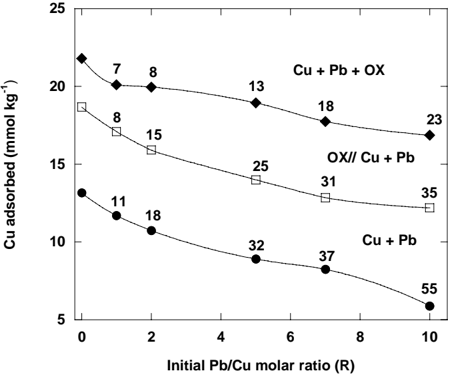
- In a goethite experiment at pH 5.0, increasing Pb/Cu ratio reduced Cu sorption by 11% at R = 1 and 55% at R = 10 without oxalic acid; with oxalic acid, Cu sorption increased by 34–43% in Cu+Pb+OX systems and 18–25% in OX//Cu+Pb systems.
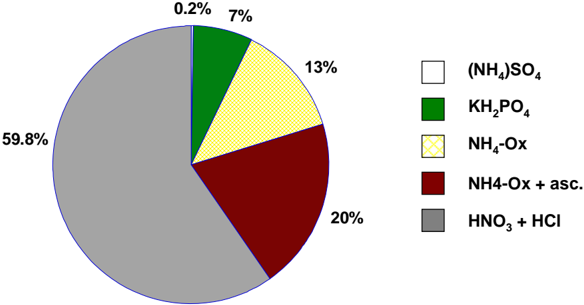
- For arsenic fractionation, the paper reports that in 20 Austrian soils (96–218 mg As kg⁻¹), 30% of As was in step 3 and 27% in step 4 of the Wenzel et al. extraction, while in one Italian polluted soil As was mostly in crystalline oxides (59.8%) and short-range Fe/Al oxides (20%).
## Methods
- Narrative review of published studies on soil metals/metalloids, emphasizing sorption/desorption, redox transformations, and chemical fractionation; no new primary dataset is presented as the paper’s own experiment.
- The paper synthesizes results from cited laboratory and field studies, including competitive sorption experiments on ferrihydrite and goethite, and sequential extraction schemes for Cu, Zn, Cd, and As.
- Main analysis is comparative and qualitative, using reported percentages, correlation coefficients, and extraction fractions from prior studies to illustrate how mobility and bioavailability vary across metals, ligands, and soil phases.
## Limitations
- The paper explicitly notes that “a systematic investigation” of competition among various anions on variable-charge minerals and soils is “rather limited.”
- It also states that information on desorption of trace elements in anionic forms from soil or soil components is “relatively little.”
- Evident from the text: this is a review, so its conclusions depend on heterogeneous studies with different soils, ligands, pH conditions, and extraction schemes, which limits direct comparability across examples.
Model-written summary. Check it against the paper before relying on it.
Integrity signals
Registry
Cites
Statistics
Figures
Verification
Claims the paper makes
4 Valid · 8 Not valid · 66 Not checked · 41 Own results and interpretations
Every source the paper cites for this claim was checked and supports it.
In the paper
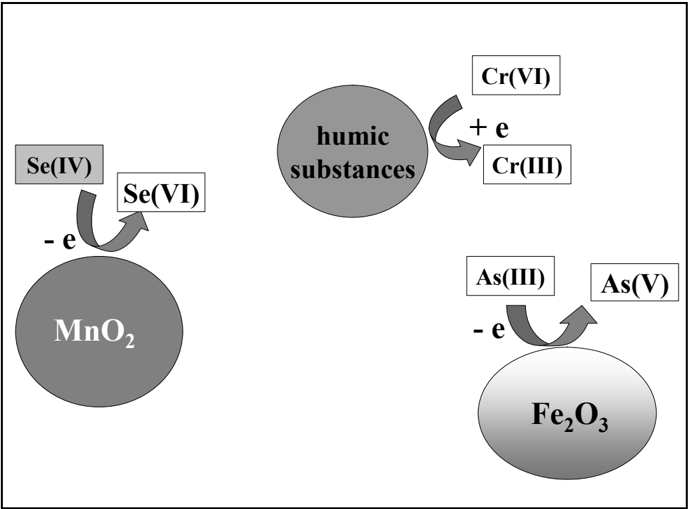
“The As mobility, bioavailability, toxicity, and environmental fate are controlled by biogeochemical transformations that either form or destroy As-bearing carrier phases, or modify the redox state and chemical As speciation (see Figure 2 and Table 1 in Borch et al ., 2010).”
What the sources say
- Supportedcites Borch et al., 2010 matched to “Biogeochemical Redox Processes and their Impact on Contaminant Dynamics” (2010) source
The Impact on Trace Elements section (p. 3) states the claim almost verbatim and explicitly points to Figure 2 and Table 1. Figure 2 (p. 3) illustrates both changes to arsenic-bearing mineral phases and changes to arsenic redox state. (LLM, conf=0.95)
plainstates a cause- Asserted: passes — The authors put it forward as true.
- Checkable: passes — It can be checked against evidence.
- Load-bearing: passes — The paper’s conclusions depend on it.
- Based: passes — The paper gives a reason why it holds.
- Supported
Every source the paper cites for this claim was checked and supports it.
In the paper
“Direct reduction of Fe(III) by microorganisms can lead to As sequestration by sorption of As onto secondary Fe minerals (see Figure 2 in Borch et al ., 2010).”
What the sources say
- Supportedcites Borch et al., 2010 matched to “Biogeochemical Redox Processes and their Impact on Contaminant Dynamics” (2010) source
The Impact on Trace Elements section (p. 3) states the claim directly and points to Figure 2. The figure caption on the same page also describes secondary Fe mineral formation following microbial Fe(III) reduction, leading to arsenic sorption or coprecipitation. (LLM, conf=0.95)
plainstates a cause- Asserted: passes — The authors put it forward as true.
- Checkable: passes — It can be checked against evidence.
- Load-bearing: unclear — It is unclear whether the paper’s conclusions depend on it.
- Based: passes — The paper gives a reason why it holds.
- Supported
Every source the paper cites for this claim was checked and supports it.
In the paper
“The simultaneous presence of high dissolved As and Fe(II) concentrations in anoxic groundwater has led to the conclusion that reductive dissolution of As rich Fe(III) (hydr)oxides mobilizes geogenic As (see Figure 2 in Borch et al ., 2010).”
What the sources say
- Supportedcites Borch et al., 2010 matched to “Biogeochemical Redox Processes and their Impact on Contaminant Dynamics” (2010) source
The Impact on Trace Elements section (p. 3) states the claimed conclusion directly, linking high dissolved As and Fe(II) in anoxic groundwater to reductive dissolution of As-rich Fe(III) (hydr)oxides. Figure 2 on the same page also depicts reduction of As-loaded Fe(III) minerals releasing arsenic into solution. (LLM, conf=0.95)
hedgedstates a cause- Asserted: passes — The authors put it forward as true.
- Checkable: passes — It can be checked against evidence.
- Load-bearing: passes — The paper’s conclusions depend on it.
- Based: passes — The paper gives a reason why it holds.
- Supported
The sources with a verdict support this claim; the rest weren’t checked yet, have no full text we could read, or their verdicts aren’t rated yet.
In the paper
“The accumulation level of heavy metals differs between and within species (Huang and Cunningham, 1996; McGrath et al . 2002).”
What the sources say
- Supportedcites Huang and Cunningham, 1996 matched to “Lead phytoextraction: species variation in lead uptake and translocation” (1996) source
The Abstract states 'Our results demonstrated that plant species differ significantly in Pb uptake and translocation', and the Discussion ('Role of a synthetic chelate in Pb phytoextraction') opens 'Results from this research demonstrate that plant species vary significantly in Pb uptake and translocation (Figs 2-4; Table 1)', with dicots exceeding monocots in root Pb and corn exceeding dicots in shoot translocation — the between-species part of the claim. The within-species part is carried by Table 1 and the 'Phytoextraction of Pb from contaminated soil' section, where six Brassica juncea cultivars span shoot Pb from 347 down to 32 mg/kg and the text confirms 'shoot Pb concentrations in the three best Pb accumulating cultivars of Brassica juncea were significantly higher than those in the three least Pb accumulating cultivars'. Scope note: the paper's own measurements are for lead (and it frames them against the general monocot/dicot heavy-metal accumulator belief), which the citing sentence generalises to 'heavy metals'; the paired McGrath et al. 2002 citation covers the broader multi-metal case. (LLM, conf=0.82)
- Not checked — no full text of the sourcecites McGrath et al., 2002 matched to “Phytoremediation of metals, metalloids, and radionuclides” (2002) source
plainstates an association- Asserted: passes — The authors put it forward as true.
- Checkable: passes — It can be checked against evidence.
- Load-bearing: unclear — It is unclear whether the paper’s conclusions depend on it.
- Based: passes — The paper gives a reason why it holds.
- Supported
None of the sources cited for this claim have been checked yet.
In the paper
“Experiments with various synthetic Fe, Al and Mn oxides showed that the affinity of trace elements for Mn oxide was usually much greater than that for Fe or Al oxides.”
What the sources say
- Not matchedcites Kinniburg and Jackson, 1976
An author–year citation the paper’s reference list doesn’t settle. We don’t search these by name.
- Not checked — no full text of the sourcecites McBride, 1982 matched to “Cu2+-Adsorption Characteristics of Aluminum Hydroxide and Oxyhydroxides” (1982) source
- Not checked — no full text of the sourcecites Violante et al., 2003 matched to “Adsorption of Heavy Metals on Mixed Fe-Al Oxides in the Absence or Presence of Organic Ligands” (2003) source
plainstates an association- Asserted: passes — The authors put it forward as true.
- Checkable: passes — It can be checked against evidence.
- Load-bearing: unclear — It is unclear whether the paper’s conclusions depend on it.
- Based: passes — The paper gives a reason why it holds.
- Not matched
75 more claims
Create a free account to see all 119 claims and to verify the 5 references still open.
- Probably not a substantial claim. 22
- It may state two separate claims as one. 23
Citations
Cites
Environmental Chemistry of Soils
McBride, M. B. (1994) · Medical Entomology and Zoology · Cited by 5,997
(2003) · Elsevier eBooks · doi:10.1016/b978-0-12-656446-4.x5000-2 · Cited by 2,575
(2007) · Iron Oxides in the Laboratary · doi:10.1002/9783527613229.ch01 · Cited by 2,442
Roy, W. R. (1995) · Journal of Environmental Quality · doi:10.2134/jeq1995.00472425002400010029x · Cited by 2,431
Accumulators and excluders ‐strategies in the response of plants to heavy metals
Baker, A. J. M. (1981) · Journal of Plant Nutrition · doi:10.1080/01904168109362867 · Cited by 2,233 · cited 1×
“Baker (1981) suggested that plants could be classified into three categories: (1) excluders: those that grow in metal-contaminated soil and maintain shoot concentration at low level up to a critical soil value above which relatively unrestricted root-to-shoot transport result, (2) accumulators:…”
BackgroundThe surface chemistry of soils
Sposito, G. (1984) · Cited by 1,850
Biogeochemical Redox Processes and their Impact on Contaminant Dynamics
Borch, T., Kretzschmar, R., Kappler, A., Cappellen, P. V., Ginder-Vogel, M., Voegelin, A., & Campbell, K. (2010) · Environmental Science & Technology · doi:10.1021/es9026248 · Cited by 1,456 · cited 5×
“The As mobility, bioavailability, toxicity, and environmental fate are controlled by biogeochemical transformations that either form or destroy As-bearing carrier phases, or modify the redox state and chemical As speciation (see Figure 2 and Table 1 in Borch et al., 2010).”
BackgroundInfluentialArsenic fractionation in soils using an improved sequential extraction procedure
Wenzel, W. W., Kirchbaumer, N., Prohaska, T., Stingeder, G., Lombi, E., & Adriano, D. C. (2001) · Analytica Chimica Acta · doi:10.1016/s0003-2670(01)00924-2 · Cited by 1,408 · cited 3×
“Sequential extraction procedure for arsenic (Wenzel et al. 2001) with permission.”
MethodInfluentialArsenate and Chromate Retention Mechanisms on Goethite. 1. Surface Structure
Fendorf, S., Eick, M. J., Grossl, P., & Sparks, D. L. (1997) · Environmental Science & Technology · doi:10.1021/es950653t · Cited by 1,017 · cited 2×
“Particularly, arsenate may form different surface complexes on inorganic soil components: monodentate, bidentate-mononuclear and bidentatebinuclear complexes in different proportion depending on pH and surface coverage (Fendorf et al. 1997; O’Reilly et al. 2001).”
BackgroundChemical sequential extraction for metal partitioning in environmental solid samples.
Filgueiras, A. V., Lavilla, I., & Bendicho, C. (2002) · Journal of Environmental Monitoring · doi:10.1039/b207574c · Cited by 972 · cited 1×
“Sequential extraction schemes for metal partitioning in environmental solid samples have recently been summarized in a comprehensive review by Filgueiras et al. (2002) and in a JUPAC technical report by Hlavay et al. (2004).”
Background
Research works printed but not linked: 2
- Huang, P.M., Germida, J.J. 2002 . Chemical and biochemical processes in the rhizosphere: metal pollutants. In: P.M. Huang, J.-M. Bollag, N. Senesi (eds). Interactions Between Soil Particles and Microorganisms: Impact on the Terrestrial Ecosystem. John Wiley & Sons, New York, pp: 381-438
- Pigna, M., De Santis, R., Cozzolino, V., Violante, A. 2010 . Influence of organic and inorganic ligands on the adsorption of arsenate and arsenite onto ferrihydrite. Geoderma in Press.
Cited by
Items 701–800 of 951
Zhou, Y., Ding, D., Li, X., Fan, T., Liu, M., Deng, S., Zhang, S., Xia, F., & Kong, L. (2026) · Ecotoxicology and Environmental Safety · doi:10.1016/j.ecoenv.2026.120348 · Cited by 3
The Influence of pH and Organic Matter from Sugarcane By-products on Soil Cadmium Fractionation
Akkajit, P., & Tongcumpou, C. (2016) · Communications in Soil Science and Plant Analysis · doi:10.1080/00103624.2016.1232091 · Cited by 2
“The reducible Cd fraction is related to metals bound to amorphous forms of Fe/Mn oxides and hydroxides (Akkajit, DeSutter, and Tongcumpou 2013a; Sharmin, Zakir, and Shikazono 2010; Violante et al. 2010).”
BackgroundProfiles and potential health risks of heavy metals in polluted soils in NE-Iran
Taheri, M., Gharaie, M. H. M., Mehrzad, J., Stone, M., & Afshari, R. (2021) · Toxin Reviews · doi:10.1080/15569543.2021.1906706 · Cited by 2
“The bioavailability and toxicity of metals depends on several environmental factors as well as the physicochemical characteristics of soils and the specific metal (Violante et al. 2010).”
BackgroundHeavy Metal Speciation, and the Evaluation and Remediation of Polluted Mine Wastes and Soils
Gómez, A. A., & Gutiérrez-Ruiz, M. E. (2023) · IntechOpen eBooks · doi:10.5772/intechopen.110412 · Cited by 7
Koukoulakis, P. H., Kanatas, P., Kyritsis, S. S., et al. (2023) · Water · doi:10.3390/w15213743 · Cited by 2
Li, H. (2024) · Innovation in Science and Technology · doi:10.56397/ist.2024.01.06 · Cited by 2
Functional Effect of Wood Ash on Soil Quality
Chima-Ezika, O. R., O, I. C., Nwaogu, L., & Iheme, C. I. (2024) · International Journal of Biochemistry Research & Review · doi:10.9734/ijbcrr/2024/v33i6891 · Cited by 3
Metal/Metalloid Presence and Health Risks in Drinking Water Plants—Insights from Nanjing, China
Huang, Y., Zheng, Y., Chen, C., et al. (2024) · Water · doi:10.3390/w16152119 · Cited by 2
Lychagin, M. Y., ПОРШЕВА, С. П., Sokolov, D., Erina, O. N., Krastyn, E. A., Efimov, V., Dubrovskaya, T., Kotov, D., & Kasimov, N. S. (2025) · GEOGRAPHY ENVIRONMENT SUSTAINABILITY · doi:10.24057/2071-9388-2024-3741 · Cited by 3
Gawel, A., Diehl, P., Westheimer, S., et al. (2025) · Applied Clay Science · doi:10.1016/j.clay.2025.107728 · Cited by 2
Baseline trace element concentrations in marine sediment from the West African coast.
Amideina, A., Orani, A., Azemard, S., Gasser, B., Masqué, P., Swarzenski, P. W., Hatje, V., & Vassileva, E. (2025) · Marine Pollution Bulletin · doi:10.1016/j.marpolbul.2025.117926 · Cited by 3
Algarin, C. A. V., Thiengo, C. C., Cherubin, M. R., Bieluczyk, W., Mariano, E., Amorim, D. J., Franco, M. F. S., González, A. C., & Lavres, J. (2025) · Soil Advances · doi:10.1016/j.soilad.2025.100084 · Cited by 6
Osobamiro, T. M., & Adewuyi, G. O. (2018) · Journal of applied science and environmental management · doi:10.4314/jasem.v22i2.17 · Cited by 2
Lazarev, V. I., Лазарева, Р. И., Shatokhin, M. V., et al. (2020) · IOP Conference Series Materials Science and Engineering · doi:10.1088/1757-899x/753/6/062030 · Cited by 2
Al-Saedi, R., Hammood, Z. A., & Chyad, T. F. (2022) · Environmental Engineering Science · doi:10.1089/ees.2021.0473 · Cited by 2
“This is because Cu could be mobilized by sulfate reduction through the production of Cu-rich sul-fide colloids (Violante et al. , 2010).”
Influence of Moisture Conditions on Residual Zn Concentrations Applied as Synthetic Chelates
Almendros, P., González, D., Gonzalez, V., et al. (2015) · Communications in Soil Science and Plant Analysis · doi:10.1080/00103624.2014.1003646 · Cited by 2
“In soils, redox conditions affect aging processes and the availability of metals and also exert control over pH. Redox conditions generally influence the availability of metal ions and the chemical forms of ions and molecules dissolved in the soil solution (McBride 1994; Violante et al. 2010).”
BackgroundPelede, S., Sako, A., & Bamba, O. (2018) · Environment and Pollution · doi:10.5539/ep.v7n1p66 · Cited by 2
“Organic matter content constitutes and important property of sediments, as it controls heavy metal mobility within the aquatic system (Violante et al., 2010).”
El-Samad, H. M. A., Shaddad, M. A. K., & El-Hakeem, K. N. A. (2018) · American Journal of Plant Sciences · doi:10.4236/ajps.2018.910153 · Cited by 2
“High contents of trace elements have been found in numerous soils, which may become toxic for plants and other components of terrestrial biota [4] [5] [6].”
BackgroundLaboratorio de Geoquímica Ambiental, L. N. D. G. Y. M. (., Cruz-Hernández, Y., Santana-Silva, A., et al. (2019) · Revista Internacional de Contaminación Ambiental · doi:10.20937/rica.2019.35.04.07 · Cited by 2
“Copper in soils usually is strongly but reversibly bound to organic matter (Violante et al. 2010).”
BackgroundFernández, J. R., Oliva, M., Otero, X. L., et al. (2020) · The Science of The Total Environment · doi:10.1016/j.scitotenv.2020.140281 · Cited by 2
Arsenic in Gold Mine Tailing and Agricultural Soil in Buru Island of Maluku
Hindersah, R., Kalay, A. M., Risamasu, R. G., et al. (2020) · Soil Rens Jurnal Ilmiah Lingkungan Tanah Pertanian · doi:10.24198/soilrens.v18i1.29046 · Cited by 2
Nickel and zinc absorption and growth of Atlantic Forest trees cultivated in polluted soil
Brandão, S. E., Barbosa, G. M., Siqueira, M. C., Campos, R. D. O. A., Dalsin, A. C. F., Rinaldi, M. C. S., & Domingos, M. (2021) · Plant and Soil · doi:10.1007/s11104-021-05228-w · Cited by 9
Adebiyi, F. M., Olalekan, E. O., Ore, O. T., et al. (2022) · Petroleum Research · doi:10.1016/j.ptlrs.2022.07.004 · Cited by 2
YILMAZ, H. Ş., BİLİR, B., Çaçan, E., ÖZDEMİR, S., İnak, E., & BİNGÖL, F. (2023) · Türk Tarım ve Doğa Bilimleri Dergisi · doi:10.30910/turkjans.1346931 · Cited by 2
Samal, S. K., Datta, S. P., Golui, D., et al. (2024) · Agricultural Research · doi:10.1007/s40003-024-00713-x · Cited by 2
“Therefore, the determination of metals in their various chemical forms present in the soil is of utmost importance to judge their degree of contamination/toxicity [54].”
Use of sulfur-oxidizing bacteria for assessment of chromium-contaminated soil
Gurung, A., & Oh, S. (2012) · Environmental Earth Sciences · doi:10.1007/s12665-012-2110-4 · Cited by 2
“Thus, the toxicity of heavy metals for soil microorganisms largely depends on several factors such as pH, sorbent nature, temperature, inorganic anions and cations, hydrous metal oxides, clay minerals, etc. (Bååth 1989; Giller et al. 1998; Aydinalp and Marinova 2003; Violante et al. 2010).”
BackgroundFlores-Ramírez, E., Dominik, P., & Kaupenjohann, M. (2017) · Journal of Soils and Sediments · doi:10.1007/s11368-017-1772-7 · Cited by 2
“Moreover, the bioavailability of heavy metals and metalloids in soils in general, regulated by multiple factors, is overall low (Violante et al. 2010).”
BackgroundErdogan, I. G., Fosso‐Kankeu, E., Waanders, F. B., et al. (2018) · doi:10.17758/eares4.eap1118238 · Cited by 2
Microbiome response under heavy metal stress
Mokrani, S., & Nabti, E.-H. (2020) · Elsevier eBooks · doi:10.1016/b978-0-12-821656-9.00003-1 · Cited by 4
Zingg, F. (2014) · DIGITAL.CSIC (Spanish National Research Council (CSIC)) · Cited by 2
ASSESSING THE EFFECT OF SIDEROPHORE PRODUCING BACTERIA FOR THE IRON NUTRITION IN LENTIL AND PEA
REZA, M. S. (2017) · University Library - University of Saskatchewan (University of Saskatchewan) · Cited by 5
One Toxicology, One Health, One Planet
Hryhorczuk, D. O., Beasley, V. R., Poppenga, R. H., & Durrani, T. S. (2018) · Wiley eBooks · doi:10.1002/9781119194521.ch5 · Cited by 2
Groundwater Impacts from Stormwater Infiltration Practices
Trojan, M. D., Gulliver, J. S., & Fairbairn, D. J. (2019) · Wiley eBooks · doi:10.1002/9781119300762.wsts0103 · Cited by 5
Geochemical fractionation and risk assessment of copper in urban soil, Yogyakarta city, Indonesia
Aye, S. A. Z., Hendrayana, H., Putra, D. P. E., et al. (2016) · AIP conference proceedings · doi:10.1063/1.4958478 · Cited by 1
Metal Input in Lettuce Grown in Urban Agricultural Soils
Cram, S., Fernández, P. G., Carranza, H., Hernández, M., de León, C. P., & Gálvez, A. M. N. (2020) · Open Journal of Soil Science · doi:10.4236/ojss.2020.104007 · Cited by 1
Soil Fertility and its Relationship to Soil Mineralogy of some Areas in Southwest Sinai, Egypt
Abbas, M., Maboud, I. A., Alshami, A. S., et al. (2021) · Journal of Soil Sciences and Agricultural Engineering /Journal of Soil Sciences and Agricultural Engineering · doi:10.21608/jssae.2022.107489.1038 · Cited by 1
“…and availability (intensity or strength of retention by soil) (Kamau et al., 2012)., sorption of metals, organics and nutrients to mineral surfaces (Violante et al., 2010) fertilizer response (Selassie et al., 2020), water storage (Schaller et al., 2020), erosion susceptibility ((Hack, 2020), and…”
BackgroundLeclercq-Dransart, J., Demuynck, S., Grumiaux, F., Leprêtre, A., Lemière, S., Louvel, B., Pernin, C., & Douay, F. (2022) · Ecological Engineering · doi:10.1016/j.ecoleng.2022.106694 · Cited by 1
Bioremediation of metal(loid) contaminated soils using organic amendments
Sarfraz, W., Farid, M., Khalid, N., Sheeren, H., Zarnab, R., Nazir, A., Naeem, N., Jabeen, F., Goraya, A., Naseer, A., et al. (2024) · Elsevier eBooks · doi:10.1016/b978-0-443-21610-7.00023-9 · Cited by 3
Lee, Y.-Y., Lee, S. Y., & Cho, K. (2025) · 대한환경공학회지 · doi:10.4491/ksee.2025.47.3.177 · Cited by 1
Ech-Charef, A., Houfy, F. Z. E., Dekayir, A., et al. (2025) · Journal of African Earth Sciences · doi:10.1016/j.jafrearsci.2025.105731 · Cited by 1
Kercheva, M., Boguta, P., Skic, K., Kolchakov, V., Doneva, K., & Benkova, M. (2025) · Pollutants · doi:10.3390/pollutants5040033 · Cited by 2
Du, J., Li, S., Zhang, Y., et al. (2025) · Journal of Environmental Management · doi:10.1016/j.jenvman.2025.127495 · Cited by 1
Oyewo, O. A., Adeniyi, A., Onyango, M. S., Makgato, S., & Onwudiwe, D. C. (2025) · Elsevier eBooks · doi:10.1016/b978-0-443-40292-0.00010-8 · Cited by 1
Girenga, F. P., Mpumi, N., Moirana, R. L., & Machunda, R. L. (2025) · Journal of Geoscience and Environment Protection · doi:10.4236/gep.2025.1311015 · Cited by 3
Huang, G., Peng, S., Huang, B., Zhu, Z., Rao, M., Chen, H., Gu, M., Yu, J., Wu, A., Tang, Y., et al. (2025) · Journal of environmental chemical engineering · doi:10.1016/j.jece.2025.120682 · Cited by 2
Sultana, F., Ahmed, Z., Zhang, F., et al. (2026) · Physics and Chemistry of the Earth Parts A/B/C · doi:10.1016/j.pce.2026.104322 · Cited by 1
Liu, X., Yu, Z., Zhao, M., et al. (2026) · Journal of Environmental Management · doi:10.1016/j.jenvman.2026.129252 · Cited by 1
Novoselov, A. A., Navarro-Hasse, E., Sauvé, S., Yáñez, C., & Neaman, A. (2026) · Soil Research · doi:10.1071/sr25181 · Cited by 1
Vlad, I. A., Bartha, S., Timiș-Gânsac, V., Burescu, L. I. N., Tunduc, A., Bei, M. F., REBREAN, F. A., Călugăr, A., Moțiu, P. T., & Bora, F.-D. (2026) · Foods · doi:10.3390/foods15101726 · Cited by 1
“Differences among sampling sites may also be influenced by unmeasured soil properties, including pH, redox conditions, and organic matter content [57,58].”
Sorption–desorption behavior of lateritic soils at low heavy metal concentrations
Afolagboye, L. O., Onile-Ere, O. E., Rafiu, K. A., Owoyemi, O. O., & Daramola, S. O. (2026) · Next Materials · doi:10.1016/j.nxmate.2026.102259 · Cited by 1
Tindwa, H. J., Semu, E., & Singh, B. R. (2026) · Frontiers in Soil Science · doi:10.3389/fsoil.2026.1812828 · Cited by 2
Kamdem, M. M., Koumassadouno, J. F., Kalissa, A. O., Diallo, A., Baldé, A. B., & Otomo, P. V. (2026) · Discover Environment · doi:10.1007/s44274-026-00786-1 · Cited by 3
Selected Research Findings: Contaminant Transport
Berkowitz, B., Dror, I., & Yaron, B. (2014) · Springer eBooks · doi:10.1007/978-3-642-54777-5_12 · Cited by 1
Arsenic Sorption onto Peat and Iron Humates
Ansone-Bērtiņa, L., Eglite, L., & Kļaviņš, M. (2012) · Springer eBooks · doi:10.1007/978-94-007-5634-2_106 · Cited by 1
Zhang, S., Liu, H., Cheng, P., et al. (2016) · Russian Journal of Physical Chemistry A · doi:10.1134/s0036024416130173 · Cited by 1
Aye, S. A. Z., Hendrayana, H., Putra, D. P. E., & Sato, T. (2015) · Journal of Applied Geology · doi:10.22146/jag.16918 · Cited by 1
“adsorbed by amorphous Fe oxide in soil commonly have poor mobility and bioavailability (Violante et al., 2010).”
BackgroundSarkar, S. K. (2017) · Springer eBooks · doi:10.1007/978-981-10-2793-2_4 · Cited by 1
Carbon Sequestration Potential on Mined Lands
Brown, S. L., Trlica, A., Lavery, J., & Teshima, M. (2017) · CRC Press eBooks · doi:10.1201/9781351247337-15 · Cited by 2
Rice Paddies for Trace Element Cleanup
Sebastian, A., & Prasad, M. N. V. (2015) · Elsevier eBooks · doi:10.1016/b978-0-12-802830-8.00011-3 · Cited by 3
Sorption of PB and B on Soils and their Separated Clay Fractions
Farid, I. M., Abbas, M., Habashy, N. R., & Abdeen, M. (2019) · Journal of Soil Sciences and Agricultural Engineering /Journal of Soil Sciences and Agricultural Engineering · doi:10.21608/jssae.2019.36663 · Cited by 1
“Sorption/desorption reactions are thought to be among the main factors affecting the availability and phytotoxicity of PTE (Abbas and Salem, 2011; Violante et al., 2010).”
BackgroundChemical fragmentation and Bioavailability for Lead in some calcareous soils from the city of Mosul
Al-Hayani, A. S. J. Z., & Al-Obaidi, M. A. J. (2019) · Journal of Physics Conference Series · doi:10.1088/1742-6596/1294/9/092048 · Cited by 1
Rhizobacteria Versus Chelating Agents: Tool for Phytoremediation
Kaur, C., Bhandari, B., Srivastava, A., & Singh, V. P. (2020) · Microorganisms for sustainability · doi:10.1007/978-981-15-2679-4_9 · Cited by 2
Interventions to Ameliorate Heavy Metal Contaminated Soils Employing Fungal Siderophores
Govindan, R., Logesh, R., Tilak, M., Karthikeyan, S., Karuppusamy, R., Kathari, L., Basavan, D., Palanisamy, D., & Mohankumar, S. K. (2021) · Fungal biology · doi:10.1007/978-3-030-53077-8_6 · Cited by 2
Computer Modeling of Chemical-Microbiological Processes in Rhizomicrobiophytospheric System
Meshalkin, V. P., Chetyrbotskii, V. A., Четырбоцкий, А. Н., et al. (2020) · Doklady Physical Chemistry · doi:10.1134/s0012501620110044 · Cited by 1
Young, S. M., Perera, I. A., & Ishiga, H. (2021) · Environmental Geochemistry and Health · doi:10.1007/s10653-021-00961-8 · Cited by 1
“The mobility of metals is influenced by their connections with phyllosilicates, matter, variable charge minerals, and micro-organisms, pH, sorbent nature, root exudates and nutrients (Caporale & Violante, 2016; Violante et al., 2010).”
BackgroundAsare, E. A. (2022) · Chemistry Africa · doi:10.1007/s42250-022-00351-2 · Cited by 1
“suggested that a greater quantity of Cr, Fe, Mn, Co, and Ni might remain in alumina-silicate complexes when using microwave-assisted digestion USEPA methods [34].”
MethodBratkova, S., Nikolova, K., Genova, P., & Angelov, A. (2022) · Earth & Environmental Science Research & Reviews · doi:10.33140/eesrr.05.03.01 · Cited by 4
Тяжелые металлы в почвах Кривбасса
Savosko, V. M. (2016) · doi:10.31812/0564/482 · Cited by 4
Torres-Quiroz, C., Dissanayake, J., & Park, J. (2022) · Environmental Science and Pollution Research · doi:10.1007/s11356-022-24831-7 · Cited by 1
Sen, A., Das, B., Roy, S., & Bhattacharya, S. (2022) · Springer eBooks · doi:10.1007/978-981-19-6103-8_19 · Cited by 1
Hamuda, H. E. A. F. B. (2014) · Tájökológiai Lapok · doi:10.56617/tl.3718 · Cited by 1
Abubakar, K. A., Awwal, I. M., & Abubaka, K. R. A. (2023) · American Journal of Water Science and Engineering · doi:10.11648/j.ajwse.20230901.13 · Cited by 1
“Principal component analysis (PCA) is an effective tool for source identification of heavy metals in surface and groundwater [15, 19] as such the same analysis to aid in identification of possible sources of the heavy metals studied.”
MethodTu, C., Fan, W., Yang, S., et al. (2023) · Elsevier eBooks · doi:10.1016/b978-0-323-90400-1.00003-3 · Cited by 1
Rice plants for cleanup of trace elements—Bioeconomic perspectives
Sebastian, A., & Prasad, M. N. V. (2024) · Elsevier eBooks · doi:10.1016/b978-0-443-16120-9.00014-5 · Cited by 1
Asare, E. A., Abdul-Wahab, D., Asamoah, A., Dampare, S. B., Kaufmann, E. E., Wahi, R. B., Ngaini, Z., Klutse, C. K., Klutse, N. A. B., Bempah, C. K., et al. (2024) · Environmental Monitoring and Assessment · doi:10.1007/s10661-024-12654-7 · Cited by 2
“Soil contents of sorbent, including hydroxides and oxides of manganese (Mn), zinc (Zn), aluminum (Al), and iron (Fe), have been observed to significantly affect the bioavailability, mobility, and absorption of metalloids and metals in cereal systems (Violante et al., 2010).”
Heavy Metals Dynamics in the Soil-Plant Continuum
Murtić, S. (2024) · Environmental science and engineering · doi:10.1007/978-3-031-56642-4_2 · Cited by 4
Pinskii, D. L., & Shary, P. A. (2024) · Eurasian Soil Science · doi:10.1134/s1064229324601537 · Cited by 1
“This is associated with protons that are always present in aqueous medium, are extremely active, and compete with HMs for sorption sites [13, 39, 47].”
Lucas, A., Rate, A. W., Salmon, S. U., et al. (2013) · doi:10.70499/gvxl7969 · Cited by 1
“Note that Al, while not necessarily an element of interest for Au exploration, is both detectable by DGT and the subject of scrutiny regarding its bioavailability in soils (Violante et al. 2010).”
Rośliny hiperakumulujące metale
Szarek‐Łukaszewska, G. (2014) · Cited by 6
Transport of Trace Metals by the Rainwater Runoff in the Urban Catchment of Guwahati, India
Devi, U., & Bhattacharyya, K. G. (2014) · Springer eBooks · doi:10.1007/978-3-319-12559-6_17 · Cited by 1
Metals Leak from Tilled Soil in a Century – A Review
Bengtsson, G. (2015) · Journal of Agricultural Science · doi:10.5539/jas.v7n12p15 · Cited by 1
Biosorción de zinc, cadmio y plomo con cápsulas de Jatropha curcas
Rogelio, C.-G., & González-Chávez Ma. del Carmen, A. (2015) · Revista Latinoamericana de Biotecnología Ambiental y Algal · doi:10.7603/s40682-015-0006-1 · Cited by 1
“Las formas tóxicas de los EPT son los iones libres, en contraste las formas unidas a ligandos orgánicos e inorgánicos son menos tóxicas para los organismos (Violante et al., 2010).”
BackgroundJuřička, D., Mikl, L., Muchová, M., et al. (2017) · Acta Universitatis Agriculturae et Silviculturae Mendelianae Brunensis · doi:10.11118/actaun201765010051 · Cited by 1
“The acidic environment increases solubility and mobility of metals in soil and sediments, their toxicity increases and makes them available for plants: those are, in particular, Mn, Cr, Se, Co, Pb, As, Ni, Zn, U and Cu (Harter 1983; Sandifer, Hopkin 1996; Violante et al. 2010).”
BackgroundUrban Vegetable Garden Soils and Lay Public Education on Soil Heavy Metal Exposure Mitigation
Mauro, S. E. (2019) · Springer geography · doi:10.1007/978-3-030-16091-3_24 · Cited by 1
Lu, J., Yuan, F., & Leiviskä, T. (2019) · International Journal of Environmental Impacts · doi:10.2495/ei-v2-n4-366-381 · Cited by 1
IMPACT OF ORGANIC WASTES ON ISOTHERM MODELS OF COPPER AND NICKEL ADSORPTION IN SOIL.
Sweed, A. A. A. (2019) · Egyptian Journal of Soil Science · doi:10.21608/ejss.2019.15823.1296 · Cited by 1
Metals in the Urban Stormwater Environment
Jayarathne, A., Wijesiri, B., Egodawatta, P., Ayoko, G. A., & Goonetilleke, A. (2019) · SpringerBriefs in water science and technology · doi:10.1007/978-981-15-2078-5_1 · Cited by 1
Modified approach for estimating geogenic Pb isotope ratios in soils for metal source apportionment
Jeon, S.-K., Kwon, M. J., Yun, S., et al. (2020) · Environmental Earth Sciences · doi:10.1007/s12665-020-09061-9 · Cited by 1
“These observations are consistent with those from previous studies (Trivedi et al. 2000; Lu et al. 2005; Violante et al. 2010), indicating that the metal contaminants introduced into soils by anthropogenic contamination are mostly bound to soil particles in exchangeable forms, even though their binding forms may be co…”
ResultEvaluation of Metal Pollution in Sediments and Water of Sao Marco Harbor (Maranhão, Brazil)
da Fonseca, E. M. (2020) · Oceanography & Fisheries Open access Journal · doi:10.19080/ofoaj.2020.12.555837 · Cited by 1
“The strongest toxic properties are characteristic of inorganic metals compounds, which are easily soluble [13].”
BackgroundSukharev, S., Bugyna, L., Паллаг, О. В., Sukhareva, O. Y., Drobnych, V., & Boyko, N. (2021) · Ukrainian Chemistry Journal · doi:10.33609/2708-129x.87.02.2021.107-116 · Cited by 1
Irfan, U. R., Maulana, A., Nur, I., et al. (2021) · IOP Conference Series Earth and Environmental Science · doi:10.1088/1755-1315/921/1/012047 · Cited by 1
de Souza, L. C. C., Hara, F. A. D. S., Vendruscolo, J., et al. (2021) · Revista Ibero-Americana de Ciências Ambientais · doi:10.6008/cbpc2179-6858.2021.004.0003 · Cited by 1
Widłak, M., Kowalik, R., & Sobura, S. (2021) · Desalination and Water Treatment · doi:10.5004/dwt.2021.27604 · Cited by 1
Muhaya, B. B., Mulongo, S. C., Kunyonga, C. Z., et al. (2017) · Journal of Environmental Science and Engineering - A · doi:10.17265/2162-5298/2017.07.001 · Cited by 1
Redox Stress Burden of Trace Metals on Environmentally Dependent Ecosystem
Okolo, K. O. (2023) · IntechOpen eBooks · doi:10.5772/intechopen.1001326 · Cited by 1
Emerging Techniques for Urban Resource Restoration of Various Ecosystem
Shrivastava, R., Khan, J., Gupta, G., & Singh, N. (2022) · Wiley eBooks · doi:10.1002/9781119807216.ch7 · Cited by 1
Geochemical Provenance of Metalloids and Their Release
Keerthanan, S., Bhattacharya, P., & Vithanage, M. S. (2023) · Wiley eBooks · doi:10.1002/9781119867371.ch14 · Cited by 1
Kronberg, T., Tarvainen, T., Auri, J., et al. (2023) · SSRN Electronic Journal · doi:10.2139/ssrn.4572349 · Cited by 1
García, P. A. (2013) · UPM Digital Archive (Technical University of Madrid) · doi:10.20868/upm.thesis.14938
Naik, K. B. K., Kumar, B. A., Raju, S. S., & Rao, G. N. (2012) · Proceedings of the National Academy of Sciences India Section A Physical Sciences · doi:10.1007/s40010-012-0042-8
Metadata
- Authors
- Violante, A., Cozzolino, V, Perelomov, L., Caporale, A. G., & Pigna, M.
- Affiliations
- University of Naples Federico II (IT)
- Corresponding author
- Violante, A
- Venue
- Journal of Soil Science and Plant Nutrition
- Published
- 2010-07
- Volume
- 10
- Issue
- 3
- ISSN
- 0718-9508 (ISSN-L)
- 0718-9516
- OpenAlex
- W1998582560
- Semantic Scholar
- cb8e101c122956fb00a221b2884004b417ea544f
- Cited by
- 957
- References
- 69
- Citations by year
- 2026: 75 · 2025: 70 · 2024: 74 · 2023: 68 · 2022: 94 · 2021: 99 · 2020: 82 · 2019: 77 · 2018: 61 · 2017: 66 · 2016: 60 · 2015: 41 · 2014: 35 · 2013: 33 · 2012: 19
- FWCI
- 17.27
- Type
- journal article
- Language
- en
- Open access
- hybrid
- doi.org
- Licence
- cc-by-nc
- Locations
- Journal of soil science and plant nutrition (publishedVersion, cc-by-nc)
- Americanae (AECID Library) (publishedVersion, other-oa)
- LA Referencia (Red Federada de Repositorios Institucionales de Publicaciones Científicas) (publishedVersion, other-oa)
- INFM-OAR (INFN Catania) (submittedVersion, other-oa)
- Topics
- Physical Sciences › Environmental Science › Pollution › Heavy metals in environment
- Life Sciences › Agricultural and Biological Sciences › Plant Science › Plant Micronutrient Interactions and Effects
- Physical Sciences › Environmental Science › Water Science and Technology › Environmental and Analytical Chemistry Studies
- Keywords
- heavy metals, metalloids, metal bioavailability, metal mobility, soil sorption, desorption, redox reactions, metal speciation, metal fractionation, humic and fulvic acids, root exudates, microbial metabolites, metal leaching, metal toxicity
About these checks
Registry, retraction, Cites and statistics results are computed, not judged, with one exception: a printed reference that no index lists is read once by a model before it counts as a citation error. Claims are extracted by a model and kept only when their quote appears verbatim in the text; each cited source is then checked, with a model’s help, for whether it says what the claim relies on. Those verdicts can be wrong — read the claim’s quote and the cited source before relying on one.
A language model drew the claims from the paper on 2026-10-10, under version 3 of the claim definition (model deepseek-v4.1-flash, prompt extract-v3).
A second model labelled each claim on 2026-10-10 (model jev-1.13-20260917, definition revision gold-guideline-v0.2).
Cited sources are checked with a language model’s help (gpt-6-sol and qwen3.8-omni-flash).
Statistics and arithmetic are recomputed, not judged.
Confidence bands are shown only for fields calibrated on our annotated test set. None is calibrated yet, so no band is shown.
What counts as a claim ›How we measure confidence ›How we check this ›
Are you an author, or do you see a problem with this page? Request a review
Data sources
Bibliographic data: Semantic Scholar, OpenAlex, Crossref.
Contains information from the Semantic Scholar Academic Graph Datasets, made available under the ODC Attribution License (ODC-BY 1.0).
Semantic Scholar’s data is described in: Kinney, R., et al. (2023). The Semantic Scholar Open Data Platform. arXiv:2301.10140.
