

MOBILITY AND BIOAVAILABILITY OF HEAVY METALS AND METALLOIDS IN SOIL ENVIRONMENTS
Open accessThe DOI matches its Crossref record; 59 of the 69 references it cites were found in a registry or an index; 4 of the 82 sources its claims cite were checked for support.
Abstract
In soil environments, sorption/desorption reactions as well as chemical complexation with inorganic and organic ligands and redox reactions, both biotic and abiotic, are of great importance in controlling their bioavailability, leaching and toxicity.These reactions are affected by many factors such as pH, nature of the sorbents, presence and concentration of organic and inorganic ligands, including humic and fulvic acid, root exudates, microbial metabolites and nutrients.In this review, we highlight the impact of physical, chemical, and biological interfacial interactions on bioavailability and mobility of metals and metalloids in soil.Special attention is devoted to: i) the sorption/desorption processes of metals and metalloids on/from soil components and soils; ii) their precipitation and reduction-oxidation reactions in solution and onto surfaces of soil components; iii) their chemical speciation, fractionation and bioavailability.
Overview
CoChat Summary
## TL;DR
This review explains how soil pH, sorbent properties, ligands, redox reactions, and reaction time control the mobility, bioavailability, and toxicity of heavy metals and metalloids in soils. It also argues that total soil metal content is a poor predictor of risk and that sequential extraction/fractionation is needed to identify the more bioavailable forms.
## Key findings
- Sorption/desorption, complexation, precipitation, and redox reactions are presented as the main controls on metal and metalloid mobility; the paper says these processes are affected by pH, sorbent nature, and organic/inorganic ligands.
- For cationic metals, the paper reports that Cu was more selectively sorbed than Zn on ferrihydrite and a humic-acid-like sample; in equimolar Zn presence, sorbed Cu was only slightly reduced, while Cu strongly reduced Zn sorption.
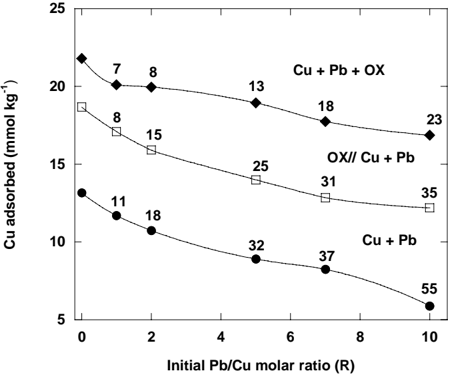
- In a goethite experiment at pH 5.0, increasing Pb/Cu ratio reduced Cu sorption by 11% at R = 1 and 55% at R = 10 without oxalic acid; with oxalic acid, Cu sorption increased by 34–43% in Cu+Pb+OX systems and 18–25% in OX//Cu+Pb systems.
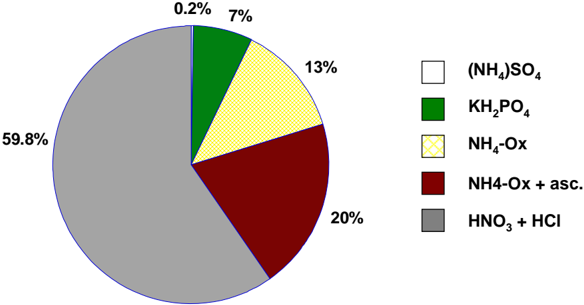
- For arsenic fractionation, the paper reports that in 20 Austrian soils (96–218 mg As kg⁻¹), 30% of As was in step 3 and 27% in step 4 of the Wenzel et al. extraction, while in one Italian polluted soil As was mostly in crystalline oxides (59.8%) and short-range Fe/Al oxides (20%).
## Methods
- Narrative review of published studies on soil metals/metalloids, emphasizing sorption/desorption, redox transformations, and chemical fractionation; no new primary dataset is presented as the paper’s own experiment.
- The paper synthesizes results from cited laboratory and field studies, including competitive sorption experiments on ferrihydrite and goethite, and sequential extraction schemes for Cu, Zn, Cd, and As.
- Main analysis is comparative and qualitative, using reported percentages, correlation coefficients, and extraction fractions from prior studies to illustrate how mobility and bioavailability vary across metals, ligands, and soil phases.
## Limitations
- The paper explicitly notes that “a systematic investigation” of competition among various anions on variable-charge minerals and soils is “rather limited.”
- It also states that information on desorption of trace elements in anionic forms from soil or soil components is “relatively little.”
- Evident from the text: this is a review, so its conclusions depend on heterogeneous studies with different soils, ligands, pH conditions, and extraction schemes, which limits direct comparability across examples.
Model-written summary. Check it against the paper before relying on it.
Integrity signals
Registry
Cites
Statistics
Figures
Verification
Claims the paper makes
4 Valid · 8 Not valid · 66 Not checked · 41 Own results and interpretations
Every source the paper cites for this claim was checked and supports it.
In the paper
“The As mobility, bioavailability, toxicity, and environmental fate are controlled by biogeochemical transformations that either form or destroy As-bearing carrier phases, or modify the redox state and chemical As speciation (see Figure 2 and Table 1 in Borch et al ., 2010).”
What the sources say
- Supportedcites Borch et al., 2010 matched to “Biogeochemical Redox Processes and their Impact on Contaminant Dynamics” (2010) source
The Impact on Trace Elements section (p. 3) states the claim almost verbatim and explicitly points to Figure 2 and Table 1. Figure 2 (p. 3) illustrates both changes to arsenic-bearing mineral phases and changes to arsenic redox state. (LLM, conf=0.95)
plainstates a cause- Asserted: passes — The authors put it forward as true.
- Checkable: passes — It can be checked against evidence.
- Load-bearing: passes — The paper’s conclusions depend on it.
- Based: passes — The paper gives a reason why it holds.
- Supported
Every source the paper cites for this claim was checked and supports it.
In the paper
“Direct reduction of Fe(III) by microorganisms can lead to As sequestration by sorption of As onto secondary Fe minerals (see Figure 2 in Borch et al ., 2010).”
What the sources say
- Supportedcites Borch et al., 2010 matched to “Biogeochemical Redox Processes and their Impact on Contaminant Dynamics” (2010) source
The Impact on Trace Elements section (p. 3) states the claim directly and points to Figure 2. The figure caption on the same page also describes secondary Fe mineral formation following microbial Fe(III) reduction, leading to arsenic sorption or coprecipitation. (LLM, conf=0.95)
plainstates a cause- Asserted: passes — The authors put it forward as true.
- Checkable: passes — It can be checked against evidence.
- Load-bearing: unclear — It is unclear whether the paper’s conclusions depend on it.
- Based: passes — The paper gives a reason why it holds.
- Supported
Every source the paper cites for this claim was checked and supports it.
In the paper
“The simultaneous presence of high dissolved As and Fe(II) concentrations in anoxic groundwater has led to the conclusion that reductive dissolution of As rich Fe(III) (hydr)oxides mobilizes geogenic As (see Figure 2 in Borch et al ., 2010).”
What the sources say
- Supportedcites Borch et al., 2010 matched to “Biogeochemical Redox Processes and their Impact on Contaminant Dynamics” (2010) source
The Impact on Trace Elements section (p. 3) states the claimed conclusion directly, linking high dissolved As and Fe(II) in anoxic groundwater to reductive dissolution of As-rich Fe(III) (hydr)oxides. Figure 2 on the same page also depicts reduction of As-loaded Fe(III) minerals releasing arsenic into solution. (LLM, conf=0.95)
hedgedstates a cause- Asserted: passes — The authors put it forward as true.
- Checkable: passes — It can be checked against evidence.
- Load-bearing: passes — The paper’s conclusions depend on it.
- Based: passes — The paper gives a reason why it holds.
- Supported
The sources with a verdict support this claim; the rest weren’t checked yet, have no full text we could read, or their verdicts aren’t rated yet.
In the paper
“The accumulation level of heavy metals differs between and within species (Huang and Cunningham, 1996; McGrath et al . 2002).”
What the sources say
- Supportedcites Huang and Cunningham, 1996 matched to “Lead phytoextraction: species variation in lead uptake and translocation” (1996) source
The Abstract states 'Our results demonstrated that plant species differ significantly in Pb uptake and translocation', and the Discussion ('Role of a synthetic chelate in Pb phytoextraction') opens 'Results from this research demonstrate that plant species vary significantly in Pb uptake and translocation (Figs 2-4; Table 1)', with dicots exceeding monocots in root Pb and corn exceeding dicots in shoot translocation — the between-species part of the claim. The within-species part is carried by Table 1 and the 'Phytoextraction of Pb from contaminated soil' section, where six Brassica juncea cultivars span shoot Pb from 347 down to 32 mg/kg and the text confirms 'shoot Pb concentrations in the three best Pb accumulating cultivars of Brassica juncea were significantly higher than those in the three least Pb accumulating cultivars'. Scope note: the paper's own measurements are for lead (and it frames them against the general monocot/dicot heavy-metal accumulator belief), which the citing sentence generalises to 'heavy metals'; the paired McGrath et al. 2002 citation covers the broader multi-metal case. (LLM, conf=0.82)
- Not checked — no full text of the sourcecites McGrath et al., 2002 matched to “Phytoremediation of metals, metalloids, and radionuclides” (2002) source
plainstates an association- Asserted: passes — The authors put it forward as true.
- Checkable: passes — It can be checked against evidence.
- Load-bearing: unclear — It is unclear whether the paper’s conclusions depend on it.
- Based: passes — The paper gives a reason why it holds.
- Supported
None of the sources cited for this claim have been checked yet.
In the paper
“Experiments with various synthetic Fe, Al and Mn oxides showed that the affinity of trace elements for Mn oxide was usually much greater than that for Fe or Al oxides.”
What the sources say
- Not matchedcites Kinniburg and Jackson, 1976
An author–year citation the paper’s reference list doesn’t settle. We don’t search these by name.
- Not checked — no full text of the sourcecites McBride, 1982 matched to “Cu2+-Adsorption Characteristics of Aluminum Hydroxide and Oxyhydroxides” (1982) source
- Not checked — no full text of the sourcecites Violante et al., 2003 matched to “Adsorption of Heavy Metals on Mixed Fe-Al Oxides in the Absence or Presence of Organic Ligands” (2003) source
plainstates an association- Asserted: passes — The authors put it forward as true.
- Checkable: passes — It can be checked against evidence.
- Load-bearing: unclear — It is unclear whether the paper’s conclusions depend on it.
- Based: passes — The paper gives a reason why it holds.
- Not matched
75 more claims
Create a free account to see all 119 claims and to verify the 5 references still open.
- Probably not a substantial claim. 22
- It may state two separate claims as one. 23
Citations
Cites
Environmental Chemistry of Soils
McBride, M. B. (1994) · Medical Entomology and Zoology · Cited by 5,997
(2003) · Elsevier eBooks · doi:10.1016/b978-0-12-656446-4.x5000-2 · Cited by 2,575
(2007) · Iron Oxides in the Laboratary · doi:10.1002/9783527613229.ch01 · Cited by 2,442
Roy, W. R. (1995) · Journal of Environmental Quality · doi:10.2134/jeq1995.00472425002400010029x · Cited by 2,431
Accumulators and excluders ‐strategies in the response of plants to heavy metals
Baker, A. J. M. (1981) · Journal of Plant Nutrition · doi:10.1080/01904168109362867 · Cited by 2,233 · cited 1×
“Baker (1981) suggested that plants could be classified into three categories: (1) excluders: those that grow in metal-contaminated soil and maintain shoot concentration at low level up to a critical soil value above which relatively unrestricted root-to-shoot transport result, (2) accumulators:…”
BackgroundThe surface chemistry of soils
Sposito, G. (1984) · Cited by 1,850
Biogeochemical Redox Processes and their Impact on Contaminant Dynamics
Borch, T., Kretzschmar, R., Kappler, A., Cappellen, P. V., Ginder-Vogel, M., Voegelin, A., & Campbell, K. (2010) · Environmental Science & Technology · doi:10.1021/es9026248 · Cited by 1,456 · cited 5×
“The As mobility, bioavailability, toxicity, and environmental fate are controlled by biogeochemical transformations that either form or destroy As-bearing carrier phases, or modify the redox state and chemical As speciation (see Figure 2 and Table 1 in Borch et al., 2010).”
BackgroundInfluentialArsenic fractionation in soils using an improved sequential extraction procedure
Wenzel, W. W., Kirchbaumer, N., Prohaska, T., Stingeder, G., Lombi, E., & Adriano, D. C. (2001) · Analytica Chimica Acta · doi:10.1016/s0003-2670(01)00924-2 · Cited by 1,408 · cited 3×
“Sequential extraction procedure for arsenic (Wenzel et al. 2001) with permission.”
MethodInfluentialArsenate and Chromate Retention Mechanisms on Goethite. 1. Surface Structure
Fendorf, S., Eick, M. J., Grossl, P., & Sparks, D. L. (1997) · Environmental Science & Technology · doi:10.1021/es950653t · Cited by 1,017 · cited 2×
“Particularly, arsenate may form different surface complexes on inorganic soil components: monodentate, bidentate-mononuclear and bidentatebinuclear complexes in different proportion depending on pH and surface coverage (Fendorf et al. 1997; O’Reilly et al. 2001).”
BackgroundChemical sequential extraction for metal partitioning in environmental solid samples.
Filgueiras, A. V., Lavilla, I., & Bendicho, C. (2002) · Journal of Environmental Monitoring · doi:10.1039/b207574c · Cited by 972 · cited 1×
“Sequential extraction schemes for metal partitioning in environmental solid samples have recently been summarized in a comprehensive review by Filgueiras et al. (2002) and in a JUPAC technical report by Hlavay et al. (2004).”
Background
Research works printed but not linked: 2
- Huang, P.M., Germida, J.J. 2002 . Chemical and biochemical processes in the rhizosphere: metal pollutants. In: P.M. Huang, J.-M. Bollag, N. Senesi (eds). Interactions Between Soil Particles and Microorganisms: Impact on the Terrestrial Ecosystem. John Wiley & Sons, New York, pp: 381-438
- Pigna, M., De Santis, R., Cozzolino, V., Violante, A. 2010 . Influence of organic and inorganic ligands on the adsorption of arsenate and arsenite onto ferrihydrite. Geoderma in Press.
Cited by
Items 801–900 of 951
Okorie, E., & Egila, J. (2014) · International Journal of Biological and Chemical Sciences · doi:10.4314/ijbcs.v8i1.33
“Increased mobility of metals can be stimulated by plant roots which include changes in pH, reducing capacity and the amount and composition of exudates (Bernal and McGrath, 1994) and use of chelating agents (Violante et al., 2010).”
BackgroundAnalysis of selected toxic metals using bacterial biosensors and their macromolecular derivatives
Bartos, A. (2012) · TU repository (Lodz University of Technology) · doi:10.34658/bfs.2012.76.1.43-50
Desorption of Heavy Petroleum Oils and Heavy Metals from Soils by Flushing Agents
Yun, S. M., Kim, G. R., Lim, H. J., et al. (2014) · Journal of Soil and Groundwater Environment · doi:10.7857/jsge.2014.19.3.094
“또한 pH를 낮게 유지하여 중금속의 이동성을 높여 주는 유기산과 무기산 도 많이 사용되고 있다(Violante et al., 2010).”
Development of an artifical phytoremediation technology for soils contaminated by toxic metals
García, O. Á., & Angélica, N. (2013)
Chiodini, M. E. (2013) · Archivio Istituzionale della Ricerca (Universita Degli Studi Di Milano) · doi:10.13130/chiodini-marcello-ermido_phd2013-03-11
TOOL BOXES FOR SOIL BIOREMEDIATION ASSESSMENT IN HEAVY METAL POLLUTED AREAS
EMILI, L. (2012) · IRIS Research product catalog (Sapienza University of Rome)
INVESTIGATION OF PHOSPHORUS CHANGE IN A SANDY LOAM ASSOCIATED WITH CONTROLLED DRAINAGE
Rudzianskaitė, A., & Misevičienė, S. (2015) · International Scientific Conference Rural Development · doi:10.15544/rd.2015.066
Ogurtsov, A. N., & Bakhmatova, K. A. (2016) · InterCarto InterGIS · doi:10.24057/2414-9179-2016-2-22-232-243
“При рН, близком к нейтральному, железо может существовать в растворе только при низком ОВП или в составе органических комплексов в почвах с окислительным режимом [Violante et al., 2010].”
Arsenic Speciation and Phytoremediation Modeling for Environmental Management
Marlborough, S. J. (2016) · Louisiana State University · doi:10.31390/gradschool_dissertations.2062
Detection and Quantification of Biological and Physiochemical Parameters in Porous Media
Li, B. (2017) · TigerPrints (Clemson University)
Risk Implications of Heavy Metal Contamination in Agricultural Soil and Crop Productivity
Archana, & Jaitly, A. K. (2017) · Advances in environmental engineering and green technologies book series · doi:10.4018/978-1-5225-3537-9.ch013
Alves, D. A. D. S., Louzada, I. S. D. B., Lanza, M. H., et al. (2018) · Irriga · doi:10.15809/irriga.2018v1n1p1-14
“The existence of functional groups such as the carboxylic and phenolic groups actually perform the organic-metalorganic interactions and, therefore, make OM a natural multiligant (SMITH, 2009; VIOLANTE, 2010).”
BackgroundDistribuição do cádmio nas frações químicas de um cambissolo flúvico alumínico gleissólico
Daniel, E. D. S., Miquelluti, D. J., Campos, M. L., Madeira, M. D. M., & Bueno, D. K. (2019) · Revista de Ciências Agroveterinárias · doi:10.5965/223811711812019127
Moteshareie, H. (2019) · Carleton University's Institutional Repository (MacOdrum Library, Carleton University) · doi:10.22215/etd/2019-13407
Indigenous endomycorrhiza of iron and manganese contaminated soils in Indonesia
Akib, M. A., Nuddin, A., Prayudyaningsih, R., & Syatrawati, S. (2019) · International Journal of Current Research in Biosciences and Plant Biology · doi:10.20546/ijcrbp.2019.608.001
“…Emamverdian et al., 2015), (v) increase efflux (Hildebrandt et al., 2007; Tiwari and Lata, 2018), (vi) formation of complexes outside the cell (Violante et al., 2010; Singh et al., 2016), (vii) release of organic acids (Adeleke et al., 2017; Mishra et al., 2017), and (viii) ligand synthesis…”
Effects of treated wastewater on selected soil nutrients and biological properties
Kganyago, Z. M. (2019)
Enya, O. (2019) · University of Salford Institutional Repository (University of Salford) · Cited by 1
Plant Responses to Metalloid Accumulation
Dhir, B. (2020) · Wiley eBooks · doi:10.1002/9781119487210.ch4
Role of the Hairy Roots as A Biological Agent in Phytoremediation
Mohammed, A. A.-H., Hamed, O. M., & Alsaffar, R. S. (2020) · Mağallaẗ ʻulūm al-rāfidayn · doi:10.33899/rjs.2020.167310
“The inclusion of metals in plant tissues are crucial elements of the capability of plants to dispose of heavy metals from the soil (Violante et al., 2010; Santos-Diaz 2013).”
BackgroundGEO- AND PHYTO-MONITORING OF ENVIRONMENTAL IMPACT OF SMELTING INDUSTRY IN IKIRUN, NIGERIA
Bello, M. O., Abdus-Salam, N., Odebunmi, N. A., & Jimoh, A. A.-A. (2021) · FUDMA Journal of Sciences · doi:10.33003/fjs-2020-0404-486 · Cited by 1
Ameh, E. G., Kolawole, S., Idakwo, S. O., & Ojonimi, T. I. (2021) · Research Square · doi:10.21203/rs.3.rs-386829/v1
Zuluaga, V., & Alberto, J. A. (2018)
Ning, X., Wang, S., Wu, Y., et al. (2021) · Research Square · doi:10.21203/rs.3.rs-532354/v1
Gallini, L., Hursthouse, A. S., & Scopa, A. (2021) · International Journal of Environmental Research and Public Health · doi:10.3390/ijerph18178930
“Fate, mobility, distribution and bioavailability of PTEs depending on the chemical–physical properties of soils, rocks and sediments, which are in turn determined by chemical– physical kinetics reactions mostly controlled by living organisms (these include: complexation, hydrolysis, dissolution, solubility, oxidation,…”
BackgroundMitigation of Cadmium Uptake in Cocoa: Efficacy of Soil Application Methods of Lime and BiocharPreprint
Ramtahal, G., Umaharan, P., Davis, C., Roberts, C., Hanuman, A., & Ali, L. (2021) · Research Square · doi:10.21203/rs.3.rs-921799/v1
Herman, J. P., & Missimer, T. M. (2022) · Groundwater Monitoring & Remediation · doi:10.1111/gwmr.12506
Role of Phytoremediation as a Promising Technology to Combat Environmental Pollution
Munazir, M., Qureshi, R., Munir, M., & Mukhtar, H. (2021) · Springer eBooks · doi:10.1007/978-981-16-5621-7_16 · Cited by 1
Dynamics of Heavy Metal(loid)s in Mine Soils
Kunhikrishnan, A., Bolan, N. S., Chowdhury, S., Park, J. H., Kim, H. S., Choppala, G., Singh, B. P., & Kim, W. I. (2017) · CRC Press eBooks · doi:10.1201/9781351247337-20 · Cited by 2
Pelletier, N. (2021) · Carleton University's Institutional Repository (MacOdrum Library, Carleton University) · doi:10.22215/etd/2021-14495
Ameh, E. G., Kolawole, S. M., Idakwo, S. O., & Ojonimi, T. I. (2021) · doi:10.21203/rs.3.rs-238390/v1
“As is a known cause of systemic hypertension, anemia, liver necrosis, kidney failure and acute leukemia (Adriana, et al., 2008; Violante et al., 2010).”
Background(2013) · Egyptian Journal of Soil Science · doi:10.21608/ejss.2013.164
Mogwasi, R., Getenga, Z. M., Olale, K. O., & Osunga, S. (2022) · SSRN Electronic Journal · doi:10.2139/ssrn.4141051
Gunadasa, S. G., Tighe, M. K., & Wilson, S. C. (2022) · SSRN Electronic Journal · doi:10.2139/ssrn.4158191
Thanachit, S., Anusontpornperm, S., & Yoojaroenkit, N. (2022) · JSFA reports · doi:10.1002/jsf2.76
Samal, S. K., Datta, S. P., Golui, D., et al. (2022) · Research Square · doi:10.21203/rs.3.rs-1887097/v1
Torres-Quiroz, C., Dissanayake, J., & Park, J. (2022) · Research Square · doi:10.21203/rs.3.rs-1943399/v1
Detection of metals/metalloids and development of engineered plants to fight stress
Ahmad, S., Nawaz, M., Zafar, Z., Ali, A., & Abbas, U. (2022) · Elsevier eBooks · doi:10.1016/b978-0-323-91675-2.00023-8
Osarumwense, J. O., Osagiede, E. E., Okolafor, F. I., et al. (2022) · Open Journal of Environmental Research · doi:10.52417/ojer.v3i2.407
Mobility of Cadmium in Distributed Desert Soil Column Amended by Sewage Sludge
Ramadan, A. M., & Elssaidi, M. A. (2018) · مجلة علوم البحار والتقنيات البيئية · doi:10.59743/jmset.v4i2.77
Mandizha, N. T., Kugara, J., Mombeshora, E. T., et al. (2023) · SSRN Electronic Journal · doi:10.2139/ssrn.4523460
Mohammadi, M., McMackin, C., & Egli, M. (2023) · SSRN Electronic Journal · doi:10.2139/ssrn.4575750
Shift in Microbial Communities Along Little Stream Born from an Old Uranium Mine DrainagePreprint
Mallet, C., Rossi, F., Holub, G., et al. (2023) · SSRN Electronic Journal · doi:10.2139/ssrn.4614651
Barłóg, P., Hlísníkovský, L., Łukowiak, R., et al. (2023) · SSRN Electronic Journal · doi:10.2139/ssrn.4642956
Daka, J. J., & Kafwembe, A. M. (2023) · British Journal of Environmental Sciences · doi:10.37745/bjes.2013/vol11n4121
Metal Delivery and Accumulation in Salt Marsh Soils Along the East Coast of the United StatesPreprint
Jezycki, K., Rodriguez, E., Craft, C., et al. (2023) · SSRN Electronic Journal · doi:10.2139/ssrn.4668635
Mkumbo, S. (2024) · Journal of applied science and environmental management · doi:10.4314/jasem.v28i2.20
“The mobility and bioavailability of heavy metals in the soil increase with a decrease in the soil pH (Violante et al ., 2010).”
BackgroundJanuszewska, A., Siuda, R., & Dembicz, I. (2024) · Geological Quarterly · doi:10.7306/gq.1736
Biochar for carbon sequestration under heavy metal–contaminated soils
Khan, M. N., Ullah, B., Ullah, S., Wahab, S., Bangash, S. A. K., Razak, S. A., Bibi, A., Adnan, M., & Kaplan, A. (2024) · Elsevier eBooks · doi:10.1016/b978-0-443-21562-9.00012-8
Chen, W., Xu, J., Chen, Z., et al. (2024) · SSRN Electronic Journal · doi:10.2139/ssrn.4888847
Mofor, N. A., Kenneth, M., A., F. J., et al. (2024) · African Journal of Environment and Natural Science Research · doi:10.52589/ajensr-c8raj9nm
“Heavy metals exist in the soil in a variety of forms such as the water soluble, exchangeable and bound to specific sites of organic and inorganic components, and in the structure of primary and secondary minerals (Violante et al., 2010).”
BackgroundZitta, W. S. (2024) · Research Square · doi:10.21203/rs.3.rs-4874960/v1
Benedet, L., Lima, A. P., Barbosa, T. M., et al. (2024) · Revista Brasileira de Ciência do Solo · doi:10.36783/18069657rbcs20230126
Saxena, S., Sharma, S., & Sharma, M. (2024) · Nanostructure science and technology · doi:10.1007/978-3-031-67176-0_4
The Influence of Different Land Uses on Tungstate Sorption in Soils of the Same Geographic Area
Petruzzelli, G., & Pedron, F. (2025) · Environments · doi:10.3390/environments12010017
“The type of surface complex formed is influenced by surface coverage, a behavior observed in other anions such as arsenate [57].”
Bozbeyoğlu, P., DOĞAN, O., & BUDAK, B. (2025) · Iğdır Üniversitesi Fen Bilimleri Enstitüsü Dergisi · doi:10.21597/jist.1508335
Bhatti, S. S., Nagpal, A. K., Kumar, A., et al. (2025) · Bulletin of Environmental Contamination and Toxicology · doi:10.1007/s00128-025-04051-8
“But under anaerobic conditions (like in rice crop) Cu may not be bioavailable due to mobilization of dissolved organic matter (DOM) and complexation reactions (Violante et al. 2010).”
He, J., & Zheng, X. (2025) · SSRN Electronic Journal · doi:10.2139/ssrn.5253490
Kotelnikova, A. D., Borisochkina, T. I., Matveeva, N. V., et al. (2025) · Eurasian Soil Science · doi:10.1134/s106422932560143x
“In this result, their mobility and availability for plants and soils biota change significantly, depending on soil properties and the influence of environmental factors [31].”
A novel framework for measuring natural attenuation in the unsaturated zone below MSW dumpsites
Singh, P., Haritwal, D. K., Ramana, G., & Datta, M. (2025) · Waste Management · doi:10.1016/j.wasman.2025.115168
Mobility of metals in soil under climate change
Grobelak, A., Kowalska, A., Augustajtys, D., & Całus-Makowska, K. (2025) · Elsevier eBooks · doi:10.1016/b978-0-443-40292-0.00012-1
Jiao, H., Zhang, H., Egli, M., et al. (2025) · Environmental Research · doi:10.1016/j.envres.2025.123159
Wyszkowski, M., & Kordala, N. (2025) · Applied Sciences · doi:10.3390/app152111555 · Cited by 1
Snak, A., Gonçalves, A. C., Conradi, É., Secco, D., Pinto, F. G. D. S., & Schmidt, M. (2025) · Aracê. · doi:10.56238/arev7n10-308
COMMONS-BASED AI: A SOCIOMETABOLIC CRITIQUE OF THE HEGEMONIC MODEL AND PATHS TO EMANCIPATION
Benini, É. A. (2025) · Aracê. · doi:10.56238/arev7n10-309
Surface Geochemistry of Vanadium and Its Isotopes
Huang, Y., Wenxian, G. O. U., Weiwei, X. I. E., & Ying, C. H. E. N. (2025) · EARTH AND ENVIRONMENT · doi:10.3724/ee.1672-9250.2026.54.001
Introduction to soil chemistry and nutrient availability
Nawaz, T., Joshi, N., Kaur, R., & Fahad, S. (2025) · Elsevier eBooks · doi:10.1016/b978-0-443-40584-6.00006-1 · Cited by 1
Wang, S., Wang, Z., Zhang, W., Li, J., Lin, M., & Chen, L. (2024) · Figshare · doi:10.6084/m9.figshare.26720610
Additional file 2 of Low presence of potentially toxic elements in Singapore urban garden soils
Goh, T. A., Ramchunder, S. J., & Ziegler, A. D. (2022) · Figshare · doi:10.6084/m9.figshare.21087185
Yang, J., Jiang, L., Shi, J., Guo, Z., Miao, B., Peng, Y., Liu, H., Liang, Y., & Liu, X. (2025) · SSRN Electronic Journal · doi:10.2139/ssrn.5902592
Accumulation of trace metals in vegetables from allotment gardens in the city of Wrocław, SW Poland
Gruszka, D., Szopka, K., & Gruss, I. (2025) · Soil Science Annual · doi:10.37501/soilsa/209948
“Factors affecting the mobility and bioavailability of these elements include: soil pH, organic matter content, clay mineral type, and hydrological conditions (Violante et al., 2010; Caporale and Violante., 2016).”
Gawade, N. S., Pagariya, M. C., Jadhav, P., Muhammed, P. K. M., Shinde, N. A., Mandlik, R., Madhavan, S., Jadhav, P. V., Sonah, H., Patil, G., et al. (2025) · Plant Science · doi:10.1016/j.plantsci.2025.112971 · Cited by 2
Самілик, М. М. (2025) · EUREKA Life Sciences · doi:10.21303/2504-5695.2025.004071 · Cited by 5
Yansong, W. A. N. G., Wang, Z., & Liu, Y. (2026) · Pedosphere · doi:10.1016/j.pedsph.2026.01.001
Bonet-Garcia, N., Robin, V., Bordas, F., Buzier, R., Bourven, I., Mucha, A. P., Almeida, C. M. R., & Guibaud, G. (2026) · SSRN Electronic Journal · doi:10.2139/ssrn.6020339
Raoilimanantsoa, N., Oremo, J., Akello, O. O., et al. (2026) · Environmental Health · doi:10.1186/s12940-025-01256-6
“Because metal speciation affects solubility and toxicity, delays between sampling and filtration may allow redox reactions, precipitation, or sorption/ desorption to shift metals between dissolved and particulate phases [38, 43].”
Heavy metals in unsaturated urban soils: Experimental insights and stochastic forecasting
Dell’Oca, A., Khair, D. A. E., Ferré, C., Comolli, R., & Riva, M. (2026) · Journal of Contaminant Hydrology · doi:10.1016/j.jconhyd.2026.104855
Nanotechnology Novel Trends for Soil Revitalization
Ghosh, S., & Jaison, M. (2026) · Springer eBooks · doi:10.1007/978-981-95-5033-3_7
Bouslim, M., Mahi, K. E., Samoussa, O. M., Rachidi, A., & Kabine, M. (2026) · BIO Web of Conferences · doi:10.1051/bioconf/202621501010 · Cited by 1
Seventy-five years of fertiliser application: insights from the Steinach grassland experiment
Jungová, M., Hejcman, M., Száková, J., & Tlustos, P. (2026) · Journal of Soils and Sediments · doi:10.1007/s11368-025-04203-7
“…to neutral pH at the SGE, trivalent chromium (Cr³⁺) is expected to dominate, while historical phosphate fertilisers were known to contain relatively high total Cr concentrations (Kabata-Pendias and Pendias 2001 ; Violante et al. 2010; Hejcman et al. 2009; Uprety et al. 2009; Zhang et al. 2025).”
Pucci, E., Gazza, L., Manetti, C., Palumbo, D., Poscente, V., Puzo, G., Bernardini, A., & Zoani, C. (2026) · Experimental Agriculture · doi:10.1017/s0014479726100234
“This behaviour is well-documented in pedogeochemical literature, where ferric oxides represent a major sink for metals and metalloids through mechanisms of specific adsorption and co-precipitation (Fendorf et al., 2017; Sparks, 2003; Sposito, 2008; Tipping et al., 2020; Violante et al., 2010).”
Review of chemical speciation models applied in soil interface reaction of cations and anions
Li, J., Lian, W., Deng, Y., et al. (2026) · Applied Geochemistry · doi:10.1016/j.apgeochem.2026.106804
Biotransformations, dégradation et cycle de vie des nanoparticules d'or en milieu intracellulaire
Balfourier, A. (2019) · theses.fr (ABES) · doi:10.70675/90ec2d90zc126z4d6dza795z0c214cc44684
Conception of a fibrous composite material for the retention of heavy metals
Mendoza, A. D. (2020) · theses.fr (ABES) · doi:10.70675/bf4b28e2z6a8dz46bbzaba9ze97dd71515bf
Fourrier, C. (2020) · theses.fr (ABES) · doi:10.70675/272ac102z135az4fcezac4ez1b7f92872448 · Cited by 2
Wijesinghe, S., Sarkar, D., Saleh, H. N., et al. (2026) · Applied Sciences · doi:10.3390/app16073504
Tracking trace elements from soil to Lebanese bread and Populations Exposure
Lebbos, N. (2021) · theses.fr (ABES) · doi:10.70675/4978df9czae7fz4e89za493z54803d479af2 · Cited by 1
Metadata
- Authors
- Violante, A., Cozzolino, V, Perelomov, L., Caporale, A. G., & Pigna, M.
- Affiliations
- University of Naples Federico II (IT)
- Corresponding author
- Violante, A
- Venue
- Journal of Soil Science and Plant Nutrition
- Published
- 2010-07
- Volume
- 10
- Issue
- 3
- ISSN
- 0718-9508 (ISSN-L)
- 0718-9516
- OpenAlex
- W1998582560
- Semantic Scholar
- cb8e101c122956fb00a221b2884004b417ea544f
- Cited by
- 957
- References
- 69
- Citations by year
- 2026: 75 · 2025: 70 · 2024: 74 · 2023: 68 · 2022: 94 · 2021: 99 · 2020: 82 · 2019: 77 · 2018: 61 · 2017: 66 · 2016: 60 · 2015: 41 · 2014: 35 · 2013: 33 · 2012: 19
- FWCI
- 17.27
- Type
- journal article
- Language
- en
- Open access
- hybrid
- doi.org
- Licence
- cc-by-nc
- Locations
- Journal of soil science and plant nutrition (publishedVersion, cc-by-nc)
- Americanae (AECID Library) (publishedVersion, other-oa)
- LA Referencia (Red Federada de Repositorios Institucionales de Publicaciones Científicas) (publishedVersion, other-oa)
- INFM-OAR (INFN Catania) (submittedVersion, other-oa)
- Topics
- Physical Sciences › Environmental Science › Pollution › Heavy metals in environment
- Life Sciences › Agricultural and Biological Sciences › Plant Science › Plant Micronutrient Interactions and Effects
- Physical Sciences › Environmental Science › Water Science and Technology › Environmental and Analytical Chemistry Studies
- Keywords
- heavy metals, metalloids, metal bioavailability, metal mobility, soil sorption, desorption, redox reactions, metal speciation, metal fractionation, humic and fulvic acids, root exudates, microbial metabolites, metal leaching, metal toxicity
About these checks
Registry, retraction, Cites and statistics results are computed, not judged, with one exception: a printed reference that no index lists is read once by a model before it counts as a citation error. Claims are extracted by a model and kept only when their quote appears verbatim in the text; each cited source is then checked, with a model’s help, for whether it says what the claim relies on. Those verdicts can be wrong — read the claim’s quote and the cited source before relying on one.
A language model drew the claims from the paper on 2026-10-10, under version 3 of the claim definition (model deepseek-v4.1-flash, prompt extract-v3).
A second model labelled each claim on 2026-10-10 (model jev-1.13-20260917, definition revision gold-guideline-v0.2).
Cited sources are checked with a language model’s help (gpt-6-sol and qwen3.8-omni-flash).
Statistics and arithmetic are recomputed, not judged.
Confidence bands are shown only for fields calibrated on our annotated test set. None is calibrated yet, so no band is shown.
What counts as a claim ›How we measure confidence ›How we check this ›
Are you an author, or do you see a problem with this page? Request a review
Data sources
Bibliographic data: Semantic Scholar, OpenAlex, Crossref.
Contains information from the Semantic Scholar Academic Graph Datasets, made available under the ODC Attribution License (ODC-BY 1.0).
Semantic Scholar’s data is described in: Kinney, R., et al. (2023). The Semantic Scholar Open Data Platform. arXiv:2301.10140.
