

MOBILITY AND BIOAVAILABILITY OF HEAVY METALS AND METALLOIDS IN SOIL ENVIRONMENTS
Open accessThe DOI matches its Crossref record; 59 of the 69 references it cites were found in a registry or an index; 4 of the 82 sources its claims cite were checked for support.
Abstract
In soil environments, sorption/desorption reactions as well as chemical complexation with inorganic and organic ligands and redox reactions, both biotic and abiotic, are of great importance in controlling their bioavailability, leaching and toxicity.These reactions are affected by many factors such as pH, nature of the sorbents, presence and concentration of organic and inorganic ligands, including humic and fulvic acid, root exudates, microbial metabolites and nutrients.In this review, we highlight the impact of physical, chemical, and biological interfacial interactions on bioavailability and mobility of metals and metalloids in soil.Special attention is devoted to: i) the sorption/desorption processes of metals and metalloids on/from soil components and soils; ii) their precipitation and reduction-oxidation reactions in solution and onto surfaces of soil components; iii) their chemical speciation, fractionation and bioavailability.
Overview
CoChat Summary
## TL;DR
This review explains how soil pH, sorbent properties, ligands, redox reactions, and reaction time control the mobility, bioavailability, and toxicity of heavy metals and metalloids in soils. It also argues that total soil metal content is a poor predictor of risk and that sequential extraction/fractionation is needed to identify the more bioavailable forms.
## Key findings
- Sorption/desorption, complexation, precipitation, and redox reactions are presented as the main controls on metal and metalloid mobility; the paper says these processes are affected by pH, sorbent nature, and organic/inorganic ligands.
- For cationic metals, the paper reports that Cu was more selectively sorbed than Zn on ferrihydrite and a humic-acid-like sample; in equimolar Zn presence, sorbed Cu was only slightly reduced, while Cu strongly reduced Zn sorption.
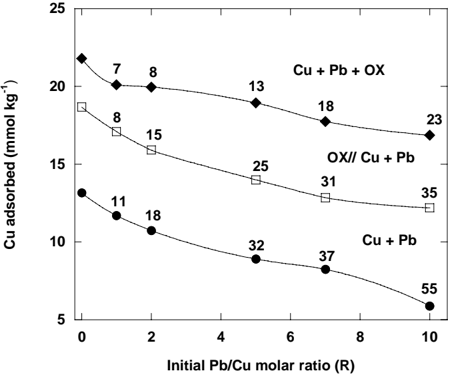
- In a goethite experiment at pH 5.0, increasing Pb/Cu ratio reduced Cu sorption by 11% at R = 1 and 55% at R = 10 without oxalic acid; with oxalic acid, Cu sorption increased by 34–43% in Cu+Pb+OX systems and 18–25% in OX//Cu+Pb systems.
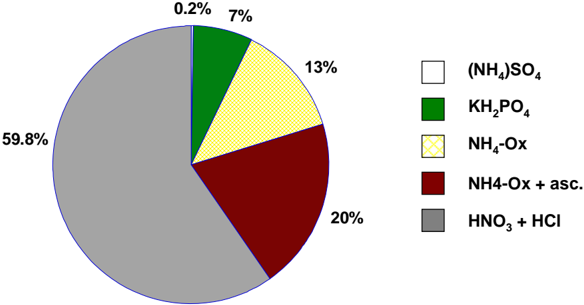
- For arsenic fractionation, the paper reports that in 20 Austrian soils (96–218 mg As kg⁻¹), 30% of As was in step 3 and 27% in step 4 of the Wenzel et al. extraction, while in one Italian polluted soil As was mostly in crystalline oxides (59.8%) and short-range Fe/Al oxides (20%).
## Methods
- Narrative review of published studies on soil metals/metalloids, emphasizing sorption/desorption, redox transformations, and chemical fractionation; no new primary dataset is presented as the paper’s own experiment.
- The paper synthesizes results from cited laboratory and field studies, including competitive sorption experiments on ferrihydrite and goethite, and sequential extraction schemes for Cu, Zn, Cd, and As.
- Main analysis is comparative and qualitative, using reported percentages, correlation coefficients, and extraction fractions from prior studies to illustrate how mobility and bioavailability vary across metals, ligands, and soil phases.
## Limitations
- The paper explicitly notes that “a systematic investigation” of competition among various anions on variable-charge minerals and soils is “rather limited.”
- It also states that information on desorption of trace elements in anionic forms from soil or soil components is “relatively little.”
- Evident from the text: this is a review, so its conclusions depend on heterogeneous studies with different soils, ligands, pH conditions, and extraction schemes, which limits direct comparability across examples.
Model-written summary. Check it against the paper before relying on it.
Integrity signals
Registry
Cites
Statistics
Figures
Verification
Claims the paper makes
4 Valid · 8 Not valid · 66 Not checked · 41 Own results and interpretations
Every source the paper cites for this claim was checked and supports it.
In the paper
“The As mobility, bioavailability, toxicity, and environmental fate are controlled by biogeochemical transformations that either form or destroy As-bearing carrier phases, or modify the redox state and chemical As speciation (see Figure 2 and Table 1 in Borch et al ., 2010).”
What the sources say
- Supportedcites Borch et al., 2010 matched to “Biogeochemical Redox Processes and their Impact on Contaminant Dynamics” (2010) source
The Impact on Trace Elements section (p. 3) states the claim almost verbatim and explicitly points to Figure 2 and Table 1. Figure 2 (p. 3) illustrates both changes to arsenic-bearing mineral phases and changes to arsenic redox state. (LLM, conf=0.95)
plainstates a cause- Asserted: passes — The authors put it forward as true.
- Checkable: passes — It can be checked against evidence.
- Load-bearing: passes — The paper’s conclusions depend on it.
- Based: passes — The paper gives a reason why it holds.
- Supported
Every source the paper cites for this claim was checked and supports it.
In the paper
“Direct reduction of Fe(III) by microorganisms can lead to As sequestration by sorption of As onto secondary Fe minerals (see Figure 2 in Borch et al ., 2010).”
What the sources say
- Supportedcites Borch et al., 2010 matched to “Biogeochemical Redox Processes and their Impact on Contaminant Dynamics” (2010) source
The Impact on Trace Elements section (p. 3) states the claim directly and points to Figure 2. The figure caption on the same page also describes secondary Fe mineral formation following microbial Fe(III) reduction, leading to arsenic sorption or coprecipitation. (LLM, conf=0.95)
plainstates a cause- Asserted: passes — The authors put it forward as true.
- Checkable: passes — It can be checked against evidence.
- Load-bearing: unclear — It is unclear whether the paper’s conclusions depend on it.
- Based: passes — The paper gives a reason why it holds.
- Supported
Every source the paper cites for this claim was checked and supports it.
In the paper
“The simultaneous presence of high dissolved As and Fe(II) concentrations in anoxic groundwater has led to the conclusion that reductive dissolution of As rich Fe(III) (hydr)oxides mobilizes geogenic As (see Figure 2 in Borch et al ., 2010).”
What the sources say
- Supportedcites Borch et al., 2010 matched to “Biogeochemical Redox Processes and their Impact on Contaminant Dynamics” (2010) source
The Impact on Trace Elements section (p. 3) states the claimed conclusion directly, linking high dissolved As and Fe(II) in anoxic groundwater to reductive dissolution of As-rich Fe(III) (hydr)oxides. Figure 2 on the same page also depicts reduction of As-loaded Fe(III) minerals releasing arsenic into solution. (LLM, conf=0.95)
hedgedstates a cause- Asserted: passes — The authors put it forward as true.
- Checkable: passes — It can be checked against evidence.
- Load-bearing: passes — The paper’s conclusions depend on it.
- Based: passes — The paper gives a reason why it holds.
- Supported
The sources with a verdict support this claim; the rest weren’t checked yet, have no full text we could read, or their verdicts aren’t rated yet.
In the paper
“The accumulation level of heavy metals differs between and within species (Huang and Cunningham, 1996; McGrath et al . 2002).”
What the sources say
- Supportedcites Huang and Cunningham, 1996 matched to “Lead phytoextraction: species variation in lead uptake and translocation” (1996) source
The Abstract states 'Our results demonstrated that plant species differ significantly in Pb uptake and translocation', and the Discussion ('Role of a synthetic chelate in Pb phytoextraction') opens 'Results from this research demonstrate that plant species vary significantly in Pb uptake and translocation (Figs 2-4; Table 1)', with dicots exceeding monocots in root Pb and corn exceeding dicots in shoot translocation — the between-species part of the claim. The within-species part is carried by Table 1 and the 'Phytoextraction of Pb from contaminated soil' section, where six Brassica juncea cultivars span shoot Pb from 347 down to 32 mg/kg and the text confirms 'shoot Pb concentrations in the three best Pb accumulating cultivars of Brassica juncea were significantly higher than those in the three least Pb accumulating cultivars'. Scope note: the paper's own measurements are for lead (and it frames them against the general monocot/dicot heavy-metal accumulator belief), which the citing sentence generalises to 'heavy metals'; the paired McGrath et al. 2002 citation covers the broader multi-metal case. (LLM, conf=0.82)
- Not checked — no full text of the sourcecites McGrath et al., 2002 matched to “Phytoremediation of metals, metalloids, and radionuclides” (2002) source
plainstates an association- Asserted: passes — The authors put it forward as true.
- Checkable: passes — It can be checked against evidence.
- Load-bearing: unclear — It is unclear whether the paper’s conclusions depend on it.
- Based: passes — The paper gives a reason why it holds.
- Supported
None of the sources cited for this claim have been checked yet.
In the paper
“Experiments with various synthetic Fe, Al and Mn oxides showed that the affinity of trace elements for Mn oxide was usually much greater than that for Fe or Al oxides.”
What the sources say
- Not matchedcites Kinniburg and Jackson, 1976
An author–year citation the paper’s reference list doesn’t settle. We don’t search these by name.
- Not checked — no full text of the sourcecites McBride, 1982 matched to “Cu2+-Adsorption Characteristics of Aluminum Hydroxide and Oxyhydroxides” (1982) source
- Not checked — no full text of the sourcecites Violante et al., 2003 matched to “Adsorption of Heavy Metals on Mixed Fe-Al Oxides in the Absence or Presence of Organic Ligands” (2003) source
plainstates an association- Asserted: passes — The authors put it forward as true.
- Checkable: passes — It can be checked against evidence.
- Load-bearing: unclear — It is unclear whether the paper’s conclusions depend on it.
- Based: passes — The paper gives a reason why it holds.
- Not matched
75 more claims
Create a free account to see all 119 claims and to verify the 5 references still open.
- Probably not a substantial claim. 22
- It may state two separate claims as one. 23
Citations
Cites
Environmental Chemistry of Soils
McBride, M. B. (1994) · Medical Entomology and Zoology · Cited by 5,997
(2003) · Elsevier eBooks · doi:10.1016/b978-0-12-656446-4.x5000-2 · Cited by 2,575
(2007) · Iron Oxides in the Laboratary · doi:10.1002/9783527613229.ch01 · Cited by 2,442
Roy, W. R. (1995) · Journal of Environmental Quality · doi:10.2134/jeq1995.00472425002400010029x · Cited by 2,431
Accumulators and excluders ‐strategies in the response of plants to heavy metals
Baker, A. J. M. (1981) · Journal of Plant Nutrition · doi:10.1080/01904168109362867 · Cited by 2,233 · cited 1×
“Baker (1981) suggested that plants could be classified into three categories: (1) excluders: those that grow in metal-contaminated soil and maintain shoot concentration at low level up to a critical soil value above which relatively unrestricted root-to-shoot transport result, (2) accumulators:…”
BackgroundThe surface chemistry of soils
Sposito, G. (1984) · Cited by 1,850
Biogeochemical Redox Processes and their Impact on Contaminant Dynamics
Borch, T., Kretzschmar, R., Kappler, A., Cappellen, P. V., Ginder-Vogel, M., Voegelin, A., & Campbell, K. (2010) · Environmental Science & Technology · doi:10.1021/es9026248 · Cited by 1,456 · cited 5×
“The As mobility, bioavailability, toxicity, and environmental fate are controlled by biogeochemical transformations that either form or destroy As-bearing carrier phases, or modify the redox state and chemical As speciation (see Figure 2 and Table 1 in Borch et al., 2010).”
BackgroundInfluentialArsenic fractionation in soils using an improved sequential extraction procedure
Wenzel, W. W., Kirchbaumer, N., Prohaska, T., Stingeder, G., Lombi, E., & Adriano, D. C. (2001) · Analytica Chimica Acta · doi:10.1016/s0003-2670(01)00924-2 · Cited by 1,408 · cited 3×
“Sequential extraction procedure for arsenic (Wenzel et al. 2001) with permission.”
MethodInfluentialArsenate and Chromate Retention Mechanisms on Goethite. 1. Surface Structure
Fendorf, S., Eick, M. J., Grossl, P., & Sparks, D. L. (1997) · Environmental Science & Technology · doi:10.1021/es950653t · Cited by 1,017 · cited 2×
“Particularly, arsenate may form different surface complexes on inorganic soil components: monodentate, bidentate-mononuclear and bidentatebinuclear complexes in different proportion depending on pH and surface coverage (Fendorf et al. 1997; O’Reilly et al. 2001).”
BackgroundChemical sequential extraction for metal partitioning in environmental solid samples.
Filgueiras, A. V., Lavilla, I., & Bendicho, C. (2002) · Journal of Environmental Monitoring · doi:10.1039/b207574c · Cited by 972 · cited 1×
“Sequential extraction schemes for metal partitioning in environmental solid samples have recently been summarized in a comprehensive review by Filgueiras et al. (2002) and in a JUPAC technical report by Hlavay et al. (2004).”
Background
Research works printed but not linked: 2
- Huang, P.M., Germida, J.J. 2002 . Chemical and biochemical processes in the rhizosphere: metal pollutants. In: P.M. Huang, J.-M. Bollag, N. Senesi (eds). Interactions Between Soil Particles and Microorganisms: Impact on the Terrestrial Ecosystem. John Wiley & Sons, New York, pp: 381-438
- Pigna, M., De Santis, R., Cozzolino, V., Violante, A. 2010 . Influence of organic and inorganic ligands on the adsorption of arsenate and arsenite onto ferrihydrite. Geoderma in Press.
Cited by
Remediation of heavy metal(loid)s contaminated soils – To mobilize or to immobilize?
Bolan, N., Kunhikrishnan, A., Thangarajan, R., Kumpiene, J., Park, J., Makino, T., Kirkham, M. B., & Scheckel, K. (2014) · Journal of Hazardous Materials · doi:10.1016/j.jhazmat.2013.12.018 · Cited by 2,031
Rahman, Z., & Singh, V. P. (2019) · Environmental Monitoring and Assessment · doi:10.1007/s10661-019-7528-7 · Cited by 1,473
Microbial and Plant-Assisted Bioremediation of Heavy Metal Polluted Environments: A Review
Ojuederie, O., & Babalola, O. (2017) · International Journal of Environmental Research and Public Health · doi:10.3390/ijerph14121504 · Cited by 1,036
“The mobility and toxicity of many elements, such as chromium, selenium, lead, arsenic, nickel and copper, rely basically on their oxidation states which, in turn, are controlled by the redox reactions [18,33].”
BackgroundBioaccumulation of lead (Pb) and its effects on human: A review
Collin, M. S., Venkatraman, S. K., Vijayakumar, N., Kanimozhi, V, Arbaaz, S. M., Stacey, R. G. S., Anusha, J., Choudhary, R., Lvov, V., Tovar, G. I., et al. (2022) · Journal of Hazardous Materials Advances · doi:10.1016/j.hazadv.2022.100094 · Cited by 799
Copper uptake, essentiality, toxicity, detoxification and risk assessment in soil-plant environment
Shabbir, Z., Sardar, A., Shabbir, A., Abbas, G., Shamshad, S., Khalid, S., Natasha, Murtaza, G., Dumat, C., & Shahid, M. (2020) · Chemosphere · doi:10.1016/j.chemosphere.2020.127436 · Cited by 479
Bioaccumulation of lead (Pb) and its effects in plants: A review
Collin, S., Baskar, A., Geevarghese, D. M., Ali, M. N. V. S., Bahubali, P., Choudhary, R., Lvov, V., Tovar, G. I., Senatov, F., Koppala, S., et al. (2022) · Journal of Hazardous Materials Letters · doi:10.1016/j.hazl.2022.100064 · Cited by 362
Ahmad, M., Lee, S. S., Lee, S. E., Al-Wabel, M. I., Tsang, D. C. W., & Ok, Y. S. (2017) · Journal of Soils and Sediments · doi:10.1007/s11368-015-1339-4 · Cited by 298
“On the contrary, Sb contamination in soil is generally localized and associated with Cu and Pb smelters as well as shooting ranges (Violante et al. 2010; Ahmad et al. 2014b).”
BackgroundZulfiqar, U., Jiang, W., Xiukang, W., Hussain, S., Ahmad, M., Maqsood, M. F., Ali, N., Ishfaq, M., Kaleem, M., Haider, F. U., et al. (2022) · Frontiers in Plant Science · doi:10.3389/fpls.2022.773815 · Cited by 294
Ahmad, M., Lee, S. S., Lim, J. E., Lee, S.-E., Cho, J. S., Moon, D. H., Hashimoto, Y., & Ok, Y. S. (2014) · Chemosphere · doi:10.1016/j.chemosphere.2013.09.077 · Cited by 292
Ali, W., Mao, K., Zhang, H., Junaid, M., Xu, N., Rasool, A., Feng, X., & Yang, Z. (2020) · Journal of Hazardous Materials · doi:10.1016/j.jhazmat.2020.122720 · Cited by 265
Bacterial Exopolysaccharides: Insight into Their Role in Plant Abiotic Stress Tolerance
Bhagat, N., Raghav, M., Dubey, S., & Bedi, N. (2021) · Journal of Microbiology and Biotechnology · doi:10.4014/jmb.2105.05009 · Cited by 242
“The aqueous layer of the soil is a dynamic environment where chemical reactions, and circulation and transfer of heavy metals between bacteria, aqueous layer, and soil layer take place constantly [111].”
BackgroundZulfiqar, U., Ayub, A., Hussain, S., Waraich, E. A., El-Esawi, M. A., Ishfaq, M., Ahmad, M., Ali, N., & Maqsood, M. F. (2022) · Journal of Soil Science and Plant Nutrition · doi:10.1007/s42729-021-00645-3 · Cited by 241
Ponting, J., Kelly, T. J., Verhoef, A., Watts, M. J., & Sizmur, T. (2021) · Science of The Total Environment · doi:10.1016/j.scitotenv.2020.142040 · Cited by 220
Tang, Z., Wang, H., Chen, J., Chang, J., & Zhao, F. (2023) · Journal of Integrative Plant Biology · doi:10.1111/jipb.13440 · Cited by 212
Liu, Y., Cui, W., Li, W., Xu, S., Sun, Y., Xu, G., & Wang, F. (2023) · Journal of Hazardous Materials · doi:10.1016/j.jhazmat.2022.130102 · Cited by 189
Cadmium minimization in food crops by cadmium resistant plant growth promoting rhizobacteria
Sharma, R. K., & Archana, G. (2016) · Applied Soil Ecology · doi:10.1016/j.apsoil.2016.05.009 · Cited by 186
Qiao, P., Wang, S., Li, J., Zhao, Q., Wei, Y., Lei, M., Yang, J., & Zhang, Z. (2023) · Science of The Total Environment · doi:10.1016/j.scitotenv.2022.159119 · Cited by 184
Wang, X., Fang, L., Beiyuan, J., Cui, Y., Peng, Q., Zhu, S., Wang, M., & Zhang, X. (2021) · Environmental Pollution · doi:10.1016/j.envpol.2021.116758 · Cited by 184
Xu, W., Jin, Y., & Zeng, G. (2024) · Green Chemistry Letters and Reviews · doi:10.1080/17518253.2024.2404235 · Cited by 184
“Factors like pH, redox conditions, and organic matter presence influence the movement and availability of heavy metals in the environment (14).”
Current status and associated human health risk of vanadium in soil in China
Yang, J., Teng, Y., Wu, J., Chen, H., Wang, G., Song, L., Yue, W., Zuo, R., & Zhai, Y. (2017) · Chemosphere · doi:10.1016/j.chemosphere.2016.12.058 · Cited by 173
“Under natural conditions, 38 vanadium mobilization in soils is often decoupled from other metals and metalloids, 39 and is governed by weathering and redox processes (Imtiaz et al., 2015; Shiller and 40 Mao, 2000; Violante et al., 2010).”
BackgroundViability of a nanoremediation process in single or multi-metal(loid) contaminated soils
Gil-Díaz, M., Pinilla, P., Alonso, J., & Lobo, M. C. (2017) · Journal of Hazardous Materials · doi:10.1016/j.jhazmat.2016.09.071 · Cited by 166
Beattie, R. E., Henke, W., Campa, M. F., Hazen, T. C., McAliley, L. R., & Campbell, J. H. (2018) · Soil Biology and Biochemistry · doi:10.1016/j.soilbio.2018.08.011 · Cited by 165
Anastopoulos, I., Bhatnagar, A., Hameed, B. H., Ok, Y. S., & Omirou, M. (2017) · Journal of Molecular Liquids · doi:10.1016/j.molliq.2017.05.063 · Cited by 166
“The most important factors which affect their mobility are pH, sorbent nature, presence and concentration of organic and inorganic ligands [26].”
BackgroundXiao, X., Zhang, J., Wang, H., Han, X., Ma, J., Ma, Y., & Luan, H. (2020) · Science of The Total Environment · doi:10.1016/j.scitotenv.2019.135292 · Cited by 165
Khan, E., & Gupta, M. (2018) · Scientific Reports · doi:10.1038/s41598-018-28712-3 · Cited by 164
Lehtovirta-Morley, L. E., Sayavedra-Soto, L. A., Gallois, N., Schouten, S., Stein, L. Y., Prosser, J. I., & Nicol, G. W. (2016) · Applied and Environmental Microbiology · doi:10.1128/aem.04031-15 · Cited by 161
“Neu-tralpHcouldalsodisablesecondarytransporterscoupledto membranepHgradientsandchangethebioavailabilityofmany metalscomparedtothatatacidpH(78).”
A Review of the Combined Threats of Road Salts and Heavy Metals to Freshwater Systems
Schuler, M. S., & Relyea, R. A. (2018) · BioScience · doi:10.1093/biosci/biy018 · Cited by 158
Recent innovative research on chromium (VI) adsorption mechanism
Islam, M. A., Angove, M. J., & Morton, D. W. (2019) · Environmental Nanotechnology, Monitoring & Management · doi:10.1016/j.enmm.2019.100267 · Cited by 158
Rhizosphere-induced heavy metal(loid) transformation in relation to bioavailability and remediation
Seshadri, B., Bolan, N. S., & Naidu, R. (2015) · Journal of soil science and plant nutrition · doi:10.4067/s0718-95162015005000043 · Cited by 156
“Generally, an increase in soil pH increases the removal of both CEC a the total amount of heavy metal(loid)s from the soil (Shuman, 1986; Violante et al., 2010).”
BackgroundOxidative Stress and Heavy Metals in Plants
Frýzová, R., Pohanka, M., Martinková, P., Cihlářová, H., Brtnický, M., Hladký, J., & Kynický, J. (2017) · Reviews of Environmental Contamination and Toxicology · doi:10.1007/398_2017_7 · Cited by 205
Risk of post-fire metal mobilization into surface water resources: A review
Abraham, J., Dowling, K., & Florentine, S. (2017) · Science of The Total Environment · doi:10.1016/j.scitotenv.2017.05.096 · Cited by 156
Campos, I., Abrantes, N., Keizer, J. J., Vale, C., & Pereira, P. (2016) · Science of The Total Environment · doi:10.1016/j.scitotenv.2016.01.190 · Cited by 152
Aihemaiti, A., Gao, Y., Meng, Y., Chen, X., Liu, J., Xiang, H., Xu, Y., & Jiang, J. (2020) · Science of The Total Environment · doi:10.1016/j.scitotenv.2019.135637 · Cited by 148
The sleeping giant: A polymer View on humic matter in synthesis and applications
Yang, F., & Antonietti, M. (2019) · Progress in Polymer Science · doi:10.1016/j.progpolymsci.2019.101182 · Cited by 144
Bouaroudj, S., Menad, A., Bounamous, A., Ali-Khodja, H., Gherib, A., Weigel, D. E., & Chenchouni, H. (2018) · Chemosphere · doi:10.1016/j.chemosphere.2018.11.193 · Cited by 139
Lal, S., Ratna, S., Saïd, O. B., & Kumar, R. (2018) · Environmental Technology & Innovation · doi:10.1016/j.eti.2018.02.011 · Cited by 144
Mensah, A. K., Marschner, B., Shaheen, S. M., Wang, J., Wang, S., & Rinklebe, J. (2020) · Environmental Pollution · doi:10.1016/j.envpol.2020.114116 · Cited by 146
Upadhyay, M. K., Majumdar, A., Barla, A., Bose, S., & Srivastava, S. (2019) · Environmental Geochemistry and Health · doi:10.1007/s10653-019-00289-4 · Cited by 133
Organic amendments for in situ immobilization of heavy metals in soil: A review
Gao, J. Q., Han, H., Gao, C., Wang, Y., Dong, B., & Xu, Z. (2023) · Chemosphere · doi:10.1016/j.chemosphere.2023.139088 · Cited by 148
Jaiswal, S. K., Naamala, J., & Dakora, F. D. (2018) · Biology and Fertility of Soils · doi:10.1007/s00374-018-1262-0 · Cited by 142
“The rate of dissolution of Al-bearing minerals is pH-dependent; therefore, Al ions tend to increase with decreasing soil pH (Violante et al. 2010).”
BackgroundInfluentialAdamczyk-Szabela, D., & Wolf, W. M. (2022) · Molecules · doi:10.3390/molecules27154671 · Cited by 165
“In these conditions metal cations compete with protons embedded in biological matrices and are involved in diverse interactions [8].”
BackgroundExploring the mechanism of Cd uptake and translocation in rice: Future perspectives of rice safety
Jing, H., Yang, W., Chen, Y., Yang, L., Zhou, H., Yang, Y., Zhao, Z., Wu, P., & Zia‐ur‐Rehman, M. (2023) · The Science of The Total Environment · doi:10.1016/j.scitotenv.2023.165369 · Cited by 131
The influence of selected soil parameters on the mobility of heavy metals in soils
Fijałkowski, K., Kacprzak, M., Grobelak, A., & Placek, A. (2012) · Engineering and Protection of Environment · Cited by 121
Kenarova, A., Radeva, G., Traykov, I., & Boteva, S. (2013) · Ecotoxicology and Environmental Safety · doi:10.1016/j.ecoenv.2013.11.012 · Cited by 125
“, 2005), and the stimulating effect of organic matter on the indigenous microflora to overcome the toxicity stress (Qishlogi and Moore, 2007; Violante et al., 2010).”
BackgroundChatterjee, S., Sarkar, S., & Bhattacharya, S. (2014) · Chemical Research in Toxicology · doi:10.1021/tx500264s · Cited by 126
Salem, M. A., Bedade, D. K., Al-ethawi, L. A., & Al-waleed, S. M. (2020) · Heliyon · doi:10.1016/j.heliyon.2020.e05224 · Cited by 148
Yin, X., Martineau, C., Demers, I., Basiliko, N., & Fenton, N. J. (2021) · Environmental Reviews · doi:10.1139/er-2020-0115 · Cited by 131
Ammonia‐oxidising archaea living at low pH: Insights from comparative genomics
Herbold, C. W., Lehtovirta‐Morley, L. E., Jung, M., Jehmlich, N., Hausmann, B., Han, P., Loy, A., Pester, M., Sayavedra‐Soto, L. A., Rhee, S., et al. (2017) · Environmental Microbiology · doi:10.1111/1462-2920.13971 · Cited by 119
“We postulate that these metal transporters provide adapta- tion for metal uptake under low pH conditions, where the bioavailability of metals is strongly increased (Violante et al., 2010) and transporters with different properties (e.g., a lower affinity) might be beneficial.”
BackgroundHe, H., Tam, N. F. Y., Yao, A., Qiu, R., Li, W. C., & Ye, Z. (2017) · Chemosphere · doi:10.1016/j.chemosphere.2017.09.069 · Cited by 104
Adamczyk-Szabela, D., Markiewicz, J., & Wolf, W. M. (2015) · Water Air & Soil Pollution · doi:10.1007/s11270-015-2360-3 · Cited by 112
Heavy Metals Influence on the Bacterial Community of Soils: A Review
Sazykin, I. S., Khmelevtsova, L. E., Azhogina, T. N., & Sazykina, M. A. (2023) · Agriculture · doi:10.3390/agriculture13030653 · Cited by 127
Aihemaiti, A., Jiang, J., Li, D., Liu, N., Yang, M., Meng, Y., & Zou, Q. (2018) · Journal of Environmental Management · doi:10.1016/j.jenvman.2018.05.081 · Cited by 101
Bhatia, A., Singh, S., & Kumar, A. (2015) · Water Environment Research · doi:10.2175/106143015x14362865226833 · Cited by 97
“However, the effect of pH on the mobility of metallic elements in the soil is highly variable and depends on the content and type of organic matter (Violante et al., 2010).”
BackgroundRamtahal, G., Umaharan, P., Hanuman, A., Davis, C., & Ali, L. (2019) · The Science of The Total Environment · doi:10.1016/j.scitotenv.2019.07.369 · Cited by 113
Metal fractionation in soils and assessment of environmental contamination in Vallecamonica, Italy
Borgese, L., Federici, S., Zacco, A., Gianoncelli, A., Rizzo, L., Smith, D. R., Donna, F., Lucchini, R. G., Depero, L. E., & Bontempi, E. (2013) · Environmental Science and Pollution Research · doi:10.1007/s11356-013-1473-8 · Cited by 105
“Ecological, environmental, and health effects of metal exposure from soil depend on the mobility and availability of the elements (Violante et al. 2010).”
Kumararaja, P., Manjaiah, K. M., Datta, S., & Sarkar, B. (2016) · Applied Clay Science · doi:10.1016/j.clay.2016.12.017 · Cited by 103
Cipullo, S., Prpich, G. P., Campo, P., & Coulon, F. (2017) · The Science of The Total Environment · doi:10.1016/j.scitotenv.2017.09.321 · Cited by 103
Diquattro, S., Castaldi, P., Ritch, S., Juhasz, A. L., Brunetti, G., Scheckel, K. G., Garau, G., & Lombi, E. (2021) · The Science of The Total Environment · doi:10.1016/j.scitotenv.2021.145354 · Cited by 97
Gusman, G. S., de Oliveira, J. A., Farnese, F. D. S., & Cambraia, J. (2013) · Plant Physiology and Biochemistry · doi:10.1016/j.plaphy.2013.08.006 · Cited by 98
“In soil, As mobility, bioavailability, toxicity, and environmental fate are controlled by biogeochemical transformations that either form or destroy As-bearing carrier phases, or modify the redox state and chemical As speciation [7,8].”
BackgroundMaurya, P., & Kumari, R. (2021) · Journal of Hazardous Materials · doi:10.1016/j.jhazmat.2021.125345 · Cited by 103
Microplastics can affect soil properties and chemical speciation of metals in yellow-brown soil
Wen, X., Yin, L., Zhou, Z., Kang, Z., Sun, Q., Zhang, Y., Long, Y., Nie, X., Wu, Z., & Jiang, C. (2022) · Ecotoxicology and Environmental Safety · doi:10.1016/j.ecoenv.2022.113958 · Cited by 97
Nawab, J., Ghani, J., Khan, S. A., & Xiaoping, W. (2018) · Journal of Environmental Management · doi:10.1016/j.jenvman.2018.02.093 · Cited by 96
A review on environmental selenium issues
Gebreeyessus, G. D., & Zewge, F. (2018) · SN Applied Sciences · doi:10.1007/s42452-018-0032-9 · Cited by 103
Specific Adsorption of Heavy Metals in Soils: Individual and Competitive Experiments
Campillo-Cora, C., Conde-Cid, M., Arias‐Estévez, M., Fernández‐Calviño, D., & Vega, F. A. (2020) · Agronomy · doi:10.3390/agronomy10081113 · Cited by 100
Moreira, H., Marques, A. P. G. C., Franco, A. R., Rangel, A. O. S. S., & Castro, P. M. L. (2014) · Environmental Science and Pollution Research · doi:10.1007/s11356-014-2848-1 · Cited by 90
Bioaccumulation of cadmium, lead, and zinc in agriculture-based insect food chains
Butt, A., Qurat‐ul‐Ain, Rehman, K., Khan, M. X., & Hesselberg, T. (2018) · Environmental Monitoring and Assessment · doi:10.1007/s10661-018-7051-2 · Cited by 97
“The soil pH, EC, SOM and CEC are known to influence 250 the bioavailability of heavy metals in soil (Olaniran et al. 2013; Violante et al. 2010).”
BackgroundYang, J., Guo, Z., Jiang, L., Sarkodie, E. K., Li, K., Shi, J., Deng, Y., Zhang, Z., Liu, H., Liang, Y., et al. (2022) · Ecotoxicology and Environmental Safety · doi:10.1016/j.ecoenv.2022.113617 · Cited by 88
Kunhikrishnan, A., Bolan, N. S., Müller, K., Laurenson, S., Naidu, R., & Kim, W.-I. (2012) · Advances in agronomy · doi:10.1016/b978-0-12-394276-0.00005-6 · Cited by 102
Nawab, J., Khan, S. A., Aamir, M., Shamshad, I., Qamar, Z., Din, I., & Huang, Q. (2015) · Environmental Science and Pollution Research · doi:10.1007/s11356-015-5458-7 · Cited by 85
“The changes in other basic properties, such as dissolved organic carbon (DOC) and EC, can also affect the availability of metals in the amended soil (Khan et al. 2013; Violante et al. 2010).”
BackgroundQu, S., Wu, W., Nel, W., & Ji, J. (2019) · The Science of The Total Environment · doi:10.1016/j.scitotenv.2019.134572 · Cited by 82
Qureshi, A. A., Kazi, T. G., Baig, J. A., Arain, M. B., & Afridi, H. I. (2020) · Chemosphere · doi:10.1016/j.chemosphere.2020.126960 · Cited by 87
Sophia, A. C., & Sreeja, S. (2017) · Sustainable Energy Technologies and Assessments · doi:10.1016/j.seta.2017.05.001 · Cited by 80
Fayiga, A. O., & Saha, U. (2016) · Environmental Pollution · doi:10.1016/j.envpol.2016.05.062 · Cited by 93
Peng, C., Zhu, X., Hou, R., Ge, G., Hua, R., Wan, X., & Cai, H. (2018) · Journal of Food Science · doi:10.1111/1750-3841.14093 · Cited by 79
Terzano, R., Rascio, I., Allegretta, I., Porfido, C., Spagnuolo, M., Khanghahi, M. Y., Crecchio, C., Sakellariadou, F., & Gattullo, C. E. (2021) · Chemosphere · doi:10.1016/j.chemosphere.2021.130752 · Cited by 100
Ranjan, P., Ramanathan, A., Kumar, A., Singhal, R. K., Datta, D. K., & Venkatesh, M. (2017) · Marine Pollution Bulletin · doi:10.1016/j.marpolbul.2017.11.047 · Cited by 77
Heavy Metals in the Marine Environment—An Overview
Shah, S. B. (2021) · SpringerBriefs in earth sciences · doi:10.1007/978-3-030-73613-2_1 · Cited by 142
Pereira, S. K., Kini, S. M., Prabhu, B., & Jeppu, G. P. (2022) · Applied Water Science · doi:10.1007/s13201-022-01800-6 · Cited by 91
“Chromium can exhibit high surface mobility amongst a broad range of pH values making its treatment challenging (Violante et al. 2010).”
BackgroundKumar, P., Gacem, A., Ahmad, M. T., Yadav, V. K., Singh, S., Yadav, K. K., Alam, M. M., Dawane, V., Piplode, S., Maurya, P., et al. (2022) · Frontiers in Environmental Science · doi:10.3389/fenvs.2022.949581 · Cited by 91
Pastore, G., Kernchen, S., & Spohn, M. (2020) · Soil Biology and Biochemistry · doi:10.1016/j.soilbio.2020.108050 · Cited by 78
Caporale, A. G., Punamiya, P., Pigna, M., Violante, A., & Sarkar, D. (2013) · Journal of Hazardous Materials · doi:10.1016/j.jhazmat.2013.06.023 · Cited by 79
Self-citationFire-Induced Changes in Soil and Implications on Soil Sorption Capacity and Remediation Methods
Ngole-Jeme, V. M. (2019) · Applied Sciences · doi:10.3390/app9173447 · Cited by 83
Garau, G., Silvetti, M., Castaldi, P., Mele, E., Deiana, P., & Deiana, S. (2014) · Journal of Environmental Management · doi:10.1016/j.jenvman.2014.02.024 · Cited by 81
Cuss, C. W., Grant‐Weaver, I., & Shotyk, W. (2017) · Analytical Chemistry · doi:10.1021/acs.analchem.7b01427 · Cited by 71
Kaninga, B., Chishala, B. H., Maseka, K. K., Sakala, G. M., Lark, M. R., Tye, A. M., & Watts, M. J. (2019) · Environmental Geochemistry and Health · doi:10.1007/s10653-019-00326-2 · Cited by 89
“Despite the proceeding in the solution phase, HM bioavailability depends on the capacity of the soil solids to replenish the soil solution (Violante et al. 2010).”
BackgroundResultWang, X., Cui, Y., Zhang, X., Ju, W., Duan, C., Wang, Y., & Fang, L. (2020) · The Science of The Total Environment · doi:10.1016/j.scitotenv.2020.139709 · Cited by 74
Phytoremediation of Heavy Metals in Tropical Soils an Overview
Sierra, B. E. G., Guerrero, J. M., & Sokolski, S. (2021) · Sustainability · doi:10.3390/su13052574 · Cited by 86
“With respect to heavy metals, the most important factors affecting mobility are the soil’s sorbent nature, pH, and presence and concentration of organic and inorganic ligands, including humic and fulvic acids, nutrient root exudates, and redox reactions, both biotic and abiotic [113].”
BackgroundBoechat, C. L., Pistóia, V. C., Gianello, C., & Camargo, F. A. D. O. (2015) · Environmental Science and Pollution Research · doi:10.1007/s11356-015-5342-5 · Cited by 75
“…of heavy metals in soil depends on the physical and chemical characteristics, especially the pH, the nature of the sorbent, the presence, and concentration of organic and inorganic ligands, including humic and fulvic acids, exudates, microbial metabolites, and nutrients (Violante et al. 2010).”
BackgroundVanadium uptake and translocation in dominant plant species on an urban coastal brownfield site
Yu, Q., Gallagher, F. J., Feng, H. D., Wu, M., & Zhu, Q. (2014) · The Science of The Total Environment · doi:10.1016/j.scitotenv.2014.01.049 · Cited by 74
Kumar, S. S., Kadier, A., Malyan, S. K., Ahmad, A., & Bishnoi, N. R. (2017) · Springer eBooks · doi:10.1007/978-981-10-6593-4_15 · Cited by 111
Lee, S., Roh, Y.-H., & Koh, D. (2018) · Chemosphere · doi:10.1016/j.chemosphere.2018.11.143 · Cited by 73
Technologies for the cobalt-contaminated soil remediation: A review
Jiang, M., Wang, K., Wang, Y., Zhao, Q., & Wang, W. (2021) · The Science of The Total Environment · doi:10.1016/j.scitotenv.2021.151908 · Cited by 80
Caporale, A. G., Pigna, M., Azam, S. M. G. G., Sommella, A., Rao, M. A., & Violante, A. (2013) · Chemical Engineering Journal · doi:10.1016/j.cej.2013.03.111 · Cited by 64
Self-citationAltaf, M. M., Diao, X., Rehman, A. U., et al. (2020) · Journal of soil science and plant nutrition · doi:10.1007/s42729-020-00330-x · Cited by 64
Eva Schreck, A., Laplanche, C., Guédard, M. L., Bessoule, J., Austruy, A., Xiong, T., Foucault, Y., & Dumat, C. (2013) · Environmental Pollution · doi:10.1016/j.envpol.2013.04.024 · Cited by 72
Rozas, M. M. M., Domínguez, M. T., Madejón, E., Madejón, P., Pastorelli, R., & Renella, G. (2018) · Geoderma · doi:10.1016/j.geoderma.2018.06.022 · Cited by 72
Hossen, M. A., Chowdhury, A. I. H., Mullick, M. R. A., & Hoque, A. (2021) · Environmental Nanotechnology Monitoring & Management · doi:10.1016/j.enmm.2021.100469 · Cited by 72
Boshoff, M., Jonge, M. D., Scheifler, R., & Bervoets, L. (2014) · The Science of The Total Environment · doi:10.1016/j.scitotenv.2014.06.076 · Cited by 68
Muñoz, A. A., Klock‐Barría, K., Sheppard, P. R., Aguilera‐Betti, I., Toledo-Guerrero, I., Christie, D. A., Gorena, T., Gallardo, L., González‐Reyes, Á., Lara, A., et al. (2019) · The Science of The Total Environment · doi:10.1016/j.scitotenv.2019.133915 · Cited by 66
Phukunkamkaew, S., Tisarum, R., Pipatsitee, P., Samphumphuang, T., Maksup, S., & Cha–um, S. (2021) · Environmental Science and Pollution Research · doi:10.1007/s11356-021-12804-1 · Cited by 63
Metadata
- Authors
- Violante, A., Cozzolino, V, Perelomov, L., Caporale, A. G., & Pigna, M.
- Affiliations
- University of Naples Federico II (IT)
- Corresponding author
- Violante, A
- Venue
- Journal of Soil Science and Plant Nutrition
- Published
- 2010-07
- Volume
- 10
- Issue
- 3
- ISSN
- 0718-9508 (ISSN-L)
- 0718-9516
- OpenAlex
- W1998582560
- Semantic Scholar
- cb8e101c122956fb00a221b2884004b417ea544f
- Cited by
- 957
- References
- 69
- Citations by year
- 2026: 75 · 2025: 70 · 2024: 74 · 2023: 68 · 2022: 94 · 2021: 99 · 2020: 82 · 2019: 77 · 2018: 61 · 2017: 66 · 2016: 60 · 2015: 41 · 2014: 35 · 2013: 33 · 2012: 19
- FWCI
- 17.27
- Type
- journal article
- Language
- en
- Open access
- hybrid
- doi.org
- Licence
- cc-by-nc
- Locations
- Journal of soil science and plant nutrition (publishedVersion, cc-by-nc)
- Americanae (AECID Library) (publishedVersion, other-oa)
- LA Referencia (Red Federada de Repositorios Institucionales de Publicaciones Científicas) (publishedVersion, other-oa)
- INFM-OAR (INFN Catania) (submittedVersion, other-oa)
- Topics
- Physical Sciences › Environmental Science › Pollution › Heavy metals in environment
- Life Sciences › Agricultural and Biological Sciences › Plant Science › Plant Micronutrient Interactions and Effects
- Physical Sciences › Environmental Science › Water Science and Technology › Environmental and Analytical Chemistry Studies
- Keywords
- heavy metals, metalloids, metal bioavailability, metal mobility, soil sorption, desorption, redox reactions, metal speciation, metal fractionation, humic and fulvic acids, root exudates, microbial metabolites, metal leaching, metal toxicity
About these checks
Registry, retraction, Cites and statistics results are computed, not judged, with one exception: a printed reference that no index lists is read once by a model before it counts as a citation error. Claims are extracted by a model and kept only when their quote appears verbatim in the text; each cited source is then checked, with a model’s help, for whether it says what the claim relies on. Those verdicts can be wrong — read the claim’s quote and the cited source before relying on one.
A language model drew the claims from the paper on 2026-10-10, under version 3 of the claim definition (model deepseek-v4.1-flash, prompt extract-v3).
A second model labelled each claim on 2026-10-10 (model jev-1.13-20260917, definition revision gold-guideline-v0.2).
Cited sources are checked with a language model’s help (gpt-6-sol and qwen3.8-omni-flash).
Statistics and arithmetic are recomputed, not judged.
Confidence bands are shown only for fields calibrated on our annotated test set. None is calibrated yet, so no band is shown.
What counts as a claim ›How we measure confidence ›How we check this ›
Are you an author, or do you see a problem with this page? Request a review
Data sources
Bibliographic data: Semantic Scholar, OpenAlex, Crossref.
Contains information from the Semantic Scholar Academic Graph Datasets, made available under the ODC Attribution License (ODC-BY 1.0).
Semantic Scholar’s data is described in: Kinney, R., et al. (2023). The Semantic Scholar Open Data Platform. arXiv:2301.10140.
