

Agriculture production as a major driver of the Earth system exceeding planetary boundaries
Open accessThe DOI matches its Crossref record; 86 of the 86 references it cites were found in a registry or an index.
Abstract
Campbell, B. M., D. J. Beare, E. M. Bennett, J. M. Hall-Spencer, J. S. I. Ingram, F. Jaramillo, R. Ortiz, N. Ramankutty, J. A. Sayer, and D. Shindell. 2017. Agriculture production as a major driver of the Earth system exceeding planetary boundaries. Ecology and Society 22(4):8. https://doi.org/10.5751/ES-09595-220408
Overview
The claims and statistics of this paper haven’t been checked yet.
Free: it reads the open-access text and checks the first 5 claims that cite a source we can check. Create a free account to check every claim.
Integrity signals
Registry
Cites
Statistics
Figures
Verification
Claims the paper makes
The claims and statistics of this paper haven’t been checked yet.
Free: it reads the open-access text and checks the first 5 claims that cite a source we can check. Create a free account to check every claim.
Claims other papers make about this one
Each is checked against this paper’s own text: does it say what the citing paper says it does?
The source backs part of the claim, not all of it — or backs it for a different population, condition or comparison.
In the citing paper
“Agricultural expansion and intensification are considered major drivers of habitat and biodiversity loss, soil and freshwater degradation, environmental pollution, and greenhouse gas emissions worldwide (1, 2).”
From Agricultural diversification promotes multiple ecosystem services without compromising yield (2020) · cites this paper as [1]
Experimental — accuracy not yet measuredThe cited source says what the claim attributes to it.
In the citing paper
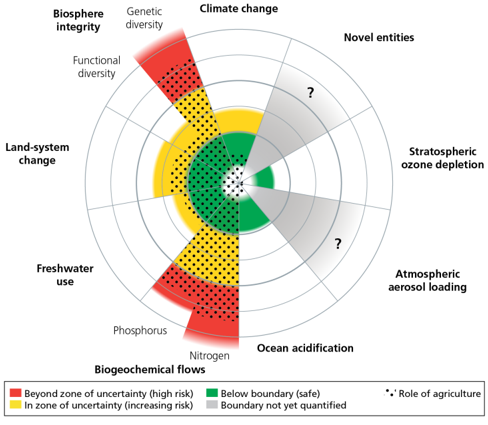
“As a result, agriculture plays a major role in pushing the biosphere beyond planetary boundaries in terms of biodiversity and biogeochemical flows of nitrogen and phosphorus, and is a major contributor to climate change [3].”
From An Actor-Oriented Multi-Criteria Assessment Framework to Support a Transition towards Sustainable Agricultural Systems Based on Crop Diversification (2020) · cites this paper as [3]
The cited source says what the claim attributes to it.
In the citing paper
“The main driver of biodiversity loss is agriculture1, both through intensification of existing agricultural land and expansion of agriculture into pristine ecosystems2,3.”
From Farming practices to enhance biodiversity across biomes: a systematic review (2024) · cites this paper as [1]
In the citing paper
“Biodiversity is declining at an unprecedented pace around the world, with current estimates that around 5% of all species will be lost every ten years1.”
From Farming practices to enhance biodiversity across biomes: a systematic review (2024) · cites this paper as [1]
Self-check
Percentages, sums and reported differences re-computed from the paper’s own numbers.
The self-check needs the paper’s full text.
Citations
Cites
A safe operating space for humanity
Rockström, J., Steffen, W., Noone, K., Persson, Å., Chapin, F. S., Lambin, E. F., Lenton, T. M., Scheffer, M., Folke, C., Schellnhuber, H. J., et al. (2009) · Nature · doi:10.1038/461472a · Cited by 13,333 · cited 10×
“In 2009 Rockström et al. (2009 a,b ) introduced the concepts of “planetary boundaries” (PBs) and a “safe operating space for humanity,” which have recently been revised by Steffen et al. (2015).”
BackgroundMethodInfluentialGlobal Consequences of Land Use
Foley, J. A., DeFries, R., Asner, G. P., Barford, C., Bonan, G., Carpenter, S. R., Chapin, F. S., Coe, M. T., Daily, G. C., Gibbs, H. K., et al. (2005) · Science · doi:10.1126/science.1111772 · Cited by 13,272 · cited 4×
“According to Foley et al. (2005), croplands and pastures are one of the largest terrestrial biomes on the planet, occupying ~40% of land surface.”
InfluentialSelf-citationPlanetary boundaries: Guiding human development on a changing planet
Steffen, W., Richardson, K., Rockström, J., Cornell, S. E., Fetzer, I., Bennett, E. M., Biggs, R., Carpenter, S. R., de Vries, W., de Wit, C. A., et al. (2015) · Science · doi:10.1126/science.1259855 · Cited by 12,527 · cited 10×
“We have followed the Steffen et al. (2015) framing of the boundary.”
BackgroundMethodInfluentialSelf-citationNg, M., Fleming, T., Robinson, M., Thomson, B., Graetz, N., Margono, C., Mullany, E. C., Biryukov, S., Abbafati, C., Abera, S. F., et al. (2014) · The Lancet · doi:10.1016/s0140-6736(14)60460-8 · Cited by 11,952 · cited 1×
“…have to address the fact that at least a billion people do not have access to sufficient calories (FAO 2014), and more than two billion people lack sufficient nutrients (WHO and FAO 2014), while, paradoxically, at the same time over two billion people consume too many calories (Ng et al. 2014).”
Correspondence - Tranexamic acid for traumatic brain injury
(2005) · London School of Economics and Political Science Theses Online (London School of Economics and Political Science) · doi:10.1016/s0140-6736 · Cited by 11,894
Lim, S. S., Vos, T., Flaxman, A. D., Danaei, G., Shibuya, K., Adair-Rohani, H., AlMazroa, M. A., Amann, M., Anderson, H. R., Andrews, K. G., et al. (2012) · The Lancet · doi:10.1016/s0140-6736(12)61766-8 · Cited by 11,805 · cited 1×
“Because the Global Burden of Disease estimates that about 3.2 million premature deaths are attributable to small PM each year (Lim et al. 2012), this suggests that agriculture’s contribution to atmospheric aerosol loading may be responsible for ~450,000–660,000 premature deaths annually based on…”
InfluentialPlanetary Boundaries: Exploring the Safe Operating Space for Humanity
Rockström, J., Steffen, W., Noone, K., Persson, Å., Chapin, F. S. I., Lambin, E., Lenton, T. M., Scheffer, M., Folke, C., Schellnhuber, H. J., et al. (2009) · Ecology and Society · doi:10.5751/es-03180-140232 · Cited by 7,187
Transformation of the Nitrogen Cycle: Recent Trends, Questions, and Potential Solutions
Galloway, J. N., Townsend, A. R., Erisman, J. W., Bekunda, M., Cai, Z., Freney, J. R., Martinelli, L. A., Seitzinger, S. P., & Sutton, M. A. (2008) · Science · doi:10.1126/science.1136674 · Cited by 6,995 · cited 2×
“Large amounts of N required for plant and livestock production results in agricultural activities being the main driver of the N cycle (Galloway et al. 2008, Liu et al. 2010, Bodirsky et al. 2012).”
InfluentialSpreading dead zones and consequences for marine ecosystems
Diaz, R. J., & Rosenberg, R. (2008) · Science · doi:10.1126/science.1156401 · Cited by 6,626 · cited 1×
“The P cycle is accelerated two to three times over background rates (Smil 2000), leading to eutrophication of freshwater and estuarine systems (Diaz and Rosenberg 2008) in addition to the intended increase in agricultural production.”
Bounding the role of black carbon in the climate system: A scientific assessment
Bond, T. C., Doherty, S. J., Fahey, D. W., Forster, P. M., Berntsen, T., DeAngelo, B. J., Flanner, M. G., Ghan, S., Kärcher, B., Koch, D., et al. (2013) · Journal of Geophysical Research: Atmospheres · doi:10.1002/jgrd.50171 · Cited by 6,385 · cited 2×
“Assessment of the literature puts the share of anthropogenic emissions of black and organic carbon at about 3–14% (Bond et al. 2013).”
Self-citation
Research works printed but not linked: 3
- [42]42. Jaramillo, F., and G. Destouni. 2015b. Local flow regulation and irrigation raise global human water consumption and footprint. Science 350(6265):1248-1251. http://dx.doi.org/10.1126/science. · DOI · Paper page
- [76]76. in Edenhofer, O., R. Pichs-Madruga, Y. Sokona, E. Farahani, S. Kadner, K. Seyboth, A. Adler, I. Baum, S. Brunner, P. Eickemeier, B. Kriemann, J. Savolainen, S. Schlömer, C. von Stechow, T. Zwickel, and J. C. Minx, editors. Climate change 2014: mitigation of climate change. Contribution of Working Group III to the Fifth Assessment Report of the Intergovernmental Panel on Climate Change. Cambridge University Press, Cambridge, UK.
- [83]83. Trumbo, J., and D. Powell. 2016. Why transgenic plants are so controversial. Pages 366-382 in C. N. Stewart Jr, editor. Plant Ecology and Society 22(4): 8 https://www.ecologyandsociety.org/vol22/iss4/art8/ biotechnology and genetics: principles, techniques, and applications.
Cited by
Items 901–1,000 of 1,000
How are Europe's small and family farmers doing? A literature review of economic and social factors
Bauer, J., Jüngert, V., Gassner, A., Harris, D., & Mausch, K. (2026) · Outlook on Agriculture · doi:10.1177/00307270261422235 · Cited by 2
“Beyond the EU, many states have committed to a transformation of their agricultural and food systems (Campbell et al., 2017; Scown et al., 2021), to provide healthy and sustainable diets while also facilitating an agricultural conversion away from a ‘ productivist ’ development paradigm that aims…”
Pest damage in sugarcane is shaped by temperature, farming practices and landscape context
Guinjard, N., Rusch, A., Tran, A., Heuclin, B., Jacquelin, F., Paulin, L., Payet, R.-M., Mézino, M., Mézo, L. L., & Soti, V. (2026) · Agriculture Ecosystems & Environment · doi:10.1016/j.agee.2026.110315 · Cited by 2
Cross-country differences in consumer acceptance and advocacy of novel food technologies
Lin, B., Conroy, D. M., Errmann, A., Gan, I. C., & Fahn, H. (2026) · Food Quality and Preference · doi:10.1016/j.foodqual.2026.105897 · Cited by 2
Which traits drive consumer preferences for gene-edited foods in Spain
Ballco, P., Barreiro-Hurle, J., Gracia, A. P., & Sanjuán, A. I. (2026) · Agricultural and Food Economics · doi:10.1186/s40100-026-00466-x · Cited by 2
Andersen, B. A., Mogensen, L., Zhen, H., & Knudsen, M. T. (2026) · Sustainable Production and Consumption · doi:10.1016/j.spc.2026.03.006 · Cited by 4
Schreefel, L., Steenman, E., Adler, F., Buffara, R., Freundt, S., Groot, J. C. J., Tittonell, P. A., & Aguilar-Gallegos, N. (2026) · Communications Earth & Environment · doi:10.1038/s43247-026-03771-x · Cited by 2
“While environmental impacts vary acrossproductionsystems,dominanthigh-inputagriculturalpracticesexert substantialpressureonplanetaryboundaries,contributingtobiodiversity loss,climatechange,andland-systemchange 1 .”
Punto de encuentro: restaurar la salud de las tierras para una agricultura sostenible
Larbodière, L., Davies, J., Schmidt, R., Magero, C., Vidal, A., Schnell, A. A., Bücher, P., Maginnis, S., Cox, N., Hasinger, O., et al. (2020) · doi:10.2305/iucn.ch.2020.10.es · Cited by 3
Agriculture planted the seeds of alienation from nature
Mason, J., & Kassam, L. (2020) · Elsevier eBooks · doi:10.1016/b978-0-12-816410-5.00002-5 · Cited by 3
Civil Society, Climate Change, Security Risks Management and Peacebuilding in the Anthropocene
Kiyala, J. C. K. (2022) · The anthropocene: Politik - economics - society - science · doi:10.1007/978-3-030-95179-5_3 · Cited by 2
An Exploratory Insight into Young Tunisian Consumers' Perception of Sustainable Diet
Jrıbı, S., Ismaıl, H. B., & Debbabi, H. (2022) · International Journal of Innovative Approaches in Agricultural Research · doi:10.29329/ijiaar.2022.451.2 · Cited by 3
Dietary changes could compensate for potential yield reductions upon global river flow protection
Braun, J., Stenzel, F., Bodirsky, B. L., Jalava, M., & Gerten, D. (2022) · Global Sustainability · doi:10.1017/sus.2022.12 · Cited by 2
“The global food system is a dominant driver of environmental change, thereby substantially contributing to transgressions of planetary boundaries (Campbell et al., 2017; Gerten et al., 2020; Gerten & Kummu, 2021; Rockström et al., 2020; Willett et al., 2019).”
BackgroundFeral Kinetics and Cattle Research Within Planetary Boundaries
Brichet, N., Brieghel, S., & Hastrup, F. (2023) · Animals · doi:10.3390/ani13050802 · Cited by 2
“In other words, addressing the issue of methane emission through conceptualizing the rumen as a discrete and singular site of intervention may occlude the concern both with a potential rise in scale and with other the well-known, environmentally harmful effects of maintaining present-scale livestock production [18].”
BackgroundSzczepanski, L., Fiebelkorn, F., Ostermann, G., Altevogt, L., & Folsche, E. (2023) · Frontiers in Nutrition · doi:10.3389/fnut.2023.1112183 · Cited by 2
“The model is thus composed of three mutually influencing components: (1) the technical clarification of the specific science content, (2) the elicitation of student conceptions regarding the specific science content, and (3) the design and evaluation of learning environments.”
BackgroundMethodInfluentialFrom Re-instrumenting to Re-purposing Farm Support Policies
Anderson, K., & Strutt, A. (2023) · Oxford University Press eBooks · doi:10.1093/oso/9780198882121.003.0004 · Cited by 2
Adaptation of the Doughnut Economics Model to a Rural Community in Germany
Schengel, L., & Goehlich, V. (2023) · Palgrave studies in cross-disciplinary business research, in association with EuroMed Academy of Business · doi:10.1007/978-3-031-37365-7_12 · Cited by 2
Diversifying crop rotations for sustainable production and climate change adaptation
Costa, A. (2024) · Acta universitatis agriculturae Sueciae · doi:10.54612/a.1ftcrpvsdh · Cited by 2
Ocean Literacy and Metabolic Rift Theory for Addressing the Effects of the Marine Ecological Crisis
Nicola, L. R. M., Silva, E. P., Pazoto, C. E., & Duarte, M. R. (2024) · International Journal of Environmental Resilience Research and Science · doi:10.48075/ijerrs.v6i2.33476 · Cited by 3
Rämö, J., Tzemi, D., Lehtonen, H. S., Palosuo, T., & Peltonen‐Sainio, P. (2024) · Agricultural and Food Science · doi:10.23986/afsci.144747 · Cited by 2
“Agriculture contributes significantly to greenhouse gas (GHG) emissions globally, as well as to the loss of landscape diversity, natural habitats, species diversity, and to damages to soil and water ecosystems (Campbell et al. 2017, IPCC 2019).”
BackgroundMalai, E. S., O’Sullivan, C. A., Grant, T. J., Sreekantan, L., Mellor, V. A., Schmidt, S., & Dry, I. B. (2024) · Plant-Environment Interactions · doi:10.1002/pei3.70018 · Cited by 2
Cassani, M. T., Sabatté, M. L., Pérez, S. P., & Massobrio, M. J. (2024) · Revista de la Facultad de Ciencias Agrarias UNCuyo · doi:10.48162/rev.39.136 · Cited by 2
Cellular meat cultivation: Scoping Review
Сухих, С. А., Ulrikh, E., Носкова, С., Kalashnikova, O. B., & Babich, O. (2024) · FOOD METAENGINEERING · doi:10.37442/2024.1.40 · Cited by 2
Progressive Technologies in Agriculture Affecting the Quality of Primary Crop Production – a Review
Hašana, R., Jánoška, D., Bušo, R., Gavurníková, S., & Havrlentová, M. (2024) · Polnohospodarstvo · doi:10.2478/agri-2024-0012 · Cited by 2
Rathnabarana, G., Dompreh, E. B., & Gasparatos, A. (2025) · Sustainable Development · doi:10.1002/sd.70094 · Cited by 2
Beyond yields: a systems approach is essential for reconciling agriculture and biodiversity
Beillouin, D., Jones, S. K., Rapidel, B., & Estrada-Carmona, N. (2025) · Philosophical Transactions of the Royal Society B Biological Sciences · doi:10.1098/rstb.2025.0257 · Cited by 3
“Moreover, atmospheric nitrogen deposition, a result of fertilizer use, alters distant ecosystems, impacting global biodiversity and biogeochemical flows [10].”
To what extent can current French mobile network support agricultural robots?
Rocca, P. L., Guennebaud, G., & Bugeau, A. (2025) · International Conference on ICT for Sustainability (ICT4S) · doi:10.1109/ict4s68164.2025.00031 · Cited by 2
“…fields such as the Internet of Things or Artificial Intelligence, robots could further enhance the sustainability of the agricultural sector to limit the impact of agriculture on planetary boundaries while improving the resilience of agriculture against the effects of exceeding these limits [5; 6].”
Shrivastava, S., Guðjónsdóttir, M., Merida, V. E., Þorkelsson, G., & Ögmundarson, Ó. (2025) · Sustainability · doi:10.3390/su172310778 · Cited by 2
From soil to shelf: Regenerative agriculture, scope 3, and emerging opportunities for food science
O'Donoghue, T., & McBratney, A. (2025) · Current Opinion in Colloid & Interface Science · doi:10.1016/j.cocis.2025.101967 · Cited by 4
Ghaly, T. M., Shah, B. S., Coleman, N. V., Elbourne, L. D. H., Roux, J. J. L., Gillings, M. R., Paulsen, I. T., & Tetu, S. G. (2026) · Environmental Research · doi:10.1016/j.envres.2026.124428 · Cited by 2
ANÁLISIS ECOTOXICOLÓGICO DEL FUNGICIDA FOSFITO DE SODIO SOBRE UNA COMUNIDAD PLANCTÓNICA
Departamento de Biología Animal, B. V. Y. E., Parra, G., Acevedo-García, V., Departamento de Biología Animal, B. V. Y. E., Valcarcel, M. E. L., Departamento de Biología Animal, B. V. Y. E., del Arco, A., & Departamento de Biología Animal, B. V. Y. E. (2019) · Revista Internacional de Contaminación Ambiental · doi:10.20937/rica.2019.35.01.11 · Cited by 2
“…indicándose que principalmente repercute sobre la integridad de la biosfera (pérdida de biodiversidad) y sobre los ciclos biogeoquímicos (principalmente de N y P; Campbell et al. 2017), así como sobre la introducción de entes novedosos (orga-nismos modificados y sustancias tóxicas exógenas).”
BackgroundCoomes, O. T., Barham, B. L., MacDonald, G. K., Ramankutty, N., & Chavas, J. (2019) · Open Collections · doi:10.14288/1.0378889 · Cited by 2
“Despite impressive gains in agriculture in the 20 century the dominant pathways of productivity growth—including massive growth in reactive nitrogen use and land system change—may have ultimately served to undercut the long-term sustainability of agriculture [33].”
BackgroundSelf-citationGeography of Food Summer School: International Exchange for Sustainable Food Value Chains
Jaisli, I., Grüter, R., Oehen, B., Pintar, M., & Umesh, K. (2021) · World sustainability series · doi:10.1007/978-3-030-63399-8_8 · Cited by 2
Fraundorfer, M. (2022) · Springer eBooks · doi:10.1007/978-3-030-88156-6_5 · Cited by 2
A Human Ecological Approach to Policy in the Context of Food and Nutrition Security
Dyball, R., Davila, F., & Wilkes, B. (2021) · Springer eBooks · doi:10.1007/978-981-15-0720-5_11 · Cited by 2
Tecnologías agroforestales para la adaptación y mitigación al cambio climático
Fernández, L. A. P., Sosa, M. B. R., Moreno, M. D. C. H., Monter, M. A. A., Vázquez, M. R. P., Pérez, M. J. C., Morales, L. M. M., Navarro, L. A. R. N. R., Gámez, L. A., Salado, N. T., et al. (2022) · Universidad de Colima eBooks · doi:10.53897/li.2022.0011.ucol · Cited by 2
Kpienbaareh, D., Wang, J., Luginaah, I., Kerr, R. B., Lupafya, E., & Dakishoni, L. (2023) · The Professional Geographer · doi:10.1080/00330124.2022.2146908 · Cited by 2
“…increase in yield because synthetic fertilizers have not been successful in addressing underlying issues with soil erosion, deteriorating soil organic matter content and declining soil microorganisms, which all affect soil health and ultimately crop health (Bi et al. 2015; Hall-Spencer 2017).”
Enabling Regenerative Transitions: What Can Design Offer?
Miller, M., & Baumber, A. (2024) · Proceedings of DRS · doi:10.21606/drs.2024.477 · Cited by 2
“Regenerative agriculture has grown in prominence within land management practice and academic research over recent years, driven by “growing dissatisfaction with modern industrial agriculture and its associated environmental and social harms (Campbell et al., 2017).”
Environmental and Economic Implications of Small-Scale Canadian Aquaponics: A Life Cycle Study
Valappil, G. (2021) · UWSpace (University of Waterloo) · Cited by 8
Symonds, M. E. (2020) · Faculty Opinions – Post-Publication Peer Review of the Biomedical Literature · doi:10.3410/f.738671616.793578496 · Cited by 2
Mersha, A. N. (2021) · doi:10.18174/547440 · Cited by 2
Sustainable agriculture as a topic of biology education for sustainable developmentPreprint
Kunze, R., & Büssing, A. G. (2022) · OSF Preprints (OSF Preprints) · doi:10.31219/osf.io/fj4gk · Cited by 2
Towards diversified industrial cropping systems?
Ditzler, L. (2022) · doi:10.18174/574678 · Cited by 3
Flinzberger, L. (2023) · eDiss (Georg-August-Universität Göttingen) · doi:10.53846/goediss-10230 · Cited by 2
Systems perspective reveals interconnections in nitrogen and phosphorus flows
Sandström, V. (2024) · Nature Food · doi:10.1038/s43016-023-00894-8 · Cited by 2
Where global crop yields may falter next
Davis, K. F., Ali, H. A., Kebede, A., Khan, B., & Sarwar, A. (2024) · Nature Food · doi:10.1038/s43016-023-00911-w · Cited by 2
Rural Environment. Education. Personality (REEP)
(2024) · Rural Environment. Education. Personality · doi:10.22616/reep.2024.17 · Cited by 2
Enhancing biodiversity with circular food systemsPreprint
Cozim-Melges, F., Ripoll‐Bosch, R., Veen, G. F., Hofmeijer, M. A. J., Simon, W. J., van Apeldoorn, D. F., & van Zanten, H. H. E. (2024) · Research Square · doi:10.21203/rs.3.rs-5261909/v1 · Cited by 2
Chagas, G. D. F. (2024) · Digital Library of Theses and Dissertations (Universidade de São Paulo) · doi:10.11606/t.11.2024.tde-10012025-083235 · Cited by 3
Good food for the future: An exploration of biocapitalist transformation of meat systems
Vezovnik, A., & Kamin, T. (2019) · Discourse Context & Media · doi:10.1016/j.dcm.2019.100354 · Cited by 1
Kotykova, O., & Babych, M. (2020) · Management Theory and Studies for Rural Business and Infrastructure Development · doi:10.15544/mts.2020.40 · Cited by 1
“Moreover, such studies are necessary in the face of constant environmental changes and those that have already exceeded the planet's ability to self-heal (Campbell et al., 2017).”
Nitrogen, planetary boundaries, and the metabolic rift
Sage, C. L. (2021) · Routledge eBooks · doi:10.4324/9781003143567-4 · Cited by 1
Powell, C. D., Ellis, J. L., Dias, R. S., López, S., & France, J. (2022) · Animals · doi:10.3390/ani12131611 · Cited by 1
Kleuren Mengen: diversiteit in een dynamisch ruraal landschap
van der Heide, C. M. (2022) · University of Groningen Press eBooks · doi:10.21827/63355aea8ebdd · Cited by 1
Timm, J., & Hausdorf, M. (2024) · Neue Ökonomie · doi:10.14361/9783839469101-009 · Cited by 2
Siebert, C., Rödiger, T., Houben, T., Dato, M. D., Fischer, T., Attinger, S., & Kalbacher, T. (2024) · Computational Geosciences · doi:10.1007/s10596-024-10315-9 · Cited by 2
“Such regions, where groundwater is often considered as a strategic resource and must not be evaluated and managed locally but on a large scale [14, 15] are. e.g. the Mediterranean, the Middle East, the Central and Southern US, Central Asia and similar water scarce regions worldwide [16–19].”
Arsenault, J. N., Tyedmers, P. H., & Dias, G. M. (2024) · Environmental Research Food Systems · doi:10.1088/2976-601x/ad7ff2 · Cited by 1
Food Systems, Subsystems, and Components, and Families
Cisneros, M., Zoumenou, V., & McIntosh, W. A. (2024) · Food and health · doi:10.1007/978-3-031-63673-8_1 · Cited by 1
Cook, D., Davíðsdóttir, B., Merida, V. E., & Ögmundarson, Ó. (2025) · Ecosystem Services · doi:10.1016/j.ecoser.2025.101709 · Cited by 1
Bader, C. L., Moeller, N. I., Grard, B., Wezel, A., Féret, S., Andreotti, F., & Vandenbroucke, P. (2025) · Agroecology and Sustainable Food Systems · doi:10.1080/21683565.2025.2489416 · Cited by 1
“The current global food system has severely detrimental effects on planetary health, directly impacting food production and the state of food and nutrition security (Campbell et al. 2017; FAO 2023; HLPE 2019; IPBES 2019).”
Energy-efficiency of community supported agriculture farms and conventional vegetable production
Menzel, A., Egli, L., & Groß, A. (2025) · Frontiers in Sustainable Food Systems · doi:10.3389/fsufs.2025.1490652 · Cited by 1
Puech, T., Stark, F., & Sabatier, R. (2025) · Agricultural Systems · doi:10.1016/j.agsy.2025.104371 · Cited by 1
Pineapple production and visions of regeneration– contrasting Costa Rican (agri)cultural paradigms
Schwarz, L., Janssen, C., & Halbe, J. (2025) · Revista Académica Arjé · doi:10.47633/2jxkvr72 · Cited by 1
“Today, agriculture is a major contributor to the transgression of multiple planetary boundaries (PBs), like climate change, biodiversity loss, freshwater change, and biogeochemical flows (Campbell et al., 2017; Richardson et al., 2023).”
Bückart-Neufeld, C., Bürker, F., & Hoinle, B. (2025) · Urban Planning · doi:10.17645/up.9676 · Cited by 1
Schopp, K., Irion, M., Bornemann, M., Grundmann, D., & Potthast, T. (2025) · Globale Ziele für nachhaltige Entwicklung. · doi:10.1007/978-3-662-70588-9_8 · Cited by 1
Intercropping and pollination mediate faba bean (Vicia faba ) yield and nodulation
Dirkson, P., Raderschall, C. A., Edlinger, A., van Apeldoorn, D. F., & Riggi, L. G. A. (2025) · Agriculture Ecosystems & Environment · doi:10.1016/j.agee.2025.109889 · Cited by 1
Samoggia, A., Benussi, C., & Macaione, G. (2025) · Sustainability · doi:10.3390/su17177930 · Cited by 1
Wojcieszak, M., Beba, P., & Sadowski, A. (2025) · Agriculture · doi:10.3390/agriculture15181928 · Cited by 1
Integrating Ecology and Economics in Agent‐Based Models to Support Agricultural Policy
Vedder, D., Rakowski, J. J., Kolb, L., Theilen-Loges, G., Lakner, S., & Pe’er, G. (2026) · Advanced Science · doi:10.1002/advs.202520081 · Cited by 1
Environmental Sustainability of Cultivated Meat
Tuomisto, H. L., & Ryynänen, T. (2025) · Advances in biochemical engineering, biotechnology · doi:10.1007/10_2025_293 · Cited by 1
Zhu, X., Li, Y., Zhongkuan, L., Shao, C., Wang, L., & Xin, X. (2025) · Agronomy · doi:10.3390/agronomy15102432 · Cited by 1
“Agricultural nitrogen emissions are one of the important sources of acidification and eutrophication, which have caused a significant impact on the environment [36].”
Cultured fruit: growing fruit without plants
van der Zee, L., Peeters, N., Proveniers, M. C. G., Jinkerson, R. E., Robaey, Z., & Marcelis, L. F. M. (2025) · Trends in biotechnology · doi:10.1016/j.tibtech.2025.10.004 · Cited by 1
Gustafson, C. R., Gitungwa, H., & Rose, D. J. (2025) · Frontiers in Sustainable Food Systems · doi:10.3389/fsufs.2025.1667600 · Cited by 2
Lee, R. S. K., & Liu, W. (2025) · Environmental Research Communications · doi:10.1088/2515-7620/ae219e · Cited by 1
Dassamiour, M., Boustila, R., Faghmous, N., & Boulabeiz, M. (2025) · Natural Resources Research · doi:10.1007/s11053-025-10581-z · Cited by 1
“…with multiple disciplines, making it a key area of research within Earth System Science—an integrative framework that combines Earth and Planetary Sciences, Environmental Science, and Agricultural and Biological Sciences (Hart & Martinez 2006; Campbell et al., 2017; Steffen et al., 2020).”
Gresik, P. P., Primantara, A., Fahmi, M. A., Mandiri, I. T. I. C., Rozudin, M., Gresik, U. M., Ardianto, R., & Mandiri, I. T. I. C. (2025) · Industria Jurnal Teknologi dan Manajemen Agroindustri · doi:10.21776/ub.industria.2025.014.01.7 · Cited by 1
Bless, A., & Lee, T. (2025) · Agriculture and Human Values · doi:10.1007/s10460-025-10814-0 · Cited by 1
“There is a growing imperative to improve the sustainability of agricultural production and address its contributions to the compounding environmental crises of climate change, biodiversity loss, pollution, soil degradation, and freshwater loss (Campbell et al. 2017).”
Food and Water Sustainability: Contribution Toward SDGs
Gupta, C., Jasrotia, R., & Langer, S. (2026) · Springer eBooks · doi:10.1007/978-3-032-04870-7_3 · Cited by 1
Decarbonization and Nexus Possibilities of Food Logistics Systems
Yonamine, A., OKUMURA, R., & Yan, W. (2026) · Springer eBooks · doi:10.1007/978-981-95-6156-8_7 · Cited by 1
Hockenhull, I., Burgess, P. J., Kourmpetli, S., Park, J. R., Shelton, G., & Mauchline, A. L. (2026) · Environment Development and Sustainability · doi:10.1007/s10668-026-07521-z · Cited by 2
Cardinaals, R. P. M., Simon, W. J., Huppertz, T., & van Zanten, H. H. E. (2026) · Cleaner Food Systems · doi:10.1016/j.clfs.2026.100032 · Cited by 2
Arsic, M., & McIntyre, T. (2026) · Australian Journal of Agricultural and Resource Economics · doi:10.1111/1467-8489.70107 · Cited by 1
Attitudes toward and willingness to consume insect-based foods among children in Ecuador
Escandón, S., Heuß, D., Dupont, J., Cueva-Chamba, A., Avilés, A. M. O., & Fiebelkorn, F. (2026) · International Journal of Gastronomy and Food Science · doi:10.1016/j.ijgfs.2026.101504 · Cited by 1
Bednar-Konski, Z., Arndt, M., Vaupel, A., Herwig, N., Moran-Rodas, V. E., Corre, M. D., Veldkamp, E., & Beule, L. (2026) · Agroforestry Systems · doi:10.1007/s10457-026-01498-4 · Cited by 1
“…management practice to counteract the decline of soil health (e.g., Dollinger and Jose 2018; Udawatta et al. 2021) and is discussed as one of the management strategies that may help to prevent the transgression of planetary boundaries (Campbell et al. 2017; Foley et al. 2005; Gerten et al. 2020).”
Tsujii, Y., Nagasaka, M., Haga, C., Matsui, T., Hayashi, F., Motoshita, M., Hashimoto, S., Tsuchiya, K., Hori, K., Watabe, A., et al. (2026) · Sustainability Science · doi:10.1007/s11625-026-01834-8 · Cited by 1
“From a 2023; Pretty et al. 2025), contributing 21–37% of green-house gas (GHG) emissions (Campbell et al. 2017) and pushing key ecological processes beyond planetary boundaries (Canales and Fears 2021 ; IPBES 2019; Whitmee et al. 2015 ).”
Guy, M., Lorin, M., Bousselin, X., & Corre‐Hellou, G. (2026) · European Journal of Agronomy · doi:10.1016/j.eja.2026.128112 · Cited by 1
National-scale nitrogen budgets reveal large inefficiencies in Indian agriculture
Babbar, D., & Balasubramanian, S. (2026) · Communications Earth & Environment · doi:10.1038/s43247-026-03656-z · Cited by 1
“Agriculture has also been linked to the exceedance of four of the nine planetary boundaries 3 .”
A reminder of conceptual difficulties with the notion of agricultural resilience
Garbisu, C., Unamunzaga, O., & Alkorta, I. (2026) · Frontiers in Sustainable Food Systems · doi:10.3389/fsufs.2026.1800822 · Cited by 1
Multi-driver biodiversity impact assessment reveals hidden hotspots in institutional consumption
Specht, V., & Lask, J. (2026) · Communications Sustainability · doi:10.1038/s44458-026-00099-7 · Cited by 1
Michalke, A., Köhler, S., Riemer, O., & Çinar, G. (2026) · Cleaner Food Systems · doi:10.1016/j.clfs.2026.100049 · Cited by 1
The perceived lock-ins of dairy farmers during sustainability transition
de Geest, W. V.-V., de Boer, I. J. M., Dasselaar, A. V. D. P.-V., & de Olde, E. M. (2026) · animal · doi:10.1016/j.animal.2026.101888 · Cited by 2
Steng, K., Fichtl, L., Athmann, M., Gattinger, A., & Döring, J. (2026) · European Journal of Agronomy · doi:10.1016/j.eja.2026.128201 · Cited by 1
Circling the sandwich: measuring food waste and its drivers in UK prepared sandwich manufacture
Moores, A., Charalampopoulos, D., Williams, A. G., Whiteside, K., Buxton, P., & Rivera, X. C. S. (2026) · npj Science of Food · doi:10.1038/s41538-026-00948-8 · Cited by 1
Decoupling salinity and carbon function during hydrothermal carbonization of anaerobic digestate
Kaffman, I., & Posmanik, R. (2026) · Waste Management · doi:10.1016/j.wasman.2026.115714 · Cited by 1
Wang, W., Su, B., Luo, S., & Cao, X. (2026) · Sustainable Production and Consumption · doi:10.1016/j.spc.2026.07.002 · Cited by 1
Zhang, H., Lai, H., Sun, Y. H., & Li, J. (2026) · Agriculture · doi:10.3390/agriculture16131472 · Cited by 1
“The Green Revolution, defined by synthetic chemicals and mechanization, has increased global food production but strained natural resources and ecosystems [1,2].”
Eichhorn, T., Runge, T. M., Viaggi, D., Kantelhardt, J., Bartolini, F., Bradfield, T., Dupraz, P. P., Harmanny, K. S., Iglesias, A., Gloux, F. L., et al. (2026) · Land Use Policy · doi:10.1016/j.landusepol.2026.108196 · Cited by 1
Gava, O., & Vanni, F. (2026) · RIVISTA DI ECONOMIA AGRARIA · doi:10.36253/rea-16936 · Cited by 1
“…lock-ins caused by path dependency and mitigate barriers to practice adoption (e.g., capital investment needs); and (ii) leverage enabling conditions such as machinery-sharing cooperatives and premium markets for agroecological products (Campbell et al. , 2017; Ingram, 2017; Laforge et al. , 2021).”
AI-designed crop populations for sustainable intensification
Luo, N., Wang, J., Graversgaard, M., Umburanas, R. C., Liu, D. L., Li, Q., Storkey, J., Willcock, S., Wang, P., & Meng, Q. (2026) · Trends in Plant Science · doi:10.1016/j.tplants.2026.07.010 · Cited by 1
Innovating for Sustainable Agriculture
van Laarhoven, W. (2019) · Springer eBooks · doi:10.1007/978-3-030-14618-4_11 · Cited by 2
After the Anthropocene: Time and Mobility
Heikkurinen, P., Ruuska, T., Valtonen, A., & Rantala, O. (2020) · MDPI eBooks · doi:10.3390/books978-3-03936-957-7 · Cited by 1
Understanding the Concept of Sustainable Food Consumption – whether it will Reduce Meat Consumption
Rejman, K., Jeżewska-Zychowicz, M., & Ganczewski, G. (2021) · Rural Environment. Education. Personality · doi:10.22616/reep.2021.14.041 · Cited by 1
“All these harmful impacts lead to the crossing of several boundaries in the use of the planet's resources that define a safe space for humanity in the earth system (Campbell et al., 2017).”
Background
Metadata
- Authors
- Campbell, B. M., Beare, D. J., Bennett, E. M., Hall-Spencer, J. M., Ingram, J. S. I., Jaramillo, F., Ortiz, R., Ramankutty, N., Sayer, J. A., & Shindell, D.
- Affiliations
- CGIAR (FR)
- McGill University (CA)
- University of Tsukuba (JP)
- University of Oxford (GB)
- Stockholm Resilience Centre (SE)
- University of Copenhagen (DK)
- University of British Columbia (CA)
- James Cook University (AU)
- Duke University (US)
- ORCID
- Venue
- Ecology and Society
- Publisher
- Resilience Alliance, Inc.
- Published
- 2017
- Volume
- 22
- Issue
- 4
- ISSN
- 1708-3087 (ISSN-L)
- OpenAlex
- W2762931876
- Cited by
- 1,197
- References
- 84
- Citations by year
- 2026: 137 · 2025: 204 · 2024: 182 · 2023: 157 · 2022: 182 · 2021: 140 · 2020: 101 · 2019: 56 · 2018: 35 · 2017: 1
- FWCI
- 36.59
- Type
- journal article
- Language
- en
- Open access
- gold
- doi.org
- Licence
- cc-by-nc
- Locations
- Ecology and Society (publishedVersion, cc-by-nc)
- Research at the University of Copenhagen (University of Copenhagen) (publishedVersion, cc-by)
- Epsilon Open Archive (Sveriges lantbruksuniversitet biblioteket (Swedish University of Agricultural Sciences)) (acceptedVersion)
- ResearchOnline at James Cook University (James Cook University) (submittedVersion)
- PEARL (University of Plymouth) (submittedVersion)
- CGSPace A Repository of Agricultural Research Outputs (Consultative Group for International Agricultural Research) (submittedVersion, other-oa)
- DOAJ (DOAJ: Directory of Open Access Journals) (submittedVersion, cc-by-sa)
- Funders
- Consortium of International Agricultural Research Centers
- Topics
- Physical Sciences › Environmental Science › Global and Planetary Change › Land Use and Ecosystem Services
- Physical Sciences › Environmental Science › Ecology › Agriculture Sustainability and Environmental Impact
- Life Sciences › Agricultural and Biological Sciences › Agronomy and Crop Science › Sustainable Agricultural Systems Analysis
- Keywords
- planetary boundaries, Earth system, anthropogenic impacts, land use change
About these checks
Registry, retraction, Cites and statistics results are computed, not judged, with one exception: a printed reference that no index lists is read once by a model before it counts as a citation error. Claims are extracted by a model and kept only when their quote appears verbatim in the text; each cited source is then checked, with a model’s help, for whether it says what the claim relies on. Those verdicts can be wrong — read the claim’s quote and the cited source before relying on one.
Statistics and arithmetic are recomputed, not judged.
Confidence bands are shown only for fields calibrated on our annotated test set. None is calibrated yet, so no band is shown.
What counts as a claim ›How we measure confidence ›How we check this ›
Are you an author, or do you see a problem with this page? Request a review
Data sources
Bibliographic data: Semantic Scholar, OpenAlex, Crossref.
Contains information from the Semantic Scholar Academic Graph Datasets, made available under the ODC Attribution License (ODC-BY 1.0).
Semantic Scholar’s data is described in: Kinney, R., et al. (2023). The Semantic Scholar Open Data Platform. arXiv:2301.10140.
