

Agriculture production as a major driver of the Earth system exceeding planetary boundaries
Open accessThe DOI matches its Crossref record; 86 of the 86 references it cites were found in a registry or an index.
Abstract
Campbell, B. M., D. J. Beare, E. M. Bennett, J. M. Hall-Spencer, J. S. I. Ingram, F. Jaramillo, R. Ortiz, N. Ramankutty, J. A. Sayer, and D. Shindell. 2017. Agriculture production as a major driver of the Earth system exceeding planetary boundaries. Ecology and Society 22(4):8. https://doi.org/10.5751/ES-09595-220408
Overview
The claims and statistics of this paper haven’t been checked yet.
Free: it reads the open-access text and checks the first 5 claims that cite a source we can check. Create a free account to check every claim.
Integrity signals
Registry
Cites
Statistics
Figures
Verification
Claims the paper makes
The claims and statistics of this paper haven’t been checked yet.
Free: it reads the open-access text and checks the first 5 claims that cite a source we can check. Create a free account to check every claim.
Claims other papers make about this one
Each is checked against this paper’s own text: does it say what the citing paper says it does?
The source backs part of the claim, not all of it — or backs it for a different population, condition or comparison.
In the citing paper
“Agricultural expansion and intensification are considered major drivers of habitat and biodiversity loss, soil and freshwater degradation, environmental pollution, and greenhouse gas emissions worldwide (1, 2).”
From Agricultural diversification promotes multiple ecosystem services without compromising yield (2020) · cites this paper as [1]
Experimental — accuracy not yet measuredThe cited source says what the claim attributes to it.
In the citing paper
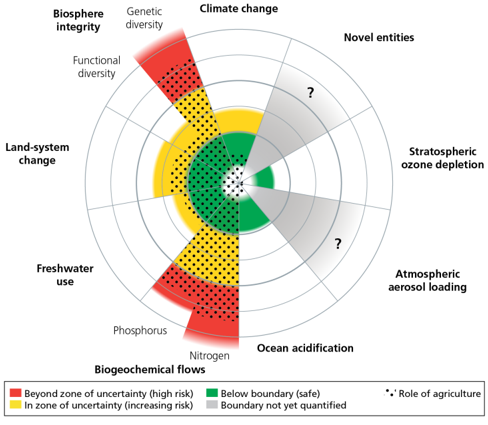
“As a result, agriculture plays a major role in pushing the biosphere beyond planetary boundaries in terms of biodiversity and biogeochemical flows of nitrogen and phosphorus, and is a major contributor to climate change [3].”
From An Actor-Oriented Multi-Criteria Assessment Framework to Support a Transition towards Sustainable Agricultural Systems Based on Crop Diversification (2020) · cites this paper as [3]
The cited source says what the claim attributes to it.
In the citing paper
“The main driver of biodiversity loss is agriculture1, both through intensification of existing agricultural land and expansion of agriculture into pristine ecosystems2,3.”
From Farming practices to enhance biodiversity across biomes: a systematic review (2024) · cites this paper as [1]
In the citing paper
“Biodiversity is declining at an unprecedented pace around the world, with current estimates that around 5% of all species will be lost every ten years1.”
From Farming practices to enhance biodiversity across biomes: a systematic review (2024) · cites this paper as [1]
Self-check
Percentages, sums and reported differences re-computed from the paper’s own numbers.
The self-check needs the paper’s full text.
Citations
Cites
A safe operating space for humanity
Rockström, J., Steffen, W., Noone, K., Persson, Å., Chapin, F. S., Lambin, E. F., Lenton, T. M., Scheffer, M., Folke, C., Schellnhuber, H. J., et al. (2009) · Nature · doi:10.1038/461472a · Cited by 13,333 · cited 10×
“In 2009 Rockström et al. (2009 a,b ) introduced the concepts of “planetary boundaries” (PBs) and a “safe operating space for humanity,” which have recently been revised by Steffen et al. (2015).”
BackgroundMethodInfluentialGlobal Consequences of Land Use
Foley, J. A., DeFries, R., Asner, G. P., Barford, C., Bonan, G., Carpenter, S. R., Chapin, F. S., Coe, M. T., Daily, G. C., Gibbs, H. K., et al. (2005) · Science · doi:10.1126/science.1111772 · Cited by 13,272 · cited 4×
“According to Foley et al. (2005), croplands and pastures are one of the largest terrestrial biomes on the planet, occupying ~40% of land surface.”
InfluentialSelf-citationPlanetary boundaries: Guiding human development on a changing planet
Steffen, W., Richardson, K., Rockström, J., Cornell, S. E., Fetzer, I., Bennett, E. M., Biggs, R., Carpenter, S. R., de Vries, W., de Wit, C. A., et al. (2015) · Science · doi:10.1126/science.1259855 · Cited by 12,527 · cited 10×
“We have followed the Steffen et al. (2015) framing of the boundary.”
BackgroundMethodInfluentialSelf-citationNg, M., Fleming, T., Robinson, M., Thomson, B., Graetz, N., Margono, C., Mullany, E. C., Biryukov, S., Abbafati, C., Abera, S. F., et al. (2014) · The Lancet · doi:10.1016/s0140-6736(14)60460-8 · Cited by 11,952 · cited 1×
“…have to address the fact that at least a billion people do not have access to sufficient calories (FAO 2014), and more than two billion people lack sufficient nutrients (WHO and FAO 2014), while, paradoxically, at the same time over two billion people consume too many calories (Ng et al. 2014).”
Correspondence - Tranexamic acid for traumatic brain injury
(2005) · London School of Economics and Political Science Theses Online (London School of Economics and Political Science) · doi:10.1016/s0140-6736 · Cited by 11,894
Lim, S. S., Vos, T., Flaxman, A. D., Danaei, G., Shibuya, K., Adair-Rohani, H., AlMazroa, M. A., Amann, M., Anderson, H. R., Andrews, K. G., et al. (2012) · The Lancet · doi:10.1016/s0140-6736(12)61766-8 · Cited by 11,805 · cited 1×
“Because the Global Burden of Disease estimates that about 3.2 million premature deaths are attributable to small PM each year (Lim et al. 2012), this suggests that agriculture’s contribution to atmospheric aerosol loading may be responsible for ~450,000–660,000 premature deaths annually based on…”
InfluentialPlanetary Boundaries: Exploring the Safe Operating Space for Humanity
Rockström, J., Steffen, W., Noone, K., Persson, Å., Chapin, F. S. I., Lambin, E., Lenton, T. M., Scheffer, M., Folke, C., Schellnhuber, H. J., et al. (2009) · Ecology and Society · doi:10.5751/es-03180-140232 · Cited by 7,187
Transformation of the Nitrogen Cycle: Recent Trends, Questions, and Potential Solutions
Galloway, J. N., Townsend, A. R., Erisman, J. W., Bekunda, M., Cai, Z., Freney, J. R., Martinelli, L. A., Seitzinger, S. P., & Sutton, M. A. (2008) · Science · doi:10.1126/science.1136674 · Cited by 6,995 · cited 2×
“Large amounts of N required for plant and livestock production results in agricultural activities being the main driver of the N cycle (Galloway et al. 2008, Liu et al. 2010, Bodirsky et al. 2012).”
InfluentialSpreading dead zones and consequences for marine ecosystems
Diaz, R. J., & Rosenberg, R. (2008) · Science · doi:10.1126/science.1156401 · Cited by 6,626 · cited 1×
“The P cycle is accelerated two to three times over background rates (Smil 2000), leading to eutrophication of freshwater and estuarine systems (Diaz and Rosenberg 2008) in addition to the intended increase in agricultural production.”
Bounding the role of black carbon in the climate system: A scientific assessment
Bond, T. C., Doherty, S. J., Fahey, D. W., Forster, P. M., Berntsen, T., DeAngelo, B. J., Flanner, M. G., Ghan, S., Kärcher, B., Koch, D., et al. (2013) · Journal of Geophysical Research: Atmospheres · doi:10.1002/jgrd.50171 · Cited by 6,385 · cited 2×
“Assessment of the literature puts the share of anthropogenic emissions of black and organic carbon at about 3–14% (Bond et al. 2013).”
Self-citation
Research works printed but not linked: 3
- [42]42. Jaramillo, F., and G. Destouni. 2015b. Local flow regulation and irrigation raise global human water consumption and footprint. Science 350(6265):1248-1251. http://dx.doi.org/10.1126/science. · DOI · Paper page
- [76]76. in Edenhofer, O., R. Pichs-Madruga, Y. Sokona, E. Farahani, S. Kadner, K. Seyboth, A. Adler, I. Baum, S. Brunner, P. Eickemeier, B. Kriemann, J. Savolainen, S. Schlömer, C. von Stechow, T. Zwickel, and J. C. Minx, editors. Climate change 2014: mitigation of climate change. Contribution of Working Group III to the Fifth Assessment Report of the Intergovernmental Panel on Climate Change. Cambridge University Press, Cambridge, UK.
- [83]83. Trumbo, J., and D. Powell. 2016. Why transgenic plants are so controversial. Pages 366-382 in C. N. Stewart Jr, editor. Plant Ecology and Society 22(4): 8 https://www.ecologyandsociety.org/vol22/iss4/art8/ biotechnology and genetics: principles, techniques, and applications.
Cited by
Items 801–900 of 1,000
Ye, T., Zhang, X., Liu, F., Liang, X., Guo, D., Lou, B., & Xie, Z. (2025) · Antioxidants · doi:10.3390/antiox14070872 · Cited by 5
Effects of crop species on soil functions and soil multifunctionality are species‐specific
Bin, Z., van der Putten, W. H., Wang, G., Zhang, J., & Veen, G. F. (2025) · Functional Ecology · doi:10.1111/1365-2435.70089 · Cited by 5
Berden, J., Chimera, B., Hanley‐Cook, G., Cakmak, E. K., Vineis, P., Nicolas, G., Skeie, G., Srour, B., Kesse‐Guyot, E., Touvier, M., et al. (2025) · Nature Food · doi:10.1038/s43016-025-01214-y · Cited by 4
“For DSR Animal , no significance with mortality was observed (Supplementary Table 5).”
InfluentialWen, Y., Yao, W., Tian, B., Liu, Q., Yang, Y., Zeng, Z., Zamanian, K., Yang, L., Qi, Z., Pavinato, P. S., et al. (2025) · Journal of Integrative Agriculture · doi:10.1016/j.jia.2025.07.025 · Cited by 4
Lentil and chickpea crop growth and yield prediction across Europe
Triacca, A., Nerucci, G., Leoni, F., Carlesi, S., Reckling, M., Horneburg, B., Rahman, M. S., Moonen, A. C., & Nendel, C. (2026) · European Journal of Agronomy · doi:10.1016/j.eja.2026.128061 · Cited by 4
Villarreal-Ornelas, E. C., Navarrete-Molina, C., Meza-Herrera, C. A., Herrera-Machuca, M. A., Cárdenas, J. R. A., Macías‐Cruz, U., la Peña, C. G.-D., & Véliz-Deras, F. G. (2022) · Small Ruminant Research · doi:10.1016/j.smallrumres.2022.106677 · Cited by 4
Buchholz, B., Cerdas, F., Juraschek, M., & Herrmann, C. A. (2023) · Procedia CIRP · doi:10.1016/j.procir.2023.02.086 · Cited by 4
Bécu, T., Barot, S., Lata, J., Roux, X. L., Enjalbert, J., & Niboyet, A. (2023) · Basic and Applied Ecology · doi:10.1016/j.baae.2023.11.004 · Cited by 4
Rode, P. D. A., Schüssler, M., Bizarro, G. L., & Ferla, N. J. (2024) · Acarologia · doi:10.24349/zvdf-vafz · Cited by 4
Transforming the food system: Are farmers ready to take phosphorus stewardship action?
Martín-Ortega, J., Wolf, L. J., Tyllianakis, E., Anderson, A., Camargo‐Valero, M. A., Cordell, D., Doody, D. G., Ross, K. J., Jacobs, B. C., Rothwell, S. A., et al. (2024) · Environmental Science & Policy · doi:10.1016/j.envsci.2024.103930 · Cited by 4
The agricultural system and planetary boundaries
Li, C., Pradhan, P., & Chen, G. (2024) · Elsevier eBooks · doi:10.1016/b978-0-443-15976-3.00012-x · Cited by 4
Waste-to-Taste: Transforming Wet Byproducts of the Food Industry into New Nutritious Foods
Koptelova, A., Ducrey, A., Lunven, B., Köller, L., Nagornova, N. S., Appenzeller, E. W., & Abitbol, T. (2024) · CHIMIA International Journal for Chemistry · doi:10.2533/chimia.2024.824 · Cited by 4
Kyttä, V., Ghani, H. U., Lindfors, K., Heikkinen, J., & Palosuo, T. (2024) · Cleaner Environmental Systems · doi:10.1016/j.cesys.2024.100252 · Cited by 5
Sorensen, T., Si, Z., Scott, S., & Sridharan, T. (2025) · Agroecology and Sustainable Food Systems · doi:10.1080/21683565.2025.2466428 · Cited by 7
Changing what it means to work on the land: agroecology and agrarian change in Malawi
Madsen, S. (2025) · The Journal of Peasant Studies · doi:10.1080/03066150.2025.2499270 · Cited by 5
“Given trends of agrobiodiversity loss and soil erosion (Borrelli et al. 2017; Campbell et al. 2017; Montenegro de Wit 2016), there is a clear need for farmers to invest this time and energy in restoring agroecosystem health.”
Mersha, A. N. (2021) · CRC Press eBooks · doi:10.1201/9781003231035 · Cited by 4
Designing profitable and climate-smart farms using virtual reality
Lasseur, R., Laurenson, S., Ali, M., Loh, I., & Mackay, M. (2023) · PLoS ONE · doi:10.1371/journal.pone.0286723 · Cited by 5
“Global agriculture is facing a significant challenge as it transitions towards greater sustainability [1].”
BackgroundSustaining biodiversity and ecosystem services with agricultural production
Tenza-Peral, A., Ripoll‐Bosch, R., Casasús, I., Collado, D., & Bernués, A. (2023) · Elsevier eBooks · doi:10.1016/b978-0-323-90885-6.00013-2 · Cited by 4
Salazar-Rojas, Á., Castro-Huerta, R., & Altieri, M. A. (2023) · Frontiers in Sustainable Food Systems · doi:10.3389/fsufs.2023.1241648 · Cited by 5
Overlooked benefits of a staple food transition
Scherer, L., & Huang, J. (2021) · Nature Food · doi:10.1038/s43016-021-00324-7 · Cited by 4
Farmed insects for sustainable food systems
Parodi, A. (2022) · doi:10.18174/570891 · Cited by 4
Stichnothe, H., Joseph, B., Preyl, V., & Meyer, C. (2024) · Recycling · doi:10.3390/recycling9020031 · Cited by 3
“Human activities have contributed to the exceeding of several of the proposed ‘planetary boundaries’ that define a safe operating space for humankind on a stable Earth system [3–5].”
BackgroundFiori, F., Bertossi, A., Troiano, S., Parpinel, M. T., Marangon, F., & Pellegrini, N. (2024) · Journal of Functional Foods · doi:10.1016/j.jff.2024.106587 · Cited by 3
“Progress towards the Sustainable Development Goals is not happening fast enough to achieve them by 2030 (United Nations, 2023) and one of the critical sectors is agribusiness (Campbell et al., 2017; FAO, 2022; Mbow et al., 2019).”
Designing the supply chain of microbial proteins from municipal solid waste and sewage
Nabati, S., Babazadeh, R., & Kamran, M. A. (2025) · Journal of Cleaner Production · doi:10.1016/j.jclepro.2025.144712 · Cited by 5
Un sistema alimentario sostenible, resiliente y deseable
Sanjuán, L. D. (2023) · Revista de economía crítica · doi:10.46661/rec.10341 · Cited by 4
Diet changes in food futures improve Swedish environmental and health outcomes
Mazac, R., Karlsson, H., Persson, U. M., Einarsson, R., Carlsson, H. R., Bengtsson, J., Karlsson, J. O., Peterson, G., Gordon, L. J., & Röös, E. (2025) · Communications Earth & Environment · doi:10.1038/s43247-025-02679-2 · Cited by 4
Cheng, M., Wang, Y., Wu, X., Hu, S., & Yuan, Z. (2025) · Communications Earth & Environment · doi:10.1038/s43247-025-02827-8 · Cited by 3
Witt, N., Graversgaard, M., & Thorsøe, M. H. (2025) · Ecology and Society · doi:10.5751/es-16485-300408 · Cited by 3
A Review of Research on the Responses of Agricultural Households to Eco-Compensation in China
Li, Z., Xu, L., Teng, W., Teng, Y., Liu, M., & Zeng, X. (2025) · Agriculture · doi:10.3390/agriculture16010108 · Cited by 3
“Agriculture, as one of the industries with the closest interaction between humans and nature [18], has become an important area for China’s industrial ecological transformation.”
Salazar-Gálvez, B., Quintas‐Soriano, C., Piedra‐Muñoz, L., & Aguilera, P. A. (2026) · Ecosystems and People · doi:10.1080/26395916.2025.2604339 · Cited by 3
Martínez-Cano, V., Etxano, I., de Tomassi, C., Sanz, M. J., & Batalla, I. (2026) · Climatic Change · doi:10.1007/s10584-026-04114-7 · Cited by 4
“Furthermore, agrifood systems are major contributors to surpassing the planet’s carrying capacity (Campbell et al., 2017 ; Rockström et al., 2020 ; Springmann et al., 2018 ).”
InfluentialCheng, M., Xu, S., Wang, Y., Wu, X., & Yuan, Z. (2026) · Resources Environment and Sustainability · doi:10.1016/j.resenv.2026.100302 · Cited by 6
Global production potential and environmental benefits of alternative proteins from biowaste
Bai, X., Gong, Y., Wei, W., Wang, W., Zhuang, M., & Yang, Y. (2026) · Resources Conservation and Recycling · doi:10.1016/j.resconrec.2026.108818 · Cited by 4
Jiang, L., Wang, J., Gao, M., Bergman, H., Cheng, L., Liu, Y., Ji, H., Yan, R., Raghavan, V., & Wang, J. (2026) · Eco-Environment & Health · doi:10.1016/j.eehl.2026.100224 · Cited by 4
“In addition, PHD reduces soil degradation from monoculture-based farming through moderate grazing of non-arable resources and reduces dependence on water-intensive plant foods through animal protein supplementation, such as fish and crustaceans [10,11].”
Functionally rich crop rotations increase calorie and macronutrient outputs across Europe
Vico, G., Costa, A., Smith, M. E., Bowles, T. M., Gaudin, A. C. M., Watson, C. A., Baldoni, G., Berti, A., Blecharczyk, A., Jonczyk, K., et al. (2026) · Nature Food · doi:10.1038/s43016-026-01293-5 · Cited by 3
“These simplified rotations rely heavily on synthetic inputs of mineral fertilizers and pesticides, causing negative effects on soil quality, climate and the environment 6 .”
Liang, Z., Xu, Z., Cheng, J., Cong, W., Zhang, C., Zhang, F. S., van der Werf, W., & Groot, J. C. J. (2026) · Agronomy for Sustainable Development · doi:10.1007/s13593-026-01097-8 · Cited by 3
“…profits, overexploitation of freshwater (particularly groundwater), exposure of humans and the environment to agrochemicals, greenhouse gas (GHG) emissions, and agro-biodiversity loss (Campbell et al. 2017; Chakraborti et al. 2023), threatening economic well-being and environmental health.”
Milestad, R., Adamson, C., Öhlund, E., Andersson, M., Iwarsson, E., & Ståhl, I. (2026) · Frontiers in Sustainable Food Systems · doi:10.3389/fsufs.2026.1733279 · Cited by 3
“Food systems are increasingly vulnerable, and there is consensus in the literature that a transformation towards greater resilience and sustainability is needed (Tendall et al., 2015; Candel and Pereira, 2017; Campbell et al., 2017; Wezel et al., 2020; Edwards et al., 2024; Keegan et al., 2024).”
Mathisonslee, M., & Hodbod, J. (2026) · Ecosystems and People · doi:10.1080/26395916.2026.2650194 · Cited by 3
Hynni, A., Käyhkö, J., & Kuhmonen, T. (2026) · Circular Economy and Sustainability · doi:10.1007/s43615-026-00961-9 · Cited by 3
“One of the most important sustainability problems in global agriculture is the disruption of biogeochemical flows [ 3 ].”
Investments, subsidies and financial constraints in Estonian agriculture
Aleksandrova, O. V., Fertő, I., & Viira, A. (2023) · Agricultural Finance Review · doi:10.1108/afr-10-2022-0132 · Cited by 4
What is on plates for school meals: focusing on animal- vs. plant-based protein foods
Kim, S.-Y., & Kim, M. (2023) · Nutrition Research and Practice · doi:10.4162/nrp.2023.17.5.1028 · Cited by 3
“emissions are generated from food production to consumption [1,2].”
BackgroundFjorden under jorden: Grundforbedringsprojekter og historisk dødvande i Vejle og Hjarbæk fjorde
Brieghel, S., & Jessen, N. T. (2023) · Kulturstudier · doi:10.7146/ks.v2023i2.142681 · Cited by 3
Campos, D. F., Mota, S. B., de Almeida‐Val, V. M. F., & Val, A. L. (2024) · Neotropical Ichthyology · doi:10.1590/1982-0224-2023-0130 · Cited by 3
Intensification and Sustainability of Production Systems—A Bibliometric Analysis
Carmo-Filho, A. D. S., & Ribas, G. G. (2024) · Agronomy · doi:10.3390/agronomy14091968 · Cited by 3
Exploring the Gap Between Pro-Environmental Beliefs and Behaviour Among Students
Rejman, K., & Jeżewska-Zychowicz, M. (2024) · Rural Environment. Education. Personality · doi:10.22616/reep.2024.17.007 · Cited by 3
Fritze, A., & Rotter, V. S. (2024) · Nutrient Cycling in Agroecosystems · doi:10.1007/s10705-024-10378-1 · Cited by 4
“Agriculture has been identified as the main driver causing several adverse effects and impacting other planetary boundaries, such as climate change, fresh water, and biodiversity (Campbell et al. 2017).”
Schweizerhof, C., & Bieling, C. (2024) · German Journal of Agricultural Economics · doi:10.52825/gjae.v73i3.1114 · Cited by 5
“Crop cultivation faces increasing challenges due to human-induced climate changes, including extreme weather events such as intense heat, drought, and severe rains and floods (Campbell et al., 2017).”
BackgroundRobert, N., Soma, T., & Mullinix, K. (2024) · Agriculture and Human Values · doi:10.1007/s10460-024-10647-3 · Cited by 3
“The food system is major driver of multiple ecological crises including ecological overshoot (Galli et al. 2023), climate change (Vermeulen et al. 2012 ), and planetary boundary transgression (Campbell et al. 2017 ).”
Environmental impact assessment of nutritional guidelines under organic agriculture in Switzerland
Crosnier, A., Baudry, G., Jeangros, L., & Thalmann, P. (2025) · Frontiers in Sustainable Food Systems · doi:10.3389/fsufs.2025.1548480 · Cited by 3
“Agri-food systems are responsible for 34% of global greenhouse gas emissions (Crippa et al., 2021) and contribute to exceeding most planetary boundaries (Campbell et al., 2017).”
Planetary plate puzzle: a serious game for deliberating sufficient future diets
Mazac, R., Kaljonen, M., Kurki, K., Räty, N. S., Tuovila, S., & Herzon, I. (2025) · CoDesign · doi:10.1080/15710882.2025.2501067 · Cited by 3
“Making progress towards sustainable food systems has never been more urgent as food systems are responsible for the transgression of several planetary boundaries (Campbell et al. 2017).”
Revealing land control dynamics in emerging agricultural frontiers
del Giorgio, O., Baumann, M., Kuemmerle, T., & de Waroux, Y. L. P. (2025) · Proceedings of the National Academy of Sciences · doi:10.1073/pnas.2407916122 · Cited by 4
“The continued expansion of agricultural commodity production into the world’s tropical and subtropical forests represents one of the greatest threats to Earth system functioning ( 51 ) and adds to the harms affecting the world’s most vulnerable ( 52 ).”
Mujio, M., Rusdiana, O., Ermyanyla, M., Shiddiq, D., Supijatno, Rahayu, R. A., & Yusoff, Z. M. (2025) · BIO Web of Conferences · doi:10.1051/bioconf/202518601007 · Cited by 3
Stoll, E., Keßler, S., Leimbrock-Rosch, L., Bohn, T., Reckinger, R., Schader, C., Herzig, C., & Zimmer, S. (2025) · Journal of Environmental Management · doi:10.1016/j.jenvman.2025.127426 · Cited by 3
Flachs, A. (2025) · Journal of Ethnobiology · doi:10.1177/02780771251374886 · Cited by 3
“Given the role of monoculture farming in reducing bio-diversity and degrading natural resources (Campbell et al. 2017; Chaudhary et al. 2016; Raven and Wagner 2021), it is important to distinguish between food-producing systems that increase possibilities for biodiversity (Barthel et al. 2013; Keck…”
Nachhaltigkeitsbewertung bioökonomischer Produktsysteme
Matiz-Rubio, N., Eltrop, L., & Härdtlein, M. (2020) · Technikzukünfte, Wissenschaft und Gesellschaft · doi:10.1007/978-3-658-29433-5_9 · Cited by 3
The Global Blue Water Use for the Dutch Diet and Associated Environmental Impact on Water Scarcity
Hollander, A., Vellinga, R. E., de Valk, E., Toxopeus, I. B., van de, K. M., & Maria, T. E. H. (2021) · World Journal of Food Science and Technology · doi:10.11648/j.wjfst.20210501.13 · Cited by 3
“Agriculture is responsible for around 70% of global water withdrawal [1] and for around 90% of the global and European water footprints [2, 3], making it the largest consumer of freshwater [4].”
BackgroundPetitti, M., Castro-Pacheco, S., Fiego, A. L., Cerbino, D., Luzio, P. D., Santis, G. D., Bocci, R., & Ceccarelli, S. (2022) · Sustainability · doi:10.3390/su141711030 · Cited by 3
Kotykova, O. (2022) · UKRAINIAN BLACK SEA REGION AGRARIAN SCIENCE · doi:10.56407/2313-092x/2022-26(1)-4 · Cited by 3
“After all, according to some indicators, the load on available resources is already beyond the limits of possible reproduction on a planetary scale [21].”
BackgroundCalegario, A. T., da Silva, D. D., Filho, E. I. F., Pereira, L. F., Rodrigues, A. L. M., & Vasconcelos, B. N. F. (2023) · Environmental Earth Sciences · doi:10.1007/s12665-023-10811-8 · Cited by 3
Minimizing the adverse effects of agriculture on the environment: the case of Russia
Germanova, S. E., Kondrashev, S., & Lazareva, Y. B. (2023) · Environment Development and Sustainability · doi:10.1007/s10668-023-03366-y · Cited by 3
“Solving this problem requires a radical transformation of the entire food system with changes needed at every stage of production, increased attention to landscape-level management, and comprehensive changes in the broader food system (Campbell et al., 2017).”
Clin, P., Grognard, F., Andrivon, D., Mailleret, L., & Hamelin, F. M. (2023) · PLoS Computational Biology · doi:10.1371/journal.pcbi.1011146 · Cited by 3
Mendoza, L. A., García, A. M., & Mendoza‐Tinoco, D. (2023) · El Trimestre Económico · doi:10.20430/ete.v90i359.1769 · Cited by 3
“…de alimentos representa la amenaza de mayor magnitud a la integridad de los ecosistemas terrestres y sus servicios a escalas mundial y local, lo que impulsa al sistema natural más allá de sus límites planetarios (Foley et al., 2011; Campbell et al., 2017; Millenium Ecosystem Asessment [mea], 2005).”
BackgroundConservation Agriculture as Sustainable and Smart Soil Management
Mrabet, R., Singh, A., & Sharma, T. (2023) · Wiley eBooks · doi:10.1002/9781119911999.ch15 · Cited by 6
Jasso-Arreola, Y., Ibarra, J. A., & Santos, P. E. L. (2023) · Zenodo (CERN European Organization for Nuclear Research) · doi:10.5281/zenodo.8306172 · Cited by 4
5 - Référentiels et nouveaux indicateurs pour fonder une agriculture régénératrice
Husson, O., Sarthou, J., & Duru, M. (2023) · Agronomie environnement & sociétés · doi:10.54800/ohj587 · Cited by 5
Caring agriculture(s) for degrowth: Against capitalist dichotomies and logic of appropriation
Faye, N. H. S. (2023) · Degrowth Journal · doi:10.36399/degrowth.001.01.12 · Cited by 3
“Moreover, the use of synthetic agricultural inputs causes excessive flows of nitrogen and phosphorus, leading to soil, air and water pollution, and biodiversity loss (Campbell et al., 2017).”
BackgroundDiversity and abundance of butterflies along a land use: Land cover gradient in Eastern Sierra Leone
James, F., Lebbie, A. R., & Richard, W. (2024) · International Journal of Biodiversity and Conservation · doi:10.5897/ijbc2024.1615 · Cited by 3
Sustainable Development in South Africa in the Anthropocene in the Post-Covid-19 Era
Kiyala, J. C. K., & Dianzenza, D. K. (2024) · The anthropocene: Politik - economics - society - science · doi:10.1007/978-3-031-48375-2_13 · Cited by 3
Multi-Scale Theory of Change in Transition Design: A Case Study in Regenerative Agriculture
Miller, M., & Baumber, A. (2025) · World Futures Review · doi:10.1177/19467567251330208 · Cited by 3
“Regenerative agriculture was selected as a prominent example of a sustainability transition that has attracted interest in recent years (Campbell et al. 2017) in which the concept of scale has both socio-technical and biophysical dimensions (Gordon et al. 2021).”
Middendorf, M., & Herzig, C. (2025) · Frontiers in Sustainable Food Systems · doi:10.3389/fsufs.2025.1258633 · Cited by 4
Toujgani, H., Wang, J., Perraud, E., Baudry, J., Berlivet, J., Allès, B., Fouillet, H., Herçberg, S., Touvier, M., Lairon, D., et al. (2025) · International Journal of Behavioral Nutrition and Physical Activity · doi:10.1186/s12966-025-01777-w · Cited by 3
“This oversight is alarming given the transgression of six planetary boundaries, including climate change, biosphere integrity, and biogeochemical flows, which now operate beyond safe ecological limits [3–6].”
Regenerative agriculture for sustainable crop productivity: A comprehensive review
Kalaimathi, V., Raju, M., Krishnan, R., Selvakumar, S., Boomiraj, K., Rahale, C. S., & Ajith, M. (2025) · Plant Science Today · doi:10.14719/pst.6938 · Cited by 5
Relationer mellan stad och land i det regionala stadslandskapet
Björling, N., & Fredriksson, J. (2018) · Chalmers Research (Chalmers University of Technology) · Cited by 3
Notre terrain d’entente: rétablir la santé des terres pour une agriculture durable
Larbodière, L., Davies, J., Schmidt, R., Magero, C., Vidal, A., Schnell, A. A., Bücher, P., Maginnis, S., Cox, N., Hasinger, O., et al. (2020) · doi:10.2305/iucn.ch.2020.10.fr · Cited by 5
“Il s’agit de la principale source de risques pour l’intégrité de la biosphère, les flux biogéochimiques, le changement du système terrestre et l’utilisation de l’eau douce, et d’un contributeur majeur aux changements climatiques (Campbell et al., 2017).”
BackgroundSi, Z., & Scott, S. (2020) · Springer eBooks · doi:10.1007/978-981-15-8836-5_22 · Cited by 3
A comparative study of ‘safe and just operating space’ for the south and south-east Asian countriesPreprint
Roy, A., & Pramanick, K. (2018) · bioRxiv (Cold Spring Harbor Laboratory) · doi:10.1101/424200 · Cited by 3
“The planetary boundary of phosphorus was improved by Carpenter and Bennett (2011).”
BackgroundProject DISRUPT - Game-changing innovations for healthy diets on a healthy planet
Pedersen, C., Remans, R., Zornetzer, H., Hemptine, M. D., Brulé-Champagne, E., Jensen, S., Pedro, C., González, W., Falla, A., Laporte, M., et al. (2021) · doi:10.36072/wp.15 · Cited by 3
The Concept of Planetary Boundaries
Kahiluoto, H. (2018) · Elsevier eBooks · doi:10.1016/b978-0-08-100596-5.22127-6 · Cited by 3
The socio-demographic characteristics of food-related environmental impactsPreprint
Caleffi, S., Micha, R., Mozaffarian, D., & Springmann, M. (2025) · Research Square · doi:10.21203/rs.3.rs-5434310/v1 · Cited by 3
Naydani, C. J., Jessiman, L. J., & Jarvis, S. (2025) · doi:10.1079/cabionehealth.2025.0011 · Cited by 4
Environmental impacts of cellular agriculture
Tuomisto, H. L. (2024) · Elsevier eBooks · doi:10.1016/b978-0-443-18767-4.00017-2 · Cited by 2
Dengia, A., Dechassa, N., Wogi, L., & Amsalu, B. (2024) · Heliyon · doi:10.1016/j.heliyon.2024.e31333 · Cited by 2
“Contents lists available at ScienceDirect consumption, putting further strain on vital natural resources such as water, soil, and energy [2, 3].”
BackgroundInfluentialAlmeida‐Furtado, M., Meuwissen, M. P. M., & Ang, F. (2025) · Journal of Agricultural Economics · doi:10.1111/1477-9552.12625 · Cited by 2
Mycorrhizal fungi in tropical agroecosystems in America
Vieira, W. G., de Moura, J. B., de Souza, R. F., Lucas, L. D. S., & Ramos, M. L. G. (2025) · Elsevier eBooks · doi:10.1016/b978-0-443-24863-4.00010-8 · Cited by 3
Schafer, L. J., Singh, A., Frederiks, M., Klop, M., Kingfisher, L., Murray, C., & Broerse, J. E. W. (2025) · Open Research Europe · doi:10.12688/openreseurope.19890.1 · Cited by 2
Neto, L. V. D. M., Ribeiro‐Oliveira, J. P., Galdos, M. V., Barros, J. V. S., Bertolino, K. M., Calonego, J. C., & Rosolem, C. A. (2025) · The Science of The Total Environment · doi:10.1016/j.scitotenv.2025.179407 · Cited by 2
Grass as a potential protein source for human consumption
Merlo, M., Buckley, C., Hennessy, T., & O’Mahony, J. A. (2025) · Journal of Agriculture and Food Research · doi:10.1016/j.jafr.2025.102348 · Cited by 2
Arango‐Angarita, A., Unar‐Munguía, M., Rivera, J. Á., Mackay, S., Vandevijvere, S., Swinburn, B. A., & Batis, C. (2025) · American Journal of Clinical Nutrition · doi:10.1016/j.ajcnut.2025.09.024 · Cited by 2
Moroder, A., Reichenspurner, M., Erismann, C., Schulze, C., & Matzdorf, B. (2025) · Journal of Environmental Planning and Management · doi:10.1080/09640568.2025.2571033 · Cited by 4
“…of private goods such as food and fibre, neglecting the provision of other ecosystem services (ES), including climate and disease regulation services, pollination, soil formation or nutrient cycling which, as public goods, are not integrated into the current market system (Campbell et al .”
Harvesting hope for climate action and food systems in a grave new world
Schuttenbelt, D., Thornton, P. K., Dinesh, D., Loboguerrero, A. M., & Barón, D. M. (2025) · Outlook on Agriculture · doi:10.1177/00307270251392263 · Cited by 2
“Ontheotherhand,malnutrition andfoodinsecurity arenowon the rise again (UNICEF, 2025), and our current food systems are already transgressing critical planetary boundaries and threatening others (Campbell et al., 2017).”
Malembaka, R. B., Pfister, S., Thom, B., Cintrão, R. P., Trivilin, M. I., & Jacobi, J. (2025) · Frontiers in Sustainable Food Systems · doi:10.3389/fsufs.2025.1681792 · Cited by 2
OCDE (2025) · Perspectives de l'environment de l'OCDE/Les perspectives environnementales de l'OCDE · doi:10.1787/9a81fa5c-fr · Cited by 2
Inakefe, G. I., Amadi, J. O., Bassey, V. U., Ikeanyibe, O. M., & Ekunke, P. A. (2025) · Discover Food · doi:10.1007/s44187-025-00692-0 · Cited by 3
Developing consumer segments in Canada for a shift towards sustainable diets
Mollaei, S., Dias, G. M., & Lynes, J. K. (2025) · Journal of Consumer Marketing · doi:10.1108/jcm-03-2025-7682 · Cited by 2
Friedrich, A., & Ekardt, F. (2026) · Environmental Sciences Europe · doi:10.1186/s12302-025-01315-2 · Cited by 2
“…agricultural production and resulting land use [52–54] accompanied by pollution from, for instance, excessive pesticide and chemical use [14, 53, 55, 56], exploitation of natural resources and pollution [57], acceleration of global warming [58–61] with sharp temperature increases in Europe…”
Do sheep-grazed pastures support insectivorous bat activity and bat species richness?
Wiesinger, F., & Suarez‐Rubio, M. (2026) · PLoS ONE · doi:10.1371/journal.pone.0341356 · Cited by 2
“Agriculture, a predominant form of land use worldwide, has profoundly transformed natural landscapes [1–3].”
From farm to food systems: developing aquaculture models to explore their role in food systems
van Riel, A., Nederlof, M. A. J., van Hal, O., Wiegertjes, G. F., de Boer, I. J. M., & Chary, K. (2026) · Ecological Modelling · doi:10.1016/j.ecolmodel.2026.111504 · Cited by 2
Caring in crises – Unsettling care in soil carbon sequestration
Barrineau, S., & Powell, S. (2026) · Environmental Science & Policy · doi:10.1016/j.envsci.2026.104337 · Cited by 2
Cossu, C. A., Blignaut, C., Bhoora, R. V., Neves, L., Smit, A., Sibeko-Matjila, K. P., Morar-Leather, D., Collins, N. E., Oosthuizen, M. C., & van Heerden, H. (2026) · Preventive Veterinary Medicine · doi:10.1016/j.prevetmed.2026.106813 · Cited by 2
Meena, D. C., Birthal, P. S., Kumara, T. M. K., & Sharma, I. (2026) · Agroecology and Sustainable Food Systems · doi:10.1080/21683565.2026.2629860 · Cited by 2
“Nevertheless, the intensification of agricultural production systems has resulted in unintended consequences for natural resources, including land, water, biodiversity, and the environment (Power 2010; Foley et al. 2011; Campbell et al. 2017; NAAS 2020), threatening their long-term sustainability.”
Metadata
- Authors
- Campbell, B. M., Beare, D. J., Bennett, E. M., Hall-Spencer, J. M., Ingram, J. S. I., Jaramillo, F., Ortiz, R., Ramankutty, N., Sayer, J. A., & Shindell, D.
- Affiliations
- CGIAR (FR)
- McGill University (CA)
- University of Tsukuba (JP)
- University of Oxford (GB)
- Stockholm Resilience Centre (SE)
- University of Copenhagen (DK)
- University of British Columbia (CA)
- James Cook University (AU)
- Duke University (US)
- ORCID
- Venue
- Ecology and Society
- Publisher
- Resilience Alliance, Inc.
- Published
- 2017
- Volume
- 22
- Issue
- 4
- ISSN
- 1708-3087 (ISSN-L)
- OpenAlex
- W2762931876
- Cited by
- 1,197
- References
- 84
- Citations by year
- 2026: 137 · 2025: 204 · 2024: 182 · 2023: 157 · 2022: 182 · 2021: 140 · 2020: 101 · 2019: 56 · 2018: 35 · 2017: 1
- FWCI
- 36.59
- Type
- journal article
- Language
- en
- Open access
- gold
- doi.org
- Licence
- cc-by-nc
- Locations
- Ecology and Society (publishedVersion, cc-by-nc)
- Research at the University of Copenhagen (University of Copenhagen) (publishedVersion, cc-by)
- Epsilon Open Archive (Sveriges lantbruksuniversitet biblioteket (Swedish University of Agricultural Sciences)) (acceptedVersion)
- ResearchOnline at James Cook University (James Cook University) (submittedVersion)
- PEARL (University of Plymouth) (submittedVersion)
- CGSPace A Repository of Agricultural Research Outputs (Consultative Group for International Agricultural Research) (submittedVersion, other-oa)
- DOAJ (DOAJ: Directory of Open Access Journals) (submittedVersion, cc-by-sa)
- Funders
- Consortium of International Agricultural Research Centers
- Topics
- Physical Sciences › Environmental Science › Global and Planetary Change › Land Use and Ecosystem Services
- Physical Sciences › Environmental Science › Ecology › Agriculture Sustainability and Environmental Impact
- Life Sciences › Agricultural and Biological Sciences › Agronomy and Crop Science › Sustainable Agricultural Systems Analysis
- Keywords
- planetary boundaries, Earth system, anthropogenic impacts, land use change
About these checks
Registry, retraction, Cites and statistics results are computed, not judged, with one exception: a printed reference that no index lists is read once by a model before it counts as a citation error. Claims are extracted by a model and kept only when their quote appears verbatim in the text; each cited source is then checked, with a model’s help, for whether it says what the claim relies on. Those verdicts can be wrong — read the claim’s quote and the cited source before relying on one.
Statistics and arithmetic are recomputed, not judged.
Confidence bands are shown only for fields calibrated on our annotated test set. None is calibrated yet, so no band is shown.
What counts as a claim ›How we measure confidence ›How we check this ›
Are you an author, or do you see a problem with this page? Request a review
Data sources
Bibliographic data: Semantic Scholar, OpenAlex, Crossref.
Contains information from the Semantic Scholar Academic Graph Datasets, made available under the ODC Attribution License (ODC-BY 1.0).
Semantic Scholar’s data is described in: Kinney, R., et al. (2023). The Semantic Scholar Open Data Platform. arXiv:2301.10140.
