

Agriculture production as a major driver of the Earth system exceeding planetary boundaries
Open accessThe DOI matches its Crossref record; 86 of the 86 references it cites were found in a registry or an index.
Abstract
Campbell, B. M., D. J. Beare, E. M. Bennett, J. M. Hall-Spencer, J. S. I. Ingram, F. Jaramillo, R. Ortiz, N. Ramankutty, J. A. Sayer, and D. Shindell. 2017. Agriculture production as a major driver of the Earth system exceeding planetary boundaries. Ecology and Society 22(4):8. https://doi.org/10.5751/ES-09595-220408
Overview
The claims and statistics of this paper haven’t been checked yet.
Free: it reads the open-access text and checks the first 5 claims that cite a source we can check. Create a free account to check every claim.
Integrity signals
Registry
Cites
Statistics
Figures
Verification
Claims the paper makes
The claims and statistics of this paper haven’t been checked yet.
Free: it reads the open-access text and checks the first 5 claims that cite a source we can check. Create a free account to check every claim.
Claims other papers make about this one
Each is checked against this paper’s own text: does it say what the citing paper says it does?
The source backs part of the claim, not all of it — or backs it for a different population, condition or comparison.
In the citing paper
“Agricultural expansion and intensification are considered major drivers of habitat and biodiversity loss, soil and freshwater degradation, environmental pollution, and greenhouse gas emissions worldwide (1, 2).”
From Agricultural diversification promotes multiple ecosystem services without compromising yield (2020) · cites this paper as [1]
Experimental — accuracy not yet measuredThe cited source says what the claim attributes to it.
In the citing paper
“As a result, agriculture plays a major role in pushing the biosphere beyond planetary boundaries in terms of biodiversity and biogeochemical flows of nitrogen and phosphorus, and is a major contributor to climate change [3].”
From An Actor-Oriented Multi-Criteria Assessment Framework to Support a Transition towards Sustainable Agricultural Systems Based on Crop Diversification (2020) · cites this paper as [3]
The cited source says what the claim attributes to it.
In the citing paper
“The main driver of biodiversity loss is agriculture1, both through intensification of existing agricultural land and expansion of agriculture into pristine ecosystems2,3.”
From Farming practices to enhance biodiversity across biomes: a systematic review (2024) · cites this paper as [1]
In the citing paper
“Biodiversity is declining at an unprecedented pace around the world, with current estimates that around 5% of all species will be lost every ten years1.”
From Farming practices to enhance biodiversity across biomes: a systematic review (2024) · cites this paper as [1]
Self-check
Percentages, sums and reported differences re-computed from the paper’s own numbers.
The self-check needs the paper’s full text.
Citations
Cites
A safe operating space for humanity
Rockström, J., Steffen, W., Noone, K., Persson, Å., Chapin, F. S., Lambin, E. F., Lenton, T. M., Scheffer, M., Folke, C., Schellnhuber, H. J., et al. (2009) · Nature · doi:10.1038/461472a · Cited by 13,333 · cited 10×
“In 2009 Rockström et al. (2009 a,b ) introduced the concepts of “planetary boundaries” (PBs) and a “safe operating space for humanity,” which have recently been revised by Steffen et al. (2015).”
BackgroundMethodInfluentialGlobal Consequences of Land Use
Foley, J. A., DeFries, R., Asner, G. P., Barford, C., Bonan, G., Carpenter, S. R., Chapin, F. S., Coe, M. T., Daily, G. C., Gibbs, H. K., et al. (2005) · Science · doi:10.1126/science.1111772 · Cited by 13,272 · cited 4×
“According to Foley et al. (2005), croplands and pastures are one of the largest terrestrial biomes on the planet, occupying ~40% of land surface.”
InfluentialSelf-citationPlanetary boundaries: Guiding human development on a changing planet
Steffen, W., Richardson, K., Rockström, J., Cornell, S. E., Fetzer, I., Bennett, E. M., Biggs, R., Carpenter, S. R., de Vries, W., de Wit, C. A., et al. (2015) · Science · doi:10.1126/science.1259855 · Cited by 12,527 · cited 10×
“We have followed the Steffen et al. (2015) framing of the boundary.”
BackgroundMethodInfluentialSelf-citationNg, M., Fleming, T., Robinson, M., Thomson, B., Graetz, N., Margono, C., Mullany, E. C., Biryukov, S., Abbafati, C., Abera, S. F., et al. (2014) · The Lancet · doi:10.1016/s0140-6736(14)60460-8 · Cited by 11,952 · cited 1×
“…have to address the fact that at least a billion people do not have access to sufficient calories (FAO 2014), and more than two billion people lack sufficient nutrients (WHO and FAO 2014), while, paradoxically, at the same time over two billion people consume too many calories (Ng et al. 2014).”
Correspondence - Tranexamic acid for traumatic brain injury
(2005) · London School of Economics and Political Science Theses Online (London School of Economics and Political Science) · doi:10.1016/s0140-6736 · Cited by 11,894
Lim, S. S., Vos, T., Flaxman, A. D., Danaei, G., Shibuya, K., Adair-Rohani, H., AlMazroa, M. A., Amann, M., Anderson, H. R., Andrews, K. G., et al. (2012) · The Lancet · doi:10.1016/s0140-6736(12)61766-8 · Cited by 11,805 · cited 1×
“Because the Global Burden of Disease estimates that about 3.2 million premature deaths are attributable to small PM each year (Lim et al. 2012), this suggests that agriculture’s contribution to atmospheric aerosol loading may be responsible for ~450,000–660,000 premature deaths annually based on…”
InfluentialPlanetary Boundaries: Exploring the Safe Operating Space for Humanity
Rockström, J., Steffen, W., Noone, K., Persson, Å., Chapin, F. S. I., Lambin, E., Lenton, T. M., Scheffer, M., Folke, C., Schellnhuber, H. J., et al. (2009) · Ecology and Society · doi:10.5751/es-03180-140232 · Cited by 7,187
Transformation of the Nitrogen Cycle: Recent Trends, Questions, and Potential Solutions
Galloway, J. N., Townsend, A. R., Erisman, J. W., Bekunda, M., Cai, Z., Freney, J. R., Martinelli, L. A., Seitzinger, S. P., & Sutton, M. A. (2008) · Science · doi:10.1126/science.1136674 · Cited by 6,995 · cited 2×
“Large amounts of N required for plant and livestock production results in agricultural activities being the main driver of the N cycle (Galloway et al. 2008, Liu et al. 2010, Bodirsky et al. 2012).”
InfluentialSpreading dead zones and consequences for marine ecosystems
Diaz, R. J., & Rosenberg, R. (2008) · Science · doi:10.1126/science.1156401 · Cited by 6,626 · cited 1×
“The P cycle is accelerated two to three times over background rates (Smil 2000), leading to eutrophication of freshwater and estuarine systems (Diaz and Rosenberg 2008) in addition to the intended increase in agricultural production.”
Bounding the role of black carbon in the climate system: A scientific assessment
Bond, T. C., Doherty, S. J., Fahey, D. W., Forster, P. M., Berntsen, T., DeAngelo, B. J., Flanner, M. G., Ghan, S., Kärcher, B., Koch, D., et al. (2013) · Journal of Geophysical Research: Atmospheres · doi:10.1002/jgrd.50171 · Cited by 6,385 · cited 2×
“Assessment of the literature puts the share of anthropogenic emissions of black and organic carbon at about 3–14% (Bond et al. 2013).”
Self-citation
Research works printed but not linked: 3
- [42]42. Jaramillo, F., and G. Destouni. 2015b. Local flow regulation and irrigation raise global human water consumption and footprint. Science 350(6265):1248-1251. http://dx.doi.org/10.1126/science. · DOI · Paper page
- [76]76. in Edenhofer, O., R. Pichs-Madruga, Y. Sokona, E. Farahani, S. Kadner, K. Seyboth, A. Adler, I. Baum, S. Brunner, P. Eickemeier, B. Kriemann, J. Savolainen, S. Schlömer, C. von Stechow, T. Zwickel, and J. C. Minx, editors. Climate change 2014: mitigation of climate change. Contribution of Working Group III to the Fifth Assessment Report of the Intergovernmental Panel on Climate Change. Cambridge University Press, Cambridge, UK.
- [83]83. Trumbo, J., and D. Powell. 2016. Why transgenic plants are so controversial. Pages 366-382 in C. N. Stewart Jr, editor. Plant Ecology and Society 22(4): 8 https://www.ecologyandsociety.org/vol22/iss4/art8/ biotechnology and genetics: principles, techniques, and applications.
Cited by
Options for keeping the food system within environmental limits
Springmann, M., Clark, M., Mason-D’Croz, D., Wiebe, K., Bodirsky, B. L., Lassaletta, L., de Vries, W., Vermeulen, S. J., Herrero, M., Carlson, K. M., et al. (2018) · Nature · doi:10.1038/s41586-018-0594-0 · Cited by 3,380
Agricultural diversification promotes multiple ecosystem services without compromising yield
Tamburini, G., Bommarco, R., Wanger, T. C., Kremen, C., van der Heijden, M. G. A., Liebman, M., & Hallin, S. (2020) · Science Advances · doi:10.1126/sciadv.aba1715 · Cited by 1,110
Springmann, M., Wiebe, K., Mason-D'Croz, D., Sulser, T. B., Rayner, M., & Scarborough, P. (2018) · The Lancet Planetary Health · doi:10.1016/s2542-5196(18)30206-7 · Cited by 952
Feeding ten billion people is possible within four terrestrial planetary boundaries
Gerten, D., Heck, V., Jägermeyr, J., Bodirsky, B. L., Fetzer, I., Jalava, M., Kummu, M., Lucht, W., Rockström, J., Schaphoff, S., et al. (2020) · Nature Sustainability · doi:10.1038/s41893-019-0465-1 · Cited by 677
Positive but variable effects of crop diversification on biodiversity and ecosystem services
Beillouin, D., Ben‐Ari, T., Malézieux, E., Seufert, V., & Makowski, D. (2021) · Global Change Biology · doi:10.1111/gcb.15747 · Cited by 590
“These intensive agricultural practices have not only resulted in a homogenization of agricultural systems but also resulted in agriculture becoming the major contributor of the crossing of several planetary boundaries (Campbell et al., 2017).”
BackgroundInnovation can accelerate the transition towards a sustainable food system
Herrero, M., Thornton, P. K., Mason-D’Croz, D., Palmer, J., Benton, T. G., Bodirsky, B. L., Bogard, J. R., Hall, A., Lee, B., Nyborg, K., et al. (2020) · Nature Food · doi:10.1038/s43016-020-0074-1 · Cited by 581
Self-citationClimate change exacerbates the environmental impacts of agriculture
Yang, Y., Tilman, D., Jin, Z., Smith, P., Barrett, C. B., Zhu, Y.-G., Burney, J., D’Odorico, P., Fantke, P., Fargione, J., et al. (2024) · Science · doi:10.1126/science.adn3747 · Cited by 547
“A gricultural production of crops and live-stock covers 40% of Earth ’ s ice-free land surface ( 1 ) and has experienced substantial growth over recent decades, providing enough food to support an increasing global population.”
BackgroundInfluentialRegenerative agriculture – the soil is the base
Schreefel, L., Schulte, R. P. O., de Boer, I. J. M., Schrijver, A. P., & van Zanten, H. H. E. (2020) · Global Food Security · doi:10.1016/j.gfs.2020.100404 · Cited by 495
Graça, J., Godinho, C. A., & Truninger, M. (2019) · Trends in Food Science & Technology · doi:10.1016/j.tifs.2019.07.046 · Cited by 447
Methane Mitigation: Methods to Reduce Emissions, on the Path to the Paris Agreement
Nisbet, E. G., Fisher, R. E., Lowry, D., France, J. L., Allen, G., Bakkaloglu, S., Broderick, T. J., Cain, M., Coleman, M., Fernandez, J., et al. (2020) · Reviews of Geophysics · doi:10.1029/2019rg000675 · Cited by 405
“Integrating climate change mitigation goals into agricultural practice is urgent but poses great difficulties (Campbell et al., 2017; Fellmann et al., 2018).”
BackgroundYe, L., Camps‐Arbestain, M., Shen, Q., Lehmann, J., Singh, B., & Sabir, M. (2020) · Soil Use and Management · doi:10.1111/sum.12546 · Cited by 400
Campbell, B. M., Hansen, J., Rioux, J., Stirling, C. M., Twomlow, S., & (Lini) Wollenberg, E. (2018) · Current Opinion in Environmental Sustainability · doi:10.1016/j.cosust.2018.06.005 · Cited by 379
Self-citationA planetary boundary for green water
Wang-Erlandsson, L., Tobian, A., van der Ent, R. J., Fetzer, I., te Wierik, S., Porkka, M., Staal, A., Jaramillo, F., Dahlmann, H., Singh, C., et al. (2022) · Nature Reviews Earth & Environment · doi:10.1038/s43017-022-00287-8 · Cited by 366
Self-citationFriedman, N., & Ormiston, J. (2022) · Technological Forecasting and Social Change · doi:10.1016/j.techfore.2021.121403 · Cited by 365
Irrigation in the Earth system
McDermid, S., Nocco, M., Lawston-Parker, P., Keune, J., Pokhrel, Y., Jain, M., Jägermeyr, J., Brocca, L., Massari, C., Jones, A. D., et al. (2023) · Nature Reviews Earth & Environment · doi:10.1038/s43017-023-00438-5 · Cited by 360
“Irrigation is a critical component of land and water resource management, accounting for ~70% of freshwater withdrawals 1–3 , that is, water abstracted from a ground or surface freshwater reservoir and conveyed to a place of use.”
BackgroundCropland expansion in the United States produces marginal yields at high costs to wildlife
Lark, T. J., Spawn, S. A., Bougie, M., & Gibbs, H. K. (2020) · Nature Communications · doi:10.1038/s41467-020-18045-z · Cited by 351
Sustainability in global agriculture driven by organic farming
Eyhorn, F., Muller, A., Reganold, J. P., Frison, E., Herren, H. R., Luttikholt, L., Mueller, A., Sanders, J., Scialabba, N. E.-H., Seufert, V., et al. (2019) · Nature Sustainability · doi:10.1038/s41893-019-0266-6 · Cited by 350
Agroecology and the reconstruction of a post-COVID-19 agriculture
Altieri, M. A., & Nicholls, C. I. (2020) · The Journal of Peasant Studies · doi:10.1080/03066150.2020.1782891 · Cited by 317
“Recent estimates show that food production is responsible for up to 29% of global greenhouse gas emissions (Campbell et al. 2017).”
BackgroundMicroplastics in agroecosystems-impacts on ecosystem functions and food chain
Okeke, E. S., Okoye, C. O., Atakpa, E. O., Ita, R. E., Nyaruaba, R., Mgbechidinma, C. L., & Akan, O. D. (2022) · Resources, Conservation and Recycling · doi:10.1016/j.resconrec.2021.105961 · Cited by 295
Managing Land Carrying Capacity: Key to Achieving Sustainable Production Systems for Food Security
Wang, X. (2022) · Land · doi:10.3390/land11040484 · Cited by 291
Biermann, F., & Kim, R. E. (2020) · Annual Review of Environment and Resources · doi:10.1146/annurev-environ-012320-080337 · Cited by 238
“, 29, 95–98), and the resulting emphasis on the food system and agriculture as a major driver of earth system transformation (99, 100).”
BackgroundFood, Fibre and Other Ecosystem Products
(IPCC), I. P. O. C. C. (2023) · Cambridge University Press eBooks · doi:10.1017/9781009325844.007 · Cited by 344
Digging Deeper for Agricultural Resources, the Value of Deep Rooting
Thorup-Kristensen, K., Halberg, N., Nicolaisen, M., Olesen, J. E., Crews, T. E., Hinsinger, P., Kirkegaard, J., Pierret, A., & Dresbøll, D. B. (2020) · Trends in Plant Science · doi:10.1016/j.tplants.2019.12.007 · Cited by 275
“Agricultural activities currently cause nutrient loading to aquatic and terrestrial ecosystems, often exceeding ecologically tolerable levels, and also contribute to land use change, deforestation, freshwater depletion, and climate change [3].”
BackgroundSustainable agrifood systems for a post-growth world
McGreevy, S. R., Rupprecht, C. D. D., Niles, D., Wiek, A., Carolan, M., Kallis, G., Kantamaturapoj, K., Mangnus, A., Jehlička, P., Taherzadeh, O., et al. (2022) · Nature Sustainability · doi:10.1038/s41893-022-00933-5 · Cited by 257
Dupont, J., & Fiebelkorn, F. (2020) · Food Quality and Preference · doi:10.1016/j.foodqual.2020.103983 · Cited by 225
Agricultural intensification, dietary diversity, and markets in the global food security narrative
Ickowitz, A., Powell, B., Rowland, D., Jones, A., & Sunderland, T. (2019) · Global Food Security · doi:10.1016/j.gfs.2018.11.002 · Cited by 212
“From an environmental perspective, agricultural intensification has vastly increased the ecological, energy and petrochemical costs of food production – raising concerns that industrial agriculture is contributing towards overstepping planetary biophysical boundaries (Rockström et al., 2017; Campbell et al., 2017).”
BackgroundBillions in Misspent EU Agricultural Subsidies Could Support the Sustainable Development Goals
Scown, M. W., Brady, M. V., & Nicholas, K. A. (2020) · One Earth · doi:10.1016/j.oneear.2020.07.011 · Cited by 235
Rosa, L. (2022) · Environmental Research Letters · doi:10.1088/1748-9326/ac7408 · Cited by 233
Illuminating water cycle modifications and Earth system resilience in the Anthropocene
Gleeson, T., Wang‐Erlandsson, L., Porkka, M., Zipper, S. C., Jaramillo, F., Gerten, D., Fetzer, I., Cornell, S. E., Piemontese, L., Gordon, L. J., et al. (2020) · Water Resources Research · doi:10.1029/2019wr024957 · Cited by 232
Self-citationSensing Methodologies in Agriculture for Soil Moisture and Nutrient Monitoring
Kashyap, B., & Kumar, R. (2021) · IEEE Access · doi:10.1109/access.2021.3052478 · Cited by 224
“Over 70% of the global fresh water resources are used by agriculture [3]”
BackgroundLong-term evidence for ecological intensification as a pathway to sustainable agriculture
MacLaren, C., Mead, A., van Balen, D., Claessens, L., Etana, A., de Haan, J., Haagsma, W., Jäck, O., Keller, T., Labuschagne, J., et al. (2022) · Nature Sustainability · doi:10.1038/s41893-022-00911-x · Cited by 200
“(1) Deep inversion tillage (2) Reduced tillage (includes ridge furrows, non-inversion tillage, shallow tillage, basin and infrequent tillagee) (3) No-till (includes no-till and zero-till)”
BackgroundMethodResultInfluentialMapping disruption and resilience mechanisms in food systems
Savary, S., Akter, S., Almekinders, C., Harris, J., Korsten, L., Rötter, R., Waddington, S., & Watson, D. (2020) · Food Security · doi:10.1007/s12571-020-01093-0 · Cited by 222
Cell Sources for Cultivated Meat: Applications and Considerations throughout the Production Workflow
Reiss, J., Robertson, S., & Suzuki, M. (2021) · International Journal of Molecular Sciences · doi:10.3390/ijms22147513 · Cited by 219
“Livestock farming has been shown to be a significant stress on the environment [1,2] and is one of the chief contributors to climate change [3–5].”
BackgroundUnderstanding food systems drivers: A critical review of the literature
Béné, C., Prager, S. D., Achicanoy, H. A. E., Toro, P. A., Lamotte, L., Cedrez, C. B., & Mapes, B. R. (2019) · Global Food Security · doi:10.1016/j.gfs.2019.04.009 · Cited by 216
Climate change and the urgency to transform food systems
Zurek, M., Hebinck, A., & Selomane, O. (2022) · Science · doi:10.1126/science.abo2364 · Cited by 207
Leveraging total factor productivity growth for sustainable and resilient farming
Coomes, O. T., Barham, B. L., MacDonald, G. K., Ramankutty, N., & Chavas, J.-P. (2019) · Nature Sustainability · doi:10.1038/s41893-018-0200-3 · Cited by 205
Self-citationEl Mahrad, B., Newton, A., Icely, J., Kacimi, I., Abalansa, S., & Snoussi, M. (2020) · Remote Sensing · doi:10.3390/rs12142313 · Cited by 179
Gupta, J., Bai, X., Liverman, D. M., Rockström, J., Qin, D., Stewart-Koster, B., Rocha, J. C., Jacobson, L., Abrams, J. F., Andersen, L. S., et al. (2024) · The Lancet Planetary Health · doi:10.1016/s2542-5196(24)00042-1 · Cited by 197
Self-citationPlanetary Boundaries guide humanity’s future on Earth
Rockström, J., Donges, J. F., Fetzer, I., Martin, M. A., Wang-Erlandsson, L., & Richardson, K. (2024) · Nature Reviews Earth & Environment · doi:10.1038/s43017-024-00597-z · Cited by 197
Consumer acceptance of novel sustainable food technologies: A multi-country survey
Giacalone, D., & Jaeger, S. R. (2023) · Journal of Cleaner Production · doi:10.1016/j.jclepro.2023.137119 · Cited by 170
Effects of rural–urban migration on agricultural transformation: A case of Yucheng City, China
Ge, D., Long, H., Qiao, W., Wang, Z., Sun, D., & Yang, R. (2020) · Journal of Rural Studies · doi:10.1016/j.jrurstud.2020.04.010 · Cited by 207
Towards achieving circularity and sustainability in feeds for farmed blue foods
Colombo, S. M., Roy, K., Mraz, J., Wan, A. H. L., Davies, S. J., Tibbetts, S. M., Øverland, M., Francis, D. S., Rocker, M. M., Gasco, L., et al. (2023) · Reviews in Aquaculture · doi:10.1111/raq.12766 · Cited by 170
Transforming agribusiness in developing countries: SDGs and the role of FinTech
Hinson, R., Lensink, R., & Mueller, A. (2019) · Current Opinion in Environmental Sustainability · doi:10.1016/j.cosust.2019.07.002 · Cited by 189
“Decisive progress toward the SDGs will require transformative changes of food and fiber value chains [2,3].”
BackgroundPotential Role of Technology Innovation in Transformation of Sustainable Food Systems: A Review
Khan, N., Ray, R. L., Kassem, H. S., Hussain, S., Zhang, S., Khayyam, M., Ihtisham, M., & Asongu, S. A. (2021) · Agriculture · doi:10.3390/agriculture11100984 · Cited by 160
Quantitative assessment of agricultural sustainability reveals divergent priorities among nations
Zhang, X., Yao, G., Vishwakarma, S., Dalin, C., Komarek, A. M., Kanter, D. R., Davis, K. F., Pfeifer, K., Zhao, J., Zou, T., et al. (2021) · One Earth · doi:10.1016/j.oneear.2021.08.015 · Cited by 162
The Water Planetary Boundary: Interrogation and Revision
Gleeson, T., Wang-Erlandsson, L., Zipper, S. C., Porkka, M., Jaramillo, F., Gerten, D., Fetzer, I., Cornell, S. E., Piemontese, L., Gordon, L. J., et al. (2020) · One Earth · doi:10.1016/j.oneear.2020.02.009 · Cited by 186
Self-citationTuomisto, H. L. (2019) · EMBO reports · doi:10.15252/embr.201847395 · Cited by 162
“Livestock in particular is a major environmental stressor [1] as it produces an estimated 15% of global anthropogenic greenhouse gas (GHG) emissions [2], which is more than the whole transportation sector.”
BackgroundMazac, R., Meinilä, J., Korkalo, L., Järviö, N., Jalava, M., & Tuomisto, H. L. (2022) · Nature Food · doi:10.1038/s43016-022-00489-9 · Cited by 169
Ewert, F., Baatz, R., & Finger, R. (2023) · Annual Review of Resource Economics · doi:10.1146/annurev-resource-102422-090105 · Cited by 183
Environmental and health co-benefits for advanced phosphorus recovery
Tonini, D., Saveyn, H. G. M., & Huygens, D. (2019) · Nature Sustainability · doi:10.1038/s41893-019-0416-x · Cited by 181
Alexander, P., Arneth, A., Henry, R., Maire, J., Rabin, S., & Rounsevell, M. D. A. (2022) · Nature Food · doi:10.1038/s43016-022-00659-9 · Cited by 176
Diffuse soil pollution from agriculture: Impacts and remediation
Nuruzzaman, M., Bahar, M. M., & Naidu, R. (2025) · The Science of The Total Environment · doi:10.1016/j.scitotenv.2025.178398 · Cited by 186
Sillman, J., Nygren, L., Kahiluoto, H., Ruuskanen, V., Tamminen, A., Bajamundi, C., Nappa, M., Wuokko, M., Lindh, T., Vainikka, P., et al. (2019) · Global Food Security · doi:10.1016/j.gfs.2019.09.007 · Cited by 185
Harrison, M. T., Cullen, B. R., Mayberry, D. E., Cowie, A. L., Bilotto, F., Badgery, W. B., Liu, K., Davison, T., Christie, K. M., Muleke, A., et al. (2021) · Global Change Biology · doi:10.1111/gcb.15816 · Cited by 158
Reducing chemical inputs in agriculture requires a system change
Brunelle, T., Chakir, R., Carpentier, A., Dorin, B., Goll, D. S., Guilpart, N., Maggi, F., Makowski, D., Nesme, T., Roosen, J., et al. (2024) · Communications Earth & Environment · doi:10.1038/s43247-024-01533-1 · Cited by 195
“However, their excessive use in some parts of the world has resulted in substantial environmental and human health risks, which are becoming increasingly evident on a large scale 5 – 8 .”
Small targeted dietary changes can yield substantial gains for human health and the environment
Stylianou, K. S., Fulgoni, V. L. I., & Jolliet, O. (2021) · Nature Food · doi:10.1038/s43016-021-00343-4 · Cited by 183
Agroforestry for sustainable landscape management
Plieninger, T., Muñoz-Rojas, J., Buck, L. E., & Scherr, S. J. (2020) · Sustainability Science · doi:10.1007/s11625-020-00836-4 · Cited by 162
Assessing the sustainability of post-Green Revolution cereals in India
Davis, K. F., Chhatre, A., Rao, N. D., Singh, D., Ghosh‐Jerath, S., Mridul, A., Poblete-Cazenave, M., Pradhan, N., & DeFries, R. (2019) · Proceedings of the National Academy of Sciences · doi:10.1073/pnas.1910935116 · Cited by 175
Microbial solutions to soil carbon sequestration
Mason, A. R. G., Salomon, M. J., Lowe, A. J., & Cavagnaro, T. R. (2023) · Journal of Cleaner Production · doi:10.1016/j.jclepro.2023.137993 · Cited by 164
Precision Fermentation as an Alternative to Animal Protein, a Review
Knychala, M. M., Boing, L. A., Ienczak, J. L., Trichez, D., & Stambuk, B. U. (2024) · Fermentation · doi:10.3390/fermentation10060315 · Cited by 164
“Analysis of environmental implications, supported by the FAO, reveals that agriculture is the main agent of global deforestation, being responsible for around 80% of it [20].”
BackgroundRauw, W. M., Rydhmer, L., Kyriazakis, I., Øverland, M., Gilbert, H., Dekkers, J. C. M., Hermesch, S., Bouquet, A., Izquierdo, E. G., Louveau, I., et al. (2020) · Journal of the Science of Food and Agriculture · doi:10.1002/jsfa.10338 · Cited by 153
Biochar-based fertilizer effects on crop productivity: a meta-analysis
Melo, L. C. A., Lehmann, J. C., Carneiro, J. S. D. S., & Arbestain, M. C. (2022) · Plant and Soil · doi:10.1007/s11104-021-05276-2 · Cited by 154
“2002), and their overuse has grossly altered their biogeochemical cycles, which now exceed sustainable planetary boundaries (Kahiluoto et al. 2014; Campbell et al. 2017).”
BackgroundTowards redesign at scale through zero budget natural farming in Andhra Pradesh, India
Bharucha, Z. P., Mitjans, S. B., & Pretty, J. (2020) · International Journal of Agricultural Sustainability · doi:10.1080/14735903.2019.1694465 · Cited by 172
“As a result, agriculture is now a key driver of breached planetary boundaries (Campbell et al., 2017; Rockström et al., 2017; Springmann et al., 2018; Tilman, Balzer, Hill, & Befort, 2011; Willett et al., 2019).”
Backgroundde Koning, W., Dean, D., Vriesekoop, F., de Aguiar, L. K., Anderson, M. J., Mongondry, P., Oppong-Gyamfi, M., Urbano, B., Luciano, C. A. G., Jiang, B., et al. (2020) · Foods · doi:10.3390/foods9091292 · Cited by 151
Permaculture—Scientific Evidence of Principles for the Agroecological Design of Farming Systems
Krebs, J., & Bach, S. (2018) · Sustainability · doi:10.3390/su10093218 · Cited by 176
Järviö, N., Maljanen, N.-L., Kobayashi, Y., Ryynänen, T., & Tuomisto, H. L. (2021) · The Science of The Total Environment · doi:10.1016/j.scitotenv.2021.145764 · Cited by 151
Increasing crop rotational diversity can enhance cereal yields
Smith, M. E., Vico, G., Costa, A., Bowles, T. M., Gaudin, A. C. M., Hallin, S., Watson, C. A., Alarcón, R., Berti, A., Blecharczyk, A., et al. (2023) · Communications Earth & Environment · doi:10.1038/s43247-023-00746-0 · Cited by 148
Enabling Biological Nitrogen Fixation for Cereal Crops in Fertilized Fields
Wen, A., Havens, K. L., Bloch, S. E., Shah, N., Higgins, D. A., Davis‐Richardson, A. G., Sharon, J., Rezaei, F., Mohiti‐Asli, M., Johnson, A., et al. (2021) · ACS Synthetic Biology · doi:10.1021/acssynbio.1c00049 · Cited by 148
Transforming landscapes and mindscapes through regenerative agriculture
Gordon, E., Davila, F., & Riedy, C. (2021) · Agriculture and Human Values · doi:10.1007/s10460-021-10276-0 · Cited by 153
Gebara, C. H., & Laurent, A. (2022) · Renewable and Sustainable Energy Reviews · doi:10.1016/j.rser.2022.112934 · Cited by 141
Sustainable and acceptable school meals through optimization analysis: an intervention study
Colombo, P. E., Patterson, E., Lindroos, A. K., Parlesak, A., & Elinder, L. S. (2020) · Nutrition Journal · doi:10.1186/s12937-020-00579-z · Cited by 149
“Background The environmental impact of our food system is substantial [1].”
BackgroundPromoting potato as staple food can reduce the carbon–land–water impacts of crops in China
Liu, B., Gu, W., Yang, Y., Lu, B., Wang, F., Zhang, B., & Bi, J. (2021) · Nature Food · doi:10.1038/s43016-021-00337-2 · Cited by 140
Life cycle assessment of a circular, urban mushroom farm
Dorr, E., Koegler, M., Gabrielle, B., & Aubry, C. (2020) · Journal of Cleaner Production · doi:10.1016/j.jclepro.2020.125668 · Cited by 137
Silvestri, C., Silvestri, L., Piccarozzi, M., & Ruggieri, A. (2022) · The International Journal of Life Cycle Assessment · doi:10.1007/s11367-022-02032-1 · Cited by 143
“This situation places agriculture as one of the activities that contribute the most to climate change (Campbell et al. 2017).”
Tuomisto, H. L., Allan, S. J., & Ellis, M. J. (2022) · The Science of The Total Environment · doi:10.1016/j.scitotenv.2022.158051 · Cited by 146
Exploring pathways for world development within planetary boundaries
van Vuuren, D. P., Doelman, J., Tagomori, I. S., Beusen, A. H. W., Cornell, S., Rockström, J., Schipper, A. M., Stehfest, E., Ambrósio, G., van den Berg, M., et al. (2025) · Nature · doi:10.1038/s41586-025-08928-w · Cited by 149
“These systems have been identified as key drivers of ecological degradation at the global scale 27 .”
Circularity in animal production requires a change in the EAT-Lancet diet in Europe
van Selm, B., Frehner, A., de Boer, I. J. M., van Hal, O., Hijbeek, R., van Ittersum, M. K., Talsma, E. F., Lesschen, J. P., Hendriks, C. M. J., Herrero, M., et al. (2022) · Nature Food · doi:10.1038/s43016-021-00425-3 · Cited by 125
Payments by modelled results: A novel design for agri-environmental schemes
Bartkowski, B., Droste, N., Ließ, M., Sidemo‐Holm, W., Weller, U., & Brady, M. (2020) · Land Use Policy · doi:10.1016/j.landusepol.2020.105230 · Cited by 139
“On the other hand, agricultural production is a major source of multiple environmental pressures, including greenhouse gas emissions, soil erosion, ground and surface water pollution and landscape degradation (Campbell et al., 2017).”
BackgroundAgroecology: challenges and opportunities for farming in the Anthropocene
Altieri, M. A., & Nicholls, C. (2020) · International Journal of Agriculture and Natural Resources · doi:10.7764/ijanr.v47i3.2281 · Cited by 124
“The rapid expansion of industrial agriculture and its disruption of wild ecosystems is part of this cascade, which imposes a great ecological toll on the planet, a trend that agroecologists contend must be reversed (Campbell et al., 2017).”
BackgroundMicroalgae: potential novel protein for sustainable human nutrition
Williamson, E., Ross, I. L., Wall, B. T., & Hankamer, B. (2024) · Trends in Plant Science · doi:10.1016/j.tplants.2023.08.006 · Cited by 117
Assessing nutritional, health, and environmental sustainability dimensions of agri-food production
Green, A., Nemecek, T., Chaudhary, A., & Mathys, A. (2020) · Global Food Security · doi:10.1016/j.gfs.2020.100406 · Cited by 133
A global strategy to mitigate the environmental impact of China’s ruminant consumption boom
Du, Y., Ge, Y., Ren, Y., Fan, X., Pan, K., Lin, L., Wu, X., Min, Y., Meyerson, L. A., Heino, M., et al. (2018) · Nature Communications · doi:10.1038/s41467-018-06381-0 · Cited by 130
Feng, Y., Xiong, Y., Hall-Spencer, J. M., Liu, K., Beardall, J., Gao, K., Ge, J., Xu, J., & Gao, G. (2023) · Global Change Biology · doi:10.1111/gcb.17018 · Cited by 118
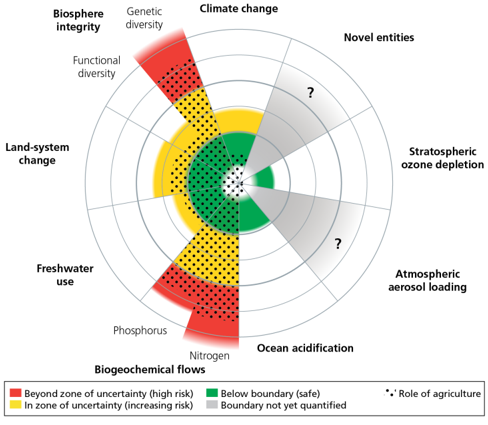
“…system is needed since of nine planetary boundaries (PBs) agriculture is the major driver of four PBs (biosphere integrity, biogeochemical flows, land-system change, and freshwater use) that are in the high or increasing risk zones and a significant driver of climate change (Campbell et al., 2017).”
BackgroundSelf-citationKansanga, M. M., Kerr, R. B., Lupafya, E., Dakishoni, L., & Luginaah, I. (2021) · Land Use Policy · doi:10.1016/j.landusepol.2021.105477 · Cited by 130
Ajibade, I. M., & Boateng, G. O. (2021) · Journal of Environmental Management · doi:10.1016/j.jenvman.2021.112538 · Cited by 120
Automating Agroecology: How to Design a Farming Robot Without a Monocultural Mindset?
Ditzler, L., & Driessen, C. (2022) · Journal of Agricultural and Environmental Ethics · doi:10.1007/s10806-021-09876-x · Cited by 87
“…to increase the sustainability of industrial-scale cropping serves as a loud selling point (Duckett et al., 2018), as it is widely acknowledged that industrial monocultures contribute heavily to global environmental degradation and that alternatives are urgently needed (Campbell et al., 2017).”
BackgroundEcosystem services and the resilience of agricultural landscapes
Bennett, E. M., Baird, J., Baulch, H. M., Chaplin‐Kramer, R., Fraser, E., Loring, P., Morrison, P. H., Parrott, L., Sherren, K., Winkler, K. J., et al. (2021) · Advances in ecological research/Advances in Ecological Research · doi:10.1016/bs.aecr.2021.01.001 · Cited by 137
Self-citationSpatially differentiated nitrogen supply is key in a global food–fertilizer price crisis
Snapp, S. S., Sapkota, T. B., Chamberlin, J., Cox, C. M., Gameda, S., Jat, M. L., Marenya, P., Mottaleb, K. A., Negra, C., Senthilkumar, K., et al. (2023) · Nature Sustainability · doi:10.1038/s41893-023-01166-w · Cited by 120
“and legume production; (2) subsidized access to increased use of high-N fertilizer types; and (3) advisories for improved fertilizer use efficiency.”
BackgroundBowles, N. I., Alexander, S., & Hadjikakou, M. (2019) · Ecological Economics · doi:10.1016/j.ecolecon.2019.01.033 · Cited by 114
Habitat Management for Pest Management: Limitations and Prospects
González-Chang, M., Tiwari, S., Sharma, S. D., & Wratten, S. D. (2019) · Annals of the Entomological Society of America · doi:10.1093/aesa/saz020 · Cited by 118
Rediscovering Asia’s forgotten crops to fight chronic and hidden hunger
Siddique, K. H. M., Li, X., & Gruber, K. F. (2021) · Nature Plants · doi:10.1038/s41477-021-00850-z · Cited by 114
Gosnell, H. (2021) · Sustainability Science · doi:10.1007/s11625-021-00993-0 · Cited by 117
Adegbeye, M. J., Elghandour, M. M. M. Y., Monroy, J. C., Abegunde, T. O., Salem, A. Z. M., Barbabosa‐Pliego, A., & Faniyi, T. O. (2019) · Journal of Cleaner Production · doi:10.1016/j.jclepro.2019.118074 · Cited by 109
Youth and Food Systems Transformation
Glover, D., & Sumberg, J. (2020) · Frontiers in Sustainable Food Systems · doi:10.3389/fsufs.2020.00101 · Cited by 120
“Inequity and injustice are endemic in the ways costs, risks and rewards are generated and distributed within and by food systems (AkramLodhi, 2013), and there are many examples of environmental unsustainability in agriculture and agro-industry (Campbell et al., 2017).”
BackgroundQuantifying the global cropland footprint of the European Union’s non-food bioeconomy
Brückner, M., Häyhä, T., Giljum, S., MAUS, V. W., Fischer, G., Tramberend, S., & Börner, J. (2019) · Environmental Research Letters · doi:10.1088/1748-9326/ab07f5 · Cited by 109
A global ecological signal of extinction risk in terrestrial vertebrates
Munstermann, M. J., Heim, N. A., McCauley, D. J., Payne, J. L., Upham, N. S., Wang, S. C., & Knope, M. L. (2021) · Conservation Biology · doi:10.1111/cobi.13852 · Cited by 105
“Agriculture has also previously been identified as destabilizing genetic, taxonomic, and functional diversity (Campbell et al., 2017; Zabel et al., 2019).”
BackgroundSillman, J., Uusitalo, V., Ruuskanen, V., Ojala, L. S., Kahiluoto, H., Soukka, R., & Ahola, J. (2020) · The International Journal of Life Cycle Assessment · doi:10.1007/s11367-020-01771-3 · Cited by 105
“Water use, land use, biodiversity loss, climate change, and nutrient flows are examples of activities in which agriculture has a major role and which have either exceeded or are close to exceeding safe operation spaces (Cambpell et al. 2017; Steffen et al. 2015).”
BackgroundTypologies of European farmers: approaches, methods and research gaps
Bartkowski, B., Schüßler, C., & Müller, B. H. (2022) · Regional Environmental Change · doi:10.1007/s10113-022-01899-y · Cited by 100
Coming out the egg: Assessing the benefits of circular economy strategies in agri-food industry
Abbate, S., Centobelli, P., Cerchione, R., Giardino, G., & Passaro, R. (2022) · Journal of Cleaner Production · doi:10.1016/j.jclepro.2022.135665 · Cited by 105
Berthy, F., Brunin, J., Allès, B., Fezeu, L., Touvier, M., Herçberg, S., Galan, P., Pointereau, P., Lairon, D., Baudry, J., et al. (2022) · American Journal of Clinical Nutrition · doi:10.1093/ajcn/nqac208 · Cited by 105
Metadata
- Authors
- Campbell, B. M., Beare, D. J., Bennett, E. M., Hall-Spencer, J. M., Ingram, J. S. I., Jaramillo, F., Ortiz, R., Ramankutty, N., Sayer, J. A., & Shindell, D.
- Affiliations
- CGIAR (FR)
- McGill University (CA)
- University of Tsukuba (JP)
- University of Oxford (GB)
- Stockholm Resilience Centre (SE)
- University of Copenhagen (DK)
- University of British Columbia (CA)
- James Cook University (AU)
- Duke University (US)
- ORCID
- Venue
- Ecology and Society
- Publisher
- Resilience Alliance, Inc.
- Published
- 2017
- Volume
- 22
- Issue
- 4
- ISSN
- 1708-3087 (ISSN-L)
- OpenAlex
- W2762931876
- Cited by
- 1,197
- References
- 84
- Citations by year
- 2026: 137 · 2025: 204 · 2024: 182 · 2023: 157 · 2022: 182 · 2021: 140 · 2020: 101 · 2019: 56 · 2018: 35 · 2017: 1
- FWCI
- 36.59
- Type
- journal article
- Language
- en
- Open access
- gold
- doi.org
- Licence
- cc-by-nc
- Locations
- Ecology and Society (publishedVersion, cc-by-nc)
- Research at the University of Copenhagen (University of Copenhagen) (publishedVersion, cc-by)
- Epsilon Open Archive (Sveriges lantbruksuniversitet biblioteket (Swedish University of Agricultural Sciences)) (acceptedVersion)
- ResearchOnline at James Cook University (James Cook University) (submittedVersion)
- PEARL (University of Plymouth) (submittedVersion)
- CGSPace A Repository of Agricultural Research Outputs (Consultative Group for International Agricultural Research) (submittedVersion, other-oa)
- DOAJ (DOAJ: Directory of Open Access Journals) (submittedVersion, cc-by-sa)
- Funders
- Consortium of International Agricultural Research Centers
- Topics
- Physical Sciences › Environmental Science › Global and Planetary Change › Land Use and Ecosystem Services
- Physical Sciences › Environmental Science › Ecology › Agriculture Sustainability and Environmental Impact
- Life Sciences › Agricultural and Biological Sciences › Agronomy and Crop Science › Sustainable Agricultural Systems Analysis
- Keywords
- planetary boundaries, Earth system, anthropogenic impacts, land use change
About these checks
Registry, retraction, Cites and statistics results are computed, not judged, with one exception: a printed reference that no index lists is read once by a model before it counts as a citation error. Claims are extracted by a model and kept only when their quote appears verbatim in the text; each cited source is then checked, with a model’s help, for whether it says what the claim relies on. Those verdicts can be wrong — read the claim’s quote and the cited source before relying on one.
Statistics and arithmetic are recomputed, not judged.
Confidence bands are shown only for fields calibrated on our annotated test set. None is calibrated yet, so no band is shown.
What counts as a claim ›How we measure confidence ›How we check this ›
Are you an author, or do you see a problem with this page? Request a review
Data sources
Bibliographic data: Semantic Scholar, OpenAlex, Crossref.
Contains information from the Semantic Scholar Academic Graph Datasets, made available under the ODC Attribution License (ODC-BY 1.0).
Semantic Scholar’s data is described in: Kinney, R., et al. (2023). The Semantic Scholar Open Data Platform. arXiv:2301.10140.
