

The DOI matches its Crossref record; 93 of the 95 references it cites were found in a registry or an index.
Sex-specific processing of social cues in the medial amygdala
Open accessAbstract
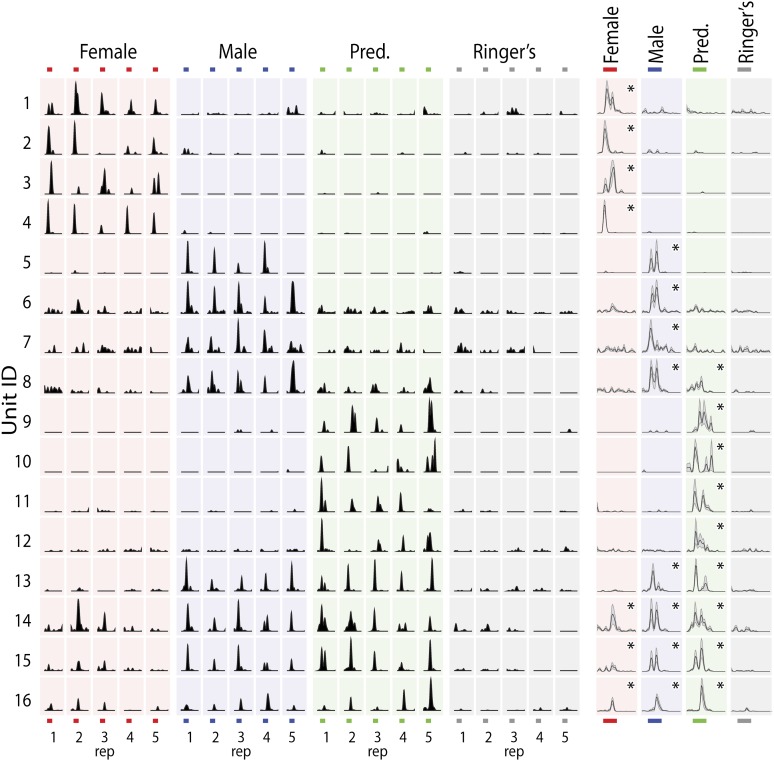
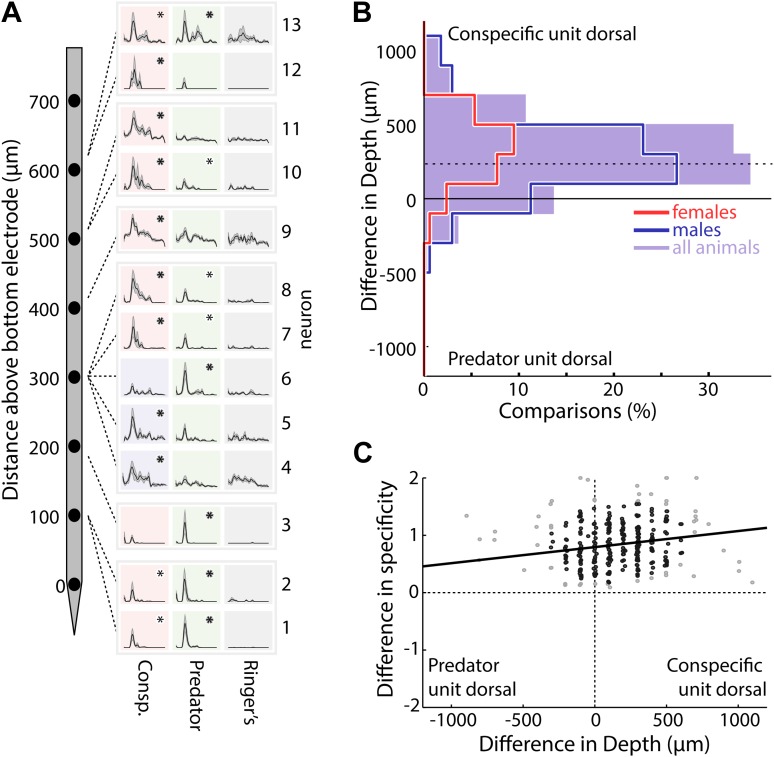
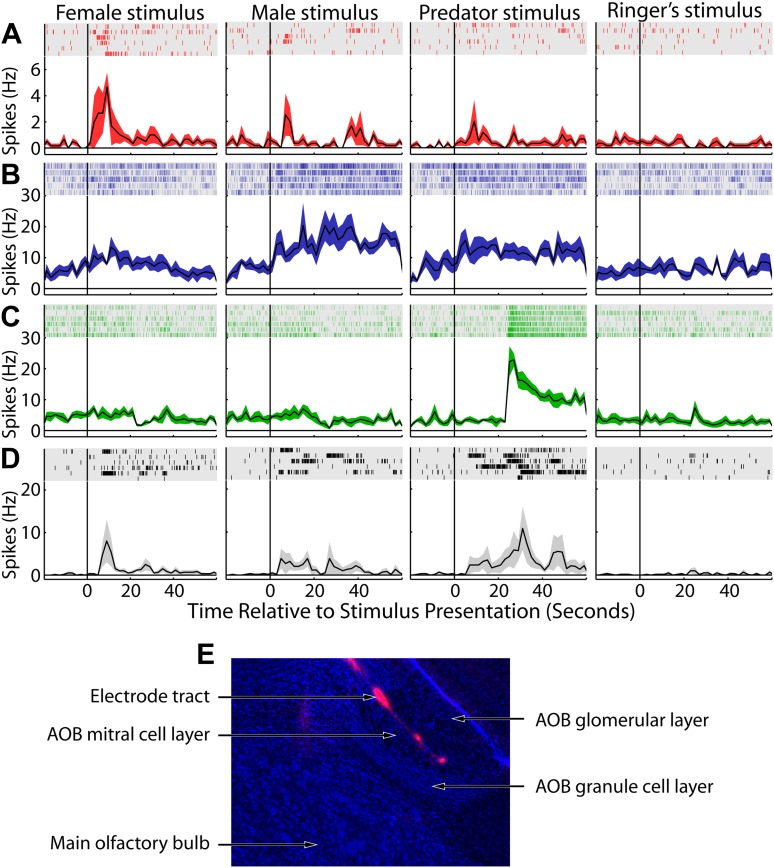
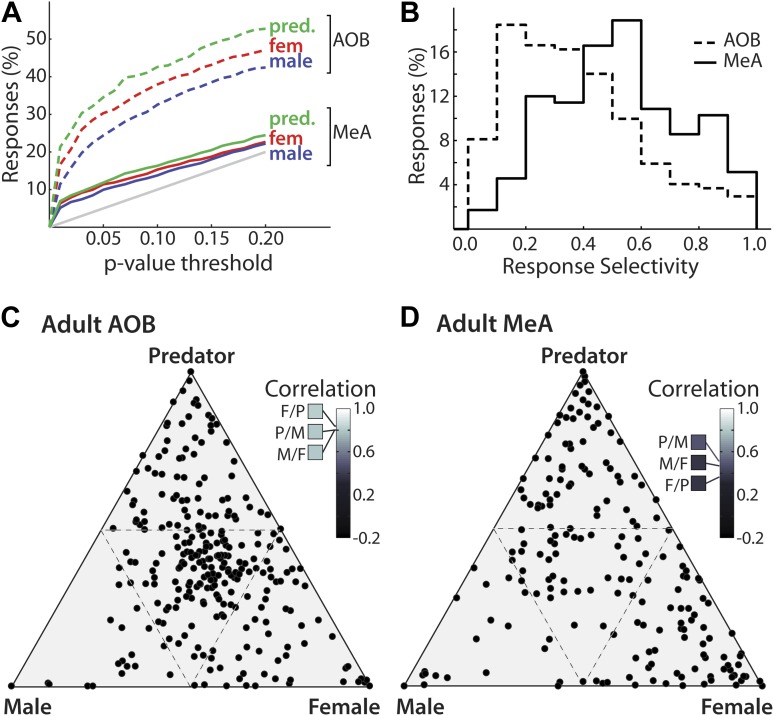
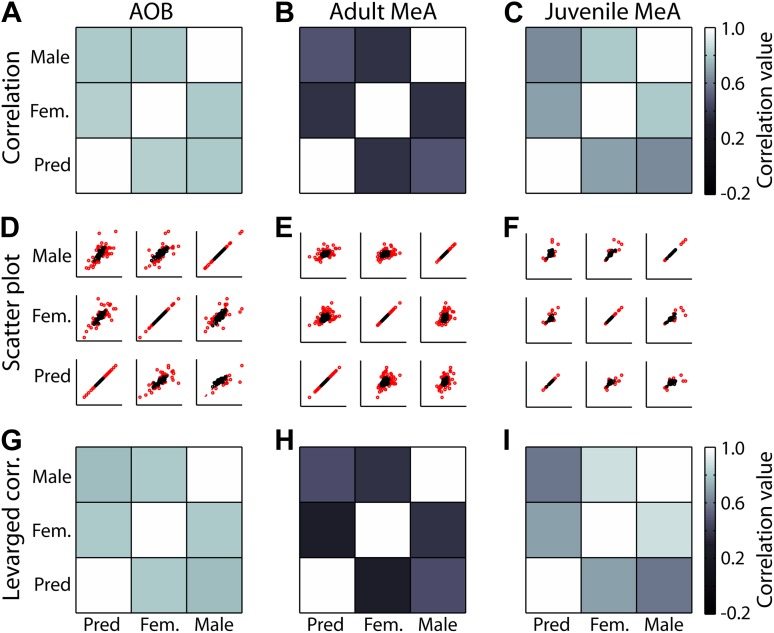
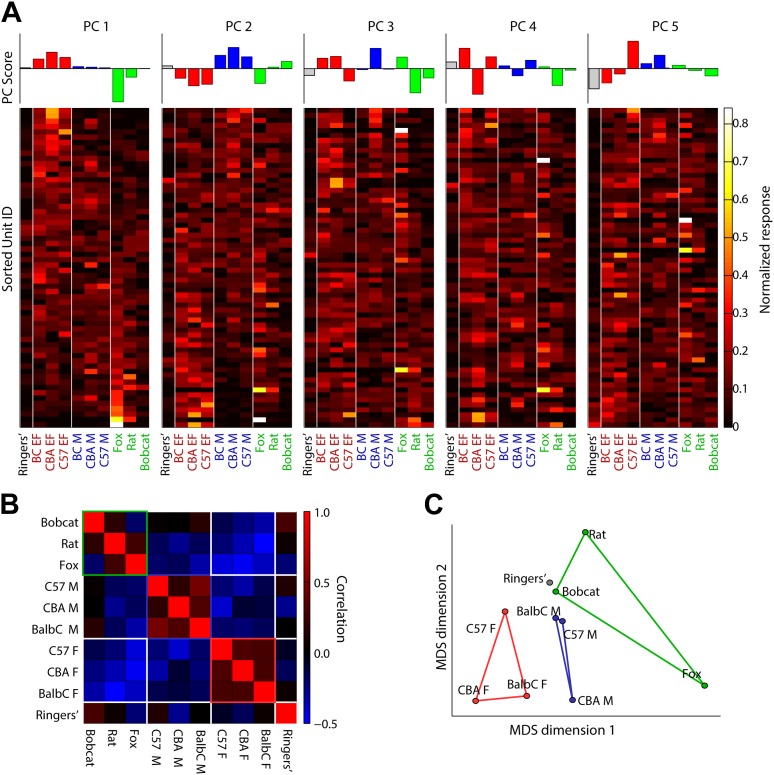
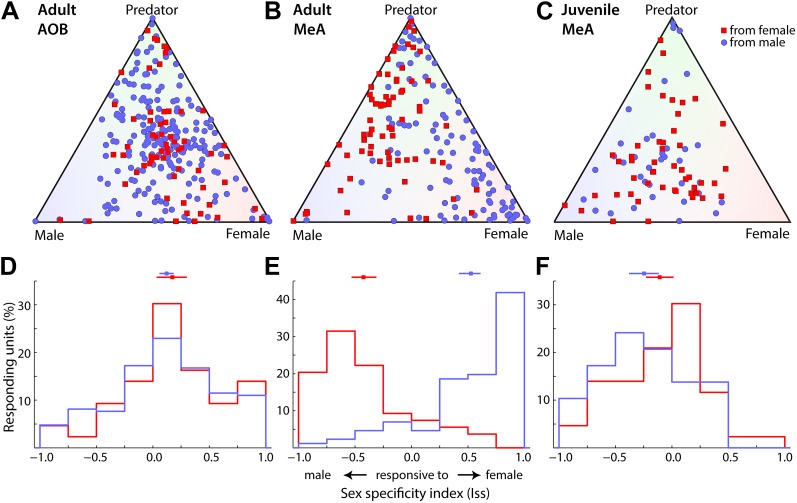
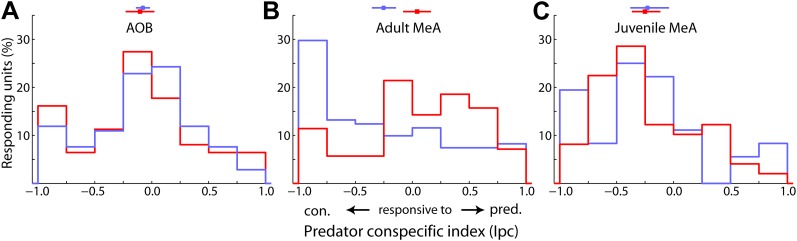
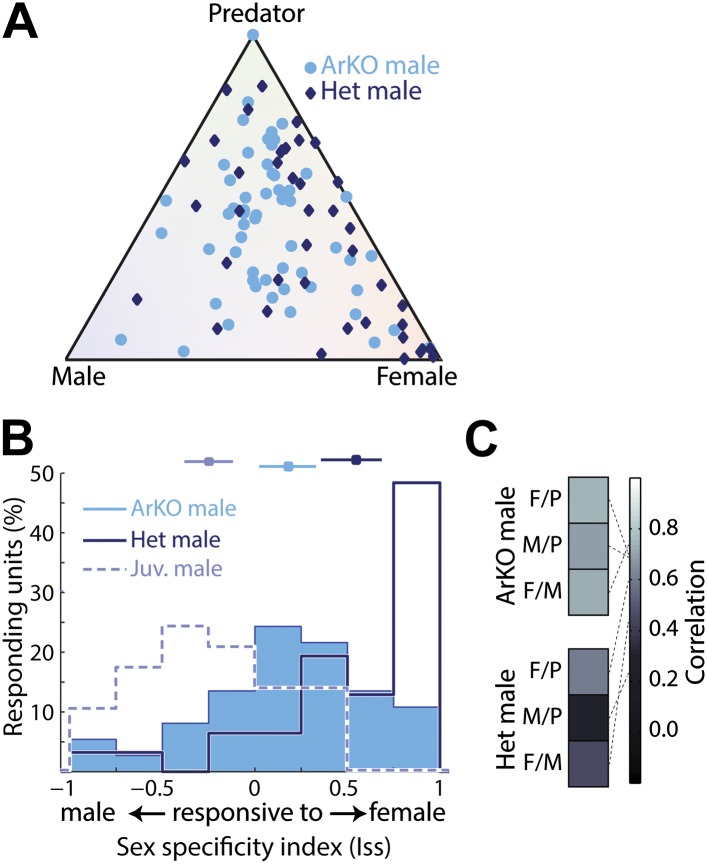
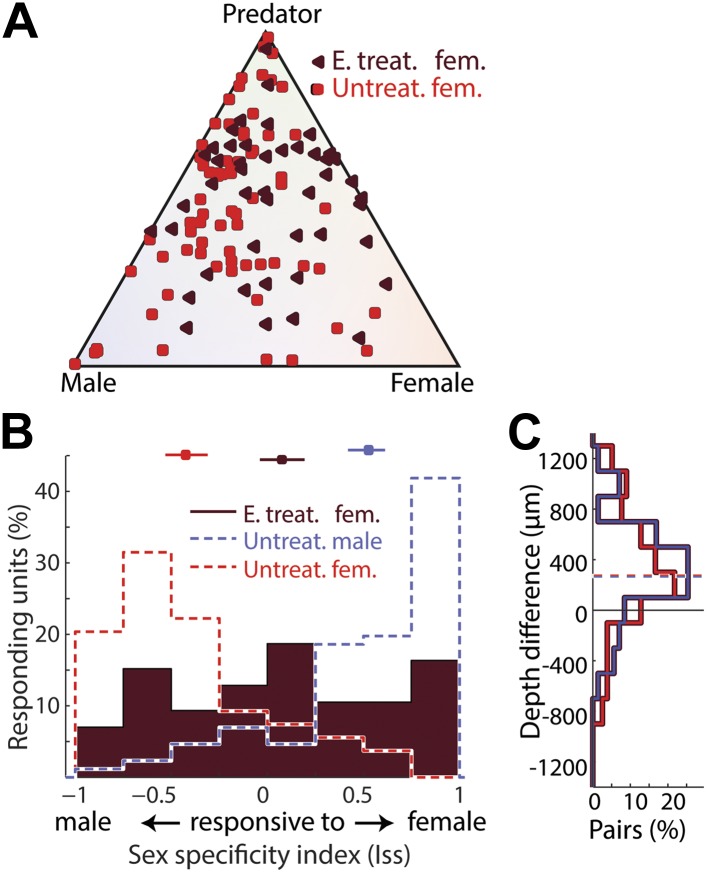
Animal-animal recognition within, and across species, is essential for predator avoidance and social interactions. Despite its essential role in orchestrating responses to animal cues, basic principles of information processing by the vomeronasal system are still unknown. The medial amygdala (MeA) occupies a central position in the vomeronasal pathway, upstream of hypothalamic centers dedicated to defensive and social responses. We have characterized sensory responses in the mouse MeA and uncovered emergent properties that shed new light onto the transformation of vomeronasal information into sex- and species-specific responses. In particular, we show that the MeA displays a degree of stimulus selectivity and a striking sexually dimorphic sensory representation that are not observed in the upstream relay of the accessory olfactory bulb (AOB). Furthermore, our results demonstrate that the development of sexually dimorphic circuits in the MeA requires steroid signaling near the time of puberty to organize the functional representation of sensory stimuli.DOI: http://dx.doi.org/10.7554/eLife.02743.001.
Overview
The claims and statistics of this paper haven’t been checked yet.
Run the check — free, no account needed. It reads the open-access text and checks the sources it cites.
Integrity signals
Registry
Cites
Statistics
Figures
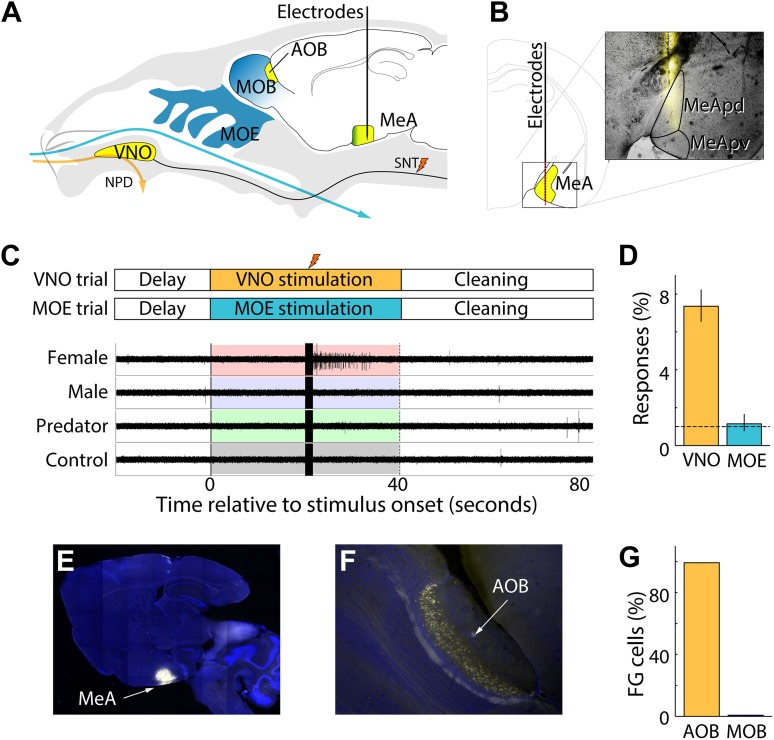
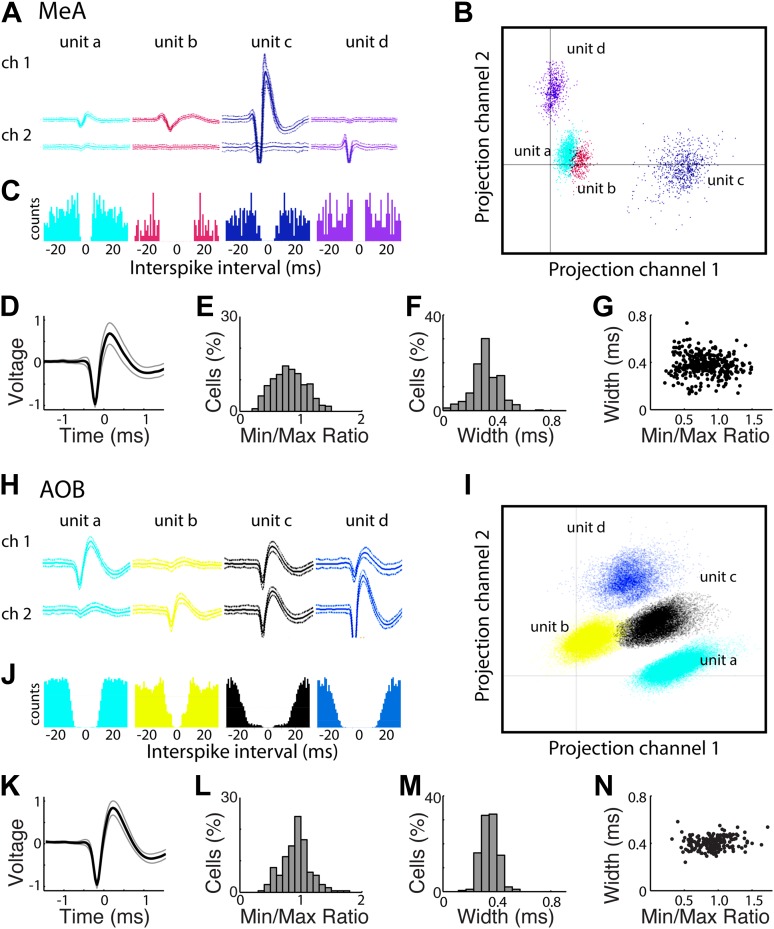
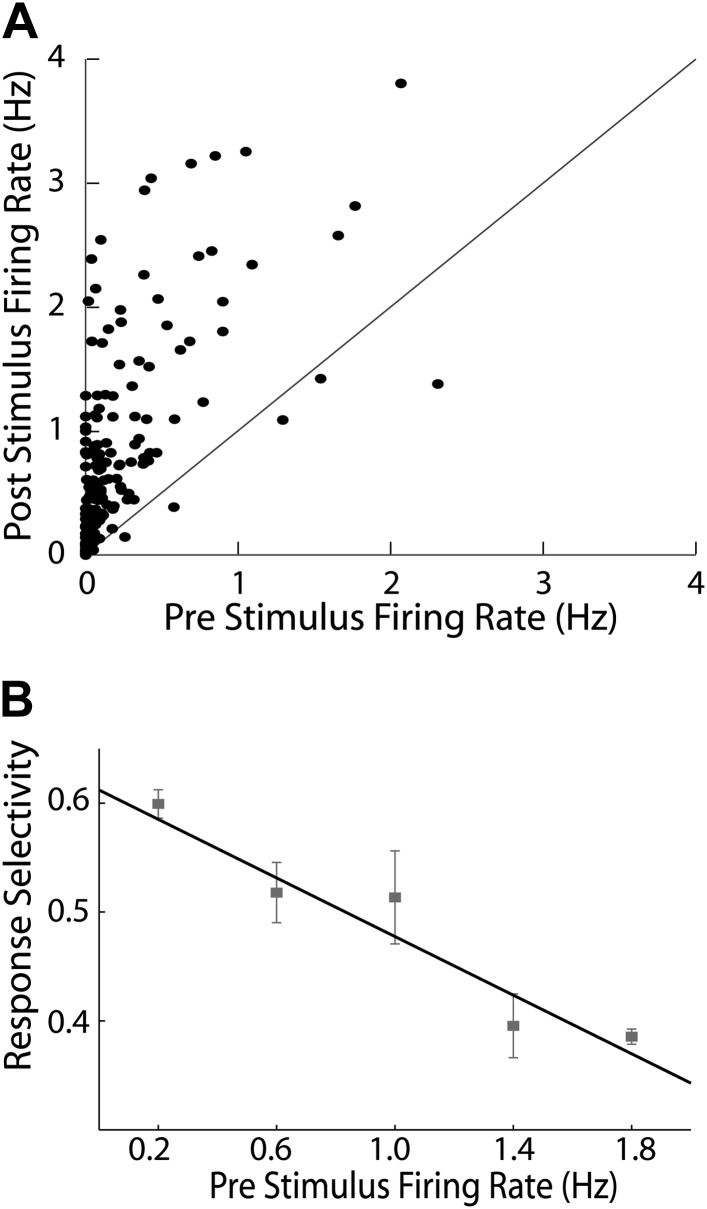
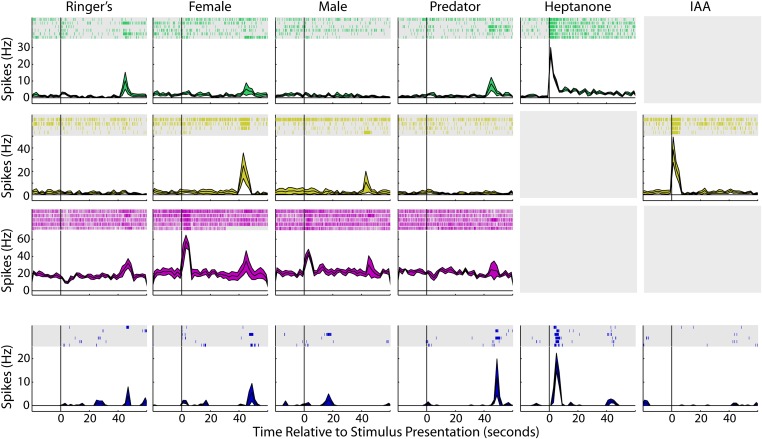
Verification
Claims the paper makes
The claims and statistics of this paper haven’t been checked yet.
Run the check — free, no account needed. It reads the open-access text and checks the sources it cites.
Claims other papers make about this one
Each is checked against this paper’s own text: does it say what the citing paper says it does?
The cited source says what the claim attributes to it.
In the citing paper
“The MeA is a region responsible for processing social information in a sex-specific manner (Bergan et al., 2014; Lischinsky et al., 2017), and has long been implicated as necessary for the sex differences in social play.”
From Developmental origins of sex differences in the neural circuitry of play (2020) · cites this paper as Bergan et al., 2014
In the citing paper
“Electrical recordings in the MeApd of anesthetized mice have revealed sex-dependent differences in the neural responses to social cues (Bergan et al., 2014), while Fos induction following social interactions showed widely dispersed response patterns (Carvalho et al., 2015; Choi et al., 2005).”
From Neuronal Representation of Social Information in the Medial Amygdala of Awake Behaving Mice (2017) · cites this paper as Bergan et al., 2014
Self-check
Percentages, sums and reported differences re-computed from the paper’s own numbers.
The self-check needs the paper’s full text.
Citations
Cites
An Introduction to the Bootstrap
Efron, B., & Tibshirani, R. J. (1994) · doi:10.1201/9780429246593 · Cited by 40,500
An Introduction to the Bootstrap
Efron, B., & Tibshirani, R. J. (1993) · doi:10.1007/978-1-4899-4541-9 · Cited by 21,230
The mouse brain in stereotaxic coordinates
Konsman, J. (2003) · Psychoneuroendocrinology · doi:10.1016/s0306-4530(03)00088-x · Cited by 16,796
The Mouse Brain in Stereotaxic Coordinates
Paxinos, G. (2001) · Cited by 12,859
Emergence of simple-cell receptive field properties by learning a sparse code for natural images
Olshausen, B. A., & Field, D. J. (1996) · Nature · doi:10.1038/381607a0 · Cited by 5,694
Rowan, W., & Tinbergen, N. (1952) · Bird-Banding · doi:10.2307/4510368 · Cited by 2,706
Critical period plasticity in local cortical circuits
Hensch, T. K. (2005) · Nature Reviews Neuroscience · doi:10.1038/nrn1787 · Cited by 2,323
Invariant visual representation by single neurons in the human brain
Quiroga, R. Q., Reddy, L., Kreiman, G., Koch, C., & Fried, I. (2005) · Nature · doi:10.1038/nature03687 · Cited by 1,988
PHOENIX, C. H., GOY, R. W., GERALL, A. A., & YOUNG, W. C. (1959) · Endocrinology · doi:10.1210/endo-65-3-369 · Cited by 1,934
Sexual Differentiation of the Central Nervous System
MacLusky, N. J., & Naftolin, F. (1981) · Science · doi:10.1126/science.6163211 · Cited by 1,469
Harris, K. D., Henze, D. A., Csicsvari, J. L., Hirase, H., & Buzsáki, G. (2000) · Journal of Neurophysiology · doi:10.1152/jn.2000.84.1.401 · Cited by 1,153
Sexual Dimorphism in Vocal Control Areas of the Songbird Brain
Nottebohm, F., & Arnold, A. P. (1976) · Science · doi:10.1126/science.959852 · Cited by 1,116
Oxytocin in the Medial Amygdala is Essential for Social Recognition in the Mouse
Ferguson, J. N., Aldag, J. M., Insel, T. R., & Young, L. J. (2001) · The Journal of Neuroscience · doi:10.1523/jneurosci.21-20-08278.2001 · Cited by 1,043
A novel family of genes encoding putative pheromone receptors in mammals
Dulac, C., & Axel, R. (1995) · Cell · doi:10.1016/0092-8674(95)90161-2 · Cited by 1,001
Self-citationFunctional identification of an aggression locus in the mouse hypothalamus
Lin, D., Boyle, M. P., Dollar, P., Lee, H., Lein, E. S., Perona, P., & Anderson, D. J. (2011) · Nature · doi:10.1038/nature09736 · Cited by 914
Estradiol and the Developing Brain
McCARTHY, M. M. (2008) · Physiological Reviews · doi:10.1152/physrev.00010.2007 · Cited by 885 · cited 3×
“This developmental schema, known as the organizational/activational hypothesis of sexual dimorphism in the brain (Phoenix et al., 1959; McCarthy, 2008), proposes the establishment of sex-specific circuit features Neuroscience Bergan et al. eLife 2014;3:e02743.”
BackgroundMethodLoss of Sex Discrimination and Male-Male Aggression in Mice Deficient for TRP2
Stowers, L., Holy, T. E., Meister, M., Dulac, C. G., & Koentges, G. (2002) · Science · doi:10.1126/science.1069259 · Cited by 880
Self-citationFisher, C. R., Graves, K. H., Parlow, A. F., & Simpson, E. R. (1998) · Proceedings of the National Academy of Sciences · doi:10.1073/pnas.95.12.6965 · Cited by 867
A single class of olfactory neurons mediates behavioural responses to a Drosophila sex pheromone
Kurtović-Kozarić, A., Widmer, A., & Dickson, B. J. (2007) · Nature · doi:10.1038/nature05672 · Cited by 761
On the actions that one nerve cell can have on another: distinguishing “drivers” from “modulators”
Sherman, S. M., & Guillery, R. W. (1998) · Proceedings of the National Academy of Sciences · doi:10.1073/pnas.95.12.7121 · Cited by 746 · cited 1×
“Single units were distinguished from multi-unit activity based on spike shape, separation of principal component projections, and the presence or absence of a refractory period between successive spikes (Figure 1—figure supplement 1; Harris et al., 2000; Hazan et al., 2006).”
BackgroundA Multigene Family Encoding a Diverse Array of Putative Pheromone Receptors in Mammals
Matsunami, H., & Buck, L. B. (1997) · Cell · doi:10.1016/s0092-8674(00)80537-1 · Cited by 706
Herrada, G., & Dulac, C. (1997) · Cell · doi:10.1016/s0092-8674(00)80536-x · Cited by 696
Self-citationMolecular detection of pheromone signals in mammals: from genes to behaviour
Dulac, C. G., & Torello, A. T. (2003) · Nature reviews. Neuroscience · doi:10.1038/nrn1140 · Cited by 662
Self-citationCombinatorial amygdalar inputs to hippocampal domains and hypothalamic behavior systems
Petrovich, G. D., Canteras, N. S., & Swanson, L. W. (2001) · Brain Research Reviews · doi:10.1016/s0165-0173(01)00080-7 · Cited by 662
Innate versus learned odour processing in the mouse olfactory bulb
Kobayakawa, K., Kobayakawa, R., Matsumoto, H., Oka, Y., Imai, T., Ikawa, M., Okabe, M., Ikeda, T., Itohara, S., Kikusui, T., et al. (2007) · Nature · doi:10.1038/nature06281 · Cited by 659
Sexual differentiation of the vertebrate nervous system
Morris, J. A., Jordan, C. L., & Breedlove, S. M. (2004) · Nature Neuroscience · doi:10.1038/nn1325 · Cited by 627
A New Multigene Family of Putative Pheromone Receptors
Ryba, N. J. P., & Tirindelli, R. (1997) · Neuron · doi:10.1016/s0896-6273(00)80946-0 · Cited by 598
What songbirds teach us about learning
Brainard, M. S., & Doupe, A. J. (2002) · Nature · doi:10.1038/417351a · Cited by 589
Ultrasensitive pheromone detection by mammalian vomeronasal neurons
Leinders-Zufall, T., Lane, A. P., Puche, A. C., Ma, W., Novotny, M. V., Shipley, M. T., & Zufall, F. (2000) · Nature · doi:10.1038/35015572 · Cited by 576
HOW THE BRAIN PROCESSES SOCIAL INFORMATION: Searching for the Social Brain
Insel, T. R., & Fernald, R. D. (2004) · Annual Review of Neuroscience · doi:10.1146/annurev.neuro.27.070203.144148 · Cited by 556
Cortical representations of olfactory input by trans-synaptic tracing
Miyamichi, K., Amat, F., Moussavi, F., Wang, C., Wickersham, I. R., Wall, N. R., Taniguchi, H., Tasic, B., Huang, Z. J., He, Z., et al. (2010) · Nature · doi:10.1038/nature09714 · Cited by 546
Insect Sex-Pheromone Signals Mediated by Specific Combinations of Olfactory Receptors
Nakagawa, T., Sakurai, T., Nishioka, T., & Touhara, K. (2005) · Science · doi:10.1126/science.1106267 · Cited by 525
Hazan, L., Zugaro, M. B., & Buzsáki, G. (2006) · Journal of Neuroscience Methods · doi:10.1016/j.jneumeth.2006.01.017 · Cited by 492
Distinct representations of olfactory information in different cortical centres
Sosulski, D. L., Bloom, M. L., Cutforth, T., Axel, R., & Datta, S. R. (2011) · Nature · doi:10.1038/nature09868 · Cited by 479
Odor Representations in Olfactory Cortex: “Sparse” Coding, Global Inhibition, and Oscillations
Poo, C., & Isaacson, J. S. (2009) · Neuron · doi:10.1016/j.neuron.2009.05.022 · Cited by 477
Choi, G. B., Dong, H.-W., Murphy, A. J., Valenzuela, D. M., Yancopoulos, G. D., Swanson, L. W., & Anderson, D. J. (2005) · Neuron · doi:10.1016/j.neuron.2005.04.011 · Cited by 462
TRP2: A candidate transduction channel for mammalian pheromone sensory signaling
Liman, E. R., Corey, D. P., & Dulac, C. G. (1999) · Proceedings of the National Academy of Sciences · doi:10.1073/pnas.96.10.5791 · Cited by 445
Self-citationA functional circuit underlying male sexual behaviour in the female mouse brain
Kimchi, T., Xu, J., & Dulac, C. (2007) · Nature · doi:10.1038/nature06089 · Cited by 445
Self-citationOlfactory Inputs to Hypothalamic Neurons Controlling Reproduction and Fertility
Yoon, H., Enquist, L. W., & Dulac, C. G. (2005) · Cell · doi:10.1016/j.cell.2005.08.039 · Cited by 435
Self-citationEstrogen masculinizes neural pathways and sex-specific behaviors
Wu, M. V., Manoli, D. S., Fraser, E. J., Coats, J. K., Tollkuhn, J., Honda, S.-I., Harada, N., & Shah, N. M. (2009) · Cell · doi:10.1016/j.cell.2009.07.036 · Cited by 404
The Drosophila pheromone cVA activates a sexually dimorphic neural circuit
Datta, S. R., Vasconcelos, M. L., Ruta, V., Luo, S. X., Wong, A. M., Demir, E., Flores, J., Balonze, K., Dickson, B. J., & Axel, R. (2008) · Nature · doi:10.1038/nature06808 · Cited by 383
Neuronal growth, atrophy and death in a sexually dimorphic song nucleus in the zebra finch brain
Konishi, M., & Akutagawa, E. (1985) · Nature · doi:10.1038/315145a0 · Cited by 382
Haga‐Yamanaka, S., Hattori, T., Sato, T., Sato, K., Matsuda, S., Kobayakawa, R., Sakano, H., Yoshihara, Y., Kikusui, T., & Touhara, K. (2010) · Nature · doi:10.1038/nature09142 · Cited by 376
Encoding pheromonal signals in the accessory olfactory bulb of behaving mice
Luo, M., Fee, M. S., & Katz, L. C. (2003) · Science · doi:10.1126/science.1082133 · Cited by 365 · cited 2×
“…contrast to the apparent specificity of VNO responses for distinct animal cues, a large proportion of output neurons in the AOB, the primary targets of VNO sensory projections, were shown to respond to multiple classes of stimuli (Luo et al., 2003; Hendrickson et al., 2008; Ben-Shaul et al., 2010).”
BackgroundOdor- and context-dependent modulation of mitral cell activity in behaving rats
Kay, L. M., & Laurent, G. (1999) · Nature Neuroscience · doi:10.1038/14801 · Cited by 357
King, A. J., & Palmer, A. R. (1985) · Experimental Brain Research · doi:10.1007/bf00236934 · Cited by 355
A dimorphic pheromone circuit in Drosophila from sensory input to descending output
Ruta, V., Datta, S. R., Vasconcelos, M. L., Freeland, J., Looger, L. L., & Axel, R. (2010) · Nature · doi:10.1038/nature09554 · Cited by 344
Feedback Loops Link Odor and Pheromone Signaling with Reproduction
Boehm, U., Zou, Z., & Buck, L. B. (2005) · Cell · doi:10.1016/j.cell.2005.09.027 · Cited by 331
Molecular organization of vomeronasal chemoreception
Isogai, Y., Si, S., Pont-Lezica, L., Tan, T., Kapoor, V., Murthy, V. N., & Dulac, C. (2011) · Nature · doi:10.1038/nature10437 · Cited by 317
Self-citationA brain sexual dimorphism controlled by adult circulating androgens
Cooke, B. M., Tabibnia, G., & Breedlove, S. M. (1999) · Proceedings of the National Academy of Sciences · doi:10.1073/pnas.96.13.7538 · Cited by 311
Responses of vomeronasal neurons to natural stimuli
Holy, T. E., Dulac, C., & Meister, M. (2000) · Science · doi:10.1126/science.289.5484.1569 · Cited by 275
Self-citationDeficits in sexual and aggressive behaviors in Cnga2 mutant mice
Mandiyan, V. S., Coats, J., & Shah, N. M. (2005) · Nature Neuroscience · doi:10.1038/nn1589 · Cited by 270
Sparse Odor Coding in Awake Behaving Mice
Rinberg, D. A., Koulakov, A. A., & Gelperin, A. (2006) · Journal of Neuroscience · doi:10.1523/jneurosci.0884-06.2006 · Cited by 269
Genetic Analysis of Brain Circuits Underlying Pheromone Signaling
Dulac, C. G., & Wagner, S. (2006) · Annual Review of Genetics · doi:10.1146/annurev.genet.39.073003.093937 · Cited by 227
Self-citationKang, N., Baum, M. J., & Cherry, J. A. (2009) · European Journal of Neuroscience · doi:10.1111/j.1460-9568.2009.06638.x · Cited by 215
Sulfated Steroids as Natural Ligands of Mouse Pheromone-Sensing Neurons
Nodari, F., Hsu, F., Fu, X., Holekamp, T. F., Kao, L.-F., TURK, J. W., & Holy, T. E. (2008) · Journal of Neuroscience · doi:10.1523/jneurosci.1425-08.2008 · Cited by 213
Convergence of olfactory and vomeronasal projections in the rat basal telencephalon
Pró-Sistiaga, P., Mohedano‐Moriano, A., Úbeda‐Bañón, I., Jiménez, M. D. M. A., Marcos, P., Artacho‐Pérula, E., Crespo, C., Insausti, R., & Martı́nez-Marcos, A. (2007) · The Journal of Comparative Neurology · doi:10.1002/cne.21455 · Cited by 177
Fernandez-Fewell, G. D., & Meredith, M. (1994) · Journal of Neuroscience · doi:10.1523/jneurosci.14-06-03643.1994 · Cited by 176
Ben-Shaul, Y., Katz, L. C., Mooney, R., & Dulac, C. (2010) · Proceedings of the National Academy of Sciences · doi:10.1073/pnas.0915147107 · Cited by 173
Self-citationMedial Amygdala Modulation of Predator Odor-Induced Unconditioned Fear in the Rat.
Li, C.-I., Maglinao, T. L., & Takahashi, L. K. (2004) · Behavioral Neuroscience · doi:10.1037/0735-7044.118.2.324 · Cited by 168
Associative Cortex Features in the First Olfactory Brain Relay Station
Doucette, W. T., Gire, D. H., Whitesell, J. D., Carmean, V., Lucero, M. T., & Restrepo, D. (2011) · Neuron · doi:10.1016/j.neuron.2011.02.024 · Cited by 167
Encoding Gender and Individual Information in the Mouse Vomeronasal Organ
He, J., Ma, L., Kim, S. S., Nakai, J., & Yu, C. (2008) · Science · doi:10.1126/science.1154476 · Cited by 167
Sexual Partner Preference Requires a Functional Aromatase (Cyp19) Gene in Male Mice
Bakker, J., Honda, S., Harada, N., & Balthazart, J. (2002) · Hormones and Behavior · doi:10.1006/hbeh.2002.1805 · Cited by 157
Zhang, J., Konkle, A. T. M., Zup, S. L., & McCarthy, M. M. (2008) · European Journal of Neuroscience · doi:10.1111/j.1460-9568.2008.06073.x · Cited by 151
Sex Differences in the Vomeronasal System
Guillamón, A., & Segovia, S. (1997) · Brain Research Bulletin · doi:10.1016/s0361-9230(97)00217-7 · Cited by 150
Representation of Natural Stimuli in the Rodent Main Olfactory Bulb
Lin, D., Shea, S. D., & Katz, L. C. (2006) · Neuron · doi:10.1016/j.neuron.2006.03.021 · Cited by 147
Dendritic pruning of the medial amygdala during pubertal development of the male Syrian hamster
Zehr, J. L., Todd, B. J., Schulz, K. M., McCarthy, M. M., & Sisk, C. L. (2006) · Journal of Neurobiology · doi:10.1002/neu.20251 · Cited by 145
Wagner, S., Gresser, A. L., Torello, A. T., & Dulac, C. (2006) · Neuron · doi:10.1016/j.neuron.2006.04.033 · Cited by 144
Self-citationSocial Regulation of Gene Expression in the Hypothalamic-Pituitary-Gonadal Axis
Maruska, K. P., & Fernald, R. D. (2011) · Physiology · doi:10.1152/physiol.00032.2011 · Cited by 137
Structural requirements for the activation of vomeronasal sensory neurons by MHC peptides
Leinders‐Zufall, T., Ishii, T., Mombaerts, P., Zufall, F., & Boehm, T. L. J. (2009) · Nature Neuroscience · doi:10.1038/nn.2452 · Cited by 135
On the organization of olfactory and vomeronasal cortices
Martı́nez-Marcos, A. (2008) · Progress in Neurobiology · doi:10.1016/j.pneurobio.2008.09.010 · Cited by 126
Odor representations in olfactory cortex
Poo, C. (2010) · eScholarship (California Digital Library) · Cited by 101
Bhalla, U. S., & Bower, J. M. (1997) · Journal of Computational Neuroscience · doi:10.1023/a:1008819818970 · Cited by 100
Neural mechanisms underlying sex-specific behaviors in vertebrates
Dulac, C. G., & Kimchi, T. (2007) · Current Opinion in Neurobiology · doi:10.1016/j.conb.2008.01.009 · Cited by 99
Self-citationCortical-Like Functional Organization of the Pheromone-Processing Circuits in the Medial Amygdala
Bian, X., Yanagawa, Y., Chen, W. R., & Luo, M. (2007) · Journal of Neurophysiology · doi:10.1152/jn.00902.2007 · Cited by 92
Hansson, B. S., van der Pers, J. N. C., & Löfqvist, J. (1989) · Physiological Entomology · doi:10.1111/j.1365-3032.1989.tb00946.x · Cited by 82
Vomeronasal organ removal and female mouse aggression: The role of experience
Bean, N. J., & Wysocki, C. J. (1989) · Physiology & Behavior · doi:10.1016/0031-9384(89)90209-6 · Cited by 79
Broadly tuned and respiration-independent inhibition in the olfactory bulb of awake mice
Cazakoff, B. N., Lau, B. Y. B., Crump, K. L., Demmer, H. S., & Shea, S. D. (2014) · Nature Neuroscience · doi:10.1038/nn.3669 · Cited by 77
Trans-sexually grafted antennae alter pheromone-directed behaviour in a moth
Schneiderman, A. M., Hildebrand, J. G., Brennan, M. M., & Tumlinson, J. H. (1986) · Nature · doi:10.1038/323801a0 · Cited by 77
Climbing fiber signaling and cerebellar gain control
Ohtsuki, G. (2009) · Frontiers in Cellular Neuroscience · doi:10.3389/neuro.03.004.2009 · Cited by 72
Inhibition Shapes Sex Selectivity in the Mouse Accessory Olfactory Bulb
Hendrickson, R. C., Krauthamer, S., Essenberg, J. M., & Holy, T. E. (2008) · Journal of Neuroscience · doi:10.1523/jneurosci.2715-08.2008 · Cited by 69
Kang, N., Baum, M. J., & Cherry, J. A. (2010) · Chemical Senses · doi:10.1093/chemse/bjq120 · Cited by 69
Organization of Vomeronasal Sensory Coding Revealed by Fast Volumetric Calcium Imaging
Turaga, D., & Holy, T. E. (2012) · Journal of Neuroscience · doi:10.1523/jneurosci.5339-11.2012 · Cited by 66
Sensation in a Single Neuron Pair Represses Male Behavior in Hermaphrodites
White, J. Q., & Jørgensen, E. M. (2012) · Neuron · doi:10.1016/j.neuron.2012.03.044 · Cited by 60
Target-Dependent Sexual Differentiation of a Limbic–Hypothalamic Neural Pathway
Ibanez, M. A., Gu, G., & Simerly, R. B. (2001) · Journal of Neuroscience · doi:10.1523/jneurosci.21-15-05652.2001 · Cited by 59
Samuelsen, C. L., & Meredith, M. J. (2009) · Neuroscience · doi:10.1016/j.neuroscience.2009.09.030 · Cited by 58
Sex-specific odorant receptors of the tobacco hornworm Manduca sexta
Große‐Wilde, E. (2010) · Frontiers in Cellular Neuroscience · doi:10.3389/fncel.2010.00022 · Cited by 55
The relationship of neurogenesis and growth of brain regions to song learning
Kirn, J. R. (2009) · Brain and Language · doi:10.1016/j.bandl.2009.09.006 · Cited by 47
Shpak, G., Zylbertal, A., Yarom, Y., & Wagner, S. (2012) · Journal of Neuroscience · doi:10.1523/jneurosci.4397-11.2012 · Cited by 37
Visual Modulation of Auditory Responses in the Owl Inferior Colliculus
Bergan, J. F., & Knudsen, E. I. (2009) · Journal of Neurophysiology · doi:10.1152/jn.91313.2008 · Cited by 37
Self-citationA Quantitative Trait Locus on Chromosome 6 Regulates the Onset of Puberty in Mice
Nathan, B. M., Hodges, C. A., Supelak, P. J., Burrage, L. C., Nadeau, J. H., & Palmert, M. R. (2006) · Endocrinology · doi:10.1210/en.2006-0745 · Cited by 31
Cell death and sexual differentiation of behavior: worms, flies, and mammals
Forger, N. G., & Vries, G. J. D. (2010) · Current Opinion in Neurobiology · doi:10.1016/j.conb.2010.09.006 · Cited by 15
Niimi, K., Horie, S., Yokosuka, M., Kawakami-Mori, F., Tanaka, K., Fukayama, H., & Sahara, Y. (2012) · Brain Research · doi:10.1016/j.brainres.2012.08.050 · Cited by 14
Cited by
Sorted by citations
Ventromedial hypothalamic neurons control a defensive emotion state
Kunwar, P. S., Zelikowsky, M., Remedios, R., Cai, H., Balban, M. Y., Meister, M., & Anderson, D. J. (2015) · eLife · doi:10.7554/elife.06633 · Cited by 1,130
Neural circuit mechanisms of social behavior
Chen, P., & Hong, W. (2018) · Neuron · doi:10.1016/j.neuron.2018.02.026 · Cited by 527
Functional circuit architecture underlying parental behaviour
Kohl, J., Babayan, B. M., Rubinstein, N. D., Autry, A. E., Marin-Rodriguez, B., Kapoor, V., Miyamichi, K., Zweifel, L. S., Luo, L., Uchida, N., et al. (2018) · Nature · doi:10.1038/s41586-018-0027-0 · Cited by 470
Self-citationDetecting Activated Cell Populations Using Single-Cell RNA-Seq
Wu, Y. E., Pan, L., Zuo, Y., Li, X., & Hong, W. (2017) · Neuron · doi:10.1016/j.neuron.2017.09.026 · Cited by 438
Hong, W., Kim, D.-W., & Anderson, D. J. (2014) · Cell · doi:10.1016/j.cell.2014.07.049 · Cited by 405
Metadata
- Authors
- Bergan, J. F., Ben-Shaul, Y., & Dulac, C.
- Affiliations
- Howard Hughes Medical Institute (US)
- School of Medicine, Department of Medical Neurobiology, The Hebrew University of Jerusalem, Jerusalem, Israel
- Corresponding author
- Dulac, Catherine
- Venue
- eLife
- Publisher
- eLife Sciences Publications, Ltd
- Published
- 2014-06-03
- Volume
- 3
- Pages
- e02743-e02743
- ISSN
- 2050-084X (ISSN-L)
- PMC
- PMC4038839
- OpenAlex
- W2125255891
- Cited by
- 237
- References
- 95
- Citations by year
- 2026: 11 · 2025: 23 · 2024: 16 · 2023: 17 · 2022: 25 · 2021: 33 · 2020: 18 · 2019: 12 · 2018: 24 · 2017: 19 · 2016: 20 · 2015: 15 · 2014: 4
- FWCI
- 11.91
- Type
- journal article
- Language
- en
- Open access
- gold
- doi.org
- Licence
- Locations
- eLife (publishedVersion, cc-by)
- Europe PMC (PubMed Central) (publishedVersion, cc-by)
- PubMed Central (publishedVersion, cc-by)
- PubMed (publishedVersion)
- Digital Access to Scholarship at Harvard (DASH) (Harvard University) (submittedVersion, cc-by)
- DOAJ (DOAJ: Directory of Open Access Journals) (submittedVersion, cc-by-sa)
- Funders
- National Institutes of Health (R01DC009019, R01DC013087, F32 DC10089)
- Howard Hughes Medical Institute (NA)
- Topics
- Life Sciences › Neuroscience › Sensory Systems › Olfactory and Sensory Function Studies
- Life Sciences › Neuroscience › Endocrine and Autonomic Systems › Neuroendocrine regulation and behavior
- Life Sciences › Neuroscience › Cognitive Neuroscience › Memory and Neural Mechanisms
- Keywords
- medial amygdala, vomeronasal system, accessory olfactory bulb, sex differences, social cue processing, species recognition, predator avoidance, steroid hormone signaling, puberty, olfactory processing, mice
- MeSH terms
- Amygdala, Animals, Cues, Female, Hormones, Male, Mice, Inbred BALB C, Neurons, Odorants, Olfactory Bulb, Olfactory Mucosa, Sexual Behavior, Animal, Sex Factors, Vomeronasal Organ, Mice
About these checks
Registry, retraction, Cites and statistics results are computed, not judged, with one exception: a printed reference that no index lists is read once by a model before it counts as a citation error. Claims are extracted by a model and kept only when their quote appears verbatim in the text; each cited source is then checked, with a model’s help, for whether it says what the claim relies on. Those verdicts can be wrong — read the claim’s quote and the cited source before relying on one.
Statistics and arithmetic are recomputed, not judged.
Confidence bands are shown only for fields calibrated on our annotated test set. None is calibrated yet, so no band is shown.
What counts as a claim ›How we measure confidence ›How we check this ›
Are you an author, or do you see a problem with this page? Request a review
