

A new criterion for assessing discriminant validity in variance-based structural equation modeling
Open accessThe DOI matches its Crossref record; 108 of the 112 references it cites were found in a registry or an index.
Abstract
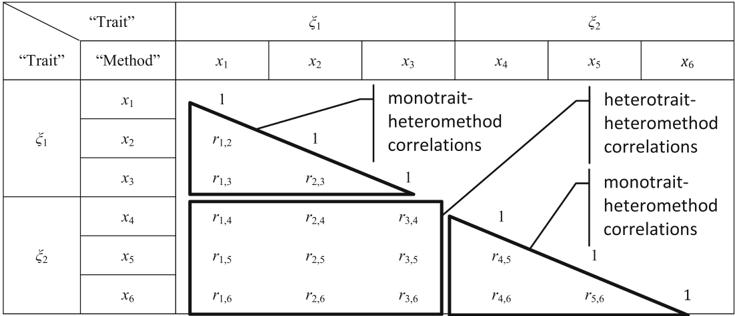
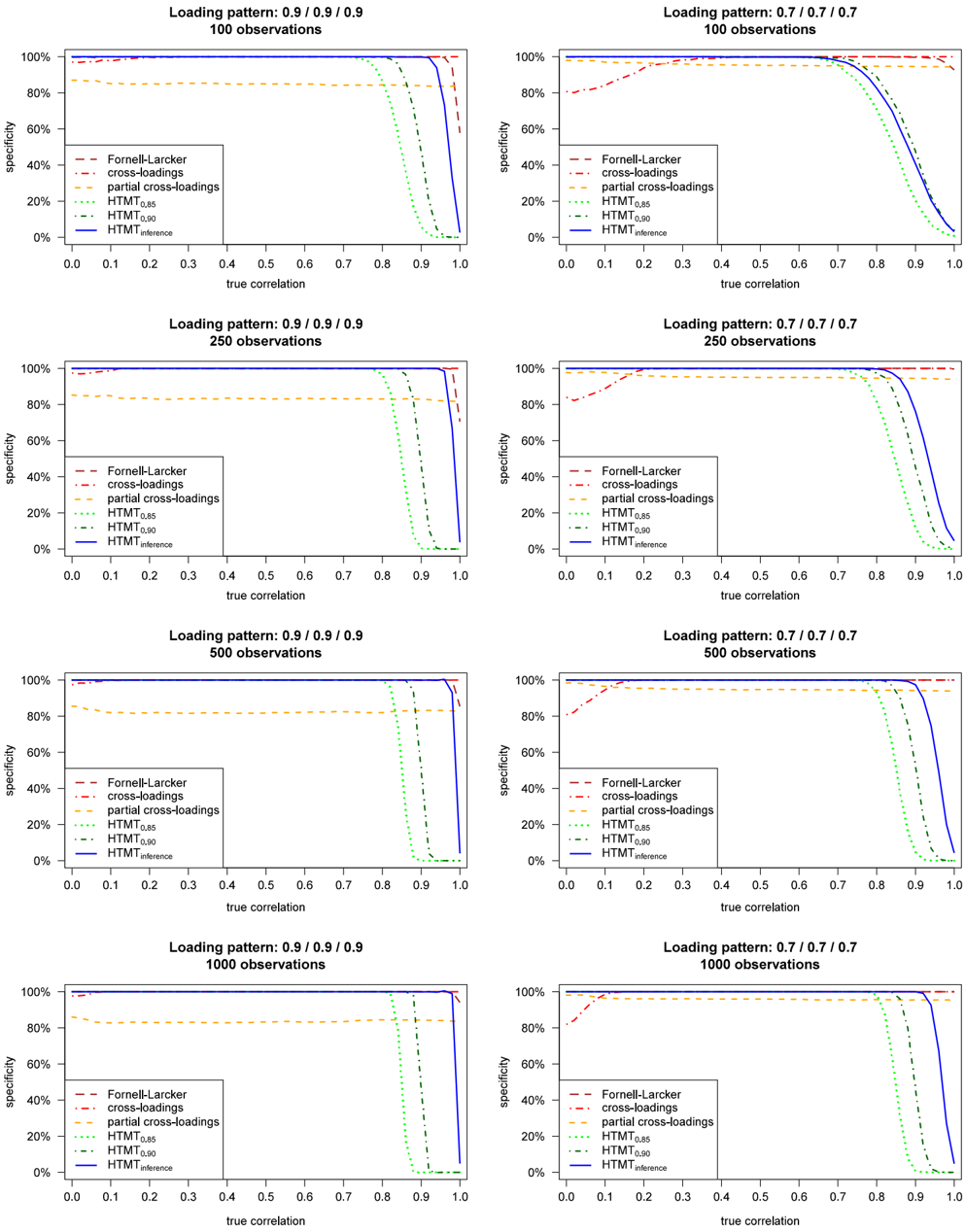
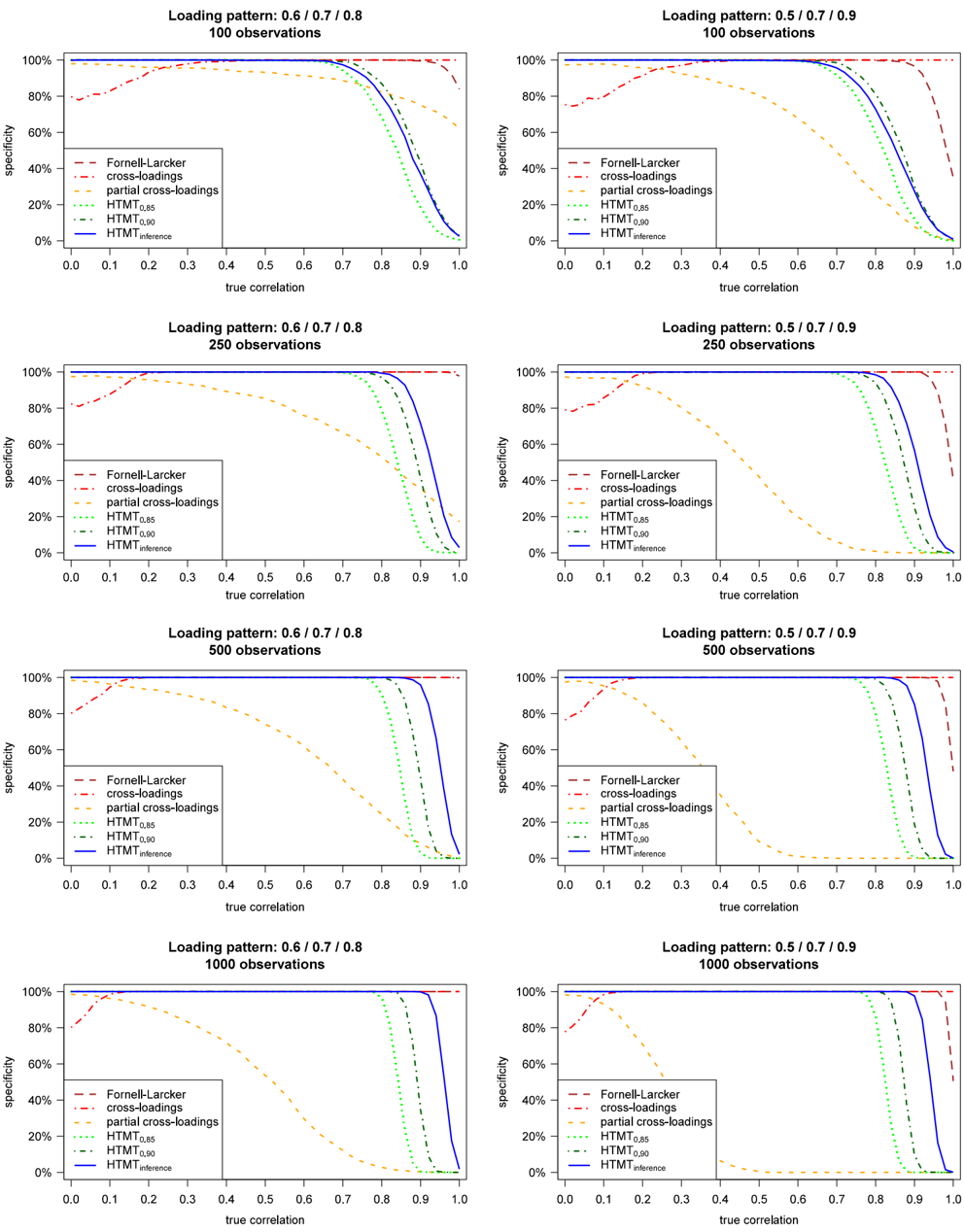
Discriminant validity assessment has become a generally accepted prerequisite for analyzing relationships between latent variables. For variance-based structural equation modeling, such as partial least squares, the Fornell-Larcker criterion and the examination of cross-loadings are the dominant approaches for evaluating discriminant validity. By means of a simulation study, we show that these approaches do not reliably detect the lack of discriminant validity in common research situations. We therefore propose an alternative approach, based on the multitrait-multimethod matrix, to assess discriminant validity: the heterotrait-monotrait ratio of correlations. We demonstrate its superior performance by means of a Monte Carlo simulation study, in which we compare the new approach to the Fornell-Larcker criterion and the assessment of (partial) cross-loadings. Finally, we provide guidelines on how to handle discriminant validity issues in variance-based structural equation modeling.
Overview
The claims and statistics of this paper haven’t been checked yet.
Free: it reads the open-access text and checks the first 5 claims that cite a source we can check. Create a free account to check every claim.
Integrity signals
Registry
Cites
Statistics
Figures


Verification
Claims the paper makes
The claims and statistics of this paper haven’t been checked yet.
Free: it reads the open-access text and checks the first 5 claims that cite a source we can check. Create a free account to check every claim.
Claims other papers make about this one
Each is checked against this paper’s own text: does it say what the citing paper says it does?
The cited source doesn’t support the claim as written.
In the citing paper
“Ultimately, they did not recommend HTMT inference , given it failed to detect discriminant validity violations even when inter-construct correlations were as high as 0.95.”
From Reporting reliability, convergent and discriminant validity with structural equation modeling: A review and best-practice recommendations (2024) · cites this paper as Henseler et al. (2015)
Checked by a reasoning model — may be wrong.
Experimental — accuracy not yet measuredThe cited source doesn’t support the claim as written.
In the citing paper
“First, intending to estimate the disattenuated construct score correlation, Henseler et al.'s (2015, Eq. 6) HTMT equation is incorrect.”
From Reporting reliability, convergent and discriminant validity with structural equation modeling: A review and best-practice recommendations (2024) · cites this paper as Henseler et al. (2015)
Checked by a reasoning model — may be wrong.
Experimental — accuracy not yet measuredThe source backs part of the claim, not all of it — or backs it for a different population, condition or comparison.
In the citing paper
“While Henseler et al.'s (2015) HTMT equation uses inter-item correlations instead of inter-item covariances, that becomes the disattenuated correlation between two composite scores formed by averaging the standardized item scores.”
From Reporting reliability, convergent and discriminant validity with structural equation modeling: A review and best-practice recommendations (2024) · cites this paper as Henseler et al. (2015)
Experimental — accuracy not yet measuredThe source backs part of the claim, not all of it — or backs it for a different population, condition or comparison.
In the citing paper
“Third, the recommended HTMT threshold of 0.85 was based on the power of detecting a population correlation at 1.0 in a simulation study (Henseler et al., 2015).”
From Reporting reliability, convergent and discriminant validity with structural equation modeling: A review and best-practice recommendations (2024) · cites this paper as Henseler et al., 2015
Experimental — accuracy not yet measuredThe source backs part of the claim, not all of it — or backs it for a different population, condition or comparison.
In the citing paper
“Hence, unless the construct scores are calculated by averaging the standardized item scores, Henseler et al.'s HTMT equation provides a biased estimate of the disattenuated correlation between two composites.”
From Reporting reliability, convergent and discriminant validity with structural equation modeling: A review and best-practice recommendations (2024) · cites this paper as Henseler et al. (2015)
Experimental — accuracy not yet measured
38 more claims about this paper
Create a free account to see every claim other papers make about this one.
Self-check
Percentages, sums and reported differences re-computed from the paper’s own numbers.
The self-check needs the paper’s full text.
Citations
Cites
R: A Language and Environment for Statistical Computing
R Core Team (2025) · doi:10.32614/r.manuals · Cited by 352,181
Evaluating Structural Equation Models with Unobservable Variables and Measurement Error
Fornell, C., & Larcker, D. F. (1981) · Journal of Marketing Research · doi:10.2307/3151312 · Cited by 109,314
Evaluating structural equation models with unobservable variables and measurement error
Fornell, C., & Larcker, D. F. (1981) · Journal of Marketing Research · doi:10.1177/002224378101800104 · Cited by 109,190
Perceived usefulness, perceived ease of use, and user acceptance of information technology
Davis, F. D. (1989) · MIS Quarterly · doi:10.2307/249008 · Cited by 68,483 · cited 1×
“Take, for example, the technology acceptance model and its variations (Davis 1989; Venkatesh et al. 2003), which include the constructs intention to use and the actual use.”
BackgroundUser Acceptance of Information Technology: Toward A Unified View1
Venkatesh, V., Morris, M. G., Davis, G. B., & Davis, F. D. (2003) · MIS Quarterly · doi:10.2307/30036540 · Cited by 45,035 · cited 1×
“Take, for example, the technology acceptance model and its variations (Davis 1989; Venkatesh et al. 2003), which include the constructs intention to use and the actual use.”
BackgroundStructural equation modeling in practice: A review and recommended two-step approach
Anderson, J. C., & Gerbing, D. W. (1988) · Psychological Bulletin · doi:10.1037/0033-2909.103.3.411 · Cited by 41,941 · cited 1×
“That is, discriminant validity assessment using HTMTinference needs to adjust the upper and lower bounds of the confidence interval in each test to maintain the familywise error rate at a predefined α level (Anderson and Gerbing 1988).”
Method(1998) · Cited by 36,049
Herne, H., Cooley, W. W., & Lohnes, P. R. (1973) · Journal of the Royal Statistical Society. Series A (General) · doi:10.2307/2344428 · Cited by 35,697
Pls-Sem: indeed a silver bullet
Hair, J. F., Ringle, C. M., & Sarstedt, M. (2011) · Journal of Marketing Theory and Practice · doi:10.2753/mtp1069-6679190202 · Cited by 21,631
Self-citationA Simple Sequentially Rejective Multiple Test Procedure
(1979) · Scandinavian Journal of Statistics · doi:10.2307/4615733 · Cited by 21,526 · cited 1×
“Furthermore, Bonferroni is a rather conservative approach to maintain the familywise error rate at a predefined level (Hochberg 1988; Holm 1979).”
Method
Research works printed but not linked: 3
- 29. Gefen, D., Straub, D. W., & Boudreau, M.-C. (2000). Structural equation modeling techniques and regression: guidelines for research prac- tice. Communications of the AIS, 4, 1-78.
- 65. Nunnally, J. (1978). Psychometric theory (2nd ed.). New York: McGraw-Hill.
- 76. Ringle, C. M., Sarstedt, M., & Straub, D. W. (2012). A critical look at the use of PLS-SEM in MIS Quarterly. MIS Quarterly, 36(1), iii-xiv.
Cited by
Items 1,101–1,200 of 1,265
Faraon, M., Rönkkö, K., Milrad, M., & Tsui, E. (2025) · Education and Information Technologies · doi:10.1007/s10639-025-13492-x · Cited by 50
“Furthermore, discriminant validity was assessed using the heterotrait-monotrait (HTMT) ratio of correlations method (Henseler et al., 2015).”
Hanafiah, M. H., Md Zain, N. A., Azinuddin, M., & Mior Shariffuddin, N. S. (2026) · Journal of Tourism Futures · doi:10.1108/jtf-10-2021-0235 · Cited by 50
Growing with smart products: Why customization capabilities matter for manufacturing firms
Schulz, C., Kortmann, S., Piller, F. T., & Pollok, P. (2023) · Journal of Product Innovation Management · doi:10.1111/jpim.12680 · Cited by 49
Adawiyah, S. R., Purwandari, B., Eitiveni, I., & Purwaningsih, E. H. (2024) · Applied Sciences · doi:10.3390/app14135786 · Cited by 48
Hidayat-ur-Rehman, I., & Alsolamy, M. (2023) · Journal of Open Innovation: Technology, Market, and Complexity · doi:10.1016/j.joitmc.2023.100166 · Cited by 48
Chopra, I. P., Lim, W. M., & Jain, T. (2024) · Tourism Recreation Research · doi:10.1080/02508281.2022.2088007 · Cited by 47
“Discriminant validity was also checked using the het-erotrait-monotrait (HTMT) method, wherein the value of the HTMT ratio should be less than 0.85 (Henseler et al., 2015), which is in line with Clark and Watson (1995), Gold et al. (2001), and Teo et al. (2008).”
InfluentialWang, S., Ye, Y., Ning, B., Cheah, J.-H., & Lim, X.-J. (2022) · Frontiers in Psychology · doi:10.3389/fpsyg.2021.829696 · Cited by 46
Anatomy in the metaverse: Exploring student technology acceptance through the UTAUT2 model
Kalınkara, Y., & Özdemir, O. (2024) · Anatomical Sciences Education · doi:10.1002/ase.2353 · Cited by 46
Help me help you: How HR analytics forecasts foster organizational creativity
Di Prima, C., Cepel, M., Kotaskova, A., & Ferraris, A. (2024) · Technological Forecasting and Social Change · doi:10.1016/j.techfore.2024.123540 · Cited by 46
“We can assert that this happens also in our dataset, since all values are below the commonly accepted threshold of 0.85 (Henseler et al., 2015), as shown in Table 3.”
InfluentialAlhasnawi, M. Y., Alshdaifat, S. M., Mansour, M., Saleh, M. W. A., & Hu, G. (2025) · International Journal of Innovation Science · doi:10.1108/ijis-08-2025-0418 · Cited by 46
Employee mindfulness and creativity: when emotions and national culture matter
Gip, H., The Khoa, D., Guchait, P., Fernando Garcia, R. L., & Pasamehmetoglu, A. (2022) · The Service Industries Journal · doi:10.1080/02642069.2022.2037570 · Cited by 45
Yazici, S., Yildiz Durak, H., Aksu Dünya, B., & Şentürk, B. (2023) · Journal of Computer Assisted Learning · doi:10.1111/jcal.12743 · Cited by 45
Younis, R. A. A., & Adel, H. M. (2020) · SSRN Electronic Journal · doi:10.2139/ssrn.4127128 · Cited by 45
“The authors relied on the average variance extracted (AVE) to confirm the convergent validity of all five constructs (Hair et al ., 2010), and on the HTMT criterion to check the discriminant validity (Henseler et al ., 2015).”
MethodFlecha-Ortiz, J. A., Feliberty-Lugo, V., Santos-Corrada, M., Lopez, E., & Dones, V. (2023) · Journal of Interactive Advertising · doi:10.1080/15252019.2023.2195403 · Cited by 44
Cabrera-Luján, S. L., Sánchez-Lima, D. J., Guevara-Flores, S. A., Millones-Liza, D. Y., García-Salirrosas, E. E., & Villar-Guevara, M. (2023) · Sustainability · doi:10.3390/su15031781 · Cited by 45
“Regarding the direct and significant influence of ethics on corporate reputation, there is theoretical support that points to the great challenge of adopting moral rules within any organization, so that good ethical practices are considered as a factor of organizational effectiveness and proactivity…”
BackgroundLeader humility and knowledge sharing intention: a serial mediation model
Nguyen, D. T. N., Teo, S. T. T., Halvorsen, B., & Staples, W. (2020) · Frontiers in Psychology · doi:10.3389/fpsyg.2020.560704 · Cited by 44
Role of interaction quality and trust in use of AI-based voice-assistant systems
Lee, O.-K. D., Ayyagari, R., Nasirian, F., & Ahmadian, M. (2021) · Journal of Systems and Information Technology · doi:10.1108/jsit-07-2020-0132 · Cited by 44
Liu, M., Zhang, L. J., & Zhang, D. (2025) · Computers in Human Behavior · doi:10.1016/j.chb.2025.108569 · Cited by 43
Arpaci, I., Masrek, M. N., Al-Sharafi, M. A., & Al-Emran, M. (2023) · Education and Information Technologies · doi:10.1007/s10639-023-11594-y · Cited by 43
Koay, K. Y., Cheah, C. W., & Yap, J. Y. (2024) · Journal of Relationship Marketing · doi:10.1080/15332667.2023.2216373 · Cited by 43
Etse, D., McMurray, A., & Muenjohn, N. (2022) · Journal of Business Ethics · doi:10.1007/s10551-021-04752-0 · Cited by 43
Sudibjo, N., & Manihuruk, A. M. (2022) · Psychology Research and Behavior Management · doi:10.2147/prbm.s361881 · Cited by 42
“85.(67) On the basis of the results of the data analysis presented in Table 4, all constructs have values less than 0.”
BackgroundPathak, K., Prakash, G., Jain, M., Agarwal, R., & Attri, R. (2024) · Business Strategy and the Environment · doi:10.1002/bse.3687 · Cited by 42
Service recovery by AI or human agents: Do failure and strategy context matter?
Fürst, A., Trißler, L., Friedrich, R., & Wirtz, J. (2025) · Journal of Service Management · doi:10.1108/josm-04-2024-0190 · Cited by 42
Consumer adoption of on‐demand digital platforms: An integrated model
Lim, T., Lim, B. C., Leong, C., Phang, I. G., & Foong, W. H. (2023) · Global Business and Organizational Excellence · doi:10.1002/joe.22210 · Cited by 41
Chat or cheat? Academic dishonesty, risk perceptions, and ChatGPT usage in higher education students
Ortiz-Bonnin, S., & Blahopoulou, J. (2025) · Social Psychology of Education · doi:10.1007/s11218-025-10080-2 · Cited by 80
“Discriminant validity was evaluated using the Heterotrait-Monotrait (HTMT) ratio of correlations, following Henseler et al. (2015).”
García-Salirrosas, E. E., Escobar-Farfán, M., Esponda-Perez, J. A., Millones-Liza, D. Y., Villar-Guevara, M., Haro-Zea, K. L., & Gallardo-Canales, R. (2024) · Frontiers in Nutrition · doi:10.3389/fnut.2024.1482009 · Cited by 40
“For a model to be accurate, its R2 values need to exceed “0” (125, 126).”
BackgroundInfluentialAI with a Heart: How perceived authenticity and warmth shape trust in healthcare chatbots
Phan, T. A., & Bui, V. D. (2025) · Journal of Marketing Communications · doi:10.1080/13527266.2025.2508887 · Cited by 40
Managing consumer trust in e-commerce: evidence from advanced versus emerging markets
Quintus, M., Mayr, K., Hofer, K. M., & Chiu, Y. T. (2024) · International Journal of Retail & Distribution Management · doi:10.1108/ijrdm-10-2023-0609 · Cited by 42
Qin, Y., Musetti, A., & Omar, B. (2023) · International Journal of Environmental Research and Public Health · doi:10.3390/ijerph20032089 · Cited by 39
“The results were presented in Table 4 Last, the heterotrait monotrait (HTMT) technique was adopted to test discriminant validity [56].”
BackgroundMethodVerano-Tacoronte, D., Bolívar-Cruz, A., & Sosa-Cabrera, S. (2025) · Education and Information Technologies · doi:10.1007/s10639-025-13585-7 · Cited by 39
“…& Henseler, 2015); c) convergent validity with Average Variance Extracted (AVE) greater than 0.5 (Fornell & Larcker, 1981); and d) discriminant validity with HTMT ratio less than 1 (Henseler et al., 2015) and upper limit of the confidence interval is less than 0.90 (Guenther et al., 2023).”
InfluentialAsdecker, B. (2022) · Sustainability · doi:10.3390/su14020855 · Cited by 38
Why Users Continue E-Commerce Chatbots? Insights from PLS-FsQCA-NCA Approach
Foroughi, B., Huy, T. Q., Iranmanesh, M., Ghobakhloo, M., Rejeb, A., & Nikbin, D. (2025) · The Service Industries Journal · doi:10.1080/02642069.2024.2371910 · Cited by 38
“The results indicate that all HTMT values fell below the 0.85 cut-off (Henseler et al., 2015; Nikbin et al., 2014), thereby confirming the constructs’ discriminant validity (Table 3).”
InfluentialIslam, M. T., & Chadee, D. (2024) · International Business Review · doi:10.1016/j.ibusrev.2023.102248 · Cited by 37
Hao, Q., Zhang, B., Shi, Y., & Yang, Q. (2022) · Frontiers in Psychology · doi:10.3389/fpsyg.2022.899142 · Cited by 37
A Spanish perspective on the impact on religiosity and spirituality on consumer ethics
Vitell, S., Ramos‐Hidalgo, E., & Rodríguez‐Rad, C. (2018) · International Journal of Consumer Studies · doi:10.1111/ijcs.12438 · Cited by 37
Escobar-Farfán, M., García-Salirrosas, E. E., Guerra-Velásquez, M., Veas-González, I., Gómez-Bayona, L., & Gallardo-Canales, R. (2025) · Nutrients · doi:10.3390/nu17071140 · Cited by 36
“This choice was particularly appropriate given PLS-SEM’s advantages in handling multiple relationships simultaneously and its ability to assess both direct and indirect effects in structural models [112,115,116].”
Agaoglu, F. O., Bas, M., Tarsuslu, S., Ekinci, L. O., & Agaoglu, N. B. (2025) · BMC Nursing · doi:10.1186/s12912-025-03128-3 · Cited by 36
Ayyoub, A., Khlaif, Z., Hamamra, B., Bensalem, E., Mitwally, M., Sanmugam, M., Fteiha, A., Joma, A., Bsharat, T. R. K., Eidah, B. A., et al. (2025) · Human Behavior and Emerging Technologies · doi:10.1155/hbe2/6265087 · Cited by 35
Albornoz, R., García-Salirrosas, E. E., Millones-Liza, D. Y., Villar-Guevara, M., & Toyohama-Pocco, G. (2024) · Nutrients · doi:10.3390/nu16131995 · Cited by 34
“Moreover, (3) the construct’s discriminant validity is met when the coefficients of the Heterotrait–Monotrait (HTMT) indicator are below 0.85 [64].”
BackgroundInfluentialSugumar, M., & Chandra, S. (2021) · Journal of International Technology and Information Management · doi:10.58729/1941-6679.1501 · Cited by 34
Mendiratta, A., & Srivastava, S. (2023) · International Journal of Emerging Markets · doi:10.1108/ijoem-03-2021-0417 · Cited by 34
Where the host is part of the deal: Social and economic value in the platform economy
Dann, D., Teubner, T., Adam, M. T. P., & Weinhardt, C. (2020) · Electronic Commerce Research and Applications · doi:10.1016/j.elerap.2019.100923 · Cited by 33
Moriuchi, E. (2020) · Psychology & Marketing · doi:10.1002/mar.21301 · Cited by 32
Lim, J. S., Shin, D., Lee, C., Kim, J., & Zhang, J. (2025) · Journal of Broadcasting & Electronic Media · doi:10.1080/08838151.2025.2487679 · Cited by 32
Analysis of the Impact of Blockchain and Internet of Things (BIoT) on Public Procurement
Mircea, M., Stoica, M., & Ghilic-Micu, B. (2022) · IEEE Access · doi:10.1109/access.2022.3182656 · Cited by 31
“More recent papers show that the Fornell Larcker criterion does not work well, especially when the loadings of the construct indicators only differ by little (e.g., all the loadings of the indicators range 0.65-0.85) [79].”
BackgroundInfluentialChang, T.-S., & Hsiao, W.-H. (2025) · Aslib Journal of Information Management · doi:10.1108/ajim-12-2023-0551 · Cited by 31
Anwar, R. H., Zaki, S., Memon, N., & Thurasamy, R. (2021) · Sage Open · doi:10.1177/21582440211061378 · Cited by 31
Cheng, J., Sun, X., Lu, J., & He, Y. (2022) · Frontiers in Psychology · doi:10.3389/fpsyg.2021.732463 · Cited by 30
Schneider, H., Moser, K., Butz, A., & Alt, F. (2016) · Proceedings of the 2016 CHI Conference on Human Factors in Computing Systems · doi:10.1145/2858036.2858290 · Cited by 29
Graduate School of Business, H. A. U., Guiao, B. G. M., Lacap, J. P. G., & Graduate School of Business, H. A. U. (2022) · Asian Journal of Business Research · doi:10.14707/ajbr.220134 · Cited by 29
Akdemir, D. M., & Bulut, Z. A. (2024) · Journal of Theoretical and Applied Electronic Commerce Research · doi:10.3390/jtaer19040142 · Cited by 28
Green intentions, green actions: the power of social media and the perils of greenwashing
Nazish, M., Khan, Z., Khan, A., Naved Khan, M., & Ramkissoon, H. (2025) · Journal of Global Marketing · doi:10.1080/08911762.2024.2429517 · Cited by 28
Kim, J., & Kim, J. (2021) · Sustainability · doi:10.3390/su132312974 · Cited by 29
University of South Alabama, Howard, M. C., Hair, J. F., & University of South Alabama (2023) · AIS Transactions on Human-Computer Interaction · doi:10.17705/1thci.00084 · Cited by 27
“Lastly, each composite passed the F-L (Fornell-Larcker) criterion test, and the heterotrait-monotrait ratios of each composite pairing did not exceed the standard 0.85 cutoff (Ab Hamid et al., 2017; Henseler et al., 2015).”
InfluentialNg, P. M. L., Wan, C., Lee, D., Garnelo-Gomez, I., & Lau, M. M. (2026) · Internet Research · doi:10.1108/intr-11-2024-1783 · Cited by 27
Okazaki, S., Taylor, C. R., Vargas, P., & Henseler, J. (2019) · International Marketing Review · doi:10.1108/imr-04-2018-0158 · Cited by 26
Self-citationExploring the meteoric rise of online food ordering apps (OFOAs): the moderating role of visibility
Chakraborty, D. (2022) · British Food Journal · doi:10.1108/bfj-08-2021-0906 · Cited by 25
Electronic Banking Service Quality: Perception of Customers in the Greater Accra Region of Ghana
Tetteh, J. E. (2022) · Journal of Internet Commerce · doi:10.1080/15332861.2020.1870340 · Cited by 25
“In addition to Fornel & Lacker criteria, discriminant validity was assessed using heterotrait-monotrait ratio of correlations using the inference criterion (HTMTinference) (Henseler, Ringle, and Sarstedt 2015).”
MethodResultDo I Belong? Modeling Sense of Virtual Community Among Linux Kernel Contributors
Trinkenreich, B., Stol, K.-J., Sarma, A., German, D. M., Gerosa, M. A., & Steinmacher, I. (2023) · 2023 IEEE/ACM 45th International Conference on Software Engineering (ICSE) · doi:10.1109/icse48619.2023.00038 · Cited by 25
“9 [98]; some scholars recommend a more conservative cut-off of .”
BackgroundEffect of Consumption Value on Consumer Willingness to Consume GM Food: A Post-COVID-19 Analysis
Ghufran, M., Ashraf, J., Ali, S., Xiaobao, P., & Aldieri, L. (2022) · Foods · doi:10.3390/foods11182918 · Cited by 24
“Furthermore, we also performed another test Heterotrait-Monotrait (HTMT) ratio of correction technique [96] to determine if there were any discriminant validity concerns.”
MethodSalient health goal, salient restoration? A transformative model of wellness tourism
Wang, G., Ren, L., Qiu, H., & Yao, Y. (2022) · Journal of Travel & Tourism Marketing · doi:10.1080/10548408.2023.2184443 · Cited by 24
Muljana, P. S., Dabas, C. S., & Luo, T. (2023) · Journal of Research on Technology in Education · doi:10.1080/15391523.2021.1936703 · Cited by 24
Poulis, A., Theodoridis, P., & Zacharatos, T. (2026) · Sustainability · doi:10.3390/su18010451 · Cited by 23
Arkorful, V., Salifu, I., Arthur, F., & Abam Nortey, S. (2024) · Cogent Education · doi:10.1080/2331186x.2024.2326722 · Cited by 23
“Consequently, PLS-SEM was conducted using SmartPLS 3.0 software (version 3.2.9; Ringle et al., 2015) to test the hypotheses in the current study.”
InfluentialS, S. (2024) · Journal of Retailing and Consumer Services · doi:10.1016/j.jretconser.2023.103616 · Cited by 23
Al-Hazaima, H., Alduneibat, K. A., Alhasnawi, M. Y., Alshdaifat, S. M., Hu, G., & Al-Shbiel, S. O. (2025) · Discover Sustainability · doi:10.1007/s43621-025-01457-6 · Cited by 23
“The heterotrait-monotrait (HTMT) ratio is widely recognized as a more rigorous evaluation criterion, with an acceptable threshold of HTMT 0.85 [64].”
InfluentialFatima, S., Ali, M., & Saad, M. I. (2022) · Journal of Applied Research in Higher Education · doi:10.1108/jarhe-07-2020-0209 · Cited by 24
Aritzeta, A., Mindeguia, R., Soroa, G., Balluerka, N., Gorostiaga, A., Elorza, U., & Aliri, J. (2020) · Frontiers in Psychology · doi:10.3389/fpsyg.2020.00893 · Cited by 21
Beyond hype: Is ChatGPT-generated content effective in class preparation among academic instructors?
Bin-Nashwan, S. A., Bouteraa, M., Benlahcene, A., & Sadallah, M. (2025) · The Internet and Higher Education · doi:10.1016/j.iheduc.2025.101016 · Cited by 21
Sudaryanto, S., Hanim, A., Rosediana Dewi, I., Kartikasari, A. D., & Rusdiyanto, R. (2025) · Cogent Business & Management · doi:10.1080/23311975.2025.2503093 · Cited by 21
“( risher & hair, 2017). additionally, the goodness of Fit index > 0.36 (henseler et al., 2014).”
InfluentialThe Impact of Quality of Big Data Marketing Analytics (BDMA) on the Market and Financial Performance
Haverila, M., Haverila, K. C., Mohiuddin, M., & Su, Z. (2022) · Journal of Global Information Management · doi:10.4018/jgim.315646 · Cited by 20
“The threshold value of 0.90 should not be exceeded for the HTMT values (Henseler et al., 2015).”
BackgroundInfluentialBusu, C., & Busu, M. (2020) · Mathematics · doi:10.3390/math9010016 · Cited by 20
Mosharrafa, R. A., Akther, T., & Siddique, F. K. (2024) · Health Science Reports · doi:10.1002/hsr2.1788 · Cited by 20
Vegan luxury for non-vegan consumers: Impacts on brand trust and attitude towards the firm
Lee Park, C., & Fracarolli Nunes, M. (2024) · Journal of Retailing and Consumer Services · doi:10.1016/j.jretconser.2023.103669 · Cited by 20
Nazari, N., & Far, D. M. (2019) · Journal of Intellectual Disability - Diagnosis and Treatment · doi:10.6000/2292-2598.2019.07.03.9 · Cited by 18
“85 indicate divergent validity in the model [43].”
BackgroundDevelopment and Validation of the Programming Anxiety Scale
YILDIRIM, O. G., & OZDENER, N. (2022) · International Journal of Computer Science Education in Schools · doi:10.21585/ijcses.v5i3.140 · Cited by 18
Yusuf, M. F., Mohamad Nasarudin, N. A. I., Sorooshian, S., Fauzi, M. A., & Kasim, N. M. (2023) · Sustainability · doi:10.3390/su15097151 · Cited by 17
Unkept promises of cognitive styles: A new look at old measurements
Cuneo, F., Antonietti, J.-P., & Mohr, C. (2018) · PLOS ONE · doi:10.1371/journal.pone.0203115 · Cited by 17
What Guides Our Choices? Modeling Developers' Trust and Behavioral Intentions Towards Genai
Choudhuri, R., Trinkenreich, B., Pandita, R., Kalliamvakou, E., Steinmacher, I., Gerosa, M., Sanchez, C., & Sarma, A. (2025) · 2025 IEEE/ACM 47th International Conference on Software Engineering (ICSE) · doi:10.1109/icse55347.2025.00087 · Cited by 17
Balaskas, S., Stamatiou, I., Komis, K., & Nikolopoulos, T. (2025) · Risks · doi:10.3390/risks13080157 · Cited by 16
“The rho_A coefficient, theoretically placed between Cronbach’s alpha and composite reliability, also exceeded the 0.70 cut-off for most constructs, thus supporting the reliability findings presented by Sarstedt et al. (2021), and Henseler et al. (2015).”
InfluentialBinJwair, A. (2025) · Frontiers in Education · doi:10.3389/feduc.2025.1669750 · Cited by 16
Technostress of HR professionals: the darker implication of remote work transformations
Nayak, S., Budhwar, P., & Malik, A. (2025) · The International Journal of Human Resource Management · doi:10.1080/09585192.2024.2446508 · Cited by 16
“The HTMT ratio was then examined, and all HTMT indexes fell below the threshold value of 0.90 (Henseler et al., 2015).”
InfluentialHekmati, I., Ranjbar, H. A., & HajiSaghati, R. (2020) · Journal of Contextual Behavioral Science · doi:10.1016/j.jcbs.2020.05.004 · Cited by 14
Malik, A., & Ahmad, W. (2020) · Creative Education · doi:10.4236/ce.2020.117086 · Cited by 15
Pasca, P., Signore, F., Tralci, C., Del Gottardo, D., Longo, M., Preite, G., & Ciavolino, E. (2022) · Mediterranean Journal of Clinical Psychology · doi:10.13129/2282-1619/mjcp-3248 · Cited by 15
Ikram, M., Kenayathulla, H. B., & Saleem, S. M. U. (2025) · Kybernetes · doi:10.1108/k-03-2023-0452 · Cited by 15
Dahmani, M., & Ben Youssef, A. (2023) · Platforms · doi:10.3390/platforms1010005 · Cited by 15
“According to the Fornell–Larcker criterion, the square root of the AVE values for each construct should exceed its correlations with other constructs [75].”
BackgroundMason, M. C., Zamparo, G., Saleem, S., & Umar, R. M. (2025) · Journal of Consumer Marketing · doi:10.1108/jcm-12-2023-6441 · Cited by 14
Tedjakusuma, A. P., Silalahi, A. D. K., Eunike, I. J., Phuong, D. T. T., & Riantama, D. (2025) · Digital Business · doi:10.1016/j.digbus.2025.100115 · Cited by 14
Green Buying Behaviour: An Integrated Model
Duque Oliva, E. J., Sánchez-Torres, J. A., Arroyo-Cañada, F.-J., Argila-Irurita, A., Fuente, J. G.-L., Palacio-López, S.-M., & Arrubla-Zapata, J.-P. (2024) · Sustainability · doi:10.3390/su16114441 · Cited by 14
“In this regard, it has been demonstrated that PLS-SEM significantly mitigates the impact of measurement errors, thus enhancing the reliability of the construct scores, especially in complex models where multiple mediators are involved [46–48].”
BackgroundMethodInfluentialYan, M., Zhang, M., Kwok, A. P. K., Zeng, H., & Li, Y. (2023) · Healthcare · doi:10.3390/healthcare11091232 · Cited by 14
“In addition, the heterotrait–monotrait correlation ratio (HTMT) ratios also revealed satisfactory discriminant validity (see Table 4) [85].”
BackgroundHu, X., Xu, X., & Chen, C. (. (2025) · International Journal of Human–Computer Interaction · doi:10.1080/10447318.2025.2495845 · Cited by 14
“As shown in Table 2, the HTMT correlations were all below the recommended threshold value of 0.85 (Henseler et al., 2015), confirming that discriminant validity was present.”
InfluentialWhat Needs Attention? Prioritizing Drivers of Developers' Trust and Adoption of Generative AI
Choudhuri, R., Trinkenreich, B., Pandita, R., Kalliamvakou, E., Steinmacher, I., Gerosa, M., Sanchez, C., & Sarma, A. (2025) · arXiv · doi:10.48550/arxiv.2505.17418 · Cited by 14
“Next, we detail the factors associated with trust and behavioral intentions for the supported hypotheses with exemplary quotes from responses to the open-ended questions to illustrate our findings.”
Analyzing the impact of the shift to remote work mode on middle managers’ well-being in the pandemic
Sandoval-Reyes, J., Revuelto-Taboada, L., & Duque-Oliva, E. J. (2023) · European Research on Management and Business Economics · doi:10.1016/j.iedeen.2023.100217 · Cited by 13
Li, X., Zhou, T., Hu, C., & Liu, H. (2025) · Scientific Reports · doi:10.1038/s41598-025-18906-x · Cited by 13
Al-Maaitah, T. A., Alduneibat, K. A., Alshdaifat, S. M., Alsarayreh, R., Bani Ahmad, A. Y. A., & Hijazin, A. (2025) · Heritage and Sustainable Development · doi:10.37868/hsd.v7i1.1176 · Cited by 13
Carbajal-Rubio, L. A., García-Salirrosas, E. E., Villar-Guevara, M., Escobar-Farfán, M., & Millones-Liza, D. Y. (2024) · Sage Open · doi:10.1177/21582440241292136 · Cited by 12
“To evaluate the discriminant validity in this study, the heterotrait-monotrait (HTMT) criterion has been considered (Henseler et al., 2015).”
Salah, M., Abdelfattah, F., Alhalbusi, H., & Mukhaini, M. A. (2023) · doi:10.21203/rs.3.rs-3508563/v1 · Cited by 12
Khurana, T., Pannu, S., Dalal, G., Vyas, P., & Rani, P. (2025) · NMIMS Management Review · doi:10.1177/09711023251352318 · Cited by 12
“As reported in the study by Henseler et al. (2015), it was also found that all values in the heterotrait–monotrait (HTMT) matrix (Table 5) were below the 0.85 cutoff.”
Influential
Metadata
- Authors
- Henseler, J., Ringle, C. M., & Sarstedt, M.
- Affiliations
- Universidade Nova de Lisboa (PT)
- University of Newcastle Australia (AU)
- Corresponding author
- Sarstedt, Marko
- Venue
- Journal of the Academy of Marketing Science
- Published
- 2014-08-22
- Volume
- 43
- Issue
- 1
- Pages
- 115-135
- ISSN
- 0092-0703 (ISSN-L)
- 1552-7824
- OpenAlex
- W2105846236
- Cited by
- 38,459
- References
- 112
- Citations by year
- 2026: 9160 · 2025: 7076 · 2024: 5683 · 2023: 5082 · 2022: 4007 · 2021: 2951 · 2020: 1857 · 2019: 1210 · 2018: 761 · 2017: 384 · 2016: 208 · 2015: 58 · 2014: 7
- FWCI
- 276.66
- Type
- journal article
- Language
- en
- Open access
- hybrid
- doi.org
- Locations
- Journal of the Academy of Marketing Science (publishedVersion, cc-by)
- New University of Lisbon's Repository (New University of Lisbon) (publishedVersion, other-oa)
- University of Twente Research Information (acceptedVersion, cc-by)
- Figshare (submittedVersion, cc-by)
- Portuguese National Funding Agency for Science, Research and Technology (RCAAP Project by FCT) (submittedVersion, other-oa)
- tub.dok (Hamburg University of Technology) (submittedVersion)
- NOVA (University of Newcastle Australia) (submittedVersion, cc-by)
- University of Twente Research Information (submittedVersion, cc-by)
- Funders
- Rijksuniversiteit Groningen
- Radboud Universiteit
- Topics
- Social Sciences › Decision Sciences › Management Science and Operations Research › Psychometric Methodologies and Testing
- Physical Sciences › Mathematics › Statistics and Probability › Statistical Methods and Applications
- Social Sciences › Business, Management and Accounting › Strategy and Management › Business Strategies and Management Research
- Keywords
- discriminant validity, partial least squares, cross-loadings, multitrait-multimethod matrix, latent variables, measurement validity
About these checks
Registry, retraction, Cites and statistics results are computed, not judged, with one exception: a printed reference that no index lists is read once by a model before it counts as a citation error. Claims are extracted by a model and kept only when their quote appears verbatim in the text; each cited source is then checked, with a model’s help, for whether it says what the claim relies on. Those verdicts can be wrong — read the claim’s quote and the cited source before relying on one.
Statistics and arithmetic are recomputed, not judged.
Confidence bands are shown only for fields calibrated on our annotated test set. None is calibrated yet, so no band is shown.
What counts as a claim ›How we measure confidence ›How we check this ›
Are you an author, or do you see a problem with this page? Request a review
Data sources
Bibliographic data: Semantic Scholar, OpenAlex, Crossref.
Contains information from the Semantic Scholar Academic Graph Datasets, made available under the ODC Attribution License (ODC-BY 1.0).
Semantic Scholar’s data is described in: Kinney, R., et al. (2023). The Semantic Scholar Open Data Platform. arXiv:2301.10140.
