

Psychological inflexibility explains social anxiety over time: a mediation analyses with a clinical adolescent sample
Open accessThe DOI matches its Crossref record; 66 of the 66 references it cites were found in a registry or an index; 16 of the 61 sources its claims cite were checked for support.
Abstract
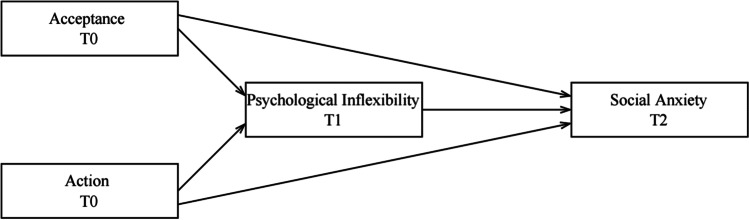
Social Anxiety Disorder (SAD) has its usual onset during adolescence when it is a highly prevalent and debilitating condition. Evidence regarding the processes that underline social anxiety and SAD is not compelling, especially in adolescents. Within an Acceptance and Commitment Therapy (ACT) framework, the causal role of ACT processes on adolescents’ social anxiety and how these processes contribute to sustain social anxiety over time is still unknown. Hence, this study explored the role of psychological inflexibility (PI) and acceptance and committed action (as psychological flexibility processes) on social anxiety over time, in a clinical sample of adolescents. Twenty-one adolescents (Mage = 16.19, SD = 0.750) with a primary diagnosis of SAD completed a set of self-report measures assessing PI, acceptance (i.e., willingness to experience social anxiety symptoms), action (i.e., moving towards valued life directions despite social anxiety symptoms) and social anxiety. Path analysis was used to investigate a mediation model linking acceptance, committed action, and PI to social anxiety, directly and indirectly. Findings revealed that acceptance and action were negatively and directly associated with PI after 10-weeks. In turn, PI yielded a positive and direct effect on social anxiety after another 12-weeks. PI totally mediated the relation between acceptance and action and social anxiety, with significant indirect effects. Overall, findings offer evidence for the applicability of the ACT model to adolescent SAD and support the use of clinical interventions targeting PI to understand and alleviate adolescents’ social anxiety. © The Author(s) 2023.
Overview
CoChat Summary
## TL;DR
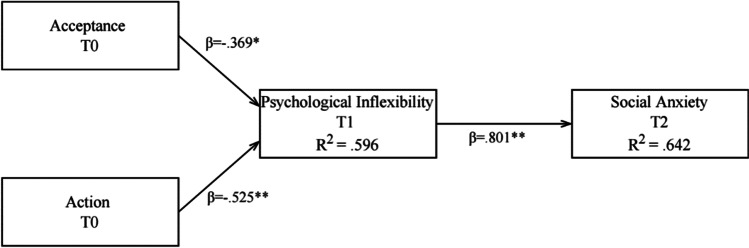
This longitudinal mediation study in 21 adolescents with primary social anxiety disorder found that acceptance and committed action predicted lower psychological inflexibility 10 weeks later, and psychological inflexibility then predicted higher social anxiety 12 weeks later. The paper concludes that psychological inflexibility fully mediated the link between acceptance/committed action and later social anxiety.
## Key findings
- The sample included 21 adolescents with primary SAD, aged 15–18 years (M = 16.19, SD = 0.750); 61.9% were female.
- Acceptance and action at T0 were negatively and directly associated with psychological inflexibility at T1.
- Psychological inflexibility at T1 had a positive and direct effect on social anxiety at T2.
- Psychological inflexibility fully mediated the relation between acceptance/action and social anxiety: the indirect effect of acceptance was β = −0.296, p < .05, and the indirect effect of action was β = −0.421, p < .001. Acceptance and action explained 59.6% of the variance in psychological inflexibility, and acceptance, action, and psychological inflexibility together explained 64.2% of the variance in social anxiety.
## Methods
- Design: Longitudinal mediation study with three measurement time points: T0, T1 10 weeks later, and T2 another 12 weeks later.
- Sample/data: Adolescents from six Portuguese high schools were screened; the final clinical sample was 21 adolescents with a primary diagnosis of SAD, assessed with self-report measures and the Mini-KID diagnostic interview.
- Analysis: Path analysis in Mplus v7.0 using a Maximum Likelihood Robust estimator; model fit was assessed with SMRM < 0.09 and CFI > 0.95.
## Limitations
- The paper states that it used only self-report measures, which “can compromise the validity of the results.”
- The sample size was too small to explore differences across gender and age; the authors note this as a limitation.
- The study did not consider all psychological flexibility processes; the authors say the third pillar (e.g., contact with the present moment) was missed.
- Evidence from the text: the final limitation sentence is cut off (“it would be relevant to explore diverse directions of…”), so any additional limitation beyond those above is not fully stated in the paper.
Model-written summary. Check it against the paper before relying on it.
Integrity signals
Registry
Cites
Statistics
Figures
Verification
Claims the paper makes
15 Valid · 2 Not valid · 31 Not checked · 42 Own results and interpretations
The sources with a verdict support this claim; the rest weren’t checked yet, have no full text we could read, or their verdicts aren’t rated yet.
In the paper
“Overall, current findings are in line with research stating that interventions targeting PI are useful for the treatment of SAD (Caletti et al., 2022; García-Perez & Valdivia-Salas, 2018).”
§ Psychological inflexibility explains social anxiety over time: a mediation analyses with a clinical adolescent sample > Discussion
What the sources say
- Supportedcites Caletti et al., 2022 matched to “The role of the acceptance and commitment therapy in the treatment of social anxiety: An updated scoping review.” (2022) source
The Discussion (p. 6) says the reviewed studies suggest ACT is a promising treatment for reducing SAD symptoms and reports improvements in psychological flexibility. It also identifies experiential avoidance as a component of psychological inflexibility addressed by ACT. This supports the broad claim that an intervention targeting psychological inflexibility can be useful for SAD, without establishing the mechanism of benefit. (LLM, conf=0.86)
- Not checked — no full text of the sourcecites García-Perez & Valdivia-Salas, 2018
plainstates a cause- Asserted: passes — The authors put it forward as true.
- Checkable: passes — It can be checked against evidence.
- Load-bearing: unclear — It is unclear whether the paper’s conclusions depend on it.
- Based: passes — The paper gives a reason why it holds.
- Supported
The sources with a verdict support this claim; the rest weren’t checked yet, have no full text we could read, or their verdicts aren’t rated yet.
In the paper
“There is promising evidence regarding the applicability of ACT to understand and intervene in internalizing disorders (Landy et al., 2015; Twohig & Levin, 2017), including adult (e.g., Caletti et al., 2022) and adolescent SAD (Oyetunde & Ajibola, 2019).”
§ Psychological inflexibility explains social anxiety over time: a mediation analyses with a clinical adolescent sample > Discussion
What the sources say
- Not checked — no full text of the sourcecites Landy et al., 2015 matched to “Acceptance and commitment therapy for the treatment of anxiety disorders: A concise review” (2015) source
- Supportedcites Twohig & Levin, 2017 matched to “Acceptance and Commitment Therapy as a Treatment for Anxiety and Depression” (2017) source
The Conclusions describe ACT as a promising treatment approach for depressive and anxiety disorders. The Social Anxiety Disorder section also reviews ACT studies for SAD. The adult and adolescent SAD examples in the citing sentence carry separate citations and are not attributed specifically to Twohig and Levin. (LLM, conf=0.92)
- Supportedcites Caletti et al., 2022 matched to “The role of the acceptance and commitment therapy in the treatment of social anxiety: An updated scoping review.” (2022) source
Caletti et al. is cited specifically for adult social anxiety disorder, not for adolescent SAD or internalizing disorders generally. The Discussion (p. 6) calls ACT a promising treatment for reducing SAD symptoms, and the Results (p. 6) describe ACT studies involving young adults with SAD. (LLM, conf=0.91)
hedgedstates an association- Asserted: passes — The authors put it forward as true.
- Checkable: passes — It can be checked against evidence.
- Load-bearing: passes — The paper’s conclusions depend on it.
- Based: passes — The paper gives a reason why it holds.
A result the paper reports from its own data — it cites no other source for it, so there is none to check. The quote shows it is in the paper.
In the paper
“In turn, PI yielded a positive and direct effect on social anxiety after another 12-weeks.”
§ Psychological inflexibility explains social anxiety over time: a mediation analyses with a clinical adolescent sample > Abstract Social Anxiety Disorder (SAD) has its usual onset during adolescence when it is a highly prevalent and debilitating condition. Evidence regarding the processes that underline social anxiety and SAD is not compelling, especially in adolescents. Within an Acceptance and Commitment Therapy (ACT) framework, the causal role of ACT processes on adolescents’ social anxiety and how these processes contribute to sustain social anxiety over time is still unknown. Hence, this study explored the role of psychological inflexibility (PI) and acceptance and committed action (as psychological flexibility processes) on social anxiety over time, in a clinical sample of adolescents. Twenty-one adolescents (Mage = 16.19, SD = 0.750) with a primary diagnosis of SAD completed a set of self-report measures assessing PI, acceptance (i.e., willingness to experience social anxiety symptoms), action (i.e., moving towards valued life directions despite social anxiety symptoms) and social anxiety. Path analysis was used to investigate a mediation model linking acceptance, committed action, and PI to social anxiety, directly and indirectly. Findings revealed that acceptance and action were negatively and directly associated with PI after 10-weeks. In turn, PI yielded a positive and direct effect on social anxiety after another 12-weeks. PI totally mediated the relation between acceptance and action and social anxiety, with significant indirect effects. Overall, findings offer evidence for the applicability of the ACT model to adolescent SAD and support the use of clinical interventions targeting PI to understand and alleviate adolescents’ social anxiety. According to the World Health Organization (WHO, 2021) about 14% of adolescents experience mental health problems. Social Anxiety Disorder (SAD) is the third most common disorder in adolescence (Kessler et al., 2005), with estimated prevalence rates during this life stage varying considerably - from 1.29% (Jystad et al., 2021) to 9.1% (Merikangas et al., 2010). It is characterized by a marked and persistent fear in social and/or performance situations in which one may be exposed to the scrutiny of others (American Psychiatric Association, 2013). Difficulties associated with SAD tend to present a persistent course with rare spontaneous remissions (Beesdo-Baum et al., 2012). The onset of SAD usually occurs during adolescence (Stein et al., 2017; Knappe et al., 2015; Kessler et al., 2005) and adolescents with this disorder often experience significant negative impairments in several areas of life such as romantic relationships (Hebert et al., 2012), friendships (Acquah et al., 2015; Chiu et al., 2021), and academic performance (Soohinda & Sampath, 2016). Besides, research suggests that social anxiety is often comorbid with other anxiety and mood disorders (Jystad et al., 2021; Mohammadi et al., 2020), behavioral disorders (Mohammadi et al., 2020), and substance abuse (Jystad et al., 2021). The negative costs to adolescents’ life related to SAD, as well as its high comorbidity with other mental health difficulties, denote the relevance of continuing to examine the processes associated with this disorder, especially from a transdiagnostic point of view. Acceptance and Commitment Therapy (ACT) offers such a transdiagnostic perspective.
plainstates a cause- Asserted: passes — The authors put it forward as true.
- Checkable: passes — It can be checked against evidence.
- Load-bearing: passes — The paper’s conclusions depend on it.
- Based: passes — The paper gives a reason why it holds.
- Rests on 2 assumptions not shown here.
A result the paper reports from its own data — it cites no other source for it, so there is none to check. The quote shows it is in the paper.
In the paper
“Findings revealed that acceptance and action were negatively and directly associated with PI after 10-weeks.”
§ Psychological inflexibility explains social anxiety over time: a mediation analyses with a clinical adolescent sample > Abstract Social Anxiety Disorder (SAD) has its usual onset during adolescence when it is a highly prevalent and debilitating condition. Evidence regarding the processes that underline social anxiety and SAD is not compelling, especially in adolescents. Within an Acceptance and Commitment Therapy (ACT) framework, the causal role of ACT processes on adolescents’ social anxiety and how these processes contribute to sustain social anxiety over time is still unknown. Hence, this study explored the role of psychological inflexibility (PI) and acceptance and committed action (as psychological flexibility processes) on social anxiety over time, in a clinical sample of adolescents. Twenty-one adolescents (Mage = 16.19, SD = 0.750) with a primary diagnosis of SAD completed a set of self-report measures assessing PI, acceptance (i.e., willingness to experience social anxiety symptoms), action (i.e., moving towards valued life directions despite social anxiety symptoms) and social anxiety. Path analysis was used to investigate a mediation model linking acceptance, committed action, and PI to social anxiety, directly and indirectly. Findings revealed that acceptance and action were negatively and directly associated with PI after 10-weeks. In turn, PI yielded a positive and direct effect on social anxiety after another 12-weeks. PI totally mediated the relation between acceptance and action and social anxiety, with significant indirect effects. Overall, findings offer evidence for the applicability of the ACT model to adolescent SAD and support the use of clinical interventions targeting PI to understand and alleviate adolescents’ social anxiety. According to the World Health Organization (WHO, 2021) about 14% of adolescents experience mental health problems. Social Anxiety Disorder (SAD) is the third most common disorder in adolescence (Kessler et al., 2005), with estimated prevalence rates during this life stage varying considerably - from 1.29% (Jystad et al., 2021) to 9.1% (Merikangas et al., 2010). It is characterized by a marked and persistent fear in social and/or performance situations in which one may be exposed to the scrutiny of others (American Psychiatric Association, 2013). Difficulties associated with SAD tend to present a persistent course with rare spontaneous remissions (Beesdo-Baum et al., 2012). The onset of SAD usually occurs during adolescence (Stein et al., 2017; Knappe et al., 2015; Kessler et al., 2005) and adolescents with this disorder often experience significant negative impairments in several areas of life such as romantic relationships (Hebert et al., 2012), friendships (Acquah et al., 2015; Chiu et al., 2021), and academic performance (Soohinda & Sampath, 2016). Besides, research suggests that social anxiety is often comorbid with other anxiety and mood disorders (Jystad et al., 2021; Mohammadi et al., 2020), behavioral disorders (Mohammadi et al., 2020), and substance abuse (Jystad et al., 2021). The negative costs to adolescents’ life related to SAD, as well as its high comorbidity with other mental health difficulties, denote the relevance of continuing to examine the processes associated with this disorder, especially from a transdiagnostic point of view. Acceptance and Commitment Therapy (ACT) offers such a transdiagnostic perspective.
plainstates an association- Asserted: passes — The authors put it forward as true.
- Checkable: passes — It can be checked against evidence.
- Load-bearing: passes — The paper’s conclusions depend on it.
- Based: passes — The paper gives a reason why it holds.
- Rests on 2 assumptions not shown here.
A result the paper reports from its own data — it cites no other source for it, so there is none to check. The quote shows it is in the paper.
In the paper
“Acceptance and action measured at T0 were negatively and directly associated with PI measured at T1.”
§ Psychological inflexibility explains social anxiety over time: a mediation analyses with a clinical adolescent sample > Results > Path analyses
plainstates an association- Asserted: passes — The authors put it forward as true.
- Checkable: passes — It can be checked against evidence.
- Load-bearing: passes — The paper’s conclusions depend on it.
- Based: passes — The paper gives a reason why it holds.
22 more claims
Create a free account to see all 90 claims and to verify the 3 references still open.
- Probably not a substantial claim. 59
- It may state two separate claims as one. 18
Claims other papers make about this one
Each is checked against this paper’s own text: does it say what the citing paper says it does?
The cited source says what the claim attributes to it.
In the citing paper
“Previous studies support the role of PI processes in adolescents’ suffering and psychopathology (e.g., [49–54]), as well as the role of PF in adolescents’ well-being [55, 56] and meaning in life [57].”
From Acceptance and commitment therapy as a transdiagnostic approach to adolescents with different anxiety disorders: study protocol. (2025) · cites this paper as [53]
Statistics recomputed
Every reported test result, recomputed from its test statistic and degrees of freedom. A result shows as not adding up only once an independent check has confirmed it.
- Consistentt(19) = -1.534reported p = .142 · recomputed p = .142
“t(19) = -1.534, p = .142”
- Consistentχ²(2) = 0.681reported p = .711 · recomputed p = .711
“χ2(2) = 0.681, p = .711”
- Consistentt(19) = 1.658reported p = .114 · recomputed p = .114
“t(19) = 1.658, p = .114”
Self-check
Percentages, sums and reported differences re-computed from the paper’s own numbers.
Self-check results appear here once an independent check has confirmed them.
Citations
Cites
Diagnostic and Statistical Manual of Mental Disorders
American Psychiatric Association (2013) · doi:10.1176/appi.books.9780890425596 · Cited by 116,369
Hu, L., & Bentler, P. M. (1999) · Structural Equation Modeling A Multidisciplinary Journal · doi:10.1080/10705519909540118 · Cited by 108,788 · cited 1×
“Acceptable fit considered a two-index strategy, based on Standardized Root Mean Square Residual (SMRM) < 0.09 combined with Comparative Fit Index (CFI) > 0.95 (Hu & Bentler, 1999).”
InfluentialKessler, R. C., Berglund, P., Demler, O., Jin, R., Merikangas, K. R., & Walters, E. E. (2005) · Archives of General Psychiatry · doi:10.1001/archpsyc.62.6.593 · Cited by 20,391 · cited 2×
“Social Anxiety Disorder (SAD) is the third most common disorder in adolescence (Kessler et al., 2005), with estimated prevalence rates during this life stage varying considerably - from 1.29% (Jystad et al., 2021) to 9.1% (Merikangas et al., 2010).”
InfluentialAcceptance and commitment therapy: model, processes and outcomes
Hayes, S. C., Luoma, J. B., Bond, F. W., Masuda, A., & Lillis, J. (2006) · Behaviour Research and Therapy · doi:10.1016/j.brat.2005.06.006 · Cited by 6,587 · cited 5×
“As such, higher levels of acceptance and committed action go with lower psychological flexibility over-time (Hayes et al., 2006).”
InfluentialMerikangas, K. R., He, J.-P., Burstein, M., Swanson, S. A., Avenevoli, S., Cui, L., Benjet, C., Georgiades, K., & Swendsen, J. (2010) · Journal of the American Academy of Child & Adolescent Psychiatry · doi:10.1016/j.jaac.2010.05.017 · Cited by 6,278 · cited 1×
“Social Anxiety Disorder (SAD) is the third most common disorder in adolescence (Kessler et al., 2005), with estimated prevalence rates during this life stage varying considerably - from 1.29% (Jystad et al., 2021) to 9.1% (Merikangas et al., 2010).”
Influential(2005) · Cited by 6,097
Sheehan, D. V., Sheehan, K. H., Shytle, R. D., Janavs, J., Bannon, Y., Rogers, J. E., Milo, K. M., Stock, S. L., & Wilkinson, B. (2010) · The Journal of Clinical Psychiatry · doi:10.4088/jcp.09m05305whi · Cited by 1,730 · cited 2×
“Those who scored more than one standard deviation above the mean observed in a large normative Portuguese sample on the SAS-A (Cunha et al., 2004) were invited for an individual clinical interview (MINI-KID, Sheehan et al., 2010; Portuguese Authorized version by Rijo et al., 2016).”
Social Anxiety among Adolescents: Linkages with Peer Relations and Friendships
La Greca, A. M., & Lopez, N. (1998) · Journal of Abnormal Child Psychology · doi:10.1023/a:1022684520514 · Cited by 1,656 · cited 1×
“A; La Greca & Lopez, 1998; Portuguese version by Cunha et al., 2004) The SAS-A is a self-report questionnaire comprised of 22 items (e.g., “I worry that others don’t like me”) that assess adolescents’ social anxiety experiences.”
A Practical Guide to Acceptance and Commitment Therapy
(2004) · doi:10.1007/978-0-387-23369-7 · Cited by 875
The empirical status of acceptance and commitment therapy: A review of meta-analyses
Gloster, A. T., Walder, N., Levin, M. E., Twohig, M. P., & Karekla, M. (2020) · Journal of Contextual Behavioral Science · doi:10.1016/j.jcbs.2020.09.009 · Cited by 622 · cited 1×
“There is further evidence in adult population that targeting PI is beneficial for several disorders (for a review see Gloster et al., 2020), including SAD (e.g., Khoramnia et al., 2020; Yadegari et al., 2014; for reviews see Caletti et al., 2022 or García-Perez & Valdivia-Salas, 2018), though the…”
Collaborators, W. W. M. H. S., Stein, D. J., Lim, C. C. W., Roest, A. M., de Jonge, P., Aguilar-Gaxiola, S., Al-Hamzawi, A., Alonso, J., Benjet, C., Bromet, E. J., et al. (2017) · BMC Medicine · doi:10.1186/s12916-017-0889-2 · Cited by 520 · cited 2×
“Difficulties associated with SAD usually start in adolescence (Stein et al., 2017; Knappe et al., 2015) and tend to have a chronic and unremitting course (Beesdo-Baum et al., 2012; Steinert et al., 2013), causing significant and persistent impairments in various life domains (e.g., Acquah et al.,…”
Greco, L. A., Lambert, W., & Baer, R. A. (2008) · Psychological Assessment · doi:10.1037/1040-3590.20.2.93 · Cited by 514 · cited 1×
“It also correlated positively with measures of anxiety, somatic complaints, problem behavior and thought suppression; it correlated negatively with measures of overall quality of life, acceptance, and mindfulness (Greco et al., 2008).”
Examining psychological inflexibility as a transdiagnostic process across psychological disorders
Levin, M. E., MacLane, C., Daflos, S., Seeley, J. R., Hayes, S. C., Biglan, A., & Pistorello, J. (2014) · Journal of Contextual Behavioral Science · doi:10.1016/j.jcbs.2014.06.003 · Cited by 400 · cited 2×
“Accordingly, PI has been associated with multiple mental health disorders (Levin et al., 2014).”
Acceptance and Commitment Therapy as a Treatment for Anxiety and Depression
Twohig, M. P., & Levin, M. E. (2017) · Psychiatric Clinics of North America · doi:10.1016/j.psc.2017.08.009 · Cited by 268 · cited 2×
“There is promising evidence regarding the applicability of ACT to understand and intervene in internalizing disorders (Landy et al., 2015; Twohig & Levin, 2017), including adult (e.g., Caletti et al., 2022) and adolescent SAD (Oyetunde & Ajibola, 2019).”
Wersebe, H., Lieb, R., Meyer, A. H., Hofer, P., & Gloster, A. T. (2018) · International Journal of Clinical and Health Psychology · doi:10.1016/j.ijchp.2017.09.002 · Cited by 250 · cited 1×
“Interventions focused on promoting PF have been associated with flourishing (Bohlmeijer et al., 2015) and wellbeing (Wersebe et al., 2018; Räsänen et al., 2016).”
Doyumğaç, İ., Tanhan, A., & Kiymaz, M. S. (2020) · International Journal of Higher Education · doi:10.5430/ijhe.v10n1p166 · Cited by 235 · cited 1×
“This method has allowed participants to reflect and express the facilitators and barriers for online education during COVID-19 (Doyumğaç et al., 2021).”
Räsänen, P., Lappalainen, P., Muotka, J., Tolvanen, A., & Lappalainen, R. (2016) · Behaviour Research and Therapy · doi:10.1016/j.brat.2016.01.001 · Cited by 221 · cited 1×
“Interventions focused on promoting PF have been associated with flourishing (Bohlmeijer et al., 2015) and wellbeing (Wersebe et al., 2018; Räsänen et al., 2016).”
Bardeen, J. R., & Fergus, T. A. (2016) · Journal of Contextual Behavioral Science · doi:10.1016/j.jcbs.2016.02.002 · Cited by 213 · cited 1×
“The alternative, PI, has been positively associated with measures of depression, anxiety (Bardeen & Fergus, 2016; Makriyianis et al., 2019) and posttraumatic stress (Bardeen & Fergus, 2016) and negatively associated with PF (Makriyianis et al., 2019).”
Kocovski, N. L., Fleming, J. E., Hawley, L. L., Huta, V., & Antony, M. M. (2013) · Behaviour Research and Therapy · doi:10.1016/j.brat.2013.10.007 · Cited by 188 · cited 1×
“…et al., 2020; Yadegari et al., 2014; for reviews see Caletti et al., 2022 or García-Perez & Valdivia-Salas, 2018), though the results have yet to demonstrate ACT as overall outper-forming Cognitive Behavior Therapy (e.g., Herbert et al., 2018; Kocovski et al., 2013; Yabandeh et al., 2019).”
Kashdan, T. B., Goodman, F. R., Machell, K. A., Kleiman, E. M., Monfort, S. S., Ciarrochi, J., & Nezlek, J. B. (2014) · Emotion · doi:10.1037/a0035935 · Cited by 187 · cited 1×
“…social anxiety difficulties, existing research with non-clinical samples has also demonstrated that experiential avoidance is positively correlated with social anxiety (Kashdan et al., 2014; Papachristou et al., 2018; Shi-moda et al., 2018), as well as cognitive fusion (Cheng et al., 2021).”
The natural course of social anxiety disorder among adolescents and young adults
Beesdo‐Baum, K., Knappe, S., Fehm, L., Höfler, M., Lieb, R., Hofmann, S. G., & Wittchen, H. ‐. (2012) · Acta Psychiatrica Scandinavica · doi:10.1111/j.1600-0447.2012.01886.x · Cited by 167 · cited 3×
“…associated with SAD usually start in adolescence (Stein et al., 2017; Knappe et al., 2015) and tend to have a chronic and unremitting course (Beesdo-Baum et al., 2012; Steinert et al., 2013), causing significant and persistent impairments in various life domains (e.g., Acquah et al., 2015;…”
InfluentialChiu, K., Clark, D. M., & Leigh, E. (2021) · Journal of Affective Disorders · doi:10.1016/j.jad.2020.10.055 · Cited by 155 · cited 2×
“…2015; Kessler et al., 2005) and adolescents with this disorder often experience significant negative impairments in several areas of life such as romantic relationships (Hebert et al., 2012), friendships (Acquah et al., 2015; Chiu et al., 2021), and academic performance (Soohinda & Sampath, 2016).”
Forman, E. M., Chapman, J. E., Herbert, J. D., Goetter, E. M., Yuen, E. K., & Moitra, E. (2012) · Behavior Therapy · doi:10.1016/j.beth.2011.07.004 · Cited by 151 · cited 2×
“Alternatively, previous works consider that these processes may be better thought of as mediators of change (Forman et al., 2012), while focusing on promoting PF has resulted in beneficial outcomes for adult SAD (Caletti et al., 2022; García-Perez & Valdivia-Salas, 2018).”
Adolescent loneliness and social anxiety as predictors of bullying victimisation
Acquah, E. O., Topalli, P.-Z., Wilson, M. L., Junttila, N., & Niemi, P. M. (2016) · International Journal of Adolescence and Youth · doi:10.1080/02673843.2015.1083449 · Cited by 148 · cited 2×
“…2015; Kessler et al., 2005) and adolescents with this disorder often experience significant negative impairments in several areas of life such as romantic relationships (Hebert et al., 2012), friendships (Acquah et al., 2015; Chiu et al., 2021), and academic performance (Soohinda & Sampath, 2016).”
McCracken, L. M., Badinlou, F., Buhrman, M., & Brocki, K. C. (2021) · Journal of Contextual Behavioral Science · doi:10.1016/j.jcbs.2020.11.003 · Cited by 146 · cited 3×
“This is in line with evidence from non-clinical adult samples in which PF and its underlying processes have been negatively associated with anxiety (e.g., McCracken et al., 2021) and PI (e.g., Makriyianis et al., 2019).”
On being aware and accepting: A one‐year longitudinal study into adolescent well‐being
Ciarrochi, J., Kashdan, T. B., Leeson, P., Heaven, P., & Jordan, C. (2011) · Journal of Adolescence · doi:10.1016/j.adolescence.2010.09.003 · Cited by 135 · cited 1×
“Specifically, acceptance predicted increased positive affect and decreased sadness and fear after a 1-year period (Ciarrochi et al., 2010).”
The relation between anxiety disorder and experiential avoidance in inpatient adolescents
Venta, A., Sharp, C., & Hart, J. (2012) · Psychological Assessment · doi:10.1037/a0025362 · Cited by 100 · cited 1×
“Moreover, results from a sample of inpatient adolescents (including adolescents with SAD) showed a significant relationship between anxiety disorders and experiential avoidance (Venta et al., 2012).”
Cookson, C., Luzon, O., Newland, J., & Kingston, J. (2020) · Psychology and Psychotherapy Theory Research and Practice · doi:10.1111/papt.12233 · Cited by 98 · cited 1×
“Furthermore, a bidirectional relationship between cognitive fusion and experiential avoidance was found in a clinical sample of adults – this interaction accounted for a significant proportion of the association between stressful life events and anxiety and depression (Cookson et al., 2019).”
Steinert, C., Hofmann, M., Leichsenring, F., & Kruse, J. (2013) · Journal of Anxiety Disorders · doi:10.1016/j.janxdis.2013.08.002 · Cited by 88 · cited 2×
“The current work further sustains that ACT may be applicable to adolescent SAD, as a way to break the usually chronic and debilitating course of this disorder (e.g., Steinert et al., 2013).”
Bohlmeijer, E. T., Lamers, S. M. A., & Fledderus, M. (2015) · Behaviour Research and Therapy · doi:10.1016/j.brat.2014.12.014 · Cited by 81 · cited 1×
“Interventions focused on promoting PF have been associated with flourishing (Bohlmeijer et al., 2015) and wellbeing (Wersebe et al., 2018; Räsänen et al., 2016).”
Uğur, E., Kaya, Ç., & Tanhan, A. (2021) · Current Psychology · doi:10.1007/s12144-020-01074-8 · Cited by 81 · cited 1×
“We proposed that PI impacts on social anxiety over time, whereas previous works have found fear of negative evaluation, which is highly related to social anxiety, to impact on psychological inflexibility cross-sectionally (Uğur et al., 2020).”
Makriyianis, H. M., Adams, E. A., Lozano, L. L., Mooney, T. A., Morton, C., & Liss, M. (2019) · Journal of Contextual Behavioral Science · doi:10.1016/j.jcbs.2019.09.007 · Cited by 79 · cited 5×
“This is in line with evidence from non-clinical adult samples in which PF and its underlying processes have been negatively associated with anxiety (e.g., McCracken et al., 2021) and PI (e.g., Makriyianis et al., 2019).”
InfluentialMohammadi, M. R., Salehi, M., Khaleghi, A., Hooshyari, Z., Mostafavi, S. A., Ahmadi, N., Hojjat, S. K., Safavi, P., & Amanat, M. (2020) · Journal of Affective Disorders · doi:10.1016/j.jad.2019.12.015 · Cited by 79 · cited 1×
“Besides, research suggests that social anxiety is often comorbid with other anxiety and mood disorders (Jystad et al., 2021; Mohammadi et al., 2020), behavioral disorders (Mohammadi et al., 2020), and substance abuse (Jystad et al., 2021).”
Developmental Epidemiology of Social Anxiety and Social Phobia in Adolescents
Knappe, S., Sasagawa, S., & Creswell, C. (2015) · Social Anxiety and Phobia in Adolescents · doi:10.1007/978-3-319-16703-9_3 · Cited by 74 · cited 4×
“Difficulties associated with SAD usually start in adolescence (Stein et al., 2017; Knappe et al., 2015) and tend to have a chronic and unremitting course (Beesdo-Baum et al., 2012; Steinert et al., 2013), causing significant and persistent impairments in various life domains (e.g., Acquah et al.,…”
InfluentialRijo, D., Brazão, N., Barroso, R., da Silva, D. R., Vagos, P., Vieira, A., Lavado, A., & Macedo, A. M. (2016) · Child and Adolescent Psychiatry and Mental Health · doi:10.1186/s13034-016-0131-6 · Cited by 70 · cited 2×
“Those who scored more than one standard deviation above the mean observed in a large normative Portuguese sample on the SAS-A (Cunha et al., 2004) were invited for an individual clinical interview (MINI-KID, Sheehan et al., 2010; Portuguese Authorized version by Rijo et al., 2016).”
Self-citationFergus, T. A., Valentiner, D. P., Gillen, M. J., Hiraoka, R., Twohig, M. P., Abramowitz, J. S., & McGrath, P. B. (2012) · Psychological Assessment · doi:10.1037/a0025776 · Cited by 68 · cited 3×
“This is in line with previous research conducted with non-clinical adult samples (Tillfors et al., 2015) and samples of adults with anxiety disorders (Fergus et al., 2012).”
Khoramnia, S., Bavafa, A., Jaberghaderi, N., Parvizifard, A., Foroughi, A., Ahmadi, M., & Amiri, S. (2020) · Trends in Psychiatry and Psychotherapy · doi:10.1590/2237-6089-2019-0003 · Cited by 65 · cited 1×
“…evidence in adult population that targeting PI is beneficial for several disorders (for a review see Gloster et al., 2020), including SAD (e.g., Khoramnia et al., 2020; Yadegari et al., 2014; for reviews see Caletti et al., 2022 or García-Perez & Valdivia-Salas, 2018), though the results have…”
Transdiagnostic perspective on psychological inflexibility and emotional dysregulation
Faustino, B. (2021) · Behavioural and Cognitive Psychotherapy · doi:10.1017/s1352465820000600 · Cited by 62 · cited 4×
“When comparing clinical and non-clinical adult samples, findings provide support for higher levels of cognitive fusion in the clinical sample (Faustino, 2021).”
InfluentialCobos-Sánchez, L., Flujas-Contreras, J. M., & Becerra, I. G. (2022) · Current Psychology · doi:10.1007/s12144-020-01067-7 · Cited by 59 · cited 1×
“Cobos-Sánchez et al. (2020) found an association between difficulties regulating emotions and PI, in a non-clinical sample of adolescents.”
MacKenzie, M. B., & Kocovski, N. L. (2010) · International Journal of Behavioral Consultation and Therapy · doi:10.1037/h0100909 · Cited by 58 · cited 1×
“It has also demonstrated positive correlations with other mindfulness and acceptance related measures, and negative correlations with social anxiety measures, depressive symptoms and thought suppression (MacKenzie & Kocovski, 2010).”
Caletti, E., Massimo, C., Magliocca, S., Moltrasio, C., Brambilla, P., & Delvecchio, G. (2022) · Journal of Affective Disorders · doi:10.1016/j.jad.2022.05.008 · Cited by 54 · cited 5×
“Overall, current findings are in line with research stating that interventions targeting PI are useful for the treatment of SAD (Caletti et al., 2022; García-Perez & Valdivia-Salas, 2018).”
InfluentialHebert, K. R., Fales, J., Nangle, D. W., Papadakis, A. A., & Grover, R. L. (2013) · Journal of Youth and Adolescence · doi:10.1007/s10964-012-9878-0 · Cited by 53 · cited 2×
“…2015; Kessler et al., 2005) and adolescents with this disorder often experience significant negative impairments in several areas of life such as romantic relationships (Hebert et al., 2012), friendships (Acquah et al., 2015; Chiu et al., 2021), and academic performance (Soohinda & Sampath, 2016).”
Gallego, A., McHugh, L., Villatte, M., & Lappalainen, R. (2020) · Journal of Contextual Behavioral Science · doi:10.1016/j.jcbs.2020.04.003 · Cited by 49 · cited 1×
“…samples, PF has been negatively associated, for example, with symptoms of depression (Makriyianis et al., 2019; McCracken et al., 2021), insomnia (McCracken et al., 2021), high levels of public speaking anxiety (Gallego et al., 2020) and anxiety (Makriyianis et al., 2019; McCracken et al., 2021).”
Social Fears in Adolescence: The Social Anxiety and Avoidance Scale for Adolescents
Cunha, M., Gouveia, J. P., & do Céu Salvador, M. (2008) · European Psychologist · doi:10.1027/1016-9040.13.3.197 · Cited by 41 · cited 3×
“The SAASA has also demonstrated good convergent and divergent validities as well as test-retest reliability (Cunha et al., 2008).”
InfluentialThe Prevalence of Adolescent Social Fears and Social Anxiety Disorder in School Contexts
Alves, F., Figueiredo, D. V., & Vagos, P. (2022) · International Journal of Environmental Research and Public Health · doi:10.3390/ijerph191912458 · Cited by 38 · cited 1×
“Despite its significant prevalence rates in adolescence (e.g., Alves et al., 2022), evidence regarding the processes contributing to social anxiety in this developmental period is still scarce.”
Self-citationFaustino, B., Vasco, A. B., Farinha-Fernandes, A., & Delgado, J. (2023) · Current Psychology · doi:10.1007/s12144-021-01943-w · Cited by 37 · cited 2×
“Concerning the specific processes relating to PI/PF, cognitive fusion has been positively to mediate the relationship between psychological well-being and psychopathological symptomatology in adults (Faustino et al., 2021) in non-clinical samples of adults.”
Herbert, J. D., Forman, E. M., Kaye, J. L., Gershkovich, M., Goetter, E., Yuen, E. K., Glassman, L., Goldstein, S., Hitchcock, P., Tronieri, J. S., et al. (2018) · Journal of Contextual Behavioral Science · doi:10.1016/j.jcbs.2018.07.008 · Cited by 36 · cited 1×
“…et al., 2020; Yadegari et al., 2014; for reviews see Caletti et al., 2022 or García-Perez & Valdivia-Salas, 2018), though the results have yet to demonstrate ACT as overall outper-forming Cognitive Behavior Therapy (e.g., Herbert et al., 2018; Kocovski et al., 2013; Yabandeh et al., 2019).”
Acceptance and commitment therapy for the treatment of anxiety disorders: A concise review
Landy, L. N., Schneider, R. L., & Arch, J. J. (2015) · Current Opinion in Psychology · doi:10.1016/j.copsyc.2014.11.004 · Cited by 35 · cited 2×
“There is promising evidence regarding the applicability of ACT to understand and intervene in internalizing disorders (Landy et al., 2015; Twohig & Levin, 2017), including adult (e.g., Caletti et al., 2022) and adolescent SAD (Oyetunde & Ajibola, 2019).”
Papachristou, H., Theodorou, M., Neophytou, K., & Panayiotou, G. (2018) · Journal of Contextual Behavioral Science · doi:10.1016/j.jcbs.2018.03.001 · Cited by 33 · cited 2×
“…social anxiety difficulties, existing research with non-clinical samples has also demonstrated that experiential avoidance is positively correlated with social anxiety (Kashdan et al., 2014; Papachristou et al., 2018; Shi-moda et al., 2018), as well as cognitive fusion (Cheng et al., 2021).”
Jystad, I., Bjerkeset, O., Haugan, T., Sund, E. R., & Vaag, J. (2021) · Frontiers in Psychology · doi:10.3389/fpsyg.2021.663161 · Cited by 28 · cited 2×
“Social Anxiety Disorder (SAD) is the third most common disorder in adolescence (Kessler et al., 2005), with estimated prevalence rates during this life stage varying considerably - from 1.29% (Jystad et al., 2021) to 9.1% (Merikangas et al., 2010).”
InfluentialAsher, M., Hofmann, S. G., & Aderka, I. M. (2021) · Behavior Therapy · doi:10.1016/j.beth.2020.04.001 · Cited by 27 · cited 2×
“This is in accordance with previous findings regarding the positive associations between PI and social anxiety in non-clinical samples of adolescents (Papachristou et al., 2018; Shimoda et al., 2018) and in clinical samples of adults (Asher et al., 2021; Fergus et al., 2012).”
Kocovski, N. L., Fleming, J. E., Blackie, R. A., MacKenzie, M. B., & Rose, A. L. (2019) · Behavior Therapy · doi:10.1016/j.beth.2018.10.007 · Cited by 25 · cited 1×
“The components of ACT have been found to mediate change in the treatment of multiple clinical conditions (Forman et al., 2012), including the finding that acceptance brought about changes in social anxiety as reported by adults receiving a self-help book-based intervention (Kocovski et al., 2019).”
Cheng, Q., Shi, C., Yan, C., Ren, Z., Chan, S. H.-W., Xiong, S., Zhang, T., & Zheng, H. (2022) · Anxiety, Stress, & Coping · doi:10.1080/10615806.2021.1955864 · Cited by 24 · cited 2×
“This is in line with previous research that states that interventions focusing solely on specific PF processes may limit the therapeutic potential of interventions aiming at the reduction of heightened social anxiety (Cheng et al., 2021).”
Soohinda, G., & Sampath, H. (2016) · Journal of Indian Association for Child and Adolescent Mental Health · doi:10.1177/0973134220160302 · Cited by 21 · cited 2×
“…2015; Kessler et al., 2005) and adolescents with this disorder often experience significant negative impairments in several areas of life such as romantic relationships (Hebert et al., 2012), friendships (Acquah et al., 2015; Chiu et al., 2021), and academic performance (Soohinda & Sampath, 2016).”
Oppo, A., Schweiger, M., Ristallo, A., Presti, G., Pergolizzi, F., & Moderato, P. (2019) · Journal of Child and Family Studies · doi:10.1007/s10826-019-01539-w · Cited by 20 · cited 2×
“Among participants who reported higher levels of depression/anxiety, the percentage of adolescents with high PI was around 90% (Oppo et al., 2019).”
Flynn, M. K., Bordieri, M. J., & Berkout, O. V. (2019) · Journal of Contextual Behavioral Science · doi:10.1016/j.jcbs.2018.12.002 · Cited by 19 · cited 2×
“Most previous literature has, in fact, referred to PI as an integrated process, when considering its associations with social anxiety (e.g., Flynn et al., 2019).”
Shimoda, Y., Ishizu, K., & Ohtsuki, T. (2018) · Journal of Contextual Behavioral Science · doi:10.1016/j.jcbs.2018.10.001 · Cited by 16 · cited 1×
“This is in accordance with previous findings regarding the positive associations between PI and social anxiety in non-clinical samples of adolescents (Papachristou et al., 2018; Shimoda et al., 2018) and in clinical samples of adults (Asher et al., 2021; Fergus et al., 2012).”
Roohi, R., Kerman Branch, I. A. U., Soltani, A. A., Department of Psychology, K. B., Zinedine Meimand, Z., Department of Psychology, K. B., Razavi Nematollahi, V., & Department of Psychology, K. B. (2019) · Quarterly Journal of Child Mental Health · doi:10.29252/jcmh.6.3.16 · Cited by 16 · cited 1×
“…applied to adolescents with SAD is effective in treating this disorder in comparison to a control group (Oyetunde & Ajibola, 2019) and that ACT may play an important role in reducing social anxiety and in increasing distress tolerance and emotional regulation in adolescents (Roohi et al., 2019).”
Cunha, M., & Santos, A. M. (2013) · Laboratório de Psicologia · doi:10.14417/lp.629 · Cited by 13
Blair, L. (2024) · Routledge eBooks · doi:10.4324/9781003250821-5 · Cited by 12
Evaluating social fears in late adolescence: Study with a Portuguese sample
Vagos, P., Pereira, A., & Cunha, M. (2014) · European Journal of Developmental Psychology · doi:10.1080/17405629.2013.841093 · Cited by 10 · cited 2×
“In the current work, its adapted version for late adolescents (Vagos et al., 2013) was used.”
InfluentialSelf-citationBabalola, S. O., & Ogunyemi, A. O. (2019) · ANNUAL JOURNAL OF TECHNICAL UNIVERSITY OF VARNA, BULGARIA · doi:10.29114/ajtuv.vol3.iss2.136 · Cited by 8
Effect of Acceptance and Commitment Therapy on Young People with Social Anxiety
Yadegari, L., Hashemiyan, K., & Abolmaali, K. (2014) · International Journal of Scientific Research in Knowledge · doi:10.12983/ijsrk-2014-p0395-0403 · Cited by 6 · cited 1×
“…that targeting PI is beneficial for several disorders (for a review see Gloster et al., 2020), including SAD (e.g., Khoramnia et al., 2020; Yadegari et al., 2014; for reviews see Caletti et al., 2022 or García-Perez & Valdivia-Salas, 2018), though the results have yet to demonstrate ACT…”
(2018) · Psicología conductual = behavioral psychology: Revista internacional de psicología clínica y de la salud · Cited by 4
Tillfors, M., Toll, C., Branting, M., Boersma, K., & Jansson-Fröjmark, M. (2015) · Journal for Person-Oriented Research · doi:10.17505/jpor.2015.16 · Cited by 3 · cited 1×
“This is in line with previous research conducted with non-clinical adult samples (Tillfors et al., 2015) and samples of adults with anxiety disorders (Fergus et al., 2012).”
Yabandeh, M. R., Baghooli, H., Sarvghad, S., & Koroshnia, M. (2018) · International Journal of School and Cognitive Psychology · doi:10.4172/2469-9837.1000208 · Cited by 1 · cited 1×
“…et al., 2020; Yadegari et al., 2014; for reviews see Caletti et al., 2022 or García-Perez & Valdivia-Salas, 2018), though the results have yet to demonstrate ACT as overall outper-forming Cognitive Behavior Therapy (e.g., Herbert et al., 2018; Kocovski et al., 2013; Yabandeh et al., 2019).”
Research works printed but not linked: 4
- Cunha M Pinto Gouveia J Alegre S Salvador MC Avaliação da ansiedade na adolescência: A versão portuguesa da SAS-A [Assessment of anxiety in adolescence: The portuguese version of the SAS-A] Psychologica 2004 35 249 263
- Hayes, S. C., Strosahl, K. D., & Wilson, K. G. (2011). Acceptance and Commitment Therapy, Second Edition: The process and practice of mindful change. The Guilford Press.
- Muthén, L. K., & Muthén, B. O. (2010). Mplus user’s guide (6th ed.). Author.
- Salvador, M. C. (2009). Ser eu próprio entre os outros: um novo protocolo de intervenção para adolescentes com fobia social generalizada [Being myself among others: A new intervention protocol for adolescents with generalized social phobia; Unpublished doctoral dissertation]. Faculty of Psychology and Educational Sciences of University of Coimbra.
Cited by
Zoromba, M. A., Linda, S., Alenezi, A., Selim, A., Awad, S., El‐Gazar, H. E., & El‐Monshed, A. H. (2024) · International Journal of Mental Health Nursing · doi:10.1111/inm.13388 · Cited by 13
Stochastic decisions support optimal foraging of volatile environments, and are disrupted by anxiety
Lloyd, A., McKay, R., & Furl, N. (2025) · Cognitive Affective & Behavioral Neuroscience · doi:10.3758/s13415-024-01256-y · Cited by 12
“Indeed, the computational mechanisms that are biased in individuals with anxiety may be informative in understanding the presentation of these disorders, such as behavioural inflexibility (Figueiredo et al., 2023).”
The relationship between physical activity and social anxiety in adolescents: a cross-lagged study
Zhou, S., & Yang, W. (2026) · Frontiers in Public Health · doi:10.3389/fpubh.2025.1752588 · Cited by 5
Figueiredo, D. V., Salvador, M. D. C., Rijo, D., & Vagos, P. (2025) · European Child & Adolescent Psychiatry · doi:10.1007/s00787-024-02608-2 · Cited by 2
Self-citationBüyüköksüz, E., & Kayaalp-pehlivan, R. (2025) · Muğla Sıtkı Koçman Üniversitesi Eğitim Fakültesi Dergisi · doi:10.21666/muefd.1643883 · Cited by 11
Metadata
- Authors
- Figueiredo, D. V., Alves, F., & Vagos, P.
- Affiliations
- University of Coimbra (PT)
- Universidade Portucalense (PT)
- Corresponding author
- Vagos, Paula
- Venue
- Current Psychology
- Published
- 2023-04-20
- Volume
- 43
- Issue
- 5
- Pages
- 4404-4415
- ISSN
- 1046-1310 (ISSN-L)
- 1936-4733
- PMC
- PMC10117271
- OpenAlex
- W4366729143
- Cited by
- 13
- References
- 66
- Citations by year
- 2026: 7 · 2025: 4 · 2024: 2
- FWCI
- 2.56
- Type
- journal article
- Language
- en
- Open access
- hybrid
- doi.org
- Licence
- cc-by
- creativecommons.org/licenses/by/4.0 (tdm)
- creativecommons.org/licenses/by/4.0 (vor)
- Locations
- Current Psychology (publishedVersion, cc-by)
- PubMed (publishedVersion)
- Estudo Geral (Universidad de Coimbra) (submittedVersion, cc-by)
- PubMed Central (submittedVersion, cc-by)
- Funders
- Fundação para a Ciência e a Tecnologia (POCI-01-0145-FEDER-029445)
- Universidade de Coimbra
- Topics
- Social Sciences › Psychology › Experimental and Cognitive Psychology › Anxiety, Depression, Psychometrics, Treatment, Cognitive Processes
- Social Sciences › Psychology › Clinical Psychology › Mindfulness and Compassion Interventions
- Social Sciences › Psychology › Clinical Psychology › Perfectionism, Procrastination, Anxiety Studies
- Keywords
- social anxiety disorder, psychological inflexibility, acceptance and commitment therapy, acceptance, committed action, psychological flexibility, adolescents, mediation
About these checks
Registry, retraction, Cites and statistics results are computed, not judged, with one exception: a printed reference that no index lists is read once by a model before it counts as a citation error. Claims are extracted by a model and kept only when their quote appears verbatim in the text; each cited source is then checked, with a model’s help, for whether it says what the claim relies on. Those verdicts can be wrong — read the claim’s quote and the cited source before relying on one.
The claim verdicts this report counts are experimental: their accuracy is not yet measured.
A language model drew the claims from the paper on 2026-10-11, under version 3 of the claim definition (model deepseek-v4.1-flash, prompt extract-v3).
A second model labelled each claim on 2026-10-11 (model jev-1.13-20260917, definition revision gold-guideline-v0.2).
Cited sources are checked with a language model’s help (gpt-6-sol).
Statistics and arithmetic are recomputed, not judged.
Confidence bands are shown only for fields calibrated on our annotated test set. None is calibrated yet, so no band is shown.
What counts as a claim ›How we measure confidence ›How we check this ›
Are you an author, or do you see a problem with this page? Request a review
Data sources
Bibliographic data: Semantic Scholar, OpenAlex, Crossref.
Contains information from the Semantic Scholar Academic Graph Datasets, made available under the ODC Attribution License (ODC-BY 1.0).
Semantic Scholar’s data is described in: Kinney, R., et al. (2023). The Semantic Scholar Open Data Platform. arXiv:2301.10140.
