

Impact of Mindfulness Training on Spanish Police Officers’ Mental and Emotional Health: a Non-Randomized Pilot Study
Open accessThe DOI matches its Crossref record; 85 of the 85 references it cites were found in a registry or an index; 8 of the 25 sources its claims cite were checked for support.
Abstract
Objectives: The purpose of this exploratory non-randomized controlled study was to determine the acceptance and effectiveness of an 8-week mindfulness-based intervention (MBI) co-designed by a police officer. Methods: A pretest-posttest control group design was followed. Participants (MBI group = 20; control group = 18) answered baseline and post-training self-reported measures. In addition, the weekly emotional state of the MBI group was collected. Paired-samples t-test and analysis of covariance were performed for pre-post within-group and between-group differences, respectively, as well as linear mixed effects analysis of repeated measures for week-by-week data. Results: High acceptance and attendance rates, as well as significant pre-post within-group differences in the MBI group in mindfulness (η2 = 0.43), self-compassion (η2 = 0.43), depression (η2 = 0.54), anxiety (η2 = 0.46), stress (η2 = 0.51), difficulties in emotion regulation, sleep quality (η2 = 0.57), and burnout (η2 = 0.31–0.47), were identified. Moreover, police officers who underwent the MBI experienced a week by week decrease of anger, disgust, anxiety, sadness, and desire. Finally, after adjusting for pre-test scores, significant between-group differences were found in the way of attending to internal and external experiences (observing mindfulness facet; ηp2 = 0.21), depression symptoms (ηp2 = 0.23), general distress (ηp2 = 0.24), and the degree of physical and psychological exhaustion (personal burnout; ηp2 = 0.20). Conclusions: The preliminary effectiveness of this MBI on psychopathology and quality of life outcomes in Spanish police officers was discussed. Previous evidence regarding the promising use of MBIs in this population was supported. © 2022, The Author(s).
Overview
CoChat Summary
TL;DR
This non-randomized pilot study found that an 8-week mindfulness-based intervention for Spanish police officers was well accepted and was associated with improvements in mindfulness, self-compassion, sleep quality, depression, anxiety, stress, burnout, and emotion regulation. The study also found week-by-week decreases in several negative emotions, but not in frequency of suicidal ideation.
Key findings
- Acceptability was high: 86% of participants attended at least 6/8 sessions (2 participants attended 5), and home practice averaged 27/42 days with 23 min/day.
- In the MBI group, pre-post improvements were reported for mindfulness (η² = 0.43), self-compassion (η² = 0.43), depression (η² = 0.54), anxiety (η² = 0.46), stress (η² = 0.51), sleep quality (η² = 0.57), and burnout (η² = 0.31–0.47); emotion regulation difficulties also decreased.
- After adjusting for pre-test scores, between-group differences favored the MBI for observing mindfulness (ηp² = 0.21), depression symptoms (ηp² = 0.23), general distress (ηp² = 0.24), and personal burnout (ηp² = 0.20).
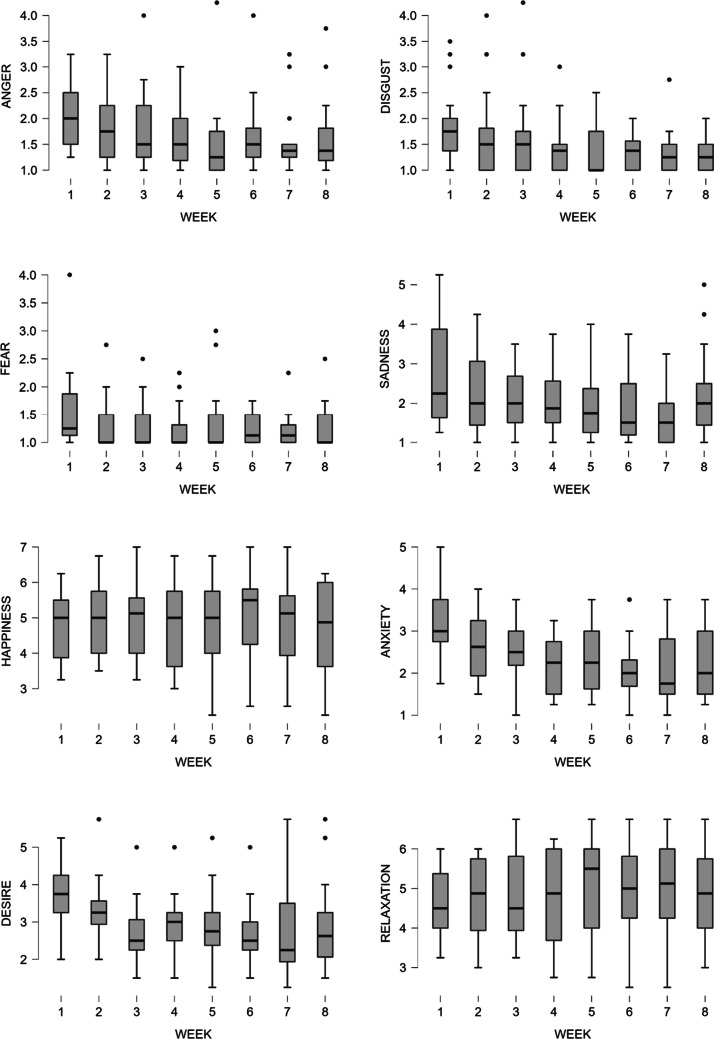
- Weekly emotion ratings in the MBI group decreased for anger, disgust, anxiety, sadness, and desire; there were main effects of week for anger (p = .005), disgust (p = .009), anxiety (p < .001), sadness (p < .001), and desire (p < .001). Frequency of suicidal ideation decreased in the MBI group but was not statistically significant (p = .031) and was not different between groups (p = .455).
Methods
- Exploratory non-randomized controlled pretest-posttest pilot study with a waiting-list control group; the intervention was an 8-week mindfulness-based intervention co-designed with a police officer and a psychologist.
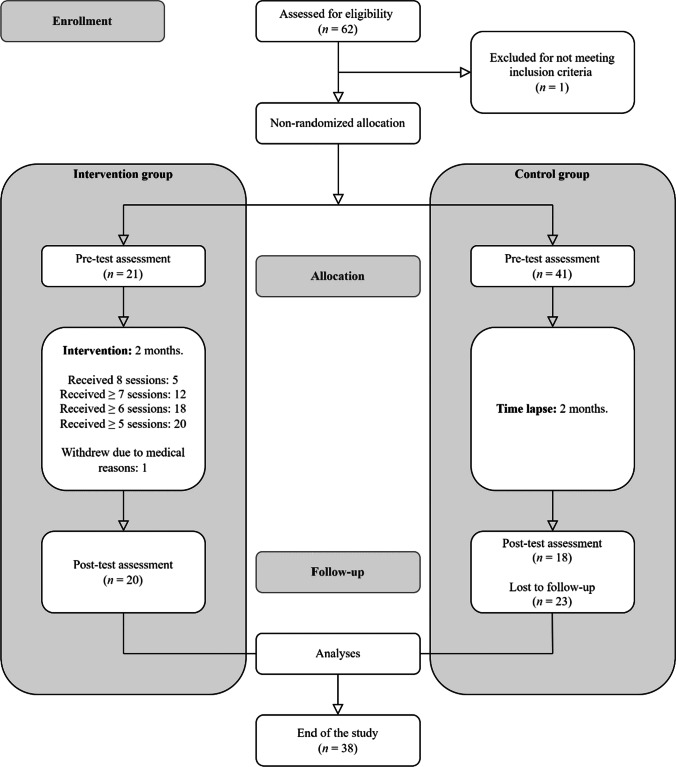
- Final sample: 20 officers in the MBI group and 18 in the control group, drawn from police officers in the province of Valencia, Spain; baseline and post-training self-report measures were collected, plus weekly emotion ratings in the MBI group.
- Main analyses included paired-samples t-tests, ANCOVA adjusting for pre-test scores (and prior meditation experience as a moderator), and linear mixed-effects models for week-by-week emotion data.
Limitations
- The paper states that the sample size was small, limiting statistical power and generalizability, and that participants were not randomly assigned, so causality is not guaranteed.
- The paper states potential self-selection bias, possible COVID safety measure effects on group dynamics, lack of state emotion measurement in the control group, different assessment methods (in-person vs online), and that the study protocol was not publicly available or preregistered.
- Evident from the text: this is a pilot study with only short-term pre/post assessment and no follow-up, so long-term effects are not tested.
Model-written summary. Check it against the paper before relying on it.
Integrity signals
Registry
Cites
Statistics
Figures
Verification
Claims the paper makes
8 Valid · 0 Not valid · 10 Not checked · 29 Own results and interpretations
The cited sources support only part of this claim — read each source’s verdict below.
In the paper
“Nevertheless, they refuse to seek mental health support (Jetelina et al., 2020).”
§ Impact of Mindfulness Training on Spanish Police Officers’ Mental and Emotional Health: a Non-Randomized Pilot Study > Abstract > Conclusions
What the sources say
- Partly supportedcites Jetelina et al., 2020 matched to “Prevalence of Mental Illness and Mental Health Care Use Among Police Officers” (2020) sourceExperimental — accuracy not yet measured
The Discussion reports low use of mental health services and identifies reasons some officers did not seek them. But it also reports that 17% of officers screening positive for mental illness symptoms sought services, and the Conclusions say some officers were interested in help. The blanket statement that police officers refuse support overstates the finding. (LLM, conf=0.88)
plain- Asserted: passes — The authors put it forward as true.
- Checkable: passes — It can be checked against evidence.
- Load-bearing: passes — The paper’s conclusions depend on it.
- Based: passes — The paper gives a reason why it holds.
- Partly supported
The cited sources support only part of this claim — read each source’s verdict below.
In the paper
“For instance, reduced decision making, low social support at work, and low rewards are risk factors of depression, anxiety, and burnout for police officers (Chan & Andersen, 2020; Sherwood et al., 2019).”
§ Impact of Mindfulness Training on Spanish Police Officers’ Mental and Emotional Health: a Non-Randomized Pilot Study > Abstract > Conclusions
What the sources say
- Not checked — no full text of the sourcecites Chan & Andersen, 2020 matched to “Influence of organizational stress on reported depressive symptoms among police” (2020) source
- Partly supportedcites Sherwood et al., 2019 matched to “Identifying the key risk factors for adverse psychological outcomes among police officers: A systematic literature review” (2019) sourceExperimental — accuracy not yet measured
The review’s Discussion links low workplace social support and low reward to adverse outcomes, including depression, anxiety, and burnout. Its risk-factor table lists reduced decision making for depression, however, and the Discussion links lower decision latitude to PTSD; it does not establish reduced decision making as a risk factor for all three outcomes named in the claim. Page numbers are unavailable in our copy. (LLM, conf=0.87)
plainstates a cause- Asserted: passes — The authors put it forward as true.
- Checkable: passes — It can be checked against evidence.
- Load-bearing: unclear — It is unclear whether the paper’s conclusions depend on it.
- Based: passes — The paper gives a reason why it holds.
A result the paper reports from its own data — it cites no other source for it, so there is none to check. The quote shows it is in the paper.
In the paper
“High acceptance and attendance rates, as well as significant pre-post within-group differences in the MBI group in mindfulness (η2 = 0.43), self-compassion (η2 = 0.43), depression (η2 = 0.54), anxiety (η2 = 0.46), stress (η2 = 0.51), difficulties in emotion regulation, sleep quality (η2 = 0.57), and burnout (η2 = 0.31–0.47), were identified.”
§ Impact of Mindfulness Training on Spanish Police Officers’ Mental and Emotional Health: a Non-Randomized Pilot Study > Abstract > Results
plain- Asserted: passes — The authors put it forward as true.
- Checkable: passes — It can be checked against evidence.
- Load-bearing: passes — The paper’s conclusions depend on it.
- Based: passes — The paper gives a reason why it holds.
A result the paper reports from its own data — it cites no other source for it, so there is none to check. The quote shows it is in the paper.
In the paper
“High acceptance and attendance rates, as well as significant pre-post within-group differences in the MBI group in mindfulness (η2 = 0.43), self-compassion (η2 = 0.43), depression (η2 = 0.54), anxiety (η2 = 0.46), stress (η2 = 0.51), difficulties in emotion regulation, sleep quality (η2 = 0.57), and burnout (η2 = 0.31–0.47), were identified.”
§ Impact of Mindfulness Training on Spanish Police Officers’ Mental and Emotional Health: a Non-Randomized Pilot Study > Abstract > Results
plain- Asserted: passes — The authors put it forward as true.
- Checkable: passes — It can be checked against evidence.
- Load-bearing: unclear — It is unclear whether the paper’s conclusions depend on it.
- Based: passes — The paper gives a reason why it holds.
A result the paper reports from its own data — it cites no other source for it, so there is none to check. The quote shows it is in the paper.
In the paper
“High acceptance and attendance rates, as well as significant pre-post within-group differences in the MBI group in mindfulness (η2 = 0.43), self-compassion (η2 = 0.43), depression (η2 = 0.54), anxiety (η2 = 0.46), stress (η2 = 0.51), difficulties in emotion regulation, sleep quality (η2 = 0.57), and burnout (η2 = 0.31–0.47), were identified.”
§ Impact of Mindfulness Training on Spanish Police Officers’ Mental and Emotional Health: a Non-Randomized Pilot Study > Abstract > Results
plain- Asserted: passes — The authors put it forward as true.
- Checkable: passes — It can be checked against evidence.
- Load-bearing: passes — The paper’s conclusions depend on it.
- Based: passes — The paper gives a reason why it holds.
17 more claims
Create a free account to see all 47 claims and every source verdict.
- Probably not a substantial claim. 13
- It may state two separate claims as one. 20
Citations
Cites
Statistical Power Analysis for the Behavioral Sciences
Muller, K. (1989) · Technometrics · doi:10.1080/00401706.1989.10488618 · Cited by 99,167
Podsakoff, P. M., MacKenzie, S. B., Lee, J.-Y., & Podsakoff, N. P. (2003) · Journal of Applied Psychology · doi:10.1037/0021-9010.88.5.879 · Cited by 82,194 · cited 1×
“In addition, the groups were evaluated using different methods (in-person versus online assessment), which might have implied a method bias related to measurement context effects (Podsakoff et al., 2003).”
MethodStatistical Power Analysis for the Behavioral Sciences (2nd ed.).
Lachenbruch, P. A., & Cohen, J. (1989) · Journal of the American Statistical Association · doi:10.2307/2290095 · Cited by 37,395 · cited 2×
“The eta squared effect size was used, with cutoff values of 0.01, 0.06, and 0.14 for small, medium, and large effect sizes, respectively (Cohen, 1988).”
BackgroundMethodInfluentialLovibond, P. F., & Lovibond, S. H. (1995) · Behaviour Research and Therapy · doi:10.1016/0005-7967(94)00075-u · Cited by 14,523 · cited 5×
“The DASS-21 (Henry & Crawford, 2005) is the shorter version of the DASS (Lovibond & Lovibond, 1995).”
BackgroundInfluentialGratz, K. L., & Roemer, L. (2004) · Journal of Psychopathology and Behavioral Assessment · doi:10.1023/b:joba.0000007455.08539.94 · Cited by 8,942 · cited 1×
“Difficulties in Emotion Regulation Scale‑Short Form (DERS‑SF) The DERS-SF (Kaufman et al., 2016) is the 18-item version of the DERS (Gratz & Roemer, 2004) consisting of six subscales measuring limited access to emotion regulation strategies (3 items; e.g., “When I’m upset, I believe there is…”
MethodUsing Self-Report Assessment Methods to Explore Facets of Mindfulness
Baer, R. A., Smith, G. T., Hopkins, J., Krietemeyer, J., & Toney, L. (2006) · Assessment · doi:10.1177/1073191105283504 · Cited by 7,511 · cited 3×
“Five Facets of Mindfulness Questionnaire‑Short Form (FFMQ‑SF) Bohlmeijer et al.”
BackgroundInfluential(2008) · Medical Entomology and Zoology · Cited by 7,477
Emotion-regulation strategies across psychopathology: A meta-analytic review
Aldao, A., Nolen-Hoeksema, S., & Schweizer, S. (2010) · Clinical Psychology Review · doi:10.1016/j.cpr.2009.11.004 · Cited by 6,686
Ecological momentary assessment
Shiffman, S., Stone, A. A., & Hufford, M. R. (2008) · Annual Review of Clinical Psychology · doi:10.1146/annurev.clinpsy.3.022806.091415 · Cited by 6,454
Henry, J. D., & Crawford, J. R. (2005) · British Journal of Clinical Psychology · doi:10.1348/014466505x29657 · Cited by 5,801 · cited 5×
“The DASS-21 (Henry & Crawford, 2005) is the shorter version of the DASS (Lovibond & Lovibond, 1995).”
BackgroundInfluential(2001) · Cited by 3,666
The Copenhagen Burnout Inventory: A new tool for the assessment of burnout
Kristensen, T. S., Borritz, M., Villadsen, E., & Christensen, K. B. (2005) · Work & Stress · doi:10.1080/02678370500297720 · Cited by 3,136 · cited 7×
“The CBI (Kristensen et al., 2005) is a 19-item questionnaire scored on a 5-point Likert Scale from 1 (never) to 5 (always) designed to assess: personal burnout (6 items; e.”
BackgroundInfluentialCella, D., Yount, S., Rothrock, N., Gershon, R., Cook, K., Reeve, B., Ader, D., Fries, J. F., Bruce, B., & Rose, M. (2007) · Medical Care · doi:10.1097/01.mlr.0000258615.42478.55 · Cited by 3,118
Hölzel, B. K., Lazar, S. W., Gard, T., Schuman-Olivier, Z., Vago, D. R., & Ott, U. (2011) · Perspectives on Psychological Science · doi:10.1177/1745691611419671 · Cited by 3,024
Construction and factorial validation of a short form of the Self-Compassion Scale
Raes, F., Pommier, E., Neff, K. D., & Van Gucht, D. (2011) · Clinical Psychology & Psychotherapy · doi:10.1002/cpp.702 · Cited by 2,997
The role of factor analysis in the development and evaluation of personality scales
Briggs, S. R., & Cheek, J. M. (1986) · Journal of Personality · doi:10.1111/j.1467-6494.1986.tb00391.x · Cited by 2,359
Mindfulness-based stress reduction for healthy individuals: A meta-analysis
Khoury, B., Sharma, M., Rush, S. E., & Fournier, C. (2015) · Journal of Psychosomatic Research · doi:10.1016/j.jpsychores.2015.03.009 · Cited by 1,617 · cited 1×
“These results are consistent with the evidence regarding the effectiveness of MBIs on reducing negative affectivity (Khoury et al., 2015; Schumer et al., 2018).”
ResultHülsheger, U. R., Alberts, H. J. E. M., Feinholdt, A., & Lang, J. W. B. (2013) · Journal of Applied Psychology · doi:10.1037/a0031313 · Cited by 1,433
Bohlmeijer, E., ten Klooster, P. M., Fledderus, M., Veehof, M., & Baer, R. (2011) · Assessment · doi:10.1177/1073191111408231 · Cited by 990
Kaufman, E. A., Xia, M., Fosco, G., Yaptangco, M., Skidmore, C. R., & Crowell, S. E. (2016) · Journal of Psychopathology and Behavioral Assessment · doi:10.1007/s10862-015-9529-3 · Cited by 960 · cited 8×
“Finally, Table 6 shows a statistically significant decrease in DERS-SF Total Score (p = .004), as well as in the Strategies (p = .008), Nonacceptance (p = .005), and Goals (p = .002) subscales.”
MethodInfluentialReconstructing and deconstructing the self: cognitive mechanisms in meditation practice
Dahl, C. J., Lutz, A., & Davidson, R. J. (2015) · Trends in Cognitive Sciences · doi:10.1016/j.tics.2015.07.001 · Cited by 809 · cited 1×
“Thus, the 8-week curriculum was designed to train participants in the attentional, constructive, and deconstructive meditation practices that evoke those mechanisms (Dahl et al., 2015): awareness of breath meditation, awareness of senses meditation, body scan, evaluative body scan, emotion regulation from body meditat…”
BackgroundHandbook of emotion regulation
Giombini, L. (2015) · Advances in Eating Disorders · doi:10.1080/21662630.2014.953321 · Cited by 676
The structure of common emotion regulation strategies: A meta-analytic examination
Naragon-Gainey, K., McMahon, T. P., & Chacko, T. P. (2017) · Psychological Bulletin · doi:10.1037/bul0000093 · Cited by 588 · cited 1×
“In this regard, experiential avoidance is described as a maladaptive response to stressors consistently linked with psychopathology at long term and emotion dysregulation (Aldao et al., 2010; Naragon-Gainey et al., 2017).”
BackgroundParsons, C. E., Crane, C., Parsons, L. J., Fjorback, L. O., & Kuyken, W. (2017) · Behaviour Research and Therapy · doi:10.1016/j.brat.2017.05.004 · Cited by 550 · cited 1×
“, 2002), in which participants practice 29 min per day, 6 days per week (Parsons et al., 2017).”
BackgroundThe Depression Anxiety Stress Scale-21: Spanish Translation and Validation with a Hispanic Sample
Daza, P., Novy, D. M., Stanley, M. A., & Averill, P. (2002) · Journal of Psychopathology and Behavioral Assessment · doi:10.1023/a:1016014818163 · Cited by 508 · cited 1×
“The Spanish validation was applied (Daza et al., 2002) showing in our sample adequate internal consistency for the Depression (αpre = 0.”
MethodThe Discrete Emotions Questionnaire: a new tool for measuring state self-reported emotions
Harmon-Jones, C., Bastian, B., & Harmon-Jones, E. (2016) · PLOS ONE · doi:10.1371/journal.pone.0159915 · Cited by 473
Stanley, I. H., Hom, M. A., & Joiner, T. E. (2016) · Clinical Psychology Review · doi:10.1016/j.cpr.2015.12.002 · Cited by 433 · cited 2×
“On the one hand, first responders are a population with a high tendency to experience suicide ideation and elevated risk of suicide (Stanley et al., 2016; Violanti & Steege, 2021).”
BackgroundOrganizational stressors and police performance
Shane, J. M. (2010) · Journal of Criminal Justice · doi:10.1016/j.jcrimjus.2010.05.008 · Cited by 389 · cited 1×
“Stressors of police work may come not only from operational aspects, such as traumatic events or work schedules, but also from organizational stressors, such as lack of reward or punishment for infractions, which could even be perceived as a greater source of stress (Shane, 2010).”
BackgroundA Reconsideration of the Self-Compassion Scale’s Total Score: Self-Compassion versus Self-Criticism
López, A., Sanderman, R., Smink, A., Zhang, Y., van Sonderen, E., Ranchor, A., & Schroevers, M. J. (2015) · PLOS ONE · doi:10.1371/journal.pone.0132940 · Cited by 380 · cited 1×
“In general, the unidimensional structure of 12 items shows good psychometric properties; however, following recent recommendations about the interpretation and scoring of the scale, separate scores for the Positive (Self-Kindness, Common Humanity, and Mindfulness) and Negative (Self-Judgement, Isolation, and Over-iden…”
BackgroundPolice stressors and health: a state-of-the-art review
Violanti, J. M., Charles, L. E., McCanlies, E., Hartley, T. A., Baughman, P., Andrew, M. E., Fekedulegn, D., Ma, C. C., Mnatsakanova, A., & Burchfiel, C. M. (2017) · Policing: An International Journal of Police Strategies & Management · doi:10.1108/pijpsm-06-2016-0097 · Cited by 360 · cited 1×
“In the performance of their duties, police officers are often exposed to violence, suffering, and death, which have profound consequences for their mental health (Violanti et al., 2017).”
BackgroundQueirós, C., Passos, F., Bártolo, A., Marques, A. J., da Silva, C. F., & Pereira, A. (2020) · Frontiers in Psychology · doi:10.3389/fpsyg.2020.00587 · Cited by 330 · cited 1×
“, 2015), which has a high prevalence among police officers (Backteman-Erlanson et al., 2013; De la Fuente et al., 2013; Queirós et al., 2020; Schaible & Six, 2016).”
BackgroundBrief mindfulness training for negative affectivity: A systematic review and meta-analysis.
Schumer, M. C., Lindsay, E. K., & Creswell, J. D. (2018) · Journal of Consulting and Clinical Psychology · doi:10.1037/ccp0000324 · Cited by 316 · cited 1×
“These results are consistent with the evidence regarding the effectiveness of MBIs on reducing negative affectivity (Khoury et al., 2015; Schumer et al., 2018).”
ResultGarcia-Campayo, J., Navarro-Gil, M., Andrés, E., Montero-Marin, J., López-Artal, L., & Demarzo, M. M. (2014) · Health and Quality of Life Outcomes · doi:10.1186/1477-7525-12-4 · Cited by 306 · cited 8×
“Meanwhile, the control group remained unchanged for FFMQ-SF and SCS-SF scores.”
MethodInfluentialCould mindfulness decrease anger, hostility, and aggression by decreasing rumination?
Borders, A., Earleywine, M., & Jajodia, A. (2010) · Aggressive Behavior · doi:10.1002/ab.20327 · Cited by 299
Syed, S., Ashwick, R., Schlosser, M., Jones, R., Rowe, S., & Billings, J. (2020) · Occupational and Environmental Medicine · doi:10.1136/oemed-2020-106498 · Cited by 290 · cited 1×
“Despite the substantial burden of mental health problems in police officers (Syed et al., 2020), there is a lack of rigorous studies regarding the efficacy of stress management interventions in this population (Patterson et al.”
BackgroundSystematic Review of Mindfulness Practice for Reducing Job Burnout
Luken, M., & Sammons, A. (2016) · American Journal of Occupational Therapy · doi:10.5014/ajot.2016.016956 · Cited by 250 · cited 1×
“Furthermore, the present results are in line with previous studies, which have shown the effectiveness of mindfulness training on improving emotional exhaustion and job satisfaction (burnout dimensions) in emotionally demanding jobs (e.g., Hülsheger et al., 2013; Luken & Sammons, 2016).”
ResultResilience Training Program Reduces Physiological and Psychological Stress in Police Officers
Mccraty, R., & Atkinson, M. (2012) · Global Advances in Health and Medicine · doi:10.7453/gahmj.2012.1.5.013 · Cited by 234 · cited 1×
“However, different mental health interventions for stress prevention in police officers have been tested (e.g., LaMontagne et al., 2016; McCraty & Atkinson, 2012).”
BackgroundChristopher, M. S., Hunsinger, M., Goerling, L. R. J., Bowen, S., Rogers, B. S., Gross, C. R., Dapolonia, E., & Pruessner, J. C. (2018) · Psychiatry Research · doi:10.1016/j.psychres.2018.03.059 · Cited by 173
Christopher, M. S., Goerling, R. J., Rogers, B. S., Hunsinger, M., Baron, G., Bergman, A. L., & Zava, D. T. (2016) · Journal of Police and Criminal Psychology · doi:10.1007/s11896-015-9161-x · Cited by 170
Muris, P., & Otgaar, H. (2020) · Mindfulness · doi:10.1007/s12671-020-01363-0 · Cited by 162 · cited 1×
“…recent recommendations about the interpretation and scoring of the scale, separate scores for the Positive (Self-Kindness, Common Humanity, and Mindfulness) and Negative (Self-Judgement, Isolation, and Over-identified) subscales (López et al., 2015; Muris & Otgaar, 2020) were also calculated.”
BackgroundPrevalence of Mental Illness and Mental Health Care Use Among Police Officers
Jetelina, K. K., Molsberry, R. J., Gonzalez, J. R., Beauchamp, A. M., & Hall, T. (2020) · JAMA Network Open · doi:10.1001/jamanetworkopen.2020.19658 · Cited by 158 · cited 1×
“Nevertheless, they refuse to seek mental health support (Jetelina et al., 2020).”
BackgroundThe role of emotion dysregulation in suicide as considered through the ideation to action framework
Law, K. C., Khazem, L. R., & Anestis, M. D. (2015) · Current Opinion in Psychology · doi:10.1016/j.copsyc.2015.01.014 · Cited by 151 · cited 2×
“Officers who are not able to regulate their emotions after exposure to work stressors are prone to have suicidal ideation (Heffer & Willoughby, 2018; Law et al., 2015).”
BackgroundStress management interventions for police officers and recruits: a meta-analysis
Patterson, G. T., Chung, I. W., & Swan, P. G. (2014) · Journal of Experimental Criminology · doi:10.1007/s11292-014-9214-7 · Cited by 151
Ménard, K. S., & Arter, M. L. (2013) · International Journal of Stress Management · doi:10.1037/a0031434 · Cited by 147 · cited 1×
“Furthermore, critical incidents in policing, as those detailed in the aforementioned study, predict drinking behavior and posttraumatic stress disorder symptoms (Ménard & Arter, 2013).”
BackgroundA Model of First-responder Coping: An Approach/Avoidance Bifurcation
Arble, E. P., & Arnetz, B. B. (2016) · Stress and Health · doi:10.1002/smi.2692 · Cited by 121
Sherwood, L., Hegarty, S., Vallières, F., Hyland, P., Murphy, J., Fitzgerald, G., & Reid, T. (2019) · Journal of Traumatic Stress · doi:10.1002/jts.22431 · Cited by 114 · cited 1×
“1 3 and burnout for police officers (Chan & Andersen, 2020; Sherwood et al., 2019).”
BackgroundKrick, A., & Felfe, J. (2020) · Journal of Occupational Health Psychology · doi:10.1037/ocp0000159 · Cited by 112 · cited 13×
“Although there is promising effectiveness of MBIs on suicide ideation (Chesin et al., 2016; Forkmann et al., 2016), it has not been researched in police officers.”
BackgroundInfluentialGarbarino, S., Guglielmi, O., Puntoni, M., Bragazzi, N. L., & Magnavita, N. (2019) · International Journal of Environmental Research and Public Health · doi:10.3390/ijerph16050885 · Cited by 107 · cited 1×
“In addition, police officers experience poor sleep quality associated with night shifts and years of service (Garbarino et al., 2019).”
BackgroundModels of first responder coping: Police officers as a unique population
Arble, E., Daugherty, A. M., & Arnetz, B. B. (2018) · Stress and Health · doi:10.1002/smi.2821 · Cited by 90 · cited 3×
“The model, which was later replicated with only police officers (Arble et al., 2018), suggested that after exposure to stress they seek resilience and well-being through both approach coping strategies (facing and regulating emotional experience) and/or avoidance coping strategies (avoiding emotional experience).”
BackgroundInfluentialGrupe, D. W., McGehee, C., Smith, C., Francis, A. D., Mumford, J. A., & Davidson, R. J. (2021) · Journal of Police and Criminal Psychology · doi:10.1007/s11896-019-09351-4 · Cited by 89
The Oxford Handbook of Police and Policing
Goodier, J. (2015) · Reference Reviews · doi:10.1108/rr-09-2014-0280 · Cited by 88
Chang, E. C., & Chang, O. D. (2016) · Cognitive Therapy and Research · doi:10.1007/s10608-016-9758-0 · Cited by 88 · cited 3×
“A paired-samples t-test was conducted to study the efficacy of each condition (MBI/time lapse) on police officers’ pre-/post-test scores on the FFMQ-SF (mindfulness), SCS-SF (self-compassion), DASS-21 (depression, anxiety, stress), FSII (frequency of suicide ideation), PROMIS-SD (sleep quality), CBI (burnout), and DER…”
BackgroundEmotional Strategies of Police and Their Varying Consequences for Burnout
Schaible, L. M., & Six, M. (2016) · Police Quarterly · doi:10.1177/1098611115604448 · Cited by 88
Wolz, I., Agüera, Z., Granero, R., Jiménez-Murcia, S., Gratz, K. L., Menchón, J. M., & Fernández-Aranda, F. (2015) · Frontiers in Psychology · doi:10.3389/fpsyg.2015.00907 · Cited by 75 · cited 1×
“We used the Spanish validation form (Wolz et al., 2015).”
Heffer, T., & Willoughby, T. (2018) · Psychiatry Research · doi:10.1016/j.psychres.2017.11.075 · Cited by 74 · cited 2×
“In this line, emotion dysregulation might be a risk factor for suicide given how it predicts engagement in non-suicidal self-injury behaviors (Heffer & Willoughby, 2018).”
BackgroundLamis, D. A., & Dvorak, R. D. (2014) · Mindfulness · doi:10.1007/s12671-013-0203-0 · Cited by 73 · cited 1×
“Previous literature has shown that mindfulness was inversely related to suicide ideation and moderated the association between neuroticism and suicide ideation (Lamis & Dvorak, 2014; Tucker et al., 2014).”
BackgroundPrevalence and risk factors of burnout syndrome among Spanish police officers
De la Fuente Solana, E., Aguayo Extremera, R., Vargas Pecino, C., & Cañadas de la Fuente, G. (2013) · Psicothema · doi:10.7334/psicothema2013.81 · Cited by 70
Changes in Facets of Mindfulness Predict Stress and Anger Outcomes for Police Officers
Bergman, A. L., Christopher, M. S., & Bowen, S. (2016) · Mindfulness · doi:10.1007/s12671-016-0522-z · Cited by 70
Trombka, M., Demarzo, M., Campos, D., Antonio, S. B., Cicuto, K., Walcher, A. L., García-Campayo, J., Schuman-Olivier, Z., & Rocha, N. S. (2021) · Frontiers in Psychiatry · doi:10.3389/fpsyt.2021.624876 · Cited by 69
Protective role of coping flexibility in PTSD and depressive symptoms following trauma
Park, M., Chang, E. R., & You, S. (2015) · Personality and Individual Differences · doi:10.1016/j.paid.2015.03.007 · Cited by 67 · cited 1×
“On the one hand, it seems that a flexible application of both types of coping strategies is the more adaptive way to cope well with adverse events (Park et al., 2015).”
BackgroundThe effects of stress management interventions among police officers and recruits
Patterson, G. T., Chung, I. W., & Swan, P. G. (2012) · Campbell Systematic Reviews · doi:10.4073/csr.2012.7 · Cited by 65
Fiabilidad y validez del Copenhagen Burnout Inventory para su uso en España
Molinero Ruiz, E., Basart Gómez-Quintero, H., & Moncada Lluis, S. (2013) · Revista Española de Salud Pública · doi:10.4321/s1135-57272013000200006 · Cited by 65
Mindfulness-Based Cognitive Therapy: Distinctive Features
Crane, R. (2017) · Routledge eBooks · doi:10.4324/9781315627229 · Cited by 64
Backteman-Erlanson, S., Padyab, M., & Brulin, C. (2013) · Police Practice and Research · doi:10.1080/15614263.2012.736719 · Cited by 62 · cited 1×
“, 2015), which has a high prevalence among police officers (Backteman-Erlanson et al., 2013; De la Fuente et al., 2013; Queirós et al., 2020; Schaible & Six, 2016).”
BackgroundEffects of a Mindfulness-Based Intervention for Police Officers
Hoeve, M., de Bruin, E. I., van Rooij, F. B., & Bögels, S. M. (2021) · Mindfulness · doi:10.1007/s12671-021-01631-7 · Cited by 58
Cebolla, A., Galiana, L., Campos, D., Oliver, A., Soler, J., Demarzo, M., Baños, R., Feliu‐Soler, A., & García‐Campayo, J. (2017) · Mindfulness · doi:10.1007/s12671-017-0826-7 · Cited by 57 · cited 1×
“The purpose of this exploratory non-randomized study was to determine the acceptance by police officers and preliminary effectiveness of a MBI, which was created to judiciously increase attentional deployment, body awareness, emotion regulation strategies, and a detached perspective of the self (Cebolla et al., 2018).”
BackgroundSelf-citationLaw enforcement worker suicide: an updated national assessment
Violanti, J. M., & Steege, A. (2021) · Policing: An International Journal · doi:10.1108/pijpsm-09-2019-0157 · Cited by 57 · cited 3×
“On the one hand, first responders are a population with a high tendency to experience suicide ideation and elevated risk of suicide (Stanley et al., 2016; Violanti & Steege, 2021).”
BackgroundMethodChesin, M. S., Sönmez, C. C., Benjamin-Phillips, C. A., Beeler, B., Brodsky, B. S., & Stanley, B. (2015) · Mindfulness · doi:10.1007/s12671-015-0405-8 · Cited by 54
Frequency of Suicidal Ideation Inventory: Psychometric Properties of the Spanish Version
Sánchez‐Álvarez, N., Extremera, N., Rey, L., Chang, E. C., & Chang, O. D. (2020) · Psicothema · doi:10.7334/psicothema2019.344 · Cited by 53 · cited 1×
“The Spanish validation (Sánchez-Álvarez et al., 2020) was applied and showed adequate internal consistency (αpre = 0.”
MethodLaMontagne, A. D., Milner, A. J., Allisey, A., Page, K. M., Reavley, N. J., Martin, A. J., Tchernitskaia, I., Noblet, A. J., Purnell, L. J., Witt, K., et al. (2016) · BMC Psychiatry · doi:10.1186/s12888-016-0741-9 · Cited by 50
Asensio-Martínez, Á., Masluk, B., Montero-Marin, J., Olivan-Blázquez, B., Navarro-Gil, M. T., García-Campayo, J., & Magallón-Botaya, R. (2019) · PLOS ONE · doi:10.1371/journal.pone.0214503 · Cited by 45
Leiter, M. P., Maslach, C., & Frame, K. (2015) · The Encyclopedia of Clinical Psychology · doi:10.1002/9781118625392.wbecp142 · Cited by 43
Goldberg, S. B., Davis, J. M., & Hoyt, W. T. (2013) · Journal of Clinical Psychology · doi:10.1002/jclp.21973 · Cited by 42 · cited 1×
“This relational bond between mindfulness instructors and clients has been positively associated with mindfulness, negative affect, and emotion regulation post-training outcomes, among other variables (Goldberg et al., 2013; Jazaieri et al., 2018).”
BackgroundMindfulness tempers the impact of personality on suicidal ideation
Tucker, R. P., O’Keefe, V. M., Cole, A. B., Rhoades-Kerswill, S., Hollingsworth, D. W., Helle, A. C., DeShong, H. L., Mullins-Sweatt, S. N., & Wingate, L. R. (2014) · Personality and Individual Differences · doi:10.1016/j.paid.2014.05.001 · Cited by 39 · cited 1×
“Previous literature has shown that mindfulness was inversely related to suicide ideation and moderated the association between neuroticism and suicide ideation (Lamis & Dvorak, 2014; Tucker et al., 2014).”
BackgroundReviewing Mindfulness-Based Interventions for Suicidal Behavior
Chesin, M., Interian, A., Kline, A., Benjamin-Phillips, C., Latorre, M., & Stanley, B. (2016) · Archives of Suicide Research · doi:10.1080/13811118.2016.1162244 · Cited by 37 · cited 2×
“Although there is promising effectiveness of MBIs on suicide ideation (Chesin et al., 2016; Forkmann et al., 2016), it has not been researched in police officers.”
BackgroundAcute and Chronic Stress in Daily Police Service: A Three-Week N-of-1 Study
Giessing, L., Oudejans, R. R. D., Hutter, V., Plessner, H., Strahler, J., & Frenkel, M. O. (2020) · Psychoneuroendocrinology · doi:10.1016/j.psyneuen.2020.104865 · Cited by 32
Márquez, M. A., Galiana, L., Oliver, A., & Sansó, N. (2021) · Health & Social Care in the Community · doi:10.1111/hsc.13209 · Cited by 32 · cited 1×
“Not only that, but the present study increased the generalizability of their results by conducting an MBI in a country whose police corpses are still unaware of the potential benefits of this kind of interventions (Márquez et al., 2021).”
BackgroundEnseñar Mindfulness: Contextos de Instrucción y Pedagogía
Cebolla, A., & Campos, D. (2016) · Revista de Psicoterapia · doi:10.33898/rdp.v27i103.107 · Cited by 29 · cited 2×
“The mindfulness training development followed the pedagogical model of Cebolla and Campos (2016) for teaching mindfulness.”
BackgroundMethodSelf-citationInfluence of organizational stress on reported depressive symptoms among police
Chan, J. F., & Andersen, J. P. (2020) · Occupational Medicine · doi:10.1093/occmed/kqaa141 · Cited by 28 · cited 1×
“Blasco Ibañez 21, 46010 Valencia, Spain 2 Asociación H Policía, Madrid, Spain 3 CIBER of Physiopathology of Obesity and Nutrition (CIBEROBN), Madrid, Spain 1 3 and burnout for police officers (Chan & Andersen, 2020; Sherwood et al., 2019).”
Bellosta-Batalla, M., Ruiz-Robledillo, N., Sariñana-González, P., Capella-Solano, T., Vitoria-Estruch, S., Hidalgo-Moreno, G., Pérez-Blasco, J., Romero-Martínez, Á., & Moya-Albiol, L. (2018) · Mindfulness · doi:10.1007/s12671-017-0830-y · Cited by 26
The Role of Working Alliance in CBT and MBSR for Social Anxiety Disorder
Jazaieri, H., Goldin, P. R., & Gross, J. J. (2018) · Mindfulness · doi:10.1007/s12671-017-0877-9 · Cited by 21
A Recent History of the Police
Willis, J. J. (2014) · Oxford University Press eBooks · doi:10.1093/oxfordhb/9780199843886.013.011 · Cited by 19
Hutchinson, J. K., Jones, F., & Griffith, G. (2021) · Mindfulness · doi:10.1007/s12671-021-01596-7 · Cited by 15 · cited 1×
“Related to this, significant factors that might positively impact the functioning of MBIs have been met in this study, such as a within-group sense of safety, cohesion, and support and alliance (Hutchinson et al., 2021).”
BackgroundStress and Health in the Police: A Conceptual Framework
Gutschmidt, D., & Vera, A. (2020) · Policing A Journal of Policy and Practice · doi:10.1093/police/paaa070 · Cited by 14
Mindfulness-Based Cognitive Therapy for Patients with Suicidal Ideation and Behavior
Forkmann, T., Teismann, T., & Michalak, J. (2016) · Springer eBooks · doi:10.1007/978-3-319-29866-5_16 · Cited by 6
Research works printed but not linked: 1
- DeVellis, R. F. (2016). Scale development: Theory and applications (Vol. 26). Sage publications.
Cited by
Serrat, M., Albajes, K., Navarrete, J., Almirall, M., Girbés, E. L., Neblett, R., Luciano, J. V., Queraltó, J. M., & Feliu‐Soler, A. (2022) · Behaviour Research and Therapy · doi:10.1016/j.brat.2022.104188 · Cited by 53
Self-citationResilience Training Programs with Police Forces: A Systematic Review
Moreno, A. F., Karanika‐Murray, M., Batista, P., Hill, R., Vilalta, S. R., & Oliveira‐Silva, P. (2024) · Journal of Police and Criminal Psychology · doi:10.1007/s11896-023-09633-y · Cited by 74
“MBRT programs have shown significant results among officers and outcomes specific to stress, depression, anxiety, burnout, and alcohol consumption (Grupe et al. 2021a; Khatib et al. 2022; Navarrete et al. 2022; Rehder et al. 2021; Trombka et al. 2021).”
BackgroundVadvilavičius, T., Varnagirytė, E., Jarašiūnaitė–Fedosejeva, G., & Gustainienė, L. (2023) · Journal of Police and Criminal Psychology · doi:10.1007/s11896-022-09570-2 · Cited by 50
Withrow, A., Russell, K. N., & Gillani, B. (2023) · The Police Journal Theory Practice and Principles · doi:10.1177/0032258x231156710 · Cited by 17
“…and social media (Christopher et al., 2018; Grupe et al., 2021; Navarrete et al., 2022; Trombka et al., 2021), posters or fl yers (Christopher et al., 2018; Grupe et al., 2021; Navarrete et al., 2022; Trombka et al., 2021), and in person announcements (Christopher et al., 2018; Grupe et al., 2021).”
BackgroundMethodInfluentialEffectiveness of psychological skills training for police personnel: a meta-analysis
Lu, Y.-F., & Petersen, K. (2023) · Occupational and Environmental Medicine · doi:10.1136/oemed-2023-109117 · Cited by 35
Metadata
- Authors
- Navarrete, J., García-Salvador, M. Á., Cebolla, A., & Baños, R.
- Affiliations
- Universitat de València (ES)
- Corresponding author
- Navarrete, Jaime
- Venue
- Mindfulness
- Published
- 2022-01-14
- Volume
- 13
- Issue
- 3
- Pages
- 695-711
- ISSN
- 1868-8527 (ISSN-L)
- 1868-8535
- PMC
- PMC8758924
- OpenAlex
- W4206247024
- Cited by
- 29
- References
- 85
- Citations by year
- 2026: 9 · 2025: 4 · 2024: 7 · 2023: 7 · 2022: 2
- FWCI
- 4.56
- Type
- journal article
- Language
- en
- Open access
- hybrid
- doi.org
- Licence
- cc-by
- creativecommons.org/licenses/by/4.0 (tdm)
- creativecommons.org/licenses/by/4.0 (vor)
- Locations
- Mindfulness (publishedVersion, cc-by)
- PubMed Central (publishedVersion, cc-by)
- PubMed (publishedVersion)
- Funders
- Universitat de Valencia
- Topics
- Social Sciences › Psychology › Clinical Psychology › Mindfulness and Compassion Interventions
- Social Sciences › Psychology › Social Psychology › Stress and Burnout Research
- Social Sciences › Psychology › Social Psychology › Psychological Well-being and Life Satisfaction
- Keywords
- mindfulness-based interventions, police officers, occupational stress, burnout, self-compassion, depression, anxiety, emotion regulation, sleep quality, co-designed intervention, emotional well-being, quality of life
About these checks
Registry, retraction, Cites and statistics results are computed, not judged, with one exception: a printed reference that no index lists is read once by a model before it counts as a citation error. Claims are extracted by a model and kept only when their quote appears verbatim in the text; each cited source is then checked, with a model’s help, for whether it says what the claim relies on. Those verdicts can be wrong — read the claim’s quote and the cited source before relying on one.
The claim verdicts this report counts are experimental: their accuracy is not yet measured.
A language model drew the claims from the paper on 2026-10-11, under version 3 of the claim definition (model deepseek-v4.1-flash, prompt extract-v3).
A second model labelled each claim on 2026-10-11 (model jev-1.13-20260917, definition revision gold-guideline-v0.2).
Cited sources are checked with a language model’s help (gpt-6-sol).
Statistics and arithmetic are recomputed, not judged.
Confidence bands are shown only for fields calibrated on our annotated test set. None is calibrated yet, so no band is shown.
What counts as a claim ›How we measure confidence ›How we check this ›
Are you an author, or do you see a problem with this page? Request a review
Data sources
Bibliographic data: Semantic Scholar, OpenAlex, Crossref.
Contains information from the Semantic Scholar Academic Graph Datasets, made available under the ODC Attribution License (ODC-BY 1.0).
Semantic Scholar’s data is described in: Kinney, R., et al. (2023). The Semantic Scholar Open Data Platform. arXiv:2301.10140.
